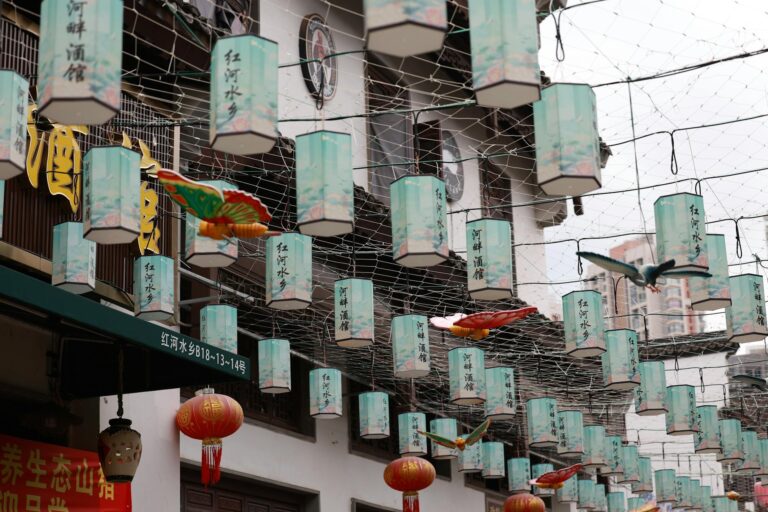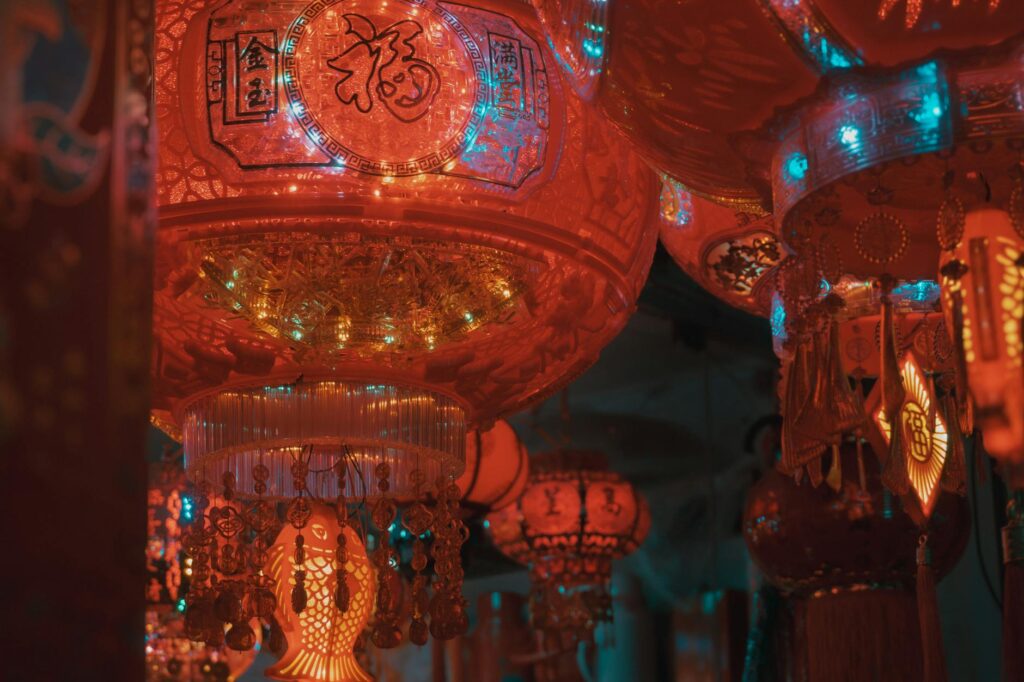
Chinese New Year Shanghai celebrations (Spring Festival, 春节) turn the city inside out for about three weeks each winter. Locals leave for their hometowns and the office districts go quiet, while Yu Garden, the Bund and every shopping street in between disappear under red and gold. The next one falls on Saturday 6 February 2027, the Year of the Goat, and if you are reading this in mid-2026 you are at exactly the right point to plan it. This guide covers dates through 2030, what actually happens and when, what stays open, what the lanterns cost, and the honest case for and against timing a trip to land on it.
Table of Contents
- Dates: 2027, 2028 and Beyond
- The Public Holiday and How It Works
- What Chinese New Year Means
- Day by Day: What Happens When
- Chinese New Year Shanghai Celebrations: The Main Events
- Yu Garden Lantern Festival
- Temples on New Year’s Eve and Day One
- What’s Open and What’s Closed
- Travel Logistics and the Chunyun Crush
- Are the Celebrations Worth Planning Around?
- Eating Well When Half the City Is Shut
- Etiquette, Greetings and Red Envelopes
- Common Mistakes
- Practical Tips
- Frequently Asked Questions
Dates: 2027, 2028 and Beyond
Chinese New Year follows the lunisolar calendar, falling on the second new moon after the winter solstice. That puts it anywhere between 21 January and 20 February, which is why the date moves by up to a month year to year and why you cannot plan this trip on instinct.
| Year | New Year’s Eve | New Year’s Day | Zodiac | Lantern Festival (15th day) |
|---|---|---|---|---|
| 2026 | Mon 16 Feb | Tue 17 Feb | Horse | Tue 3 Mar |
| 2027 | Fri 5 Feb | Sat 6 Feb | Goat | Sat 20 Feb |
| 2028 | Tue 25 Jan | Wed 26 Jan | Monkey | Wed 9 Feb |
| 2029 | Mon 12 Feb | Tue 13 Feb | Rooster | Tue 27 Feb |
| 2030 | Sat 2 Feb | Sun 3 Feb | Dog | Sun 17 Feb |
Two of those dates matter more than the rest. 6 February 2027 is the next New Year’s Day and it lands on a Saturday, which pushes the holiday block into a naturally long weekend. 26 January 2028 is unusually early — barely three weeks after the Gregorian new year — so a 2028 trip will find the lanterns already up over the January period.
The festive window is longer than the date suggests. Decorations go up two to four weeks ahead and the season formally ends on the fifteenth day with the Lantern Festival (元宵节), so for 2027 the atmosphere runs roughly mid-January to 20 February.
The Public Holiday and How It Works
China’s State Council publishes the following year’s holiday calendar around early November, so the exact 2027 block will not be confirmed until roughly November 2026. What you can rely on is the pattern.
Since the 2025 rule change, Spring Festival carries four statutory days rather than three, and New Year’s Eve is now part of the official break. In practice that produced the longest Spring Festival holiday on record in 2026: 15–23 February, nine consecutive days off, with 16–19 February as the statutory days and Saturdays 14 and 28 February worked as make-up days. Expect something structurally similar in 2027 — most likely a block of eight or nine days beginning on or just before Friday 5 February.
Those make-up Saturdays catch people out. The weekend before and after the holiday are often normal working days, so the metro at 8:30am on what looks like a Saturday can be rammed — and flights and trains on those two days are quieter than you would guess. For how the rest of the year compares, see our best time to visit Shanghai guide and the month-by-month weather breakdown.
What Chinese New Year Means
Strip away the tourism framing and Spring Festival is a family holiday about going home. Nearly every tradition follows from that.
- Family reunion dinner on New Year’s Eve — the meal the entire migration exists to make possible
- Red envelopes (hongbao 红包) of money for children, unmarried relatives and service staff. Most of it now moves through WeChat rather than paper
- Fireworks historically; now banned inside Shanghai’s Outer Ring Road and restricted well beyond it
- Deep-cleaning before, no sweeping during — clear out the old year in advance, then avoid sweeping luck back out the door on day one
- Lion and dragon dances at temples, malls and public squares
- Visiting elders on day one and friends from day two onward
- Specific foods — dumplings for wealth, whole fish (鱼 yú, homophone for “surplus”), nian gao (年糕) for advancement, tangerines for luck
Shanghai adds its own layer. This is a Jiangnan city, so the reunion table leans towards eight-treasure rice, smoked fish, drunken chicken and shepherd’s-purse dumplings rather than the northern jiaozi marathon. Our traditional culture guide covers where those customs come from.

Day by Day: What Happens When
The fortnight has a rhythm, and knowing it tells you which days to book restaurants, which days to stay off the metro, and which day the city quietly comes back to life.
| Day | 2027 date | What happens | What it means for you |
|---|---|---|---|
| Eve (除夕) | Fri 5 Feb | Reunion dinner; midnight bell at Longhua Temple | Quietest streets of the year from about 6pm. Book dinner weeks ahead |
| Day 1 (初一) | Sat 6 Feb | Temple visits, elders visited, no sweeping | Temples heaving from dawn. Many small shops shut |
| Day 2 | Sun 7 Feb | Married daughters return to their parents | Roads busy, attractions filling with domestic visitors |
| Days 3–4 | 8–9 Feb | Visiting continues; travel resumes | Peak days at Yu Garden and Disneyland |
| Day 5 (破五) | Wed 10 Feb | God of Wealth welcomed; firecrackers traditionally | Shops reopen with red banners. Good day to shop |
| Days 6–8 | 11–13 Feb | Businesses reopen in waves | The city gets its restaurants back |
| Day 15 (元宵) | Sat 20 Feb | Lantern Festival; tangyuan eaten | The single busiest evening at Yu Garden. Avoid unless you want the crush |
If you only have a few days and want the decoration without the closures, the sweet spot is roughly days 5 to 12 — lanterns still lit, shops open, domestic tourists thinning out.

Chinese New Year Shanghai Celebrations: The Main Events
Shanghai does not do a single citywide parade. The Chinese New Year Shanghai celebrations are a scatter of separate events, and knowing which are worth your evening saves a lot of wandering.
- Yuyuan Lantern Festival — the headline. Six zones, roughly six weeks, part ticketed and part free. Details below
- Longhua Temple midnight bell — 108 strikes to see out the old year at Shanghai’s oldest temple, 853 Longhua Road
- Jing’an Temple and Jade Buddha Temple — first-incense crowds on day one, plus vegetarian meals and blessing ceremonies
- Bund and Lujiazui lighting — the riverfront façades and the Pudong towers run extended and often themed programmes across the holiday
- Shanghai Disneyland — a dedicated Spring Festival parade, decoration and merchandise run; see our Disneyland guide
- Happy Valley lantern event — a large ticketed lantern display, around ¥80 midweek and ¥100 at weekends in recent years
- Guangfulin Cultural Site in Songjiang — temple-fair programming, around ¥40, far calmer than downtown
- Zhujiajiao and the water towns — lanterns over the canals and a fraction of the Yu Garden crowd. See Zhujiajiao
- Mall programming at Xintiandi, IFC, K11 and Plaza 66 — installations and lion dances, free to walk through
- Hotel reunion banquets — set gala menus on New Year’s Eve, typically ¥888–2,888 per head at riverfront properties

Yu Garden Lantern Festival
This is the reason to time a trip around Spring Festival rather than merely tolerate it. The Yuyuan lantern show has run for three decades, it is on the national intangible cultural heritage list, and it is genuinely a spectacle rather than a photo opportunity dressed up as one.
The 2026 edition, themed on the Year of the Horse, ran 26 January to 3 March and for the first time spilled beyond the bazaar, linking Yu Garden with Fuyou Road, Middle Fangbang Road, Gucheng Park, the BFC complex and the Bund into what the organisers called the Greater Yu Garden area. Expect 2027 to follow the same shape, running roughly mid-January to the Lantern Festival on 20 February.
What it costs
- Ticketed zone: the folk-art lantern zone inside Yu Garden itself — ¥80 adult, ¥50 child in 2026
- Free zones: Middle Fangbang Road, Fuyou Road, Gucheng Park, BFC and the Bund stretch. The majority of the display, and all the street-level atmosphere, costs nothing
- Booking: through the Yuyuan Garden Malls (豫园商城) WeChat service account and the major ticketing platforms. In 2026 sales opened a week before the festival and ran to the final day
Hours and the days to avoid
- Peak days (Fridays to Sundays, the Spring Festival holiday block and Lantern Festival night): entry from 2pm to 10pm
- Regular days: entry from 4pm to 10pm
- Closed on New Year’s Eve — in 2026 the whole thing shut on 16 February. Do not build your evening around it
- Best slot: a Tuesday or Wednesday, arriving around 5pm. You get the last of the daylight on the roofs, then the full effect as the lights come up, and you are out before the evening surge
The worst evening of the year is Lantern Festival night itself, when the bazaar goes to one-way pedestrian flow and police cordons. It is an experience, but not a relaxed one. For the garden the rest of the year, see our Yu Garden guide and the night markets guide.
Getting there: Metro Line 10 or 14 to Yuyuan Garden station, five minutes on foot. Some exits close for crowd flow during the festival, so follow the signage rather than your map app — our metro guide covers the basics.

Temples on New Year’s Eve and Day One
The temple side of the holiday is the part most visitors miss, partly because it happens at inconvenient hours and partly because nobody explains it.
Longhua Temple (853 Longhua Road, Metro Line 11 or 12) is the oldest temple in Shanghai and the only one that stages the midnight bell ceremony. Monks strike the bell 108 times — one for each of the earthly afflictions in Buddhist teaching — with the final strike landing on midnight. A limited number of indoor tickets go on sale each year and the price moves; assume it sells out and check the temple’s own channels rather than a reseller. The courtyard is free and atmospheric enough.
Jing’an Temple and the Jade Buddha Temple (170 Anyuan Road) both draw first-incense crowds from before dawn on day one, with queues forming on New Year’s Eve evening. For the ritual without the scrum, go mid-morning on day two or three — still busy, still smoky, far more navigable. Our temples guide has hours and entry fees.
Incense is usually free or sold cheaply at the door, and three sticks is the standard offering. Do not buy the enormous bundles pressed on you outside the gate — that is a seasonal version of the classic Shanghai tourist scams.

What’s Open and What’s Closed
The headline is reassuring: the things you flew here for stay open. It is the everyday layer of the city that closes, and it closes unevenly.
| Category | Status during the holiday week | Notes |
|---|---|---|
| Major attractions | Open, often extended hours | Yu Garden, Shanghai Tower, the Bund, Disneyland all run through |
| Metro and buses | Normal, sometimes extended on Eve | Emptier than usual midweek — commuters are gone |
| Museums | Mostly open; Monday closures may shift | Check individual sites; some close 1–2 days around Eve |
| Malls and chains | Open, extended hours | Xintiandi, IFC, K11, Nanjing Road all trade hard |
| Small local restaurants | Closed 3–10 days | The single biggest practical impact on your trip |
| Wet markets and family shops | Largely closed from Eve | Reopen in waves from day 5 |
| Banks | Closed on statutory days | ATMs work throughout; see our money guide |
| Tours, classes, clinics | Mostly paused | Cooking classes and walking tours often stop for a week |
| Hotels | Open; rates often soften | Business travel evaporates, so city-centre rooms can be good value |
The closure pattern is not random. Restaurants staffed by migrant workers from Anhui, Jiangsu or Sichuan shut because the staff have gone home; chains with local part-timers and hotel kitchens stay open. That is why a street of ten noodle shops can have nine dark windows and one queue out the door.
Travel Logistics and the Chunyun Crush
Chunyun (春运), the 40-day Spring Festival travel period, is the largest recurring movement of people on the planet. In 2026 it ran 2 February to 13 March and produced a record 9.4 billion inter-regional trips — 8.74 billion by road, 538 million by rail and 94.4 million by air, according to China’s Ministry of Transport. Those numbers are the context for every booking decision you make.
- High-speed rail sells out. Seats release on the 12306 system 15 days before departure and popular Shanghai–Nanjing, Shanghai–Hangzhou and Shanghai–Beijing services can go within minutes. Set an alarm for the release
- Domestic flights spike on the outbound days before the Eve and the return days at the end of the block
- International fares into Shanghai rise less, but the two or three days either side of New Year’s Eve are the expensive slots. Flying in a week early is cheaper and gets you the lanterns anyway
- Hotel rates in Shanghai itself often fall as business travel stops. See where to stay
- Taxis thin out on Eve and day one as drivers take the night off. Didi works but with longer waits — our Didi guide explains the app
- The metro is the reliable option throughout, and unusually pleasant midweek
The counterintuitive conclusion: Shanghai itself is one of the easiest Chinese cities to be in during the actual holiday days, because 10 million people have left. It is getting to and from Shanghai, and any day trip out of it, that becomes hard. Building a plan that stays inside the city for the peak days and saves Suzhou or Hangzhou for the tail end of the fortnight works far better than the reverse.
Are the Chinese New Year Shanghai Celebrations Worth Planning Around?
Honest answer: it depends less on your tolerance for crowds than on what you came for.
Come during CNY if
- You want the lantern festival — the one thing Shanghai does at this time of year that nowhere else does the same way
- You are staying put in the city rather than hopping between provinces
- You care about atmosphere more than about eating in one specific restaurant
- You are travelling with children — decorations, lion dances and Disneyland programming all land well. See Shanghai with kids
Come at another time if
- Your itinerary depends on bullet-train day trips during the holiday block
- Eating your way through the city is the point — a chunk of the good small places will be shut
- Cold, damp weather bothers you. February averages 8°C by day and 2°C at night, and it is a wet cold
The compromise most people should take
Arrive one to two weeks before New Year’s Day. The lanterns are up and lit, every restaurant is open, hotel rates are still low and the trains still have seats. For 2027 that means landing between roughly 22 January and 2 February. You lose the midnight bell and the day-one temple scenes; you keep everything else. Our Shanghai in winter guide covers the wider season.
Eating Well When Half the City Is Shut
This is where an unprepared trip goes wrong. The fix is boring but effective: decide your dinners before you fly.
- Book the Eve and day-one dinners in advance. Hotel restaurants and banquet halls take reservations from about a month out and fill up. Eve set menus run ¥888–2,888 per person at riverfront hotels; neighbourhood restaurants do cheaper versions
- Hotel breakfast earns its keep this week — the corner baozi stall you were relying on may be shuttered
- Chains stay open. Not glamorous, but Yang’s Dumplings, Haidilao and the mall food courts trade right through
- Seasonal specifics: tangyuan around the Lantern Festival, nian gao stir-fried with pork and greens, eight-treasure rice, and a whole steamed fish that is deliberately not finished so the “surplus” carries into next year
- Delivery apps keep running at reduced coverage and with surcharges
For the rest of the time, our food guide, street food guide and restaurant picks cover the ground.

Etiquette, Greetings and Red Envelopes
Nobody expects a visitor to get this perfect, and the effort counts for a great deal more than the accuracy.
- “Xīn nián kuài lè” (新年快乐) — happy new year, universal and safe
- “Gōng xǐ fā cái” (恭喜发财) — wishing you prosperity. Widely used and always well received
- “Wàn shì rú yì” (万事如意) — may everything go as you wish. A slightly more formal option
- Red envelopes for staff who look after you — a doorman, a driver, a guide. ¥20–100 in a red packet, sold for a few yuan in any convenience store. Hand it over with both hands
- Amounts matter. Even numbers are lucky, eight especially; avoid four, which sounds like the word for death. ¥88 is a classic, ¥40 is not
- Avoid gifts of clocks, shoes, sharp objects, umbrellas or anything white — each carries an unfortunate homophone or funerary association
- Wear red or something bright on the first day; head-to-toe black reads as mourning
- Do not sweep, wash your hair or break things on day one, at least not visibly
Our etiquette guide and customs guide cover the everyday rules, and the language guide has more phrases worth having.
Common Mistakes
- Assuming everything shuts. It does not. The big attractions run extended hours and are frequently at their best
- Assuming nothing shuts. The restaurant you bookmarked six months ago has a good chance of being dark for a week
- Planning a day trip during the holiday block. Train seats vanish and the water towns are at their most crowded of the year
- Turning up at Yu Garden on New Year’s Eve expecting lanterns — the ticketed zone closed entirely that night in 2026
- Booking rail more than 15 days out. Seats are not loaded before then, so there is nothing to buy
- Underdressing. Buildings are not always well heated and the damp cuts through. Our packing checklist is calibrated for this
- Expecting fireworks downtown. Banned inside the Outer Ring Road; the light shows are the replacement
Practical Tips
- Book hotels 6–10 weeks ahead for holiday-week arrival, and reserve New Year’s Eve dinner at the same time
- Visit the lanterns on a weeknight, arriving around 5pm
- Carry a few small red packets and ¥20–100 notes for tips and gifts
- Mobile payment covers almost everything; cash is a fallback rather than a plan
- Layer properly — 8°C by day, 2°C at night, 71% humidity, about 12 rainy days across February and only four hours of sun a day. A packable down layer and a waterproof shell beat a heavy coat
- Keep day one flexible — treat it as a temple morning and a long lunch, not a full itinerary
- The Bund is the reliable evening throughout the fortnight; see the Bund at night
- Free options multiply during the holiday. Our free attractions guide pairs well with this week
- Buy souvenirs late — bazaar prices peak in the run-up and soften after day five. See the souvenirs guide

Frequently Asked Questions
When is Chinese New Year in Shanghai?
The next one is Saturday 6 February 2027, the Year of the Goat. After that: 26 January 2028 (Monkey), 13 February 2029 (Rooster) and 3 February 2030 (Dog). The festival runs 15 days from New Year’s Eve to the Lantern Festival — 20 February in 2027.
How long is the Chinese New Year holiday in China?
Eight or nine days in recent years. The 2026 holiday ran 15–23 February, nine days, the longest on record, with four statutory days and two make-up working Saturdays either side. The 2027 dates should be confirmed by the State Council around November 2026.
Is it worth visiting Shanghai during Chinese New Year celebrations?
Yes, with one condition: plan to stay in the city. The lantern festival, the decorated old streets and the temple ceremonies are worth the trip, and hotel rates often drop. Train day trips during the holiday block are the part that does not work.
Is Shanghai crowded during Chinese New Year?
Less crowded in the office districts and on the metro, more crowded at Yu Garden, the temples and Disneyland. Millions of residents leave the city and domestic tourists partly replace them at the sights.
Are restaurants open during Chinese New Year in Shanghai?
Hotel restaurants, chains, mall food courts and tourist-area places stay open. Independent neighbourhood restaurants commonly close for three to ten days from New Year’s Eve, reopening in waves from day five.
How much does the Yu Garden Lantern Festival cost?
The ticketed folk-art zone inside Yu Garden was ¥80 for adults and ¥50 for children in 2026. The surrounding zones — Fangbang Road, Fuyou Road, Gucheng Park, BFC and the Bund stretch — are free to walk through.
Are fireworks allowed in Shanghai for Chinese New Year?
No, not inside the Outer Ring Road, where setting off fireworks is completely banned. Restricted zones also apply beyond it around transport hubs, hospitals, schools, heritage sites and shopping areas, and permits are required for organised displays. Coordinated building lighting has replaced fireworks downtown.
What is the Longhua Temple bell ceremony?
At midnight on New Year’s Eve, monks at Longhua Temple strike the great bell 108 times, once for each of the earthly afflictions in Buddhist teaching. Indoor tickets are limited and sell out; the courtyard is free and still worth standing in.
When should I book trains for Chinese New Year travel?
The moment seats release, which is 15 days before departure on the 12306 system. Popular routes out of Shanghai can sell out within minutes at peak. Nothing can be booked earlier — the inventory does not exist until then.
What is chunyun and does it affect tourists?
Chunyun is the 40-day Spring Festival travel period — 9.4 billion trips in 2026, including 538 million by rail. It affects you mainly through train availability and domestic flight prices. Inside Shanghai it barely registers.
What should I wear in Shanghai in February?
Layers plus a windproof shell. Daytime highs average 8°C and nights drop to about 2°C, with 71% humidity that makes it feel colder than the number suggests.
Can I still see the lanterns if I visit after Chinese New Year?
Yes. The Yuyuan display runs through the Lantern Festival on the fifteenth day — 20 February in 2027 — and days five to twelve give the best mix of full illumination, open restaurants and manageable crowds.
Plan Your Trip
Combine with our pillar guides on best time to visit Shanghai, Shanghai in winter, and Yu Garden, and check things to do in Shanghai for the rest of the itinerary. Official festival announcements are published by the Shanghai Municipal Government, and for background see Chinese New Year on Wikipedia and Chunyun.