Shanghai’s temples are one of the city’s sharpest contrasts: Buddhist halls thick with incense standing directly beneath office towers, a Taoist shrine surrounded by a shopping bazaar, a Confucian compound on a quiet Old Town lane. This 2026 guide to the best temples in Shanghai covers the eight essential sites plus the small ones almost nobody visits, with history, opening hours, ticket prices, metro exits, etiquette, what to eat, and a half-day itinerary that actually works.
Table of Contents
- Temple Overview & Traditions
- Which Temples in Shanghai Should You Visit?
- Jade Buddha Temple
- Longhua Temple & Pagoda
- Jing’an Temple
- City God Temple
- Wenmiao Temple (Confucian)
- Xiaotaoyuan Mosque
- Smaller Temples in Shanghai Most Visitors Miss
- Churches, Synagogues and the Wider Map
- Visitor Etiquette
- Eating at a Temple: The Vegetarian Halls
- When to Go: Festivals and Quiet Hours
- Mistakes and Scams Around the Temples
- Half-Day Temple Itinerary
- FAQ
Temple Overview & Traditions
Shanghai’s temples represent three main traditions:
- Buddhist — Jade Buddha, Longhua, Jing’an. Active monasteries with services. Most numerous and tourist-friendly
- Taoist — City God Temple (Cheng Huang Miao) — the spiritual centre of the Old Town
- Confucian — Wenmiao Temple — devoted to scholarship and ancestor reverence
Plus a 19th-century mosque (Xiaotaoyuan) for the city’s Hui Muslim community. Christian churches (Xujiahui Cathedral, Holy Trinity) and a surviving synagogue in Hongkou complete the religious map.
Understand one thing before you go: these are working religious sites, not museums. On an ordinary Tuesday morning at Longhua you will see more people praying than photographing. Shanghai is also young by Chinese standards — a county seat, not an imperial capital — so its temples are smaller than those in Beijing or Xi’an. What they have instead is the collision with the modern city. Jing’an’s gold roof against the towers behind it is a view you cannot get anywhere else. For context, see our guides to Shanghai’s traditional culture and the history of Shanghai.
Which Temples in Shanghai Should You Visit?
If you have one temple’s worth of time, the honest answer depends on what you want. Jade Buddha for atmosphere and the objects themselves. Jing’an for the photograph and the least effort. Longhua for scale and the sense of an old place. City God if you are already at Yu Garden anyway.
| Temple | Tradition | Entry | Hours | Metro | Allow | Best for |
|---|---|---|---|---|---|---|
| Jade Buddha | Buddhist | ¥20 (+¥10 hall) | 8:00–16:30 | Jiangning Rd (13), Exit 4 | 60–90 min | Atmosphere, the jade statues, lunch |
| Longhua | Buddhist | ¥10 | 7:00–16:30 | Longhua (11/12) | 90 min | Scale, the pagoda, peach blossom |
| Jing’an | Buddhist | ¥50 | 7:30–17:00 | Jing’an Temple (2/7/14), Exit 1 | 45–60 min | Photos, convenience, gold roofs |
| City God | Taoist | ¥10 | 8:30–16:30 | Yuyuan Garden (10/14) | 30 min | Combining with Yu Garden |
| Wenmiao | Confucian | ¥10 | 9:00–17:00 | Laoximen (8/10) | 30 min | Quiet, history, book market |
| Xiaotaoyuan Mosque | Islamic | Free | 8:00–18:00 | Laoximen (8/10) | 20 min | Architecture, a different tradition |
| Zhenru | Buddhist | Free | Daytime | Zhenru (11/14) | 30 min | Yuan-dynasty timber, no crowds |
A note on prices. Several Shanghai temples have quietly moved to free or reduced admission in the past couple of years — the big ticketing aggregators now list Jade Buddha and Longhua as free, while other sources still show the fees above. Treat the figures here as a ceiling, and carry ¥50 in small notes for the incense counter. See our free attractions guide for what else costs nothing.
Jade Buddha Temple
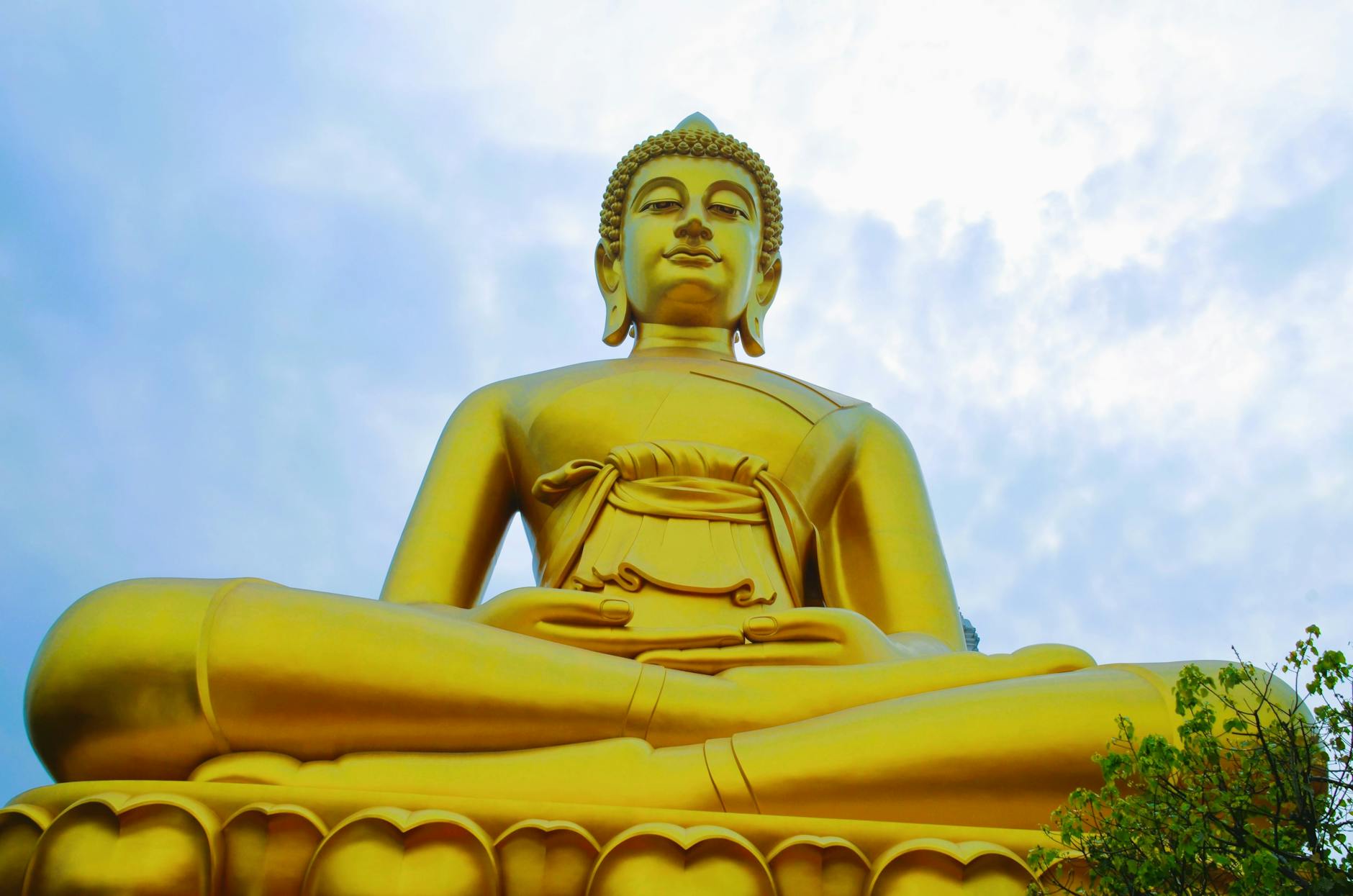
The Jade Buddha Temple (玉佛禅寺) on Anyuan Road is Shanghai’s most famous Buddhist site. Founded 1882 to house two jade Buddha statues brought from Burma — a reclining Buddha (96 cm) and a seated Buddha (1.95 m), both carved from single pieces of white jade. The temple is an active monastery with Chan (Zen) practice, regular ceremonies, and vegetarian dining hall.
Practical: Open 8:00–17:00 daily; ¥20 entry; additional ¥10 for the Jade Buddha Hall. Metro: Jiangning Road (Line 13). Allow 60–90 minutes. Photos OK in courtyards; not inside the Jade Buddha Hall.
More precisely: leave Jiangning Road station by Exit 4 and walk about five minutes south — the temple’s yellow perimeter wall is unmistakable. Last admission is around 16:30, and on Buddhist holidays (the 1st and 15th of the lunar month, and Buddha’s birthday) the gates open earlier, around 7:00, and the courtyards fill with worshippers by mid-morning. The temple went through a major structural project in the late 2010s in which the entire Mahavira Hall was jacked up and shifted roughly 30 metres north to open up the site — a genuinely strange piece of engineering that most visitors walk past without knowing.
What to look at: the reclining jade Buddha is smaller than photographs suggest and sits behind glass in a dim hall, so the queue moves. The seated Buddha is the one worth waiting for. There is also a second, larger reclining Buddha in the complex that is not jade — plenty of visitors photograph that one thinking it is the famous statue.
Longhua Temple & Pagoda
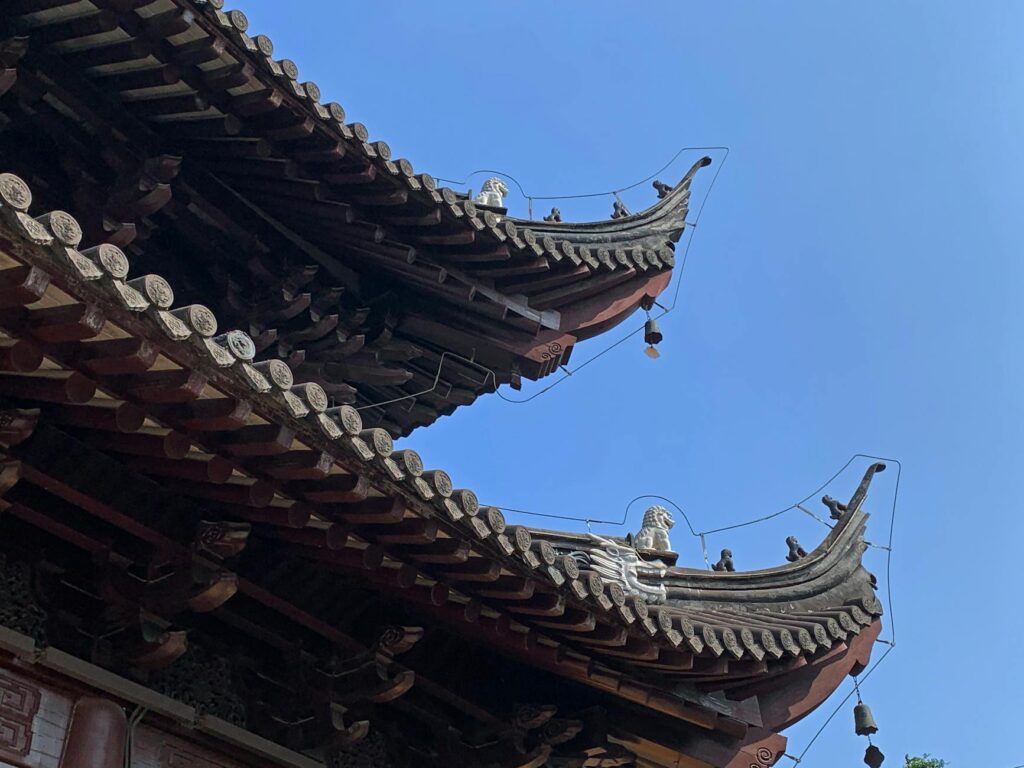
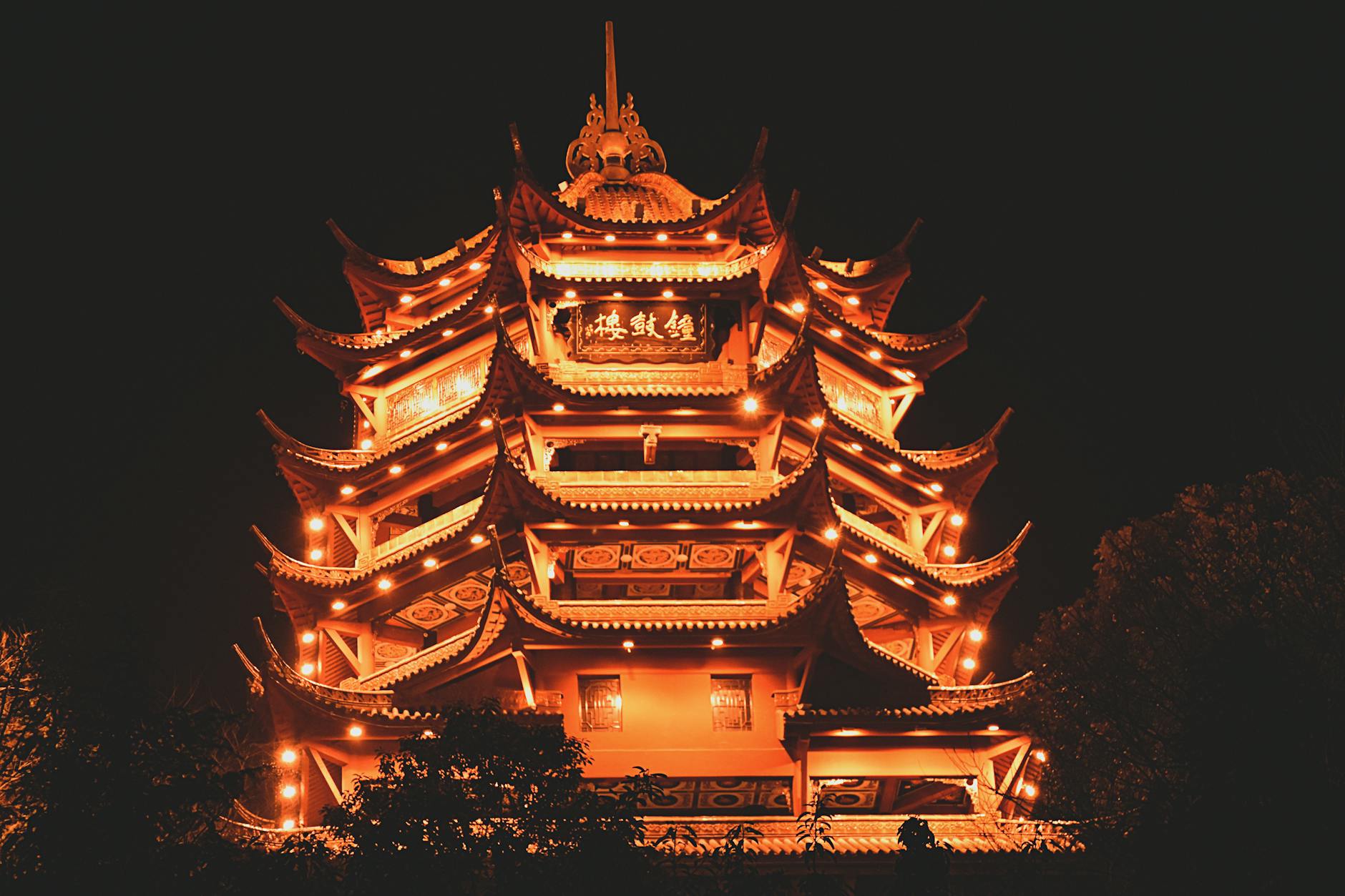
Longhua Temple (龙华寺) in Xuhui is the largest and most ancient temple complex in Shanghai, founded in 242 CE according to tradition. The accompanying Longhua Pagoda (rebuilt in 977 CE) is the oldest standing structure in Shanghai — a seven-storey, octagonal Northern Song-era pagoda with eaves and bells.
Famous for its 6,500 kg cast-iron bell — struck 108 times at midnight on Chinese New Year’s Eve. The peach-blossom courtyards bloom dramatically in late March / early April.
Practical: Open 7:00–16:30 daily; ¥10 entry to temple; pagoda closed to visitors but visible from outside. Metro: Longhua (Line 11/12). Allow 90 minutes.
The pagoda is closed for a specific reason worth knowing: Shanghai sits on soft alluvial soil, and the structure is not stable enough to carry visitors up its seven storeys. You photograph it from the temple forecourt across Longhua Road. The temple fair, timed to the third day of the third lunar month, is the oldest continuously running fair in the city and the source of the local saying about going to Longhua on the third of the third month to see the peach blossoms. It draws serious crowds, so go for the fair or go for the quiet, not both.
Longhua is also the one temple whose surroundings repay a walk. The Longhua Martyrs Cemetery next door is a formal memorial park on the site of a Kuomintang execution ground, and the contrast with the incense smoke over the wall is stark. This pairs better with a slow lunch than with a second temple.
Jing’an Temple
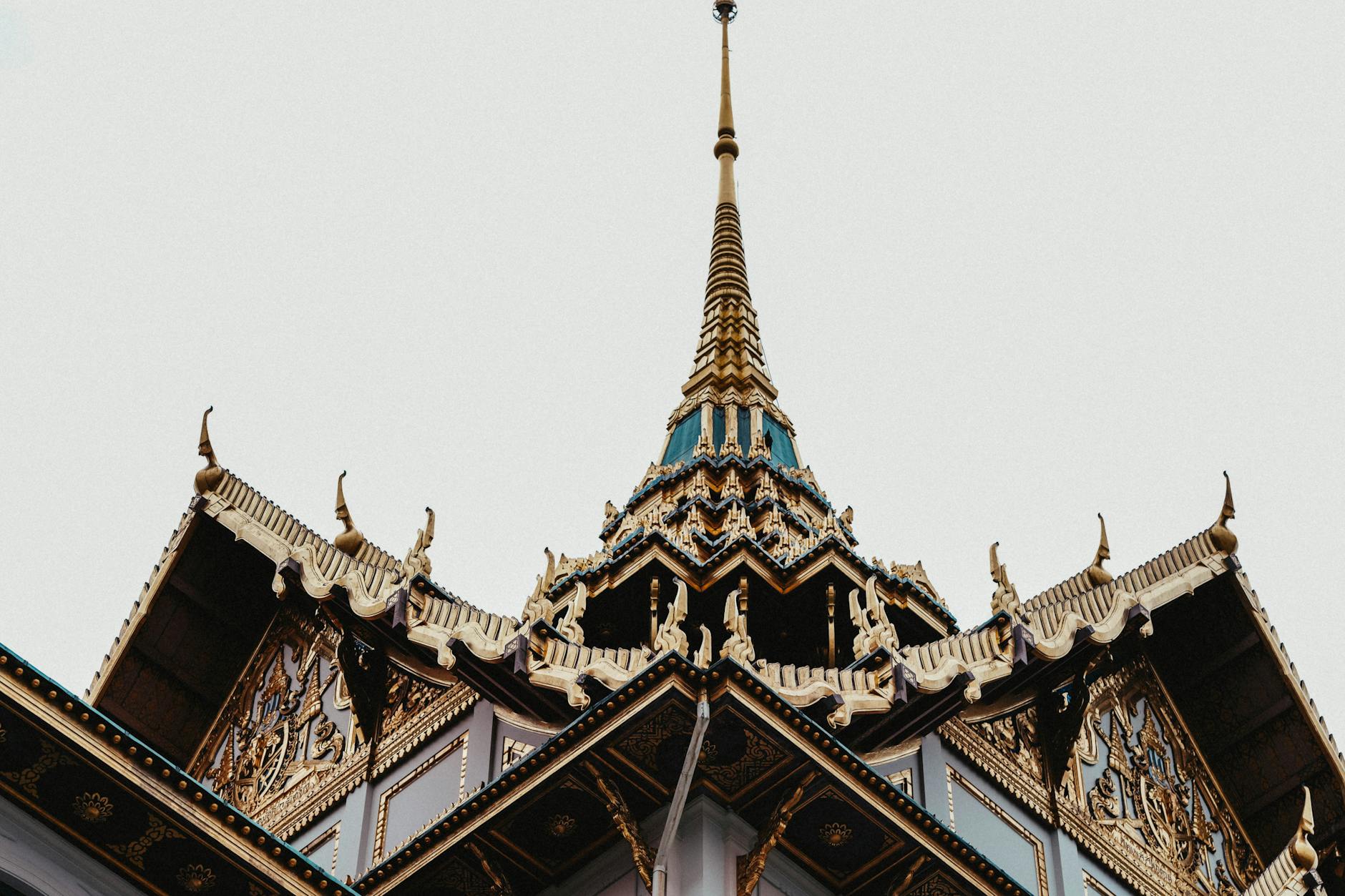
Jing’an Temple (静安寺) on Nanjing West Road is Shanghai’s most photogenic — a golden-roofed Buddhist complex literally surrounded by skyscrapers. Founded 247 CE but heavily rebuilt 2000–2010, the temple now has more polished tourist infrastructure than its older peers. Three main halls plus an underground meditation hall. The 6,500 kg silver-and-gold statue of the Manjushri Bodhisattva is striking.
Practical: Open 7:30–17:00 daily; ¥50 entry. Metro: Jing’an Temple (Line 2/7). Allow 45–60 minutes. Best photographed from the elevated walkway across Nanjing West Road.
Line 14 now also serves Jing’an Temple station, and Exit 1 puts you roughly 60 metres from the gate — this is the easiest temple in the city to reach. The ¥50 ticket includes three sticks of incense, so do not buy any from the vendors outside. Last entry is around 16:30. Inside the Mahavira Hall sits a 15-tonne solid-silver Sakyamuni Buddha beneath a bronze-tiled roof; photography is not allowed in the halls themselves.
Two opinionated points. ¥50 is the highest temple fee in Shanghai, and this is the least historically intact of the big three — almost everything you see was rebuilt after 2000. And the photograph everyone comes for, gold eaves against glass towers, is taken from outside and costs nothing. If your interest is visual rather than religious, stand on the pedestrian bridge over Nanjing West Road and keep your ¥50. Exterior floodlighting runs Friday and Saturday evenings and public holidays, roughly 19:00–22:00 in summer; the fifteen minutes after it comes on is the best light of the day.
City God Temple
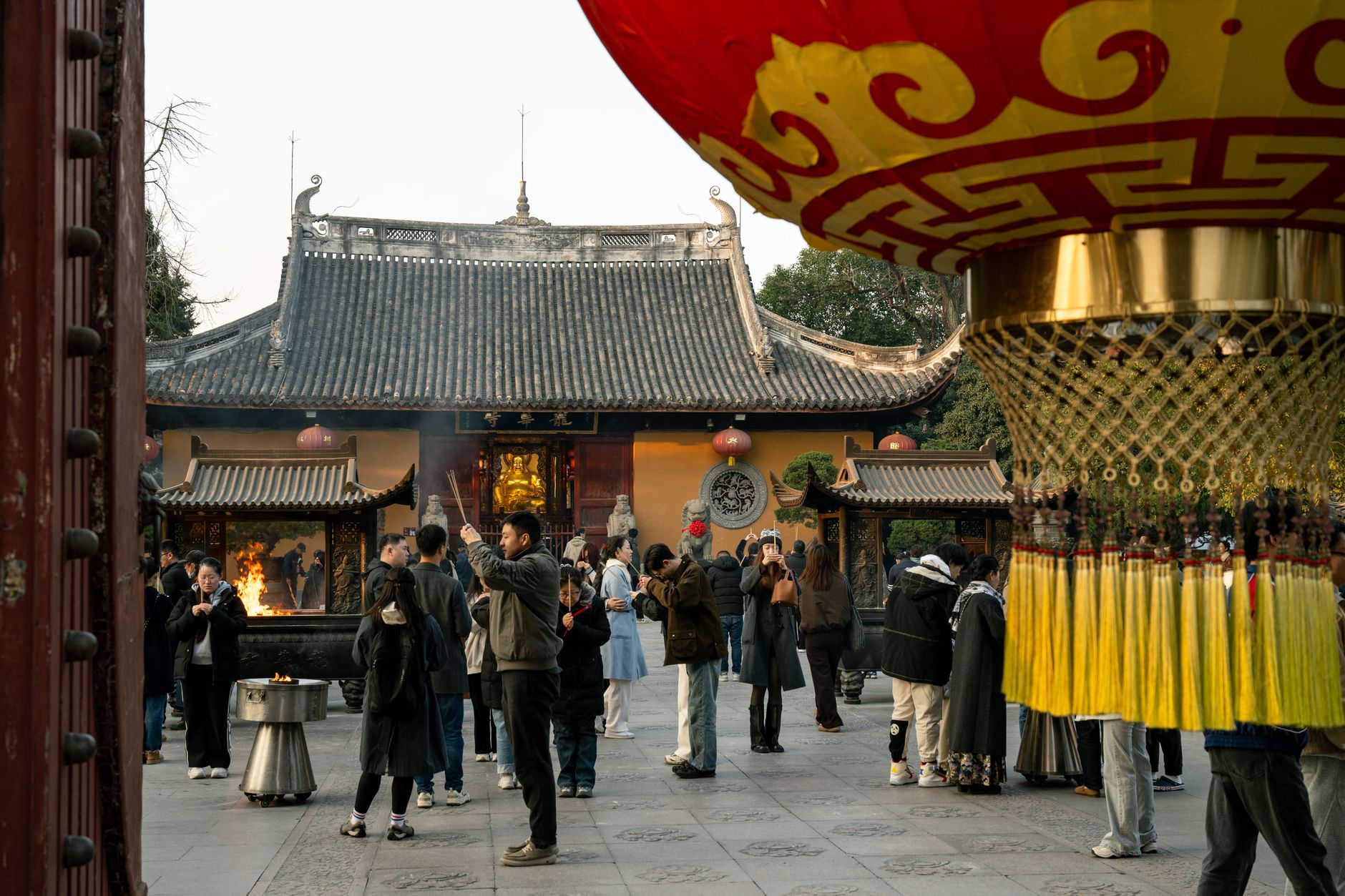
The City God Temple (城隍庙) at the centre of Yu Garden Bazaar is Shanghai’s spiritual anchor — a Taoist temple dedicated to the city’s three “City Gods” (deified historical figures). Open since the Ming Dynasty (founded 1403). The temple gives its name to the surrounding bazaar streets, which were originally the temple’s market plaza.
The atmosphere is more festive than serene, with the bazaar pressing in on all sides. Holy days (Chinese New Year, 15th of each lunar month) see lively offerings and crowds.
Practical: Open 8:30–16:30; ¥10 entry. Metro: Yuyuan Garden (Line 10/14). Allow 30 minutes. Combine with Yu Garden visit.
The three city gods explain why the place feels less abstract than a Buddhist temple: Huo Guang, a Han dynasty statesman; Qin Yubo, a Ming official from Shanghai itself; and Chen Huacheng, a Qing admiral killed defending Wusongkou against the British in 1842. Local, historical, specific. Thirty minutes is enough — the temple is small and the interest is in the surroundings. Pair it with Yu Garden.
Wenmiao Temple (Confucian)
Wenmiao Temple (文庙) in the Old Town is Shanghai’s main Confucian temple. Founded 1294, rebuilt 1855. Small but atmospheric — quiet courtyards, ancient steles, and a Saturday morning second-hand book market that fills the temple square (¥10 entry to that market).
Less touristed than Buddhist temples; appeals to history buffs and book lovers. The Confucian rituals (offering of incense, prayer for academic success) make it popular before exam season.
Practical: Open 9:00–17:00; ¥10 entry. Metro: Laoximen (Line 8/10). Allow 30 minutes.
Two updates that matter if you are making a special trip. The book market that ran in the temple square for decades closed in 2020 and has since reopened nearby on the fourth floor of the Fumin Shangxia building, running on Sunday mornings from around 6:00 — earlier than most travellers want to be awake, but the serious sellers pack up by lunchtime. And the temple itself has been through a renovation and expansion programme, so check current opening status before you cross town for it. The Wikipedia entry on the Confucian Temple of Shanghai covers the site’s long, interrupted history, including its stint as the Small Swords Society headquarters in the 1850s.
Xiaotaoyuan Mosque
For a quick non-Buddhist diversion, the Xiaotaoyuan Mosque (小桃园清真寺) in the Old Town is one of Shanghai’s three main mosques, serving the city’s Hui Muslim community. Modest scale but well-preserved 1917 architecture in a Sino-Arabic hybrid style.
Practical: Open 8:00–18:00 daily (closed during Friday prayer 12:00–13:30 to non-Muslims); free. Modest dress; remove shoes. Metro: Laoximen (Line 8/10).
It sits about eight minutes’ walk from Wenmiao, so the two make a natural pair on a slow Old Town morning. Ask at the gate before photographing anyone, and if you arrive near prayer time, wait outside rather than drifting in.
Smaller Temples in Shanghai Most Visitors Miss
- Songjiang Square Pagoda — out in Songjiang district; ancient Tang-Song pagoda; quiet weekday visit
- Zhenru Temple — Putuo district; small but atmospheric vegan dining hall
- Hudong Temple — Hongkou; very local, no tourists
- Yufo Si Old Buddha Hall (within Jade Buddha complex) — frequently overlooked secondary halls
- White Cloud Taoist Temple — small Taoist hall near People’s Square; rarely on tourist itineraries
Three of these deserve more than a line. Zhenru Temple in Putuo is the most historically important building on this page: its main hall dates to 1320 and is one of only a handful of surviving Yuan-dynasty timber structures in the whole Jiangnan region. There is an 800-year-old ginkgo in the courtyard, a 5.2 m Guanyin, and prayer wheels around a small pagoda strung with wind chimes. Entry is free and on most weekdays you will have it close to yourself.
Bai Yun Temple — the White Cloud Taoist temple — is on Dajing Road near Qinglian Street rather than People’s Square proper, and it is the best place in the city to see living Taoist practice without a bazaar attached. Admission runs about ¥5. Immediately next door is the Dajing Pavilion, the only surviving fragment of Shanghai’s 1553 Ming city wall, which makes the two a tidy half-hour together.
Fa Zang Jiang Temple on Ji’an Road, near Fuxing Middle Road, is Shanghai’s only Tendai Buddhist monastery, built in 1929 and wedged into a block of lane houses with vertical galleries and a lecture hall that seats several hundred. Entry is around ¥5, cash only — bring notes. Out in the suburbs, the Jiading Confucius Temple is free and sits beside Qiuxia Garden and Zhouqiao Old Street, which together make a decent half-day if you want to be somewhere the tour buses do not go. Getting to any of these means the metro rather than a taxi; our Shanghai metro guide covers fares and the app you need.
Churches, Synagogues and the Wider Map
Shanghai’s religious architecture does not stop at temples, and a couple of these outshine the smaller ones. St Ignatius Cathedral at Xujiahui is a Gothic revival cathedral completed in 1910, its twin spires rebuilt after the Cultural Revolution; two minutes from Xujiahui station on Lines 1, 9 and 11. Holy Trinity Church, the red-brick Anglican church behind the Bund, dates from 1869 and is one of the oldest Western buildings still standing in the city.
Out in Songjiang, the Sheshan Basilica sits on a wooded hill and is a genuine day trip rather than an add-on; it is the largest Catholic church in East Asia and draws pilgrims in May. In Hongkou, the former Ohel Moshe Synagogue is now the Shanghai Jewish Refugees Museum, telling the story of the roughly 20,000 Jewish refugees who sheltered in the city during the Second World War — covered properly in our Shanghai Jewish heritage guide. If architecture rather than religion is the draw, our art deco guide and the French Concession walking tour go further.
Visitor Etiquette
- Modest dress — shoulders covered, shorts below the knee. Some temples lend shawls
- Remove hats in main halls
- Step over the threshold — never step on the wooden door beam
- Speak quietly — these are working religious sites
- Walk clockwise around stupas and Buddha statues
- Photography — generally OK in courtyards; usually forbidden inside main halls and of monks; obey signs
- Offerings — burning incense is welcome (¥5–20 for a packet at the temple). Hold sticks at chest height; bow 3 times; place in burner
- Cash donations appropriate — ¥10–50 typical
- Don’t touch statues or relics
- Don’t pose with religious imagery for selfies
- Vegetarian temple meals — Jade Buddha and Longhua both have excellent vegetarian halls (¥40–80 set menu)
How to offer incense, step by step
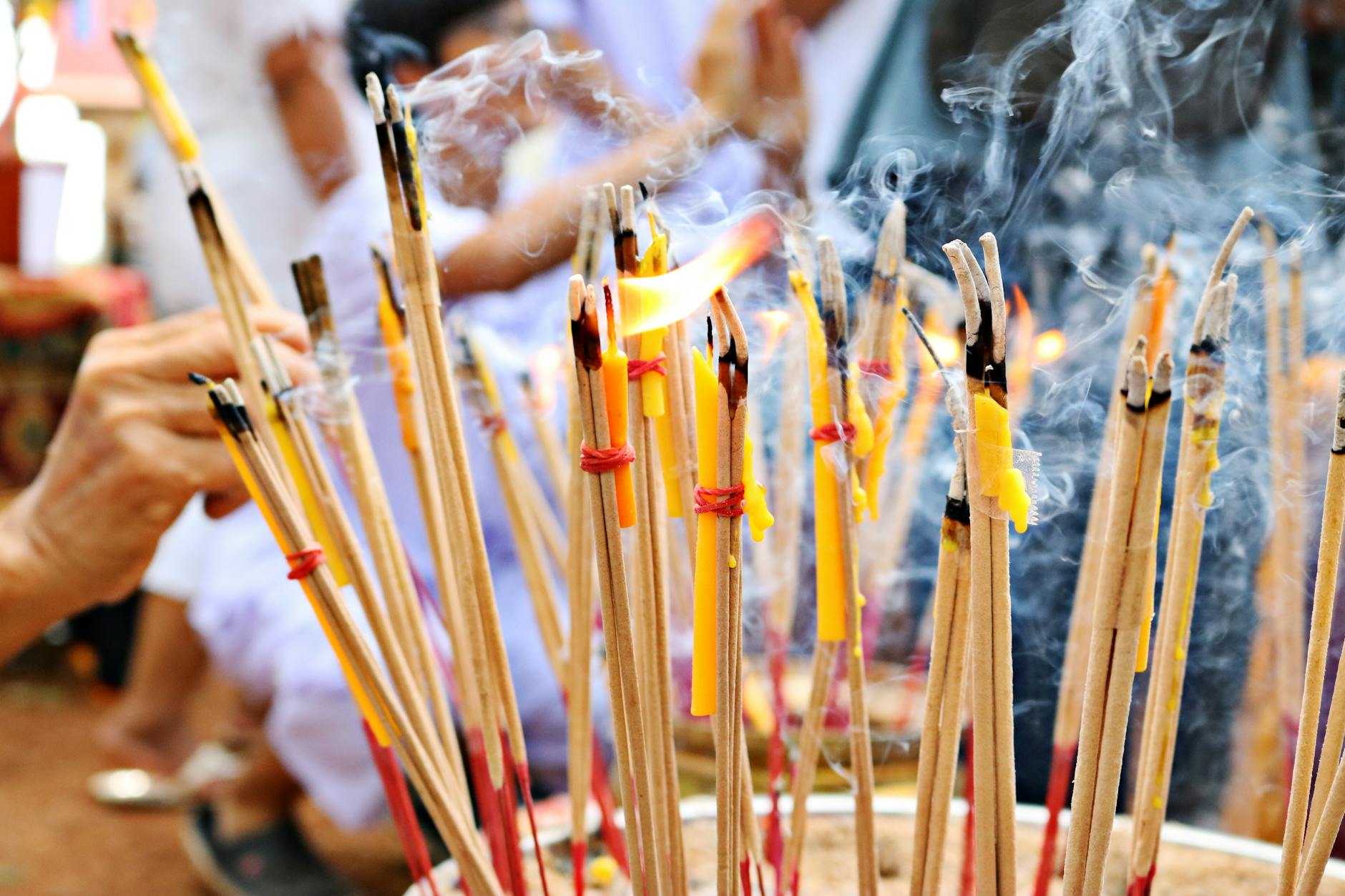
Nobody will mind if you get this slightly wrong, but doing it properly takes ten seconds. Take three sticks — three, not a fistful. Light them from the communal flame, then wave them out rather than blowing, which is considered disrespectful. Hold them level at chest height between both palms, face the main hall, bow three times from the waist, and place them upright in the central burner. Burning happens in the outdoor courtyard burner, not inside the halls.
Temples here have grown stricter about incense volume for air-quality and fire reasons, which is why several now include a fixed three sticks in the ticket. Skip the enormous bundles sold by street vendors. Our Shanghai etiquette guide covers the broader rules; in summer a light scarf solves the covered-shoulders problem — see the packing checklist.
Eating at a Temple: The Vegetarian Halls
The most underrated part of a temple visit, and the reason to time your morning to end at lunchtime. Chinese Buddhist vegetarian cooking (zhai cai) is a serious cuisine built on mock meats made from wheat gluten, bean curd skin and mushrooms, and the temple canteens do it cheaply and well.
- Jade Buddha Temple — a large vegetarian restaurant inside the complex where you find your own seat. Set meals run roughly ¥40–80, and the mushroom noodles are the thing to order. The temple’s vegetarian mooncakes have a following of their own around Mid-Autumn Festival.
- Longhua Temple — famous for a single dish: a plain bowl of noodles (su mian) that costs a few yuan. Almost everyone who comes to burn incense queues for one. It is not sophisticated. That is the point.
- Zhenru Temple — a small vegan dining hall with almost no tourists in it.
- Gongdelin — not a temple, but the city’s classic vegetarian restaurant, founded in 1922 and still going on Huanghe Road near People’s Square. Book if you want a table on a weekend.
Temple canteens generally serve lunch only, roughly 11:00 to 13:30, and they stop when the food runs out rather than when the clock says so. Cash and mobile payment both work at the bigger ones; the smaller halls may be cash only. Our vegetarian and vegan guide has the wider picture.
When to Go: Festivals and Quiet Hours
Timing changes the experience here more than at any other kind of Shanghai attraction, because the crowds follow the lunar calendar rather than the weekend.
| When | What happens | Go or avoid |
|---|---|---|
| Weekday, 8:00–10:00 | Locals praying, monks chanting, no tour groups | The best window, every time |
| 1st and 15th of the lunar month | Peak worship days; queues at the incense burners | Go for the atmosphere, avoid for photos |
| Chinese New Year’s Eve | Longhua’s iron bell struck 108 times at midnight; huge crowds | A real event, but plan the journey home |
| 3rd day of the 3rd lunar month | Longhua Temple Fair and peach blossom, late March or April | Go, but not if you want quiet |
| Buddha’s birthday (8th day, 4th lunar month, usually May) | Bathing-the-Buddha ceremonies at all major temples | The most interesting day of the year to visit |
| October and November | Best weather, clear light, comfortable walking | The best season overall |
| National Day week (1–7 October) | Domestic travel peak | Avoid everything, not just temples |
Lunar dates shift each year against the Western calendar, so check before you build a day around one. For the general weather picture, see the best time to visit Shanghai and our autumn guide.
Mistakes and Scams Around the Temples
- The tea ceremony scam. Friendly English speakers approach near Yu Garden, Nanjing Road or Jing’an, mention they are art students or visiting from another province, and suggest a traditional tea tasting nearby. The bill arrives at ¥1,000–3,000 for a few cups. Decline and keep walking — our Shanghai scams guide has the full playbook.
- “Free” incense from touts outside the gate. It is not free, and the donation demanded afterwards is not small. Buy incense inside the temple, or use the sticks included in your ticket.
- People dressed as monks selling blessings or amulets in tourist areas. Ordained monks in China do not solicit money from strangers on the street.
- Turning up at 15:30. Most temples stop selling tickets 30 minutes before closing, and several close at 16:30. A late afternoon plan usually turns into a locked gate.
- Trying to do four temples in a day. Three is the practical maximum and two is more enjoyable. They are spread across the city and they start to blur.
- Wearing shorts in July. Enforcement varies, but Longhua and Jade Buddha do turn people away. Carry a scarf or a light layer.
- Expecting card payment everywhere. Smaller temples and their incense counters are cash or Alipay only.
Half-Day Temple Itinerary
A great 5-hour Shanghai temple tour:
09:00 Jade Buddha Temple — 90 minutes including vegetarian lunch in the temple hall
11:30 Taxi or Metro to Jing’an Temple — 45 minutes
12:45 Lunch nearby on Nanjing West Road
14:00 Metro to Yuyuan Garden / City God Temple — 30 minutes
14:45 Walk to Wenmiao Temple in the Old Town — 30 minutes
15:30 Return to hotel
If you have extra time, add Longhua Temple (1 hour by metro) for a full Buddhist day.
Two notes on that route. Jade Buddha to Jing’an is a ¥25–35 taxi, fifteen minutes outside rush hour, or Line 13 to Line 2 with one change. Yuyuan Garden to Wenmiao is a twenty-minute walk through the Old Town lanes and is the best part of the day — do not shortcut it by taxi. Our one day in Shanghai itinerary shows where the temples fit, and getting around Shanghai covers transport.
A quieter alternative for a second visit: start at Longhua at 7:30 when the gates open, take the metro to Zhenru for the Yuan-dynasty hall, then finish at Bai Yun Temple and the old city wall fragment on Dajing Road. Three temples, almost no tour groups, and about ¥15 in entry fees.
Frequently Asked Questions
What are the most famous temples in Shanghai?
Jade Buddha Temple, Longhua Temple, Jing’an Temple (all Buddhist), and the City God Temple at Yu Garden Bazaar (Taoist) are the four most-visited.
How much does it cost to visit Shanghai temples?
¥10–50 per temple. Jing’an is the priciest at ¥50; Jade Buddha ¥20; Longhua, City God, Wenmiao ¥10 each. Several have moved to free or reduced admission recently, so check at the gate.
What’s the oldest temple in Shanghai?
Longhua Temple, founded in 242 CE according to tradition; its pagoda (rebuilt 977 CE) is the oldest standing structure in Shanghai. The oldest surviving temple building is arguably Zhenru Temple’s main hall, dated to 1320.
What’s the dress code for Shanghai temples?
Modest: shoulders covered, shorts below the knee. Most temples lend shawls for inappropriately dressed visitors.
Can I take photos in Shanghai temples?
Usually yes in courtyards; usually not inside main halls. Always check signs and respect monk privacy. Never use flash near old artwork.
Are Shanghai temples free to visit?
Modest entry fees apply (¥10–50). The mosque is free, as are Zhenru Temple and the Jiading Confucius Temple. The bazaar streets around the City God Temple are free; the temple itself charges ¥10.
Can I eat at Shanghai temples?
Yes — Jade Buddha and Longhua both have famous vegetarian halls offering ¥40–80 set meals. Open to all visitors. Longhua’s plain noodles cost a few yuan and are the local order.
What’s the best time to visit Shanghai temples?
Weekday mornings (9–11am) are quietest. Avoid Chinese New Year (massive crowds) and the 1st and 15th of each lunar month (worship peak days).
How many temples in Shanghai can I see in one day?
Three is the practical maximum, two is more enjoyable. They are spread across the city, and after the third the halls start to look alike. Pair one temple with a garden, a museum or a neighbourhood walk instead.
Can I climb the Longhua Pagoda?
No. The pagoda is closed to visitors for structural reasons — Shanghai’s soft alluvial soil makes the thousand-year-old tower unsafe to climb. You can photograph it from the temple forecourt.
Do I need to book tickets in advance?
Not for ordinary days — you buy at the gate. For Chinese New Year’s Eve at Longhua and for Buddha’s birthday, some temples run timed entry through their WeChat accounts, so check a few days ahead.
Are Shanghai temples suitable for children?
Yes, in short doses. Thirty to forty minutes at one temple works; a temple-hopping day does not. The koi ponds, incense burners and turtle pools hold attention better than the halls. See our Shanghai with kids guide for pacing.
Plan a Cultural Day
Combine with our pillar guides on things to do in Shanghai, Shanghai culture & history, and Yu Garden. For temple architecture in a small-town setting, the canal towns are an easy add — see Zhujiajiao and our day trips guide. For background, see Buddhism in China on Wikipedia and the official Shanghai travel website.