Shanghai is one of the most foreigner-tolerant cities in China — minor cultural slips are forgiven easily, and nobody expects a visitor to get everything right. But a handful of unwritten rules genuinely change how people respond to you. This Shanghai etiquette guide sets out the dos and don’ts of dining, greetings, gift giving, temples, taxis, the metro and business for 2026, ranked by how much they actually matter rather than as a flat list of taboos.
Table of Contents
- The Dos and Don’ts That Actually Matter
- Greetings
- Dining Etiquette
- Chopstick Rules
- Toasting & Drinking
- Everyday Situations
- Gift Giving
- Face, Saying No and Disagreeing
- Temple Etiquette
- Metro, Bus & Taxi
- Business Etiquette
- Etiquette Myths You Can Ignore
- Quick Shanghai Etiquette Dos and Don’ts
- FAQ
The Shanghai Etiquette Dos and Don’ts That Actually Matter
Most etiquette guides give you thirty rules of equal weight. In practice about six of them carry real consequences and the rest are nice-to-know. If you remember nothing else from this page, remember these.
| Rule | Why it matters | What happens if you get it wrong |
|---|---|---|
| Don’t tip | Not the practice in mainland China | Confusion, sometimes the money being chased back to you |
| Never stand chopsticks upright in rice | It mimics funeral incense | Visible discomfort at the table; the one taboo everyone notices |
| Don’t criticise anyone publicly | Loss of face is a serious social injury | The relationship cools and nobody tells you why |
| Let the host order and pay | Hosting is a role, not a favour | You embarrass the host by insisting on splitting |
| Set up mobile payment before you arrive | Cash is legal but increasingly awkward | Queues behind you, refused small purchases |
| Don’t raise Taiwan, Tibet, Xinjiang or 1989 | Politically sensitive, and unfair to put a local on the spot | An awkward silence at best |
Everything below is worth knowing, but nothing below is worth being anxious about. Shanghai has been dealing with foreigners since the 1840s and the city’s default assumption is that you mean well. Our first-time visitor guide covers the practical side of arriving.
Greetings
- Verbal: “Nǐ hǎo” (你好) is the universal hello. “Zǎoshang hǎo” (早上好) for “good morning”; “Wǎnshàng hǎo” (晚上好) for “good evening”
- Handshakes are increasingly common in Shanghai’s business context; older Shanghainese may prefer a slight nod
- Names — family name comes first, then given name. “Wang Lihua” — Wang is the surname
- Titles matter — address professionals as “Wang Laoshi” (Teacher Wang), “Wang Yisheng” (Doctor Wang), “Wang Lǎobǎn” (Boss Wang)
- Personal space — less than Western norms; queuing is improving but still loose
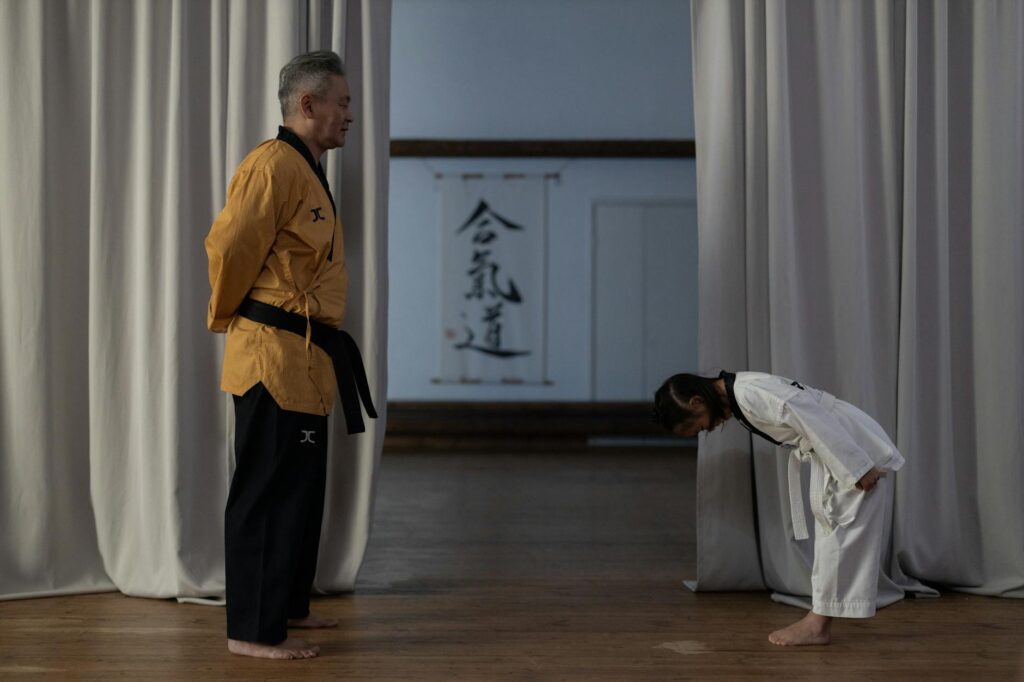
- Bowing is not Chinese practice (it’s Japanese/Korean)
- Eye contact — moderate; locking eyes can read as aggressive
Two things worth adding. A Chinese handshake is usually softer and longer than a Western one, and a firm crushing grip reads as odd rather than confident. And many Shanghainese professionals use an English given name at work — if someone introduces themselves as Vivian or Kevin, use it. It is a real name in that context, not a nickname you should look past.
The local language is Shanghainese, a Wu dialect that is not mutually intelligible with Mandarin. Everyone under sixty speaks Mandarin too, so “nǐ hǎo” always works. But if you want to raise a smile, “nong ho” is hello in Shanghainese, and older residents in particular light up when a visitor tries it. For the practicalities of getting understood, see our Shanghai language barrier guide.
Dining Etiquette
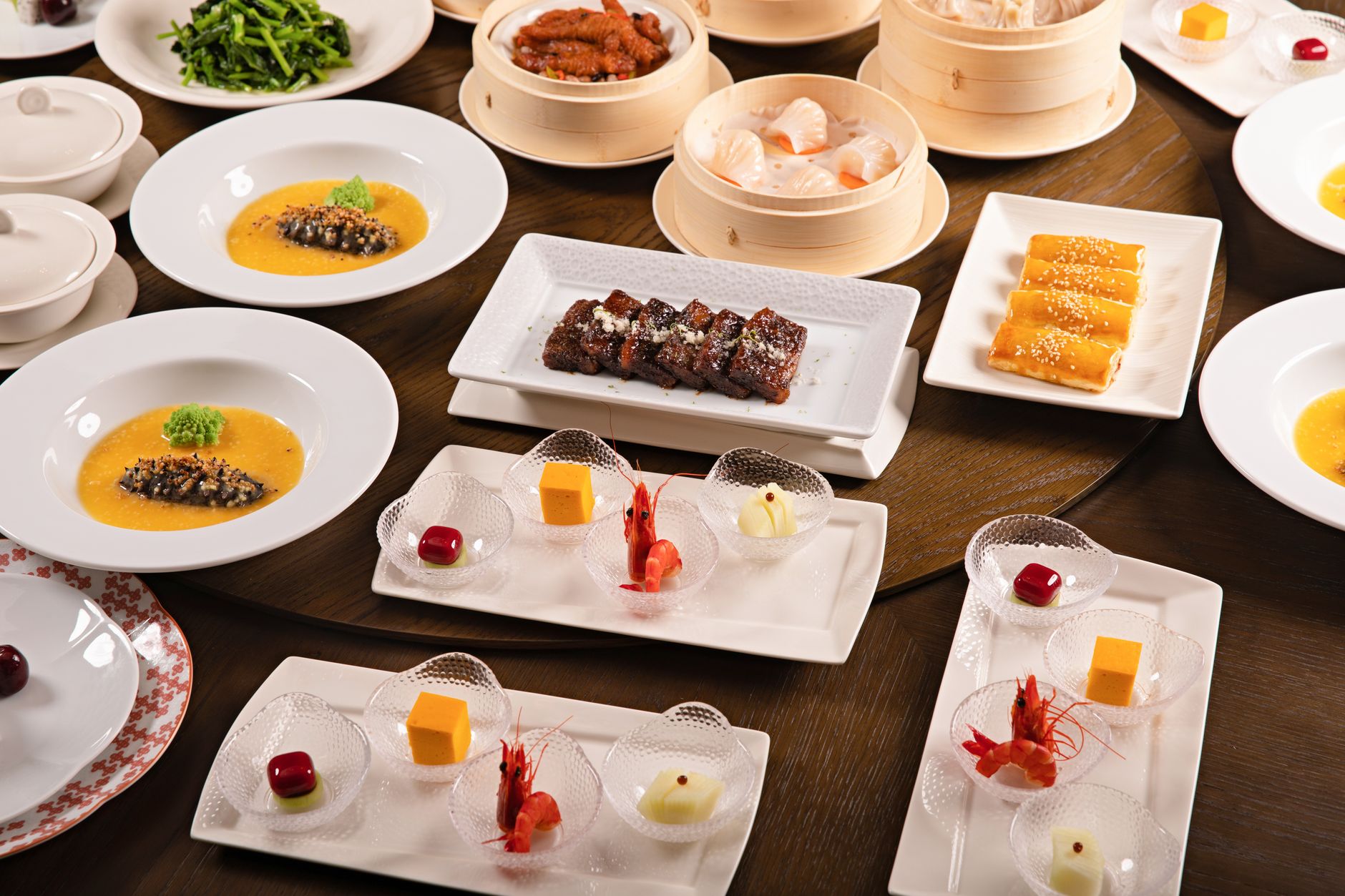
- Family-style ordering — multiple dishes shared from the centre of the table. Order one dish per person plus 1–2 extra
- The host orders — at business meals or as a guest, let the host take the lead
- Rice comes at the end in formal Shanghainese meals — refusing rice at the start is not rude
- Use chopsticks correctly — see next section
- Slurping noodles is fine and even appreciated as a sign of enjoyment
- Burping — once acceptable, now considered impolite in formal settings
- Splitting the bill — increasingly common with younger Shanghainese but the host typically pays at first-time gatherings
- Leaving some food on your plate signals you’ve had enough; finishing every grain can imply you weren’t given enough
- Tipping — not the practice in mainland China; service charges sometimes included at hotels
How a Shanghai meal is actually structured
Cold dishes arrive first — smoked fish, drunken chicken, marinated cucumber — and are meant to be picked at while people settle. Hot dishes follow in no fixed order, arriving as the kitchen finishes them, so do not wait for everything before starting. Soup comes late, often near the end, which surprises Western diners who expect it first. Fruit or a sweet soup closes the meal, and once that appears the meal is over; lingering for two hours afterwards is not the local rhythm.
The seat facing the door is the host’s; the seat opposite, facing away, is the guest of honour’s. If someone steers you to a particular chair, sit there. At a round table with a lazy Susan, turn it slowly and never while someone is mid-serve — that is the most common small rudeness visitors commit.
Getting service
Waving and calling “fúwùyuán!” (服务员) across the room is completely normal here and not rude. Most restaurants now use QR-code ordering — scan the code on the table, order in a WeChat mini-programme, pay in the app. That system often has an English toggle buried in the corner. If it does not, ask; staff will usually take the order manually. Our Shanghai food guide covers what to actually order.
Chopstick Rules
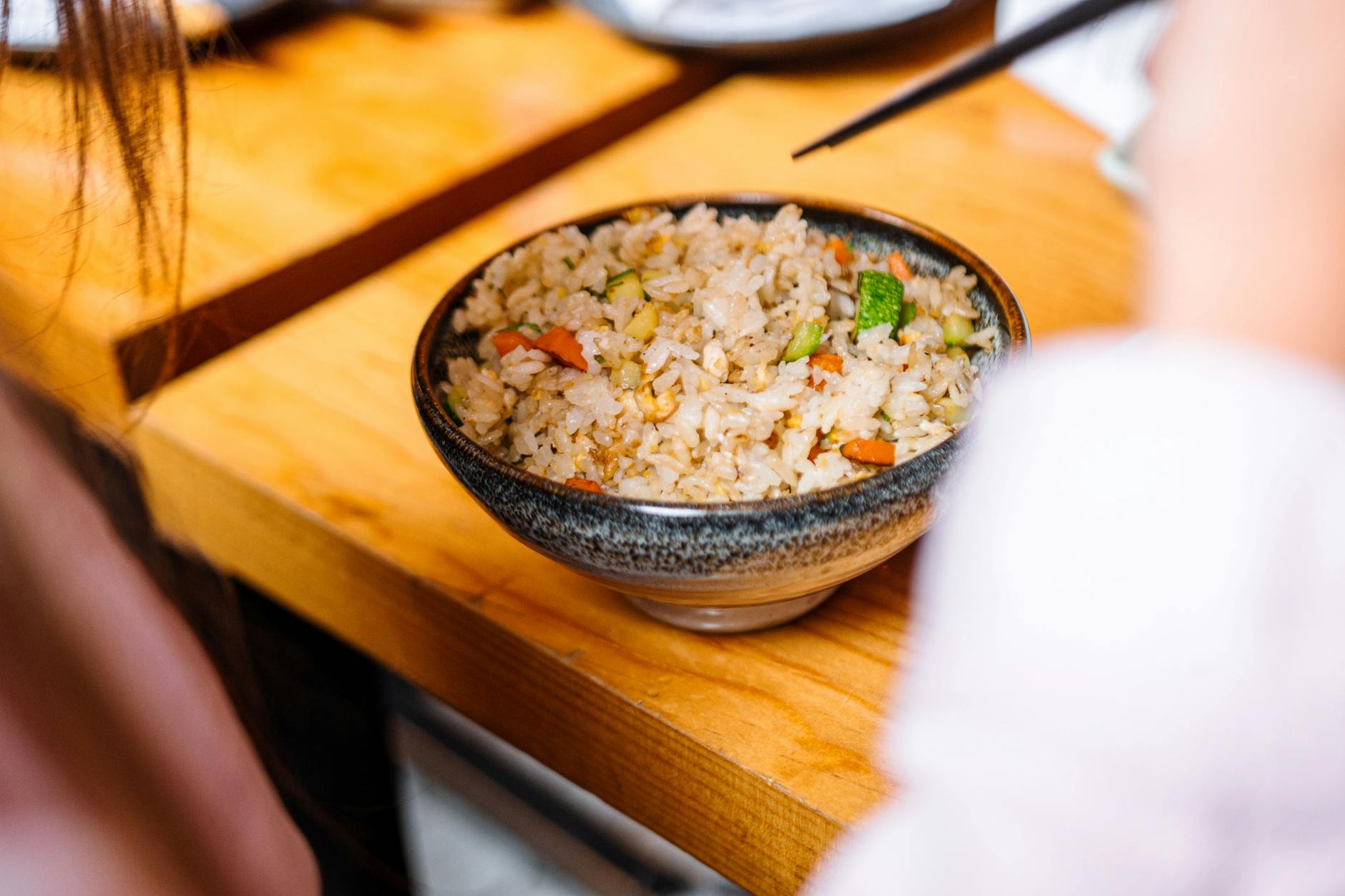
- Don’t stick chopsticks vertically in rice — resembles incense at a funeral; deeply taboo
- Don’t pass food chopstick-to-chopstick — also funerary symbolism
- Use the wider blunt ends when serving yourself from a shared dish (some restaurants provide separate serving chopsticks)
- Don’t tap chopsticks on the bowl — historically a beggar’s gesture
- Rest chopsticks on the rest or across the bowl when pausing
- Don’t point with chopsticks at people or objects
- Don’t dig through dishes looking for choice pieces — take what’s in front of you
- If you really can’t use chopsticks, ask for a fork — staff will produce one without judgment
Two more that come up constantly in Shanghai. Public serving chopsticks (公筷, gōngkuài) became widespread after 2020 and many restaurants now put a second pair at each setting, usually a different colour or longer. Use them for the shared plates and your own for your bowl. And lifting your rice bowl towards your mouth is correct, not sloppy — leaving it flat on the table and reaching down to it is the awkward-looking option.
Nobody expects chopstick virtuosity from a visitor. Dropping food is a non-event. The only chopstick error that produces a genuine reaction is the upright-in-rice one, and that is worth burning into memory precisely because it is the one people notice.
Toasting & Drinking
- “Ganbei” (干杯) means “dry the glass” — usually a full-shot finish in formal contexts
- “Sui yi” (随意) means “as you wish” — you don’t have to finish
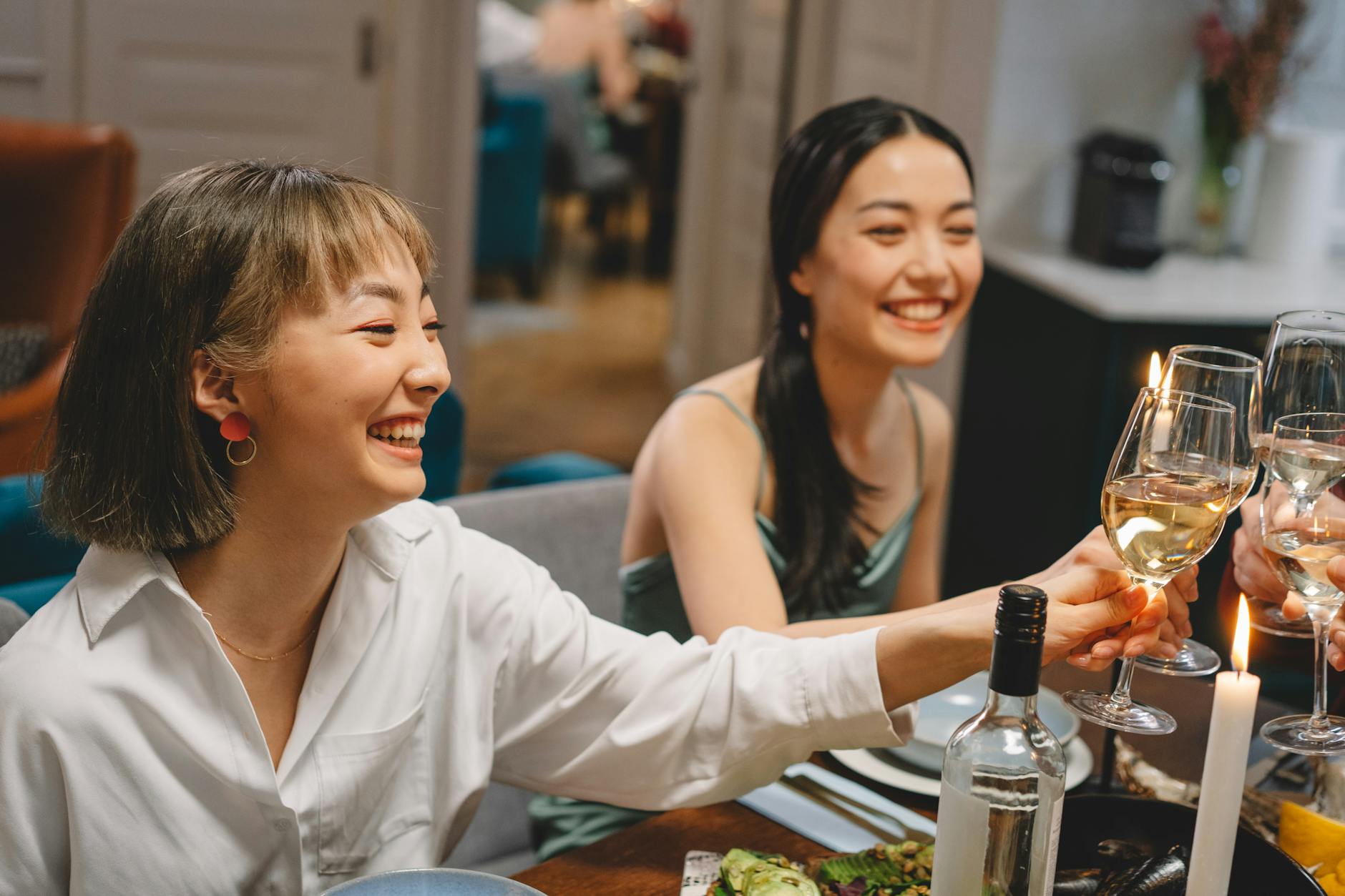
- Lower your glass below the elder/most senior person’s when clinking
- Host initiates toasts; guests reciprocate with thanks
- Tea-tapping — when someone pours your tea, tap two fingers on the table as a thanks gesture
- Don’t pour your own first — pour for others before yourself
- Beer, wine, and baijiu are common toasting drinks; baijiu (white spirit, ~50%+ ABV) hits hard
- Multiple toasts in one meal are normal at banquets
- You can decline alcohol gracefully — say “wǒ bù hē jiǔ” (I don’t drink); have tea
The two-finger tap deserves a note because visitors use it wrong. It is a small, quiet gesture with the index and middle fingers, bent at the knuckle, tapped twice on the table beside your cup — not a drum roll. It means thank you without interrupting the conversation, and it works in every teahouse and dim sum restaurant in the country.
On baijiu: at a genuine banquet the toasts come round repeatedly and the pace is faster than most Westerners expect. Nursing one glass is fine and nobody will force you. Eat before and during, keep water alongside, and if you need to stop, stopping after a toast rather than mid-round saves everyone face. Casual drinking with friends in Shanghai is far more relaxed — see our guide to the city’s cocktail bars and speakeasies for that end of things.
Everyday Situations
Paying for things
Shanghai runs on Alipay and WeChat Pay to a degree that surprises first-time visitors. Both now let foreign visitors link an overseas Visa or Mastercard directly, and setting that up before you fly is the single most useful preparation you can make. Cash remains legal tender and vendors are required to accept it, but a ¥100 note for a ¥6 purchase at a small shop can genuinely stall things. Carry a few small notes as backup and pay with your phone otherwise. Our money and currency guide covers the setup properly.
Queueing and personal space
Queue discipline in Shanghai is better than its reputation and better than most of China — metro platforms have floor markings and people mostly use them. Lifts and ticket machines are looser. The thing that actually catches visitors out is body contact: being brushed, nudged or pressed against in a crowd carries no meaning here and no apology is expected. Take it as physics, not rudeness.
Photography
Photograph buildings, street scenes and food freely. Do not photograph individuals close-up without a gesture asking permission — holding up the camera with a questioning look is universally understood. Never photograph police, military personnel, government buildings or airport security areas. Temples often permit courtyard photography but forbid photographing statues; obey the signs. Our Shanghai photography rules and etiquette guide goes through the tripod, drone and temple restrictions in detail.
Expect the reverse too. If you are visibly foreign, especially outside the centre, people may photograph you or ask for a picture with you. It is curiosity rather than hostility, and a friendly no is fine.
Smoking
Smoking has been banned in all indoor public places in Shanghai since 2017, including restaurants, bars, offices and taxis. Enforcement is real, and individual fines run ¥50–200. Compliance is high by mainland standards but not universal — you will still meet someone lighting up under a no-smoking sign. It is not your job to police it.
Gift Giving
- Bring a small gift when visiting a Chinese home; tea, wine, fruit, or specialty foods are safe
- Wrap nicely in red, gold, or orange — colours associated with luck
- Avoid white (mourning), black (death), or green hats (suggests adultery)
- Give and receive gifts with both hands
- Don’t unwrap immediately — set the gift aside (this avoids appearing materialistic)
- Avoid clocks (“attending a funeral”), sharp objects (cutting ties), handkerchiefs (associated with sadness), chrysanthemums (funeral flower), and the number 4 (sounds like “death”)
- Lucky numbers: 6, 8, 9. Especially 8 — sounds like “wealth”
- Modest decline first is polite when offered a gift — accept on the second offer
What actually goes down well
Something specific to where you are from beats something expensive. Whisky from Scotland, maple syrup from Canada, good chocolate, a local delicacy, something branded with a well-known university or football club — these all land better than a generic luxury item, because the story is the point. Alcohol is a reliable choice for a male host, quality tea or fruit for an older relative, and anything for the children of the house is always correct.
Avoid pears as a gift (梨, lí, sounds like the word for separation) and avoid giving four of anything. If you want to be safe with numbers, give in pairs, or in sixes or eights.
Visiting a Shanghainese home
Being invited into a home is a real compliment — Shanghai entertains in restaurants by default. Take your shoes off at the door and expect a pair of slippers to be produced for you. Bring fruit or something for the household rather than for one person. Accept the tea. Expect to be fed far more than you can eat and to be pressed to have more after you have said no twice; a third refusal with a hand over the bowl is understood.
Compliment the home, the food and the children generously. Do not offer to help wash up more than once — the offer is the point, the acceptance would be a failure of hosting.
Face, Saying No and Disagreeing
More visitor missteps come from this than from chopsticks. Face — 面子 (miànzi), social standing and reputation — is the currency that most Chinese social interaction is denominated in. There is a second, related idea, 脸 (liǎn), which is closer to moral character. You can give someone face by praising them in front of others, and you can cost them face by contradicting, correcting or complaining about them publicly, even mildly, even when you are right.
Practically, this means:
- Complain privately and quietly. A quiet word to a manager away from the floor gets a problem fixed; a raised voice in front of staff gets you a wall.
- Read the soft no. “Maybe”, “it might be difficult”, “we’ll see”, “I’ll look into it” and a sharp intake of breath usually all mean no. Pushing for an explicit refusal forces someone into an uncomfortable position.
- Give a soft no back. “That’s very kind, but it’s difficult for me” works better than a flat refusal.
- Praise in public, correct in private. This holds in business, in restaurants and with guides.
- Do not haggle aggressively in a shop with a fixed price. Markets are different — our markets and haggling guide explains where bargaining is expected.
The flip side is that Shanghainese communication is more direct than in many parts of China, particularly among younger people. Do not over-read every pause. If someone tells you plainly that something is not possible, believe them the first time. For more on the cultural background, the Wikipedia entry on face as a social concept is a decent primer.
Temple Etiquette
- Modest dress — shoulders covered, shorts below the knee. Some temples provide loaner shawls
- Remove hats entering main halls
- Photography rules vary — usually OK in courtyards, often forbidden of statues; respect signs
- Don’t touch statues or relics
- Speak quietly — temples are working religious spaces
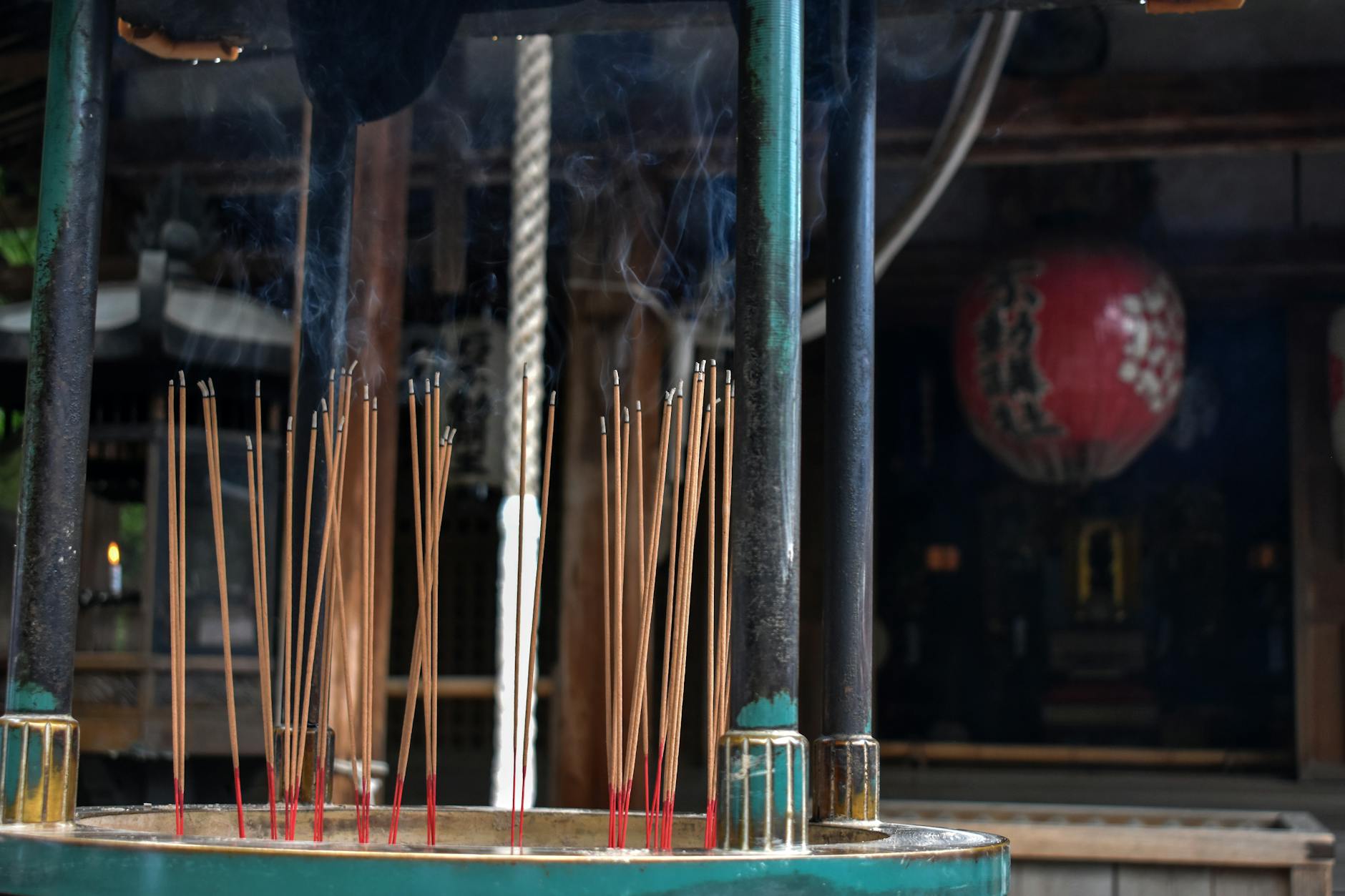
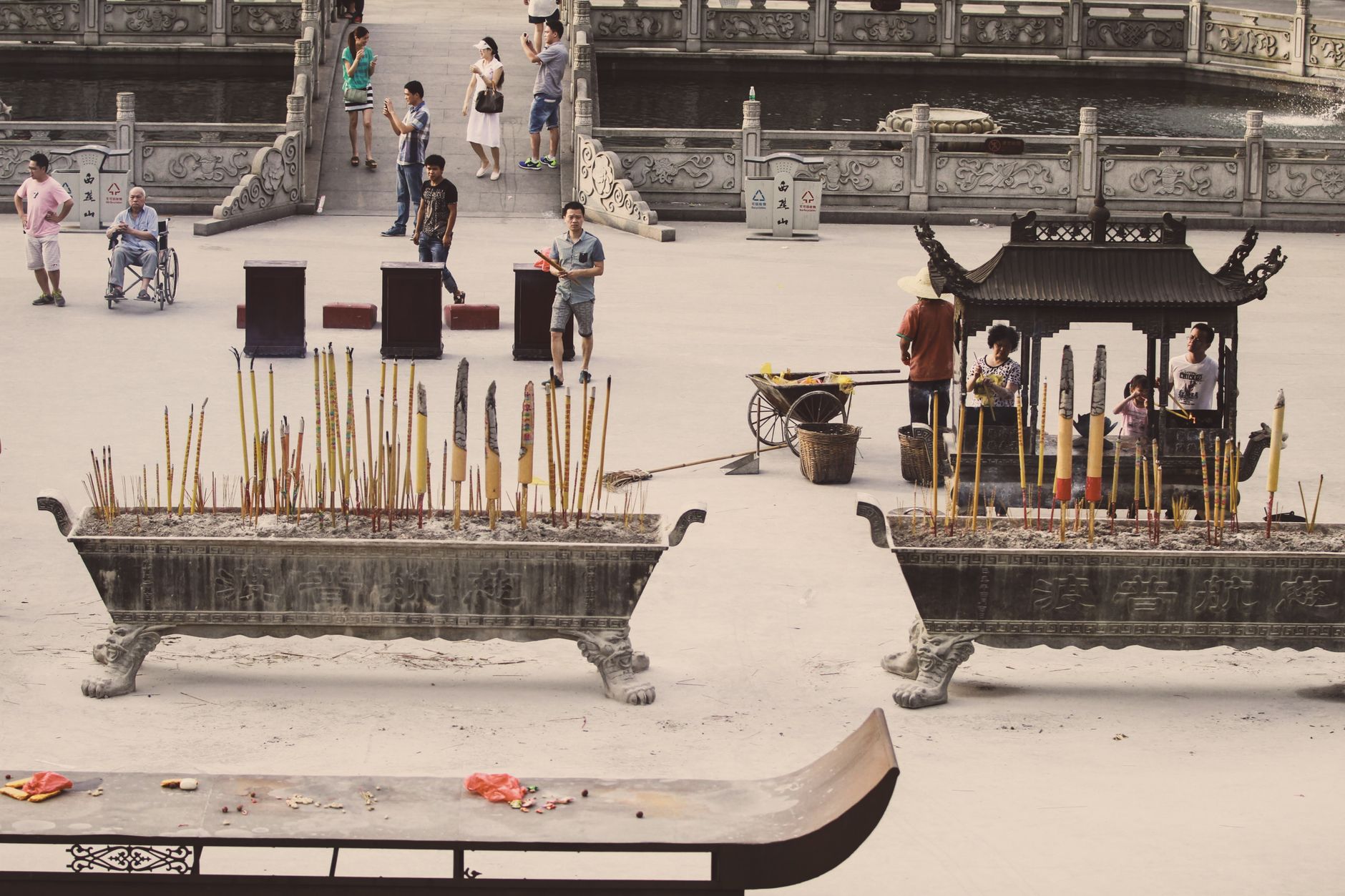
- If burning incense, hold sticks at chest height, bow three times, place in the burner
- Step over the threshold — never step on the wooden door beam at temple entrances
- Walk clockwise around stupas in Buddhist temples
- Cash donations are appropriate; usually small amounts (¥10–50)
Incense is normally provided free or for a nominal sum inside the temple gate, and three sticks is the standard offering. If someone outside the gate presses expensive “blessed” incense on you, or a “monk” offers a free bracelet and then requests a donation, walk on — both are long-running routines around the busier temples, covered in our guide to Shanghai scams to avoid.
Shanghai’s main temples — Jing’an, the Jade Buddha, Longhua, the City God Temple — are functioning places of worship as well as sights, and on the 1st and 15th of the lunar month they fill with people who are there to pray rather than to look. Those days are fascinating to witness and the worst days to sightsee. Our guide to temples in Shanghai has hours and entry fees.
Metro, Bus & Taxi
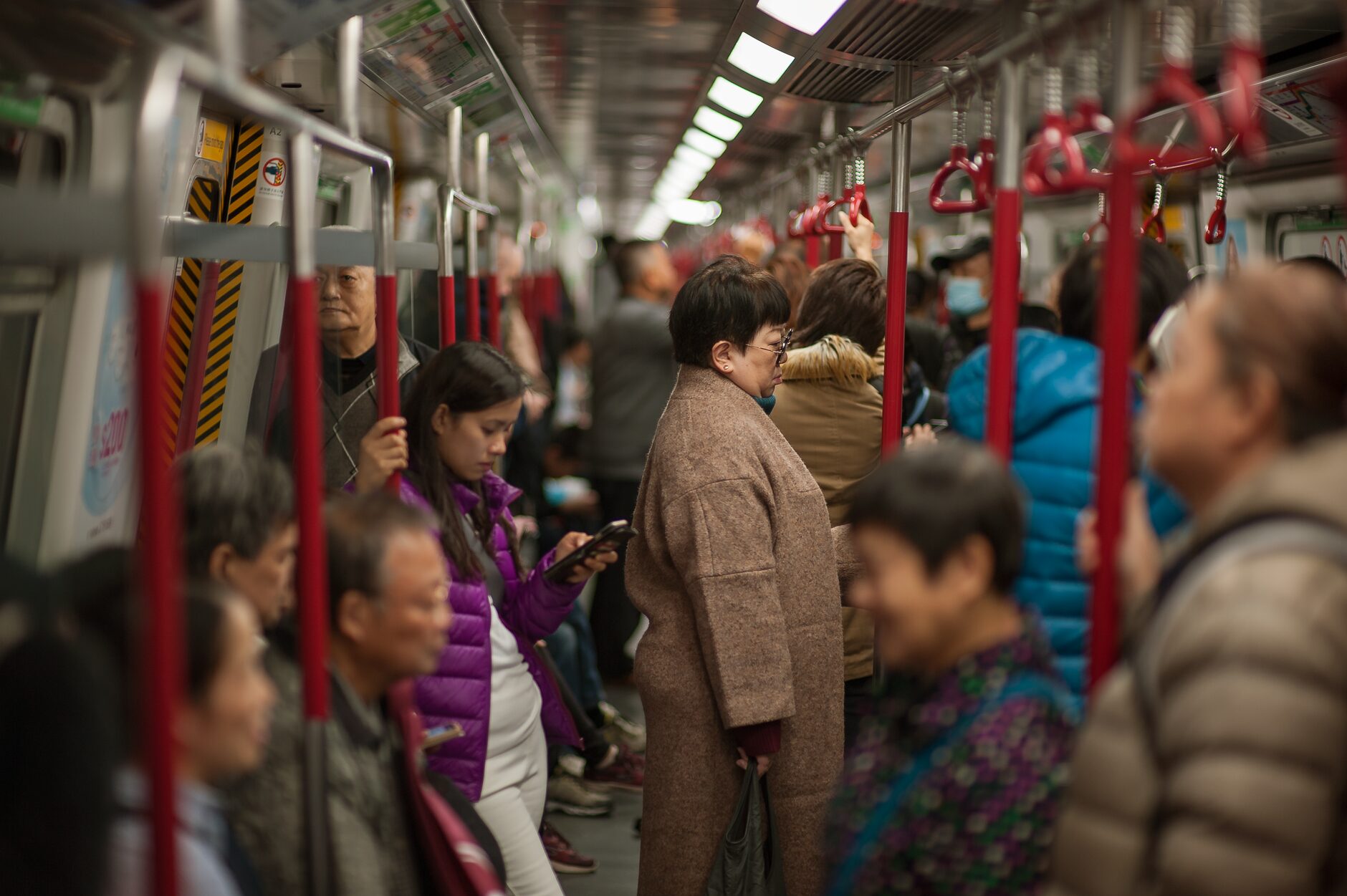
- Let passengers off first — though enforcement varies in busy Shanghai stations
- Give priority seats to elderly, pregnant, and disabled
- No eating on metro trains (¥200 fine if enforced)
- Headphones for music/video — some commuters play sound out loud; this is becoming culturally frowned-upon
- Speak quietly on calls
- Hold the seat for your friend with bag/coat if briefly leaving
- Taxis: get in via the right back door (left side has the driver). Buckle up — required by law. Carry hotel address in Chinese
- Didi: confirm license plate before getting in; chat is auto-translated. See our Didi guide
- Tipping drivers: not expected
- Smoking: banned indoors citywide; banned in taxis
A few Shanghai-specific additions. Every metro station has airport-style bag screening at the entrance — put your bag on the belt, keep moving, and expect to be waved through in seconds. Water bottles are occasionally tested with a handheld scanner. Escalator convention is stand right, walk left, and Shanghai observes it better than most cities.
In taxis, do not sit in the front passenger seat unless the back is full; it reads as odd. Show the driver your destination in Chinese characters on your phone rather than saying it aloud — Shanghai place names are tonal minefields and drivers appreciate the screen. Fumbling for coins is unnecessary as almost every taxi takes Alipay or WeChat Pay. Our Shanghai taxi tips and metro guide cover fares and routes.
Business Etiquette
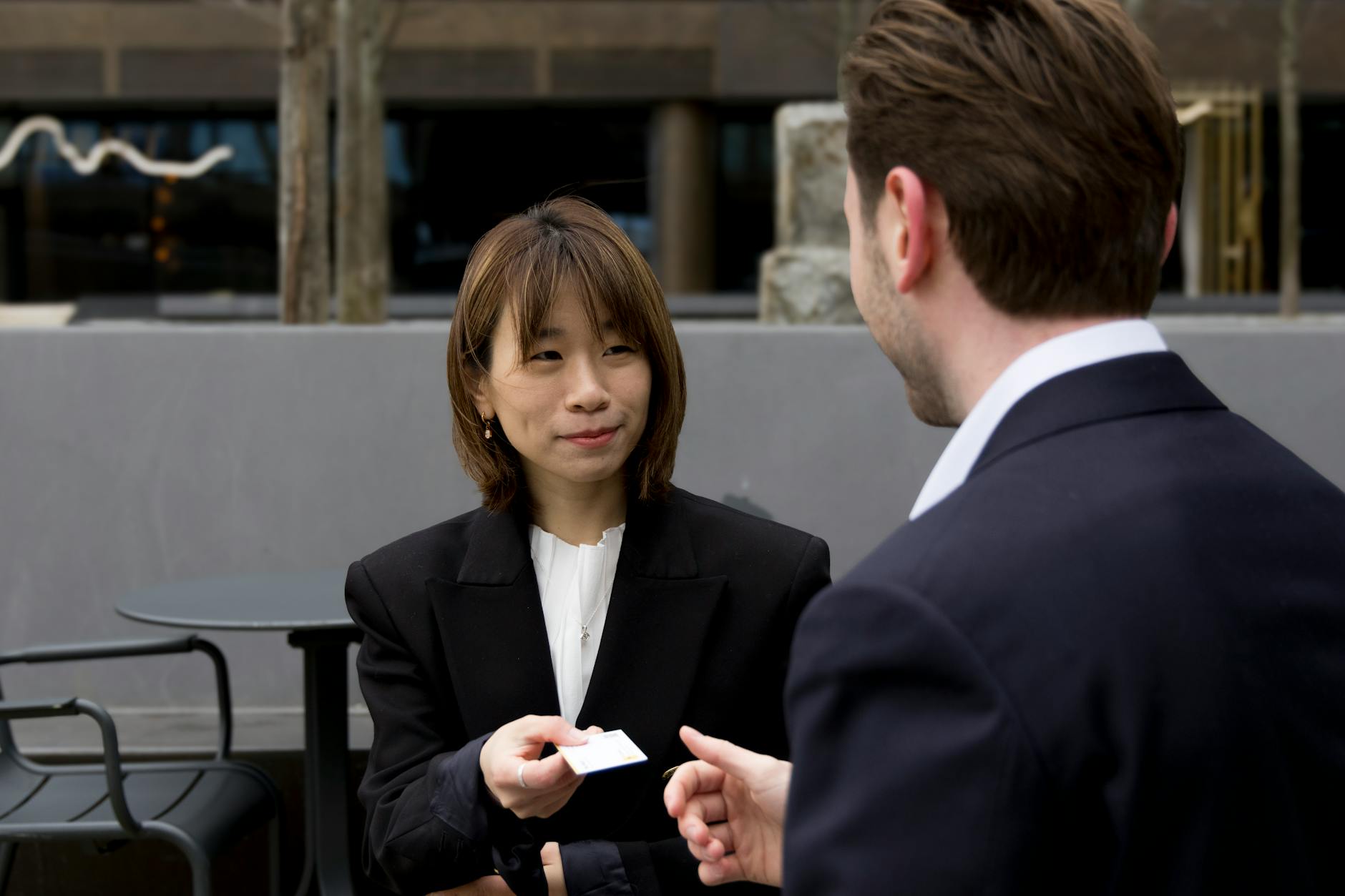
- Business cards exchanged with both hands; receive with both hands; study briefly before pocketing
- Arrive on time for business meetings; punctuality is valued
- Formal address initially — Mr./Ms./Title + family name
- Don’t dive into business immediately — small-talk first; tea or coffee offered
- Hierarchy matters — senior person speaks first; defer in seating
- Bring small gifts for first-time meetings — branded items from your home country are appreciated
- Saving face — never criticise someone publicly; avoid open disagreement; private feedback is fine
- Decision-making takes longer in formal Chinese business; allow multiple meetings
- WeChat exchange is increasingly the de facto post-meeting follow-up
Practical detail people get wrong: never write on a business card you have just been handed, and never shove it straight into a back pocket. Place it on the table in front of you for the duration of the meeting, arranged in the order people are sitting. It doubles as a name prompt.
At a business dinner, expect the meal to matter more than the meeting. Relationships come first and the contract follows, sometimes several dinners later. Bring more business cards than you think you need, ideally double-sided with simplified Chinese on the reverse, and make sure your WeChat QR code is easy to find on your phone — that exchange has largely replaced the card as the thing that determines whether anyone contacts you again.
Etiquette Myths You Can Ignore
Some advice in circulation is decades out of date, and following it makes you look stranger than the mistake it is meant to prevent.
- “You must refuse everything three times.” Once is plenty in Shanghai. Three rounds of theatrical refusal is a period drama, not a dinner.
- “Never show the soles of your shoes.” That is a Middle Eastern and South Asian rule, not a Chinese one. Cross your legs freely.
- “You have to finish everything you’re served.” The opposite, if anything — leaving a little signals sufficiency. Though attitudes to food waste have tightened, so do not over-order.
- “Bow when you greet people.” Japanese and Korean, not Chinese. A nod or handshake is right.
- “Everyone will be offended by chopstick mistakes.” Only the upright-in-rice one registers.
- “You’ll be forced to drink baijiu.” Not in Shanghai, and not as a foreign guest. A polite decline is accepted.
- “Foreigners get overcharged everywhere.” Prices are fixed in shops, restaurants and on the metro, and taxis run on meters. Markets are the exception.
Quick Shanghai Etiquette Dos and Don’ts
DOs
- Greet with “nǐ hǎo” and a slight nod or handshake
- Carry hotel address in Chinese
- Use Alipay/WeChat Pay for nearly everything
- Eat with chopsticks if confident, or ask for a fork
- Toast in turn at banquets
- Bring small gifts (tea, wine, fruit) when visiting homes
- Dress modestly at temples
- Queue (or at least join the cluster) at metro entrances
- Smile, be patient, use translation apps for fuller communication
- Respect elders — yield seats, address them first
DON’Ts
- Stick chopsticks vertically in rice
- Discuss Taiwan, Tibet, Tiananmen Square 1989, or current Chinese political topics
- Tip taxi drivers or restaurant staff
- Give clocks, sharp objects, or items with the number 4
- Wear green hats (cultural innuendo)
- Photograph people without permission
- Refuse a host’s tea or food repeatedly
- Beckon with one finger curled up (use whole-hand palm-down wave)
- Raise your voice at staff in public
- Loudly criticise local customs or compare unfavourably to home
Frequently Asked Questions
Do I need to tip in Shanghai?
No — tipping is not the practice in mainland China. Service charges are sometimes built into bills at upscale hotels, and a tour guide or driver hired privately for several days is the one situation where a tip is welcome rather than confusing.
Is it rude to eat with my hands in Shanghai?
Generally yes — chopsticks are standard, though street snacks, bread, and things served on skewers are eaten by hand. When unsure, copy the table next to you.
What should I avoid talking about in Shanghai?
Avoid initiating discussions of Taiwan, Tibet, Xinjiang, the 1989 Tiananmen events, Falun Gong, or critical commentary on China’s government. It is less about causing offence than about putting a local in a position they did not choose. Other topics are mostly fine — property prices and where to eat are the national small talk.
Is it OK to refuse alcohol at a Chinese banquet?
Yes — say “wǒ bù hē jiǔ” (I don’t drink alcohol) or “wǒ duì jiǔ guò mǐn” (I’m allergic to alcohol). Toast with tea or water instead; raising the glass is what matters, not what is in it.
How do I show respect to elderly Chinese?
Yield seats on public transport; address them with title plus family name; let them speak first; serve them before yourself and refill their teacup or rice bowl before your own.
What clothing is appropriate for Shanghai?
Anything you’d wear at home is fine for daily life — Shanghai is a fashion-conscious city and nobody will look twice. Cover shoulders and knees at temples, and go smart casual for upscale restaurants and rooftop bars, some of which turn away shorts and flip-flops.
Are public displays of affection OK in Shanghai?
Hand-holding and a quick hug are fine and common among young couples. Heavy kissing is uncommon and may attract glances but is not an issue.
Is Shanghai etiquette stricter than Beijing’s?
No. Shanghai is more relaxed and more cosmopolitan, with looser dining and business etiquette than the more formal northern cities. Business hierarchy is taken slightly less seriously here and mixed international teams are routine.
Do I have to use both hands to give and receive things?
For business cards, gifts, and anything handed to someone senior, yes — it takes a second and it is noticed. For a coffee or a receipt, one hand is fine. When in doubt, two hands is never wrong.
What are the biggest Shanghai etiquette mistakes tourists make?
Tipping, raising their voice at staff when something goes wrong, insisting on splitting a bill when they are the guest, and pushing a local for an opinion on a political question. Chopstick errors are far down the list.
Is it rude to bargain in Shanghai?
It depends where. In shops, malls, restaurants and supermarkets prices are fixed and haggling is out of place. In tourist markets — the fabric market, the fake-goods arcades, souvenir stalls — bargaining is expected and the first price is not serious.
What should I do if I make an etiquette mistake?
Acknowledge it lightly, apologise once, and move on. Over-apologising makes the moment bigger than it was. Shanghai is used to visitors, and good humour repairs almost anything.
Plan Your Cultural Trip
Combine with our pillar guides on Shanghai practical tips, Shanghai language barrier, and Shanghai traditional culture, plus our Shanghai customs guide for the entry rules. For background, see Chinese etiquette on Wikipedia.