The Shanghai Metro is the most practical thing a visitor can learn about the city, and it takes about one ride to get the hang of it. With 21 lines, more than 500 stations, and every sign posted in Chinese and English, it moves you across a city that would otherwise swallow hours in traffic. This Shanghai metro guide answers the questions visitors actually ask: which lines you genuinely need, how to buy tickets, how to scan an Alipay or WeChat QR code straight through the gate, which station drops you at the Bund or the Oriental Pearl Tower, what to know about the Maglev, the etiquette that keeps rush hour civil, and the small details (transfer rules, last trains, which exit) that most guides skip.
The short version: ride the metro. It is fast, cheap, clean, and signposted in English well enough that most visitors use it confidently on day one. A typical fare of ¥3–10 (roughly $0.40–$1.40) saves a fortune over taxis and dodges the traffic that clogs central Shanghai at peak hours. Learn Line 2 and Line 10, set up a transit QR code, and you can reach almost every sight a first-timer wants.
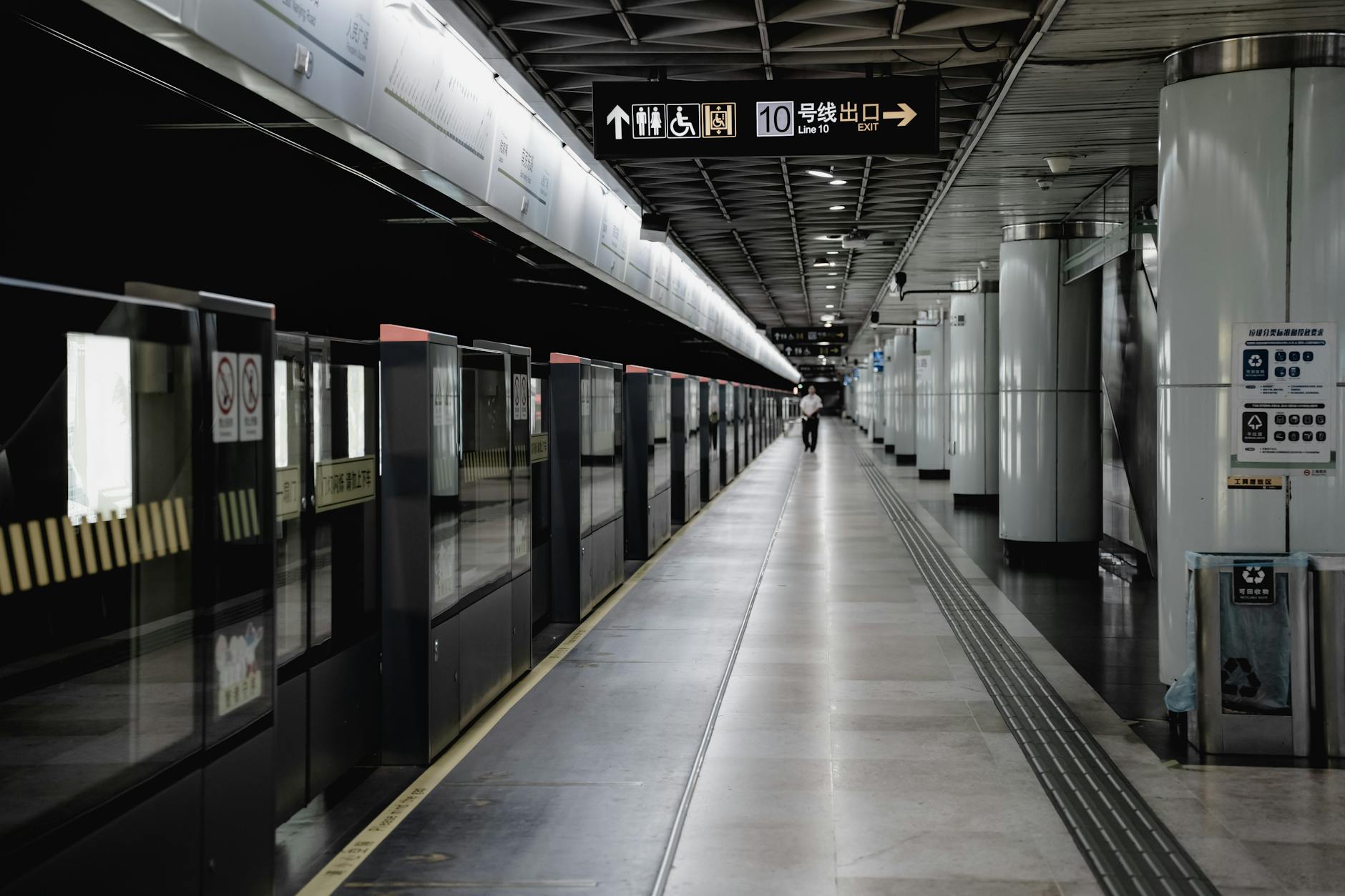
Table of Contents
- The Shanghai Metro Network at a Glance
- Which Lines You Actually Need
- Tourist Sights by Metro Line and Station
- Buying Tickets: Cards, Apps, and Single Rides
- Paying by QR Code: Alipay and WeChat Setup
- How to Ride: Step by Step
- Transfers and the Out-of-Station Trap
- Operating Hours and Last Trains
- Fares and Distance Pricing
- The Maglev: Worth Riding?
- Airport Transfers via Metro
- Apps for Navigating the Metro
- Etiquette and Rush Hour Tips
- Accessibility
- Safety and Security
- Tips and Common Mistakes
- Frequently Asked Questions
The Shanghai Metro Network at a Glance
The Shanghai Metro opened in 1993 with a single line and has grown to 21 lines covering more than 800 kilometers of track, carrying roughly twelve million riders on a busy day. It is generally cited as the longest urban metro system in the world by route length, and it keeps expanding, so any line or station count you read is a snapshot that creeps upward each year.
The map is easier to read than its size suggests. Central lines cross at major hubs (People’s Square, Lujiazui, Xujiahui, Jing’an Temple), while outer lines fan out into the districts. Almost every tourist destination sits within a short walk of a station, and trains come every one to four minutes at peak and four to seven off-peak, so you rarely plan around a timetable.
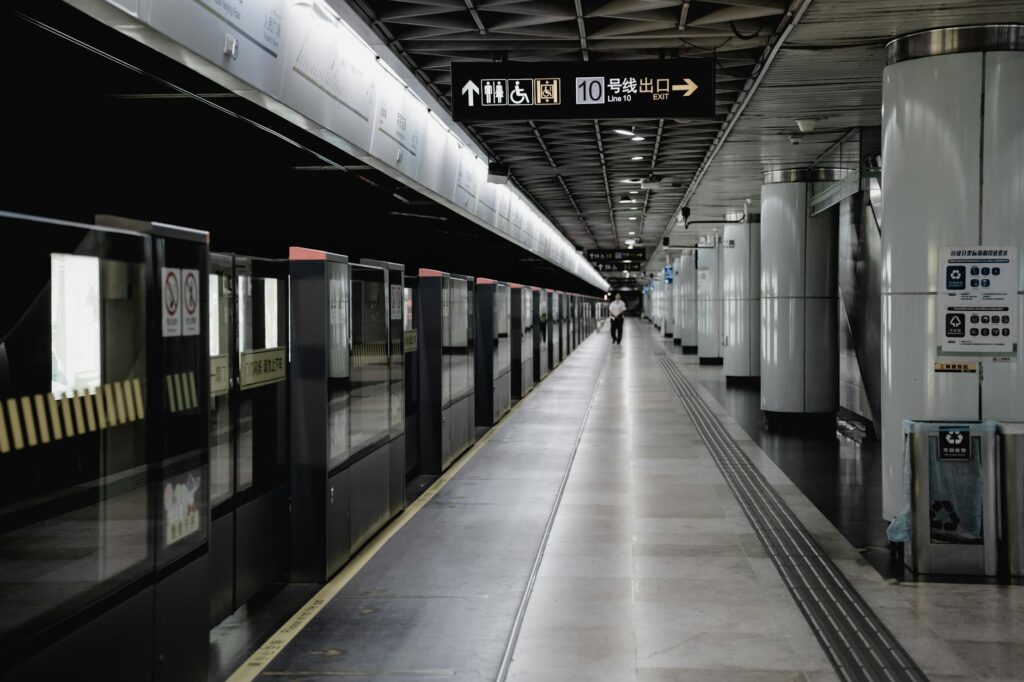
Signage is uniformly bilingual. Every line has a number and a color, every station shows its name in Chinese and English, and announcements run in Mandarin, Shanghainese, and English, with platform screens listing the next station and an arrival countdown. None of it assumes you read Chinese, which is why first-time visitors take to the system so quickly.
Which Lines You Actually Need
For tourists, only a few of the 21 lines matter; the rest serve suburbs and commuter corridors. Learn these and you have most of what a sightseeing trip needs.
Line 2 (green). The east-west spine and the one line you cannot avoid. It runs from Hongqiao Airport and Hongqiao Railway Station in the west, through Jing’an Temple, People’s Square, East Nanjing Road (the gateway to the Bund), and Lujiazui, out to Pudong International Airport. A large share of tourist trips use it at some point, so if you learn one line, learn this one.
Line 10 (purple). The other line tourists lean on. It arcs through the historic core, linking Yuyuan Garden, Xintiandi, the former French Concession (South Shaanxi Road), East Nanjing Road, and the Bund area, with interchanges to Line 2. Use it to hop between old-town and concession sights without funneling through People’s Square.
Line 1 (red). The original line, running north-south. It connects Shanghai Railway Station, People’s Square, and Xujiahui shopping, and its Huangpi South Road stop puts you within reach of the southern Bund. Handy when your hotel sits along this corridor.
Line 11 (brown). The Disneyland line, running direct from Shanghai Disney Resort into the city (Xujiahui, with onward connections toward Hongqiao). The obvious choice for a theme-park day.
A few more, if you need them. Line 4 is a loop that lets you skip the busiest central interchanges; Line 7 threads Jing’an, the former French Concession, and the West Bund museums; and Line 14 is a newer cross-city line into the eastern districts, handy on a return visit.
Lines 3, 5, 6, 8, 9, 12, 13, 15, 16, 17, and 18 serve particular corridors and trips: Line 16 reaches remote eastern Pudong, and Line 17 carries day-trippers out to Zhujiajiao Water Town. If your itinerary does not call for them, you can ignore them entirely without feeling you missed anything.
Tourist Sights by Metro Line and Station
Most first-time visitors plan the opposite way around: pick the sight, then find the station. This table maps Shanghai’s headline attractions to the station and line that serve them, with the exit and rough walking distance that decide whether you surface across the street or a ten-minute hike away. Walking times are approximate and depend on the exit you take.
| Attraction | Nearest Station | Line(s) | Useful Exit | Approx. Walk |
|---|---|---|---|---|
| The Bund (Huangpu waterfront) | East Nanjing Road | 2, 10 | Exit 7 | 5–10 min |
| Oriental Pearl Tower & Lujiazui towers | Lujiazui | 2 | Exit 1 or 3 | 5–6 min |
| Yuyuan Garden & Old Town | Yuyuan Garden | 10, 14 | Exit 1 or 3 | 5–10 min |
| People’s Square & Shanghai Museum | People’s Square | 1, 2, 8 | Various | 1–3 min |
| Jing’an Temple & luxury malls | Jing’an Temple | 2, 7, 14 | Exit 1 | 1–2 min |
| Xintiandi | Xintiandi | 10, 13 | Exit 1 or 6 | 3–5 min |
| Tianzifang (arts lane) | Dapuqiao | 9 | Exit 1 | 3–5 min |
| Shanghai Disneyland | Disney Resort | 11 | Single exit | 1–2 min |
| Zhujiajiao Water Town | Zhujiajiao | 17 | Single exit | 15–20 min |
A few reward a closer look. East Nanjing Road serves both the shopping street and the Bund, so one stop covers two of the busiest sights. Lujiazui drops you among the Pudong towers, minutes from the Oriental Pearl Tower, Shanghai Tower, and the World Financial Center. For water-town day trips, Line 17 to Zhujiajiao is the cheap, reliable route. For more on what to do once you surface, see our guide to things to do in Shanghai.
Buying Tickets: Cards, Apps, and Single Rides
You have several ways to pay, and the right one depends on how long you are staying and how comfortable you are using Chinese apps. None of them is complicated, but a little planning saves you from standing in a ticket line every time you ride.
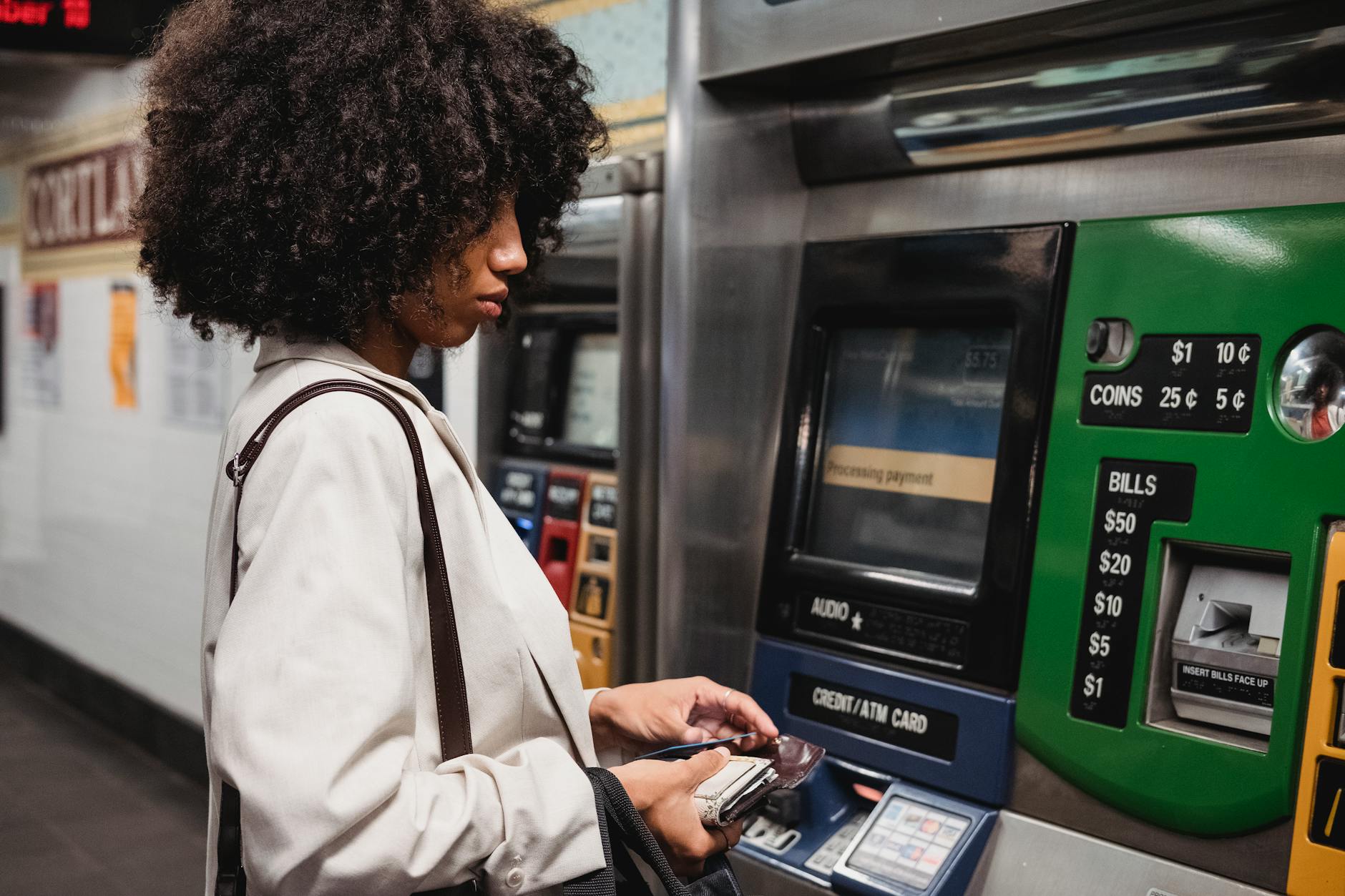
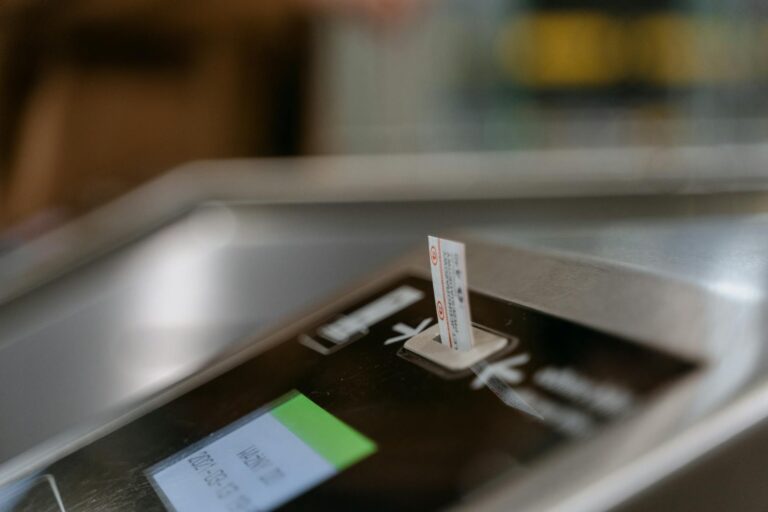
Single-journey ticket. The simplest option for one or two rides. At a self-service machine, switch the screen to English, tap your destination on the map, and pay with cash or (at many machines) a foreign card. You get a thin plastic IC ticket: tap it at the entry gate, then feed it into the exit gate, which collects and recycles it. Fine occasionally, slower if you ride all day.
Shanghai Public Transportation Card (SPTC). The traditional rechargeable card, sold at customer-service windows for a refundable ¥20 deposit and topped up in multiples of ¥10. Tap to enter and exit. It works on the metro, most buses, ferries, and some taxis, carries small transfer and frequent-use discounts, and handles out-of-station transfers cleanly (more below). Return it at a service window at trip’s end to reclaim the deposit.
One-day pass. ¥18 for unlimited metro rides over 24 hours from first use. Worth it only if you expect more than about five rides in a day. The Maglev is not included.
Three-day pass. ¥45 for 72 hours of unlimited rides. Same logic as the one-day pass, aimed at metro-heavy multi-day itineraries. These passes are not returned, so they double as a small souvenir.
Maglev & Metro combo pass. Sold for arrivals at Pudong, this pairs a Maglev trip with 24 hours of unlimited metro rides for around ¥85, reasonable if you want the Maglev novelty and plan to ride hard on arrival day.
By far the most common method today is none of the above: most riders simply scan a QR code from their phone, covered next. Prices here are current at the time of writing; the gate always charges the live fare.
Paying by QR Code: Alipay and WeChat Setup
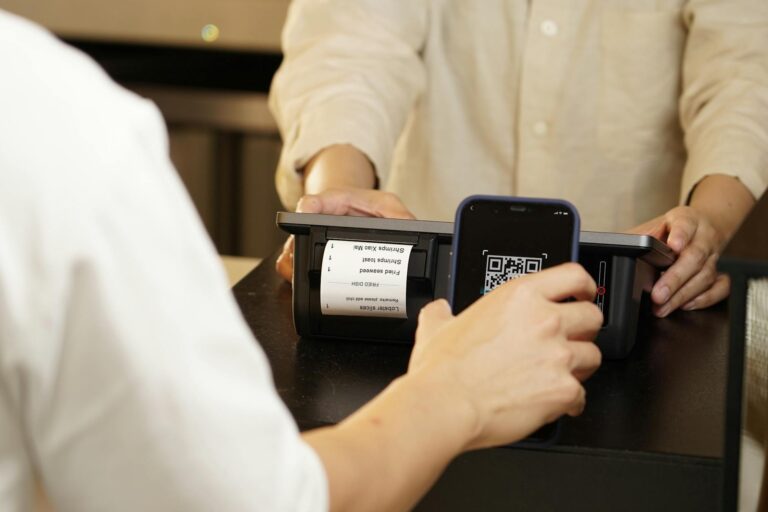
The way locals ride, and increasingly the way visitors do, is a transit QR code generated inside Alipay or WeChat Pay. Set it up once and you never touch a ticket machine again. Setup is the only fiddly part, and it is far easier now that both apps support foreign cards.
The broad steps are the same in either app:
- Install and register before you arrive, while you still have reliable app-store access; sign up with your phone number and an SMS code.
- Verify your identity with your name and passport details (and a passport photo when asked). This standard step unlocks the transit features.
- Link a foreign card. Both apps now accept Visa, Mastercard, American Express, Discover, and others. Add the card in the wallet or bank-cards section and confirm through your bank.
- Open the transit mini-program. In Alipay, tap “Transport” and set the city to Shanghai; in WeChat, open the ride-code (“Chengchema”) mini-program, and agree to the terms once.
- Scan at the gate. A QR code appears. Hold it to the scanner to enter, walk through when cleared, and scan again to exit. The distance-based fare is deducted automatically, usually shortly after you leave.
There is also a standalone official app (the Shanghai Metro “Metropolitan”/DADUHUI app) that generates a transit code, but foreign visitors often find Alipay or WeChat smoother for identity verification. Watch for your home bank’s foreign-transaction fees; a no-foreign-fee travel card helps. Once set up, paying is a one-second tap, which is why it is now the default.
How to Ride: Step by Step
Riding is simple, but a quick walk-through removes the first-time hesitation.
Step 1: Find your line and direction. Use a routing app to pick the line and the direction, which is named after the terminal station (“Line 2 towards Pudong International Airport”). Both the number and color appear on every sign.
Step 2: Enter the station. Look for the “Metro” sign with the line color at street level. Bigger stations have several lettered entrances (1A, 1B); at tourist-heavy stops, the wrong one can add ten minutes of walking.
Step 3: Security check. Every entrance has a bag X-ray, and all bags go through it. Have your bag open and ready; staff may test a liquid bottle or wave a handheld wand. It takes about thirty seconds, with no removing shoes or jackets, and it is part of why the system feels so orderly.
Step 4: Through the fare gate. Look for a gate with a green light. Tap your card, scan your QR code, or insert your single-journey ticket, and walk through.
Step 5: Find the platform. Follow the color-coded signs for your line and direction. Platforms have screen doors aligned with the train doors; wait behind the marked line.
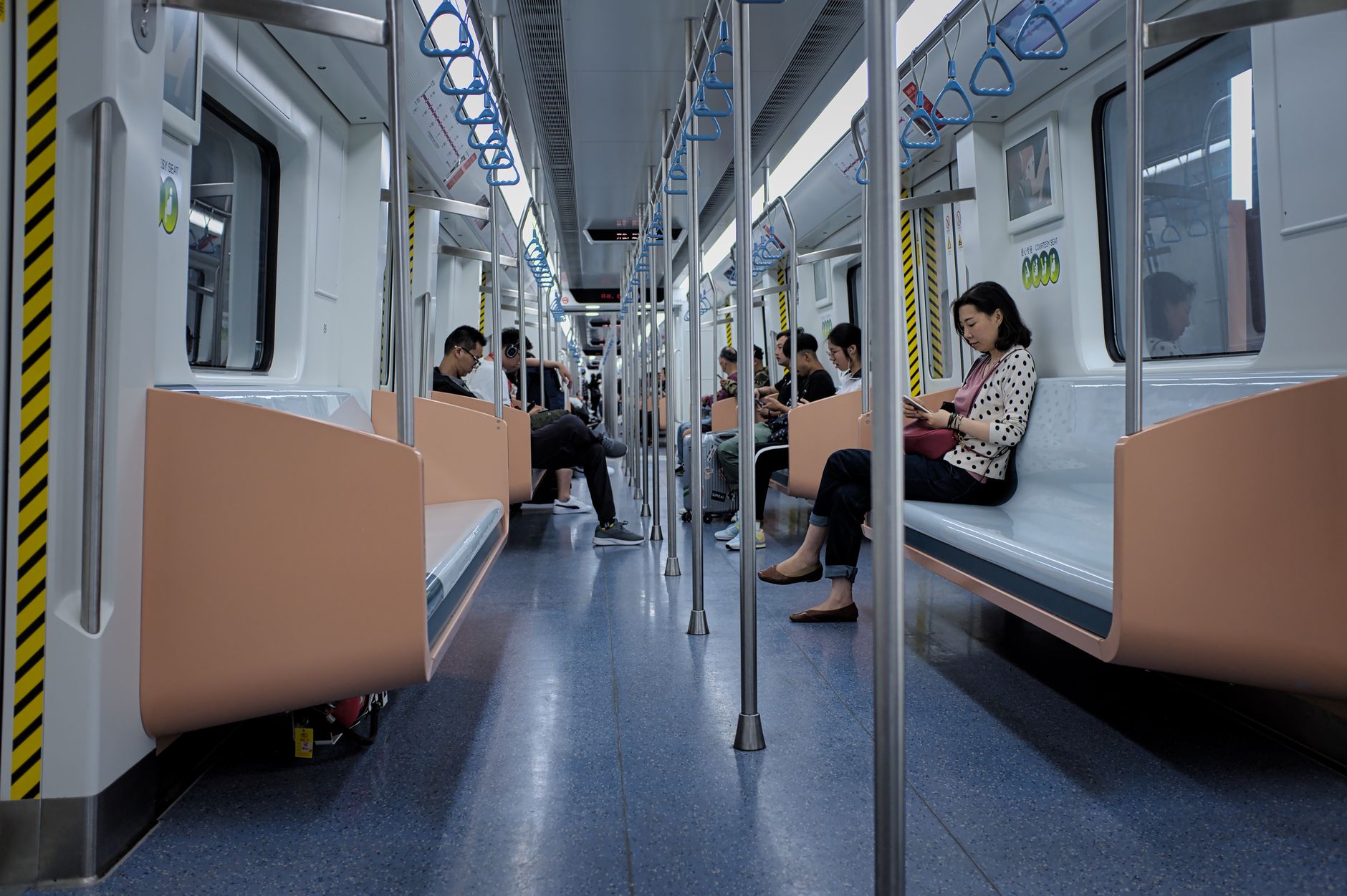
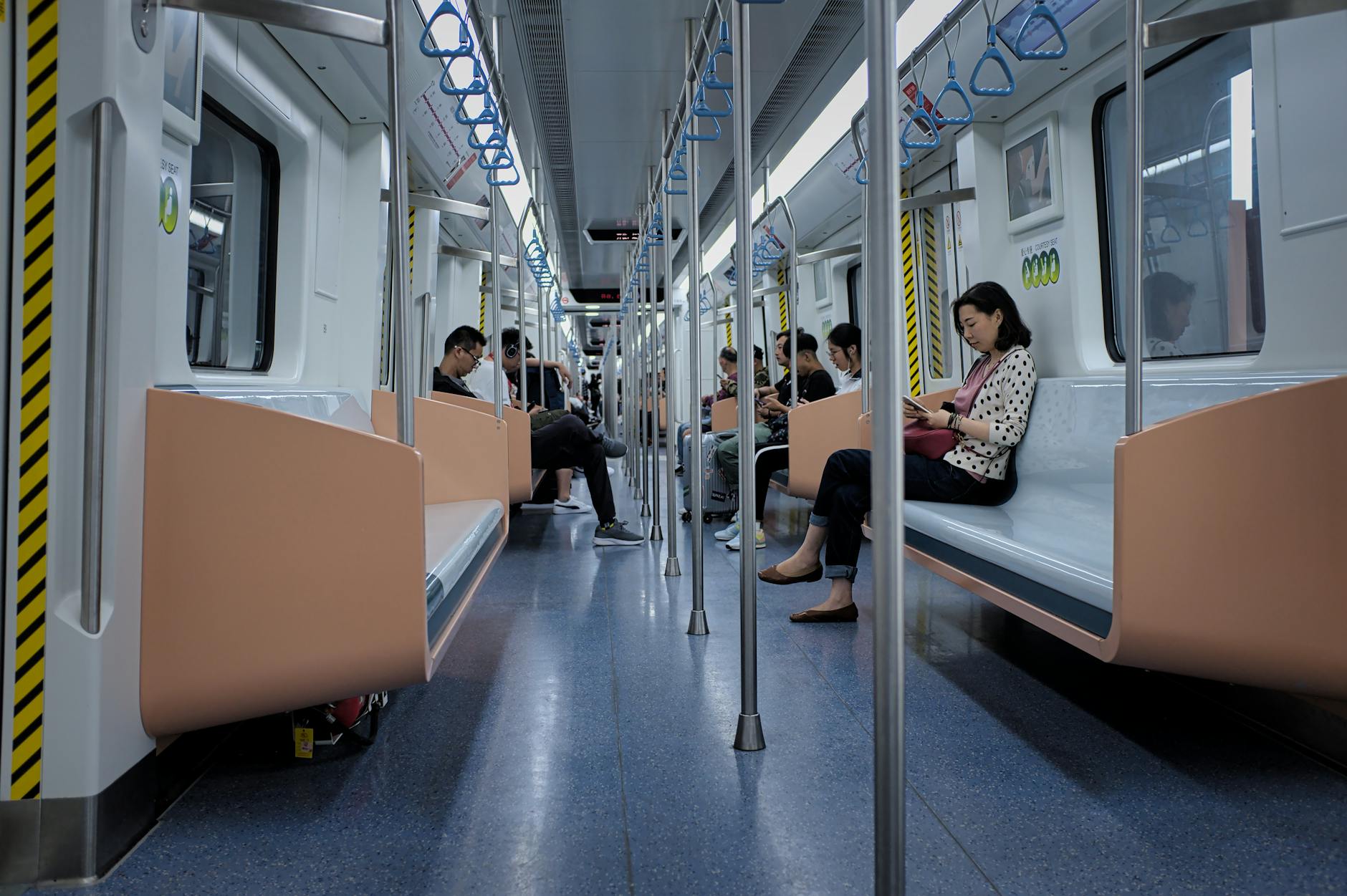
Step 6: Board. Let people off first, then step on and grab a pole. Doors are automatic, and each stop is announced in Mandarin, Shanghainese, and English, with the next station on the screens above the doors.
Step 7: Exit through the gate. Tap, scan, or insert again on the way out; the system charges the distance-based fare. Use the numbered exit maps to surface as close to your destination as possible.
Transfers and the Out-of-Station Trap
Most transfers are easy: follow the color-coded signs to your next line without leaving the paid area, and the journey counts as one fare. People’s Square, where Lines 1, 2, and 8 meet, is the busiest interchange and involves long corridors, so allow a few extra minutes and avoid it at peak times if you can.
The catch worth knowing is the out-of-station transfer. At a few stations, notably around Shanghai Railway Station, the connecting line requires you to exit one set of gates and enter another. A single-journey ticket is destination-specific and will not re-admit you, so you would pay twice. The SPTC and QR-code apps are built for this: complete the transfer within the allowed window (around half an hour) and the system treats both legs as one journey. It is one more reason a card or QR code beats single tickets.
Operating Hours and Last Trains
Hours vary a little by line, but the general pattern is:
- First trains: around 5:30 AM from outer starts, about 6:00 AM at most central stations.
- Last trains: roughly 10:30 to 11:00 PM at most stations, with some routes (Line 2 among them) running closer to midnight, especially at weekends, and others stopping earlier on weeknights.
There is no overnight service. After the last train, your options are a taxi, a DiDi (China’s main ride-hailing app), or a limited, Chinese-only night bus. If you are out late at the Bund or in the former French Concession, plan your exit: the last metro from a central station typically leaves around 11:00 PM, and customer-service windows close near 10:00 PM. Check the last-train time at your specific station, since lines differ by ten or fifteen minutes. Our broader getting around Shanghai guide covers late-night taxi and ride-hailing options.
Fares and Distance Pricing
Shanghai Metro fares are distance-based, and the structure is simple:
- ¥3 for trips under 6 km.
- An extra ¥1 for roughly every additional 10 km.
- A cap of ¥15 for a single trip.
In practice, most central rides land at ¥3–7 (about $0.40–$1.00), while longer hauls to the suburbs or airports run ¥8–15. The day pass (¥18) and three-day pass (¥45) pay off only for heavy riding, and the Maglev is priced separately at ¥50 one-way. Treat all figures as approximate and current at the time of writing; the gate charges the live fare, and prices can change.
The Maglev: Worth Riding?
The Shanghai Maglev (magnetic levitation train) is the world’s first commercial maglev line. It runs between Pudong International Airport and Longyang Road station in about eight minutes. It has run at a top speed of 300 km/h since May 2021; the 431 km/h figure belongs to the earlier timetable. Technically it sits outside the metro system but connects to it at Longyang Road.
The case for it. It is the quickest way between Pudong Airport and the eastern edge of the network, and the acceleration is worth feeling once. Tickets run around ¥50 one-way and ¥80 round-trip, with discounts if you show a same-day air ticket.
The case against it. Longyang Road is a transfer point, not a destination. From there you still change to Line 2 (or 7 or 16) for central Shanghai, so the door-to-door time to the Bund is about an hour, similar to riding Line 2 straight from the airport for a fraction of the cost.
The verdict. Ride it once for the experience, ideally on arrival when the novelty is freshest. On the way back, Line 2 straight to the airport is cheaper and about as fast.
Airport Transfers via Metro
The metro reaches both Shanghai airports directly, which makes the city unusually easy to arrive in by public transport. Your best option depends on the airport and how much luggage you are hauling.
Pudong International Airport (PVG). Metro Line 2 runs to the airport, with the line splitting in the east, so check whether your train continues all the way or requires a short cross-platform change near the airport end. From the Bund, allow roughly 90 minutes door to door. The Maglev-plus-metro combination is faster (about an hour) but costs more. For the full breakdown of routes, times, and costs, see our dedicated guide on Pudong Airport to the city center.
Hongqiao Airport (SHA). Metro Lines 2 and 10 both serve Hongqiao Terminal 2 directly. From central Shanghai (Lujiazui or East Nanjing Road) the ride is about 35–45 minutes, and the metro is the obvious default here. Our Hongqiao Airport guide walks through terminals, the co-located rail station, and onward connections.
Hongqiao Railway Station. Co-located with Hongqiao Airport and served by Lines 2, 10, and 17. From the Bund, reckon on 30–40 minutes. This is your launch point for high-speed day trips to Suzhou and Hangzhou.
One honest caveat: with heavy or bulky luggage, a taxi or DiDi can beat the metro’s stairs and crowded cars, especially at rush hour, and the metro has luggage limits (a single bag under about 23 kg). For light luggage, though, the metro is the cheapest and most reliable airport link in the city.
Apps for Navigating the Metro
You do not need Chinese to navigate, but the right app removes all the guesswork. A few cover the metro well:
- MetroMan / Metro China Subway is the long-standing favorite among foreign visitors: offline English maps, fare and travel-time estimates, and clear transfer guidance.
- Citymapper handles Shanghai with line numbers, transfer times, and, helpfully, which exit to use.
- Apple Maps gives solid metro routing without a VPN. Google Maps works too but typically needs a VPN in mainland China.
- Alipay and WeChat double as your ticket (via the transit QR code) and include in-app transit directions.
Whichever you use, the most valuable thing these apps tell you is the exit number. Big stations have ten or more exits, and the wrong one adds a long walk above ground.
Etiquette and Rush Hour Tips
Shanghai Metro etiquette has tightened over the past decade and now sits closer to Tokyo’s norms than to most Western systems. None of it is hard; following along just makes you a smoother rider.
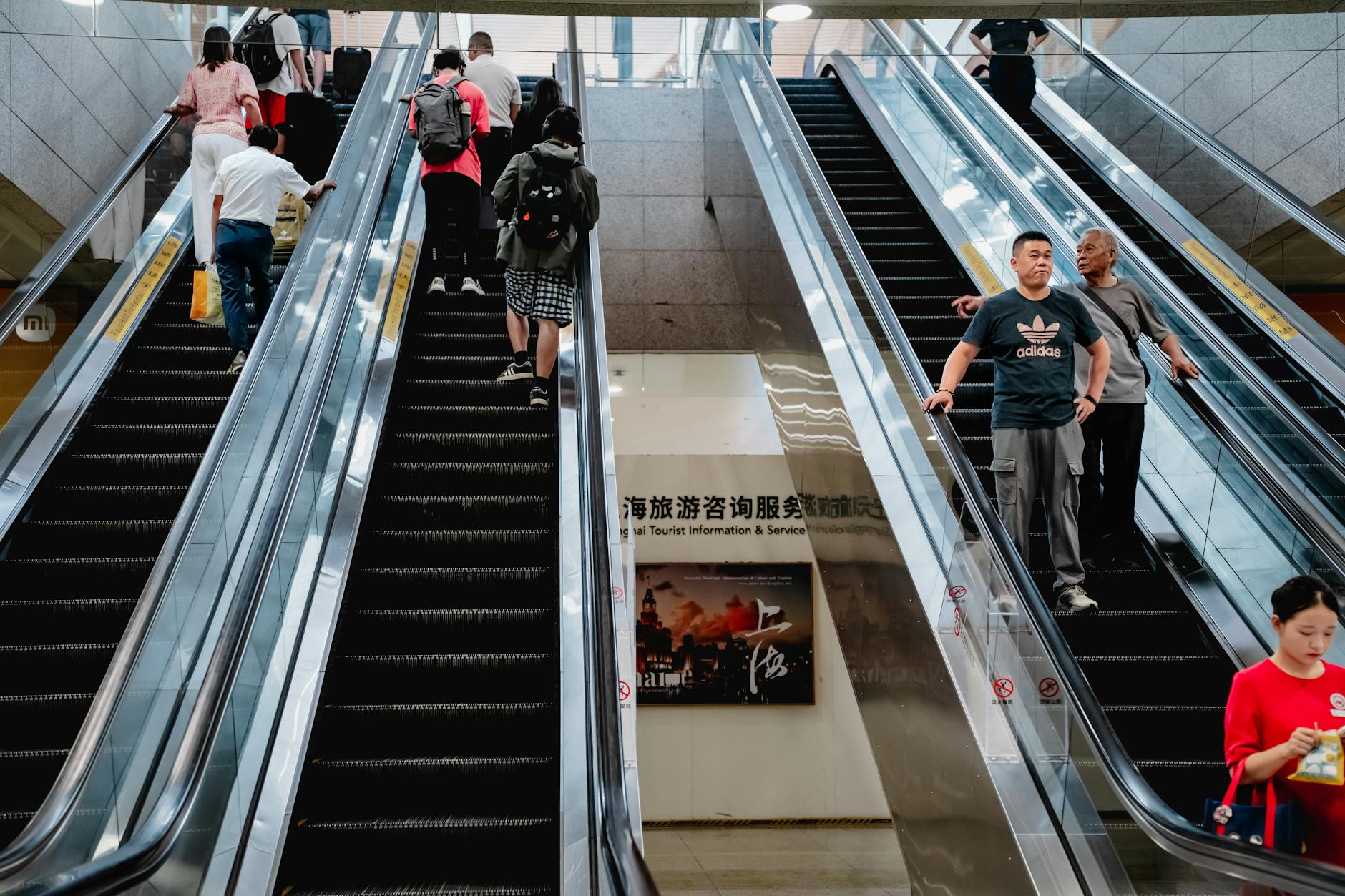
Stand right, walk left, and let people off first. Standing on the left of the escalator blocks people in a hurry, and yellow platform markings show where to wait so departing riders can exit cleanly. Cutting in is rare and frowned upon.
Backpack on your front in crowded cars. A Tokyo-style courtesy that has become Shanghai practice; it stops accidental jabs.
Keep the volume down and use the priority seats wisely. Speakerphone audio is rare and earphones are universal. Marked seats are for the elderly, pregnant riders, disabled passengers, and parents with young children, and other riders give them up readily.
No eating or drinking. Officially restricted in stations and trains. A bottle of water draws no reaction; hot or strong-smelling food brings stares.
Mind the rush. Peaks run about 7:30–9:30 AM and 5:00–7:00 PM on weekdays, heaviest on Lines 1, 2, 4, and 10 and through People’s Square. Shifting your trip by half an hour either side makes a real difference.
Accessibility
Accessibility has improved but is uneven. Newer lines (10 and above) generally have good elevator coverage; older lines (1 to 4) are patchier. Wheelchair-accessible entrances are marked on station signage, and major hubs such as People’s Square, Lujiazui, and Hongqiao are fully accessible, though some smaller central stations still rely on stairs.
Accessible toilets are available at most central stations, and tactile paving plus audio announcements support visually and hearing-impaired travelers. If step-free access is essential for your trip, check elevator availability at your specific stations in advance. For wider mobility and access notes across the city, see our Shanghai practical tips for tourists.
Safety and Security
The Shanghai Metro is among the safest urban transit systems anywhere. Violent crime is effectively unheard of, and the main thing to guard against is pickpocketing in crowded cars and hubs, so keep valuables in front pockets at peak times. Solo female travelers consistently report feeling comfortable, including late in the evening.
The bag X-ray at every entrance is standard; liquids over 100 ml may be sniff-tested. The enclosed platform screen doors are a quiet safety feature, opening only when a train is present, and each car has emergency intercoms and call buttons, with staff stationed at entrances and platforms.
Tips and Common Mistakes
Set up a QR code on day one. Five minutes in Alipay or WeChat saves a ticket queue on every later ride.
Check the exit number before you surface. The right exit lands you across the street; the wrong one adds a ten-minute walk.
Avoid Lines 1 and 2 at peak rush if you can. Off-peak rides are far more pleasant, and itineraries are usually flexible enough to shift.
Top up at machines, not service windows. Windows have queues; machines take cash, cards, and apps.
Single-journey tickets: keep yours until you exit, and watch out-of-station transfers. You need the ticket to leave, and it will not re-admit you at a transfer that requires exiting the gates, so a card or QR code is safer there.
Buy tickets before service windows close. They shut around 10:00 PM, earlier than the last train.
Skip the metro with oversized luggage at rush hour. Cars get tight; off-peak, or a taxi, is far easier with big bags.
Frequently Asked Questions
Is the Shanghai Metro easy for English speakers?
Yes. Maps, signs, and announcements are all bilingual, and staff at major stations speak basic English. Most visitors are confident on the metro within their first day.
How much does a typical metro ride cost?
Most central rides cost ¥3–7 (about $0.40–$1.00). Fares are distance-based, from ¥3 up to a ¥15 cap for a single trip.
How do I pay for the Shanghai Metro?
The easiest method is a transit QR code in Alipay or WeChat: set it up once, then scan at the gate to enter and exit. You can also use a rechargeable Shanghai Public Transportation Card or single-journey tickets from machines.
Can I use my foreign credit card on the metro?
Yes. Many vending machines accept Visa, Mastercard, and UnionPay, and both Alipay and WeChat now link foreign cards for QR-code payment, which is smoother day to day.
Does the metro run all night?
No. Last trains leave most central stations around 10:30–11:00 PM, with a few lines closer to midnight. For later trips, use a taxi or DiDi.
How does the Maglev differ from the metro?
The Maglev is a separate magnetic-levitation line linking Pudong Airport to Longyang Road station at up to 300 km/h. It is faster but pricier (around ¥50 one-way) and does not reach central Shanghai directly; you still transfer to Line 2.
Are there one-day or three-day metro passes?
Yes. A one-day pass is about ¥18 and a three-day pass about ¥45, both for unlimited metro rides, sold at customer-service windows. They are worth it only for heavy riding.
Is it safe to take the metro at night?
Yes. Trains and stations are well-lit and staffed until the last train, and solo female travelers report feeling safe. The main risk is petty pickpocketing in crowds.
Which metro station should I use for the Bund?
East Nanjing Road on Lines 2 and 10. Take roughly Exit 7 and walk five to ten minutes east to the waterfront; the same station also serves the Nanjing Road shopping street.
What is the busiest metro station?
People’s Square, where Lines 1, 2, and 8 interchange, is the busiest in the system. East Nanjing Road, Lujiazui, and Xujiahui are also very busy.
This Shanghai Metro Guide in One Sentence
The Shanghai Metro is one of the best parts of visiting the city. With Lines 2 and 10 in your head, a transit QR code in Alipay or WeChat, and a sense of when to dodge rush hour, you can cross Shanghai with the ease of a resident. For the full transit picture, see our Getting Around Shanghai pillar guide; to build metro-based days, our Shanghai itinerary planner; and for everything else a first-timer needs, our Shanghai practical tips for tourists.
Ride it for one day and you will probably ride it for the rest of your trip. It is that good.
For more background, see Shanghai Metro on Wikipedia.