The first real decision of any Shanghai trip happens before you have even cleared the gate: how to get from Pudong International Airport (PVG) to wherever you’re staying. Getting from Pudong airport to city center is not complicated once you know the choices, but the right one depends on your luggage, the time you land, how wrecked you feel after the flight, and your budget. Five practical options cover almost everyone — the Maglev, Metro Line 2, a metered taxi, ride-hailing through Didi, and the airport shuttle buses — plus private transfers if you want a name-board pickup. This guide walks through every one of them with realistic timing, costs, the small gotchas that trip up first-timers, and side-by-side comparisons so you can decide on the plane instead of in the arrivals hall.
The short version: the Maglev paired with Metro Line 2 is the fastest sensible combination at roughly an hour door-to-door, and the Maglev leg alone takes 7—8 minutes. Metro Line 2 on its own is the cheapest at about ¥8 but the slowest at 75—90 minutes. A taxi is the easiest with bags at roughly ¥160—¥250 and 45—70 minutes depending on traffic. Everything below expands on those headline numbers, including what runs late at night, how the Guanglan Road transfer works, and which terminal you are actually in.
Pudong International Airport sits about 30 km (roughly 19 miles) east of the Bund, on the far eastern edge of the Pudong New Area. It handles the bulk of Shanghai’s international arrivals across two terminals, T1 and T2, plus a satellite concourse reached by an automated people-mover after immigration. Every transit option below is available from both terminals; the only difference is a short, free inter-terminal shuttle if your option departs from the other building — most relevant for the metro and Maglev, which sit closest to T2.
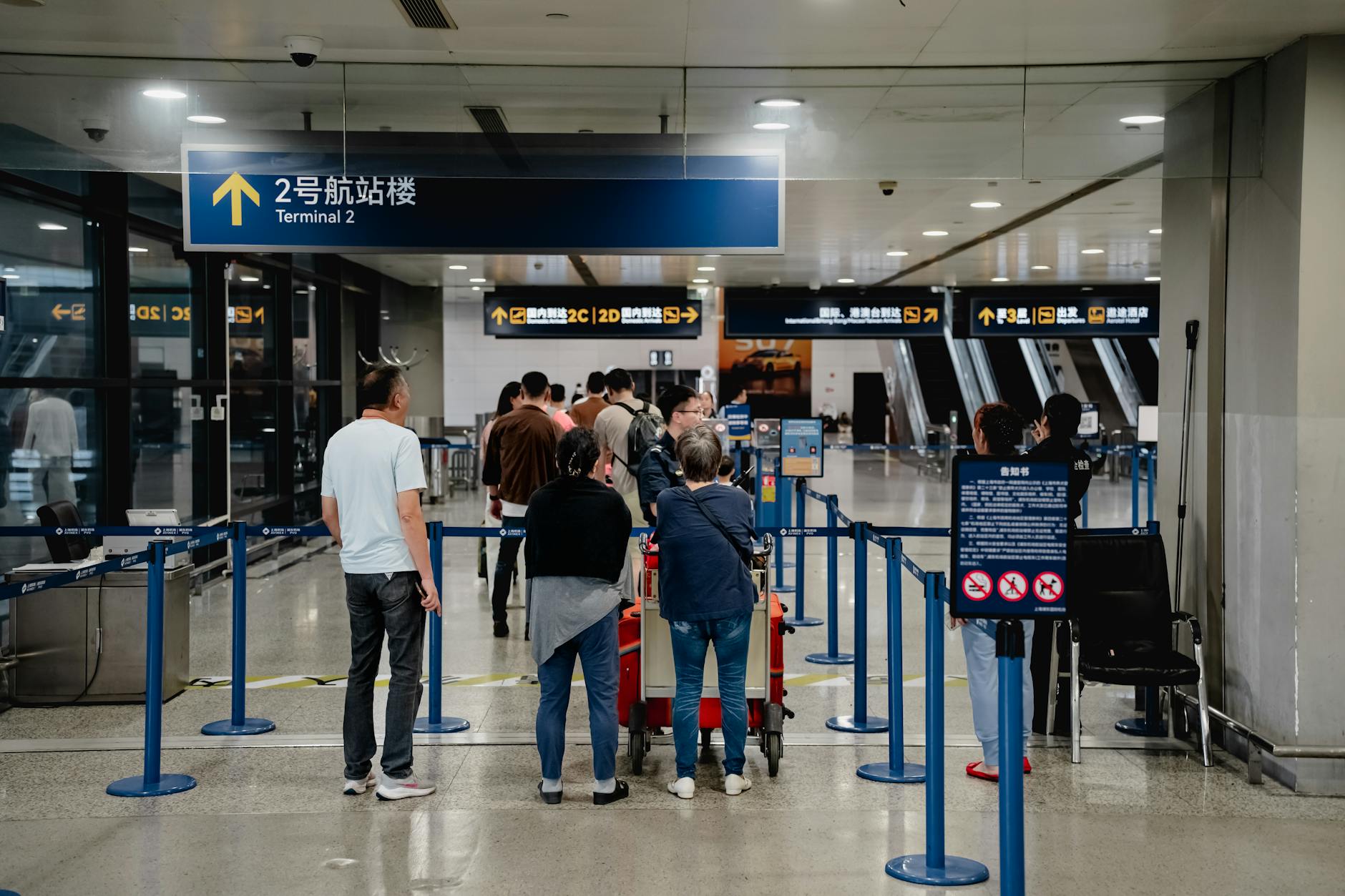
Table of Contents
- Quick comparison at a glance
- First steps after you land
- Maglev: the fastest leg
- Metro Line 2: the cheapest ride
- Taxi: easiest with luggage
- Didi and ride-hailing
- Airport shuttle buses
- Private car and hotel transfers
- Late-night arrivals
- Choosing the best option for you
- Handling luggage
- Continuing on to Hongqiao
- Tips and common mistakes
- Frequently asked questions
Quick comparison at a glance
Here are the five main ways from Pudong airport to city center compared head to head, assuming a destination near the Bund, East Nanjing Road, or People’s Square (central Puxi). Prices and times are approximate and shift with traffic, the time of day, and exactly where your hotel sits.
| Option | Approx. cost (one-way) | Approx. time | Best for |
|---|---|---|---|
| Maglev + Metro Line 2 | ¥58 (¥50 + ¥8) | ~60 min | Speed plus the novelty |
| Metro Line 2 only | ¥7—¥8 | 75—90 min | Tightest budget, light bags |
| Taxi (metered) | ¥160—¥250 | 45—70 min | Heavy luggage, late arrivals |
| Didi (ride-hailing) | ¥150—¥230 | 45—70 min | App users, tracked rides |
| Airport shuttle bus | ¥8—¥34 | 60—90 min | Hotels near a bus terminus |
For most international visitors landing with a suitcase, the honest default is a taxi or Didi — door to door, no stairs, no transfer to puzzle out while jet-lagged. If you are traveling light and want the experience, the Maglev plus metro is the fun answer. If money is the only consideration, Metro Line 2 alone is unbeatable. The sections below explain when each of these is genuinely the right call rather than just the cheapest or the flashiest.
First steps after you land
Before you pick a transport mode, a few minutes of preparation in the terminal saves a lot of friction. Pudong is large but the flow is logical: you clear immigration, collect bags, pass customs, and emerge into the arrivals hall where overhead signs point to every option with both Chinese and English text and a clear pictogram for Metro, Maglev, Airport Bus, and Taxi.
Sort out a data connection. Almost everything convenient — Didi, mobile maps, QR-code metro entry, translation — needs working mobile data. If you have not arranged an eSIM or roaming, connect to the free airport Wi-Fi first and at minimum download an offline map, screenshot your hotel’s Chinese address, and set up your payment app while you still have signal.
Have a payment backup. Alipay and WeChat Pay now link to most foreign Visa and Mastercard cards and cover metro machines, taxis, and shops, but carry a little cash too. ATMs in the arrivals hall take most foreign cards, and a few hundred yuan covers a taxi or metro ticket if an app misbehaves at the wrong moment.
Write your destination in Chinese. Many drivers speak limited English, and hotel names get garbled in translation. Screenshot the Chinese name and address of where you are staying before you fly. If your booking only lists an English name, ask the property for the Chinese version in advance. New to the city? Our first time visiting Shanghai guide covers the first few hours after arrival in more depth.
Maglev: the fastest leg
The Shanghai Maglev was the world’s first commercial magnetic-levitation line, and it still does the headline trick: it covers the 30 km between Pudong Airport and Longyang Road station in 7—8 minutes, running at 300 km/h since 2021 (the 431 km/h top speed of earlier years is no longer used). A digital readout in each carriage shows the live speed, and the cabin stays remarkably smooth even at full tilt. As a way to start a trip, it is hard to beat.

How it works. The Maglev station connects to both terminals by a short, signed walkway (it is closest to T2). Buy a ticket at the staffed counter or a self-service machine, clear a quick security check, and board — trains leave every 15—20 minutes. Operating hours run from roughly 6:45 AM to 9:40 PM, so it is a daytime and early-evening option only.
Cost. A standard one-way ticket is ¥50; a round-trip is ¥80. Show your same-day boarding pass and the one-way fare drops to about ¥40.
The transfer at Longyang Road. The Maglev does not reach central Shanghai on its own — it deposits you at Longyang Road, a metro interchange out in eastern Pudong. From there you connect to Metro Line 2 westbound (toward People’s Square, East Nanjing Road, and on to Hongqiao), or Line 7, or Line 16. Most visitors want Line 2. The walk between the Maglev exit and the metro platforms takes about five minutes and is signed in English.
Total door-to-door time. Pudong Airport to East Nanjing Road or People’s Square comes to roughly 60 minutes once you add the Maglev leg, the transfer walk, and the Line 2 ride — the quickest reliable way into the center during operating hours, narrowly ahead of a taxi in heavy traffic.
Best for: travelers who want the experience, are carrying light or medium luggage, and are headed somewhere central or near a Line 2 stop. It is especially worth doing on the way in, when the novelty lands hardest and you are not yet sick of dragging bags.
Drawbacks: it requires a transfer, so the headline 8-minute figure is only one leg of the trip. Hauling several suitcases through the Longyang Road change is awkward, and the line shuts by late evening, so it is no help to red-eye arrivals.
Metro Line 2: the cheapest ride
Metro Line 2 runs directly from Pudong Airport across the whole city on a single line, which makes it the cheapest and most fail-safe option when traffic is unpredictable. It is slow, but at around ¥8 it is the most affordable way to anywhere central, and the signage is clear enough that first-timers rarely get truly lost.
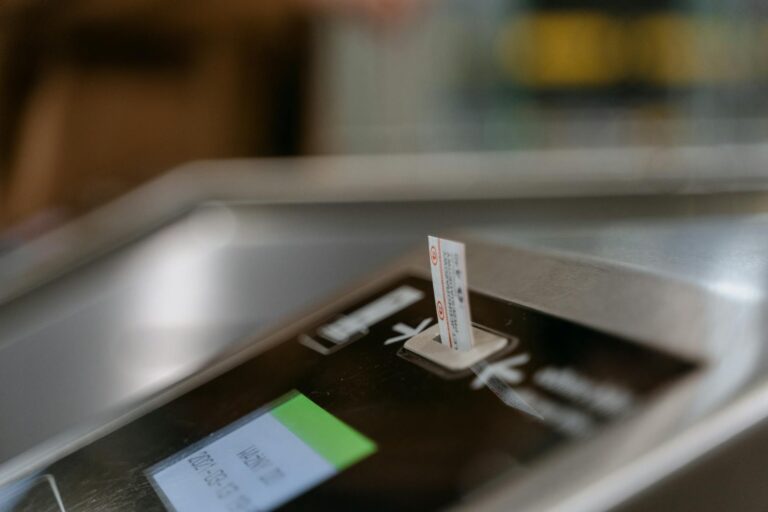
How it works. The Line 2 station sits at Terminal 2 (a free shuttle connects from T1). Buy a single-journey ticket from a self-service machine — about ¥8 to East Nanjing Road — or tap in with the QR-code transit feature in Alipay or WeChat Pay. The first train leaves around 6:00 AM and the last departs the airport at roughly 10:00—10:30 PM, varying by direction and day, so confirm if you are cutting it close.
The Guanglan Road transfer. This is the one quirk worth knowing in advance. The airport stretch of Line 2 runs as a short 4-car shuttle train; at Guanglan Road you get off and switch to a full 8-car train continuing into the city. It is the same line and direction — you simply step across to the train on the opposite side of the platform, no stairs or escalators involved — but it surprises people expecting a single seamless ride. Allow an extra five minutes and watch for the announcement, which staff and signage flag clearly. Our full Shanghai metro guide explains tickets, apps, and how to read the line maps.
Cost. Fares are distance-based, landing at about ¥7—¥8 to most central destinations — a fraction of any other option.
Total time. Plan on 75—90 minutes from Pudong Airport to East Nanjing Road or People’s Square, including the Guanglan Road change. It is the slowest mainstream option, but it is also the most predictable — no traffic, no surge pricing.
Best for: budget travelers, light luggage, and anyone with no time pressure who would rather watch the city scroll past than sit in traffic.
Drawbacks: it is long, the Guanglan Road transfer confuses first-timers, and the cars get packed at rush hour — not where you want to be wrestling a suitcase at 8:30 AM.
Taxi: easiest with luggage
For travelers with real luggage or a late arrival, a metered taxi is the most straightforward choice. It is door to door, needs no app, and runs around the clock. Expect roughly ¥160—¥250 to central Shanghai and 45—70 minutes depending on traffic.

How to find one. Follow the “Taxi” signs to the official rank outside the arrivals hall, where a marshal usually directs the queue. Use only this metered rank. Ignore anyone inside the terminal who approaches you offering a “taxi” at a flat rate — that is the single most common airport scam in Shanghai, and the official queue is both cheaper and safer. Our Shanghai scams to avoid guide covers this and the other tricks worth sidestepping.
Cost breakdown. The meter starts at about ¥16 and runs roughly ¥2.50 per kilometer, plus the bridge or tunnel toll for crossing the Huangpu River (around ¥15—¥30). All in, expect something like ¥160—¥250 to most central destinations; far-west or Hongqiao-side hotels cost more. Treat any quoted flat fare as a red flag.
Time. Around 45 minutes off-peak; 70 minutes or more in rush hour or heavy rain, when the elevated expressways back up.
Payment. Cash always works. Many cabs now take Alipay or WeChat Pay, and some accept foreign cards, but bring enough cash as a backup so a failed tap does not become a standoff.
Communication. Have your hotel name and address in Chinese ready on your phone. Show the screen, point, and confirm the driver nods before you set off. A translation app handles anything more complicated.
Best for: multiple suitcases, late arrivals, families with small children, or anyone who just wants to fold into a back seat after a long-haul flight.
Drawbacks: the most expensive of the everyday options, and fully exposed to traffic — a bad jam can wipe out its time advantage over the metro.
Didi and ride-hailing
Didi is China’s answer to Uber, and it handles airport pickups smoothly. It is usually a touch cheaper than a metered taxi, just as convenient, and the app offers an English interface, which removes most of the language friction.
How it works. Install Didi (or use the Didi mini-program inside Alipay) before you arrive, since registration is easier on home Wi-Fi. Set your destination, request a ride, and walk to the marked ride-hailing pickup zone — typically just past the official taxi rank, signed in English. The route and fare are tracked in-app and paid through it, so there is no negotiation and no cash needed.
Cost. Roughly ¥150—¥230 to central Shanghai for a standard car, a bit under a metered taxi for the same trip. Premium tiers (Didi Premier or a larger vehicle for extra bags) run higher, around ¥250—¥350.
Best for: travelers comfortable with apps who want a tracked, cashless ride and a clear price before they get in — the natural pick if you have already set up Alipay anyway.
Drawbacks: it needs app setup and a working data connection on arrival, and wait times stretch during rush hour or a late-night arrival crush, when the taxi queue may actually move faster.
Airport shuttle buses
Pudong runs a network of airport shuttle buses — around nine lines, including a dedicated late-night service — fanning out to specific points across the city. They are cheap and give you a guaranteed seat, which can beat a packed metro carriage if your hotel happens to sit near a route terminus. Fares fall in the ¥8—¥34 range and service generally starts at 6:30 AM, running until roughly 45 minutes after the last flight lands.
A few of the most useful lines for visitors:
- Airport Bus Line 2: Pudong Airport to the City Air Terminal near Jing’an Temple. About ¥22—¥24, roughly 90 minutes.
- Airport Bus Line 4: Pudong Airport to the Shanghai Railway Station area. About ¥18—¥22, roughly 75 minutes.
- Airport Bus Line 7: Pudong Airport to Shanghai South Railway Station. About ¥24, roughly 90 minutes.
How to find one. Follow the “Airport Bus” signs to the stops outside Terminals 1 and 2. Buy your ticket at the counter or from the conductor, confirm the route number and final destination on the board, and photograph that board before you board — it helps later.
Best for: travelers staying very close to a bus terminus who want a seated ride for less than a taxi and would rather not transfer with luggage.
Drawbacks: routes are limited, buses are slower than the metro for most destinations, and they are fully at the mercy of traffic. You may also face a short walk or quick taxi from the bus stop to your door.
Private car and hotel transfers
If comfort matters more than cost, a pre-booked private transfer takes the guesswork out entirely — a driver meets you at arrivals with a name board, helps with the bags, and delivers you straight to the door.
Hotel cars. Many upper-tier hotels offer private airport pickup, typically ¥800—¥1,500 one-way. It is the smoothest possible arrival, and worth considering if you are already staying somewhere that offers it and traveling with a lot of luggage, elderly relatives, or small children.
Third-party transfers. Booking platforms such as Klook, Trip.com, or Welcome Pickups arrange private cars for roughly ¥350—¥700 one-way — cheaper than a hotel car and more polished than the taxi queue, with the pickup confirmed in advance. Browse our where to stay in Shanghai guide to match your transfer choice to the neighborhood you are heading to.
Best for: travelers prioritizing comfort and certainty over price, and first-timers who want a guaranteed pickup with no on-the-spot decisions.
Drawbacks: two to four times the cost of a taxi for broadly similar comfort, and you are locked into a fixed pickup time if your flight runs early or very late.
Late-night arrivals
Pudong takes a lot of late international arrivals, and the options narrow sharply after about 10:00 PM. If your flight lands late, plan the last leg before you board rather than improvising in a quiet arrivals hall.
- Maglev: last train around 9:40 PM — gone before most red-eyes land.
- Metro Line 2: last departure from the airport around 10:00—10:30 PM — cutting it fine for late arrivals, and missed entirely by very late flights.
- Taxi: runs 24/7 and is the most reliable late-night choice. Fares match daytime with a modest after-midnight surcharge.
- Didi: available around the clock, but waits stretch overnight as fewer drivers are out.
- Late-night airport bus: a limited overnight service covers some routes — check the current schedule on the board before relying on it.
The safe default for anything after about 10:30 PM is a taxi or Didi. Build in extra time at the rank, too — during the late international arrival peak the queue can run 30—60 minutes, even though it moves steadily. If you land after midnight and have an early onward flight, skipping the city run entirely and booking one of the hotels near Pudong Airport is often cheaper than a late taxi in and another one back out.
Choosing the best way from Pudong airport to city center
If you would rather not read every section, here is the quick decision tree most travelers can follow straight off the plane.
- Want the experience, light bags: Maglev + Metro Line 2.
- Carrying real luggage: taxi or Didi.
- Tightest budget, no rush: Metro Line 2 only.
- Landing after 11 PM: taxi or Didi.
- Staying right by Jing’an Temple or a railway station: the matching airport bus if budget is the priority; otherwise taxi or Didi.
- Want maximum comfort: hotel car or a pre-booked private transfer.
- Traveling with kids or elderly relatives: taxi or private car for the least hassle.
Handling luggage
How much you are carrying is the single biggest factor in which option actually works, more than price or speed. A route that is effortless with a backpack can be miserable with two checked bags.
- Light (carry-on plus a daypack): the Maglev plus metro is genuinely easy — stairs and elevators are no trouble.
- Medium (one rolling case plus a carry-on): Maglev plus metro still works but is mildly annoying at the Longyang Road change; a taxi or Didi is smoother.
- Heavy (multiple suitcases): take a taxi or Didi. The metro is uncomfortable, and the Guanglan Road platform switch with a luggage cart is a chore.
- Strollers or wheelchairs: a taxi or an accessible Didi. Line 2 elevator coverage is generally good but not universal, so do not count on it at every station.
- Oversized items (golf clubs, ski bags): a private car or a larger taxi — they will not fit comfortably on transit.
Continuing on to Hongqiao
Some travelers land at Pudong but need to reach Hongqiao Airport or Hongqiao Railway Station the same day — a connecting domestic flight or a high-speed train onward. The two airports sit on opposite sides of the city, so allow plenty of time. Your main options:
- Metro Line 2: the same line runs all the way across with no change of line needed (you still make the Guanglan Road car switch). About 110 minutes end to end for roughly ¥9 — cheap, but slow.
- Taxi: ¥300—¥450 one-way, about 60—80 minutes depending on traffic. The simplest if you are tight on time and have bags.
- Didi: ¥280—¥400, similar timing to a taxi.
For a same-day Pudong-to-Hongqiao connection, give yourself at least three hours between the two flights, more in rush hour. Our Hongqiao airport guide covers that side of the city in detail.
Tips and common mistakes
A handful of small habits make the whole arrival smoother and head off the mistakes first-timers most often make.
- Set up Didi and Alipay before you fly. Both need a verification step that is far easier on home Wi-Fi than on patchy airport signal.
- Keep your hotel address in Chinese on hand. Screenshot it before departure and show it to taxi drivers rather than trying to pronounce it.
- Skip the touts inside the terminal. Drivers who approach offering a flat fare are the classic airport scam — always use the official taxi rank with the meter.
- Build in a buffer for traffic. Heading the other way, rush-hour traffic out to Pudong is heavy — allow 90 minutes from the center when you depart.
- Ride the Maglev at least one way. Even if you take a taxi back, do the Maglev on arrival when the novelty is freshest.
- Do not expect English everywhere. Major signs are bilingual; smaller ones are Chinese-only. A translation app closes the gap.
For the bigger picture on moving around the city once you have arrived, see our pillar guide on getting around Shanghai.
Frequently asked questions
How long does it take to get from Pudong Airport to central Shanghai?
Roughly 60 minutes by Maglev plus Metro Line 2, about 75—90 minutes by Metro Line 2 alone, and 45—70 minutes by taxi depending on traffic. Times shift with your exact destination and the time of day.
What is the cheapest way from Pudong Airport to Shanghai?
Metro Line 2 at about ¥8. It is slow and involves the Guanglan Road car switch, but nothing else comes close on price.
What is the fastest way from Pudong Airport to Shanghai?
The Maglev plus Metro Line 2, at around 60 minutes door to door, with the Maglev leg itself taking just 7—8 minutes. A taxi can match or beat it in light traffic but loses badly in a jam.
Should I take the Maglev?
Yes, at least once. It is a unique 7—8-minute ride at 300 km/h for about ¥50 (or ¥40 with a boarding pass), and it is most fun on the way into the city.
Do I still have to transfer at Guanglan Road on Line 2?
Yes. The airport stretch of Line 2 runs as a short 4-car train; at Guanglan Road you cross the platform to an 8-car train continuing into the city. It is the same line and direction, with no stairs, but it does mean changing trains once.
Is a taxi safe from Pudong Airport?
Yes, as long as you use the official taxi rank with a metered fare. Avoid anyone inside the terminal offering a flat-rate ride — that is the most common airport scam.
How much should a Pudong airport taxi cost?
Around ¥160—¥250 to central Shanghai, including the river-crossing toll. Insist on the meter and treat any quoted flat fare as a warning sign.
Can I use Didi from Pudong Airport?
Yes. Set up the app (or the Didi mini-program in Alipay) before arrival, then walk to the marked ride-hailing pickup zone just past the taxi rank. The ride is tracked and paid in-app.
What time does the Maglev stop running?
The last Maglev departs around 9:40 PM. If you land later than that, plan on a taxi or Didi instead.
What time does Metro Line 2 stop running from the airport?
The last train leaves the airport around 10:00—10:30 PM depending on the day and direction. Confirm if you are arriving close to that window.
Are the airport buses faster than the metro?
Usually not. Buses take 60—90 minutes and are exposed to traffic, while the metro is a consistent 75—90 minutes. Choose a bus only if your hotel sits right by its terminus. The metro and Maglev connect most directly from Terminal 2, with a free shuttle from Terminal 1; the taxi rank and bus stops serve both terminals.
Plan your arrival before you fly
The right way from Pudong airport to city center comes down to three things: your luggage, the time you land, and your budget. The Maglev plus Metro Line 2 is the best blend of speed and experience for most daytime arrivals; a taxi or Didi is the sensible pick for late landings or heavy bags; and Metro Line 2 alone wins on the tightest budgets. None of the options is hard once you know the small details — the Guanglan Road transfer, the official taxi rank, the last-train times.
For the wider transit picture once you are in the city, see our getting around Shanghai guide. For tickets, apps, and reading the lines, our Shanghai metro guide goes deeper. And for everything else in those first disorienting hours, our first time visiting Shanghai guide has you covered.
For more background on the airport itself, see Shanghai Pudong International Airport.