Yes, the Shanghai language barrier exists — most locals speak limited English and Mandarin’s tonal complexity makes “just learn a phrase” harder than it sounds. But in 2026 Shanghai is dramatically more navigable for non-Chinese speakers than even five years ago, thanks to translation apps, bilingual signage, and the universal QR-code economy. This guide covers exactly what to expect, the essential phrases worth learning, the apps that make daily life work, and the situations where you’ll still want a Chinese speaker on hand.

Table of Contents
- The Reality: How Much English Is Spoken in Shanghai
- Shanghai Language Barrier Tips: The Five That Matter Most
- 15 Essential Mandarin Phrases
- Twenty Chinese Characters Worth Recognising
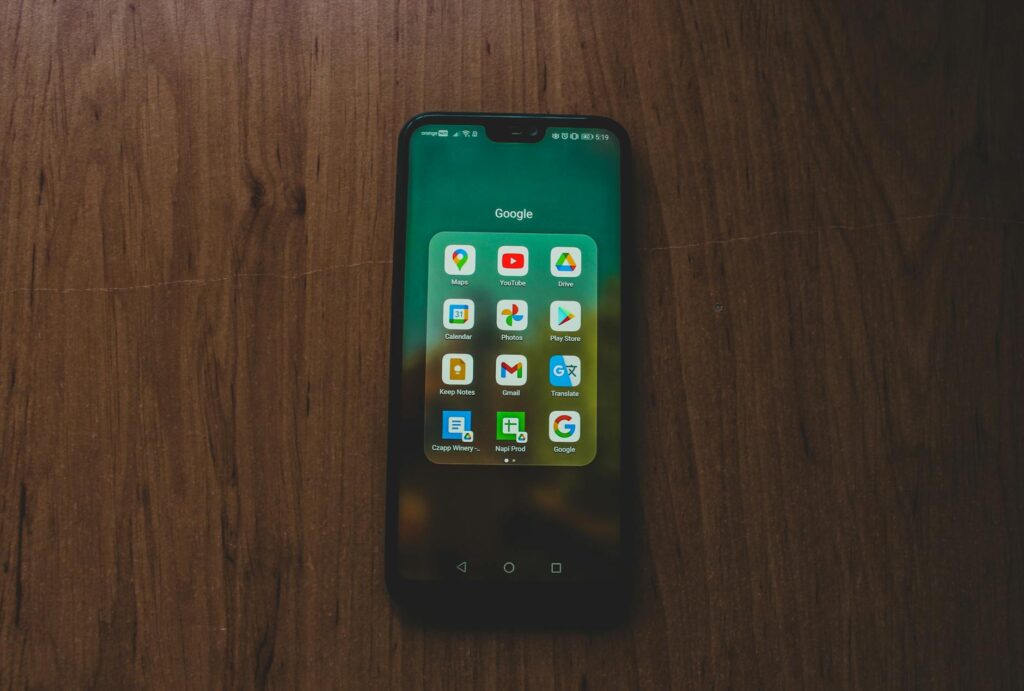
- Translation Apps That Actually Work
- Signage & Maps
- Taxis & Didi
- Restaurants & Menus
- Shopping, Markets and Numbers
- Hotels & Check-In
- Emergencies
- Pinyin & Pronunciation
- What Goes Wrong, and How to Recover
- FAQ
The Reality: How Much English Is Spoken in Shanghai
Honest expectations for English in Shanghai 2026:
- 5-star hotel front desks: Fluent English, often other languages too. Pre-arranged services are seamless.
- 4-star and boutique hotels: At least one staff member with conversational English on every shift.
- Major attractions & museums: Bilingual signage; staff with limited English at counters; English audio guides usually available.
- Bund-area and Lujiazui restaurants: English menus, basic order-taking English.
- French Concession cafés: Younger staff with conversational English; menus bilingual.
- Mid-range Chinese restaurants: Pictures on the menu; counter staff with minimal English. Translation apps essential.
- Taxis: Drivers rarely speak English. Show address in Chinese characters.
- Markets, street vendors, neighbourhood shops: Almost no English. Pointing + Alipay handles 95% of transactions.
- Hospitals (international floors): English available at International Family Hospital, Parkway, Shanghai United Family Hospital. Public hospitals — minimal.
Overall: enough English at the tourist-facing edges that you’ll never feel stranded; far less in the middle and bottom tiers of daily life.
A useful way to think about it: English tracks price and age. The more a place costs and the younger the person behind the counter, the more English you get. A 26-year-old barista in Xintiandi will chat with you happily. The 60-year-old woman running a noodle shop on a Hongkou side street will not, and both interactions work fine — one with words, one with pointing and a phone. Shanghai has been receiving foreign visitors for nearly two centuries and nobody is thrown by a confused tourist.
One more thing that surprises people: the barrier is often not English at all. It is that written Chinese and spoken Chinese are separate problems. You can show a driver a Chinese address and be understood perfectly while being unable to say a word of it. Lean into that. Text beats speech almost every time in Shanghai.
Shanghai Language Barrier Tips: The Five That Matter Most
If you do nothing else on this page, do these. They take about twenty minutes at home and remove roughly 90% of the friction.
- Download an offline Chinese language pack before you fly — Apple Translate, Microsoft Translator or Google Translate all support this. Test it in airplane mode. An app that needs a connection is useless in a metro tunnel.
- Screenshot your hotel’s name and full address in Chinese characters and set it as a favourite photo. Not a note in an app that needs data; a photo. Add the phone number.
- Set up Alipay before arrival. Paying by QR code removes the single most common conversation you would otherwise have to have, and its built-in translation and taxi-hailing functions work in English.
- Install Didi with the English interface. You type the destination, the driver receives it in Chinese, and no words are exchanged at all — see our Didi guide.
- Learn to say “nǐ hǎo” and “xièxie” properly. Two words. The warmth you get back is disproportionate to the effort.
Notice that four of the five are things you do with a phone before you leave home. The Shanghai language barrier in 2026 is largely a preparation problem, not a linguistic one. Our packing checklist covers the rest of the pre-flight setup.
15 Essential Mandarin Phrases
Learning even five phrases dramatically improves your experience. Locals appreciate the effort and often respond with warmer service.
- Nǐ hǎo (你好) — Hello
- Xièxie (谢谢) — Thank you
- Bù kèqi (不客气) — You’re welcome
- Duōshao qián? (多少钱?) — How much?
- Tài guì le (太贵了) — Too expensive
- Piányi yīdiǎn (便宜一点) — Cheaper, please
- Wǒ bù chī ___ (我不吃 ___) — I don’t eat ___ (e.g. ròu = meat, làjiāo = chili, huāshēng = peanuts)
- Wǒ yào zhège (我要这个) — I want this one (point)
- Zhège shì shénme? (这个是什么?) — What is this?
- Wǒ tīngbùdǒng (我听不懂) — I don’t understand
- Yǒu Yīngwén ma? (有英文吗?) — Do you have an English version?
- Mǎidān (买单) — Check please / I want to pay
- Cèsuǒ (厕所) — Toilet/restroom
- Bāngmáng (帮忙) — Help!
- Wǒ shì wàiguórén (我是外国人) — I am a foreigner (useful explanation when struggling)
Two of these do more work than the rest. Wǒ yào zhège — “I want this one” — combined with a finger will get you fed anywhere in the country. And mǎidān is the single most useful restaurant word in Chinese, because table service in China does not involve a waiter drifting over with the bill; you have to ask, often loudly, across the room. Nobody considers that rude.
A note on Shanghainese. It is not a dialect of Mandarin but a separate Wu Chinese language, mutually unintelligible with Mandarin, and it is in genuine decline — surveys have found that a large share of Shanghai residents under 18 rarely use it and some cannot understand it at all. Everyone under about 50 speaks Mandarin. You will hear Shanghainese among older people, in wet markets and on the metro, and if you want to make someone’s day, nong hao (侬好) is the Shanghainese for hello. The Wikipedia entry on Shanghainese covers the linguistics properly.
Twenty Chinese Characters Worth Recognising
You are not going to learn to read Chinese in a week. You can, in about ten minutes, learn to recognise the twenty characters that appear on almost every sign you actually need. This is a far better use of your time than memorising phrases you will mispronounce.
| Character | Pinyin | Means |
|---|---|---|
| 出口 | chūkǒu | Exit |
| 入口 | rùkǒu | Entrance |
| 男 / 女 | nán / nǚ | Men / Women (toilets) |
| 厕所 / 卫生间 | cèsuǒ / wèishēngjiān | Toilet |
| 地铁 | dìtiě | Metro |
| 出租车 | chūzūchē | Taxi |
| 医院 | yīyuàn | Hospital |
| 药店 | yàodiàn | Pharmacy |
| 银行 | yínháng | Bank |
| 警察 | jǐngchá | Police |
| 推 / 拉 | tuī / lā | Push / Pull |
| 路 | lù | Road |
| 号 | hào | Number (in an address) |
| 弄 | nòng | Lane (very common in Shanghai addresses) |
| 辣 | là | Spicy |
| 肉 | ròu | Meat |
| 素 | sù | Vegetarian |
| 牛 / 猪 / 鸡 / 鱼 | niú / zhū / jī / yú | Beef / Pork / Chicken / Fish |
| 花生 | huāshēng | Peanut |
| 元 / 块 | yuán / kuài | Yuan (the currency unit on price tags) |
Chinese addresses run from largest unit to smallest, the reverse of English. So 上海市黄浦区南京东路100号 reads: Shanghai city, Huangpu district, Nanjing East Road, number 100. Once you can spot 路 (road) and 号 (number), you can check that a taxi is dropping you at the right place without reading a word of the rest.
Translation Apps That Actually Work
Pleco — the gold-standard Chinese dictionary app, downloadable offline. The OCR camera feature reads characters off menus and signs. Free; premium add-ons ~$30 lifetime.
Google Translate — works well; the camera live-translate is invaluable. Requires VPN inside China. Offline language pack works without VPN.
Microsoft Translator — works without VPN in China; reliable for voice conversation mode.
Baidu Translate — Chinese-native app; works without VPN; excellent for Chinese-to-English.
Apple Translate — built into iOS; works offline if you download the Chinese (Mandarin) language pack before flying.
WeChat’s built-in translation — long-press any received Chinese message → Translate. Useful for chatting with locals.
| App | Works without VPN | Offline pack | Camera / OCR | Two-way voice | Best for |
|---|---|---|---|---|---|
| Pleco | Yes | Yes | Yes (paid add-on) | No | Menus, single characters, learning |
| Apple Translate | Yes | Yes | Yes | Yes | The default on an iPhone; no setup |
| Microsoft Translator | Yes | Yes | Yes | Yes | Conversation mode with a stranger |
| Google Translate | Only offline | Yes | Yes (online) | Yes | Best quality when you have an eSIM |
| Baidu Translate | Yes | Partial | Yes | Yes | Working on the Chinese network |
| WeChat long-press | Yes | No | No | No | Messages from drivers and hosts |
The practical advice is one good app plus a workflow, not five apps you never open. The workflow that works: point the camera at the thing, screenshot the result, and show the screenshot rather than trying to explain. For app interfaces that will not sit still under a camera, take a screenshot first and run the translator on the image from your photo library.
One important caveat. Google Translate’s live camera mode is the best of the bunch and it needs a connection, which means an overseas roaming eSIM rather than a local Chinese SIM. A local SIM puts you behind the firewall and Google stops working. Our SIM card and internet guide explains the difference, and the VPN & internet guide covers the fallback.

Signage & Maps
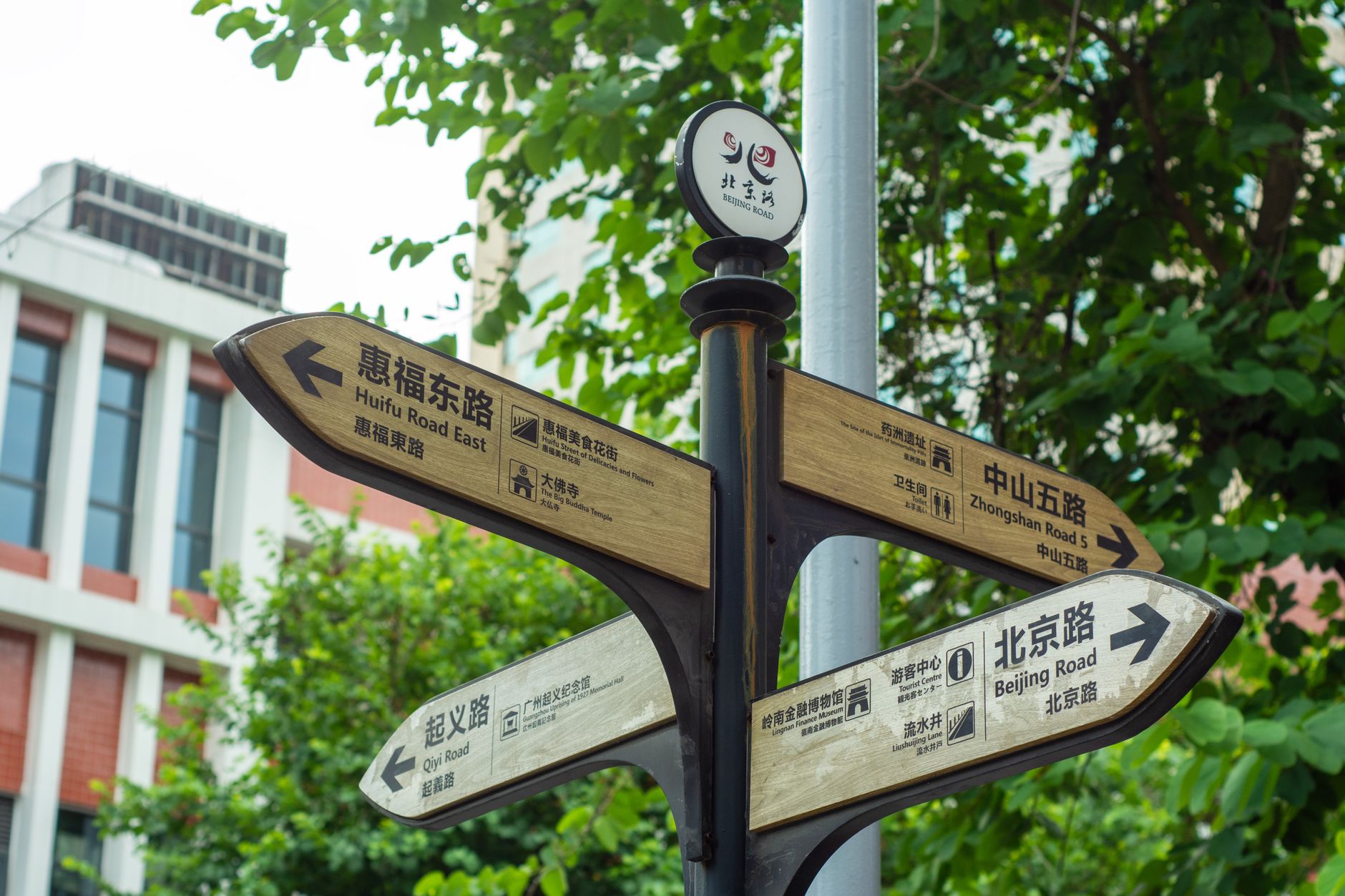
Most Shanghai public signage is now bilingual:
- Metro stations and trains: 100% bilingual (English + Chinese)
- Major attractions, museums, parks: Bilingual signage and ticket booths
- Airports: Fully bilingual; some Korean and Japanese
- Highway signs: Increasingly bilingual on major routes; older roads Chinese-only
- Small businesses, residential streets: Mostly Chinese-only
- Maps: Apple Maps, Amap (Gaode), and Baidu Maps all have English; Apple Maps is the most polished for foreign visitors. Google Maps requires VPN and is less detailed in China.
The metro is the easiest system in the city to use without Chinese. Station names, line numbers and exit letters are all in English, in-carriage announcements run in Mandarin, Shanghainese and English, and the platform screens show the next station in both scripts. Exits are lettered rather than numbered — Exit 4 is written 4号口 — and choosing the right one matters, because a wrong exit at a big interchange can mean a ten-minute walk back underground. Check the exit letter before you tap out. Our Shanghai metro guide has the fare and app detail.

Taxis & Didi
The most common breakdown for foreign visitors: getting a taxi to your destination.
- Carry your hotel’s business card with address in Chinese characters. Most hotels have these at reception.
- Show destination as text on your phone — easiest method. Save addresses in WeChat Notes.
- Use Didi (滴滴) — the local Uber equivalent. The Didi app has English interface and you type/paste the destination in either language. The driver receives Chinese; you get English notifications.
- Apple Maps + share button — share location to a taxi driver’s phone via QR.
- Avoid black taxis at airports — only use the official taxi queue, which usually has bilingual signage.
Two refinements. First, always have the return journey sorted before you set out — take a photo of your hotel’s card and of the restaurant or attraction you are heading to, both in characters. The trip out is easy; it is the trip back at 22:00 from an unlabelled lane in Hongkou that goes wrong. Second, if a driver calls you from Didi and you cannot understand a word, do not panic. Send a WeChat or in-app message instead, or simply stand somewhere visible and wave. Drivers are used to this and will usually hang up and find you.
Shanghai’s metered taxis start around ¥14–16 for the first three kilometres, and drivers are generally honest, but the refusal to take a fare that involves a hard-to-find address is real. Naming a large nearby landmark rather than a small lane solves it — “Jing’an Temple” rather than a specific alley. Our taxi tips guide covers fares and the etiquette in detail.

Restaurants & Menus
- Pre-check restaurants on Dianping (中国大众点评 — China’s Yelp). Has English language toggle.
- Many mid-range and high-end restaurants have English menus available on request
- Picture menus are standard at casual restaurants — just point
- Translation app for ingredients/allergies — Pleco’s OCR is faster than typing
- QR-code menus (scan with WeChat) often have English language toggle
- If allergic or vegetarian, save a Chinese-character explanation note in your phone to show servers
Specific phrases for restaurants: Bù yào lā jiāo = “no chilli”; Wǒ chī sù = “I’m vegetarian”; Wǒ duì huāshēng guò mǐn = “I’m allergic to peanuts”.
The genuinely awkward change of the last few years is the QR-code menu. Many mid-range restaurants no longer hand out paper menus at all: you scan a code on the table, order inside a WeChat mini-program, and pay in the same flow. Plenty of these mini-programs are Chinese-only, with no English toggle. Two workarounds. Screenshot the ordering screen and run the image through a translator, since live camera translation cannot cope with a scrolling app. Or say yǒu zhǐ de càidān ma? — “is there a paper menu?” — which usually produces one from behind the counter.
For allergies, do not rely on a phrase you half-remember. Have the Chinese written out and saved as a photo, and show it rather than say it. “I am allergic to peanuts” is 我对花生过敏; shellfish is 海鲜; gluten is harder, because it is not a widely understood concept in Chinese kitchens and soy sauce contains wheat — if you are coeliac, plan around it rather than negotiating at the table. Our vegetarian and vegan guide and the Shanghai food guide both help with what to order once you can order it.
Shopping, Markets and Numbers
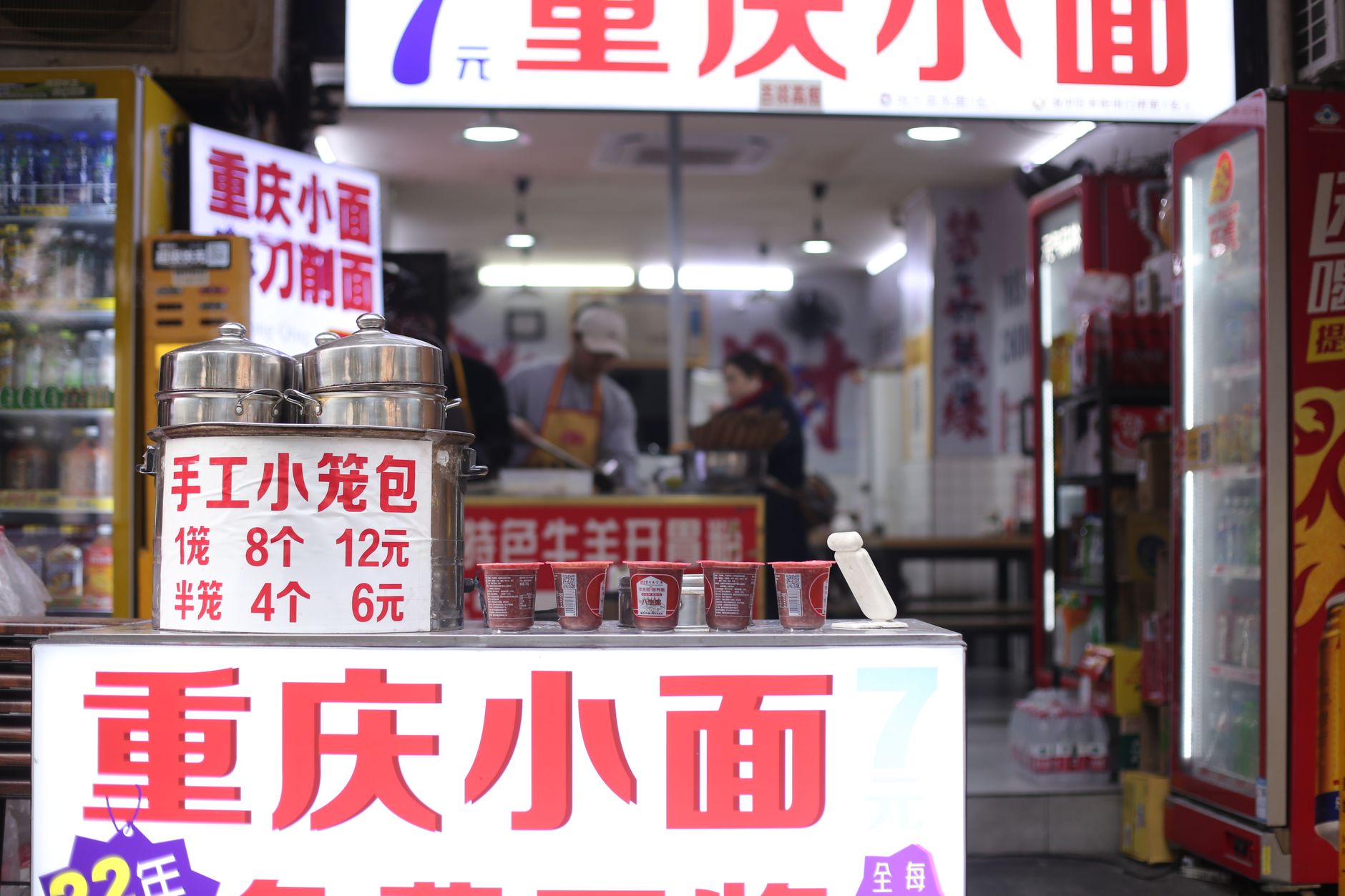
Numbers are where most language failures actually happen, because they get spoken fast and the stakes are money. Three things make this easy.
First, learn the Chinese hand signs for one to ten. They are used constantly in markets and are shown with one hand, so a vendor across a stall can quote you a price silently. One to five are the obvious fingers. Six is thumb and little finger extended. Seven is thumb, index and middle finger pinched together at the tips. Eight is thumb and index extended like an L. Nine is a curled index finger. Ten is a closed fist, or two index fingers crossed. Learning these takes two minutes and it will save you from agreeing to ¥80 when you thought you heard ¥18.
Second, use the calculator. Every market vendor in Shanghai has one, and passing it back and forth is the standard way foreigners and locals negotiate. There is nothing rude about it — it is faster than talking and both sides can see the number.
Third, remember that kuài (块) is what people actually say for yuan, the way English speakers say “quid” or “bucks”. A price tag reading 25元 will be spoken as èrshíwǔ kuài. Our markets and haggling guide covers the negotiation itself, and the money guide covers payment.
Hotels & Check-In
Hotel registration is mandatory for all foreign guests — staff will scan your passport. At 4–5 star hotels this is seamless. At budget chains and hostels:
- Confirm “foreign guests welcome” before booking — unbranded budget inns sometimes can’t legally take foreigners
- Front desk may speak limited English at chain budget hotels (Hanting, Home Inn) but translation apps fill the gap
- If issue arises, ask the booking platform’s English support to call the hotel on your behalf
The most useful thing a hotel front desk can do for you has nothing to do with English. Ask them to write down, in Chinese, wherever you are going that day, and to write the hotel’s own address on the back. Concierges do this dozens of times a week and will not blink. At a good hotel, they will also call ahead to book a restaurant table for you — a task that is genuinely hard for a non-Chinese speaker, since most reservations run through phone calls or Chinese-only mini-programs. If you are staying somewhere cheaper, our budget hotels and hostels guide flags which places are set up for foreign guests.
Emergencies
- Police: 110 — operators have basic English in Shanghai
- Ambulance: 120 — say “English please” (Yīngwén / Wàiguórén)
- Fire: 119
- Tourist hotline: 12345 — multilingual support for foreign visitors
- Hospitals with English: Parkway Health, Shanghai United Family Hospital, ShangBenheng International. Always carry a small note with your hotel address + emergency contact in Chinese characters.
Beyond those, the private hospitals and clinics that reliably operate in English include Shanghai United Family Hospital in Changning, Jiahui International Hospital in Xuhui, Shanghai East International Medical Center in Pudong, and SinoUnited Health, which runs several clinics across the city. Consultations at these are expensive by Chinese standards — often the equivalent of US$100–400 before treatment — which is exactly what travel insurance is for. Larger public hospitals such as Huashan and Ruijin operate international or VIP departments where some English is available at a fraction of the price, though with more queueing.
Practical preparation: save your insurance policy number, your hotel address in Chinese and the name of one English-speaking hospital as photos on your phone before anything happens. The full list of official Shanghai service hotlines is published on the Shanghai municipal government’s English site. For the broader picture on safety, see is Shanghai safe.
Pinyin & Pronunciation
Pinyin is the romanisation system for Mandarin. The four tones change a word’s meaning entirely. A few practical points:
- Tones matter a lot — mǎ (horse) ≠ má (hemp) ≠ mà (scold)
- “Zh”, “Ch”, “Sh” are pronounced similar to English with curled tongue
- “X”, “Q”, “J” are softer (X = sh, Q = ch, J = j but lighter)
- “R” in pinyin is unusual — softer than English R; closer to a French R
- Final “n” vs “ng” — distinct sounds; matters for meaning
Most locals understand effort-laden mispronunciation if you also point or show on your phone.
Two pronunciations worth getting right because you will use them constantly. Xièxie (thank you) is closer to “shyeh-shyeh” than “zay-zay” — the X is a soft sh made with the tongue behind the lower teeth. And Cèsuǒ (toilet) starts with a “ts” sound, as in “cats”, not a hard C. Beyond that, do not agonise. Context carries enormous weight in spoken Chinese, and a mangled tone in a noodle shop where you are pointing at a bowl will not confuse anybody.

What Goes Wrong, and How to Recover
- Your phone dies and everything was on it. The single biggest failure mode. Carry a power bank, and keep one paper card with your hotel’s Chinese address in a pocket, not a bag.
- You bought a local SIM and Google stopped working. Expected — a Chinese SIM sits behind the firewall. Use an overseas eSIM, or fall back to Apple Translate offline and Baidu Maps.
- The taxi driver refuses the fare. Usually the address is too obscure. Name a large landmark nearby instead, or order a Didi where the destination is set in the app.
- Someone approaches in perfect English and is very friendly. In tourist zones around Nanjing Road and the Bund, this is more often a tea-house or art-gallery setup than a spontaneous conversation. Our scams guide explains the pattern.
- You cannot make a restaurant booking. Ask your hotel to call. This is a normal request, not an imposition.
- You are speaking louder and it is not helping. It never does. Switch to writing, typing or pointing — Chinese speakers who cannot follow your accent will often read your English perfectly.
- Nobody understands your pinyin. Show the characters instead. Every translation app displays both; use the Chinese side.
The broader cultural context — how to address people, queueing, gift-giving, what counts as rude — sits in our Shanghai etiquette guide, and solo visitors may find the solo travel guide useful for the same reasons.
Frequently Asked Questions
Do people in Shanghai speak English?
Hotel staff, major restaurants, museums, and younger workers often speak conversational English. Taxi drivers, market vendors, and older residents typically do not. Translation apps cover the gap.
Can I travel Shanghai without speaking Chinese?
Yes — translation apps (Pleco, Google Translate, Apple Translate), bilingual metro/airport signs, and the universal mobile-payment economy make Shanghai navigable for non-Chinese speakers.
What’s the best translation app for China?
Pleco for offline dictionary + character OCR; Google Translate for live camera (requires VPN); Microsoft Translator for voice; Apple Translate for offline use without VPN.
Do Shanghai taxis speak English?
Rarely — drivers seldom speak English. Always carry hotel address in Chinese characters or use Didi where the destination is automatically communicated.
What language do they speak in Shanghai?
Mandarin is the official language; Shanghainese is the local dialect (still spoken by older residents). Younger workers often speak some English; foreign languages other than English are rare.
How much Mandarin should I learn before visiting Shanghai?
Five to ten phrases is enough to make a positive impression and handle basic needs. Greetings, “thank you,” “too expensive,” “I don’t eat ___,” and “do you have English?” are highest-value.
Is Shanghai harder for non-English speakers than other Chinese cities?
No — Shanghai is one of the most foreigner-friendly Chinese cities, with more English signage, more bilingual menus, and a younger English-speaking workforce than Beijing or Chengdu.
Do I need a Chinese SIM to use translation apps?
No — an overseas eSIM bypasses the firewall and lets Google Translate work normally. See our VPN & internet guide.
Is Shanghainese the same as Mandarin?
No. Shanghainese is a Wu Chinese language and is not mutually intelligible with Mandarin. Everyone under roughly 50 speaks Mandarin, and the local language is declining among the young, so you will only need Mandarin or English.
How do I order food if the menu is a QR code in Chinese?
Screenshot the ordering screen and translate the image, rather than trying to use live camera mode on a scrolling app. Or ask for a paper menu — yǒu zhǐ de càidān ma? — which most places can still produce.
What should I do in a medical emergency if nobody speaks English?
Call 120 for an ambulance and say “English please”. Go to a private international hospital such as Shanghai United Family or Jiahui, or the international department of a large public hospital. Keep your hotel address in Chinese and your insurance details saved as photos on your phone.
Can I get by with just pointing and a payment app?
For food, shopping and transport, largely yes. Where it breaks down is anything involving a change of plan — a delayed train, a lost item, a pharmacy question. That is when a translation app with an offline pack earns its place.
Plan the Rest of Your Trip
Combine with our pillar guides on Shanghai practical tips, first-time visiting Shanghai, and getting around Shanghai. Arriving soon? The airport arrival guide covers the first hour on the ground. For background, see the Standard Chinese entry on Wikipedia.