Solo travel in Shanghai is one of the easiest and most rewarding ways to experience a major Asian city. The metro is excellent and cheap, food is varied and often eaten alone by locals too, the city has one of the better safety records of any megacity, and nobody looks twice at a foreigner sitting on their own. This 2026 guide covers the realities of going alone — safety (particularly for women), visas, where to stay, what it costs, how to meet other travellers, the best solo activities, and how to handle the moments when going alone gets lonely.
Table of Contents
- Why Solo Travel in Shanghai Works
- Getting In Alone: Visas and the 240-Hour Rule
- Safety Realities
- Solo Female Travel
- Where to Stay Alone
- What Solo Travel in Shanghai Costs
- How to Meet People
- Best Solo Activities
- Solo Dining
- Solo Nightlife
- A Worked Example: Three Days Alone
- When It Gets Lonely
- Practical Tips
- Common Mistakes on Solo Travel in Shanghai
- FAQ
Why Solo Travel in Shanghai Works
- Excellent metro means no need for taxis, ¥3–9 per ride, 60% of central Shanghai accessible
- Very safe — Shanghai consistently ranks as one of the safest large cities in the world
- Cosmopolitan locals — used to foreigners; less self-consciousness about being a tourist
- Cheap, varied food — solo dining is normal and easy
- Hostel scene for budget travelers wanting to meet others
- Excellent infrastructure — translation apps, mobile payments, English signage at major sites
- Tons to do alone — museums, walks, parks, cafés, photography
- Easy day trips by bullet train (Suzhou, Hangzhou, Wuzhen)
The underrated reason, though, is cultural. Eating alone carries no stigma in urban China. Noodle counters, hotpot chains, breakfast stalls and even smart restaurants are full of people on their own at lunchtime, because the working day here is long and everyone eats out. You will not be the only single diner in the room, which is more than can be said for a Tuesday night in most European cities.
The genuine friction is language, not safety. Outside hotels, malls and the tourist core, English is thin. That is a solvable problem — see the section on apps below — but it is the thing that makes a first solo day here feel harder than a first solo day in Tokyo or Singapore.
Getting In Alone: Visas and the 240-Hour Rule
China’s entry rules changed significantly in 2024 and 2025 and are now the single most important thing to check before booking, because they decide if you need to apply for anything at all.
- Unilateral 30-day visa-free entry now covers 50 countries, including the UK, Ireland, most of the EU, Australia, New Zealand, Japan, South Korea, Brazil and Canada (the UK and Canada were added in February 2026). If your passport is on the list you simply turn up. Details in our 30-day visa-free entry guide.
- 240-hour visa-free transit covers roughly 54–58 nationalities, including the United States, which is not on the 30-day list. It gives you ten days in most of eastern China provided you enter and exit through approved ports — both Pudong and Hongqiao qualify — and hold a confirmed onward ticket to a third country, not back where you came from. Our 240-hour transit guide covers the paperwork.
- Everyone else needs a tourist L visa applied for in advance.
Two things catch solo travellers specifically. First, the onward-ticket rule is enforced at check-in as well as immigration, and a flight search screenshot is not a booking — airlines have denied boarding over this. Second, the transit clock starts when you clear immigration, not when you land. If you are cutting it close, that difference is a few hours you do not have. Policies shift; confirm with your nearest Chinese embassy before you book anything non-refundable.
Safety Realities
Shanghai is genuinely safe. Violent crime against tourists is extremely rare. To put a number on it, crowd-sourced perception data on Numbeo’s Shanghai crime page gives the city a safety index of roughly 73 out of 100 and rates walking alone after dark at about 72 — a “high” rating, and better than most large Western cities. Practical concerns:
- Pickpocketing — rare but possible at packed sites like Yu Garden Bazaar, Nanjing East Road on weekends, and crowded metro cars. Front-pocket wallets and crossbody bags help
- Scams — tea-house scam, “art student” scam, fake taxi scam at airports. See our Shanghai scams guide
- Walking alone at night — generally fine in central Shanghai. Specific spots (back alleys of Hongkou after 1am) less so
- Taxis — use Didi over flagged taxis when alone; share trip details with someone
- Aggressive begging — uncommon but exists near major tourist sites
- Police — visible and helpful; emergencies: 110 (police), 120 (medical)
- Tourist hotline: 12345 has multilingual support
The scams worth memorising both start the same way: a friendly, fluent English speaker approaches you near the Bund, People’s Square or East Nanjing Road and suggests tea, or an art exhibition. The tea ceremony ends with a bill in the thousands of yuan; the gallery sells worthless prints at gallery prices. Nothing bad happens if you simply keep walking. Genuine locals who want to practise English will not steer you into a specific venue within ninety seconds of meeting you.
The real risks for solo travellers here are mundane rather than criminal: getting a stomach upset with nobody to fetch water, losing a phone that holds your payment method and your hotel address, or twisting an ankle. Those are insurance and redundancy problems, not danger problems. Our is Shanghai safe guide goes into the statistics properly.
Solo Female Travel
Shanghai is one of the better-rated cities in Asia for solo female travelers. Specific notes:
- Walking alone at night in central districts (Bund, French Concession, Lujiazui) is broadly safe
- Catcalling is rare; staring is common but usually curiosity, not harassment
- Dressing modestly at temples; otherwise wear what you’d wear at home
- Solo dining at restaurants is normal; sit at a small table or counter without comment
- Female-only metro cars during rush hour at some stations (look for the signage)
- Female-friendly hostels — Mingtown Hiker, Phoenix Hostel — have all-female dorm options
- Use Didi over flagged taxis at night
- Carry a personal alarm or whistle if anxious (rarely needed)
- Avoid being visibly drunk in clubs alone; that’s universal advice
- Trust your instincts — Shanghai is safe but trust the same gut you’d use at home
Something several women who have done this trip mention: dressing conservatively to blend in tends to backfire. Shanghai women dress boldly and expensively, and covering up marks you out more than it protects you. Wear whatever you would wear in a big city at home, temples excepted.
The one situation to think about in advance is getting home from a bar at 2am. In the French Concession, Jing’an and around the Bund this is unremarkable and plenty of women walk it. Everywhere else, use Didi — the driver, plate and route are logged in the app, which is a stronger audit trail than a flagged street taxi, and you can share the trip with someone at home in one tap.
Where to Stay Alone
Top neighborhoods for solo travelers:
- French Concession — atmospheric, walkable, café culture, plenty of solo-friendly restaurants. Best overall pick
- People’s Square — central transport hub; lots of hostels; budget options
- Jing’an — upscale, walkable, near temple and parks
- Bund/Nanjing East Road — touristy but lively; some good hostels
- Avoid: Pudong’s Lujiazui can feel impersonal at night; stick to Puxi for social solo trips
| Area | Typical solo room | Strength | Trade-off |
|---|---|---|---|
| French Concession | ¥400–800 | Walkable, café-dense, safest-feeling at night | Fewer metro stops; pricier |
| People’s Square | ¥250–500 | Every metro line, most hostels, cheapest beds | Crowded, characterless streets |
| Jing’an | ¥450–900 | Central, polished, good for first-timers alone | Corporate feel; quiet after 10pm |
| The Bund / Nanjing East Rd | ¥350–700 | Walk to the river; hostels with rooftops | Tourist crowds and touts |
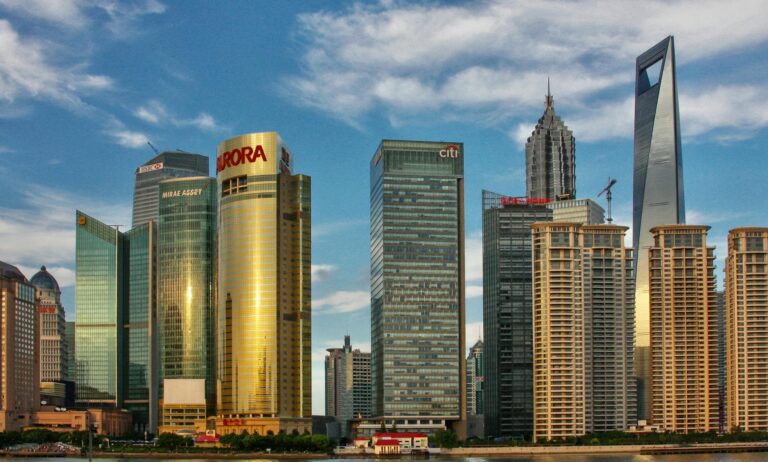
| Lujiazui (Pudong) | ¥500–1,200 | Skyline views, business-grade hotels | Dead at street level after dark |
Best solo-friendly hostels and budget hotels:
- Mingtown Hiker — central, social, good for first-night meetups
- Phoenix Hostel — French Concession, design-forward
- Captain Hostel — Bund area, rooftop bar
- Ms. Maple’s Boutique Hostel — design-led, female-friendly
- Hanting / Atour / Home Inn chains — private rooms ¥250–400, safe and predictable
A dorm bed runs roughly ¥80–150 a night; a private room in a domestic chain hotel ¥250–400. The chains are the underrated option for solo travellers who want quiet: they are clean, identical everywhere, on every second street corner, and staff are used to processing a foreign passport. What they do not give you is anyone to talk to. If meeting people is the point of the trip, pay the ¥100 and take the dorm. See our budget hotels & hostels guide and the wider neighbourhood breakdown.

What Solo Travel in Shanghai Costs
Travelling alone costs more per person than travelling as a pair, mainly because you carry a whole room rather than half of one. Here is what a realistic day looks like at three levels.
| Item | Backpacker | Mid-range | Comfortable |
|---|---|---|---|
| Bed | ¥100 dorm | ¥350 chain hotel | ¥800 boutique |
| Breakfast | ¥8 street | ¥40 café | Included |
| Lunch | ¥25 noodles | ¥70 restaurant | ¥150 |
| Dinner | ¥45 street food | ¥140 sit-down | ¥350 with wine |
| Transport | ¥15 metro | ¥30 metro + one Didi | ¥120 taxis |
| One activity | Free walk | ¥100 museum or tower | ¥300 tour |
| Daily total | ¥200–350 | ¥600–800 | ¥1,700–2,000 |
A week alone in Shanghai therefore runs roughly ¥1,500–2,500 backpacking, ¥4,000–5,500 mid-range, and upward of ¥12,000 if you want the good hotel and the good dinners. Flights and visa costs sit on top. The single biggest lever is accommodation, not food — you can eat extremely well here for ¥150 a day. Our trip cost guide breaks it down further, and cheap eats covers the ¥25 end of the food scale.
How to Meet People
- Hostel common areas — Mingtown Hiker, Captain Hostel, Phoenix Hostel have active common rooms
- Free Tour Shanghai walks — donation-based group walks daily; meet other travelers
- UnTour food tours — small-group format with conversation throughout
- Couchsurfing meetings — Shanghai has an active scene; events posted on the platform
- Meetup.com Shanghai — language exchanges, hikes, photography meetups
- Expat events on smart-shanghai.com — weekly listings of bar nights, gallery openings
- Cafés like Wagas, Manner, % Arabica — natural ice-breaker spots, especially in the French Concession
- Yoga and fitness classes — Pure Yoga and Y+ Yoga welcome drop-ins
- Cooking classes — Chinese cooking workshops at Yiyi Cooking or The Kitchen at — small groups, conversation built-in
- Speakeasy bars — solo travelers welcome; bartender is your social bridge
Two tactical notes. Book the social thing for your first full day rather than your third — the people you meet on day one become the people you have dinner with all week, and travellers who leave it late end up eating alone by default. And note that most local social organising happens on WeChat rather than Meetup or Facebook, both of which need a VPN. If someone offers to add you to a group, say yes; that is how the city actually works.
Free walking tours run from People’s Square and typically cover the square, the marriage market in People’s Park, the old town and the Bund over two to four hours. They are tip-based, so bring ¥50–100 in cash — awkward to explain that you have only a QR-code wallet at the end.
Best Solo Activities
- Walk the French Concession — our French Concession walking tour
- Bund + Pudong day-night tour — solo travelers fit in easily
- Shanghai Museum East — quiet, contemplative, takes 3+ hours alone
- Photography — Shanghai is one of the most photogenic cities; solo photographers blend in
- Cooking classes — see above; ¥250–450 per class
- Tea ceremony at Tianshan Tea City — quiet, meditative
- Solo café working day — Manner Coffee, Wagas, or Anfu Road cafés
- Day trip to Hangzhou or Suzhou — easy solo bullet train
- Shanghai Tower observation deck — striking solo experience
- Speakeasy crawl — Speak Low, Sober Company, the Long Bar
Solo travel rewards the activities that are awkward in a group: sitting in one museum room for forty minutes, changing plans at noon, photographing the same alley three times in different light. Shanghai is unusually good for this because so much of it is walkable and free. Book the Shanghai Tower for a clear day rather than a scheduled one, take the train to Suzhou on a whim, and give the museums the unhurried treatment they deserve. Standing on the Bund at night alone is better than doing it in company, and no, that is not a consolation prize.
Solo Dining
Solo dining is normal in Shanghai — no judgment, no questions:
- Counter seats at noodle shops — ¥20–40 meals, fast service
- Hai Di Lao “single eater” hotpot — Xiabu Xiabu chain specifically caters to individuals with stuffed-toy companions on the table
- Cafés with all-day food — Wagas, Element Fresh, Baker & Spice
- Bar seats at fine dining — Sir Elly’s, Mr & Mrs Bund, Bird (French Concession) all welcome solo bar diners
- Street food crawls — Wujiang Road and Sipailou Road work beautifully alone
- Dim sum yum cha — ask for a small table; bring a book
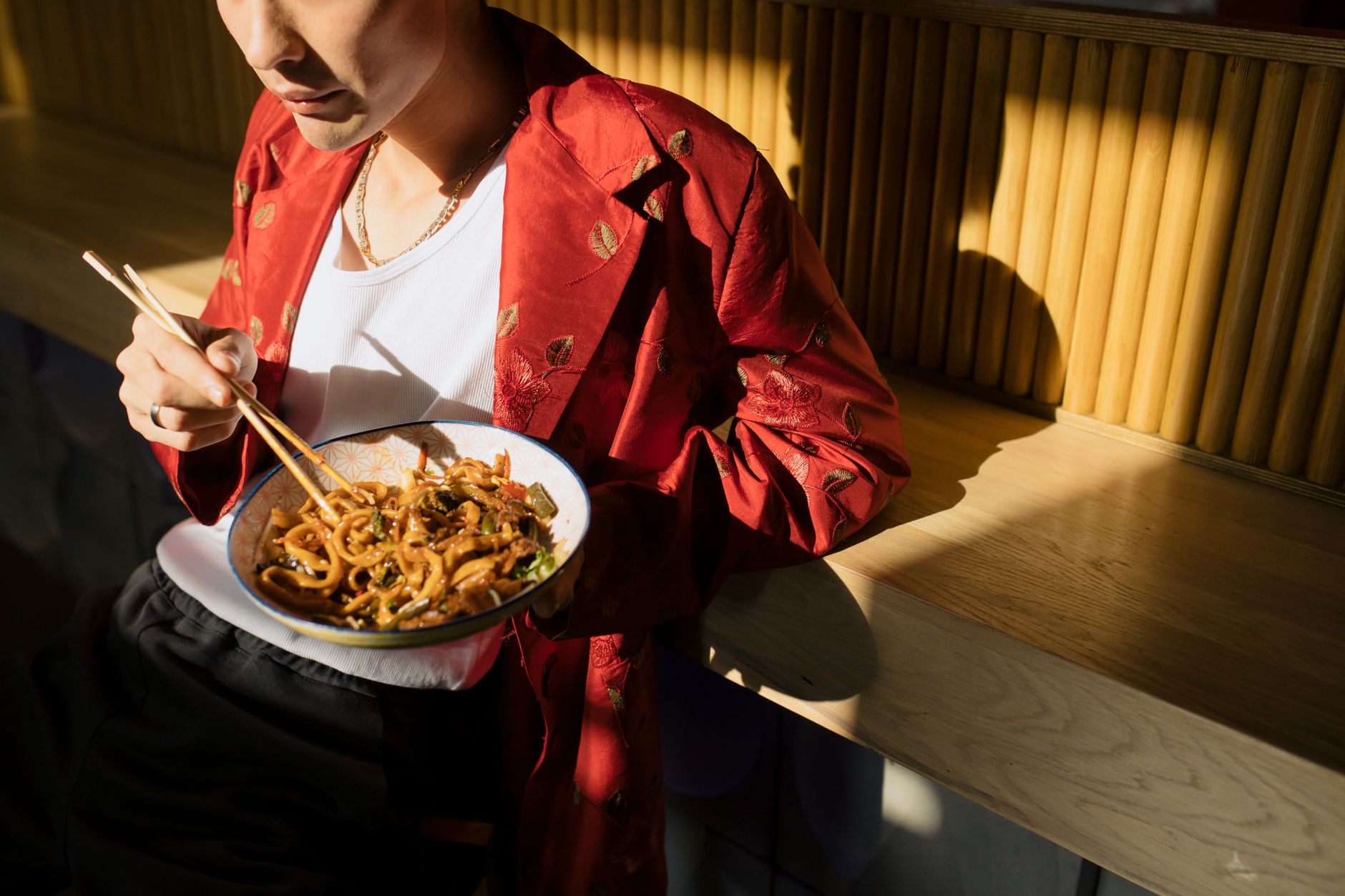
The one format that genuinely resists solo eating is the shared-plate Chinese banquet, where a menu is built around four to six dishes for a table. The workaround is the lunch set (套餐), offered by almost every restaurant between 11:00 and 14:00 for ¥30–60: one main, rice, soup, a vegetable, portioned for one. Order that at lunch and save the big shared meals for a night you have found someone to eat with. Our street food guide covers the eat-standing-up end, which is the most solo-friendly of all.
Solo Nightlife
- Speakeasy cocktail bars are the best solo nightlife — bartender chat, ambient music. Try Speak Low, Sober Company, Senator Saloon
- Jazz Bar at the Fairmont Peace Hotel — solo travelers welcome; live jazz; civilized atmosphere
- Rooftop hotel bars — Sir Elly’s, Flair, Heritage by Madison
- Avoid nightclubs alone if you’re new to the scene — pre-game at a bar first, find people to walk in with
- Get home before 1am if you’d rather not Didi at peak surge
Sit at the bar, not at a table. A bar seat signals you are open to conversation and gives the bartender a reason to talk to you; a table for one signals the opposite. Shanghai’s cocktail bar scene is genuinely strong and the bartenders are used to travellers, so a drink at Speak Low or Union Trading is a reliable way to spend an evening in company without arranging anything. Live music venues work the same way, with the advantage that nobody expects you to talk during the set. Budget ¥100–150 a cocktail in the good places and ¥40–60 in a neighbourhood bar.
A Worked Example: Three Days Alone
A first solo trip that builds confidence in the right order — easy and social first, ambitious later.
- Day 1. Sleep off the flight, then walk. Breakfast at a street stall near your hostel, the free walking tour from People’s Square at 10:00, lunch on the tour, Shanghai Museum East in the afternoon (Line 2 from People’s Square), and the Bund at dusk. Dinner with whoever you met on the tour. Cost: about ¥250.
- Day 2. French Concession on foot — Wukang Road, Anfu Road, Ferguson Lane — with two long café stops. Late lunch, then Jing’an Temple. Evening: a cocktail bar and an early night. Cost: about ¥350.
- Day 3. Bullet train to Suzhou (25 minutes) or Hangzhou (under an hour), gardens or lake all day, back by 19:00. Dinner at a hotpot chain that does single portions. Cost: about ¥400 including trains.
Deliberately unscheduled: the mornings. Solo travel goes wrong when it is over-planned, because the whole advantage is being able to sit somewhere for two hours because you feel like it. Our first time visiting Shanghai guide has longer itineraries if you have a week.
When It Gets Lonely
It will, usually on day three or four, usually around 18:00 when everyone else in the restaurant arrived in twos. This is normal and it passes, but a few things genuinely help.
- Change the format, not the city. One structured group activity — a food tour, a class, a walking tour — resets a flat day far better than pushing through another museum alone.
- Move to a hostel for two nights even if you can afford a hotel. The common room does the work for you.
- Call home at a fixed time. A standing 20-minute call at the same hour each day is worth more than sporadic messaging, and it doubles as a safety check-in.
- Have a default café. Going back to the same place three days running gets you recognised, and being recognised in a city of 25 million is disproportionately cheering.
- Don’t drink alone to fix it. Obvious, frequently ignored, and the reason most solo travellers’ worst nights happen.
- Build in a rest day. Solo travel is more tiring than group travel because every decision is yours. A half day in a park or a cinema is not wasted time.
Practical Tips
- Set up Alipay before flying — solo travelers especially need mobile pay working from day 1
- Bring overseas eSIM + VPN — bypassing the firewall solo means access to Google/Maps/WhatsApp
- Share trip details with someone back home — daily location/check-in
- Save Embassy contact details in your phone
- Carry a paper backup of passport + hotel address
- Trust translation apps for fuller interactions — Pleco for menu OCR
- Plan loose — solo travel works best with 60% planned, 40% spontaneous
- Allow downtime — solo travel is more exhausting than group travel; schedule café/hotel afternoons
- Bring something to do at meals — Kindle, journal, or your phone — to feel less self-conscious dining alone
- Solo travel insurance matters more — see our insurance guide
- Carry a power bank — your phone is your map, wallet, translator and taxi. A dead battery alone in Shanghai is the actual worst-case scenario, and it is entirely preventable
- Register on arrival — hotels do this for you automatically, but if you stay in private accommodation you are required to register with the local police station within 24 hours
On connectivity: an international roaming eSIM routes your data outside the mainland firewall and is the simplest fix, avoiding the need for a separate VPN app that may not install once you have landed. Set both up before you fly. Our guides to SIM cards and internet and VPNs in Shanghai cover the options, and language barrier tips covers what to do when the translation app fails.
Common Mistakes on Solo Travel in Shanghai
- Landing without a working payment method. Almost nowhere takes foreign cards outside hotels. Link a card to Alipay or WeChat Pay before you fly; doing it on airport wifi with jet lag is miserable.
- Assuming a VPN can be downloaded on arrival. The app stores inside China do not carry them. Install before departure or use a roaming eSIM.
- Booking the whole week solid. A rigid schedule removes the one real advantage of travelling alone.
- Staying in Lujiazui for the views. The photographs are better, the evenings are worse. Puxi is where people are.
- Accepting the tea invitation. Every time. Walk on.
- Leaving the social activity until day four. Book it for day one.
- Carrying the passport everywhere. Take a photocopy or a phone photo for daily use and leave the original in the hotel safe, except when you need it for a train or a hotel check-in.
- Trusting the last-metro time. Most lines stop around 22:30–23:00, earlier than people expect for a city this size. Check the metro guide and budget for a Didi.
Frequently Asked Questions
Is Shanghai safe for solo travelers?
Yes — Shanghai is one of the safest large cities in the world. Violent crime against tourists is extremely rare. Standard urban precautions apply.
Is Shanghai safe for solo female travelers?
Yes — Shanghai consistently ranks among the safer Asian capitals for solo female travel. Walking alone at night in central neighbourhoods is broadly safe.
Where do solo travelers stay in Shanghai?
French Concession for atmosphere; People’s Square for central access; hostels like Mingtown Hiker or Phoenix Hostel for meeting other travelers; budget chains (Hanting, Home Inn) for affordable privacy.
How do you meet people in Shanghai when traveling alone?
Hostel common rooms, free walking tours, food tours, Meetup.com Shanghai events, dumpling and cooking classes, language exchanges, and cocktail bars.
Is solo dining acceptable in Shanghai?
Completely normal. Cafés, noodle shops, counter seats at fine dining, and even hotpot chains have solo-friendly options.
How much does solo travel in Shanghai cost?
Budget solo travelers ¥200–350/day for a dorm bed, street food and metro. Mid-range ¥600–800/day with a private room. Comfortable ¥1,700+/day. See our trip cost guide.
Is the metro safe alone at night in Shanghai?
Yes — metro stations are well-lit and staffed. Last trains run around 23:00; after that use Didi or licensed taxi.
Can I do day trips alone from Shanghai?
Yes — bullet trains to Hangzhou (55 min) and Suzhou (25 min) are straightforward solo experiences with English-friendly signage.
Do I need a visa to visit Shanghai alone?
It depends on your passport. Around 75 nationalities now get 30 days visa-free with no application at all. US citizens are not on that list but can use the 240-hour transit scheme with a confirmed onward ticket to a third country. Everyone else needs a tourist L visa in advance.
How many days do you need in Shanghai alone?
Three full days covers the city comfortably at a solo pace. Five lets you add two day trips and a slow day. Under three and you will be rushing, which is the opposite of what solo travel is for.
Do people speak English in Shanghai?
In hotels, malls, major attractions and international restaurants, usually yes. In neighbourhood restaurants, taxis and small shops, rarely. A translation app with camera OCR closes almost all of the gap.
Is it awkward to travel alone in Shanghai as a woman?
No. Solo women are ordinary here — locals eat, shop and commute alone constantly. You will draw more attention as a foreigner than as someone unaccompanied, and that attention is curiosity rather than anything worse.
Plan Your Solo Trip
Combine with our pillar guides on Shanghai travel guide, is Shanghai safe, and first time visiting Shanghai. For background, see Crime in China on Wikipedia.