Shanghai street food is one of the most rewarding and underrated eating experiences in China, and it hides in plain sight. The city is famous worldwide for xiaolongbao, but the soup dumpling is only the headline act. Walk any older residential lane at 7 a.m. and you find griddles hissing with pan-fried buns, batter spreading into crepes, and dough twisting into fried sticks. This Shanghai street food guide covers what to eat, what each dish tastes like, where to find it, what it costs, and how to order and pay without speaking Mandarin. With it and comfortable shoes, you can build a half-day food walk on a modest budget.
The best of it lives in three kinds of places: traditional snack streets like Wujiang Road, the old Yunnan Road food brands, neighborhood breakfast carts in any residential district, and a handful of famous shops — Yang’s Fry-Dumpling, Nanxiang, Jia Jia Tang Bao — that began as humble vendors and grew into small institutions. This guide covers all three, with realistic timing, honest notes on which tourist spots are worth it, and the ordering vocabulary that makes it easy.
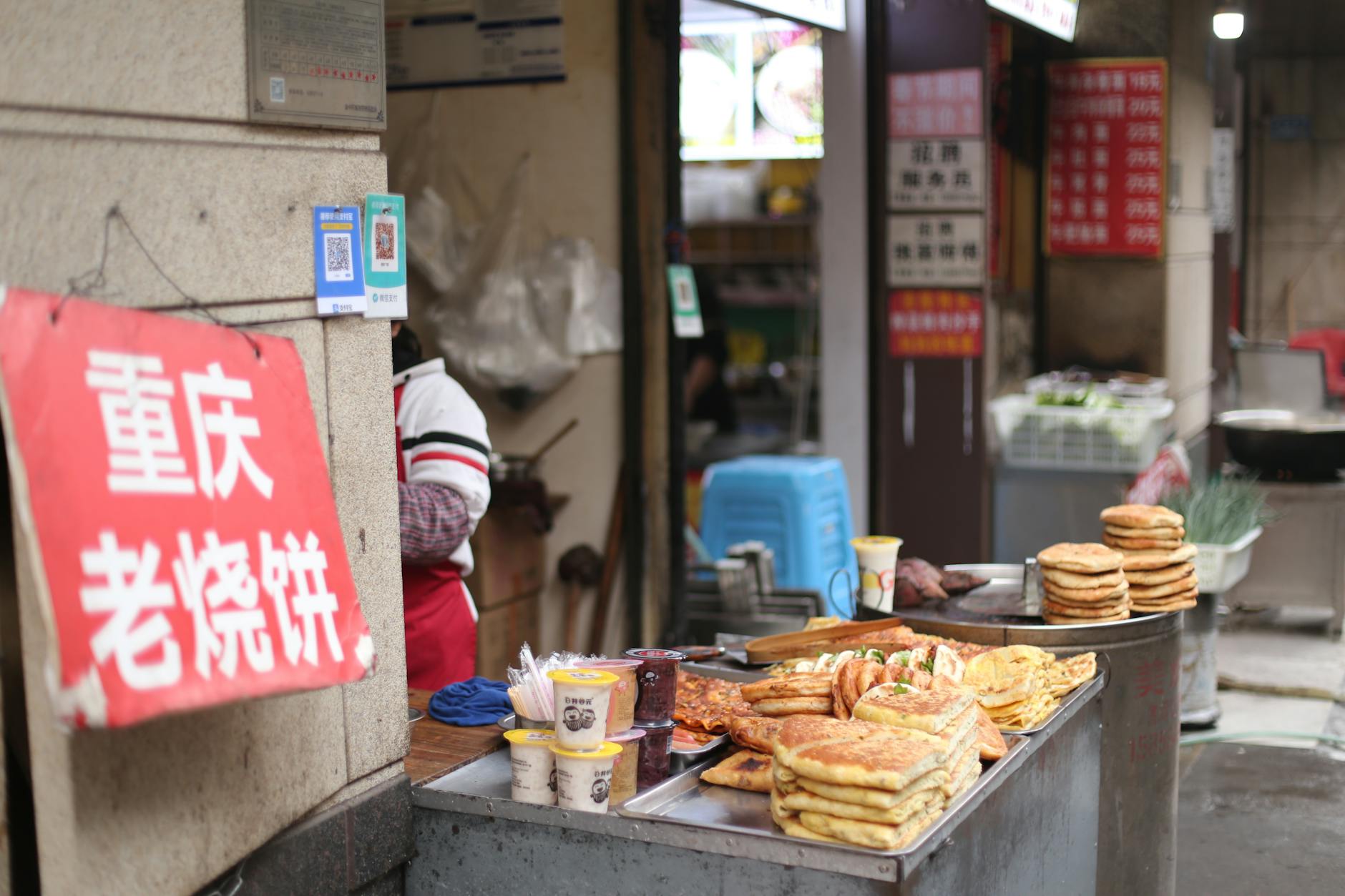
Table of Contents
- What Is Shanghai Street Food?
- The Essential Dishes to Try First
- Shanghai Breakfast Street Food
- Snacks and Sweet Treats
- Where to Find Shanghai Street Food
- Wujiang Road Food Street
- Yuyuan Bazaar and the City God Temple
- Yunnan Road’s Food Brands
- Tianzifang and the Former French Concession
- Famous Individual Shops
- How to Order and Pay
- A Suggested Street Food Crawl
- Tips and Common Mistakes
- Food Safety and Hygiene
- Frequently Asked Questions
What Is Shanghai Street Food?
Shanghai street food sits where two things meet: the wider Jiangnan delta cooking tradition, which leans subtle, slightly sweet, and balanced rather than fiery, and the city’s twentieth-century commercial history. The flavors are gentle next to the chili-heavy street food of Sichuan. Pork is the dominant meat, dough and rice form the backbone, and soup-filled preparations recur.
A few traits mark it as genuinely Shanghainese. The seasoning is restrained, so a good shengjianbao tastes of pork and stock rather than soy and sugar. Texture matters: the contrast between a crackly fried base and a soft, soup-loaded top is the point of half these dishes. And almost everything is eaten standing up, in the few minutes between the griddle and the curb.
Modern Shanghai street food works differently from the romantic image of pushcarts everywhere. Cart vending is tightly regulated, and many vendors now work from small storefronts. The famous names below all made that jump. You lose the old-fashioned chaos but gain reliable hygiene — the food is as good as ever, just served through a window.
The Essential Dishes to Try First
If you have one day, these dishes define the city. Each entry covers what it is, what it tastes like, and roughly what to pay; prices move over time, so treat the numbers as a guide.

Shengjianbao (生煎包). The signature Shanghai street food: pan-fried pork buns on thick yeasted dough, crisped to a deep golden crust on the bottom, soft on top, sprinkled with sesame and scallion, filled with seasoned pork in a pool of hot soup. Eat one by nibbling a small opening, letting the steam escape and sipping the broth, then finishing the rest — bite straight in and you scald your chin and lose the soup. This is the first thing most people should eat in Shanghai.
Xiaolongbao (小笼包). The soup dumpling that made Shanghai food famous. Thinner-skinned than shengjianbao and steamed in bamboo baskets, each translucent parcel holds minced pork and a spoonful of rich broth that melts back to liquid in the steamer. Eat the same way, ideally with black vinegar and slivered ginger. What a basket costs depends on the shop, and adding crab roe pushes it up.
Jianbing (煎饼). The breakfast crepe and the best two minutes of street theater in the city. Thin wheat-and-mung-bean batter is spread across a hot griddle, an egg cracked and smeared on top, brushed with sweet bean sauce and chili, scattered with scallion and cilantro, folded around a sheet of crackly fried wonton (bao cui), and folded again into a hot, savory parcel. It is a breakfast food, so go in the morning; say la (辣) for spicy and point.
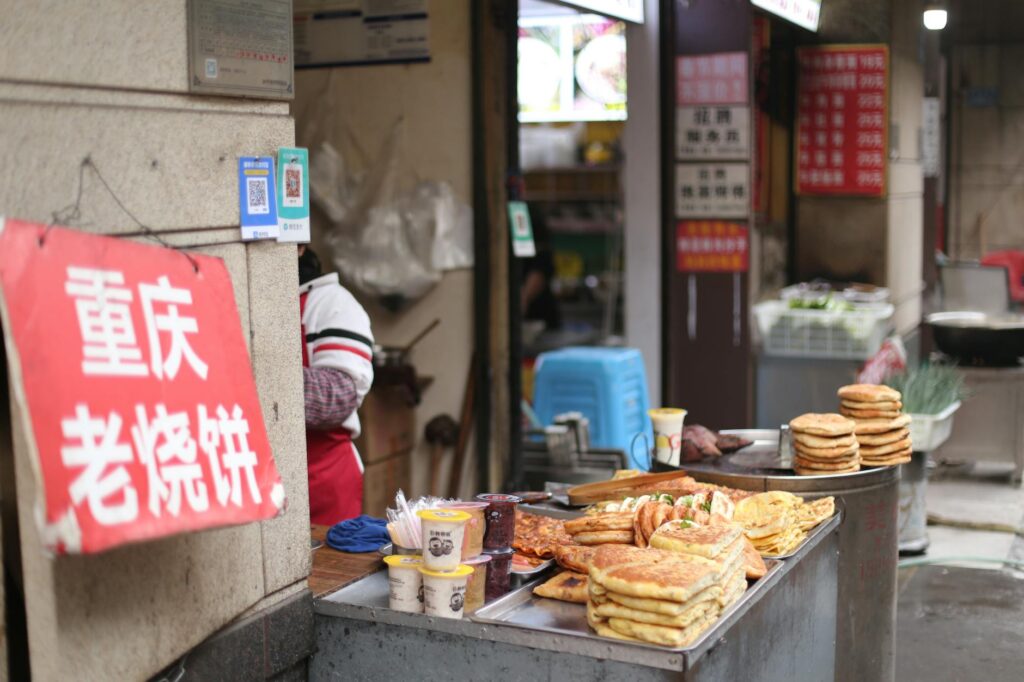
Cong you bing (葱油饼). Scallion pancakes, the everyday workhorse of Shanghai breakfast. Layered dough folded with scallion and oil, shallow-fried until the outside shatters and the inside stays chewy — fragrant and cheap. Eat it walking.
You tiao (油条). Fried dough sticks, golden and hollow, faintly salty. Eaten plain, torn into hot soy milk, or rolled inside other items. A few RMB each, and the glue of the Shanghai breakfast plate.
Da bing (大饼). A sesame-studded flatbread, sweet or savory, often wrapped around a you tiao for the classic carb-on-carb roll, da bing you tiao. Simple, filling, very cheap.
Ci fan tuan (糯饭团). A sticky-rice roll packed around a you tiao with pork floss and pickled vegetables, pressed into a dense cylinder you eat one-handed on the move. Savory and chewy, a whole breakfast in one roll — and an underrated grab-and-go item.
Pai gu nian gao (排骨年糕). Pork ribs cooked with rice cakes and glazed in sweet-savory sauce. The rib is crisp-edged, the slabs of nian gao soft and chewy in the sauce. A proper small meal and a Shanghai classic.
Doujiang (豆浆). Fresh soy milk, sweet or savory. The savory version surprises people: warm soy milk curdled with vinegar and soy, scattered with dried shrimp, pickles, scallion, and torn you tiao until it sets between soup and custard.
Stinky tofu (臭豆腐). Fermented tofu, deep-fried crisp, served with chili sauce and pickles. The smell carries down the street, but the taste is much milder than the aroma promises — savory and a little tangy. Worth trying once, and best in residential neighborhoods rather than the tourist bazaars.
Shanghai Breakfast Street Food
Breakfast is when Shanghai street food is at its best, and the easiest meal for a visitor to get right. The busiest stretch is the early-morning commute, when residential streets fill with carts feeding the people on their way to work. Locals call the core lineup the “four warriors” — soy milk, you tiao, da bing, and ci fan tuan — though the real menu is wider.
A reliable first order: one jianbing or scallion pancake, one you tiao, and a cup of soy milk, sweet or savory. That leaves you full for small change. Add pickled vegetables or millet porridge to balance the fried items. Noodle stalls count as breakfast here too — a small bowl of scallion-oil noodles or pork rib noodle soup is a cheap, filling start.
Where to go: most residential neighborhoods have vendors in the early morning, but the quieter lanes of the former French Concession — Wukang Road, Wuyuan Road, Anfu Road — make a nicer walk than a station forecourt. Clusters near metro exits are dense too. The breakfast guide linked below goes shop by shop.
Snacks and Sweet Treats
Beyond the savory staples, Shanghai has a strong sweet-snack tradition tied to seasons and festivals — things you graze on between meals.

Tanghulu (糖葫芦). Skewers of fruit — traditionally hawthorn, now also strawberry, grape, and kiwi — dipped in hardened sugar syrup that cracks like glass. The hawthorn is sharp and sour under the sweet shell, which is the appeal. A winter specialty sold from carts when the weather turns cold.
Crab shell pastry (蟹壳黄). A small flaky baked bun shaped roughly like a crab shell, topped with sesame, savory or sweet. The pastry is shatteringly crisp and layered, baked rather than fried — a Shanghai teahouse and snack-street classic, especially around the City God Temple.
Chop rice cake. Slabs of dense, chewy sticky rice cake, sometimes fried, sometimes paired with the pork-rib dish above. The time-honored Yunnan Road brands now trade from their new cluster near Nanjing Road Pedestrian Street.
Tang yuan (汤圆). Glutinous rice balls in sweet broth, filled with black sesame or red bean, served warm in winter and around the Lantern Festival.
Zongzi (粽子). Sticky rice wrapped in bamboo leaves around pork belly, salted egg yolk, or sweet bean paste, then steamed. A year-round snack that peaks at the Dragon Boat Festival; Wu Fang Zhai is the famous name.
Fresh-meat mooncake (鲜肉月饼). Around the Mid-Autumn Festival, look for Shanghai’s savory specialty: a flaky pastry with a hot pork filling, sold by the box from long sidewalk queues at places like Guangmingcun on Huaihai Road.
Where to Find Shanghai Street Food
The food is scattered, but a few streets concentrate it enough for a natural eating walk. Each spot below pairs the headline vendors with the nearest metro, the best time to show up, and a note on whether it leans local or touristy.
Wujiang Road Food Street
The most famous food street in central Shanghai and the easiest to reach: a short pedestrian zone parallel to West Nanjing Road, lined with small shops and stalls selling everything from shengjianbao to lamb skewers to bubble tea. This is where Yang’s Fry-Dumpling got its start, and the pan-fried bun is still the thing to order first. It has been renovated into a tidy, walkable street — comfortable, if a touch less rough-and-ready than it once was.
What to eat: Yang’s shengjianbao, wonton soup, noodle bowls, lamb skewers, tapioca pudding, and a wall of bubble tea.
Best time: late morning or mid-afternoon; the lunch rush brings long lines on weekends.
Metro: West Nanjing Road station (Lines 2, 12, 13), then walk east.
Yuyuan Bazaar and the City God Temple
The Old City’s bazaar around Yu Garden, anchored by the City God Temple (Chenghuangmiao), offers a wide selection of traditional Shanghai snacks. Some is squarely aimed at tourists and priced accordingly; some is excellent. Stick to the well-known names and skip the random stalls. This is the place for crab shell pastry, seasonal fresh-meat mooncakes, sticky rice cakes, and a basket of xiaolongbao at Nanxiang, the century-old shop that anchors the bazaar.
What to eat: Nanxiang xiaolongbao, crab shell pastry, chop rice cake, candied skewers, seasonal mooncakes and rice sweets.
A note of caution: tourist-zone pricing applies and quality varies; use the famous shops as anchors and treat the rest as grazing.
Best time: Go early, soon after Yu Garden opens, if you want room to move.
Metro: Yuyuan Garden station (Lines 10, 14).
For the wider history and layout of this area, see the Yu Garden Shanghai guide.
Yunnan Road’s Food Brands, Now Near Nanjing Road
Yunnan Road was long the home of Shanghai’s time-honored food brands, and those brands have moved. On 10 February 2026 they reopened together in a new cluster near Nanjing Road Pedestrian Street, spanning South Shanxi Road, Middle Fujian Road and Middle Jiangxi Road, with more than a dozen long-standing local names under one banner, several going back generations. It is a living record of Benbang (local Shanghainese) cooking. Come for fried pork chops, salted duck, chop rice cake, and old shops that have done one dish for a very long time.
What to eat: fried pork chop, salted duck, Xiandelai chop rice cake, Wu Fang Zhai zongzi, and the time-honored shop specialties around the cluster.
Best time: lunch and dinner, when the sit-down brand restaurants are at their best.
Metro: People’s Square station (Lines 1, 2, 8), then walk toward Nanjing Road Pedestrian Street.
Tianzifang and the Former French Concession
The former French Concession has a different street food character — more boutique, more internationally influenced, pricier but often better. Tianzifang’s narrow lanes are packed with small food shops selling Korean-Shanghai fusion, taiyaki (Japanese fish-shaped pastries), and creative small bites, as much about wandering as eating. The quieter concession streets — Anfu Road, Wuyuan Road, Wukang Road — have the best independent breakfast vendors and cafes in the city.
What to eat: jianbing and scallion pancakes from the morning carts, plus the boutique bites inside Tianzifang.
Best time: mornings for the breakfast carts; late afternoon for Tianzifang’s lanes.
Metro: Dapuqiao (Line 9) for Tianzifang; Changshu Road (Lines 1, 7) for the wider concession.
Famous Individual Shops
Beyond the food streets, a handful of single shops are destinations in their own right — the names locals will send you to. Most have multiple branches, so you rarely go far out of your way.
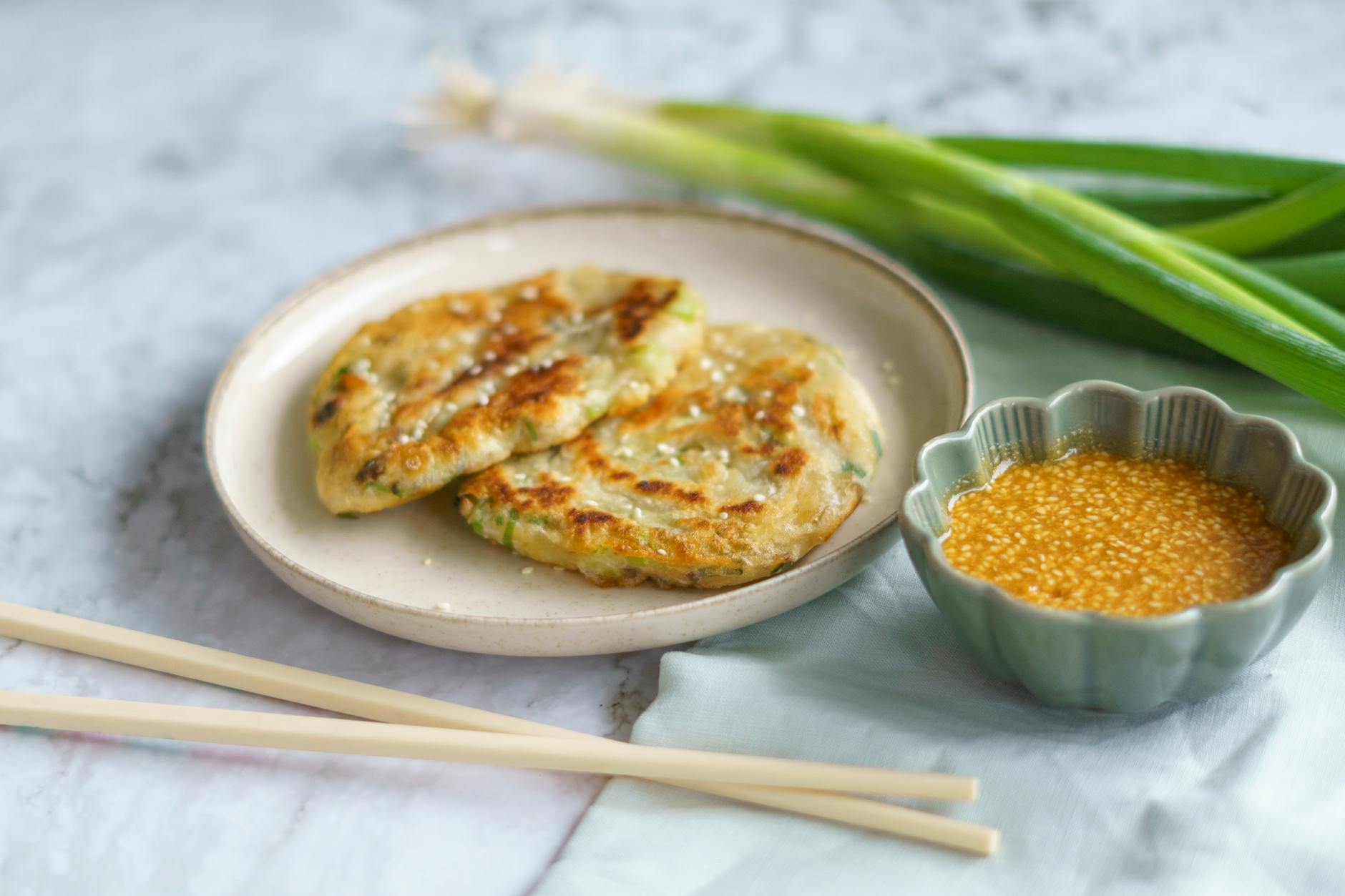
Yang’s Fry-Dumpling (Yang’s Sheng Jian). The best-known shengjianbao chain, with branches on Wujiang Road, Huanghe Road, and in many metro stations. A serving of four costs RMB 13 at 97 Huanghe Road. Fast, reliable, the standard first stop.
Nanxiang Steamed Bun. The century-old xiaolongbao shop anchoring Yuyuan Bazaar. Busy and touristy, but the dumplings hold up.
Jia Jia Tang Bao. The local favorite for xiaolongbao — small, no-frills, no tour buses, and a reputation among Shanghainese for matching or beating the famous names. Several branches, including near Huanghe Road.
Da Hu Chun. An old-guard shengjianbao maker working a fluffier, more fermented dough than Yang’s — try it to taste the difference between the two schools of the bun.
Cong You Bing specialists. A few dedicated scallion-pancake shops that locals treat as the benchmark — tiny, cash-friendly, worth a detour if cong you bing has won you over.
Wu Fang Zhai. The famous name in zongzi and glutinous-rice goods, with a long history, among the Yunnan Road brands that reopened near Nanjing Road Pedestrian Street in 2026.
A Niang Mian. A well-loved central noodle shop for Shanghainese scallion-oil noodles — a good lunch stop between snack runs.
For the full restaurant picture beyond stalls, see the best restaurants in Shanghai guide, and for keeping the day cheap, the cheap eats in Shanghai guide.
How to Order and Pay
Ordering Shanghai street food is easy once you know the rhythm, even with no Mandarin. Most vendors do one thing or a short list, the food is on display or made in front of you, and pointing works everywhere.
Point and hold up fingers. The universal method. Point at what you want — the finished item or what the person ahead is eating — and show the number. Four shengjianbao: point, four fingers. Vendors do this hundreds of times a day.
Learn five words. yi ge (one), liang ge (two), duo shao qian (how much), la (spicy), bu la (not spicy). Even badly pronounced, they help.
Expect mobile payment first. Shanghai runs on WeChat Pay and Alipay, and many vendors display a QR code as the default. With either app linked to an international card, you scan the vendor’s code, type the amount, and show the confirmation screen. By far the smoothest way to pay.
Carry small cash as backup. Not every cart takes mobile payment from a foreign account, and a few are cash-only. Keep some small notes on you; a vendor may not be able to break a large one, so get change at a convenience store first.
Pay when you order, eat where you stand. Most stalls take payment up front and hand over the food when ready. Seating is minimal or nonexistent — this is walking food.
A Suggested Street Food Crawl
One route that hits the highlights: a half-day walk from a concession breakfast through the central food streets to the Bund. Adjust freely — the point is the sequence, not the stopwatch.
8:00 a.m. — Breakfast in the former French Concession. A neighborhood cart on or near Wuyuan or Anfu Road for a jianbing or scallion pancake, a you tiao, and soy milk.
9:30 a.m. — Metro to Wujiang Road.
10:00 a.m. — Yang’s Fry-Dumpling. Four shengjianbao, eaten on the spot while the bottoms are crisp. The Huanghe Road branch charges RMB 13.
10:30 a.m. — Wander Wujiang Road, grazing on noodles and skewers.
12:00 p.m. — Move to Yuyuan Bazaar by metro or a longer walk toward the Old City.
12:30 p.m. — Lunch at Nanxiang. A basket of pork xiaolongbao plus a crab-roe basket. Around RMB 90.
1:30 p.m. — Yuyuan snacks: crab shell pastry, sticky rice cake, a candied skewer.
2:30 p.m. — Walk to the Bund for the river view.
3:30 p.m. — Coffee or tea back toward Wuyuan or Anfu Road.
Pay stall by stall as you go, and you will have tasted the major categories of Shanghai street food in one morning.
Tips and Common Mistakes
Eat it fresh, eat it hot. Shengjianbao and xiaolongbao are made to be eaten within a couple of minutes — let them sit and the crust softens, the soup cools, and you miss the best of it.
Follow the queue. A long local line is the most reliable quality signal in the city — high turnover means fresher food and a vendor doing one thing well. A stall empty at a busy hour is telling you something.
Go where locals eat, not where tour groups gather. The same dish is often better and cheaper a few streets off the main drag. Stinky tofu is the clearest example: bazaar versions are tourist-grade, the concession versions the real thing.
Do not expect to sit. Many vendors are standing-only or have a couple of stools. Treat street food as something you eat on your feet.
Skip the chain bubble tea in favor of the independent local tea shops, and ask before you photograph — most vendors are happy to oblige with a quick gesture toward your camera.
Try one thing you cannot identify. Point at the mystery item the regulars are buying and find out what it is afterward.
Food Safety and Hygiene
Hygiene at established Shanghai street food vendors is generally good. Tighter food-safety enforcement over the past decade means most storefront vendors meet basic standards, and the famous high-volume shops are about as safe as casual eating gets. Risk rises at unfamiliar low-volume stalls and falls at busy, well-known ones — another reason to follow the crowds.
What to look for: food cooked to order and served hot, visible preparation, clean utensils, and basic hygiene like gloves or hairnets where appropriate.
What to skip: cold or pre-cooked items sitting out, raw seafood from low-turnover stalls, and any vendor conspicuously empty at a normally busy time.
If you have a sensitive stomach, stick to things cooked in front of you — jianbing, scallion pancakes, freshly steamed dumplings — and go easy on cold dishes until your system settles. Drink bottled water; tap water is not meant to be drunk unboiled.
The vast majority of visitors eat Shanghai street food daily without trouble. Standard travel-stomach common sense, plus insurance that covers the occasional bad reaction, is all you need.
Frequently Asked Questions
Is Shanghai street food safe to eat?
Generally yes, especially at established vendors and the famous shops. The safest choices are hot items cooked to order — jianbing, scallion pancakes, freshly steamed dumplings. Cold and pre-prepared items carry slightly more risk. Eat where the lines are long, drink bottled water, and most visitors have no problems.
What is the most famous Shanghai street food?
Shengjianbao (pan-fried pork buns) and xiaolongbao (soup dumplings) are the two best known, and both are Shanghai-specific traditions. If you eat only one thing, make it a fresh shengjianbao with a crisp bottom and a mouthful of hot broth inside.
Where can I find the best Shanghai street food?
Wujiang Road Food Street is the most concentrated and easiest to reach, Yuyuan Bazaar around the City God Temple has the most traditional snacks, the Yunnan Road food brands near Nanjing Road Pedestrian Street are the most local and historic, and the former French Concession has the best breakfast carts. A morning touching two or three of these covers the essentials.
How much does Shanghai street food cost?
Individual items are cheap, though the price depends on the stall, the portion and what you add, so check the menu board before you pay. A filling breakfast or a full street-food meal costs little, and a half-day crawl only adds up because you keep eating.
What is shengjianbao?
Shengjianbao is a pan-fried pork bun on thick yeasted dough, with a crisp golden bottom, a soft top, sesame and scallion, and a filling of seasoned pork in hot soup. Nibble a small hole and sip the broth before eating the rest, or it runs down your hand. It is Shanghai’s signature street food.
What is the difference between xiaolongbao and shengjianbao?
Xiaolongbao are smaller, thin-skinned, and steamed in bamboo baskets; shengjianbao are larger, on thick yeasted dough, and pan-fried until the bottom is crisp. Both are soup-filled and both are essential Shanghai dumplings — cousins, not the same dish.
What is jianbing and when can I get it?
Jianbing is a savory crepe of wheat-and-mung-bean batter cooked on a hot griddle with an egg, sweet bean sauce, chili, scallions, and a sheet of crackly fried wonton folded inside. It is a breakfast item, so look for it in the morning.
What time do Shanghai street food vendors open?
Breakfast vendors work the early morning, the best window for the morning specialties. Snack streets and famous shops open later and keep going through the day, so check each shop’s posted hours, and a few night-market streets keep going into the evening.
Can vegetarians eat Shanghai street food?
It is limited but workable. Scallion pancakes, plain noodles, you tiao, soy milk, and many sweet snacks are vegetarian, but most savory items contain pork, so check before ordering. Buddhist vegetarian restaurants offer meat-free versions of classic dishes for a fuller sit-down meal.
Is street food cheaper than restaurants in Shanghai?
Yes, by a wide margin. Two people can eat a street-food meal for much less than a casual sit-down meal would cost them. Street food is the best way to eat well in Shanghai on a tight budget.
How do I pay for street food in Shanghai?
WeChat Pay and Alipay are the default, and many vendors display a QR code. With an international card linked to either app, you scan the code, enter the amount, and show the confirmation. A few small notes in your pocket cover the cash-only stalls.
Can I do a guided Shanghai street food tour?
Yes. Several operators run guided tours lasting a few hours; prices vary by operator, so compare before you book. Worth it if you want food history and local context alongside the eating, or would rather not navigate the ordering yourself on day one.
Eat Like a Local
This Shanghai street food guide gives you the framework for one of the city’s most rewarding experiences: eat at the busy stalls, point at what looks good, eat everything hot and fresh, pay with your phone, and try one thing you cannot name. The dishes cost less than your morning coffee back home, and the tradition behind them goes back generations.
For the broader food picture including sit-down dining, start with the pillar Shanghai Food Guide. To go deeper on the soup dumpling, see the best xiaolongbao in Shanghai guide. For the morning meal in detail, the Shanghai breakfast guide goes shop by shop, and for the Old City around Yuyuan Bazaar, see the Yu Garden Shanghai guide.
Whatever else you do in the city, eat from the carts and the stalls and the small shops. The dumplings are cheap, the lines are friendly, and the food memories stick.
For more background, see Chinese street food.