Shanghai has a reputation for high-end dining that scares off budget travelers, but the everyday reality is the opposite: among the world’s big cities, this is one of the cheapest places to eat well if you know where to go. A neighborhood breakfast runs about RMB 15. A filling lunch lands around RMB 25. Graze across a few street stalls for dinner and you are still under RMB 50 a head. This guide to cheap eats in Shanghai covers the foods you can actually fill up on for under RMB 30 a dish — what to order, where to find it, the famous shops every budget traveler should know, and the snack streets and mall food halls that keep a day’s food spend reasonable. The short version: most visitors can eat very well on about RMB 100 a day if they choose neighborhood shops and street stalls over hotel restaurants and the tourist-zone places that ring the big sights.
This guide breaks Shanghai’s cheap food into six buckets: street snacks under RMB 10, noodles and rice meals under RMB 25, dumplings and buns under RMB 30, mall food-court bowls under RMB 30, breakfast combos under RMB 15, and the low-price local institutions where a satisfying lunch runs RMB 30–50. Prices below are typical 2026 ranges; a stall here or a downtown mall there can run higher, but the numbers hold up across most of the city.
Table of Contents
- Why Shanghai Is Cheaper to Eat In Than You Think
- Price Tiers, Explained
- Under RMB 10: Street Snacks
- RMB 10–25: Noodles, Buns, Rice Bowls
- RMB 25–30: Full Plates and Bigger Portions
- Breakfast Combinations
- Famous Cheap-Eats Shops
- Food Halls and Markets
- Cheap Eats in Shanghai: Best Food Streets
- Michelin Bib Gourmand on a Budget
- Ordering and Paying: Practical Tips
- More Money-Saving Strategies
- A Sample RMB 100 Day
- Frequently Asked Questions
Why Shanghai Is Cheaper to Eat In Than You Think
The fine-dining scene grabs the headlines, but the food economy most residents live on runs on much thinner margins. A few reasons it stays affordable:
A deep street-food and snack tradition. Shanghai’s everyday food culture grew up around quick, cheap meals for working people. Many of the city’s most loved foods — jianbing, shengjianbao, scallion pancakes — still cost RMB 5–12, the same range a local would pay.
Neighborhood lunch counters everywhere. Almost every residential block has a small noodle shop or rice-bowl counter doing lunch for RMB 15–30. You are rarely more than a few minutes’ walk from one.
Staples kept cheap by habit. Some foundational foods — steamed buns, plain noodles, soy milk — have prices held down by long-standing convention. A plain mantou is still about RMB 1.
A strong food-court tradition. Mall-basement food courts in central Shanghai serve genuinely good regional Chinese cooking for RMB 25–45 a bowl, often from chefs who cook that cuisine for a living.
Set against Tokyo, Hong Kong, or Singapore, Shanghai street food runs roughly 30–50% cheaper for comparable quality. Against London or New York, it is more like 60–80% cheaper. For the bigger picture on daily spending, our guide to how much a Shanghai trip costs puts food into context alongside hotels and transit.
Price Tiers, Explained
Shanghai food prices sort into fairly clear bands. Knowing them helps you eyeball whether a place is a deal or a tourist trap before you sit down.
- RMB 5–10: Street snacks, single dumplings, single buns, soy milk.
- RMB 10–25: Bowls of noodles, baozi sets, breakfast combos, rice bowls.
- RMB 25–50: Full plates at cheap restaurants, casual hot-pot bowls, food-court meals.
- RMB 50–100: Sit-down restaurant meals, a bowl of pho, mid-tier neighborhood dining.
- RMB 100–200: A typical mid-range restaurant meal per person.
- RMB 200+: Upscale dining, sliding up into fine dining at the top.
This article lives in the first three bands — eating well for under RMB 30 a dish, with a few notes on where to stretch slightly higher for something special.
Under RMB 10: Street Snacks
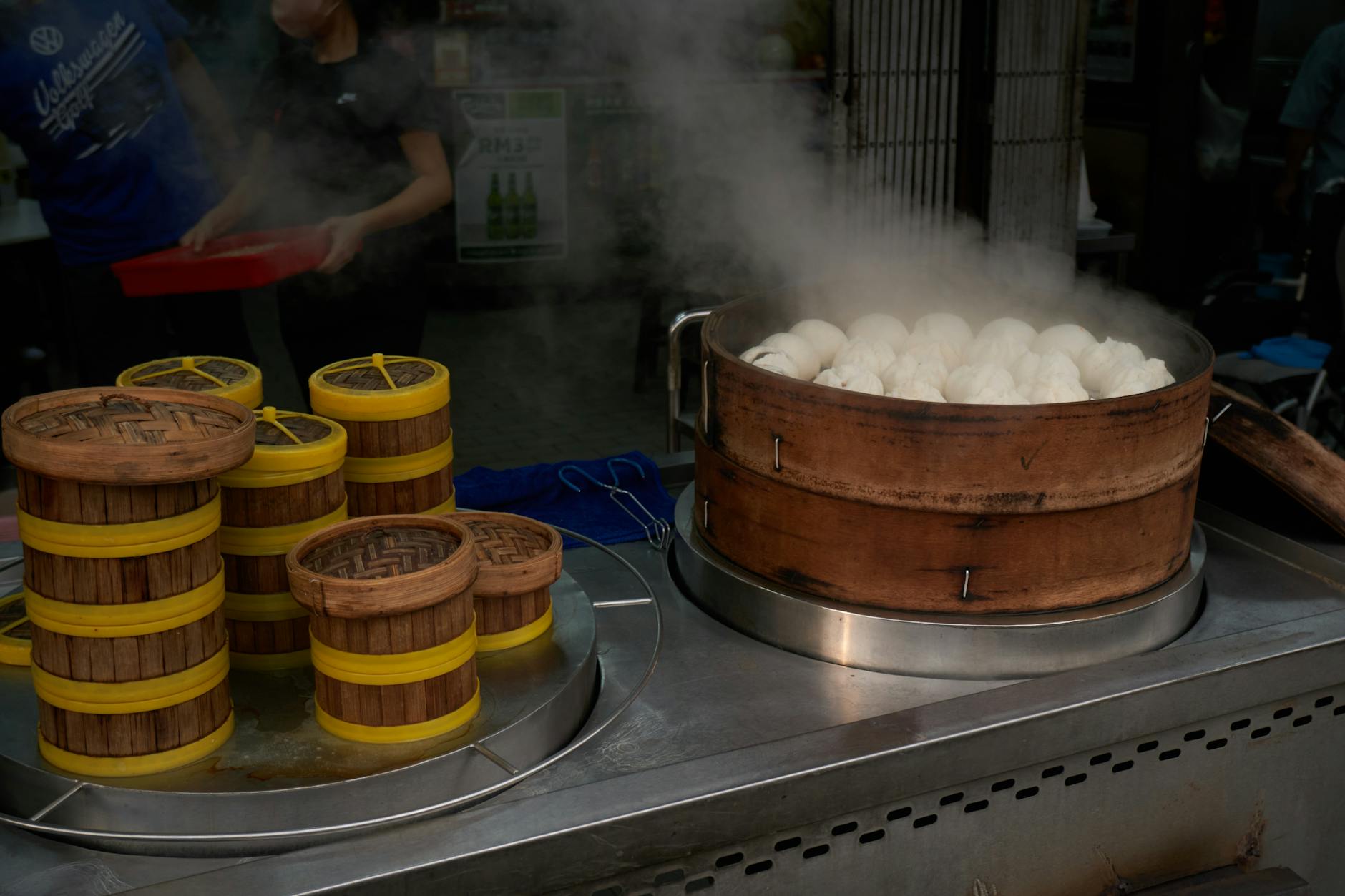
The cheapest tier of Shanghai eating. Most of these are single items rather than full meals, which is the point — you stack two or three into a snack, or four or five into something closer to a meal.
Baozi (steamed pork buns). RMB 1.50–3 each. Sold on practically every corner. Two or three make a snack; four or five make a meal.
You tiao (fried dough sticks). RMB 1.50 each. Eaten with soy milk or congee, ideally still warm and crisp.
Cong you bing (scallion pancakes). RMB 3.50–10 each. Crispy, savory, layered with scallion oil — great as a snack or a quick breakfast on the move.
Jianbing (savory crepe). RMB 8–12. A whole breakfast in one: egg griddled onto a thin batter crepe, then scallions, hoisin, chili, and a sheet of crisp fried wonton folded inside.
Shengjianbao (pan-fried buns). About RMB 6 for four at Yang’s Fry-Dumpling. Bottoms fried crisp, tops doughy, a shot of hot soup inside — the classic Shanghai street bite.
Doujiang (soy milk). RMB 2–5. Order it sweet, or savory with dried shrimp, pickled vegetable, and a drizzle of vinegar that curdles it into something almost like a soup.
Mantou (plain steamed buns). About RMB 1 each. A plain, filling stand-in for rice.
Tanghulu (candied fruit skewer). RMB 5–10. A winter specialty — hawthorn or strawberries glazed in hard, cracking sugar.
Lamb skewers. RMB 3–8 each at street barbecue stalls, dusted with cumin and chili.
Sticky rice ball with peanut filling. RMB 3–5. A sweet, chewy snack.
Put a few together and you have breakfast: soy milk plus a fried dough stick plus a jianbing comes to roughly RMB 15.
RMB 10–25: Noodles, Buns, Rice Bowls
This is the sweet spot for budget meals — the band where a single dish actually fills you up.
Cong you mian (scallion oil noodles). RMB 12–20. The Shanghai classic: noodles tossed in dark, sweet-savory scallion oil with a little soy. Simple and weirdly addictive.
Pork rib noodle soup. RMB 18–30. A staple at neighborhood noodle shops, with a fried or braised rib over the noodles.
Shengjianbao set (eight pieces). About RMB 12 at Yang’s. A meal on its own.
Xiaolongbao (eight pieces). RMB 18–30 at neighborhood shops. For where to find the best baskets in the city, see our guide to the best xiaolongbao in Shanghai.
Wonton soup. RMB 12–18. On the menu at most noodle shops; the small wontons (xiao huntun) come in a clear broth, the big ones (da huntun) are a meal.
Hand-pulled noodles. RMB 15–25. Pulled to order at lanzhou-style and northwestern shops, with generous portions.
Rice bowl with shredded pork. RMB 15–25. A common, reliable neighborhood lunch.
Vegetable bun with rice porridge. RMB 8–12. A light breakfast or small lunch.
Smaller plate of dumplings. RMB 15–22 per ten, boiled or pan-fried.
Most travelers can eat a full lunch for RMB 20–25 at a neighborhood noodle shop without trying hard to economize.
RMB 25–30: Full Plates and Bigger Portions
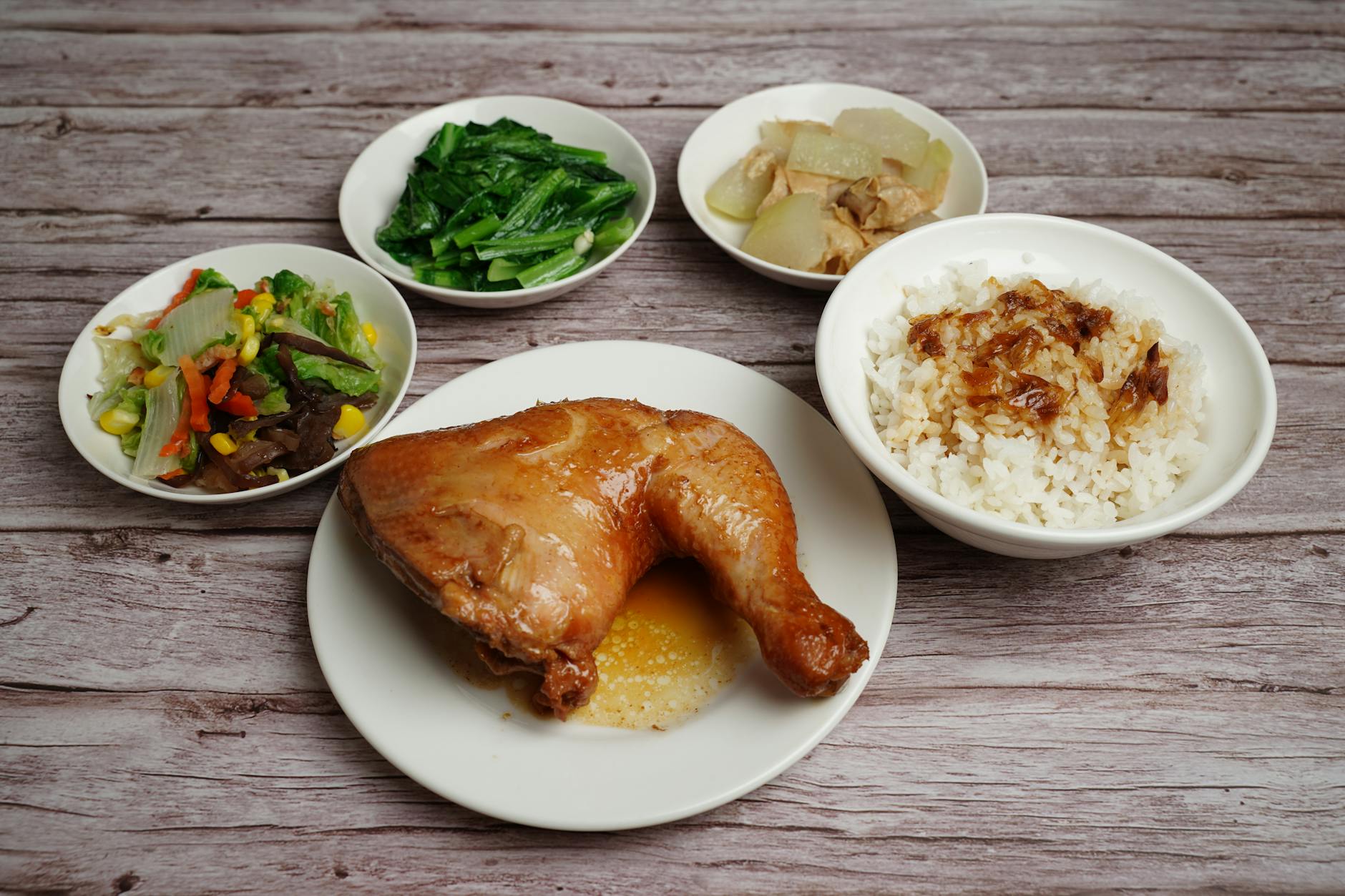
The top of the cheap-eats range, where a few more yuan buys a noticeably bigger plate.
Chicken rice plate. RMB 25–30. Stewed or roasted chicken over rice with a vegetable.
Pork rib rice (pai gu fan). RMB 28–35. A traditional Shanghai favorite — a fried, lightly sweet pork chop over rice.
Yangchun mian (clear-broth noodles). RMB 18–25. The plainest, most honest bowl of noodles in the city, often the cheapest thing on a menu.
Beef noodle soup. RMB 25–35, depending on whether it is a Lanzhou-style thin broth or a richer red-braised bowl.
Meat-and-vegetable bento (lunch box). RMB 25–35, common at Chinese fast-food chains and office-district counters.
Hot-pot single bowl. RMB 30–40 at street-style and convenience hot-pot stalls where you pick skewers and they cook them in broth.
Pho. RMB 30–40 at the city’s many casual Vietnamese spots.
Set lunch at a casual restaurant. RMB 30–45 for a main, rice, and soup — usually the best value a sit-down place offers.
Breakfast Combinations
Shanghai breakfast deserves its own category, both because it is cheap and because it is one of the most fun things to eat your way through. The classic four pillars — the “si da jin gang,” or four heavenly kings — are da bing (flatbread), you tiao (fried dough), doujiang (soy milk), and ci fan tuan (a sticky-rice roll). Some combos worth ordering:
Standard package: Soy milk + you tiao + jianbing. RMB 12–18.
Buns and porridge: Two pork baozi + millet or rice porridge. RMB 8–14.
Scallion-pancake set: Cong you bing + soy milk + a dumpling. RMB 18–25.
Shengjianbao breakfast: Six pan-fried buns + a bowl of noodles. RMB 22–28.
Xiaolongbao breakfast: A single basket + tea. RMB 22–28.
Best places: any residential neighborhood between roughly 7 and 8:30 AM, when the carts and hole-in-the-wall counters are firing on all burners. The quieter streets of the former French Concession have some especially good morning vendors. For a deeper dive into the morning spread, our Shanghai breakfast guide walks through every dish and where to find it.
Famous Cheap-Eats Shops
Specific shops where you can eat well for under RMB 30 — or just barely over it for something worth the splurge.
Yang’s Fry-Dumpling (Yang’s Dumpling). The shengjianbao benchmark: about RMB 6 for four buns, fried to a crackling base. Multiple locations across the city, often with a line that moves fast.
Nanxiang Steamed Bun. The famous xiaolongbao house at Yu Garden, with roots near the City God Temple. Standard pork is around RMB 30; crab-roe baskets climb toward RMB 60. Skip the ground-floor takeaway queue and head upstairs to sit down. The standard pork basket is the budget tier.
Jia Jia Tang Bao. A local-favorite soup-dumpling shop with thin wrappers and a pork-and-crab filling, roughly RMB 22–40 a basket. Small, busy, and worth the wait.
A Niang Mian. A Ningbo-style hole-in-the-wall on Sinan Road, famous for homestyle seafood noodles. The yellow-croaker noodles are good year-round; in late fall the crab-roe noodles are the move. Cafeteria seating, elbows knocking, a wall that tells you to eat granny’s noodles until your mouth cramps from happiness. A basic bowl is around RMB 18; the crab versions cost more.
Da Hu Chun. One of the shops that helped originate the shengjian dumpling back in the 1930s, now a “Time-Honored Brand” with a true hole-in-the-wall pedigree. Worth a stop for the history alone.
Cong You Bing Wang. The “scallion-pancake king,” RMB 6–10 a piece, layered and shatteringly crisp.
Old Shanghai Restaurant (Yuyuan Bazaar). Traditional, multi-dish Shanghainese; set meals start around RMB 30 if you order carefully.
Wujiang Road eateries. A run of small shops on this street serving dishes in the RMB 15–35 range.
Convenience stores. Many Lawson, Family Mart, and 7-Eleven branches keep a hot-food case going with rice bowls, noodles, and steamed items for RMB 8–25.
For the wider picture beyond the bargain tier, our guide to the best restaurants in Shanghai covers where to spend a bit more, and the main Shanghai food guide ties the whole scene together.
Food Halls and Markets
Mall food courts and food halls quietly offer some of the best price-to-quality ratios in the city. The cooks behind the counters often specialize in one regional cuisine, so a RMB 30 bowl can be genuinely excellent.
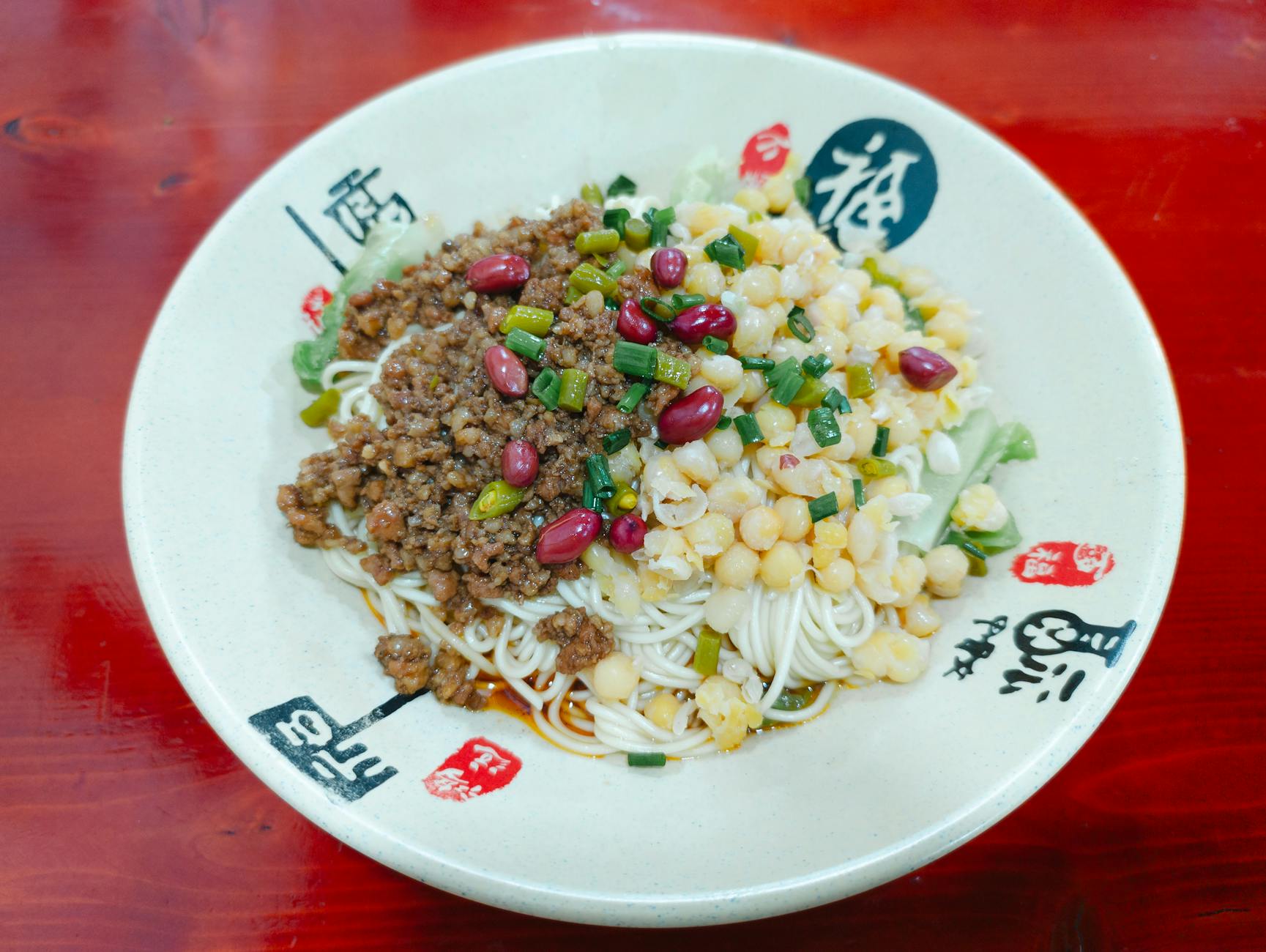
HKRI Taikoo Hui basement food hall. A polished pan-Asian food court near West Nanjing Road. Bowls run RMB 25–45.
Plaza 66 food court. A luxury mall, but the food court stays reasonable at RMB 30–50.
Jing’an Joy City food court. A wide spread of regional Chinese options, RMB 25–40.
Times Square Shanghai food court. Handy near the Bund for a lunch break between sights, RMB 25–40.
Wujiang Road Snack Street. An open street lined with food stalls, RMB 5–25 an item, although it has gentrified and thinned out over the years.
Yuyuan Bazaar. Pricier because it is a tourist draw, but a good place to graze traditional snacks at RMB 5–15 each.
Local wet markets. Cheap fresh produce and, at some, a few prepared-food stalls catering to the morning crowd.
Cheap Eats in Shanghai: Best Food Streets
A handful of streets are worth walking specifically for their concentration of cheap food.
Wujiang Road (off West Nanjing Road). The most concentrated food street in central Shanghai, long famous as the city’s snack row even as it has smartened up.
Yunnan Road South (near People’s Square). One of the oldest food streets, home to several “Time-Honored Brand” restaurants doing traditional Shanghai dishes.
Huanghe Road (by People’s Square). A dense strip of restaurants and late-night spots; a good bet for an affordable bowl at odd hours.
Jinxian Road (former French Concession). A short street packed with small family-run Shanghainese restaurants — the kind of homestyle places that turn up on the Bib Gourmand list. Plates here are mostly mid-range rather than rock-bottom, but the cooking punches well above the price.
Yongkang Road (former French Concession). A bar street with cheap snacks and quick bites woven between the drinks.
Tianzifang. A maze of lanes with shops and small food vendors — touristy, but fun to graze.
Sinan Road. A historic Concession street with a scatter of neighborhood restaurants, including A Niang Mian.
For shopping streets that double as food destinations, see our Nanjing Road shopping guide.
Michelin Bib Gourmand on a Budget
Michelin’s Bib Gourmand designation flags restaurants serving very good food at modest prices — the guide’s measure is roughly a quality meal for under about US$55, so it sits a notch above true cheap eats but well below fine dining. Shanghai has dozens of Bib listings, and several of them are genuinely affordable if you order simply.
A Niang Mian. The Ningbo-style noodle shop on Sinan Road described above — a perennial Bib favorite and one of the better-value entries.
Da Hu Chun. The historic shengjian shop, proof that a hole-in-the-wall can carry Michelin recognition.
Gongdelin. A vegetarian restaurant that opened in 1922, known for mushroom- and soy-based dishes that mimic eel, chicken, and more — a long-running Bib entry on West Nanjing Road.
Crystal Jade. A reliable Cantonese and dim-sum group with several central locations; come for the dumplings, and order a la carte to keep the bill down.
Jinxian Road’s family restaurants. Several tiny Shanghainese spots on this one street — Lanxin and its neighbors among them — have appeared in the guide, serving homestyle braised pork and seafood.
The Bib Gourmand list refreshes each year, so check the current Michelin Guide Shanghai before you build a trip around any single name.
Ordering and Paying: Practical Tips
A little know-how makes cheap eating in Shanghai far smoother, especially if you do not read Chinese.
Set up mobile payment first. Shanghai runs on WeChat Pay and Alipay, and both now let foreign visitors link an overseas card. Set this up before you arrive — it is how you will pay at most stalls, shops, and food courts. Many vendors no longer keep much change on hand.
But carry a little cash too. Some of the smallest street vendors still prefer cash for tiny purchases, and a few RMB 1 and RMB 5 notes save awkward moments.
Point, don’t stress about the language. Food-court counters and many shops display dishes or photos; pointing works fine. Translation apps with a camera mode read menus on the spot, and a screenshot of a dish name in Chinese is enough to show a vendor what you want.
Order at the counter, then sit. At most cheap noodle and bun shops you pay first at a register, get a ticket or number, and either collect the food or have it brought over. There is rarely table service or tipping.
Free hot water and tea. Most shops provide hot water or weak tea at no charge — you do not need to buy a drink to sit down.
Watch the turnover. The busiest stalls are busy for a reason: high turnover means fresher food and, usually, fair prices.
More Money-Saving Strategies
Eat where Shanghainese eat. A queue of locals is the most reliable signal of cheap and good. Follow it.
Skip the tourist zones for meals. Restaurants right on the Bund can run two to three times the price of equivalent places a few blocks inland or across in the former French Concession.
Lunch beats dinner. The same restaurant often runs cheaper lunch sets than its dinner menu — same kitchen, smaller bill.
Don’t overlook convenience stores. Lawson, Family Mart, and 7-Eleven keep hot-food cases stocked with rice bowls, noodles, dumplings, and pastries for RMB 8–25.
Combine cheap items. A single basket of dumplings, a bowl of noodles, and a drink for around RMB 30 makes a full, varied meal.
Use the apps at chains. KFC, McDonald’s, and most Chinese chains push cheaper combos through their mini-programs and apps than you will see on the counter menu.
Branch into regional Chinese. Sichuan, Hunan, Yunnan, and Northeastern restaurants are frequently cheaper than Shanghainese places — and a welcome change of flavor.
Eat off-peak. Lunch at 11:30 AM or 1:30 PM dodges the crush, and some shops run quieter-hour deals.
Cheap food pairs naturally with cheap sightseeing. Our roundup of free attractions in Shanghai shows how to build whole days around the riverside, parks, and temples that cost nothing to visit.
A Sample RMB 100 Day
Here is a full day of eating for RMB 100 — about US$14 — that still hits several Shanghai specialties.
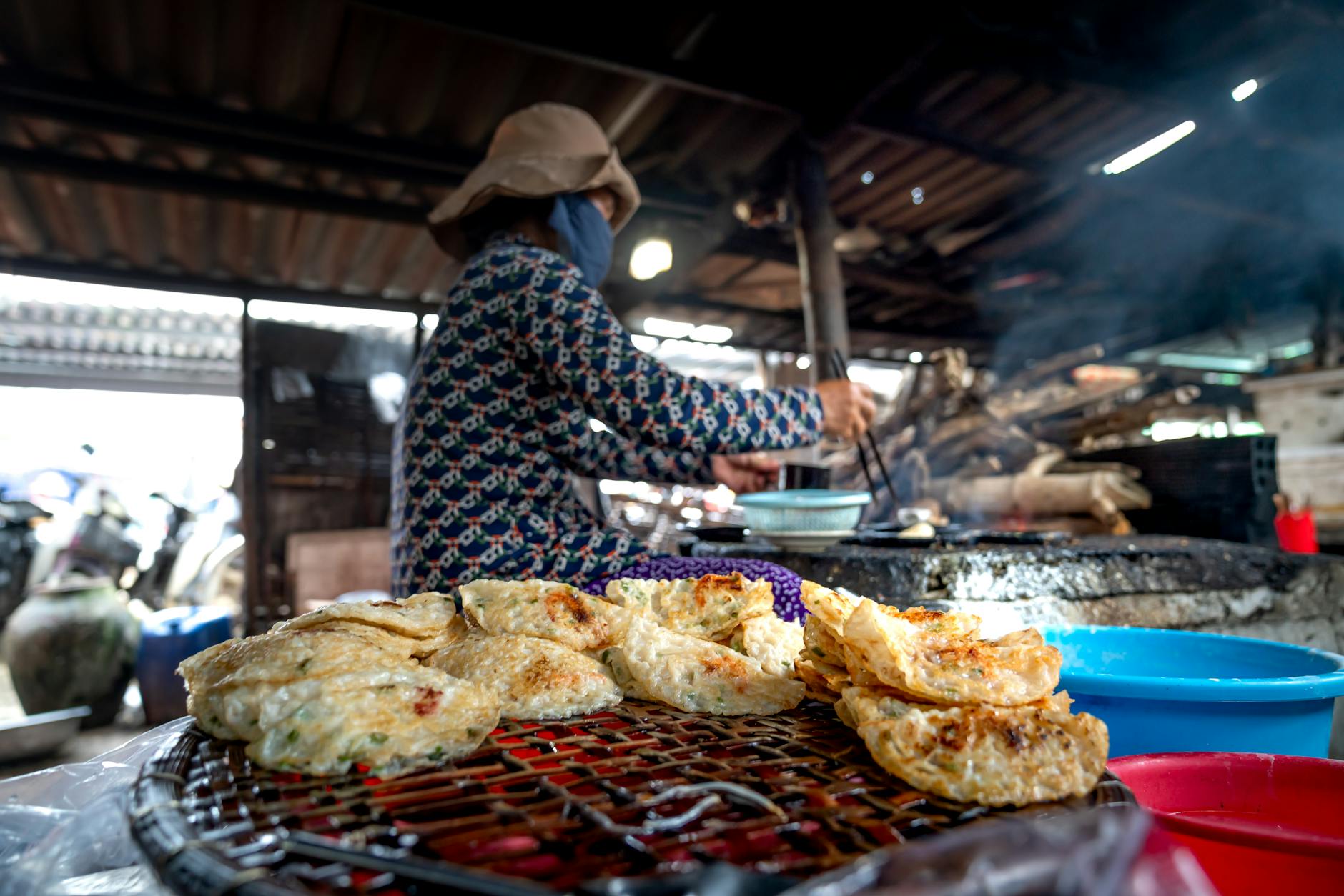
Breakfast: Jianbing + soy milk = RMB 15.
Mid-morning snack: Two baozi = RMB 6.
Lunch: Pork rib noodle soup + a side of dumplings = RMB 30.
Afternoon snack: Tanghulu candied-fruit skewer = RMB 8.
Dinner: Shengjianbao set + a bowl of soup = RMB 25.
Drinks through the day: Bottled water + green tea = RMB 10.
Total: RMB 94.
You eat well, sample a handful of Shanghai classics, and still come in under budget — with room to spare for an extra skewer or a second basket of dumplings.
Frequently Asked Questions
Can I really eat for RMB 30 per meal in Shanghai?
Yes, easily — at neighborhood noodle shops, mall food courts, and street stalls, RMB 30 buys a full, satisfying meal. You only push past it at sit-down restaurants and tourist-zone places.
What’s the cheapest meal in Shanghai?
A single steamed bun (about RMB 1.50) or a bowl of plain yangchun noodles (around RMB 12) is the cheapest hot food. A jianbing at RMB 8–12 is the cheapest thing that genuinely counts as a full meal.
Where do locals eat cheaply in Shanghai?
Neighborhood noodle shops, mall food courts, breakfast carts, and convenience stores. Chains like Yang’s Fry-Dumpling, and the homestyle restaurants clustered on streets like Jinxian Road, are local staples.
Are food-court meals cheaper than restaurant meals?
Generally, yes. Mall food courts typically run RMB 25–45 versus RMB 50–150 at restaurants serving similar cuisine — and the quality is often surprisingly high.
Can I eat well on RMB 50 per day in Shanghai?
Yes, if you lean on street food and breakfast vendors. RMB 50 covers breakfast (RMB 15), a simple lunch (RMB 20), and a light dinner (RMB 15) without much trouble.
Do convenience stores have hot food?
Yes. Lawson, Family Mart, and 7-Eleven all keep hot-food sections with rice bowls, noodles, dumplings, steamed buns, and pastries for RMB 8–25.
Is street food in Shanghai safe?
At established, busy vendors, generally yes. Choose stalls with high turnover and visible cooking, and you will rarely have an issue. Our Shanghai street food guide goes deeper on what to try and how to eat it.
How do I pay at cheap-eats places?
Mobile payment — WeChat Pay or Alipay — is used almost everywhere, including small stalls. Both now let foreign visitors link an overseas card, so set one up before your trip. Carry a little cash as a backup for the smallest vendors.
How much should I budget for food per day?
Around RMB 100 for budget travelers, RMB 250 for mid-range eating, and RMB 600+ for upscale dining. See our how much does a Shanghai trip cost guide for the full breakdown.
Can vegetarians eat cheaply in Shanghai?
Increasingly, yes. Vegetable buns, scallion pancakes, vegetable noodles, and tofu dishes are all under RMB 30. Long-running Buddhist vegetarian restaurants like Gongdelin serve fully meat-free meals at RMB 50–100.
Plan Your Cheap-Eats Strategy
The framework above shows that cheap eats in Shanghai are not a compromise — you can eat genuinely well for about RMB 100 a day in one of Asia’s great food cities. Stick to neighborhood noodle shops, breakfast carts, mall food courts, and the famous low-price chains, and the bill stays small while the eating stays good.
For the bigger food picture, start with our pillar Shanghai food guide. For street food specifically, see the Shanghai street food guide. And for the full budget context — lodging, transit, and sights alongside food — the Shanghai on a budget pillar pulls it all together.
Some of the best Shanghai food memories cost the least. Eat where the locals eat, follow the queues, and the city pays you back many times over.
For more background, see Chinese cuisine on Wikipedia.