Nanjing Road shopping is the reason most first-time visitors to Shanghai end up on this street whether they planned to or not. Running through the middle of Huangpu District, Nanjing Road links the Bund on the riverfront to Jing’an Temple roughly 5.5 kilometres to the west, carries something on the order of 600 businesses, and on a good day handles close to a million pedestrians. It is the most concentrated stretch of retail in China and one of the busiest shopping streets anywhere. You do not have to be a serious shopper to get something out of it, but if you are, this is where the city packs its department stores, its century-old specialty shops, and its deepest concentration of global luxury brands into a single walkable line.
The thing to understand before you go is that the road has two halves with completely different personalities, split near Middle Tibet (Xizang) Road. East Nanjing Road, the section nearest the Bund, is the historic pedestrian street—mid-priced stores, traditional Chinese shops, food halls, neon signs, and the old-style sightseeing tram trundling up and down. West Nanjing Road, running from People’s Square out toward Jing’an, is the luxury district, where Plaza 66 and HKRI Taikoo Hui hold the designer flagships. Most people walk the East section for the atmosphere and ride the metro one or two stops west if they want the high-end malls. This guide covers both, plus what is actually worth buying, where to eat, the scams that target tourists here, and how to get in and out.
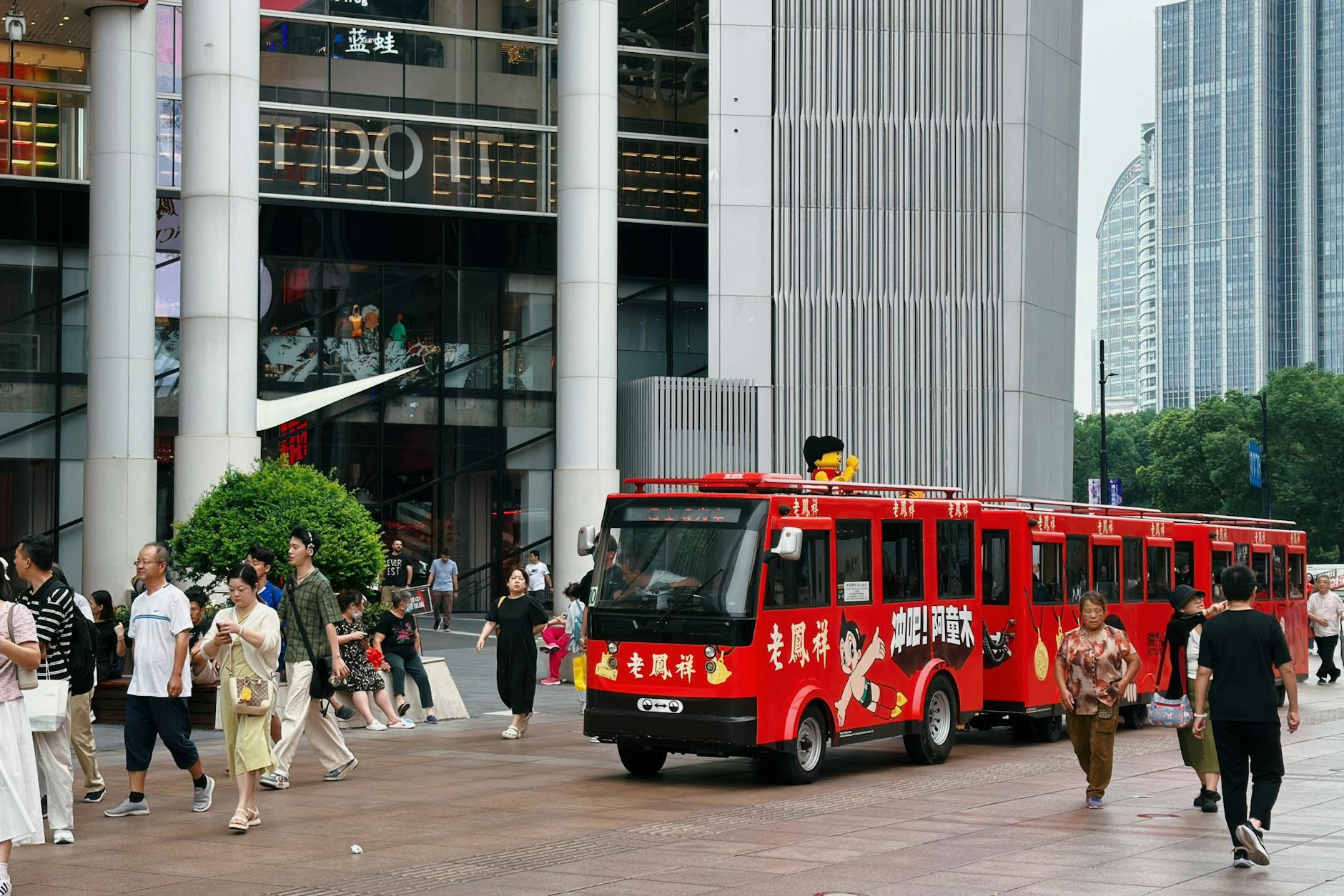
Table of Contents
- Nanjing Road at a Glance
- A Short History of the Street
- East Nanjing Road vs West Nanjing Road
- What to Buy on Nanjing Road
- East Nanjing Road Shopping: Stores and Malls
- Luxury Malls on West Nanjing Road
- Century-Old and Traditional Shops
- The Dangdang Sightseeing Tram
- Where to Eat on Nanjing Road
- A Suggested Walking Route
- Getting There by Metro
- Scams to Avoid on Nanjing Road
- Practical Tips and Common Mistakes
- Bargaining and Pricing
- Frequently Asked Questions
Nanjing Road at a Glance
Nanjing Road, or N’anj’ing L’u in Mandarin, is the main east-west commercial street through central Shanghai. It starts at the Bund, where it meets Zhongshan East 1st Road along the Huangpu River, and runs west for about 5.5 kilometres before it reaches the area around Jing’an Temple. Locals and signage split it into two named roads: Nanjing Road East (Nanjing Dong Lu), from the Bund to People’s Square, which contains the pedestrian-only zone; and Nanjing Road West (Nanjing Xi Lu), the longer stretch running west through Jing’an district.
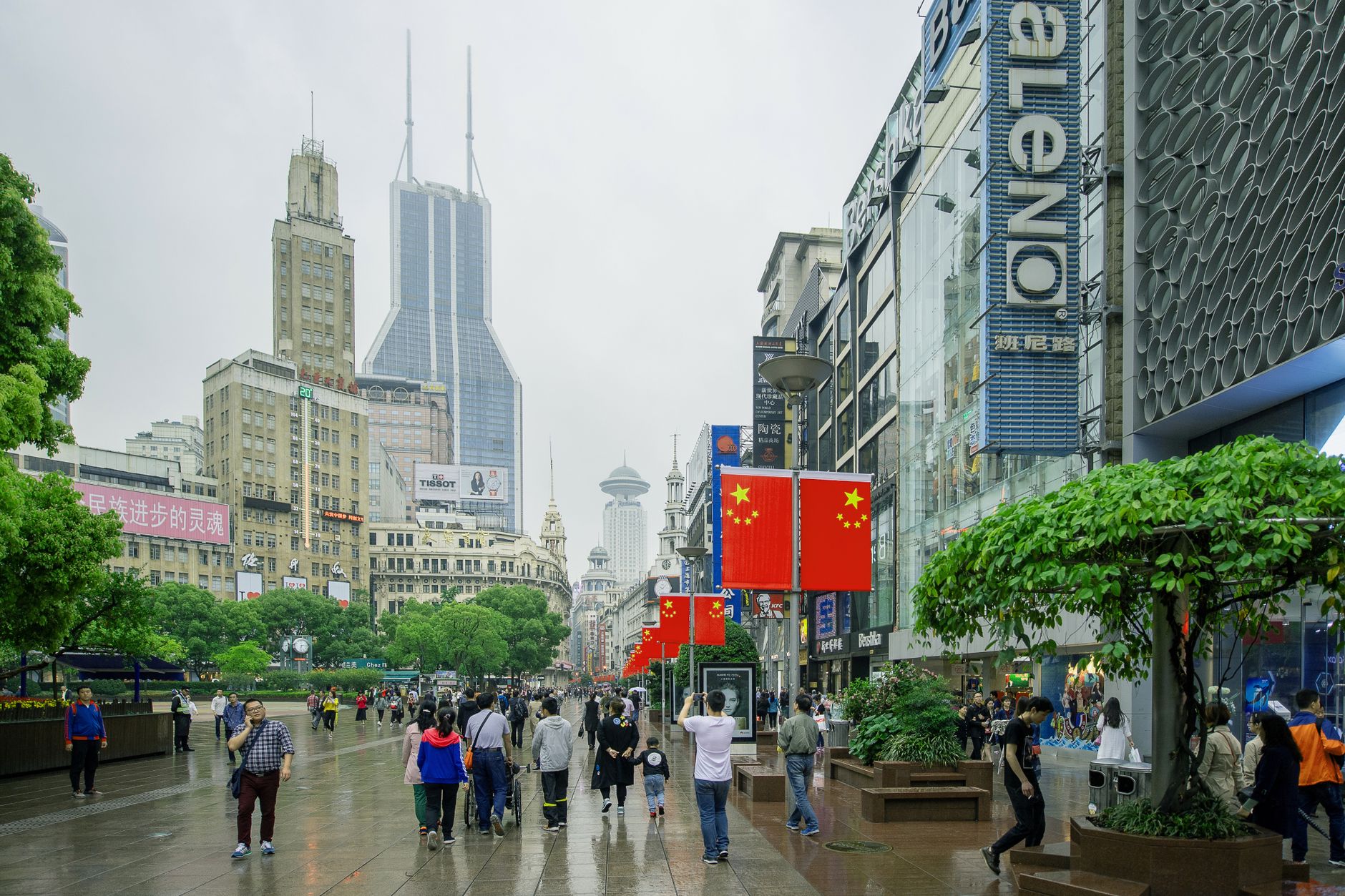
For practical purposes, the part you will spend the most time on is the pedestrian section of East Nanjing Road, roughly 1.2 kilometres between Henan Road and People’s Square. That is the car-free promenade with the tram, the food, and the photogenic storefronts. The luxury malls are a separate trip on the West side, easily reached because metro Line 2 runs underneath nearly the entire length of the road.
A few baseline numbers worth knowing: most shops open around 10am and close around 10pm; the road sits in Huangpu District; and weekend afternoons are the single busiest time, with Saturday around 3pm being the peak crush. If crowds bother you, come on a weekday morning.
A Short History of the Street
Nanjing Road grew up as a commercial street in the 1840s, after the British International Settlement was established just north of the walled Old City. It was first laid out as Park Lane, then renamed Nanjing Road in 1865 in reference to the 1842 Treaty of Nanking. By the early twentieth century it had become the leading shopping street in Asia, anchored by a cluster of grand department stores—Sincere (1917), Wing On (1918), Sun Sun, and Da Sun—alongside silk merchants, European fashion houses, and the kind of restaurants where deals got done.
Commerce on the street contracted sharply during the Cultural Revolution years (1966 to 1976), when many private businesses were closed or repurposed. The reforms of the 1980s and 1990s brought it back: state-owned department stores were modernised, foreign brands returned, and in 1999 the central section was turned into a pedestrian zone, converting a traffic-choked thoroughfare into a walkable promenade. What you see today is a layering of all three eras—late-Qing institutions, mid-century department stores, and present-day luxury flagships—standing more or less shoulder to shoulder.
East Nanjing Road vs West Nanjing Road
The two halves of the road are divided near Middle Tibet Road, and they suit different visitors. Knowing the difference saves you from walking the wrong section for what you want.
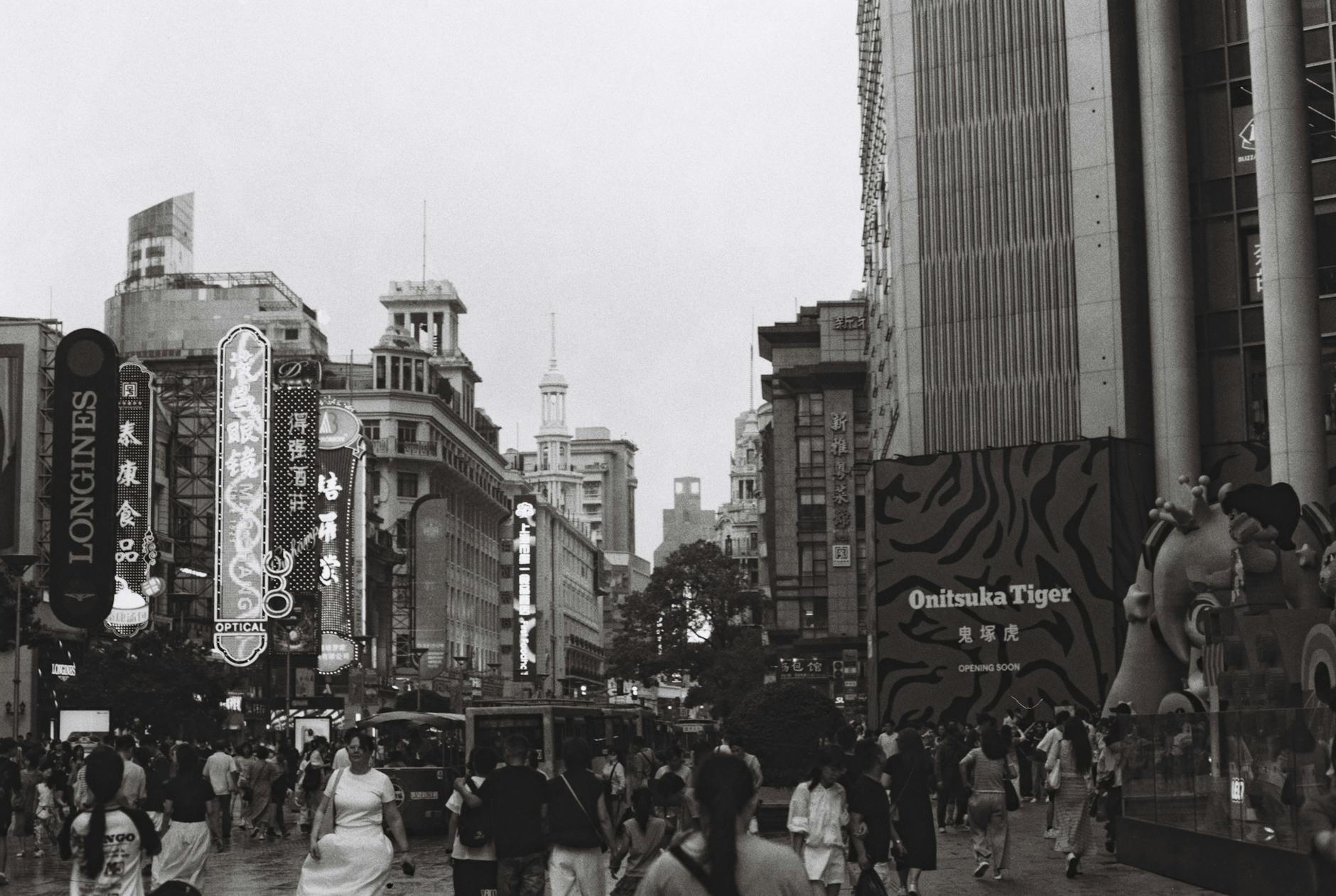
East Nanjing Road is the famous, touristy half, and it holds the pedestrian-only zone between Henan Road and People’s Square. Prices here run mid-range. You get traditional Chinese specialty shops, high-street and fast-fashion brands, the Apple flagship, department stores with deep histories, street snacks, and the sightseeing tram. It is busier than the West side because it is right next to the Bund, so day-trippers flow straight off the waterfront and onto the street. Expect crowds during the day and a real squeeze on weekend afternoons.
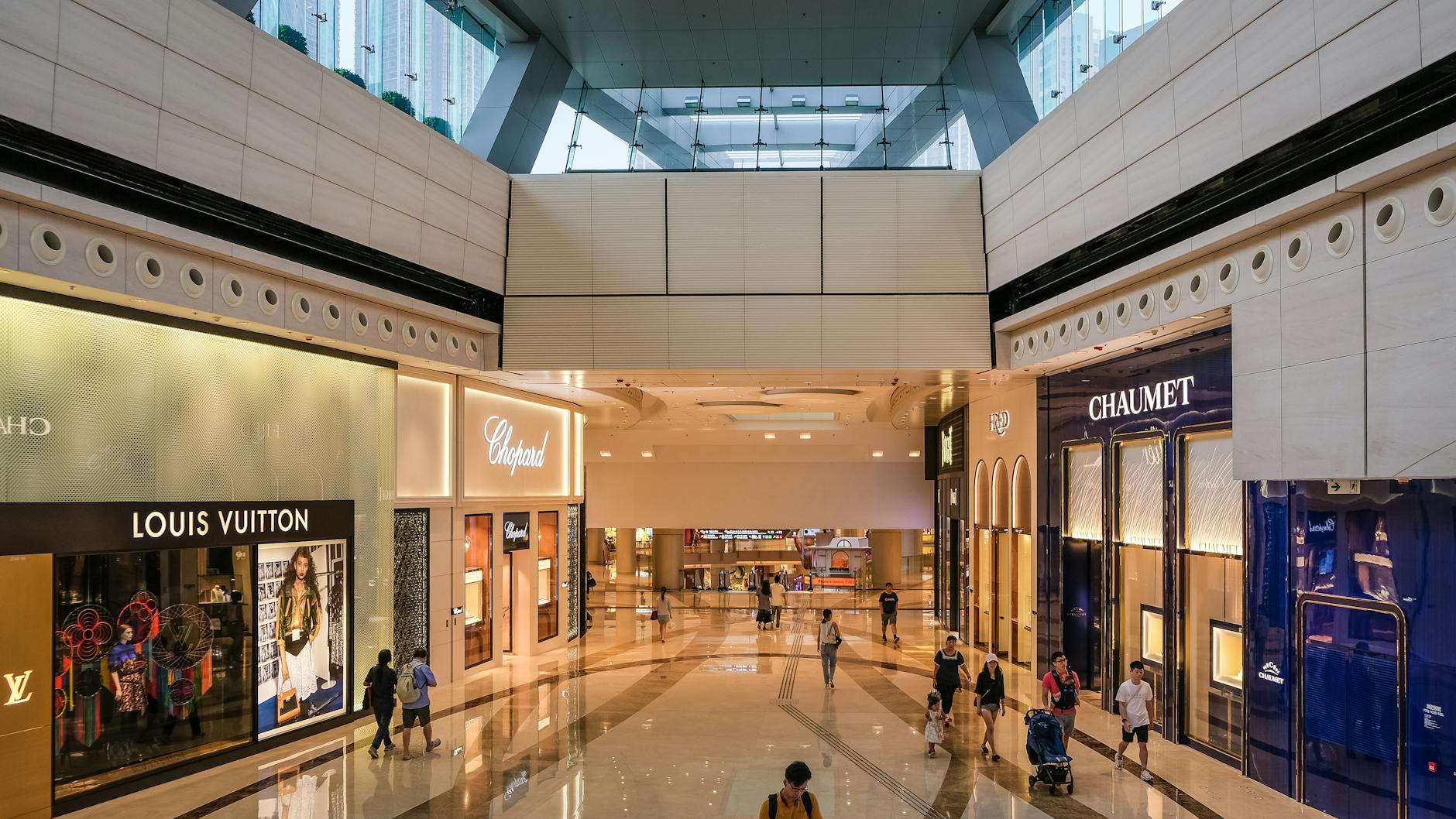
West Nanjing Road is the luxury half, running from People’s Square out through Jing’an. This is where the designer money is: Plaza 66, HKRI Taikoo Hui, Citic Square, and a handful of other malls carrying Chanel, Hermes, Louis Vuitton, Dior, Prada, Cartier, Bulgari, Tiffany, Montblanc, Omega, Dunhill, and the rest. The crowd skews local and business rather than tourist, it is quieter during the working day, and it picks up on weekends.
If you only have one afternoon, the simplest plan is to walk East Nanjing Road from the Bund to People’s Square (about 1.5 kilometres), then ride Line 2 one or two stops to West Nanjing Road if you want to see the luxury malls or just feel the contrast between the two ends.
What to Buy on Nanjing Road
Because the street covers everything from RMB 8 dumplings to five-figure handbags, it helps to go in knowing what is actually worth buying here.
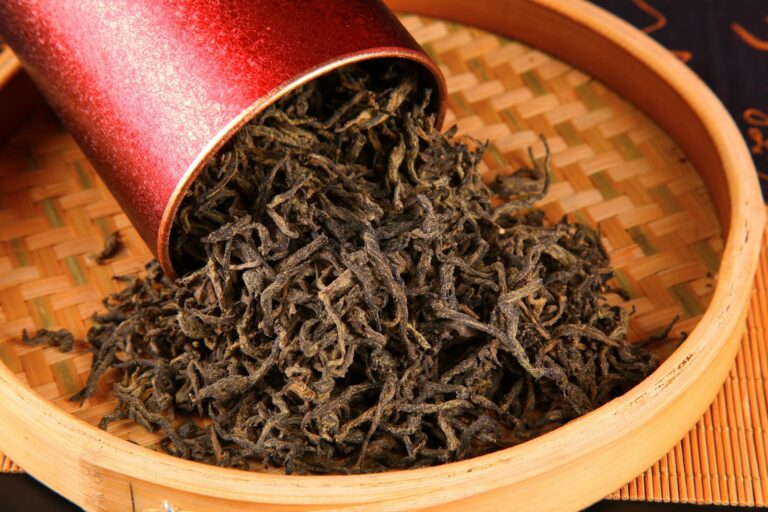
Traditional Chinese goods. The cluster of century-old specialty shops is the most distinctive thing about Nanjing Road shopping. Silk, jade, embroidery, gold jewellery, tea, calligraphy supplies, and traditional medicine all have reputable old houses on or just off the street. These are the souvenirs with real provenance, as opposed to the mass-produced trinkets sold everywhere else. For a fuller breakdown of what makes a good Shanghai keepsake, see our Shanghai souvenirs guide.
Local food to take home. Several of the old food halls sell packaged Shanghainese specialties that travel well as gifts—moon cakes with meat filling, smoked fish, preserved snacks, and traditional pastries. These make better presents than another fridge magnet.
Fashion and luxury. If you came for brands, the West side malls carry the full luxury roster, and the East side covers high-street and fast-fashion names. Tax-free shopping is available to international visitors at the major malls above a minimum spend (see the tips section).
China Chic souvenirs. A newer category worth a look is the guochao (China Chic) boutiques selling design-led local souvenirs—think building-block kits of Bund landmarks and keychains shaped like Shikumen lane-house doorways.
What to be careful about: roadside “silk” and “pearl” vendors, and anyone who pulls you off the street with a deal. Quality on those is wildly inconsistent. Buy fabric and jewellery from established shops, not from someone working the pavement.
East Nanjing Road Shopping: Stores and Malls
The pedestrian zone is best handled on foot, browsing as you go rather than aiming for a single target. A few places stand out enough to plan around.
Shanghai No.1 Department Store. The historic anchor of the street, built in 1934 (originally the Sun Sun Department Store). Several floors of department-store retail covering Chinese brands, gifts, and souvenirs. Worth a walk-through for the building itself even if you buy nothing.
The Apple Store, East Nanjing Road. The flagship designed with Foster + Partners, fronted by a glass cylinder entrance. Even if you are not buying a phone, the architecture is a legitimate stop on the walk.
Shanghai Landmark Plaza (Shanghai Zhi Di Square). A multi-floor mall covering homewares, fashion, and accessories at mid-range prices.
Henglong / international high-street brands. Along the pedestrian zone you will pass the familiar global high-street and fast-fashion names—Uniqlo, Muji, Sephora and similar—housed in modern mall units between the older buildings. The exact tenant mix shifts over time, so treat specific shop names as a snapshot rather than a guarantee.
Heritage facades. Part of the appeal here is the architecture itself. Several Art Deco and early-modern buildings along the street now house restaurants, boutiques, and hotels behind their original frontages, and they reward looking up rather than only into shop windows.
Luxury Malls on West Nanjing Road
The mall scene on the West side begins around People’s Square and continues into Jing’an. These are the heavy hitters.
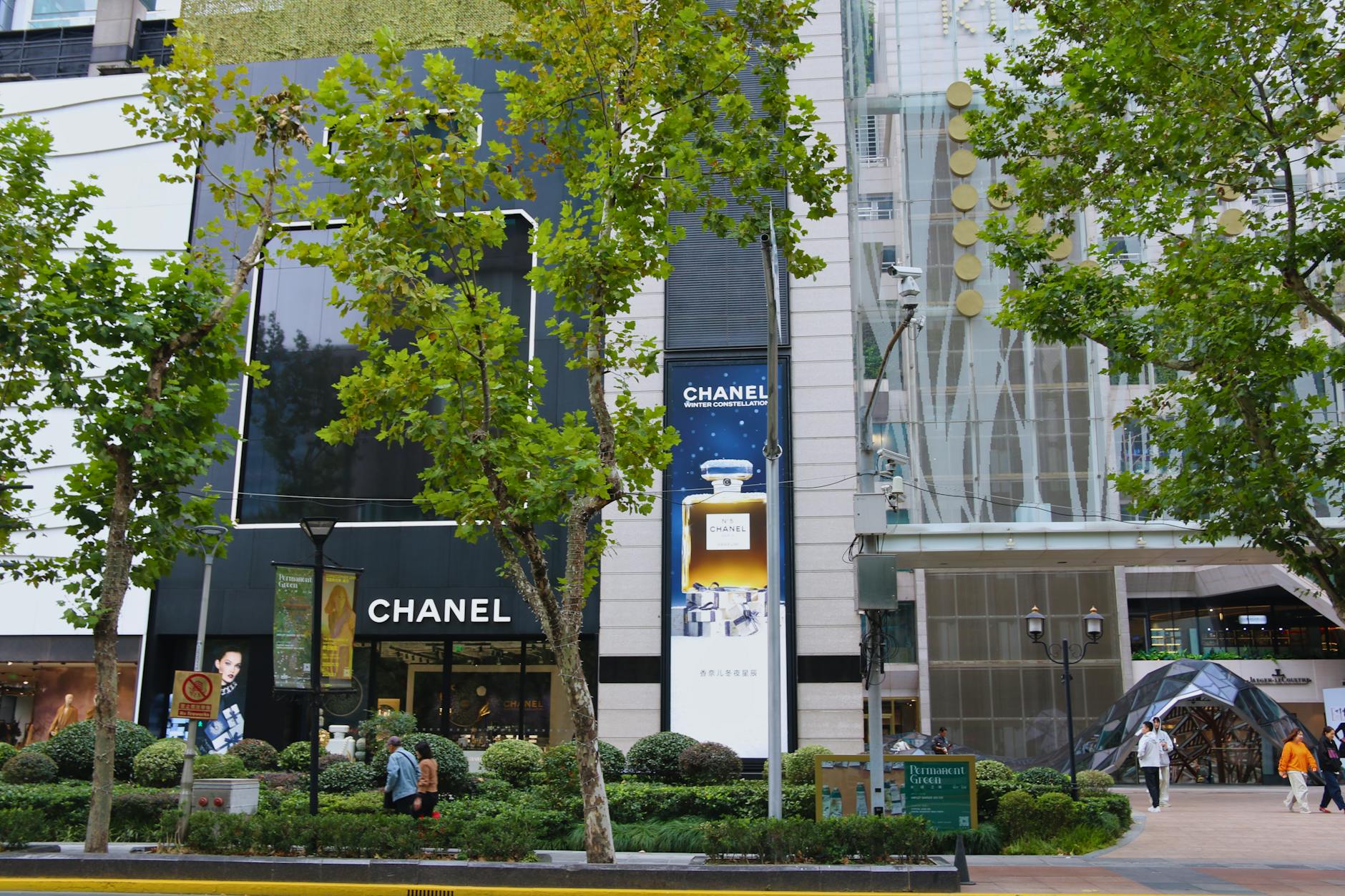
Plaza 66. The benchmark luxury mall in Shanghai. Multiple floors of designer flagships—Chanel, Dior, Hermes, Louis Vuitton, Prada, Cartier, Bulgari and many more—with restaurants and cafes on the upper levels. If you only enter one mall on the West side, this is the one.
HKRI Taikoo Hui. Newer and sleeker, with a couple of hundred brands spanning luxury and mid-range, and one of the better food-and-dining programs on the street. It is anchored by the Shanghai EDITION hotel. Many visitors find it the most enjoyable mall to actually spend time in, as opposed to just shop.
Citic Square. Mid-to-upper range, with a smaller selection than the two above but an easy add-on if you are already walking the West side.
Reel. A more curated, boutique-flavoured mall across fashion, lifestyle, and dining, and usually less crowded than Plaza 66 or Taikoo Hui.
Westgate Mall. A mid-range department-store-and-mall combination that is popular with locals and useful if you want everyday brands rather than designer ones.
Century-Old and Traditional Shops
Beyond the malls, the street keeps a handful of traditional Chinese houses that have been trading for well over a century. These are where to look for souvenirs that mean something.
Lao Feng Xiang Jewellers. Founded in 1848, the best-known traditional Chinese jewellery house, specialising in gold and jade. The East Nanjing Road flagship is itself a heritage building.
Duo Yun Xuan. Founded in 1900 and dealing in Chinese calligraphy, ink painting, and traditional art supplies. The most respected traditional art store in the city, and the right place for a serious, lasting souvenir.
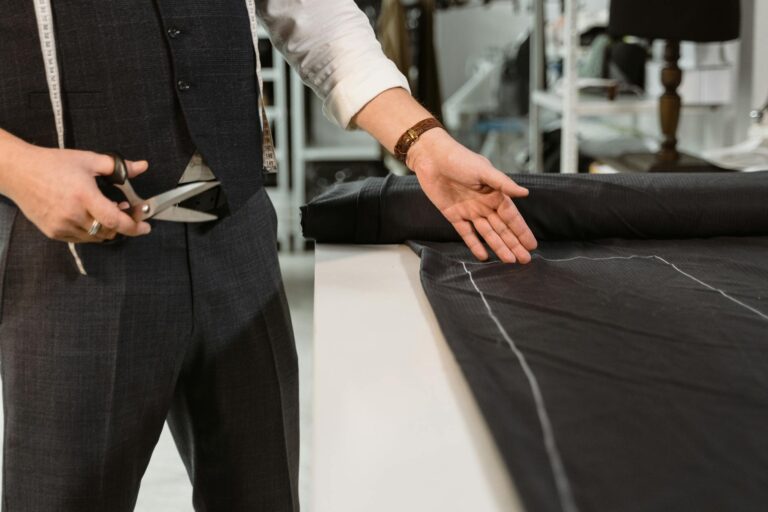
Silk and qipao tailoring. Nanjing Road has long been associated with silk, and several established shops handle qipao tailoring and quality fabric. Stick to long-running, named stores rather than roadside silk sellers, whose “silk” is often a blend.
Traditional medicine houses. Old herbal-medicine shops, some dating back centuries, still operate in and around central Shanghai if you want to see how traditional remedies are sold.
Shanghai Foreign Languages Bookstore. A short step off the main drag, useful for English-language books, maps, and Chinese-learning material.
For more on haggling at these and at the city’s markets, our Shanghai markets and haggling guide goes deeper on technique.
The Dangdang Sightseeing Tram
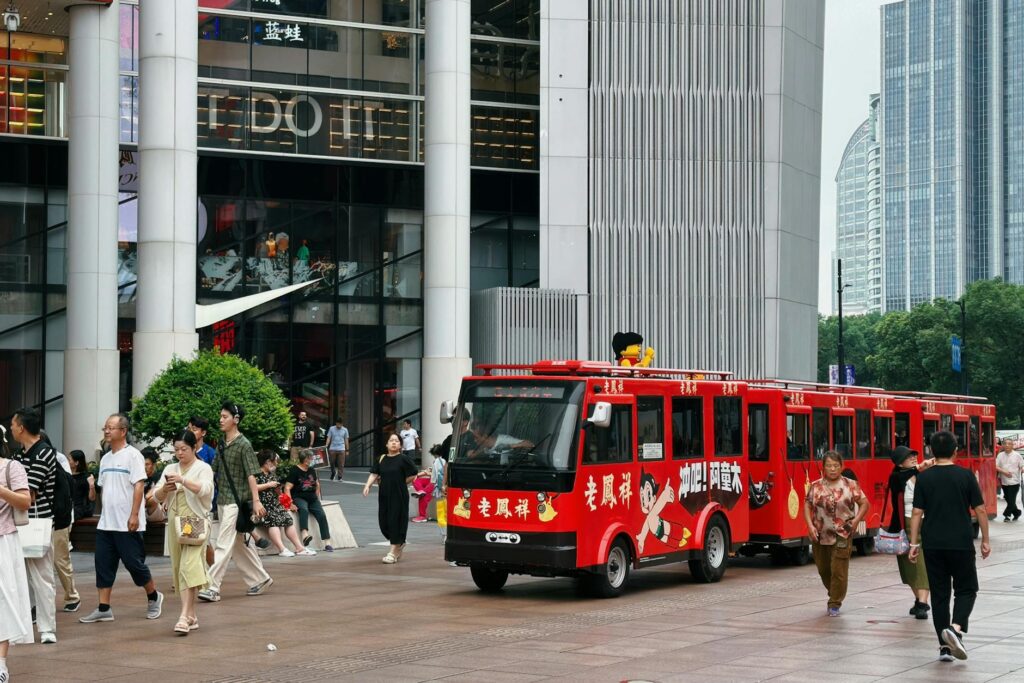
The little open-sided trolley that runs along the East Nanjing Road pedestrian zone is the Dangdang tram, styled after the old trams that once ran through colonial-era Shanghai (the name imitates the clang of its bell). It is part transport, part novelty: when your feet are done, it carries you along the promenade so you can watch the old and new storefronts slide past.
The tram runs daily from roughly 8:30am to 10pm, a single trip along the pedestrian section takes about 10 minutes, and the fare is around CNY 5. It is the most painless way to cover the pedestrian zone at the end of a long walking day, and it is cheap enough that there is no reason not to try it once.
Where to Eat on Nanjing Road
The street feeds every budget, from RMB 8 dumplings to mall fine dining. A working shortlist:
Century-old food halls. Several of the old-name food stores are destinations in their own right. Zhen Lao Da Fang is known for smoked fish and meat-filled moon cakes; the Shanghai First Food Hall gathers a wide range of local snacks and traditional cakes under one roof; Wangjiasha does wontons, desserts, and festival snacks; Shen Da Cheng is a moon-cake specialist; and Shao Wan Sheng is the one for wine-cured crab and mud snails. These double as gift shops for edible souvenirs.
Yang’s Fry-Dumpling. The best-known shengjianbao (pan-fried soup dumpling) chain, with a Nanjing Road branch. Cheap, fast, and reliably good.
Xiaolongbao stops. For steamed soup dumplings, look for branches of the well-known dumpling houses near the pedestrian zone and People’s Square. They are smaller than the Yu Garden flagships but use the same technique.
Wujiang Road Snack Street. A short walk south of West Nanjing Road, this is the most concentrated street food in central Shanghai—hand-pulled noodles, lamb skewers, dumplings, and more.
Mall dining. On the West side, the HKRI Taikoo Hui food halls and the upper-floor restaurants in Plaza 66 are the natural lunch stop on a luxury-shopping day.
For a wider survey of where and what to eat across the city, see our Shanghai food guide.
A Suggested Walking Route
The standard way to do Nanjing Road is east to west, ending at People’s Square or continuing to the West side by metro.
1. Start at the Bund. The eastern end of Nanjing Road East meets the Bund. Take your riverfront photos first—see our guide to the Bund for what to look for—then turn your back to the water and head west into the street.
2. Walk the pedestrian zone (Henan Road to People’s Square). Take it slowly. Stop at the Apple Store, Shanghai No.1 Department Store, and whatever individual shops catch your eye. Allow 60 to 90 minutes for unhurried browsing.
3. Break for lunch. Either eat around People’s Square or detour south to Wujiang Road for street food, depending on how early you started.
4. Metro to West Nanjing Road. One or two stops on Line 2. Plaza 66 is the must-see for luxury; HKRI Taikoo Hui is the more pleasant mall to linger in.
5. Finish at Jing’an Temple. The far western end is anchored by the gilded Jing’an Temple, a calm, contrasting place to end a shopping day.
Plan on 3 to 4 hours including stops. You can cut it short by skipping the West side entirely if luxury malls are not your thing.
Getting There by Metro
Nanjing Road is one of the most metro-accessible streets in the city, with Line 2 running its length and several stations spaced along it.
East Nanjing Road Station (Lines 2, 10). The start of the pedestrian zone. Use the exit signed for the pedestrian street to come up at the eastern end.
People’s Square (Lines 1, 2, 8). The mid-point and the busiest interchange in Shanghai. Follow signs toward Nanjing Road East to walk into the pedestrian zone, or toward the Park Hotel for the western end of the East section.
West Nanjing Road Station (Lines 2, 12, 13). The stop for Plaza 66 and HKRI Taikoo Hui.
Jing’an Temple (Lines 2, 7). The western end of the West section.
A common approach is to ride to East Nanjing Road station, walk the pedestrian zone to People’s Square, then take the metro forward to the West side rather than walking the whole 5.5 kilometres.
Scams to Avoid on Nanjing Road
Nanjing Road is safe, but the East section’s tourist traffic attracts a couple of long-running cons. Knowing them is most of the defence.
The tea house scam. This is the one to watch. Friendly strangers—often presenting as students who want to “practise their English” or are “doing a university project”—strike up a conversation and then suggest a nearby tea house for a “traditional tea ceremony.” The tea house is in on it, the menu has no visible prices, and the bill at the end runs to the equivalent of hundreds or even thousands of US dollars. Real students do not work the pavement on Nanjing Road looking for foreigners to take to a second-floor tea parlour. The clean rule is simple: do not accept tea, food, or “ceremony” invitations from strangers, full stop. If you are already inside and being pressured, stay calm, do not hand over your card or phone, and dial 110 for the police visibly—illegal operators usually back down when the police are mentioned.
The “art student” gallery scam. A variation where “art students” invite you to see an exhibition of their work, then apply heavy pressure to buy mass-produced paintings at inflated prices. Same defence: decline the invitation.
Fake silk and pearl pitches. Vendors who pull you off the street with low “silk” or “pearl” prices are usually selling blended fabric or low-grade product. Buy from established shops instead.
None of this should put you off the street—it is genuinely safe, the main everyday risk is simple pickpocketing in the crush—but it pays to know the scripts. For the full citywide rundown, see our guide to Shanghai scams to avoid.
Practical Tips and Common Mistakes
Skip weekend afternoons if you want room to move. Saturday around 3pm is the busiest moment of the week. Weekday mornings are calmest.
Wear comfortable shoes. The pedestrian zone is paved but long, and the cobble-style surface near the Bund end is hard on heels.
Set up mobile payments before you go. Big stores take foreign credit cards, but smaller shops and street food often run on WeChat Pay or Alipay only. Both now let foreign visitors link an overseas card. Carry a little cash as backup.
Use the Dangdang tram for tired feet. At around CNY 5 it is the easy way to cover the pedestrian zone late in the day.
Bring your passport for tax-free shopping. The major luxury malls offer tax refunds to international visitors above a minimum spend (commonly around RMB 500 in a single store). You complete the refund at the airport when you leave, so keep your receipts and the paperwork.
Treat specific shop names as a snapshot. Retail turns over. Flagships move, malls re-tenant, and individual stores open and close. The big anchors here are stable, but if you are making a special trip for one particular shop, check that it is still there first.
Mind store hours. Most retail runs 10am to 10pm; some traditional stores close earlier, and restaurants often run later.
Bargaining and Pricing
How much haggling is appropriate depends entirely on where you are standing on the street.
Department stores and malls: fixed prices, no bargaining. Plaza 66, HKRI Taikoo Hui, Shanghai No.1 Department Store and the rest all use price tags.
Traditional shops and silk stores: often negotiable. Open at roughly 50 to 60 percent of the asking price and be willing to walk—the shop will frequently call you back.
Street vendors: hard bargaining expected. Start around 30 to 40 percent and be ready to leave.
Counterfeit goods: sold openly in some smaller shops. Start very low, around 20 percent, and remember the customs caveat above.
For broader shopping strategy across the whole city—where to go for boutiques, markets, and luxury, and how the districts compare—see our pillar guide to shopping in Shanghai.
Frequently Asked Questions
Is Nanjing Road worth visiting?
Yes, especially on a first trip. The East Nanjing Road pedestrian zone is the most concentrated shopping street in China and an interesting walk even if you never buy a thing.
How long is Nanjing Road?
About 5.5 kilometres from the Bund to its western end near Jing’an Temple. The car-free pedestrian zone on the East side is roughly 1.2 kilometres of that.
What is the difference between East and West Nanjing Road?
East Nanjing Road is the historic, mid-priced pedestrian street next to the Bund, with traditional shops, food, and the tram. West Nanjing Road is the luxury district from People’s Square toward Jing’an, home to Plaza 66 and HKRI Taikoo Hui. They split near Middle Tibet Road.
What should I buy on Nanjing Road?
For souvenirs with provenance, the century-old shops for silk, jade, gold (Lao Feng Xiang), and calligraphy supplies (Duo Yun Xuan); the old food halls for edible gifts like moon cakes and smoked fish; and the West side malls for luxury brands. Avoid roadside silk and pearl sellers.
What is the Dangdang tram?
A short old-style sightseeing trolley that runs the East Nanjing Road pedestrian zone, daily from about 8:30am to 10pm. A trip takes around 10 minutes and costs about CNY 5.
How do I get to Nanjing Road by metro?
East Nanjing Road station (Lines 2, 10) for the pedestrian zone; People’s Square (Lines 1, 2, 8) for the midpoint; West Nanjing Road station (Lines 2, 12, 13) for the luxury malls; Jing’an Temple (Lines 2, 7) for the western end.
Are there scams on Nanjing Road?
Yes. The main one is the tea house scam, where “students” invite tourists to a tea ceremony that ends in a huge bill. There is a similar “art student” gallery scam. Decline tea and gallery invitations from strangers, and dial 110 if you are pressured.
Can I find authentic Chinese silk on Nanjing Road?
Yes, from established, long-running silk shops. Avoid roadside vendors quoting unusually low prices, where the “silk” is often a blend.
Is Nanjing Road open on Sundays and holidays?
Yes, every day including most public holidays. Weekends and holidays are the busiest, and some stores extend hours during major shopping festivals.
Do I need cash on Nanjing Road?
Useful as backup, but most places take WeChat Pay, Alipay, or foreign cards. Street food and small shops are the most likely to want cash or mobile pay.
What time is best to visit Nanjing Road?
Weekday mornings (about 10am to noon) for the fewest crowds, and late afternoon into the evening for the lighting and atmosphere. Weekend afternoons are the most crowded.
Should I shop on Nanjing Road or elsewhere in Shanghai?
Nanjing Road is best for variety and convenience under one roof. For boutiques and design, the former French Concession is stronger; for unique souvenirs, Tianzifang and the Yuyuan bazaar; for luxury, Plaza 66 here or IFC Mall in Pudong.
Plan Your Shopping Day
Use this Nanjing Road shopping guide as a framework rather than a checklist. Walk the East Nanjing Road pedestrian zone first for the history and the street life, ride the Dangdang tram when your feet give out, take the metro west to Plaza 66 and HKRI Taikoo Hui if you want the luxury malls, and grab edible souvenirs from one of the century-old food halls on the way out. The full loop is a comfortable half-day, or a full day if you shop seriously.
For the bigger picture, our pillar guide to shopping in Shanghai sets Nanjing Road against the city’s other shopping districts, the Shanghai souvenirs guide covers what is actually worth bringing home, and the markets and haggling guide handles the art of the negotiation. Even committed non-shoppers tend to walk away glad they came.
For more background, see Nanjing Road on Wikipedia.