The Shanghai fabric market custom-tailoring scene is one of the city’s best-value tourist experiences. You choose the cloth, a tailor measures you, and over the following days, with fittings in between, a wool suit, silk dress, qipao or shirt is made to your measurements. This 2026 guide covers where to go, how to brief a tailor so you get what you pictured, what fabrics are actually worth paying for, what the timeline looks like against a real trip, and the mistakes that turn a bargain into an expensive souvenir you never wear.
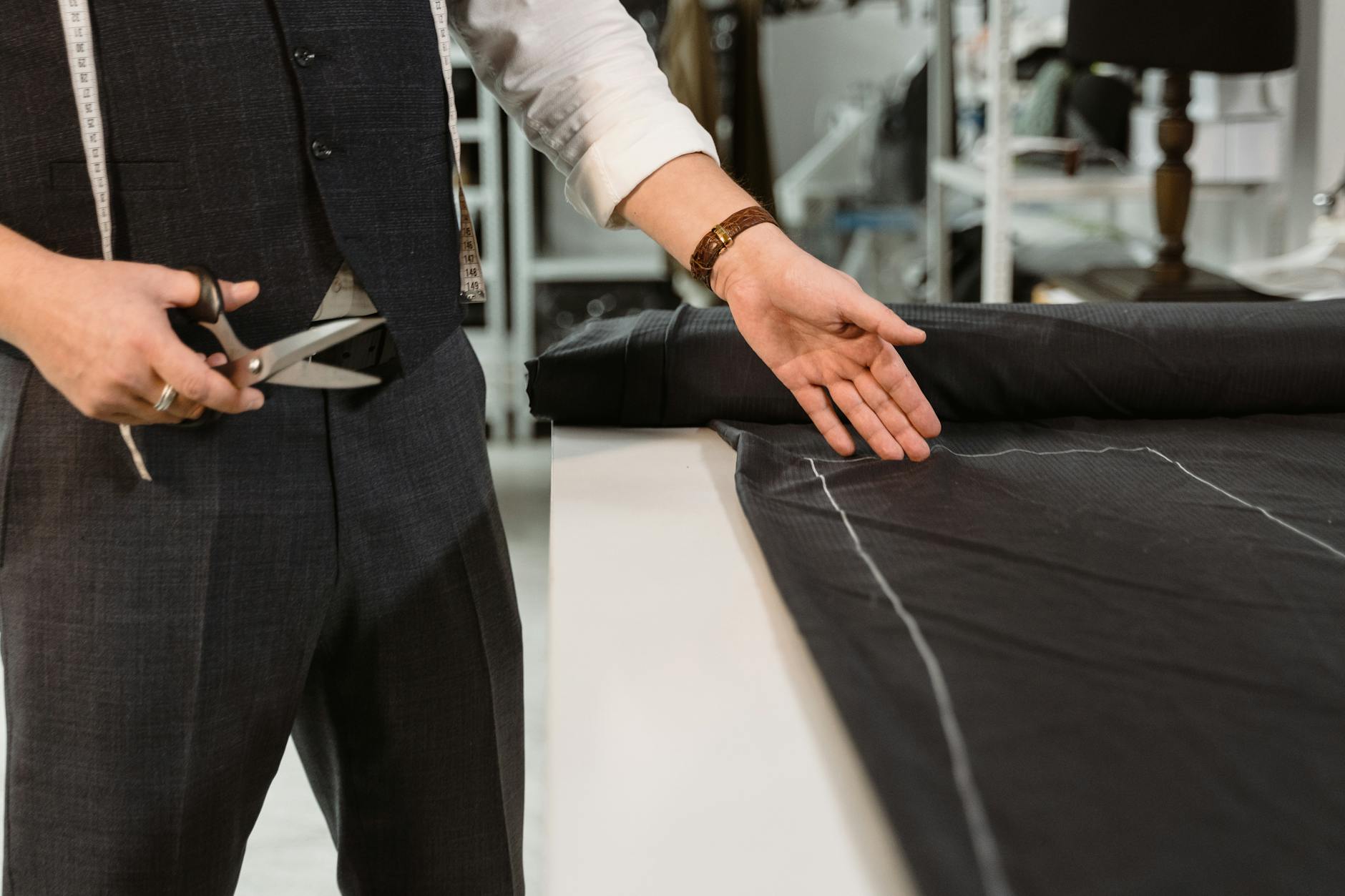
Table of Contents
- The Major Markets
- South Bund Fabric Market
- Suzhou Suiqiao Market
- What Things Cost
- Timing: How Many Days You Need
- Fabric Quality & Types
- Reputable Tailors
- How to Brief a Tailor
- The Process: Step by Step
- Bargaining and Paying
- Getting a Qipao Made
- What Not to Have Made Here
- Shipping and Customs
- Tips & Common Pitfalls
- FAQ
The Major Markets
Shanghai has multiple fabric markets, but for visitors only two matter:
- South Bund Fabric Market (上海南外滩轻纺面料市场) — three floors of fabric stalls and custom tailors, conveniently located in the Old Town
- Wuyuanlong Fabric Market — smaller alternative; mostly Chinese customers; fewer English speakers
- The Pearl Market basement floors at AP Plaza — limited but cheaper for shirts/basic suits
- Maoming Road tailors — separate higher-end qipao-focused tailors operating in shop format rather than market stalls; better for traditional Chinese garments
Realistically, unless you are in Shanghai for a month, you go to South Bund and nowhere else. It has the stall density that makes comparison possible, and tailors who are used to foreign customers. The others are worth knowing about for specific jobs — Maoming Road if a qipao is the whole point of the trip, AP Plaza if you want three shirts and do not care much.
South Bund Fabric Market
The South Bund Fabric Market at 399 Lujiabang Road is the headline destination: three floors of fabric stalls and tailors taking orders. Opening hours are 9:00–18:00 daily.
Layout:
- Floors 1 and 2: fabric stalls and tailors side by side; compare several before you choose
- Floor 3: tailoring shops that receive customers too, so carry on up before deciding
Getting there: Metro Line 4 to Nanpu Bridge Station, Exit 3, then about five minutes on foot. A taxi or Didi works too; the app shows a fare estimate for your route before you book.
A few things nobody tells you before the first visit. The building is unglamorous — a concrete block with fluorescent lighting, not a heritage arcade. Stalls call out as you pass and it can feel like running a gauntlet; the correct response is a flat “不用了” (bú yòng le, “no thanks”) without breaking stride. Bring cash for small purchases even though almost everyone takes WeChat Pay and Alipay, both of which now accept foreign cards.
Timing matters more than people expect. Weekday mornings from opening until about 11:30 are calm and you get real attention. Saturday and Sunday afternoons are the worst — tour groups, cruise passengers, and stalls too busy to measure carefully. The market shuts or runs skeleton staff for roughly a week around Chinese New Year (mid-January to mid-February depending on the year), and many tailors are migrant workers who go home for longer than that, so a garment ordered in the fortnight before the holiday may simply not happen. Plan around it.
The market sits in the Old City, ten minutes’ walk from the Yu Garden bazaar area, which makes it easy to combine — measure in the morning, then Yu Garden and lunch, and be at the Bund by late afternoon.
Suzhou Suiqiao Market
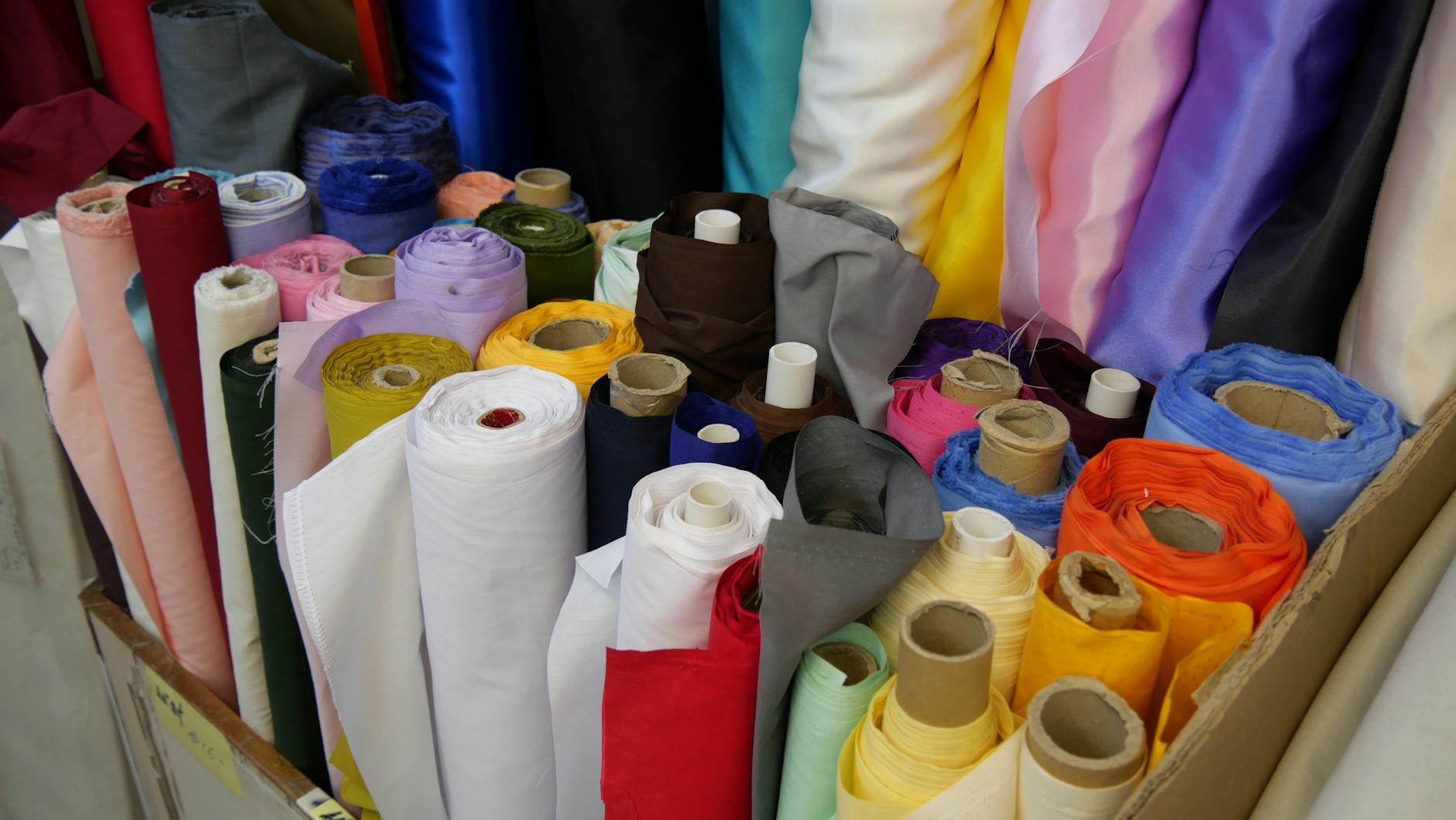
For dedicated fabric tourists, an extension to Suzhou’s Suiqiao Market, a short high-speed train ride from Shanghai, gives access to even more raw silk. The market specialises in silk by the metre — useful if you want to take fabric home for your own tailor. Many Shanghai-based tailors source from Suzhou for higher-end commissions.
Whether Suzhou is worth a day of your trip depends on how much silk you are buying. For one dress, no. For five metres of heavy mulberry silk to take home, plus the Suzhou gardens and the silk museum, yes. Our Suzhou day trip guide covers trains and timings.
What Things Cost at the Shanghai Fabric Market
Prices at South Bund Fabric Market depend on the cloth, the stall and how hard you bargain, so get a written quote for the exact garment and fabric from two or three stalls before you commit. As a rough guide to where each job sits:
- Wool 2-piece suit (basic wool blend) — budget
- Wool 2-piece suit (Italian/UK super-100s wool) — mid-range to splurge, depending on the cloth
- Cashmere overcoat — splurge
- Cotton/poplin dress shirt — budget; ask what the stall charges if you order several
- Silk shirt or blouse — mid-range
- Silk qipao (cheongsam) — mid-range to splurge, depending on silk grade and detailing
- Silk dress (modern) — mid-range
- Cashmere sweater — mid-range
- Silk pyjamas — budget to mid-range
- Made-to-measure trousers — budget
- Polo shirt / linen shirt — budget
- Shipping garments home — priced by weight and destination; EMS has an online quotation tool, so get a figure there before you ask a stall to post anything
Asking prices for first-time customers leave plenty of room to negotiate. Compare written quotes and bargain firmly.
For context on whether this is a bargain: the market sells made-to-measure clothing, and the useful question is how each tailor gets there. Adjusting an existing block pattern to your measurements is made-to-measure; bespoke in the Savile Row sense means a unique pattern cut and basted for you. Ask which you are getting and how many fittings it includes, then compare with what a tailor at home charges for the same work. With good cloth and a careful fitter it is still a remarkable deal. At the cheapest end it is a suit-shaped object.
Timing: How Many Days You Need
This is the single most useful table in this guide. Work backwards from your flight.
| Garment | Turnaround (confirm dates with your tailor) | Fittings | Price tier |
|---|---|---|---|
| Dress shirt | Quickest | Fewest | Budget |
| Trousers | Quick | Few | Budget |
| Silk dress (simple) | Moderate | Few | Mid-range |
| Qipao | Long | Several | Mid-range to splurge |
| Two-piece suit | Long | Several | Budget to splurge, by cloth |
| Three-piece suit | Longest | Several | Mid-range to splurge |
| Cashmere overcoat | Longest | Several | Splurge |
A worked example on a nine-day Shanghai trip:
- Day 1 (arrive) — do nothing. Jet lag makes for bad decisions in a market.
- Day 2, 9:30am — South Bund. Walk all three floors before speaking to anyone. Pick a stall, agree a price and design, get measured, pay 50%, take a WeChat contact.
- Day 4 or 5 — first fitting. Expect the jacket in basted form or roughly assembled. Mark sleeve length, shoulder, waist suppression, trouser break.
- Day 7 — second fitting. This is where you either sign off or push back. Push back if anything is wrong; you still have time.
- Day 8 — collect, pay the balance, try it on in the market before handing over the money.
- Day 9 — fly home.
On a short stay, order shirts and nothing else, and place the order as early in the trip as you can. If you only have a day, buy fabric by the metre and take it to a tailor at home.
Fabric Quality & Types
Wool
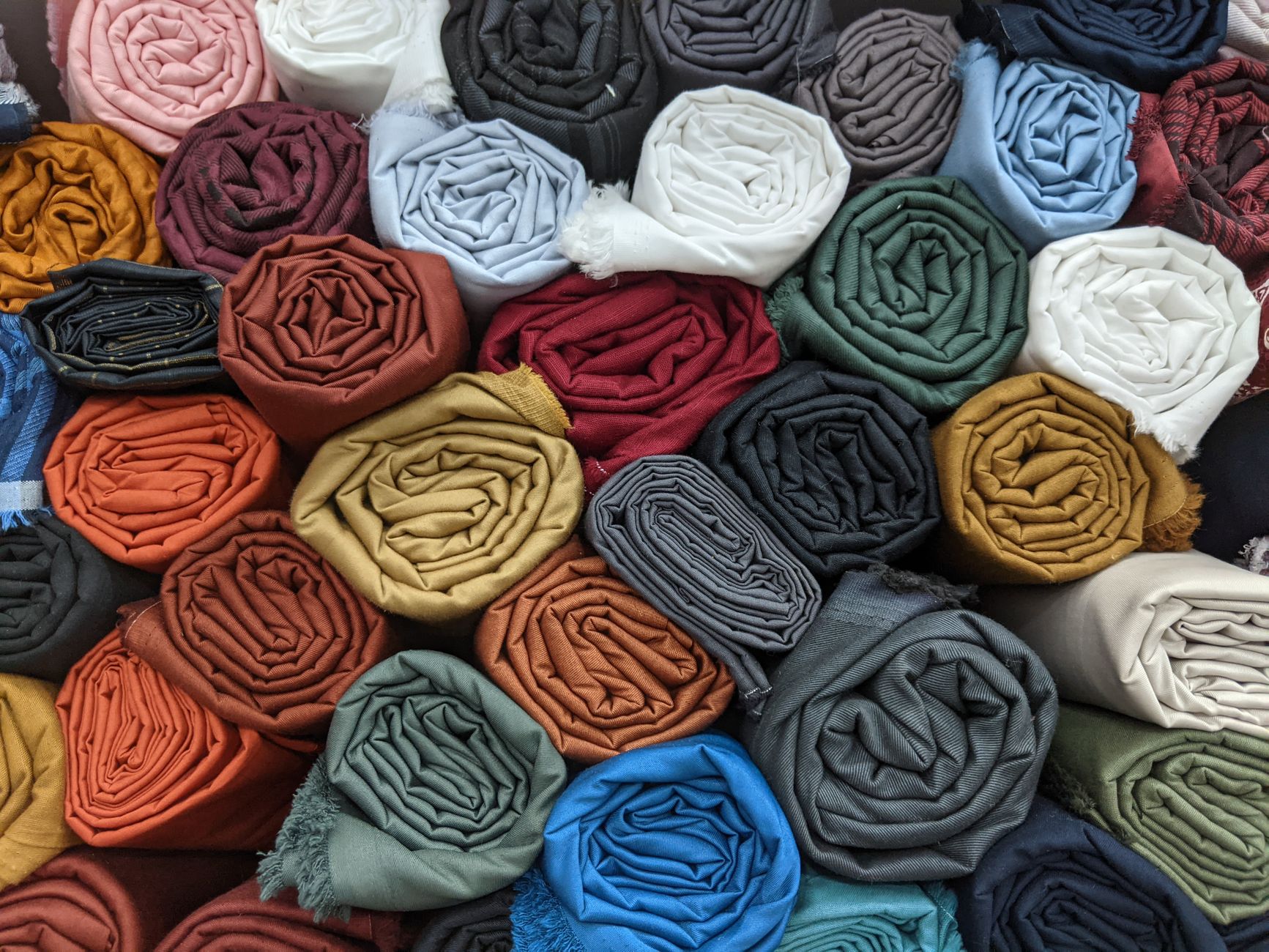
Available qualities: cheap polyester-blend (“wool blend”), 100% wool, super-100s through super-180s (higher number = finer wool fibres). Many stalls have Italian and British wool branded swatches (Loro Piana, Cerruti, Holland & Sherry, Scabal) — verify authenticity by checking selvedge stamps and the smell test (real wool smells like singed hair when a fibre is lit).
One counterintuitive point: higher super numbers are not automatically better for you. Super-150s and above are lovely to touch and fragile in use — they crease, they shine at the elbows, and they do not survive commuting. For a suit you will actually wear, super-100s to super-120s in a 280–320g cloth is the sweet spot, and it is cheaper. Save the super-180s for a jacket you wear six times a year.
Silk
Mulberry silk (桑蚕丝, sāngcán sī) is the gold standard. Heavier weights (16-22 momme) hold structure for qipao and tailored dresses; lighter (8-12 momme) is better for blouses and pyjamas. Tussah silk is sturdier and matte. Synthetic blends and polyester “silk” are common and significantly cheaper — be sure what you’re buying.
Momme (姆米) is the weight unit: the higher the number, the heavier the silk. If a stallholder cannot tell you the momme of a silk, that is information in itself. Ask to see the bolt end, where reputable mills print the composition.
Cashmere
Inner Mongolian cashmere is the regional specialty. Verify by feel (genuine cashmere is silkier than wool, holds warmth, no scratchy fibres). Pilling within weeks indicates a blend.
Cotton, Linen, Bamboo
Cotton in standard 100-count poplin is widely available for shirts. Linen for summer suits is increasingly stocked. Bamboo blends are an option for sensitive skin.
For Shanghai’s own climate, linen and cotton-linen are the sensible summer choice — July and August average daytime highs of about 33°C, heatwaves push past 35°C, and the humidity makes wool unwearable. A linen shirt made at the market is one of the better purchases available in the city.
Reputable Tailors
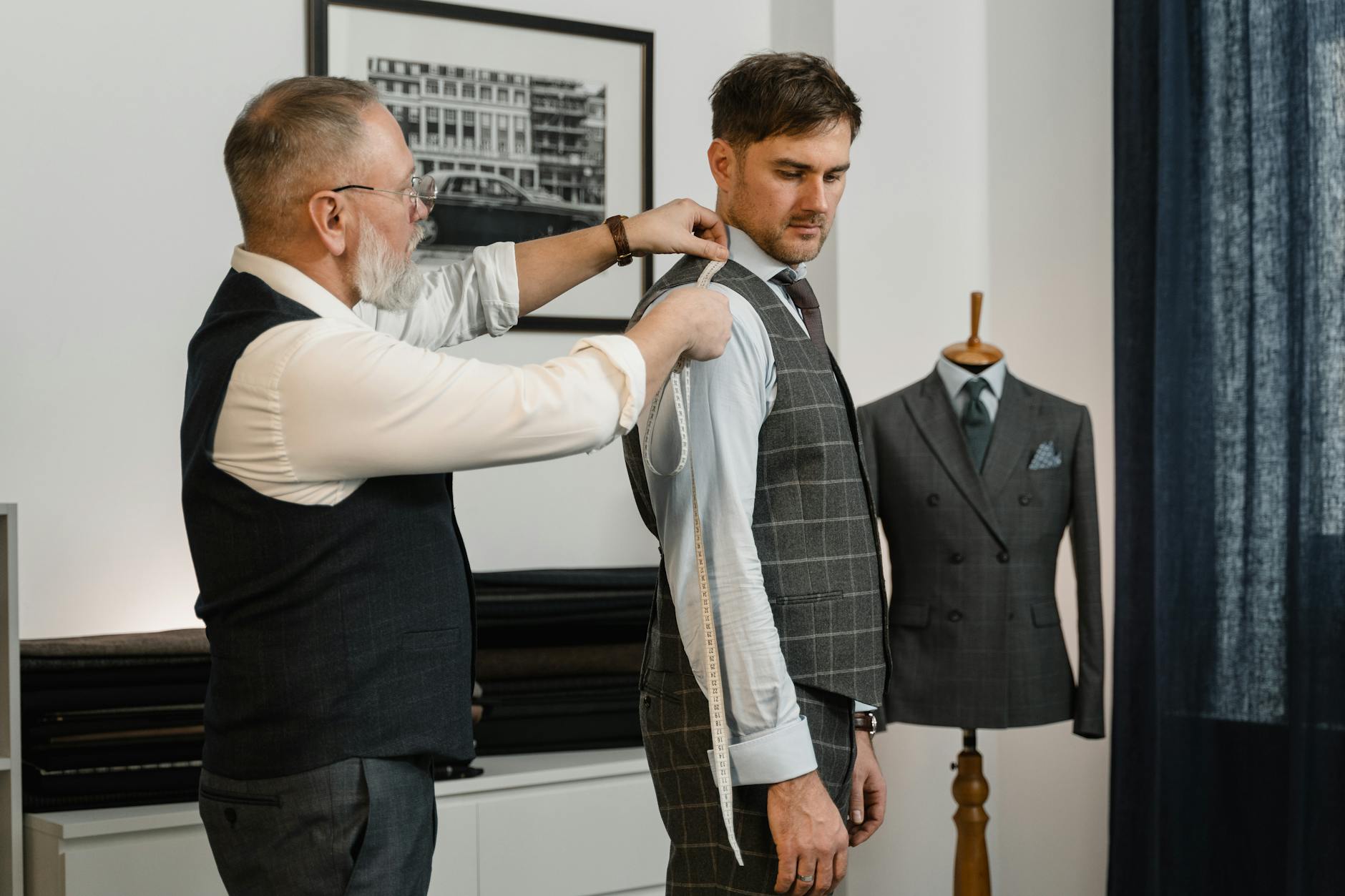
Tailor quality varies dramatically, and stall recommendations age quickly. Stalls change hands, numbering shifts when the market reorganises a floor, and the good cutter behind a famous name may have left two years ago. Recent reviews on Trip.com, Reddit’s r/Shanghai, and Time Out Shanghai are good cross-references. For higher-end commissions, the Maoming Road tailors work from shops rather than market stalls; ask each about appointments and get a quote for the garment you want.
What holds up better than any name is a five-minute test you can run yourself:
- Ask to see a finished garment on the rack, not a photo. Look at the buttonholes — hand-finished ones are slightly irregular and dense; machine ones are perfect and thin. Neither is wrong, but it tells you the price tier.
- Check whether the pattern matches across the jacket’s front seam and at the pocket flaps. Sloppy pattern matching on a check cloth is the fastest quality tell there is.
- Ask how many fittings are included. A stall that says “one” for a suit is optimistic about your body.
- Ask what happens if it does not fit at the second fitting. The good ones answer immediately; the ones who hesitate are telling you something.
How to Brief a Tailor
Most disappointments here are communication failures, not skill failures. The tailors can make what you want. They cannot read your mind, and “classic, not too tight” translates into something very different in a Shanghai workshop than in your head.
Bring photographs — five or six, from different angles, of garments you actually like. Better still, bring a garment you own that fits well and let them copy the fit while changing the cloth. That single move eliminates most of the risk.
Be explicit about all of the following, and get the answers written into the receipt or a WeChat message:
- Jacket: single or double breasted, button count, notch or peak lapel, lapel width in centimetres, vent style (single, double, none), shoulder construction (soft/natural or structured), pocket style, working cuff buttons or not, lining colour and material
- Trousers: pleated or flat front, rise, taper, cuffs/turn-ups and their depth, waistband style, side adjusters or belt loops
- Shirt: collar type and height, cuff style, placket, whether you want a chest pocket, how much you want it fitted at the waist
- Everything: how you want it to fit when buttoned and seated, not just standing
English is workable at the well-known stalls and thinner elsewhere. A translation app on your phone handles the rest — photograph-plus-app beats trying to describe a lapel roll. Our Shanghai language barrier tips cover the apps that work behind the firewall.
The Process: Step by Step
- Browse fabrics first — walk all three floors before committing. Touch, hold up to light, ask for swatches
- Choose a stall based on reputation, English skill, and the quality of fabrics displayed
- Discuss your design — bring photos from your phone (Pinterest, Instagram, your existing favourite suit). Be specific about collar style, pocket placement, lining colour, button count, vent style
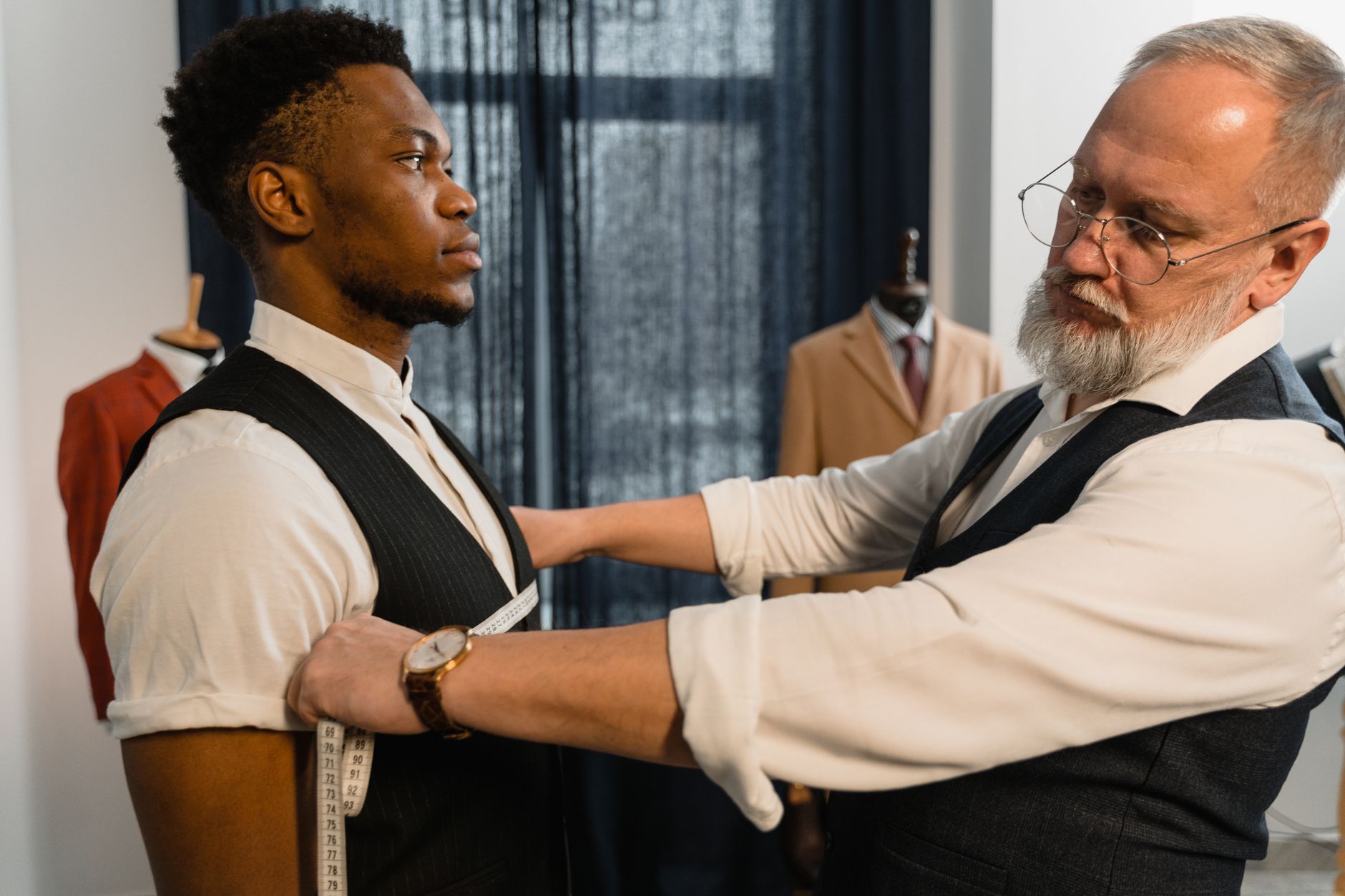
- Get measured — ensure the tailor writes every measurement down and double-checks
- Confirm price + delivery date in writing or via WeChat message
- Pay 50% deposit
- Return for first fitting on the date agreed when you ordered. Mark any adjustments
- Return for final fitting, leaving enough days before your flight for final adjustments
- Pay remaining 50% + collect or arrange international shipping
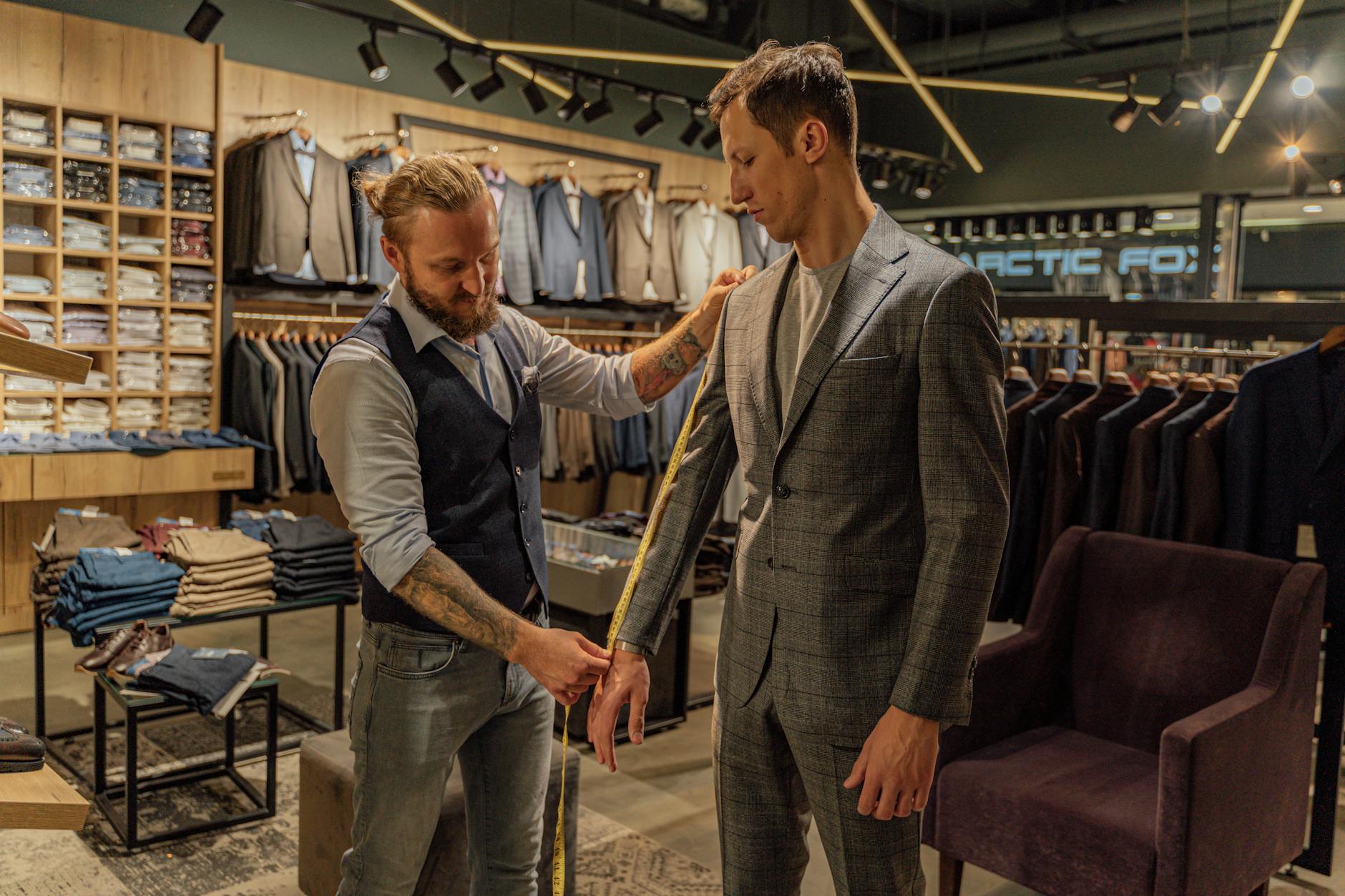
At the fittings, say what is wrong out loud and point at it. Politeness is the enemy here — a tailor cannot fix a sleeve you told them was fine. Standard things to check: shoulder seam sitting on the bone rather than past it, no collar gap at the back of the neck, sleeve ending where your wrist meets your hand, jacket buttoning without an X-shaped pull, trousers breaking on the shoe the way you want.
Bargaining and Paying
Opening quotes at South Bund assume a tourist who will not push back. Treat the first number as the start of a conversation, not the price.
What works: get a total for the whole job rather than negotiating line by line. Ask two or three stalls for a price on the same specification before you commit, and say so. Bundle — two shirts and a suit gets a better rate than each alone. Then name a number well below the asking price, expect to settle somewhere in the middle, and be willing to actually walk. Walking away produces a counter-offer more often than not. What does not work is aggression; this is a relationship business and you have to come back twice for fittings.
On payment: pay 50% down, never 100%. Pay through WeChat Pay or Alipay rather than cash so there is a record, and keep the written receipt with the delivery date and specification on it. Both apps now let foreign visitors link an overseas card, which is worth setting up before you land — see our Shanghai money and currency guide. The same tactics apply across the city’s other markets; our Shanghai markets and haggling guide goes deeper, and our guide to Shanghai scams to avoid covers the fake-fabric routines.
Getting a Qipao Made
The qipao — cheongsam in Cantonese — is the one garment where Shanghai is not just cheap but genuinely the right place. The modern form was popularised by Shanghai women in the 1920s and 1930s, and the city’s tailors have been cutting it continuously since.
Decisions to make before you sit down with a tailor:
- Silk weight. 16–22 momme mulberry silk or a silk brocade holds the shape. Anything lighter drapes rather than sculpts, which is a different garment.
- Collar height. A high mandarin collar can feel restrictive. Ask for a lower one if you want to eat dinner in it, and test the height at the fitting.
- Fastening. Hand-knotted pankou frog buttons are the traditional closure and take real time to make; a side zip is faster and cheaper. Many tailors do a zip with decorative pankou over it, which is the sensible compromise.
- Slit height. Decide in centimetres from the floor, not by adjective.
- Lining. Silk lining costs more and is worth it. Polyester lining in a silk qipao defeats the point in a Shanghai summer.
Agree the fitting dates with your tailor before you order, and leave time for a second one. A qipao is closer-fitting than anything else you will have made, so the second fitting matters more here than on a suit. Get a written quote at the market and another from a Maoming Road specialist; hand-finished pankou cost more, and for a wedding that is money well spent.
What Not to Have Made Here
Being honest about the limits saves people money.
- Anything you cannot come back to fit twice. If your schedule allows one visit, buy shirts or cloth, not a suit.
- Heavily structured tailoring. A fully canvassed jacket with hand-padded chest is not what a market suit price buys. Most market jackets are fused or half-canvassed. That is fine — just do not expect Neapolitan construction.
- Technical outerwear. Waterproof shells, down jackets, anything requiring taped seams. Wrong tools, wrong workshop.
- Copies of a designer piece you love. They will do it, and the result is usually a near-miss that reminds you of the original every time you wear it.
- Knitwear. The cashmere sweaters sold at the market are bought in, not made. Judge them as retail purchases, not commissions.
- Anything for a wedding in under two weeks. The margin for error is too thin.
Shipping and Customs
Ask whether your tailor can ship the finished garments, by which service, and how long delivery to your country takes. Shipping is the right answer if your last fitting slips or you are travelling on with hand luggage only. Two cautions: get a tracking number before you leave the country, and understand that a garment shipped after you fly cannot be tried on again if something is wrong.
On the way home, check how your own country treats tailoring bought abroad. Australia exempts personal clothing other than furs. Arriving in the EU by air or sea, other goods count towards a €430 allowance; into Great Britain by commercial air or sea, the limit for other goods is £390. Three suits and a coat can exceed either. Keep receipts. Note also that goods you have worn or that are shipped separately fall outside China’s departure VAT refund scheme, so do not count on reclaiming tax on a market commission — that scheme works best on boxed retail purchases of the sort covered in our luxury shopping guide.
Tips & Common Pitfalls
- Order as early in your trip as you can — it leaves room for fittings
- On a short trip, focus on shirts — they are the quickest garment to make, so ask the stall how soon one can be ready
- Bring an existing garment that fits well — tailors can copy from a sample
- Don’t go cheapest — the lowest quote is rarely the whole story, so compare cloth and finishing before you pick one
- Test fabric authenticity — burn a single fibre (silk smells like burning hair, polyester smells like burning plastic and beads up)
- Bargain firmly — start well below the asking price; meet in the middle
- Pay deposit with WeChat Pay or Alipay for traceability
- Get terms in writing — fitting dates, final delivery, alterations included
- Don’t take promises about brand-name fabrics at face value — quality matters more than label
- For qipao, find a women’s-wear specialist not a general tailor; cuts and stiffness vary significantly
- If you’re picky about fit, allow for more than one fitting, and ask the stall how many to expect for a suit
- International shipping: if your fittings might get rushed, ask before you order whether the tailor will post the finished piece home
- Photograph the fabric bolt and the receipt — it settles arguments about which cloth you chose
- Wear the shoes and shirt you will wear with the suit to every fitting; trouser length is set from your actual shoes
- Do not order on your last morning — no fitting means no recourse
Frequently Asked Questions
Where is the best fabric market in Shanghai?
The South Bund Fabric Market at 399 Lujiabang Road: three floors of fabric stalls and custom tailors, open 9:00–18:00 daily. Take Metro Line 4 to Nanpu Bridge and leave by Exit 3; the market is about five minutes away on foot.
How much does a custom suit cost in Shanghai?
It depends on the cloth and the stall: a basic wool-blend two-piece sits at the budget end, and Italian or British super-100s wool costs considerably more. Get written quotes from two or three stalls for the same specification, then bargain, because first quotes leave room to come down.
How long does Shanghai tailoring take?
Shirts are the quickest, then trousers and simple dresses. Suits, qipao and cashmere overcoats take longest because they need more fittings. Agree the fitting and collection dates with your tailor before you pay the deposit.
Is Shanghai fabric market worth it?
Yes, if you have a week and are willing to be specific about what you want. For the price relative to tailoring at home it is hard to beat. If you have two days and vague ideas, buy shirts and skip the suit.
Can I get a qipao made at Shanghai fabric market?
Yes. Look for a women’s-wear specialist rather than a general tailor. Price depends on the silk grade and the embroidery, so get a written quote; agree the fitting dates before you order, and specify collar height and slit height in centimetres.
What time does South Bund Fabric Market open?
9:00–18:00 daily. Weekday mornings are the calm window; avoid weekend afternoons.
Can I haggle at the fabric market?
Yes — bargaining is expected. Start well below the asking price and expect to meet somewhere in the middle. Quoting a competing stall’s price and being willing to walk are the two moves that work.
Should I bring photos or examples?
Yes. Photos of the style you want, and ideally a garment you already own that fits well, communicate more than any description. Copying the fit of something you love is the single best way to avoid disappointment.
Is the tailoring at Shanghai fabric market real bespoke?
Ask the tailor. The market sells made-to-measure clothing, which normally means an existing block pattern adjusted to your measurements; true bespoke means a unique pattern cut for you and basted fittings. Find out which you are getting before you pay the deposit. Made-to-measure at market prices is still excellent value.
How do I know the silk is genuine?
Ask for the momme weight and to see the printed bolt end. The burn test settles it: real silk smells like burning hair and leaves a crushable ash, while polyester melts, beads and smells of plastic. Genuine mulberry silk also feels cool to the touch and warms slowly in your hand.
What if the finished garment doesn’t fit?
Raise it at the fitting, not at collection, and be specific about the problem. Reputable stalls will re-cut without argument because their business runs on referrals. This is why you never pay in full up front and never order without time for a second fitting.
Can I just buy fabric and take it home?
Yes, and it is a good option on a short trip. Silk, wool and cashmere by the metre are the market’s real strength, and a few metres pack flat. Ask how many metres your garment needs before you buy: it depends on the cloth’s width, the pattern, your size and whether a check has to match at the seams, and narrow bolts need more.
Plan Your Shopping Day
Combine with our pillar guides on Shanghai shopping, Shanghai markets & haggling, and our Shanghai souvenirs guide. To get to Lujiabang Road, take Line 4 to Nanpu Bridge Station, Exit 3 — see our Shanghai metro guide. For background, see the Chinese silk entry on Wikipedia and the history of the cheongsam.