About 30 minutes by high-speed train from Shanghai’s Hongqiao Station puts you in Suzhou, the old garden city that anchors the lower Yangtze Delta’s classical Chinese tradition. A well-planned Suzhou day trip from Shanghai is the single most rewarding cultural outing you can do within an hour of the city: nine UNESCO-listed classical gardens sit inside the old quarter, the canals still carry boats, and the contrast with Shanghai’s glass towers could not be sharper. Suzhou has been settled for roughly 2,500 years, and a morning inside one of its gardens is enough to understand why generations of Chinese painters and poets treated this place as the standard.
This guide covers the practical side and the planning judgment: which trains to take from Hongqiao, which gardens to prioritise on a single day, the I. M. Pei-designed Suzhou Museum, the Pingjiang Road canal district, what to eat, and how to fit it all in without overreaching. The short version: take an early train, commit to one major garden plus the museum, eat lunch beside a canal, walk Pingjiang Road in the late-afternoon light, and ride an evening train back.
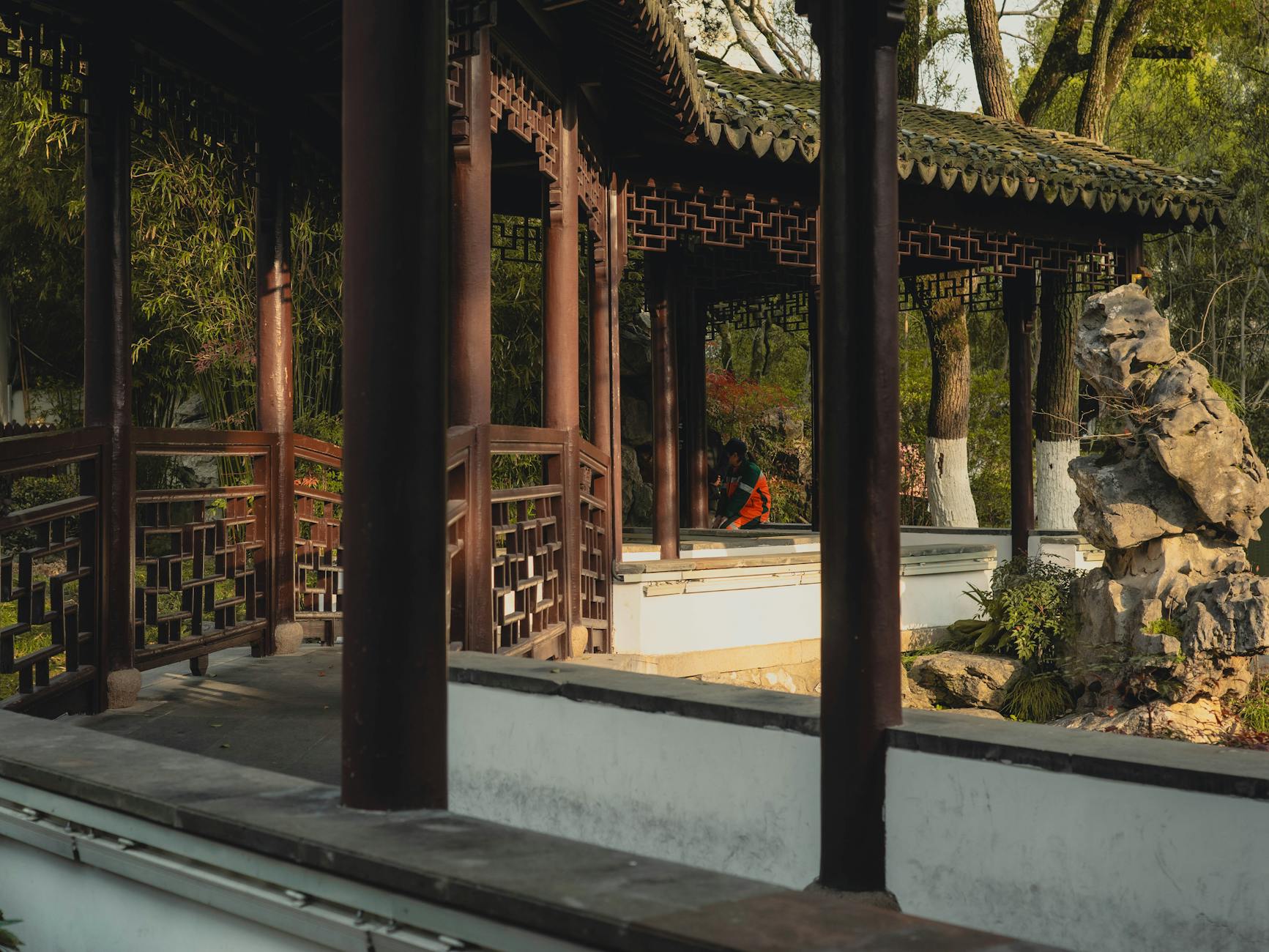
Table of Contents
- Why the Suzhou Day Trip from Shanghai Is Worth It
- Getting from Shanghai to Suzhou by High-Speed Train
- The Classical Gardens: Which One to Choose
- Humble Administrator’s Garden
- Lingering Garden
- Master of Nets Garden
- Lion Grove, Couple’s Retreat and the Quieter Gardens
- Suzhou Museum
- Pingjiang Road, Shantang Street and the Canals
- Tiger Hill, If You Want a View
- Where to Eat in Suzhou
- A Realistic One-Day Itinerary
- What a Suzhou Day Trip Costs
- When to Go
- Tips and Common Mistakes
- Combining Suzhou with Other Day Trips
- Frequently Asked Questions
Why the Suzhou Day Trip from Shanghai Is Worth It
Suzhou is the most celebrated of the Yangtze Delta’s classical cities, and its gardens set the benchmark for Chinese landscape design for several centuries. Nine of them are inscribed on the UNESCO World Heritage list. The central old quarter kept its canals, arched stone bridges, and lane houses through a century that flattened a great deal of old China elsewhere. From a Shanghai base, this is the most direct way to step into pre-modern Chinese aesthetics without committing to a multi-day trip.
Set against Shanghai, Suzhou reads as calmer, more visibly historical, and more compact. A single morning in the Humble Administrator’s Garden justifies the train fare on its own, and the Suzhou Museum — finished by I. M. Pei in 2006 — threads modern gallery design through classical garden composition and is a serious architectural destination in its own right.
For anyone seeing the Yangtze Delta for the first time, Suzhou is the natural counterweight to Shanghai: where Shanghai is modern and outward-facing, Suzhou is classical and inward-looking. If you are mapping a wider trip, it sits alongside the options in our pillar guide on day trips from Shanghai, and pairs well with a base near the western edge of the city for fast rail access — see where to stay in Shanghai.
Getting from Shanghai to Suzhou by High-Speed Train
High-speed rail from Hongqiao is the only option that makes sense for a day-tripper. Everything else — long-distance buses, hired cars — loses to Shanghai traffic before you have left the city limits. The train is fast, frequent, and cheap, and you can travel with nothing but a day bag.
Departure station: Shanghai Hongqiao Railway Station, on the western side of the city. From central Shanghai it is roughly 30 minutes on metro Line 2; Lines 10 and 17 also serve the Hongqiao hub. If you are working out connections across the city, our Shanghai Metro guide and the broader getting around Shanghai overview cover fares, transfers, and the airport-railway interchange.
Arrival station: aim for Suzhou Railway Station, which is closest to the old town and the gardens. Suzhou North is a different station out toward the suburbs and is far less convenient for sightseeing — check the arrival station before you book.
Frequency, time and fares: this is one of the busiest rail corridors in China, with hundreds of high-speed (G-category) departures a day and intervals that drop to a few minutes at peak. Plan on about 30 minutes of riding time — individual trains run from the low-20s to around 50 minutes depending on stops, so treat it as approximate and read it off your ticket. Second class is usually around RMB 40 one-way, first class roughly RMB 65–80; check fares at booking rather than treating them as fixed.
Booking: reserve through Trip.com or the official 12306 app (which has an English interface). Both accept a foreign passport for collection and let you pay by card or mobile wallet. The fast morning departures and the popular evening returns sell out first, so book the night before at the latest — earlier around public holidays.
From Suzhou Railway Station to the old town: it is a short hop. Metro Line 4 reaches the Beisita / old-town area in roughly 20 minutes, and taxis are cheap and plentiful for the first garden of the day. The last trains back to Shanghai run late — commonly until around 22:00 — so an unhurried evening is realistic, but confirm your specific return time when you book rather than assuming.
Door to door: from a Bund-area hotel to Suzhou’s old quarter, budget around 90 minutes each way once you account for the metro to Hongqiao, the ride, and the transfer on the Suzhou end.
The Classical Gardens: Which One to Choose
Suzhou has more than fifty classical gardens, nine of them UNESCO-listed. The most common mistake day-trippers make is trying to see too many. For one day, choose one major garden and, at most, add one small one in the late afternoon. The gardens reward slow attention — a still pond, a framed view through a carved window, the way a path bends so the next pavilion appears only when you reach it. Rushing four of them defeats the reason to come.
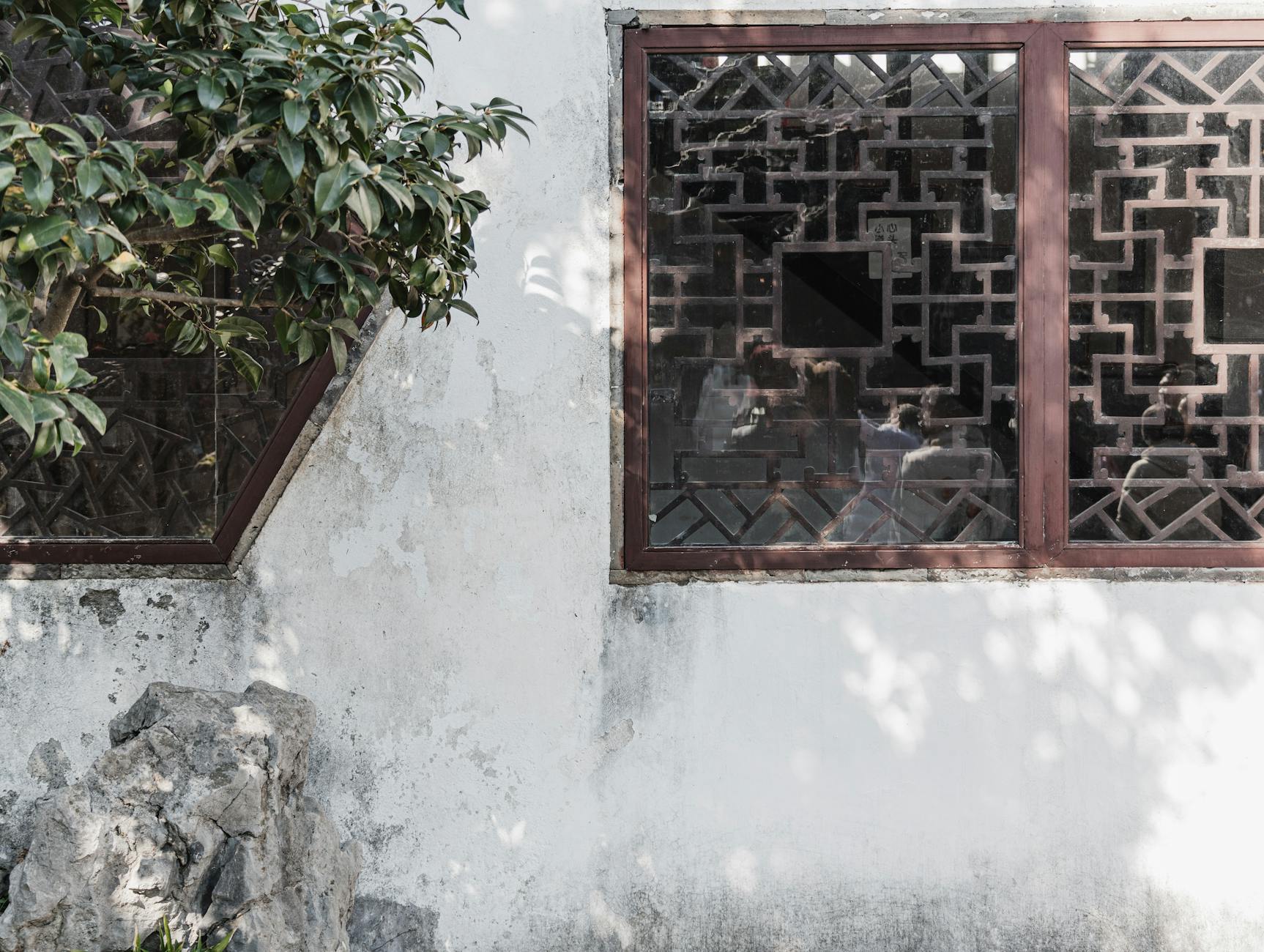
Here are the main candidates, roughly in order of fame:
- Humble Administrator’s Garden (Zhuozheng Yuan) — the largest and best known, begun in 1509. The reference point for Suzhou private gardens.
- Lingering Garden (Liu Yuan) — a little smaller, considered by many the most refined. Late Ming, expanded under the Qing.
- Master of Nets Garden (Wangshi Yuan) — the smallest of the majors and a connoisseurs’ favourite for its concentrated composition.
- Lion Grove Garden (Shizilin) — known for its maze of dramatic limestone rockery, founded in 1342.
- Couple’s Garden Retreat (Ouyuan) — an asymmetrical garden pairing an east and a west garden, quieter than the headline sites.
- Canglang Pavilion — the oldest, dating to the 11th century, smaller and calmer.
For a first visit, the standard and entirely sound choice is the Humble Administrator’s Garden plus the adjacent Suzhou Museum. If you have already done that on a previous trip, the Lingering Garden is the strongest second pick.
Humble Administrator’s Garden
The largest and most-visited classical garden in China. Begun in 1509 by an early Ming official, it covers about 5.2 hectares and divides into the Eastern Garden, the Central Garden (its heart), and the Western Garden. Walked at a comfortable pace it takes 90 to 120 minutes, and the Central Garden — ponds, causeways, and the Hall of Distant Fragrance reflected in the water — is where the design does its most.
- Entrance: about RMB 80 in peak season (April–May and September–November) and around RMB 70 in other months.
- Hours: roughly 7:30 AM to 5:30 PM, last entry about 4:45 PM, open daily apart from occasional special closures.
- Highlights: the Hall of Distant Fragrance over the central pond; the carved windows of the Wuzhuyouju Pavilion; the bonsai-and-rock arrangements of the Eastern Garden.
- Timing: arrive at opening. By mid-morning the tour groups land and the central paths tighten; the first hour after the gate opens is the quiet one.
- Next door: Suzhou Museum shares the entrance plaza, so the two combine into an efficient half-day.
Lingering Garden
Often rated the most refined of the major gardens. At about 2.3 hectares it is smaller than the Humble Administrator’s, and the design is more concentrated, with celebrated rockwork and a sequence of richly detailed halls. Built in the late Ming and expanded under the Qing.
- Entrance: about RMB 55 in peak season, around RMB 45 otherwise.
- Hours: roughly 7:30 AM to 5:30 PM, daily.
- Highlights: the Five Peaks Immortal Hall with its famous rockery; the Mandarin Duck Hall; the Crane’s Cloud Hall, and a 6.5-metre-tall scholar’s rock that is one of the most admired in the country.
- Best for: travellers who have already seen the Humble Administrator’s, or who prefer a smaller, more focused walk.
Master of Nets Garden
The smallest of the major gardens and many specialists’ favourite. At roughly 0.6 hectares it is a lesson in concentrated design: every rock, window, and sightline placed deliberately so that a tiny footprint feels far larger than it is. Founded in the Southern Song and remade in the late Qing, it is the garden most often copied abroad — the Astor Court at New York’s Metropolitan Museum is modelled on one of its courtyards.
- Entrance: about RMB 40 in peak season, around RMB 30 otherwise.
- Hours: roughly 7:30 AM to 5:30 PM.
- Best for: anyone who cares about the relationship between scale and design. You can walk it in 45 minutes, but it repays a much longer, slower look.
- Evenings: in high season the garden runs evening programmes with classical Chinese music and tea in the pavilions, typically RMB 100–200 per person; book ahead. These are an evening commitment, so they suit an overnight rather than a day return.
Lion Grove, Couple’s Retreat and the Quieter Gardens
Beyond the big three, a few more suit a day trip. Lion Grove Garden centres on a famous limestone rockery riddled with caves and passages — children love getting lost in it. Couple’s Garden Retreat, east of Pingjiang Road, is quieter than the headline sites and is the calmer alternative if the Humble Administrator’s feels too busy. Canglang Pavilion, the oldest of all, trades spectacle for age and stillness. None needs more than an hour, which makes any of them a sensible late-afternoon add-on after a major garden in the morning.
Suzhou Museum
Designed by I. M. Pei — the architect behind the Louvre Pyramid, and a son of an old Suzhou family — the Suzhou Museum opened in 2006 beside the Humble Administrator’s Garden. The building reworks classical garden composition in clean modern lines: white walls, dark grey roof geometry drawn from Suzhou’s traditional rooflines, and courtyards, water, and framed views that belong to the architecture rather than decorating it. For many visitors the building outshines the collection, and that is the right way to approach it.
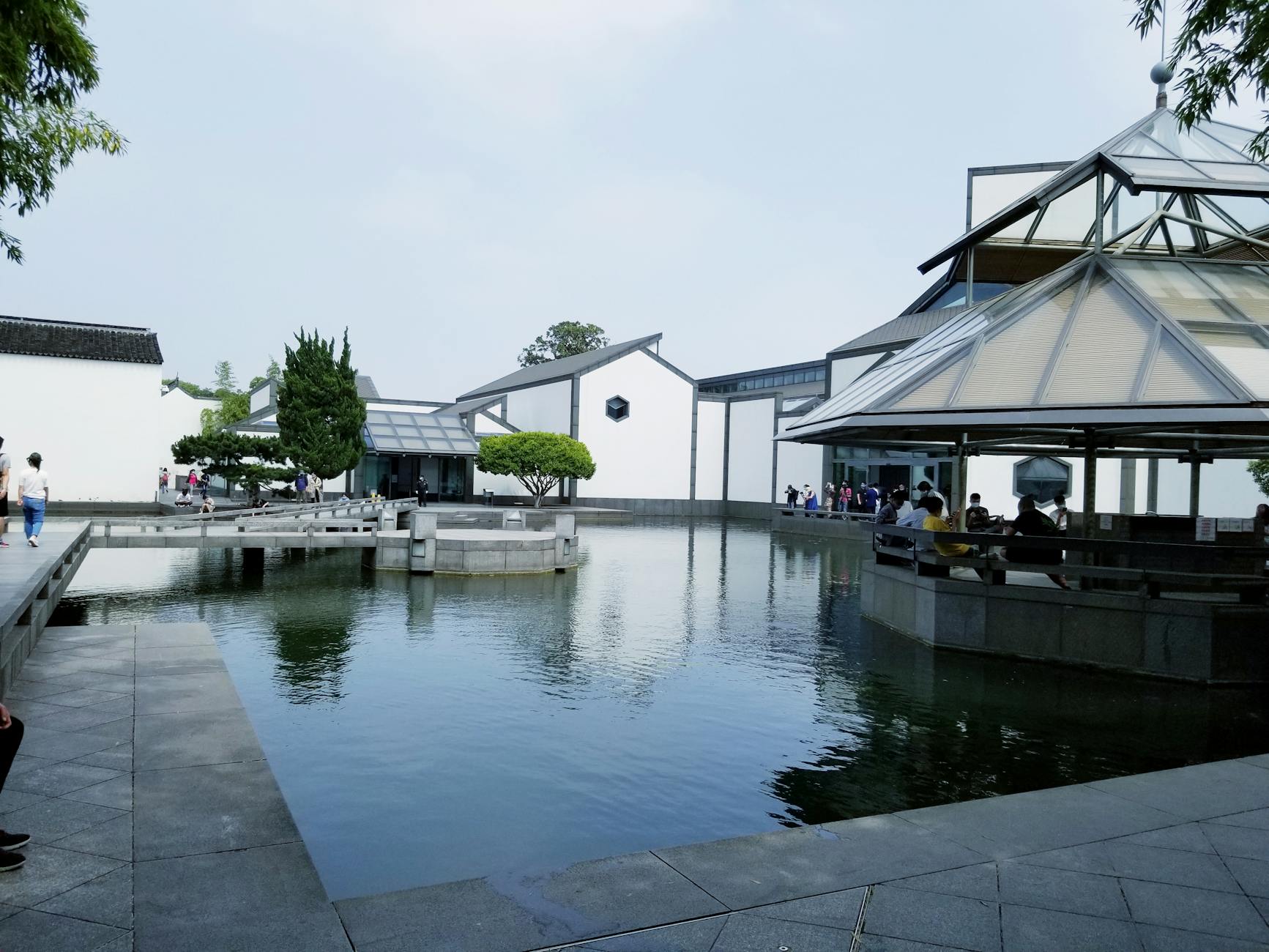
- Admission: free, but it requires an advance reservation through the museum’s WeChat mini-program. Slots open about seven days ahead and can sell out for weekends.
- Hours: roughly 9:00 AM to 5:00 PM, closed Mondays.
- Collection: Suzhou-region antiquities — ceramics, calligraphy, jade, painting, textiles, and the celebrated Suzhou silk embroidery. The lower-floor temporary gallery often hosts the strongest shows.
- Time needed: 90 to 120 minutes.
- Pairing: it shares an entrance plaza with the Humble Administrator’s Garden, so most day-trippers do both back to back with a coffee in between.
Note the Monday closure and the reservation requirement together: if you are visiting on a Monday, build your day around the gardens and Pingjiang Road instead, and do not count on the museum.
Pingjiang Road, Shantang Street and the Canals
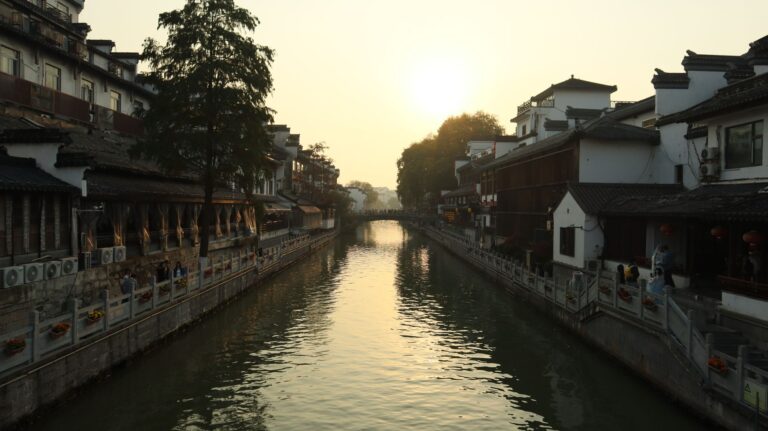
The 1.6-kilometre Pingjiang Road is Suzhou’s best-preserved canal-and-lane streetscape: a narrow canal with traditional houses on both banks, small stone bridges at intervals, and boats sliding through the water below. Cafes, tea shops, and small restaurants fill the lane. It is touristy, but in the morning light or the hour before sunset it still earns its reputation.
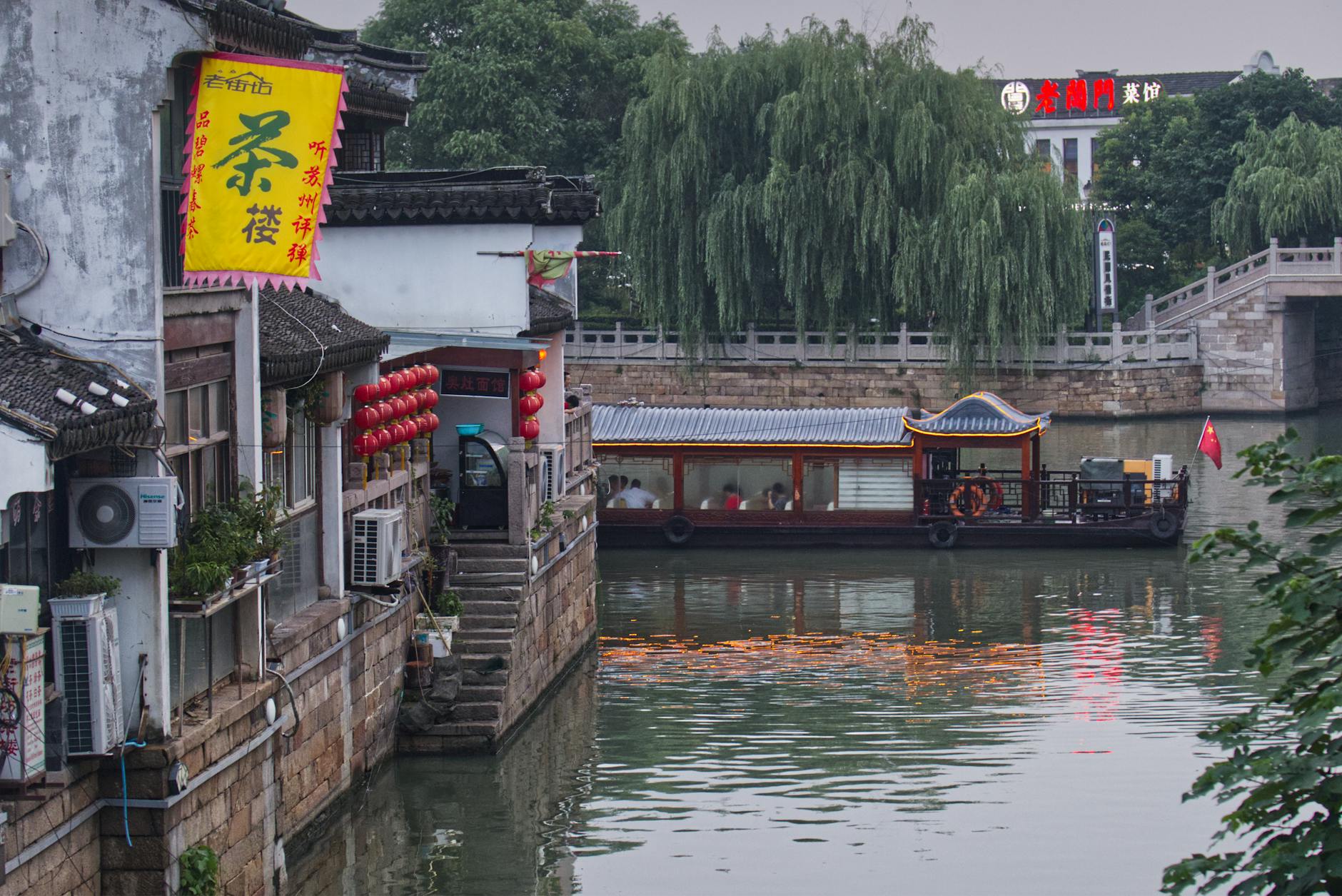
- Best time: late afternoon, roughly 3:00 to 5:00 PM, for atmosphere with thinner crowds; the light just before sunset is the best of the day.
- What to do: walk the full length; take a 25-minute hand-rowed boat ride through the canals (about RMB 80 per person); browse shops selling Suzhou silk, embroidery, and tea.
- Cost: walking is free, the boat is around RMB 80, shopping is whatever you make it.
- Don’t miss: Pingjiang Lijing Yuan, a small classical garden tucked along the road that gives a quieter taste of garden design than the famous sites.
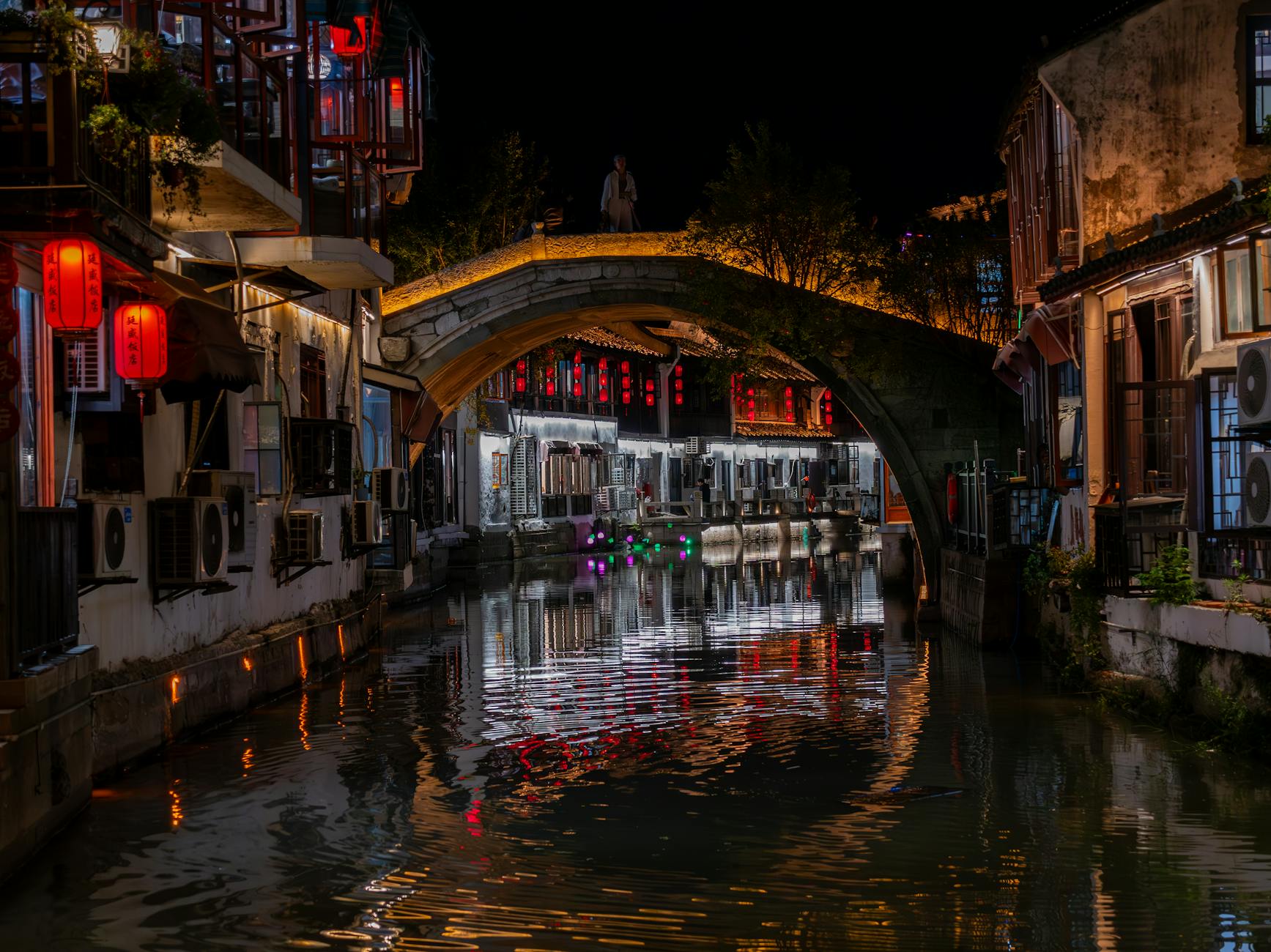
If you want the grander version of the same idea, Shantang Street on the western side of the old town offers a longer, more theatrical sweep of lanterns, bridges, and waterfront teahouses, and it is the better choice for an after-dark boat ride if you are staying into the evening. Pingjiang is the more intimate of the two; Shantang the more spectacular. On a day trip you will likely only have time for one, and Pingjiang is the easier fit alongside the gardens and museum.
Tiger Hill, If You Want a View
If gardens and museums are not the whole of what you want, Tiger Hill (Huqiu) is the main outdoor alternative, a short ride northwest of the old town. A gentle climb leads to the leaning Yunyan Pagoda, a 10th-century brick tower that tilts enough to be nicknamed China’s Leaning Tower of Pisa, and the view from the top over tiled roofs and canals shows how layered the city is. Treat it as an afternoon swap for the museum, not an addition — you will not comfortably fit the Humble Administrator’s Garden, the museum, Pingjiang Road, and Tiger Hill into one day. Pick the museum or the hill.
Where to Eat in Suzhou
Suzhou cuisine is one of the great regional Chinese traditions, built on freshwater fish, gentle and slightly sweet flavours, and seasonal vegetables. Lunch is the natural place to try it, and you do not need to go upmarket to eat well.
- Songhe Lou — the most famous Suzhou restaurant, founded in 1757, on Guanqian Street. Known for sweet-and-sour Mandarin fish (the carved “squirrel fish”) and fried eel. Around RMB 200–400 per person.
- Sing Heng Lou — another old name, on Shiquan Street, serving Suzhou specialities at more moderate prices. Around RMB 100–200 per person.
- Pingjiang Road restaurants — a dozen options along the canal, often with set meals of local dishes for roughly RMB 60–150 per person. Quality varies, so look for the places locals are actually sitting in.
- Da Ke De — famous for Yangcheng Lake hairy crab in the autumn season; RMB 200–500 per person depending on the crab.
Suzhou also takes its noodles seriously, and a bowl is the cheapest, most local lunch going. Look for a dedicated noodle house — names like Tong De Xing turn up on most local lists — for a slightly sweet broth with braised pork belly on top; in spring, the seasonal three-shrimp noodles (shrimp meat, roe, and the prized “brain”) appear for only a few weeks. Other snacks worth seeking out: sweet osmanthus rice cake, Suzhou-style mooncakes, steamed buns, and the local xiaolongbao, which run a touch sweeter than Shanghai’s.
A Realistic One-Day Itinerary
This is a tested rhythm for a roughly 11-hour day return. Treat the train times as placeholders and slot in your actual booked departures.
- 7:00 AM — leave your Shanghai hotel for Hongqiao Station.
- 7:30 AM — arrive at Hongqiao; collect tickets if not already on your phone; quick coffee.
- 8:00 AM — board an early high-speed train.
- ~8:30 AM — arrive at Suzhou Railway Station; taxi or metro to the Humble Administrator’s Garden (about 15 minutes by cab, roughly RMB 30).
- 9:00 AM — enter the Humble Administrator’s Garden at opening, before the groups. Allow 90–120 minutes and walk it slowly.
- 11:00 AM — exit and walk next door to the Suzhou Museum.
- 11:15 AM — tour the Suzhou Museum (with the reservation you made earlier in the week).
- 1:00 PM — lunch on or near Pingjiang Road; try a local set meal or a bowl of Suzhou noodles.
- 2:30 PM — walk the full length of Pingjiang Road; duck into Pingjiang Lijing Yuan if you still have garden energy.
- 4:00 PM — optional small second garden — Master of Nets or Lion Grove — if time and legs permit.
- 5:30 PM — tea or coffee at a canal-side cafe; pick up silk, tea, or embroidery.
- 6:30 PM — taxi back to Suzhou Railway Station.
- 7:00 PM — board a high-speed train back.
- ~7:35 PM — arrive at Hongqiao; metro Line 2 to your hotel.
- 8:30 PM — back in Shanghai for a late dinner.
If you would rather take a hand-rowed canal ride than squeeze in a second garden, swap the 4:00 PM slot for the boat — the day has built-in slack so you can make that call on the ground.
What a Suzhou Day Trip Costs
A Suzhou day trip is inexpensive by the standard of European or North American excursions. Per person and all approximate, the round-trip train runs roughly RMB 80–160 depending on class; garden entrances about RMB 80–120 for one major garden (or one major plus one small one); the Suzhou Museum is free with a reservation; local taxis around RMB 60 across the day; lunch RMB 60–200 depending on whether you do noodles or a sit-down restaurant; and a boat ride plus incidentals RMB 80–200. That lands most people around RMB 400–700 for the whole day, before any serious shopping.
When to Go
The gardens are at their best in two windows: April to May, when blossom and fresh green fill them out, and late September to October, when autumn colour arrives and the heat breaks. Those are also the busiest and slightly pricier months, so an opening-time start matters most then. Summer is hot and humid, and the midday sun in an exposed courtyard is hard work — go early and rest at midday if you come in July or August. Winter is cold but quiet, with its own stark appeal. Whenever you come, the first hour after a garden opens is the one to protect.
Tips and Common Mistakes
- Reserve museum tickets in advance. The Suzhou Museum needs a booking through its WeChat mini-program; walk-ups are turned away when slots are full.
- Buy train tickets the night before. The best morning and evening services on this corridor sell out first.
- Confirm your arrival station. Suzhou Railway Station is central; Suzhou North is not. Check before you book.
- Wear comfortable shoes. A full day covers 6–10 km on stone paths and uneven garden walkways.
- Save an offline map. Signal can be patchy inside garden walls, and you will want a way to navigate the lanes.
- Set up a mobile wallet and, if you rely on them, a VPN. WeChat Pay or Alipay covers nearly everything; a VPN keeps Google Maps and foreign apps working.
- Don’t try to do too many gardens. One major garden plus the museum, or one major plus one small garden, is the realistic ceiling for a day.
- Eat around the rush. Lunch at 1:00 PM dodges the tour-group surge.
- Shop on Pingjiang Road, not inside the gardens. Garden gift shops are pricier and weaker than the canal-side stores.
- Don’t bolt on a water town the same day. A Suzhou day and a water-town day are separate trips.
- Consider an overnight. A single night unlocks the gardens and canals after dark, which is the city at its most atmospheric.
Combining Suzhou with Other Day Trips
Suzhou sits within easy reach of several other Yangtze Delta destinations, but the honest advice is to keep them as separate days rather than trying to chain them.
- Suzhou + Tongli or Zhouzhuang (water towns). Technically possible as a long, rushed day, but far better as an overnight in Suzhou with the water town on day two.
- Suzhou and Hangzhou. Two separate day trips from Shanghai, not one. Hangzhou and West Lake deserve their own day — see our Hangzhou day trip from Shanghai guide.
- Suzhou and Zhujiajiao. Both are easy from Shanghai but pull in opposite directions; do them on different days. If you want canals closer to the city and a lighter outing, our Zhujiajiao water town guide covers the nearest option.
If you are slotting Suzhou into a longer Shanghai stay, the day folds neatly into a multi-day plan — our 3-day Shanghai itinerary shows where a Suzhou excursion sits without crowding out the city itself, and the full day trips from Shanghai pillar lays out every option side by side.
Frequently Asked Questions
How long does the train take from Shanghai to Suzhou?
About 30 minutes on a high-speed (G-category) train, with individual services running roughly from the low-20s to around 50 minutes depending on stops. Trains leave Hongqiao very frequently throughout the day. Conventional slow trains take longer and are not worth it for a day trip.
How much does a Suzhou day trip cost?
Plan on roughly RMB 400–700 per person for the day. That covers a round-trip train (RMB 80–160), one or two garden entrances (RMB 80–120), local taxis (about RMB 60), lunch (RMB 60–200), and a boat ride or other incidentals (RMB 80–200). The Suzhou Museum is free with a reservation.
Is one day enough in Suzhou?
Yes for a first visit focused on one major garden, the Suzhou Museum, and Pingjiang Road. A second day or an overnight opens up extra gardens and the canals after dark, but a single well-planned day is a complete experience.
What is the best classical garden to see in Suzhou?
For a single visit, the Humble Administrator’s Garden is the canonical choice for scale and history; the Lingering Garden is the pick for refinement, and the Master of Nets for intimate design. For somewhere quieter, the Couple’s Garden Retreat is the calmer alternative.
Do I need to book Suzhou Museum tickets in advance?
Yes. Admission is free, but timed-entry slots must be reserved through the museum’s WeChat mini-program, opening about seven days ahead. Weekend slots sell out, and the museum is closed on Mondays, so plan around both.
What language do people speak in Suzhou?
Mandarin in formal settings and the local Suzhou Wu dialect among residents. English is limited but improving in tourist areas; a translation app covers most situations.
Is Suzhou worth visiting from Shanghai?
Yes, especially for a first-time visitor to the Yangtze Delta. The classical gardens and canal districts deliver an experience Shanghai itself cannot, and the half-hour train makes the contrast easy to reach.
What is the best season to visit Suzhou?
April to May and late September to October. Spring blossom and autumn colour show the gardens at their best. Summer is hot and humid; winter is cold but quiet and uncrowded.
Are the gardens accessible by wheelchair?
Partially. The main paths in the Humble Administrator’s Garden are accessible, but some narrower routes and traditional arched bridges are difficult. The Suzhou Museum is fully accessible.
Plan Your Visit
A Suzhou day trip from Shanghai is the easiest serious culture trip within an hour of the city: an early train out, one major garden plus the museum, a slow lunch and a canal walk, an evening train home. The day rewards planning and, above all, a willingness to slow down once you are inside the garden walls. Suzhou has been doing what it does for 2,500 years; stand still beside one pond for a while, because the city is built to reward exactly that.
For the wider picture, see our pillar guide on day trips from Shanghai, compare it with a Hangzhou day trip, or pick the closer-in Zhujiajiao water town. For an overnight pairing, Wuzhen is the best-preserved of the Jiangnan canal towns. To work out where to base yourself for fast rail access, see where to stay in Shanghai, and for moving around the city itself, the getting around Shanghai guide.