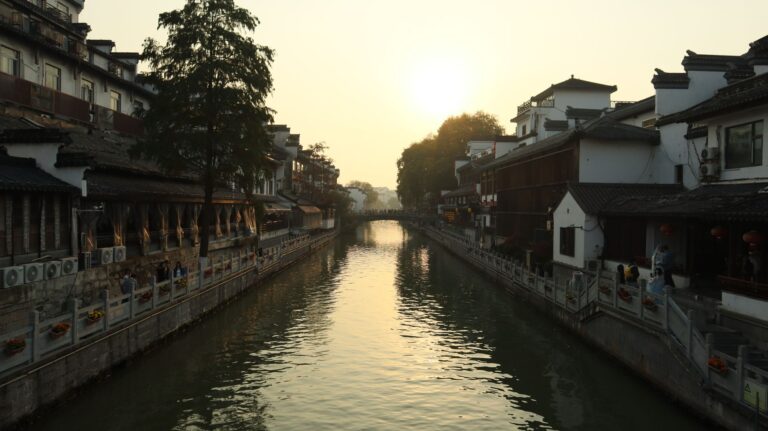
Wuzhen water town (乌镇) is the most photographed and most thoroughly restored of the Jiangnan canal towns, and the only one where staying the night is the whole point rather than a bonus. This Wuzhen water town guide covers the two separately ticketed halves of the old town — Dongzha in the east for daytime, Xizha in the west for evenings and hotels — plus what tickets really cost, how to get there from Shanghai without wasting half a day, and the honest trade-off you are making. Wuzhen is more polished than Zhouzhuang and considerably less lived-in. Whether that is a feature or a problem is the question worth settling before you buy a ticket.

Table of Contents
- The Short Version of This Wuzhen Water Town Guide
- Why Wuzhen?
- How to Get There from Shanghai
- Dongzha vs Xizha
- Wuzhen Water Town Tickets & Opening Hours
- What to Actually See
- Where to Stay
- What to Eat
- Day Trip vs Overnight
- Wuzhen vs the Other Water Towns
- When to Go
- What Wuzhen Costs
- Mistakes This Wuzhen Water Town Guide Exists to Prevent
- Practical Tips
- FAQ
The Short Version of This Wuzhen Water Town Guide
- Two zones, two tickets. Dongzha (east) is compact, workshop-heavy and closes in the late afternoon. Xizha (west) is bigger, has the hotels and stays open into the night.
- Tickets: roughly ¥100–110 for Dongzha, ¥120–150 for Xizha, ¥150–190 for the combined ticket. An evening-only Xizha ticket around ¥80 exists.
- Getting there: bullet train from Shanghai Hongqiao to Tongxiang (30–40 min), then a local bus or taxi for the last 20 minutes. Or a direct coach from Shanghai South Bus Station, about two hours.
- Stay the night in Xizha. This is the single decision that determines whether Wuzhen is memorable or merely pretty.
- Best light: the 40 minutes either side of sunset, when the lanterns come on and the sky still has colour.
- Skip it if: you want somewhere unrestored where people still live. Go to Tongli instead.
Why Wuzhen?
Wuzhen sits in Tongxiang, in northern Zhejiang, about 140 km from Shanghai and 80 km from both Hangzhou and Suzhou. It has around 1,300 years of history as a market town on the Grand Canal system, but its modern reputation dates from a single decision: rather than let tourism happen to the old town, the local development company rebuilt it wholesale, moved most residents out of the western half, buried the cables, standardised the shopfronts and reopened it in 2007 as Xizha.
That is the thing to understand before you go. Wuzhen is not a village that happens to receive tourists. It is a very good reconstruction of one, run as a business, and it is superb at what it does — the sightlines are clean, the lighting design is genuinely accomplished, there is no cabling in shot, and nobody is trying to sell you a laser pointer. What you lose is friction and accident: the laundry, the arguments, the man repairing an outboard motor. Some people find it hollow. Most people find it the best-looking place they visit in eastern China.
Wuzhen has also become a cultural fixture. The Wuzhen Theatre Festival takes over the town for about ten days each autumn, with performances in a purpose-built theatre and in courtyards across Xizha, and the town has hosted China’s annual World Internet Conference since 2014. Both events are worth knowing about mainly so you can avoid the dates unless you actively want them.
How to Get There from Shanghai
Wuzhen has no railway station of its own, which is the main reason it is a two-hour trip rather than a one-hour one. Every route ends with a short road transfer.
- Bullet train plus local bus (fastest and most flexible): a high-speed train from Shanghai Hongqiao to Tongxiang takes roughly 30–40 minutes for around ¥40. From outside the station, bus K282 is the one usually signposted for Wuzhen — route 250 also runs — and takes about 20–30 minutes for under ¥10. A taxi covers the same distance in about 20 minutes.
- Direct coach from Shanghai South Bus Station: roughly ¥80 and about two hours, dropping you near the scenic area. Simple, no transfers, but tied to a fixed timetable and vulnerable to traffic on the way out of the city.
- Private car or ride-hailing: ¥800–1,200 each way. Only sensible for a group of four with luggage.
- Organised day tour: ¥400–600 per person including transport, entry and a guide. Convenient, but almost all of these tours have you back on the bus before the lanterns come on, which defeats the purpose.
- Via Hangzhou: Wuzhen sits between Shanghai and Hangzhou, and pairing them across two or three days works well. See our Hangzhou day trip guide for the West Lake half of that plan.
Book trains through the official China Railway 12306 English site or a reseller, and book the return leg at the same time — Tongxiang is a small station and evening services from it fill up, particularly on Sundays.
| Route from Shanghai | Time each way | Cost each way | Best for |
|---|---|---|---|
| Bullet train to Tongxiang + bus | ~1 hr 30 min | ~¥50 | Independent travellers; overnight stays |
| Bullet train + taxi from Tongxiang | ~1 hr 15 min | ~¥40 + taxi | Arriving with luggage |
| Direct coach, Shanghai South | ~2 hr | ~¥80 | No transfers, fixed timetable |
| Private car | ~2 hr | ¥800–1,200 per car | Groups of four with bags |
| Guided day tour | Door to door | ¥400–600 per person | Zero planning — but you leave before dark |
Dongzha vs Xizha
Wuzhen’s old town is two separate ticketed areas about 15 minutes apart on foot, connected by a free shuttle. They are not interchangeable and most disappointment with Wuzhen comes from visiting the wrong one.
Dongzha (东栅 — East Scenic Zone)
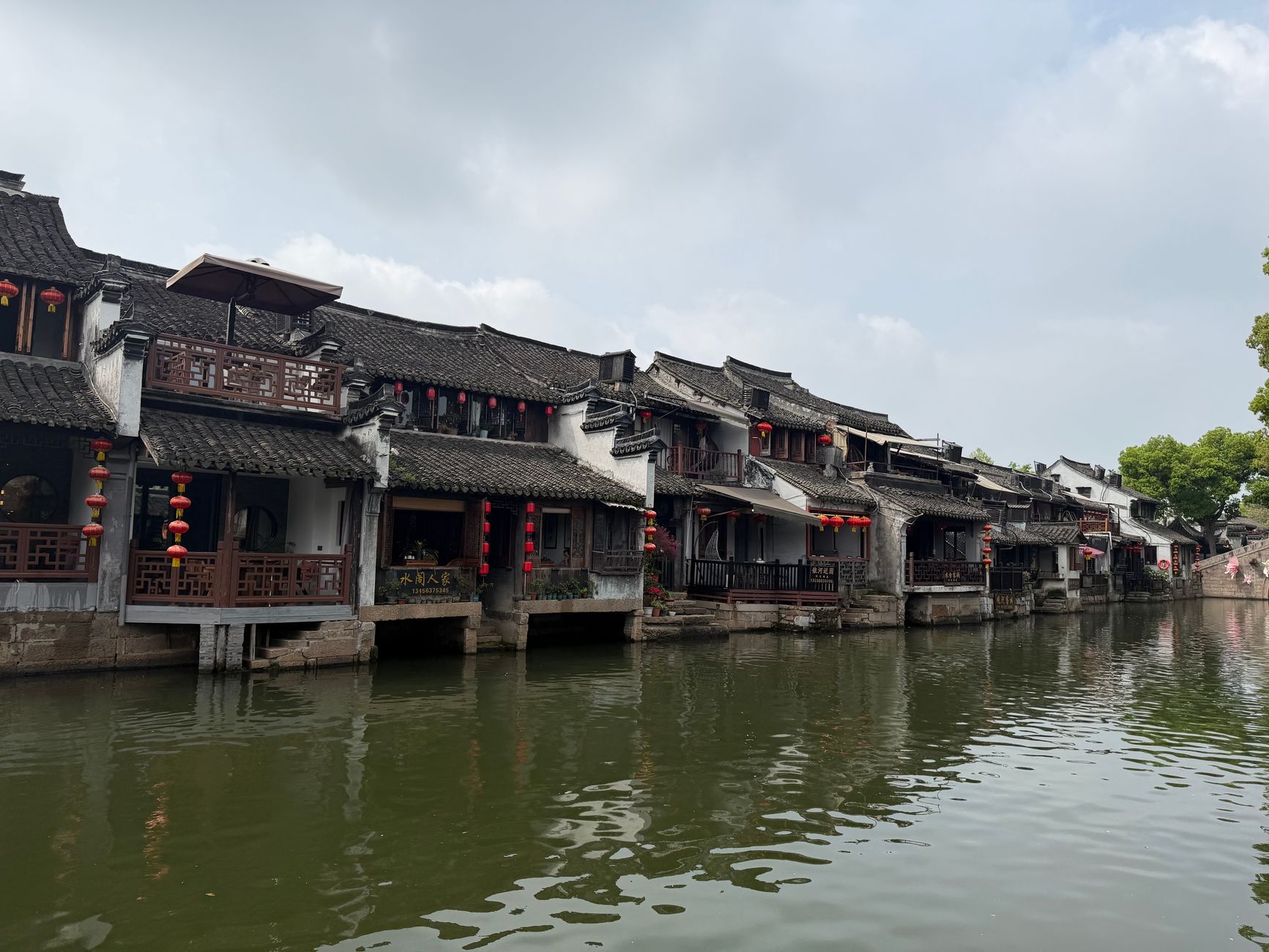
The original visitor area, opened in the 1990s. About 0.7 km end to end, so you can walk the length of it in fifteen minutes. What fills the time is the workshops and small museums: the indigo dye house with lengths of blue-and-white cloth hanging from bamboo frames, a collection of carved canopy beds, a rice-wine workshop, a shadow-puppet stage. It is denser, scruffier and more crowded than Xizha, and it closes in the late afternoon.
Best for: half-day visitors, anyone interested in craft and trade rather than scenery, and anyone who finds Xizha too smooth. Allow two hours, three if you read the exhibits.

Xizha (西栅 — West Scenic Zone)
The 2007 reconstruction, and the reason people come. Roughly 1.8 km of canal frontage across a set of islets connected by bridges, with restaurants, bars, tea houses, craft shops and — crucially — hotels inside the gates. It stays open into the evening and it is lit, professionally and expensively, from dusk until closing.
Best for: overnight stays, photography, and anyone who has seen the standard Wuzhen image and wants to stand in it. Allow half a day plus an evening. If you only have time for one zone, this is the one.

| Dongzha (East) | Xizha (West) | |
|---|---|---|
| Size | ~0.7 km | ~1.8 km across several islets |
| Opens | Early morning | Mid-morning |
| Closes | Late afternoon | Around 22:00 |
| Hotels inside | No | Yes |
| Night lighting | No | Yes — the main event |
| Character | Workshops, museums, tighter lanes | Restaurants, bars, wide canal views |
| Time needed | 2–3 hours | Half a day plus an evening |
Wuzhen Water Town Tickets & Opening Hours
Prices have moved more than once in recent years and different sellers quote different figures, so treat these as ranges and confirm on the day.
- Dongzha only: around ¥100–110 per adult.
- Xizha only: around ¥120–150 per adult.
- Combined ticket: around ¥150–190, and worth it if you are doing both zones in one day.
- Xizha evening ticket: a cheaper night-only entry, roughly ¥80, admitting you from late afternoon until closing. If your only interest is the lit canals, this is the cost-efficient way to do it.
- Opening hours: Dongzha runs roughly 07:00–17:30. Xizha opens later and closes around 22:00. Last entry at both is well before closing time.
- Boat rides: about ¥80–120 for a shared sculling boat, 25 minutes or so. Larger cruise boats also run on the wider stretches.
- Buying: online through Trip.com or Klook, through Wuzhen’s own booking platform, or at the gates. Bring your passport — it is used for ticket collection and hotel registration.
- Payment: Alipay and WeChat Pay everywhere, cash accepted, foreign cards accepted at the main ticket offices but not reliably at small stalls. Our money and currency guide covers linking a foreign card to the payment apps before you travel.
One rule catches people out: a Xizha ticket is single-entry. If you leave the zone to fetch something from a hotel outside, you may have to buy again. Guests staying inside Xizha get in and out freely on their room booking, which is one more argument for staying over.
What to Actually See
Wuzhen’s individual sights are pleasant rather than extraordinary; the town as a whole is the attraction. These are the ones worth stopping for:
- Xizha’s canals after dark — the headline. Get in position 40 minutes before sunset and stay through blue hour.
- The Hongyuantai dye house — long panels of indigo-dyed calico hung to dry on tall bamboo racks. The most photographed courtyard in Wuzhen and, unusually, worth the queue.
- Mao Dun’s former residence — the writer Mao Dun (pen name of Shen Dehong, 1896–1981) was born in Wuzhen and became one of modern China’s major novelists, author of Midnight, and the country’s first Minister of Culture. He was not, as several guides claim, a Nobel laureate; the Mao Dun Literature Prize is named after him, which is probably where the confusion started.
- The Ancient Bed Museum — over a hundred carved Ming and Qing canopy beds, some of them effectively small rooms. Better than it sounds.
- The Sanbai wine workshop — the local “three whites” rice spirit, distilled on site, tasted free and sold at every third shop afterwards.
- A boat at dusk — 25 minutes, ¥80–120, and the only way to see the water-facing architecture properly.
- Xiuzhen Taoist temple and the old stage — the open-air stage opposite the temple still hosts opera performances during the day.
- The shadow-puppet theatre — short, free with your ticket, and genuinely charming.
- Wuzhen Grand Theatre — a striking modern venue at the western end, the centrepiece of the theatre festival, worth walking to even when nothing is on.
- The restored public bath house — a 1930s communal bath, preserved as an exhibit.

Where to Stay
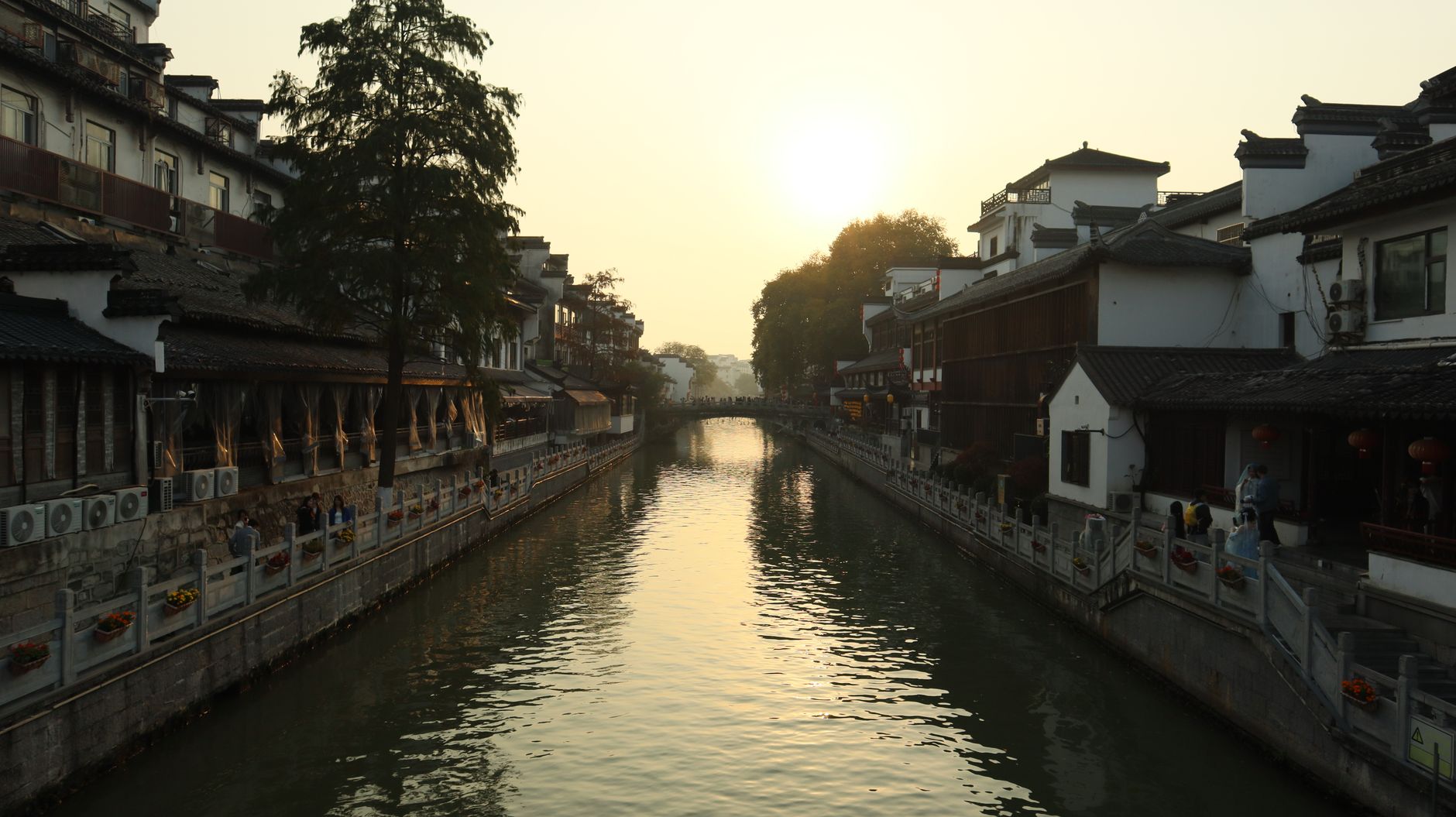
Staying inside Xizha is what separates Wuzhen from every other water town near Shanghai. Once the day tickets stop and the zone empties, the lanes and bridges belong to a few hundred hotel guests, and the lighting stays on.
- Wuzhen Residence / Wuzhen Inn — the operator’s own network of guesthouses spread across restored buildings inside Xizha, 200-plus rooms in total. Standard rooms ¥600–1,200; canal-view suites ¥1,500–2,500.
- Tong’an Inn — one of the larger established inns in the scenic area, and a common mid-range pick.
- Family-run guesthouses inside Xizha — ¥400–800, often lovely, usually with very little English. Booked through the same official platform.
- Hotels outside the gates in Wuzhen town or Tongxiang — from around ¥250. Cheaper, and completely miss the point.
Book through Wuzhen’s own booking platform or Trip.com, and book early: two to three months ahead for autumn weekends and theatre-festival dates, more for the October national holiday. Rooms inside Xizha are small and the buildings are old, so expect character rather than space.
What to Eat
Wuzhen cooks Zhejiang food with a Jiangnan sweetness — freshwater fish, preserved vegetables, slow braises, and a lot of rice wine. Restaurant standards inside Xizha are noticeably higher than in most water towns, partly because the operator controls the leases.
- Sanbai jiu (三白酒) — the local rice spirit, made from white rice, white flour and white water. Sold everywhere, drunk warm, stronger than it tastes.
- Braised mutton (红烧羊肉) — the winter dish, slow-cooked to collapse with soy and rock sugar. Ordered from October onwards.
- White water fish (白水鱼) — a delicate lake fish, steamed. Bony, worth the effort.
- Gusao cake (姑嫂饼) — a crumbly sweet-salty biscuit, the standard Wuzhen souvenir.
- Hangbaiju chrysanthemum tea — Tongxiang is one of the main growing areas for it, and the local version is much better than the supermarket kind.
- Hairy crab — in season roughly September to November, priced accordingly.
- Steamed pork in lotus leaf, stewed bean curd skin, river shrimp with peas — the reliable middle of any menu here.
Named spots that come up repeatedly: Fang Lao Tai, the Sanbai Jiu Restaurant, and the Wuzhen Cup tea house. Budget ¥80–150 per person for a sit-down dinner, less at lunch. Book a canalside table for the evening if you are staying over — the good ones go by mid-afternoon.
Day Trip vs Overnight
Day trip from Shanghai
Possible, and rushed. Leave Shanghai around 08:00, reach Wuzhen at 10:00, do Dongzha in two hours, eat, cross to Xizha for the afternoon and an early evening boat, then leave by about 18:00 to be back in the city around 20:30. You will have seen everything and experienced the one thing that makes Wuzhen distinctive — the lit town after the crowds go — for about forty minutes, in a hurry, while watching the clock.
Overnight — the version worth doing
- Day 1: mid-morning train from Shanghai, lunch in Wuzhen, Dongzha in the afternoon, check into a Xizha guesthouse around 16:00, then be out on a bridge for sunset. Dinner late, walk the lanes at 21:00 when they are close to empty.
- Day 2: up at first light for the canals with nobody in them — this is the best hour of the whole trip and almost nobody uses it. Boat ride mid-morning, lunch, and an early-afternoon train back.
If you are building a longer loop, Wuzhen fits neatly between Hangzhou and Suzhou. Our Suzhou day trip guide and the wider day trips from Shanghai roundup cover how the pieces join up.

Wuzhen vs the Other Water Towns
| Town | From Shanghai | Ticket | Crowds | Character | Pick it if |
|---|---|---|---|---|---|
| Wuzhen | ~1 hr 30 min–2 hr | ¥100–190 | Very heavy, well managed | Restored, lit, hotels inside | You will stay the night |
| Tongli | ~2 hr via Suzhou | ~¥100 | Moderate | Lived-in; UNESCO garden | You want residents, not a set |
| Zhouzhuang | ~1 hr 30 min | ~¥100 | Heavy | The famous one | You want the postcard bridge |
| Zhujiajiao | ~1 hr, Metro Line 17 | Free entry, sights extra | Heavy | Small, commercial, easy | You have half a day |
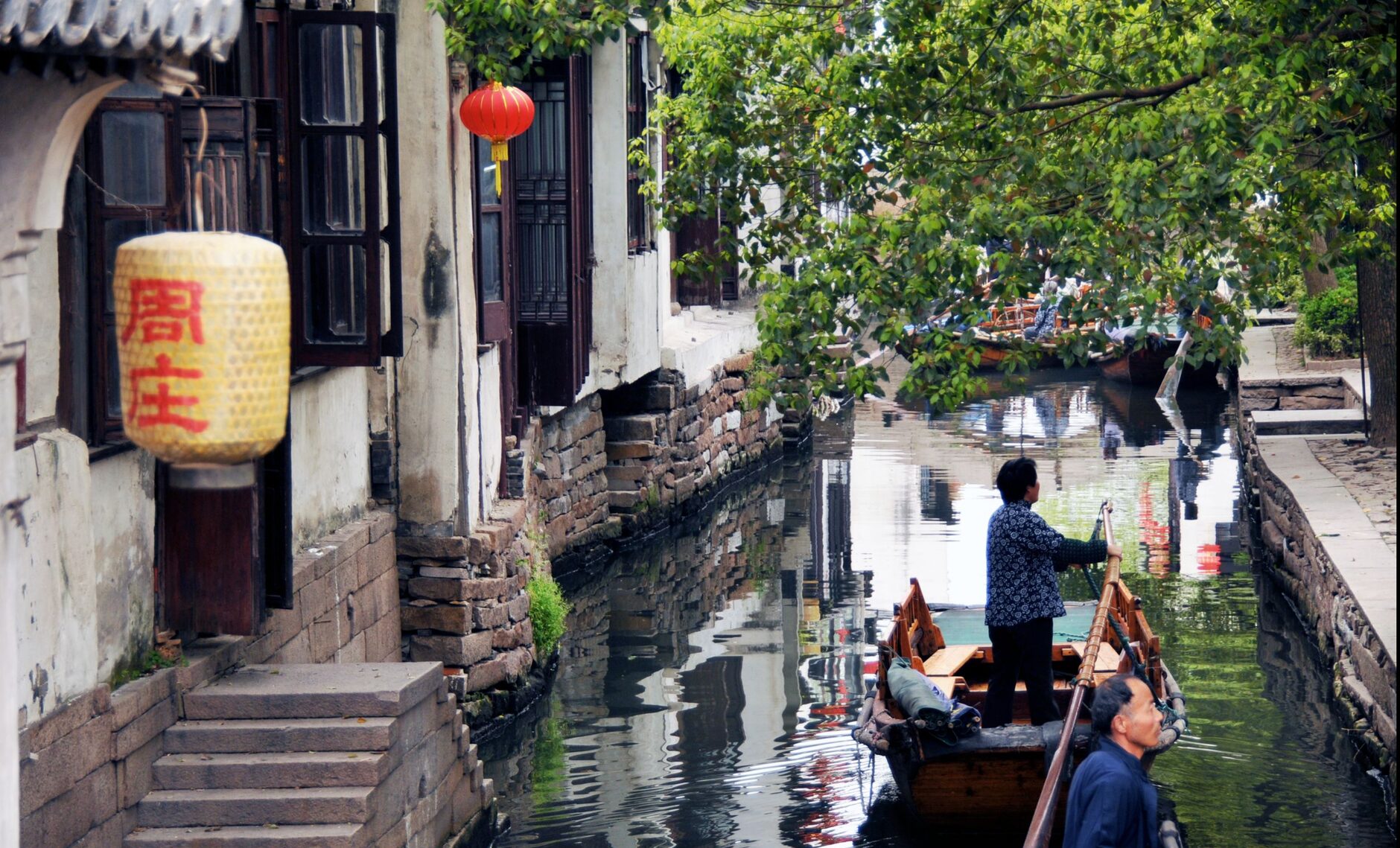
The choice really comes down to one question: do you want a place that is beautiful, or a place that is real? Wuzhen is the most beautiful by a distance and makes no secret of being produced. Tongli is the most real and looks it — cables, laundry, chipped plaster. Zhujiajiao wins on the metro map alone. Zhouzhuang is the compromise, and reads as one.
When to Go
Season. April–May and late September–November are the best windows, with mild days and the canals at their most photogenic. Summer is hot and humid, with afternoon temperatures often around 33–35°C and thunderstorms. Winter is cold, damp and quiet; January mornings with mist on the canals are worth the discomfort if you can handle a 3°C guesthouse.
Dates to avoid. The National Day holiday from 1–7 October and the Spring Festival week fill Wuzhen to capacity — hotel prices double and the bridges become one-way. The Wuzhen Theatre Festival, usually in the second half of October, is wonderful if you have tickets and miserable if you do not: rooms sell out months ahead and prices climb.
Day of week. Tuesday to Thursday, without exception. A Saturday in Xizha in peak season is not a pleasant experience, and no amount of good lighting fixes it. Broader seasonal advice is in our best time to visit Shanghai guide, and our Shanghai in autumn piece covers the delta’s best months in detail.
What Wuzhen Costs
| Item | Day trip | Overnight |
|---|---|---|
| Return transport from Shanghai | ~¥100 (train + bus) | ~¥100 |
| Tickets | ¥150–190 combo | ¥150–190 combo |
| Boat ride | ¥80–120 per boat | ¥80–120 per boat |
| Meals | ¥100–150 | ¥200–300 across two days |
| Accommodation | — | ¥600–1,200 inside Xizha |
| Total per person | ~¥400–500 | ~¥1,000–1,500 |
The overnight version costs roughly three times as much and is worth it. If the budget will not stretch, the compromise is a day trip built around the cheaper evening-only Xizha ticket, with a late train home.
Mistakes This Wuzhen Water Town Guide Exists to Prevent
- Doing Wuzhen as a guided day tour. Almost every coach tour departs before dusk. You will pay to see the one water town whose entire selling point is the evening, and then leave before the evening.
- Visiting Dongzha and thinking you have seen Wuzhen. They are separate zones with separate tickets, and Dongzha is not the one on the postcards.
- Booking a hotel in Tongxiang. Staying outside the gates saves ¥400 and removes the reason you came.
- Leaving Xizha mid-visit. Single-entry tickets do not readmit you. Take everything you need in with you.
- Turning up during Golden Week. The first week of October is the worst possible time, by a wide margin.
- Assuming there is a Wuzhen railway station. There is not. You are going to Tongxiang, then transferring.
- Expecting a village. Xizha is a beautifully executed reconstruction. Go knowing that and it is a delight; go expecting authenticity and you will spend the day feeling cheated.
Practical Tips
- Carry your passport — required for ticket collection and hotel registration.
- Get into position for sunset early. Bridges fill up fast, and the best ones are taken 30 minutes before the light goes.
- Mobile payments work almost everywhere; keep some small cash for boatmen and market stalls.
- Flat shoes with grip. Stone, steps, and canal edges without railings in places.
- Take a light layer even in August — evenings by the water are cooler than the day suggests.
- Signage is bilingual and staff at the main gates and larger hotels speak some English. Guesthouse owners often do not.
- The free shuttle between Dongzha and Xizha saves a dull 15-minute walk; ask at either gate.
- Luggage storage is available near the entrances if you are arriving before check-in.
- Wuzhen is flatter and more buggy-friendly than Tongli or Zhouzhuang, which makes it the easiest of the water towns for families — though bridges still mean steps.
- Our getting around Shanghai guide covers the train and app logistics you will use to get out here.
Frequently Asked Questions
Is Wuzhen water town worth visiting?
Yes, if you stay overnight. It is the best-looking water town in eastern China and the night lighting in Xizha is genuinely impressive. As a rushed day trip from Shanghai it is pleasant but not clearly better than closer, cheaper options.
Wuzhen vs Zhouzhuang vs Tongli vs Zhujiajiao — which is best?
Wuzhen for the most polished experience and the only real overnight; Tongli for quiet and authenticity; Zhujiajiao for being closest to Shanghai; Zhouzhuang for the classic daytime postcard.
Can you visit Wuzhen as a day trip from Shanghai?
Yes — roughly two hours each way. You will see both zones and catch the start of the evening lighting, but you will be leaving as it gets good. An overnight is the version worth doing.
How much does Wuzhen water town cost?
Tickets run roughly ¥100–110 for Dongzha, ¥120–150 for Xizha and ¥150–190 combined, with a cheaper evening-only Xizha ticket around ¥80. Add ¥80–120 for a boat, ¥80–150 for a meal, and ¥600–1,200 for a room inside Xizha.
Which zone should I visit if I only have time for one?
Xizha. It is bigger, it has the canal views, the restaurants and the lighting, and it stays open into the evening. Dongzha is a good add-on, not a substitute.
How do I get to Wuzhen from Shanghai?
Bullet train from Hongqiao to Tongxiang (30–40 min, about ¥40), then bus K282 or a taxi for the last 20 minutes. Alternatively, a direct coach from Shanghai South Bus Station takes about two hours for around ¥80.
Can I stay overnight inside the scenic zone?
Yes, in Xizha. The operator runs a large network of guesthouses inside the gates, plus independent family-run inns. Guests get free re-entry, which day-ticket holders do not.
Is Wuzhen too touristy?
It is heavily managed and largely reconstructed, and residents were moved out of the western zone. If authenticity matters more to you than beauty, Tongli is the better choice. If you want the finest-looking canal town in the region and do not mind that it is produced, Wuzhen is unmatched.
When is the best time to visit Wuzhen?
April–May and late September–November, midweek. Avoid 1–7 October and Spring Festival entirely, and check the theatre festival dates in late October before booking.
Is Wuzhen suitable for families?
Yes, and it is the easiest of the water towns for children — flat paths, varied food, boats, puppet shows and museums. Bridges still involve steps, so a carrier beats a buggy in places.
Do I need to book tickets in advance?
Not usually on a weekday, when the ticket windows take a few minutes. Book ahead for weekends, holidays and the theatre festival — and book accommodation inside Xizha months ahead regardless.
How long should I spend in Wuzhen?
Twenty-four hours is close to ideal: an afternoon in Dongzha, an evening and a sunrise in Xizha, and a mid-morning boat before you leave. A single daytime visit can be done in five or six hours.
Plan More Water Town Trips
Compare with our guides to Zhujiajiao, Tongli, Zhouzhuang, and the full day trips from Shanghai pillar. For more on the craft traditions you will see in the Dongzha workshops, our overview of traditional culture around Shanghai is a good companion. For background, see Wuzhen on Wikipedia and the Wuzhen Theatre Festival entry for festival dates and history.