Tea is one of Shanghai’s most rewarding — and most easily mishandled — souvenirs. The right tea from the right shop is a lifetime memory. The wrong tea from a tourist trap is a story about the time you paid ¥800 for what you later discovered was generic green tea. This guide to buying tea in Shanghai covers what to buy, where to buy it, how to spot fakes, prices, and how to bring tea home through customs.
Short version: go to a proper tea market, taste four or five grades before committing, and budget ¥200–600 for a gift that will genuinely impress someone.
Table of Contents
- Types of Chinese Tea to Buy
- Longjing (Dragon Well)
- Pu’er Tea
- Tieguanyin Oolong
- When to Buy: The Tea Calendar
- Tea Prices in 2026
- Best Places to Buy
- Where to Buy Tea in Shanghai: Markets Compared
- Tianshan Tea City
- How a Tea Shop Tasting Actually Works
- Reputable Boutique Shops
- Paying and Bargaining
- Spotting Fakes
- The Tea House Scam
- Teaware: Pots, Gaiwans and What to Skip
- Bringing Tea Home Through Customs
- A Worked Half-Day and Budget
- Buying Tips
- FAQ
Types of Chinese Tea to Buy
- Green tea (绿茶) — Longjing being the most prestigious; light, fresh, grassy
- Pu’er tea (普洱茶) — fermented and aged; can be raw (sheng) or ripe (shou); collectible
- Oolong tea (乌龙茶) — partially oxidised; Tieguanyin and Wuyi Da Hong Pao are standouts
- White tea (白茶) — minimally processed; delicate and floral
- Yellow tea (黄茶) — rarer; lightly fermented green-style
- Black tea (红茶) — fully oxidised; Keemun and Lapsang Souchong
- Flavoured / scented teas — jasmine, osmanthus, rose
Start with the first three. Longjing is the local pride; pu’er has the most collector value; oolong covers a wide quality range.
Buying one thing only? Buy a ripe pu’er cake: hard to brew badly, survives a hot suitcase, still good in 2040. Green tea is the opposite — the best here and the most perishable. Note that 红茶, “red tea”, is what English calls black tea.
Longjing (Dragon Well)
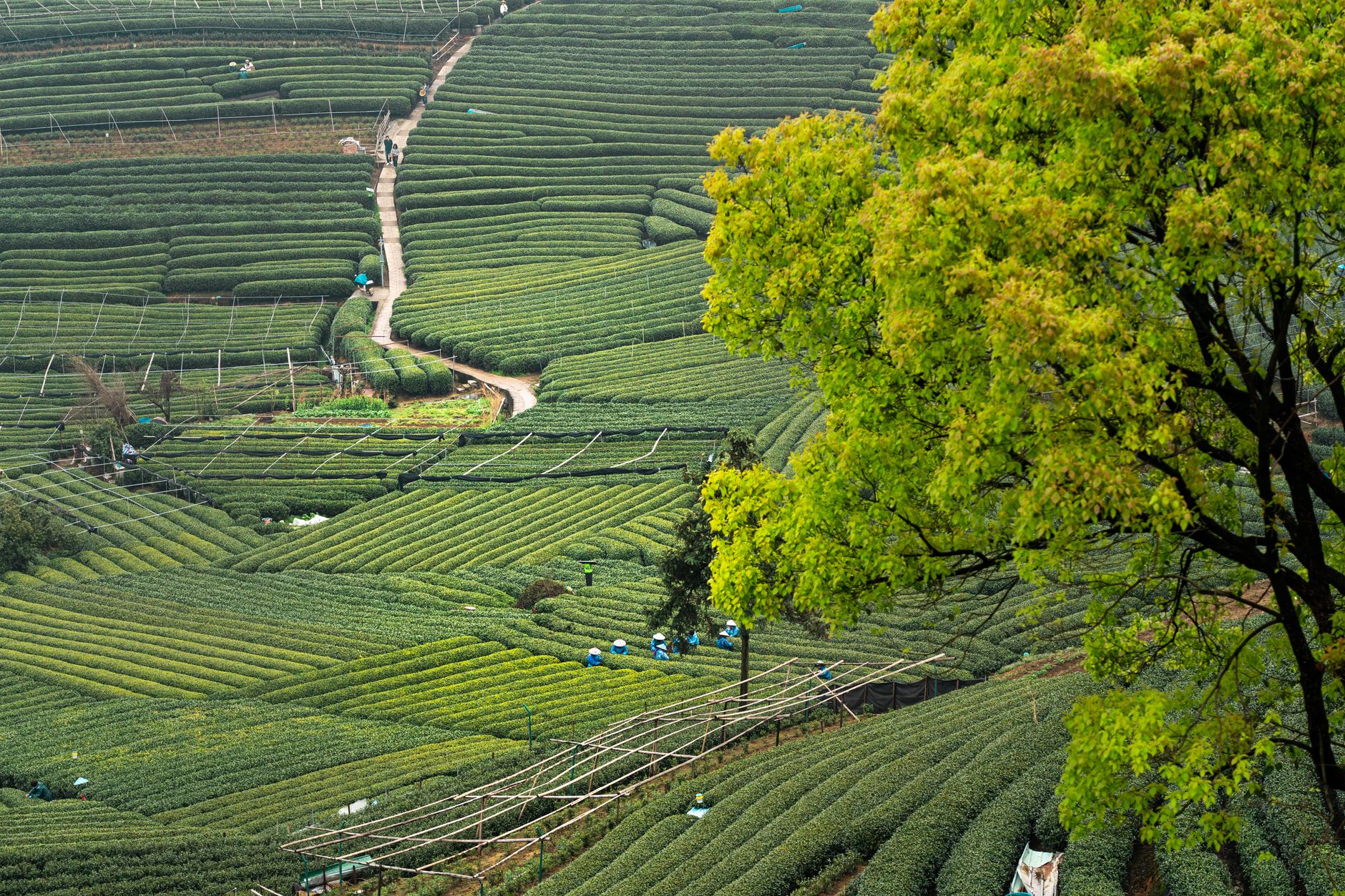
Longjing (龙井) is one of China’s best-known green teas, grown around West Lake in Hangzhou, about an hour by bullet train from Shanghai. Top grades have a flat, smooth leaf and produce a bright golden-green tea with a chestnut-like aroma. Quality tiers:
- Pre-Qing Ming (Mingqian, 明前) — picked before Qingming, from the opening of the spring harvest (West Lake picking officially began on 19 March in 2026, with each cultivar starting at its own time); the premium grade, priced accordingly
- Pre-Grain Rain (Yuqian, 雨前) — picked after Qingming and before Grain Rain; the next tier down
- Standard spring — later pickings after Grain Rain, running into May. Roughly ¥300–800 per jin (500g), about ¥60–160 per 100g
- Autumn / second-grade — cheaper than spring leaf and more astringent
For visitors taking home a special gift, a small tin of pre-Qing Ming Longjing gets you the “first harvest” prestige. Buy it from a shop that will name the village and the picking date, and you avoid paying auction-grade prices for a label.
Price follows origin as much as picking date. Only leaf from a defined zone around West Lake may be sold as 西湖龙井 (Xihu Longjing) under China’s geographical indication scheme; the core villages are Longjing, Meijiawu and Longwu. Tea from elsewhere in Zhejiang is honest at a third of the price. Ask which you are being shown.
If tea is a main reason for your trip, buy at source: a Hangzhou day trip from Shanghai reaches the tea villages in two hours door to door, and Meijiawu is set up for tasting in a farmhouse. Suzhou does the same with Biluochun on a Suzhou day trip.
Pu’er Tea
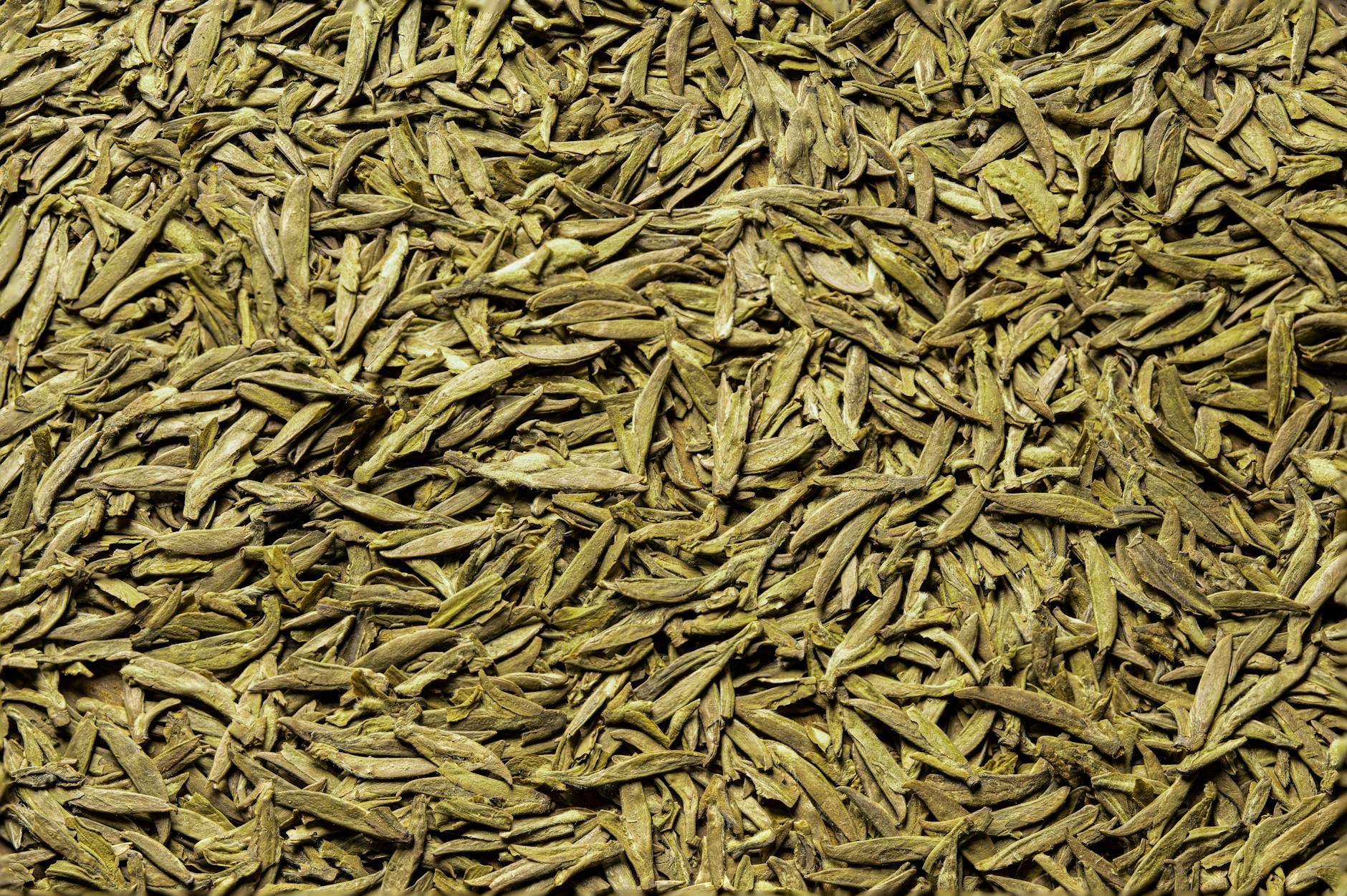
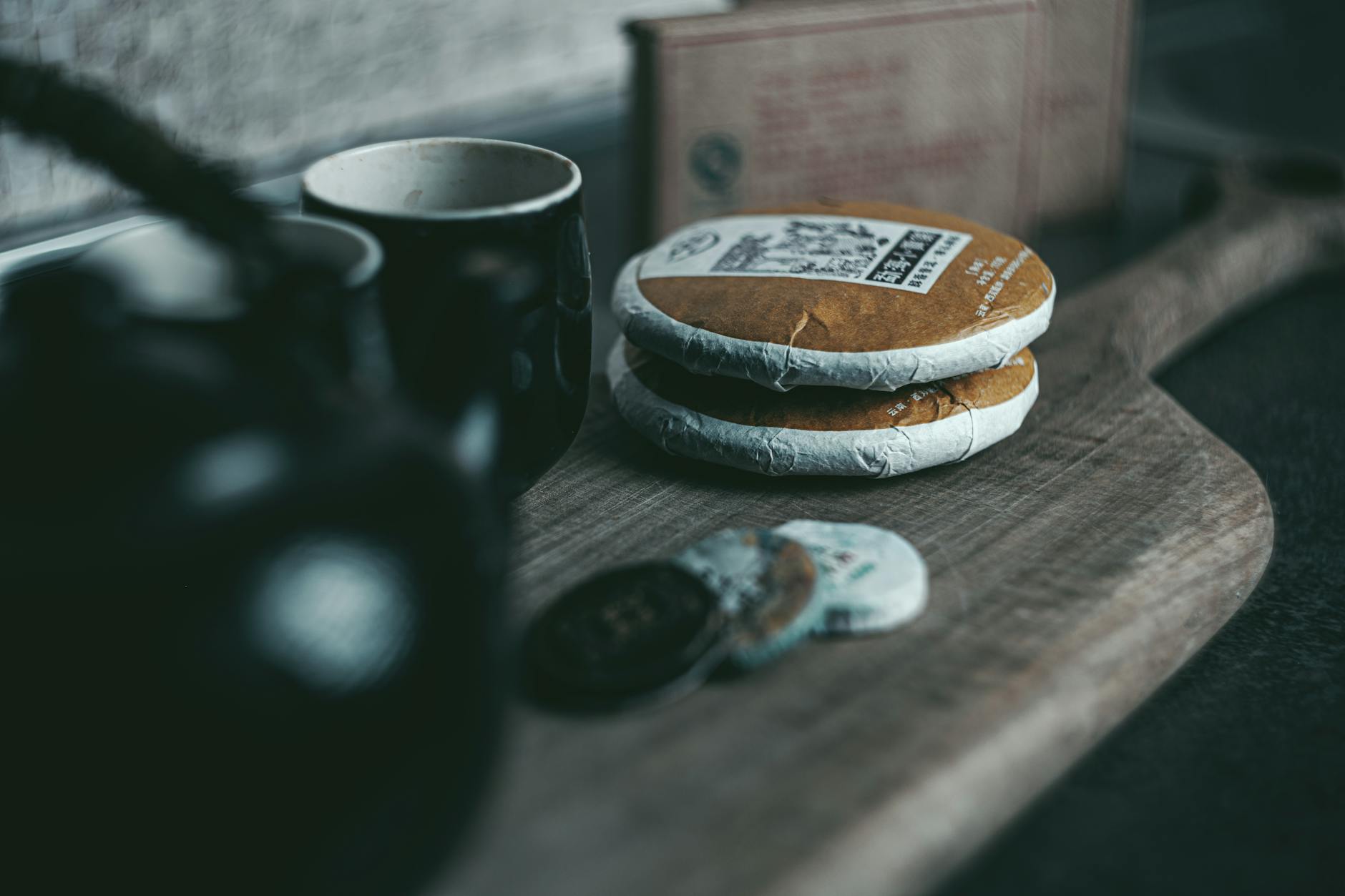
Pu’er (普洱) is fermented Yunnan tea, traditionally pressed into cakes (饼) and aged like wine. Two main types:
- Sheng (raw) — naturally aged over years/decades; complex with maturity. Prices for aged sheng vary widely with age, storage and shop
- Shou (ripe) — accelerated fermentation since the 1970s; drinks young; earthy, smooth
For first-time pu’er buyers:
- Modern shou (3–5 years old) — the budget end; excellent value introduction
- Quality sheng (5–10 years) — mid-range; potential to age further
- Collector vintages (15+ years) — splurge territory; verify authenticity with reputable shop
Pu’er travels brilliantly — pressed cakes are stable for decades. Buy from reputable shops like Sanju Tea or boutiques at Tianshan Tea City.
The default 357g cake size comes from Qing-era tax units, not flavour. Smaller formats suit travellers: 100g mini-cakes, and small nuggets in foil wrappers — no knife, no scale, no argument at security. Learn two words: 唛号 (mahao), the recipe number on factory cakes (7572 is Menghai’s benchmark ripe cake), and 仓 (cang), storage — a musty smell in dry leaf means wet storage.
Tieguanyin Oolong
Tieguanyin (铁观音), sometimes called “Iron Goddess of Mercy,” is a Fujian oolong with floral aroma and orchid-like character. Buy:
- Standard Tieguanyin — everyday drinking at budget to mid-range prices
- Premium aged Tieguanyin — a splurge
- Wuyi rock oolong (Da Hong Pao) — mid-range to splurge, depending on grade; mineral, smoky character
Tieguanyin comes in two styles shops rarely explain. The lightly oxidised 清香 (qingxiang) style is what most stalls push: bright, floral, stales fast. The roasted 浓香 (nongxiang) style is darker and keeps for years — ask for it if the tea is going into a suitcase. Also taste Phoenix Dan Cong (凤凰单丛), where prices vary widely from one grade to the next.
When to Buy: The Tea Calendar
| Period | What’s happening | What to buy |
|---|---|---|
| Mid-March – 5 April | Pre-Qingming Longjing arrives (West Lake picking opened on 19 March in 2026, cultivar by cultivar); prices peak | Mingqian green tea, if money is no object |
| 5–20 April | Pre-Guyu harvest; quality high, price drops sharply | The value sweet spot for green tea |
| May – August | Spring green still fresh; summer harvest coarse | Spring green, oolong, white |
| September – November | Autumn Tieguanyin lands; many rate it above spring | Oolong, black tea, pu’er |
| December – February | Green tea a year old; New Year gift boxes inflate everything | Pu’er, aged white, roasted oolong |
Qingming falls on 5 April in 2026 and Grain Rain on 20 April, so late April is the best moment to buy green tea: days-old leaf, and Yuqian Longjing at a third of what the same stall charged a fortnight earlier — worth planning around if you are visiting Shanghai in spring. Avoid the fortnight before Chinese New Year.
Tea Prices in 2026
Relative prices per 100g for medium-quality grades:
- Standard Longjing: about ¥60–160 for later spring pickings
- Mingqian Longjing: splurge, climbing steeply with origin
- Modern shou pu’er cake (357g): budget
- Aged sheng pu’er cake: mid-range to splurge, the widest spread on this list
- Tieguanyin oolong: budget to mid-range
- Wuyi Da Hong Pao: mid-range to splurge
- Jasmine pearls: budget to mid-range
- White tea (Bai Hao Yin Zhen): mid-range to splurge
- Chrysanthemum tea (basic herbal): the cheapest on the list
Bargaining: at tea malls (Tianshan), the first price quoted to a newcomer leaves room to negotiate. At boutique shops, marked prices are usually fair.
Two quirks catch visitors out. Tea is quoted by the 斤 (jin, 500g) in trade talk and by the 两 (liang, 50g) at the counter, so “¥800” can mean either. Ask 多少钱一两? and get it written down. Packaging is often a separate line: say 不要礼盒 (“no gift box”).
Best Places to Buy
Three tiers of where to shop:
- Tea malls — Tianshan Tea City and the other tea cities in the table below; widest selection, best for browsing, bargaining expected
- Reputable boutique shops — fewer options; marked prices fair; good for premium gifts
- Tea-house experiences — Yu Garden’s Huxinting, Tian Zi Fang’s small tea houses; expensive but include tasting and ceremony
A fourth tier nobody mentions: the supermarket. City Super and Hema carry sealed, dated tea from established brands. Unromantic, but it beats the airport, where the same brands cost more.
Where to Buy Tea in Shanghai: Markets Compared
| Market | Address | Getting there | Character | Best for |
|---|---|---|---|---|
| Tianshan Tea City (天山茶城) | 520 Zhongshan Xi Lu, Changning | Metro Line 2/3/4 Zhongshan Park, then a walk | 400+ shops over three floors; some English | Almost everyone |
| Daning International Tea City (大宁国际茶城) | 1536 Gonghexin Lu, Jing’an | Check Amap for the nearest station | Bigger, calmer, strong on ceramics | Stays north of Jing’an |
| Laoximen Tea Plaza (老西门古玩茶城) | 1121 Fuxing Dong Lu, Huangpu | Metro Line 8/10 Laoximen | Quiet floors of tea plus antiques | Downtown; families |
| Jinqiao International Tea City (金桥国际茶城) | Jinqiao, Pudong | Awkward without a taxi | Serves Pudong residents | Nobody crossing the river |
Tianshan handles a large share of the city’s tea trade, which is why every recommendation points there. All four are reachable on the Shanghai metro; a DiDi from People’s Square to Tianshan is a cheap alternative.
Tianshan Tea City
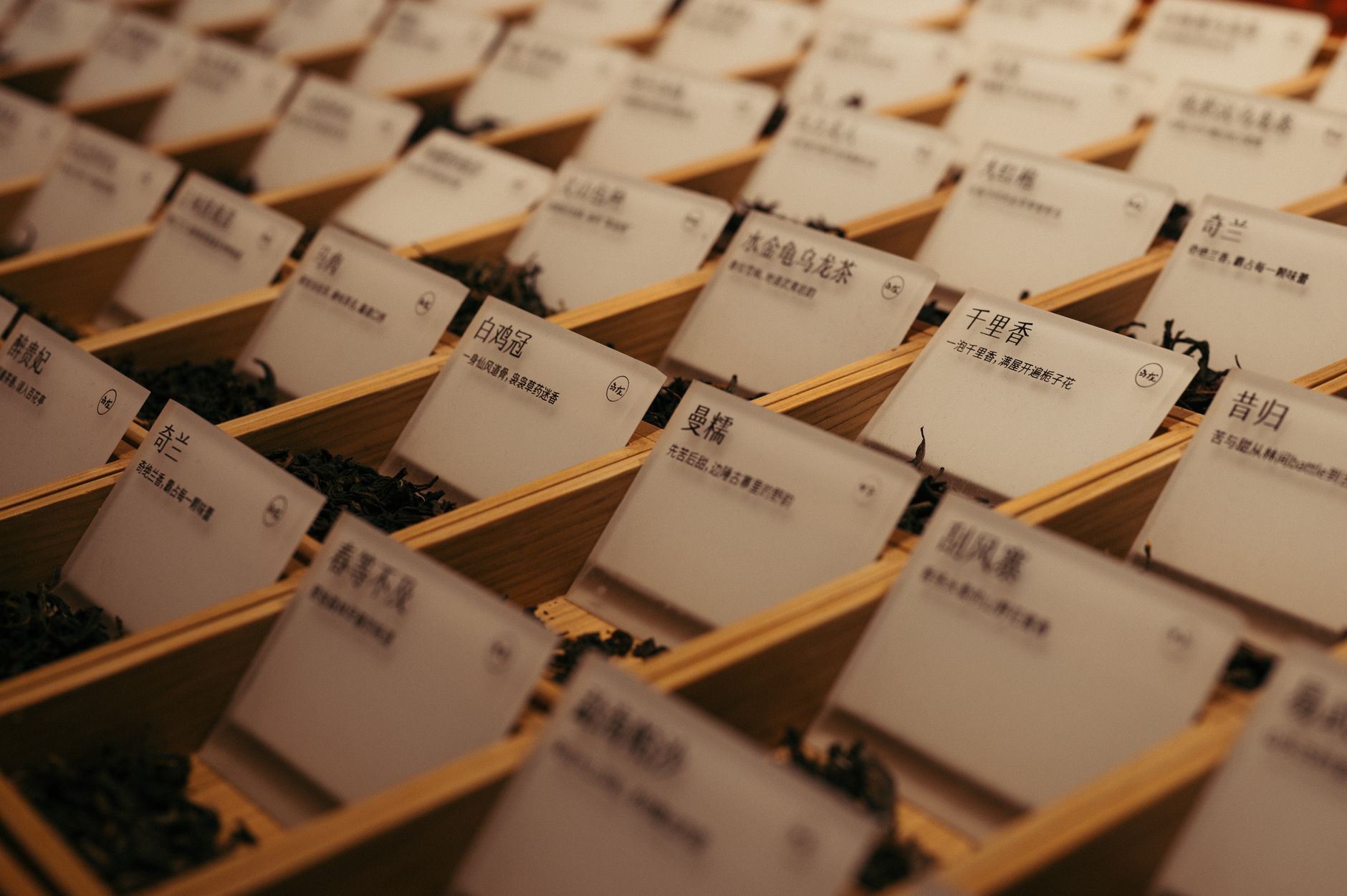
Tianshan Tea City (天山茶城) at 520 Zhongshan West Road is a big tea market — three floors and more than 400 shops selling tea, teaware, antiques and calligraphy. The atmosphere is part shopping market, part tea-master meeting place. Hours: about 10:00 to 21:00.
Stalls keep their own schedules, so some open late or shut early. Arrive between 10:00 and 16:00.
Strategy: walk both floors before committing. Most shops will offer a free tasting (you’ll be invited to small wooden stools while the shopkeeper brews several grades). Take your time; tea selling is a slow, ritualised process.
Tianshan stalls to look for (stalls change, so check on the day):
- Cang Yun Hao — pu’er and aged tea specialist
- Jin Pin Tang — Longjing and green tea
- Tianxia Tea — broad range, English-speaking
- Le Yao Tang — Tieguanyin oolong
Bring cash + Alipay; bargain firmly; ask for the year of harvest and the producer.
Stall numbers run by floor — ground 10xx, second 20xx — and regulars trade numbers rather than names, because signage is inconsistent. Photograph the number when you buy something good. This is a working wholesale market: no information desk, no English map, nobody will approach you. Pressure is far lower than on Nanjing Road; the trade-off is that you start the conversation. Point at a jar and say 可以尝一下吗?
How a Tea Shop Tasting Actually Works
This is the part that intimidates people, and it should not. The sequence is the same in every shop in the city.
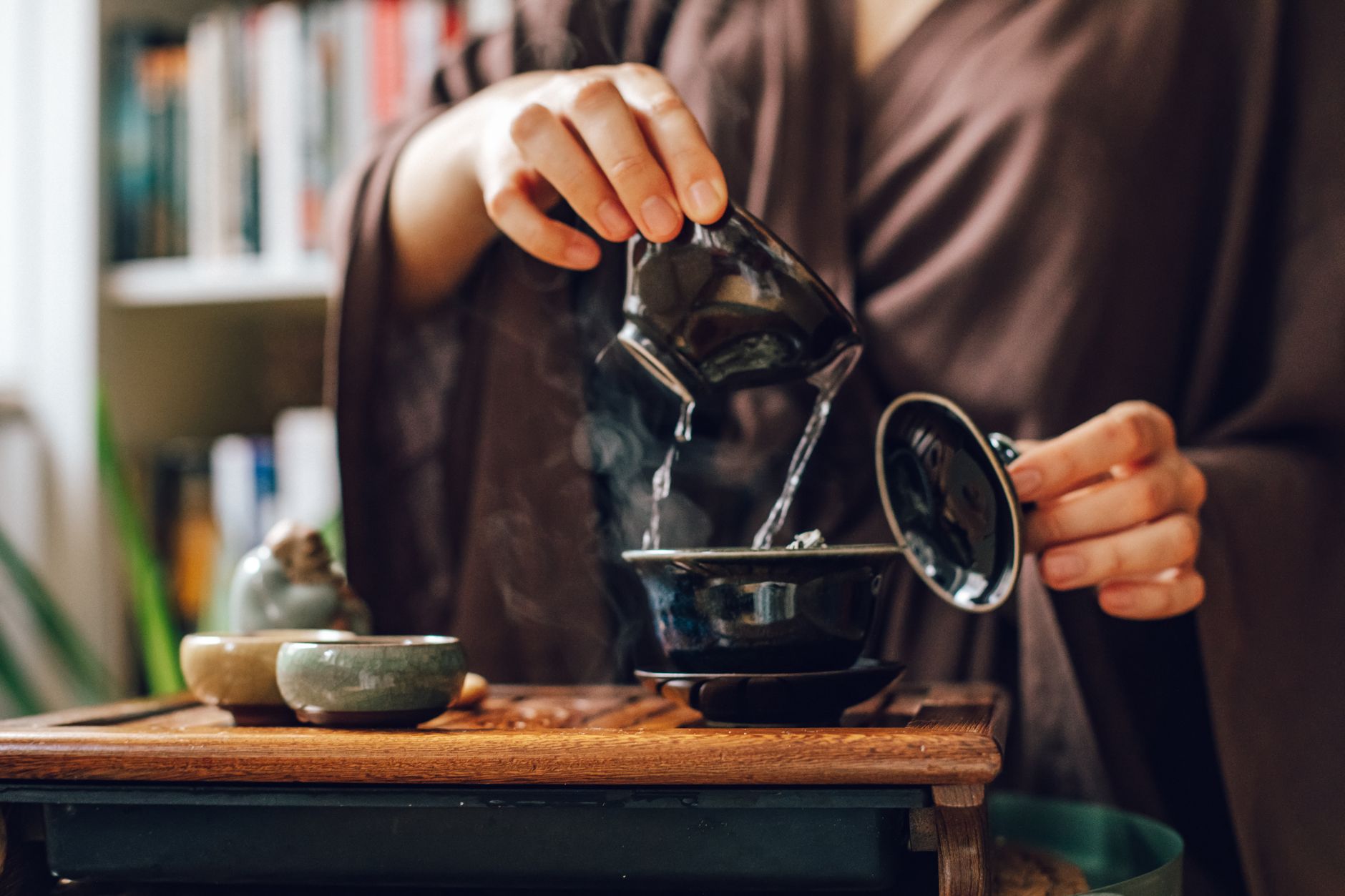
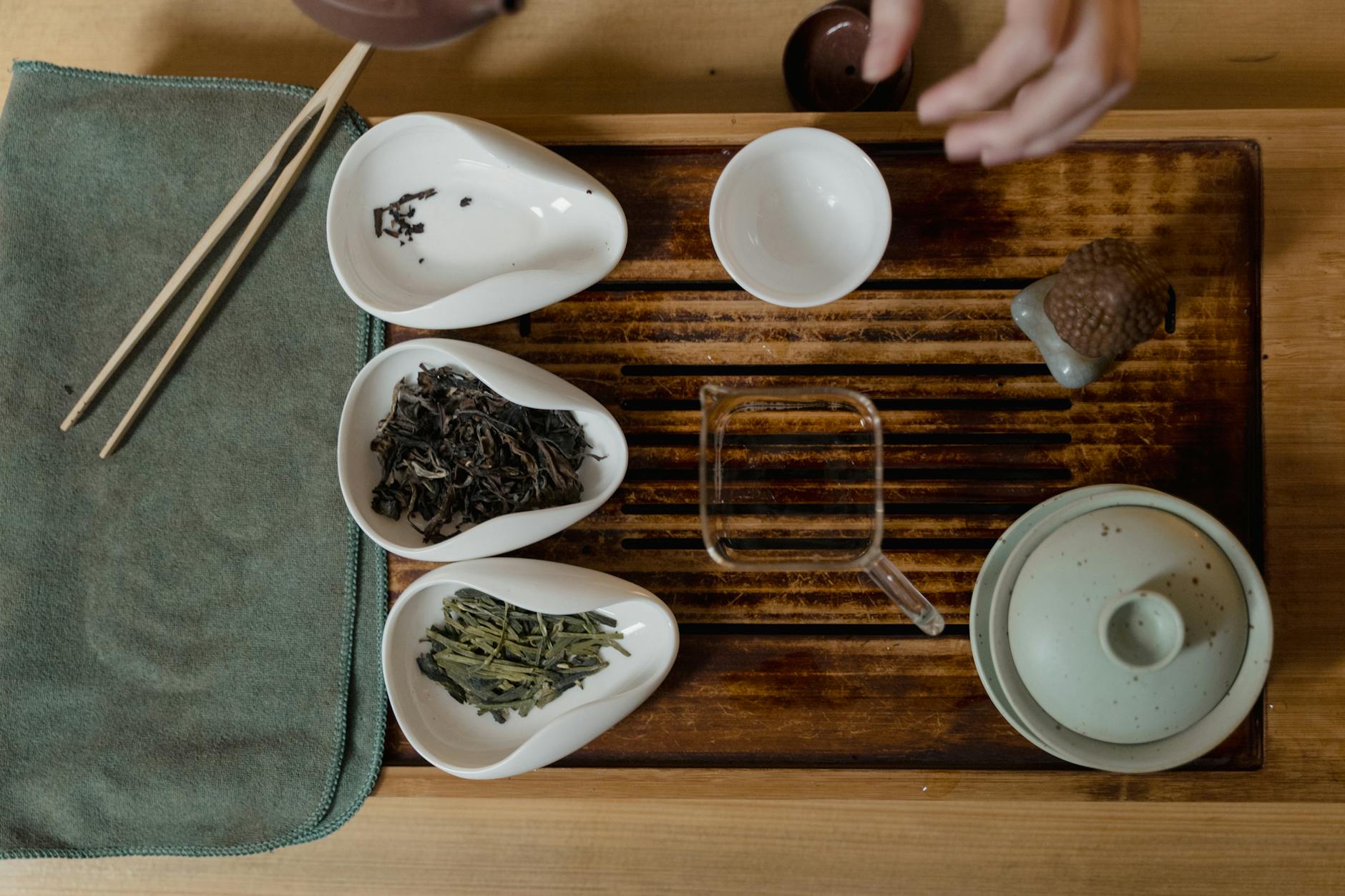
- You sit at a low table with a drainage tray; the seller sits opposite with a boiling kettle.
- Everything gets rinsed — pot, cups, tongs — and the first infusion is poured away. Normal, not waste.
- You are handed a thimble-sized cup after each short steep, for as long as you keep drinking. Five to fifteen infusions from one pot of leaf is standard.
- You are expected to comment. The traditional frame is “three mouths”: look at the dry leaf, smell the warmed leaf and the empty cup, then taste. Saying which of two teas you prefer is enough.
- Tapping two fingers beside your cup means thank you, without interrupting the pour.
- Nobody charges for this at a market stall. Boutique tasting rooms may charge a tasting fee, stated up front.
One social obligation: after half an hour and five teas, buy something, even ¥50 of jasmine. Do not feel pushed into a ¥2,000 purchase — that pressure is manufactured. Language matters less than you expect; see our language barrier tips and etiquette guide.
Reputable Boutique Shops
- Ten Fu’s Tea — large modern Chinese tea retailer; clean, predictable
- Lu Yi Tea House (鹭翼茶馆) — French Concession boutique tea shop with ceremony space
- Hu Pao Tea Shop — premium boutique near Yu Garden; aged pu’er
- Da Hu Chun — primarily a dumpling restaurant but with adjacent tea shop
- Yu Garden Bazaar tea shops — touristy but some quality; bargain hard
- Sanju Tea (三聚茶) — sophisticated wholesale-style operation
- Xuyou Teahouse (叙友茶庄) — on Huaihai Zhong Lu
- Wang De Chuan (王德传茶庄) — SOHO Fuxing Plaza, Xintiandi
- Song Fang Maison de Thé (宋芳茶馆) — 227 Yongjia Lu
- Da Ke Tang (大可堂) — Lane 388-25 Xiangyang Nan Lu. A mansion given over to pu’er; ask about any per-person minimum when you book
- Wanling Tea House (婉玲茶苑) — near Jing’an Temple, in the Julu Road area; visits by appointment only
Several of these sit in or near the former French Concession and pair with a French Concession walking tour. Marked prices, no haggling, and a bill above what Tianshan would charge.
Huxinting, the zigzag-bridge teahouse at Yu Garden, is the classic place for a pot of tea with a view of the pond; check its hours before you go. Go for the building, not the retail shelf — see our Yu Garden guide.
Paying and Bargaining When Buying Tea in Shanghai
Almost nothing in a tea market takes a foreign credit card. Stalls take Alipay, WeChat Pay and cash, in that order — set the apps up before you fly, and see money and currency exchange in Shanghai. Carry ¥300–500 cash as a fallback.
- Taste first, price second. Asking the price before tasting marks you as a buyer on price alone.
- Get the per-50g price in writing. Jin-versus-liang ambiguity is where most overpaying happens.
- Open at 50–60% of the asking price at a stall; expect to settle at 65–75%. At a marked-price boutique, do not bargain.
- Buy volume, not discount. “I’ll take 200g at X” beats grinding down the price of 50g.
- Walking away is the whole technique. Roughly a third of the time you get called back.
- Ask for a receipt (发票) above ¥500 — useful at customs and your only recourse later.
Our markets and haggling guide goes deeper, and applies almost unchanged to tea; for context on the spend, see how much a Shanghai trip costs.
Spotting Fakes
- Visual — top-grade Longjing has flat, smooth, single-leaf shape, light yellow-green colour. Twisted or curled leaves indicate lower grade
- Smell — fresh quality green tea has a chestnut-like aroma; old or fake teas smell flat or chemical
- Brew test — a real tasting shows you the leaves expanding evenly and producing clear, golden-yellow liquid
- Source labels — Longjing has a “Geographical Indication” (GI) certification; ask to see it
- Pu’er authenticity — verify the year, producer (factory mark), and storage condition
- Price — if a “10-year aged sheng pu’er cake” is ¥200, it’s almost certainly fake or mislabeled
- Vacuum-packaging — premium teas are sealed in nitrogen-flushed packs; if seal looks crude, walk away
- Always demand a tasting before paying — refusal is a red flag
For pu’er, three checks catch most fakes. The 内飞 (neifei) is a paper ticket pressed into the cake — none, or one that peels off cleanly, is a bad sign. Pressing marks on the reverse should be slightly irregular; a machine-perfect edge contradicts an artisanal label. Wet leaf should unfurl into whole leaves rather than disintegrate.
A factory label is easy to copy, which is the strongest argument for buying young, honest tea rather than a “1998 cake” at a suspicious price. One free test: ask which year it was picked and which mountain it came from. Real sellers answer instantly.
The Tea House Scam: How It Works
This is the most common way visitors lose money over tea in Shanghai, and it has run essentially unchanged for two decades.
The script: one or two friendly, well-dressed young people approach you on Nanjing East Road, near the Bund or around People’s Square. Good English. They ask for a photo, or say they are art students keen to practise. After ten pleasant minutes they suggest a tea house nearby — authentic, local, not touristy. It is up a narrow staircase, no sign, no menu, no other customers. Tiny cups arrive with elaborate explanations. Your new friends remember a class. Then the bill arrives, running into the thousands of yuan.
It works because nobody knows what tea costs. A bottle of beer has a reference price in your head; forty grams of “rare aged oolong” does not.
- Decline invitations from strangers to go elsewhere. Genuine students will talk where you are standing.
- Never enter a tea house with no menu, no prices and no other customers. That combination is the entire scam.
- Ask for written prices before anything is poured. Real shops produce them without hesitation.
- If you are already sitting and the bill is absurd: photograph everything, refuse to move to a back room, and say you are calling 110.
- The same approach is used for “art exhibitions”, foot massages and karaoke bars — see common Shanghai scams.
None of this should make you nervous: violent crime is low in Shanghai (see is Shanghai safe), and this trick targets politeness, not safety.
Teaware: Pots, Gaiwans and What to Skip
- Gaiwan (盖碗) — the lidded bowl, from a few dozen yuan in porcelain. Brews anything, packs flat. Start here.
- Yixing zisha teapot (紫砂壶) — unglazed purple clay; prices vary widely with the clay and the maker. Absorbs flavour, so one pot per tea type.
- Fairness pitcher (公道杯) — inexpensive in glass; evens out strength between cups.
- Travel set in a padded case — gaiwan, pitcher and four cups in one box. Best-value gift in the building.
- Skip colour-changing “tea pets”, electric kettle-and-table units that will not run on your voltage, and anything sold as antique.
On Yixing authenticity: real zisha is matte to softly satin, sandy to the touch, flecked with minerals, in earth tones. Plasticky shine, neon colour or a chemical smell after rinsing mean pigmented or ordinary clay. Handmade pots show scraping marks inside; a flawless moulded interior is mass-produced — fine at ¥150, a lie at ¥1,500. Teaware also solves the gift problem for people who do not drink tea: see our souvenirs guide.
Bringing Tea Home Through Customs
- Sealed packaged loose-leaf tea — universally allowed by most countries
- Pressed pu’er cakes — universally allowed
- Quantity limits — typically 2kg of personal-use food allowed (varies by country)
- Declare on customs forms if asked
- USA: Yes to sealed tea and pu’er cakes
- UK / EU: Yes; up to 2kg personal use
- Australia: Declare all food on entry; sealed tea is allowed but inspected
- Carry in checked baggage — easier through security than in carry-on (water-leak concerns)
- Keep receipts — useful at customs and for resale value
One widely repeated figure needs correcting: the “2kg” limit does not apply in the United States. USDA APHIS states travellers may bring back any quantity of products composed solely of tea leaves — black, green, oolong, white, yellow and dark all qualify. Herbal and flower infusions are the restricted category, though most are admissible if commercially packaged. Declaring costs nothing; not declaring can cost a fine.
Flower teas catch people out: chrysanthemum, rose buds and “blooming tea” balls are dried plant material rather than tea leaf, and Australia and New Zealand treat them accordingly. Pack tea mid-suitcase away from scented items — leaf absorbs smells, and hotel soap will ruin a good Longjing. Overbought? China Post sends air parcels abroad; ask for the rate to your country at the counter. Wider rules: our Shanghai customs guide.
A Worked Half-Day: Buying Tea in Shanghai
- 13:30 — Metro Line 2 to Zhongshan Park, then a short walk to Tianshan Tea City.
- 14:00 — Walk the whole ground floor once without stopping. Note two or three stalls busy with Chinese customers and displaying prices.
- 14:20 — Sit at the first. Taste two grades of the same tea, not two different teas — comparison is where you learn. Ask the price per 50g and write it down.
- 15:00 — Second stall, different category. If the first was green, make this oolong or pu’er.
- 15:45 — Buy: 100g of Yuqian Longjing, one 357g shou pu’er cake and a bag of foil-wrapped nuggets.
- 16:15 — Upper floor for a plain porcelain gaiwan. Out by 16:45, three good gifts and something for yourself.
Scale down to a shou cake and some jasmine pearls for a modest haul; scale up to a serious Mingqian tin plus an aged sheng cake and the bill climbs many times over. Who should skip tea shopping: anyone who does not drink loose-leaf tea and is not buying for someone who does.
Buying Tips
- Spend at least 30 minutes tasting at the shop before committing
- Don’t buy more than you can drink in 1 year for green tea; pu’er stores indefinitely
- For gifts, ¥200–600 per tin/cake is the value sweet spot
- Bring a teabag from home to compare side-by-side
- Take notes on labels and producers — photo the package details
- Buy a separate small bag to try before committing to larger quantities
- Drinking water in shops — only use the tea-prepared water, not bathroom tap
- Beware of “rare aged pu’er auction-style” pressure pitches — same scam everywhere
- For high-value purchases, pay via Alipay/WeChat, which may give you some protection if there is a dispute
- Loose tea in beautiful tins are excellent gifts; ask for sealed packaging if for travel
- Go on a weekday — weekend afternoons at Tianshan are crowded and sellers have less patience for a long tasting
Frequently Asked Questions
Where is the best place to buy tea in Shanghai?
Tianshan Tea City for selection and value (with bargaining); the boutique shops listed above for marked prices; Tianzifang boutique tea houses for tasting-included premium gifts.
How much should I spend on tea in Shanghai?
¥200–600 per tin/cake is the sweet spot for gifts. Premium Longjing has no fixed ceiling: per jin (500g) it runs from a few hundred yuan to ¥50,000–60,000, depending on origin, picking date and how it was made. Auction-level vintage pu’er sits in its own bracket.
What’s the best tea to buy in Shanghai?
Longjing green tea (the local pride from nearby Hangzhou), shou or sheng pu’er cakes (Yunnan), and Tieguanyin oolong (Fujian) are the three most universally rewarding.
Can I bring tea home through customs?
Yes — sealed packaged loose-leaf tea and pu’er cakes are allowed by most countries up to ~2kg personal use. Declare on entry forms. The US allows unlimited pure tea leaf provided you declare it.
Is pu’er tea a good investment?
Yes for quality aged sheng pu’er from reputable producers. Value depends on age, storage and provenance, so authentication and proper storage are essential.
How can I tell real Longjing from fake?
Real Longjing has flat, smooth, single-leaf shape; chestnut-like aroma; clear yellow-green brew. Demand a tasting before paying. Look for Geographical Indication (GI) certificates for premium grades.
Do Shanghai tea shops accept foreign credit cards?
Larger chain shops such as Ten Fu’s may, so ask before you order. Smaller tea-mall stalls accept Alipay and WeChat Pay; foreign credit cards rarely. Always set up Alipay before flying.
Should I buy a teapot with my tea?
Yes — a Yixing zisha (purple clay) teapot is a beautiful pairing with quality loose-leaf tea, though what you pay swings with the clay and the potter. Travel-friendly. See our souvenirs guide.
Is tasting really free, and am I obliged to buy?
At market stalls, yes, with no formal obligation. The convention is that after half an hour and several teas you buy something small — ¥50 is plenty. Some boutique tasting rooms do charge, and they tell you before the kettle goes on.
How much tea fits in a suitcase?
Four 357g pu’er cakes and three 100g tins weigh under 2kg and take the volume of a pair of shoes. Pressed cakes are the efficient format; gift boxes are the wasteful one.
Is the tea at Yu Garden worth buying?
The setting is worth an hour; the tea is worth about half what you will be quoted. Drink at Huxinting for the building, then buy leaf at Tianshan or a marked-price shop.
What month is best for buying tea in Shanghai?
Mid-to-late April, just after Grain Rain on 20 April 2026, when new spring green tea has arrived and pre-Qingming pricing has cooled. October is the other window, when autumn Tieguanyin lands.
Plan Your Tea Trip
Combine with our pillar guides on Shanghai shopping, Shanghai souvenirs guide, and Hangzhou day trip for the tea fields. Tea pairs naturally with the city’s traditional culture. For background, see Chinese tea culture on Wikipedia, and for the rules on bringing leaf into the United States, the USDA APHIS guidance on travelling with tea.