Spring is the season most experienced China travelers point to first when someone asks when to go. Shanghai in spring — roughly March through May — gives you mild walking weather, the clearest air of the year once the winter heating season ends, and a run of flowering that starts with plum and magnolia and builds to the cherry blossoms that fill parks like Gucun for a short, well-photographed window. With a couple of crowded holidays carved out, it is also one of the easier times to manage a first visit. This guide covers the bloom timeline and where to catch each flower, the month-by-month weather and what to pack, the cherry blossom festival at Gucun Park, what else the season is good for, the crowds to plan around, and a five-day plan that ties it together.
The short version: aim for late March to mid-April if cherry blossoms are the point, treat Gucun Park as the headline stop, visit blossom spots on weekday mornings, and pack for a city where a 28°C afternoon and a 10°C cold-snap can land in the same week. Avoid the May Day holiday (May 1–5) and the Qingming break in early April, when domestic travel surges and hotel prices climb.
Table of Contents
- Why spring is the season people recommend
- The spring bloom timeline (plum to rose)
- Cherry blossoms: when and where
- Gucun Park and the Cherry Blossom Festival
- Other spring parks and flower spots
- Magnolias, plum, and the city’s own flower
- Spring weather, month by month
- What to pack for a Shanghai spring
- What else to do in Shanghai in spring
- Crowds, holidays, and timing
- A five-day spring itinerary
- Pros and cons of a spring visit
- Practical spring tips
- Frequently asked questions
Why spring is the season people recommend
Ask around among people who travel to China regularly and spring comes up more than any other season for Shanghai. A few reasons line up at once.
The weather is in the comfortable middle. Average highs climb from the low teens in March to the mid-twenties by May — cool-to-warm rather than cold or sticky. That makes the things Shanghai is best at, like long waterfront walks and neighborhood wandering, pleasant rather than a test of endurance, and summer humidity has not arrived yet to wring you out.
The air clears. Shanghai’s winter heating season pushes particulate levels up; once it ends in spring the city’s light noticeably sharpens. Combined with longer daylight, that gives you the best photography conditions of the year for the skyline, the Bund, and the parks. Our guide to the best photo spots in Shanghai sets out where to stand and when to be there.
The flowers come in sequence. Spring is not a single bloom but a relay. Plum and magnolia start it, cherry blossoms carry the peak, and azalea, peony, wisteria, and rose extend it toward early summer. Whatever week you land in, something is in flower.
Crowds are manageable for most of it. Outside two holiday periods — Qingming in early April and the May Day break — domestic tourism is lighter than in the big summer and October peaks. Marquee spots still fill on weekends, but a weekday morning is genuinely calm.
The honest drawback is rain: spring brings frequent light showers — roughly fifteen days a month with some rain, most of it brief — and humidity around seventy percent, so an umbrella lives in your bag, and our Shanghai packing guide covers the layers that cope with both. Late May also ramps toward the early-summer rainy season, so a May trip is warmer and wetter than a late-March one.
The spring bloom timeline (plum to rose)
Shanghai’s spring flowering follows a predictable order, but bloom dates shift by roughly a week from year to year depending on the winter — treat these as windows, not appointments, and check a current-year forecast in early March if a specific flower is the reason you are coming.
Plum blossoms — late February into early March. The first color of the season, in pink and white, usually fading by the time most spring visitors arrive.
Magnolias — mid-March into early April. Large white and pink blooms; the white magnolia is the city’s official flower (more on this below).
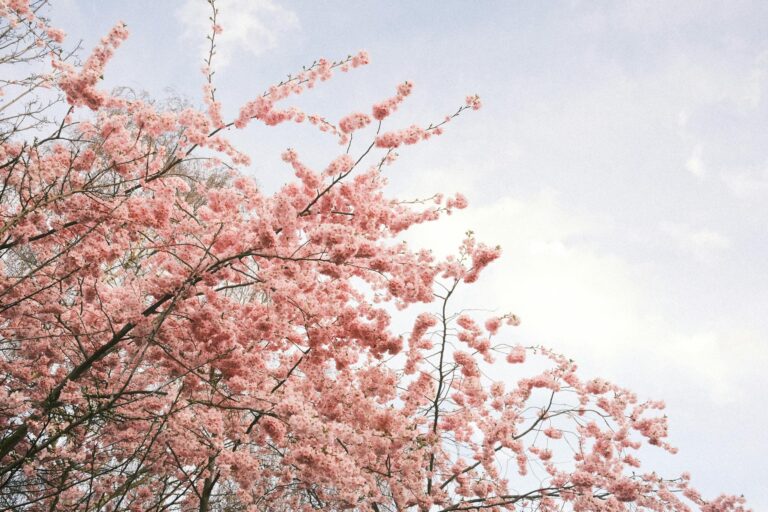
Cherry blossoms — late March into mid-April. The most photographed bloom of the year. Peak usually lands in the last week of March or the first week of April, with the genuinely perfect window often only five to seven days long.
Tulips — March into April. Not native, but planted in big beds at People’s Park and People’s Square in the city center, which makes them an easy add-on between sights.
Azaleas, peony, wisteria, and rose — April into May. The late-spring relay: azaleas in concentrated park displays once the cherry fades, then peony (worth seeking at the Botanical Garden) and wisteria in late April, and rose in May bridging into early summer.
One rule of thumb: a trip anchored on the last week of March gives the best odds of overlapping magnolia, the start of cherry, and city-center tulips at once.
Cherry blossoms: when and where
The cherry blossom is the headline of a Shanghai spring, and it rewards a little planning because the window is short and the crowds are heavy at the obvious spots.
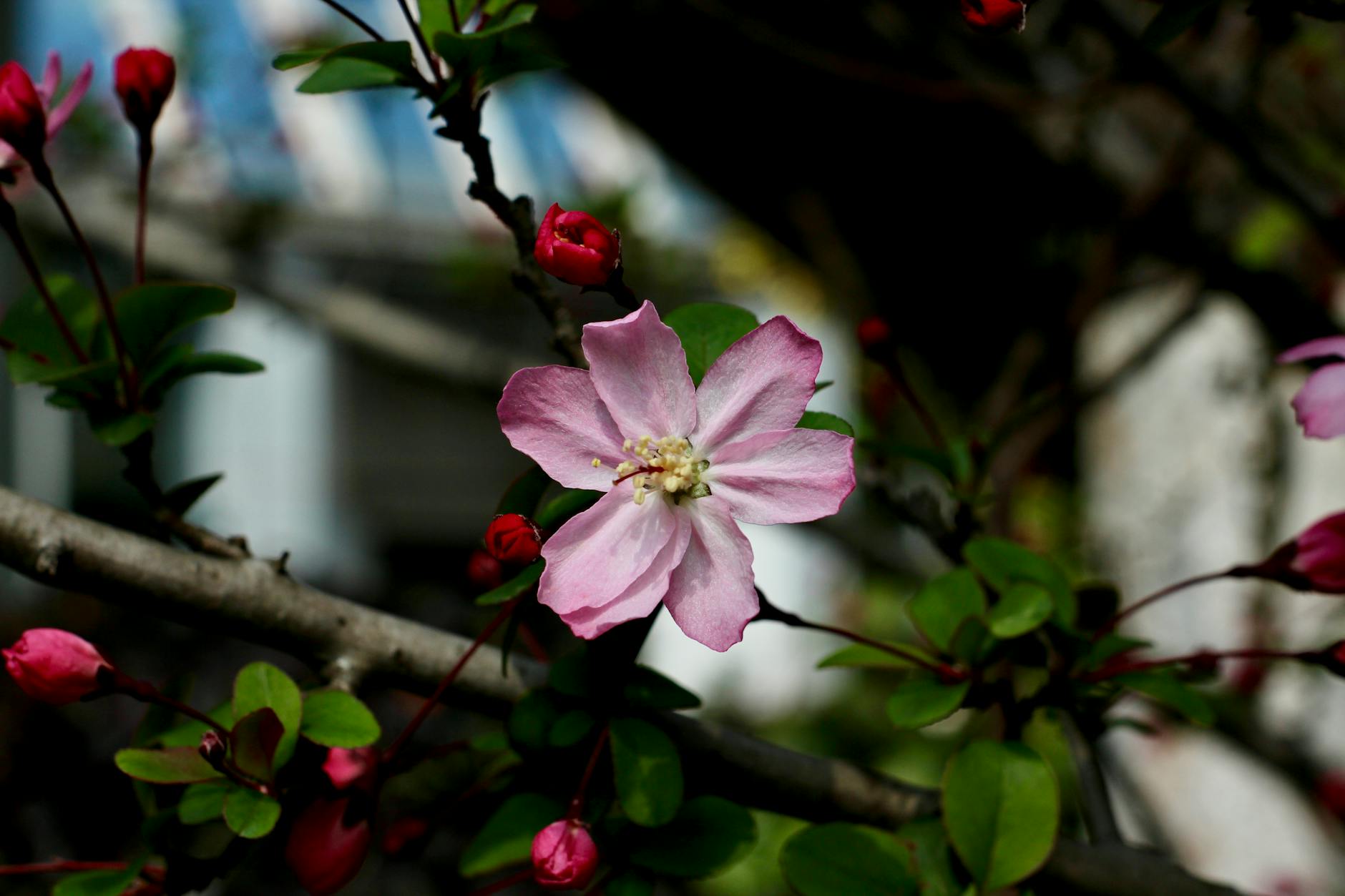
When: First bloom to peak fade runs roughly seven to fourteen days, with peak usually between about March 20 and April 5. Because varieties open at different times — early Kawazu before the main Yoshino wave, weeping cherries alongside it — the broader cherry season stretches from mid-March into mid-April. Outside the true peak you catch some bloom but not the full canopy.
What you are looking at: Mostly pale-pink and white Yoshino cherry — the wave that produces the dense, cotton-like canopies people come for — with weeping varieties mixed in and early Kawazu cherry opening first.
Where: Gucun Park is the headline (covered next). Beyond it, strong viewing turns up at Century Park in Pudong, the Tongji University cherry avenue, Lu Xun Park in Hongkou, Daning Lingshi Park in Putuo, and along the redeveloped riverside. Shanghai Disney also has cherry trees through the park, so a Disney day in season picks up a seasonal layer for free.
Best time of day: Early morning before about 9 AM, or late afternoon after 3 PM — midday light is flat and harsh and the crowds are at their worst. A weekday sunrise at a popular park is a completely different experience from a Saturday afternoon there.
Gucun Park and the Cherry Blossom Festival
If you do one cherry-blossom thing in Shanghai, this is it. Gucun Park, in suburban Baoshan District, holds the city’s largest cherry forest — over 16,000 trees across some 120 varieties on roughly 107 hectares. During the bloom it hosts the Shanghai Cherry Blossom Festival, which in recent years has run from early March into early April and added evening viewing with illuminated trees.
Getting there: Metro Line 7 to Gucun Park Station, then about a fifteen-minute walk. From central Shanghai the ride runs an hour to seventy-five minutes, so build it in as a half-day rather than squeezing it between two other sights — much like a trip out to the Yu Garden and the old city.
Tickets and hours: Normally free, but a modest festival-period admission applies during cherry season — in 2026 it was 20 yuan on weekdays, with discounted night-viewing tickets around 10 yuan. The festival staggers its open gates and lighting to follow the bloom, with early-bloom areas opening first and the peak zones extending into the evening once the main wave hits.
What you get: Long cherry avenues, lakeside blossoms, and traditional pavilions for foreground, plus festival-time food stalls, light installations, and cultural programming — costume shows, performances, and a market that keeps the park busy after dark.
How to do it well: Go on a weekday and arrive early; weekends, Sundays especially, are when the park is fullest. The grounds are large, so wear comfortable shoes, carry water and a snack, and don’t count on a restroom being right where you want one. If your dates only allow a weekend, the evening session is a smart workaround — the after-dark crowd thins compared with weekend midday, and the illuminated trees are their own thing.
Other spring parks and flower spots
Gucun is the destination, but you do not have to ride to the suburbs to get spring color. Several parks and streets nearer the center carry the season well.
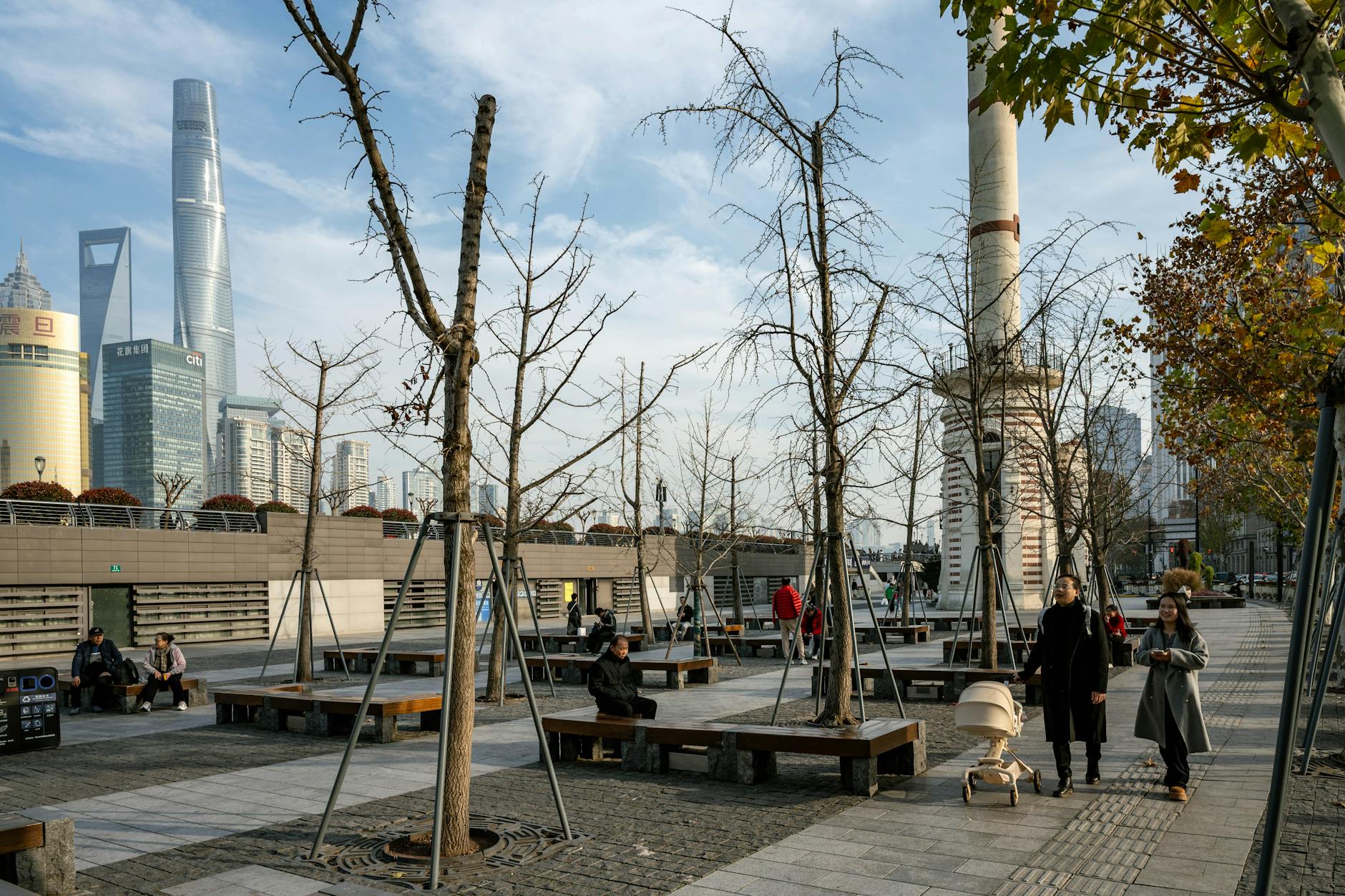
Century Park (Pudong). Pudong’s largest green space and the most convenient serious bloom spot for anyone staying east of the river — Metro Line 2 to Century Park Station. Small entry fee, big lake, walking paths, bike rental, and a spread of cherry, magnolia, and later peony, without crossing the city.
Shanghai Botanical Garden. The most complete collection of spring blooms in one place — cherry and camellia in March, then magnolia, tulip, peony, and orchid through April. If flowers are the trip, this is the one garden that delivers the full sweep.
Lu Xun Park (Hongkou) and Daning Lingshi Park (Putuo) are neighborhood parks — smaller than the headliners, with genuinely good cherry blossoms and a local rather than tourist crowd. Both are popular with locals on weekends, which is exactly why a weekday visit pays off.
People’s Park and People’s Square. Right in the city center, this is where Shanghai plants its big tulip beds in March and April, with white magnolia following — the easiest flowers to fold into a sightseeing day, since you are likely passing through anyway. And the Tongji University campus (Siping Road, Metro Line 10) has a well-known cherry avenue, free to walk, if you want a central alternative to the suburban trip.
Magnolias, plum, and the city’s own flower
Cherry blossoms get the attention, but magnolia is the bloom Shanghai can claim as its own — the white magnolia (yulan) is the official city flower, and the displays here are among the best in the region. Magnolia opens a little before the cherry peak and often overlaps with it, so a late-March visit can catch both.
Where to see magnolia: the Botanical Garden for the fullest collection, Fuxing Park in the former French Concession, and scattered along the Concession’s plane-tree streets, where magnolias bloom against the old villas. Walking those streets as the trees leaf out is one of the quiet pleasures of a Shanghai spring; the French Concession walking tour covers the route.
Plum blossoms come earliest — late February through mid-March — so most spring visitors miss the peak, though a mid-March arrival may catch the last of it overlapping with the first magnolia and earliest cherry.
Yu Garden and the water towns add another layer: the walled Yu Garden holds a few flowering trees in its courtyards, and the canal towns — Zhujiajiao close in, Suzhou and Hangzhou as day trips — pick up peach and pear blossom, a more classically Chinese spring scene than a city park.
Spring weather, month by month
Spring weather changes a lot across the three months, and the biggest thing to plan for is the swing, not the average. Day-to-night differences can reach around 15°C, and a cold front can knock a warm spell back into jacket weather within a day or two. Watch the forecast during your trip and dress in layers you can shed.
March. Average high around 13–14°C, low around 5–6°C. Cool, with genuinely chilly mornings early in the month and milder afternoons later. This is the windiest, most variable stretch of spring — a warm 20°C day and a cold snap can sit in the same week. Expect roughly a dozen days with some rain.
April. Average high around 19–20°C, low around 11°C. The most pleasant month of the three for being outdoors, and the heart of the cherry-then-magnolia-then-tulip overlap. Still about a dozen rainy days, mostly light.
May. Average high around 24°C, low around 16°C. Warm, with some afternoons pushing toward the high twenties or even near 30°C, and rainfall increasing as the month goes on toward the early-summer wet season. The flowers shift to azalea, peony, wisteria, and rose.
Humidity sits around seventy percent through the season, and UV climbs even on days that don’t feel hot, so sun protection matters by April. For the full year side by side, see the Shanghai weather month-by-month guide; if you are weighing a later trip, visiting Shanghai in summer covers what changes once the heat and humidity arrive.
What to pack for a Shanghai spring
The whole packing problem in spring is the temperature swing, so the answer is layers, not any one warm or light item.
- A light, wind-resistant outer layer — a windbreaker or packable jacket. March in particular can be breezy, and it doubles as light rain protection.
- A mid-layer — a thin sweater or shirt you can put on for chilly mornings and evenings and take off by midday.
- T-shirts or long-sleeve tops as a base layer; by late April and May these are often all you need in the warm part of the day.
- Comfortable walking shoes. Shanghai is a walking city and the parks are large — ordinary sneakers are right, nothing heavy.
- A compact umbrella. The single most useful thing in a spring bag. Showers come on quickly and pass.
- Sunglasses and sunscreen. The spring sun strengthens through the season; April and May sun is no joke.
- Allergy medication if you react to pollen — plane-tree pollen in particular gets intense in late spring, and a mask helps on bad days.
- A power bank. You will shoot a lot of photos, and your phone is also your wallet and your map.
Day-to-day life in Shanghai runs on mobile payment, so set that up before you go — the broader Shanghai practical tips hub covers payments, connectivity, and the rest of the on-the-ground logistics.
What else to do in Shanghai in spring
Cherry blossoms draw a lot of people to spring, but the season suits plenty that has nothing to do with flowers.
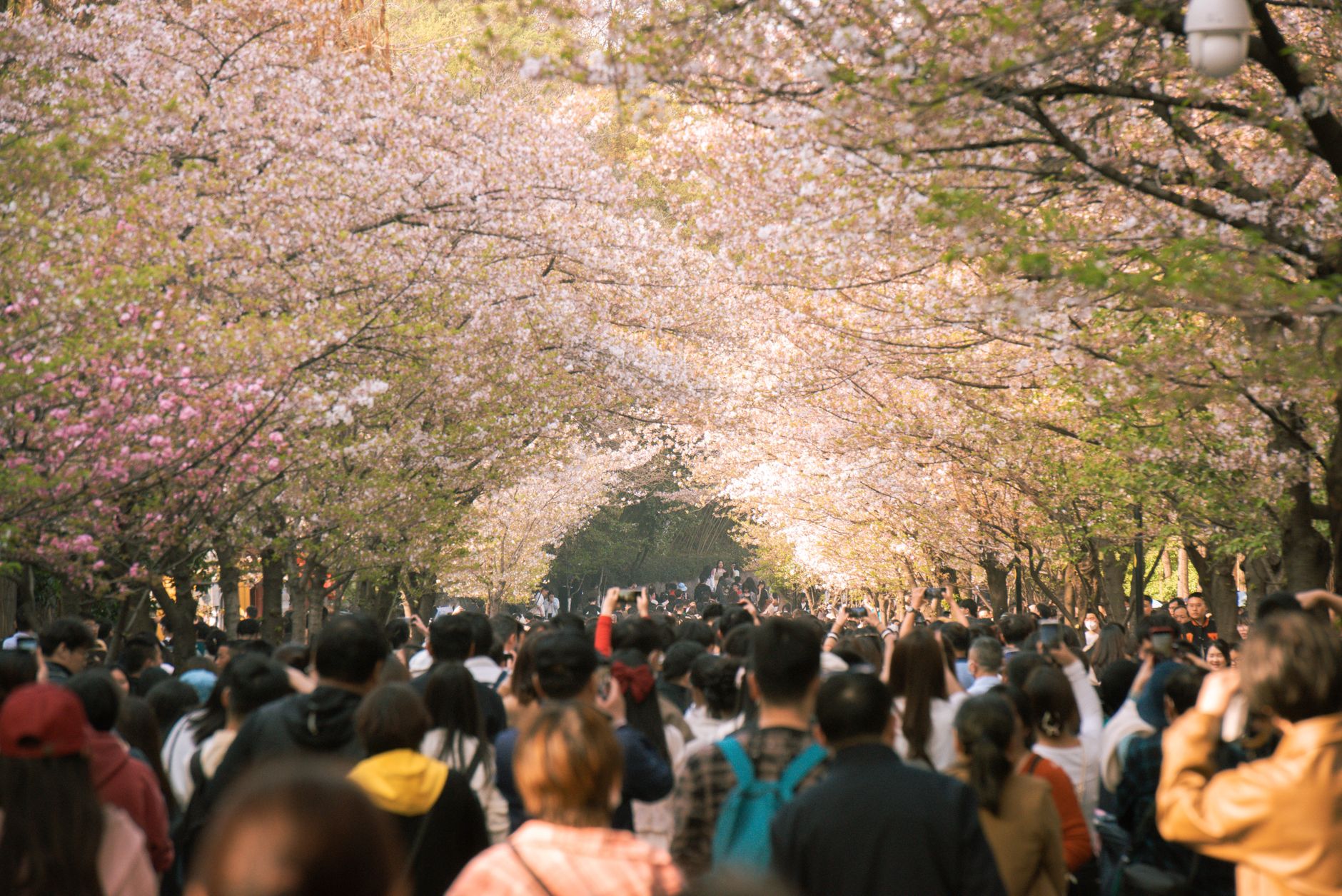
Walk the Bund at sunset. Spring’s clear evenings give the sharpest views of the Pudong skyline all year, and the light shifting from gold to lit towers is the postcard — cool but not cold, exactly when a riverside walk is most comfortable.
Wander the French Concession. As the plane trees leaf out, the villa-lined streets — Wukang, Anfu, Wuyuan — feel renewed. This is the season for unhurried morning coffee and street-by-street wandering.
Take a water-town or city day trip. Zhujiajiao is the easy one close to town; Suzhou and Hangzhou are the bigger trips. Spring suits all of them — Hangzhou’s West Lake is at its best, and the early-April Longjing tea harvest near Hangzhou means some day trips can include tea-picking. The Hangzhou day trip guide has the details.
Spend a day at Shanghai Disney. Spring temperatures are about ideal for a full day on your feet, and the cherry trees planted through the park add a seasonal touch — mild beats both the summer heat and the winter chill for a theme-park day. Our tips for skipping the longest queues cover when to arrive and which rides to hit first.
Eat and drink outside. Restaurants reopen terraces and rooftop bars, and an evening Huangpu River cruise pairs the skyline with a comfortable temperature — after the indoor months of winter, the whole city moves back outdoors.
Crowds, holidays, and timing
For most of spring, crowds are not the problem they are in summer or the October peak. Two stretches need planning around, plus the weekly rhythm.
The May Day holiday (May 1–5) is the big one. Domestic travel surges, popular sights jam up, and hotel prices spike. If your dates are flexible, avoid this window; if not, book far ahead and accept the marquee spots will be busy. Early May after the 5th is back to normal.
Qingming (Tomb-Sweeping) in early April is a shorter public holiday — typically a few days around April 4–5 — that also lifts domestic travel and overlaps the cherry peak, so popular parks feel fuller then.
The weekly pattern matters more than people expect. Even outside holidays, blossom spots, Yu Garden, and Disney are markedly busier on weekends — a weekday morning at a popular park can be calm while the same place on Saturday afternoon is shoulder-to-shoulder. Align your blossom days with weekdays if you can, and book accommodation early for late March and early April, since cherry season lifts hotel demand even before the holidays hit.
A five-day spring itinerary
Here is one way to put a spring trip together — built to land the cherry blossoms on a weekday morning and spread the rest of the city around them. Slide the days so your Gucun morning avoids the weekend.
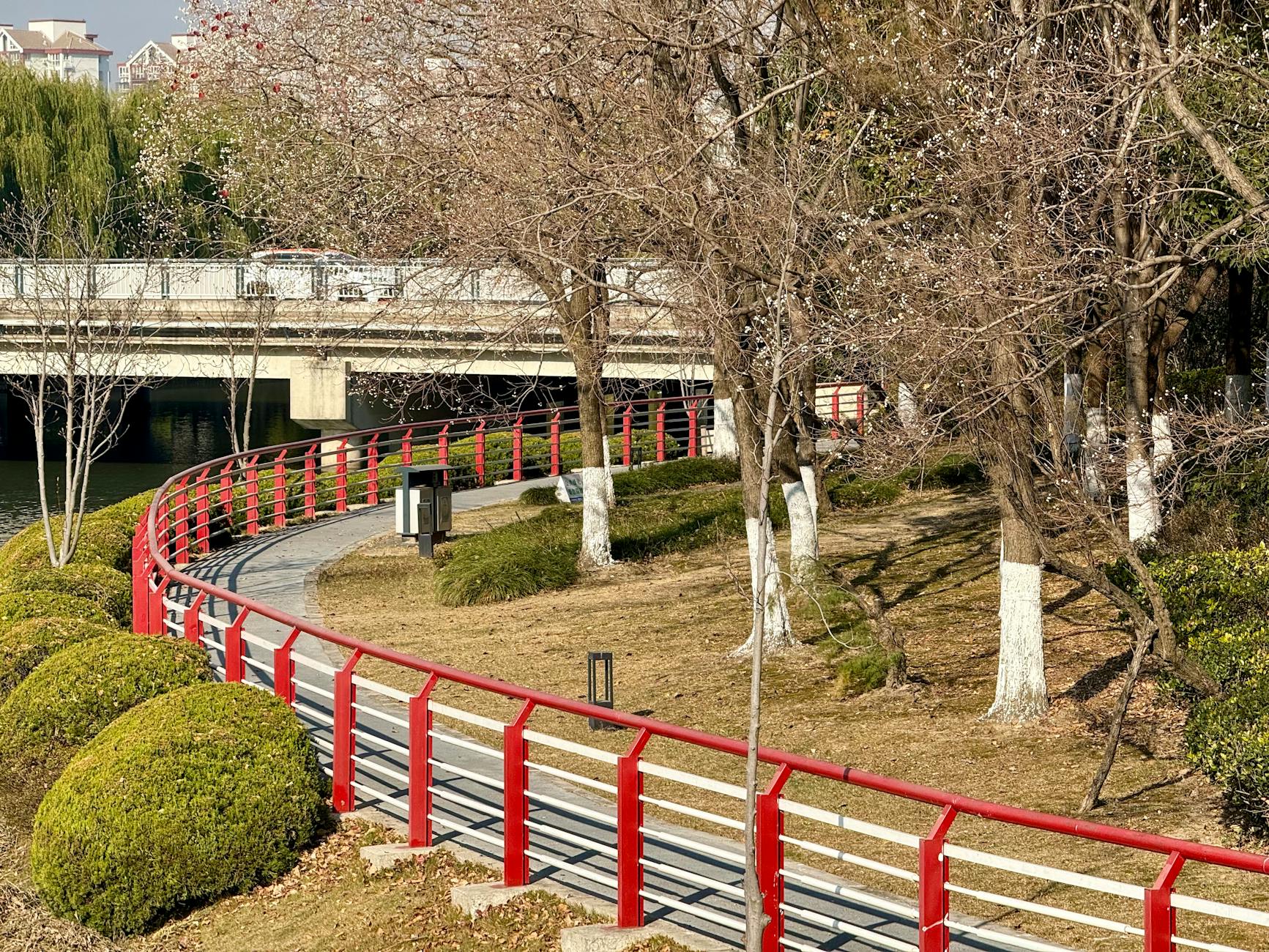
Day 1 — Arrival and the Bund. Settle in, walk the Bund at sunset for the clear-evening skyline, dinner at a local benbang (Shanghainese) restaurant, early night for the jet lag.
Day 2 — Old city, Bund, Pudong. Yu Garden and the surrounding bazaar in the morning, the Bund waterfront, then across to Pudong for an observation deck — the classic skyline from both banks.
Day 3 — French Concession and central blooms. A slow morning walking Wukang Road as the plane trees leaf out, then the Tongji cherry avenue or Lu Xun Park in the afternoon for blossoms without a long ride, plus the People’s Park tulips if you pass through the center.
Day 4 — Gucun Park (weekday). The marquee morning: out to Gucun on Line 7 early, before the crowds, for the cherry forest at its best. Back in the city after, or pair it with the Botanical Garden for a second dose of flowers.
Day 5 — A water-town or Hangzhou day trip. Zhujiajiao for a short canal-town day, or Suzhou or Hangzhou for the bigger trip, with peach and pear blossom along the way, then back to Shanghai for a last dinner.
That is a comfortable five days; with three, drop the day trip and one bloom stop. For fuller day-by-day plans at different lengths, the Shanghai itineraries hub has them, and the 5-day Shanghai itinerary maps out a similar trip in detail.
Pros and cons of a spring visit
In favor: mild temperatures for walking and sightseeing; the clearest air and best photography light of the year; the cherry-blossom season and a full relay of other flowers; lower humidity than summer; and, outside the two holidays, lighter crowds than the peak seasons.
Against: frequent light rain and high humidity keep an umbrella in your bag; the temperature swings demand layering; the best cherry-blossom window is short and its timing varies year to year, so there is some luck involved; and the May Day and Qingming holidays bring real crowds and higher prices, with May warmer and wetter as it heads toward the rainy season. On balance the negatives are manageable with planning, which is why spring keeps topping the list.
Practical spring tips
- Watch the bloom forecast. Cherry timing moves with the weather — check a current-year forecast in early March and leave a little flexibility in your park days to chase the peak.
- Blossoms reward weekday mornings. The single highest-value habit of a spring trip; a weekday sunrise at a popular park is a different world from a weekend afternoon.
- Carry the umbrella every day. Spring showers arrive fast and pass fast, so a compact umbrella means a sudden shower never changes your plans.
- Layer for the swing. Chilly mornings and warm afternoons can land on the same day; pack to add and shed a layer.
- Prepare for pollen. Plane-tree pollen peaks in late spring; if you are sensitive, bring antihistamines and a mask.
- Book ahead for cherry season. Hotel demand rises for late March and early April even before the holidays — reserve four to six weeks out.
- Dodge the holiday peaks. Keep May 1–5 and the early-April Qingming days off your busiest plans if you can.
- Set up mobile payments before you arrive. Daily life runs on QR-code payment; the practical-tips hub covers getting that working.
Frequently asked questions
When do cherry blossoms peak in Shanghai?
Usually late March to early April, with the genuine peak often lasting only five to seven days. Timing shifts about a week earlier or later from year to year depending on the winter, so check a current-year forecast in early March if the bloom is the point of your trip.
Is Gucun Park worth the trip?
Yes, especially during the Cherry Blossom Festival. With over 16,000 trees across some 120 varieties, it is the largest cherry display in the city, and the festival adds evening viewing, food stalls, and cultural programming. Go on a weekday morning to enjoy it without the worst crowds.
How do I get to Gucun Park from central Shanghai?
Take Metro Line 7 to Gucun Park Station, then walk about fifteen minutes. From the center the ride runs roughly an hour to seventy-five minutes, so plan it as a half-day rather than a quick hop.
Can I see cherry blossoms outside late March and early April?
Some, yes. Early-blooming Kawazu cherries open before the main Yoshino wave and weeping varieties run alongside it, so the broader cherry season stretches from mid-March into mid-April. Outside the true peak you will catch partial bloom rather than the full canopy.
Is Shanghai too crowded in spring?
Generally no. The exceptions are the May Day holiday (May 1–5) and the early-April Qingming break, when domestic travel surges, plus weekend afternoons at the marquee blossom spots. Weekdays outside the holidays are comfortable.
What is the best month for a spring visit?
April is the sweet spot for weather and overlaps the cherry, magnolia, and tulip displays. Late March is the target if cherry blossoms specifically are the priority. May is warmer and wetter, with the flowers shifting to azalea, peony, and rose.
What should I pack for Shanghai in spring?
Layers built around the day-to-night swing: a light windbreaker, a thin mid-layer, T-shirts as a base, comfortable walking shoes, a compact umbrella, and sun protection. Add allergy medication if you react to pollen and a power bank for all the photos. Hotel prices, worth noting, run slightly higher during the late-March-to-early-April cherry peak and significantly higher over the May Day holiday, so book that window four to six weeks ahead.
Should I visit Beijing or Shanghai in spring?
Both work well in spring. Shanghai gives you cherry blossoms, the Bund, and the water towns; Beijing offers the Forbidden City and the Great Wall in mild weather. Many travelers combine the two, since the high-speed rail link makes it straightforward.
Plan your spring visit
Put together, a spring trip works like this: aim for late March to mid-April if cherry blossoms are the draw, treat Gucun Park as the headline stop, visit blossom spots on weekday mornings, pack for a city that swings between chilly mornings and warm afternoons, and keep the May Day and Qingming holidays off your busiest days. Do that and you get Shanghai at close to its best — clear light, comfortable walking, and a steady relay of flowers from plum through rose.
To see how spring compares with the rest of the year, start with the pillar guide on the best time to visit Shanghai. For the climate detail, the Shanghai weather month-by-month guide breaks it down, and the Shanghai itineraries hub turns it into a plan.
For official background on the Gucun Park festival and dates, see the Shanghai Municipal Government’s events portal.