Visiting Shanghai in summer means committing to heat, humidity, and the occasional storm — and getting long days, cheap late-night street food, festivals, and softer hotel rates in return. From June through early September the city turns hot and sticky, with mid-July through August regularly pushing past 35°C and humidity that can make it feel closer to 40°C. It is the season most travel guides quietly tell you to skip. They are not wrong about the discomfort, but they undersell what a well-planned summer trip actually delivers: rooftop bars, ice-cold xiaolongbao, water towns cooled by their own canals, and a Bund that only really comes alive once the sun is down. This 2026 guide lays out exactly what the weather does month by month, how locals get through it, and how to build days that work around the heat instead of fighting it.
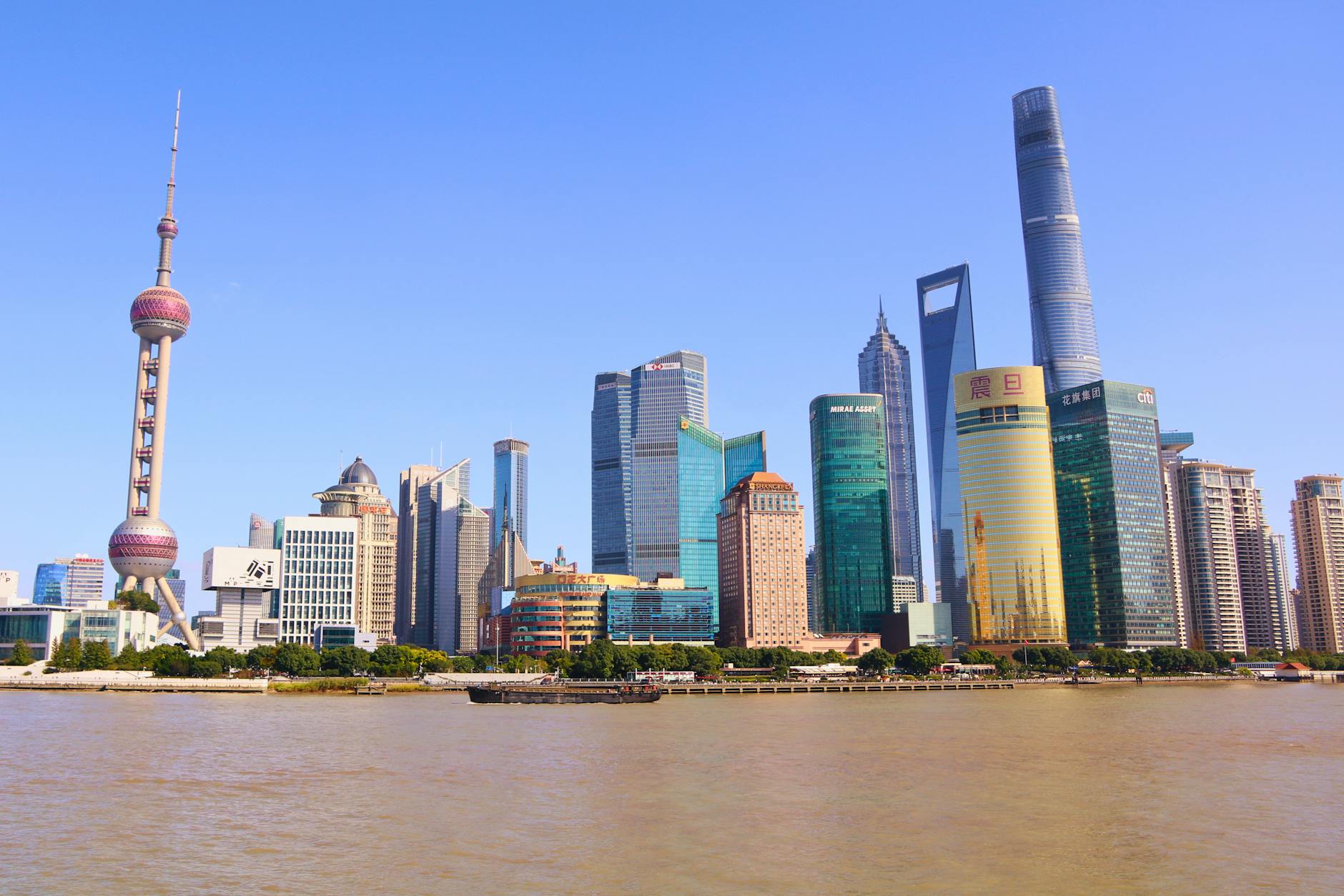
Table of Contents
- Shanghai Summer Weather, Month by Month
- How Hot and Humid Does It Really Get?
- Pros and Cons of a Summer Visit
- Best Things to Do in Summer
- After Dark: Evenings, Night Markets and the Bund
- How to Beat the Heat Like a Local
- Plum Rains, Typhoons and Storm Season
- Summer Festivals and Events
- What to Pack for a Shanghai Summer
- Day Trips That Actually Work in Summer
- Summer Trips with Kids
- Prices, Crowds and Booking Ahead
- A Sample Heat-Friendly Summer Itinerary
- Frequently Asked Questions
Shanghai Summer Weather, Month by Month
Shanghai sits at roughly the same latitude as New Orleans, and its summer behaves a bit like the American Gulf Coast: humid, prone to sudden downpours, and increasingly defined by tropical storms as the season wears on. Summer runs from June through early September, and each month has its own personality. If you only remember one thing, make it this: the calendar matters more here than in almost any other season, because early June and late August are very different trips.
June: The Plum Rains Arrive
June marks the start of the East Asian plum rain season — méiyǔ (梅雨), named for the plums that ripen as the front stalls over the Yangtze Delta in mid-June. Daily highs sit around 28–32°C, humidity hovers near saturation, and you can expect somewhere in the region of 14–18 rainy days, which makes June one of the wettest months of the year. The rain is rarely an all-day affair; it tends to come in waves, with muggy bright spells in between. The upside is that early June, before the front settles in, is genuinely one of the better windows of the whole summer: temperatures and crowds have not yet peaked, and leafy parks and indoor museums are comfortable. The downside is that outdoor plans become unreliable, so build in flexibility.
July: The Hottest Stretch
July is the hottest month, full stop. Highs average around 32°C, but peaks above 36°C are common and the heat index regularly climbs past 40°C once humidity is factored in. The plum rains usually taper off in the middle of the month; the second half of July is hotter and drier, with sticky, soup-like air that locals deal with by shifting their lives to the cooler edges of the day — out early before 9 or 10 in the morning, indoors through the worst of the afternoon, and back outside after dark. Typhoon activity also begins to pick up from late July onward. This is the month the discomfort is most real, and the month that rewards good planning the most.
August: Heat Plus Storm Risk
August matches July for raw heat — highs typically land in the 31–35°C range — but adds the peak of typhoon season on top. Where June and July rain comes mostly from the plum front and afternoon thunderstorms, August rain is increasingly driven by tropical systems spinning up the coast, and rainy days become more frequent as the month goes on. August also overlaps with Chinese school summer holidays, so domestic travel is heavy and prices stay firm. The trade-off is that the late-summer city is fully switched on: festivals, beer gardens, and a packed events calendar.
Early September: The Quiet Reward
The first half of September is technically late summer sliding into early autumn, and it is one of the most pleasant times to visit the whole year. Highs ease back toward 28–32°C and, more importantly, the humidity finally starts to drop, so the same temperature feels noticeably more bearable than it did in July. Crowds thin out once schools go back. If your dates are flexible and you want summer light without summer misery, aim for early September. For the other comfortable shoulder season, see our guide to Shanghai in spring, and for a full breakdown of every month, our month-by-month Shanghai weather guide.
Visiting Shanghai in Summer: How Hot and Humid Does It Really Get?
Numbers only tell half the story, so here is the honest version. In July and August, daytime highs commonly reach 33–37°C, and the city sees a string of days each summer where the thermometer tops 35°C; in the worst heatwaves it can flirt with 40°C. Humidity is the real problem, though. It rarely drops below about 70 percent through the core summer months and averages somewhere around 75 percent, which is why the heat feels heavier than the raw temperature suggests. Walk a few blocks at midday in late July and your shirt will stick to your back before you reach the next intersection.
Nights bring only partial relief. Overnight lows stay warm, often around 26–29°C, so there is no real cooling-off until autumn. The practical takeaway is that air conditioning is not a luxury here, it is the structure your day is built around — in the metro, in malls, in restaurants, and in your hotel. The good news is that Shanghai is one of the easiest big cities anywhere to move through in heat, precisely because so much of it is climate-controlled and well connected underground.
Pros and Cons of a Summer Visit
Plenty of people have a great time in Shanghai in July and August. Plenty of others wish they had come in October. Here is the balanced case for both, so you can decide with your eyes open.
The pros:
- Long daylight. Sunset lands around 19:00–19:30 in midsummer, giving you more usable sightseeing hours once the worst heat passes.
- A packed events calendar. Summer is festival season — the Shanghai International Film Festival (June), Shanghai Pride (June), the International Beer Festival (August), plus a long roster of concerts and city-run summer programming.
- Softer hotel rates in the shoulders. Late June and the back half of August often see better deals than the spring and autumn peaks, outside the domestic holiday crush.
- Parks at their greenest. Yu Garden, Century Park, Fuxing Park and Gucun are lush and shaded after weeks of rain.
- Fruit season. Lychee, peach and watermelon flood the markets; cold watermelon by the slice is a genuine summer ritual.
- Heat-managed travel is easy. Air-conditioned malls, museums and metro stations let you string together a comfortable day without ever overheating for long.
The cons:
- Midday outdoors is rough. Roughly 11:00–16:00, walking-heavy sightseeing in full sun is genuinely uncomfortable and, in a heatwave, a real health consideration.
- Plum rains disrupt June. Flooded streets and washed-out afternoons come with the territory in the first half of the season.
- Typhoons can scramble plans. Mid-July through mid-September, a passing storm can cancel flights, ferries and outdoor attractions on short notice.
- Domestic crowds peak. Late July through early August, school holidays push attendance and prices up at the headline sights.
Best Things to Do in Summer
The single most useful habit for a Shanghai summer is to split your day in three: outdoor activities early, indoor activities through the midday peak, and outdoor again in the evening. Build your itinerary around that rhythm and the heat stops being the main character.
Mornings (roughly 7:00–10:00)
This is your window for anything outdoors and crowd-sensitive. Walk the Bund before the tour groups arrive, when the river breeze is at its best and the light is soft. Reach Yu Garden close to opening to beat both the heat and the queues. Jog or stroll in Fuxing Park or Century Park, where the tree cover holds the morning cool. An early Huangpu River cruise is far more comfortable now than at midday.
Midday (roughly 10:00–16:00)
This is for air conditioning, and Shanghai has world-beating options for hiding from the sun productively. Shanghai Museum East in Pudong holds the Shanghai Museum’s enormous collection of bronzes, ceramics and calligraphy and is a cool, easy place to lose two hours. The Power Station of Art, a converted power plant on the river, pairs serious contemporary art with vast cool halls. For something flashier, the Shanghai Tower observation deck delivers city-wide views from inside the air conditioning, while malls like K11 and IFC, the Madame Tussauds wax museum, and the city’s aquariums all double as heat shelters. This is also the time for a long, unhurried lunch in a cool restaurant — see our guide to the best restaurants in Shanghai for ideas.
A note on the water towns
The canal towns around Shanghai are surprisingly good summer trips precisely because the water moderates the heat. Zhujiajiao, with around 1,700 years of history, is the easiest to reach, and a covered black-awning boat through its canals keeps you out of the direct sun. If you have more time and want fewer crowds, the towns of Tongli and Nanxun are quieter and less commercial. More on these below in the day trips section.
After Dark: Evenings, Night Markets and the Bund
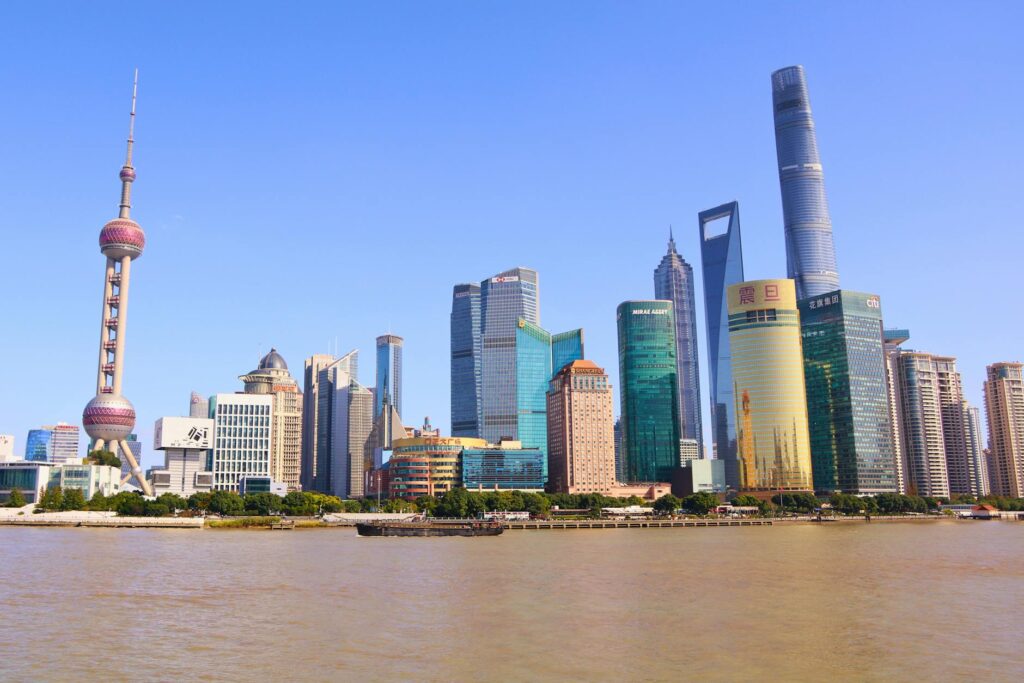
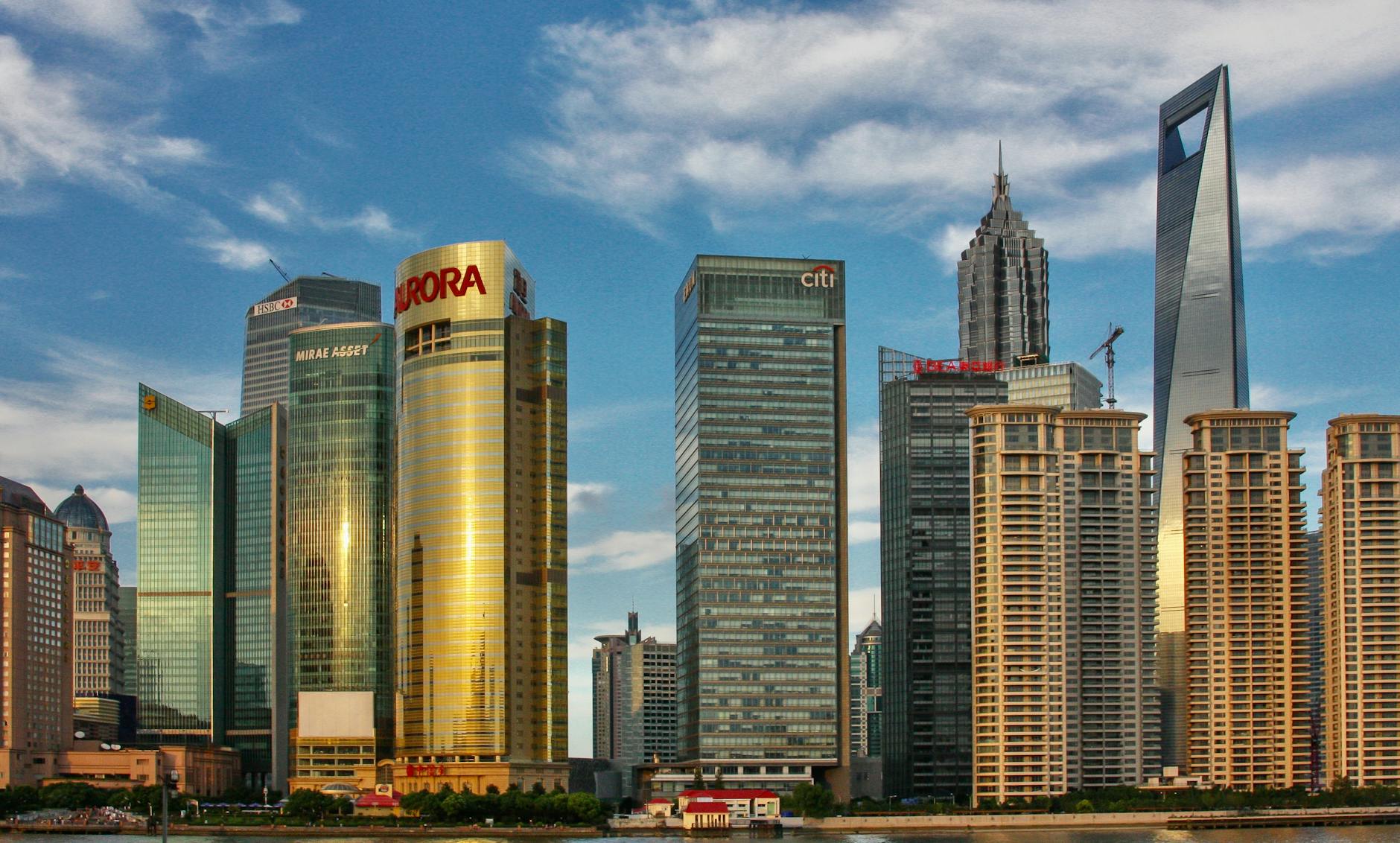
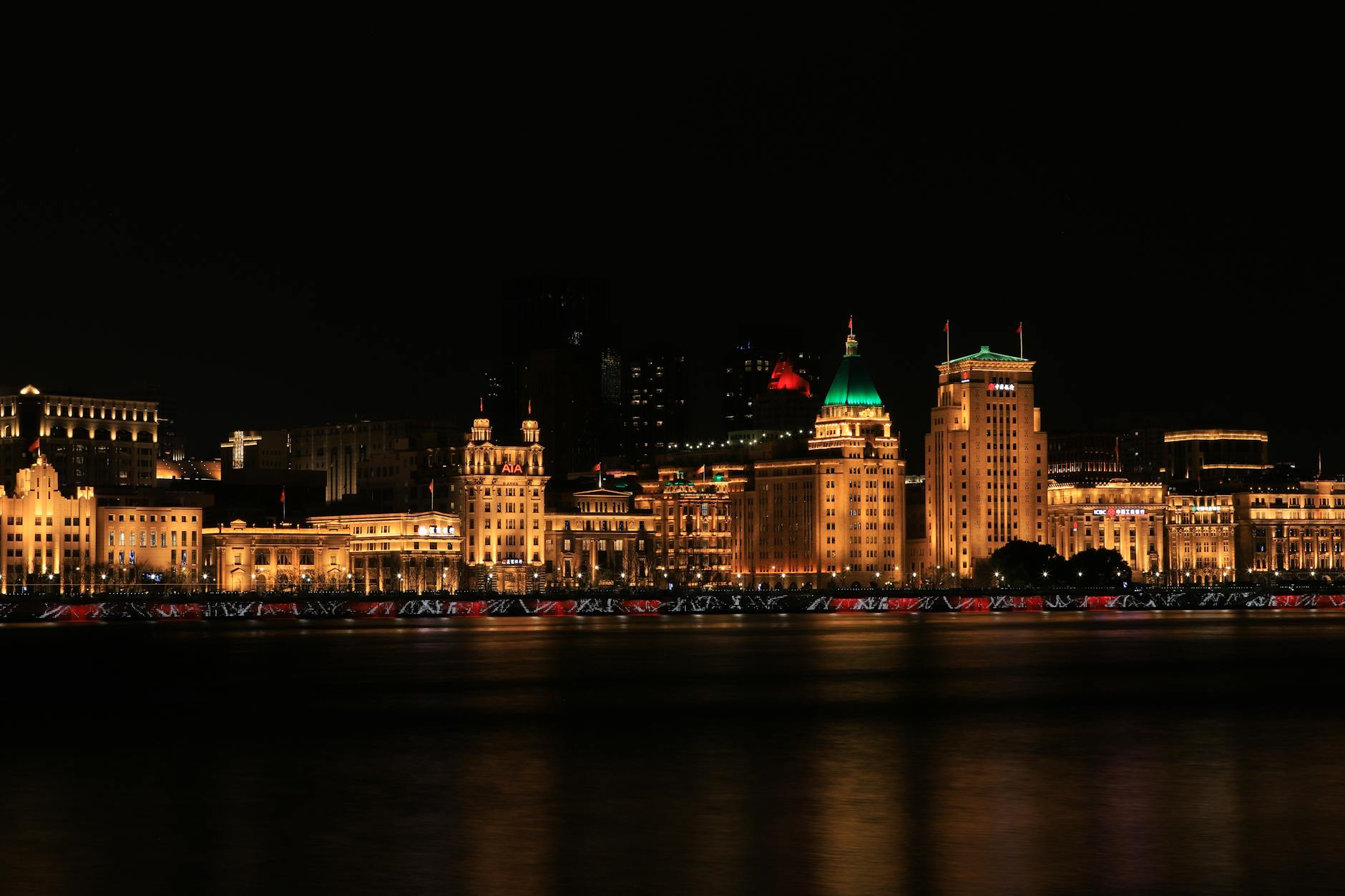
If there is a best time to be outside in a Shanghai summer, it is after about 19:00, when the temperature finally eases and the city’s night life takes over. The Bund promenade is the obvious headline — the skyline across the river lights up in the evening and a cooling breeze comes off the water, which is exactly why it draws a crowd. If you want the same view with more room to breathe, the elevated decks around the North Bund are a calmer alternative to the main waterfront.
This is also rooftop-bar territory. Long-running names like Flair, Sir Elly’s and VUE trade on skyline views and a breeze you will not get at street level. For a more low-key evening, the outdoor cafe terraces of Xintiandi and the lanes of the former French Concession are made for slow dinners once the sun is down. And then there are the night markets, where the heat of the day finally turns into an asset: cold beer, grilled skewers, shaved ice and the kind of street-food grazing that only makes sense after dark. Eating late is not just pleasant in a Shanghai summer, it is the sensible way to do it.
How to Beat the Heat Like a Local
Shanghainese have a whole playbook for surviving July and August. Borrow it.
- Live on the metro. Every line is air-conditioned and links most major sights in 5–25 minutes. Treat stations as free cooling-off points between outdoor stops.
- Hydrate relentlessly. Chilled bottled water costs around ¥3 at any convenience store, and they are on practically every corner. Tap water is not drinkable, so keep buying or refill from filtered sources.
- Carry a fan. A folding hand fan or a small USB fan is standard kit here, not a novelty.
- Dress for it. Light, loose linen or cotton breathes; synthetic fabrics cling and trap heat. Pale colours help.
- Take sun seriously. The UV index regularly tops 9. SPF 50 sunscreen, sunglasses and a wide-brim hat are not optional in midsummer.
- Schedule AC breaks. Plan to step into a cafe, mall or museum roughly every 90 minutes you spend outdoors.
- Eat cold. Lean into the local cooling foods — red bean ice (红豆冰), shaved ice, cold noodles (冷面), mung bean soup and endless watermelon.
- Avoid 12:00–16:00 in the open. This is the peak heat-danger window. Make it your museum-and-lunch block, every day.
Plum Rains, Typhoons and Storm Season
Two distinct weather stories define a Shanghai summer, and it helps to keep them separate.
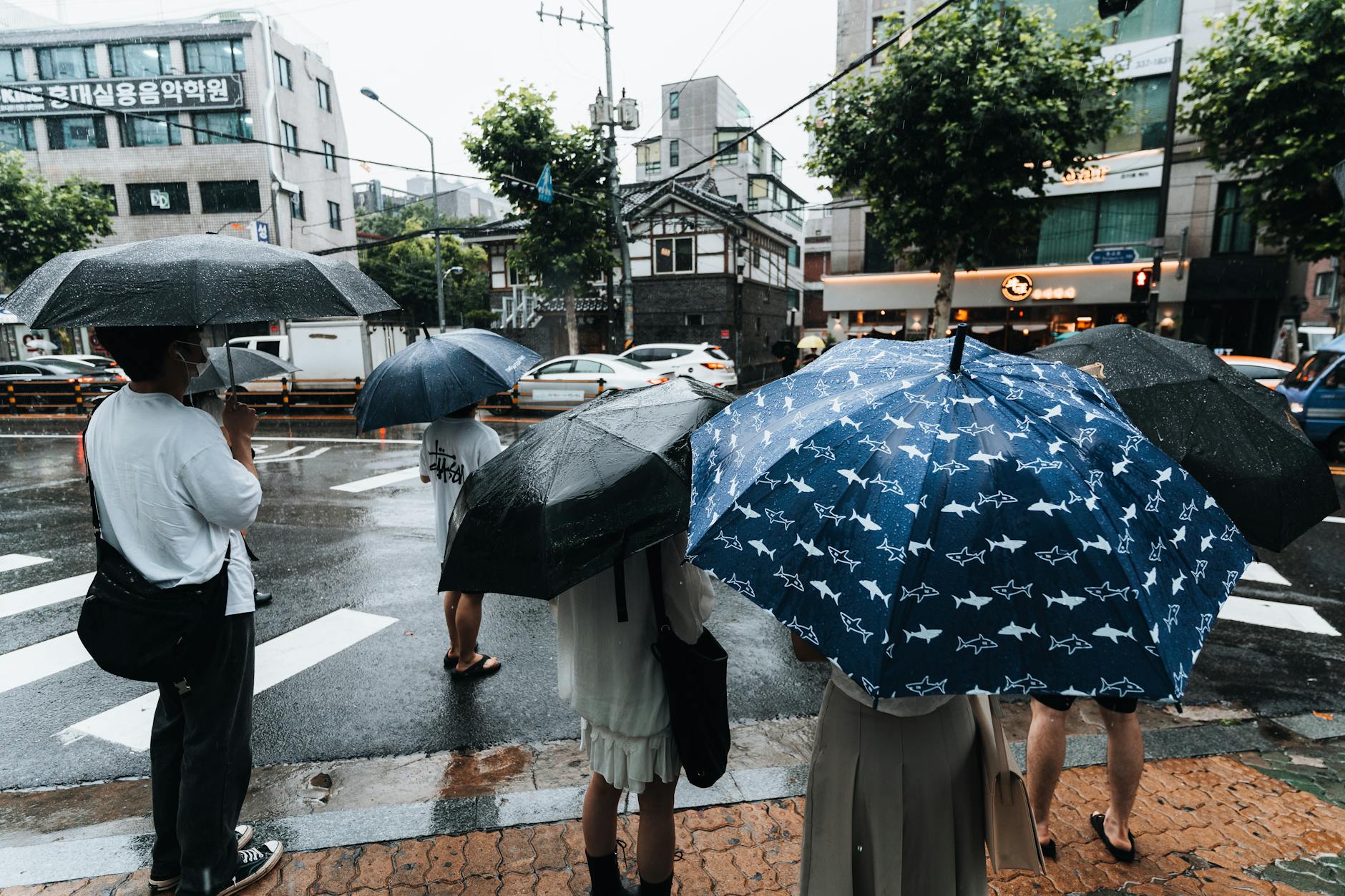
The first is the plum rains of June and early July, the stalled front that brings the season’s wettest, muggiest stretch. This is steady, soaking rain rather than dangerous weather; the main effect on a trip is disruption to outdoor plans, so carry an umbrella and keep an indoor backup for each day.
The second is typhoon season, which runs roughly from June into October and peaks from mid-July through mid-September. Shanghai sees an average of one to two typhoons make landfall nearby or pass close each year. The reassuring part is that most are downgraded by the time they reach the city, bringing strong wind and very heavy rain rather than catastrophic damage — though storm surge can cause localised flooding downtown. When a storm is on the way:
- Flights and ferries can be cancelled with around 24 hours’ notice, so watch the forecast if you have travel days near a system.
- Outdoor attractions — Shanghai Disneyland, parks, river cruises — close temporarily during the worst of it.
- Stay indoors during peak winds. Crucially, the metro keeps running, so the city does not grind to a halt.
- Travel insurance with weather coverage is strongly worth having for a midsummer trip.
For local forecasting and typhoon tracking, download a reliable Chinese weather app such as Caiyun Weather before you arrive; it gives far better minute-by-minute and storm-track detail than most international apps.
Summer Festivals and Events
One of the strongest arguments for a summer visit is the sheer density of things happening. The city leans into summer with a long programme of culture, sport, music and food running across the season. Recurring highlights include the Shanghai International Film Festival in June, one of Asia’s major film events; Shanghai Pride in June; and the International Beer Festival in August, when beer gardens and outdoor events take over once the sun is down.
On top of the regular fixtures, Shanghai now runs a season-long summer consumption and events programme that typically stretches from July through October and bundles together sport, museum exhibitions, live music, retail pop-ups and family entertainment. Marquee sporting events have included the Rolex Shanghai Masters, the only ATP Masters 1000 tournament in Asia, which brings many of the world’s top players to the city. Because the exact line-up, dates and venues shift year to year, check the current schedule close to your trip rather than relying on last season’s programme — but you can safely assume there will be far more on than you have time for.
What to Pack for a Shanghai Summer
Pack for heat, humidity and sudden rain, and pack light — you will be doing laundry. Essentials:
- A compact folding umbrella. The single most-used item. If you forget one, every convenience store sells them cheaply. A poncho or sturdier umbrella is worth it in storm season, since typhoon gusts wreck flimsy ones.
- Quick-dry footwear. Breathable sneakers or sandals that handle a sudden downpour without staying soggy.
- Light, loose clothing. Two or three changes of linen or cotton per week — you will sweat through one or two sets a day in July.
- A light layer. A thin cardigan or scarf for aggressively air-conditioned restaurants and metro cars, where the contrast with the street can be jarring.
- Sun protection. SPF 50 sunscreen, sunglasses and a wide-brim hat.
- Mosquito repellent. Useful in parks and the water towns.
- A reusable water bottle. Refill at the hotel or airport to cut down on constant purchases.
- Modest swimwear. For hotel pools or the water park at Shanghai Disneyland.
- Anti-chafe balm or powder. Genuinely appreciated if you walk a lot in the humidity.
- A power bank. Phone batteries drain faster in extreme heat, and you will lean on maps and translation apps all day.
Day Trips That Actually Work in Summer
Not every excursion survives a 36°C afternoon, but a few are actually better in summer because they come with built-in shade or water. These are the ones to prioritise. The other move is to leave the heat behind altogether: Moganshan, Shanghai’s old hill station, runs 5–8°C cooler than the city and was built for exactly this problem.
Hangzhou and West Lake. A high-speed train gets you to Hangzhou in under an hour, and West Lake stays walkable under its tea-house and willow shade even in the heat. Go early, stick to the shaded causeways, and break for a long lunch indoors. Our full Hangzhou day trip guide covers timings and routes; for the wider range of options, see the day trips from Shanghai hub.
The canal water towns. Zhujiajiao is the closest and easiest, and a covered boat through its 1,700-year-old canals keeps the sun off you. For fewer crowds, Tongli and Nanxun are quieter alternatives. Mornings are best before the day-trip buses arrive.
What to skip at midday. Long, exposed, walking-heavy excursions with little shade are the ones to avoid in the worst heat — or to start at dawn and wrap up before lunch. Save the open-air sights for early morning and keep the afternoons cool.
Summer Trips with Kids
Summer in Shanghai works well with children as long as you mix indoor air-conditioned attractions with early outdoor activity and accept a slower pace. Strong picks include Shanghai Disneyland (arrive at opening for the outdoor rides, then retreat to the air-conditioned hotel through the afternoon), the city’s aquariums, the Shanghai Museum of Glass, and the Madame Tussauds wax museum. Evening is the time for things like rooftop ferris wheels and night-market grazing, once the temperature drops. The one thing to avoid is a midday visit to a low-shade, stone-paved sight like Yu Garden, which radiates heat. For full family planning, see our Shanghai with kids guide.
Prices, Crowds and Booking Ahead
Summer pricing in Shanghai is driven less by foreign tourism than by the domestic calendar. Hotel rates peak in late July and early August, when Chinese school summer holidays are in full swing; expect premiums in the region of 25–40 percent over quieter dates. Late June and the second half of August tend to be softer. International airfares into Shanghai also climb toward late July, so if you are flying in for a July trip, booking a couple of months ahead pays off.
Crowds follow the same pattern. The headline sights — Shanghai Tower, the Bund, Disneyland — can see substantially more visitors in late July and August than in spring or autumn, and timed-entry slots fill earlier. Book entry tickets several days in advance, favour mid-week over weekends, and arrive before 9am wherever you can; the difference in queue length and comfort is dramatic. If your goal is to dodge both the heat and the crowds entirely, the broader picture lives in our best time to visit Shanghai pillar.
A Sample Heat-Friendly Summer Itinerary
Here is how the three-part daily rhythm looks stitched into a four-day trip designed around the heat rather than against it.
Day 1 — Arrival and the Bund after dark. Settle in and rest through the afternoon heat. Head out for a late-afternoon Bund stroll once the worst of the sun eases, around 17:00. Dinner at an air-conditioned restaurant on or near the waterfront, then drinks at a rooftop bar to watch the skyline light up.
Day 2 — Garden early, museum at midday, river by night. Reach Yu Garden close to opening, before the heat and crowds build. Long lunch somewhere cool, then the Shanghai Museum through the worst of the afternoon. Finish with an evening rooftop bar or a Huangpu River cruise.
Day 3 — Hangzhou day trip. Take an early high-speed train to Hangzhou and walk the shaded causeways of West Lake before the heat peaks, with an indoor lunch built in. Return to Shanghai for an evening in the French Concession.
Day 4 — Lanes, art and a tower at sunset. Start in the morning lanes of Tianzifang, retreat to the Power Station of Art for the midday heat, then time the Shanghai Tower observation deck for late afternoon and sunset.
For a more detailed plan you can lift wholesale, see our 3-day Shanghai itinerary, or browse the full Shanghai itineraries hub.
Frequently Asked Questions
Is it worth visiting Shanghai in summer?
Yes, with planning. Long days, a packed festival calendar, lush parks and softer shoulder-season hotel rates are real draws. The catch is that you have to build days around the heat — outdoors early, indoors at midday, and outdoors again in the evening. Do that and a summer trip works well. If you have no tolerance for heat and humidity at all, come in late September through November or in spring instead.
What is the hottest month in Shanghai?
July is the hottest on average, with highs around 32°C and frequent days above 36°C. August runs nearly as hot and adds the peak of typhoon season on top.
How hot does Shanghai get in summer?
Daytime highs in July and August commonly reach 33–37°C, with humidity around 75 percent pushing the heat index past 40°C. Nights stay warm too, with lows often around 26–29°C, so there is little overnight relief.
Does it rain a lot in Shanghai in summer?
Yes. June is the rainiest month thanks to the plum rains, with 14–18 wet days. July sees fewer but more intense thunderstorms as the front clears, and August carries the highest typhoon risk. Carry an umbrella every day.
When do typhoons hit Shanghai?
Typhoon season runs from roughly June into October and peaks from mid-July through mid-September. Shanghai averages one to two storms passing close each year, most of them downgraded to heavy wind and rain by the time they arrive rather than dangerous. They can still cancel flights and close outdoor attractions on about a day’s notice.
What should I wear in Shanghai in summer?
Light, loose linen or cotton in pale colours; quick-dry shoes for sudden rain; a hat and sunglasses; and a thin layer for heavily air-conditioned interiors. Add modest swimwear if you plan to use hotel pools or a water park.
Are typhoons dangerous for tourists?
Most typhoons that reach Shanghai are downgraded and cause inconvenience rather than danger. Stay indoors during peak winds, keep an eye on the forecast around travel days, and you will be fine — the city’s infrastructure, including the metro, is well prepared for storms.
Is Shanghai Disneyland open in summer?
Yes, it operates year-round, and summer is one of its busiest stretches. Book tickets several days ahead and arrive at park opening to get the outdoor rides done before the midday heat, then plan an air-conditioned break in the afternoon.
What is the best month to visit Shanghai if I hate heat?
Skip the core summer. Late September through November and late March through May are the most comfortable windows, with milder temperatures and lower humidity. Our month-by-month Shanghai weather guide breaks down exactly what to expect across the year.
Plan the Rest of Your Shanghai Trip
Summer is just one piece of the puzzle. For the full picture of when to come, what to see and how to put it all together, browse our pillar guides on the best time to visit Shanghai, things to do in Shanghai, and S