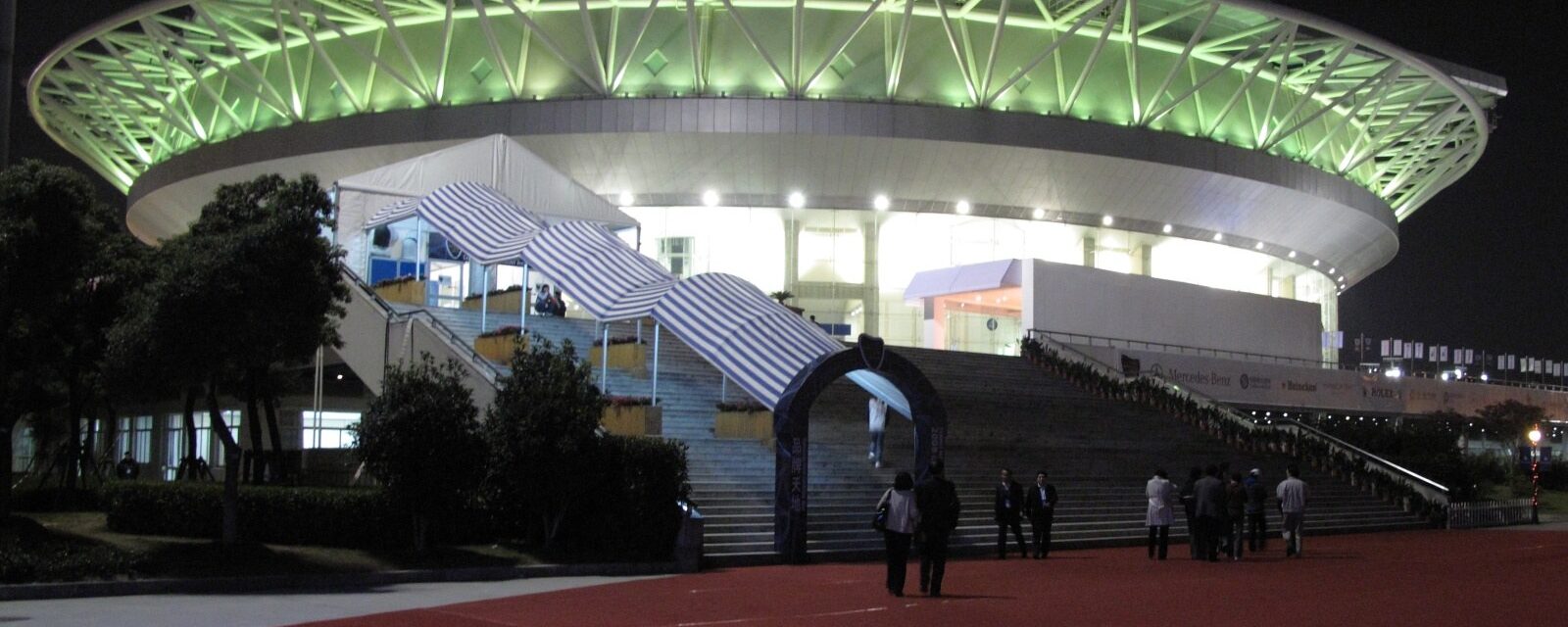
The Rolex Shanghai Masters is the only ATP Masters 1000 tournament played outside Europe and North America, and for a fortnight every October it brings most of the world’s top 50 men to a wooded corner of Minhang district, about 25 kilometres south-west of the Bund. The 2026 edition runs from 5 to 18 October at the Qizhong Tennis Center, under the steel roof that opens and closes like a magnolia flower. As a day out, it is cheaper and more relaxed than most visitors expect. Qualifying tickets cost ¥60, an outer-court pass is ¥100, and the best Centre Court seat for a first-round day session is ¥170.
It is also further out of town than people realise. There is no metro station at the gate, and the real-name ticketing rules are easy to get wrong if you book for someone else, because each ticket is tied to the passport it was bought with. This guide covers what you need to get it right in 2026: every ticket price by day and session, how passport holders get through the gates, the ¥2 bus from Metro Line 1 that most English-language guides skip, where to stay so the trip home after a night match doesn’t wreck your evening, and which days give you the most tennis for your money. Prices and transport details come from the tournament’s own 2026 price list and from the spectator notices published by the organisers and Minhang district at the end of September.
Table of Contents
- Rolex Shanghai Masters 2026 at a glance
- The 2026 schedule, day by day
- Who is playing, and who is not
- Tickets: every 2026 price
- Which days are worth your money
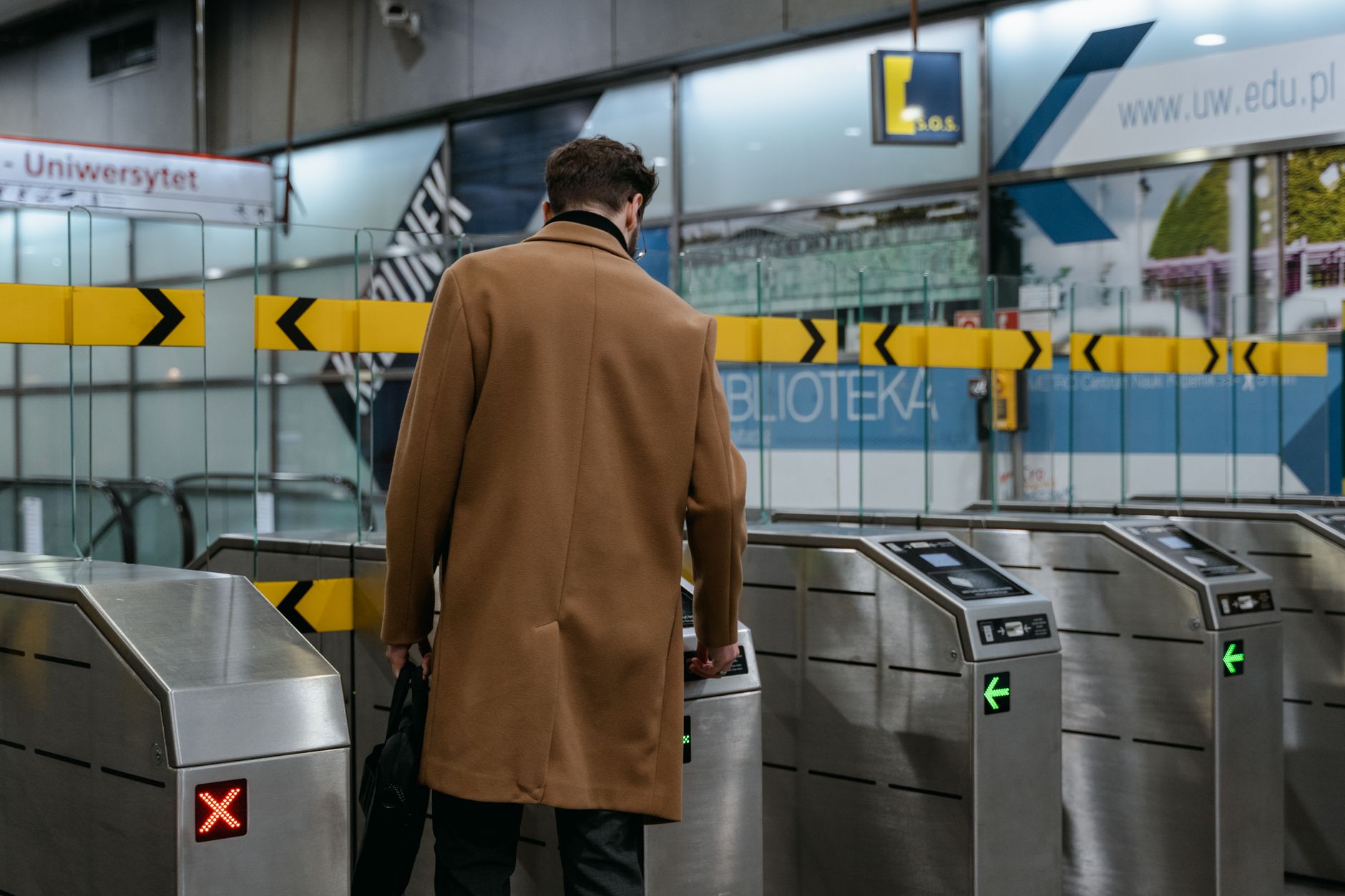
- Getting in with a foreign passport
- How to get to the Qizhong Tennis Center
- Getting back after a night session
- Inside Qizhong: courts, roofs and where to sit
- Food, money, weather and etiquette
- Where to stay
- A short history of tennis at Qizhong
- Prize money and ranking points
- Common mistakes to avoid
- Frequently Asked Questions
Rolex Shanghai Masters 2026 at a Glance
If you read only one section, make it this table. The tournament has confirmed everything in it for 2026.
| What | 2026 details |
|---|---|
| Dates | Qualifying Monday 5 and Tuesday 6 October; main draw Wednesday 7 to Sunday 18 October. A pre-tournament FanWeek ran from 1 to 4 October. |
| Venue | Qizhong Tennis Center (officially the Qizhong Forest Sports City Arena), 5500 Yuanjiang Road, Minhang District. In Chinese: 上海市闵行区元江路5500号 旗忠网球中心 |
| Level and surface | ATP Masters 1000, men only, outdoor hard courts, with retractable roofs over Centre Court and Court 2 |
| Draws | 96 singles players (the 32 seeds get a first-round bye), 48 in qualifying chasing 12 places, 32 doubles teams |
| Prize money | US$9,415,725. The singles champion takes US$1,151,380 and 1,000 ranking points. |
| Gates open | 10:30 from 5 to 16 October; 12:30 on 17 and 18 October |
| Start of play | 12:00 on most days. Centre Court night sessions begin no earlier than 18:00. |
| Ticket prices | ¥60 (qualifying days, and ground passes in the second week) up to ¥1,920 (best seats on semi-final day) |
| Where to buy | The Juss Sports app, its WeChat and Alipay mini programs, or the English-language web shop run by the same company |
| Getting there | Metro Line 1 to Xinzhuang, then bus DZ207 (¥2) from the South Square, or a taxi to Gate 2 |
| Bring | The original passport you used to buy your ticket |
Three things set 2026 apart. The first is an absence. World No. 1 Jannik Sinner, champion here in 2024, withdrew on 3 October with the knee injury that has kept him off court since he won Wimbledon in July. The second is a guest. Once the last scheduled match on Friday 16 October is over, Roger Federer returns to Centre Court for a doubles exhibition, partnering Li Na against the brother and sister Marat Safin and Dinara Safina. The third is the calendar. The first three days of the event, 5 to 7 October, fall inside China’s Golden Week holiday, so hotel prices and transport look very different either side of the 8th.
Less visible, but just as useful: Court 2, the 5,000-seat second stadium, has had its own retractable roof since 2025, so a wet day no longer wipes out half the programme. A pet-friendly lawn called ACE Wonderland is back for a second year with a new Fan Stage for player meet-and-greets, and there is a free pop-up tennis museum in front of Court 2.
The 2026 Schedule, Day by Day
A 96-player Masters 1000 runs to a predictable rhythm, and knowing it is the single best way to choose your tickets. The rounds below follow the format the tournament has used since its draw grew from 56 to 96 players in 2023, and they line up with the price bands on the 2026 ticket list, which pairs the days exactly as shown. Rain or long matches can push play from one day into the next. The order of play is published each evening for the following day on the official website and on the tournament’s WeChat and Weibo accounts.
| Date | Round | Centre Court tickets | Gates open |
|---|---|---|---|
| Mon 5 Oct | Qualifying, first round (from 12:00) | All-day ticket | 10:30 |
| Tue 6 Oct | Qualifying, final round | All-day ticket | 10:30 |
| Wed 7 Oct | First round (no seeds) | Day and night sessions | 10:30 |
| Thu 8 Oct | First round (no seeds) | Day and night sessions | 10:30 |
| Fri 9 Oct | Second round: the seeds begin | Day and night sessions | 10:30 |
| Sat 10 Oct | Second round | Day and night sessions | 10:30 |
| Sun 11 Oct | Third round | Day and night sessions | 10:30 |
| Mon 12 Oct | Third round | Day and night sessions | 10:30 |
| Tue 13 Oct | Fourth round (last 16) | Day and night sessions | 10:30 |
| Wed 14 Oct | Fourth round (last 16) | Day and night sessions | 10:30 |
| Thu 15 Oct | Quarter-finals | All-day ticket | 10:30 |
| Fri 16 Oct | Quarter-finals, then Federer’s exhibition | All-day ticket | 10:30 |
| Sat 17 Oct | Semi-finals | All-day ticket | 12:30 |
| Sun 18 Oct | Doubles final at 14:00, singles final not before 16:30 | All-day ticket | 12:30 |
The detail that matters most is the bye. In a 96-player draw the top 32 seeds skip the first round, so Wednesday 7 and Thursday 8 October are played entirely by unseeded players and qualifiers. That is why Centre Court is at its cheapest on those two days, and why buying a first-round ticket in the hope of seeing Carlos Alcaraz or Novak Djokovic is a mistake. All of the seeds play their opening matches on Friday 9 and Saturday 10 October, which makes those two days the densest of the fortnight for famous names, with roughly sixteen seeded players in action on each, spread across every show court.
From the quarter-finals on, Centre Court tickets stop being split into day and night sessions, and one ticket covers everything on the court that day. On Friday 16 October that means two quarter-finals followed by Federer’s exhibition. On the final Sunday the doubles final starts at 14:00 and the singles final follows, not before 16:30, which is why the gates open later on the last two days.
Two calendar quirks are worth knowing. Golden Week, China’s National Day holiday, runs from 1 to 7 October in 2026, so the qualifying days and the first day of the main draw fall inside it, and the 7th is one of the worst travel days of the year as the whole country heads home. Saturday 10 October, meanwhile, is an official make-up working day, when offices and schools open to pay back the holiday, so that Saturday should feel more like a weekday at Qizhong. Our guide to Golden Week in Shanghai explains what the holiday does to prices and crowds.
Who Is Playing in 2026, and Who Is Not
The headline is Sinner’s absence. The Italian has had an extraordinary season, with 44 wins against three defeats, titles at Indian Wells, Miami, Monte-Carlo, Madrid and Rome that completed his set of all nine Masters 1000 trophies, and then a fifth major at Wimbledon. A knee injury has kept him out since July, though, and he missed the US Open and the ATP 500 event in Beijing before confirming on 3 October that he would not make Shanghai either.
That leaves Carlos Alcaraz as the man to beat, with a twist: he has never won here. Neither has Alexander Zverev, who lost the 2019 final to Daniil Medvedev. Novak Djokovic, now 39, is the most successful player in the tournament’s history by some distance, with four titles and a record 43 match wins. He was runner-up in 2024 and a semi-finalist last year, when at 38 he reached his 80th Masters 1000 semi-final. Medvedev, the 2019 champion, is back, along with Ben Shelton, Felix Auger-Aliassime and Flavio Cobolli. Shelton has a history with the place too. He reached the quarter-finals on his Shanghai debut in 2023 after knocking out Sinner.
Then there is the defending champion. Valentin Vacherot arrived in 2025 ranked No. 204, came through qualifying, beat five seeded players in a row, put Djokovic out in the semi-finals and then beat his own cousin, Arthur Rinderknech, in the final. He became the lowest-ranked Masters 1000 champion in history, the first player from Monaco to win a tour title, and only the third qualifier ever to win a Masters 1000 event. Whatever happens to him this year, his run is the best argument there is for buying a cheap early-round ticket: qualifying and the first round are where stories like his begin.
For the home crowd, Bu Yunchaokete, Wu Yibing and Zhang Zhizhen lead the Chinese entry. No Chinese man has ever won the title, and whichever court any of the three is on fills up quickly, which is worth knowing whether you want the loudest atmosphere at Qizhong or a quiet seat somewhere else.
Qualifying is better than its reputation. This year’s 48-man field is led by Lorenzo Sonego, a former world No. 21 and four-time tour title winner, and includes Cruz Hewitt, the son of Lleyton Hewitt, who won the 2002 Masters Cup in Shanghai. That is two days of tennis for ¥60 a day. As at every Masters event, a player or two will withdraw between now and their first match, so check the official site for the current field before you buy a ticket for one particular player.
Rolex Shanghai Masters Tickets: Every 2026 Price
Every ticket is sold by Juss Sports, the ticketing arm of the Shanghai government-owned group that organises the tournament. There are three ways to buy: the Juss Sports app (久事体育), its mini programs inside WeChat and Alipay, and an English-language web shop at ztmen.jussyun.com, where Centre Court is listed under its American spelling, Center Court. Hospitality packages with English-speaking hosts are sold separately by ATP Tour Experiences. There is no point buying anywhere else. Each ticket is issued in the holder’s name against a passport or ID number, cannot be transferred, resold or given away, and is checked against that document at the gate, so a ticket from a reseller is worthless.
The table below is the tournament’s official 2026 price list. Centre Court has four price bands, running from S, the best-placed seats, down through A+ and A to B, the cheapest. The lower tier of Court 2 is sold separately, and only for the first six days of the main draw. The ground pass gets you onto the outer courts, Court 3 and the practice courts, plus first-come access to the upper tier of Court 2.
| Date | Round | Centre Court day (B / A / A+ / S) | Centre Court night (B / A / A+ / S) | Court 2 lower tier | Ground pass |
|---|---|---|---|---|---|
| 5–6 Oct | Qualifying | ¥60 for the whole day | |||
| 7–8 Oct | First round | ¥130 / 140 / 160 / 170 | ¥190 / 210 / 240 / 260 | ¥200 | ¥100 |
| 9–10 Oct | Second round | ¥200 / 230 / 270 / 300 | ¥280 / 340 / 420 / 460 | ¥300 | ¥100 |
| 11–12 Oct | Third round | ¥230 / 280 / 350 / 380 | ¥350 / 420 / 520 / 580 | ¥380 | ¥100 |
| 13–14 Oct | Last 16 | ¥280 / 330 / 420 / 460 | ¥420 / 500 / 620 / 690 | Not sold | ¥60 |
| 15–16 Oct | Quarter-finals | ¥830 / 1,020 / 1,250 / 1,380 (all day) | Not sold | ¥60 | |
| 17 Oct | Semi-finals | ¥960 / 1,300 / 1,680 / 1,920 (all day) | Not sold | ¥60 | |
| 18 Oct | Finals | ¥920 / 1,230 / 1,600 / 1,830 (all day) | Not sold | ¥60 | |
Ground passes are the bargain, and they appear late. Passes for 7 to 18 October go on sale at 12:00 the day before, Shanghai time, and stay on sale until an hour before the gates open. The tournament releases them according to conditions, and sales can be paused when rain is forecast. In practice you cannot buy a ground pass weeks ahead from overseas, so set a reminder for noon the day before and buy in the app or on the web shop.
Day and night sessions. From 7 to 14 October, Centre Court is split into a day session starting at 12:00 and a night session starting no earlier than 18:00. Whichever you hold, you can enter the grounds as soon as the gates open; the session matters only at the Centre Court entrance. If the day session overruns, night-session ticket holders wait while the stands are cleared, which can take a while on a long day. Day-session holders can keep watching at Court 3, in the upper tier of Court 2 and on the outer courts after they leave Centre Court, so a day ticket is really a ground pass with a reserved seat attached.
Children. There is no child price. Every spectator needs a full-price ticket, toddlers included, and children under three are not admitted at all.
Limits. Each ID can hold one ticket per session, an account can buy up to four tickets for any one session, and a single account can buy for up to twelve different people across the whole tournament. You enter each spectator’s name, ID number and phone number at checkout, and none of it can be changed afterwards. Copy passport numbers carefully, and buy only for the people who will actually be there.
Refunds. Most tickets can be refunded until 12:00 on the day before the date on the ticket, minus a 10% fee (it was 5% before 1 October). After that cut-off there are no refunds. Combination products, including the ATP and F1 combo tickets and the premium semi-final and final packages, are non-refundable from the moment you buy them. Weather does not count either. The ticket terms say plainly that rain delays or cancelled sessions give no right to a refund or exchange.
Packages and VIP seats. Beyond single tickets, the tournament sells commuter packages that bundle in shuttle transport, two-person and family bundles, travel packages with transport and a hotel, and joint tickets with Shanghai Disneyland and the Formula 1 Chinese Grand Prix. Centre Court VIP boxes start at ¥650 on the English shop. Holders of the premium seating products, which carry names like Golden VIP and Champion Sky Garden, also get the reserved south section of Court 2’s upper tier.
Which Days Are Worth Your Money
With fourteen days, two sessions a day and three kinds of ticket, it is easy to overthink this. Here is how we would spend the money.
The best single day is Friday 9 or Saturday 10 October. All 32 seeds play their first match across these two days, so every court has someone worth watching from noon onwards. A ¥100 ground pass gets you courtside on the outer courts and into the upper tier of Court 2. Add a Centre Court day ticket (¥200–300) if you want a guaranteed seat for whoever the tournament puts on its main stage. If you can only go once, go on one of these days.
The best night is in the third round or the last 16. Night sessions from 11 to 14 October usually carry a headline match or two under the lights, for ¥350–690. The heat of the afternoon has gone, the stadium is full, and you can spend the afternoon before it on the outer courts with the same ticket.
The most tennis for the money is qualifying. On 5 and 6 October, ¥60 covers the whole day, with matches on several courts at once. The players are mostly ranked somewhere between about 50 and 150 in the world, the standard is far higher than the price suggests, and as Vacherot showed last year, one of them might end up winning the whole thing.
The big occasion is quarter-final Friday, 16 October. An all-day Centre Court ticket (¥830–1,380) covers two quarter-finals and then Federer and Li Na against Marat Safin and Dinara Safina. Federer has played an exhibition at Qizhong every year since 2024, and his popularity in Shanghai is hard to overstate. He once remarked that the tournament’s flags line the whole route from the airport to Qizhong. Late-round days are the ones to book early.
Semi-final Saturday costs more than the final. It is the most expensive day of the fortnight, at ¥960–1,920, because on the usual schedule both singles semi-finals are played on the Saturday. The final on Sunday (¥920–1,830) gives you the doubles final and one singles match. If you want a late-round Centre Court seat at the lowest price, the B seats on the quarter-final days, at ¥830, are the ones to look at.
What we would skip. Centre Court on 7 and 8 October, unless you simply want a cheap seat in a big stadium, because no seeds are playing. And second-week ground passes if you are hoping for lots of singles. After the 12th the singles move onto the show courts and the outer courts carry mostly doubles and practice sessions, which is why the pass drops to ¥60.
Families with younger children will get more out of a day session or a ground pass, plus a long stop at ACE Wonderland and the Fan Stage, than an evening on Centre Court. For a first visit, the combination we would recommend is a ground pass on the first Friday or Saturday plus a third-round night session on Centre Court. That comes to roughly ¥450–680 a person for two very different days.
Getting In With a Foreign Passport
This is where overseas visitors are most likely to come unstuck, and it is simple once you know the rules.
Your passport is your ticket. The e-ticket sits in your account, but what gets checked at the gate is the identity document that was entered when the ticket was bought. Mainland Chinese visitors scan their ID cards at automatic gates with facial recognition. Visitors with passports, Hong Kong, Macau and Taiwan travel permits or foreign permanent residence cards are checked through a manual lane. Bring the original passport. A photocopy or a picture on your phone will not do.
The ticket terms add one more step for anyone without a mainland ID card: complete identity verification through the official real-name platform before your visit, so that you can be matched by face at the gate. If the app or the web shop prompts you to verify after you buy, do it there and then, from home. If it does not, or if anything fails on the day, the Real-Name Service desk by Gate 2 handles passports and travel permits.
Use Gate 2. All spectators go in through Gate 2 on Yuanjiang Road, which is also where taxis drop off. The only exception is ACE Wonderland, the pet zone, whose visitors (with a booking and a dog) use Gate 6 on Zhongqing Road. Inside, Centre Court has its own ticket check at the glass doors of Gate 16. Court 2 is entered through the main entrance by the big escalator on its east side. Holders of lower-tier Court 2 tickets go to their own stand, and anyone else with a Centre Court ticket or a ground pass can sit in the east, west or north sections of the upper tier, first come, first served. When a section is full, staff hold people at the entrance until seats free up.
Re-entry is allowed on the same day, so you can step out for food or a rest and come back.
What not to bring. The banned list is longer than at most tennis events, and security takes it seriously. Leave these at the hotel:
- Bags bigger than 55 × 40 × 20 cm, roughly airline cabin size. There is a luggage deposit near the entrance, but on a check-out day it is simpler to leave your case with the hotel.
- Tennis balls and racquets. Autograph hunters, take note: bring a cap or a notebook for signatures instead.
- Long or pointed umbrellas (compact folding umbrellas and rain jackets are fine), glass bottles and cups, alcohol, lighters and matches.
- Food or drink that could be thrown, large hard fruit, and smelly or crunchy snacks. The tournament’s own FAQ names durian, stinky tofu, eggs and crisps.
- Whistles, horns, drums, musical instruments, laser pointers, drones, tripods, monopods and unaccredited professional camera kit.
- Flags larger than 1 × 0.6 metres, and any banner or placard that has not been registered in advance.
- Scooters, bikes, skateboards and anything else on wheels apart from prams and wheelchairs.
Pets are not allowed in, with two exceptions: assistance dogs, and dogs booked into ACE Wonderland. Smoking is limited to designated areas.
How to Get to the Qizhong Tennis Center
Qizhong sits on Yuanjiang Road in Maqiao, at the south-western edge of Minhang district, and no metro line goes there. The nearest stations are Beiqiao (about 5 km away) and Zhuanqiao (about 7 km) on Line 5, and Xinzhuang (about 8 km), where Lines 1 and 5 meet. Allow 75–90 minutes door to door from People’s Square by public transport, or 40–60 minutes by taxi when the roads are clear.
| Option | Where from | Cost | Journey | Best for |
|---|---|---|---|---|
| Bus DZ207 | Xinzhuang station (Lines 1 and 5), South Square bus hub exit; also stops at Zhuanqiao (Line 5) | ¥2 | 30–45 min | Most visitors, especially anyone staying on Line 1 |
| Metro shuttle bus | Zhuanqiao station (Line 5) | ¥2 | About 20–30 min | Anyone coming down Line 5 |
| Bus DZ208, after play | From Qizhong to the Caoxi bus hub beside Shanghai Indoor Stadium (Lines 1 and 4) | ¥10 | About 40 min late at night | Getting back to Xuhui after a night session |
| Bookable coaches, 7–18 Oct | People’s Square, Zhongshan Park, Hongqiao Railway Station, Oriental Sports Center | Shown when you book | Leave within 30 min of each match ending | Downtown hotels and late finishes |
| Taxi | Anywhere; the rank is at Gate 2 | Roughly ¥85–110 from Xujiahui, ¥110–160 from People’s Square or the Bund, ¥80–100 from Hongqiao Airport | 40–60 min from downtown | Groups of three or four, and luggage |
| DiDi | Anywhere; pick-up and drop-off at Yuanjiang Road and Zhongqing Road, near Gate 6 | Similar to a taxi, with surge pricing after night matches | As for a taxi | Arriving; less so leaving at 23:00 |
| Metro, then taxi | Beiqiao or Zhuanqiao (Line 5) | Metro ¥4–6, then about ¥20–30 | 15–20 min from the station | When the bus queue is long |
A note on the numbers. Journey times are our estimates for normal traffic, taxi fares are approximate daytime meter fares (they rise at night), and the bus fares are those published by Minhang district’s transport commission for 2026. Some English-language notices describe the shuttles as free, so you may not be charged, but have a Shanghai transport card or the transit code in Alipay ready either way. The bookable coaches are run by Jiutong and sold through the Juss Sports app, the Ctrip app and the Suishenxing and 62580 mini programs, with any spare seats sold at the stop.
Step by step from downtown. Take Line 1 south towards Xinzhuang, the end of the line. It takes around 30 minutes from People’s Square, a little over 20 from South Shaanxi Road in the former French Concession, and about 15 from Xujiahui. At Xinzhuang, follow the signs for the South Square (南广场) and the bus hub exit, where the DZ207 leaves from. In 2024 the outbound buses ran from 11:00 to 19:00 and the return buses to Xinzhuang from 16:00 to about 21:30, after which the late bus to Xuhui took over. Times shift with the order of play, so check the notice at the stop. The bus drops you by the gates on Yuanjiang Road, a short walk from Gate 2. Our Shanghai metro guide covers fares, passes and paying by phone.
For taxi drivers, show the address rather than trying to say it: 上海市闵行区元江路5500号 旗忠网球中心 2号门 (Qizhong Tennis Center, Gate 2, 5500 Yuanjiang Road, Minhang District). In DiDi or Amap, searching for 旗忠网球中心 brings it straight up.
From the airports. Hongqiao Airport is the closer of the two, about 17 km from Qizhong in a straight line, and a taxi takes 30–45 minutes. If you arrive by high-speed train at Hongqiao Railway Station, the bookable coaches leave from there. Pudong Airport is 44 km away, so a taxi costs ¥220–270 and takes well over an hour. By metro from Pudong you would take Line 2 to People’s Square and change to Line 1, which adds up to two and a half hours with the bus. On your arrival day, go to the hotel first and head to Qizhong without your luggage. Our Hongqiao Airport guide covers the terminals and connections. For Pudong, see our guide to getting from Pudong Airport to the city centre.
Getting Back After a Night Session
Getting to Qizhong is easy. Getting home at 23:30 with several thousand other people is the part to plan. Night sessions start at 18:00 at the earliest, and a two-match night can run well past 23:00. By then the metro is winding down for the night, so check the time of the last train from Xinzhuang in your maps app before you go.
There are four realistic options. The DZ208 bus (¥10) runs from Qizhong to the Caoxi bus hub beside Shanghai Indoor Stadium in Xuhui once play ends. Its predecessor in 2024 ran from 21:30 until half an hour after the last match. From the bus hub it is a short taxi ride to most hotels in Xuhui, the French Concession and Jing’an. The bookable coaches leave within 30 minutes of each match ending and drop at People’s Square, Zhongshan Park, Hongqiao Railway Station and the Oriental Sports Center. If your hotel is near one of those, they are the most comfortable choice, but book your seat in the app before the evening. The taxi rank at Gate 2 and the DiDi point at Yuanjiang Road and Zhongqing Road both work, but both build long queues in the twenty minutes after the last point, and DiDi prices surge.
Our advice: if the match you came for finishes while another is still on, stay for a set. The crush at the exits eases quickly, and a car requested half an hour after the crowd leaves usually arrives faster and costs less. If you plan to take the DZ207 back to Xinzhuang and catch Line 1, leave before the last match and accept that you will miss the end. If you know you will want late nights, book a hotel in Xuhui or the French Concession, where a ¥10 bus and a short taxi will get you home at any hour. Our guide to using DiDi in Shanghai explains how to set up the app with a foreign phone number and card.
Inside Qizhong: Courts, Roofs and Where to Sit
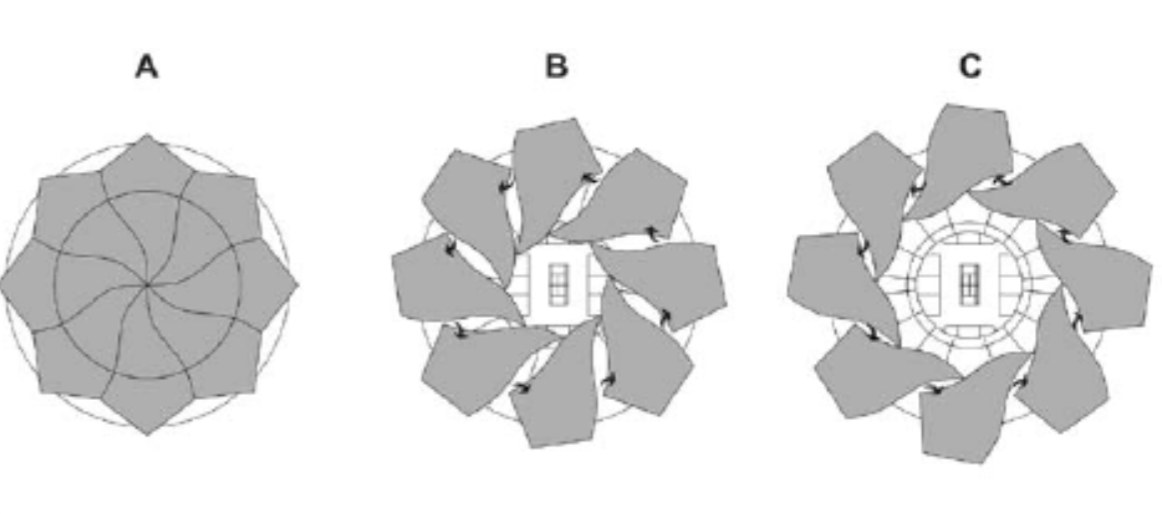
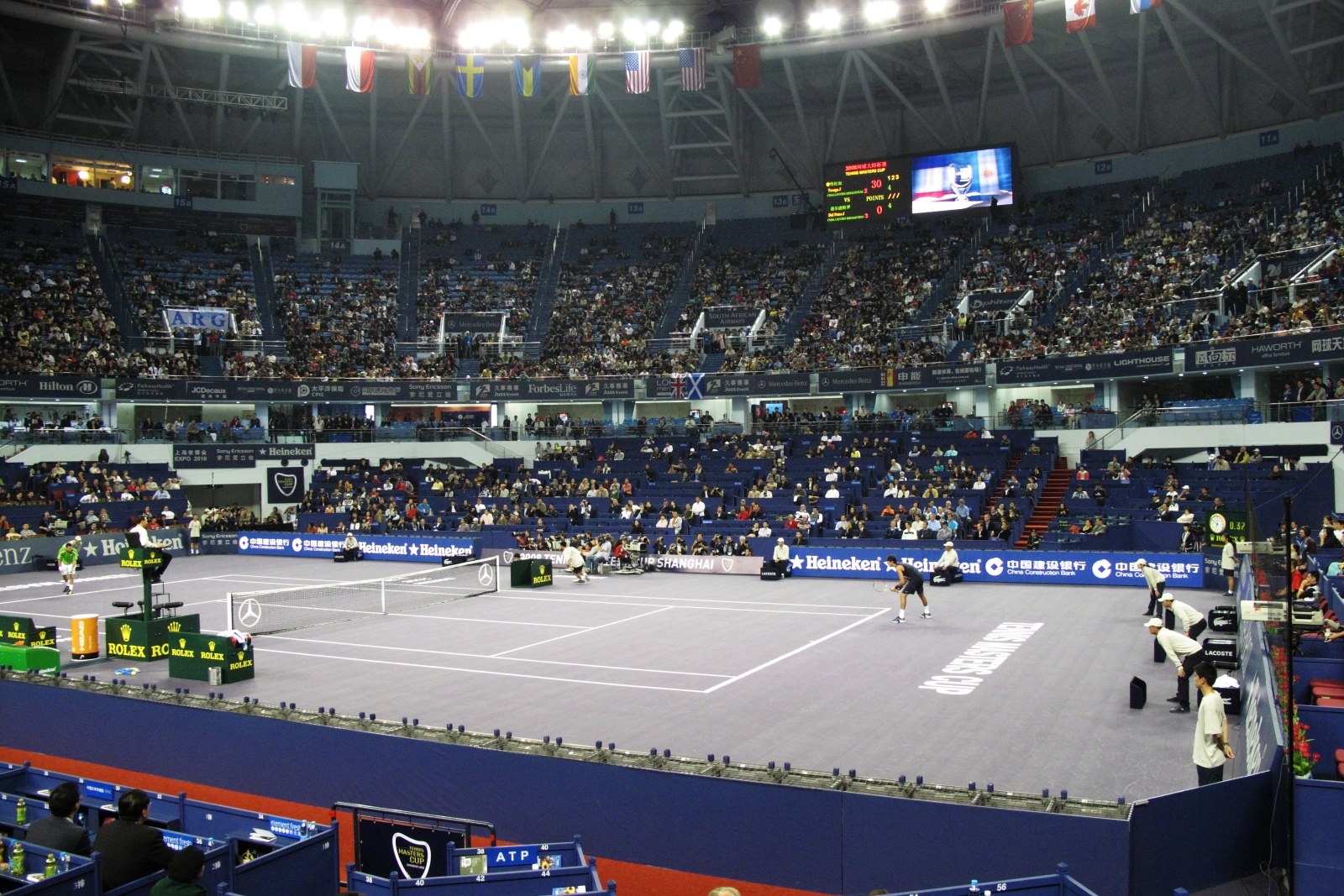
The Qizhong Forest Sports City Arena was built in 2004 and 2005 for the Tennis Masters Cup, the season-ending championship that Shanghai hosted from 2005 to 2008, and it still looks like nothing else in tennis. The Japanese architect Mitsuru Senda and his firm, the Environment Design Institute, won the 2003 international competition with a design based on the magnolia, Shanghai’s city flower. Eight steel petals rotate around the top of the bowl and close the roof in about eight minutes, and opening it is meant to look like the flower coming into bloom. The whole site covers about 80 hectares, with 25 courts in all.
Centre Court holds just under 14,000 people, a figure the tournament rounds up to 15,000. It is a steep, enclosed bowl, four storeys and 40 metres high, so the cheapest B seats are a long way up. You see the geometry of the points beautifully from there, but the players are small, and for the price of an upper-tier seat in the first week you could sit almost courtside on an outer court. For big matches the atmosphere up top is still excellent. Take sunglasses and a hat to day sessions when the roof is open.
Court 2, also called Grandstand 2, holds 5,000 and has had a retractable roof since 2025. Heavy rain in 2024 forced repeated changes to the schedule, and the organisers responded by roofing the court in roughly seven to eight months. The new roof closes in about ten minutes. The lower tier is ticketed for the first six days of the main draw, while the upper tier is open to anyone with a ground pass or a Centre Court ticket. On the first Friday and Saturday, that upper tier is the best-value seat at the tournament.
Court 3, built in 2009 with around 3,000 seats, and the outer courts, numbered up to 19 and strung along Champions Avenue and Masters Avenue, are where you get within a few metres of the players. In the first week there are matches on all of them from noon. Moving between courts at the changeovers, catching the end of a tight third set here and the start of a seed’s match there, is half the fun of a ground pass.
The practice courts, including the Royal Caribbean Masters Court, are open to every ticket holder on a first-come basis. Watching a top-five player hit for an hour from a few metres away costs exactly what a ground pass costs, and it tells you more about how these players hit the ball than television ever will.
Between matches, the Autograph Zone sits beside Centre Court, and players also turn up for meet-and-greets on the new Fan Stage in ACE Wonderland, the pet-friendly lawn next to Court 2. The pop-up tennis museum in front of Court 2, called Memories in Qizhong, is free for ticket holders. Official merchandise is sold on the second floor of Brand World, where the main shop has been expanded again this year, and along the Centre Court concourse. The public food court is on the ground floor of the Food Pavilion near Centre Court, and there are information points, first aid posts and a luggage deposit around the grounds.
Food, Money, Weather and Etiquette
Paying. The tournament says cash and credit cards are accepted on site, but it also recommends setting up WeChat Pay or Alipay before you arrive, and that is the right call. Mobile payment is faster at every food counter and shop, and both apps now accept foreign cards. Our guide to Alipay and WeChat Pay for tourists walks through the setup, which takes about ten minutes at home and considerably longer in a queue.
Eating and drinking. The Food Pavilion has the main public food court, and there are more stalls around the grounds. Prices are event prices rather than street prices. The security rules bar food and drink that could be thrown, so plan on buying water inside rather than trying to argue a bottle through. A proper meal before or after, back in town, is better value than a tournament lunch. Our Shanghai food guide will tell you what to look for.
Weather. Early October in Shanghai usually brings highs of 24–26°C and lows around 18°C, cooling through the month, with falling humidity and plenty of clear days. Usually. In 2025 temperatures passed 30°C with humidity over 80 per cent. Djokovic was sick on court, Holger Rune complained publicly about the conditions, and spectators came armed with hand fans and cool packs. So dress for both: sunscreen, a hat and water for day sessions, and a light layer for the evenings, when the temperature drops noticeably. The tail end of a typhoon in the first ten days of October is uncommon but possible. Our Shanghai weather guide has more on what to expect month by month.
Rain. When it rains, play on Centre Court and Court 2 stops while the roofs close and then carries on. Everything else waits. On a wet day the outer courts can lose hours, ground-pass sales may be paused, and there are no weather refunds, so if the forecast looks doubtful a Centre Court or Court 2 ticket is the safer buy. In extreme heat the tournament can also change the schedule. Announcements go out on the big screens around the grounds, the official social media accounts, text messages to ticket holders and the information booths.
Etiquette. The rules are the same as at any tennis event. Move only at the changeovers, keep your phone silent and your flash off, and stay quiet from the moment a player starts the service motion until the point is over. Shanghai crowds are enthusiastic and get noticeably louder for Chinese players. If you arrive mid-game, expect to be held at the entrance until the changeover.
Staying connected. If you rely on Google, WhatsApp or Instagram to meet friends inside the grounds, sort out access before you travel. Our guide to VPNs and internet access in Shanghai explains what works. Signs and maps on site are in both Chinese and English, but announcements at the gates and on the buses are largely in Mandarin, so a translation app with a camera mode is worth having.
Where to Stay for the Rolex Shanghai Masters
Staying next to the venue makes little sense. Maqiao is quiet and spread out, and you would spend your evenings in a district with nothing to do while the city went on without you. The better plan is to stay on Metro Line 1, which runs straight to Xinzhuang and the DZ207 bus, ideally somewhere with good places to eat afterwards. Here is how the main options compare.
| Base | Line 1 to Xinzhuang | Taxi to Qizhong | Why stay here | Drawbacks |
|---|---|---|---|---|
| Former French Concession (South Shaanxi Road, Changshu Road, Hengshan Road) | About 20–25 min | About ¥90–120 | The best evenings, with restaurants, bars and leafy streets, and Line 1 runs straight through | Boutique hotels book up early and cost more |
| Xujiahui | About 15 min | About ¥85–110 | The quickest downtown commute, and the late DZ208 bus finishes nearby | Malls and traffic rather than charm |
| People’s Square and Jing’an | About 30 min | About ¥110–150 | Central for sightseeing, with Line 1 direct and coaches from People’s Square | The longest late-night journeys of the Line 1 options |
| The Bund and Lujiazui | 40–50 min, changing at People’s Square | About ¥120–160 | The classic first-trip base, with the river views | The furthest option every single day |
| Xinzhuang and Qibao (Minhang) | 0–15 min | About ¥35–60 | The shortest trip to the tennis | Little to do in the evenings |
| Hongqiao | Take a taxi instead | About ¥80–100 | Easy for trains and flights, with coaches from Hongqiao Railway Station | A business district that goes quiet at night |
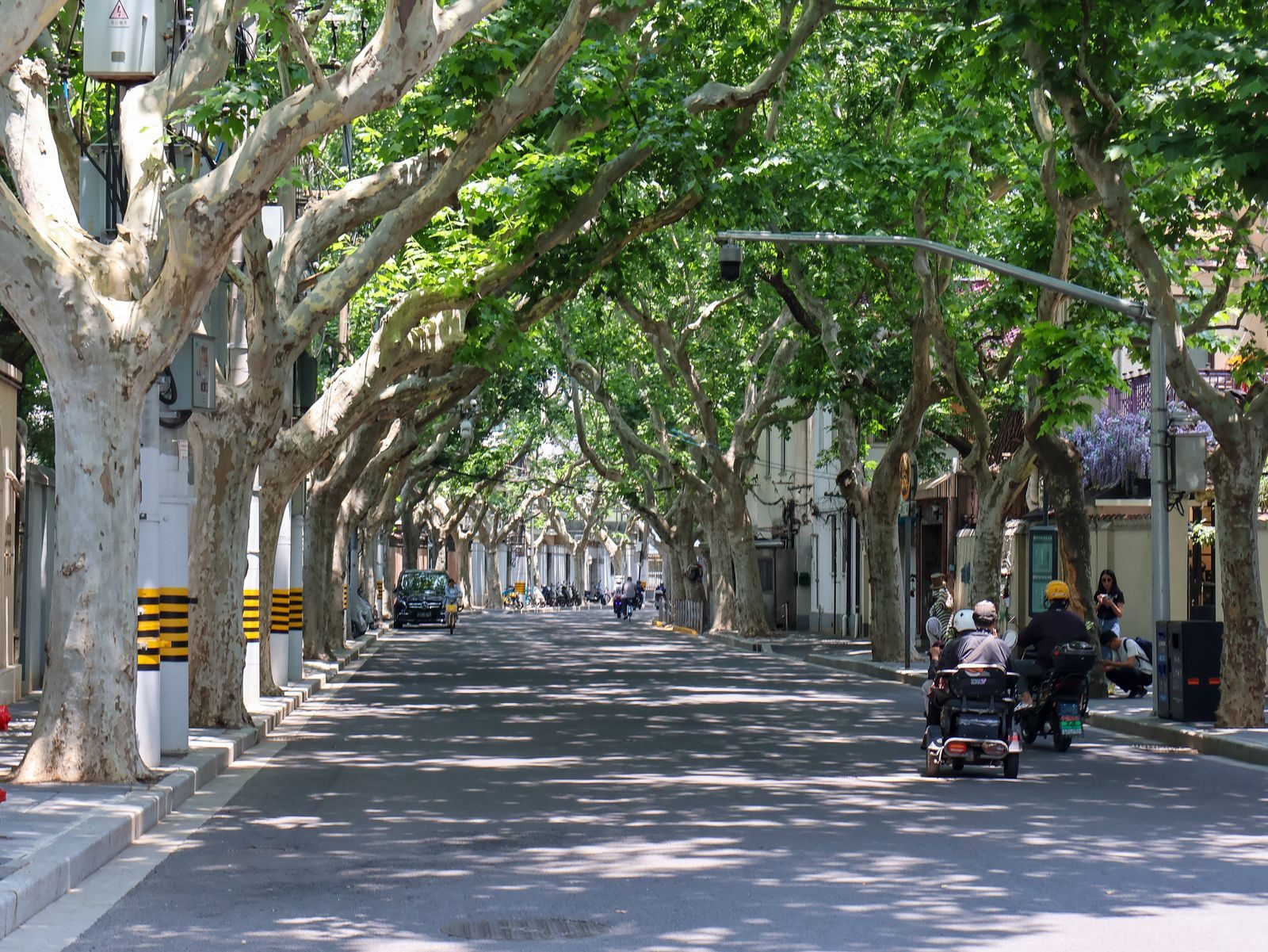
Our pick is the former French Concession. Line 1 stops at South Shaanxi Road, Changshu Road and Hengshan Road, all within walking distance of good hotels. A tournament day becomes a morning wandering plane-tree streets, an afternoon at Qizhong, and dinner within a short walk of your room. Xujiahui is the practical runner-up: less attractive, but closer, and the place the late bus from Qizhong drops you after a night session. Our guide to French Concession hotels covers specific places at every budget.
The Bund and Lujiazui suit people for whom the tennis is one day in a longer sightseeing trip. If the tournament is the reason you are coming, you will tire of the 90-minute journey each way by the third day. For the bigger picture, our guide to where to stay in Shanghai compares every neighbourhood.
Mind Golden Week. If you are coming for qualifying or the first day of the main draw, central hotel prices are roughly double their normal level until 7 October, and many hotels impose minimum stays of two to four nights, often non-refundable. From 8 October rates go back to normal, which is one more reason the second week of the tournament is easier on the wallet. Book something refundable early and re-check prices nearer the time. Not every hotel in China is licensed to take foreign guests, so use a booking site that filters for it; our guide to booking hotels in Shanghai as a foreigner explains how.
A Short History of Tennis at Qizhong
Professional tennis came to Shanghai in 1996, with an ATP event won by the Russian Andrei Olhovskiy. In 2002 the city staged the season-ending Tennis Masters Cup at the Shanghai New International Expo Centre in Pudong, won by Lleyton Hewitt, and the ATP was impressed enough to give Shanghai the event from 2005 to 2007, later extended to 2008. Qizhong was built for it. Those four Masters Cups were played indoors under the closed roof. David Nalbandian came from two sets down to beat Roger Federer in the 2005 final, Federer won in 2006 and 2007, and a 21-year-old Novak Djokovic took the 2008 title.
When the ATP reorganised its calendar for 2009, the Masters Cup moved to London and Shanghai was given a Masters 1000 event in its place. It took over the autumn slot that had belonged to the indoor Madrid Masters, which moved to clay in May, and Rolex has sponsored it from the first edition. The first final, in 2009, was won by Nikolay Davydenko against Rafael Nadal. Nadal reached the final again in 2017 and lost that one too, so Shanghai is one of the few big titles he never won.
The 2010s belonged to the Big Four. Andy Murray won three titles, Federer two and Djokovic four. Two matches from that decade are still talked about. In the 2012 final Djokovic saved five match points against Murray in a second-set tiebreak that finished 13–11, and in 2014 Federer saved five match points against Leonardo Mayer in the second round before going on to win the title. The tournament was not held from 2020 to 2022, when China’s pandemic restrictions shut out international sport, and it came back in 2023 with its draw expanded from 56 to 96 players and the event stretched to twelve days.
Since then it has been anything but predictable. Hubert Hurkacz beat Andrey Rublev in a third-set tiebreak in 2023. Jannik Sinner beat Djokovic in 2024, denying him what would have been his 100th tour title. And in 2025 came Vacherot, the qualifier ranked No. 204, who beat his cousin Rinderknech in the first ATP Tour final between relatives since John and Patrick McEnroe met in Chicago in 1991.
| Year | Champion | Runner-up | Score |
|---|---|---|---|
| 2025 | Valentin Vacherot | Arthur Rinderknech | 4–6, 6–3, 6–3 |
| 2024 | Jannik Sinner | Novak Djokovic | 7–6, 6–3 |
| 2023 | Hubert Hurkacz | Andrey Rublev | 6–3, 3–6, 7–6 |
| 2020–2022 | Not held | ||
| 2019 | Daniil Medvedev | Alexander Zverev | 6–4, 6–1 |
| 2018 | Novak Djokovic | Borna Ćorić | 6–3, 6–4 |
| 2017 | Roger Federer | Rafael Nadal | 6–4, 6–3 |
| 2016 | Andy Murray | Roberto Bautista Agut | 7–6, 6–1 |
| 2015 | Novak Djokovic | Jo-Wilfried Tsonga | 6–2, 6–4 |
| 2014 | Roger Federer | Gilles Simon | 7–6, 7–6 |
| 2013 | Novak Djokovic | Juan Martín del Potro | 6–1, 3–6, 7–6 |
| 2012 | Novak Djokovic | Andy Murray | 5–7, 7–6, 6–3 |
| 2011 | Andy Murray | David Ferrer | 7–5, 6–4 |
| 2010 | Andy Murray | Roger Federer | 6–3, 6–2 |
| 2009 | Nikolay Davydenko | Rafael Nadal | 7–6, 6–3 |
The records: Djokovic has the most titles (four) and the most match wins (43). Federer is the oldest champion, at 36 in 2017, and Sinner the youngest, at 23 in 2024. Vacherot is the lowest-ranked. No Chinese player has won it yet, which is the result the home crowd is waiting for.
Prize Money and Ranking Points
The 2026 prize fund is US$9,415,725, and the points are the standard Masters 1000 scale, which is why the top players treat Shanghai as close to compulsory, and why it weighs so heavily in the race for the eight places at the season-ending ATP Finals.
| Singles result | Prize money (US$) | Ranking points |
|---|---|---|
| Champion | 1,151,380 | 1,000 |
| Runner-up | 612,340 | 650 |
| Semi-finalist | 340,190 | 400 |
| Quarter-finalist | 193,645 | 200 |
| Fourth round (last 16) | 105,720 | 100 |
| Third round | 61,865 | 50 |
| Second round | 36,110 | 30 |
| First round | 23,760 | 10 |
In the doubles, the winning pair share US$468,200 and each player earns 1,000 points. A first-round loser in the singles takes home more than US$23,000, which goes some way to explaining how hard the qualifiers fight for the twelve places on offer.
Common Mistakes to Avoid
Buying the first two days to see the stars. The 32 seeds have byes, so Wednesday 7 and Thursday 8 October feature none of them. If you want the famous names, start from Friday 9 October.
Assuming the Bund is close. Qizhong is about 25 km from the Bund as the crow flies and more by road. From the riverfront, budget an hour and a half each way by public transport, or ¥120–160 by taxi.
Getting the passport details wrong. Tickets cannot be amended, so a typo in a passport number, or a ticket bought in a friend’s name, can cost you the day. Check every digit at checkout, and bring the original passport to the gate.
Looking for ground passes weeks in advance. They go on sale at noon the day before and not earlier. If you are planning from overseas, buy Centre Court or Court 2 tickets ahead and treat the ground pass as a last-minute purchase.
Buying from resellers. Real-name tickets cannot be transferred, so a resold ticket will not get you in.
Arriving with a racquet, a suitcase or a big umbrella. All three are on the banned list. Get autographs on a cap, and leave luggage at the hotel.
Not planning the trip home after a night session. Know before the evening whether you are taking the DZ208, a booked coach or a car, and when the last Line 1 train leaves Xinzhuang.
Expecting a refund for rain. There are none for weather. If rain is forecast, the roofed courts are the safer buy.
Expecting women’s tennis. The Shanghai Masters is an ATP event, so it is men only. The women’s tour plays its big Chinese events in Beijing and Wuhan.
Forgetting the holiday. Until 7 October you are travelling in Golden Week. Book transport and hotels early, and expect crowds at every major sight in the city as well as at the tennis.
Frequently Asked Questions
When is the Rolex Shanghai Masters in 2026?
Qualifying is on Monday 5 and Tuesday 6 October, and the main draw runs from Wednesday 7 to Sunday 18 October 2026 at the Qizhong Tennis Center in Minhang district. The singles final is on Sunday 18 October, not before 16:30, after the doubles final at 14:00.
How much do Rolex Shanghai Masters tickets cost?
Qualifying days and second-week ground passes cost ¥60, and first-week ground passes ¥100. Centre Court costs ¥130–690 from 7 to 14 October, depending on the round, the seat and whether you choose the day or night session, then ¥830–1,920 for the quarter-finals, semi-finals and final. The lower tier of Court 2 costs ¥200–380 and is sold from 7 to 12 October only.
Can foreigners buy tickets, and how?
Yes. Use the English-language web shop run by Juss Sports or the Juss Sports app, and enter each spectator’s name and passport number exactly as printed. Hospitality packages are also sold through ATP Tour Experiences. Avoid resellers, because tickets are tied to the holder’s passport and cannot be transferred.
Do I need my passport at the Shanghai Masters?
Yes. You need the original passport used for the booking. Entry works on a real-name basis: mainland visitors scan their ID cards, and passport holders go through a manual lane. If anything does not match, the Real-Name Service desk near Gate 2 can help.
What is the nearest metro station to the Qizhong Tennis Center?
Beiqiao and Zhuanqiao on Line 5 are the closest, at about 5 and 7 km, but neither is within walking distance. Most people take Line 1 to Xinzhuang and then the DZ207 bus (¥2) from the South Square, which also calls at Zhuanqiao.
Is Jannik Sinner playing in Shanghai in 2026?
No. The world No. 1 withdrew on 3 October with the knee injury that has kept him out since Wimbledon. Carlos Alcaraz, Alexander Zverev, Novak Djokovic and the defending champion, Valentin Vacherot, are all in the field.
Is Roger Federer playing at the 2026 Shanghai Masters?
Not in the tournament itself, as he retired in 2022. He does play a doubles exhibition on Centre Court after the scheduled matches on Friday 16 October, partnering Li Na against Marat Safin and Dinara Safina. Because it follows the day’s play on Centre Court, a Centre Court ticket for 16 October is the one to have.
Can children go to the Shanghai Masters?
Children aged three and over can go, but each one needs a full-price ticket, and children under three are not admitted. Prams are allowed through security. For families, day sessions and a visit to ACE Wonderland and the Fan Stage tend to work better than night sessions.
What happens if it rains?
Centre Court and Court 2 close their roofs and play carries on once they are shut. Matches on the outer courts are suspended until the rain stops. The ticket terms rule out refunds or exchanges for weather delays and cancellations.
How can I watch the Rolex Shanghai Masters if I cannot get there?
Tennis TV, the ATP’s own streaming service, carries the tournament in most countries, and national broadcasters vary. Inside China, matches are shown on domestic sports channels and streaming platforms. Check the tournament’s social media accounts for this year’s list.
Can I bring my own food and water?
Security does not allow food and drink that could be thrown, glass, alcohol or large hard fruit, and the tournament specifically bans smelly or noisy snacks such as durian, stinky tofu, eggs and crisps. Plan to buy drinks inside.
The tennis takes up an afternoon or an evening, which leaves your mornings free for the city, and our three-day Shanghai itinerary fits neatly around a day at Qizhong. If a night session leaves you wanting more, our Shanghai nightlife guide has ideas for where to go next. For everything else happening in the city while you are here, see the Shanghai festivals and events calendar. The bigger list lives in our guide to things to do in Shanghai. Official schedules, draws and results are on the tournament’s website and the ATP Tour. The 2026 upgrades are described by the Shanghai municipal government, and the full spectator notice in English is published by City News Service.
Image credits: the photographs of Centre Court at night and the 2008 Masters Cup are by Curt Smith (CC BY 2.0), and the roof diagram is by Andrej Mahovič (CC BY 4.0), all via Wikimedia Commons.