Shanghai with kids is easier than most parents expect before they arrive. The metro is clean, bilingual and cheap; the streets feel safe at any hour; and a cluster of attractions — Disneyland, the Ocean Aquarium, two big animal parks, a dinosaur-filled natural history museum and a hands-on science museum — are all designed to keep children happy and reachable on the subway. This guide covers the best things to do in Shanghai with kids across every age group, then the practical detail that actually decides how a family trip goes: strollers and metro lifts, food picky eaters will eat, where to base yourselves, and how to pace a day so nobody melts down by lunch.
The short version: Shanghai is one of the more forgiving major Asian cities to visit with children. Disneyland is the headline draw; the aquarium, the animal parks and the two big museums are strong supporting acts; and a food culture full of dumplings, noodles and familiar Western chains keeps daily logistics simple.
Table of Contents
- Why Shanghai Works for Family Travel
- Shanghai Disneyland
- Shanghai Ocean Aquarium
- Zoos and Animal Parks
- Shanghai Natural History Museum
- Shanghai Science and Technology Museum
- Yu Garden and Bazaar
- The Bund and River Cruises
- Family Parks and Green Spaces
- Indoor Activities for Rainy Days
- Best Things to Do in Shanghai With Kids by Age Group
- Family-Friendly Food
- Getting Around With Kids
- Where to Stay with Kids
- Logistics: Strollers, Restrooms, Supplies
- Sample 5-Day Family Itinerary
- Practical Family Tips
- Frequently Asked Questions
Why Shanghai Works for Family Travel
Several things line up in a family’s favour here, and they add up to a city that is genuinely manageable with children in tow.
The metro does the heavy lifting. Twenty-one lines, more than five hundred stations, every sign in Chinese and English, fares of roughly ¥3–10 a ride. Newer lines have lifts at most stations, so a stroller is workable, and older kids quickly learn the colour-coded maps. It is the single biggest reason Shanghai feels easy with kids: you are rarely far from a station, and you almost never need a car.
Safe streets. Violent crime against tourists is rare, and public spaces feel safe late into the evening. The usual city sense applies — hold small hands near traffic, mind pockets in dense crowds — but anxious parents tend to relax within a day.
Hotels set up for families. International chains (Marriott, Hilton, Hyatt, Shangri-La) routinely offer cribs, connecting rooms or family suites and children’s menus, and even mid-range hotels can usually rustle up a cot with a day’s notice. Our guide to family hotels in Shanghai names specific properties worth booking.
The big attractions sit close together. Disneyland, the Ocean Aquarium, the Natural History Museum and the Science and Technology Museum are all reachable by metro, and several cluster in Pudong, so you can chain a couple in a day without long transfers.
Food picky eaters will actually eat. Western chains are everywhere if you need a fallback, but local staples — steamed buns, dumplings, plain rice, noodles, scallion pancakes — tend to go down without a fight.
Walkable, interesting neighbourhoods. The former French Concession, the Bund and Xintiandi are all pleasant to wander with kids, with cafes, parks and tree-lined streets to break up the day.
The honest drawbacks: summer heat and humidity can be brutal for small children, language barriers crop up in casual restaurants and taxis, and the marquee attractions get genuinely crowded on weekends and Chinese public holidays. Almost all of that is solved by visiting in spring or autumn, hitting the big sights on weekday mornings, and keeping a flexible pace. For the full picture, our Shanghai for families pillar pulls together accommodation, transport and trip-planning advice in one place.
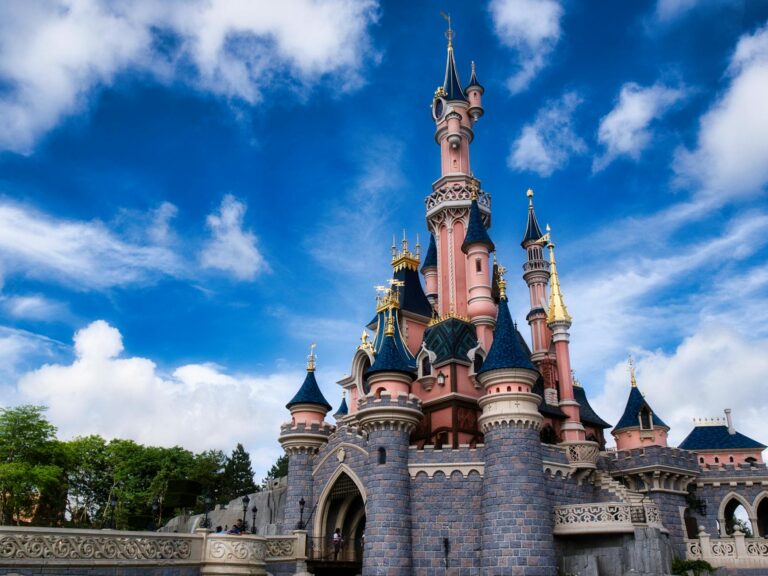
Shanghai Disneyland
The headline family attraction, and for many families the reason the trip exists. We cover ticketing and ride strategy in depth in a dedicated guide; here is the family-specific summary.
Best for: kids 4–14, and Disney enthusiasts of any age. Fantasyland, Toy Story Land and the Gardens of Imagination are built around younger children, and a large share of the rides carry no height requirement at all, so even pre-schoolers have plenty to do.
Time: a full day, minimum. Many families with the stamina (and the budget) split it across two days to do it justice and avoid forced marches.
Cost: roughly ¥475–599 for an adult depending on the date, with around a 25% discount for children aged 3–11; under-3s are free. Prices flex by season and demand, so check the official channel before you book.
How to get there: metro Line 11 runs directly to Disney Resort Station, about an hour from central Shanghai. Weekdays are markedly quieter than weekends, so go midweek if your schedule allows.
Family logistics inside the park: stroller rental is available near the entrance; a rider-switch system lets two adults take turns on thrill rides without queuing twice; and baby-care centres with feeding and changing facilities are dotted around the park. On a busy day, Disney Premier Access (a paid line-skip) for the headline rides like TRON and the Zootopia attraction is worth considering. Stay for the evening castle show if bedtimes allow — it is the moment most kids remember.
For full ticketing, ride heights and a day-by-day plan, see our Shanghai Disneyland complete guide.
Shanghai Ocean Aquarium
One of the largest aquariums in Asia, sitting right at the foot of the Oriental Pearl Tower in Pudong’s Lujiazui district — which makes it one of the easiest big attractions to fold into a normal day’s sightseeing.
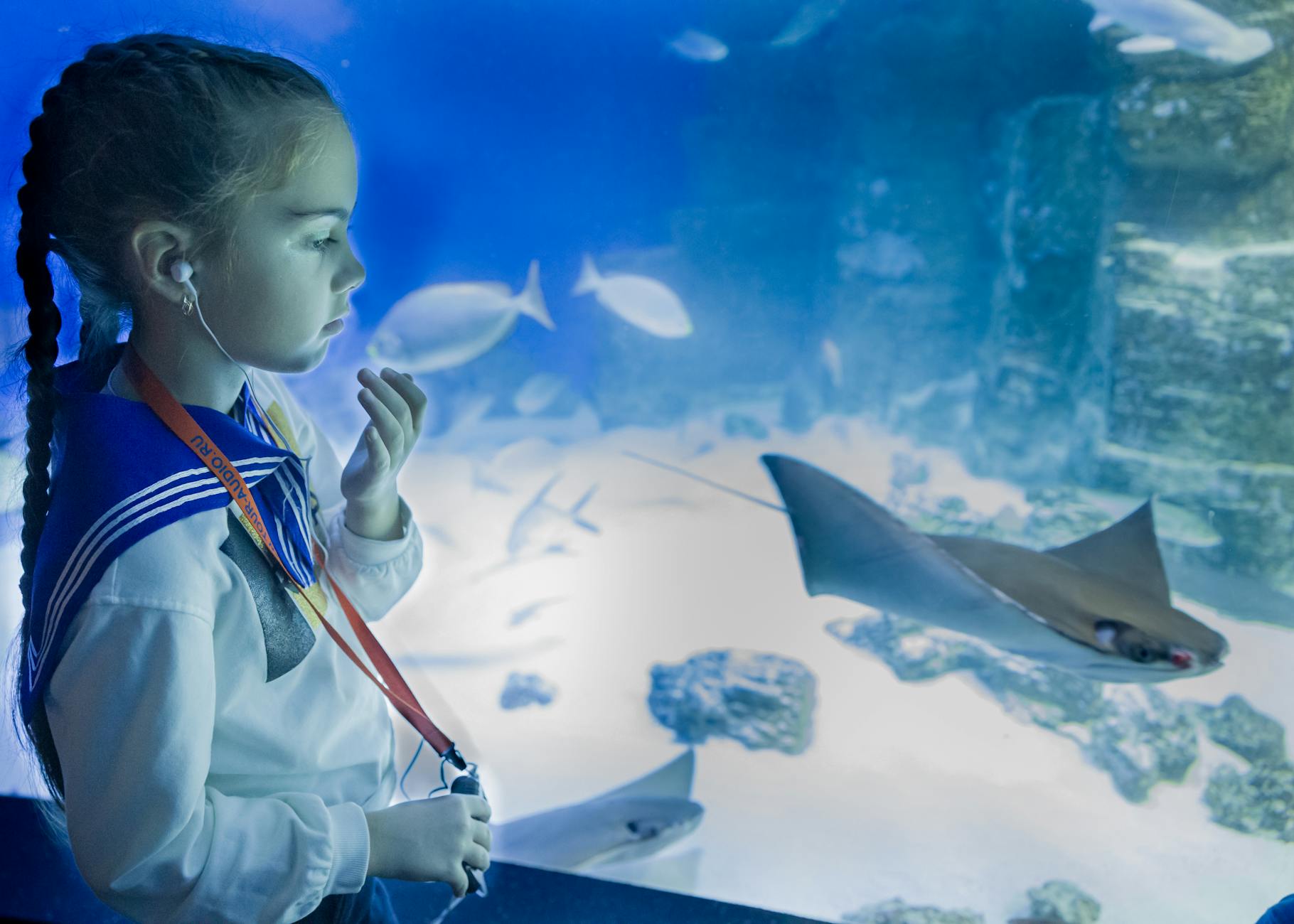
Best for: kids 3–12, though the underwater tunnel quietens even teenagers who claim to be over aquariums.
Time: two to three hours.
Highlights: more than 400 marine species across themed zones; the 155-metre underwater walkway, among the longest of its kind, where a slow travelator carries you beneath sharks and rays; a penguin habitat; a rainforest section; and touch pools where children can carefully handle starfish. The China Zone, focused on native species like the Yangtze alligator and giant salamander, is the part you will not find in many other aquariums.
Cost: around ¥160 for an adult, with reduced child rates (typically for children between 1.0 and 1.4 metres) and under-1.0-metre kids usually free. Booking online through a platform like Trip.com or Klook often shaves a little off and skips the ticket queue.
Best time: weekday mornings. Weekends and holidays get intense.
Getting there: a three-to-five-minute walk from Lujiazui Station (Exit 1) on metro Line 2. Because it sits in Lujiazui, it pairs naturally with the Oriental Pearl Tower, the Shanghai Tower observation deck and an evening on the Bund. For the full rundown of feeding times and comparisons with the city’s other marine attractions, see our Shanghai aquarium and zoo guide.
Zoos and Animal Parks
If your kids light up around animals, Shanghai has more than the aquarium. Two large land-based parks anchor the options, and they suit very different days.
Shanghai Zoo. Out west near Hongqiao, this is the affordable, low-stress choice. It spreads across leafy, mature parkland with giant pandas (and red pandas) in a fan-shaped enclosure, plus tigers, lions, giraffes and elephants, shaded walking paths, kids’ play areas and a small children’s zoo with goats and rabbits. Entry is roughly ¥40, an adult can usually bring one small child in free, and metro Line 10 stops beside the gate (Shanghai Zoo Station, Exit 4). Plan three to four hours. For younger kids who do not need rides to stay happy, it is often the easiest animal day in the city.
Shanghai Wild Animal Park. About 35 km southeast in Pudong, this is the one that gets kids talking. A park bus carries you through a drive-through safari section within a few metres of giraffes, rhinos, zebras, lions and bears, and a walking zone with shows and a children’s area fills out the day. Adult tickets generally run around ¥150–165, children roughly half price. It is a long, mostly outdoor day best suited to ages four and up; arrive at opening and do the safari bus first, while the animals are most active. Reaching it means metro Line 16 plus a final bus, shuttle or taxi leg, so treat it as a full-day trip.
There is also a larger marine theme park, Shanghai Haichang Ocean Park, in southern Pudong, blending an aquarium with rides, polar animals and big arena shows for a full day with older kids. We compare all of these — aquariums, zoos and safari parks — with prices, hours, metro routes and age guidance, in the dedicated Shanghai aquarium, zoo and wildlife parks guide.
Shanghai Natural History Museum
One of the best museums in central Shanghai for children drawn to dinosaurs, animals and the natural world — and conveniently set in a sculpture park you can let kids run around in afterwards.
Best for: kids 4–14.
Time: two to four hours.
Highlights: dinosaur skeletons, an African animals hall, a 4D theatre and a generous spread of interactive, hands-on exhibits. The building itself, wrapped around a central atrium and a living wall, is striking enough to hold attention on its own.
Cost: around ¥30 for an adult; children under 1.4 metres typically free.
Getting there: in Jing’an Sculpture Park in central Shanghai, reached on metro Line 13 (Natural History Museum Station). Popular exhibitions and timed-entry slots can sell out, so for weekends and school holidays it is worth booking ahead.
Best time: weekday afternoons. Weekends fill with local families.
Shanghai Science and Technology Museum
A large, hands-on science museum in Pudong, and a strong pick for older kids and teens who want to push buttons and tinker rather than read labels.
Best for: kids 6–14, especially the science-curious.
Time: three to five hours — it is big, and easy to underestimate.
Highlights: a space exhibition, a robotics gallery, an IMAX-style theatre, a world-geography hall and room after room of interactive science stations. Younger children gravitate to the animal-world and children’s areas.
Cost: around ¥60 for an adult, with reduced child pricing.
Getting there: directly above the Shanghai Science and Technology Museum metro station on Line 2, which makes it an easy combine with Lujiazui or the aquarium on a Pudong day. The sprawling AP Plaza market sits in the connected underground concourse if you want to browse before or after.
Yu Garden and Bazaar
Less obviously a kids’ attraction, but it works well for older children and gives the whole family a gentle introduction to Chinese culture without a museum-length commitment.
Best for: kids 8 and up. Younger children may find the formal Ming-dynasty garden a little static.
Time: about an hour in the garden plus an hour in the bazaar.
Highlights: carp ponds children love to watch (and sometimes feed), the zig-zagging Nine-Turn Bridge, the lantern-strung Yuyuan Bazaar, snack stalls and souvenir shops. Younger kids can skip the paid garden entirely and just enjoy the free, lively bazaar around it.
Cost: roughly ¥30–40 for garden admission; the bazaar is free to wander.
For the history and a what-to-see walkthrough, see our Yu Garden Shanghai guide.
The Bund and River Cruises
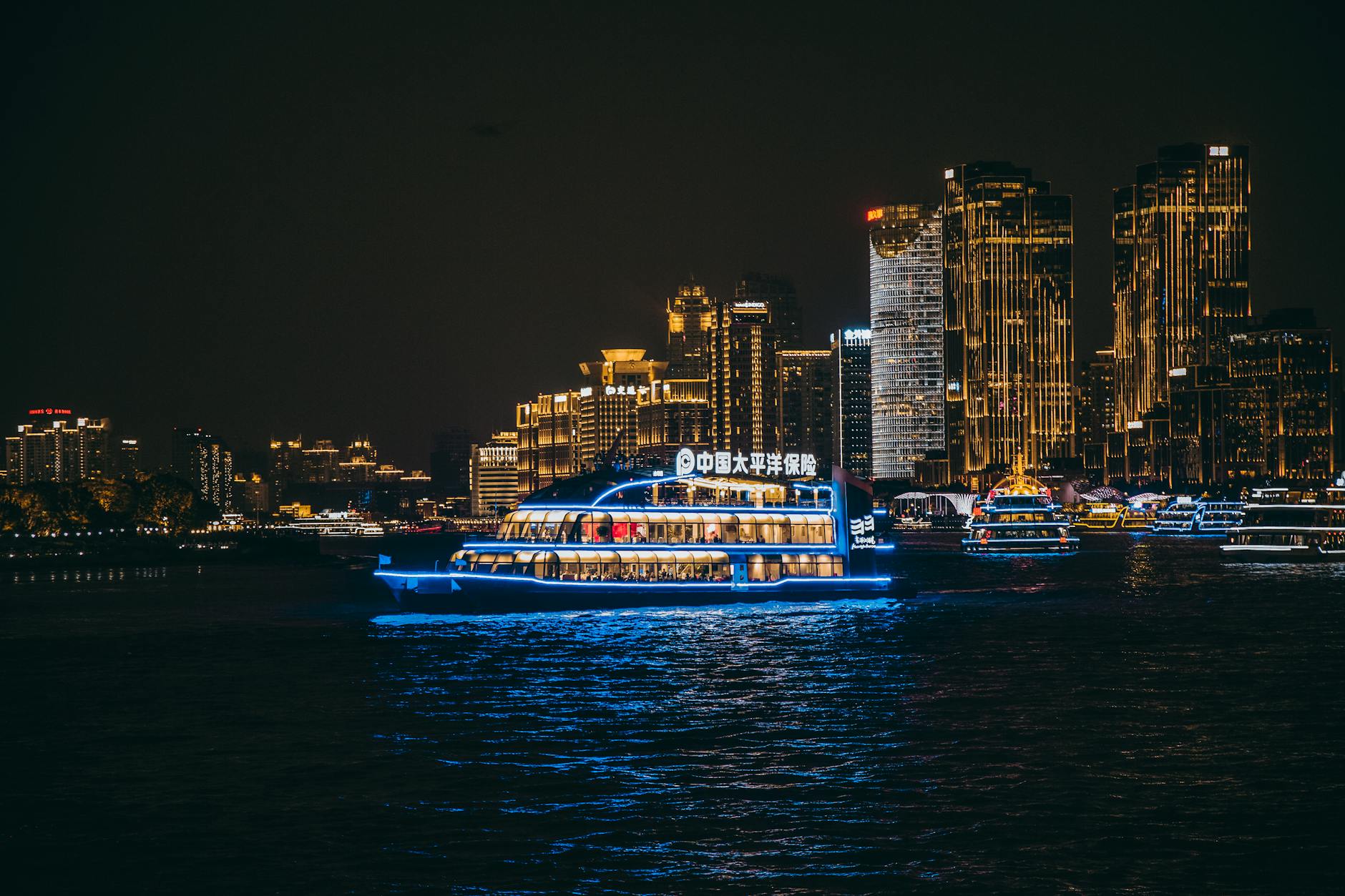
The Bund is fully kid-friendly. The elevated riverside promenade works at any age — older kids take in the skyline across the water, younger ones are happy people-watching and pointing at boats.
Best time: late afternoon into evening, to catch the lighting transition as the Pudong towers switch on.
Huangpu River cruise: a 40–50 minute loop, commonly around ¥80–150 per adult and often half-price for children, on a covered boat with easy access. Sunset or after dark is the time to go.
Bund Sightseeing Tunnel: a gloriously kitschy light-show ride in a capsule under the river between the Bund and Pudong. It is pure novelty, and kids love it; around ¥70 round trip.
For more on the riverfront and its history, see our Bund Shanghai guide.
Family Parks and Green Spaces
When everyone needs to get out of museums and malls and just run, Shanghai has plenty of green space.
Century Park. Pudong’s largest green space, with bike and electric-cart rental, a boating lake and wide open lawns. Small entry fee.
Fuxing Park. In the former French Concession, with a carousel, playgrounds and tree-lined paths. Free.
Lu Xun Park. A relaxed neighbourhood park in Hongkou with playgrounds, a lake and space to roam. Free.
Gucun Park. Best in spring, when its cherry blossoms draw crowds; it has large open spaces and playgrounds. We cover the bloom season and timing in our Shanghai in spring guide.
Pudong Riverside / Lujiazui green spaces. Easy strolling along the Huangpu in Lujiazui, open year-round and walkable straight from the aquarium.
Indoor Activities for Rainy Days
Shanghai weather can scupper outdoor plans, especially in the wet months. Reliable indoor backups:
Shanghai Tower observation deck. Climate-controlled, and the high-speed elevator and the view from 500-plus metres are a hit with kids.
Mall food courts and play zones. HKRI Taikoo Hui, Plaza 66 and IFC Mall all have child-friendly seating and food, and many malls run dedicated indoor playgrounds for ages 0–8.
Indoor play centres. Chains such as Meland and NeoBio build elaborate soft-play and role-play spaces; one of these worked into a day gives everyone a break from sightseeing.
Ice rinks. Several around the city, including a central rink inside a Nanjing Road department store.
Bowling, trampoline parks and VR centres. Scattered across Pudong and Putuo, mostly best for kids 8 and up.
Shanghai Library. A children’s section with some English-language books, and a quiet, free refuge when you need one.
Best Things to Do in Shanghai With Kids by Age Group
What works depends enormously on age. A rough guide:
Toddlers (2–4): the Yu Garden carp pond, Fuxing Park, Lujiazui riverside, indoor play centres and the Shanghai Zoo’s children’s corner. Skip the long museums, keep days short, and protect the nap.
Young kids (5–8): Disneyland, the Ocean Aquarium, the Natural History Museum, a river cruise and the bazaar at Yu Garden. Build in a mid-day break and an early dinner.
Older kids (9–12): all of the above, plus the Science and Technology Museum, the Wild Animal Park safari, the Bund walk, observation decks and ice skating.
Teens (13–17): Disneyland (TRON especially), the Pudong skyline decks, the lanes of Tianzifang and the markets for browsing, a Huangpu cruise, and an easy day trip to Suzhou or Zhujiajiao water town for a change of scene.
Family-Friendly Food
Shanghai’s food works for most kids, and the variety means even committed picky eaters rarely go hungry.
Usually a safe bet: plain rice, stir-fried vegetables, steamed or fried dumplings, shengjianbao (pan-fried soup buns), steamed buns, noodles, scallion pancakes, fried rice and chicken on rice.
Kid favourites: the Mickey-shaped popcorn at Disneyland, tanghulu (candied-fruit skewers), bubble tea, and Chinese-style fried chicken from chains.
Western fallbacks: KFC, McDonald’s and Burger King are everywhere; Pizza Hut, Subway and others have plenty of branches, and major malls carry international options.
Allergies: have key allergies written and printed in Chinese to show staff. Larger restaurants generally accommodate; small street vendors may not, and cross-contamination is hard to rule out.
Stomach sense: stick to busy, established restaurants and high-turnover street stalls, give very young children boiled or bottled water, and go easy on raw or low-traffic street food with toddlers.
For where to eat and what to try across the city, see our Shanghai food guide.
Getting Around With Kids
The metro is the backbone of a family trip here, and it is genuinely good with children. Trains run every few minutes, fares are a few yuan, and the whole network is signed in English. A handful of lines cover almost everything a family needs: Line 2 (the east–west spine connecting both airports, Nanjing Road and Lujiazui), Line 10 (Xintiandi, the French Concession and the Bund area) and Line 11 (the direct line to Disneyland).
Set up the metro QR code inside Alipay or WeChat Pay once and you simply scan in and out at the gates — no ticket queues for the rest of the trip. Children under a certain height (commonly 1.3 metres) ride free with a paying adult, and there is usually one free child per adult. Travelling outside the 7:30–9:30am and 5–7pm rush keeps things much calmer with a stroller or tired legs.
For lifts and step-free routes, the newer lines (10 and above) generally have good elevator coverage, while the older lines (1–4) are patchier — worth checking if you are relying on a stroller. Taxis and the Didi app fill the gaps for late evenings, heavy luggage or the final leg to the out-of-town animal parks; have your destination written in Chinese to show the driver. For the full picture — tickets, line-by-line detail, accessibility and etiquette — see our Shanghai metro guide.
Where to Stay with Kids
Where you base yourselves matters more with children, because it decides how much daily commuting everyone endures. A few areas stand out.
The Bund and Huangpu (best for first-time families): central, walkable and well connected, with hotels like the Fairmont Peace Hotel, the Hyatt on the Bund and, across the river, the Mandarin Oriental Pudong and the Pudong Shangri-La — all geared up with family rooms, cots and amenities.
Pudong / Lujiazui (for theme-park access and skyline views): the Disney-resort hotels (the Toy Story Hotel and the Shanghai Disneyland Hotel) put you on the doorstep of the park, while Grand Hyatt at Jin Mao and the Pudong Shangri-La sit near the aquarium and observation decks.
Xintiandi and the French Concession (for slower, walkable days): leafy streets, cafes and playgrounds, with hotels such as the Langham and the Andaz.
Reliable chains for families: Marriott, Hilton and Hyatt properties across the city generally offer family rooms, cribs and kids’ amenities, and are an easy known quantity if you have loyalty points.
For a neighbourhood-by-neighbourhood breakdown, see our where to stay in Shanghai guide.
Logistics: Strollers, Restrooms, Supplies
Strollers. Most major attractions allow them, and Disneyland and the bigger parks rent them on site. The exceptions are the old lane (shikumen) districts and some Yu Garden paths, where steps and cobbles make a carrier easier than wheels.
Metro accessibility. Lifts are good on the newer lines and patchier on the oldest ones; avoid the rush-hour crush with a stroller where you can.
Restrooms. Available at most attractions, malls and metro stations. Quality varies, squat toilets are still common (though sit-down ones are increasingly available), and it pays to carry your own tissue and hand sanitiser.
Diapers and baby supplies. Easy to find at pharmacies (Watson’s, Mannings) and supermarkets, including familiar brands, though specific formula brands may differ from home.
Pacing. Plan a rest stop every 60–90 minutes; kids tire faster than the distances suggest, and a mid-day return to the hotel makes the late afternoon far smoother.
Heat and cold. Summer heat and humidity are hard on small children — schedule indoor, air-conditioned stops in the middle of the day and carry water. Winter is manageable with layers.
Sun protection. Hats and sunscreen are sold in supermarkets, but bringing a familiar kids’ sunscreen from home avoids a hunt.
Medical care. International hospitals (such as Jiahui and United Family) have English-speaking paediatric care; pack a basic first-aid kit and any regular medications, since matching a specific brand locally can be hit or miss.
Sample 5-Day Family Itinerary
A workable five-day plan that balances headline attractions with rest. Adjust the pace down for toddlers.
Day 1 – Arrival and the Bund. Settle in, then an easy walk along the Bund at sunset to see the skyline light up. Casual dinner nearby and an early night to beat jet lag.
Day 2 – Disneyland. A full day at the park; stay through the evening castle show if everyone has the legs for it.
Day 3 – Pudong. Shanghai Tower observation deck in the morning, the Ocean Aquarium in the afternoon, and a stroll along the Lujiazui riverside — all within a short radius.
Day 4 – Old city and culture. Yu Garden and the Yuyuan Bazaar with snacks in the morning, then the Natural History Museum in Jing’an in the afternoon.
Day 5 – French Concession and a half-day trip. A relaxed French Concession morning with a cafe lunch, then the canal boats and lanes of Zhujiajiao water town in the afternoon. If your kids love animals, swap in the Shanghai Zoo or the Wild Animal Park here instead.
For more structured day-by-day options, see our 5-day Shanghai itinerary.
Practical Family Tips
- Book the big sights ahead. Disneyland, popular museum slots and the larger parks can sell out on weekends and school holidays; advance e-tickets via Trip.com or Klook save queuing.
- Go on weekday mornings. The difference in crowds at the aquarium, Disneyland and the museums between a Tuesday morning and a Saturday afternoon is enormous.
- Avoid the big Chinese holiday weeks. National Day (early October), Labour Day (early May) and Chinese New Year bring domestic crowd peaks at every attraction.
- Set up mobile pay before you arrive. Alipay or WeChat Pay, linked to a foreign card, covers the metro, taxis, shops and most restaurants, and removes a lot of friction.
- Carry passports. They are used to verify children’s ages for free or discounted entry at several attractions.
- Pace the day around naps and meals. A mid-day hotel break resets everyone for the evening.
- Pack snacks and a refillable water bottle. Food inside the gates is pricey, and queues for it eat into your time.
Frequently Asked Questions
Is Shanghai good for kids?
Yes. Strong child-specific attractions, family-friendly hotels, safe streets, an easy bilingual metro and acceptable food variety make Shanghai work for most families. The main caveats are summer heat and weekend crowds, both of which are easy to plan around.
What is the best age to visit Shanghai with kids?
Roughly 5–14 is the sweet spot. Younger children can struggle with crowds, heat and the walking distances, while teenagers tend to find the city engaging. That said, families travel happily here with toddlers too — it just means a slower pace and shorter days.
Is Shanghai Disneyland worth visiting with kids?
Yes, especially for kids 4–14. It has rides unique to Shanghai (TRON, the Zootopia attraction, Pirates of the Caribbean), a strong line-up of gentler rides with no height limit for younger children, and the largest Disney castle ever built. Go on a weekday if you can, and read our Shanghai Disneyland tips for a smoother day before you book.
Are Shanghai’s metros stroller-friendly?
Mostly. The newer lines (10 and above) generally have good lift coverage, while the older lines (1–4) are patchier. Avoid rush hour with a stroller, and check for step-free routes at your key stations.
Is Shanghai too crowded for kids?
It can be on weekends and during Chinese holidays. Visiting the major attractions on weekday mornings makes a dramatic difference, and the parks and quieter neighbourhoods give kids room to breathe.
Will my kids eat the food?
Most will. Plain rice, dumplings, noodles, steamed buns and fried chicken are widely available, and Western chains are everywhere as a fallback. Bring allergy information printed in Chinese to be safe.
Is Shanghai safe for kids?
Yes. Violent crime is rare and public spaces feel safe at all hours. Standard urban precautions — holding hands in crowds, watching traffic, minding pockets in dense areas — are all that is needed.
Are there pandas in Shanghai, and where?
Yes. The Shanghai Zoo keeps giant pandas (and red pandas) in a dedicated enclosure, and the Shanghai Wild Animal Park has them in larger, more naturalistic settings. If pandas are the goal and budget matters, the centrally located, inexpensive Shanghai Zoo is the easier choice.
How long should I plan for a Shanghai family trip?
Five to seven days is the comfortable range. Fewer feels rushed once you factor in Disneyland; more is workable but kids can tire of city sightseeing, so it is worth adding a day trip or two.
What about jet lag with kids?
Keep the first day low-key. Outdoor daylight walks help reset everyone’s body clock, so save the demanding, ticketed attractions for day two onward rather than the first 24 hours.
Plan Your Family Visit
The framework above covers the best things to do in Shanghai with kids and how to string them together without exhausting anyone. Disneyland is the headline; the aquarium, the animal parks and the two big museums are excellent supports; and the Bund and Yu Garden anchor a gentler cultural day. Base yourselves somewhere central, lean on the metro, plan around weekday mornings, and let the kids set the pace.
From here, dig into the pieces that matter most for your trip: the full Shanghai for families pillar for planning, the Shanghai Disneyland guide for the theme-park day, the aquarium and zoo guide for animal-loving kids, and the Shanghai metro guide for getting around. Plan well, build in breaks, and Shanghai turns out to be one of the more rewarding big-city family destinations in Asia.
For more background, see Shanghai on Wikipedia.