Few foods belong to one city the way xiaolongbao belongs to Shanghai. The soup-filled steamed dumpling—refined in the Yangtze Delta in the late nineteenth century and argued over in Shanghai ever since—is the thing locals reach for at breakfast and the dish visitors photograph before they have figured out how to eat it. Finding the best xiaolongbao in Shanghai depends entirely on whom you ask: a century-old shop beside Yu Garden, a cramped neighborhood counter in Hongkou, a Taiwanese chain that engineers each pleat, or a crab-roe specialist near Nanjing Road that regulars queue for at lunch. This guide walks through all of them—the strength of each shop, the prices to expect, the right way to eat a soup dumpling, and a half-day eating route that lets you decide for yourself.
One thing worth saying up front: Shanghai’s food scene moves fast. Shops relocate, raise prices, and occasionally close. The places below lean toward long-running institutions for that reason, but treat the addresses and prices as a starting point and check a current map app before you set out.
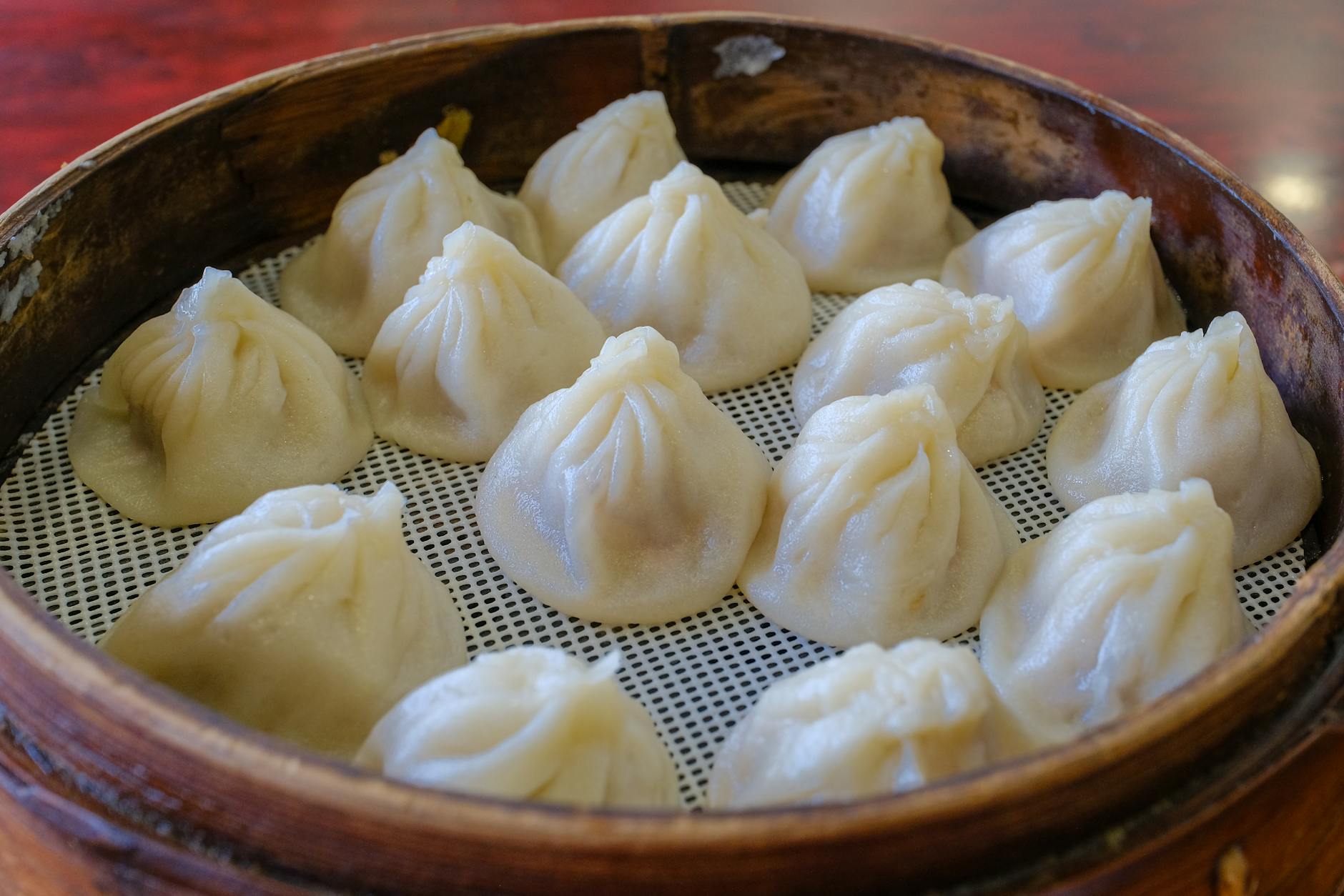
Table of Contents
- What Is Xiaolongbao?
- How to Eat Xiaolongbao
- What Makes a Good Xiaolongbao
- Nanxiang Steamed Bun (Yu Garden)
- Jia Jia Tang Bao
- Lai Lai Xiao Long (Crab Specialist)
- Din Tai Fung
- Fu Chun Xiao Long
- Man Man Tang Bao (Budget Pick)
- Wanshouzhai
- Lin Long Fang
- Yang’s Fry-Dumpling (Shengjianbao)
- Modern and Fusion Xiaolongbao
- Where to Find Crab Roe Xiaolongbao
- Best Xiaolongbao in Shanghai by Budget and Neighborhood
- A Suggested Xiaolongbao Crawl
- Tips for Eating Xiaolongbao in Shanghai
- Frequently Asked Questions
What Is Xiaolongbao?
Xiaolongbao (literally “small basket bun”) traces to Nanxiang, a town now inside Shanghai’s Jiading District, in the 1870s. The dumpling is usually credited to a cook named Huang Mingxian, who took the existing tradition of soup-filled buns (tang bao) and rethought it: a thinner wrapper, and a filling built around solid pork-skin aspic that melts during steaming. By 1900 the technique had moved into central Shanghai, where the Nanxiang Steamed Bun Restaurant—still open today beside Yu Garden—became its most famous early home.
The pork-skin aspic is the clever part. Cooks simmer collagen-rich pork skin until it sets into a firm jelly, mix that cold jelly into the ground-pork filling, and pleat the dumpling shut. The heat of the steamer melts the jelly back into hot broth inside the wrapper—a small piece of kitchen engineering that happens to be delicious.
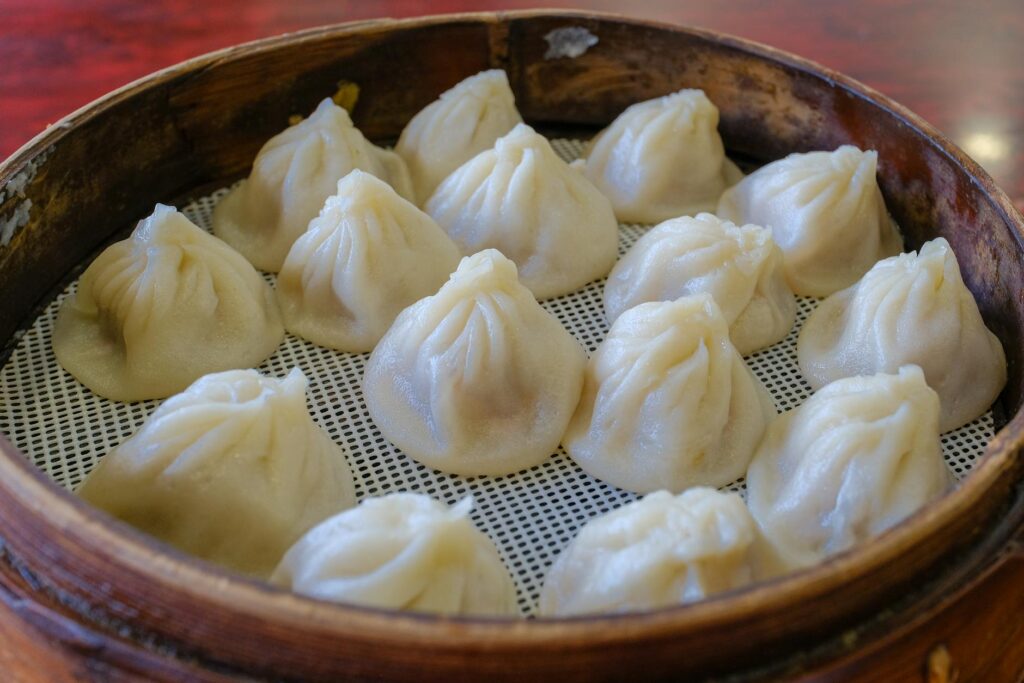
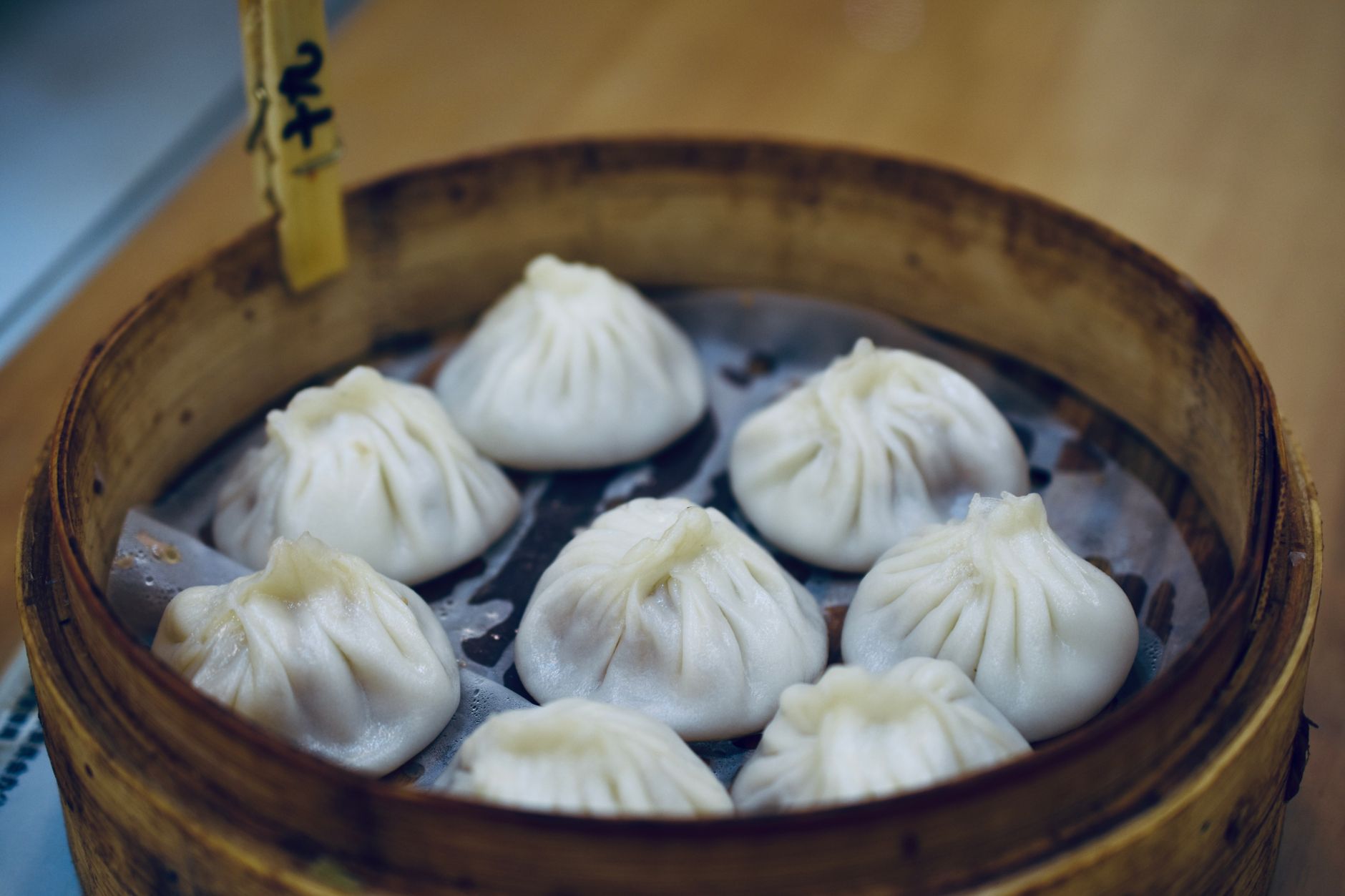
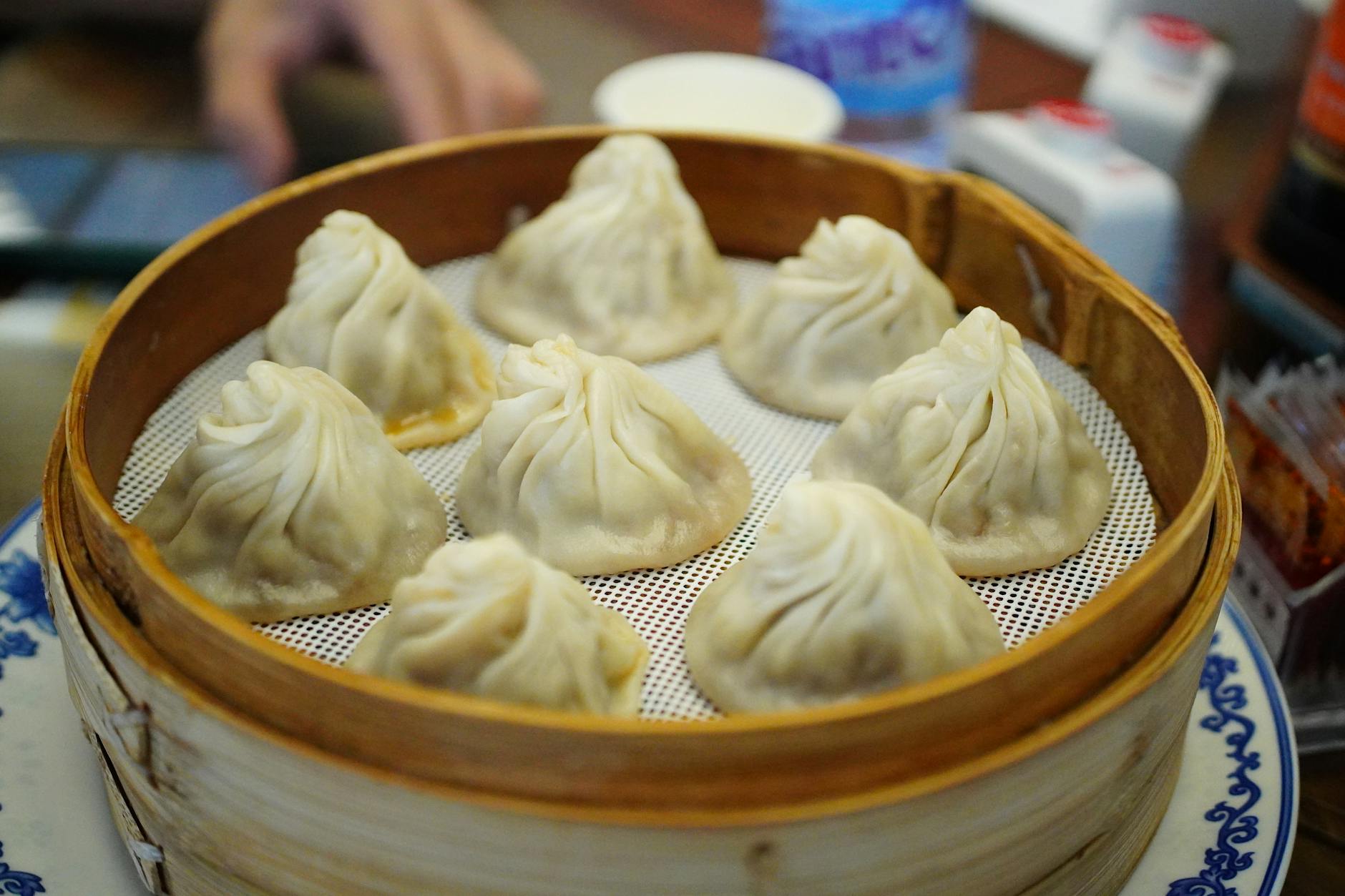
A properly made Shanghai xiaolongbao has a thin, slightly translucent wrapper, a balanced filling that lets the pork and broth lead, and—according to purists—eighteen pleats at the top, though the count varies by maker. It arrives in a bamboo steamer with black vinegar and shredded ginger alongside.
You will find xiaolongbao well beyond Shanghai now, but the city’s version is the reference point. A few terms worth recognizing on a menu here:
- Xiǎolóngbāo (小笼包): the standard pork version.
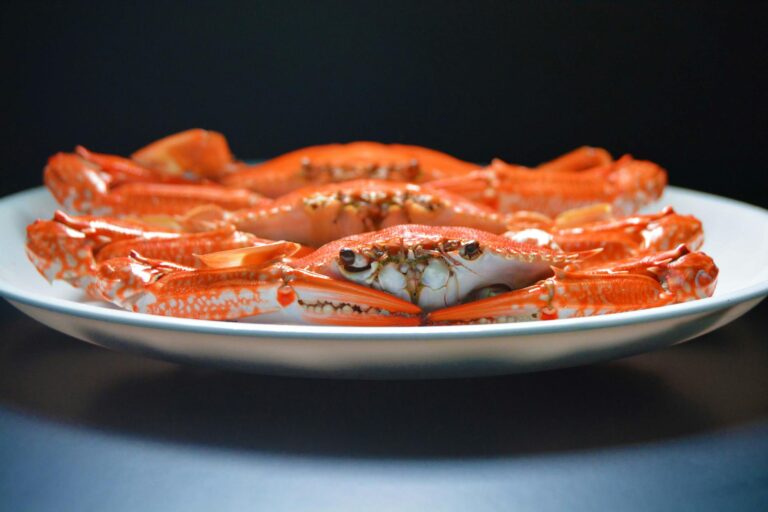
- Xiè fěn xiǎolóngbāo (蟹粉小笼包): crab roe and pork.
- Chún xiè xiǎolóngbāo (纯蟹小笼包): pure crab, no pork. The premium one.
- Sùxiàn (素馅): vegetarian filling.
- Tang bao (汤包): bigger soup-filled buns, sometimes large enough to drink through a straw.
One vocabulary note that saves confusion at the counter: dumplings are sold by the basket, which is called a long (笼). There is no fixed number per basket—it might be six, eight, ten, or twelve—so glance at the menu for how many zhi (只, individual pieces) a basket holds before you order three of them.
How to Eat Xiaolongbao
Technique matters here because xiaolongbao is a soup container as much as a dumpling. Eat it like an ordinary potsticker and the broth runs out before you taste it, which defeats the entire dish. The fix takes about four steps.
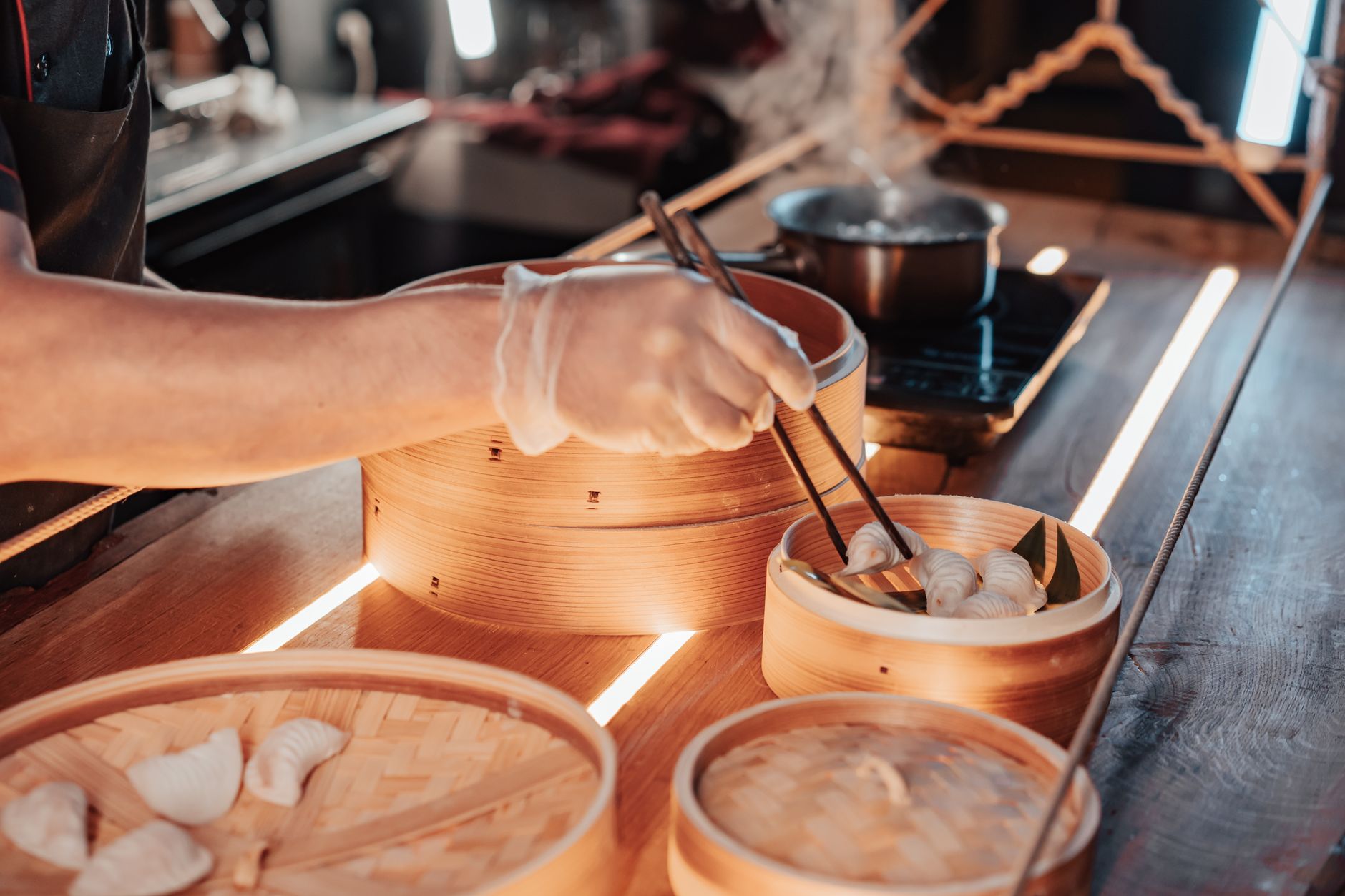
Step 1. Lift the dumpling carefully with chopsticks, holding it by the pleated topknot. Many diners keep a flat-bottomed soup spoon underneath as a safety net.
Step 2. Set the dumpling in the spoon and bite a small hole in the side of the wrapper, then wait about ten seconds. Freshly steamed dumplings are genuinely scalding, and the soup holds heat longer than you expect.
Step 3. Sip the soup straight from the spoon, or tilt the dumpling and drink from the vent. This is the moment the whole thing is built around.
Step 4. Dip in black vinegar with a little ginger—lightly, not a long soak—then eat the dumpling whole or in two bites. A heavy soak waterlogs the wrapper and drowns the pork.
A few etiquette mistakes worth avoiding: do not stand your chopsticks upright in a rice bowl (it echoes a funeral offering), do not try to inhale a whole xiaolongbao in one go unless you enjoy a broth burn, and do not reach for soy sauce. Black vinegar and ginger are the canonical pairing, and they are there to cut the richness, not to be replaced.
What Makes a Good Xiaolongbao
Once you have eaten a few baskets, you start to notice what separates a good xiaolongbao from a forgettable one. Four things do most of the work.
The wrapper. It should be thin enough to look faintly translucent at the base, with the broth almost visibly shifting when you lift the dumpling. Thick, doughy, or gummy skin is the clearest sign of weaker technique. It also has to hold together—a dumpling that has leaked onto the steamer liner has failed before it reaches you.
The soup. There should be a real mouthful of it, hot and a little gelatinous on the lips from the natural collagen, savory rather than salty. Made-to-order shops win here, because soup absorbs into the wrapper the longer a basket sits. If the dumplings arrive lukewarm and slack, the broth has already soaked away.
The filling. Good pork filling tastes of pork first, with the seasoning in support. Crab versions should taste distinctly of crab and its roe, not just of a richer pork. Balance is the whole game; the better shops in Shanghai are admired precisely for restraint.
Freshness and timing. The best dumpling in the city is mediocre if it has sat for ten minutes, which is why locals favor shops that wrap and steam to order even when it means a wait. More on timing in the tips section below.
Nanxiang Steamed Bun (Yu Garden)
The historic original. Founded in 1900 and sitting right beside the Yu Garden bridge in Yuyuan Bazaar, Nanxiang Mantou Dian is the most famous xiaolongbao restaurant in Shanghai and arguably anywhere. It spreads across several floors at different price points, from the ground-floor takeaway window—cheapest, and with the longest line—to the sit-down restaurant upstairs. It carries a Bib Gourmand in the Michelin Guide for the Yu Garden location.
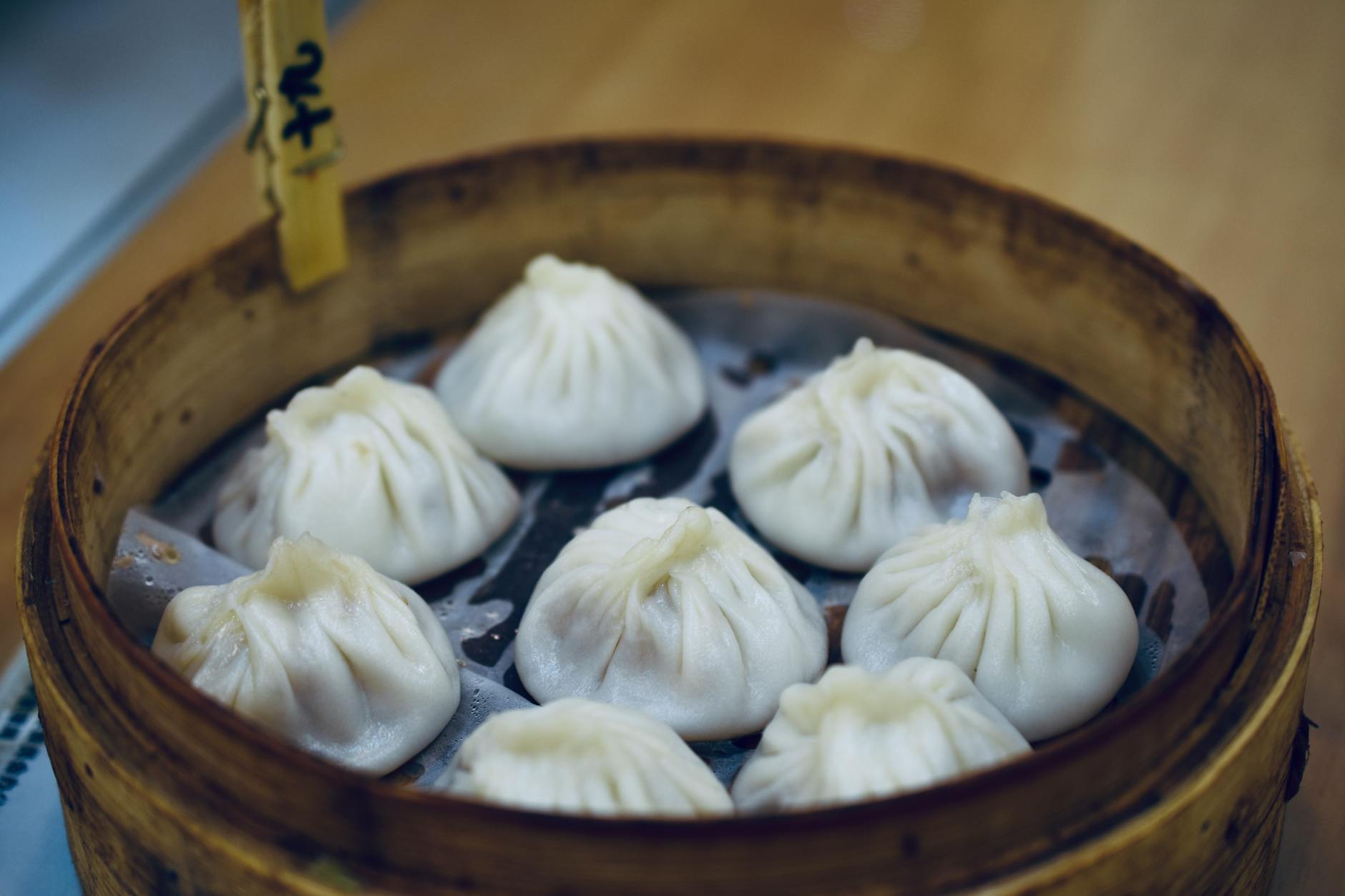
Strengths: A hundred years of heritage that the kitchen still honors. The setting next to Yu Garden makes it an easy stop on any first visit, and the crab roe xiaolongbao here is genuinely good. There is also a supersized soup bun, big enough to drink through a straw, if you want the novelty.
Trade-offs: Ground-floor lines often run past an hour, some regulars feel the dumplings have not kept pace with the best modern shops, and the tourist crush can flatten the experience.
How to handle it: Skip the ground-floor takeaway window and go straight up to the second or third floor, where service is faster and the dumplings are essentially the same. Pair the crab roe version (around ¥60—72 for six) with the standard pork (around ¥30—42).
Address: 85 Yuyuan Old Street, Huangpu. Roughly 9 AM—9 PM daily.
Jia Jia Tang Bao
The local favorite, and the shop a lot of Shanghainese name first. Jia Jia Tang Bao started as a family operation in 1986 and, unlike the chains that chased global expansion, mostly stayed put—though it now runs around nine small branches across town. The original near Huanghe Road, just north of People’s Square, is the one most often praised, and it has earned Michelin Bib Gourmand recognition.
One thing to know: the Huanghe Road shop moved from No. 90 to No. 127 a few years ago, and an unrelated shop with a similar name now sits at the old address. It is not bad, but it is not Jia Jia. If the Huanghe Road line is brutal, the Liyuan Road branch is just as good with a shorter wait.
Strengths: Among the best-tasting xiaolongbao in central Shanghai, wrapped and steamed to order so they arrive properly hot. Affordable, with standard pork around ¥23 for a dozen. Many regulars rate the crab roe here above Nanxiang’s.
Trade-offs: Small rooms, frequently packed, no reservations, and not built for groups over four. Expect to wait at least ten minutes for a made-to-order basket.
How to handle it: Go off-peak, ideally 3—5 PM between the lunch and dinner rushes. A dozen standard pork plus a basket of crab roe is the classic order.
Branches include: Huanghe Road (original area), Liyuan Road, Tianyaoqiao Road, Damuqiao Road. Roughly 7 AM—8 PM.
Lai Lai Xiao Long (Crab Specialist)
If crab xiaolongbao is what you are after, Lai Lai Xiao Long is the specialist. It opened in 2006 around the corner from the Nanjing Road East pedestrian street, and it has built its name on crab and crab-roe dumplings—the meeting of two Shanghai obsessions, the soup dumpling and the hairy crab. The Tianjin Road location picked up a Bib Gourmand in the Michelin Guide Shanghai 2025.
Strengths: Thin wrappers holding an unusually generous amount of soup, and crab dumplings that deliver the flavor of hairy crab without the fiddly work of picking a crab apart. Made to order, and also known for crab xiao huntun (small wontons) in soup. Crab season traditionally runs September through winter, but the crab dumplings are available year-round here now.
Trade-offs: Crab is never cheap, and neither are these—the premium pure-crab and crab-roe baskets climb well above the price of a plain pork basket. It is busy at peak hours, and the original takes a midday break.
How to handle it: Come after about 1:30 PM to dodge the lunch jostle. There is an original Huangpu location near Tianjin Road and a newer Jing’an branch; either works.
Din Tai Fung
Technically Taiwanese rather than Shanghainese, but Din Tai Fung set the global benchmark for precision, so it earns its place. The chain was founded in Taiwan about fifty years ago by Yang Bingyi, who made Shanghai-style soup dumplings well enough that the shop went worldwide. Each dumpling is made to specification—a target weight around 21 grams and a fixed eighteen pleats—and the Shanghai branches rank among the city’s most polished.
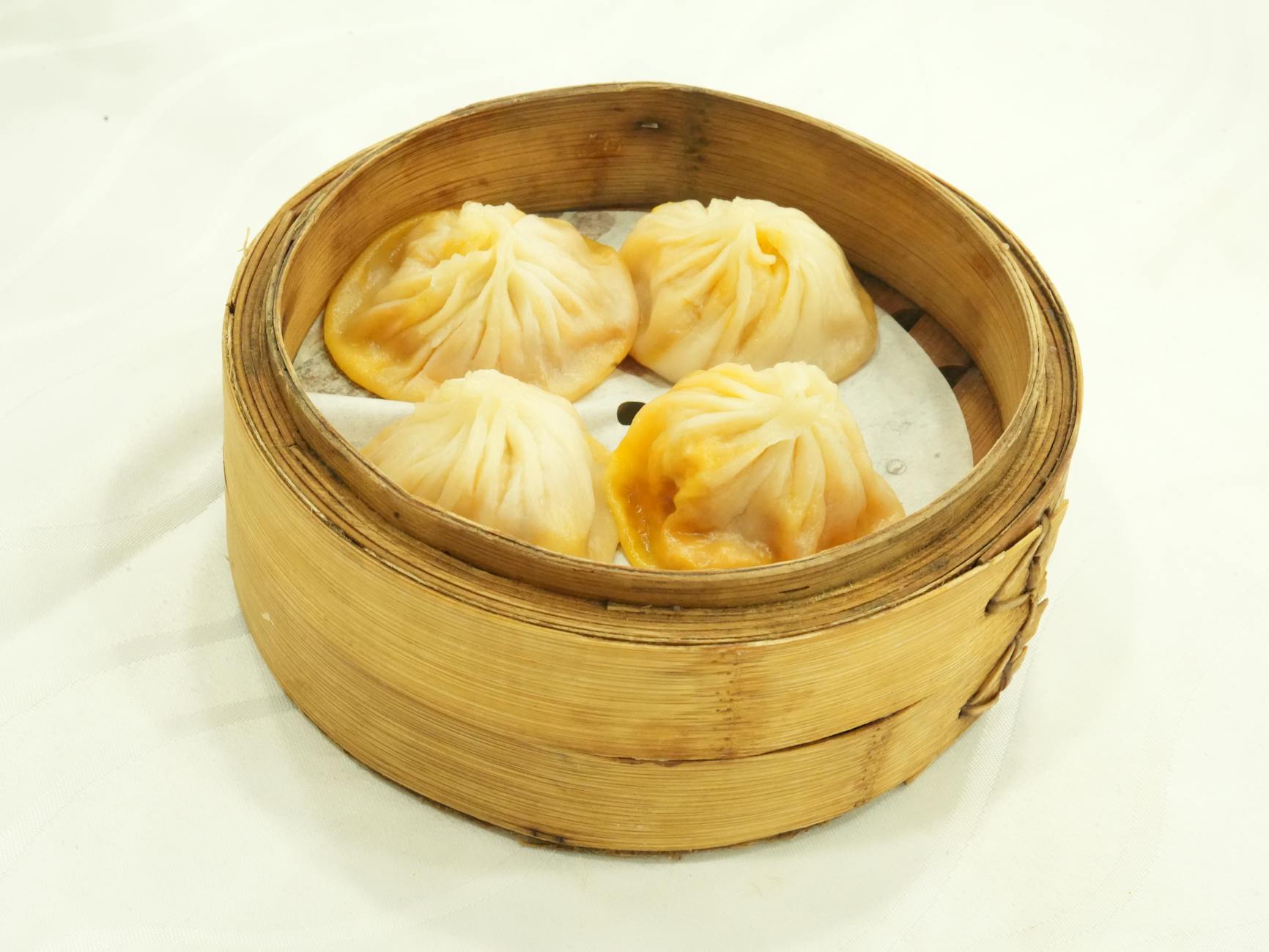
Strengths: The most technically perfect xiaolongbao in the city: uniformly thin wrappers, precisely seasoned filling, efficiently managed lines, and English menus and staff. A good choice for a first visit when you want the textbook version. Their delivery, oddly, holds up—the dumplings travel in trays with individual holsters so they do not stick.
Trade-offs: Critics find it a touch bland next to the local shops and a bit corporate in feel. It is also pricier, roughly ¥60—80 for ten standard pork.
How to handle it: Reserve through the app or by phone. The IFC Mall (Pudong) and Shanghai Centre branches give the smoothest service; you will also find locations in Xintiandi Style, Grand Gateway, and other malls.
Fu Chun Xiao Long
The clean, refined neighborhood favorite, and a genuine old name—Fu Chun dates to 1885 and is recognized as a China Time-Honored Brand. Its xiaolongbao run a cleaner, more delicate broth than the heavier Nanxiang style, which suits diners who prefer balance over richness. The skins are a shade thicker than Lai Lai’s and come across as more rustic, in a good way.
Strengths: An excellent broth-to-pork ratio and a porky, satisfying standard dumpling (around ¥18 for six). Less crowded than the headline spots, with a pleasant local feel. The crab roe dumplings and the crab-topped noodles are both worth ordering.
Trade-offs: A little out of the way for tourists unless you are already nearby, and some branches have limited English on the menu.
Address: Now in Xuhui District after years on Yuyuan Road, plus several other branches. A two-story room that turns out baskets all day.
Man Man Tang Bao (Budget Pick)
For the cheapest good xiaolongbao on this list, Man Man Tang Bao is hard to beat. It is a hole-in-the-wall that still wraps and steams to order, run by a Mr. Li who has been making the same dumplings in Shanghai since the 1990s, now alongside his son. A basket of eight pork soup dumplings runs about ¥13.
Strengths: Excellent value and made fresh despite the tiny kitchen. It opens late and delivers, which almost no proper xiaolongbao shop does. Unusually, Mr. Li also makes a vegetarian version with shepherd’s purse, and the black sesame tangyuan are worth a try. Congee and other Chinese breakfast items appear in the morning.
Trade-offs: It is small—pull up a stool and order from the picture menu—and grab your drinks from the convenience store next door.
Wanshouzhai
One of Hongkou’s old-school dumpling shops, near Lu Xun’s former home. Wanshouzhai has been quietly serving xiaolongbao for decades, and it stays popular with locals who prize a traditional, balanced flavor over anything trendy. The dumplings themselves run a little smaller than average and lean light in seasoning; some Shanghainese will tell you it is the best in the city.
Strengths: Traditional flavor, low prices (roughly ¥18—25 for a standard basket), few tourists, and particularly good tang bao—the larger soup buns.
Trade-offs: Off the usual tourist track, limited English, and often crowded with regulars. Expect to share a table and to assert yourself a little when ordering.
Address: Hongkou District. A good detour if you are staying north of the Bund or want to see a genuinely local spot.
Lin Long Fang
A relative newcomer in the more boutique end of the xiaolongbao world. Lin Long Fang has earned a following among food-minded diners for careful technique, single-source pork, and a proper dining room rather than a stand-and-wait counter.
Strengths: Strong technique and a comfortable atmosphere—the right pick if you want to sit down to a xiaolongbao meal instead of perching on a stool.
Trade-offs: Pricier than the traditional shops and a smaller branch network. Reservations are a good idea for weekend dinners.
Yang’s Fry-Dumpling (Shengjianbao)
Yang’s Fry-Dumpling does not, strictly speaking, serve xiaolongbao at all. It serves shengjianbao, the pan-fried Shanghai cousin. But any honest soup-dumpling guide includes Yang’s, because the two styles are inseparable in Shanghai eating and the contrast teaches you something about both.
What is shengjianbao? A pan-fried, soup-filled bun with a thicker yeasted wrapper and a crisp, browned bottom, topped with sesame and scallions. Bigger than xiaolongbao, and it demands more care when you bite, since the soup sits under that crust.
Strengths: Yang’s shengjianbao are a benchmark of their own. Multiple branches, fast service, and very cheap—around ¥8 for four. It is the ideal contrast stop on a dumpling crawl.
Trade-offs: A different dish entirely, lines at peak times, and it has to be eaten hot—the filling loses its appeal as it cools.
Branches: Wujiang Road (original), Huanghe Road, and several locations next to metro stations.
Modern and Fusion Xiaolongbao
Several Shanghai kitchens build xiaolongbao around contemporary fillings and techniques. Worth a look once you have done the traditional shops. A few of the names below trade on novelty as much as tradition, so set expectations accordingly.
- Paradise Dynasty, a Singaporean chain, is known for a basket of eight non-traditional flavors in colored wrappers—think mala, cheese, truffle, and foie gras. The multi-color “Special Dynasty” basket runs around ¥72. Mall locations.
- Yu Xiang Zhai serves a luxe truffle-pork version, and Lao Ji Shi pairs traditional xiaolongbao with a full benbang (home-style Shanghainese) menu in Old City surroundings.
- Heritage by Madame Zhu’s offers a refined French Concession take with carefully sourced ingredients.
If you would rather chase the dish across the city’s stalls and counters than sit in a mall, our guide to Shanghai street food covers shengjianbao, scallion-oil noodles, and the rest of the early-morning lineup that locals actually eat.
Where to Find Crab Roe Xiaolongbao
Crab roe xiaolongbao (xiè fěn xiǎolóngbāo) are a Shanghai specialty tied to autumn, when freshwater hairy crabs come into season, roughly September through November. Many restaurants now serve a year-round version with preserved crab roe, but the autumn-fresh dumpling is on another level.
Where to go for crab roe: Lai Lai (the specialist, covered above), Nanxiang’s upper-floor baskets, Jia Jia’s seasonal crab special, and Fu Chun’s crab roe version. For a sit-down crab dumpling in the former French Concession, Fu 1015 does a refined take.
Pure crab xiaolongbao (chún xiè) is the most premium version, with no pork at all—expect somewhere around ¥80—150 per basket of ten, and more in peak season. It is worth doing once if you like crab, less so as an everyday order.
Finding the Best Xiaolongbao in Shanghai by Budget and Neighborhood
If you would rather sort by wallet or by where you happen to be standing, here is the short version.
On a tight budget: Man Man Tang Bao (around ¥13 for eight) and Yang’s Fry-Dumpling for shengjianbao (around ¥8 for four) are the cheapest good options. Most neighborhood shops—Jia Jia, Fu Chun, Wanshouzhai—land in the ¥18—30 range for a standard basket, which is still inexpensive by any big-city standard. For more low-cost eating across the city, see our cheap eats in Shanghai guide.
Splurge or special occasion: Pure-crab and crab-roe baskets at Lai Lai or Nanxiang, or a sit-down meal at Lin Long Fang, push the price up but deliver rarer ingredients or a calmer room. For sit-down dining beyond dumplings, our best restaurants in Shanghai roundup goes wider.
Around Yu Garden and the Old City (Huangpu): Nanxiang is right there; Jia Jia’s Huanghe Road area and Lai Lai near Nanjing Road East are a short hop. This is the densest cluster and the easiest for a crawl.
North of the Bund (Hongkou): Wanshouzhai is the local pick.
Xuhui and the former French Concession: Fu Chun, plus the refined crab and modern options. Pudong: Din Tai Fung at IFC Mall is the reliable choice. If a soup-dumpling breakfast appeals, our Shanghai breakfast guide covers where locals start the day.
A Suggested Xiaolongbao Crawl
If your schedule allows, a half-day xiaolongbao crawl is one of the more distinctive things you can eat your way through in Shanghai. The point is comparison: by the end you will know which style you actually prefer, which is more useful than any single ranking.
11:30 AM → Jia Jia Tang Bao. Start with a baseline basket of standard pork. Pay attention to the wrapper thickness, the volume of soup, and how the pork is seasoned. Around ¥23.
12:30 PM → Nanxiang, Yuyuan Bazaar. Order one basket each of standard pork and crab roe, and compare them to your Jia Jia baseline. Around ¥75.
1:30 PM → Yu Garden. Walk through the garden for atmosphere and digestion. Admission to the bazaar is free; the garden proper charges a small entry fee.
2:30 PM → Yang’s Fry-Dumpling, Wujiang Road. Switch to shengjianbao for the pan-fried contrast lesson—same soup-filled idea, completely different texture. Around ¥8.
4:00 PM → Din Tai Fung (IFC Mall), optional finale. The technically perfect version, for contrast with the handmade shops. Reserve ahead. Around ¥65.
Total comes to roughly ¥175, about US$25. You will be full, and you will have a real opinion about Shanghai xiaolongbao—which is the entire point.
Tips for Eating Xiaolongbao in Shanghai
Eat them fresh. Xiaolongbao should be eaten within a few minutes of steaming, because the soup absorbs into the wrapper as it sits. If a basket has clearly been waiting when it reaches you, it is fair to ask for a fresh one.
Time your visits off-peak. Arriving at 11:30 AM or 5:30 PM beats the worst of the rush; 2—4:30 PM is the calmest window at most shops.
Order more than one variety. Standard pork plus crab roe is the canonical pairing, and tasting both in a single meal is how you learn the difference.
Skip the soy sauce. Black vinegar and ginger are the right condiments. Soy sauce overwhelms the broth.
Avoid peak hours at Nanxiang. Weekend lunches there can mean an hour-plus wait, while weekday afternoons are usually walk-in friendly even at the most famous shop in the city.
Bring the right payment. Most shops take WeChat Pay or Alipay; some small ones are cash only, and few accept foreign credit cards. A little cash is a useful backup. For setting up mobile payments, visas, and other logistics, see our Shanghai practical tips for tourists.
Frequently Asked Questions
What is the difference between xiaolongbao and shengjianbao?
Xiaolongbao are smaller, thin-skinned, and steamed in bamboo baskets. Shengjianbao are larger, with a thicker yeasted dough, pan-fried until the bottom is crisp and topped with sesame and scallions. Both are soup-filled.
Which is the best xiaolongbao in Shanghai?
There is no single answer, which is part of the fun. For local flavor, many point to Jia Jia Tang Bao; for crab, Lai Lai; for technical consistency, Din Tai Fung; for heritage and convenience, Nanxiang. The honest move is to try two or three and decide for yourself.
Is Din Tai Fung “real” xiaolongbao?
Yes. Din Tai Fung is Taiwanese rather than Shanghainese, but the technique and tradition are the same, and its Shanghai branches rank among the city’s most consistent—especially for first-time visitors who want reliable quality.
What is the best season for xiaolongbao?
Standard pork xiaolongbao are good year-round. Crab roe versions are best in autumn (September—November), when fresh hairy crabs are in season. Many Shanghainese consider that autumn stretch the high point of the local food calendar.
How much do xiaolongbao cost in Shanghai?
Standard pork baskets at neighborhood shops run about ¥13—30. Crab roe versions are roughly ¥40—80. Premium pure-crab baskets run ¥80—150 or more. Din Tai Fung sits at the higher end for the standard version.
Can vegetarians eat xiaolongbao?
Increasingly, yes. Some shops, Man Man among them, make a vegetarian version (sùxiàn xiǎolóngbāo) with mushroom, bamboo shoot, or shepherd’s purse and a vegetable-based aspic. Confirm first, since not every location stocks it daily.
Are xiaolongbao halal?
Standard xiaolongbao contain pork and are not halal. Beef-filled versions are uncommon but turn up at some halal restaurants near Shanghai’s Muslim quarters, such as around the Huxi Mosque.
How many xiaolongbao should I order?
A basket of about ten per person works as a snack; two baskets per person makes a meal. Mix varieties so you can compare.
Do xiaolongbao freeze well?
Frozen xiaolongbao are sold in supermarkets and reheat reasonably, but they are not in the same league as fresh. The whole point of the dish is the moment you bite into freshly melted broth.
Are there cooking classes for xiaolongbao in Shanghai?
Yes. Several cooking-tour operators run xiaolongbao-making classes, usually two to three hours and somewhere around ¥300—700. The Chinese Cooking Workshop in the former French Concession is a popular option.
Can I bring xiaolongbao home?
Frozen versions are sold at supermarkets and can travel in checked baggage. Some restaurants—Din Tai Fung among them—sell take-home boxes designed for the trip.
Plan Your Xiaolongbao Visit
The best xiaolongbao in Shanghai is the one you eat at the right shop, at the right time, with the right technique. Start with Jia Jia or Nanxiang, add Din Tai Fung for the modern benchmark, fold in Lai Lai if you love crab, and finish with Yang’s for the pan-fried contrast.
For the wider picture, see our Shanghai food guide, browse the best restaurants in Shanghai for sit-down meals, graze through Shanghai street food for the stalls, and read where to stay in Shanghai to base yourself near the major dumpling shops.
Eat slowly, compare across a couple of shops, and argue with your friends about which one did it best. That is exactly how locals do it.
For more background on the dish, see Xiaolongbao on Wikipedia.