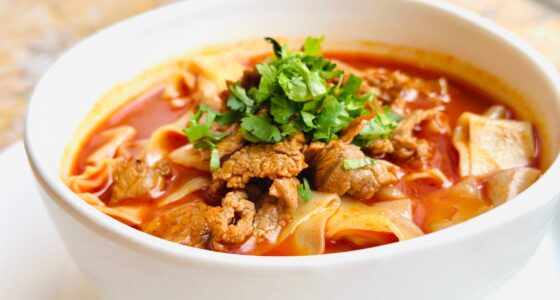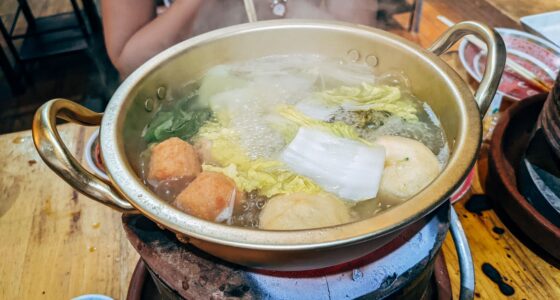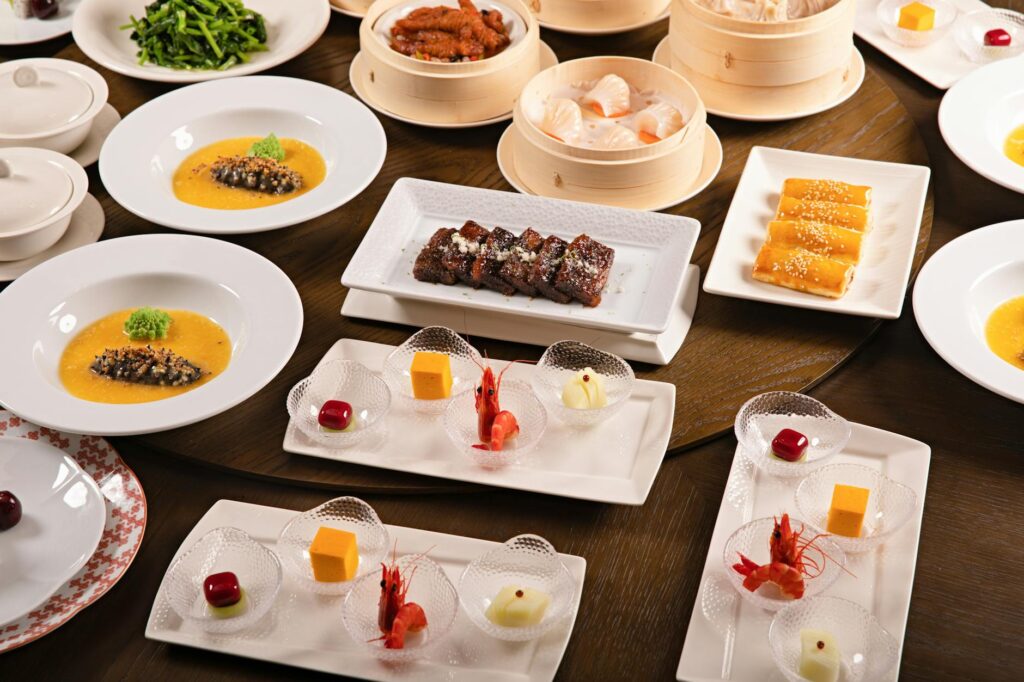
Of China’s eight great culinary traditions, Shanghainese cuisine (本帮菜, Benbang cai) is known for a sweet, soy-braised style rooted in 1840s-onward urban cosmopolitanism. This 2026 guide covers the essential dishes you must try when visiting Shanghai — the family-style classics that define the city’s table, where to eat them, and how to pace your culinary tour. It focuses on the dishes themselves: what each one is, its Chinese name, how it is made, and how to order it. For restaurant lists and neighbourhood picks see our Shanghai food guide; for what to eat standing up, our street food guide.

Table of Contents
- The Character of Shanghainese Food
- Where Shanghainese Cuisine Came From
- 15 Essential Dishes to Try
- How the Dishes Are Actually Made
- Braised Specialties
- Dumplings & Buns
- Seafood & River
- Noodles & Rice
- Sweet & Snacks
- What to Eat in Each Season
- How to Order Shanghainese Cuisine
- Dish Cheat Sheet
- A Sample Order for Two and for Four
- Where to Try Each
- Eating Etiquette
- Common Mistakes
- FAQ
The Character of Shanghainese Food
Shanghainese cuisine is defined by:
- Sweetness — sugar in everything; rock sugar in braises is signature
- Red-braising (红烧, hong shao) — slow stewing in soy sauce, rice wine, sugar, ginger
- Freshwater fish and shellfish — proximity to the Yangtze
- Rice wine and Shaoxing wine — used liberally in braising
- Soy sauce based glazes — dark, glossy, glazed
- Mild spice — never the burn of Sichuan; warmth from ginger and white pepper
- Seasonal hairy crab in autumn
- Borrowed elements — Cantonese dim sum, Jiangnan classical dishes, and Western influences (since 1843)
Cooks here have a four-character shorthand for the whole style: 浓油赤酱 (nóng yóu chì jiàng), “heavy oil, red sauce.” It is a description rather than a compliment, and Shanghainese people say it about their own food with some affection. The dark shine on a plate of braised pork is the point, not an accident. Anyone arriving from Chengdu expecting chilli will find this cooking soft-edged and, at first, oddly sweet — give it two meals before deciding.
Where Shanghainese Cuisine Came From
Benbang cai means, literally, “our own gang’s food” — the home cooking of the Shanghai county area during the Ming and Qing periods, before the city became a treaty port. It was salty, oily and thrifty, built around river fish, pork and preserved vegetables. What turned it into a cuisine was the population that arrived after 1843.
Migrants brought their kitchens with them, in a rough order. Anhui food came first and dominated the early restaurant trade. Then Su-Wuxi cooking arrived from Suzhou and Wuxi, bringing the sugar — the sweetness people now consider definitively Shanghainese is largely a Wuxi import. Cantonese, Huaiyang and Beijing restaurants followed. By the 1930s, Jiangsu and Zhejiang restaurants accounted for roughly half the dining rooms in the city, and benbang cooks had absorbed the refinement of Huaiyang technique into their own heavier base.
Running alongside that is haipai cuisine (海派菜), the Western-influenced strand. Before 1937 Shanghai had more than 200 Western restaurants, many of them Russian and cheap, serving a soup-and-single-dish formula that ordinary Shanghainese could afford. Two things survive from it and are still eaten daily: luo song tang (罗宋汤), a tomato-and-beef borscht adapted to local taste, and zha zhu pai (炸猪排), a breaded pork cutlet eaten with a dark Worcestershire-style sauce called 辣酱油. Neither is Chinese in origin; both are unmistakably Shanghainese now. It is worth ordering one just to understand how porous this city’s food has always been.
The upshot for a visitor: much of what you will be served as “Shanghainese” is really Jiangnan — the wider delta region that includes Suzhou, Hangzhou, Ningbo and Wuxi. A day trip to Suzhou or Hangzhou will show you the same dishes cooked with less sugar and more restraint.
15 Essential Dishes to Try
- Hong Shao Rou (红烧肉) — red-braised pork belly
- Xiaolongbao (小笼包) — soup dumplings
- Shengjianbao (生煎包) — pan-fried buns
- Drunken Chicken (醉鸡) — cold chicken in Shaoxing wine
- Squirrel Mandarin Fish (松鼠桂鱼) — pine-cone-shaped sweet-sour fish
- Yangzhou Fried Rice (扬州炒饭) — adopted classic
- Scallion Oil Noodles (葱油拌面) — simple lunch staple
- Lion’s Head Meatballs (狮子头) — large braised pork meatballs
- Eight Treasure Duck (八宝鸭) — stuffed celebration dish
- Hairy Crab (大闸蟹) — autumn delicacy
- Sweet-and-Sour Spareribs (糖醋小排) — Shanghainese red-vinegar style
- White-bait Omelette (银鱼炒蛋) — tiny river silverfish
- Drunken Shrimp (醉虾) — live freshwater shrimp in rice wine
- Stir-fried Shanghai Bok Choy (清炒上海青) — fresh winter green
- Eight Treasures Rice (八宝饭) — sweet New Year glutinous rice
Five more that locals order constantly and menus in English often omit: xun yu (熏鱼), “smoked” fish that is actually fried then steeped in sweet soy, served cold; si xi kao fu (四喜烤麸), braised wheat gluten with wood ear, dried lily buds and peanuts, sweet and spongy; ma lan tou (马兰头), chopped wild greens pressed with tofu into a cold mound; cao tou (草头), clover shoots flash-fried with rice wine; and yan du xian (腌笃鲜), a spring soup of fresh pork, cured pork and bamboo shoots. Ask for these by pointing at the characters and you will get a noticeably warmer reception than ordering sweet-and-sour anything.
How the Dishes Are Actually Made
Four techniques account for most of the menu, and knowing them makes the whole cuisine legible.
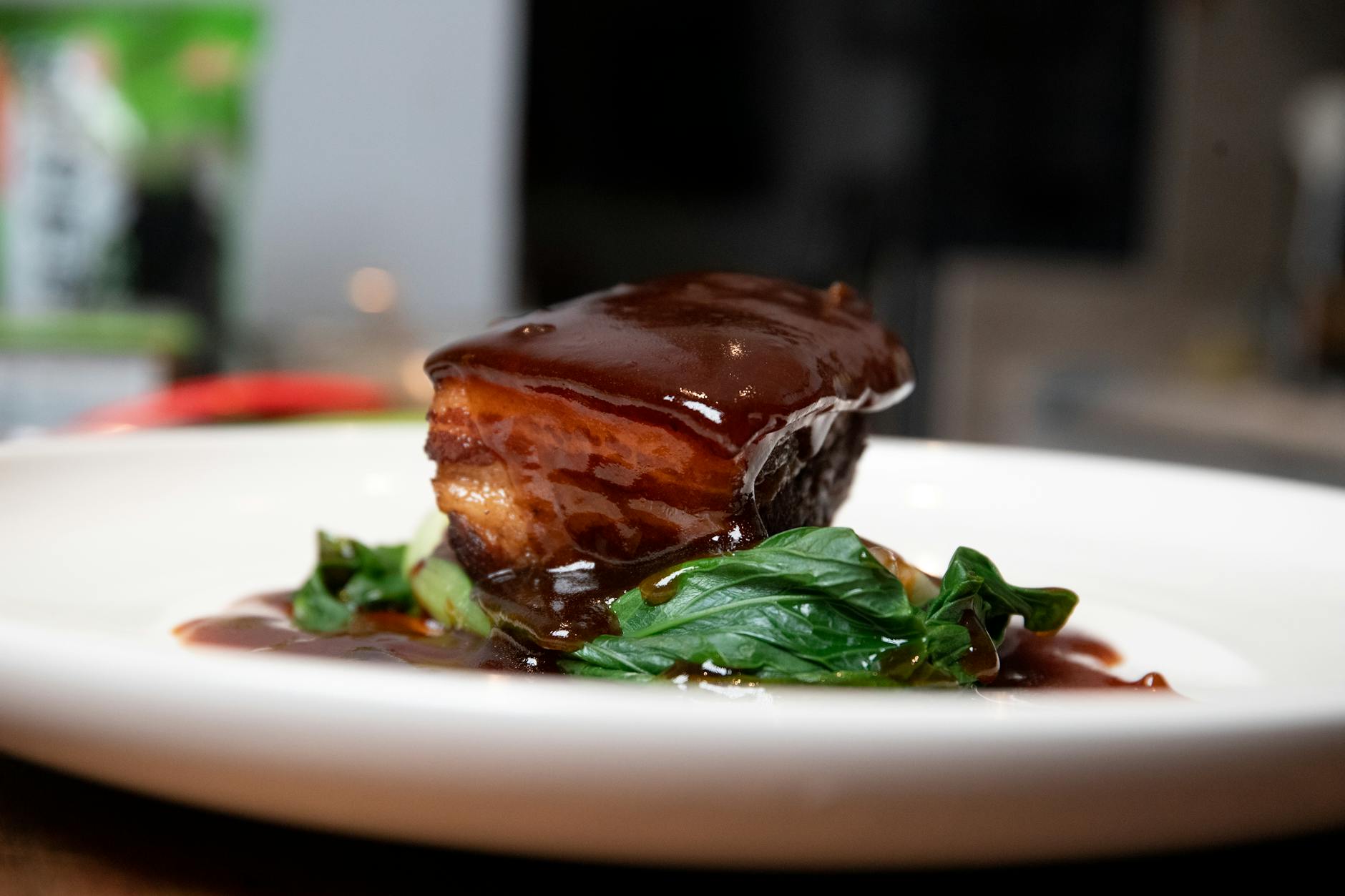
Red-braising (红烧). Meat is blanched, browned, then simmered in dark soy for colour, light soy for salt, Shaoxing wine, ginger, spring onion and rock sugar rather than granulated — rock sugar gives the glaze its lacquer shine without the flat sweetness of table sugar. The liquid reduces at the end until it coats. That is the entire method behind hong shao rou, lion’s head meatballs and half a dozen fish dishes.
Drunken preparation (醉). Chicken, crab or shrimp is either poached and then steeped in Shaoxing wine and salt, or in the case of drunken shrimp served raw in the wine. The alcohol both seasons and preserves. Everything in this family is eaten cold, and it appears at the start of the meal, not the end.
The aspic trick. Xiaolongbao are not filled with soup. Cooled pork stock sets into a jelly, the jelly is chopped into the mince, and steaming melts it back into liquid inside the wrapper. That is why the wrapper must be thin but strong, why the dumplings collapse if they sit, and why a good xiaolongbao is a test of a kitchen. Our xiaolongbao guide ranks the places that get it right.
Sugar as seasoning, not dessert. Sugar in benbang cooking is used the way salt is used elsewhere — to round out soy sauce and vinegar rather than to sweeten. Sweet-and-sour spareribs use rice vinegar and sugar in near-equal measure; scallion oil noodles have sugar in the sauce that most people never taste as sweetness. If you want to cook any of this at home, our cooking classes guide lists the schools that teach it in English.
Braised Specialties
Hong Shao Rou (Red-Braised Pork)
The defining dish of Shanghainese cuisine. Pork belly cubes slow-braised for 2+ hours in dark soy sauce, Shaoxing wine, rock sugar, ginger, and star anise until they reach a glossy mahogany red. The fat melts; the lean shreds; the sauce reduces to a syrupy glaze. Best at: Jesse Restaurant, Lao Zhengxing, Yong Yi Ting at Mandarin Oriental. ¥80–180/portion.
Order it with plain rice and a green vegetable, and share it — a portion is six to eight cubes of almost pure richness, and two people rarely finish one alone. Some kitchens add tea eggs or dried bamboo to the pot, which is regional variation rather than error.
Lion’s Head Meatballs (Shi Zi Tou)
Large (4–6 cm diameter) pork meatballs slow-braised with cabbage and mushrooms in soy-based sauce. Comfort food at its finest. ¥40–80.
Drunken Chicken
Cold chicken pieces marinated in Shaoxing rice wine, ginger, and salt. Served at room temperature; alcoholic kick is gentle. A classic banquet starter. ¥60–100.
Eight Treasure Duck
Whole duck stuffed with sticky rice, lotus seeds, water chestnuts, mushrooms, ham, and other “treasures.” Slow-braised whole. Celebration dish. ¥150–300.
This is a genuine banquet dish, not a two-person order — it needs a table of six and about 40 minutes’ notice at most restaurants. If there are two of you, order lion’s head instead and save the duck for a group.
Dumplings & Buns
Xiaolongbao (Soup Dumplings)
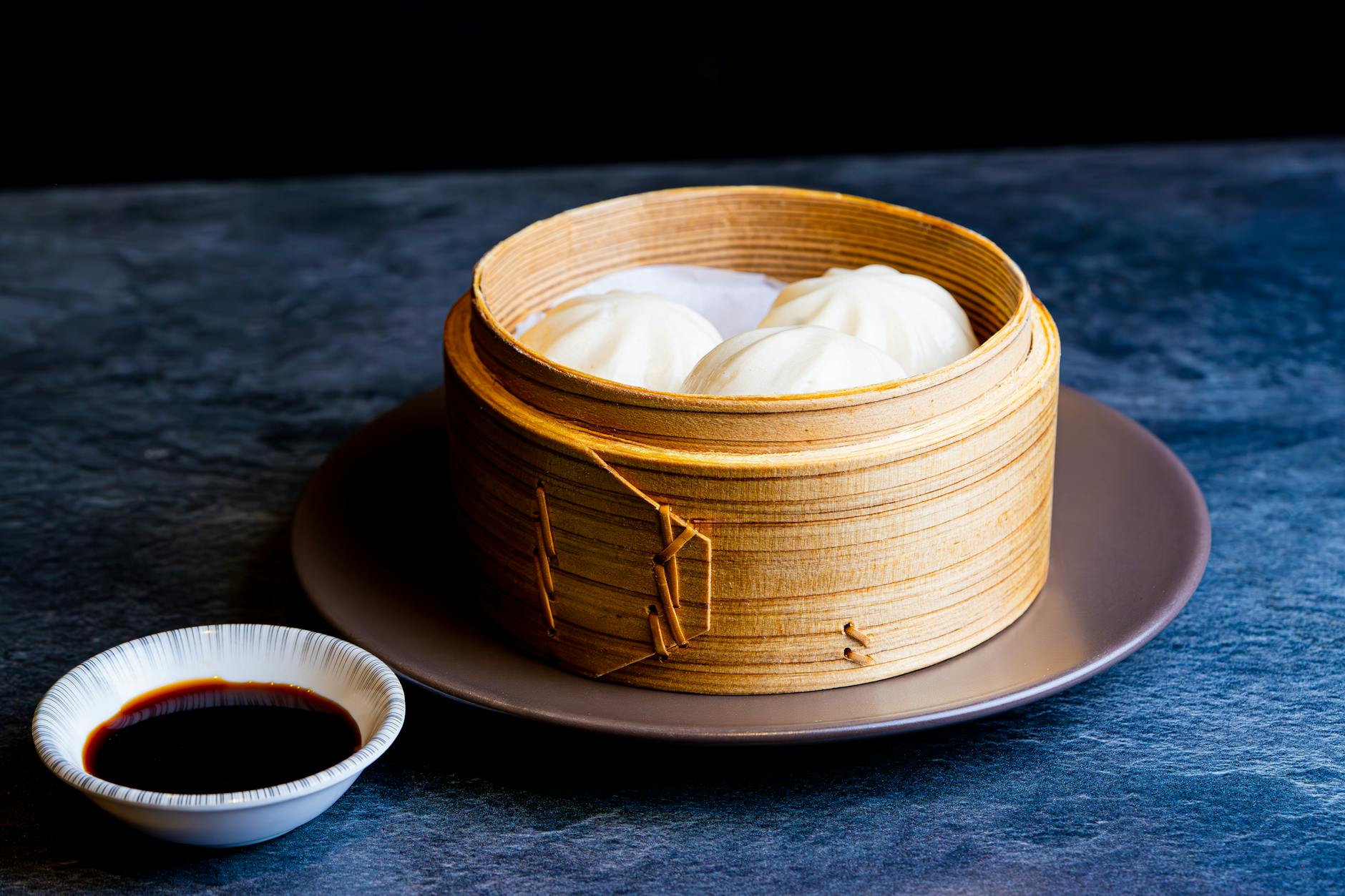
The world’s most famous Shanghainese export. Thin translucent wrapper around pork (or pork-crab combination) and aspic that melts during steaming, releasing soup. Eat carefully: nip the top, sip soup, then dip in vinegar-ginger.
Best at: Nanxiang Steamed Bun Restaurant (Yu Garden original), Din Tai Fung (chain; reliable), Jia Jia Tang Bao (purist), Yong Yi Ting (modern). ¥50–120/dozen. See our xiaolongbao guide.
Shengjianbao (Pan-Fried Buns)
Bigger than xiaolongbao; thicker dough wrapper, pan-fried until crispy on bottom and bottom-up steamed. Filling is pork + aspic. Best at: Yang’s Fry Dumpling chain (the famous one), Da Hu Chun (heritage). ¥25/4 pieces.
A naming quirk worth knowing: Shanghainese call these 生煎馒头 (shengjian mantou), not 生煎包. Elsewhere in China mantou means a plain unfilled steamed bun, so the local usage confuses visitors and other Chinese equally. Two schools compete — thin-skinned with the seam down, and thicker-skinned with the seam up. Da Hu Chun is the classic of the second style.
Seafood & River
Squirrel Mandarin Fish
Mandarin fish (a freshwater perch-relative) scored to resemble a pine cone, deep-fried, then doused in sweet-sour sauce. Theatrical and delicious. The pine-cone resemblance suggests a squirrel when served. ¥150–280.
Strictly this is a Suzhou dish that Shanghai adopted, which is a fair summary of half this menu. Order it for a table of four or more; it arrives whole and does not reheat.
Hairy Crab (Autumn)
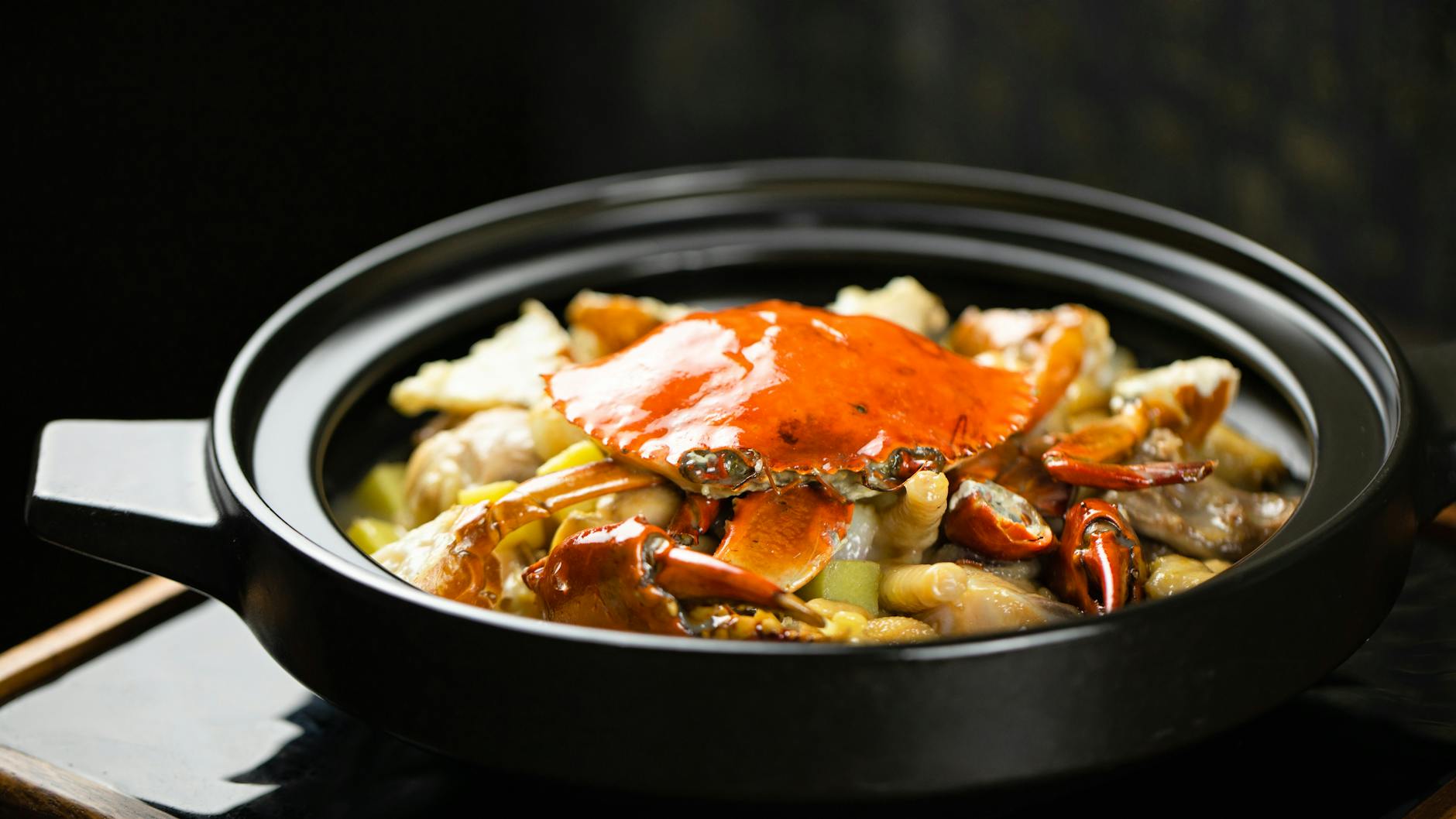
The headline autumn dish — September through November. Female crabs in October (golden roe peak); male crabs in November (white cream peak). See our hairy crab guide. ¥80–350/crab.
The species is the Chinese mitten crab, and the prized ones come from Yangcheng Lake near Suzhou. Steamed and served with ginger vinegar and warm rice wine — nothing else, because the point is the roe. Expect to spend 20 minutes on one crab and to be given a small mallet and pick.
Drunken Shrimp
Live freshwater shrimp marinated briefly in Shaoxing rice wine, then served still moving. An acquired-taste dish; some travelers love it, some don’t. ¥80–150.
White-bait Omelette
Tiny river silverfish (each about 4cm) lightly fried into egg, retaining the fish’s translucent ghostly form. ¥60–120.
Noodles & Rice
Scallion Oil Noodles (Cong You Ban Mian)
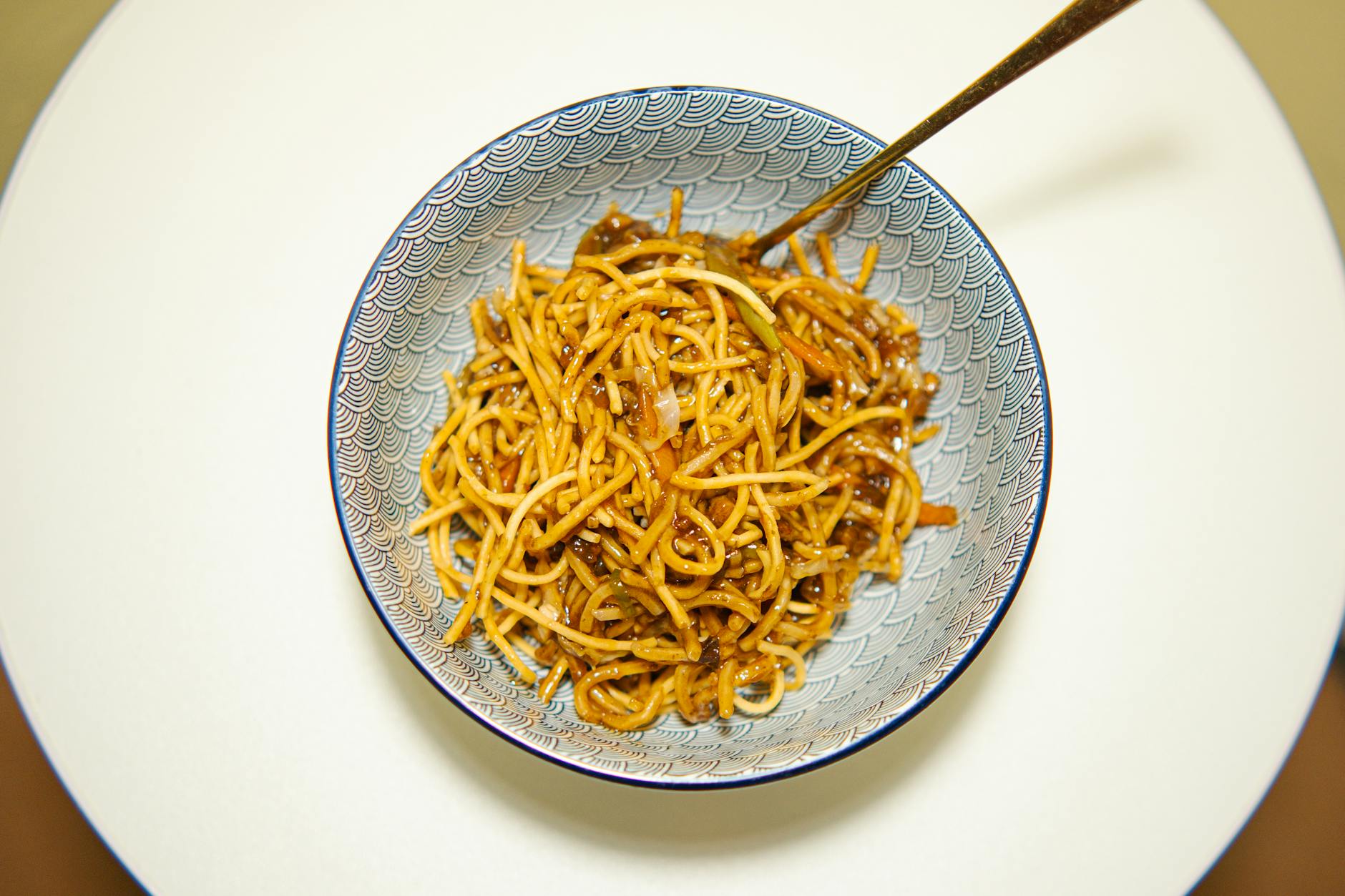
The Shanghainese lunch staple. Thin noodles tossed with seasoned scallion-infused oil, soy sauce, and sometimes shredded scallion. Simple, addictive. ¥15–30.
The technique is the whole dish: spring onions are fried slowly in oil until they blacken and the oil takes on the flavour, then discarded. Good versions add dried shrimp. It is often ordered alongside a bowl of yellow croaker noodle soup rather than as a meal on its own.
Yangzhou Fried Rice
Adopted from Yangzhou but ubiquitous in Shanghai. Egg, char siu (Cantonese-style sweet pork), shrimp, and peas tossed with rice. ¥30–80.
Bian Dan Mian (Wandering Noodle Cart Noodles)
Historic Shanghai street-food tradition. Vendors carried noodle ingredients in pole-balanced “bian dan” baskets. Light broth + thin noodles + scallion + sesame oil. Rare today; some heritage restaurants preserve it. ¥25–40.
Eight Treasures Rice
Sweet glutinous rice with eight types of dried fruit (lotus seeds, jujube, longan, peanut, etc.) topped with red bean paste. Traditional Chinese New Year dessert. ¥60–120.
Sweet & Snacks
- Tangyuan (sweet rice balls) — Lantern Festival staple; ginger broth
- Sesame Tangyuan — Yunnan version with black sesame paste
- Sweet osmanthus rice cakes — autumn-fragrant glutinous rice cake
- Drunk Pear — Shaoxing wine-soaked pear
- Sweet potato in rock sugar — winter comfort dessert
- Red bean ice cream — modern Shanghai dessert
- Soy milk + youtiao — breakfast staple. See our breakfast guide
What to Eat in Each Season
Shanghainese cooking is more seasonal than most visitors realise, and ordering off-season is the quickest way to a disappointing meal.
- Spring (March–May) — bamboo shoots are the event. Yan du xian soup, braised spring bamboo, and the wild greens ma lan tou and cao tou all peak now and taste of nothing much by June. Green almonds and broad beans appear too. See Shanghai in spring.
- Summer (June–August) — cold dishes carry the table: drunken chicken, smoked fish, chilled cucumber. River eel and river shrimp are at their best. Sweltering weather makes the heavy braises hard work, and most locals shift to noodles.
- Autumn (September–November) — hairy crab, and everything else is secondary. Osmanthus flowers scent cakes and syrups in October. This is the single best eating month of the year; see Shanghai in autumn.
- Winter (December–February) — the braises come into their own, along with cured meats hanging outside shops, eight-treasure rice around New Year, and the tenderest Shanghai bok choy of the year, sweetened by frost.
How to Order Shanghainese Cuisine
A Shanghainese menu is organised by category, not by course, and it is normally handed over as a QR code these days rather than on paper. The order in which dishes are listed is the order in which they arrive.
- 冷菜 (leng cai), cold dishes — ordered first and eaten first. Smoked fish, drunken chicken, kao fu, ma lan tou. Two for a table of two to four. ¥20–45 each.
- 热菜 (re cai), hot dishes — the main body of the meal. One braise, one fish or seafood, one lighter stir-fry.
- 蔬菜 (shu cai), vegetables — never skip these. Greens with garlic are ¥25–50 and cut the richness of everything else.
- 汤 (tang), soup — served with or near the end, not first.
- 主食 (zhu shi), staples — rice, noodles, fried rice. Ordered last and often arriving last, which surprises people.
How much to order. The working rule is one dish per person plus one, plus rice. Four people order five dishes. Portions are larger than Western restaurant portions and the whole table shares, so ordering per head is how visitors end up with far too much food.
Practicalities. Most mid-range and casual restaurants now take orders by scanning a QR code at the table, with a Chinese-only interface; your phone’s translation camera handles this reasonably well, and staff will bring a paper menu if you ask. Payment is by Alipay or WeChat Pay almost everywhere — our payment apps guide covers the setup, and our language tips cover the rest. Pointing at the Chinese characters below works everywhere.
Dish Cheat Sheet
Print this or screenshot it. Prices are for a mid-range benbang restaurant; casual places run lower and the fine-dining rooms considerably higher.
| Dish | Chinese | What it is | Course | Typical price |
|---|---|---|---|---|
| Hong shao rou | 红烧肉 | Pork belly braised to a dark glaze | Hot main | ¥80–180 |
| Xun yu | 熏鱼 | Fried fish steeped in sweet soy, served cold | Cold starter | ¥30–60 |
| Si xi kao fu | 四喜烤麸 | Braised wheat gluten, wood ear, peanuts | Cold starter | ¥25–45 |
| Zui ji | 醉鸡 | Cold chicken in Shaoxing wine | Cold starter | ¥60–100 |
| Shizi tou | 狮子头 | Large braised pork meatballs with cabbage | Hot main | ¥40–80 |
| Songshu guiyu | 松鼠桂鱼 | Whole sweet-and-sour mandarin fish | Hot main, 4+ people | ¥150–280 |
| Cao tou | 草头 | Clover shoots flashed with rice wine | Vegetable | ¥30–55 |
| Yan du xian | 腌笃鲜 | Pork and bamboo shoot soup (spring) | Soup | ¥50–90 |
| Cong you ban mian | 葱油拌面 | Noodles in scallion oil | Staple | ¥15–30 |
| Da zha xie | 大闸蟹 | Steamed hairy crab (autumn only) | Seasonal | ¥80–350 each |
A Sample Order for Two and for Four
For two, about ¥220–300. One cold dish — smoked fish. One braise — hong shao rou, shared. One green vegetable, whatever is on the seasonal board. One bowl of scallion oil noodles between you instead of rice. That is three dishes plus a staple, it comes to roughly ¥110–150 a head at a good mid-range benbang restaurant, and it covers the cold-hot-vegetable-staple shape of a proper meal without waste.
For four, about ¥600–800. Two cold dishes (smoked fish and kao fu), then lion’s head meatballs, a whole steamed or sweet-and-sour fish, a green vegetable and a soup, with rice for the table. Six dishes for four people. Add xiaolongbao at the start if you have not had them yet, though purists will tell you dumplings are breakfast and street food rather than dinner — a point worth arguing about over the second beer.
In autumn, add a crab each and cut one hot dish, because a hairy crab plus everything else is more food than anyone needs. Budget context for a whole trip is in our cost guide, and cheaper alternatives in cheap eats.
Where to Try Each
Premium Shanghainese
- Jesse Restaurant — modern Shanghainese; reservations needed; ¥350–600/person
- Yong Yi Ting at Mandarin Oriental Pudong — luxe modern Shanghainese
- Yi Long Court at the Peninsula — premium Cantonese-Shanghainese
- Lao Zhengxing — heritage restaurant; classic preparations
Mid-Range Shanghainese
- Xiao Nan Guo — reliable chain
- Hai Di Lao (hotpot, broader Chinese)
- Crystal Jade Modern — Cantonese-Shanghainese fusion
- Family Li Imperial — old-school formal
Casual / Street
- Nanxiang Steamed Bun (Yu Garden) — xiaolongbao classic
- Yang’s Fry Dumpling — shengjianbao chain
- Sipailou Road food street — local breakfast
- Wujiang Road — tourist street food
Hairy Crab Specialists
- Wang Bao He — 1744-founded crab specialist
- Cheng Long Hang — Bund area
- Wu Yue Ren Jia — Suzhou-style crab
Fuller lists, including fine dining and the food streets, are in our best restaurants guide and food streets guide.
Eating Etiquette
- Family-style ordering — multiple dishes shared from the center
- Rice comes at end — refusing rice at the start is not rude in Shanghainese tradition
- Chopstick rules apply — see our etiquette guide
- Hairy crab — eaten with hands; allow 20–30 min/crab
- Xiaolongbao technique — small nip in top, sip soup, then dip
- Toast with rice wine at celebrations
- Don’t tip — service charges sometimes built into upscale bills
- Leave a small amount — finishing every grain implies you weren’t fed enough
Common Mistakes
- Ordering one dish each. Four people ordering four mains plus rice will not finish half of it. One per person plus one.
- Skipping the cold dishes. They are the most distinctively Shanghainese part of the menu and the part visitors most often miss.
- Ordering hairy crab in April. Out of season it is frozen or farmed thin, costs almost as much, and tastes of very little.
- Treating xiaolongbao as dinner. Locals eat them for breakfast or as a snack. Nothing stops you, but a benbang dinner is a different meal.
- Expecting spice. This is not that cuisine. If you want heat, order a Sichuan or Hunan restaurant instead and enjoy it on its own terms.
- Assuming everything sweet is dessert. Sugar is a seasoning here, and the sweetest thing on the table may well be the ribs.
- Eating only at the famous names. The best hong shao rou you have in Shanghai will probably come from a place with plastic stools and no English sign.
Frequently Asked Questions
What is Shanghainese cuisine?
Benbang cai (本帮菜) is the regional cuisine of Shanghai — characterised by sweetness, red-braising, freshwater seafood, mild spice, and 19th-century cosmopolitan influences. Distinct from Cantonese, Sichuan, or northern Chinese cuisines.
What are the most famous Shanghainese dishes?
Red-braised pork (hong shao rou), xiaolongbao soup dumplings, drunken chicken, squirrel mandarin fish, hairy crab (autumn), shengjianbao pan-fried buns, and scallion oil noodles are the consistent top picks.
Where is the best Shanghainese restaurant?
For modern fine dining: Jesse Restaurant or Yong Yi Ting at Mandarin Oriental. For heritage: Lao Zhengxing or Family Li Imperial. For casual classics: Xiao Nan Guo. For xiaolongbao: Nanxiang or Din Tai Fung.
Is Shanghainese food spicy?
No — Shanghainese cuisine is mild. Heat comes from ginger and white pepper, not chili. Distinct from Sichuan, Hunan, or Yunnan cuisines.
What’s the difference between Shanghainese and Cantonese cuisine?
Shanghainese: sweeter, heavier braising, more soy-sauce-based, freshwater seafood. Cantonese: lighter, less sweet, more saltwater seafood, dim sum brunch. Different cooking philosophies.
When should I eat hairy crab in Shanghai?
September through November is peak season. October for females (golden roe); November for males (white cream). Outside this window, frozen or out-of-season — significantly inferior.
How much does Shanghainese fine dining cost?
¥350–600/person at modern fine dining (Jesse). ¥150–250 at heritage restaurants. ¥80–150 at mid-range chains. ¥30–80 at casual street.
Can vegetarians eat Shanghainese cuisine?
Possible but limited. Most signature dishes are meat-heavy. Vegetarian alternatives: Buddhist temple cuisine (mock meat), modern Chinese vegetarian (Vegetarian Lifestyle chain). See our vegetarian guide. Note that kao fu, ma lan tou and cao tou are vegetarian and appear on almost every benbang menu.
Why is Shanghainese food so sweet?
The sugar arrived with cooks from Suzhou and Wuxi in the late 19th century and stuck. In benbang cooking sugar functions as a seasoning that rounds out soy sauce and vinegar, not as sweetening — rock sugar in particular gives braises their glaze without a sugary taste.
How many dishes should I order for two people?
Three plus a staple: one cold dish, one braise, one vegetable, then rice or noodles. The general rule across group sizes is one dish per person plus one. Portions are meant for sharing and are larger than Western equivalents.
What is the difference between benbang cai and Jiangnan or Huaiyang food?
Benbang cai is specifically Shanghai’s own tradition — heavier, oilier and sweeter. Jiangnan is the wider delta region including Suzhou, Hangzhou, Ningbo and Wuxi, and Huaiyang is the refined northern-Jiangsu style built on knife work and clear flavours. Shanghai absorbed elements of both, so most “Shanghainese” restaurants serve a blend.
What Shanghainese dishes should I order that tourists usually miss?
The cold starters — xun yu (熏鱼), si xi kao fu (四喜烤麸) and ma lan tou (马兰头) — plus cao tou (草头) among the vegetables and yan du xian (腌笃鲜) soup in spring. Also try zha zhu pai, the Shanghai pork cutlet, for a taste of the city’s Western-influenced haipai cooking.
Plan Your Food Trip
Combine with our pillar guides on Shanghai food, xiaolongbao, and cooking classes. For background, see Shanghai cuisine on Wikipedia.