Eating meat-free in Shanghai is easier than almost anywhere else in mainland China, and it keeps getting easier. Chinese Buddhist kitchens have been turning tofu skin and wheat gluten into convincing mock duck for well over a thousand years, the former French Concession is thick with plant-based cafés, and ordinary neighbourhood restaurants increasingly mark meat-free dishes on the menu. This guide to vegetarian and vegan food in Shanghai covers where to eat at every price level, what to order in a restaurant with no vegetarian menu at all, the Mandarin that actually works, and the traps — broth, lard, oyster sauce — that catch people out.
Table of Contents
- How Vegetarian and Vegan Food in Shanghai Works
- Buddhist Temple Restaurants
- Chinese Vegetarian Restaurants
- Shanghainese Dishes That Are Already Meat-Free
- International Vegan Restaurants
- Vegan Cafés & Brunch
- Cheap Vegetarian and Vegan Food in Shanghai: Canteens, Buffets and Street Snacks
- Veggie Options at Regular Restaurants
- Hotpot, Barbecue and Eating with a Group
- Mandarin Phrases for Vegetarians
- Tricky Situations
- Vegan Groceries & Snacks
- Delivery Apps, Payment and Ordering In
- Where to Base Yourself If You Eat Plant-Based
- A Worked Example: One Day of Eating
- Mistakes First-Timers Make
- FAQ
How Vegetarian and Vegan Food in Shanghai Works
Three separate traditions feed into the city’s meat-free eating, and they barely overlap. Understanding which one you are dealing with tells you what the menu will look like and what it will cost.
- Buddhist vegetarian cuisine — over a thousand years of Chinese mock-meat tradition. Tofu, mushroom, wheat gluten, and yam-based “meats.” Best at temple dining halls and dedicated Buddhist restaurants. Inherently vegan-friendly.
- Vegetarian Chinese restaurants — modern chains and standalone places serving meat-free Chinese cuisine for non-Buddhist diners. Some plant-based, some lacto-vegetarian.
- International vegan — Western-style cafés, salad bowls, vegan burgers, plant-based brunches. Concentrated in the French Concession.
The single most useful thing to learn is the character 素 (sù). It means vegetarian, and it appears on shop signs and as a prefix on dish names — 素饺 (vegetarian dumplings), 素面 (vegetarian noodles), 素鸡 (vegetarian “chicken”). If a sign has 素食 on it, everything inside is meat-free.
Be realistic about the gap between vegetarian and vegan. Chinese cooking uses very little dairy and eggs turn up less often than in Western food. The problem is stock. A plate of stir-fried greens can be cooked in chicken fat and nobody will think to mention it, because to most Chinese cooks a splash of stock is seasoning rather than an ingredient. There is a specific term for people who eat around it — 锅边素 (guōbiān sù), “vegetarian beside the pot.” Knowing that word tells a server exactly how strict you are.
Buddhist Temple Restaurants
These are the most interesting meals you will eat, and often the cheapest. Some close early, so check dinner hours before you set out.
Jade Buddha Temple Vegetarian Hall
Inside the Jade Buddha Temple complex on Anyuan Road, Putuo District. Classic Chinese Buddhist mock-meat menu: vegan “fish,” “duck,” “beef,” wheat-gluten “shrimp.” Quiet, contemplative setting. Lacto-vegetarian (occasional egg/dairy); ask for vegan options. If you only want a simple bowl, the temple also serves noodles with double mushrooms.
Entry to the temple is free for most of the year; the exceptions are Lunar New Year’s Eve and the first fifteen days of the first lunar month. Hours are usually 08:00–16:30. Metro Line 13 stops at Jiangning Road; check the station signs for the exit nearest the temple. See our guide to temples in Shanghai for what to combine it with.
Longhua Temple Vegetarian Restaurant
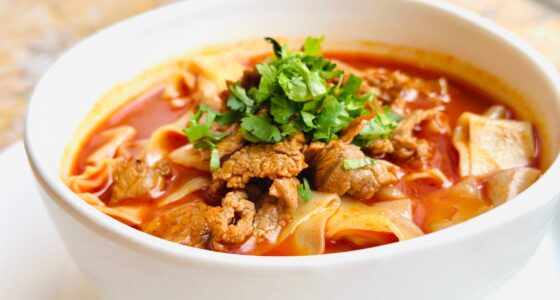
Inside the Longhua Temple complex in Xuhui District, cooking in the same Buddhist tradition. Sunday dim-sum-style brunch is popular with families. The signature is the vegetarian noodle bowl — chewy noodles in a deep mushroom broth — alongside kaofu (spongy wheat gluten braised with shiitake, wood ear and day lily), mock duck and mock ham. The takeaway counter sells mung bean cakes and, at Mid-Autumn, vegetarian mooncakes. Metro Lines 11 and 12 stop at Longhua.
Chunfeng Songyuelou (春风松月楼)
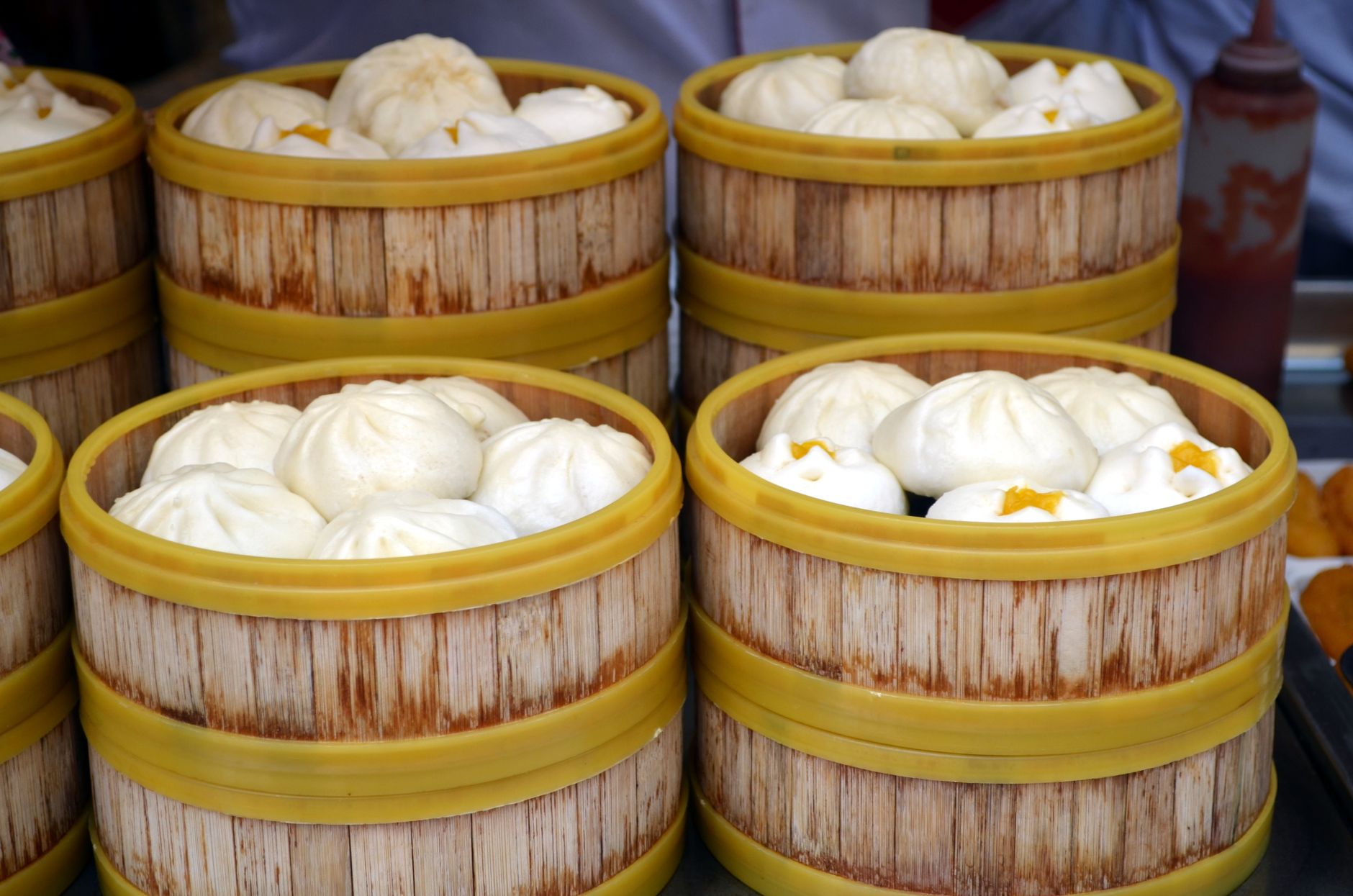
One of Shanghai’s oldest vegetarian restaurants, trading since 1910 near the old City God Temple in Huangpu. It opens daily from early morning into the evening and is very cheap. The vegetable-stuffed buns (素菜包) are the reason to come. It is a five-minute walk from Yu Garden, which makes it the obvious lunch stop on an Old City morning.
One quirk: strict monastery kitchens avoid the “five pungent” alliums — garlic, onion, leek, scallion and chives — on the grounds that they inflame the passions. Food cooked this way is labelled 无五辛 (wú wǔ xīn) and tastes cleaner than you expect. Most lay Buddhist restaurants use garlic freely, so this applies mainly inside temple walls.
Chinese Vegetarian Restaurants
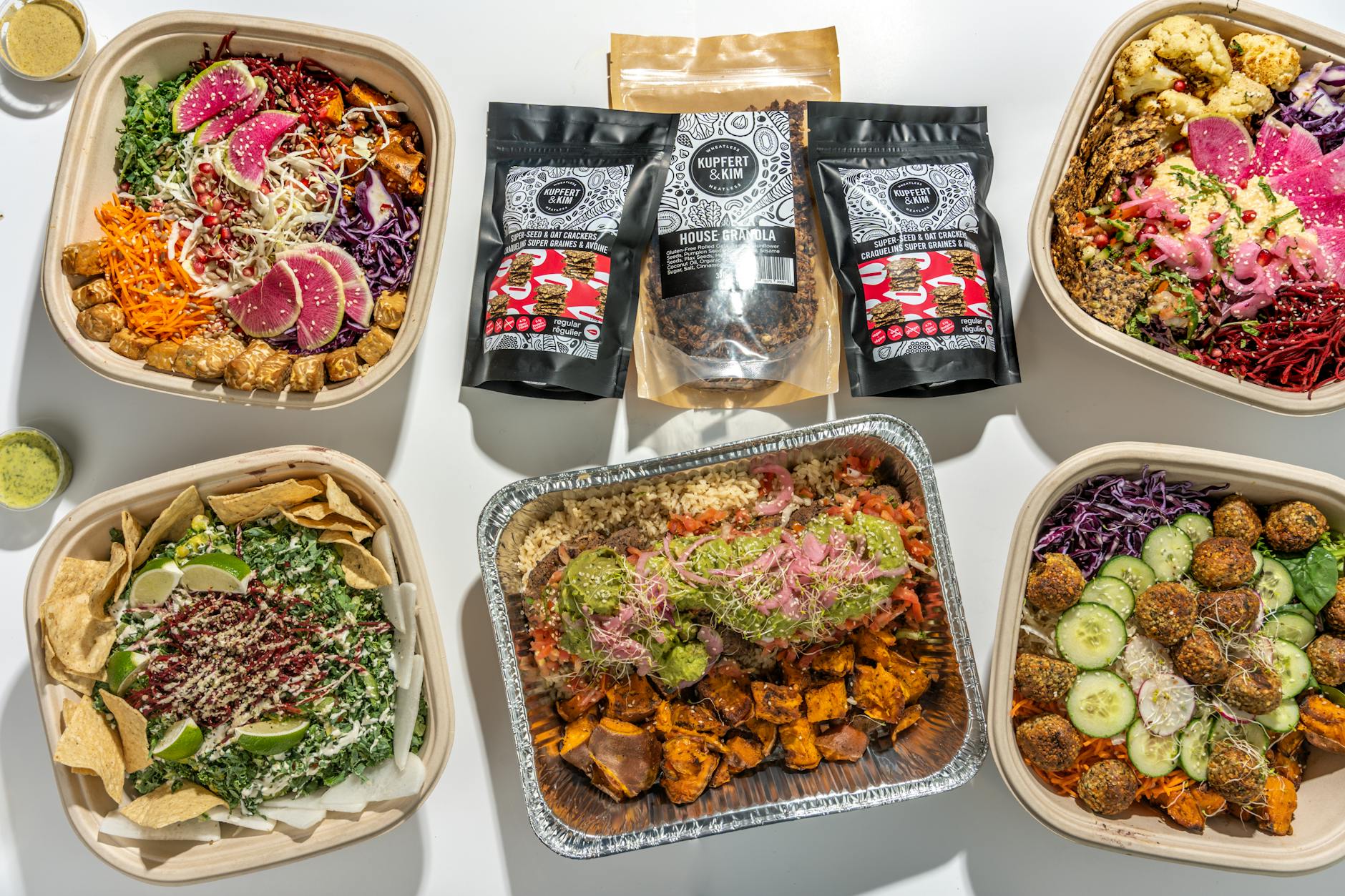
- Vegetarian Lifestyle (枣子树) — modern Chinese vegetarian chain; clean and easy entry-point. The branch to head for is on the first floor of Shanghai Palace, 77 Songshan Road (Huangpu), near Middle Huaihai Road. Spinach dumplings and mock sausage are what regulars order.
- Fu He Hui — Michelin-listed vegetarian fine dining at 1037 Yuyuan Road, Changning. Reservations needed weeks ahead; ask for the current tasting-menu price when you book. Its Michelin Guide entry is the fastest way to check its current star status.
- Wu Guan Tang (五观堂素食) — vegetarian cooking with no imitation meat and nothing fried. The Xinhua Road branch at number 349, its oldest in Shanghai, is the pleasant one.
- Gong De Lin (功德林) — heritage 1922 Shanghai Buddhist vegetarian, also written “Godly.” Flagship at 445 Nanjing West Road. Order the mock duck and the tofu dressed to imitate crab. Service runs in three blocks: 07:00–09:30, 11:00–15:30 and 17:00–21:00.
- Pure & Whole — the exception on this list: a Western-style vegetarian chain doing salads, wraps, veg burgers and pasta. Its Pudong branch is at Kerry Parkside, 1378 Huamu Road.
- Dancing Dumplings (舞蔬尚饺) — 177 Guo’an Road, Yangpu; check it is open before making the trip. Meat-free dumplings, steamed buns and vegetarian soup dumplings. Read our xiaolongbao guide for what you are comparing them to.
- Su Ren / Veg Inn — 1585 Huashan Road, Xuhui. Fully vegan, Buddhist and Tibetan influences, no alcohol.
Shanghainese Dishes That Are Already Meat-Free
You do not have to eat mock duck for a week. Local Shanghainese cooking — běnbāng cài — has a decent bench of genuinely vegetarian classics that any ordinary restaurant will have:
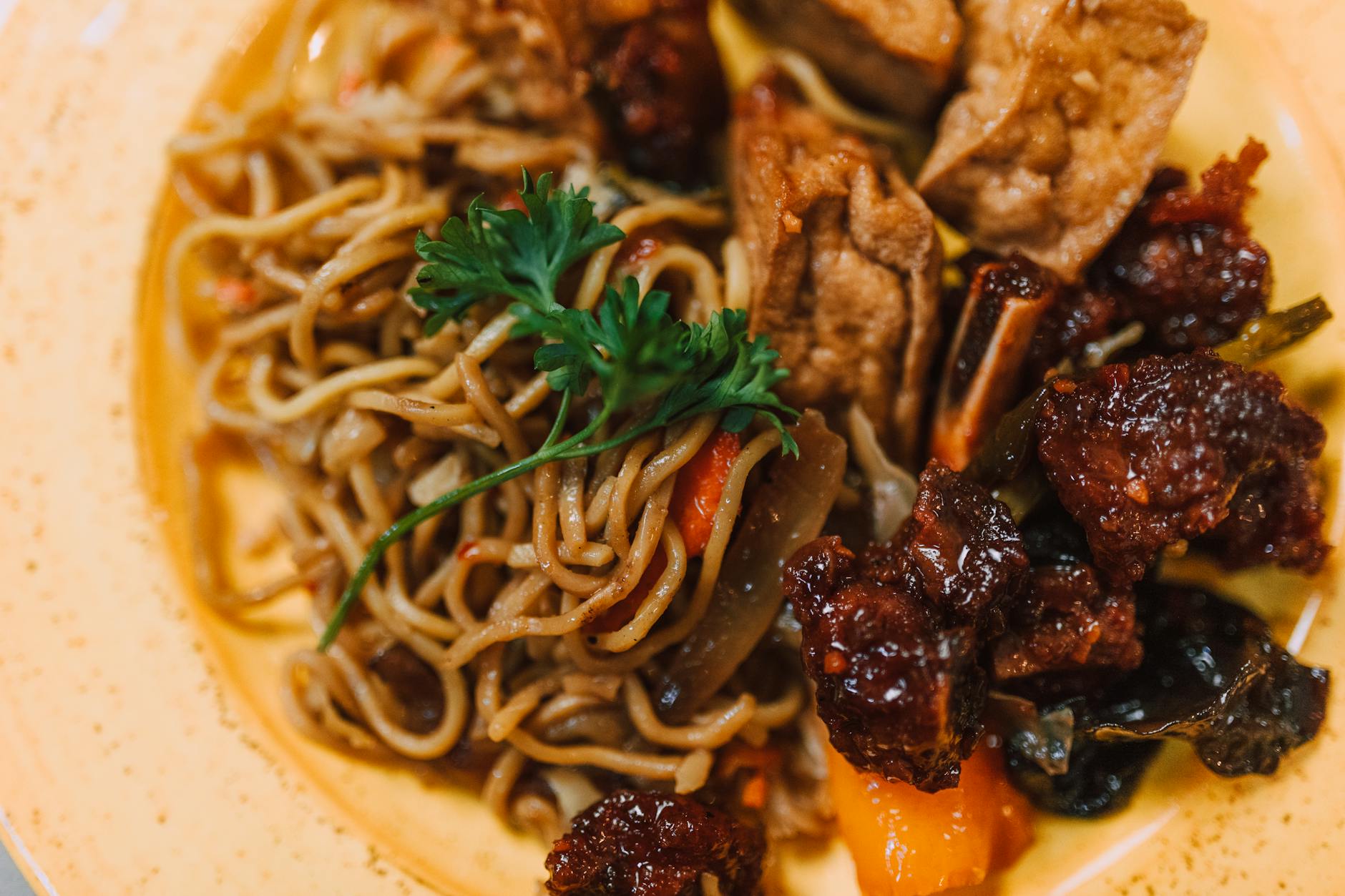
- 四喜烤麸 (sìxǐ kǎofū) — braised wheat gluten with shiitake, wood ear, day lily and peanuts, served cold and sweet-savoury. A proper Shanghai staple; if you are vegan, ask how it was cooked.
- 素鸡 (sù jī) — “vegetarian chicken,” pressed rolls of tofu skin braised in soy and sugar. Cold, cheap, everywhere.
- 马兰头拌香干 (mǎlántóu bàn xiānggān) — chopped Indian aster with pressed tofu and sesame oil. Spring dish, vegan.
- 油焖笋 (yóumèn sǔn) — bamboo shoots braised in soy and sugar. Best March to May when the shoots are new.
- 葱油拌面 (cōngyóu bànmiàn) — scallion oil noodles. Vegan in principle, but many places finish it with dried shrimp (开洋). Say 不要开洋.
- 青团 (qīngtuán) — green glutinous rice balls sold around Qingming in spring. Red bean filling is vegan; the salted-egg-and-pork-floss version is not.
Two local favourites that look safe and are not: 生煸草头 (stir-fried clover greens) is traditionally finished with lard, and 八宝饭 (eight treasure rice pudding) usually is too. Our Shanghai food guide covers the meat-heavy half you will be skipping.
International Vegan Restaurants
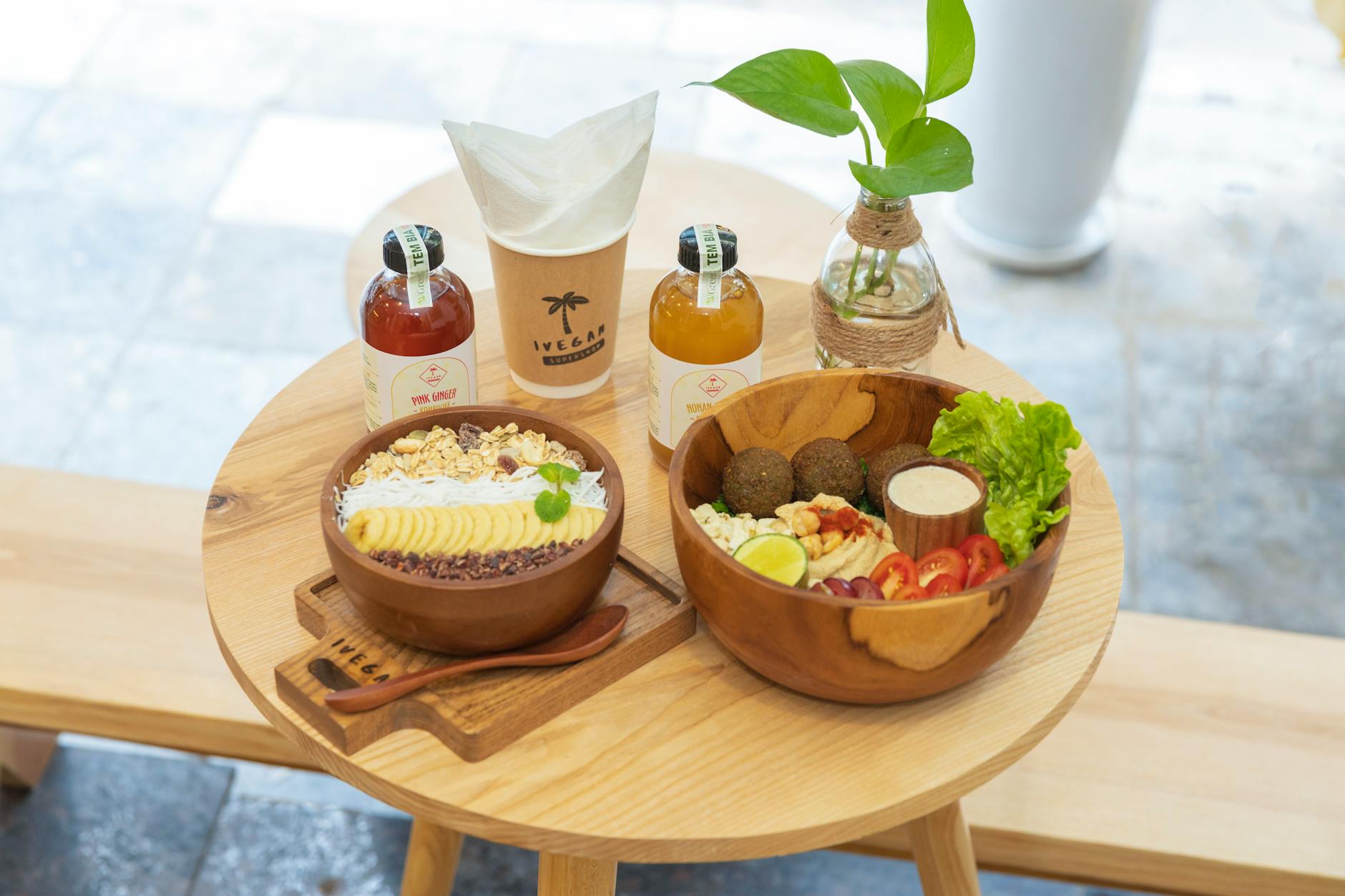
- Ru Pure Vegan — L4-03, Bohua Plaza, 388 Shanhaiguan Road. Vegan pizza, a terrace, and an afternoon tea set.
- DULi — 227 Yanping Road, where it moved from Donghu Road at the end of 2023. Small and plant-based.
- Qing Chun by Perma — fourth floor of the Wood Zone at Taikoo Li Qiantan, 500 Dongyu Road, Pudong. Taiwanese-influenced vegan, useful if you are staying east of the river.
- Vegegood (素来很好) — has left Madang Road for Qiantan in Pudong, at Unit 103, 279 Dongyu Road. Confirm the address before you go.
If you want to cross-check any of these against current opening status — Shanghai restaurants close and move quickly — HappyCow’s Shanghai listings are the most reliably updated English-language source.
Vegan Cafés & Brunch
- Baker & Spice — pastries with vegan options; multiple locations
- Wagas — chain; ask staff which dishes are vegan
- Le Bistrot — French-style with vegan brunch on Wuyuan Road
- Pure Brew Coffee — oat milk, vegan pastries; multiple French Concession locations
- RAW Foods — raw vegan bowls and smoothies
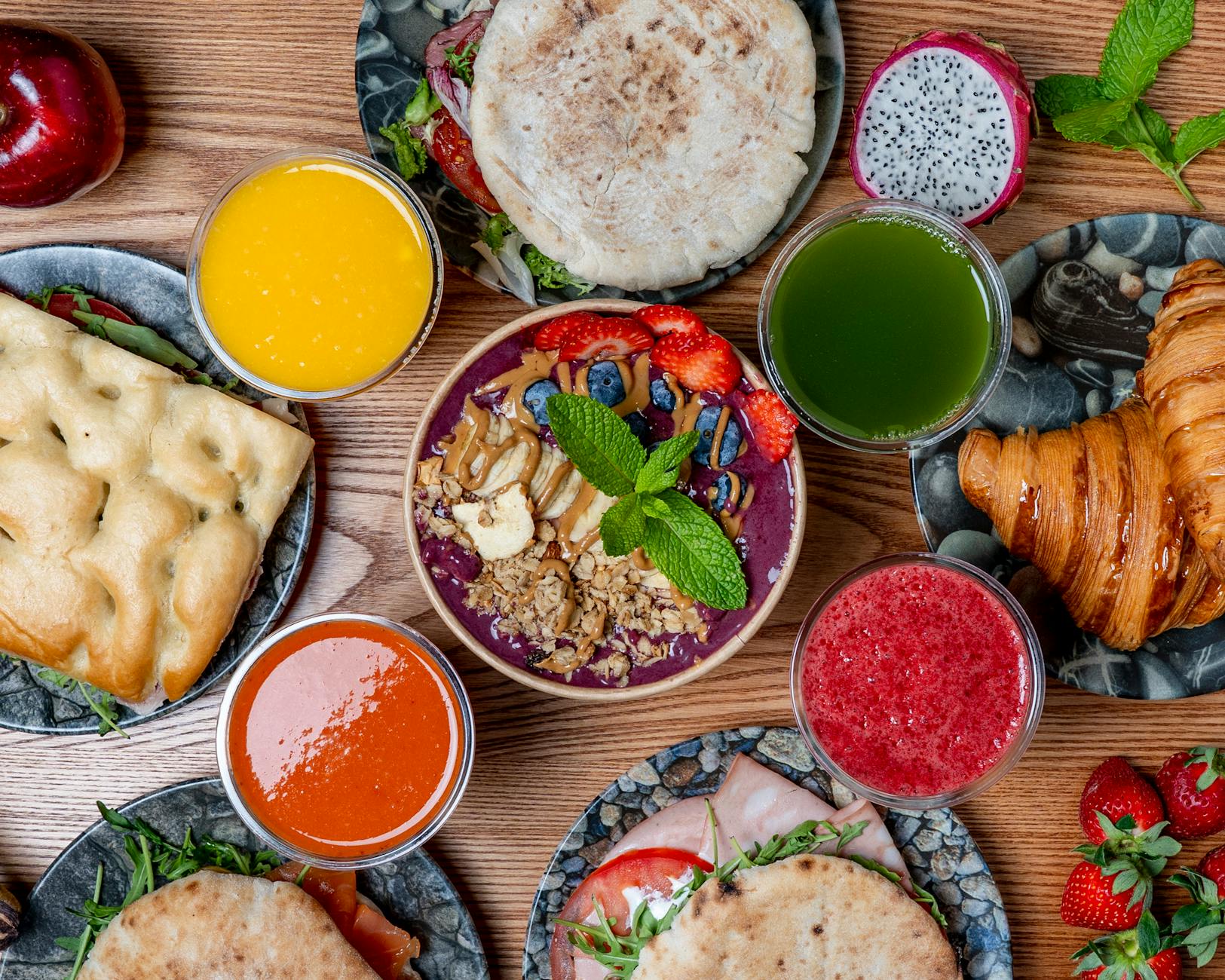
Practical notes: oat milk is easy to find in Shanghai coffee shops, usually for a few yuan extra. For weekend brunch on Anfu, Wuyuan and Yongkang Roads, book or go early. Prices are moderate: more than a noodle bowl, well short of fine dining. The café belt maps almost exactly onto our French Concession walking tour.
Cheap Vegetarian and Vegan Food in Shanghai: Canteens, Buffets and Street Snacks
This is where Shanghai quietly beats most Western cities. Buddhist buffet canteens — search 素食自助 — charge a flat rate and let you eat as much as you want; Su Man Xiang (素满香) is one name to look for. Temple kitchens, Jade Buddha’s among them, serve plain noodle bowls too.
Street food is more of a minefield, but there are reliable wins, none of them expensive: baked sweet potato from a drum cart, plain steamed mantou, fresh soy milk with fried dough sticks (usually vegan), roasted chestnuts in autumn, sugar-glazed hawthorn skewers. Scallion pancakes are usually vegan but some stalls use lard. Our street food guide and breakfast guide flag which stalls are safe.
| Price tier | Per person | What you get | Examples |
|---|---|---|---|
| Street & canteen | Cheapest | Noodle bowls, steamed buns, buffet plates, soy milk breakfast | Temple canteens, Su Man Xiang, Songyuelou buns |
| Neighbourhood vegetarian | Budget | Full Chinese meal, 3–4 dishes shared, mock meats | Hui Yuan, Wu Guan Tang, Gong De Lin |
| Café & brunch | Mid-range | Bowls, vegan burgers, coffee, weekend brunch | Wagas, DULi |
| Smart dinner | Upper mid-range | Plated modern vegetarian, booking advised | Ru Pure Vegan |
| Fine dining | Splurge | Vegetarian tasting menu, book weeks ahead and ask the price | Fu He Hui |
If you are watching every yuan, the wider budget Shanghai and cheap eats guides go further on this.
Veggie Options at Regular Restaurants
Most non-vegetarian Chinese restaurants have vegetarian dishes — just need to know what to order.
Safe vegetarian Chinese dishes
- Mapo Tofu (麻婆豆腐) — but ask for no minced meat (no 肉)
- Eggplant in garlic sauce (鱼香茄子 — confusingly named “fish-fragrant eggplant” but contains no fish)
- Stir-fried green vegetables (清炒时蔬, 蒜泥油菜)
- Tofu skin stir-fry (豆腐皮)
- Dry-fried green beans (干煸豆角) — confirm no minced pork
- Steamed egg custard (蒸蛋羹) — vegetarian; not vegan
- Veggie xiaolongbao at specialty places — confirm at the restaurant
- Plain vegetable noodle soup (素菜汤面) — confirm broth is vegetarian
- Fried rice without meat (素炒饭) — easy to specify
Two cuisines are unusually easy. Yunnan restaurants build menus around wild mushrooms, mint and rose petals, and will happily cook four or five meat-free dishes. Sichuan places have a deep vegetable repertoire — dry-fried cauliflower, tiger-skin peppers, cold cucumber in garlic, mapo tofu without the pork. Cantonese dim sum is the hardest: most of it contains pork, even the things that look green.
Hotpot, Barbecue and Eating with a Group
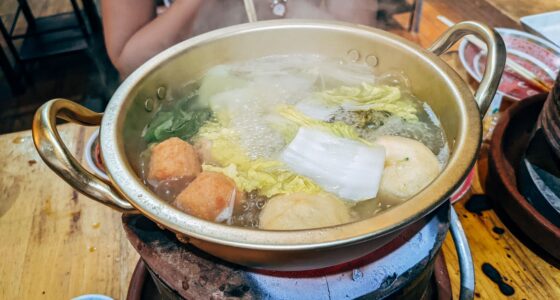
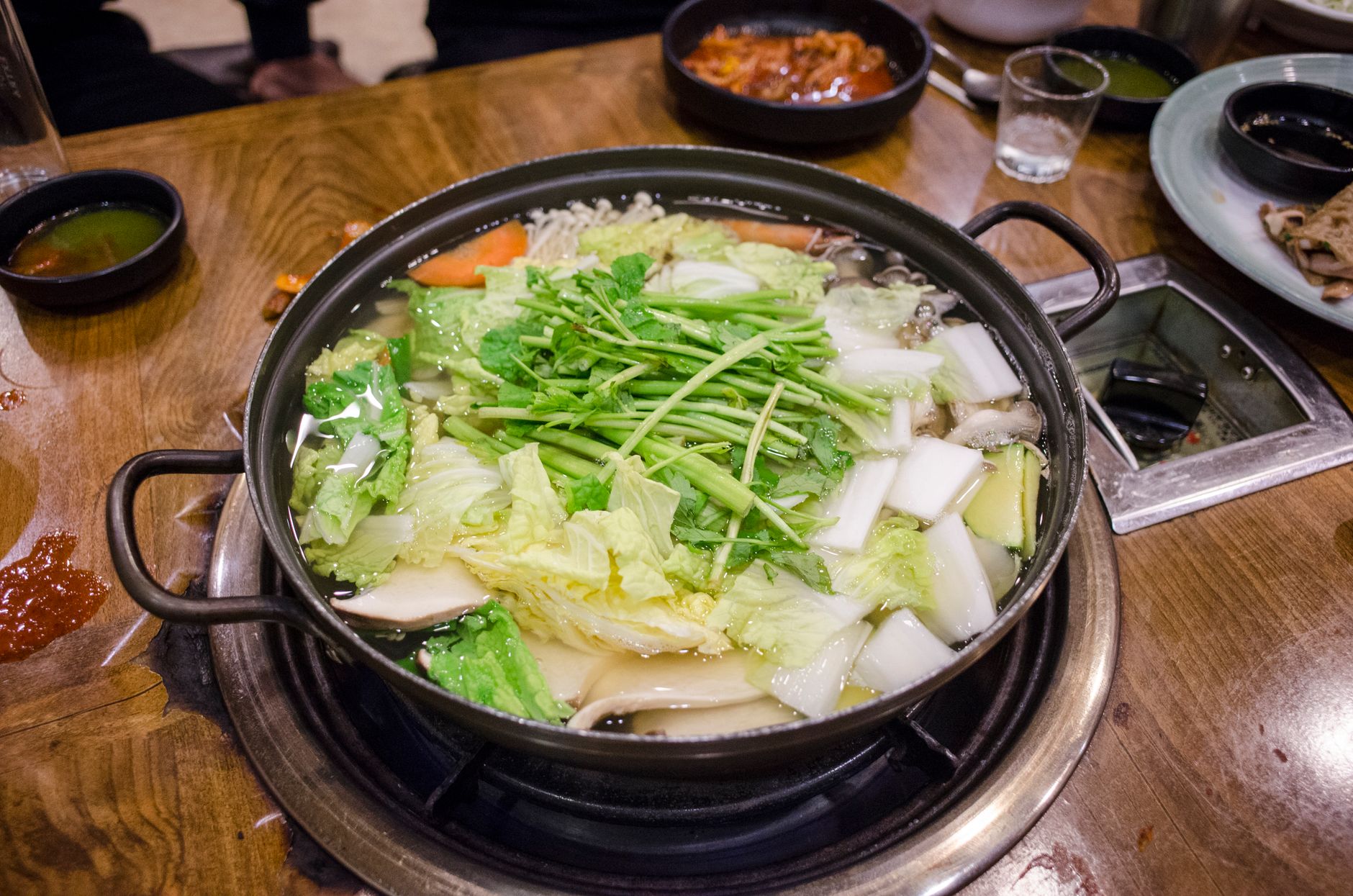
Hotpot is the meal where a vegetarian usually eats best, because the format is self-service. Order a split pot, take the mushroom side, and load it with enoki, king oyster mushrooms, lotus root, tofu skin, frozen tofu, sweet potato noodles and chrysanthemum greens.
Three warnings. The tomato broth at many chains is made on a chicken base; switch to mushroom if unsure. At the sauce bar, sacha sauce (沙茶酱) contains dried shrimp and fish, as does most pre-mixed “seafood” seasoning; sesame paste, chilli oil, vinegar, garlic and coriander are all safe. And if the pot is shared rather than split, everything in it has touched meat.
For a fully vegan hotpot with no negotiating, Yangege (焱格格) at 800 Changde Road in Jing’an does a fixed-price plant-based buffet. If you are eating with family, our family restaurants guide flags places with genuinely mixed menus.
Mandarin Phrases for Vegetarians
- Wǒ chī sù (我吃素) — I’m vegetarian
- Wǒ shì sùshízhě (我是素食者) — I am a vegetarian
- Wǒ chī chún sù (我吃纯素) — I’m vegan
- Bùyào ròu (不要肉) — No meat
- Bùyào yú (不要鱼) — No fish
- Bùyào jīdàn (不要鸡蛋) — No eggs
- Bùyào nǎi (不要奶) — No dairy
- Bùyào jīròu (不要鸡肉) — No chicken
- Méiyǒu zhū yóu (没有猪油) — No lard / pork fat
- Méiyǒu ròu tāng (没有肉汤) — No meat broth
- Wǒ duì ___ guò mǐn (我对 ___ 过敏) — I am allergic to ___
- Zhège shì sù de ma? (这个是素的吗?) — Is this vegetarian?
- Bùyào háoyóu (不要蚝油) — No oyster sauce
- Dàn nǎi sù (蛋奶素) — Ovo-lacto vegetarian: I eat eggs and dairy
- Guōbiān sù (锅边素) — I’ll eat vegetables cooked alongside meat
Tip: save a Chinese-character image of your dietary restrictions in your phone to show servers — far more reliable than spoken Mandarin. Tones matter more than usual here, and servers will politely nod rather than correct you. Showing beats saying. Our language barrier guide covers translation apps that work behind the firewall. One more habit: ask before you order, not after the dish arrives. A kitchen that has already cooked something will rarely redo it.
Tricky Situations
- Vegetable broth often isn’t vegan — many Chinese restaurants use chicken or pork stock as a base. Always ask, even for plain vegetable dishes
- Oyster sauce (蚝油) is common in stir-fries — vegans need to specify no oyster sauce
- Lard for “vegetable” dishes — particularly in northern Chinese restaurants
- Dumplings with “vegetable” filling may have small bits of pork; confirm
- MSG and chemical seasonings are common; not vegan-relevant but worth knowing
- Eggs in noodles — most fresh noodles contain egg; vegans should ask
- Buddhist mock-meats sometimes contain eggs — strict vegans should verify each menu item
- Five Pungent Spices avoidance at strict Buddhist temples — leeks, scallions, garlic, onions, chives. Most lay Buddhist restaurants allow these
- Dried shrimp as garnish (开洋) — scattered on noodles, cold dishes and steamed egg almost as an afterthought. Nobody counts it as meat
- Fish sauce and shrimp paste in anything with a southern or Southeast Asian influence
- Gelatine in desserts — less common than in the West, since most Chinese sweets are set with agar or starch, but check imported cakes
- Business dinners — if you are hosted, the host orders for the table and refusing dishes reads as rude. Say you are vegetarian when the invitation is made, not at the table. Our etiquette guide covers how to do this without causing offence
Vegan Groceries & Snacks
- Hema (盒马) supermarkets — Alibaba’s chain; good vegetarian section, fresh tofu, soy products
- City Shop — Western-friendly grocery with vegan brands
- Wagas — bowls and sandwiches; ask staff which are vegan
- O-CAFÉ — vegan ready-meals at airport and metro stations
- Vegan brand selection at major grocery: Beyond Meat, Impossible Foods (occasional), Tofurky, Daiya, oat milk widely available
- Convenience store options: plain rice balls, baked sweet potato, soy milk, plain pickled vegetables
- Vegan ice cream: Häagen-Dazs sorbets, multiple Asian brands at Hema
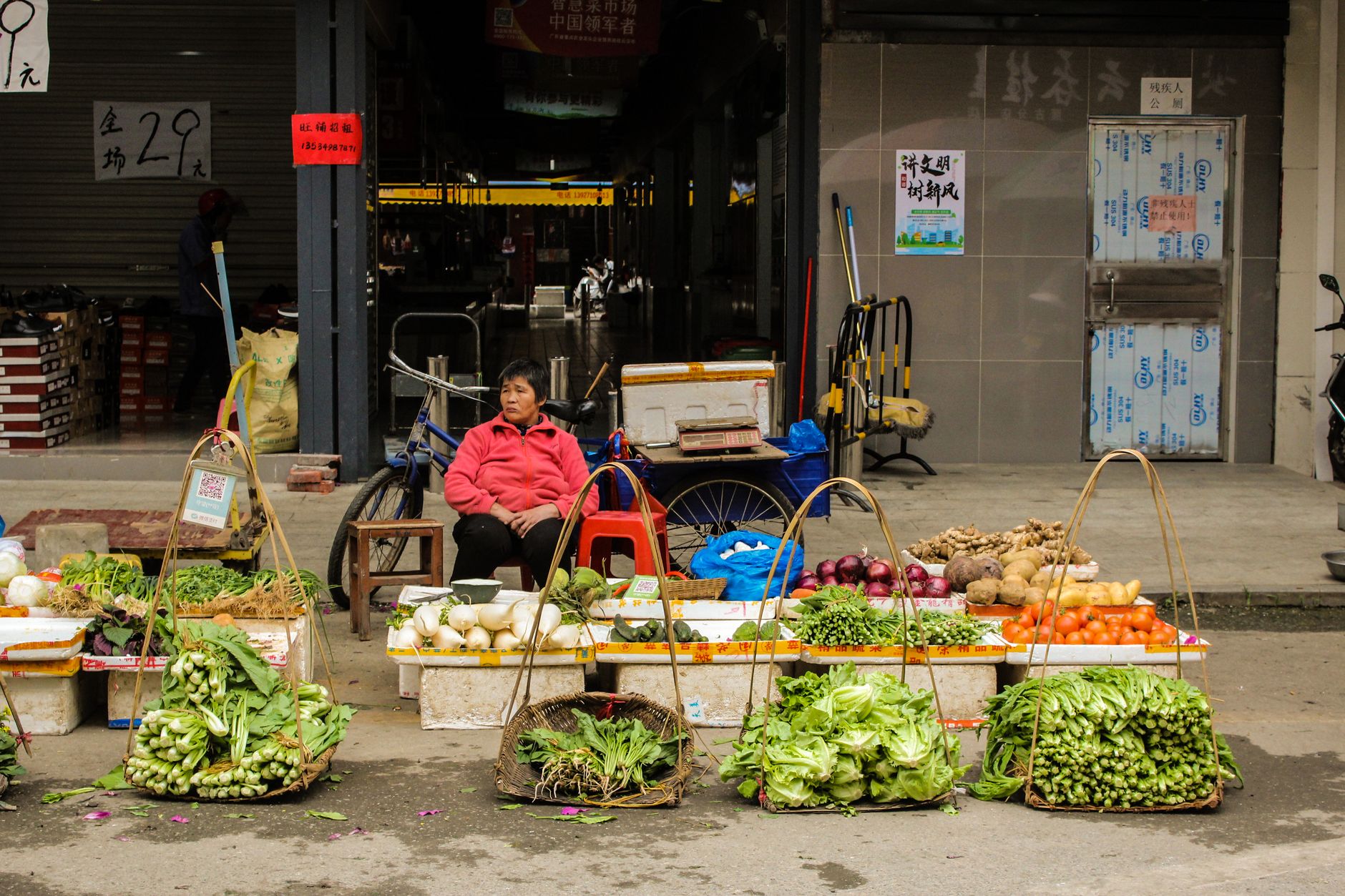
- Wet markets — the cheapest tofu in the city, sold by the block from morning stalls, along with fresh soy milk, tofu skin and seasonal greens for a few yuan
- Taobao — for anything niche: nutritional yeast, tempeh, vegan cheese, plant-based mince. Delivery is usually next-day within Shanghai
Delivery Apps, Payment and Ordering In
Shanghai runs on delivery, and it is often the easiest way to eat what you want. Meituan (美团) and Ele.me (饿了么) are the popular delivery apps, mainly in Chinese but navigable with your phone’s translation overlay — search 素食 to filter to vegetarian kitchens. Sherpa’s is the English-language alternative: smaller selection, higher fees, English menus. Fees and waiting times depend on the restaurant and the distance.
On payment: Alipay and WeChat Pay now accept foreign Visa and Mastercard, which has removed most of the friction that used to make eating out awkward. Set one up before you fly. Cash still works but small vendors struggle to make change, and card terminals are rare outside hotels. Our money and payment guide walks through the setup.
Where to Base Yourself If You Eat Plant-Based
Where you sleep changes how easy your week is more than anything else on this page. Here is the honest comparison.
| Area | Strength | Weakness | Best for |
|---|---|---|---|
| Former French Concession | Cafés, brunch spots and oat-milk coffee; check each menu for vegan options | Expensive; light on cheap Chinese vegetarian | Vegans, coffee people, long stays |
| Jing’an | Gong De Lin, Yangege hotpot, good metro links | Commercial and a little characterless at street level | First-timers who want balance |
| Huangpu / People’s Square | Songyuelou, Hui Yuan, temple canteens, central for sightseeing | Crowded; tourist pricing near Nanjing Road | Short trips, sightseeing-first |
| Xuhui | Longhua Temple, Veg Inn; quieter and residential | Further from the classic sights | Repeat visitors |
| Pudong / Lujiazui | Mall food courts often have a vegetarian counter; Qing Chun at Qiantan | Thin outside the malls; long metro rides back west | Business trips, families near Disney |
Our where to stay guide goes into hotels district by district, and the metro guide explains how far apart these actually are — usually less than you think.
A Worked Example: One Day of Eating
A realistic vegetarian day in Shanghai, from breakfast to a late snack.
- 07:30 — Breakfast, Huangpu. Soy milk and a fried dough stick from a street stall, plus a vegetable bun for a few yuan more.
- 10:00 — Coffee, French Concession. Oat flat white on Anfu Road.
- 12:30 — Lunch, Putuo. Metro Line 13 to Jiangning Road. No ticket is needed at the Jade Buddha Temple outside the Lunar New Year period; head in for a bowl of noodles with double mushrooms.
- 15:30 — Snack. Baked sweet potato from a cart, eaten walking.
- 19:00 — Dinner, Huangpu. Four dishes at Vegetarian Lifestyle on Songshan Road, shared between two: cold kaofu, mock sausage, garlic greens, a claypot.
- 21:30 — Late. Vegan ice cream from a Hema store.
Skip the coffee and the sit-down dinner and the day costs very little: street food, temple noodles and a metro ride, with no temple ticket to buy on ordinary days. Swap dinner for Fu He Hui and it becomes a splurge. Both ends are good. Our restaurant guide and food streets guide cover the routes.
Mistakes First-Timers Make
- Assuming a vegetarian restaurant is vegan. Many Buddhist places use egg and milk freely. Chinese Buddhist practice forbids meat, not dairy.
- Turning up late for dinner. Hours vary a lot between temple and heritage vegetarian restaurants, so check before you set out and go early if in doubt.
- Trusting an English menu translation. “Vegetable soup” on an English menu is frequently made with chicken stock. The English menu is a marketing document, not a specification.
- Expecting salad. Raw vegetables are not really part of Chinese cooking. Cooked greens are the local equivalent and better in winter anyway.
- Not saving screenshots. Addresses in Chinese characters and your dietary card should live offline in your phone. Mobile data drops in metro tunnels exactly when you need them.
Frequently Asked Questions
Is it hard to be vegetarian in Shanghai?
No — vegetarian dining is easier than in most major Asian cities. Buddhist tradition, Western vegan cafés, and modern Chinese vegetarian restaurants give plenty of choice. Vegan is slightly harder but still doable.
Are there vegan restaurants in Shanghai?
Yes. Ru Pure Vegan is a dedicated vegan restaurant, and Fu He Hui is Michelin-listed vegetarian fine dining where you should ask about vegan dishes when you book. Several cafés in the French Concession also serve vegan dishes; ask staff which ones.
Do Chinese restaurants understand “vegan”?
“Vegetarian” (素食) is universally understood. “Vegan” (纯素 chún sù) is increasingly understood but worth showing the Chinese characters or saving a description on your phone.
What’s the difference between Chinese Buddhist vegetarian and modern vegan?
Buddhist tradition uses mock meats made of tofu, mushrooms, and wheat gluten. Modern Western vegan tends toward salad bowls, raw foods, smoothies. Both are widely available.
Are mock meats popular in Shanghai?
Yes — Chinese Buddhist cooks have made mock meats since the Tang dynasty, more than a thousand years ago. Beyond Meat and Impossible Foods also appear at some restaurants.
Where can I find vegan brunch in Shanghai?
Start in the former French Concession, where the streets around Anfu, Wuyuan and Yongkang Roads have plenty of brunch cafés. Prices are moderate, and it pays to check each menu for the vegan dishes and to book at weekends.
Is tofu vegan in Shanghai?
Plain tofu is vegan. Some prepared tofu dishes may use animal-based seasonings (oyster sauce, fish sauce) — always confirm.
What about vegan options at Chinese hotpot?
At a hotpot restaurant, ask for a mushroom or vegetable broth, then fill the pot with fresh vegetables, tofu, mock meats and rice noodles. Easy to do vegan if you stick to plant-based sides. Ask about the tomato broth — it is often chicken-based — and avoid sacha sauce at the condiment bar.
How much does a vegetarian meal cost in Shanghai?
A canteen buffet or a temple noodle bowl is the cheapest sit-down meal in the city. A proper meal at a neighbourhood Chinese vegetarian restaurant costs more, and café brunch more again. At the top end, Fu He Hui serves a vegetarian tasting menu; ask for the current price when you book.
Can I eat vegetarian xiaolongbao in Shanghai?
Yes, though not at the famous soup-dumpling houses, which are pork-only. Dedicated vegetarian kitchens such as Dancing Dumplings make them with mushroom, tofu and a vegetarian aspic that produces the same soup effect.
Do I need to speak Mandarin to eat vegetarian in Shanghai?
No. A saved image of your dietary requirements in Chinese characters and the ability to recognise 素 on a sign will get you through almost everything. Staff in the French Concession and in hotels usually speak some English; neighbourhood restaurants often do not.
Is Shanghai good for vegans compared with Beijing or Hong Kong?
Better than Beijing for Western-style vegan food and roughly level for Chinese vegetarian. Hong Kong has more international plant-based options per capita, but Shanghai is cheaper and has the stronger Buddhist restaurant tradition. Among mainland cities it is the easiest place to eat plant-based.
Plan Your Food Trip
Combine with our pillar guides on Shanghai food, street food, and our temples in Shanghai. For background, see Buddhist vegetarianism on Wikipedia, and the Shanghai municipal government’s own note on Longhua Temple vegetarian cuisine.