Shanghai Budget Travel Guide: How to Explore China’s Greatest City Without Breaking the Bank
Shanghai has a reputation as one of Asia’s most expensive cities, but that reputation is only half the story. With the right strategies and local knowledge, this shanghai budget travel guide will show you how to experience everything from the neon-lit Bund to hidden lane-house neighborhoods for a fraction of what most tourists spend. Whether you are a backpacker stretching every yuan or a mid-range traveler who simply wants smarter spending, Shanghai rewards the budget-conscious visitor with Michelin-listed street food, free attractions, and an efficient public transport system that rivals any on the planet.
In this comprehensive shanghai budget travel guide, we cover every aspect of affordable travel in Shanghai — from budget accommodation and cheap eats to free sightseeing, discounted metro passes, and money-saving tips that locals swear by. We have broken down exact costs, recommended specific neighborhoods, and mapped out free walking routes so you can plan a trip that is rich in experience and light on your wallet. If you are planning your first visit, pair this guide with our full Shanghai travel guide for the complete picture.
Your Daily Budget Breakdown for Shanghai
Before diving into the details, let us set expectations with a realistic daily budget breakdown. Shanghai can be as cheap or as expensive as you make it, but here is what a budget traveler should expect to spend per day in 2026:
Backpacker Budget (¥200–350 / $28–50 USD per day)
- Accommodation: ¥60–120 (hostel dorm bed)
- Food: ¥60–100 (street food, food courts, local restaurants)
- Transport: ¥15–30 (metro and buses)
- Activities: ¥0–50 (mostly free attractions with one or two paid entries)
- Miscellaneous: ¥30–50 (drinks, snacks, SIM data)
Comfortable Budget (¥400–600 / $55–85 USD per day)
- Accommodation: ¥150–300 (budget hotel or private hostel room)
- Food: ¥100–150 (mix of street food and sit-down restaurants)
- Transport: ¥20–40 (metro with occasional taxi)
- Activities: ¥50–100 (one or two paid attractions per day)
- Miscellaneous: ¥50–80
These estimates assume you are using the strategies outlined in this shanghai budget travel guide. A traveler who does not plan ahead might easily spend double these amounts on the same experiences.
Budget Accommodation in Shanghai: Where to Stay for Less
Accommodation will likely be your biggest expense in Shanghai, so choosing wisely here has the largest impact on your overall budget. The good news is that Shanghai has an excellent range of hostels, budget hotels, and guesthouses spread across the city.
Hostels: The Backpacker’s Best Friend
Shanghai’s hostel scene is well-developed and consistently excellent. Dorm beds typically cost between ¥60 and ¥120 per night depending on location and season. Many hostels are housed in converted lane houses or heritage buildings, giving you a unique Shanghai experience at rock-bottom prices.
Top budget hostel areas:
- People’s Square / Nanjing Road area: Central location with metro access in every direction. Dorm beds from ¥70. You are walking distance from the Bund, Shanghai Museum, and major shopping streets.
- Jing’an: Trendy neighborhood with excellent food options. Slightly higher hostel prices (¥80–120) but you save on transport because so much is walkable.
- Old French Concession (near South Shaanxi Road metro): Beautiful tree-lined streets and affordable hostels. This is where many long-term budget travelers prefer to base themselves.
- Hongkou: North of the Bund, this area has some of the cheapest dorm beds in central Shanghai (from ¥55). It is slightly less touristy but well-connected by metro.

Budget Hotels and Guesthouses
If you prefer a private room, budget hotels in Shanghai start from around ¥150–250 per night. Chinese budget hotel chains like Hanting, Jinjiang Inn, and Home Inn offer clean, no-frills rooms with private bathrooms and Wi-Fi. Book directly through their apps or on Ctrip (Trip.com) for the best rates.
Tips for finding cheap accommodation:
- Book at least two weeks in advance for the best prices
- Avoid traveling during Golden Week (October 1–7), Chinese New Year, and the May Day holiday when prices double or triple
- Check our best time to visit Shanghai guide for detailed seasonal pricing patterns
- Consider staying slightly outside the central core — one or two metro stops can save you 30–40% on accommodation
- Longer stays (one week or more) often qualify for discounts, especially at hostels
- Use Chinese booking platforms (Ctrip, Qunar, Meituan) which often have lower prices than international sites
Best Neighborhoods for Budget Travelers
Location matters enormously for budget travel in Shanghai. Staying in the right neighborhood means you can walk to free attractions, eat at cheap local restaurants, and minimize transport costs. Here is a neighborhood-by-neighborhood breakdown:
People’s Square: The geographic heart of Shanghai and the best overall value for budget travelers. You are centrally located for the metro network, near the free Shanghai Museum, walking distance to the Bund, and surrounded by affordable food options in the underground food courts beneath Nanjing Road.
Pudong (near Century Avenue metro): Surprisingly affordable budget hotels, with access to the free Lujiazui waterfront promenade. Less charming but well-connected. Xuhui / Shanghai South Railway Station area: Hotels 20–30% cheaper than central locations with strong metro connections — ideal if you plan day trips by train.
Eating Cheap in Shanghai: A Budget Food Guide
Food is where Shanghai truly shines for budget travelers. This is a city where a filling, delicious meal can cost as little as ¥10–15 ($1.50–2 USD), and where street food is not just cheap but genuinely some of the best eating in Asia. Our Shanghai food guide covers the full culinary landscape, but here we focus specifically on eating well for less.
Street Food: Your Budget’s Best Ally
Shanghai street food is legendary, and it is astonishingly affordable. Here are the must-try budget eats with typical prices:
- Shengjianbao (pan-fried pork buns): ¥8–12 for four buns. These crispy-bottomed, soup-filled buns are a Shanghai specialty you must not miss. The best ones are at small neighborhood shops, not the tourist-area versions.
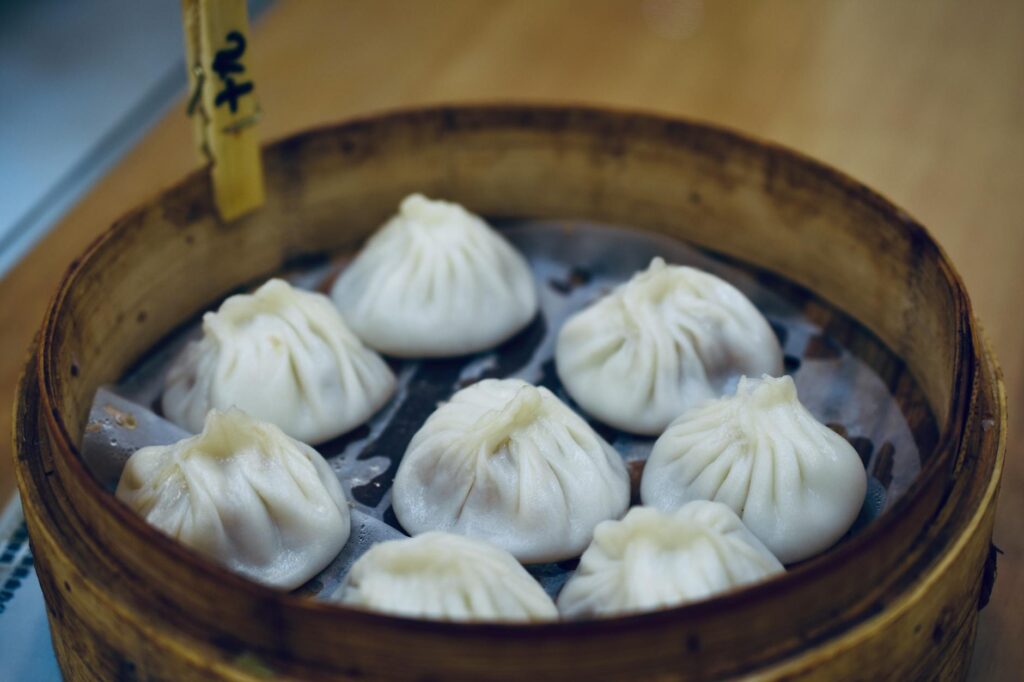
- Xiaolongbao (soup dumplings): ¥15–25 for a steamer basket. While Din Tai Fung charges ¥50+, local shops serve excellent versions for a third of the price.
- Jianbing (Chinese crepes): ¥7–12 each. These egg-and-crispy-cracker crepes are a perfect breakfast on the go.
- Scallion oil noodles (congyu banmian): ¥10–15. Simple, fragrant, and utterly satisfying — this is Shanghai comfort food at its best.
- Baozi (steamed buns): ¥2–4 each. Available at every corner, filled with pork, vegetables, or red bean paste.
- Cong you bing (scallion pancakes): ¥3–5 each. Crispy, flaky, and incredibly cheap.
- Stinky tofu (chou doufu): ¥10–15 per serving. An acquired taste and a truly local experience.
Food Courts and Cafeterias
Shopping mall food courts are a secret weapon in any shanghai budget travel guide. Nearly every major mall has a basement food court where meals cost ¥20–40. These are clean, air-conditioned, and serve everything from Sichuan noodles to Japanese curry rice. The food courts in the following locations are particularly good value:
- Raffles City (People’s Square): Massive basement food court with dozens of stalls
- Cloud Nine / Longemont (Zhongshan Park): Local-focused food court with very low prices
- Grand Gateway (Xujiahui): Multiple food floors with competitive pricing
- Daning International (Zhabei): Less touristy, more local, cheaper
University cafeterias are another hack for extremely cheap meals. While technically for students, several university canteens near campuses like Fudan, Tongji, and Shanghai University tolerate visitors. A full meal in a university cafeteria costs ¥8–15.
Local Restaurants on a Budget
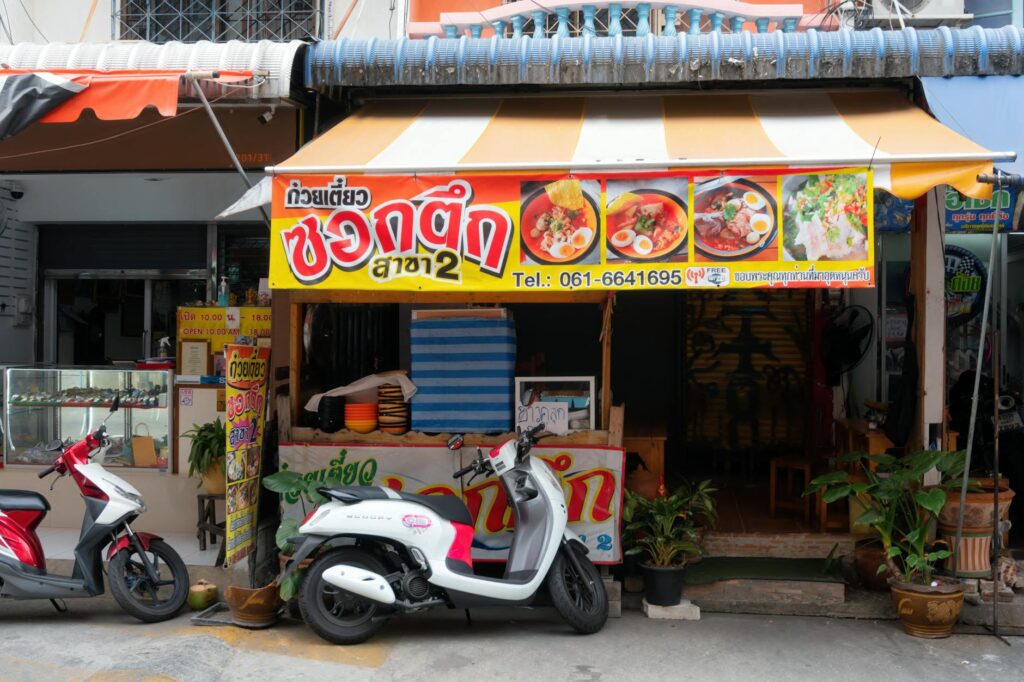
Sit-down restaurants do not have to be expensive in Shanghai. The key is eating where locals eat, which means avoiding the heavily touristed blocks around the Bund and Nanjing Road East and instead venturing a few streets deeper into any neighborhood.
Budget restaurant strategies:
- Look for restaurants with laminated picture menus and no English — these are almost always cheaper and more authentic
- Order set meals (tao can) which bundle a main dish, rice, and a drink for ¥20–35
- Eat your main meal at lunch when many restaurants offer discounted lunch specials
- Download Meituan or Ele.me for food delivery with frequent discounts and coupons
- Try Lanzhou hand-pulled noodle shops (identifiable by their green signs with Arabic script) — a massive bowl of beef noodles costs ¥15–20
- Malatang (pick-your-own-ingredients hot pot) shops charge by weight, and you can fill a tray for ¥20–30
Keep drink costs low by carrying a refillable water bottle (most hostels have hot water dispensers), buying from convenience stores (¥3–6 per drink), and choosing local milk tea chains like Mixue Bingcheng (¥6–15) over Western coffee chains (¥30–40).
Free and Cheap Attractions in Shanghai
One of the best things about Shanghai for budget travelers is the sheer number of landmark sights that charge no admission at all. You could easily fill a week in Shanghai without spending a single yuan on entrance fees. This section of our shanghai budget travel guide covers every free and low-cost attraction worth your time.
Completely Free Attractions
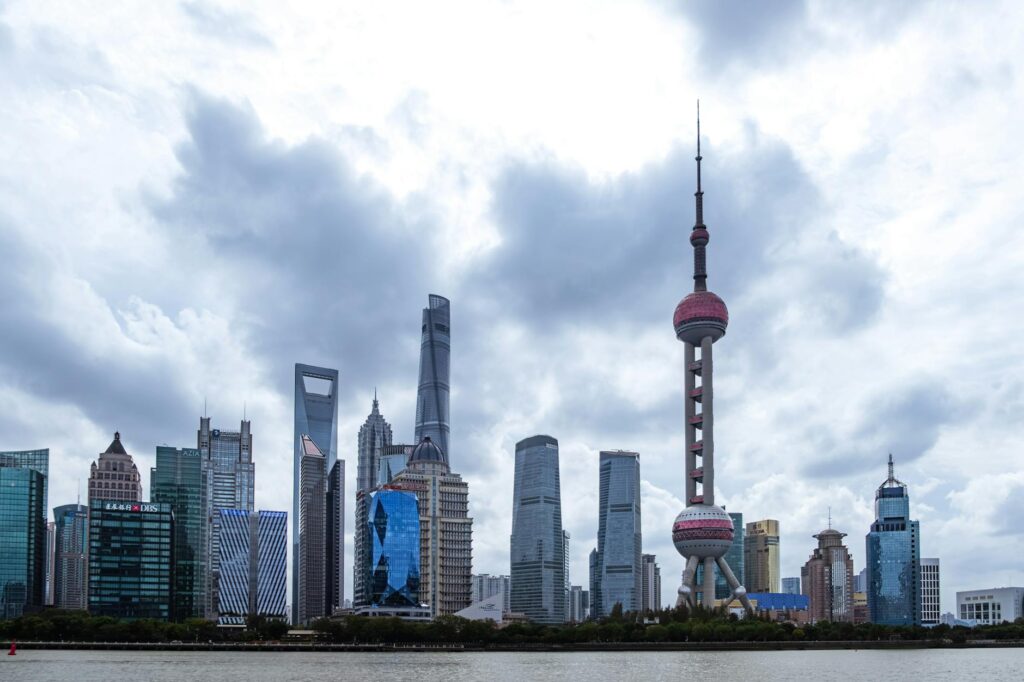
The Bund (Waitan): Shanghai’s most iconic sight costs nothing. Walk the 1.6-kilometer waterfront promenade and take in the jaw-dropping contrast between the colonial-era buildings behind you and the futuristic Pudong skyline across the river. Visit at dusk for the best photos, and stay until the lights come on at 7 PM. This is the single best free experience in Shanghai — maybe in all of China.
Shanghai Museum: Located on People’s Square, this museum houses over 120,000 pieces of Chinese art and artifacts. The bronze collection alone is worth an hour. Free entry with passport, though there may be a queue at peak times.
Fuxing Park: A five-minute walk from South Shaanxi Road metro, this park is a window into daily Shanghai life. Arrive early morning to see tai chi practitioners, ballroom dancers, and elderly card players. Completely free and endlessly charming.
Propaganda Poster Art Centre: A quirky, fascinating museum tucked in the basement of a residential apartment building. While technically a small donation is suggested, entry is free. The collection of original Cultural Revolution posters is unique in the world.
Tianzifang alleys (exterior): Walking the labyrinthine alleys of this former residential neighborhood is free and wonderfully photogenic.
Lujiazui waterfront: The Pudong-side promenade facing the Bund is free, less crowded, and offers equally spectacular views.
M50 Art District: A converted textile mill complex on Moganshan Road with free-entry contemporary art galleries. Easily a half-day visit.
Free Temples and Historical Sites
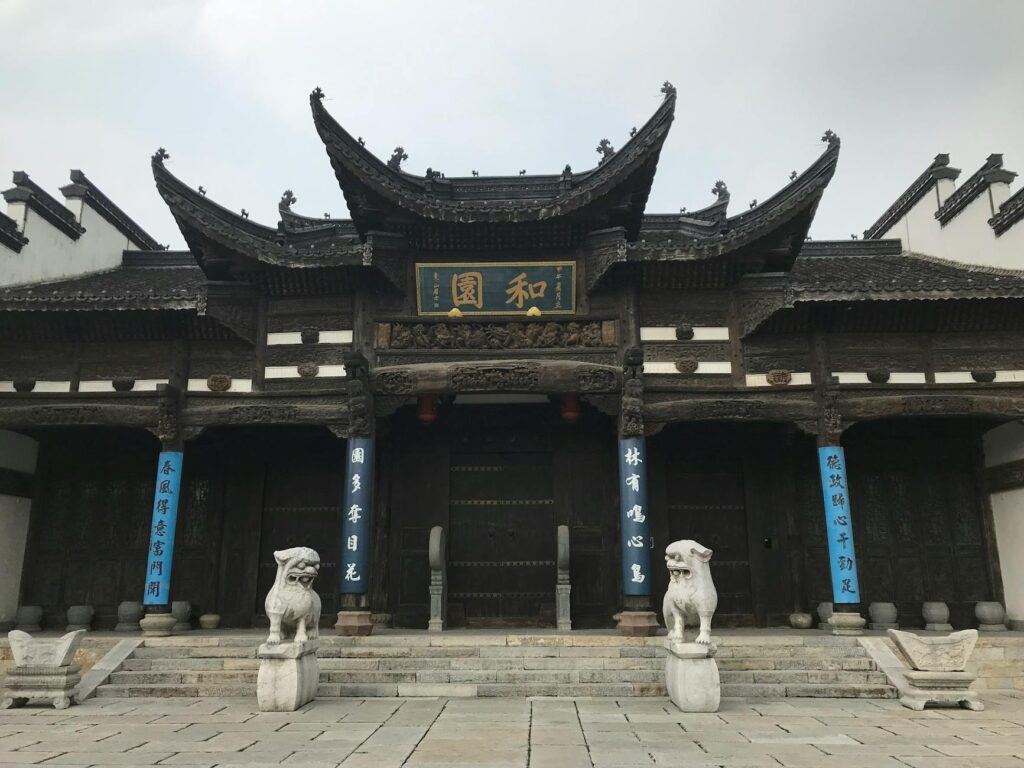
While Shanghai’s most famous temple (Jade Buddha Temple) charges ¥20, several other beautiful temples are free or accept a small optional donation:
- Jing’an Temple exterior and grounds: While the interior costs ¥50, the golden rooftops are free to photograph from the street
- Longhua Temple: ¥10 entry — the cheapest major temple in Shanghai and the oldest, dating back to 242 AD
- Confucian Temple (Wen Miao): ¥10 entry, but free on the first Sunday of each month when a book market fills the courtyard
- Xiahai Temple: Free entry, located in the Old City near Yu Garden
- Zhenru Temple: ¥5 entry, far from tourist crowds, with an original Song Dynasty main hall
Free Parks and Green Spaces
Shanghai has over 300 parks, and the vast majority are completely free. These are not small patches of grass — many are sprawling green spaces perfect for a half-day visit:
- People’s Park: Central, free, and home to the famous Marriage Market on weekends
- Century Park (Pudong): ¥10 entry. Shanghai’s largest park with lakes, forests, and gardens
- Zhongshan Park: Free, large, and beautiful in spring when the cherry blossoms bloom
- Lu Xun Park: Free, in Hongkou district, with a memorial to the famous Chinese writer
- Binjiang Forest Park: Free, on the eastern tip of Pudong, with riverfront paths and campgrounds
- Gucun Park: Free, enormous, and famous for its cherry blossom festival in spring
- West Bund waterfront: A transformed industrial riverfront with free art installations, jogging paths, and sunset views
Cheap Paid Attractions Worth the Money
Some Shanghai attractions do charge entry but are worth the spend even for strict budget travelers:
- Yu Garden (¥30 off-season / ¥40 peak): The most famous classical Chinese garden in Shanghai. Go early morning on a weekday to avoid crowds.
- Shanghai Tower observation deck (¥120): The cheapest way to see Shanghai from the world’s third-tallest building. Book online for ¥100.
- Zhujiajiao Water Town (free entry, ¥30–60 for activity bundles): An ancient canal town reachable by ¥12 public bus from central Shanghai. You can explore the streets for free and only pay for specific attractions if interested.
- Shanghai Natural History Museum (¥30): Dinosaur skeletons in a nautilus-spiral building in Jing’an Sculpture Park
Budget Transportation: Getting Around Shanghai for Less
Shanghai’s public transport system runs 20 metro lines and is remarkably cheap. Using it consistently will save you hundreds of yuan compared to taxis. For a complete breakdown, see our getting around Shanghai guide.
The Metro: Your Budget Lifeline
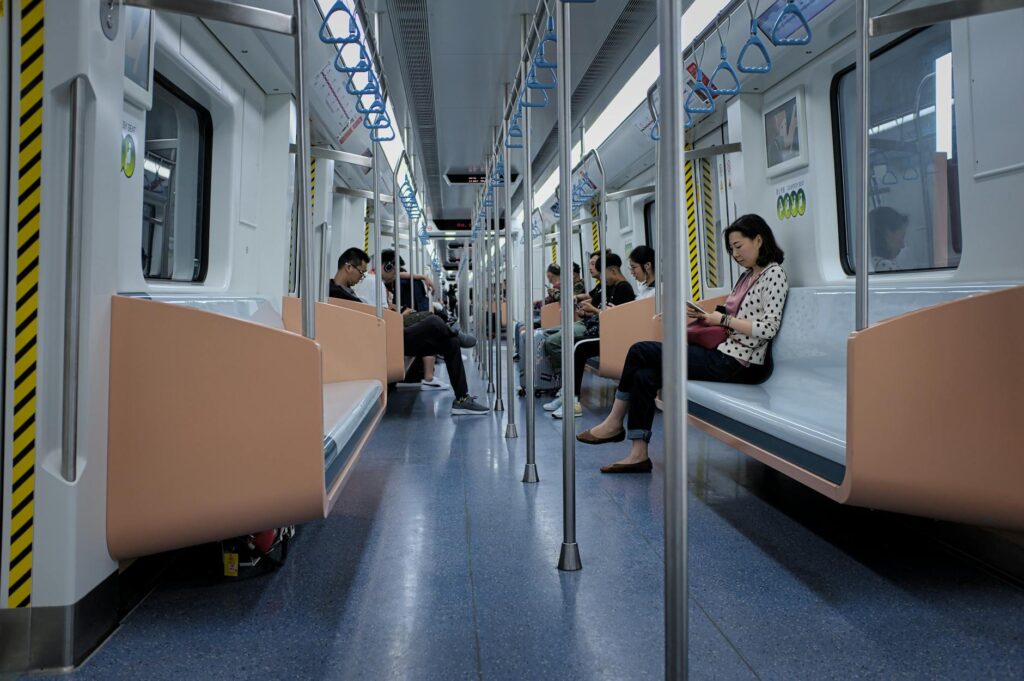
The Shanghai Metro is the world’s longest metro system and will take you virtually anywhere in the city. Single rides cost ¥3–9 depending on distance, with most trips within the central city costing ¥3–5. Here is how to maximize your metro savings:
- Get a Shanghai Transportation Card: Available at any metro station for a ¥20 refundable deposit. You can load money onto it and it works on the metro, buses, ferries, and even some taxis. No per-ride savings, but you avoid queuing for tickets every time.
- Use Alipay or WeChat Pay metro codes: If you have Chinese mobile payment set up, you can scan in and out directly — no card needed.
- One-day pass (¥18): Unlimited metro rides for 24 hours. Worth it if you plan to make four or more trips in a day.
- Three-day pass (¥45): Best value for tourists hitting many attractions over three consecutive days.
- Avoid rush hours (7:30–9:00 and 17:00–19:00): Not a financial saving, but the comfort difference is enormous.
Buses: Even Cheaper Than the Metro
Shanghai buses cost a flat ¥2 per ride (air-conditioned buses are ¥3), making them even cheaper than the metro. The bus system is extensive but can be confusing for visitors who do not read Chinese. However, there are a few tourist-friendly routes worth knowing:
- Bus 71: Runs along Yan’an Road from Pudong to Hongqiao — essentially a budget sightseeing route
- Bus 11: Connects Yu Garden, the Bund, and People’s Square
- Huangpu River ferry: ¥2 with a transportation card. Crosses the river between the Bund and Pudong waterfront — a budget alternative to the ¥55 tourist tunnel and the ¥120 river cruise.
Walking: The Free Transport Option
Shanghai is a surprisingly walkable city, at least within individual neighborhoods. Many of the best budget activities involve walking anyway — strolling the Bund, exploring lane houses in the French Concession, or browsing street markets. A good pair of walking shoes will save you significant metro fares.
Distances that are walkable:
- The Bund to Yu Garden: 15 minutes
- People’s Square to Jing’an Temple: 25 minutes
- French Concession loop (Fuxing Park to Wukang Road to Hengshan Road): 45 minutes
- Tianzifang to Xintiandi: 20 minutes
Taxis and Ride-Hailing on a Budget
Shanghai taxis start at ¥14 for the first 3 kilometers, and most central rides cost ¥20–40. Split between two or three people, this rivals metro fares — especially late at night when the metro stops running around 10:30 PM. Use Didi (China’s Uber equivalent) for the cheapest ride-hailing rates. The app works in English and accepts international cards through Alipay.
Free Walking Routes for Budget Travelers
Skip the ¥150–300 guided walking tours and create your own routes for free. Here are three self-guided walks that capture the best of Shanghai:
Walk 1: The Classic Waterfront (2–3 hours, free)
Start at the Waibaidu Bridge (the iconic iron bridge at the north end of the Bund). Walk south along the Bund promenade, taking in all 52 heritage buildings. Continue past the Bund Finance Center to the Cool Docks area. Cross through the Old City streets to reach Yu Garden’s free exterior bazaar area. End at Yuyuan metro station. This is the single best free experience in Shanghai and an essential component of any shanghai budget travel guide.
Walk 2: The French Concession Explorer (3–4 hours, free)
Start at South Shaanxi Road metro. Walk south on Shaanxi Nan Road, turning left onto Fuxing Road. Enter Fuxing Park for a rest. Exit and continue to Sinan Mansions (free heritage architecture). Walk west along quiet residential lanes to Wukang Road, one of Shanghai’s prettiest streets. Follow Wukang Road to the famous Wukang Mansion (flatiron building). Continue to Hengshan Road for tree-lined boulevard walking. End at Hengshan Road metro.
Walk 3: Off-the-Beaten-Path Hongkou (2–3 hours, free)
Start at Tiantong Road metro. Walk north through Zhapu Road food street, visit the free 1933 Shanghai slaughterhouse (now an art deco showcase), continue to Duolun Road Cultural Street with its heritage buildings and outdoor sculpture, and end at Lu Xun Park.
Budget Shopping in Shanghai
Shanghai is a shopper’s paradise, and you do not need a luxury budget to enjoy it. In fact, some of the city’s best shopping experiences are at markets and small shops where bargaining is expected and prices start low. For the full shopping experience, see our shopping in Shanghai guide, but here we focus on value.
Markets and Bargain Shopping
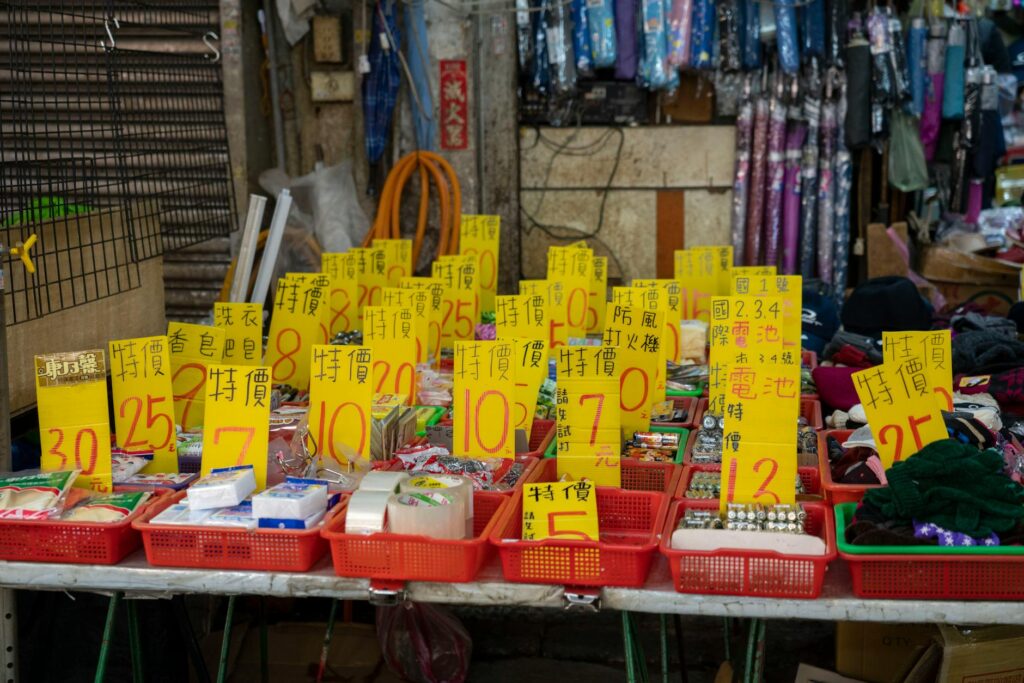
- Qipu Road Clothing Market: Multi-story wholesale clothing market where you can buy everything from jackets to bags at factory-direct prices. Bargain hard — start at 30% of the asking price.
- South Bund Fabric Market: Have custom clothing tailored at budget prices. A tailored shirt costs ¥150–300 and a suit starts at ¥800–1,500. Compared to Western prices, this is extraordinary value.
- Yuyuan Bazaar: Touristy but fun, with small souvenirs, tea, and traditional crafts. Bargain aggressively.
- Electronics markets: For cheap phone accessories, cables, and gadgets, the markets around the Science and Technology Museum metro station offer rock-bottom prices.
Budget Shopping Tips
- Always bargain in markets: The first price is rarely the real price. A 50–70% discount from the initial asking price is common.
- Buy souvenirs outside tourist zones: A fridge magnet at the Bund costs ¥20–30. The same magnet at a market costs ¥5.
- Visit Miniso or MUMUSO: These Japanese-inspired variety stores sell cute, practical items from ¥10–30.
- Tea as a souvenir: Buy quality Chinese tea at dedicated tea shops (not tourist tea scam shops) for ¥30–80 per 100 grams. It is lightweight, packs easily, and makes excellent gifts.
- Avoid “art student” scams: If a friendly young person on the street invites you to see their “art exhibition,” politely decline. This is a well-known tourist scam where overpriced art is sold under pressure.
Budget Nightlife in Shanghai
Shanghai has one of Asia’s best nightlife scenes, but it can also be one of the most expensive. Cocktails at rooftop bars on the Bund start at ¥80–120, and club cover charges can hit ¥150–200. Here is how to enjoy Shanghai after dark without destroying your budget:
Cheap Drinks and Happy Hours
- Convenience store pre-gaming: FamilyMart, Lawson, and 7-Eleven sell cold beer from ¥5–10 and premixed drinks from ¥8–15. Grab a drink and sit on the Bund promenade — better views than any bar.
- Happy hour deals: Many bars along Yongkang Road, Julu Road, and in Jing’an offer buy-one-get-one or half-price cocktails between 5–8 PM.
- Local craft beer bars: Venues like Boxing Cat Brewery and Tap House have pints from ¥30–45 — half the price of hotel bars.
- Dive bars: The Former French Concession has several unpretentious dive bars where beers start at ¥15–25.
- Free live music: Several venues offer free live jazz, blues, or rock music on certain nights. Check SmartShanghai’s event listings.
Free Evening Activities
- Bund light show: Every evening at sunset, the Pudong skyline lights up in a spectacular free display
- Nanjing Road pedestrian street: The neon signs, street performers, and people-watching make this a free evening entertainment zone
- Night markets: Several neighborhoods have evening food and goods markets that are free to browse
- Riverside walks: The West Bund, Pudong waterfront, and Suzhou Creek promenades are all beautiful after dark and completely free
Money-Saving Tips and Payment Advice
Managing your money wisely is one of the most important aspects of any shanghai budget travel guide. Here are practical tips that will save you real money throughout your trip:
Payment Methods
- Set up Alipay or WeChat Pay: These mobile payment platforms now accept international credit and debit cards. Nearly everything in Shanghai can be paid this way, from street food vendors to metro tickets. Using these apps often gives you access to exclusive discounts and coupons.
- Carry some cash: Despite the mobile payment revolution, small street vendors and some older restaurants still prefer cash. Withdraw from Bank of China or ICBC ATMs for the best exchange rates and lowest fees.
- Avoid airport currency exchange: The rates at Pudong and Hongqiao airports are significantly worse than ATMs or downtown exchanges.
- Use a no-foreign-transaction-fee card: If your bank charges 2–3% on foreign transactions, that adds up fast. Get a card with no foreign transaction fees before your trip.
- Notify your bank: To avoid your card being blocked for suspicious foreign activity, tell your bank you are traveling to China.
General Money-Saving Strategies
- Travel during shoulder season: March–April and October–November offer pleasant weather with lower prices than peak summer and holiday periods.
- Book flights mid-week: Tuesday and Wednesday departures are typically 15–25% cheaper than weekend flights.
- Use the 144-hour visa-free transit: Citizens of many countries can visit Shanghai visa-free for up to 144 hours, saving you the cost and hassle of a Chinese visa. Check the latest eligible countries before traveling.
- Download offline maps: Use Amap (Gaode Maps) or Baidu Maps for accurate China navigation. Download the Shanghai offline map over Wi-Fi to avoid data charges.
- Get a local SIM card: Available at the airport for ¥50–100 for a week of data. Much cheaper than international roaming. China Mobile and China Unicom both offer tourist SIM packages.
- Use Dianping for coupons: China’s Yelp equivalent offers group-buying deals that save 20–50% on meals and activities.
- Avoid tourist-trap restaurants: Walk two blocks from any major sight and prices drop 30–50%.
Sample Budget Itineraries
To help you visualize what budget travel in Shanghai actually looks like day to day, here are two sample itineraries — one for an ultra-budget backpacker and one for a comfortable budget traveler. Both follow the budget principles outlined above.
Ultra-Budget Day (under ¥200 / $28 USD)
- Breakfast: Jianbing from a street cart (¥8) and soy milk from a corner shop (¥3)
- Morning: Walk the Bund and explore the Old City streets around Yu Garden (free)
- Lunch: Shengjianbao from a local shop (¥10) and a cold drink from FamilyMart (¥5)
- Afternoon: Shanghai Museum on People’s Square (free) and People’s Park (free)
- Transport: Two metro rides (¥8)
- Dinner: Noodle bowl at a food court (¥22)
- Evening: Walk along the Bund at night for the free light show, convenience store beer (¥8)
- Accommodation: Hostel dorm (¥75)
- Total: ¥139
Comfortable Budget Day (under ¥500 / $70 USD)
- Breakfast: Hotel breakfast or local congee shop (¥15–25)
- Morning: Yu Garden (¥30) and Old City exploration
- Lunch: Sit-down Shanghainese restaurant, two dishes plus rice (¥50)
- Afternoon: French Concession self-guided walk (free), coffee at a local cafe (¥20)
- Transport: Three-day metro pass (¥15 per day amortized)
- Dinner: Malatang hot pot (¥35) plus beer (¥10)
- Evening: Happy hour cocktails in Jing’an (¥60 for two drinks)
- Accommodation: Budget hotel private room (¥200)
- Total: ¥435
Common Budget Travel Scams to Avoid
Protecting your budget also means avoiding the scams that target tourists in Shanghai. Here are the most common ones:
- Tea ceremony scam: A friendly stranger practices English with you and invites you to a “traditional tea ceremony.” The bill arrives at ¥500–2,000 per person. Never follow strangers to tea houses.
- Art student scam: Young people claiming to be art students invite you to their “exhibition” and pressure you to buy overpriced art. Decline politely.
- Black taxis: Unlicensed taxis at the airport charge 3–5 times the normal fare. Always use the official taxi queue or Didi.
- Fake monks: People dressed as monks asking for donations on the street. Legitimate monks do not solicit money from tourists.
- Rigged meters: Some dishonest taxi drivers tamper with meters. Make sure the meter starts at ¥14 and that it is actually running when you depart.
- Counterfeit bills: When receiving change, check ¥50 and ¥100 notes for security features (watermark, color-changing ink, tactile ridges).
When you visit affects your budget significantly. November through February (excluding Chinese New Year) offers the cheapest flights and hotels. March through April and October through November provide the best value with pleasant weather and moderate prices. Avoid Golden Week (first week of October) when prices spike dramatically. For detailed month-by-month analysis, see our best time to visit Shanghai guide.
For more practical advice and community-contributed tips, the Wikitravel Shanghai page maintains an updated list of travel resources and recommendations from fellow travelers.
Frequently Asked Questions: Shanghai Budget Travel Guide
How much money do I need per day in Shanghai on a budget?
A strict backpacker budget of ¥200–350 ($28–50 USD) per day is realistic if you stay in hostels, eat street food and food court meals, use public transport, and focus on free attractions. A more comfortable budget of ¥400–600 ($55–85 USD) per day allows for private hotel rooms, sit-down restaurant meals, and a few paid attractions. Both of these assume you follow the strategies outlined here and avoid peak holiday periods.
Is Shanghai expensive compared to other Chinese cities?
Shanghai is one of China’s most expensive cities for accommodation and Western dining, but street food, transport, and attractions are priced similarly to other major Chinese cities. Budget travelers spend roughly 20–30% more than in Chengdu or Xi’an, but far less than in Hong Kong or Tokyo.
Can I use credit cards in Shanghai?
International credit cards work at hotels and department stores but not at small shops or street vendors. Set up Alipay on your phone (it now links to international cards) and carry some cash as backup.
What is the cheapest way to get from the airport to the city?
From Pudong Airport, the metro (Line 2) costs ¥7–9 and takes about 60–70 minutes to reach central Shanghai. The Maglev train costs ¥50 (¥40 with a metro card) and is fast but only goes to Longyang Road metro station, where you still need to transfer. From Hongqiao Airport, the metro (Line 2 or 10) costs ¥4–6. Airport buses cost ¥15–30 depending on the route. Taxis cost ¥150–250 from Pudong to central Shanghai — only worthwhile if split between three or more people.
Is tipping expected in Shanghai?
No. Tipping is not customary in China, and this is great news for budget travelers. You do not need to tip at restaurants, in taxis, at hotels, or for any other services. Some high-end international restaurants may add a service charge, but this is rare and you will see it on the menu.
What are the best free things to do in Shanghai?
The best free activities in Shanghai include walking the Bund promenade, visiting the Shanghai Museum, exploring Fuxing Park and People’s Park, browsing the M50 Art District galleries, walking the French Concession lanes, visiting free temples, and enjoying the Lujiazui waterfront promenade. As this guide demonstrates, you could easily fill an entire week with free activities alone.
Is it safe to eat street food in Shanghai?
Generally yes. Street food vendors are regulated, and food is freshly prepared in front of you. Use common sense — eat at busy stalls with high turnover, ensure meat is cooked thoroughly, and start slowly if your stomach is adjusting to new cuisines.
Do I need a VPN in Shanghai?
If you want to access Google, Facebook, WhatsApp, or other blocked services, yes. Download and set up a VPN before arriving, as VPN websites are restricted within China. Alternatively, use Chinese equivalents — Baidu for search, WeChat for messaging, and Amap for navigation.
How many days do I need in Shanghai on a budget?
Three to five days is ideal. Three days covers the major highlights, while five days lets you explore at a leisurely pace and take a day trip. Staying longer is actually budget-friendly because your per-day cost drops as you settle into routines with local restaurants and free activities.
Final Thoughts: Making the Most of Shanghai on a Budget
Shanghai is proof that budget travel does not mean sacrificing quality. The city’s best moments — watching the Bund light up at sunset, tasting a perfect shengjian bao from a neighborhood shop, getting lost in the French Concession’s tree-lined lanes — are either free or cost almost nothing.
This shanghai budget travel guide has given you the tools to explore one of the world’s great cities without financial stress. Stay in well-connected hostels, eat where locals eat, ride the metro, and take advantage of the extraordinary number of free attractions. Do these things and you will discover that Shanghai is one of the best-value major cities in the world.
Ready to plan? Start with our Shanghai travel guide for the full overview, then use our getting around Shanghai guide to master the transport system before you arrive.
Explore the Shanghai Budget Guides
Keep planning with our in-depth companion guides:
- How Much Does a Shanghai Trip Cost? (2026 Budget Breakdown) — Shanghai is the most expensive city in mainland China, yet it remains inexpensive by global standards for the quality you get.
- Cheap Eats in Shanghai: Best Budget Food Under 30 RMB (2026) — Shanghai has a reputation for high-end dining that scares off budget travelers, but the everyday reality is the opposite: among the world's big cities…
- 30+ Free Attractions in Shanghai: Complete 2026 Guide — Shanghai is the most expensive city in mainland China, yet a surprising share of its best days out cost nothing at all.
- Money in Shanghai: Currency, ATMs & Exchange Tips (2026) — Shanghai's payment landscape is unlike anywhere else.
- Shanghai SIM Card & Internet Access for Tourists (2026) — Buying a Shanghai SIM card on arrival used to be the obvious choice for budget-conscious travelers.
- Tipping in Shanghai: Complete Etiquette Guide (2026) — One of the first cultural surprises for Western travelers: tipping in Shanghai is generally not the practice.
- Essential Apps for Traveling in Shanghai (2026) — Shanghai runs on smartphones.