Shanghai is one of the few major world cities whose entire transformation from village to global metropolis happened within a single 180-year window. Most great cities became great over a thousand years; Shanghai went from a sleepy fishing port to the financial capital of Asia in barely a century. Understanding the history of Shanghai means tracing how the lower Yangtze Delta grew rice and silk for two millennia, how the 1842 Treaty of Nanking opened a treaty port that grew into one of the world’s most cosmopolitan cities, how the Cultural Revolution sealed it off again, and how the post-1990 Pudong reopening rebuilt it into the city of today. This guide covers the entire arc with enough context to read Shanghai’s neighborhoods as living history.
For trip planning purposes, the practical takeaway is that Shanghai’s stratified architecture and culture only make sense if you know the periods. The Yu Garden is Ming. The City God Temple is Qing. The Bund is treaty-port era. The shikumen lanes are 1860s–1930s. The Pudong skyline is post-1990. The food in Shanghai is layered the same way. Walk the city with this timeline in mind and every block has a story.
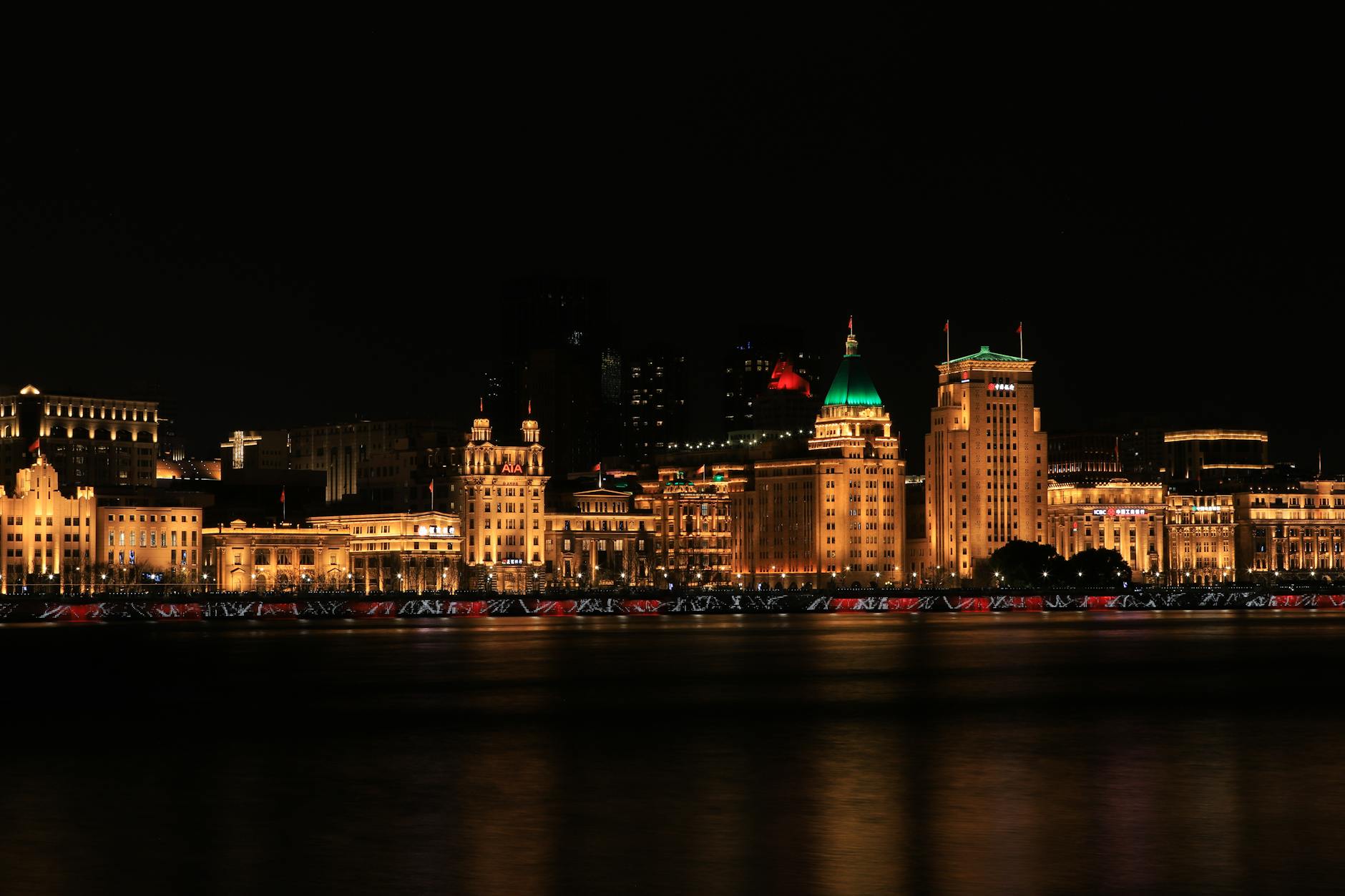
Table of Contents
- Shanghai History at a Glance
- Prehistory and Neolithic Settlements
- Early Imperial Era (220 BCE–751 CE)
- Tang and Song Dynasties (751–1267)
- Yuan and Ming Dynasties (1267–1644)
- Qing Dynasty Pre-Treaty (1644–1842)
- Treaty Port Era (1843–1943)
- The 1920s and 1930s: Paris of the East
- War and Occupation (1937–1949)
- Mao Era and Cultural Revolution (1949–1980)
- Reopening and Pudong Boom (1990–2010)
- Contemporary Shanghai (2010–Present)
- Where to Walk Shanghai’s History
- History Museums Worth Visiting
- Frequently Asked Questions
Shanghai History at a Glance
Six thousand years of human settlement, three centuries of city status, and 180 years as a global metropolis. The five turning points to remember:
- 1267: Shanghai officially recognized as a town during the Southern Song dynasty.
- 1554: Old City walls completed during the Ming dynasty against pirate raids.
- 1843: Shanghai opened as a treaty port after the Treaty of Nanking. The transformation begins.
- 1949: Communist takeover ends the cosmopolitan treaty-port era.
- 1990: Deng Xiaoping designates Pudong as a special development zone, kicking off the modern boom.
Everything else in Shanghai’s history fits into this skeleton.
Prehistory and Neolithic Settlements
The lower Yangtze Delta has been settled for roughly 6,000 years. Two prehistoric cultures left lasting evidence in the Shanghai region:
Majiabang culture (5000–3300 BCE). Rice-cultivating, jade-carving, and pottery-making people whose tools have been excavated at sites near modern Qingpu District. The Songze Site Museum displays Majiabang and later Liangzhu artifacts.
Liangzhu culture (3300–2300 BCE). Sophisticated jade-working culture extending across modern Zhejiang and southern Jiangsu, including the Shanghai region. Liangzhu jade artifacts in the Shanghai Museum are some of the finest examples of Neolithic Chinese craftsmanship.
By the late Bronze Age, the area was incorporated into the kingdoms of Wu and Yue, whose rivalry shaped the broader Wu cultural sphere that still influences Shanghai today.
Early Imperial Era (220 BCE–751 CE)
Under the Qin dynasty (221–206 BCE) and Han dynasty (206 BCE–220 CE), the Shanghai area was a sparsely populated frontier on the eastern edge of the imperial system. The dominant cities of the lower Yangtze were further north (Suzhou) and further south (Hangzhou). Shanghai itself was not even a town; it was a stretch of marsh and creeks where boatmen and fishermen worked.
By the Tang dynasty in 751 CE, the imperial government had established Huating County, the administrative ancestor of modern Shanghai. The county encompassed roughly the eastern half of modern Shanghai municipality. The actual settlement of Shanghai existed but was not yet significant enough to warrant separate recognition.
Tang and Song Dynasties (751–1267)
The Song dynasty (960–1279) brought the first significant urbanization. Shanghai emerged from its earlier obscurity as a small but growing trading port at the mouth of the Huangpu River, where it joins the Yangtze and the East China Sea. By the late Northern Song, Shanghai was important enough to host customs offices and a small Buddhist community.
In 1267, during the Southern Song period, Shanghai was officially recognized as a town. This is the conventional date used for the founding of the city. The settlement was modest by Song-dynasty standards — a few thousand residents — but the foundation was laid.
Yuan and Ming Dynasties (1267–1644)
The Yuan dynasty (1271–1368) under Mongol rule promoted Shanghai to county status in 1292. The town now had its own administration and could begin growing in earnest.
The Ming dynasty (1368–1644) was when Shanghai became prosperous. Cotton cultivation in the surrounding farmland fed a textile economy that made Shanghai one of the most important commercial towns in the lower Yangtze. By 1500, the population had grown to about 80,000.
The defining Ming event for Shanghai was the construction of the city walls in 1554. Pirate raids by the Wokou (Japanese pirates) had been disrupting commerce; the walls were built to defend the town. The wall enclosed the area now known as the Old City (Nanshi). It was demolished in 1912, but the streets that follow the wall’s old course are still visible if you walk the Old City carefully.
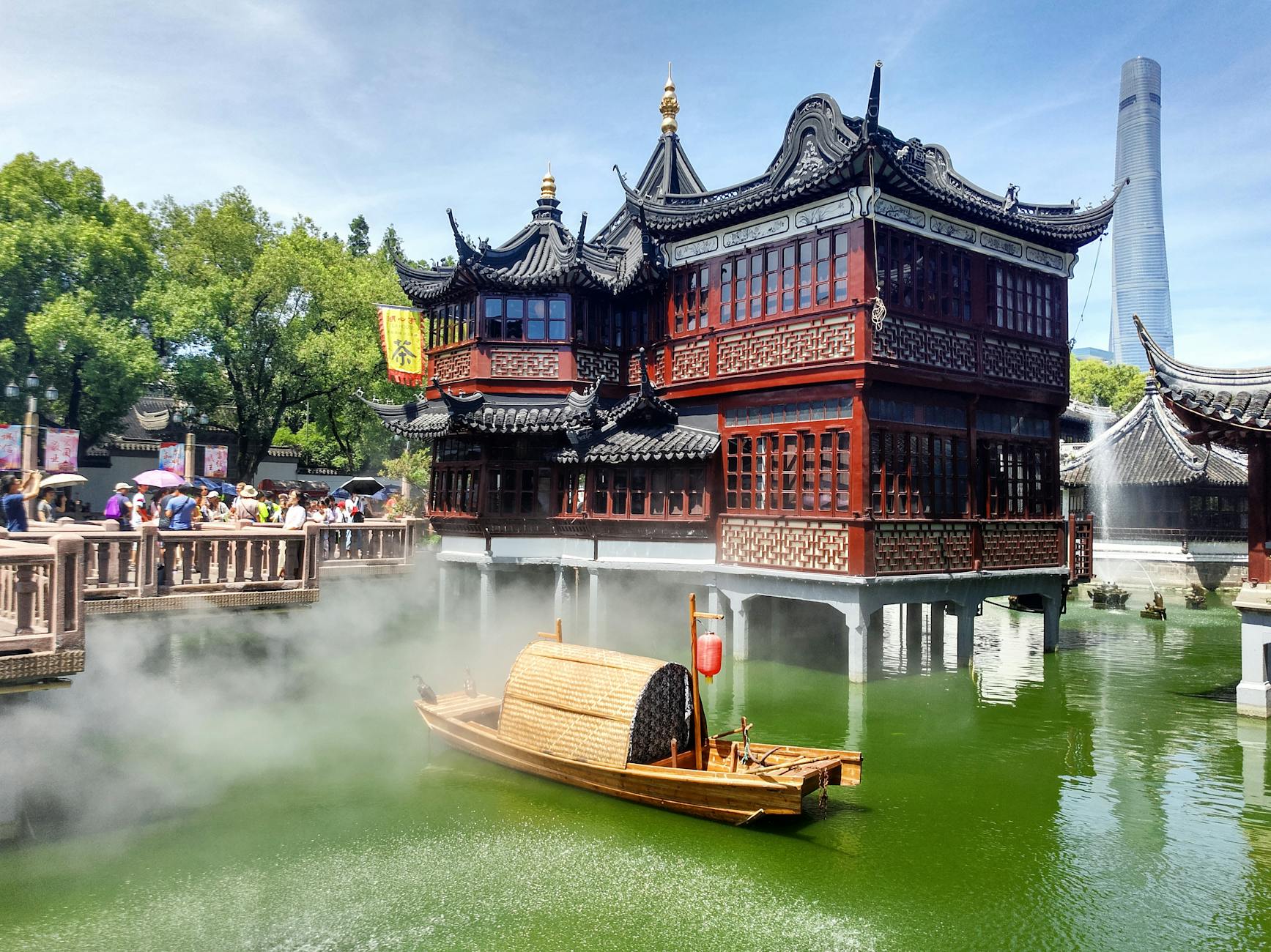
Yu Garden was completed in 1577 by a Ming official named Pan Yunduan as a private retreat for his father. It survives largely intact today and is one of the few major Ming-era classical gardens remaining in central China.
Qing Dynasty Pre-Treaty (1644–1842)
The early Qing dynasty (1644–1911) saw continued growth. Shanghai’s port handled increasing volumes of cotton, silk, salt, and grain. By 1750, the city had perhaps 300,000 residents and a sophisticated guild-based merchant class.
The City God Temple, originally a Taoist shrine to a local protective deity, was rebuilt several times during the Qing era and became the social and commercial heart of pre-treaty Shanghai. The surrounding bazaar developed into one of the most important markets in the lower Yangtze.
By the early nineteenth century, Shanghai was a prosperous but unremarkable Chinese commercial city. It had not yet become the global metropolis it would shortly turn into. Britain, France, and the United States had all begun trying to expand trade with China, and Shanghai’s location at the mouth of the Yangtze made it the natural target for any Western opening.
Treaty Port Era (1843–1943)
The single most consequential date in Shanghai’s history is November 17, 1843. On that day, the city officially opened to foreign trade under the terms of the Treaty of Nanking, which had been imposed on the Qing dynasty after its defeat in the First Opium War. The treaty granted Britain — and soon France and the United States — the right to lease land, build settlements, and govern their own residents under their own laws.
The British settlement, established in 1843 just north of the Old City along the Huangpu, became the core of what is now the Bund. The American settlement was established in Hongkou in 1848, and the two merged in 1863 to form the Shanghai International Settlement. The French Concession, established in 1849, remained separate to the southwest.
Shanghai’s growth during this period is hard to overstate. The population, which was around 250,000 in 1842, exceeded three million by 1930. The city pioneered modern banking and stock trading in China, hosted the country’s first electric streetlights in 1882, opened the first railway terminus in the Chinese empire, and produced China’s first feature films at the Mingxing studio in 1922. The city’s foreign concessions — which were not technically colonies but functioned as foreign-administered districts within Chinese territory — gave Shanghai its distinctive cosmopolitan character.
The Taiping Rebellion (1850–1864), one of the deadliest civil wars in human history, devastated the surrounding countryside but increased Shanghai’s importance as refugees and merchants flooded into the foreign-administered concessions for safety. Shanghai’s population doubled between 1850 and 1864.
The 1920s and 1930s: Paris of the East
By the 1920s, Shanghai was one of the great cities of the world, the only Asian city routinely compared with New York, London, and Paris in terms of commerce, finance, and cosmopolitan culture. The decade was the high-water mark of pre-war Shanghai.
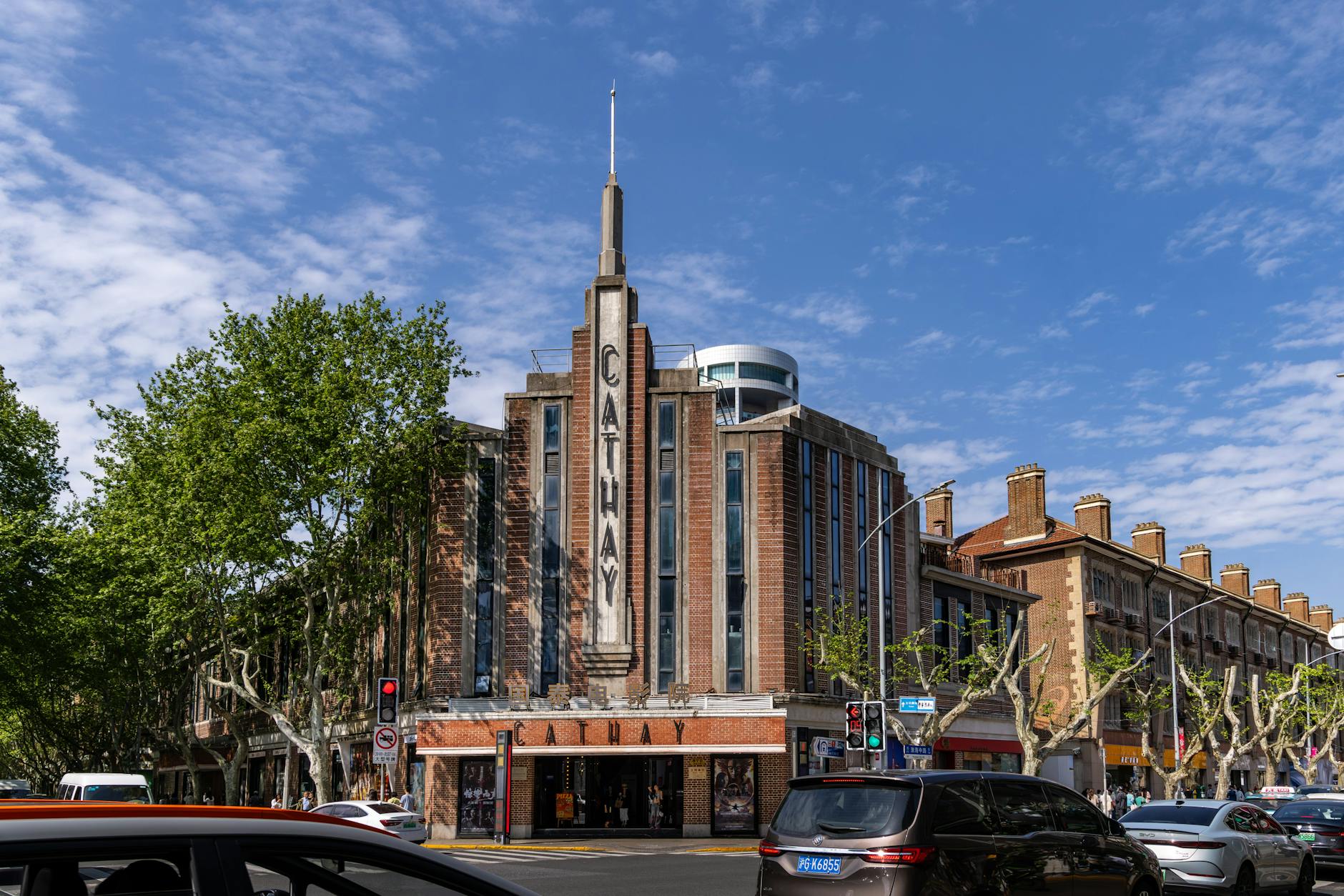
The defining Bund architecture was built between 1900 and 1937. The HSBC Building (1923), Customs House (1927), Sassoon House (1929), and Bank of China Building (1937) are the canonical examples. Shanghai’s Art Deco scene — buildings, cinemas, ballrooms — rivaled Miami and New York. The Paramount Ballroom, the Cathay Theatre, and the Park Hotel are still standing.
The Shanghai of the era was famous for jazz, fashion, gangster politics, opium, qipao tailoring, and a level of cosmopolitan glamour that has rarely been equaled in any Asian city since. It was also a city of extreme inequality: the wealth of the foreign concessions sat next to grinding poverty in the Chinese-administered districts.
The Chinese Communist Party held its founding congress in a Shanghai shikumen house in July 1921, partly because the city’s foreign concessions offered cover from Qing and Republican authorities. The site, now the Memorial of the First National Congress of the CCP near Xintiandi, is a major modern pilgrimage spot and a useful reminder that Shanghai’s reputation for glamour was always inseparable from its politics.
War and Occupation (1937–1949)
The Second Sino-Japanese War broke out in 1937, and the Battle of Shanghai (August–November 1937) was one of the most destructive urban battles of the war. Japanese forces occupied the Chinese-administered areas of Shanghai while leaving the foreign concessions briefly untouched. Pearl Harbor in December 1941 changed that; Japanese forces seized the foreign concessions as part of the wider Pacific War.
From 1937 to 1945 the Japanese occupation reshaped daily life again. Hongkou became home to roughly twenty thousand Jewish refugees who had fled Nazi Europe and found Shanghai to be one of the few cities still issuing visas. The Shanghai Jewish Refugees Museum, housed in the former Ohel Moishe Synagogue, tells this remarkable story in detail and is among the most powerful historical visits in the city.
The treaty-port era formally ended in 1943 when foreign concessions were abolished. After Japan’s surrender in 1945, Shanghai briefly returned to Republic of China control but was caught up in the Chinese Civil War (1945–1949). On May 27, 1949, the People’s Liberation Army entered Shanghai, ending the treaty-port and Republican era for good.
Mao Era and Cultural Revolution (1949–1980)
After 1949, Shanghai went through the most dramatic identity shift of any major Chinese city. Foreign businesses left, private property was nationalized, and the city was redirected toward heavy industry and shipbuilding. For roughly four decades, the cosmopolitan Shanghai of the Republican era survived only in faded buildings, family photographs, and quiet kitchen recipes.
The Cultural Revolution (1966–1976) hit Shanghai harder than most Chinese cities. The “Gang of Four” — the radical faction that drove much of the Cultural Revolution’s excesses — was based partly in Shanghai. Cultural artifacts were destroyed, intellectuals were persecuted, and entire institutions of pre-1949 Shanghai were dismantled. The Shanghai Conservatory of Music and the Shanghai Museum survived but were significantly reduced.
By the late 1970s, Shanghai’s industrial economy was outdated and the city’s commercial buildings had weathered four decades of disrepair. The transformation that began in 1990 was, in many ways, a recovery from these years.
Reopening and Pudong Boom (1990–2010)
The reopening began in earnest in 1990, when Deng Xiaoping designated the empty marshland of Pudong, on the east side of the Huangpu River, as a special development zone. What followed has been called the largest urban construction project in human history.
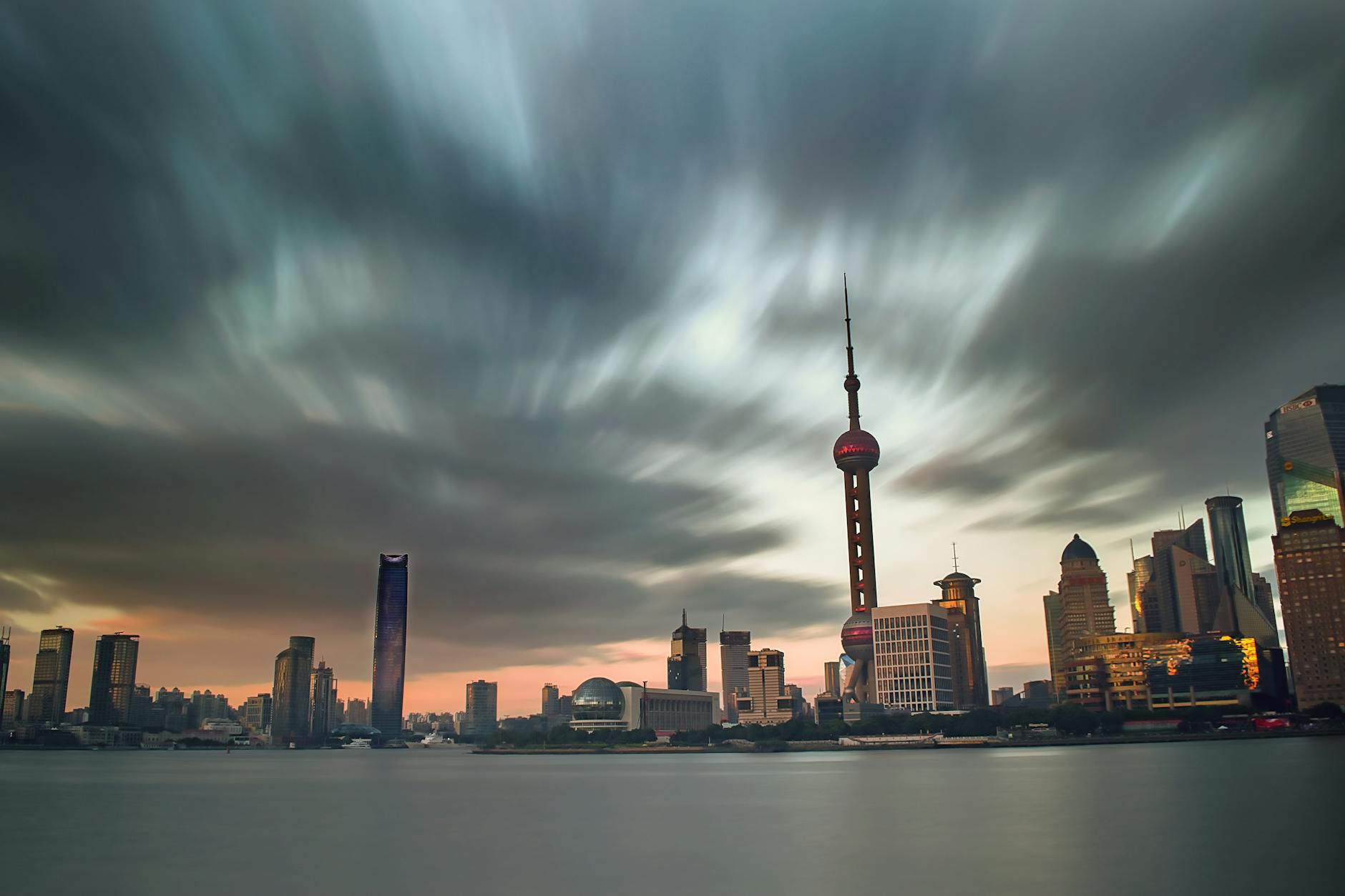
The Oriental Pearl Tower (1994), Jin Mao Tower (1999), Shanghai World Financial Center (2008), and Shanghai Tower (2015) rose in rapid sequence, each briefly the tallest building in China. The Maglev train, the world’s first commercial magnetic-levitation line, began service to the new Pudong International Airport in 2003.
By 2010 the city was hosting Expo 2010 Shanghai, the largest world’s fair in history, and announcing itself emphatically to a global audience. The Expo’s red China Pavilion now houses the China Art Museum.
Contemporary Shanghai (2010–Present)
Since 2010, Shanghai has consolidated its position as one of the world’s leading financial and cultural centers. The Shanghai Free Trade Zone (2013) experimented with reduced trade barriers and currency liberalization. The Shanghai-Hong Kong Stock Connect (2014) integrated Shanghai’s stock market more closely with global capital. The Shanghai Disney Resort opened in 2016. Shanghai Museum East opened in Pudong in 2024, expanding the city’s flagship cultural institution.
Shanghai today has roughly 26 million residents, two of the busiest container ports in the world, and a metro system that rivals Tokyo’s in size. The 240-hour visa-free transit policy now extends to fifty-five countries, dramatically simplifying access for foreign visitors.
What has not changed is Shanghai’s distinctive cultural character. Haipai — the hybrid Shanghai sensibility that emerged in the treaty-port era — continues to define how the city engages with international culture, food, and design. The contemporary city you visit is the layered product of all of this history.
Where to Walk Shanghai’s History
Several walks expose specific eras of Shanghai’s history particularly well.
Old City and Yu Garden walk (Ming–Qing). The Yu Garden (1577), City God Temple, the surrounding Yuyuan Bazaar streets, and the medieval-feeling alleys give the strongest sense of pre-treaty Shanghai.
Bund architectural walk (treaty port). The mile-long Bund preserves the densest concentration of pre-1937 international architecture in Asia. Read the small bronze plaques on each building.
Former French Concession walk (treaty port and Republican). Wukang Road, Anfu Road, and Wuyuan Road preserve the residential architecture and streetscape of 1920s–1940s Shanghai. The Sun Yat-sen Memorial Residence is a key historical site.
Xintiandi and Memorial of the First Congress of the CCP (1921). The CCP’s founding congress site is now a major museum.
Hongkou and Shanghai Jewish Refugees Museum (1937–1945). The story of Jewish refugees in wartime Shanghai is told at the former Ohel Moishe Synagogue.
Lujiazui (1990–present). The post-1990 Pudong skyline embodies the modern era.
History Museums Worth Visiting
Several museums in Shanghai dedicate themselves to the city’s history.
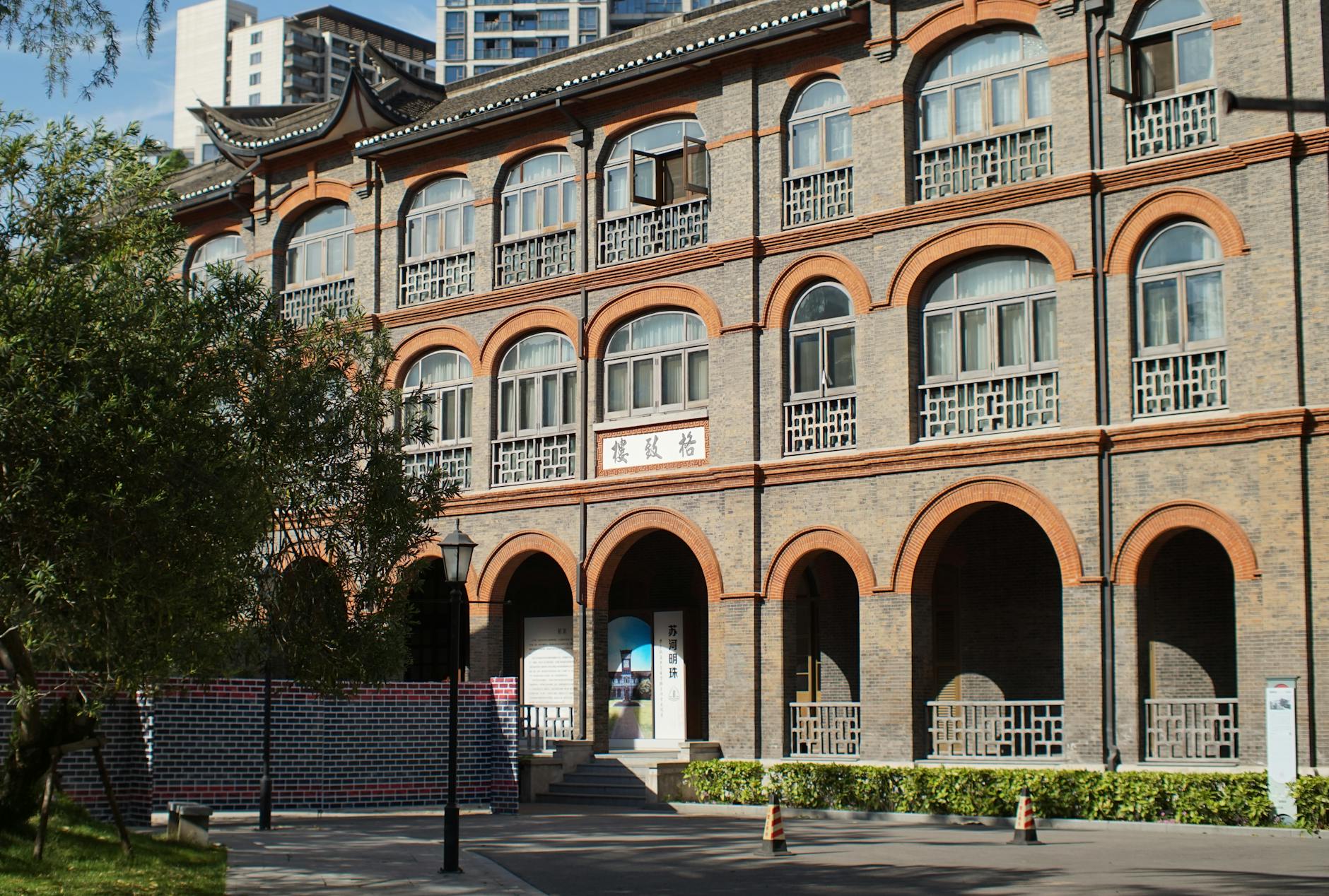
Shanghai History Museum. On People’s Square, free admission with reservation. Four floors covering Shanghai’s transformation from village to global city. The single best introduction to the topic.
Shanghai Museum. Adjacent to the Shanghai History Museum on People’s Square. Bronzes, ceramics, painting, and calligraphy across three thousand years of Chinese history.
Memorial of the First National Congress of the CCP. Near Xintiandi. The site of the 1921 founding meeting.
Sun Yat-sen Memorial Residence. Former French Concession. The home of modern China’s founding father.
Shanghai Jewish Refugees Museum. Hongkou. The story of WWII-era Jewish refugees in Shanghai.
Songze Site Museum. Qingpu District. Prehistoric Majiabang and Liangzhu cultures.
For broader cultural context, see our pillar guide on Shanghai Culture and History Guide.
Frequently Asked Questions
How old is Shanghai?
The Shanghai region has been inhabited for approximately 6,000 years, but Shanghai itself was first recognized as a town in 1267 and granted county status in 1292. The modern city dates effectively from 1843, when Shanghai was opened as a treaty port.
What does “Shanghai” mean in Chinese?
“Shanghai” (上海) literally means “above the sea.” The name reflects the city’s location at the mouth of the Huangpu River where it joins the East China Sea.
Why is Shanghai called the “Paris of the East”?
The nickname dates to the 1920s and 1930s, when Shanghai was the most cosmopolitan city in Asia, with a strong French Concession, jazz culture, fashion, and an international expatriate population that included thousands of European and American residents.
Was Shanghai ever a colony?
Not technically. Shanghai’s foreign concessions, established after 1843, were leased territories within Chinese sovereignty, governed by foreign councils for the resident foreign population. They functioned in many ways like colonies but were not formally annexed by any foreign power. The concessions were abolished in 1943.
What was the Battle of Shanghai?
The Battle of Shanghai (August–November 1937) was the opening major battle of the Second Sino-Japanese War, in which Japanese forces conquered the Chinese-administered areas of Shanghai. The battle resulted in the deaths of over 200,000 soldiers and tens of thousands of civilians.
How did Shanghai change after 1949?
The Communist takeover in 1949 led to nationalization of foreign-owned businesses, departure of foreign residents, and a redirection of Shanghai’s economy toward heavy industry. The cosmopolitan culture of the treaty-port era was largely suppressed until the 1990 reopening.
What is the most important date in Shanghai’s history?
Most historians point to 1843 (the opening as a treaty port) and 1990 (the Pudong reopening) as the two most consequential dates. The first turned Shanghai into a global city; the second turned it into the modern metropolis we know today.
How big is Shanghai today?
Approximately 26 million residents in the broader metropolitan area, making it one of the largest cities in the world by population.
Who founded Shanghai?
Shanghai grew organically from village settlements over centuries; there is no single founder. The Yuan dynasty’s elevation of Shanghai to county status in 1292 is the closest equivalent to a “founding” date in a formal sense.
What language did historic Shanghai speak?
Shanghainese, a Wu Chinese language closely related to Suzhou Wu. Mandarin became dominant in public life only after 1949.
Continue Exploring
The history of Shanghai is genuinely impossible to summarize in any single article, but the timeline above gives you the scaffolding to understand the city’s neighborhoods, architecture, and culture. For broader cultural context including food, language, and traditions, see our Shanghai Culture and History Guide. For specific museums and walking routes that bring this history to life, see our Things to Do in Shanghai and Shanghai itinerary planner.
For external scholarly context, the Wikipedia article on the history of Shanghai offers extensive citations to academic sources and is a useful next step.
However you spend your time in Shanghai, remember that the city rewards travelers who know the periods. Read the small plaques on buildings. Step into a temple even if you have no plans to pray. Sit in an old teahouse for an hour. Order something you cannot identify. Shanghai’s history is happening on every street corner, every day, for those who know where to look.