Of all the day trips you can take from Shanghai, the trip to Zhujiajiao water town is the one that asks the least of you and gives back the most. It sits about 47 kilometres west of the city, on the far edge of Qingpu District, and an hour on the metro drops you into Ming and Qing-era stone alleys, on canals crossed by arched bridges that were already old when the United States was founded. This guide walks through how to get to Zhujiajiao from central Shanghai, what to see once you arrive, where to eat, which tickets are worth buying, how long to stay, and how to time a visit so you are standing on a quiet bridge rather than shuffling through a tour-group queue.
Zhujiajiao is the most reachable of the historic Yangtze Delta canal towns, and that accessibility is the whole pitch. Metro Line 17 runs to the town’s doorstep, so the journey is one of the cheapest cultural outings of its kind anywhere in Asia. You can leave a hotel near the Bund after breakfast, reach the canals by mid-morning, see the headline sights at a walking pace, eat a proper riverside lunch, and be back in the city by mid-afternoon with most of your day still ahead of you.
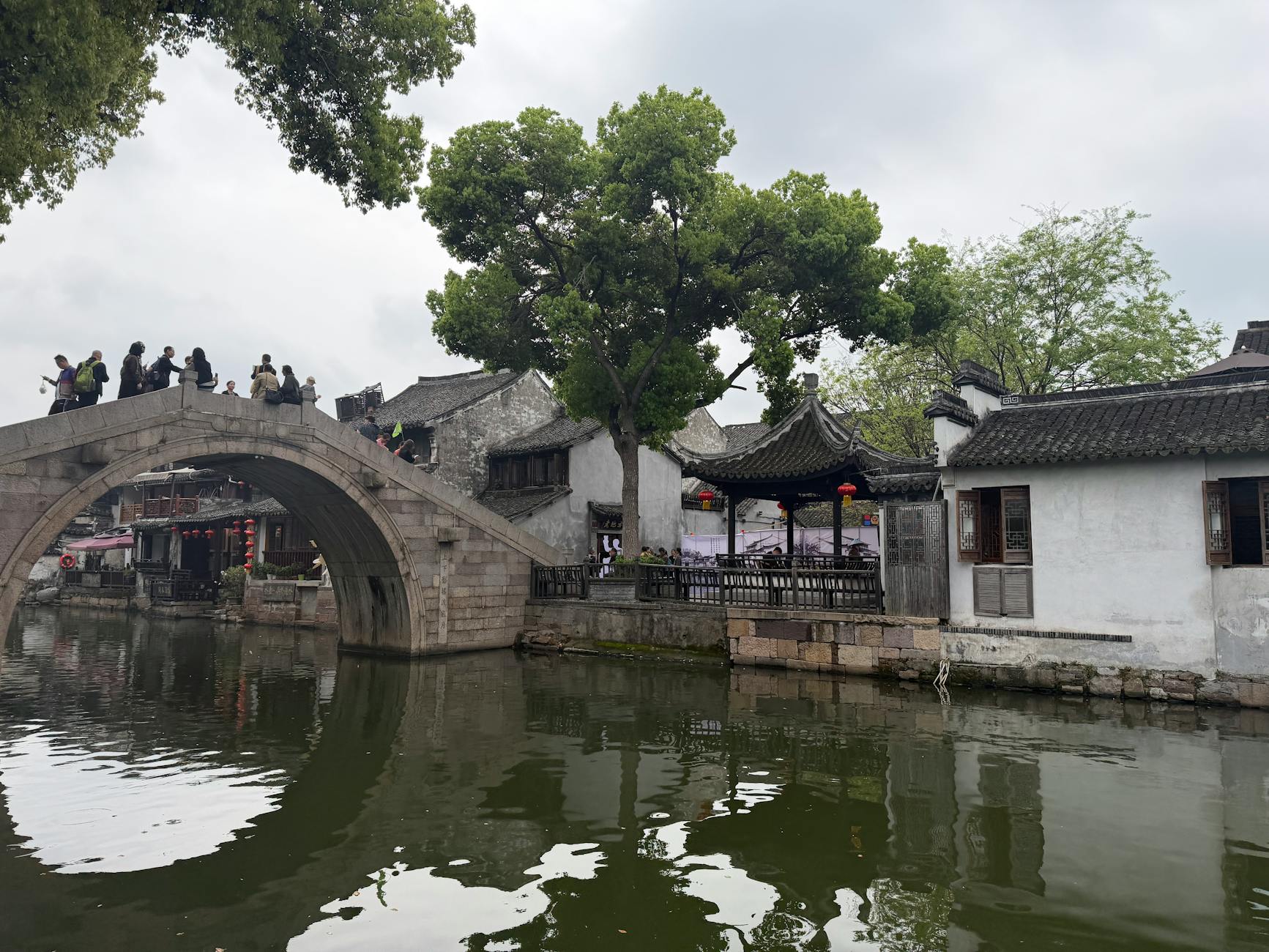
Table of Contents
- What Is Zhujiajiao Water Town?
- How to Get from Shanghai to Zhujiajiao
- Tickets and Entry Fees
- Top Things to See
- Should You Take the Canal Boat Ride?
- What to Eat in Zhujiajiao
- Best Time of Day and Year to Visit
- How Long Should You Spend?
- A Half-Day and Full-Day Plan
- What to Combine with Zhujiajiao
- Tips and Common Mistakes
- Zhujiajiao vs. Wuzhen, Tongli, and Suzhou
- Frequently Asked Questions
What Is Zhujiajiao Water Town?
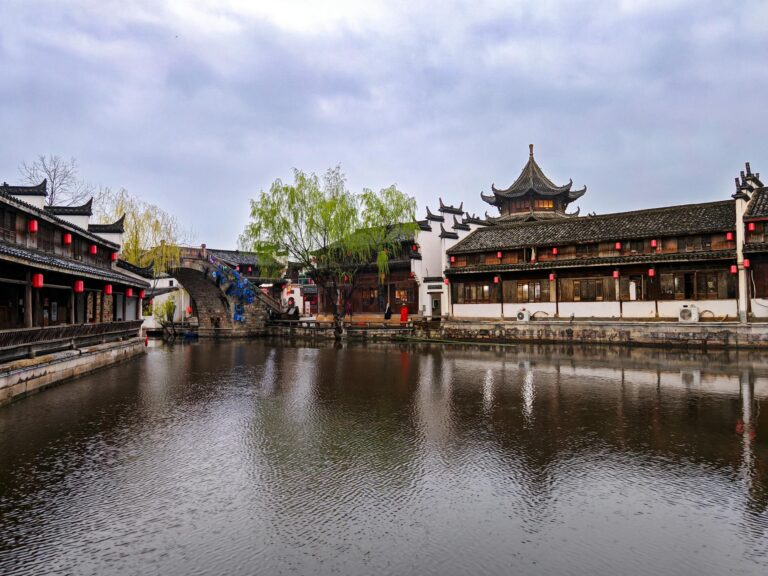
Zhujiajiao is a settlement that grew up around a network of canals linking the Dianpu River with Lake Dianshan, on the western edge of the Yangtze Delta. People have lived on this spot for roughly 1,700 years, but the town visitors walk through today took shape during the Ming and Qing dynasties, between the fourteenth and nineteenth centuries, when the region’s rice and silk trade put money in the pockets of the merchants who built the stone houses, bridges, and temples that still stand.
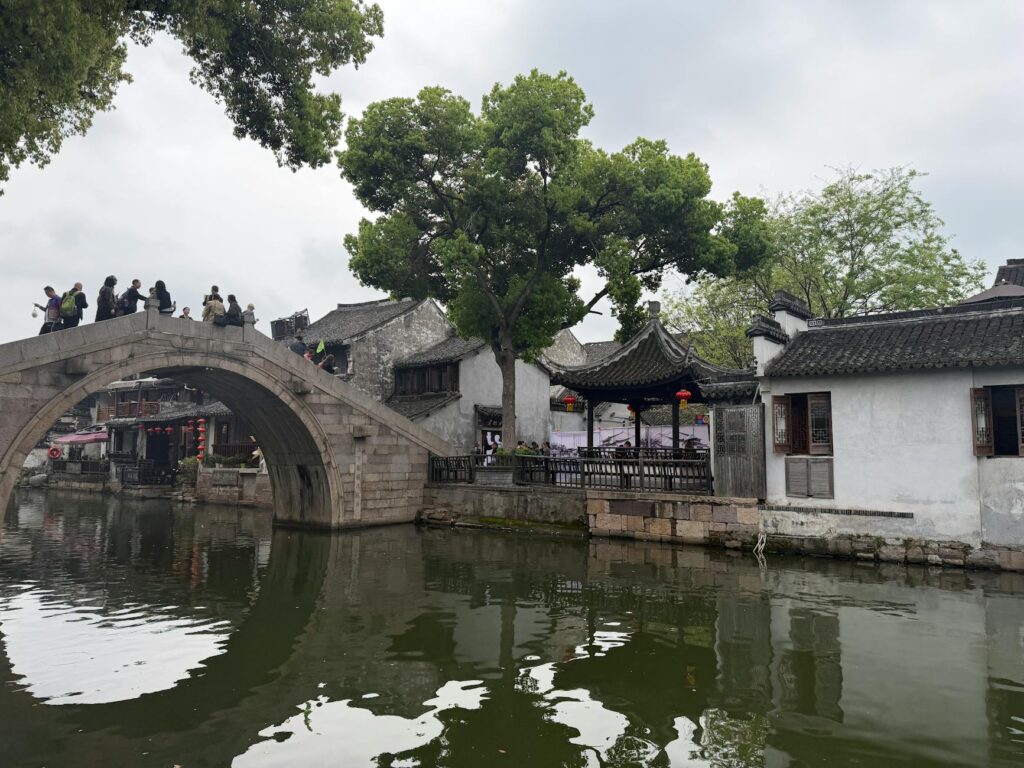
The historic core covers about 47 hectares of canals, lanes, and timber-and-stone lane houses. Thirty-six ancient bridges cross the water at intervals, the most celebrated being the five-arched Fangsheng Bridge. More than a thousand buildings here carry heritage protection, and a great many are still lived in. That last point matters: Zhujiajiao is not a reconstructed museum set. Laundry hangs from upper windows, residents buy vegetables from canalside stalls, and the boats poling along the water are, in places, still moving people rather than only tourists.
You will sometimes see Zhujiajiao compared to a European canal city. The comparison is half true, given the water and the bridges, and half misleading, because the architectural traditions are entirely separate. A more useful way to picture it is as the city-region cousin of Suzhou’s old canal districts: smaller and more intimate than Suzhou proper, but far easier to reach. If you have seen photographs of Jiangnan water towns and wondered which one to actually visit on a tight schedule, this is the practical answer.
How to Get from Shanghai to Zhujiajiao
There are four ways in, in roughly increasing order of cost. For nearly every independent traveller, the first one is the answer.
Metro Line 17 (the recommended route)
The Shanghai Metro extended Line 17 out to Zhujiajiao in late 2017, turning what used to be a 90-minute road slog into something closer to an hour-long commute. The line’s western terminus is Oriental Land (Dongfang Lvzhou), and Zhujiajiao Station is one stop before it. From the city centre you first ride to Hongqiao Railway Station, which is where Line 2 and Line 17 meet, then change onto Line 17 toward Oriental Land and ride out to Zhujiajiao Station.
As a worked example, from People’s Square it is roughly 35 minutes on Line 2 west to Hongqiao Railway Station, then a similar stretch on Line 17 out to Zhujiajiao, for a total of about 60 to 75 minutes door to platform depending on connection times. The fare from central Shanghai works out to around 7 to 9 RMB one-way, paid with a Shanghai Public Transport Card or a metro QR code in Alipay or WeChat. Line 17 trains run from roughly 05:40 in the morning until around 22:00, so the last train back is not an issue for a normal day visit, but it is worth checking the final departure board if you stay for the lanterns. For the full rundown on fares, passes, and how to navigate the system, see our Shanghai Metro guide.
From Zhujiajiao Station to the town’s entrance is about a 15-minute walk along signed pedestrian routes, or a very short taxi or local bus hop if you would rather not walk. Follow the brown tourist signs; the route is straightforward and well marked in both Chinese and English.
Sightseeing bus
Several daily sightseeing-bus services run from Shanghai Stadium (Puanlu) and a few other hubs out to Zhujiajiao for somewhere in the range of 30 to 60 RMB round-trip. It is a reasonable option if you happen to be staying near a departure point, but it is slower than the metro and tied to fixed timetables, which removes the flexibility that makes a self-guided water-town visit pleasant.
Taxi or Didi
A taxi or Didi ride from central Shanghai runs roughly 200 to 280 RMB one-way and takes 60 to 75 minutes, longer in heavy traffic. It earns its keep if you are travelling as a group of three or four (the per-head cost drops sharply), if you have luggage, or if you simply want door-to-door convenience without changing trains.
Organised tour
Plenty of operators sell half-day or full-day Zhujiajiao tours that bundle transport, a guide, and entry tickets for somewhere around 350 to 600 RMB per person. This suits travellers who would rather not deal with metro maps at all. The trade-off is the usual one: you pay more, you move on someone else’s schedule, and you spend less time lingering where you want to linger.
In practice, the metro is the most popular choice in 2026 and the right call for the vast majority of independent visitors. It is the cheapest, it is reliable, and it is not at the mercy of weekend traffic on the elevated highways. If you want to see how Zhujiajiao stacks up against the other obvious escapes from the city, the Day Trips from Shanghai pillar guide lays them out side by side.
Tickets and Entry Fees
Here is the part that surprises first-time visitors: walking around Zhujiajiao is free. The town is open, and you can wander the canals, cross the bridges, and explore the lanes without buying anything. What costs money is entry into specific historic buildings, gardens, and temples, plus the boat rides. Prices below are approximate and shift over time, so treat them as a planning guide rather than a guarantee.
- Combination through-ticket. A bundled ticket covers a group of the major sights for roughly 60 RMB per adult, with the exact number of included attractions varying by season and by which package you buy (you will see through-tickets quoted for anywhere from four to eight or nine sights). The combination typically folds in headline stops like Kezhi Garden, Yuanjin Temple, and the Qing-era post office. It is worth buying if you plan to enter more than two or three of the included sights; below that, individual tickets are cheaper.
- Individual sight tickets. Single-attraction entries generally run in the region of 5 to 30 RMB each, depending on the sight. Fine if you only want to see one or two specific buildings and would rather not pay for a bundle.
- Boat rides. A small private boat seating up to six people costs in the region of 80 RMB for a canal trip of roughly 20 to 25 minutes. Shared group boats work out cheaper per head, often around 30 RMB per person. Boats are priced per boat, not per seat, so the more friends you bring, the less each of you pays.
- Workshops. Several spots in town run hour-long calligraphy or pottery sessions for somewhere around 80 to 200 RMB. These are sometimes folded into tour packages.
Entrances sit at the eastern, western, northern, and southern edges of the historic core, and tickets are sold at the gates or at the central Visitor Service Center. If you arrive by metro and walk in, you will most likely come in from the side nearest the station; buy your through-ticket there if you have decided you want one, so you are not backtracking later.
Top Things to See
You can see the major sights of Zhujiajiao at an unhurried pace in three to four hours. The town rewards slow walking more than ticking boxes, but if you want an anchor list, start with these.
Fangsheng Bridge
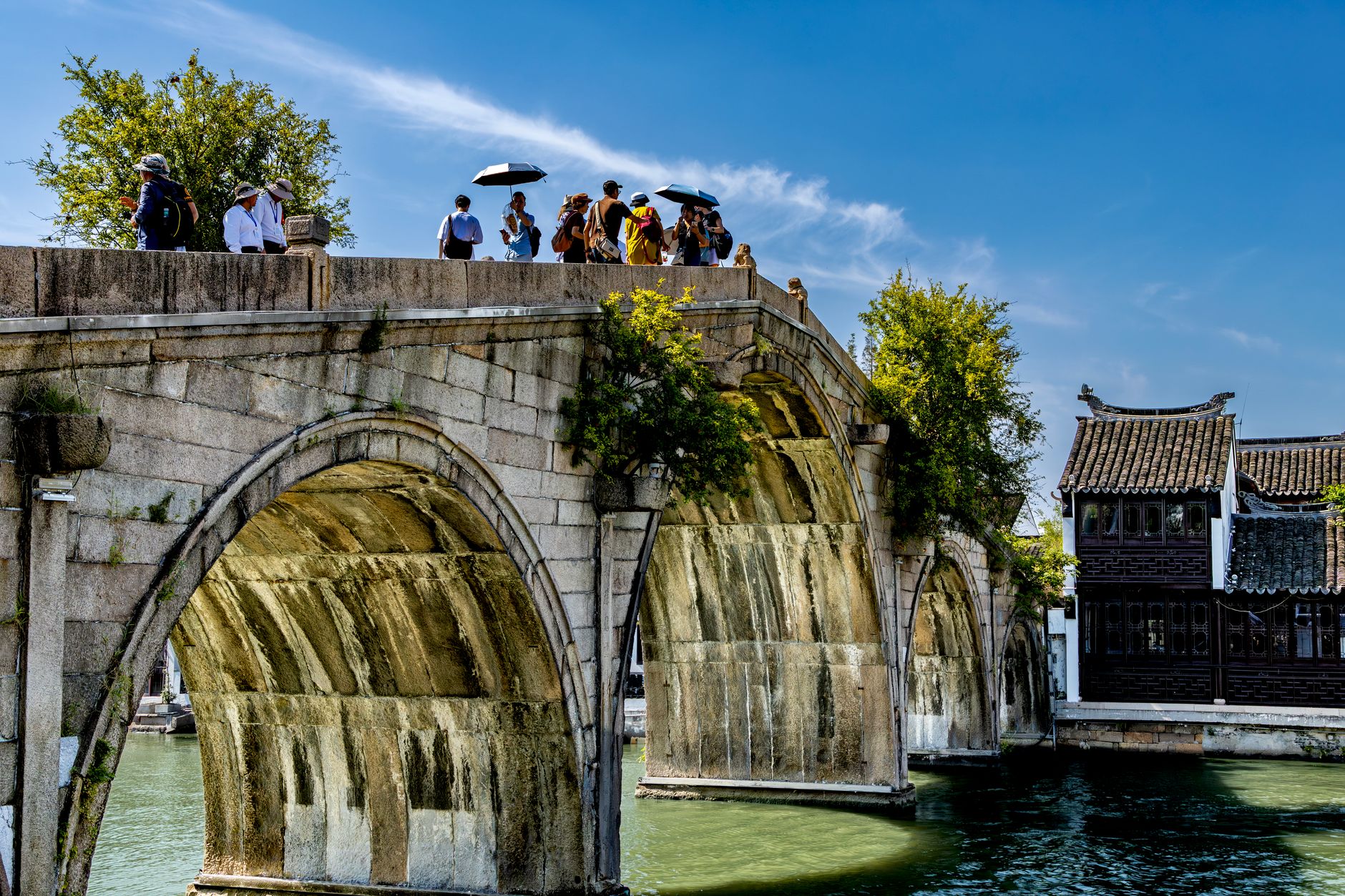
This is the town’s signature landmark and its busiest photo spot. A five-arched stone bridge built in 1571, it spans the Dianpu River and ties the eastern and western halves of the town together. The name translates roughly as “releasing life,” a reference to the old custom of freeing fish and turtles into the river from the bridge as a Buddhist merit-making act, a tradition still occasionally observed. At around 70 metres long it is the largest stone arch bridge of its type in the Shanghai area. Climb to the apex for the postcard view down the canal in both directions, then come back at a quieter hour to actually enjoy standing on it.
Kezhi Garden
Kezhi Garden is a private garden dating to the early twentieth century, and for many visitors it is the highlight of the day. Spread across nearly two hectares, it layers pavilions, ponds, rockeries, arched footbridges, bamboo, maples, and a handsome library hall in the classical Suzhou-school style. An unhurried walk through takes about an hour. It is usually included in the combination ticket, which is one of the better reasons to buy that ticket in the first place.
Yuanjin Temple
Yuanjin (Yuanjin Chan) is the town’s principal Buddhist temple, with a lineage that reaches back to the Northern Song dynasty in the eleventh century. Expect multiple halls, an active worshipping community, and quiet courtyards that offer a genuine pause from the canalside crowds. It is generally part of the combination ticket.
Daqing Post Office
This modest Qing-era building served as a regional postal hub from 1903 and is one of the oldest surviving post offices of its kind in the area. Inside, the original counters, mailing equipment, and uniforms are preserved, which makes it a small but genuinely interesting stop for anyone who likes the texture of everyday history. It is typically covered by the combination ticket.
North Street and the old lanes
The most atmospheric walking is along North Street (Beidajie) and the tangle of alleys behind it. This stretch is less aggressively commercial than the main canal frontage and gives a clearer sense of how residents actually live: workshops, tea houses, family kitchens, and laundry strung overhead. If you only have energy for one wandering loop, make it this one.
The Dianpu River canal walk
Walk the south-bank waterfront end to end for the classic Zhujiajiao view. Take it slowly. The bridges, the restaurants leaning over the water, and the small shops along this stretch are the heart of the experience, and rushing it defeats the purpose. This is also the best place to watch boats glide under the bridges with the afternoon light on the water.
City God Temple and the smaller sights
The City God Temple of Zhujiajiao is smaller than its famous Shanghai namesake near Yu Garden, but it is evocative in its own right and rarely crowded. Beyond it, the town is dotted with craft shops selling embroidery, fans, calligraphy supplies, tea, and local food. Quality varies a great deal; if you intend to buy anything, haggle politely and apply the same caution you would at a tourist bazaar. For a sense of the gardens this region is famous for, our guide to Yu Garden in Shanghai covers the city’s most celebrated classical garden and pairs naturally with a Kezhi Garden visit.
Should You Take the Canal Boat Ride?
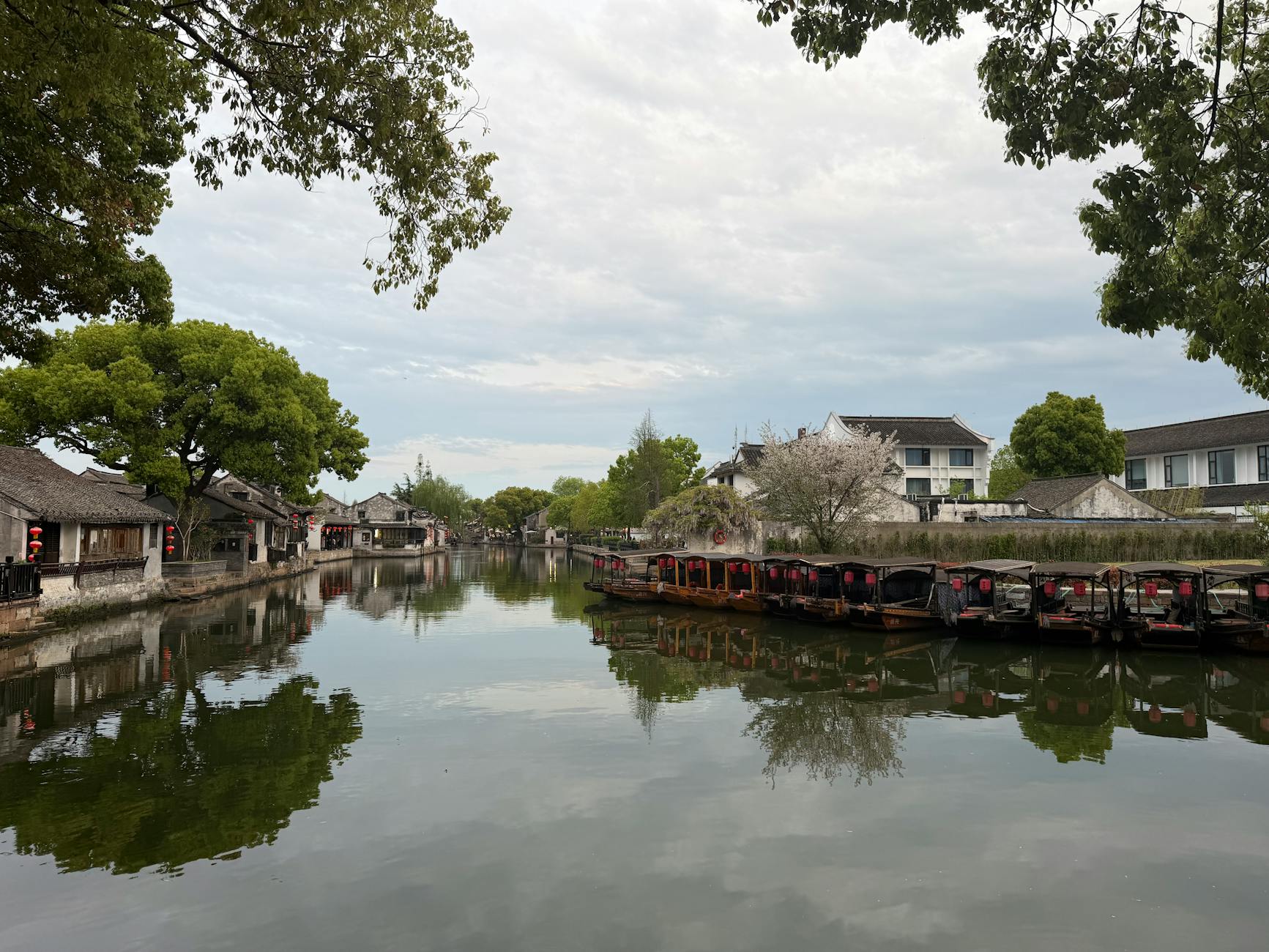
Yes, take the boat ride once. The 20-minute trip lets you see Zhujiajiao from the water, which is how the town was experienced for most of its history. The boats are small wooden craft, poled along the canals by a boatman, and the ride is quiet, slow, and genuinely pleasant. From water level the bridges loom larger and the houses crowd in close on both banks, a perspective walking simply cannot give you.
That said, if you are short on time or watching your budget, you can skip the boat and still have a fine visit. The walking is most of the experience, and the walking is free. The boat is a worthwhile add-on, not the main event.
Boarding points are scattered along the canals, with docks near Kezhi Garden, the City God Temple, and North Street among others. Each is signposted in Chinese and English. Pay at the booth before boarding, settle on the price first if you are chartering a small boat, and note that boatmen are not tipped here.
What to Eat in Zhujiajiao
Zhujiajiao has a regional cooking style of its own, related to but distinct from Shanghai’s benbang cuisine. It leans sweet, rich, and freshwater, the classic Jiangnan register. The dishes worth seeking out:
- Zongzi (sticky rice parcels wrapped in bamboo leaves). The Zhujiajiao version is a regional benchmark, sold from multiple shops along the canals. Try the savoury pork-filled style or the sweet red-bean one. Many stalls boil them fresh in front of you.
- Smoked or marinated tofu (xun dou fu). A local snack, dense and savoury, available from street stalls all over the historic core.
- Slow-braised pork knuckle (zha ti or hong shao ti pang). Cooked down until the skin is glossy and the meat falls apart, served warm. A canalside lunch staple and one of the dishes the town is known for.
- Freshwater fish. Sitting on the Dianpu River, Zhujiajiao has long specialised in freshwater fish. Red-cooked fish (hong shao yu) and stewed crucian carp are the standard plates.
- Local sweets. Glutinous rice balls, sweet bean snacks, hand-pulled candy, and scholar cake line the stalls along the main canal for grazing as you walk.
For a sit-down meal, the family-run restaurants on the western half of the historic core are your best bet, most serving the local Jiangnan style. One practical tip that holds almost everywhere: the stalls and restaurants pressed right up against the most photographed bridge tend to charge a premium and turn tables slowly. Walk fifty metres in any direction and the quality usually improves while the price drops.
Best Time of Day and Year to Visit
Zhujiajiao is open daily from roughly 8:30 AM to about 5:00 PM, though many shops and restaurants stay open later and the streets themselves never truly close. Crucially, the experience changes completely depending on when you arrive.
- Early morning (8:30 to 10:30 AM). The best window. Cool, quiet, and atmospheric, with locals out doing their daily errands and the tour buses not yet arrived. Photography is at its finest here in spring and autumn, when the light is soft and the canals catch reflections.
- Midday (11:00 AM to 2:00 PM). The busiest stretch. Tour groups cycle through, restaurants fill up, and the famous spots get congested. Acceptable for a quick look, but not the moment the town is at its best.
- Late afternoon (3:00 to 5:00 PM). Crowds thin, the light turns warm and golden, and the day-trip coaches start pulling out. Many shops close around 5 PM, but for unhurried walking and photographs this is a lovely time.
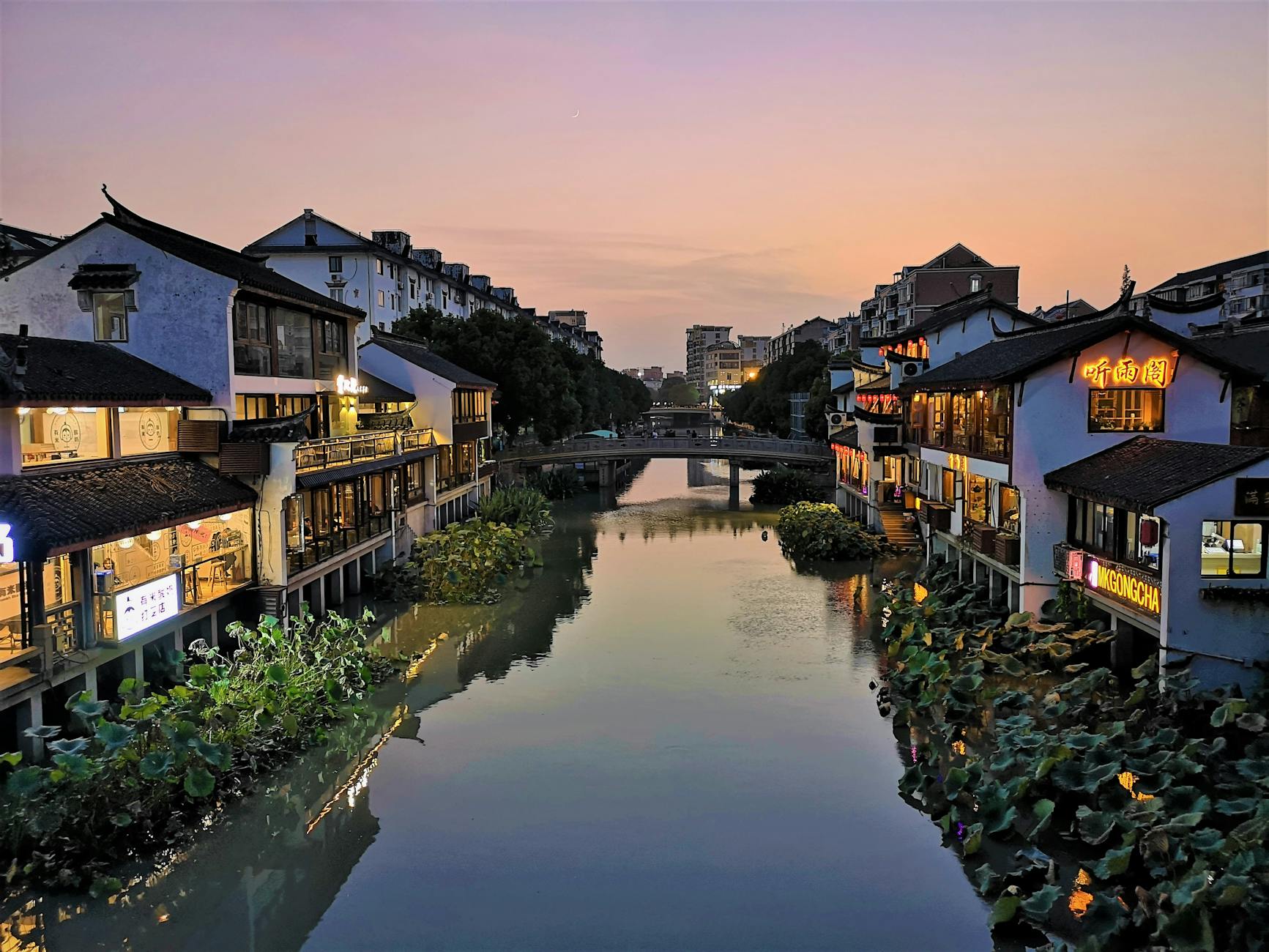
- Evening. Some restaurants and shops stay open past dusk, and the canals glow under red lanterns once it is dark. The town shifts into a quieter, moodier register that the daytime crowds never see. The catch is transport: plan your return before the last Line 17 train, or be ready to take a taxi back.
For seasons, April to May and September to October are the sweet spots, with mild temperatures, low rainfall, and flattering light. Summer is hot, humid, and thick with domestic tourists. Winter is quiet but cold and damp, and the bare trees leave the canals looking grey. If you want a fuller picture of the city’s climate before you commit to dates, our guide to the best time to visit Shanghai breaks the year down month by month.
One firm piece of advice: avoid the big Chinese public holidays, above all the May 1 to 5 Labour Day window and the October 1 to 7 National Day “Golden Week,” when the town is swamped with domestic visitors. Ordinary weekends are also noticeably busier than weekdays, so a Tuesday or Wednesday visit is worth arranging if your schedule allows.
How Long Should You Spend?
Half a day, meaning four to five hours including the travel each way, is enough for a satisfying first visit. That covers the canal walk, a boat ride, the headline garden and temple, and a proper lunch. A full day lets you slow down further: a longer meal, a calligraphy or pottery workshop, and unhurried wandering through the back lanes where the day-trippers rarely go.
An overnight stay is also possible and quietly rewarding for travellers with a flexible itinerary. A handful of heritage guesthouses sit right along the canals, and the town is at its most atmospheric in the evening, once the coaches have gone and the lanterns come on. If you would rather base yourself in the city and treat Zhujiajiao as a single outing, our where to stay in Shanghai guide covers the neighbourhoods with the easiest access to Line 17 and Hongqiao.
A Half-Day and Full-Day Plan
If you would rather not assemble the day from scratch, here are two simple frameworks you can adjust.
Half-day plan (about 5 hours)
- 8:00 AM Leave central Shanghai on Line 2, change at Hongqiao Railway Station to Line 17 toward Oriental Land.
- 9:15 AM Arrive Zhujiajiao Station and walk about 15 minutes to the town entrance. Buy the combination ticket if you plan to enter three or more sights.
- 9:30 AM Walk the Dianpu River canal frontage while it is still quiet, crossing Fangsheng Bridge and stopping for photographs.
- 10:15 AM Visit Kezhi Garden, then Yuanjin Temple, while the morning tour groups are still clustered elsewhere.
- 11:30 AM Take a boat ride along the canals from one of the marked docks.
- 12:00 PM Lunch at a family-run restaurant one street back from the main bridge.
- 1:00 PM Wander North Street and the old lanes, browse a craft shop, grab a few sweets for the road.
- 1:30 PM Walk back to the station and ride Line 17 home, in central Shanghai by mid-afternoon.
Full-day plan
Keep the same morning, but slow everything down. Add a calligraphy or pottery workshop after lunch, linger over a longer meal, and stay into the late afternoon when the crowds thin and the light warms. If you are happy to return after dark, wait for the lanterns to come on, eat an early dinner by the water, and take a later Line 17 train back, checking the final departure time before you settle in.
What to Combine with Zhujiajiao
Several nearby places pair naturally with a Zhujiajiao day trip, especially if you have a private car rather than relying on the metro.
- Lake Dianshan. The largest lake in the Shanghai municipal area lies a few kilometres north of the town and makes a pleasant stop on the way back if you are driving.
- Qingpu District sights. The Songze Cultural Museum, which tells the story of the prehistoric Songze culture that lived in this region some 6,000 years ago, is a short drive away and worth an hour for anyone keen on archaeology.
- Hongqiao on the return. Since you change trains at Hongqiao anyway, it is an easy place to break the journey for a casual dinner before heading back into the centre.
- Suzhou or Hangzhou on another day. Many travellers build a fuller Yangtze Delta week by pairing Zhujiajiao with a separate trip to Suzhou for its classical gardens or Hangzhou for West Lake. Both run on separate days and are easy by high-speed rail.
Tips and Common Mistakes
A handful of small decisions make the difference between a smooth visit and a frustrating one.
- Buy the combination ticket only if the maths works. It pays off at three or more included sights. For one or two, individual tickets are cheaper.
- Wear comfortable, grippy shoes. The cobbled lanes and the stepped bridges are charming and unforgiving in equal measure. Heels or thin-soled sandals will have you regretting the choice by the second hour.
- Bring water and sun protection in warm months. The canalside is exposed, and summer afternoons can be punishing. A hat and a bottle go a long way.
- Carry a little cash. Most vendors take WeChat Pay or Alipay, but a few small stalls remain cash-only. A hundred or two RMB is plenty for a day.
- Use the metro both ways. Out by Line 17 and back by Line 17 is the cheapest, fastest, and most reliable plan. Weekend tour buses can sit in traffic for an hour.
- Go on a weekday if you can. The difference in crowds between a Wednesday and a Saturday is dramatic.
- Eat one street back from the water. Direct-canal-view restaurants charge a premium and turn over slowly. Quality is usually better a few steps inland.
- Save the headline sights for after lunch. Tour groups cluster at Kezhi Garden and Yuanjin Temple in the morning. By early afternoon the queues shrink noticeably.
Zhujiajiao vs. Wuzhen, Tongli, and Suzhou
Zhujiajiao is the easiest water town to reach from Shanghai, but it is not the only one. A quick comparison helps you decide whether it is the right fit or whether one of the alternatives suits your trip better.
- Zhujiajiao is the closest (about an hour by metro), the smallest, and the simplest day trip. Best for short visits and first-timers who want the canal-town experience without a long journey.
- Wuzhen is the most polished and most thoroughly preserved, but it is roughly two hours away by combined train and bus. It is best enjoyed as an overnight, when the lit canals after dark are the whole point.
- Tongli is similar in size to Zhujiajiao but quieter and farther out, around 90 minutes by combined train and bus. A good pick for travellers chasing fewer crowds.
- Suzhou is not really a water town in the same sense. It is a major historical city with world-renowned classical gardens and old canal districts, best treated as its own full day trip and reachable in about half an hour by high-speed rail.
If you have time for only one, Zhujiajiao wins on sheer ease. If you have time for two, add Wuzhen as an overnight or Tongli as a second day trip. Suzhou sits in its own category and deserves a dedicated day.
Frequently Asked Questions
Is Zhujiajiao worth visiting?
Yes, particularly as a day trip from Shanghai. It is the most accessible introduction to traditional Chinese water-town architecture and daily life within the metropolitan area, and you can see the best of it in half a day for very little money.
How long does it take to get to Zhujiajiao from Shanghai?
About 60 to 75 minutes one-way by metro, via a change from Line 2 to Line 17 at Hongqiao Railway Station. Allow slightly longer by tour bus or in heavy road traffic.
How do I get to Zhujiajiao by metro?
Take Line 17 to Zhujiajiao Station. From the city centre, ride to Hongqiao Railway Station (where Line 2 and Line 17 connect), change to Line 17 heading toward Oriental Land, and get off at Zhujiajiao. From the station it is about a 15-minute signed walk, or a short taxi hop, to the town entrance. The fare from central Shanghai is roughly 7 to 9 RMB.
Is Zhujiajiao crowded?
Weekends and public holidays are crowded, sometimes heavily. Weekdays, and especially early mornings and late afternoons, are calm. Avoid the May and October Golden Week holidays if you can.
Can I visit Zhujiajiao independently or do I need a tour?
An independent visit is easy. The metro drops you close to the entrance, signage is bilingual, and the historic area is compact and walkable. A tour is convenient if you would rather skip all logistics, but it costs more and moves on a fixed schedule.
How much does a Zhujiajiao day trip cost?
Going independently, expect roughly 100 to 200 RMB per person all-in, covering metro fares both ways, a combination ticket, a boat ride, and lunch. Organised tours generally run 350 to 600 RMB per person. Prices are approximate and change over time.
Are there boats to ride in Zhujiajiao?
Yes. Small wooden boats poled by local boatmen offer rides of roughly 20 to 25 minutes from several docks along the canals. A small private boat for up to six people costs around 80 RMB; shared boats are cheaper per person. Boats are priced per boat, so sharing brings the cost down.
Is Zhujiajiao good for kids?
Yes, especially for older children interested in history, boats, or photography. The boat ride is an easy win with younger ones. Bear in mind that the cobblestones and stepped bridges make strollers awkward.
What is the best time to visit Zhujiajiao?
Spring (April to May) and autumn (September to October) are ideal, with mild weather and good light. Within a day, mornings and late afternoons are quieter and more atmospheric than midday. Avoid Chinese public holidays.
Can I stay overnight in Zhujiajiao?
Yes. Several heritage guesthouses along the canals offer rooms, typically somewhere in the region of 400 to 1,200 RMB per night depending on the property and season. The town is at its most magical in the evening, once the day-trippers have left and the lanterns are lit.
Should I combine Zhujiajiao with another destination?
For a single day, Zhujiajiao on its own is the right plan. For a longer Yangtze Delta itinerary, Suzhou and Hangzhou make excellent additions on separate days rather than crammed into the same one.
Plan Your Day Trip
Zhujiajiao water town is one of the easiest and most rewarding day trips from Shanghai. Take Line 17, arrive early, walk the canals, ride a boat once, eat well a street back from the water, and head home by mid-afternoon. The time and money it asks are modest for what you carry back: a few hours inside a living Ming and Qing town that has been doing exactly what it does for centuries.
For broader planning, see the Day Trips from Shanghai pillar guide. To work out the train and metro logistics, our Shanghai Metro guide covers fares, passes, and the Line 17 route in detail. And if you are deciding where to base yourself for easy water-town access, the where to stay in Shanghai guide points you to the right neighbourhoods.
Above all, Zhujiajiao rewards travellers who slow down. Stand on Fangsheng Bridge for a quarter of an hour. Watch a boat pole through beneath you. Sit on a canalside step with a cup of tea and let the town move around you. It has been doing this for hundreds of years, and the visit is at its best when you stop trying to optimise it.
For more background, see Zhujiajiao on Wikipedia.