Ask where to find the best hot pot Shanghai has and you will get an argument, because the honest answer depends on which of four quite different things you mean. The blistering red Sichuan version most foreigners picture is not native here. Shanghai’s own tradition is a pot of near-plain water, a plate of paper-thin mutton, and a dipping sauce you mix yourself — a completely different meal that happens to use the same equipment.
Hot pot is also the single most enjoyable thing to eat in this city with a group, and the most intimidating to attempt alone for the first time. There is a broth to choose, a sauce station with thirty ingredients and no instructions, a QR-code menu in Chinese, and a set of unwritten rules about how long things need in the pot. None of it is difficult once someone explains it. This guide explains it: the four styles and how to tell them apart, exactly how to order, what to put in your dip, where to go at every price level, and how to handle it if you do not eat meat.
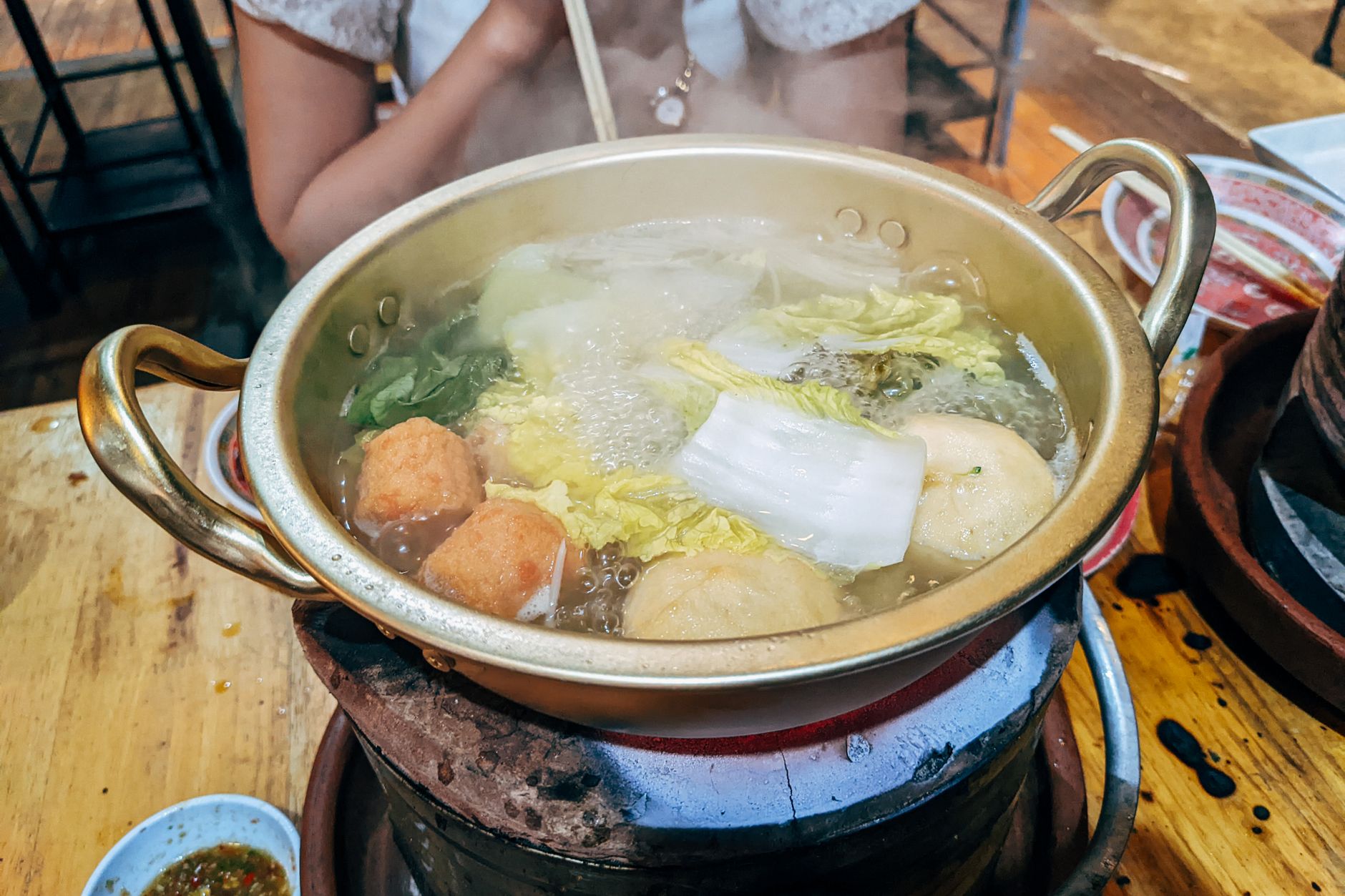
Table of Contents
- What hot pot actually is
- The four styles, and which you want
- How to order, step by step
- The sauce station, decoded
- Where to find the best hot pot Shanghai serves
- Haidilao, and whether the hype holds
- Vegetarian, halal, and eating with children
- Cooking times, etiquette and not poisoning yourself
- What to drink with it
- What people get wrong
- Frequently Asked Questions
What hot pot actually is
A pot of simmering broth is set into the table, over a gas or induction ring. You order raw ingredients — sliced meat, seafood, vegetables, tofu, mushrooms, noodles — which arrive on plates. You cook them yourself, a few pieces at a time, then fish them out and dip them in a sauce you have mixed at a self-service bar. Everyone eats out of the same pot for two hours.
It is not a dish. It is a format, and the point of it is social: it is slow, it is communal, it demands conversation, and it is what Chinese families and colleagues do on a cold evening. That is also why it is the single best meal to have if you are travelling with a group and cannot agree on anything — everyone cooks what they want in the same pot.
Two structural facts explain almost everything else. In Sichuan and Chongqing hot pot the broth carries the flavour, so the dip is minimal. In Beijing and Shanghainese hot pot the broth is deliberately plain, so the dip does all the work. Get those the wrong way round and you will make a dip that fights the pot.
The four styles, and which you want
| Style | Broth | Signature ingredient | Dip | Heat |
|---|---|---|---|---|
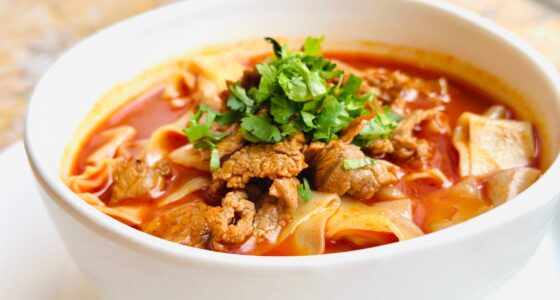
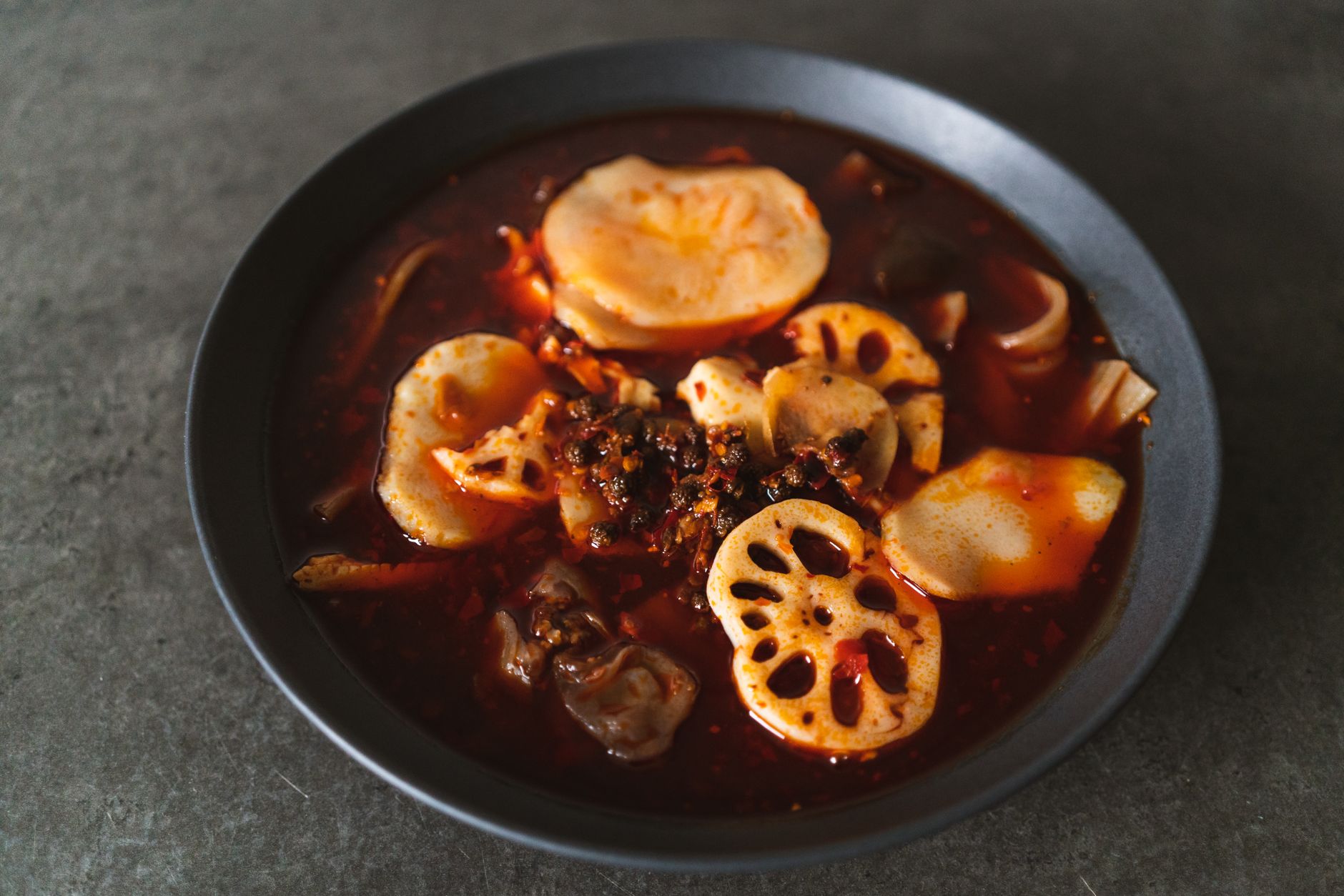
| Sichuan (麻辣) | Chilli oil and Sichuan peppercorn, deep red, floating spices | Beef, tripe, duck blood, lotus root | Sesame oil, garlic, coriander — barely anything | Hot, and numbing (málà) |
| Chongqing | The same idea, more so — heavier beef tallow, more peppercorn | Offal, especially tripe and aorta | Sesame oil and garlic | Very hot |
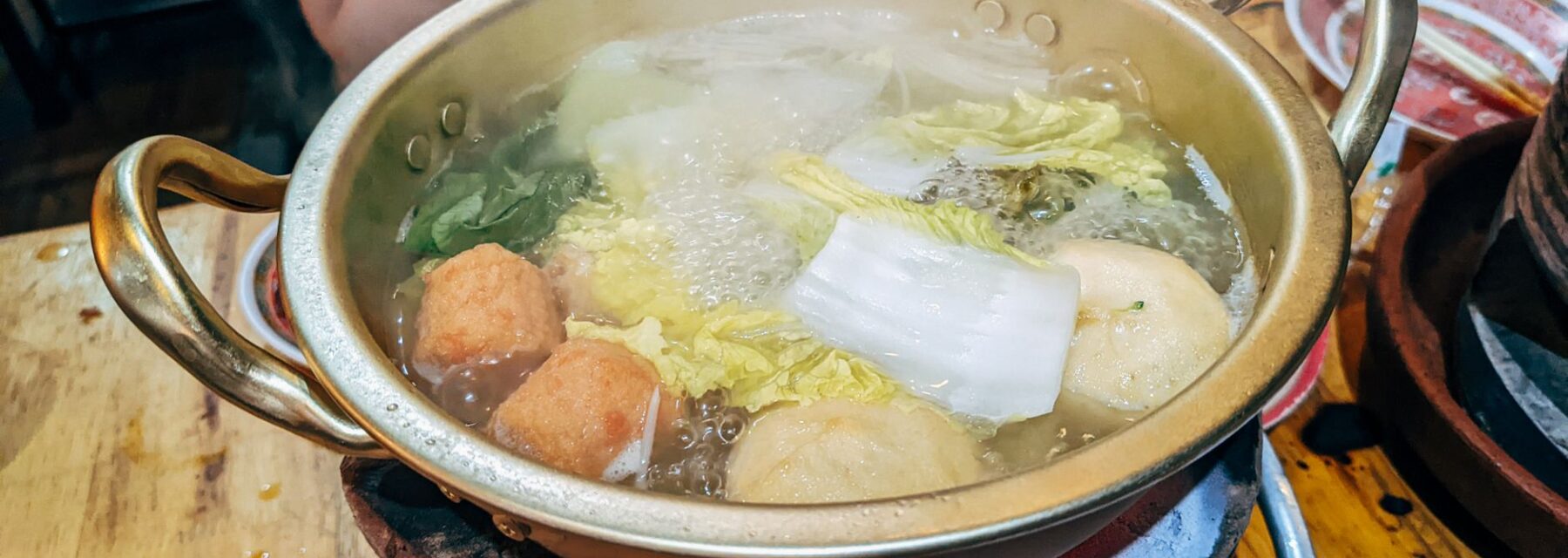
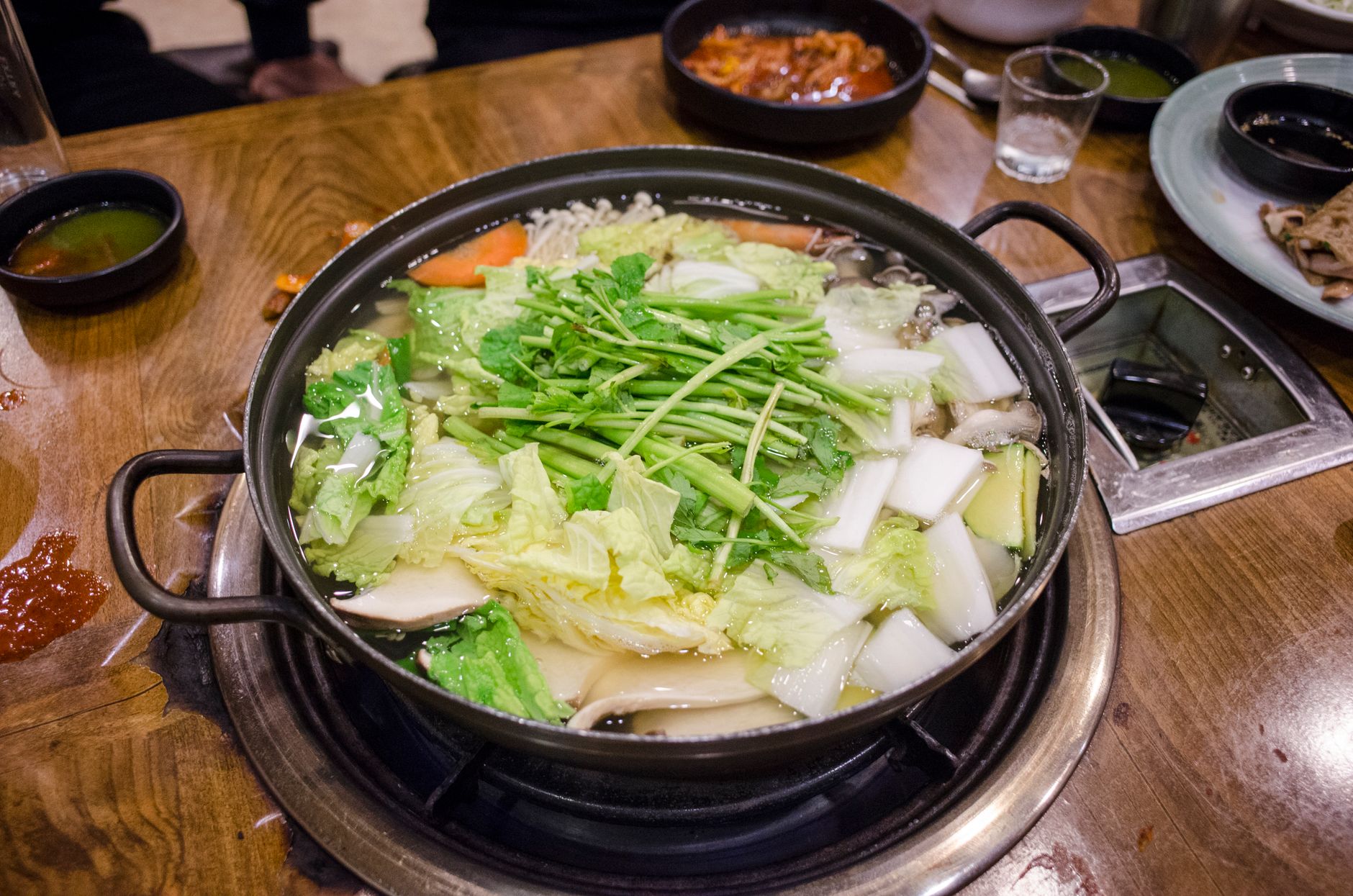
| Beijing (涮羊肉) | Clear water with ginger, scallion and dried shrimp; copper pot with a chimney | Paper-thin lamb or mutton | Sesame paste, fermented bean curd, chives, coriander | None |
| Shanghainese | Plain or lightly seasoned water | Instant-boiled mutton; local fish and vegetables | Peanut or sesame paste, fermented bean curd, caraway | None |
If you are unsure, order a yuanyang pot (鸳鸯锅) — a divided pot, spicy on one side and clear on the other, usually for a small surcharge. It is the answer for mixed company, for anyone testing their tolerance, and for children. Every hot pot restaurant in the city has one.
A note on málà. Sichuan heat is not just chilli. The Sichuan peppercorn produces a tingling numbness on the lips and tongue that is genuinely unlike anything in European cooking, and people either love it immediately or find it alarming. It is worth trying once even if you dislike chilli, because the numbness and the heat are separable — and if it is too much, the clear side of the pot is right there.
The other thing worth knowing: the spicy broth will get spicier through the meal as it reduces and the chilli oil concentrates. What is comfortable at 19:00 can be brutal at 20:30. Ask for more stock to be topped up; every restaurant does this free.
How to order, step by step
The sequence is the same almost everywhere and it is not complicated once you have done it once.
- Scan the QR code on the table. Nearly every hot pot restaurant in Shanghai orders this way now, through WeChat or a mini-programme. Some have an English toggle; many do not, but the menus are heavily photographed, so pointing at pictures works. Larger chains hand over an iPad instead.
- Choose your broth. This is the first question and the only one that cannot be changed later. Single pot or yuanyang; spicy, clear, tomato, mushroom or bone. There is a charge for the broth itself, typically ¥30–80.
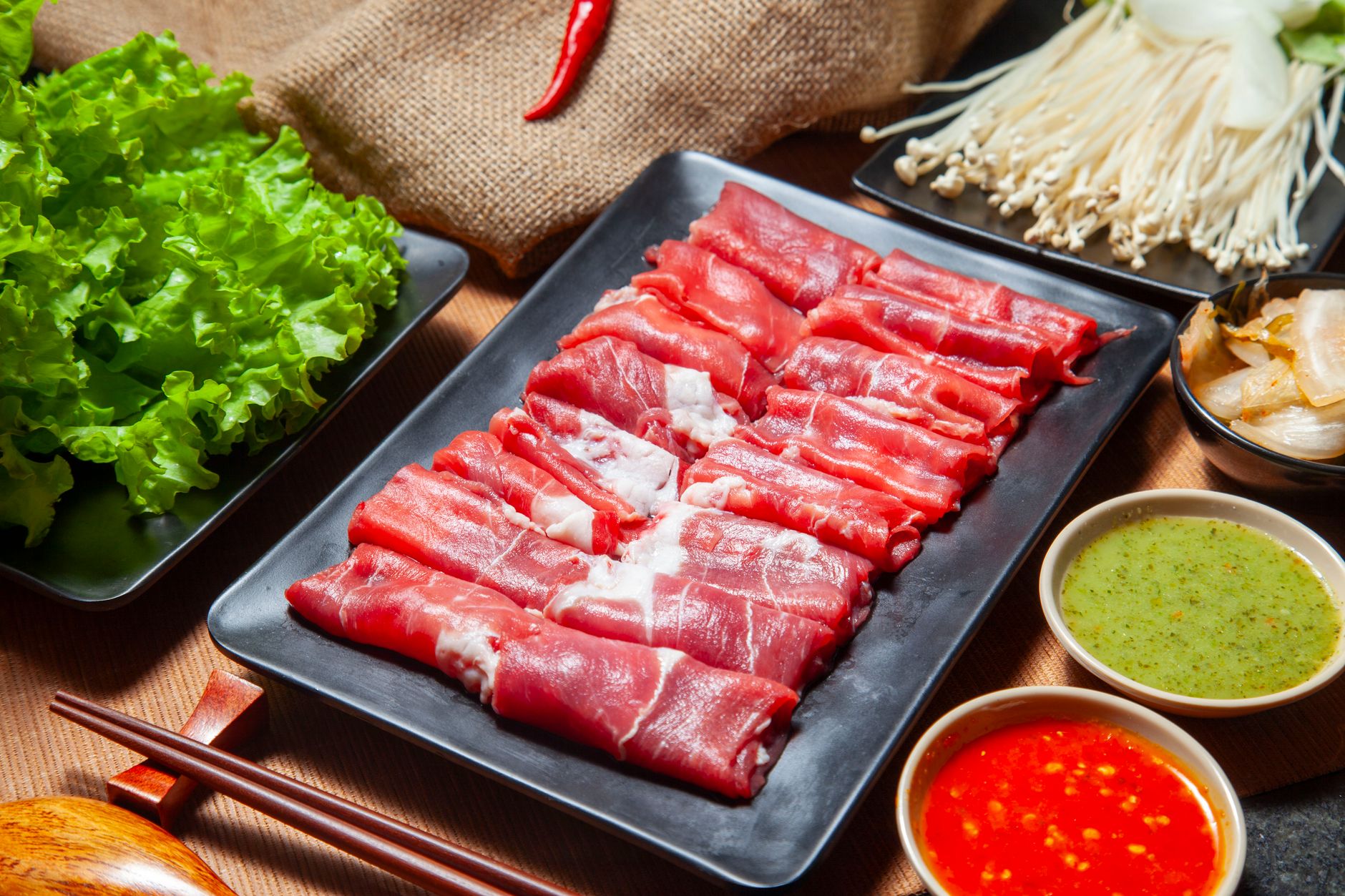
- Order meat by the plate. Sliced beef, lamb, pork belly, and at the better places specific cuts. Portions are small on purpose — order three or four plates for two people and add more later. Nothing is wasted this way.
- Order vegetables, tofu and starch. Leafy greens, enoki and shiitake mushrooms, lotus root, potato slices, tofu skin, wide sweet-potato noodles. Order more than you think; this is where a hot pot meal is actually filled out.
- Pay the sauce-bar cover (typically ¥10–20 a head) and go and mix your own.
- Add ingredients gradually. Do not tip everything in at once — the pot cools, things overcook, and you lose track of what is in there.
Payment is by Alipay or WeChat Pay at the end, both of which now take foreign cards. Cash works but change can be a struggle. Set the apps up before you arrive — our guide to Alipay and WeChat Pay for visitors covers the process, and it takes ten minutes.
Reckon on ¥100–160 a head at a good mid-range place with beer, ¥50–80 at a cheap one, and ¥200 upwards at the smarter Shanghainese and Cantonese seafood restaurants. That is more than a bowl of noodles and considerably less than a Western meal of similar length — see our guide to cheap eats in Shanghai for the other end of the scale.
The sauce station, decoded
This is where first-timers freeze. A counter with twenty or thirty bowls, no labels in English, and everyone else moving confidently. Two reliable recipes:
For a spicy Sichuan pot, keep it minimal: sesame oil (a generous pour — it cools the chilli), minced garlic, chopped coriander, spring onion, a little oyster sauce or salt. That is the Chongqing standard and it is deliberately plain, because the pot is doing the work. The sesame oil is not optional: it coats the mouth and takes the edge off the heat.
For a clear Beijing or Shanghainese pot, build the opposite: sesame paste or peanut paste as the base, thinned with a spoon of broth; fermented bean curd (腐乳, pinkish, pungent, and the ingredient that makes it taste right); chive flower sauce (韭菜花, salty and green); then coriander, spring onion and a splash of vinegar. This is the classic northern dip and it is genuinely delicious.
Other things you will see and can add to either: black vinegar, light soy, chilli flakes, fried garlic, peanuts, fermented tofu, satay, and at the bigger chains a fruit and dessert counter. Nobody minds you going back three times. Nobody is watching.
Where to find the best hot pot Shanghai serves
Prices below are average spend per head, and they are a better guide than any star rating.
| Restaurant | Style | Around | Where |
|---|---|---|---|
| Hong Chang Xing (洪长兴) | Shanghainese, halal mutton — founded 1891 | ¥120 | 1 South Yunnan Road; 10F, 288 North Guangxi Road; Meiluocheng, 1111 Zhaojiabang Road |
| Dong Lai Shun | Beijing copper pot | ¥160 | 5F, 66 East Nanjing Road; Lujiazui; Hongqiao Tiandi |
| Hai Di Lao | Sichuan | ¥150 | 5F, 830 East Nanjing Road, and branches across the city |
| Wulao Elixir | Shanghainese, herbal broths | ¥220 | 2 Hengshan Road; Lane 281 North Maoming Road; Jing’an |
| Dolar Shop (豆捞坊) | Macau style, individual pots | ¥120 | Longemont at Zhongshan Park; Jinqiao; Gubei |
| Holy Cow | Beef-focused | ¥130 | Tianshan Road; West Zhongshan Road |
| Hot Pot King | Mixed, lunch discounts | ¥100 | 220-4 Xinchang Road; 360 Damuqiao Road |
| Chuanhui | Seafood buffet | ¥50 | 73 North Renmin Road |
The one to pick if you want something you cannot get at home: Hong Chang Xing, open since 1891 and serving the old Shanghai style — plain broth, instant-boiled mutton sliced to translucency, and a sesame-and-bean-curd dip. It is also halal, which makes it the default recommendation for Muslim visitors. Published listings give current branch addresses and average spends.
Dolar Shop deserves a special mention for solo travellers and for anyone uneasy about a communal pot: everyone gets their own small pot, so you can order what you like and nobody is fishing in your broth. It costs a little more per head and it is worth it.
At the top end, the Cantonese seafood hot pots — abalone, lobster, live prawns — run to ¥700 a head and are a different proposition entirely, closer to a banquet than a casual dinner. Some of Shanghai’s Michelin-recognised Cantonese kitchens do versions of this; the Michelin Guide’s Shanghai selection is the place to check what currently holds a distinction.
Haidilao, and whether the hype holds
Haidilao is the chain everyone has heard of, and its reputation rests on service rather than food. The Sichuan broth is good but not remarkable; what is remarkable is everything around it. If there is a wait, you get free snacks, drinks, board games, and in many branches a free manicure while you queue. During the meal, staff bring a hot towel, an apron to protect your clothes, a plastic sleeve for your phone, and a hair tie if you have long hair. On request a chef will come and perform a noodle-pulling routine at your table — a genuinely impressive piece of theatre involving a metre of dough being swung around like a skipping rope.
The average spend is around ¥150 a head. Branches stay open extremely late, which makes it one of the reliable answers to being hungry at one in the morning in Shanghai. Ordering is by iPad or QR code and the English support is better than at most independents.
So: is it the best hot pot in the city? No. It is the most reliable, the easiest to navigate as a foreigner, and the most fun for a group. If you have one hot pot dinner and you want it to be effortless, go to Haidilao. If you have two, make the second one Hong Chang Xing or a Beijing copper pot and taste the difference.
Vegetarian, halal, and eating with children
Vegetarians can eat well, with one warning: the “clear” broth is usually a chicken or pork bone stock, and the mushroom broth is not always vegetarian either. Ask specifically — the phrase you want is 素食 (sùshí, vegetarian) and 不要肉汤 (no meat broth). A tomato or mushroom base is normally the safest, and the ingredient list is a vegetarian’s dream: enoki, shiitake, king oyster and wood-ear mushrooms, tofu in four forms, tofu skin, lotus root, potato, taro, sweet-potato noodles, chrysanthemum greens, pea shoots, bok choy. Our guide to vegetarian and vegan eating in Shanghai covers the broader picture, including the dedicated Buddhist restaurants.
Halal: Hong Chang Xing is the established halal choice and has been since the nineteenth century. Shanghai also has a cluster of Muslim Chinese restaurants around the mosque areas, mostly Xinjiang and Hui cooking, where lamb hot pot appears on the menu.
Children: hot pot is excellent with children, with obvious caveats. Order a yuanyang pot and keep them on the clear side. A pot of boiling liquid at table height needs watching, and most restaurants will move the burner to the far side if you ask. Fish balls, prawn balls, sweetcorn, noodles and tofu are the usual winners. Our guide to family restaurants in Shanghai lists the places set up for it.

Cooking times, etiquette and not poisoning yourself
Rough timings, which matter more than they sound — undercooked pork and overcooked greens are the two ways to ruin the meal:
- Thin-sliced beef or lamb: 8–15 seconds. Hold it in the broth with chopsticks and pull it out the moment it changes colour. Anything longer and it goes grey and tough.
- Pork, chicken, meatballs and fish balls: 3–5 minutes, and cook them through. Do not treat pork like beef.
- Prawns and squid: 2–3 minutes.
- Leafy greens: 30–60 seconds.
- Mushrooms, lotus root, potato, tofu: 5–10 minutes. Put these in early and leave them.
- Noodles: last, in the concentrated broth, when everything else is gone. This is the best mouthful of the meal and people who leave before it are missing the point.
On hygiene: use the separate pair of chopsticks provided for raw meat if there is one, or at least keep the raw plate away from your bowl. Most restaurants supply a longer public pair. This is basic and locals do it too.
Etiquette is relaxed. Nobody minds a foreigner making a mess. A few things that will make you look like you know what you are doing: pour tea or beer for the people next to you before yourself; do not stand your chopsticks upright in a bowl of rice; leave a slotted spoon in the pot for retrieving what you have lost; and do not blow on the pot. Our Shanghai etiquette guide covers the rest of the table.
Last practical point: you will smell of it. Chilli oil and steam get into wool and hair and stay there. The aprons and plastic bags for coats are provided for a reason, and it is a poor choice of meal for the night before a flight in your only jumper.
What to drink with it
Beer, mostly, and cold. Tsingtao, Snow and Harbin are on every table in China and all three are light lagers that exist to be drunk with hot food. A large bottle costs ¥10–25 in a restaurant, which is roughly what a small bottle of water costs in a European one.
The local alternative worth trying is suanmeitang (酸梅汤), a chilled sour plum drink served by the jug in almost every Sichuan hot pot restaurant. It is smoky, sour and slightly sweet, and it does something to chilli heat that beer does not — it is the standard accompaniment in Chengdu and Chongqing for exactly that reason. Order it if the pot is winning.
Chinese diners also drink hot water or weak tea throughout, on the theory that cold drinks and hot food are a bad combination. You do not have to agree, but a pot of chrysanthemum or jasmine tea costs almost nothing and is genuinely pleasant between mouthfuls.
What not to do is order wine. Hot pot destroys it — chilli, Sichuan peppercorn and sesame paste flatten anything with tannin or acidity. If you want a proper drink, have it afterwards somewhere else.
What people get wrong
Ordering everything at once. The plates come fast, the table fills, the pot cools, and things sit in the broth until they disintegrate. Order in two or three waves.
Building a heavy sesame dip for a Sichuan pot. The two flavours fight. Sesame oil and garlic, and nothing else.
Assuming clear broth is vegetarian. It is usually chicken or pork stock. Ask.
Overcooking the sliced beef. Fifteen seconds. It is the most expensive thing on the table and the easiest to ruin.
Not asking for a broth top-up. The spicy side reduces and gets fiercer all evening. Topping it up is free and normal.
Going at 19:00 on a Friday without booking. Popular branches run 45-minute waits. Go at 17:30, or accept the wait at Haidilao where being in the queue is half the entertainment.
Wearing something you care about. Take the apron.
Frequently Asked Questions
What is the best hot pot restaurant in Shanghai?
It depends what you want. Haidilao (around ¥150 a head) is the most reliable and the easiest to navigate in English. Hong Chang Xing, open since 1891 at around ¥120, serves the old Shanghainese mutton style and is the more distinctive meal. Dong Lai Shun does the Beijing copper pot at about ¥160. For a first hot pot in China, Haidilao; for the one you will remember, Hong Chang Xing.
Is Shanghai hot pot spicy?
The local style is not spicy at all — Shanghainese and Beijing hot pot use a plain or lightly seasoned broth, with the flavour coming from a sesame-and-bean-curd dipping sauce. The fiery red version is Sichuan and Chongqing style, widely available here but not native. A divided yuanyang pot gives you both.
How much does hot pot cost in Shanghai?
Around ¥100–160 a head at a good mid-range restaurant including a drink, ¥50–80 at a cheap one or a buffet, and ¥200 or more at the smarter Shanghainese places. Cantonese seafood hot pot with abalone and lobster runs to ¥700. There is usually a separate charge for the broth (¥30–80) and a sauce-bar cover of ¥10–20 a head.
How do I order hot pot if I do not speak Chinese?
Scan the QR code on the table and use the photo menu — nearly every dish is pictured, so pointing works. Larger chains have iPads and some English. Choose the broth first, then order meat and vegetables in small waves. Pay at the end through Alipay or WeChat Pay.
What should I put in my dipping sauce?
For a spicy Sichuan pot: sesame oil, minced garlic, coriander and spring onion, and not much else. For a clear Beijing or Shanghainese pot: sesame or peanut paste thinned with broth, fermented bean curd, chive flower sauce, coriander and a splash of vinegar. The rule is that a strong broth wants a plain dip and a plain broth wants a strong one.
How long do you cook things in a hot pot?
Thin-sliced beef and lamb take 8–15 seconds. Pork, chicken, meatballs and fish balls need 3–5 minutes and must be cooked through. Prawns 2–3 minutes, leafy greens under a minute, and mushrooms, lotus root and tofu 5–10 minutes. Noodles go in last, in the reduced broth.
Can vegetarians eat hot pot in Shanghai?
Yes, but check the broth — the “clear” base is usually chicken or pork stock and even mushroom bases are not always meat-free. Ask for 素食 and a tomato or mushroom broth. The ingredient list is otherwise ideal: four kinds of mushroom, tofu in several forms, lotus root, taro, sweet-potato noodles and a range of greens.
Is there halal hot pot in Shanghai?
Yes. Hong Chang Xing has been serving halal mutton hot pot since 1891 and has several branches, including 1 South Yunnan Road. Shanghai also has Xinjiang and Hui Muslim restaurants that serve lamb hot pot.
Is Haidilao worth it?
For the experience, yes. The food is good rather than exceptional, but the service is genuinely extraordinary — free snacks, drinks and manicures while you queue, aprons and phone sleeves at the table, and a noodle-pulling performance on request. It is also open very late and easy to order in as a foreigner.
Can I eat hot pot on my own?
Yes, and it is easier than it sounds. Dolar Shop and several other chains give every diner an individual pot, which removes the awkwardness entirely and lets you order exactly what you want. Ordinary hot pot restaurants will also seat one person without comment.
When is hot pot season in Shanghai?
Traditionally autumn and winter — it is a cold-weather meal and the restaurants are fullest from November to February. That said, air conditioning has made it a year-round habit and the places listed here are busy in July too. If you want a table without waiting, a summer weekday is your best chance.
What do I do with the broth at the end?
Cook noodles in it. By the end of the meal the broth has absorbed everything that went through it and is the most concentrated thing on the table — wide sweet-potato noodles or hand-pulled wheat noodles finished in it are the traditional last course, and the reason nobody in China leaves a hot pot early.
Hot pot is the meal to have on your first cold evening in Shanghai and the one to bring people to if you are hosting. Order the divided pot, build the right dip for the right side, cook the beef for fifteen seconds and finish with the noodles. If you want to keep exploring the local cooking after that, our guide to Shanghainese cuisine covers what makes it distinct from the rest of China, and the Shanghai food guide maps out where to eat across the city.