Shanghai drinks better than almost any city in Asia, and it does it in rooms you have to work to find. Pull open the door of a bartending-supply shop on Fuxing Middle Road and there is a staircase behind the shelves. Order a sandwich at a counter that only sells one thing and the wall swings open. The city’s best Shanghai cocktail bars hide behind laundries, phone booths, vending machines and unmarked façades, and the drinks waiting on the other side hold their own against London, New York or Tokyo. This 2026 guide covers the speakeasies worth hunting down, the neighborhood bars locals actually drink at, where to find a Bund view with your Negroni, and the practical stuff nobody tells you first time round — what it costs, what to wear, and how to get a seat.
One caveat before you go anywhere: bars in Shanghai open, move and close fast. Rents shift, leases lapse, a beloved room reopens two lanes over with a new name. Everything below was accurate at the time of writing, but treat addresses, floors and prices as a starting point, double-check on a listings app before you head out, and you will be fine.
Table of Contents
- The Shanghai Cocktail Scene: How It Got This Good
- The Best Hidden Speakeasies (and How to Find Them)
- French Concession Cocktail Bars
- The Bund: Cocktails With a View
- Jing’an Cocktail Bars
- Award-Winning Bars Worth the Wait
- Good Drinks Under ¥80
- What to Expect: Prices, Dress, Reservations
- What to Order in Shanghai
- Planning a Cocktail Bar Crawl
- At a Glance: Shanghai Cocktail Bars by Area
- Frequently Asked Questions
The Shanghai Cocktail Scene: How It Got This Good
To understand why a Tuesday-night drink in Shanghai can be quietly extraordinary, it helps to know the city has done this before. In the 1920s and 1930s Shanghai was the most cosmopolitan place in Asia, a port where jazz, money and a hundred nationalities collided in the dance halls and hotel bars of the foreign concessions. That drinking culture was shut down for the better part of forty years after 1949, and when it came back in the 2000s it came back fast.
Three things pushed the standard so high so quickly. The city is a logistics hub for the region, so rare amari, single-cask Japanese whisky, hand-carved ice and small-batch Chinese baijiu all land here easily. Top bartenders cycle through constantly for guest shifts and competitions, keeping the density of talent unusually high. And a generation of homegrown owners — Chinese founders who trained abroad or under the international names that arrived early — built rooms with real points of view rather than copies of Western templates.
The upshot is that Shanghai consistently lands more bars on the regional and global “50 Best” long lists than any other city in mainland China. You do not need to chase the award winners to drink well here, but their presence pulls the whole scene up: the neighborhood bar two doors down is good partly because the bar with the trophy is around the corner setting the pace.
It also makes for a walkable night out in the right districts. The cocktail map clusters tightly in the former French Concession, with satellite scenes on the Bund and across Jing’an, so a well-planned evening rarely involves more than a short stroll between rounds. Pair this with the broader Shanghai nightlife guide for clubs and late-night options in the same trip.
The Best Hidden Speakeasies (and How to Find Them)
The hidden bar — the room behind a noodle counter, a barbershop, a vending machine or a wall of bar tools — is something of a Shanghai signature. Calling them “speakeasies” is theatre rather than necessity; every one is a fully licensed, legal bar. The hidden door is the gimmick, the cocktails are the point, and the best of them would be worth visiting even if they hung a neon sign out front.
Speak Low is the one to start with. It is the bar that made the format famous in Shanghai, opened by Japanese bartender Shingo Gokan (of New York’s Angel’s Share) and his SG Group. You enter through OCHO, a genuine bartending-supply shop on Fuxing Middle Road; somewhere among the shelves is a door, and behind it a multi-floor world that gets more exclusive as you climb. The ground and lower floors handle classics and signatures; higher up you find rare spirits, refined drinks and private rooms that essentially require knowing someone. It has been a fixture on Asia’s and the World’s 50 Best lists for years. Reservations are strongly advised for the upper floors, and weekend seating without one is genuinely hard to come by.
Sober Company is Speak Low’s sibling, also from Gokan and SG Group, and runs on the same choose-your-own-adventure logic across multiple levels of a former concession lane house. One floor is easygoing and low-ABV, another turns into a proper party, and there is a food-and-cocktail pairing program that goes well past the usual “bar snacks.” It is the kind of place you can settle into early and let the night escalate around you.
The Odd Couple is a lower-key option on Yongjia Road, reached through an unmarked door beside a laundry shop, with tiki-leaning drinks and a serious rum collection for anyone who wants to go deep on one spirit. Senator Saloon brings a Prohibition-era mood to the former French Concession and is a reliable pick for classic stirred drinks; walk-ins are realistic early in the evening, but you will want a booking by around 9pm.
Beyond these regulars, the speakeasy format keeps reinventing itself across the city: bars hidden behind a vintage Coca-Cola vending machine, a faux barbershop, or a shopfront selling something deliberately mundane. Listings move quickly, so the smart move is to check a current English-language guide the day you go rather than trusting a year-old blog. Half the fun is the moment the wall opens; the other half is the drink.
French Concession Cocktail Bars
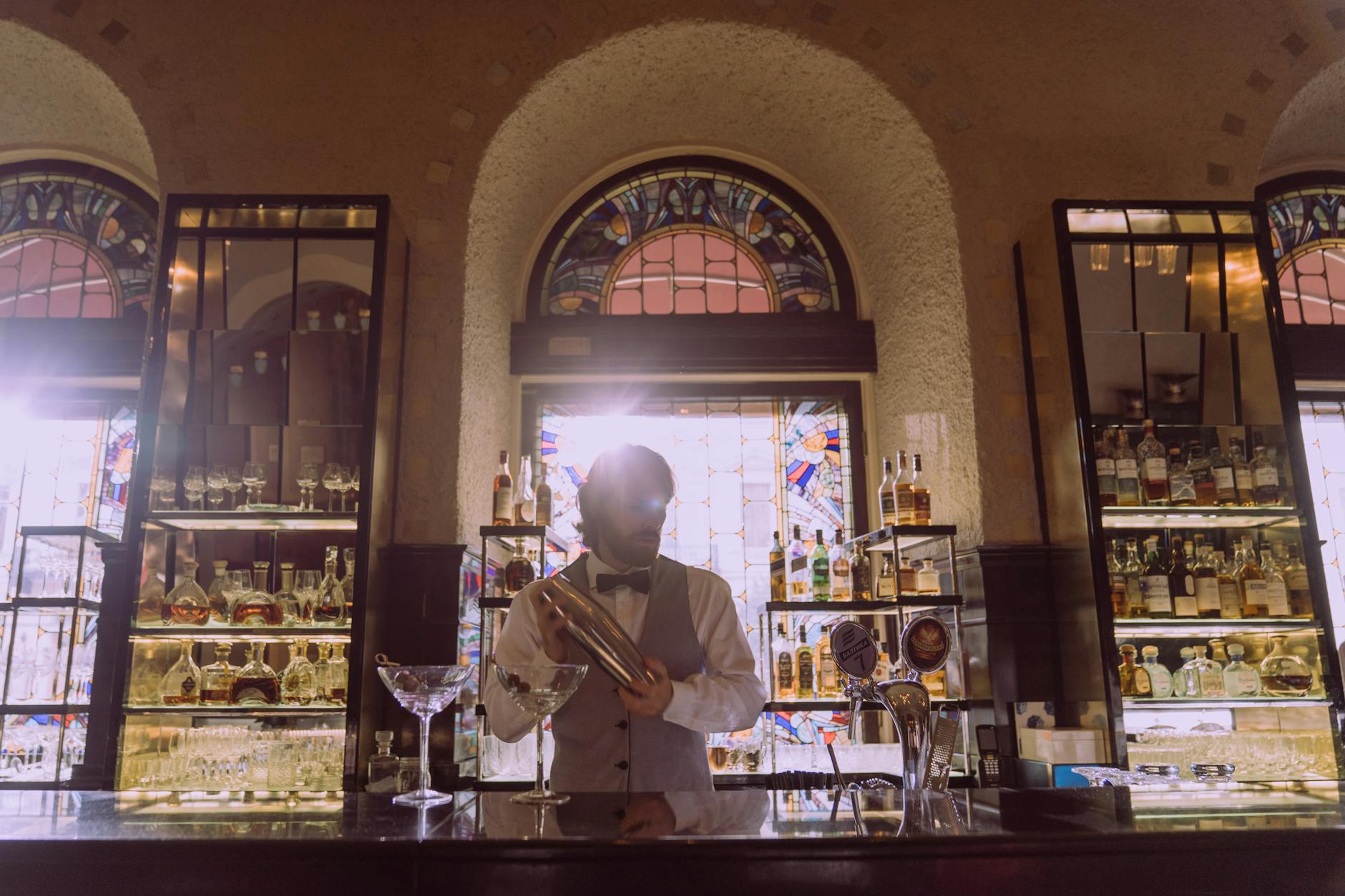
If you only have time to drink in one part of Shanghai, make it the former French Concession. Spread across parts of Xuhui and Jing’an, it is the densest and most atmospheric pocket of the city for cocktails: plane-tree-lined lanes, restored shikumen houses, and so many good rooms within a short walk that you can build an entire night without taking a taxi. Most of the speakeasies above sit inside its boundaries, and so do a clutch of bars worth knowing by name.
Pony Up is the homegrown success story locals are most proud of — a small, perpetually busy room founded by Dre Yang where the cocktails are smart twists on the classics rather than over-engineered showpieces, and the kitchen pulls its weight (the patty melt has a following of its own). It cracked Asia’s 50 Best in 2025, a big moment for a bar this size, and the queue out front is its own form of endorsement.
Barules, led by veteran bartender Sam Kuan, is the place to go when you want a drink built specifically for you. The space is sharp and modern — marble, clean geometry, a lofted second floor — and bespoke cocktails are the main event: pick from a long list of ingredients and let the bar construct something to taste, alongside polished signatures. Plenty of bars claim to do custom drinks; this one treats it as the entire premise.
The Union Trading Company, founded by Yao Lu, is a cornerstone of the modern scene and helped define what a great Shanghai neighborhood cocktail bar looks like. The approach is American in spirit and seasonal in execution, and house drinks like the Shanghai Breakfast have become local shorthand. It has a long run on Asia’s 50 Best to show for it. EPIC, from the irrepressible Cross Yu, is the high-energy counterpoint — a three-story former concession favorite with a magazine-style menu of drinks themed around cities across China, dumplings and fried snacks coming out of the kitchen, and a weekend crowd that treats the place like a party.
Bar No. 3 sits quietly opposite Wukang Mansion and does the unflashy thing extremely well: a dozen or so seats, well-made classics and gentle twists, run by a team (the bar has been associated with the OHA group and bartender Bastien Ciocca over the years) who care more about consistency than trend-chasing. It has held strong rankings on Asia’s 50 Best without ever feeling like it is performing for them. Root Down, founded by nightlife mainstay Gary Wang, is a vinyl listening bar for the slow-it-down crowd — Japanese-style precision, an atmospheric slanted room, and craft cocktails built for sipping rather than spectacle.
For agave obsessives, COA is the city’s temple to mezcal and tequila, a four-floor lane-house arrival from Hong Kong on Middle Fuxing Road, each level running its own agave-driven concept from casual tacos to serious sipping. Penicillin, also via Hong Kong, brings its zero-waste, fermentation-forward approach to Nanchang Road, with a lab-like setup upstairs powering a closed-loop drinks list that includes strong non-alcoholic options. And Bar Leone Shanghai, in Sinan Mansions, is the buzzy newcomer from the team behind Hong Kong’s Bar Leone — an Italian-leaning room of spritzes and aperitivo downstairs and spirit-forward classics in a 1970s-living-room setting upstairs. Be warned: it is notorious for a queue that starts forming around 5pm.
A few more concession rooms round out the list. El Ocho on Wuyuan Road does Mexican-Japanese fusion with mezcal-driven drinks; Tipsy Ginger is a tiny corner bar built around ginger-forward cocktails; and Liquid Laundry is the American-style brew hall and cocktail bar with a full kitchen, ideal when you are out with a group and want food on the table. To make a night of it on foot, the self-guided French Concession walking tour maps the same lanes by day, and if you would rather stay in the middle of it all, the French Concession hotels guide covers where to book.
The Bund: Cocktails With a View
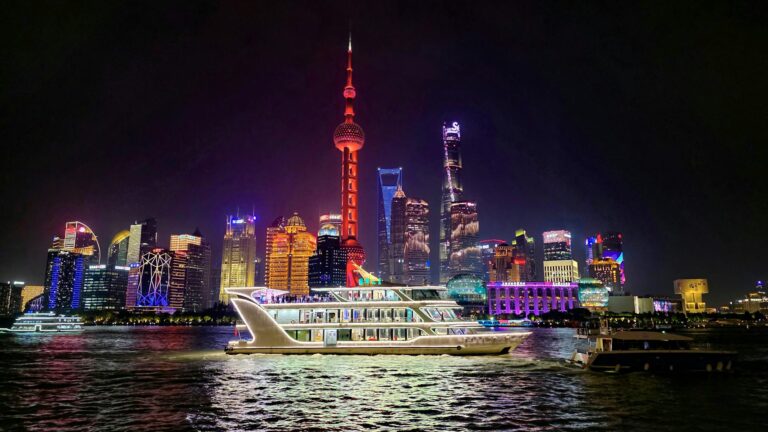
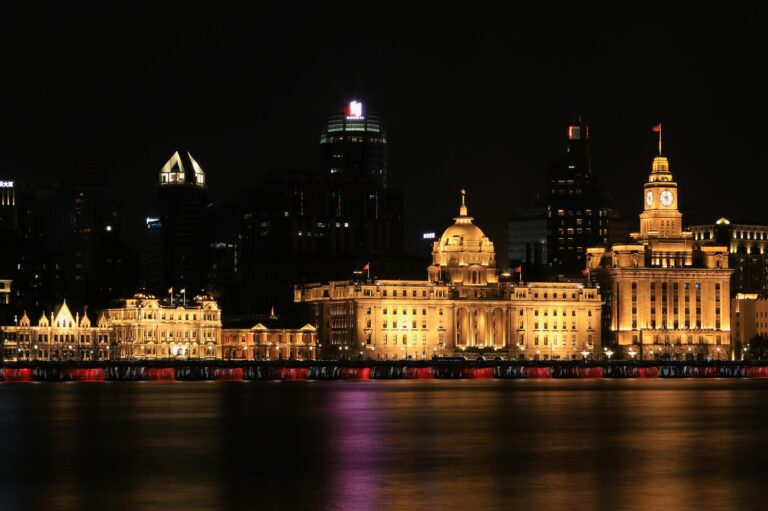
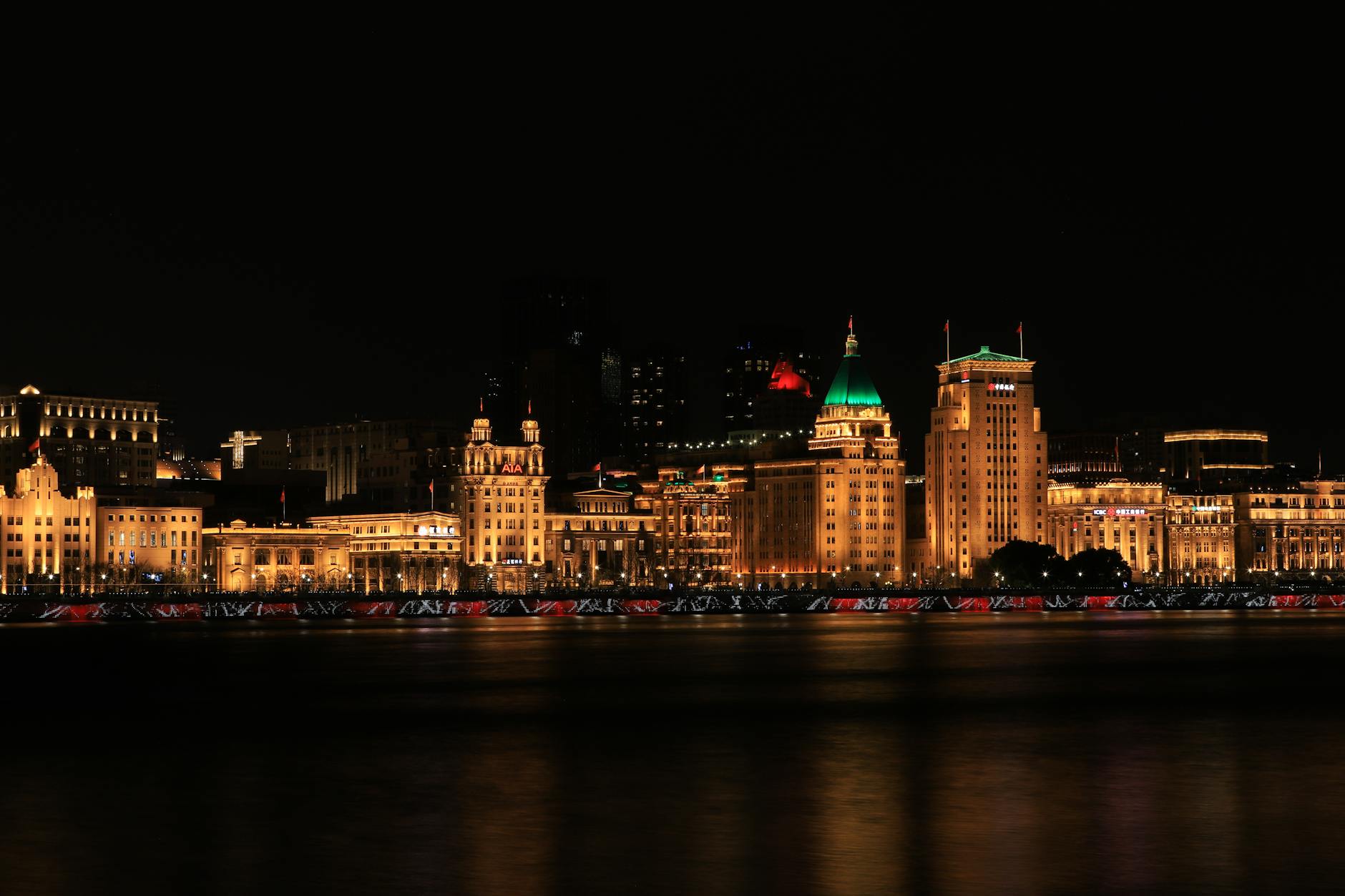
Drinking on the Bund is a different proposition: 1930s Art Deco and Beaux-Arts buildings along the river, Pudong’s lit-up skyline glittering across the water, and bars that are mostly tucked inside grand hotels and high-end mixed-use buildings. You are paying for the address and the panorama as much as the drink, and on a clear night it is money well spent.
Bar Rouge, the seventh-floor rooftop at Bund 18, was the strip’s unofficial party headquarters from the mid-2000s. It has closed, and the room now trades as a club called KEV — same terrace, same river view, bottle-service pricing and a different crowd. For a drink at height on this bank, VUE Bar on the 32nd and 33rd floors of the Hyatt on the Bund is the North Bund alternative. The Long Bar at the Waldorf Astoria is the opposite mood — a meticulously restored early-1900s mahogany bar with classic cocktails and a story behind every bottle on the back shelf. Sir Elly’s at The Peninsula offers an elegant terrace and library bar with one of the finest rooftop outlooks on the Bund, looking straight down the row of historic façades and across to Pudong.
For the highest, most cinematic versions of the view, several hotel sky bars push up into the towers: Flair at the Ritz-Carlton Pudong wraps an open-air terrace around the 58th floor facing the Bund and the Lujiazui skyline; Cha House at the J-Hotel inside Shanghai Tower (around the 84th floor) turns the height into a tea-meets-cocktail experience among the loftiest hospitality venues anywhere; and Heritage by Madison is a stylish lounge inside a heritage Bund building leaning into classic American drinks. These overlap with the rooftop scene, so if a skyline view is the whole point of your evening, the dedicated guide to the best rooftop bars in Shanghai goes deeper on heights, terraces and reservation strategy. To understand the buildings you are drinking inside, the Bund architecture guide walks the waterfront building by building.
Jing’an Cocktail Bars
North and west of the concession, Jing’an trades some of the lane-house charm for a sleeker, more downtown feel, and it hides a few of the city’s most serious drinking rooms. J. Boroski is the marquee name — a discreet hideaway founded by Joseph Boroski and built on bespoke, “no-menu” cocktails. For years the rule was strict: no list, just a conversation with the bartender about what you like. It has eased up lately, accepting that sometimes people just want to point and sip, but the format is still the draw, the mahogany bar is handsome, the spirits are top-shelf, and the drinks are priced to match.
Elsewhere in the district the focus narrows by spirit and mood. Whisky drinkers gravitate to rooms near Jing’an Temple with deep back bars and small, sharp cocktail lists, while tiny single-category bars built around shochu or sake turn up down quiet lanes. The general rule holds: the smaller and harder to spot the room, the more likely the person behind the bar is taking the craft seriously. Because these places are small and turnover is real, check a current listings app before you set out. Jing’an also puts you within easy reach of late-night clubs if the evening keeps going.
Award-Winning Bars Worth the Wait
Shanghai’s appearances on Asia’s 50 Best Bars and the World’s 50 Best long lists are not just marketing; they are a reliable shortlist if you want a guaranteed-excellent night and do not mind a queue. The list shuffles year to year, so confirm current standings, but the names that have carried the city’s reputation include Speak Low and Sober Company from the SG Group, the homegrown Pony Up, the bespoke specialists Barules and J. Boroski, the scene-defining Union Trading Company, the consistency-first Bar No. 3, and the Hong Kong imports COA, Penicillin and Bar Leone.
A practical note on award-winning bars anywhere, and Shanghai especially: they are popular precisely because they are good, which means waits. Many of the headline rooms run a physical queue rather than a phone reservation for at least part of the night, so the winning move is to arrive early — right when they open, or shortly after — rather than rolling up at 10pm on a Saturday expecting a seat. If you have a single big cocktail night and want a safe bet, a speakeasy like Speak Low or a precision room like Bar No. 3 rarely disappoints.
Good Drinks Under ¥80
Cocktails at the flagship and award-listed bars generally run ¥120 and up. But Shanghai has quietly grown a budget-bar culture too, and you can drink genuinely well for ¥50–80 if you know where to aim. Liquid Laundry and craft-beer-led rooms like The Hop Project pair fair-priced cocktails with full kitchens and a casual crowd. Neighborhood favorites built around highballs, shochu and shaken classics — the sort of small, no-fuss bars that have multiplied around Wukang Road and the wider concession — routinely land in the ¥35–80 range, and several run happy hours in the early evening that knock another chunk off.
The trade-off is usually theatre, not quality: you give up the hand-carved ice and the multi-floor reveal, and you get a well-made drink at a price that lets you have more than one. For a traveler watching the budget across the whole trip, mixing one marquee bar with a couple of cheaper neighborhood rounds is the sensible play, and it tends to make for a more local night anyway.
What to Expect: Prices, Dress, Reservations
A quick orientation so nothing catches you off guard.
Prices. As a rough 2026 guide, expect roughly ¥35–80 at budget and neighborhood bars, ¥80–120 at solid mid-range cocktail bars, ¥120–180 at the flagship and award-listed rooms, and ¥150–250 at hotel and rooftop bars on the Bund and in Pudong. Beer typically runs ¥40–80. Some view bars and party rooftops add a cover charge later in the evening, often including a drink. Prices drift over time, so read these as bands rather than fixed figures.
Paying. Mobile payment rules in Shanghai — Alipay or WeChat Pay is the most reliable way to settle a tab, and both now link to international cards for visitors. Many bars also take foreign Visa and Mastercard, but set up at least one mobile wallet before you travel and you will never be stuck. Tipping is not customary; a small token for the bartender at a high-end room is appreciated but never expected.
Dress. Smart casual is the baseline almost everywhere. Speakeasies and neighborhood bars are relaxed about it; hotel sky bars and the dressier Bund rooms expect closed shoes and lean against shorts, flip-flops and sportswear, more strictly on weekends. When in doubt, a collared shirt and proper shoes will get you in anywhere.
Reservations. Midweek, before around 9pm, walk-ins are realistic at most bars. Friday and Saturday nights are a different game: the popular rooms fill, and several of the best run a physical queue with no waitlist, so arriving early genuinely matters. Where bookings are taken, they usually go through a bar’s WeChat account or a mini-program rather than email or a Western reservation app. Alcohol cannot be sold to anyone under 18 in mainland China, and bars do check ID for foreign-looking patrons, so carry it. Smoking is banned indoors citywide; most bars have a small outdoor nook for it.
What to Order in Shanghai
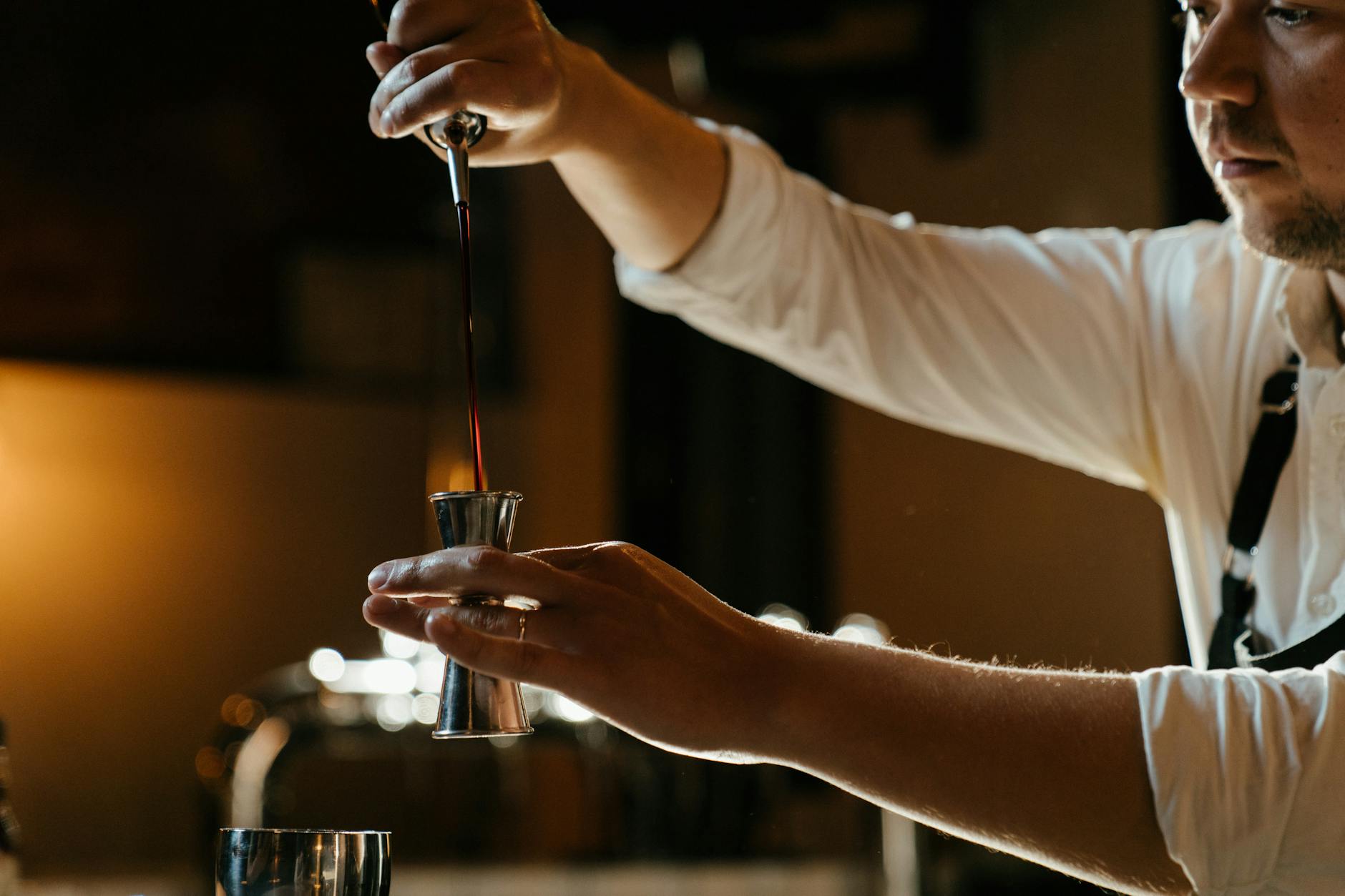
You can drink an immaculate Negroni or Old Fashioned in any serious Shanghai bar, and you should — the classics here are excellent and a good way to judge a room. But the more interesting move is to drink something that could only be made in this city. The most ambitious bars build cocktails around local ingredients, and asking for one is the fastest way into a real conversation with the bartender.
Look for drinks using baijiu, China’s potent grain spirit, which a skilled bar can tame into something genuinely refined; Chinese tea as a base or infusion; floral osmanthus, the scent of a Shanghai autumn; tongue-tingling Sichuan pepper; and nutty, savory Shaoxing wine. Many bars carry one or two of these on the menu, and most will happily build something off-list if you tell them what you like. If you want to round out the food side of the evening, the Shanghai food guide covers what to eat before or between drinks.
Planning a Cocktail Bar Crawl
The single most useful rule for a Shanghai bar night: pick a neighborhood and stay in it. Trying to bounce between the French Concession and Pudong in one evening means burning the best hours in traffic. Cluster your stops, walk between them, and the night flows.
A practical concession crawl might run an early dinner with one cocktail around 7pm at El Ocho, a 9pm slot at the multi-floor Sober Company, and a slower nightcap at Senator Saloon or Bar No. 3 — all within walking distance. A Bund night works the other way: classic drinks at The Long Bar, a view round at Sir Elly’s, and a late one at VUE Bar up at the Hyatt on the Bund. Budget roughly ¥800–1,200 per person for a serious three-stop crawl with some food, less if you weight it toward neighborhood bars.
A couple of logistics. The last metro runs around 11pm, while bars push to 1–2am on weeknights and 2–3am Thursday through Saturday, so plan a Didi (the local ride-hailing app) home or stay somewhere walkable. And if you want to fold music into the night, an early jazz set pairs beautifully with a late cocktail — the guide to Shanghai jazz bars and live music covers the venues, several of which are doubling as excellent cocktail rooms in their own right.
At a Glance: Shanghai Cocktail Bars by Area
A fast reference for building your night. Names, floors and prices change, so confirm before you go.
| Bar | Area | Known for | Rough cocktail price |
|---|---|---|---|
| Speak Low | French Concession (Fuxing Middle Rd) | The original speakeasy; multi-floor, 50 Best regular | ¥120–180 |
| Sober Company | French Concession | Multi-concept floors, food pairings | ¥120–180 |
| Pony Up | French Concession | Homegrown, classic twists, bar food | ¥100–150 |
| Barules | French Concession | Bespoke cocktails to taste | ¥120–180 |
| Union Trading Company | French Concession | Seasonal classics, the Shanghai Breakfast | ¥110–160 |
| Bar No. 3 | French Concession (Wukang) | Precise classics, tiny room | ¥100–160 |
| EPIC | French Concession | High-energy, city-themed menu | ¥100–150 |
| COA | French Concession (Fuxing Rd) | Agave temple, four floors | ¥100–160 |
| Penicillin | French Concession (Nanchang Rd) | Zero-waste, fermentation | ¥110–170 |
| Bar Leone | French Concession (Sinan Mansions) | Italian classics; long queue | ¥110–170 |
| J. Boroski | Jing’an | Bespoke, no-menu drinks | ¥150–250 |
| VUE Bar | The Bund (Hyatt on the Bund) | 32nd-floor terrace, skyline view | ¥110–180 |
| The Long Bar | The Bund (Waldorf Astoria) | Restored heritage bar, classics | ¥120–180 |
| Sir Elly’s | The Bund (The Peninsula) | Elegant terrace, Bund view | ¥130–180 |
| The Odd Couple | French Concession (Yongjia Rd) | Tiki, deep rum list | ¥90–140 |
| Liquid Laundry / The Hop Project | French Concession | Casual, kitchen, value | ¥50–90 |
Frequently Asked Questions
What is the most famous cocktail bar in Shanghai?
Speak Low and Sober Company are the two most globally recognized, both from the SG Group and both long-running fixtures on Asia’s 50 Best Bars. Among homegrown rooms, Pony Up is the breakout name, while Bar No. 3 is widely regarded as the precision pick. Which is “best” depends on what you want from the night.
Are speakeasies in Shanghai legal?
Yes. Every “speakeasy” in Shanghai is a fully licensed, legal bar — the hidden door is a design choice and a bit of theatre, not a way around the law. The city’s bar scene is well-regulated and entirely above board.
How much does a cocktail cost in Shanghai?
Roughly ¥35–80 at budget and neighborhood bars, ¥80–120 at solid mid-range cocktail bars, ¥120–180 at flagship and award-listed rooms, and ¥150–250 at hotel and rooftop bars. Beer typically runs ¥40–80. Treat these as bands; prices change over time.
How do I find a hidden speakeasy in Shanghai?
Most are behind a deliberately ordinary shopfront — a bar-tools shop, a laundry, a barbershop, a vending machine. The reliable approach is to get the current address from an English-language listings app the day you go (bars move often), find the unmarked door, and walk in. For the upper, more exclusive floors of places like Speak Low, you will usually need a reservation.
Do I need a reservation for cocktail bars in Shanghai?
Midweek and before about 9pm, walk-ins are realistic almost everywhere. On Friday and Saturday the popular rooms fill, and several run a physical queue rather than a waitlist, so arriving early is the best strategy. Where bookings exist, they usually run through the bar’s WeChat account or a mini-program.
What should I wear to a cocktail bar in Shanghai?
Smart casual is the baseline. Speakeasies and neighborhood bars are relaxed; hotel sky bars and dressier Bund rooms expect closed shoes and discourage shorts, flip-flops and sportswear, especially on weekends. A collared shirt and real shoes will get you in anywhere.
Where do locals drink cocktails in Shanghai?
Locals tend to favor the homegrown and neighborhood rooms of the French Concession — Pony Up, Sober Company, The Odd Couple, Bar No. 3 and the smaller lane bars — over the more tourist-heavy Bund rooftops, which they save for visitors and the view.
Can you walk between cocktail bars in Shanghai?
In the French Concession, yes — it is famously walkable, and most of the best bars cluster within a roughly 1.5 km radius around Wukang Road, Yongkang Road and Fuxing Middle Road. The Bund and Jing’an are walkable internally too. The mistake is trying to cross between districts mid-night; pick one area and stay in it.
What is the legal drinking age in Shanghai?
The legal age to drink alcohol in mainland China is 18, and bars do check ID for foreign-looking patrons, so carry identification.
Do Shanghai bars take foreign credit cards?
Many do, via international Visa and Mastercard terminals, but Alipay or WeChat Pay is more reliable. Both now link to international cards for visitors. Set up at least one mobile wallet before you travel.
Plan the Rest of Your Shanghai Night
A cocktail crawl is one piece of the evening. Build the rest of it with the Shanghai nightlife guide for clubs and late-night options, the guide to the best rooftop bars in Shanghai for skyline drinks, Shanghai jazz bars and live music for an early set, and the broader things to do in Shanghai overview to fill the daylight hours before the bars open.
Further reading: Wikipedia’s Shanghai overview.