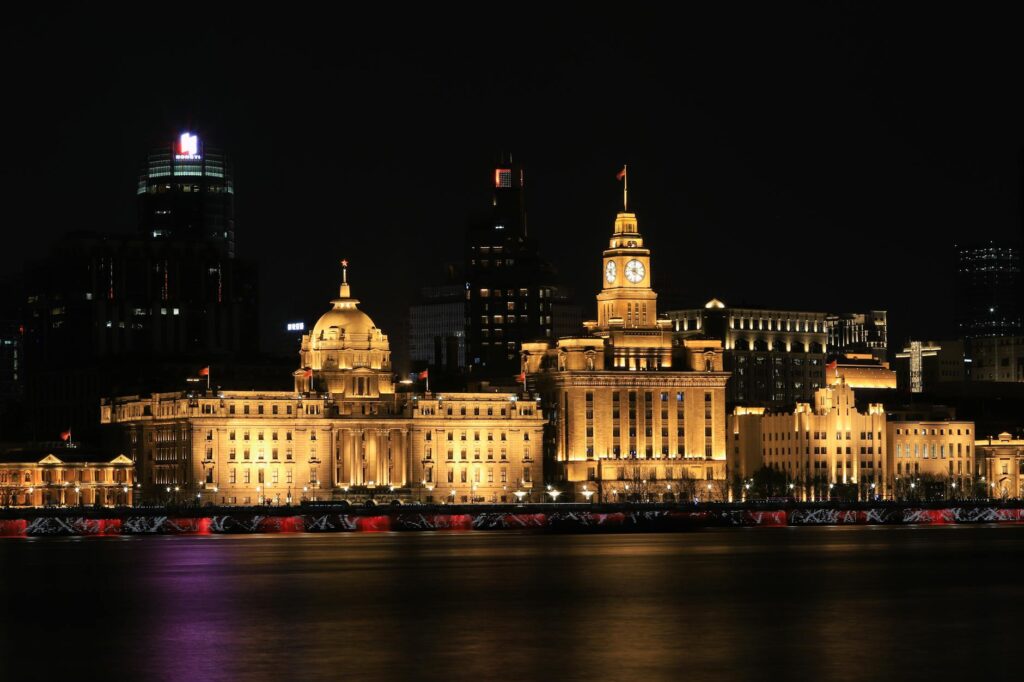
Walk the western bank of the Huangpu River and you walk through eighty years of the Bund architecture—the row of banks, trading houses, hotels, and consulates that foreign companies raised between 1873 and 1948 along this 1.5-kilometre waterfront. Locals call it the “museum of world architecture,” and the label is earned: Neoclassical temple fronts stand beside Gothic turrets, French Renaissance mansards, and Art Deco towers, all in a single mile. This building-by-building guide is a reference for the major numbered heritage structures—their original owners, current tenants, dates, architectural styles, and the stories behind them—plus a suggested walking order, where you can actually go inside, and the practical logistics for doing it yourself.
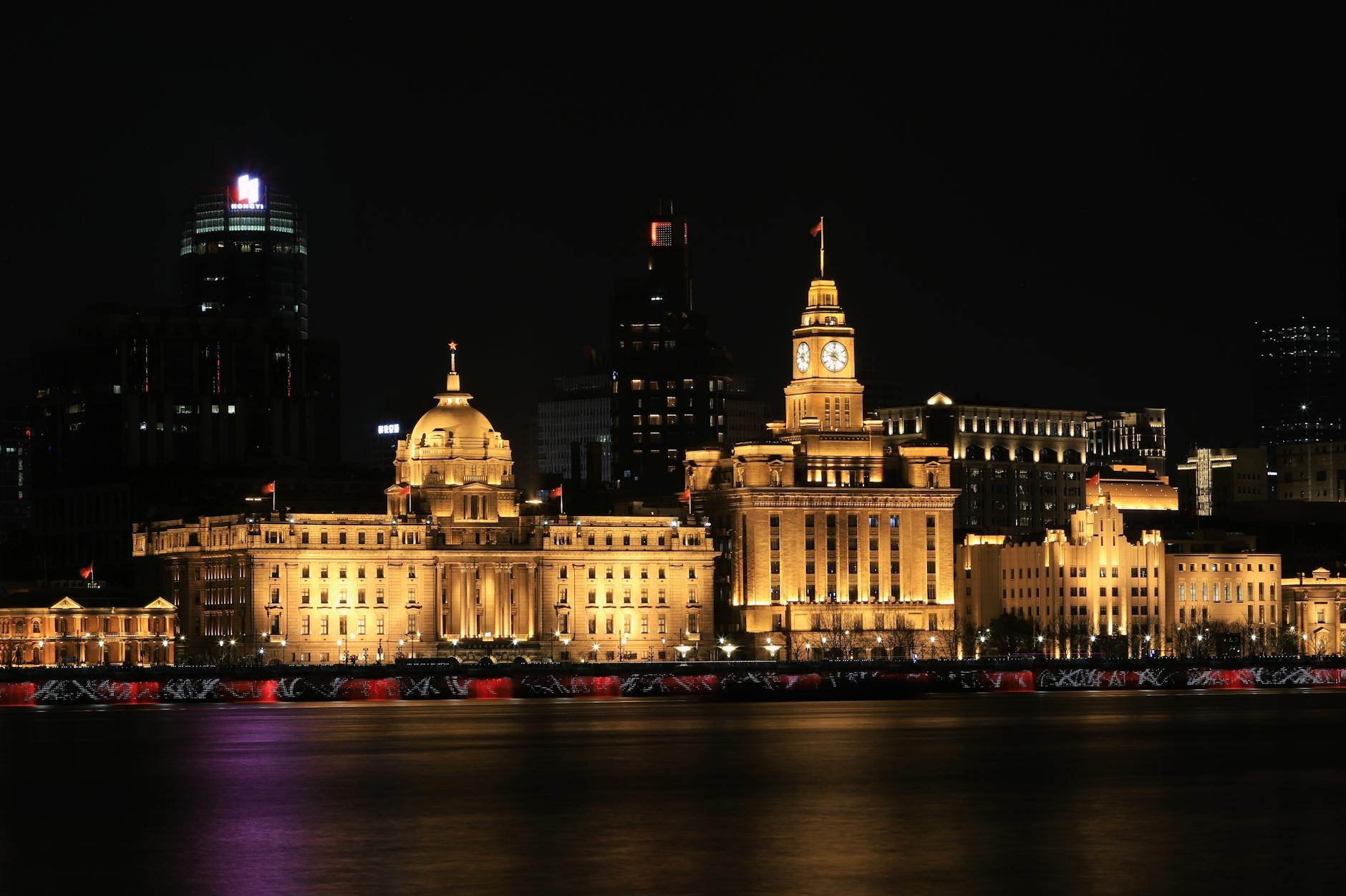
Table of Contents
- Overview & History
- Architectural Styles on the Bund
- Suggested Walking Order
- The Numbered Heritage Buildings
- Smaller Landmarks Worth a Look
- Where You Can Go Inside
- Self-Guided Tour Logistics
- Frequently Asked Questions
- Plan Your Bund Visit
Overview & History
The Bund (外滩, Wǎitān, literally “outer beach”) takes its English name from the Anglo-Indian word bund, meaning an embankment or built-up quay. The district emerged after the Treaty of Nanjing in 1842 forced Shanghai open to foreign trade. The British staked out their concession just north of the old walled Chinese city, and the muddy towpath along the river was gradually filled, paved, and lined with offices. For the next century this strip functioned as a legally protected treaty port—foreign-administered land where British, American, Japanese, French, German, Danish, and Russian firms operated under their own flags.
From the 1860s to the 1930s the Bund was the financial and commercial centre of foreign Shanghai. The first wave of building, at the turn of the twentieth century, produced solid brick-and-stone banks in British colonial and Renaissance styles. The transformative wave came in the 1920s and 1930s, when reinforced concrete and steel framing let architects build taller and heavier. Banks and trading houses competed openly for size and grandeur, and the result was the skyline that survives today—a stretch that contemporaries compared to the City of London transplanted to the China coast. By 1937, when the Sino-Japanese War interrupted construction, the Bund had reached its peak as the premier financial address of East Asia.
Many of the headline buildings came from a small number of foreign firms; the British partnership Palmer & Turner was responsible for a remarkable share of the waterfront, including the HSBC Building, the Custom House, and the Sassoon House. After 1949 the foreign banks departed and the buildings passed to Chinese state institutions—ministries, trade unions, broadcasting stations, and the People’s Bank. From the 1990s a long restoration programme brought the original facades back, and many now house luxury hotels, flagship boutiques, restaurants, and the headquarters of Chinese banks. The numbering you see today runs along East Zhongshan Road No. 1 (中山东一路), the road that fronts the river.
Architectural Styles on the Bund
The Bund is not a single style but an anthology of European revival fashions adapted to a Chinese riverfront, with a strong Art Deco finale. Most of the buildings are eclectic—they borrow freely—but each leans toward one dominant idiom. Knowing the vocabulary makes the walk far more rewarding, because you start reading the facades instead of just photographing them.
- Neoclassical & Beaux-Arts — the dominant bank style: monumental columns, triangular pediments, rusticated stone bases, and a symmetrical “three-part” composition (a heavy base, a tall middle, and a crowning cornice). The HSBC Building and the Custom House are the textbook examples.
- Renaissance Revival — Italianate cornices, arched windows, and ordered columns drawn from sixteenth-century Italy and from the great English banks. Jardine Matheson (No. 27) and several of the smaller banks fall here.
- Gothic Revival — pointed arches, turrets, and vertical emphasis. The early Commercial Bank of China (No. 6) is the clearest survivor; the Custom House clock tower also reads as a Gothic-influenced campanile.
- French Renaissance & Second Empire — steep Mansard roofs, ornamental ironwork, and richly modelled stone, reflecting the French and Belgian banks. The Great Northern Telegraph Building (No. 7) and Banque de l’Indochine (No. 29) are pure examples.
- Art Deco — the style of the Bund’s final, grandest decade: stepped “wedding-cake” massing, geometric ornament, and bold vertical lines. Sassoon House (No. 20) and the Bank of China (No. 23) define it. Shanghai holds one of the largest collections of Art Deco buildings of any city in the world.
- Eclectic & Modernist — many buildings mix granite bases with simplified upper floors; the latest classical-era structures (the Bank of Communications, No. 14, completed 1948) strip away ornament toward a restrained modern look.
For a deeper treatment of the geometric 1930s wave that produced the Bund’s towers—and the apartment blocks, cinemas, and mansions of the former concessions—see our Shanghai Art Deco architecture guide.
Suggested Walking Order
The numbered buildings run roughly south to north, and that is the direction most worth walking. Start at the southern end near Yan’an Road (close to the bronze Bund Bull) and finish at the Garden Bridge over Suzhou Creek at the north end. Walking south to north keeps the afternoon light on the building facades for most of the route, and saves the Pudong skyline—which sits across the river to your east—as the reward you turn to face on the way back.
The waterfront promenade is raised above the road: cross to it for the panoramic photographs, but cross back to the building side to actually see the architecture, since the facades sit behind a busy road. End to end the walk is a little over a kilometre, about 45 minutes at a steady pace, or two to three hours with lobby visits and photographs. A sensible rhythm is to walk the building side south to north in late afternoon, duck into the open lobbies along the way, then return along the promenade after sunset for the illuminated facades and the Pudong towers.
The Numbered Heritage Buildings
Bund buildings are numbered south to north along East Zhongshan Road No. 1. The list below covers the major surviving heritage structures in order, with the dates, styles, and tenants you can verify on the buildings themselves. Where a number is skipped, the original structure has been demolished, merged, or never carried a separate Bund address.
No. 1 — Asia Building / Asiatic Petroleum (亚细亚大楼)
Built 1916, originally called the McBain Building and later the Asia Building. Eclectic Beaux-Arts, with classical columns and pediments at street level and a strong rusticated base. It first housed the Asiatic Petroleum Company, the Far East marketing arm of Shell and Royal Dutch. As the southernmost numbered building it marks the start of the heritage row; today it serves as private and commercial office space, so the interest is in the exterior.
No. 2 — Shanghai Club Building (上海总会大楼)
Built 1910 in a late English Renaissance style, this was the home of the Shanghai Club, the exclusive social club of the British establishment. Its ground floor held the celebrated “Long Bar,” reputed to be the longest bar in Asia at the time, where seating position reflected social rank. The building later spent decades in other uses before a full restoration. It now operates as the Waldorf Astoria Shanghai on the Bund, and the Long Bar has been recreated—you can order a drink and stand where the taipans once did.
No. 3 — Union Building (有利大楼)
Built 1916, Renaissance with Baroque flourishes, and notable as one of the earliest steel-framed buildings in Shanghai—for a time the tallest steel structure in the city. It housed the Union Insurance Society of Canton. Today it is Three on the Bund, a luxury complex of restaurants and galleries, including the Shanghai Gallery of Art, and one of the easiest historic interiors to enter if you order a coffee or a cocktail.
No. 5 — Nissin Building (日清大楼)
Built 1925 by the Japanese Nisshin Steamship Company. The design is a hybrid: a more modern, restrained Japanese-Western treatment on the upper floors over a classical stone base. It is a good example of the Japanese commercial presence on the southern Bund, and now contains restaurants and offices.
No. 6 — Commercial Bank of China (中国通商银行大楼)
Built on a site occupied since 1897, this is among the Bund’s oldest surviving structures, and the only clear example of Gothic Revival on the waterfront, with a turreted, vertical profile that stands out against its Neoclassical neighbours. It housed the Commercial Bank of China, founded by the industrialist Sheng Xuanhuai and often described as the first modern Chinese-funded bank. The Gothic detailing—pointed window heads and a crenellated top—makes it one of the most photogenic of the smaller buildings.
No. 7 — Great Northern Telegraph Building (大北电报公司大楼)
Built 1907 in a late French Renaissance style. It was the Shanghai office of the Danish-owned Great Northern Telegraph Company, which laid and operated the submarine cables that first connected Shanghai to the global telegraph network—a reminder that the Bund was a communications hub as well as a financial one. The Mansard-roofed facade is among the most ornate of the early buildings.
No. 9 — China Merchants Bank Building (招商局大楼)
A three-storey brick-and-stone building in a restrained Renaissance Revival style, associated with the China Merchants Steam Navigation Company, the pioneering state-sponsored Chinese shipping enterprise. Lower and plainer than its neighbours, it is easy to walk past, but its survival makes it part of the continuous heritage frontage.
No. 12 — HSBC Building (汇丰银行大楼)
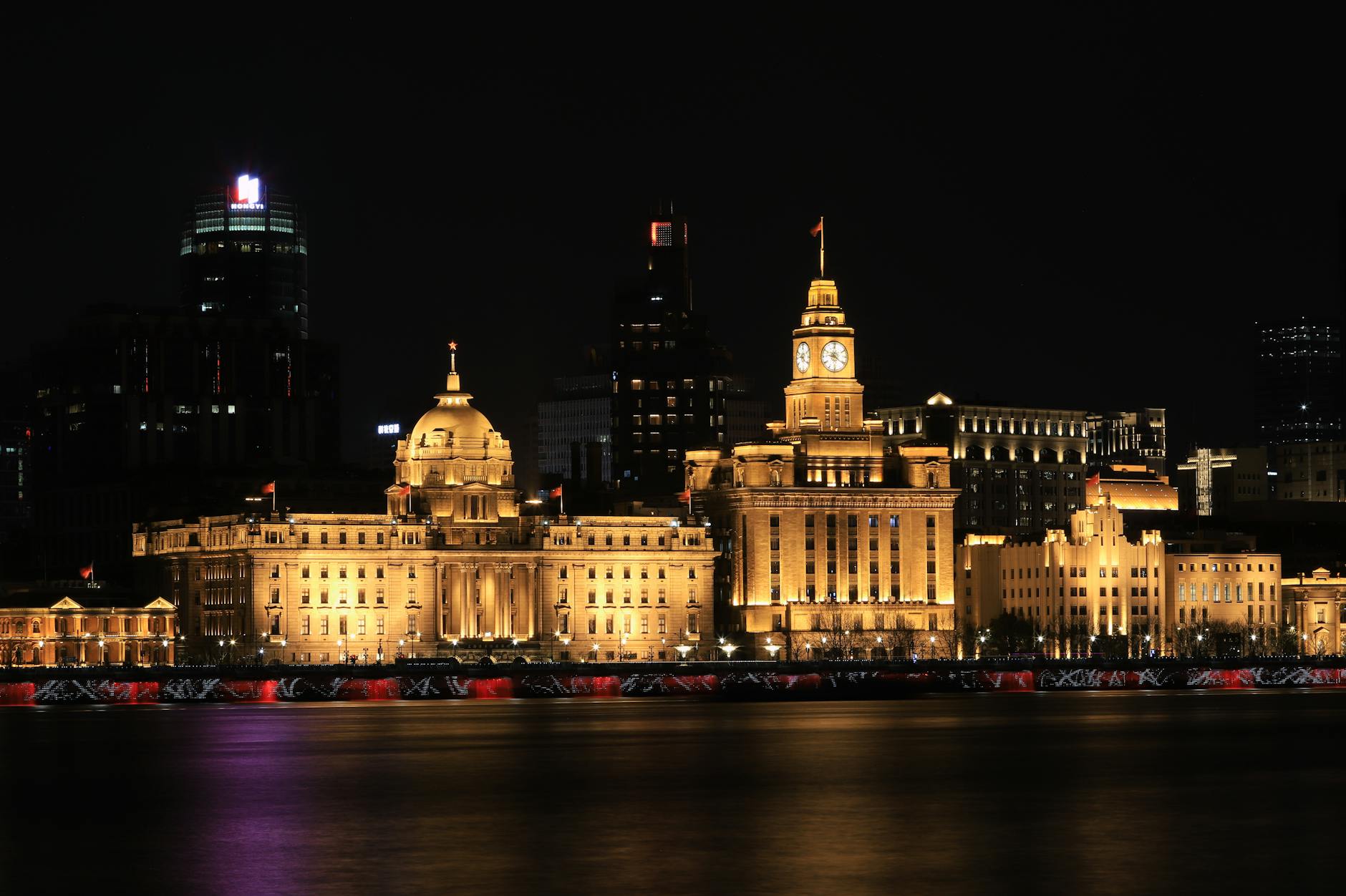
Built 1923 to designs by Palmer & Turner, this is the monumental high point of the Bund’s Neoclassical banking era. When it opened it was described as the grandest banking building between the Suez Canal and the Far East—the most expensive structure on the Bund at the time. A giant central dome rises over a Greek-columned facade flanked by a pair of bronze lions (nicknamed Stephen and Stitt), the originals of which are now in museums. Inside, the octagonal entrance rotunda carries a famous mosaic ceiling depicting the cities where the bank operated—London, Paris, New York, Tokyo, Bangkok, Calcutta, Hong Kong, and Shanghai—widely considered the finest historic interior on the Bund. The building now houses the Shanghai Pudong Development Bank; the lobby is generally open during banking hours, and visitors who are quiet and discreet can usually look up at the mosaics, though photography may be limited at the guards’ discretion.
No. 13 — Custom House (海关大楼)
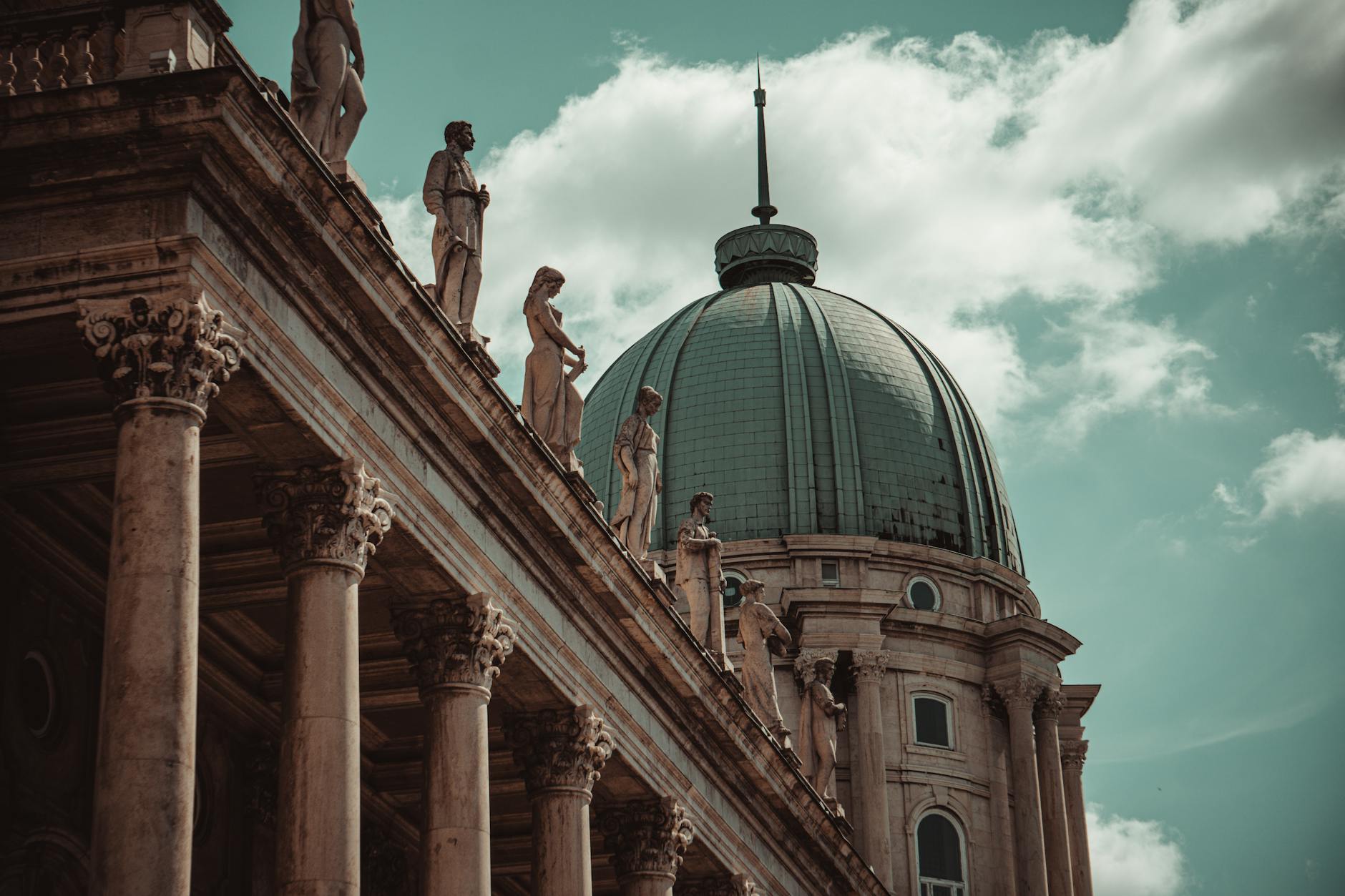
The present Custom House was built between 1925 and 1927, the fourth structure to stand on a customs site dating to 1845, and it remains in use by Shanghai Customs. The overall composition is an eclectic blend of Greek classical and modern lines: an eight-storey main block with a granite-faced facade arranged in a classical “three horizontal, three vertical” rhythm, fronted by a porch of four Doric columns. Crowning it is the clock and bell tower—known affectionately as “Big Ching”—whose chime was modelled on the Westminster Quarters of London’s Big Ben and which became one of Shanghai’s most beloved sounds and silhouettes. The first-floor lobby holds an octagonal dome with mosaic panels of sailing ships. The building is generally not open to the public, with only occasional, reservation-based limited visits, so it is admired chiefly from outside.
No. 14 — Bank of Communications Building (交通银行大楼)
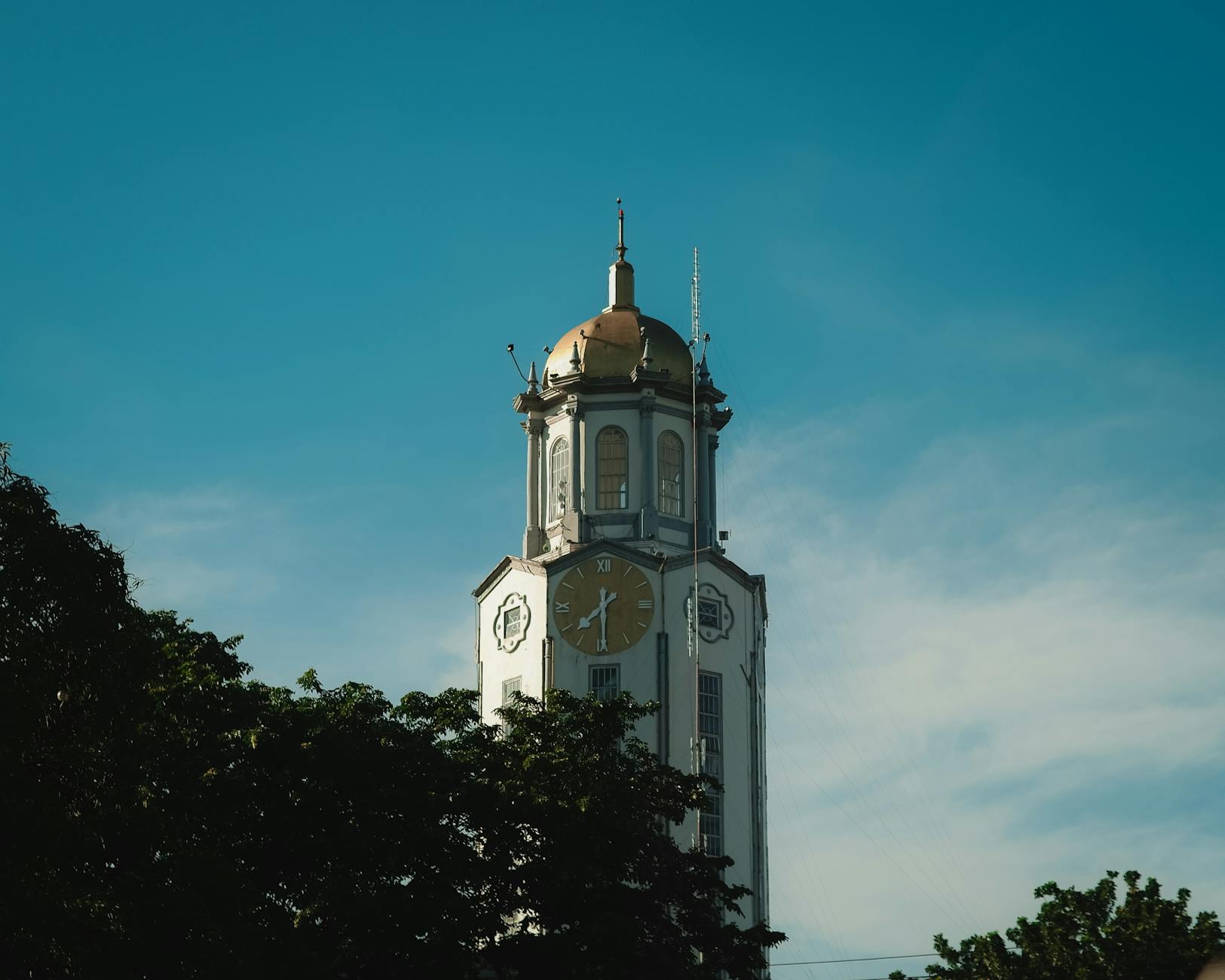
Completed in 1948, this is the youngest building in the classical-era Bund ensemble, and it shows—the ornament has fallen away toward a restrained, modern look with strong vertical lines and a roughly W-shaped roofline, higher at the centre. The lower walls use black marble at the door frame; the upper walls are finished in white cement. Since 1951 it has been occupied by the Shanghai Council of Trade Unions. The ground-floor hall, with its rows of marble columns, is open to the public and usually hosts exhibitions; no reservation is needed.
No. 15 — Russo-Chinese Bank Building (华俄道胜银行大楼)
Built in 1903 in a French classical style for the Russo-Chinese (Russo-Asiatic) Bank, this three-storey building was among the first in Shanghai fitted with an elevator. The facade is symmetrical around the main entrance, with paired columns at ground level, recessed windows, and Ionic columns and classical relief work on the second and third floors. It now houses the China Foreign Exchange Trade System and is not open to the public, but the elaborately modelled stone exterior repays a close look.
No. 16 — Bank of Taiwan Building (台湾银行大楼)
Built 1924, a four-storey building in a Greek Revival style blended with Japanese modern-Western elements, originally for the Japanese-funded Bank of Taiwan. The main facade carries four European classical columns, with square pilasters on the other sides and a pair of bronze lions at the entrance; the doors and windows use flat arches with simple frames and strict proportions. It is now a branch of China Merchants Bank, and the marble-clad ground-floor banking hall is worth stepping into.
No. 17 — North China Daily News Building (字林大楼)
Completed 1924 in an eclectic style with a three-part facade. It was built for the North China Daily News, the most influential English-language newspaper in China, which chronicled Shanghai’s golden age from this address. The lower two floors are granite, the main entrance is flanked by full-height Roman arched windows, and the upper floors carry simpler square windows with Renaissance-style sculptural decoration and a pair of small towers on the roofline. After 1949 it passed through various uses and later became associated with the insurer AIA.
No. 18 — Chartered Bank Building (麦加利银行大楼)
Built 1923 for the Chartered Bank of India, Australia and China, a seven-storey Renaissance-influenced building. A celebrated restoration completed in 2004 turned it into Bund 18, a destination for flagship boutiques, fine dining, art exhibitions, and a seventh-floor rooftop room that housed Bar Rouge for two decades and now operates as the club KEV. The interior preserves dramatic touches—antique Greek-style marble columns at the entrance and handcrafted mosaic work in the lobby—and the retail and gallery floors are among the most accessible historic interiors on the Bund.
No. 19 — Palace Hotel / South Building of the Peace Hotel (汇中饭店)
Opened in 1908 as the Palace Hotel, a six-storey European Renaissance building faced in white brick with red banding. It later became the South Building of the Peace Hotel and, after a Swatch Group restoration, reopened as the Swatch Art Peace Hotel, combining a flagship store, artist residencies, guest rooms, a restaurant, and an art hall. It faces its more famous sibling across Nanjing Road.
No. 20 — Sassoon House / Cathay Hotel (沙逊大厦)
Built 1929 for the property magnate Victor Sassoon, and the Bund’s defining Art Deco landmark. The original Cathay Hotel was the most glamorous address in Asia in the 1930s, drawing celebrities and writers (Noel Coward is said to have written Private Lives here during a bout of flu). Its signature is the dark-green pyramidal copper roof, around 19 metres tall, that remains one of the Bund’s most recognisable silhouettes. The interiors are a catalogue of Deco craftsmanship—a spiral staircase, an octagonal dome, bronze chandeliers, and themed national suites. It now operates as the Fairmont Peace Hotel, and its ground-floor Jazz Bar is home to a long-running jazz band whose older members have performed Shanghai standards for decades. The lobby and bar are open to visitors who order a drink.
No. 23 — Bank of China Building (中国银行大楼)
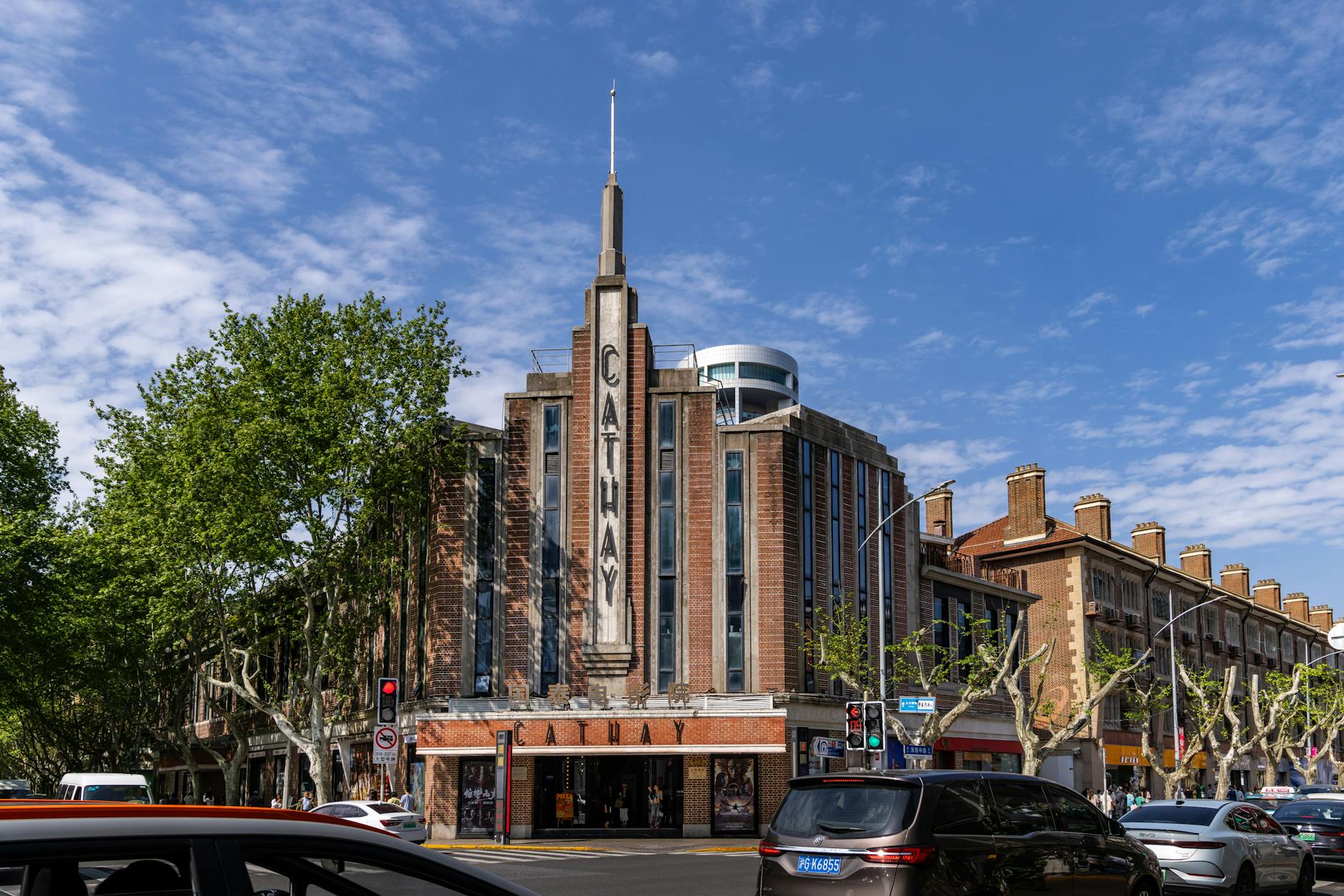
Built 1937, and the only major Bund tower designed by Chinese architects—a deliberate hybrid of a modern Art Deco frame with traditional Chinese ornament. Look for the openwork Chinese characters for “longevity” ranged up both sides of the building, the traditional motifs on the railings and window frames, and the pair of Chinese stone lions at the entrance. It carries one of the Bund’s best architectural anecdotes: the bank intended a 91-metre twin-towered building that would have been the tallest in Shanghai, but the finished height came in at about 77 metres, lower than the adjacent Sassoon House—reportedly because Victor Sassoon insisted that no neighbouring building rise above his own. The building still operates as the Bank of China, and the hall offers free public access.
No. 24 — Yokohama Specie Bank Building (横滨正金银行大楼)
Built 1923 for the Yokohama Specie Bank, Japan’s main international bank of the period. It is a six-storey Neoclassical building with an axially symmetrical, three-part granite facade, paired Ionic columns between balconies on the middle floors, and a Greek cornice at the top—closely related in feel to Bund 18. Some of the original carved detail, including figures above the base walls, survives in worn condition. It now houses a branch of the Industrial and Commercial Bank of China, and the lobby, with its slender golden glass dome, is open for free public visits.
No. 26 — Yangtze Insurance Building (扬子保险大楼)
Built 1918, a seven-storey eclectic building with a reinforced-concrete frame, originally the Yangtze Insurance Association Building. The first two floors use rough granite, the middle floors polished stone, and a projecting cornice separates the upper levels, where an Ionic colonnade fronts the sixth floor beneath a Mansard roof. It now houses the Agricultural Bank of China; the ground-floor hall is open during business hours, though photography is not permitted inside.
No. 27 — Jardine Matheson Building (怡和洋行大楼)
Built 1922 as the headquarters of Jardine Matheson, the most powerful of the British trading houses—the great “hong” that helped shape nineteenth-century Shanghai. It began as a six-storey British Renaissance building, with two further floors added in 1983. The facade carries Roman arched openings on the lower floors, a carved ram’s-head over the central second-floor window, and four Corinthian columns rising from a third-floor balcony to the fifth floor. The interior preserves marble floors and mosaic corridors. Today the ground floor holds a luxury watch flagship, with restaurants on the upper floors and a rooftop venue offering prime views across to Pudong.
No. 28 — Glen Line Building (格林邮船大楼)
Built 1920 for the Glen Line shipping company, a seven-storey building with a granite-faced base, projecting balconies, and a Greek-temple-influenced front. For more than forty years after 1949 it served the Shanghai People’s Broadcasting Station, which added communication towers to the roof. Since 2011 it has housed the Shanghai Clearing House, handling interbank settlement—so it remains, as it began, a piece of financial infrastructure.
No. 29 — Banque de l’Indochine Building (东方汇理银行大楼)
Built on a site the French Banque de l’Indochine acquired in 1911, this is the only building in the ensemble in a pure French Renaissance style, and the only one with just three storeys—though each floor is exceptionally tall, over seven metres, giving it real presence. The Mansard roof and ornamental ironwork are textbook French. China Everbright Bank has occupied the building since the 1990s.
No. 33 — Former British Consulate General (英国领事馆)
The northernmost of the heritage buildings and, in its present form, the oldest—rebuilt in 1872 after a fire on a consular site dating to the 1840s. The main building is a British Renaissance villa with veranda-style features and a brick-and-timber structure, set behind a classic English lawn, with a former consul’s residence beside it in a Victorian Romanesque style of grey and red brick. The grounds, known as Waitanyuan, are among the most peaceful on the waterfront; the buildings now host art exhibitions, lectures, and small concerts, with some spaces open to the public on a regular basis and others given over to a luxury watch flagship.
Smaller Landmarks Worth a Look
Several features along and just beyond the heritage row reward a short detour:
- The Bund Bull — the bronze charging bull near Yan’an Road at the southern end, a 2010 sculpture by the artist behind Wall Street’s Charging Bull, and a natural starting marker for the walk.
- Garden Bridge (Waibaidu Bridge) — the riveted steel-truss bridge of 1907 at the north end, spanning Suzhou Creek where it meets the Huangpu. It is one of the oldest surviving steel bridges in the country and a landmark in its own right.
- Astor House Hotel — just over the Garden Bridge, this was among the earliest Western-style hotels in China; it later housed a museum and remains a handsome relic of the early settlement.
- Former Russian Consulate — on the north bank of Suzhou Creek beside the Garden Bridge, a reminder of the international makeup of the old settlement.
- Rooftop and lobby bars — Sir Elly’s terrace at The Peninsula on the north end of the waterfront, the seventh-floor room at Bund 18 that housed Bar Rouge for two decades and now trades as the club KEV, and the rooftop terraces along the row are architectural experiences as much as drinking spots, and a legitimate way to see interiors that are otherwise private.
Where You Can Go Inside
Most Bund buildings remain working banks, offices, or hotels, and a good number are closed to casual visitors. But several interiors are genuinely open—some free, some for the price of a drink or a meal. The reliably accessible ones are:
- HSBC Building (No. 12) — the lobby and its mosaic ceiling, during banking hours; be discreet and check whether photography is allowed that day.
- Bank of China (No. 23) — the banking hall, free, during business hours.
- Industrial and Commercial Bank / former Yokohama Specie Bank (No. 24) — the domed lobby, free.
- Bank of Communications (No. 14) — the ground-floor exhibition hall, free, no reservation needed.
- Fairmont Peace Hotel (No. 20) — the Art Deco lobby and the Jazz Bar (drinks).
- Waldorf Astoria (No. 2) — the lobby and the recreated Long Bar.
- Bund 18 (No. 18) — the retail and gallery floors, plus the seventh-floor room that housed Bar Rouge for two decades and is now the club KEV.
- Three on the Bund (No. 3) — the Shanghai Gallery of Art and the restaurant floors, Mercato and Jean-Georges among them.
The Custom House (No. 13) and several of the bank towers open only occasionally or by reservation, so treat any interior visit there as a bonus rather than a plan. Dress neatly—the hotels and banks expect it—and keep your voice down in working banking halls.
Self-Guided Tour Logistics
Route and time. The building side runs a little over a kilometre from Yan’an Road to the Garden Bridge; allow 45 minutes to walk it without stopping, or two to three hours to include lobbies, photographs, and a coffee. The elevated promenade on the river side is best for skyline views and crowd-watching; the road side is where you read the facades.
Best time of day. Late afternoon, roughly 4 to 6 pm, gives warm light on the west-facing facades. The lights on the buildings and the Pudong skyline come on after dusk, around 7 pm, and run for a few hours—beautiful, but the architecture itself is hard to read once it is dark, so do the detailed looking by daylight and return for the night view. Weekday mornings and late afternoons are far less crowded than weekends and holidays, when the promenade can be shoulder to shoulder.
Getting there. The closest metro stops are East Nanjing Road (Lines 2 and 10) a few minutes’ walk inland, and the Bund’s own sightseeing access points along the waterfront. From the river side you can also reach Pudong via the pedestrian Bund Sightseeing Tunnel or by the regular ferries across the Huangpu.
Practicalities. Carry water and, in summer, sun protection—there is little shade on the promenade. Public restrooms are available around Bund 18, the Custom House plaza, and near the Garden Bridge. Download an offline map before you set out, and if you would rather have a guide point out the details, several operators run two-to-three-hour architectural walks of the waterfront.
The Bund pairs naturally with the rest of central Shanghai. For the broader visit—viewpoints, timing, and what sits immediately behind the waterfront—see our complete Bund guide. To put the buildings in context, our history of Shanghai explains how the treaty port produced this skyline in the first place.
Frequently Asked Questions
How many heritage buildings are on the Bund?
The Bund is usually described as having 52 historic buildings along the roughly 1.5-kilometre waterfront. Of these, around two dozen carry numbered Bund addresses on East Zhongshan Road No. 1 and make up the main heritage frontage covered in this guide.
What is the most famous building on the Bund?
The Fairmont Peace Hotel (the former Sassoon House and Cathay Hotel, No. 20), with its green pyramidal roof, and the domed HSBC Building (No. 12) are the most architecturally celebrated. The Custom House clock tower (No. 13) is probably the single most photographed feature.
Can you go inside the Bund buildings?
Several, yes. The HSBC, Bank of China, the former Yokohama Specie Bank, and the Bank of Communications all have publicly accessible halls during business hours, and the Fairmont Peace Hotel, Waldorf Astoria, Bund 18, and Three on the Bund welcome visitors to lobbies and bars. Many of the other buildings are private offices and banks that are admired only from outside.
What architectural style is the Bund?
There is no single style. The Bund is a mix of Neoclassical and Beaux-Arts, Renaissance Revival, Gothic Revival, French Renaissance, Baroque, and Art Deco, which is why it is nicknamed the “museum of world architecture.” The grandest towers, from the late 1920s and 1930s, lean Art Deco.
When were the Bund buildings built?
Most date from about 1900 to 1937, the peak decades of foreign Shanghai. The oldest in its present form is the former British Consulate (No. 33), rebuilt in 1872, and the youngest of the classical-era buildings is the Bank of Communications (No. 14), completed in 1948.
Why is it called the Bund?
“Bund” comes from an Anglo-Indian word meaning an embankment or built-up waterfront, which British residents brought to Shanghai in the nineteenth century. The Chinese name, Wǎitān, means “outer beach,” a reference to the riverbank where the district grew up.
Is there a guided Bund architecture tour?
Yes. Several operators run guided architectural walks of the waterfront, typically lasting two to three hours and covering the history, styles, and stories of the main buildings. You can also follow a numbered list like this one as a self-guided walk at your own pace.
What is the best time of day to walk the Bund?
Late afternoon, around 4 to 6 pm, for warm light on the facades, then again after about 7 pm for the illuminated buildings and the Pudong skyline. Weekday mornings and afternoons are much quieter than weekends.
Plan Your Bund Visit
Use this building-by-building reference alongside our complete Bund guide for timing and viewpoints, our Shanghai Art Deco architecture deep-dive for the 1930s wave, and our history of Shanghai for the treaty-port story behind the skyline. To carry the architecture inland, pair the waterfront with a French Concession walking tour, and if you want to wake up among these buildings, see the best hotels near the Bund. The whole district sits within our Shanghai culture and history guide.
Further reading: The Bund on Wikipedia.