Shanghai Art Deco architecture survives in greater quantity here than almost anywhere else on earth. Only New York and Miami hold more, and Shanghai’s concentration is denser and more varied than either. The reason is a matter of timing: the late 1920s and 1930s, when Shanghai was the commercial and cultural capital of Asia, coincided exactly with the global high tide of Art Deco. While the West sank into the Depression, Shanghai kept building at a pace China would not match again for sixty years. The result is a layer of streamlined, geometric facades that runs from the Bund through the former French Concession and out into Jing’an, much of it still standing, much of it still in daily use.
This guide explains why Shanghai became an Art Deco capital, how the style arrived and evolved, and which buildings reward a visit. It names the architects where they are known, gives the addresses, tells you honestly which interiors you can enter and which you can only photograph from the pavement, and ends with a self-guided walking route you can finish in a half-day. Where the existing record is uncertain or contested, this guide says so rather than inventing a clean story.
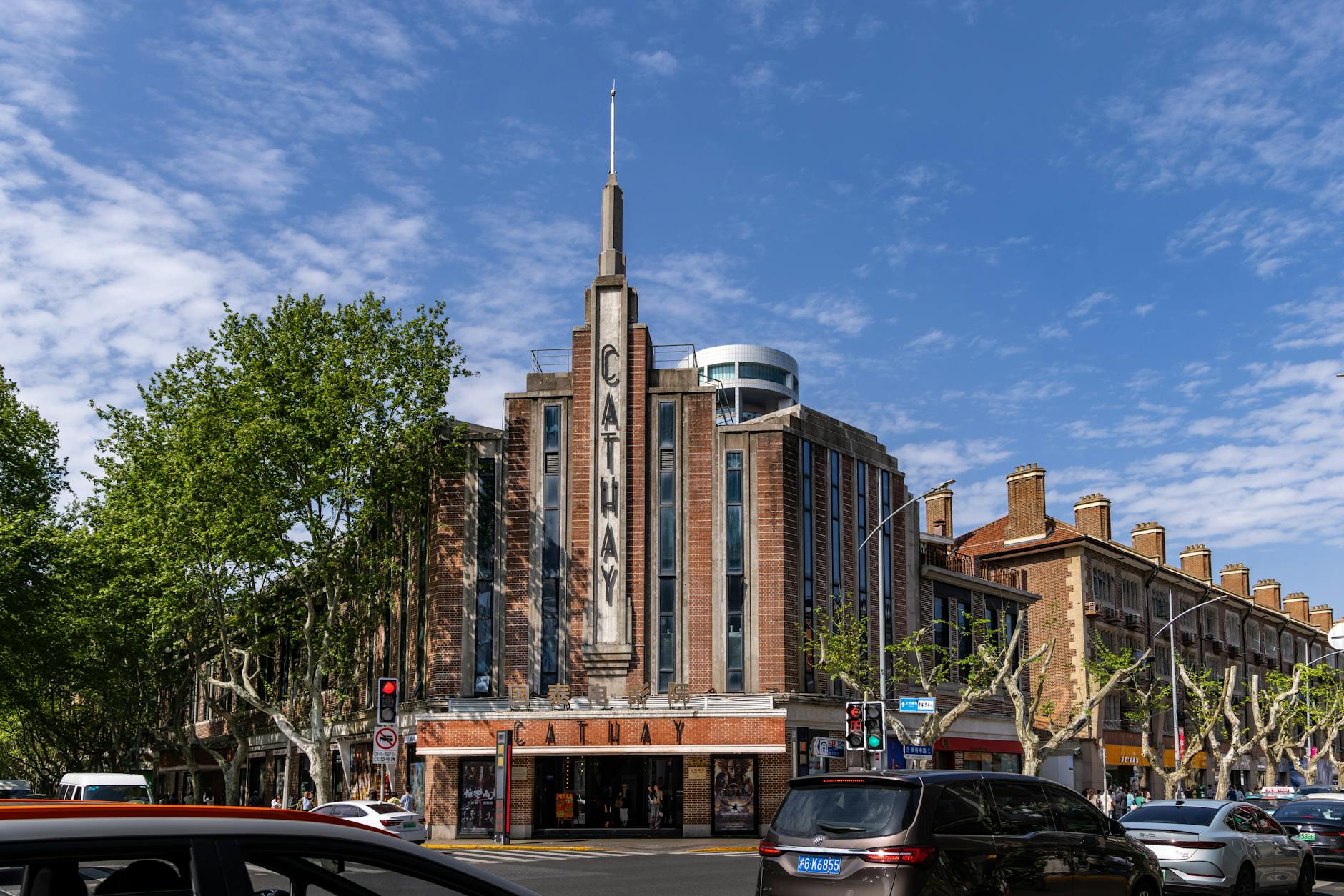
Table of Contents
- What Is Shanghai Art Deco Architecture?
- Why Shanghai Became an Art Deco Capital
- A Short History of Art Deco in Shanghai
- Chinese Deco: The Local Variant
- How to Recognise Art Deco on the Street
- The Bund
- Fairmont Peace Hotel (Sassoon House)
- Bank of China Building
- Park Hotel
- Paramount Ballroom
- Cathay Theatre
- The French Concession Apartment Houses
- Wukang Mansion (Normandie Apartments)
- Further Afield: Slaughterhouse, Pei Mansion, Rockbund
- Where to See Art Deco by Area
- Where You Can Actually Go Inside
- A Self-Guided Walking Tour
- Guided Tours
- Practical Notes
- Frequently Asked Questions
What Is Shanghai Art Deco Architecture?
Art Deco was an international design movement that ran from roughly 1910 to 1950 and peaked in the 1920s and 1930s. It took its name retrospectively from the 1925 Exposition Internationale des Arts Décoratifs et Industriels Modernes in Paris. The style favoured streamlined geometric forms, stepped and setback massing, and a vocabulary of decorative motifs: sunbursts, chevrons, zigzags, stylised flowers and fountains. It liked new and luxurious materials — chrome, polished granite, terrazzo, glass, marble — and it read as modern and optimistic in a way that the Beaux-Arts and neoclassical buildings around it did not. Art Deco appeared more or less simultaneously in Paris, New York, Miami, Mumbai and Shanghai, with each city developing its own accent.
Shanghai’s accent is unusually broad because the style arrived during a building boom and stayed for almost two decades. You find it at every scale: in the great commercial towers on the Bund, in cinemas and ballrooms, in banks, and above all in hundreds of apartment houses scattered through the former concessions. That domestic, lived-in quality is part of what makes the city’s Art Deco distinctive. This is not a museum district of a few preserved monuments; it is a working stock of buildings, many still occupied, that you walk past without noticing until you train your eye.
Why Shanghai Became an Art Deco Capital
Three things came together. First, money. By the late 1920s Shanghai was the busiest port in Asia and one of the richest cities in the world, with a foreign-administered International Settlement and French Concession that operated under their own building rules and attracted enormous speculative investment. Second, talent. The concessions drew architects from Europe and, increasingly, a first generation of Chinese architects trained in the West, all of them working in the most fashionable idiom of the day. Third, timing. The boom hit precisely when Art Deco was the international default for anything that wanted to look modern, so the style was applied to everything from banks to bachelor flats.
The firm of Palmer & Turner, originally a Hong Kong practice, designed a string of the major commercial buildings, including the Sassoon House that became the Cathay Hotel. The single most prolific name, though, is László Hudec — an architect born in what is now Slovakia, who arrived in Shanghai in 1918 and built dozens of works across the 1920s, 1930s and 1940s, the Park Hotel chief among them. Alongside the foreign architects, Chinese designers trained abroad — Robert Fan Wenzhao, Poy Gum Lee, Dong Dayou, Zhao Shen, Xi Fuquan and others — produced some of the most inventive work, including the fusion now known as Chinese Deco.
A Short History of Art Deco in Shanghai
It helps to think of three loose phases. The dates overlap and the labels are convenience, not doctrine.
Arrival, roughly 1920–1930. The earliest buildings mix Art Deco with Beaux-Arts and other revival styles rather than committing fully. The Sassoon House (1929), which became the Cathay Hotel and is now the Fairmont Peace Hotel, is the great early statement on the Bund. Purely Art Deco buildings are still the exception in this decade.
The peak, roughly 1930–1937. This is the mainstream period and the one most visitors come for. The Paramount (1933), the Cathay Cinema (1932), the Park Hotel (1934) and a wave of apartment blocks all date from these years. Hudec was at his most productive, and the apartment houses of the French Concession went up one after another.
Late Deco, roughly 1937–1947. The style carried on through the Japanese occupation and into the immediate post-war years, often in a leaner, more stripped form. The Bank of China Building (completed 1937) is the great late work, deliberately marrying Art Deco massing with Chinese roof forms. After 1949 the commercial economy that had paid for all this paused, the fashion had passed worldwide, and the building of new Art Deco effectively stopped. Restoration began in earnest in the 1990s and continues.
Chinese Deco: The Local Variant
What sets Shanghai apart from New York or Miami is the deliberate grafting of Chinese decorative and structural elements onto Art Deco frames. This hybrid is usually called Chinese Deco or, less kindly, Sinified Deco. At its simplest it means dragons, phoenixes, lotus flowers, cloud scrolls and traditional characters worked into otherwise geometric ornament. At its most ambitious it means whole buildings, like the Bank of China, that wear a Chinese-style roof on a modern tower.
Chinese Deco mattered as more than decoration. It was a way for a generation of Western-trained Chinese architects to assert a national identity in the most modern style available, rather than simply importing a European look wholesale. Robert Fan Wenzhao is one of the names associated with this current; the local Art Deco community has documented many others. The result is a sub-style you find nowhere else in the same density, and it rewards a slow second look at facades you might otherwise read as standard Deco.
How to Recognise Art Deco on the Street
Once you know what to look for, central Shanghai fills up with Art Deco. A few reliable tells:
Geometric, rectilinear forms. Stepped pyramids and ziggurats, setbacks as the building rises, hard straight lines rather than curves and organic shapes.
Vertical emphasis. Piers and fins that draw the eye upward, giving even mid-rise buildings a sense of height.
Sunbursts and chevrons. These turn up on spandrel panels, over doorways, and especially in metalwork — balcony railings, lift gates, stair balustrades.
Streamline and Moderne curves. A later strand of Deco favoured rounded corners, porthole windows and horizontal banding borrowed from ocean liners. Several French Concession apartment houses lean into this “Maritime” look, with curved balconies and ship’s-rail staircases.
Rich materials. Terrazzo floors, marble and granite cladding, chrome and bronze fittings, decorative tilework.
Stylised nature. Flowers, animals and figures rendered as geometry rather than realism — roses that look, as one local historian put it, as if they were piped from icing.
Chinese motifs. Dragons, phoenixes, lotuses and characters worked into the ornament, the signature of the local variant.
The Bund
The Bund holds the highest concentration of major Art Deco buildings in the city, mixed in among earlier neoclassical and Beaux-Arts banks. Several of the grand riverfront blocks are transitional — an older facade wrapped around modern Art Deco interiors — while a few are full-blooded Deco. Worth knowing as you walk the waterfront:
No. 12 — former HSBC Building (1923). Predominantly neoclassical, but with Art Deco touches in its interiors and fittings.
No. 13 — Customs House (1927). Transitional, best known for its clock tower.
No. 18 — the Bund 18 building (1923). A Beaux-Arts facade now housing galleries and shops, with Deco-influenced interior work.
No. 20 — Sassoon House / Fairmont Peace Hotel (1929). The Bund’s full Art Deco landmark, covered in detail below.
No. 23 — Bank of China Building (1937). The late Chinese Deco masterwork, also covered below.
For the wider story of the waterfront and its buildings, see our Bund architecture guide and the general guide to the Bund.
Fairmont Peace Hotel (Sassoon House)
If you see one Art Deco building in Shanghai, make it this one. The Sassoon House was built for Sir Victor Sassoon, of the Bombay-and-Baghdad Sassoon merchant family, and designed by Palmer & Turner. It opened in 1929 as the Cathay Hotel and reopened as the Fairmont Peace Hotel after a three-year restoration completed in 2010. Twelve storeys face the Bund, topped by the green pyramidal roof that is one of the waterfront’s defining silhouettes.
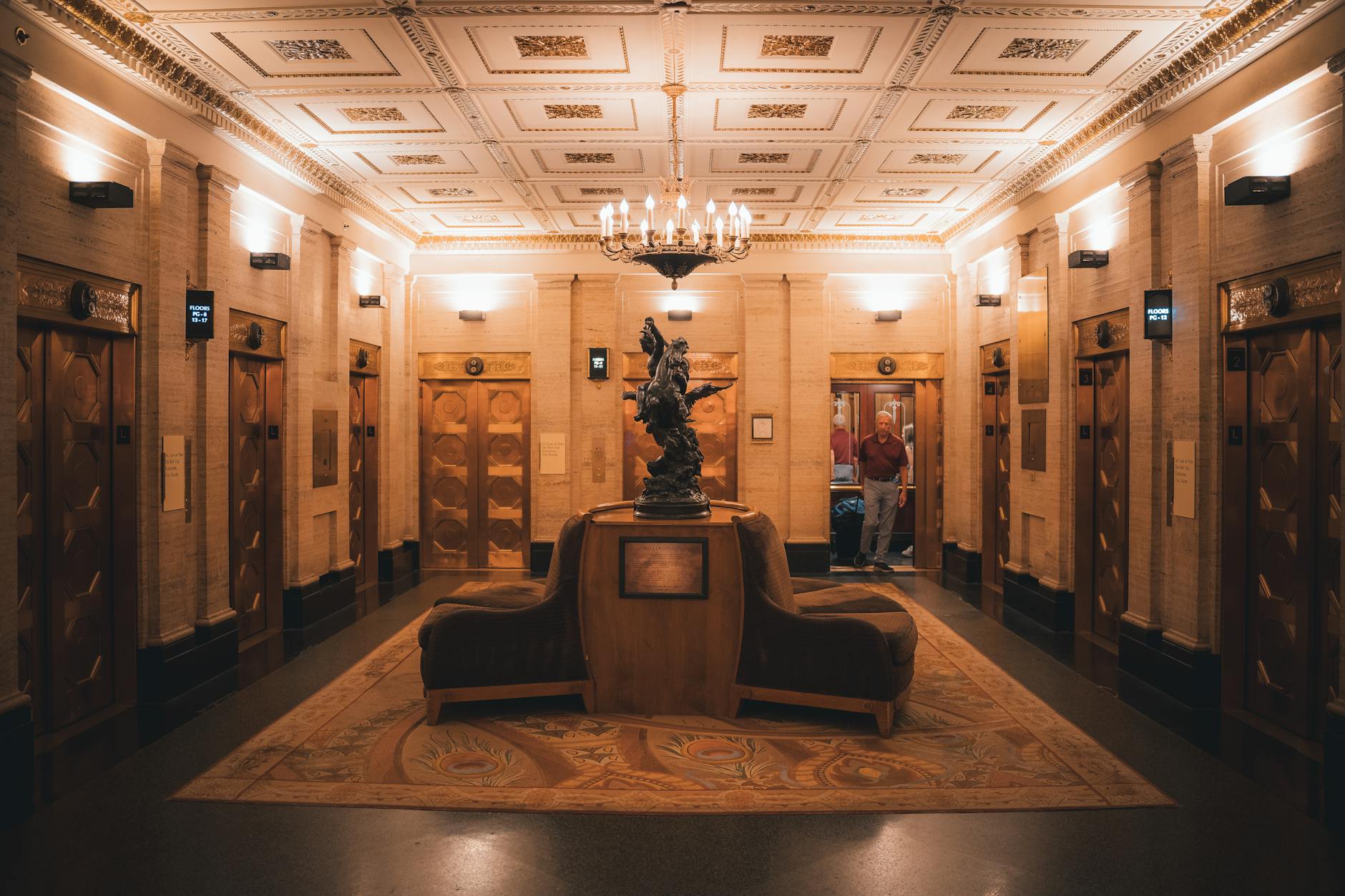
What to look for: the octagonal lobby rotunda, with its mosaics, bronze work and original detailing; the famous Jazz Bar, whose elderly house band kept a 1930s repertoire alive for decades; and, near the top, the Sassoon Suite that was Victor Sassoon’s own residence. The building also keeps a small heritage display documenting its history.
Getting in: the lobby is open to non-residents, so you can walk in and look. The Jazz Bar runs on a reservation-and-cover basis in the evening, but a drink there buys you time inside one of Shanghai’s best-preserved Deco rooms. The upper-floor heritage rooms are sometimes shown on hotel-run tours; ask at the desk.
Bank of China Building
Next door at No. 23, the Bank of China Building is the Bund’s great experiment in Chinese Deco. Completed in 1937, it sets a Chinese-style stepped roof and decorative stone detailing — including traditional motifs and characters — on top of a modern Art Deco tower. The design is usually credited to Lu Qianshou (Luke Him Sau) working with Palmer & Turner, and the building was conceived to read as visibly Chinese rather than as one more Western bank.
What to look for: the contrast between the clean vertical shaft and the Chinese roof; the carved stone panels at street level; and the banking hall, which preserves period detailing.
Getting in: as a working bank, its main hall is open during business hours, which makes this one of the easier grand interiors to step into for free.
Park Hotel
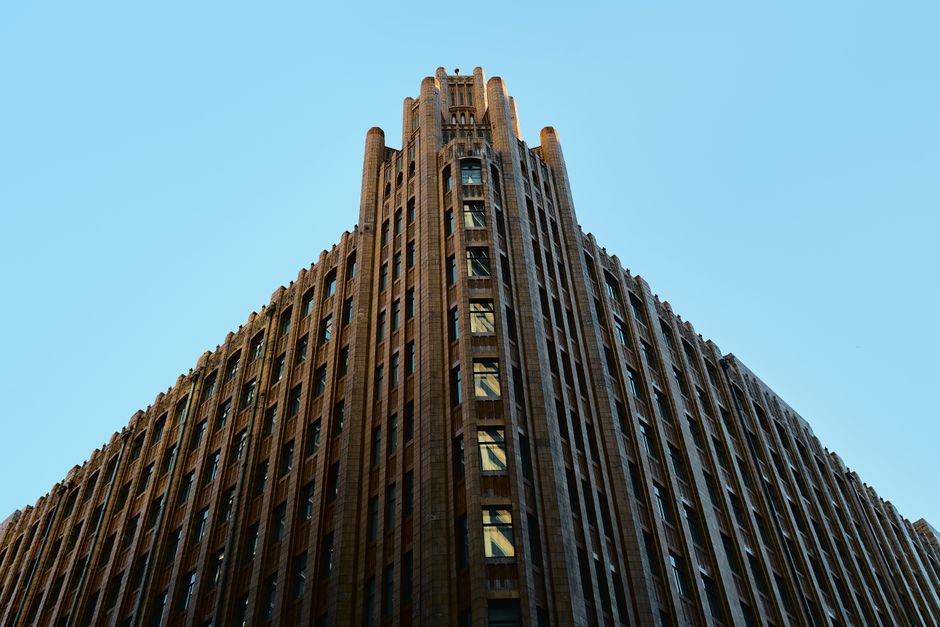
Hudec’s best-known building and, for nearly half a century, the tallest in Asia. The Park Hotel opened in 1934 on what is now Nanjing West Road, facing the old racecourse that has since become People’s Park and the Shanghai Museum precinct. At 24 storeys it held the height record in the city — and on the continent — until the early 1980s. Its dark, vertical, setback facade was openly admired by later Chinese architects; the architect I. M. Pei is often quoted crediting it as an early inspiration.
What to look for: the sheer verticality and the stepped crown; the lobby, which keeps some of its original character; and the views from the upper-floor restaurants and bars. There is a small exhibition space relating to Hudec and the building’s history.
Getting in: the lobby is accessible, and the upper-floor food-and-drink outlets give you a reason to ride up. If you are mapping a route through the centre, the Park Hotel pairs naturally with People’s Square; our Shanghai itineraries can help you slot it into a wider day.
Paramount Ballroom
The Paramount was the grandest dance hall of 1930s Shanghai. It opened in 1933 at 218 Yuyuan Road, near Wanhangdu Road in Jing’an, and is generally attributed to the architect S. J. Young (Yang Xiliu). In its prime it was the largest and most talked-about ballroom in the city, a fixture of the jazz-age nightlife. It closed after 1949, served other uses for decades, and was rescued from demolition and restored around the turn of the millennium, reopening as a music and dance venue.
What to look for: the Art Deco exterior with its vertical sign tower, and — if it is open — the restored ballroom interior, which is the real draw.
Getting in: access depends on programming and private bookings, so the interior is not reliably open to drop-in visitors; check ahead if you want to see inside. The exterior is worth the detour on its own.
Cathay Theatre
In the former French Concession, the Cathay opened in 1932 as the Cathay Cinema at 870 Huaihai Middle Road, near Maoming Road. It is usually credited to the Czech architect C. H. Gonda, and in its day it was among the largest and smartest cinemas in the city, seating well over 900. (You will sometimes see Hudec’s name attached to it; Gonda is the attribution the local Art Deco specialists give, and it is the safer one to cite.) For the movies that filled rooms like this one, see our guide to Shanghai’s cinema and literary heritage.
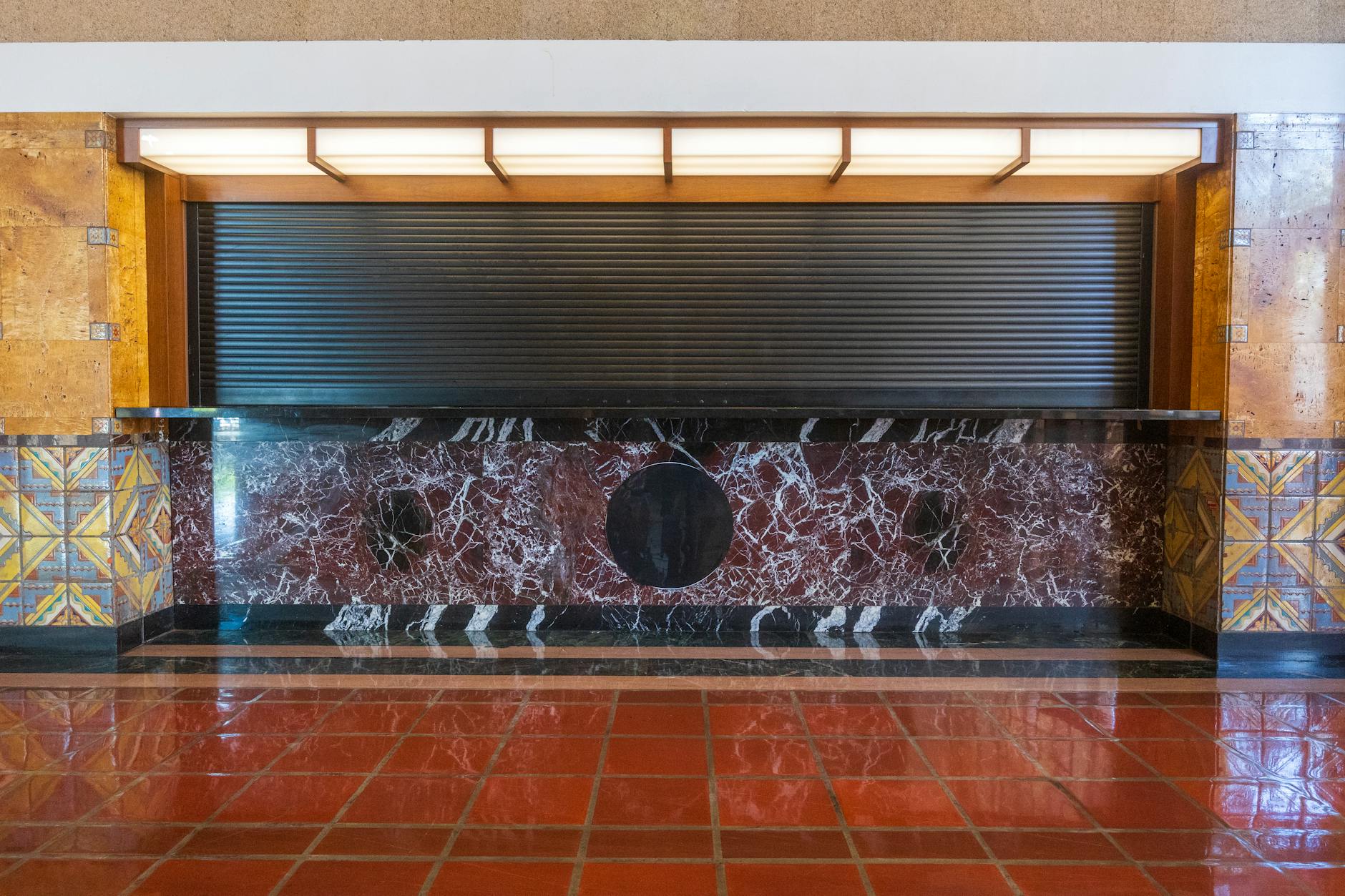
What to look for: the curved corner facade and the marquee, one of the most photographed in the city, especially after dark when the sign is lit.
Getting in: it still runs as a cinema, so the way inside is to buy a ticket to a screening. Otherwise enjoy the exterior, which holds the corner of Huaihai and Maoming Roads.
The French Concession Apartment Houses
The apartment houses are where Shanghai’s Art Deco becomes a whole landscape rather than a handful of monuments. The former French Concession and its fringes are full of them, mostly built between the late 1920s and the early 1940s, many still lived in. The local Art Deco community, led by the long-running Historic Shanghai group, has documented dozens; a representative walk through the streets around Hengshan, Gao’an and Kangping Roads might take in:
Washington Apartments (1928), by the Russian architect Alexander Yaron. Strong geometric lines on a prominent corner, softened by sculpted floral detail.
Lincoln Apartments (1930). High Deco detailing outside and zigzag ironwork on the staircase rails inside — a textbook example, and the subject of plenty of period gossip.
Midget Apartments (1931), by Alexandre Leonard. Squeezed onto an awkward plot, with tiny flats but a confident Deco exterior and surviving interior details, down to the mailboxes.
Rong Mansion (1935). A “Maritime” Deco house with cruise-liner lines, built for one of the city’s wealthiest industrialists.
Liberty Apartments (1937). A nine-storey tower in chocolate-coloured tile that would sit comfortably in Manhattan, with original ironwork numerals.
Amyron Apartments (1941), by Alexandre Leonard. Late Maritime Deco, from the balconies to the ship’s-rail staircase, built by the architect for himself and his wife.
Georgia (1942), by Robert Fan Wenzhao. A grand, almost unadorned late-Deco block by one of the leading Chinese architects of the period, all vertical lines and a central tower.
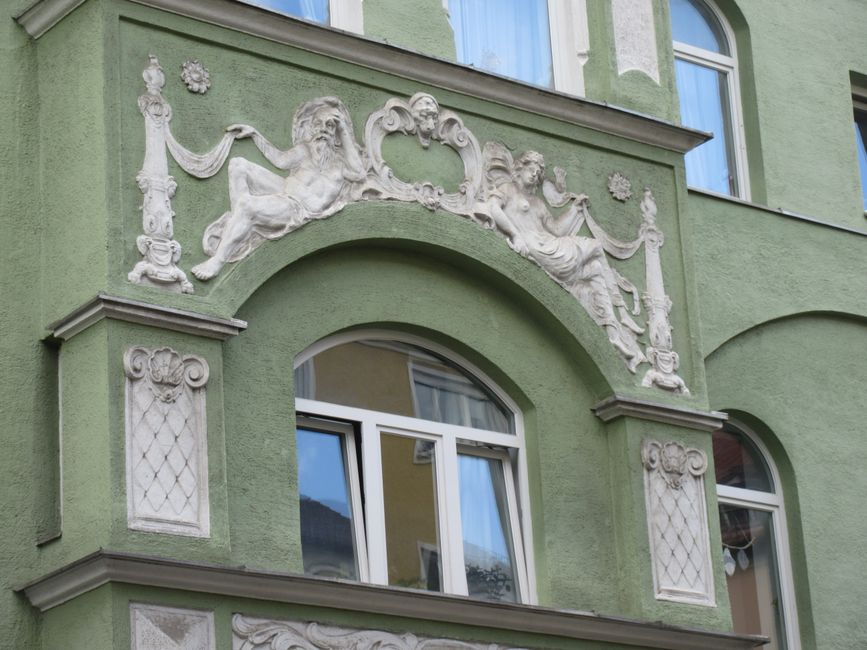
You do not need to memorise the list. The pleasure of this district is cumulative: a curved balcony here, a sunburst gate there, porthole windows on a narrow corner block. The French Concession walking tour covers the same streets from a broader angle and pairs well with an Art Deco eye.
Wukang Mansion (Normandie Apartments)
The wedge-shaped building at the fork of Wukang and Huaihai Roads is the single most photographed residential block in Shanghai. It opened in 1924 as the Normandie Apartments, designed by László Hudec, and its flat-iron prow, modelled on the bow of an ocean liner, makes it instantly recognisable. Purists point out that the detailing is closer to a French Renaissance idiom than strict Art Deco — and that the Normandie predates the 1925 Paris Exposition that named the style — but its streamlined, ship-like massing reads as proto-Deco and it is firmly part of any Art Deco itinerary.
What to look for: the prow from across the junction, ideally from the small viewing area opposite, and the arcaded ground floor.
Getting in: it remains a private apartment building, so this is an exterior visit. The pavements around the fork get crowded with photographers at weekends; early morning is calmer.
Further Afield: Slaughterhouse, Pei Mansion, Rockbund
A few outliers are worth the trip if Art Deco is your reason for visiting.
1933 Old Millfun (the former slaughterhouse). In Hongkou, this 1933 abattoir hides a remarkable concrete interior of ramps, bridges and spiral staircases behind an austere geometric exterior. It now houses shops, studios and event space, so the interior is open and is the whole point of going.
Pei Mansion. Completed in 1937 and once described as the most luxurious private home in the city, this was the residence of the family of the dye magnate Pei Tsuyee (and ancestral to the architect I. M. Pei). It now operates as a high-end restaurant and boutique hotel, and its Suzhou-style garden has at times been open to the public — a rare survival of the kind of garden that used to accompany these grand houses.
Rockbund (Yuanmingyuan Road) and the Rockbund Art Museum. Just behind the Bund, the Rockbund quarter preserves a tight cluster of 1920s and 1930s commercial buildings. The Rockbund Art Museum occupies the former premises of the Royal Asiatic Society’s North China Branch, itself a Deco-era building, and its upper-floor café gives you an interior to sit in along with a view across to Pudong.
Where to See Art Deco by Area
If you would rather think in neighbourhoods than in a single route, here is the rough geography.
The Bund and Rockbund (Huangpu). The commercial monuments: the Fairmont Peace Hotel, the Bank of China Building, the transitional riverfront blocks, and the Rockbund cluster just inland.
People’s Square (Huangpu). The Park Hotel and the buildings around the former racecourse, a short walk from the Bund.
Former French Concession (Xuhui and western Huangpu). The densest residential Deco: the apartment houses around Hengshan, Wukang, Gao’an and Kangping Roads, plus the Cathay Theatre on Huaihai Road and Wukang Mansion at its western fork.
Jing’an. The Paramount on Yuyuan Road and scattered apartment and commercial blocks along the old Bubbling Well Road corridor (today’s Nanjing West Road).
Hongkou. The 1933 Old Millfun and a handful of other industrial and civic survivors north of Suzhou Creek.
Where You Can Actually Go Inside
This is the question most visitors really want answered, so to be direct about it:
Open and free. The Fairmont Peace Hotel lobby; the Bank of China banking hall during business hours; the Park Hotel lobby; the 1933 Old Millfun interior; the public areas of the Rockbund Art Museum building (museum admission applies for the galleries).
Open with a purchase. The Cathay Theatre, if you buy a cinema ticket; the Peace Hotel Jazz Bar, with a reservation and cover; the Pei Mansion, if you book a meal or stay; upper-floor restaurants and bars in the Park Hotel.
Exterior only, in practice. Wukang Mansion and almost all the French Concession apartment houses, which remain private homes; the Paramount most of the time, unless an event or tour opens it.
A guided tour (below) is the most reliable way to get a foot inside lobbies and courtyards that are otherwise closed, because reputable operators have arrangements that an individual walking up to the door does not.
A Self-Guided Walking Tour
This route strings together the headline buildings in a single half-day, starting in the centre, running along the Bund, then crossing into the French Concession. Reckon on four to five hours at a relaxed pace, with stops, and roughly six kilometres of walking. Wear comfortable shoes and carry water.
Start — Park Hotel, Nanjing West Road (People’s Square). Walk the exterior, step into the lobby, ride up for a look if a bar or restaurant is open. About 30 minutes. People’s Square metro is the obvious arrival point.
Walk east about 10 minutes to the Bund.
Stop 2 — the Bund waterfront blocks. Stroll the riverfront frontage between roughly No. 12 and No. 23, reading the facades. 20–30 minutes.
Stop 3 — Fairmont Peace Hotel (No. 20). Go in. See the lobby rotunda; have a coffee if you want a break. Allow 45 minutes.
Stop 4 — Bank of China Building (No. 23). Look at the Chinese roof from the pavement, then step into the banking hall if it is open. 15 minutes.
Detour — Rockbund. If you have the appetite, walk a block inland up Yuanmingyuan Road to see the Rockbund cluster and the Rockbund Art Museum building. 20–30 minutes.
Cross to the French Concession. This is too far to walk comfortably in the middle of the day; take the metro (Line 2 or 10 toward South Shaanxi Road or Shanghai Library) or a short taxi.
Stop 5 — Cathay Theatre, Huaihai Middle Road at Maoming Road. Photograph the curved facade and marquee. 15 minutes.
Stop 6 — the apartment-house streets. Wander west and south through the blocks around Hengshan, Gao’an and Kangping Roads, picking up whichever of the apartment houses above you can find. This is the part to take slowly; 45–60 minutes.
Stop 7 — Wukang Mansion, at the Wukang and Huaihai fork. Photograph the prow from the viewing area opposite. 15 minutes.
Optional finish — Paramount, Yuyuan Road (Jing’an). If you still have energy and want the ballroom exterior, it is a taxi ride north. Otherwise end with tea or coffee in the Concession.
The route is modular. If a half-day is too much, do the Bund cluster as a compact morning and save the French Concession apartment houses for an afternoon, when the light on the western facades is better for photographs.
Guided Tours
A knowledgeable guide is the difference between admiring facades and understanding them, and is often the only way inside otherwise-closed buildings. The main options:
Historic Shanghai. The long-established English-language outfit founded by Patrick Cranley and the late Tess Johnston, now run with Tina Kanagaratnam, and the people behind the Shanghai Art Deco project. They run Art Deco walks — the apartment houses, the area around the old racecourse, the Bund and beyond — alongside broader history tours. Private tours are priced per group; check current rates and schedules when you book.
The Shanghai Art Deco project (shanghaiartdeco.net). Themed private itineraries including Art Deco in the French Concession, the apartment houses, and the old Bubbling Well Road corridor, plus occasional public events. Contact them directly for availability.
Audio and self-guided apps. Several audio-guided walking tours let you set your own pace for a modest fee — a good compromise if you want commentary without committing to a fixed group time.
Practical Notes
Best time of year. Spring, from about April to May, and autumn, from about September to November, give the mildest weather and the best light for facade photography. Summer is hot and humid; winter is grey but perfectly walkable. For a fuller breakdown, see our guide to the best time to visit Shanghai.
Getting around. The Bund and People’s Square legs are walkable; the jump to the French Concession is best done by metro or taxi. The metro is cheap, fast and signed in English.
Reading the plaques. Many of these buildings carry small bronze heritage plaques near the entrance, often in Chinese and English, with the date, the original name and sometimes the architect. They are easy to miss and worth slowing down for; they frequently tell you more than any sign inside.
Respect the residents. The apartment houses are people’s homes. Photograph the exteriors freely from public pavements, but do not push into lobbies or courtyards uninvited.
Frequently Asked Questions
Is Shanghai really an Art Deco city?
Yes. After New York and Miami, Shanghai holds one of the largest surviving concentrations of Art Deco buildings anywhere, and arguably the most varied. The building boom of the late 1920s and 1930s was dominated by the style, and a great deal of that stock still stands.
Where is the most concentrated Art Deco area?
The former French Concession, especially the residential streets around Hengshan, Wukang, Gao’an and Kangping Roads, together with the Huaihai Road corridor. The Bund holds the densest run of major commercial Deco.
Can I go inside the Art Deco buildings?
Some, yes. The Fairmont Peace Hotel and Park Hotel lobbies are open, the Bank of China banking hall is accessible during business hours, and the 1933 Old Millfun interior is open as a retail and event space. Most apartment houses are private and are exterior-only. A guided tour is the most reliable way to see otherwise-closed interiors.
Who was László Hudec?
A prolific architect, born in what is now Slovakia, who worked in Shanghai from 1918 into the 1940s and designed dozens of its best-known buildings, including the Park Hotel and the Normandie (Wukang) Apartments. He is the single most associated name with Shanghai’s modern architecture of the period.
What is “Chinese Deco”?
The Shanghai-specific variant of Art Deco that fuses Western geometric massing with Chinese decorative motifs — dragons, phoenixes, lotuses, traditional characters — and sometimes Chinese structural elements such as stepped roofs. The Bank of China Building is the showcase example.
Is the Peace Hotel worth visiting just for the building?
Yes. The octagonal lobby is one of the finest interior spaces in the city, and the Jazz Bar pairs the architecture with a long live-music heritage. You can walk into the lobby without being a guest.
How long does an Art Deco walking tour take?
A self-guided route covering the headline buildings runs about four to five hours with stops. Professional guided walks are usually two and a half to four hours and focus on a single district, such as the apartment houses or the area around the old racecourse.
Which architects designed the main buildings?
Palmer & Turner designed the Sassoon House (Peace Hotel) and worked on the Bank of China Building (with Lu Qianshou). Hudec designed the Park Hotel and the Normandie Apartments. The Cathay Cinema is attributed to C. H. Gonda and the Paramount to S. J. Young. Many of the French Concession apartment houses were the work of Russian, French and Chinese architects, including Alexander Yaron, Alexandre Leonard and Robert Fan Wenzhao.
Are the buildings restored or original?
It varies. The Peace Hotel had a major restoration completed in 2010 and the Paramount was restored around the early 2000s. Many apartment houses keep their original shape and some interior details but have lost others to decades of subdivision and wear. The bronze plaques often note what survives.
What is the best season for Art Deco walking?
Spring and autumn, for mild temperatures and good light. Rainy days work but slow you down; the open lobbies and the 1933 Old Millfun give you indoor breaks when the weather turns.
Plan Your Walking Tour
Shanghai Art Deco architecture is best understood on foot, slowly, with an eye on the detail: the lift gates, the stair rails, the small bronze plaques by the doors. Walk the buildings in roughly the order above and the city’s 1930s heyday comes into focus in a way that no photograph quite manages.
For the wider cultural picture, start from our pillar guide to Shanghai culture and history. For the waterfront in depth, see the Bund architecture guide, and for the broader story of the city, our history of Shanghai. To explore the Deco-rich streets of the Concession from another angle, follow the French Concession walking tour.
For general background on the style, see Art Deco architecture and the work of the Shanghai Art Deco project.