For travelers passing through China on the way to somewhere else, the china 240 hour visa free transit policy is one of the more useful tools in Asian travel right now. It lets ordinary passport holders from a list of eligible countries stop in Shanghai — and travel across several surrounding provinces — for up to ten days without arranging a tourist visa first. The headline figure is built into the policy’s name: 240 hours, or ten days. This guide walks through how the policy works at the airport in 2026, who qualifies, where you can go during the stay, the all-important onward-ticket rule, and the mistakes that catch first-time users out. Rules of this kind change, so treat every list here as a snapshot as of 2026 and confirm the specifics for your nationality and route with your airline and the Chinese border authority before you book.
The short version: if your passport is on the eligible list, you hold a confirmed onward ticket to a third country or region departing within 240 hours, and you arrive at a qualifying port such as Pudong or Hongqiao, you can usually be admitted without a visa for ten days. The detail under that sentence is where trips go right or wrong.
Table of Contents
- What the China 240 Hour Visa Free Transit Actually Is
- How 144 Hours Became 240 Hours
- Eligible Countries as of 2026
- The Onward Third-Country Ticket Rule
- Requirements at a Glance
- Eligible Entry and Exit Ports in Shanghai
- Where You Can Travel During the Ten Days
- How the 240 Hours Are Counted
- How the Process Works at the Airport
- Documents to Carry
- What You Can and Cannot Do
- Hotel and Police Registration
- When Transit Can Be Refused
- Can You Extend the 240 Hours?
- 240-Hour Transit vs. the 30-Day Waiver vs. a Tourist Visa
- Smart Ways to Use the Ten Days
- Frequently Asked Questions
- Plan Your Visa-Free Visit
What the China 240 Hour Visa Free Transit Actually Is
The 240-hour visa-free transit is one of several visa-exemption routes China offers, and it is aimed squarely at people who are passing through the country rather than treating it as their final destination. If you qualify, you can enter mainland China at an approved port, stay for up to 240 hours (ten days) within the permitted regions, and continue on to a third country or region — all without applying for a visa beforehand. The border officer issues a temporary entry permit on arrival, and that permit, not a visa sticker, is what authorizes your stay.
The idea that defines the whole policy is transit: you are admitted because you are on your way somewhere else, and China is a convenient stop in between. That framing drives almost every rule that follows — the onward-ticket requirement, the ten-day cap, the limits on where you can travel. Confirm the current terms with the airline and the National Immigration Administration before relying on them, as the program has been adjusted repeatedly in recent years.
How 144 Hours Became 240 Hours
China’s transit exemption did not start at ten days. It began with shorter 24-hour, 72-hour, and 144-hour windows in a handful of cities. Shanghai was an early adopter, and for a long stretch the figure here was 144 hours — six days — across the Shanghai, Jiangsu, and Zhejiang area.
That changed at the end of 2024. The National Immigration Administration announced an upgrade, effective December 17, 2024, that extended the maximum transit stay from 72 and 144 hours up to 240 hours and widened the program to many more ports and regions, with further additions through 2025. The upshot: the old 144-hour Shanghai transit has effectively been absorbed into the broader 240-hour policy — ten days instead of six, and a much larger map. Because expansions continue, verify the current ports and regions close to your travel date.

Eligible Countries as of 2026
The exemption is tied to your passport. As of 2026, official Chinese sources put the eligible list at 57 countries, grouped by region below. Because nationalities are added over time — Indonesia, for instance, in mid-2025 — treat this as a starting point and confirm your own status with an official source before booking.
Europe (Schengen-area states): Austria, Belgium, Czech Republic, Denmark, Estonia, Finland, France, Germany, Greece, Hungary, Iceland, Italy, Latvia, Lithuania, Luxembourg, Malta, the Netherlands, Norway, Poland, Portugal, Slovakia, Slovenia, Spain, Sweden, and Switzerland.
Other countries in Europe: Russia, the United Kingdom, Ireland, Cyprus, Bulgaria, Romania, Ukraine, Serbia, Croatia, Bosnia and Herzegovina, Montenegro, North Macedonia, Albania, Monaco, and Belarus.
Americas: the United States, Canada, Brazil, Mexico, Argentina, and Chile.
Oceania: Australia and New Zealand.
Asia: the Republic of Korea (South Korea), Japan, Singapore, Brunei, the United Arab Emirates, Qatar, and Indonesia.
One point that trips people up: the transit list and the separate 30-day unilateral visa-free list are not the same. The United States, for example, is not on the 30-day waiver list as of 2026 but is on the transit list — which is why the 240-hour policy matters so much to American travelers heading onward through Asia. If your passport is on both lists, compare the routes before choosing, as covered later and in our overview of China’s 30-day visa-free entry.
The Onward Third-Country Ticket Rule
If there is one condition to understand before any other, it is this. To use the 240-hour transit, you must be continuing to a third country or region after China, holding a confirmed onward ticket — fixed date and seat — departing within the 240-hour window. Entering when you are not genuinely going on to a third destination is treated as illegal entry, not a technicality.
A few specifics that follow from this, all of which are worth confirming with your airline:
- It must be a third country, not your origin. Departure and destination countries must differ. London–Shanghai–London does not qualify; London–Shanghai–Tokyo does, because Japan is a third destination.
- The ticket must already be booked. You cannot arrive ticketless and buy an onward flight within the ten days — official guidance is explicit the connecting ticket must be confirmed before you enter.
- Hong Kong, Macau, and Taiwan count as separate regions. An onward journey to any of them is generally treated as travel to a third region, but specific routings can be fiddly, so verify your exact itinerary.
Airlines are the practical gatekeepers. At check-in, staff confirm you meet the transit conditions before boarding you, and there have been cases of carriers declining boarding when unfamiliar with the policy. Carry your onward booking where you can show it instantly, and confirm with the airline in advance that they will board you under the 240-hour rule.
Requirements at a Glance

Here is what you generally need to be admitted under the 240-hour transit as of 2026. Read it as a checklist rather than fine print, and confirm anything uncertain with the border authority.
- An eligible ordinary passport from a listed country, valid for more than three months from arrival. Diplomatic, official, and service documents follow different rules.
- A confirmed onward ticket to a third country or region, with a fixed date and seat, departing within 240 hours of entry.
- A completed arrival card for foreigners in transit. This can often be done online in advance, on an airline app, or on a paper form on arrival; some airlines hand it out during the flight.
- Entry and exit through an approved port in a region that participates in the policy — Shanghai Pudong and Hongqiao both qualify.
- A clean recent record. A passport showing a Chinese visa refusal stamp, or a history of illegal entry, residence, or work in China within recent years, can disqualify you.
You may also be asked a question or two at immigration — where you are staying, when you leave. Honest answers and documents ready to hand keep it a formality.
Eligible Entry and Exit Ports in Shanghai
Shanghai has anchored the transit policy since its early days. As of 2026, the Shanghai ports that handle the 240-hour visa-free transit are:
- Shanghai Pudong International Airport (PVG) — the main international gateway, handling the bulk of long-haul arrivals.
- Shanghai Hongqiao International Airport (SHA) — primarily domestic and regional, but a valid transit port for eligible international services.
- Shanghai’s international cruise and passenger seaport — relevant if you arrive or depart by sea.
Enter and exit through ports that participate in the policy, and make sure your onward departure leaves from a permitted point too. Landing at Pudong, our guides to getting from Pudong Airport to the city center and to Shanghai Hongqiao Airport cover the transfers, including late-night options. Because ports are added periodically, confirm your specific arrival and departure points are currently covered.
Where You Can Travel During the Ten Days
Despite the generous duration, the 240-hour transit is not a key to the whole country — you are admitted to specific regions and expected to stay within them. The permitted area has grown considerably, though, and is far larger than the old Shanghai-only or three-province setup.
Under the expanded policy, eligible travelers can access a long list of provinces, municipalities, and regions — reported as roughly two dozen as of 2026 — and, importantly, can cross provincial boundaries between them rather than being confined to a single province. For a Shanghai arrival, the most natural radius includes:
- Shanghai itself — the city and its districts.
- Jiangsu province — including Nanjing and the classical-garden city of Suzhou, an easy high-speed-rail hop from Shanghai.
- Zhejiang province — including Hangzhou and its West Lake, also a short train ride away.
Beyond that core, the broader policy now reaches many more provinces and cities, some opening their entire territory and others limited to named cities. The exact scope is detailed and changes, so if you plan to range beyond the Shanghai–Suzhou–Hangzhou triangle, check the current permitted areas first. Straying outside the permitted scope, or exiting from a non-designated port, can bring penalties.
For most stopovers, ten days is plenty for the city plus a day trip or two to Suzhou and Hangzhou, all inside the permitted zone. Our guide to planning a trip to Shanghai helps you turn the window into an itinerary.
How the 240 Hours Are Counted
The counting rule is precise, and misreading it is an easy way to overstay. The clock does not start the minute you land: after the officer issues your temporary entry permit, the count begins at 00:00 the day after you enter. From that midnight you have 240 hours — ten full days — before you must leave.
So your arrival day is effectively a bonus. Land on the afternoon of June 1 and the formal count starts at midnight; your ten days run from June 2, with departure due by the end of the tenth day. A late-evening arrival does not eat into your stay. Even so, the figure that governs your trip is the one recorded against your entry — check the permit when it is issued, and if the dates look off, ask before you walk away.
How the Process Works at the Airport
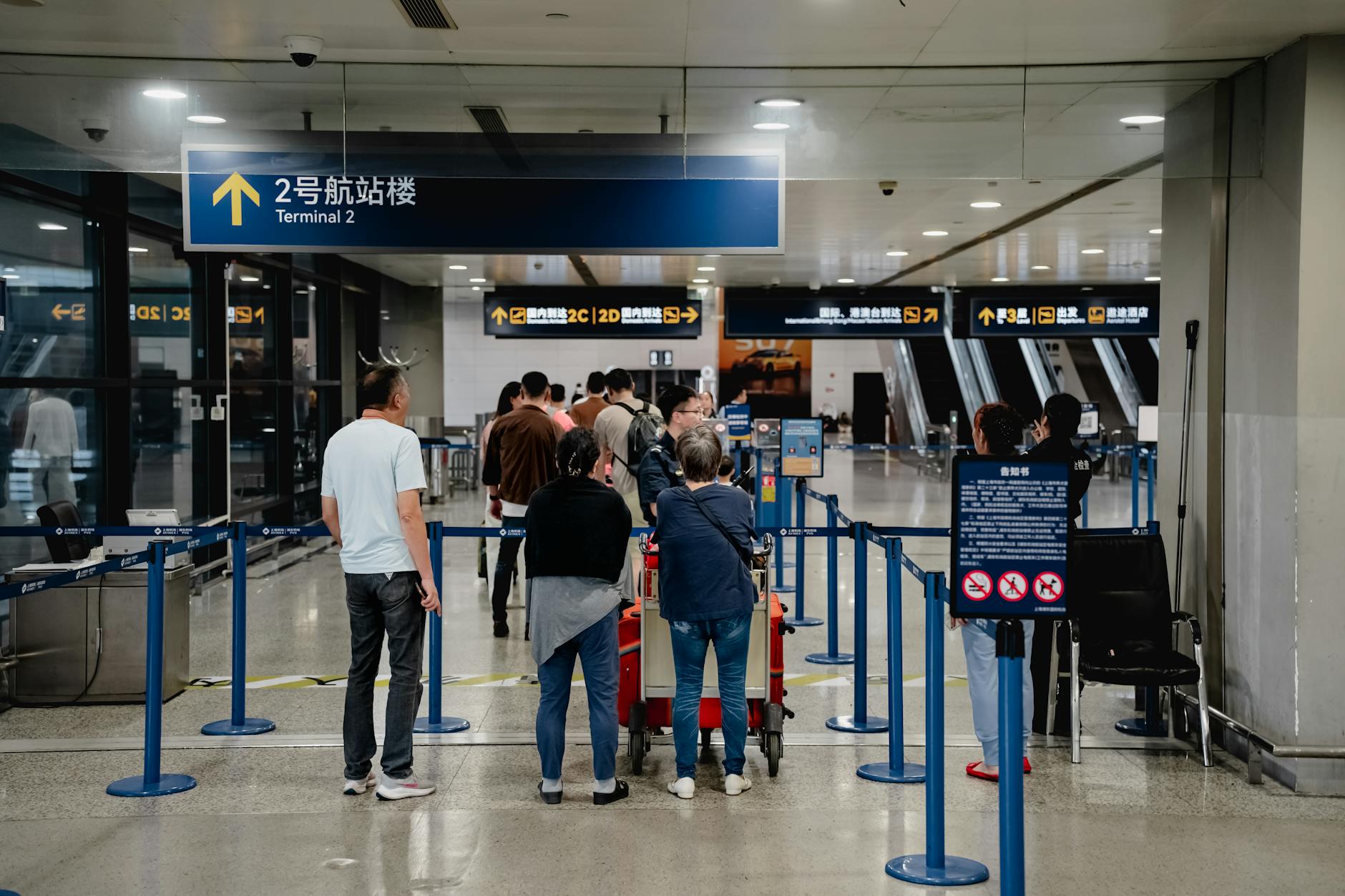
The mechanics are straightforward once you know the sequence. Here is roughly how a Shanghai transit entry goes, though procedures can change, so follow the signs and staff instructions on the day.
1. Check in for the flight to China. At your departure airport, tell the airline you are travelling under the 240-hour visa-free transit, name your nationality, and have your onward third-country ticket ready to show. The carrier runs its own eligibility check before boarding you.
2. Complete the arrival card. Fill in the arrival card for foreigners in transit — online in advance if that option is available, on an airline app, or on the paper form distributed in flight or available on arrival.
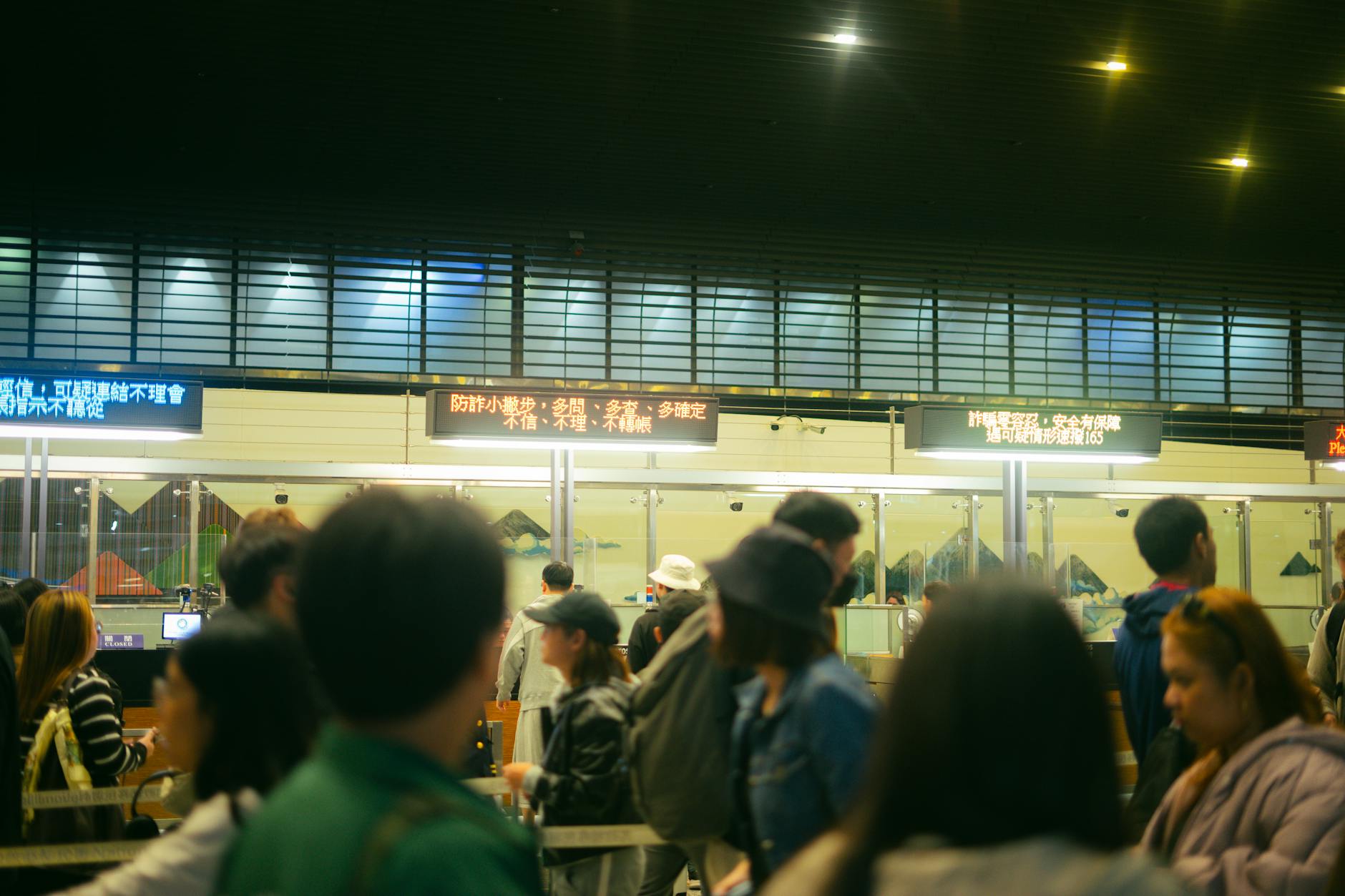
3. Land and follow the transit signs. After landing at Pudong or Hongqiao, follow signage to the border-inspection area and look for the dedicated visa-free or temporary-entry-permit counter; if in doubt, ask at the information desk.
4. Present your documents. Hand over your passport, the completed arrival card, and your confirmed onward ticket. Expect a short conversation about your plans; if all is in order, the officer issues a temporary entry permit stamped into your passport.
5. Clear customs and head into the city. A standard customs check follows, and then you are through — the usual run into central Shanghai by metro, Maglev, taxi, or ride-hailing.
No advance application is needed for the transit itself — there is no embassy step. The permit is issued on the spot once the officer confirms you meet the conditions.
Documents to Carry
Reaching the desk with these in hand removes almost every avoidable hold-up:
- Your passport — eligible nationality, ordinary type, valid for more than three months.
- Your confirmed onward ticket to a third country or region, departing within 240 hours, on a fixed date and seat. A printed copy is read fastest; a clear digital version works too.
- Your completed arrival card — done in advance where possible.
- Accommodation details — your hotel booking, or the address where you will be staying.
- Contact details for your stay — a phone number and address in case the officer wants to confirm anything.
None of these is exotic, but having them ready — rather than digging through email at the counter — turns a tense few minutes into a thirty-second formality.
What You Can and Cannot Do
The transit permit covers a defined set of activities. Official guidance describes the policy as covering tourism, business, exchange visits, and visiting family or friends — so sightseeing, meetings, conferences, seeing relatives, and general leisure are all consistent with its purpose.
It does not authorize what China’s other short-stay routes also exclude: paid employment, paid local services, formal study, or journalism on assignment. Those require a visa arranged in advance. If your plans go beyond short-stay tourism or business, check whether a visa is the right path — our walkthrough of how to apply for a China tourist visa covers it.
Hotel and Police Registration
One piece of admin catches independent travelers off guard: anyone staying in mainland China is expected to register their address with the local police, generally within 24 hours of arrival. The mechanics depend on where you stay:
- In a hotel, the front desk almost always handles registration at check-in, taking a copy of your passport. Not every hotel is set up to host foreign guests, so confirm the property accepts international travelers when you book.
- In a private home or with friends, you register yourself — typically at the neighborhood police station, with your passport and proof of address. Some cities, Shanghai among them, offer online channels.
It is a quick formality, but skipping it is a genuine rule breach, so build it into your first day.
When Transit Can Be Refused
Border officers can decline to issue a temporary entry permit in several situations. Based on the conditions published by China’s immigration authority, transit may be refused if:
- You would not be permitted to enter China under the applicable laws or regulations.
- Your passport is valid for less than three months, or carries a previous Chinese visa refusal stamp.
- You have a record of illegal entry, illegal residence, or illegal work in China within recent years.
- You have a recent serious breach of accommodation-registration rules.
- You are not actually continuing to a third country after China — the core transit condition.
The policy also does not apply to crew members of international flights or ships, or their families. If any of these might touch your situation, sort out a proper visa in advance rather than gambling on admission at the border.
Can You Extend the 240 Hours?
The transit window is not designed to be casually extended; the expectation is that you leave within your 240 hours. If something outside your control intervenes — a cancelled onward flight, a medical emergency — approach the exit-entry administration of the local public security authorities for a stay permit, ideally before your time runs out. Outcomes are not guaranteed; this is for real emergencies, not stretching a trip.
The takeaway: if you already know you want more than ten days, the transit policy is the wrong tool — pick a longer-stay route you qualify for, or arrange a tourist visa in advance. And do not simply overstay, which brings fines, possible detention or deportation, and damage to your ability to enter China later.
240-Hour Transit vs. the 30-Day Waiver vs. a Tourist Visa
Three routes can get many travelers into Shanghai, and choosing the right one comes down to your nationality, how long you want to stay, and whether you are genuinely passing through. Here is how they compare as of 2026.
- 240-hour transit visa-free. For eligible nationalities, including some not on the 30-day list (such as the United States). Requires a confirmed onward ticket to a third country, caps the stay at ten days, and limits travel to the permitted regions. Best for genuine stopovers and passports outside the 30-day waiver.
- 30-day unilateral visa-free entry. For a separate list of eligible countries. No onward third-country ticket required, up to 30 days, and travel anywhere in mainland China. If you qualify for both, this is usually the better choice — longer, less restrictive, and not tied to passing through. See our guide to China’s 30-day visa-free entry.
- Tourist (L) visa. The traditional route, arranged in advance from a consulate for a fee. It offers longer stays and sometimes multiple entries — the right tool for more than a month, several separate trips, or a nationality on neither visa-free list. Our guide covers how to apply for a China tourist visa.
Border officers may ask which scheme you are entering under, so settle your answer before the desk. For the full picture, our pillar guide to Shanghai visa and entry requirements pulls every route together.
Smart Ways to Use the Ten Days

Ten days is a generous stopover, and a little planning turns a layover into a proper visit. A few approaches that fit the policy:
- Build it into a long-haul routing. If your journey already crosses Asia — North America to Southeast Asia, Europe to Australia — routing through Shanghai with a multi-day gap before your onward flight turns dead transit time into a holiday.
- Anchor in Shanghai, add a day trip or two. The city can fill several days, and Suzhou and Hangzhou sit inside the permitted zone, each a short high-speed-rail ride away.
- Keep your onward ticket sacrosanct. The confirmed onward flight to a third country within 240 hours is the spine of the trip. Book it before you fly, keep it changeable if your plans are loose, and never let the ten-day clock creep up on you.
Treat the window as what it is — a transit privilege with real conditions — and it is one of the easiest ways to see Shanghai without the time and cost of a visa. If you plan to use the whole window, our ten-day Shanghai, Suzhou and Hangzhou itinerary maps the trip out city by city.
Frequently Asked Questions
Is the 240-hour visa-free transit free?
There is no fee for the transit permit itself at the border. You only pay the usual costs of your trip — flights, hotels, and so on. The permit is issued on arrival at no charge once you meet the conditions.
Do I need an onward ticket to a third country?
Yes — this is the defining requirement. You must hold a confirmed onward ticket, with a fixed date and seat, to a third country or region, departing within 240 hours. Your departure and destination countries must be different, and the ticket has to be booked before you enter; you cannot buy it after arriving.
Can US citizens use the 240-hour transit through Shanghai?
As of 2026, the United States is on the transit-eligible list, so US passport holders can generally use the 240-hour policy when they have a confirmed onward ticket to a third country. Since the US is not on the separate 30-day visa-free list, transit is often the route that fits a stopover. Confirm the current rules with your airline and the border authority before you travel.
Can I leave Shanghai and travel to other Chinese cities?
Within limits. You can travel across the permitted regions, which for a Shanghai arrival comfortably include Jiangsu (Nanjing, Suzhou) and Zhejiang (Hangzhou), and the broader policy now reaches many more provinces. You must stay inside the permitted areas and exit from a designated port. Because the permitted scope changes, confirm the current list for anywhere beyond the Shanghai–Suzhou–Hangzhou core.
How is the 240-hour period calculated?
The clock starts at 00:00 on the day after you enter, not the moment you land. From that midnight you have ten full days. A late-evening arrival therefore does not shorten your stay, but always check the dates recorded on your temporary entry permit.
What is the difference between the 144-hour and 240-hour policies?
The 144-hour transit was the earlier, shorter version — six days, across a smaller set of cities and regions. The December 2024 upgrade extended the maximum stay to 240 hours (ten days) and widened the ports and regions. For Shanghai, the 240-hour policy has effectively superseded the old 144-hour transit.
What happens if my onward flight is delayed and I might overstay?
Contact your airline and the local exit-entry authorities immediately rather than letting the deadline slide. In genuine cases of force majeure, you can apply to the local public security exit-entry administration for an appropriate stay permit. Do not simply overstay, which carries penalties.
Can I apply for the 240-hour visa-free transit in advance?
No advance application is needed or possible for the transit itself — there is no embassy step. The temporary entry permit is issued on arrival once the border officer confirms you meet the conditions. You should, however, complete the arrival card in advance where that option exists, and confirm your eligibility with the airline before you fly.
Plan Your Visa-Free Visit
Used correctly, the china 240 hour visa free transit turns a Shanghai stopover into one of the easiest city breaks in Asia to arrange — no consulate, no visa fee, just a confirmed onward ticket and an eligible passport. Respect the conditions — the third-country ticket, the ten-day cap, the permitted regions, the registration rules — and the policy does the rest. Because the program keeps changing, confirm the current eligibility, ports, and regions with your airline and the National Immigration Administration before you book.
To see how this fits the bigger picture, start with our pillar guide to Shanghai visa and entry requirements. If you are weighing the alternatives, compare it against China’s 30-day visa-free entry or read up on how to apply for a China tourist visa if transit does not fit your plans. Once your entry route is settled, our guide to how to plan a trip to Shanghai helps you turn the ten days into a real itinerary, and our Pudong Airport to city center guide gets you from the gate to your hotel.
For the definitive, current position on who qualifies, rely on the National Immigration Administration of China, and confirm anything uncertain with your airline and nearest Chinese embassy or consulate before you travel.