Between 1933 and 1941, when most of the world was closing its doors, Shanghai took in roughly 18,000 to 20,000 European Jewish refugees fleeing Nazi persecution — because it was one of the few places on earth that asked no entry visa of them. That chapter is preserved in the Tilanqiao neighbourhood of Hongkou, where the wartime “Designated Area for Stateless Refugees” stood. This 2026 guide to Shanghai Jewish heritage covers the Refugees Museum, the surviving synagogues, the streets themselves, a walking route, the diplomats who made the escape possible, and how to fit a serious half-day of this history into a Shanghai trip.
Table of Contents
- Why Shanghai? The History in Brief
- The Designated Area: What the Shanghai Ghetto Was
- The Shanghai Jewish Refugees Museum
- Planning Your Visit
- Shanghai Jewish Heritage Beyond Hongkou
- A Self-Guided Walking Tour
- What Else to Look For in Tilanqiao
- The Diplomats Who Issued the Visas
- Refugees Whose Names You May Know
- Legacy & Modern Ties
- Guided Tour Options
- Fitting Shanghai Jewish Heritage into a Trip
- Practical Tips
- FAQ
Why Shanghai? The History in Brief
The short answer is that Shanghai had no functioning immigration control. After the Japanese assault on the Chinese-administered city in 1937, authority over the port was split between the International Settlement, the French Concession and the Japanese military, and no single body was checking papers at the dock. For a Jewish family in Vienna in 1938 holding an exit permit and nothing else, that made Shanghai reachable when nowhere else was.
The first German Jewish refugees — 26 families, including five doctors — arrived as early as November 1933. The numbers rose sharply after the annexation of Austria and the failure of the Évian Conference in July 1938, at which 32 countries met to discuss Jewish refugees and almost none agreed to raise their quotas. The first Austrian refugee ship docked on 15 August 1938. Arrivals then ran at roughly 1,374 in 1938, 12,089 in 1939, 1,988 in 1940 and around 4,000 in 1941, ending with the attack on Pearl Harbor that December.
Totals vary between sources, which is worth knowing before you read three different figures on three different plaques. Most historians settle on around 18,000 Central European Jewish refugees arriving between 1933 and 1941; the figure of 20,000 is also widely used and is the one the Shanghai Jewish Refugees Museum itself favours. Added to the Baghdadi (Sephardi) merchant families who had been in Shanghai since the 1840s and the Russian Jewish community that arrived after 1917, the city’s total Jewish population peaked at somewhere around 25,000 to 30,000.
One nuance that is often flattened: the door narrowed before it closed. From August 1939 the Shanghai authorities began restricting new arrivals, requiring proof of funds or a landing permit. “No visa required” was true, and it was true only for a window of about eighteen months.
The Designated Area: What the Shanghai Ghetto Was
On 18 February 1943 the Japanese authorities proclaimed a “Designated Area for Stateless Refugees” in Hongkou. Anyone who had arrived in Shanghai after 1937 and held no national passport — in practice, the German, Austrian, Czech and Polish Jewish refugees — had three months, until 18 May, to move inside it. Around 18,000 people relocated.
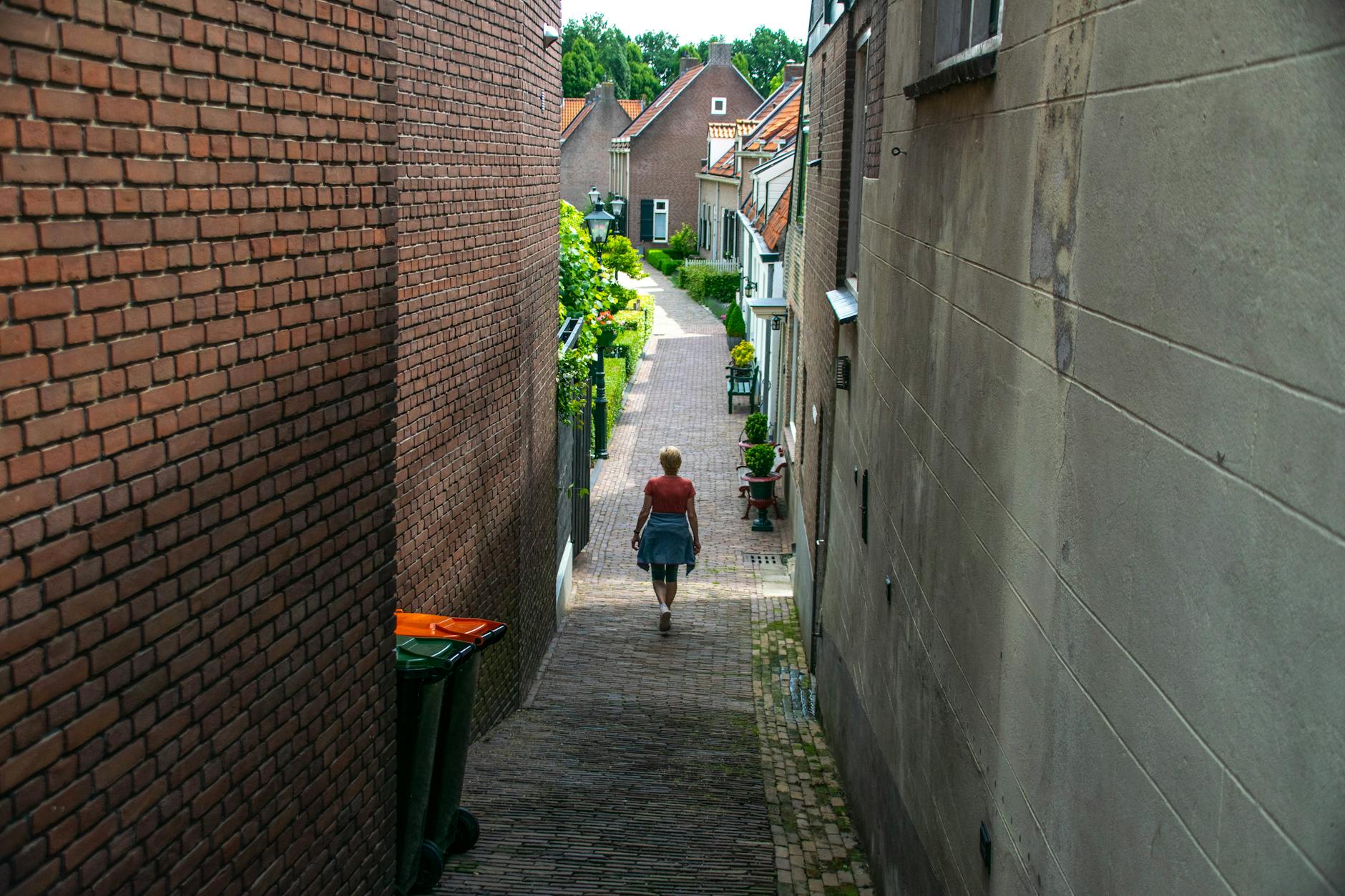
The area is usually described as about one square mile, with sources giving figures between roughly two and two and a half square kilometres. Either way it is small: you can walk from one edge to the other in twenty minutes. In today’s street names it sat roughly between Zhoushan Road, Changyang Road, Tongbei Road and Huoshan Road, in the streets then called Wayside, Muirhead, Chaoufoong and Dent.
Three points are commonly misunderstood, and getting them right matters.
- It was not walled and it was not wired. It was patrolled, a curfew applied, and residents needed a pass — issued at the discretion of the Japanese Stateless Refugees’ Affairs Bureau — to leave for work or business. Kanoh Ghoya, the official who handed out those passes, is remembered by survivors for arbitrary and often cruel treatment.
- It was not empty. Roughly 100,000 Chinese residents already lived in those streets, alongside some 8,000 refugees who were there before the proclamation. The refugees moved into one of the poorest and most crowded districts in the city, and the two communities lived alongside each other for two and a half years.
- It was not a death camp, and refugees who survived it are consistent that this matters. Conditions were severe — as many as ten people to a room, chronic hunger, poor sanitation, very little work — and people died of disease and malnutrition. But there was no systematic extermination. The overwhelming majority of the community survived the war.
Nazi pressure on the Japanese to go further is documented. Josef Meisinger, the Gestapo’s liaison officer in Tokyo, visited Shanghai in 1942 and supplied lists of German Jews. A later German court examining the question concluded that while Meisinger probably tried to encourage action, the ghetto’s establishment was “solely based on Japanese initiative”.
The war’s worst single day here came from the Allied side. On 17 July 1945 a US air raid aimed at a Japanese radio installation hit Hongkou; 38 refugees and several hundred Chinese residents were killed. Liberation followed on 3 September 1945.
Afterwards the community dispersed quickly — to the United States, Palestine and then Israel, Australia and Canada. About 7,270 Central European Jewish refugees remained in 1947; some 1,700 by 1949; by the 1960s, 21.
The Shanghai Jewish Refugees Museum
The Shanghai Jewish Refugees Museum (上海犹太难民纪念馆) at 62 Changyang Road is the centre of any visit, and it is a serious institution rather than a plaque and a gift shop.
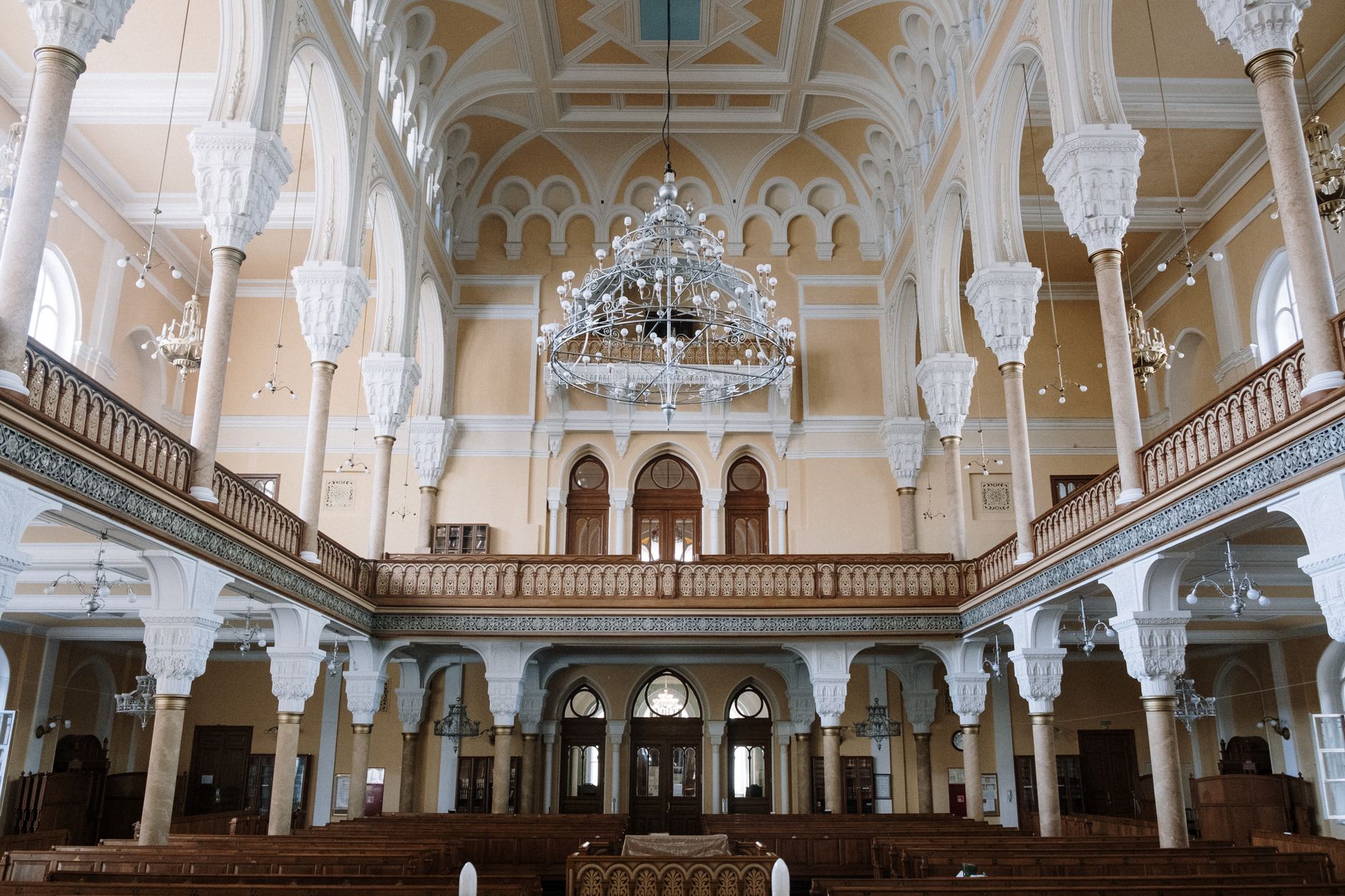
It is built around the restored Ohel Moshe Synagogue. The congregation dates to 1907; the building you walk into went up in 1927 and served the Russian Ashkenazi community before the European refugees filled its benches. It was confiscated in 1949 and spent decades as a psychiatric hospital before opening as a museum in 2007. A substantial expansion completed in 2020–21 took in adjacent buildings and enlarged the exhibition space several times over, to roughly 4,000 square metres.
What you see:
- The restored prayer hall of the synagogue, kept plain, with the women’s gallery above.
- Documents, photographs, identity papers and transit visas — including the Sugihara visas that carried refugees out of Lithuania.
- A recreated single room of the kind an entire family occupied, which does more work than any wall text in the building.
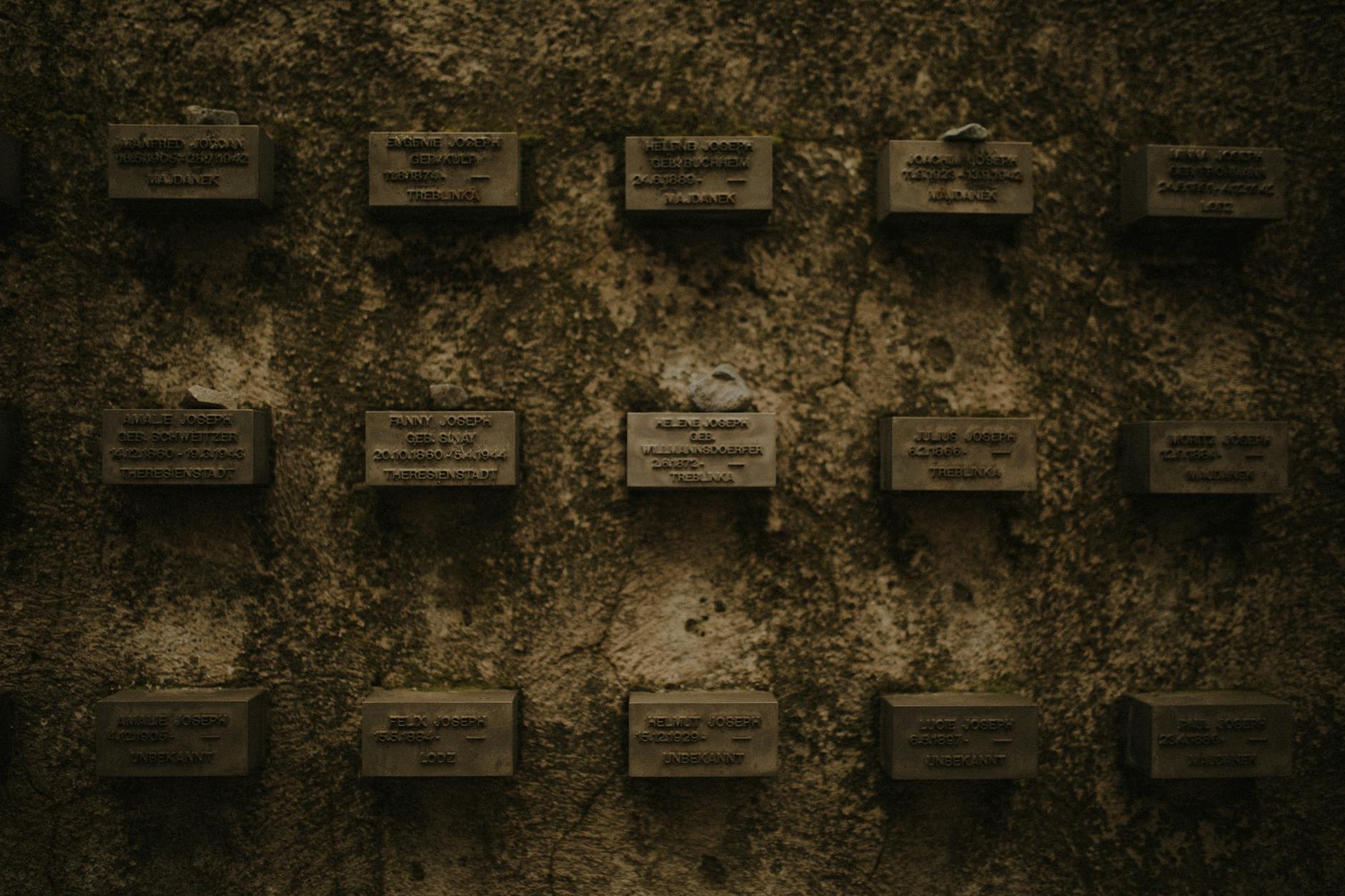
- The Wall of Names: a 34-metre copper memorial unveiled in September 2014, engraved with 13,732 names of refugees identified in the records, with more added as families come forward.
- Personal objects donated by descendants — diaries, watches, a violin, letters.
- Filmed oral histories of survivors, which are the part most visitors sit down for.
The tone throughout is restrained. There is no attempt to make the story bigger than it was, and the museum is careful to give the Chinese residents of Hongkou their place in it. Allow 90 minutes; two hours if you watch the interviews. English labelling is good, and volunteer guides — often students — will walk you round if you ask at the desk.
Planning Your Visit
| Detail | Information |
|---|---|
| Address | 62 Changyang Road, Hongkou District (长阳路62号) |
| Hours | Tuesday–Sunday 9:00–17:00; no entry after 16:00 |
| Closed | Mondays |
| Tickets | ¥20 adult, ¥10 student, ¥15 senior; free for children under 1.3 m |
| Metro | Tilanqiao (Line 12), Exit 2 or 3, then 3–5 minutes on foot |
| Alternative metro | Dalian Road (Line 4), Exit 6, then walk west |
| Bus | Routes 13 and 854 to East Changzhi Road / Gongping Road |
| Time needed | 90 minutes for the museum; 3 hours with the neighbourhood walk |
| Languages | Bilingual Chinese/English labelling; audio guides and volunteer guides available |
Tickets can be bought at the door, though the museum also takes advance reservations through its WeChat account and group visits are usually booked ahead. If you are travelling with a tour or a synagogue group, contact the museum in advance — they handle a steady stream of descendant visits and accommodate them well.
The best time to go is a Tuesday, Wednesday or Thursday morning. Weekends bring school groups and Chinese domestic visitors, and the recreated room in particular becomes a bottleneck. For where this sits among the city’s other collections, see our guide to the best museums in Shanghai, and the Shanghai metro guide for getting out to Line 12.
Shanghai Jewish Heritage Beyond Hongkou
Shanghai had several synagogues serving its pre-war Jewish communities. Two of the original buildings survive.
- Ohel Moshe Synagogue (1927), 62 Changyang Road — now the Refugees Museum, and the one you can simply walk into.
- Ohel Rachel Synagogue, 500 North Shaanxi Road in Jing’an — built by Sir Jacob Elias Sassoon in memory of his wife Rachel, completed in March 1920 and consecrated in January 1921. It seats 700 and was the largest synagogue in the Far East. Requisitioned as a stable during the occupation and turned over to educational use in 1952, it has been a protected municipal landmark since 1994. It is not open to walk-in visitors; it opens for major Jewish holidays and occasionally for organised heritage groups, arranged through the Israeli consulate or the local Jewish community.
Several other buildings are gone: the Beth Aharon Synagogue of 1927 and the New Synagogue of 1941 were both demolished, and the city’s Jewish cemeteries were cleared in the 1950s, with some headstones later recovered and now held in Qingpu.
The wider Jewish presence in Shanghai is also written across the waterfront. Victor Sassoon built Sassoon House, now the north building of the Fairmont Peace Hotel, and the Kadoorie family’s money is behind several of the city’s grandest interiors. Our Bund architecture guide covers those buildings in detail, and the Shanghai Art Deco guide picks up the 1930s thread.
A Self-Guided Walking Tour
Allow two and a half to three hours, including the museum. The route is flat, entirely on pavement, and works in any weather except heavy rain.
Start: Tilanqiao station, Line 12.
1. Tilanqiao Prison walls. The long brick wall as you come out belonged to one of the largest prisons in pre-war Asia. It closed to inmates in recent years and the site is being redeveloped; you can walk the perimeter but not enter.
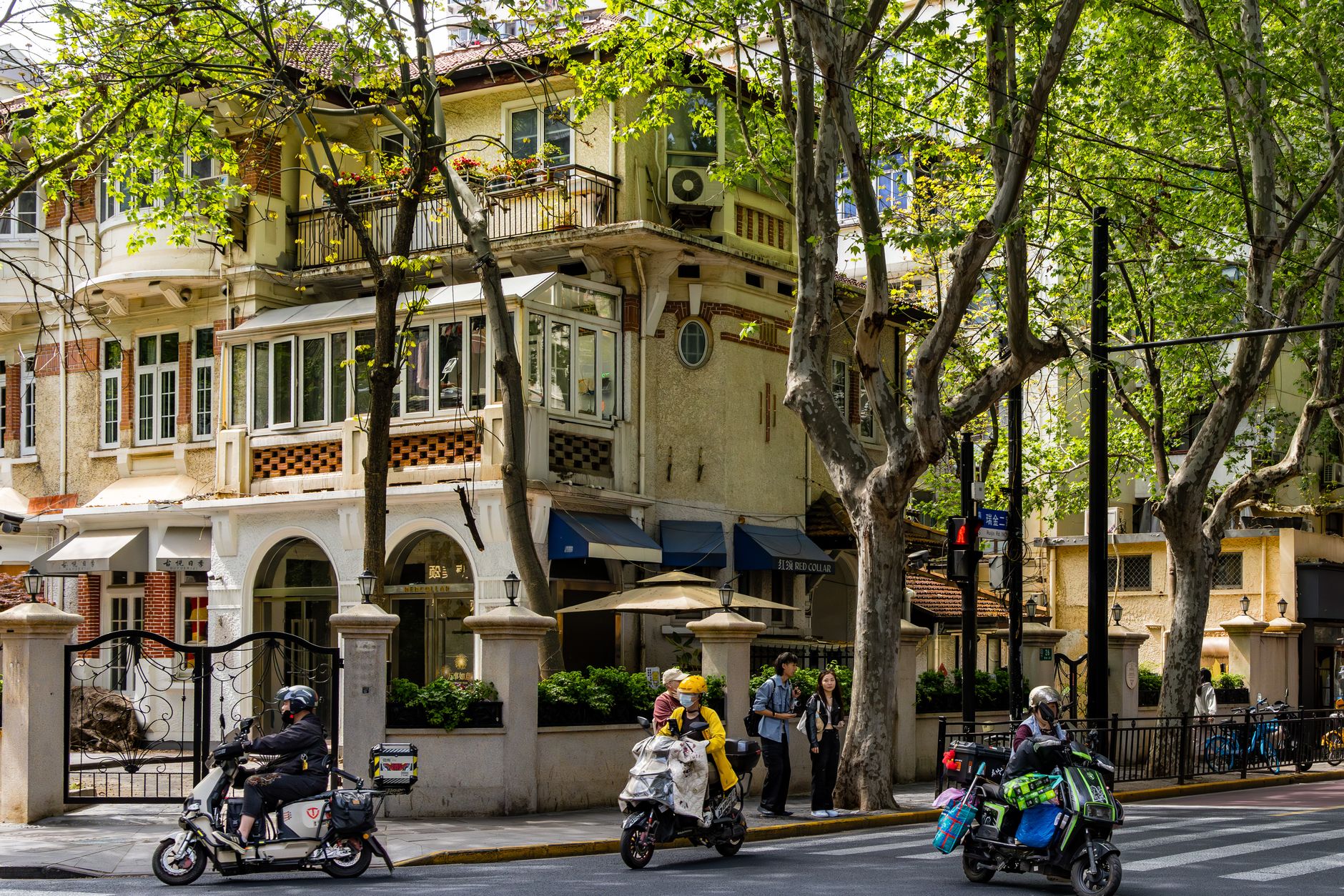
2. Changyang Road — formerly Wayside Road, and the ghetto’s main artery. Look up: the upper storeys are largely unchanged, even where the ground floors have become phone shops.
3. The Shanghai Jewish Refugees Museum, 62 Changyang Road. Ninety minutes. The heart of the walk.
4. Huoshan Park, two minutes away — the former Wayside Park, where refugees gathered because the flats were too small to gather in. A memorial tablet stands here, placed in 1994.
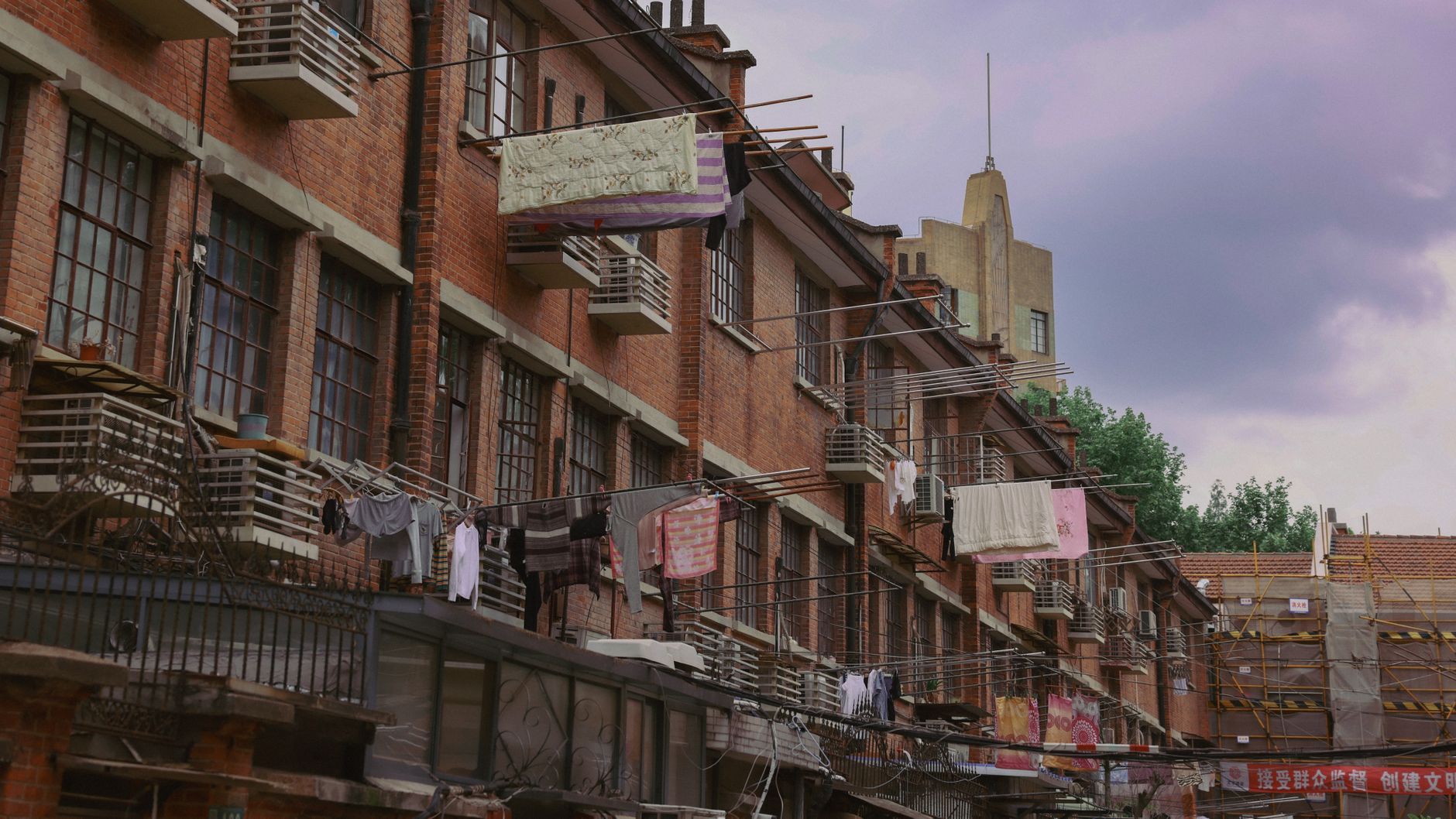
5. Zhoushan Road. The most intact street on the route: 1930s shophouses with balconies and shuttered upper windows, and the closest you will get to seeing what the refugees saw.
6. Memorial square by the museum — the Wall of Names and the sculpture group installed alongside it.
7. Finish with coffee on Zhoushan Road or walk 15 minutes west to Lu Xun Park, or take Line 12 two stops to Tiantong Road.
A note on manner. People live in these buildings. Laundry on the poles overhead belongs to somebody; the courtyards are private. Photograph the streets, not through doorways, and do not go into a lane house because a guidebook called it historic.
What Else to Look For in Tilanqiao
- The White Horse Inn (白马咖啡馆) at the corner of Changyang and Zhoushan Roads — a reconstruction of the Viennese-style café a refugee family opened here in 1939. The original was demolished; the rebuild is honest about being a rebuild, and it serves coffee and strudel.
- 627 Changyang Road — the former Shanghai Jewish Youth Association school, funded by Horace Kadoorie, where refugee children were taught in English. Still a school building.
- Broadway Mansions and the Astor House Hotel, 15 minutes west at the mouth of Suzhou Creek — 1930s Hongkou at its grandest, and a useful contrast with the lanes.
- Shopfront lettering. On a handful of buildings along Zhoushan and Huoshan Roads, painted German and English signage from the 1940s is still faintly legible under later paint. You have to look for it.
- The Ward Road Heim site. Several large refugee shelters, the “heime”, stood in this area; almost nothing remains above ground, but the museum maps their locations.
The Diplomats Who Issued the Visas
Two names come up repeatedly, and both are worth knowing before you visit.
Ho Feng-Shan (何鳳山) was China’s Consul-General in Vienna from 1938. Although Shanghai itself required no entry visa, Nazi authorities would not release Jews without documentary proof they were emigrating somewhere — so a Shanghai visa was, in practice, an exit ticket, whether or not the holder ever sailed for China. Ho issued them in volume and against the explicit instruction of his ambassador in Berlin: around 1,200 in his first three months, with his 1,906th signed on 27 October 1938. He was recalled in May 1940. The exact total is unknown and estimates run into the thousands. He was later denied his pension over allegations widely believed to be political, settled in San Francisco and died in 1997; Yad Vashem named him Righteous Among the Nations in 2001. His biography is not as well known as it should be.
Chiune Sugihara, Japan’s vice-consul in Kaunas, Lithuania, issued transit visas through Japan in 1940 to Jews fleeing east. Many holders crossed the Soviet Union by rail, reached Japan, and were subsequently moved on to Shanghai. Among them was the entire Mir Yeshiva, which relocated from Lithuania and spent the war in Hongkou — one of the very few European yeshivot to survive intact. Sugihara visas are on display at the museum.
The refugees who arrived were also supported from within Shanghai. Victor Sassoon and Paul Komor set up the International Committee for European Immigrants; Horace Kadoorie founded the Committee for the Assistance of European Jewish Refugees; and the American Jewish Joint Distribution Committee funded relief, with Laura Margolis negotiating with the Japanese authorities to keep the soup kitchens running after Pearl Harbor cut the money off.
Refugees Whose Names You May Know
- W. Michael Blumenthal arrived in 1939 aged thirteen and stayed until 1947, working in a chemical factory for about a dollar a week. He later served as US Secretary of the Treasury under President Carter from 1977 to 1979 and was founding director of the Jewish Museum Berlin from 1997 to 2014. He turned 100 in January 2026. He has described the ghetto bluntly and without romance, which is a useful corrective to visitors who arrive expecting an uplifting story.
- Jakob Rosenfeld, an Austrian doctor, left Shanghai to serve as a senior medical officer with the Communist New Fourth Army and is commemorated in China as “General Luo”.
- Peter Max, later a fixture of American pop art, was a small child when his family fled Berlin in 1938. They spent the next ten years in Shanghai, leaving in 1948.
- The Shanghai Jewish Youth Association ran a school, a football league, concerts and dances. Photographs of teenagers in football kit on a Hongkou pitch in 1944 are among the most affecting things in the museum, precisely because they are so ordinary.
Legacy & Modern Ties
The Shanghai story occupies an unusual place: it is one of the few Holocaust-era narratives with a substantially positive outcome, and it has been embraced accordingly. Israeli and American officials visit the museum regularly, descendant groups come every year, and Hongkou district has protected the core streets rather than clearing them, which was not a foregone conclusion in a city that has demolished a great deal.
Some caution is warranted about how the story gets told. It is sometimes presented as a straightforward act of Chinese national generosity, which understates the accidental character of Shanghai’s open door — the absence of immigration control was a by-product of a war, not a policy — and understates the deliberate courage of individuals like Ho Feng-Shan, which is the part that genuinely was a choice. The museum itself handles this better than most retellings.
For the broader arc of the city that made this possible, see our history of Shanghai.
Guided Tour Options
A guide adds real value here, because much of what matters is no longer visible and needs pointing out.
- Museum volunteer guides — free with entry, usually students, often excellent. Ask at the desk when you buy your ticket. This is the best-value option and most visitors do not know it exists.
- Independent scholar-led walks — several long-running specialists run three-hour Jewish heritage walks in Hongkou, typically ¥350–500 per person. Book ahead; there are only a handful of them and they fill.
- Academic private tours from operators such as Context Travel — around ¥1,200–1,600 per person, small groups, historian guides.
- Food-and-history walks from operators such as UnTour — roughly ¥500–700, lighter on history but good on the neighbourhood as it is now.
- Synagogue access — for Ohel Rachel, coordinate through the Israeli consulate or the Shanghai Jewish community. Access is occasional and not guaranteed.
Prices move; treat these as ranges and confirm when booking.
Fitting Shanghai Jewish Heritage into a Trip
This is a half-day, and it does not combine well with anything frivolous immediately afterwards. Some workable shapes:
- Hongkou half-day: museum at 09:30 → walking route → lunch on Zhoushan Road → Lu Xun Park and the Lu Xun Memorial Hall in the afternoon. All within Hongkou, all on foot or one metro stop.
- Riverside day: museum in the morning → walk or take Line 12 to the North Bund → the Bund promenade in the late afternoon. The Sassoon and Kadoorie buildings on the waterfront connect directly to what you have just seen.
- Two-halves history day: museum in the morning → the former French Concession in the afternoon, which was the other foreign-administered Shanghai. Our French Concession walking tour covers that route.
- With children: workable from about twelve upwards. Below that, the material is either too abstract or too upsetting, and there is nothing here to occupy a small child. Read our Shanghai with kids guide for alternatives.
For the citywide picture, see things to do in Shanghai.
Practical Tips
- Go Tuesday to Friday morning. Weekends bring groups and the museum’s smaller rooms cannot absorb them.
- Allow 90 minutes inside as a minimum, three hours for museum plus walk.
- Bring water. Cafés are thin on the ground in the immediate streets beyond the White Horse Inn.
- Photography is permitted in most areas; no flash near original documents, and read the signs in the prayer hall.
- Dress is not formal, but the synagogue hall is a former place of worship and shoulders covered is the courteous default.
- Ask about the volunteer guides at the ticket desk. It costs nothing and transforms the visit.
- The museum sells a good English-language publication on the refugee community; it is a better souvenir than anything else in the shop.
- If you have a family connection, contact the museum before you travel. Its research staff maintain the names database and have reunited a good number of descendants with records.
- Give yourself somewhere quiet to go afterwards. Huoshan Park or Lu Xun Park both work.
- Autumn and spring are the comfortable seasons for a walking route like this — see the best time to visit Shanghai.
Frequently Asked Questions
Why did Jewish refugees go to Shanghai?
Because Shanghai required no entry visa. After 1937 the port’s administration was split between the International Settlement, the French Concession and the Japanese military, and nobody was checking papers on arrival. When most countries had closed their doors or imposed quotas, that made Shanghai reachable. Restrictions were introduced in August 1939, and arrivals stopped after Pearl Harbor in December 1941.
How many Jewish refugees lived in the Shanghai Ghetto?
Around 18,000 people were required to move into the Designated Area for Stateless Refugees after February 1943. Total arrivals in Shanghai between 1933 and 1941 are usually given as 18,000 to 20,000, and the city’s overall Jewish population — including the older Baghdadi and Russian communities — peaked at roughly 25,000 to 30,000.
Is the Shanghai Jewish Refugees Museum worth visiting?
Yes. It is one of the most carefully assembled small museums in Asia, particularly since the 2020–21 expansion, and it handles difficult material without overstatement. Ninety minutes and ¥20 is a very small price for what you get.
When is the Shanghai Jewish Refugees Museum open?
Tuesday to Sunday, 9:00–17:00, with no entry after 16:00. Closed Mondays. Tickets are ¥20 for adults, ¥10 for students and ¥15 for seniors, with under-1.3 m children free.
Where was the Shanghai Ghetto located?
In the Tilanqiao neighbourhood of Hongkou district, roughly between today’s Zhoushan Road, Changyang Road, Tongbei Road and Huoshan Road. Sources give the area as somewhere between two and two and a half square kilometres — about a square mile, and walkable end to end in twenty minutes.
Was the Shanghai Ghetto a concentration camp?
No, and the distinction matters. It was a restricted residential district: patrolled, subject to curfew, and requiring passes to leave, in one of the poorest parts of the city. Conditions were severe and people died of hunger and disease, but there was no programme of extermination and the great majority of the community survived the war.
Did Chinese people live in the ghetto too?
Yes — around 100,000 Chinese residents already lived in those streets when the refugees were moved in, and the two communities lived side by side for two and a half years. Survivor accounts of the relationship are generally warm, and the museum gives this proper attention.
Can I visit Ohel Rachel Synagogue?
Not as a walk-in. The 1920 Sassoon-built synagogue on North Shaanxi Road has been in educational use since 1952 and is a protected landmark. It opens for major Jewish holidays and occasionally for organised heritage groups, arranged through the Israeli consulate or the local Jewish community.
How long did the Shanghai Ghetto exist?
The Designated Area was proclaimed on 18 February 1943, with a relocation deadline of 18 May, and it ended with liberation on 3 September 1945 — two and a half years. Jewish presence in Shanghai itself dates back to the 1840s.
Who was Ho Feng-Shan?
China’s Consul-General in Vienna from 1938, who issued Shanghai visas to Austrian Jews in defiance of his own ambassador. Because the Nazi authorities demanded documentary proof of emigration, those visas functioned as exit papers even for people who never sailed. He signed his 1,906th on 27 October 1938; the full total is unknown. Yad Vashem recognised him as Righteous Among the Nations in 2001.
Are there organised Jewish heritage tours in Shanghai?
Yes. The museum’s own volunteer guides are free with entry and very good. Independent scholar-led walks run around ¥350–500 per person for three hours, and private academic operators charge considerably more. Book specialist walks well ahead.
Is it appropriate to bring children?
From roughly twelve upwards, yes, and it can be a genuinely valuable visit. Younger children will not follow it, and some of the material — the recreated room, the survivor testimony — is upsetting without the context to make sense of it.
Plan a Deeper Cultural Trip
Combine with our pillar guides on Shanghai culture & history, history of Shanghai, and Bund architecture. For further background, see the Shanghai Ghetto and the Shanghai Jewish Refugees Museum on Wikipedia.