Four days is the length that actually suits Shanghai. Three is a rush that leaves you choosing between the Old City and the French Concession; five starts to run out of unmissable things and drifts. A 4 day Shanghai itinerary gives you three proper days in the city and one day out of it, which is the right ratio — because the single best thing about Shanghai’s location is what is within an hour of it by train.
This itinerary is built around that structure. Days one to three cover the city by geography rather than by theme, so you are never crossing the river twice in an afternoon, and day four offers three genuinely different day trips with the logistics for each. It assumes you are staying centrally, that you can walk five or six kilometres a day, and that you would rather see four places properly than nine badly. Timings and prices are current for 2026 and the metro exits are specified, because in a city of 24.8 million people the wrong exit costs you fifteen minutes.
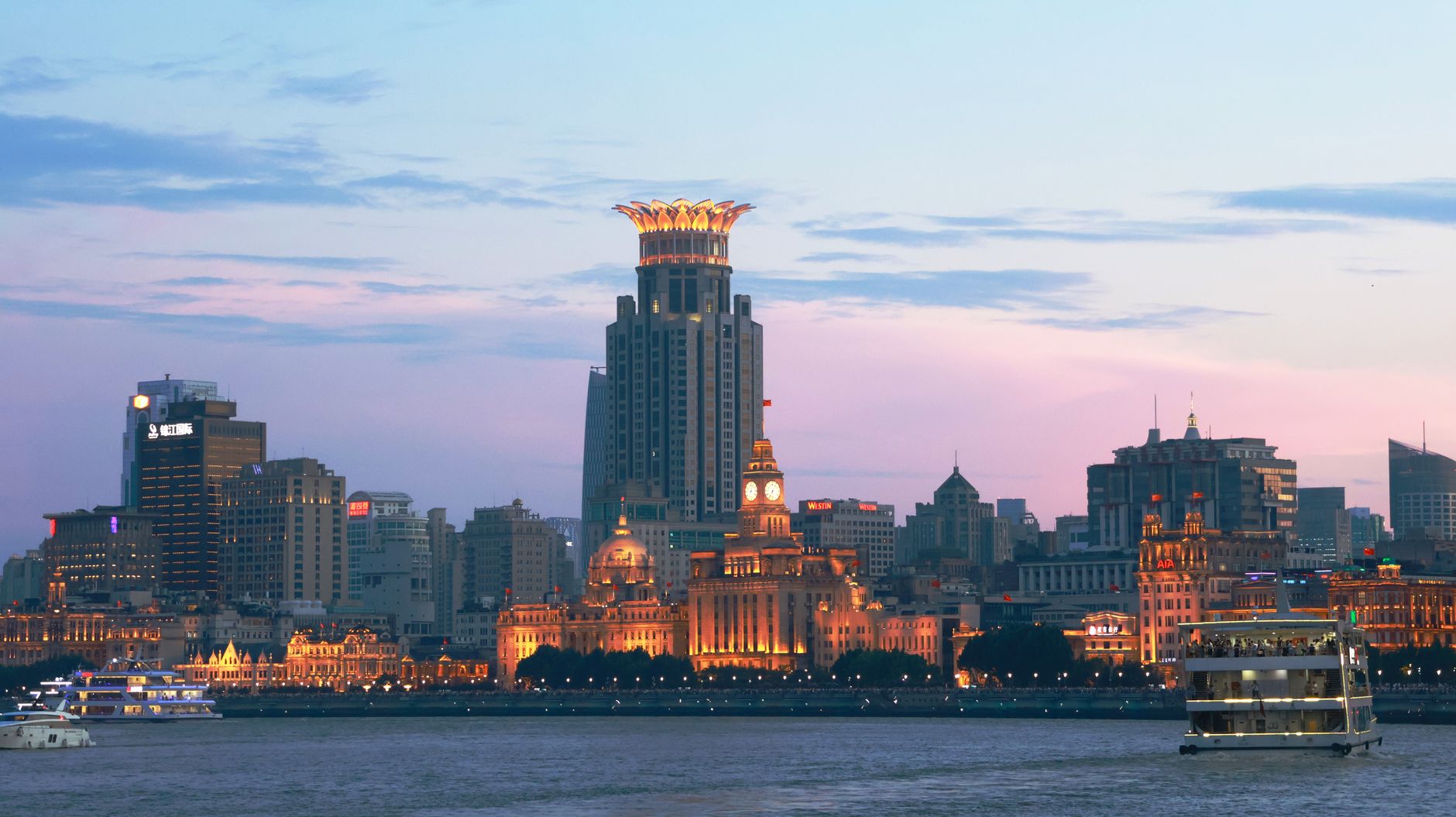
Table of Contents
- The shape of the 4 day Shanghai itinerary
- Day 1: the Bund, the Old City and the river
- Day 2: Pudong and the towers
- Day 3: the French Concession and Jing’an
- Day 4: choose your day trip
- Option A — Suzhou
- Option B — Zhujiajiao
- Option C — Hangzhou
- Swaps, weather and travelling with children
- Costs, transport and where to stay
- What to do with the evenings
- What people get wrong
- Frequently Asked Questions
The shape of the 4 day Shanghai itinerary
| Day | Where | Walking | Highlight |
|---|---|---|---|
| 1 | Huangpu: the Bund, Nanjing Road, the Old City, Yu Garden | 7–9 km | The Bund at dusk |
| 2 | Pudong: Lujiazui towers, the museum, the river | 4–5 km | An observation deck 40 minutes before sunset |
| 3 | Puxi west: French Concession, Xintiandi, Jing’an | 8–10 km | The plane-tree streets, unhurried |
| 4 | Out of the city: Suzhou, Zhujiajiao or Hangzhou | 6–10 km | Whichever you pick |
Two structural notes. First, this runs Puxi–Pudong–Puxi rather than clustering the two Puxi days together, which is deliberate: day two is much lighter on walking and lands neatly in the middle, and the towers are better on your second evening than your first. Second, day four goes last so that a bad weather forecast can move it to day two or three without breaking anything.
Day 1: the Bund, the Old City and the river
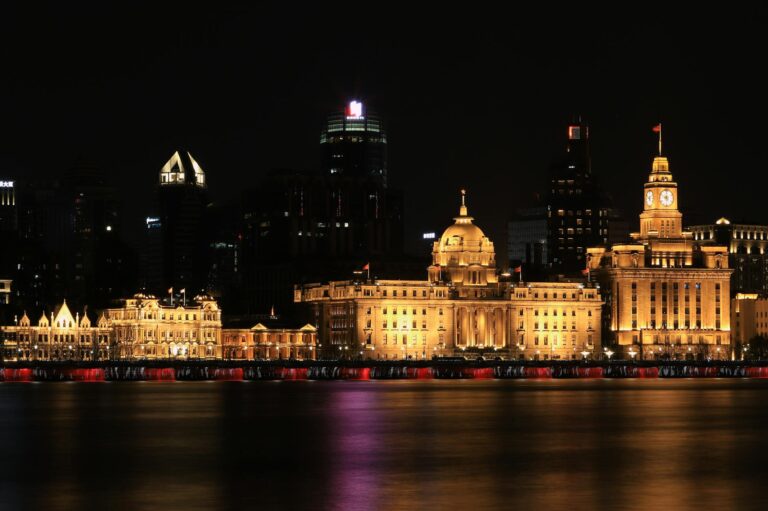
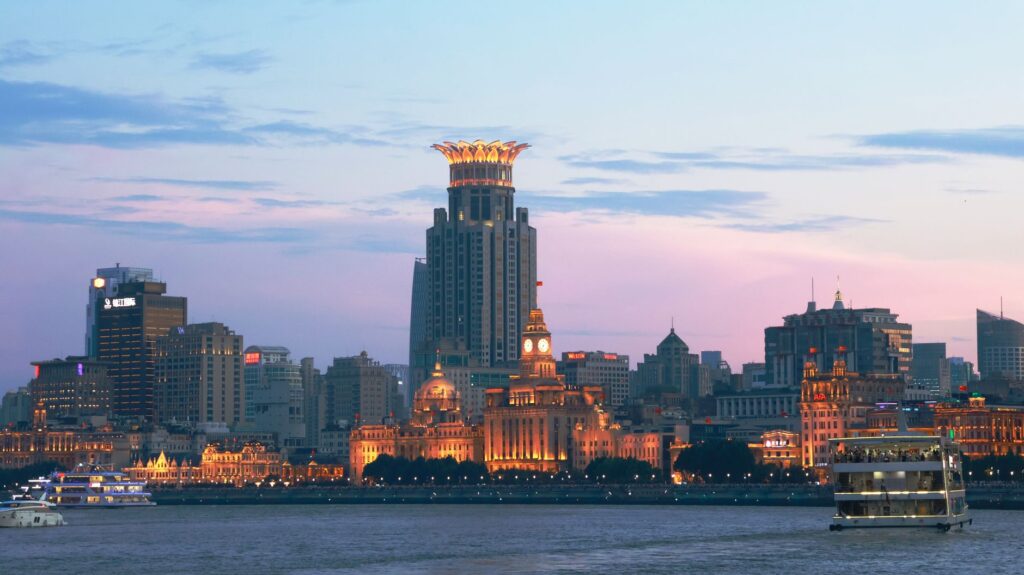
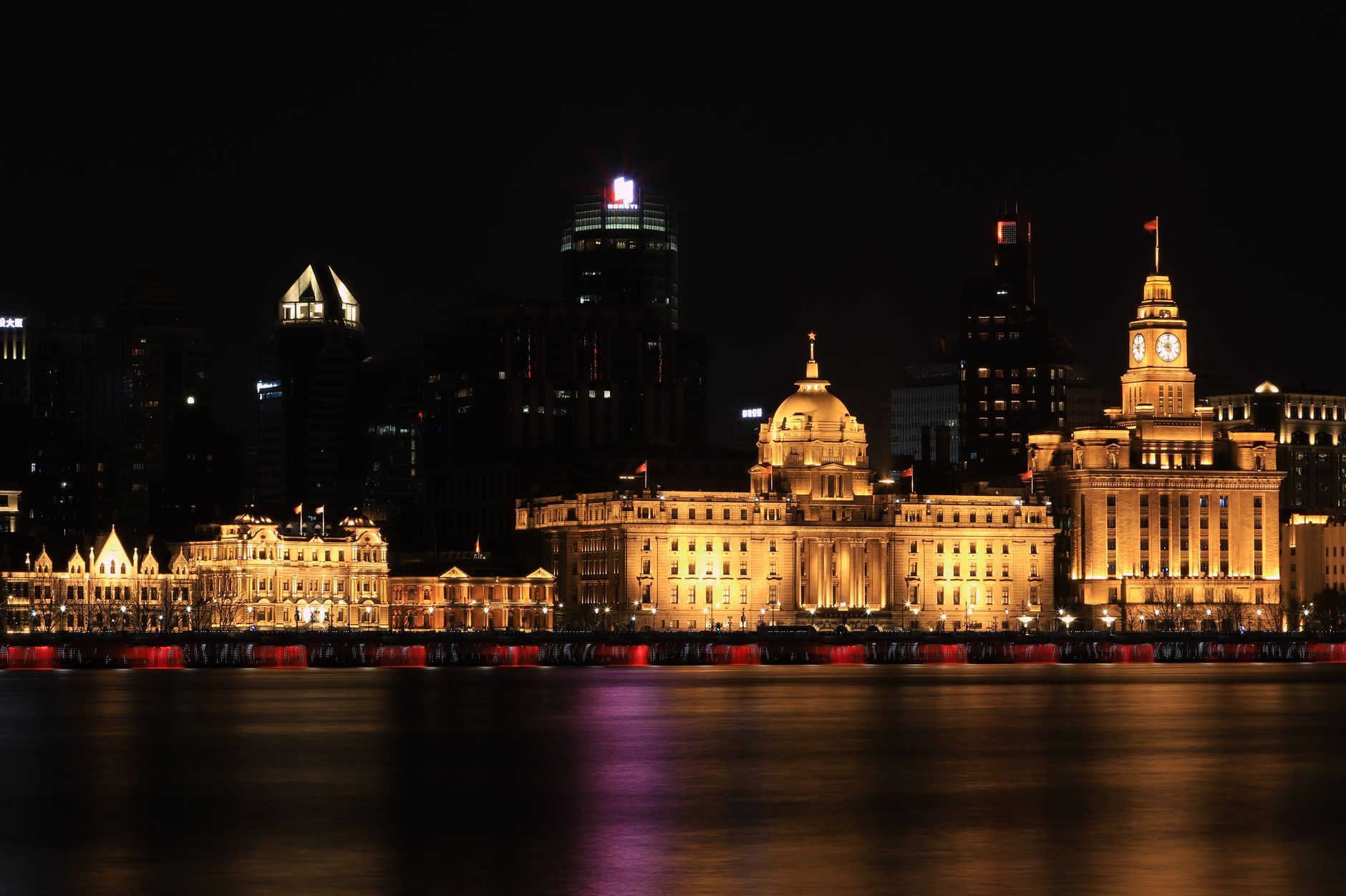
08:00 — the Bund, early. Go before breakfast. Between 06:30 and 09:00 the promenade is populated by people doing tai chi and almost nobody else, the light on the 1920s facades is at its best, and you can photograph the Pudong skyline without a hundred people in front of it. By 10:00 this is a different place entirely. Metro Line 2 or 10 to East Nanjing Road, Exit 1 or 7, then five minutes east.
09:30 — breakfast. Find a local place off the Bund for shengjianbao — pan-fried pork buns, crisp on the bottom, and the Shanghai breakfast worth getting up for. Around ¥10–20.
10:30 — the Bund buildings. Walk the promenade north to south, then walk back along the western pavement to look at the buildings properly. The former HSBC bank and the Customs House are the two to go inside if they are open. Our Bund architecture guide works through them one by one.
12:00 — Nanjing Road East. Walk west up the pedestrian street towards People’s Square. It is the busiest shopping street in China and it is more of a spectacle than a shopping trip; twenty minutes is enough unless you want the department stores.
13:00 — lunch and the Shanghai Museum. The museum on People’s Square is free, excellent, and holds one of the great collections of Chinese bronzes, ceramics and calligraphy. Two hours. See our museums guide for what to prioritise inside if you have less time.
15:30 — the Old City and Yu Garden. Metro Line 10 or 14 to Yuyuan Garden. The classical garden itself dates from the 1550s and takes about an hour — the Shanghai municipal government’s English site is the place to check current opening arrangements and any festival closures; the bazaar around it is loud, commercial and worth walking through anyway. Our Yu Garden guide covers tickets and timings. The surrounding Old Town streets are more interesting than the bazaar.
17:30 — the ¥2 ferry. Walk to the Jinling Road East pier and take the public ferry to Dongchang Road. It costs ¥2, takes five minutes, and gives you the best view on the river with no queue and no ticket office. Do not pay ¥50 for the Bund Sightseeing Tunnel; it is a light show, not transport.
18:30 — the Bund at night, from Pudong. Watch the lights come on from the east bank, which is the better side for it, then take Line 2 back or a taxi. Dinner in Huangpu.
Day 2: Pudong and the towers
A shorter day, deliberately, and one that ends at altitude.
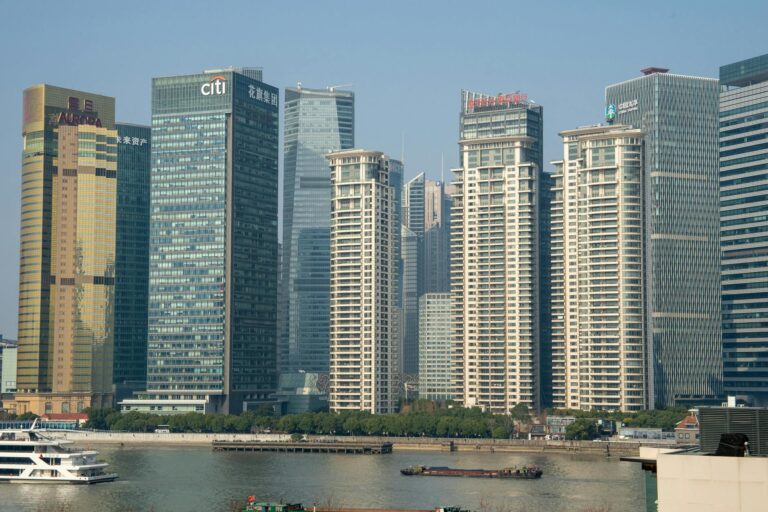
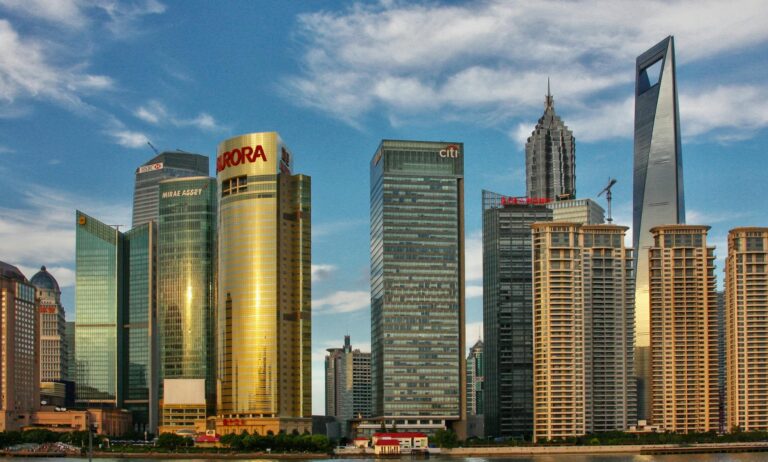
09:30 — Lujiazui. Metro Line 2 to Lujiazui, Exit 1 or 2. Walk the raised circular walkway once for the scale of the place — it connects the towers, the malls and the metro without a road crossing.
10:00 — the Shanghai Urban History and Development Museum. In the basement of the Oriental Pearl, and much better than that description suggests: full-size reconstructions of 1930s Shanghai streets, trams, shopfronts and interiors. ¥35 on its own, or included in the ¥199 Oriental Pearl ticket. Ninety minutes.
12:00 — lunch in IFC or Super Brand Mall. Both have good restaurant floors, and this is the sensible place to eat in Pudong, where street-level options are thin.
13:30 — the Jin Mao Tower atrium. Free, and worth ten minutes: the Grand Hyatt occupies floors 53 to 87 and its 33-storey internal atrium is one of the more extraordinary interiors in the city. Walk in and look up.
14:30 — a slow afternoon. Either the Shanghai Science and Technology Museum on Line 2 (excellent with children), the riverside walk south past the shipyard sites, or an hour doing nothing in a Lujiazui café. You want energy for the evening.
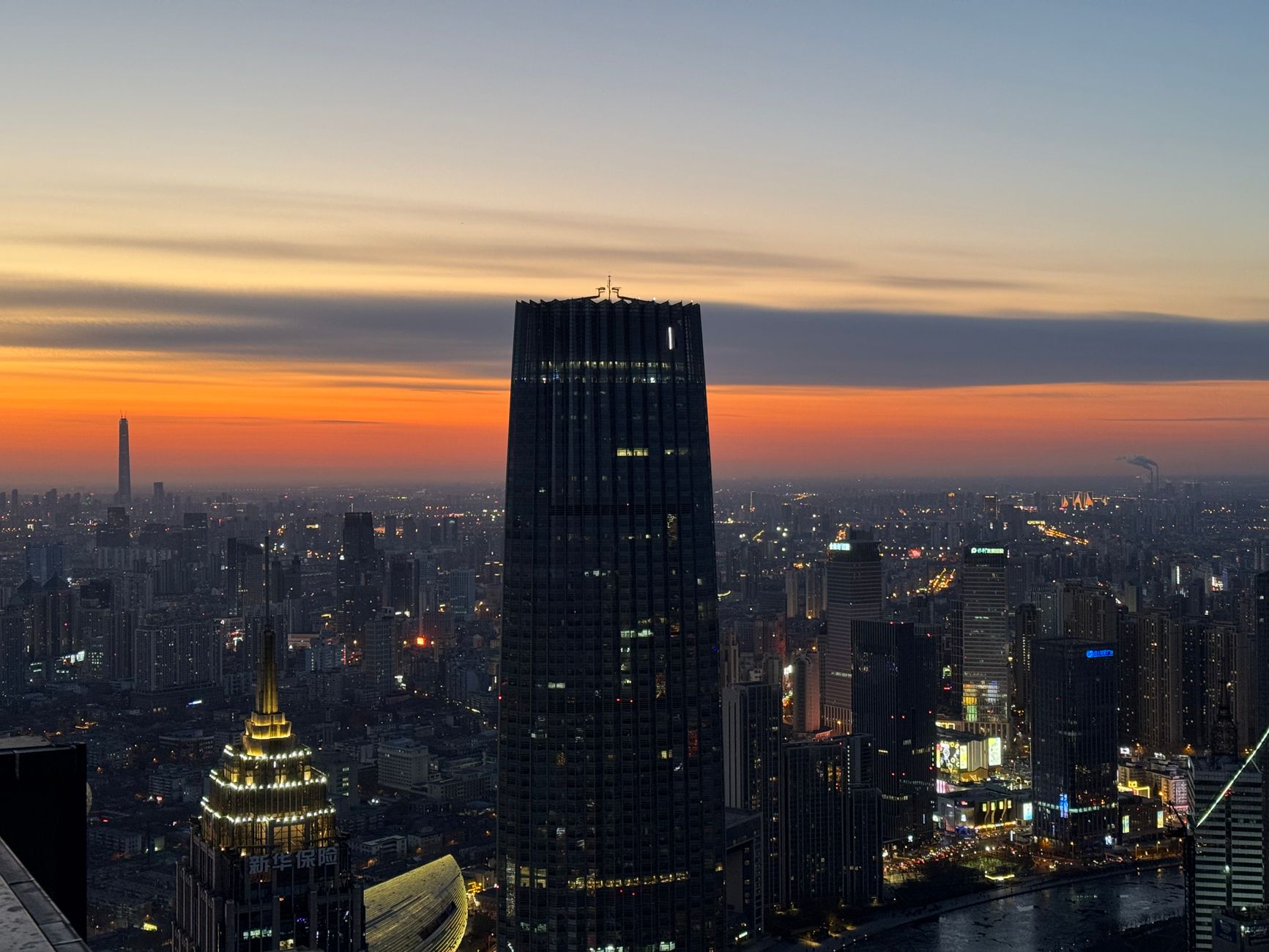
16:30 — the observation deck. One of them, not three. Join the queue about ninety minutes before sunset and you will be at the top roughly forty minutes before, which gives you daylight, dusk and the lights.
| Tower | Deck height | Adult | Hours | Queue |
|---|---|---|---|---|
| Shanghai Tower | 546 m (F118) | ¥180 | 08:30–22:00, last entry 21:30 | 20–40 min; 2 h on holidays |
| Oriental Pearl | 259 / 263 / 351 m | ¥199 combined | 09:00–21:00, last entry 20:30 | 30–60 min |
| Jin Mao | 340 m (F88) | ~¥120–160 | 08:30–21:30, last entry 21:00 | Under 10 min |
Shanghai Tower is the highest and the lift reaches floor 118 in about 55 seconds. Oriental Pearl has the glass floor at 259 m and includes the museum. Jin Mao is the underrated one: no queue, a beautiful 1999 building, and the only outdoor harnessed skywalk in the city on a separate ticket. The observatory at the Shanghai World Financial Center has been closed since 2023 — it appears in a great many articles as though it were open. Our Shanghai Tower guide and the wider best views in Shanghai comparison go into the choice properly.
Day 3: the French Concession and Jing’an
The day most people end up remembering, and the one with no famous sights in it.
09:30 — Xintiandi. Metro Line 10 or 13 to Xintiandi, Exit 6. Start at the Site of the First National Congress at 76 Xingye Road, where the Chinese Communist Party was founded in July 1921 — free, closed on Mondays, and take your passport. Then walk the restored lanes.
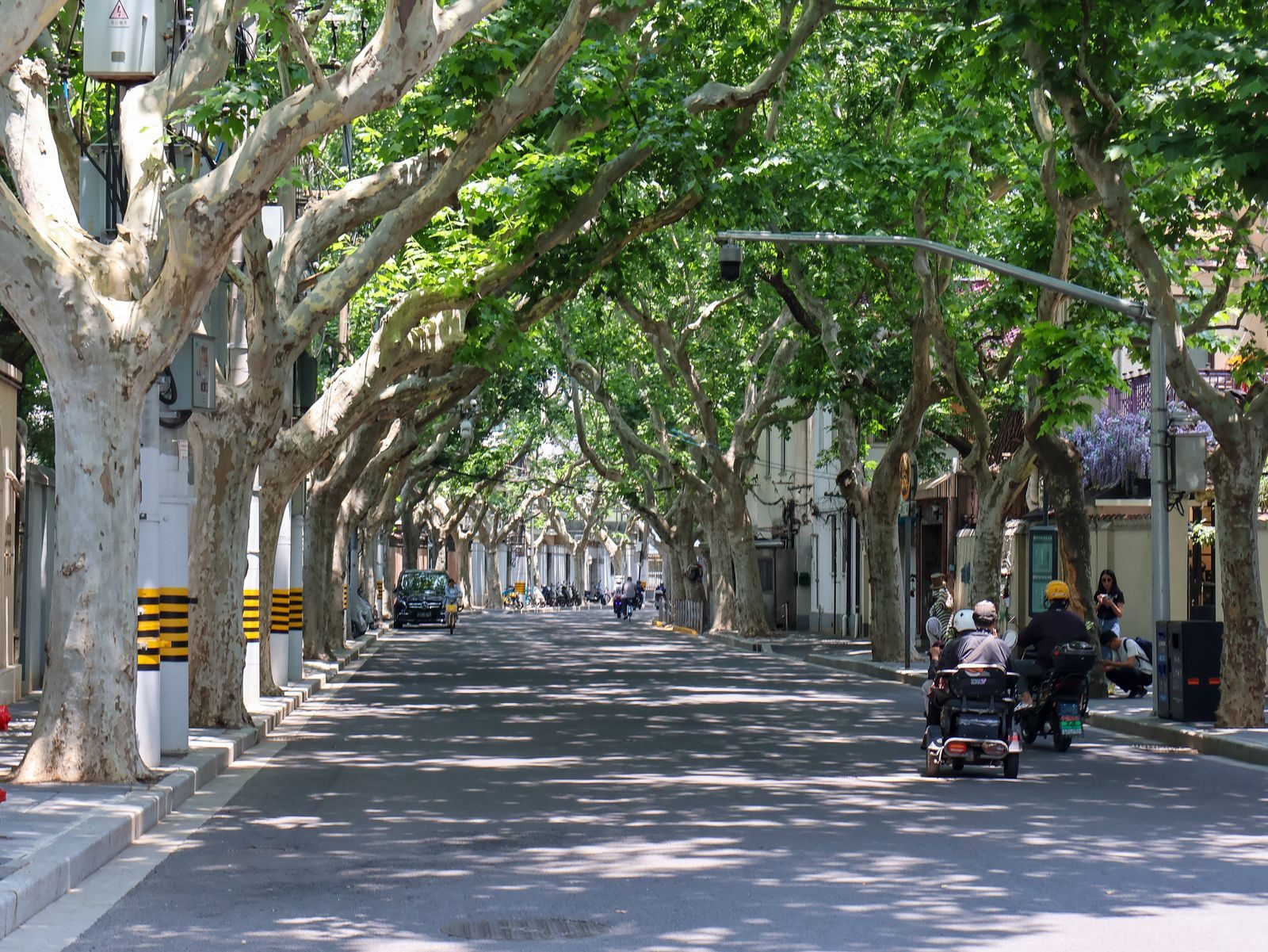
11:00 — into the concession. Head west along Xingye Road and Fuxing Middle Road into the plane-tree streets. This is the walking, and it is the point. Fuxing Park in the morning is full of people dancing, playing cards and doing calligraphy on the pavement with water.
12:30 — lunch on Anfu Road or Wukang Road. The densest concentration of good small restaurants and cafés in the city. Shanghai has more coffee shops than anywhere on earth and a great many of the good ones are here.
14:00 — Wukang Road and the villas. The Wukang Mansion at the junction with Huaihai is the most photographed building in Shanghai for good reason. Our French Concession walking tour maps a route through the villas and the art deco, and the art deco guide explains what you are looking at.
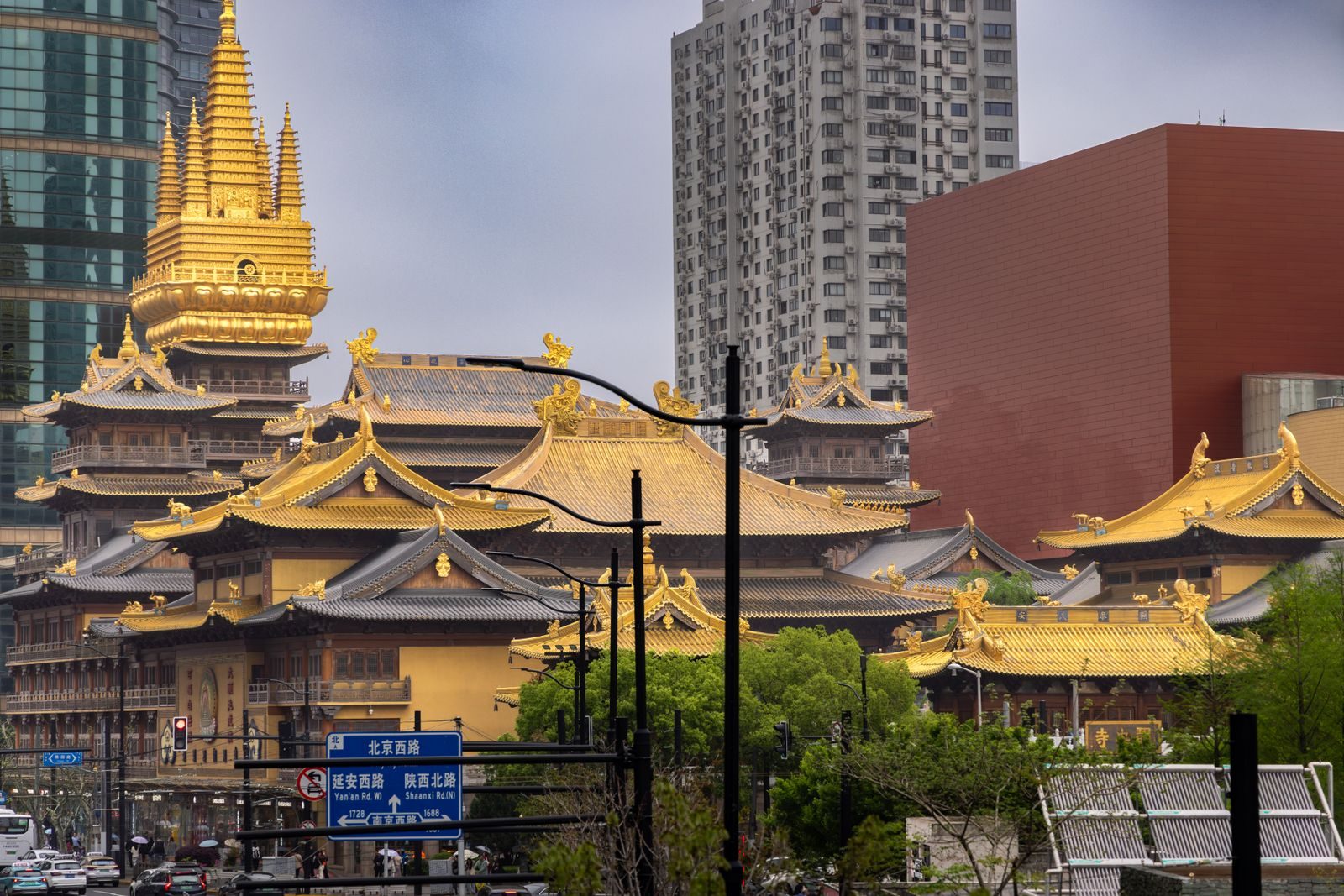
16:00 — Jing’an Temple. Metro Line 2, 7 or 14 to Jing’an Temple. Golden roofs against skyscrapers, ¥50, and a genuinely striking piece of juxtaposition. Forty minutes.
17:30 — the Jing’an malls or a bar. Plaza 66, Réel and Sogo are along the same stretch of West Nanjing Road if you want shopping. Otherwise head back into the concession for a drink — our guide to cocktail bars and speakeasies covers the best rooms, most of which are within walking distance of Anfu Road.
Evening — if you want one splurge dinner, this is the night for it. Shanghai has close to fifty starred restaurants and lunch at a one-star runs 40–60% of the dinner price if you would rather move it.
Day 4: choose your day trip
| Suzhou | Zhujiajiao | Hangzhou | |
|---|---|---|---|
| Journey | 25–40 min HSR from Hongqiao | ~1 h, Metro Line 17 | 45–60 min HSR from Hongqiao |
| Fare each way | ¥40–60 | Metro fare, ~¥7 | ¥73–100 |
| Best for | Classical gardens, canals, silk | A half day, minimal effort | West Lake, tea, scale |
| Time needed | Full day | Half day | Long full day |
| Crowds | Heavy at the famous gardens | Very heavy at weekends | Heavy year-round |
| Verdict | The best all-rounder | The easiest | The most ambitious |
Option A — Suzhou
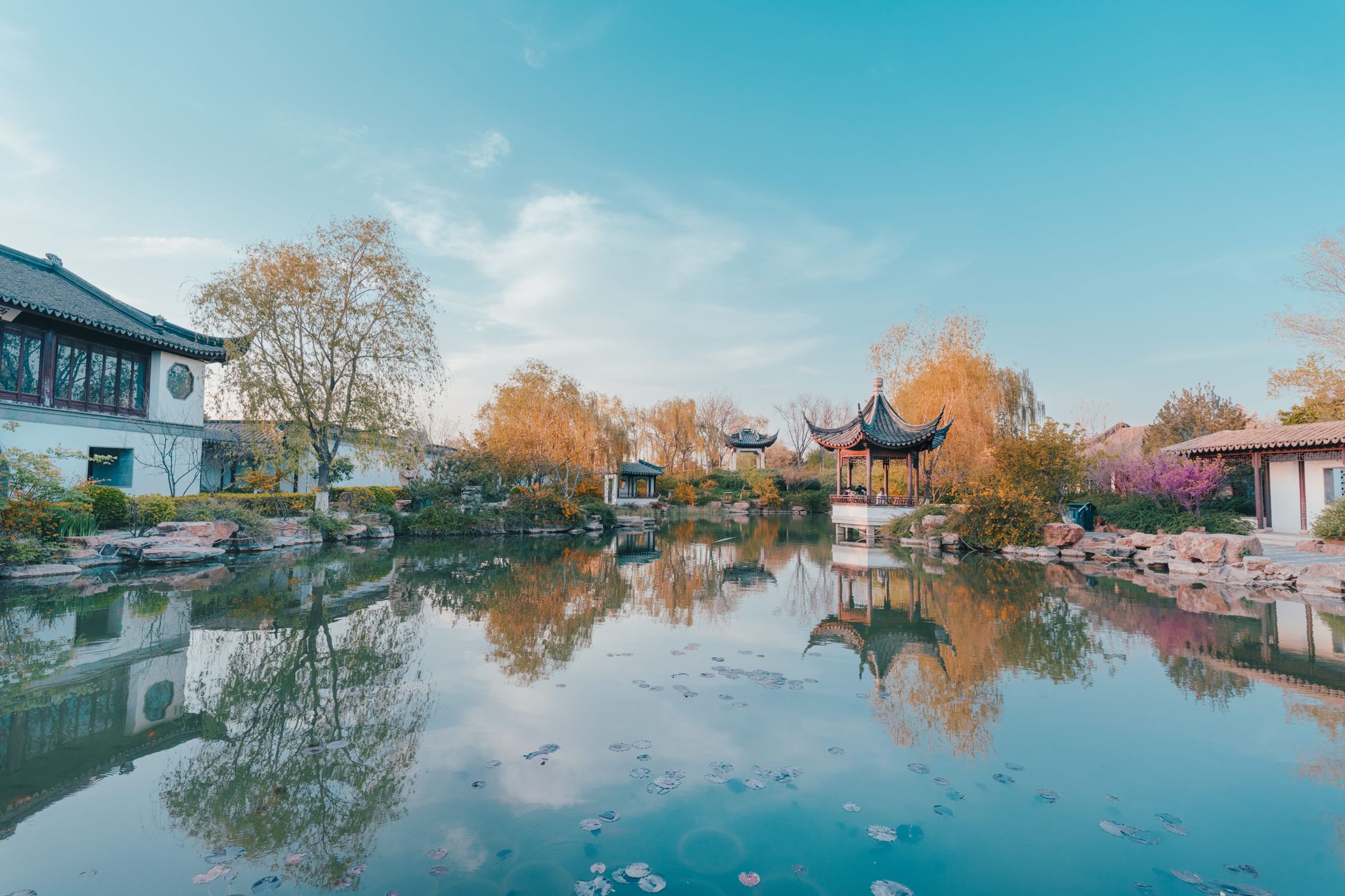
The default recommendation, and the right one for most people. Twenty-five to forty minutes from Hongqiao at ¥40–60 in second class, which makes it closer in time than some parts of Shanghai. Suzhou is a UNESCO-listed city of classical Chinese gardens — the Humble Administrator’s Garden and the Lingering Garden are the famous two — plus canals, the Suzhou Museum designed by I. M. Pei, Pingjiang Road for walking, and a silk industry going back a millennium.
Practical shape: first train around 08:00, back around 19:00. Book fifteen days ahead when tickets go on sale at 08:00 Beijing time — there is no advance discount, so you are booking for availability, not price. Two gardens is the maximum before they blur; pick one large and one small. Our Suzhou day trip guide has the full plan.
Option B — Zhujiajiao
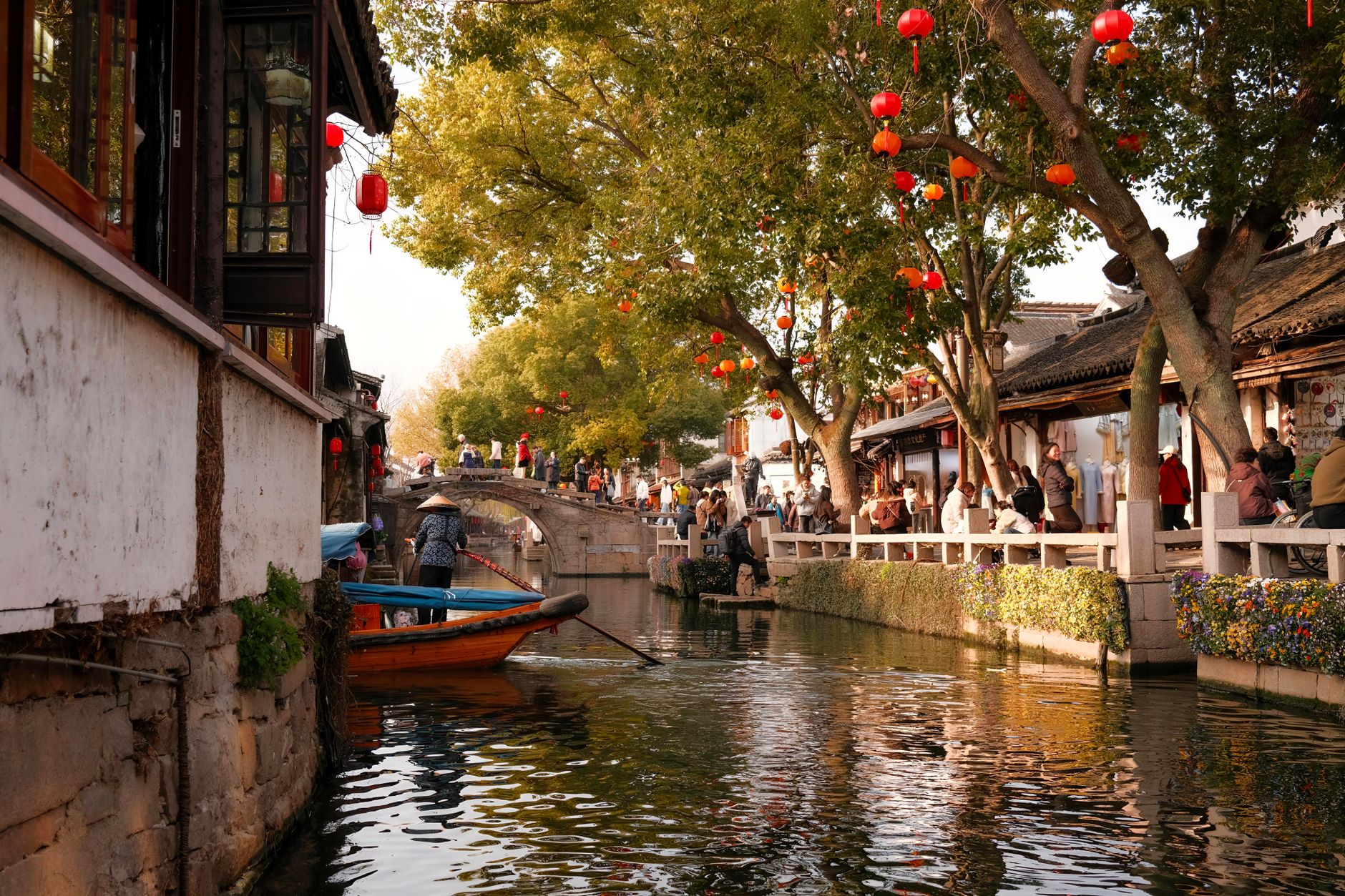
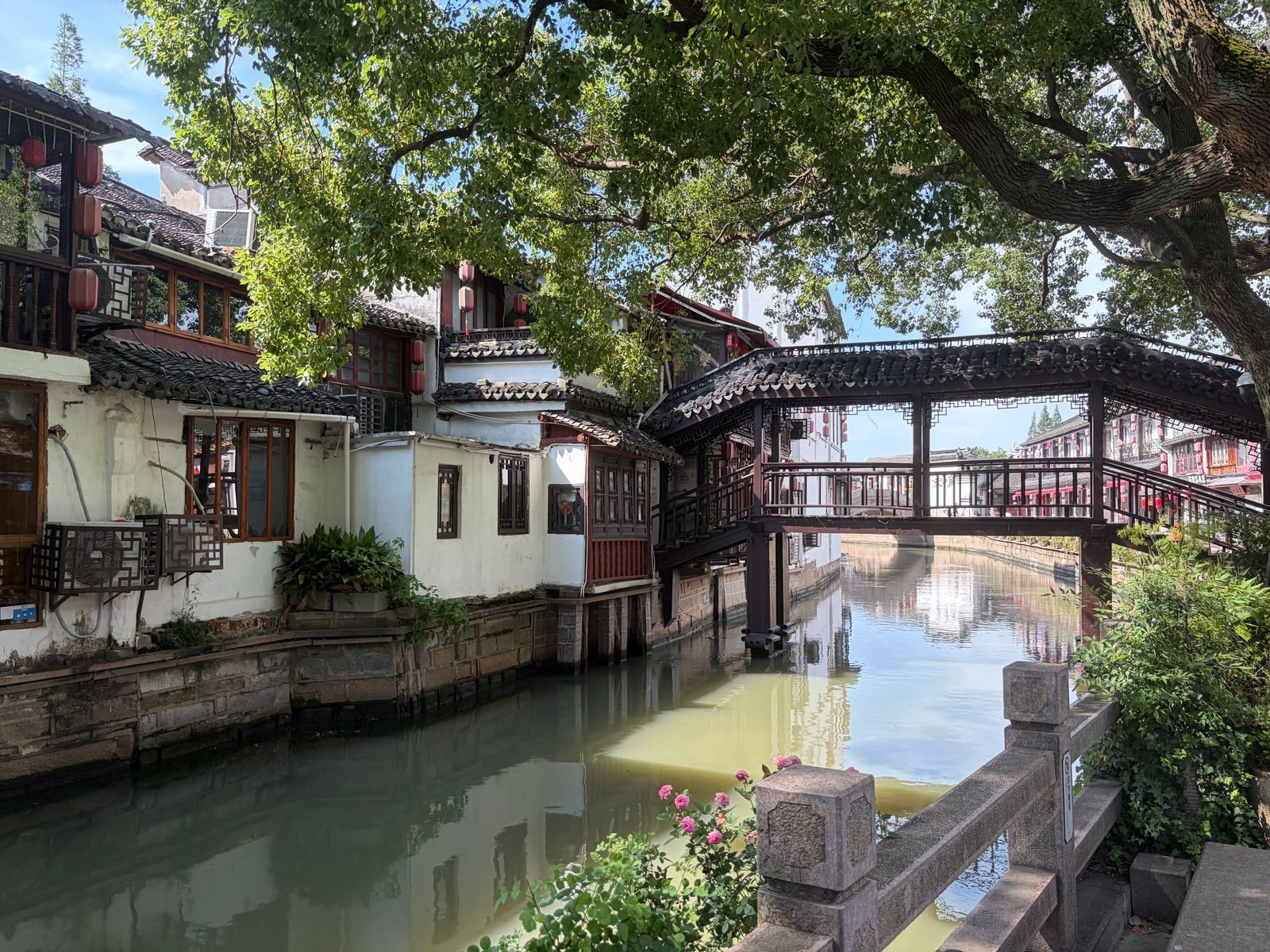
The low-effort option: a canal town inside the Shanghai municipality, reachable on Metro Line 17 for the price of a metro fare, about an hour from the centre. Stone bridges, canals, a Ming-dynasty humpback bridge, boat rides, and a compact old town you can walk in two hours.
It is the least authentic of the region’s water towns and the most convenient by a wide margin, and those two facts are related. Go on a weekday and go early; by 11:00 at a weekend the main lanes are shoulder to shoulder. Because it is a half day, it pairs well with an afternoon back in the city — which makes it the right choice if there is something on your list you have not fitted in. See our Zhujiajiao guide, and the comparison with Tongli and Wuzhen if you want a quieter one.
Option C — Hangzhou
The most ambitious and the most rewarding if the weather is good. Forty-five to sixty minutes from Hongqiao at ¥73–100. West Lake is the point: a landscape that has been the subject of Chinese painting and poetry for a thousand years, ringed by causeways, pagodas, temples and tea hills.
The catch is that Hangzhou is a big city and West Lake is enormous — you cannot walk round it in a day. Pick a section, hire a bike or take a boat, and accept that you are seeing a third of it. Add the Longjing tea villages in the hills if you have the energy. Leave on the first train and take the last one back; anything less and the travel outweighs the visit. Our Hangzhou day trip guide covers the logistics.
Swaps, weather and travelling with children
If it rains, move day four and bring day two forward — Pudong can be done almost entirely under cover via the raised walkways and the malls, and the Shanghai Museum and the Urban History Museum are both indoors.
If you have children, swap day three’s afternoon for the Shanghai Science and Technology Museum or the aquarium, and consider replacing day four with Shanghai Disneyland — Metro Line 11 to the gate, ¥6–8, 50–70 minutes from the centre. That is a full day and it will be the day they remember. Our guide to Shanghai with kids covers the alternatives.
If you are here in high summer, start earlier and build in a two-hour indoor break in the middle of each day. July and August run to 38°C with heavy humidity, and the walking on day three is not realistic at 14:00.
If you have a fifth day, add a second day trip or use it on the Power Station of Art and the West Bund galleries — our contemporary art guide covers that stretch of riverside. Our five-day itinerary sets it out properly.
If you lose a day, the three-day version compresses days one and two and drops the trip out of town.
Costs, transport and where to stay
Transport. The metro covers everything in this itinerary. Single fares are ¥3–7 centrally; a one-day pass is ¥18 and a three-day pass ¥45, sold at station counters and not valid on the Maglev. Pay by QR code in Alipay or WeChat Pay, which is faster than the machines. Our metro guide covers the details.
Rough daily budget per person, excluding hotel: ¥250–400 for a mid-range day with a paid attraction, a good lunch and a normal dinner. Add ¥100–200 for the day-trip fare. Our guide to what a Shanghai trip costs breaks this down properly.
Where to stay. For this itinerary, Huangpu near People’s Square or the Bund, or the eastern French Concession around Xintiandi. Both put you within twenty minutes of everything here and within walking distance of days one and three. Avoid Hongqiao and the airport unless price is the only consideration — see where to stay in Shanghai.
When to come. Late March to mid-May and late September to mid-November are the two good windows. Avoid Golden Week, 1–7 October in 2026, when everything is open and everything is full, and hotel prices roughly double.
What to do with the evenings
Four nights is enough to do something different with each, and Shanghai is a city that improves after dark.
Night one is settled by the itinerary: the Bund lit up, seen from the Pudong side. Nothing else competes on a first night and there is no need to add to it.
Night two, having come down from a tower, stay in Pudong for dinner or take Line 2 back and eat in Huangpu. If you want the postcard the other way round, the rooftop bars above the Bund look east at the Pudong skyline — expensive, and worth it once. Our guide to the best rooftop bars in Shanghai covers which have the view and which merely have the address.
Night three is the one to spend in the French Concession, which is where Shanghai’s drinking actually happens — small bars behind unmarked doors, jazz rooms, and a café culture that runs late. The jazz and live music guide covers the older end of it, some of which has been running since the 1930s.
Night four, if you are flying the next day, take the ¥2 ferry across and back in the dark. It costs nothing, takes ten minutes, and is a better last look at the city than anything you can queue for.
A word on the river cruises: they run from the Bund and Pudong piers most evenings, take about an hour and cost roughly ¥120–180. They are pleasant and they are not necessary — the same view is free from either bank and ¥2 from the ferry. Take one if you want to sit down, not because you will otherwise miss something. Our night cruise guide compares the operators.
What people get wrong
Crossing the river more than once a day. It costs you an hour every time. Keep Pudong to one day.
Doing two observation decks. They show you the same city. One, at sunset, is the correct number.
Booking the day-trip train too late. Tickets go on sale exactly fifteen days ahead at 08:00 Beijing time, and Friday and Sunday services sell out.
Paying ¥50 for the Bund Sightseeing Tunnel. The ¥2 public ferry is five minutes away and infinitely better.
Treating the French Concession as a checklist. There is nothing to tick off. Walk, sit down, walk further.
Visiting Yu Garden at 14:00 on a Saturday. Go at opening or after 16:00.
Assuming the SWFC deck is open. It has been closed since 2023.
Frequently Asked Questions
Is 4 days enough for Shanghai?
It is arguably the ideal length. Three days covers the city but forces awkward choices; four gives you three unhurried city days plus a day trip to Suzhou, Zhujiajiao or Hangzhou, which is what makes Shanghai’s location worth using. Five is comfortable but starts to run out of essential sights.
What is the best day trip from Shanghai?
Suzhou, for most people — 25 to 40 minutes from Hongqiao at ¥40–60 each way, with UNESCO-listed classical gardens, canals and the I. M. Pei museum. Zhujiajiao is the easiest at an hour on Metro Line 17 and only needs half a day. Hangzhou and West Lake is the most rewarding if the weather is good and you leave early.
Should I stay in Puxi or Pudong?
Puxi, for a four-day trip. Huangpu near People’s Square or the Bund, or the eastern French Concession, puts you inside two of the three city days on foot. Pudong is efficient and modern but you will end up commuting to almost everything on this list.
How much does 4 days in Shanghai cost?
Excluding flights and hotel, roughly ¥250–400 a day per person for a mid-range trip, plus ¥100–200 for the day-trip rail fare. Hotels run from ¥250 for a budget chain room to ¥1,200 and up for a Bund five-star, roughly doubling during Golden Week and Chinese New Year.
Which observation deck should I choose?
Shanghai Tower at ¥180 for the highest view at 546 metres, Oriental Pearl at ¥199 if you want the glass floor and the excellent Urban History Museum included, or Jin Mao at around ¥120–160 for a beautiful building and almost no queue. Do one, about forty minutes before sunset. The SWFC observatory has been closed since 2023.
Do I need to book the train to Suzhou or Hangzhou in advance?
Yes. Tickets go on sale exactly fifteen days before departure at 08:00 Beijing time, and there is no advance-purchase discount, so you are booking for availability rather than price. Friday evenings, Sunday afternoons and public holidays sell out. Book on 12306 or Trip.com with your passport number.
Can I do this itinerary with children?
Yes, with two changes: shorten day three’s walking and add the Science and Technology Museum, and consider replacing day four with Shanghai Disneyland, which is fifty to seventy minutes from the centre on Metro Line 11 for ¥6–8. Everything else on the list works fine with children in tow.
What is the best time of year for this trip?
Late March to mid-May, and late September to mid-November. Autumn has the clearest air of the year, which matters enormously for the observation decks. Avoid Golden Week, 1 to 7 October, when hotel prices roughly double and central hotels impose minimum stays.
Is the Shanghai Museum worth a visit?
Yes, and it is free. The bronzes, ceramics and calligraphy collections are among the best in China and two hours there will change how you look at everything else on the trip. It is on People’s Square, which puts it neatly in the middle of day one.
How do I get around during these four days?
The metro handles everything. Fares are ¥3–7 for central journeys; a one-day pass is ¥18 and a three-day pass ¥45, neither valid on the Maglev. Pay by scanning a QR code in Alipay or WeChat Pay. Taxis are cheap by Western standards but slow in traffic.
Should I add Shanghai Disneyland?
Only if you have children or are a serious park enthusiast — it is a full day and it replaces the day trip rather than adding to it. Metro Line 11 runs to the gate in fifty to seventy minutes for ¥6–8, and the metro is a far better exit at closing time than a taxi, which surges badly.
What should I skip?
The Bund Sightseeing Tunnel at around ¥50, which is a light show rather than transport when the ¥2 public ferry is a few minutes’ walk away. A second observation deck. And any attempt to fit two day trips into one day.
Four days done in this order gives you the historical city, the modern one, the residential one that people actually live in, and a day in the Jiangnan landscape that shaped all three. If you are still planning, our itineraries hub has versions from one day to ten, and first time visiting Shanghai covers the practical things worth sorting out before you land.