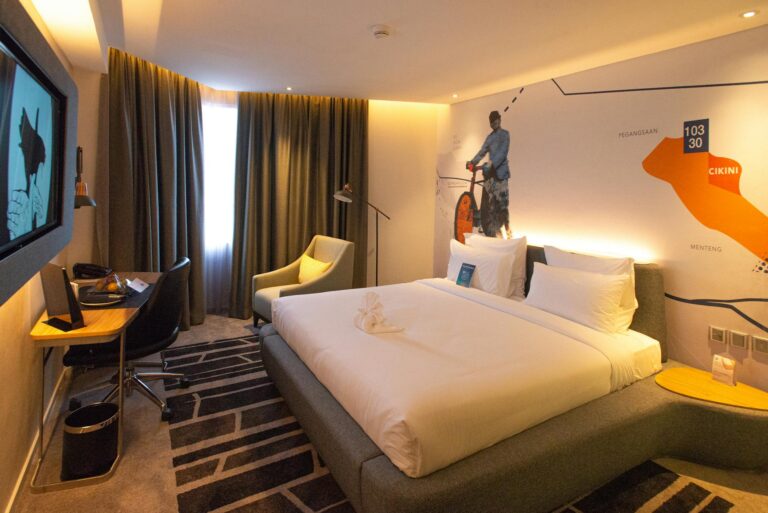
Search Shanghai Airbnb vs hotel and you get a hundred articles weighing kitchens against room service. Almost all skip the fact that decides it. Airbnb removed its mainland Chinese home listings on 30 July 2022 and has not brought them back, and Chinese law requires every foreign visitor to be registered with the local police within 24 hours of arriving at their address. A licensed hotel does that at the desk while you hand over your passport. A private host may or may not, and when they do not, the penalty falls on you. Here is what the choice actually is in 2026, what each option costs in RMB, and how to stay in an apartment without the paperwork becoming your problem.

Table of Contents
- Quick Recommendation
- What Actually Happened to Airbnb in China
- The Legal Reality: 24-Hour Police Registration
- Registering Yourself in Shanghai
- Which Hotels Can Take Foreign Guests
- Pros & Cons of Apartment Stays
- Pros & Cons of Hotels
- Cost Comparison
- Serviced Apartments: The Third Option
- Best Areas for Each
- How to Choose by Trip Type
- Booking Platforms in 2026
- What Check-In Actually Looks Like
- What People Get Wrong
- Practical Tips
- FAQ
Quick Recommendation
- 1–7 days, first-time visitor: Hotel — registration handled, someone at a desk at 2am
- 2+ weeks: Serviced apartment — space and a kitchen, with the licence a private flat lacks
- Couples on a romantic trip: Hotel — atmosphere, dining, spa
- Family with toddlers: Connecting hotel rooms, or a two-bedroom serviced apartment
- Budget solo backpackers: A licensed hostel beats both
- Business travelers: Hotel — predictable, invoiced properly, breakfast included
- Anyone set on a private flat: Fine, but read the registration section and budget 20 minutes for the form
If you take one thing from this page: the question is no longer Airbnb against hotel. It is licensed against unlicensed, and the licence decides whether your stay is documented.
What Actually Happened to Airbnb in China
Airbnb entered mainland China in 2015 and hosted more than 25 million guest arrivals. In May 2022 co-founder Nathan Blecharczyk announced the company would “refocus our efforts in China on outbound travel and suspend our homes and Experiences of Hosts in China”, effective 30 July 2022. Roughly 150,000 listings came down. Mainland China had been about 1% of Airbnb’s business; the reasons cited were the cost of competing with entrenched Chinese platforms, the burden of Chinese data and real-name registration rules, and two years of zero-COVID restrictions.
What Airbnb kept was the outbound half: Chinese travellers booking homes in Tokyo or Paris. Hong Kong, Macau and Taiwan listings were never affected, which is one source of the confusion — a search returning dozens of Hong Kong flats can look like proof the mainland business is alive.
Be sceptical of any guide describing a Shanghai Airbnb booking in the present tense; many are 2019 articles with a fresh date stamp. A useful check: Inside Airbnb, the research project publishing scraped listing data for cities worldwide, covers no mainland Chinese city at all while still publishing current data for Bangkok and dozens of other markets. There is nothing there to scrape.
So when a traveller says “we’re getting an Airbnb in Shanghai”, in 2026 they mean one of four things:
- A serviced apartment booked through Trip.com, Booking.com or the operator — licensed, registration handled, and the closest thing to what they wanted
- A minsu (民宿) on Tujia, Xiaozhu or Meituan — genuinely apartment-style, but the Chinese-language apps defeat most visitors
- An apart-hotel — a hotel-licensed building of studios with kitchenettes, common in Jing’an and Pudong
- An informal sublet through an expat group or agent — the version with real risk attached
The Legal Reality: 24-Hour Police Registration
This is the part worth reading twice: the only element of the Shanghai Airbnb vs hotel decision with a legal penalty attached.
Article 39 of the Exit and Entry Administration Law of the People’s Republic of China splits accommodation into two categories. Where foreigners stay in hotels, “the hotels shall register their accommodation in accordance with the regulations on the public security administration of the hotel industry, and submit foreigners’ accommodation registration information to the public security organs”. For everywhere else, the wording changes: “For foreigners who reside or stay in domiciles other than hotels, they or the persons who accommodate them shall, within 24 hours after the foreigners’ arrival, go through the registration formalities with the public security organs in the places of residence.”
Read that second sentence again. They or the persons who accommodate them. The obligation is joint, so when a host does not do it, the foreign guest is the one holding an unregistered stay. Article 76 sets the penalty: a warning and a fine of up to ¥2,000. Hotels that fail to submit data face a warning, or ¥1,000–5,000 in serious cases — which is why front desks are so insistent about passports.
Shanghai adds its own rules. The municipal Public Security Bureau’s Measures on Accommodation Registration of Overseas Personnel took effect on 1 April 2020, confirming the 24-hour window, exempting hotel guests because the hotel already reports, and setting out three channels: police station windows, community affairs centres, and online self-service.
Who registers you, by accommodation type
| Where you stay | Who registers you | What you do | Risk level |
|---|---|---|---|
| International or Chinese chain hotel | The hotel, automatically | Hand over your passport at check-in | None |
| Licensed hostel or serviced apartment | The operator, automatically | Passport at check-in | None |
| Licensed minsu on a Chinese platform | Usually the host | Confirm in writing before booking | Low to medium |
| Private flat, self-check-in lockbox | Nobody, unless you do it | File the declaration yourself within 24 hours | Medium |
| Staying with friends | You or your host | Same declaration, same 24 hours | Medium |
How hard is this enforced against a tourist on a five-night trip? Honestly, lightly. Nobody goes door to door. The consequences show up sideways:
- If anything happens at the building — fire alarm, neighbour dispute, burglary, lost passport — an unregistered foreigner is the first thing attending police notice.
- If you later apply for a visa extension or residence permit, the slip is asked for. Shanghai’s exit-entry portal describes the declaration as an important basis for future visa and document applications.
- If neighbours complain about short-term guests, the host gets shut down, sometimes mid-stay. This is how travellers actually get burned: not a fine, but a cancellation at 9pm.
None of that warrants panic. It warrants twenty minutes on a form. See our visa and entry requirements guide, and the 240-hour visa-free transit rules if you are arriving that way — transit visitors are not exempt.
Registering Yourself in Shanghai
Shanghai is one of the easiest cities in China to do this in, because the city built an online system for it. You do not need to find a police station, and you do not need Chinese.
- Online, via the PSB exit-entry self-declaration site. Shanghai runs a 24-hour self-service portal for overseas visitors with an English interface alongside Chinese, Japanese and Korean. Create an account, upload your passport photo page and entry stamp, enter the address, submit.
- Via the city’s service apps. The same declaration sits in the “一网通办” portal and the “随申办” mini-programs inside WeChat and Alipay — the shorter route if those are already working for payments.
- In person at the police station covering your address, or a community affairs centre. Bring your passport and something showing the address. The measures allow a signed written declaration where proof of residence is not available.
It is free, processed on the spot, and what you get back is a temporary accommodation registration form (临时住宿登记). Photograph it. The Pudong exit-entry office at 1500 Minsheng Road takes walk-ins weekdays 9:00–17:00 with no midday closure, and each district has a branch.
One caveat: to file, you need the exact address in Chinese. A cooperative host sends it in one message. A host who goes vague is telling you something about the rental.
Which Hotels Can Take Foreign Guests
Historically only hotels holding a specific PSB-registered permit could accept foreign guests, and after the pandemic many smaller properties let it lapse because domestic travel was all that mattered. Travellers in 2023 and 2024 kept hitting the same polite refusal at budget hotel desks.
On 28 May 2024 the Ministry of Public Security, the National Immigration Administration, the Ministry of Commerce and the Ministry of Culture and Tourism issued joint guidance instructing hotels not to turn away overseas guests for lack of permits. The old restriction was effectively relaxed, and the big domestic groups moved to widen access.
In central Shanghai this is rarely a problem now, though the guarantee is strongest at chains: Jin Jiang’s JI Hotel and Magnolia, Atour, Hanting, Orange Hotel, plus every international brand. Friction remains possible at a tiny unbranded property in an outer district. Our budget hotels and hostels guide covers which cheap properties take foreign passports.

Pros & Cons of Apartment Stays
Pros
- More space — a typical apartment rental runs 60–80 m²; hotel rooms are 30–40 m²
- Kitchen — cook breakfast, keep beer cold, feed a toddler at 6am
- Laundry — most have washing machines, which matters in a humid Shanghai August
- Local neighborhood feel — French Concession or Jing’an residential buildings, with a wet market and a noodle shop downstairs instead of a lobby
- Lower per-night cost for stays of 5+ nights
- Better for groups and families — two-bedroom apartments at ¥600–1,200/night beat two hotel rooms
- Better for working remotely — desks, separate rooms, nobody knocking
Cons
- Registration is on you — the biggest difference, and the reason to read the section above
- No reception — every problem is solved by messaging a host who may be asleep
- Variable cleanliness — recent reviews are the only signal
- No breakfast and no housekeeping, though a ¥6 bowl of noodles downstairs compensates
- No gym, pool or spa
- Building management can be hostile to short-term guests; some compounds make residents sign visitors in
- Gates and lifts often need a resident fob that a lockbox key does not include
- WiFi varies, and no host provides a VPN — see our VPN and internet guide
- Cancellation risk if the building or platform cracks down mid-stay
Pros & Cons of Hotels
Pros
- Foreign-guest registration handled automatically, with no action from you
- Reception 24/7 — English spoken at most three-star and above
- Daily housekeeping, room service, cots on request
- Breakfast — substantial buffets at four-star and above, congee and dumplings alongside eggs
- The desk solves problems — bookings, addresses printed in Chinese for drivers, luggage storage
- Gym, pool, spa, business centre
- Predictable quality — a JI Hotel in Xuhui is a JI Hotel in Hongkou
- Easier for one to three nights, and proper fapiao (tax invoices) if you are expensing the trip
Cons
- Smaller rooms — 30–40 m² at four-star, and heritage properties can be tighter still
- More expensive per night for equivalent space, with a minibar instead of a kitchen
- Less neighbourhood texture, though French Concession boutiques narrow the gap
- Laundry charged per piece, and it adds up fast
- Clustered in tourist areas — more international restaurants downstairs, fewer local ones
- Deposits — many properties pre-authorise ¥300–1,000 a night, refunded after checkout
Shanghai Airbnb vs Hotel: Cost Comparison
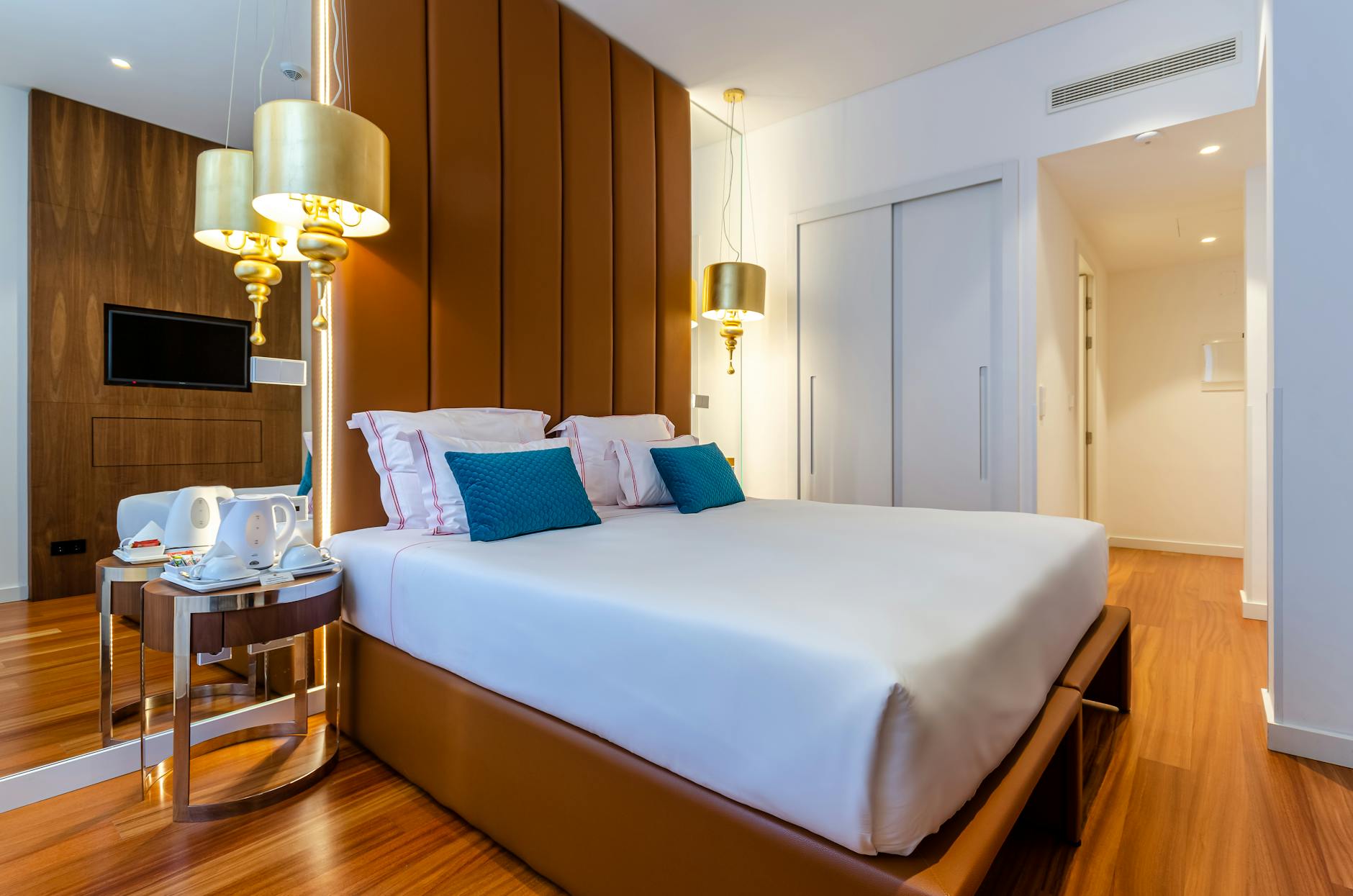
For a 7-night stay in central Shanghai for two adults, typical 2026 pricing:
Apartment rental
- Budget one-bedroom, French Concession: ¥350–500/night × 7 = ¥2,500–3,500
- Mid-range one-bedroom, Jing’an: ¥600–900/night × 7 = ¥4,200–6,300
- Two-bedroom family apartment, Pudong: ¥800–1,500/night × 7 = ¥5,600–10,500
- Serviced apartment (Citadines, Ascott): ¥600–1,000/night × 7 = ¥4,200–7,000
Hotel
- Budget chain (Hanting, Atour): ¥300–450/night × 7 = ¥2,100–3,150
- Four-star (Marriott Hongqiao): ¥800–1,500/night × 7 = ¥5,600–10,500
- Five-star Bund (Peninsula, Waldorf): ¥3,500–6,000/night × 7 = ¥24,500–42,000
- Boutique (The Upper House Shanghai, Capella): ¥2,800–5,500/night × 7 = ¥19,600–38,500
Where the money actually goes
| Cost line | Hotel, 7 nights, 2 people | Apartment, 7 nights |
|---|---|---|
| Accommodation, mid-range | ¥5,600–10,500 | ¥4,200–6,300 |
| Breakfast | Usually included | ¥150–300 if you cook |
| Laundry | ¥30–60 per item | Free, machine in the flat |
| Cleaning fee | None | ¥100–300 one-off |
| Deposit held | ¥300–1,000 a night, pre-authorised | Usually none |
| Registration admin | Zero minutes | 20–40 minutes of day one |
The pattern is consistent. For one to three nights, hotels win outright, because a budget chain undercuts almost any apartment once cleaning fees are counted. From about five nights the apartment advantage becomes real, and by two weeks it is decisive — monthly serviced-apartment rates land 30–50% below the nightly equivalent. See our trip cost breakdown and the Shanghai on a budget guide.
Serviced Apartments: The Third Option
This is the category that solves the problem, and visitors under-use it because it sounds corporate. A serviced apartment is a licensed building of apartment units run by a hotel operator: the kitchen, washing machine and floor space of a rental, plus a reception desk that registers you with the police like any hotel, housekeeping, and usually a gym.
The Shanghai operators to look for are The Ascott Limited (Ascott, Somerset, Citadines and lyf), Fraser Suites, Lanson Place, Shama and Oakwood. Rates of ¥600–1,000 a night for a central one-bedroom are normal, dropping sharply beyond a month. Minimum stays of three to seven nights are common.
- Best for: a week or more, families needing two bedrooms, remote workers, anyone with a small child and a lot of laundry
- Not worth it for: two-night stays, or anyone who wants character — these buildings are comfortable and anonymous
- Watch for: housekeeping frequency, capped utilities on monthly rates, and whether the kitchen has a real hob or one induction ring
Best Areas for Each
Best neighbourhoods for an apartment stay
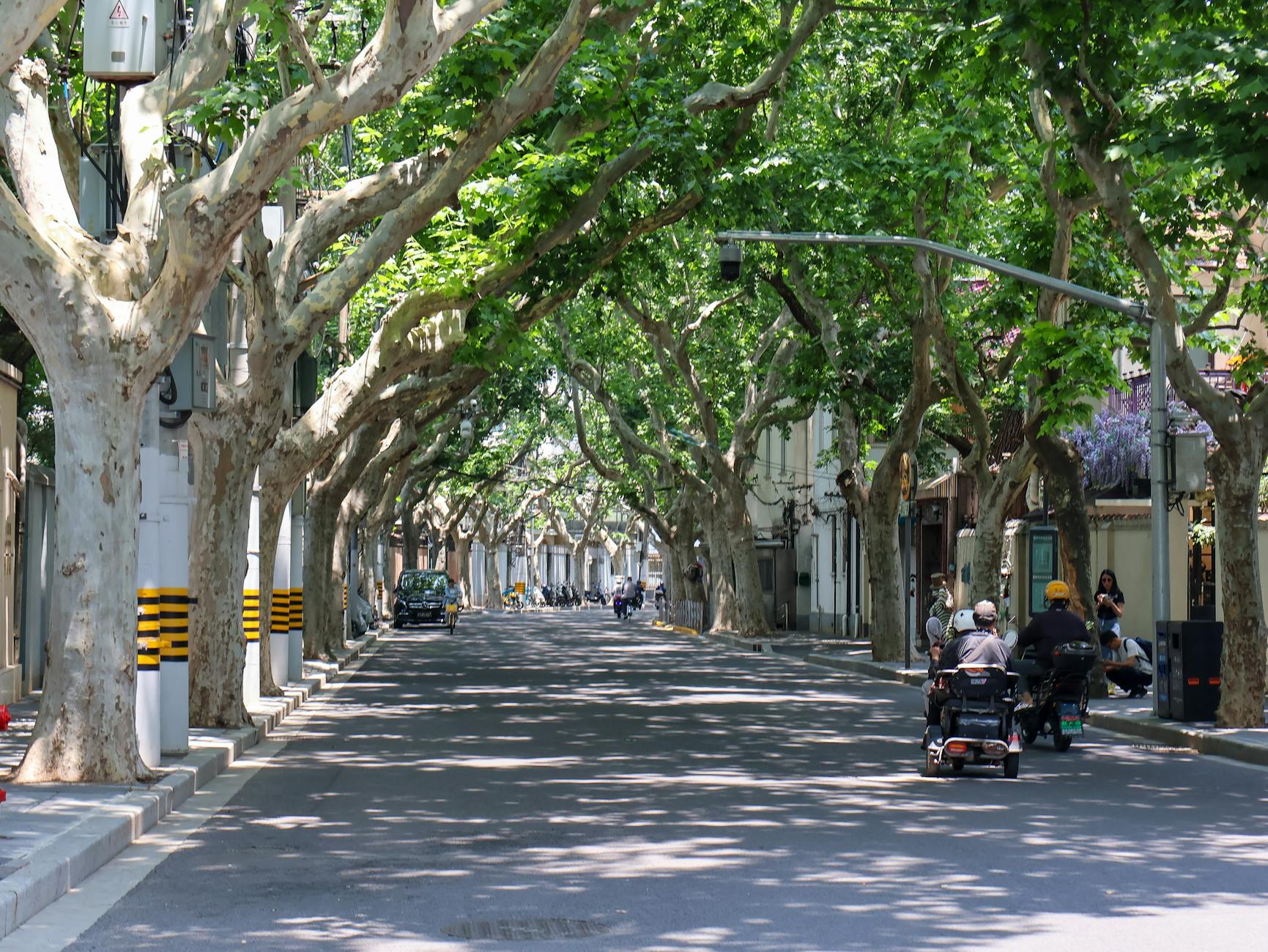
- French Concession — plane trees, cafés, walkable; the lane houses are why people want a flat here. Lines 1, 7, 10 and 12 cross it. Pair with our French Concession walking tour
- Jing’an — upscale, central, lines 2, 7 and 12
- Xintiandi and Dapuqiao — central, with residential pockets a block behind the bars
- Hongkou — cheaper, more local, closer to the Bund than the price suggests
- Skip Lujiazui tower rentals unless you want the view specifically; podium food is poor and everything shuts by eight
Best neighbourhoods for a hotel
- The Bund — heritage five-stars: the Peninsula, Waldorf Astoria, Fairmont Peace Hotel. See hotels near the Bund
- French Concession — Capella Jian Ye Li, Pudi Boutique; our French Concession hotels guide goes deeper
- Lujiazui, Pudong — Mandarin Oriental, Park Hyatt, Ritz-Carlton; compare in our luxury hotels guide
- People’s Square — the best transport position in the city, lines 1, 2 and 8 interchanging
- Jing’an — the strongest all-round base
- Near the airports for early flights — see hotels near Pudong airport
Our best neighborhoods guide compares these on noise, food and transport.
Shanghai Airbnb vs Hotel by Trip Type
First-time short trip, 1–4 days
Hotel. You will be out of the room 14 hours a day. Pay for the desk and the location, not the square metres.
Romantic getaway, 3–5 days
Hotel. The bathroom, the bar and the breakfast are the point. See Shanghai for couples.
Family trip, 4–10 days
Either, leaning apartment. Two bedrooms and a kitchen beat two hotel rooms once children are waking at 5am on Shanghai time. If you would rather keep hotel service, our family hotels guide picks the properties with the space for it. Our Shanghai with toddlers guide covers cots, lifts and pram access, which vary wildly between lane houses and new towers.
Solo or business traveller, 3–14 days
Hotel. Fast check-in, a proper invoice, a safe, and a 24-hour desk to leave bags with. See solo travel in Shanghai.
Long stay, 14+ days
Serviced apartment. Monthly rates, a desk, laundry, registration handled once.
Budget backpacker
Hostel. Mingtown Hiker, Phoenix Hostel and Captain Hostel take foreign passports and register you properly.
Booking Platforms in 2026
For hotels
- Trip.com — the deepest Shanghai inventory by a distance, and frequently cheaper than the Western OTAs on domestic chains
- Booking.com — familiar interface, pay-at-property options, weaker on Chinese budget brands
- Hotel direct — usually best at the top end, where loyalty status brings upgrades and free breakfast
- Agoda — occasionally sharp last-minute pricing in Asia
For apartments
- Trip.com also lists serviced apartments and licensed minsu, in English, taking international cards
- Operator websites — Ascott, Fraser, Lanson Place; best monthly rates, no licensing ambiguity
- Tujia (途家), Xiaozhu (小猪) and Meituan Minsu — the real Chinese short-term rental market, far bigger than Airbnb ever was here, but Chinese-language and generally needing a domestic payment method and phone number
- Airbnb — expect nothing for Shanghai. If something does appear, check what it actually is
Whatever you book, have a Chinese payment app working before arrival. Our money and currency guide covers linking foreign cards, and SIM cards and data covers getting online.

What Check-In Actually Looks Like
Two worked examples, both realistic.
Hotel, arriving 23:40 from Pudong
The taxi drops you at the door. You hand over two passports. The clerk scans the photo page and entry stamp, the data goes to the police system, and a key card is in your hand in four minutes. A deposit of ¥500 a night is pre-authorised on a card and released within a week of checkout; if your card fails, most Chinese chains still take cash. Nothing further is required of you all trip.
Private apartment, arriving 23:40 from Pudong
The driver cannot find the compound entrance because the listing gives the building, not the gate. The guard will not raise the barrier for someone with no resident card, so you message the host and wait. A lockbox holds the key; the lift needs a fob, which is inside the flat rather than the lockbox. Next morning you sit down with your passport and the Chinese address and file the registration online — twenty minutes if the host answers promptly, longer if not.
Neither is a disaster. The second is why first-timers get steered to hotels, and why the apartment version works best if you arrive in daylight. Landing late, read our airport arrival guide and Pudong to city centre options — the last metro matters more when nobody is waiting up.
What People Get Wrong
- Assuming Airbnb still works here. No mainland home listings since July 2022. Plan around what exists.
- Trusting a date stamp. Much English-language advice on Chinese accommodation is pre-2020 material with a refreshed headline.
- Booking a flat for one night. Cleaning fees and the registration errand wipe out the saving.
- Not asking the registration question before paying. Ask in writing: will you register me, or should I file the declaration myself? Both answers work. Silence does not.
- Ignoring compound access. Gates, lifts and doors in newer towers run on resident fobs.
- Booking a “hotel” that is an unlicensed apart-hotel. No star rating, no reception photo, a price well under the district norm — search the reviews for “registration” or “police”.
- Assuming the host speaks English. Most of it happens through translation apps. See language barrier tips.
- Paying off-platform. A discount for a bank transfer removes every protection you have; our scams guide covers the pattern.
Practical Tips
- Get the registration question answered in writing before you pay
- Carry your passport, not a photocopy — hotels and police registration both need the original
- Save the Chinese address as an image on your phone, for drivers and for the form
- Photograph the registration slip and keep it until you leave the country
- Avoid pure lockbox self-check-in on a first Shanghai trip
- Read the five most recent reviews, not the top-rated ones; listings decay fast
- Book free-cancellation rates and re-check a week out; Shanghai prices swing around trade fairs
- Check the metro line before the district — ten minutes to a station changes a trip more than the neighbourhood name. See our metro guide
- Long-stay discounts of 20–30% for a week and 30–50% for a month are standard; ask directly
- Split the trip — two nights on the Bund for the view, then a week in a French Concession flat for the life
Frequently Asked Questions
Can I still book an Airbnb in Shanghai?
Airbnb suspended all mainland China home and Experience listings on 30 July 2022, removing about 150,000 properties, and has not restored them. Its China business is outbound only now. Hong Kong, Macau and Taiwan were unaffected. Check the app yourself, but expect to find no private Shanghai apartments.
Is it illegal for a foreigner to stay in a Chinese apartment?
No. Staying in a private residence is legal. Registration is what is required: under Article 39, you or the person accommodating you must register with the local public security organ within 24 hours. The stay is only a problem if that never happens.
What is the fine if I do not register?
Article 76 provides for a warning and a fine of up to ¥2,000. Hotels failing to submit guest data face a warning, rising to ¥1,000–5,000 in serious cases. Enforcement against short-stay tourists is light, but the gap surfaces in later visa applications.
How do I register myself in Shanghai?
Online through the Shanghai PSB exit-entry self-declaration portal, which has an English interface, or the “一网通办” portal and “随申办” mini-programs in WeChat and Alipay. In person, the police station covering your address. Free, processed on the spot.
Do hotels register me automatically?
Yes. Any licensed hotel, hostel or serviced apartment submits your details when it scans your passport at check-in. You do nothing. That is the strongest argument for a hotel on a short trip.
Can foreigners stay in any Shanghai hotel?
Nearly. Joint guidance from four ministries on 28 May 2024 told hotels not to refuse overseas guests for lack of permits, and access has widened since. JI Hotel, Atour, Hanting and Orange are safe bets, as is every international brand. A small unbranded property in an outer district can still say no.
Are Shanghai hotels more expensive than apartments?
For one to three nights, no — a budget chain at ¥300–450 undercuts most apartments once cleaning fees are counted. From five nights, apartments run 30–50% cheaper for equivalent space, and monthly serviced-apartment rates cheaper still.
What is a serviced apartment?
A licensed apartment building run by a hotel operator: kitchen, washing machine and floor space, plus a reception that handles police registration. Ascott, Somerset, Citadines, lyf, Fraser Suites and Lanson Place are the main Shanghai names. Over a week, usually the best answer.
Which Chinese apps replaced Airbnb?
Tujia, Xiaozhu and Meituan Minsu dominate the domestic market, and Trip.com lists both hotels and apartments. Only Trip.com is genuinely usable in English with a foreign card; the others need Chinese-language navigation and a domestic payment method.
What if my host will not give me the address in Chinese?
Treat it as a warning sign. You need the exact Chinese address for the registration form, for taxi drivers and for deliveries. Evasiveness about property details usually means an unlicensed rental in a building that does not allow them.
Do I need to re-register if I change accommodation?
Yes. Registration attaches to an address, not to your trip. Each hotel files its own record automatically. If you move between private apartments, file a new declaration for each within 24 hours.
Which is safer, an apartment or a hotel?
Both are safe — Shanghai is a low-crime city, as our safety guide explains. The difference is recourse: a hotel has staff, a safe and a duty manager at 3am; an apartment has a phone number.
Plan Your Stay
Combine with our pillar guides on where to stay in Shanghai, best neighborhoods, and budget hotels & hostels, and read our first-time visitor guide before you book anything. For background, see Airbnb on Wikipedia.