The Shanghai Science and Technology Museum (上海科技馆) reopened on 17 February 2026 after nearly three years behind construction hoardings, and it is not the museum people remember. Ten brand-new permanent galleries, 405 groups of exhibits, a 23-metre LED dome cinema and a rainforest you walk through have replaced almost everything that was there before. This 2026 family guide to the Shanghai Science & Technology Museum covers what is actually inside now, what tickets cost, how to book without a Chinese ID, which experiences need a second reservation once you are through the gate, and how to fit it into a Pudong day that does not end in a meltdown.

Table of Contents
- What Changed in the 2023–2026 Rebuild
- Overview & Why Visit
- How to Get There
- Tickets & Opening Hours
- Booking Without a Chinese ID or WeChat Pay
- The Ten Galleries at the Shanghai Science and Technology Museum
- Exhibits You Have to Reserve Again Inside
- The Three Cinemas: Giant Screen, Dome & 4D
- Best Galleries by Age Group
- A Worked Half-Day Route
- When to Go: Crowds by Day and Season
- Food & Facilities
- The Two Sister Museums
- Combine With Other Attractions
- Common Mistakes at the Shanghai Science & Technology Museum
- Practical Tips
- FAQ
What Changed in the 2023–2026 Rebuild
This matters more than anything else on the page, because most English-language guides still describe the old museum. In 2023 the building closed for its biggest overhaul since opening in 2001, and reopened on a trial basis on Chinese New Year’s Day, 17 February 2026.
The scale: around ¥820 million spent, roughly 100,600 square metres of building refurbished, 21,000 square metres of exhibition space rebuilt. There are now 405 groups of exhibits containing more than 900 pieces, of which the museum says about 80% are interactive and roughly 87% were designed in-house rather than bought off the international science-centre circuit. Those two figures are the point of the project — the old museum had a lot of glass cases and dubbed video.
What survived? One gallery. Light of Wisdom (智慧之光), the hall of levers, pendulums and optical illusions, was kept and refreshed. Everything else — Earth Exploration, Animal World, the old Robot World with its chess-playing arms, Spectrum of Science, Cradle of Designers, the Children’s Rainbow Playground — is gone. If you visited before 2023, treat it as a new museum.
The Shanghai municipal government’s official reopening announcement lists the full gallery line-up if you want to cross-check what you read elsewhere.
Overview & Why Visit
The Shanghai Science and Technology Museum sits on Century Avenue in Pudong, beside Century Park, in the curved glass building with the tilted sphere that has been on Shanghai postcards since 2001. It drew four to five million visitors a year before it closed — one of the most-visited museums in China — and the reopening queues suggest that has not changed.
The case for going: if you have children between about four and thirteen, this is the strongest single half-day in Shanghai that does not involve queueing for a theme-park ride. The galleries are built around doing rather than reading, and a rainy Saturday here beats a rainy Saturday almost anywhere else in the city.
The case against: it is loud, it fills up fast, and adults travelling without children will get more out of the Shanghai Museum East or the Power Station of Art. The museum’s own director put it well — spending one minute at each exhibit would take more than six hours. You are not going to see it all, and trying to is how a good day turns bad at 3pm. Pick three galleries and one cinema.
How to Get There
The address is 2000 Century Avenue, Pudong New Area (浦东新区世纪大道2000号). Getting there is the easy part of the day.
- Metro: Shanghai Science & Technology Museum station on Line 2 — named after the museum, with an underground passage straight to the entrance plaza, so you never step outside. About 25 minutes from People’s Square, 12 from Lujiazui, ¥4–5.
- From Pudong Airport: Line 2 direct, around 35 minutes, ¥6. On some services you change at Guanglan Road; platform staff point you across.
- Taxi or Didi: ¥40–60 from central Shanghai, 20–30 minutes without traffic. Our guide to using Didi in Shanghai covers setting the app up with a foreign card.
- Bus: routes 640, 794, 936 and 983 stop nearby. Workable, but the metro is easier to read.
- Driving: don’t. Parking around Century Avenue is a hassle at weekends and the museum’s own guidance is to come by public transport.
If you are new to the system, the Shanghai metro guide explains ticket machines, the Metro Daduhui app and how to pay with a foreign card; getting around Shanghai covers the wider picture.

Tickets & Opening Hours
Prices held steady through the rebuild, which is unusual and welcome. Adult entry is still ¥45 — cheap for what you get.
| Ticket | Price | Who qualifies |
|---|---|---|
| Adult | ¥45 | Standard admission to all ten permanent galleries |
| Student / child | ¥22 | Over 1.3 m or aged 6+, through to undergraduate level; bring student ID |
| Senior (60–69) | ¥37 | Passport accepted as proof of age |
| Child under 6 / under 1.3 m | Free | Still needs a booked free ticket, not just a walk-up |
| Senior 70+ | Free | Same — book the free ticket in advance |
| Giant-screen cinema | ¥40 | Separate ticket, separate session time |
| Dome cinema | ¥30 | Separate ticket |
| 4D cinema | ¥30 | Separate ticket |
- Hours: Tuesday to Sunday, 9:00–17:00. Closed Mondays, except when a Monday falls inside a national public holiday.
- Last entry: 16:00. Do not cut this fine — the ticket check closes on the hour.
- Entry slots: you book a morning slot (9:00–12:30) or an afternoon one (12:30–16:00). The slot governs when you may enter, not when you must leave — afternoon bookers can stay until closing, morning bookers get the longest day.
- Release: seven days ahead at 10:00 Beijing time. Weekend and school-holiday morning slots go within hours.
- ID: real-name booking. A foreign passport works at the gate.
Two things you may still see quoted online and should ignore: the ¥100 combo ticket bundling entry with two films no longer exists, and the ¥20 Children’s Rainbow Playground ticket is gone. That space is now One Meter World, included in entry but needing a separate timed reservation (below).
Booking Without a Chinese ID or WeChat Pay
This trips up more foreign visitors than any other part of the visit, so here is the practical version.
The official channel is the WeChat mini-program 上海科技馆自然博物馆天文馆门票, reachable from the museum’s WeChat account (ID: sstm01) or by scanning the QR code on the museum’s official website. It accepts foreign passport numbers in the real-name field, and WeChat’s built-in translate — three-dot menu, then Translate — makes the screens readable.
If WeChat Pay is not set up on your phone, you have three fallbacks:
- Trip.com or Klook — they resell entry and handle passport registration. Small markup, a voucher or QR code in return. Least stressful option for a first visit.
- The on-site ticket office — bring the physical passport of everyone in your group. Staff are used to helping international visitors and will process a walk-up if inventory remains. On a Tuesday in October, a safe bet; on a Saturday in August, not.
- Your hotel concierge — most Shanghai hotels above three stars will book on the mini-program with your passport details without blinking.
Whichever route you use, screenshot the confirmation; mobile signal in the ticket hall is patchy when it is full. For more on Chinese apps and signage, see our Shanghai language barrier tips.
The Ten Galleries at the Shanghai Science and Technology Museum
The ten permanent zones spread across roughly four levels: physical sciences and energy low down, earth systems and AI in the middle, human body and flight higher up, cinemas and temporary exhibitions in the basement. Floor plans shifted during trial opening, so take a paper map at the entrance rather than trusting a layout you read online.
Rainforest Mysteries (雨林秘境)
The largest gallery at 3,170 square metres, recreating the tropical forest of Xishuangbanna in southern Yunnan — canopy, understorey, insects, Asian elephants, humidity and sound. The closest the museum comes to a full immersive set piece, and where small children stop dead and stare. Allow 45 minutes.
Energy Future (源动未来)
Where power comes from and where it is going: fusion, grid storage, solar, the engineering behind China’s build-out. More reading than most of the museum, better for over-tens.
Material Matrix (材料魔方)
Materials science made physical. The crowd-puller is a superconducting maglev racing car that runs on a loop — startling physics theatre if you have never seen quantum locking in person.
Light of Wisdom (智慧之光)
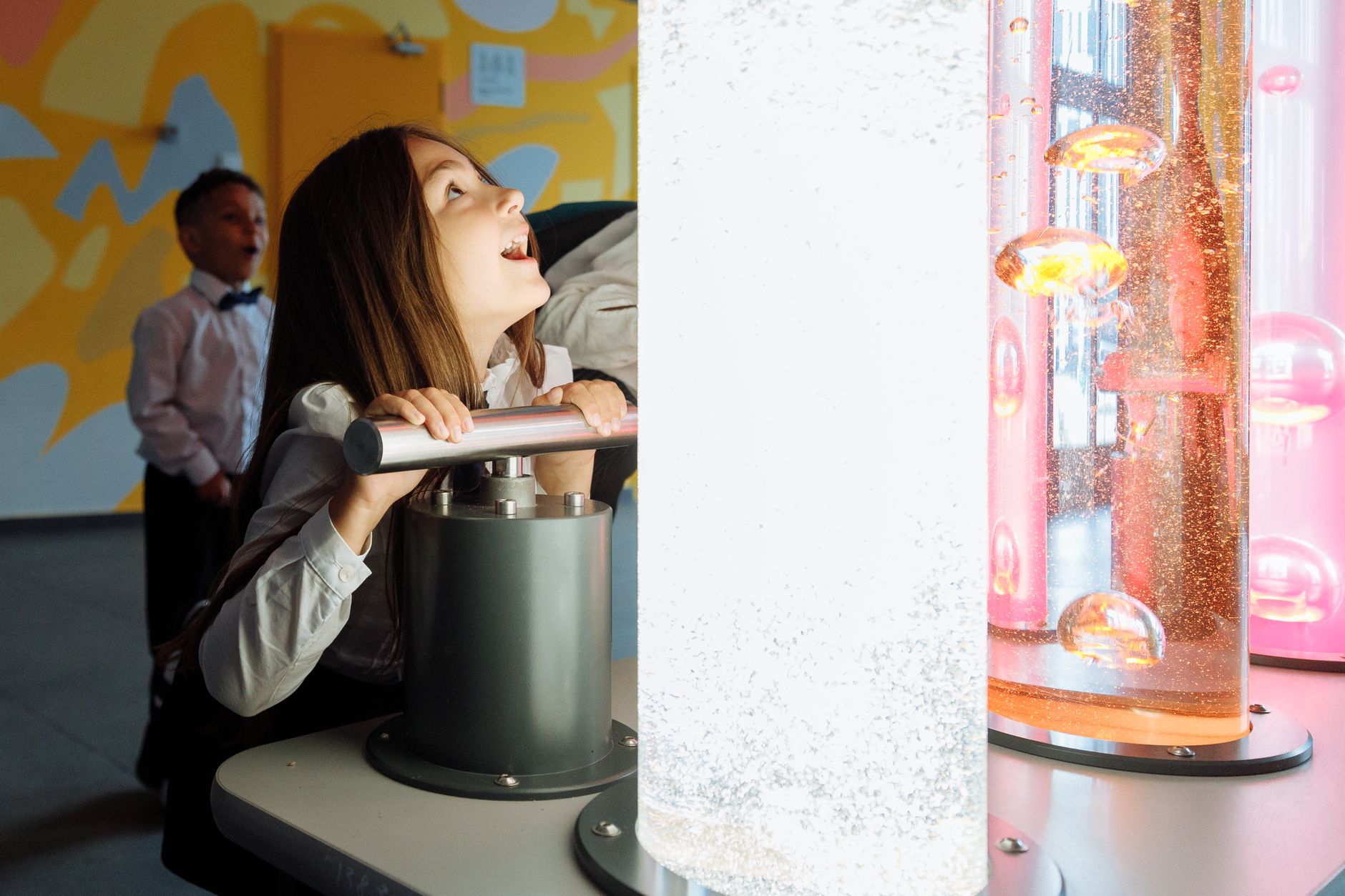
The one gallery carried over from the old museum, and the one adults enjoy most. Around 60 classic interactive stations on mechanics, optics, sound and mathematics. No queues, no reservations, endlessly repeatable. If your children are melting down elsewhere, this is the recovery room.
One Meter World (一米世界)
A dedicated zone for ages three to eight, running in timed 70-minute sessions: water play at the “Happy Riverside” channel, a nature discovery area, a construction workshop. Included in your entry ticket but needs a separate in-museum reservation, and it is the most competitive booking in the building.
Symbiotic Planet (共生星球)
Earth systems and biodiversity — how climate, oceans, soil and species interlock. Strong on specimens and projection, lighter on knobs to turn.
Tomorrow’s Explorers (明日行者)
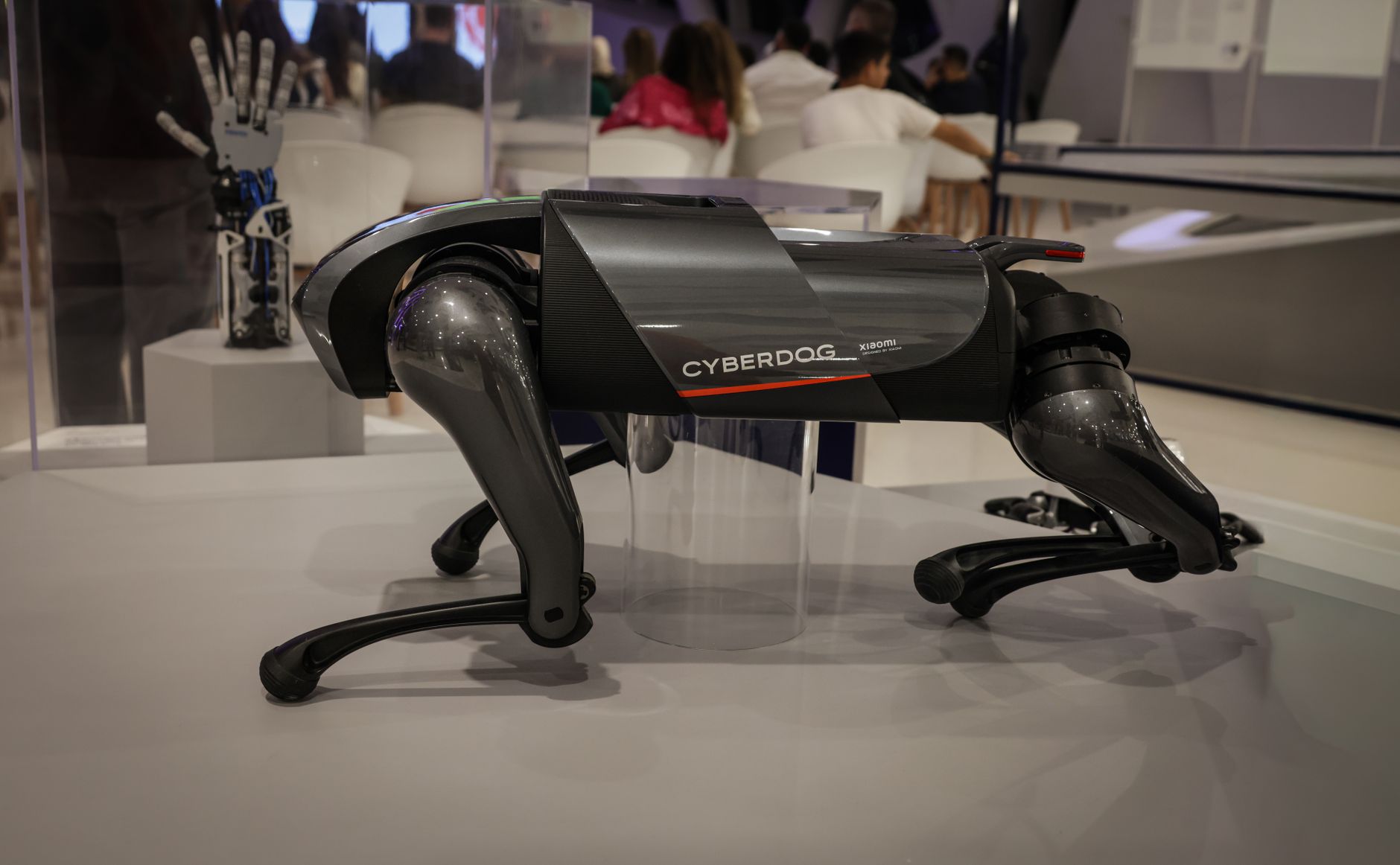
The AI and robotics gallery, successor to the old Robot World. Exoskeletons demonstrated live, surgical robots, swarm robotics, machines that respond to visitors. Teenagers who have written off museums tend to get caught here.
Gleam of Exploration (探索之光)
Scientific method and discovery — how we found out what we know. Home to the Relativity Theatre, a 16-minute show worth reserving if the timing works.
Incredible Me (神奇的我)
The human body: senses, movement, digestion, the brain, plus the Food’s Journey mini-theatre. Replaces the old walk-through heart and does the job better.
Flight Exploration (飞行探秘)
Aviation, and the surprise favourite for many visitors. A full-scale Ford Trimotor replica anchors the room, alongside a VR skydiving simulator, a “Return to the 1930s” VR piece set in early Shanghai aviation, and a see-through aircraft theatre that strips an airliner back layer by layer. Several need reservations, and some VR stations require 140 cm.
Exhibits You Have to Reserve Again Inside
Buying entry is only the first booking. Seven of the museum’s best experiences run in timed sessions with limited capacity, reserved after you are through the gate, via the WeChat account (来预约 → 展项预约). Nobody tells you this at the door, and families who miss it spend the afternoon reading signs that say “fully booked”.
| Experience | Length | Notes |
|---|---|---|
| One Meter World (一米世界) | 70 min | Ages 3–8 only; the hardest slot to get |
| Nature’s Concerto (自然的协奏) | ~7 min | Immersive projection theatre |
| Six Degrees Theatre (六度剧场) | ~7 min | Motion seating |
| X-Ray Aircraft (透视大飞机) | ~7 min | In Flight Exploration |
| Return to the 1930s (重返1930年代) | ~5 min | VR; height restriction applies |
| Food’s Journey (食物的旅行) | ~7 min | In the human body gallery |
| Relativity Theatre (相对论剧场) | ~16 min | The longest and the most substantial |
The rules that matter:
- Reservations open in two daily batches — 08:30 for sessions before 13:00, 12:30 for sessions from 13:00 onwards.
- Two reservations per person per day, up to four people on one booking.
- Every person needs a reservation, children included — an adult booking does not cover an accompanying child.
- Cancel at least 30 minutes ahead. Three no-shows within a year blocks the account from reservations for six months.
Translation: if One Meter World is the reason you are going, have an adult on their phone at 08:29 with the mini-program open. On an afternoon entry slot, set the alarm for 12:29.
The Three Cinemas: Giant Screen, Dome & 4D
All three cinemas were rebuilt, and they are the reason to budget an extra ¥30–40 a head.
- Giant-screen cinema (巨幕影院) — ¥40. A CINITY LED screen the museum describes as the largest of its kind in the world, running 4K, 3D and high frame rate. The transparent CLED panel is 2 mm thick and handles up to 120 frames per second. Even allowing for marketing, the picture is a step above a multiplex.
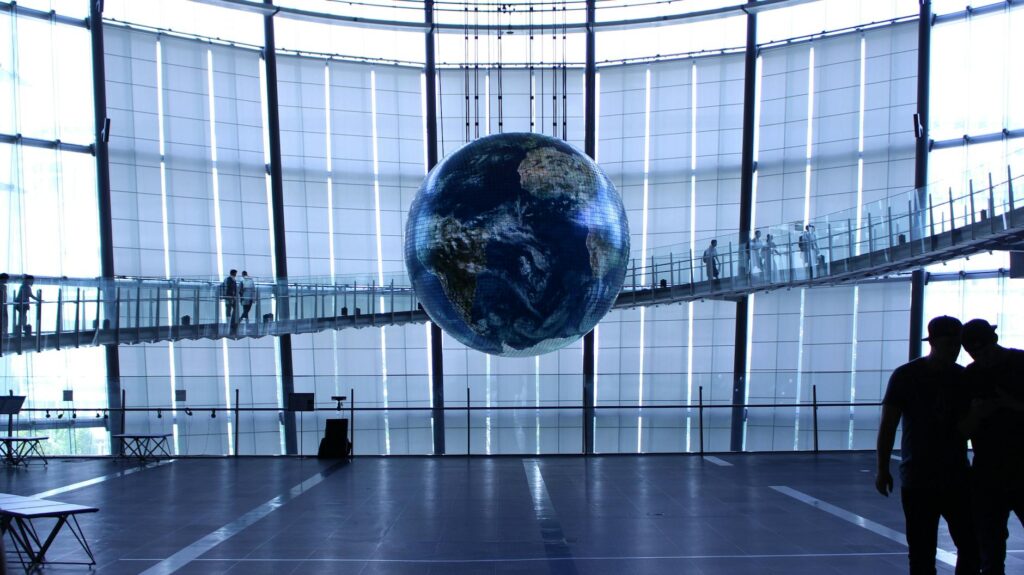
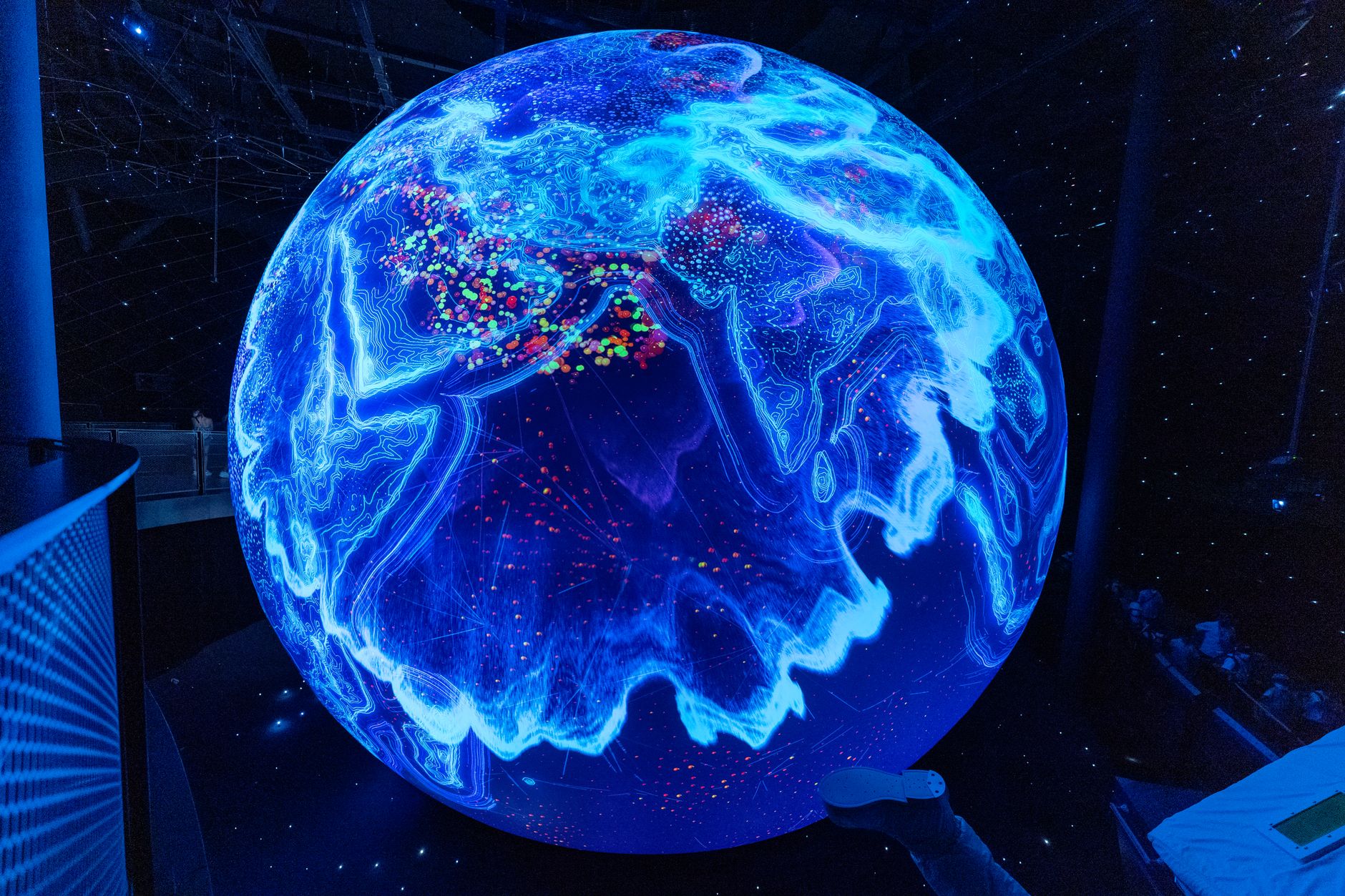
- Dome cinema (球幕影院) — ¥30. China’s largest 8K LED spherical screen: 23 metres across, more than 12,000 LED modules. It replaced the old film-projection dome and the difference is obvious. Nature and space documentaries, mostly.
- 4D cinema (四维影院) — ¥30. Laser projection, four-degree-of-freedom seats, water spray and wind. Short, silly, and reliably the thing under-eights talk about afterwards.
Check the day’s schedule when you book entry — film times are fixed and you want one that lands in a natural gap. Most shows are in Mandarin, some with English subtitles, and the dome’s programming is largely visual. If you only pick one and your children are under eight, take the 4D. Over eight, take the dome.

Best Galleries by Age Group
| Age | Start here | Then | Skip |
|---|---|---|---|
| 3–5 | One Meter World (reserve at 08:30) | Rainforest Mysteries, 4D cinema | Energy Future, Gleam of Exploration |
| 6–8 | Rainforest Mysteries | Light of Wisdom, Incredible Me, 4D cinema | Material Matrix (too abstract) |
| 9–12 | Tomorrow’s Explorers | Flight Exploration, Light of Wisdom, dome cinema | One Meter World (age-restricted anyway) |
| Teens | Tomorrow’s Explorers | Material Matrix, Energy Future, giant screen | Rainforest Mysteries |
| Adults, no kids | Light of Wisdom | Material Matrix, Relativity Theatre, dome cinema | One Meter World, 4D |
One caveat: One Meter World is strictly ages three to eight and staff enforce it. With a five-year-old and an eleven-year-old, plan to split up for 70 minutes rather than hoping the rule bends.
A Worked Half-Day Route
The version that works with two children, one adult booking on a phone, and no ambition to see everything.
- 08:29 — outside the entrance, mini-program open. At 08:30 book One Meter World for around 10:30 and one theatre for the early afternoon.
- 09:00 — through the gate with the first wave. Head straight up; everyone else stops at the nearest gallery.
- 09:10–10:20 — Rainforest Mysteries while it is quiet, then Light of Wisdom on the way back down.
- 10:30–11:40 — One Meter World for the younger child; the older one does Tomorrow’s Explorers with the other adult.
- 11:45 — lunch on B1 before the noon rush, or leave and eat properly in Lujiazui.
- 13:00 — reserved theatre session.
- 13:30–15:00 — Flight Exploration and whichever cinema you booked.
- 15:15 — out. Century Park is two minutes’ walk and children who have been indoors for six hours need it.
Family of four with two cinema tickets: roughly ¥134 entry, ¥120–160 for films, ¥160–240 on food. Call it ¥450–550 for the day — good value by Shanghai standards. See how much a Shanghai trip costs and Shanghai on a budget.
When to Go: Crowds by Day and Season
The museum reopened into pent-up demand, and it shows. Since February 2026 the pattern has settled roughly as follows.
- Best: Tuesday to Thursday in the Chinese school term, morning slot. Quiet enough to repeat exhibits.
- Acceptable: Friday, and Sunday afternoon after about 14:30 when the morning families have gone.
- Hard: Saturdays year-round, and the summer holidays (roughly 1 July to 31 August). School groups arrive mid-morning on term-time weekdays and move in blocks — annoying but predictable, and they clear a gallery within 20 minutes.
- Avoid: the first three days of Chinese New Year, National Day week (1–7 October) and Labour Day (1–5 May). Tickets sell out days ahead and the building is at capacity from opening.
Seasonally, this is a rainy-day and heat-refuge attraction. July and August highs sit in the mid-30s Celsius with heavy humidity, which is exactly when air conditioning earns its keep — our guide to visiting Shanghai in summer covers the wider strategy. In autumn, museum in the morning and Century Park after lunch is the best combination of the year.
Food & Facilities
Food inside has improved but is still museum food. The B1 level holds the main restaurant and café space; expect roughly ¥40–80 a head for a Chinese fast-food set, more if you order properly. There is a Chagee kiosk for jasmine milk tea and a robot coffee machine on the third floor near the toilets, which draws a small crowd of children watching the arm work.
On a good-weather day, pack a picnic and eat in Century Park next door — but check re-entry rules with staff before you walk out, as they have varied during trial operation. Otherwise take one metro stop to Lujiazui and eat at Super Brand Mall or the IFC food floors, where the standard is a level up. Our cheap eats in Shanghai guide has the nearby options worth the detour.
Facilities: clean toilets on every floor with Western-style cubicles, baby-change and nursing rooms, lockers, water refill points and step-free access throughout. Strollers are fine but the popular galleries get tight at weekends — a carrier is easier for under-threes on a Saturday. Free WiFi is weakest in the basement cinemas.
The Two Sister Museums
The museum runs two branches, both booked through the same WeChat mini-program. They are genuinely different museums, not annexes.
| Site | Where | Adult entry | Hours | Best for |
|---|---|---|---|---|
| Science & Technology Museum | Century Ave, Pudong (Line 2) | ¥45 | Tue–Sun 9:00–17:00 | Ages 4–13, hands-on everything |
| Natural History Museum | Jing’an Sculpture Park (Line 13) | ¥30 (¥12 student, ¥25 senior) | Tue–Sun 9:00–17:00, last entry 16:00 | Dinosaurs, specimens, ages 3–10 |
| Astronomy Museum | Lingang, far south-east (Line 16 + bus) | Around ¥30 | Tue–Sun, daytime | Space obsessives; the building itself |
The Natural History Museum is the easy add-on — central, architecturally interesting, and bookable through its own official site as well as WeChat, seven days ahead. The Astronomy Museum in Lingang is a long way out; budget close to two hours each way and treat it as a full day. It runs summer evening sessions — in 2026 the “Encounter the Starry Sky” programme ran on selected Saturdays through July and August, 16:00–20:30, around ¥358 per person, booked separately. For the wider picture, see our roundup of the best museums in Shanghai.
Combine With Other Attractions
The museum sits beside Century Park in Pudong, one metro stop from Lujiazui and the tower cluster. Good combinations:
- Half-day: morning at the museum (three galleries plus a film) → lunch at Super Brand Mall → afternoon at the Shanghai Tower observation deck.
- Full family day: museum in the morning → picnic in Century Park → Shanghai Ocean Aquarium in the afternoon, about 25 minutes by metro.
- Two-museum day: museum morning slot → Line 2 to People’s Square, change to Line 13 → Natural History Museum afternoon slot. Tight but doable, and both book in the same app.
- Cheap day: museum morning → Century Park (free) → the Bund at dusk, which costs nothing. See free attractions in Shanghai.
For more family options see our Shanghai aquarium, zoo & wildlife guide and Shanghai with kids pillar. Weighing this against the big-ticket day out? The Shanghai Disneyland guide sets out the trade-off: Disneyland is roughly ten times the price and eats the whole day.

Common Mistakes at the Shanghai Science & Technology Museum
- Reading a pre-2023 guide. Nine of the ten galleries described in older articles no longer exist. If a page mentions Animal World, the Cradle of Designers or a ¥100 combo ticket, it predates the rebuild.
- Not knowing about the second reservation. The single biggest source of disappointment. Entry gets you in; the theatres and One Meter World need a separate in-app booking at 08:30 or 12:30.
- Turning up on a Monday. Closed, every week, except inside national holidays. People still do it.
- Arriving at 15:45. Last entry is 16:00 and closing is 17:00. An hour is not enough, and you pay full price for it.
- Booking free children’s tickets at the door. Under-sixes are free but still need a ticket in the system. Add them when you book.
- Trying to do all ten galleries. Three galleries and a film is a good day. Everything else is ambition.
Practical Tips
- Take the morning entry slot where you can. It costs the same and buys you three extra hours.
- Set two phone alarms: 08:25 and 12:25, for the in-museum reservation batches.
- Bring passports for everyone, including children. Real-name entry means the name on the ticket has to match.
- Height matters: some VR stations need 140 cm, and One Meter World is capped at age eight.
- Carry a refillable bottle — hot and cold water points are free and the café queues are not short.
- The B1 level hosts rotating special exhibitions; the reopening show was a Palace Museum collaboration on the Year of the Horse. Check what is on when you book, as some carry a supplement.
- Noise-sensitive children will find the museum loud, particularly at weekends. Ear defenders are not an overreaction.
- If a gallery is jammed, walk away and come back in 30 minutes. School groups move as a unit and clear quickly.
Frequently Asked Questions
Is the Shanghai Science and Technology Museum open in 2026?
Yes. It reopened on 17 February 2026 after closing in 2023 for a complete rebuild, and now opens Tuesday to Sunday, 9:00–17:00, with last entry at 16:00. It is closed on Mondays except during national public holidays.
How much does the Shanghai Science and Technology Museum cost?
¥45 for an adult, ¥22 for students and children over 1.3 m or aged six and up, ¥37 for seniors aged 60–69. Under-sixes and over-70s are free but still need a booked ticket. Cinema tickets are extra: ¥40 for the giant screen, ¥30 each for the dome and 4D theatres.
Is the Shanghai Science and Technology Museum worth visiting after the renovation?
For families with children roughly four to thirteen, yes — more so than before. Around 80% of the 405 exhibit groups are interactive and most were designed for this museum rather than bought in. Adults travelling without children will get more from the Shanghai Museum East or the Power Station of Art.
Do I need to book tickets in advance?
Effectively, yes. Tickets are released seven days ahead at 10:00 via the museum’s WeChat mini-program, and weekend and holiday slots go quickly. Walk-up tickets exist at the on-site office but are not reliable on busy days. Trip.com and Klook resell entry if you cannot use WeChat Pay.
What is the in-museum exhibit reservation, and do I need it?
Seven experiences — including One Meter World and the immersive theatres — run in timed sessions you book separately after entering, through the museum’s WeChat account. Bookings open at 08:30 for morning sessions and 12:30 for afternoon ones, capped at two per person per day. If you want One Meter World or the Relativity Theatre, you need it.
What age is the Shanghai Science and Technology Museum best for?
Six to twelve is the sweet spot. Three- to eight-year-olds have their own dedicated zone in One Meter World. Teenagers do well in Tomorrow’s Explorers and Material Matrix. Under-threes will enjoy Rainforest Mysteries but not much else.
How long should I allow?
Four to five hours for three or four galleries and one film; a full day if you want two films and a reserved theatre. Seeing everything is not realistic — the museum’s own director reckons a minute per exhibit would take over six hours.
Is there enough English signage?
The main exhibit labels and instructions are bilingual and noticeably better than before the rebuild. Deeper interpretation panels are sometimes Chinese only, and most theatre narration is in Mandarin, occasionally with English subtitles. A phone translation app fills the gaps, and the visit works well without any Chinese.
Is the museum closed on Mondays?
Yes, every Monday, except when a Monday falls within a national public holiday. Check the museum’s WeChat account before travelling, since holiday schedules shift.
Can I get there by metro?
Yes — Line 2 to Shanghai Science & Technology Museum station, which connects underground to the entrance plaza. Around 25 minutes from People’s Square, 12 from Lujiazui, and 35 minutes direct from Pudong Airport.
How does it compare to the Natural History Museum?
Different museums with different strengths. The Natural History Museum in Jing’an is ¥30, more central, and stronger on specimens and dinosaurs — better for under-eights. The Science and Technology Museum is bigger, more interactive and better for six-and-up. Both close on Mondays and both book through the same app, so a two-museum day is feasible.
Plan Your Family Trip
Combine with our pillar guides on Shanghai for families, Shanghai with kids, and things to do in Shanghai. For background on the building and its first two decades, see the Shanghai Science and Technology Museum on Wikipedia.