The 2026 Michelin Guide for Shanghai landed on 9 April 2026, and it brought the biggest change in the guide’s Chinese history: Ultraviolet by Paul Pairet closed in November 2025, taking with it the three-star restaurant that had defined fine dining in Shanghai for a decade. Taian Table now stands alone at three stars, for a fifth consecutive year. Below it sit twelve two-star restaurants and thirty-six with one star — the Michelin star restaurants Shanghai can claim in 2026 number close to fifty, which is more than any other city in mainland China.
That number matters less than what it means for a visitor with four nights and a budget. Shanghai’s starred rooms range from a ¥3,000-a-head Cantonese temple to a one-star Huaiyang place where lunch is ¥400, and the gap between “worth flying for” and “worth an evening” is wide. This guide sets out the full 2026 list by star level and price, explains how to actually secure a table when you do not speak Chinese and do not have a Chinese phone number, covers the dress codes and deposit conventions nobody tells you about, and — most usefully — points at the thirty-four Bib Gourmand restaurants, which are where the guide’s real value sits for most travellers.
Table of Contents
- The 2026 list: what changed
- Taian Table: the only three star
- The twelve two-star restaurants
- The one-star tier, and where the value is
- How to book Michelin star restaurants Shanghai keeps full
- What it actually costs
- Dress code, deposits and dining conventions
- The Bib Gourmand list: the real bargain
- Are Michelin star restaurants Shanghai offers worth it?
- The lunch strategy that halves the bill
- What people get wrong
- Frequently Asked Questions
The 2026 list: what changed
The 2026 edition was announced on 9 April 2026 and represents a significant restructuring — the guide expanded beyond Shanghai to cover Jiangsu and Zhejiang provinces for the first time, debuting in Changzhou, Wenzhou and Taizhou. Across the whole region 409 restaurants were recognised, carrying 77 stars between them: 51 in Shanghai, 17 in Zhejiang and 9 in Jiangsu.
Within Shanghai itself, the headlines:
- Ultraviolet is gone. Paul Pairet’s twenty-two-seat, single-table, multi-sensory restaurant — for years the most talked-about dining room in China — closed in November 2025 and was removed from the guide. If you have an old list, this is the biggest correction to make.
- Taian Table retains three stars for a fifth year running, under founder Stefan Stiller and executive chef Christiaan Stoop, and is now Shanghai’s sole three-star.
- Amazing Chinese Cuisine (菁禧会), a Chaozhou restaurant, was promoted from one star to two.
- T’ang Court and Tou Zao were also promoted to two stars.
- New one stars include Fabula, Huaiyang Delights, Vivant by Johnny Pham and Wu You Xian.
- Departures: PHÉNIX lost its star entirely, EHB closed, and YongFoo Élite moved down to the Michelin Selected list.
- Thirty-four Bib Gourmand restaurants, with eight new entries including Blossom, Cong’s Kitchen and He Shan Mian Jia.
One structural point worth understanding before you read any list: the Michelin Guide in mainland China has always skewed towards Cantonese cooking and European fine dining, and has been criticised locally for underrating Shanghainese and Huaiyang restaurants. The 2026 guide’s promotions — a Chaozhou restaurant to two stars, Huaiyang Delights to one — suggest that is shifting, but it is still true that a Michelin star in Shanghai is not the same signal as a Michelin star in Lyon. Read it as a shortlist rather than a verdict, and read our best restaurants in Shanghai guide alongside it.
Taian Table: the only three star
Taian Table is a small European tasting-menu restaurant, German-founded, now in Jing’an after two earlier addresses. Stefan Stiller opened it in 2016; Christiaan Stoop runs the kitchen. It seats around thirty, serves one menu, and has held three stars since 2022.
What to expect: a set tasting menu of roughly ten to twelve courses, modern European technique with Chinese ingredients used seriously rather than decoratively, an open kitchen, and a room that is quiet, low-lit and considerably less formal than three stars implies. Service is in English and Mandarin. Expect to be there three hours.
The cost is the significant number. A three-star tasting menu in Shanghai runs to roughly ¥2,000–2,800 per person before drinks, and the wine pairing adds ¥1,200–2,000. For two people with pairings you are looking at ¥7,000–9,000. That is genuinely expensive by any standard and cheap by comparison with three-star pricing in Tokyo, Paris or New York.
Booking: one to two months ahead for a weekend, two to three weeks for a weekday. It is the hardest table in the city and it is not impossible — this is not the six-month lottery that a Tokyo three-star can be.
The twelve two-star restaurants
This is the most interesting tier in Shanghai, because it contains both the city’s grandest Cantonese dining rooms and its best Italian cooking, and the price spread across it is enormous.
| Restaurant | Cuisine | Notes |
|---|---|---|
| 102 House | Modern Chinese | Small, tasting menu format |
| 8½ Otto e Mezzo Bombana | Italian | Umberto Bombana’s Shanghai room |
| Amazing Chinese Cuisine (菁禧会) | Chaozhou | Promoted to two stars in 2026 |
| Bao Li Xuan | Cantonese | Large-format banquet dining |
| Canton 8 (Huangpu) | Cantonese | Historically the best-value star in the city |
| Da Vittorio | Italian | The Bergamo family’s Shanghai outpost |
| Fu He Hui | Vegetarian | The one to know if you do not eat meat |
| Imperial Treasure Fine Chinese Cuisine | Cantonese | Singapore group, formal service |
| Ji Pin Court | Cantonese | Hotel dining room, precise cooking |
| T’ang Court | Cantonese | Promoted to two stars in 2026 |
| The House of Rong | Chinese | Private-kitchen format, very limited seats |
| Tou Zao | Chinese | Promoted to two stars in 2026 |
Two things a visitor should take from that table. First, Cantonese cooking dominates — five of the twelve. If you have come to Shanghai wanting the best of Shanghainese cuisine specifically, the starred list is not where you will find it, and our Shanghainese cuisine guide is a better map.
Second, Fu He Hui is a genuinely unusual thing — a two-star restaurant serving entirely vegetarian Chinese food, with a tasting-menu format and Buddhist influences. There are very few two-star vegetarian restaurants anywhere in the world. If you are travelling with a vegetarian, this solves an evening. See our vegetarian and vegan Shanghai guide for the rest.
The one-star tier, and where the value is
Thirty-six one-star restaurants, and this is where a visitor’s money goes furthest. The tier spans Japanese omakase counters, French bistronomy, several regional Chinese cuisines and a growing number of small chef-owned rooms.
New for 2026: Fabula, Huaiyang Delights, Vivant by Johnny Pham and Wu You Xian. Established names holding stars include Narisawa, Il Ristorante — Niko Romito and Sole.
The practical guidance for choosing among thirty-six:
- If you want something you cannot eat at home, pick a regional Chinese one-star — Huaiyang, Chaozhou or Sichuan — rather than a European room. The European starred restaurants in Shanghai are excellent and largely interchangeable with their equivalents in London or Milan.
- If you want the best value, a one-star Chinese restaurant at lunch is the sweet spot: ¥300–600 a head for cooking that would cost three times that in Europe.
- If you want a specific experience, the Japanese counters are the hardest to book and the most rewarding for anyone who has not eaten omakase before, but they are also the most expensive per gram.
- If you have one night, honestly, consider a Bib Gourmand instead and spend the difference on a bar. More on this below.
How to book Michelin star restaurants Shanghai keeps full
This is the part that defeats most visitors, and it is more tractable than it looks. There are four routes and you should try them in this order.
1. The Michelin Guide website. Many Shanghai starred restaurants now take online reservations directly through guide.michelin.com. It works with a foreign email address and no Chinese phone number, and it is in English. Start here — it costs nothing to check and solves the problem outright when it works.
2. WeChat mini-programs. The standard Chinese booking route. In WeChat: Discover → Mini Programs → search the restaurant’s name (in Chinese, so copy and paste it) → choose city, date and number of seats. Most restaurants run their own. This is how locals book and it has the fullest availability, but the interface is usually Chinese-only and often wants a Chinese mobile number. If you have WeChat set up with a foreign card, it is worth attempting with a translation app open.
3. Your hotel concierge. The most reliable route by a distance, and the reason to stay somewhere with a proper concierge desk if fine dining is a priority for your trip. A good Shanghai concierge has direct relationships and can often place you at a starred restaurant with a few days’ notice when the public channels show nothing. Ask by email before you arrive, not on the day. Our luxury hotels guide flags which properties do this well.
4. Phone the restaurant. English is generally spoken at the two- and three-star level and at the international one-stars; less so at the Chinese one-stars. Call in the afternoon, between services.
How far ahead: Taian Table one to two months for a weekend. Two-star restaurants two to four weeks. One-stars one to two weeks, and often a few days is enough on a weeknight. Bib Gourmand places mostly do not take bookings at all — you queue.
A note on cancellations: tables do come back, particularly at 48 and 24 hours out. If the restaurant you want is full, ask to be put on the waiting list and then actually check back. This works more often in Shanghai than it does in Europe.
What it actually costs
| Tier | Dinner per head | Lunch per head | With wine pairing |
|---|---|---|---|
| Three star (Taian Table) | ¥2,000–2,800 | Not usually served | +¥1,200–2,000 |
| Two star, European | ¥1,200–2,200 | ¥600–1,000 | +¥800–1,500 |
| Two star, Cantonese | ¥800–1,800 | ¥400–900 | Wine by the glass more common |
| One star, European | ¥800–1,500 | ¥400–700 | +¥500–1,000 |
| One star, Chinese | ¥400–900 | ¥300–600 | Often tea pairing instead |
| Bib Gourmand | ¥80–200 | ¥60–150 | Beer, ¥15–35 |
| Excellent unstarred local | ¥60–150 | ¥40–100 | — |
Service charge is typically 10 to 15 per cent at the starred level and is added automatically. Tipping on top is not expected anywhere in China — see tipping in Shanghai. Payment is by Alipay, WeChat Pay or, at the international restaurants, a foreign card; the Chinese-owned rooms are less reliable for foreign cards, so have mobile payment working.
For the broader budget picture across a trip, our Shanghai trip cost guide puts these numbers in context. One three-star dinner for two is roughly the same as four nights in a good mid-range hotel.
Dress code, deposits and dining conventions
Shanghai fine dining is less formal than the equivalent in Europe, and the conventions differ in ways that catch people out.
Dress. Smart casual is the working standard almost everywhere, including at three stars. Jackets are welcome and not required; ties are rare. What you should avoid is shorts, flip-flops and sportswear, which will get a look at the two-star level. Chinese diners at this price point dress well but not formally, and the room will be less dressed-up than you expect.
Deposits. Increasingly common at the top end, usually taken by card or through the booking platform, and typically forfeited on a late cancellation. Policies vary by restaurant; assume there will be one at two and three stars and check the terms when you book.
Timing. Dinner service in Shanghai starts early — 18:00 to 18:30 is normal and 21:00 is late. Tasting menus often have a fixed seating time. Lunch is 11:30 to 13:30, and Chinese restaurants take it seriously in a way European ones do not.
Sharing. At Chinese starred restaurants the format is shared dishes at a round table, not individual plates. Ordering for two at a Cantonese two-star can be awkward — the menu is built for six. Say so when you book and the restaurant will guide you; some offer a reduced set menu for two.
Children. Generally welcome at Chinese restaurants including starred ones, and generally not at European tasting-menu rooms. Ask.
Photography. Normal and expected. Nobody will mind.
More on the wider table manners — chopstick handling, toasting, who pays — is in our Shanghai etiquette guide.
The Bib Gourmand list: the real bargain
Thirty-four restaurants in the 2026 Shanghai guide carry a Bib Gourmand — Michelin’s award for good cooking at moderate prices. Eight are new this year, including Blossom, Cong’s Kitchen and He Shan Mian Jia.
For most visitors this list is more useful than the starred one, and the reason is arithmetic. A Bib Gourmand meal in Shanghai costs ¥80–200 a head. You could eat at ten of them for the price of one three-star dinner, and in doing so you would eat a great deal more Shanghainese food, which is the thing you actually came here for.
What is on the list, broadly: noodle shops, dumpling houses, small Shanghainese restaurants doing braised pork and drunken chicken, regional Chinese specialists, and a handful of casual international places. Most are small, most do not take bookings, and most have a queue at peak times. Go at 11:15 or 17:30 and you will walk in.
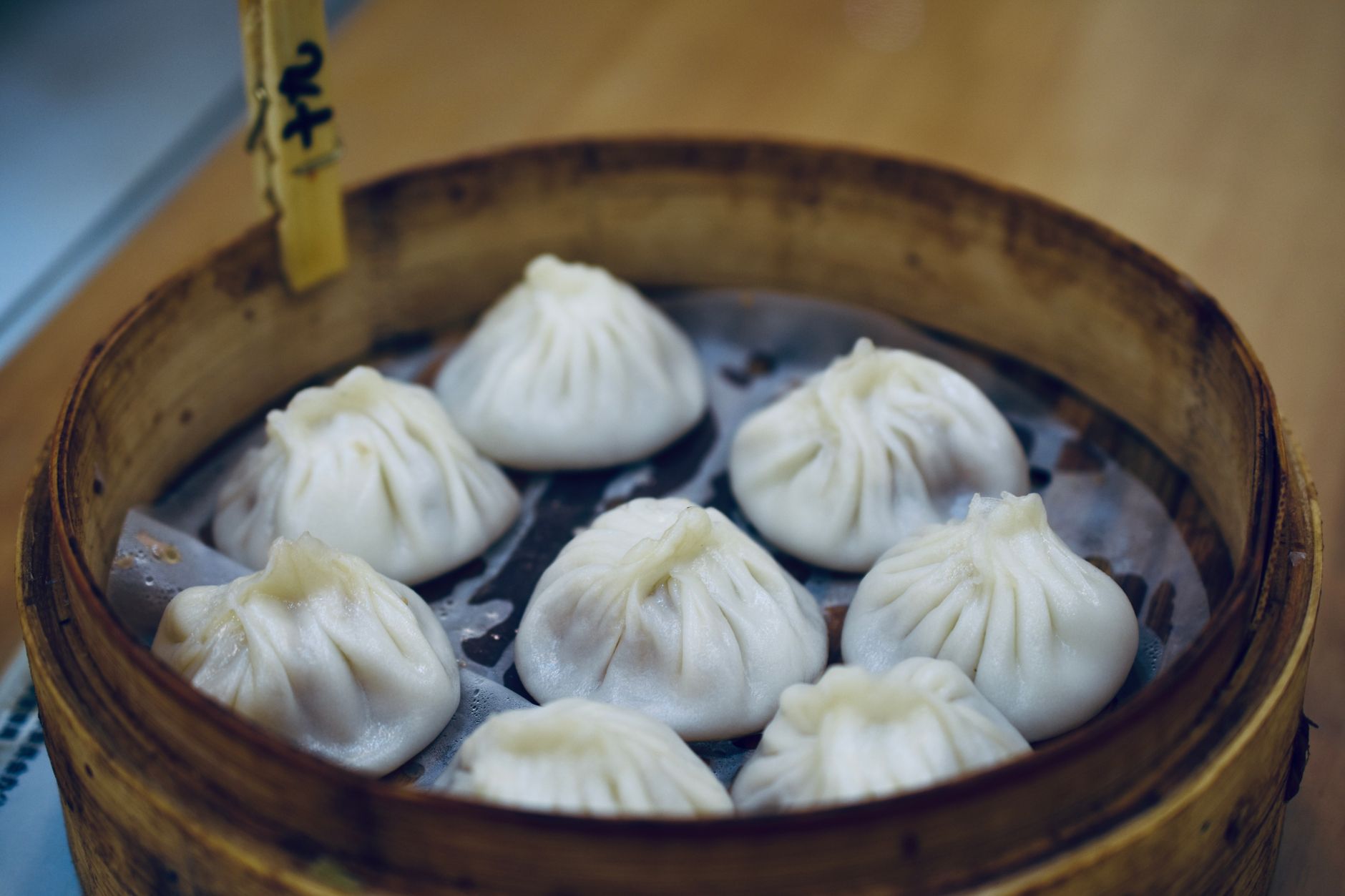
The strategic recommendation this site makes: book one starred restaurant for one evening and eat Bib Gourmand and street food for the rest of the trip. That gives you the experience without distorting your budget or, more importantly, your sense of what Shanghai food is. Our xiaolongbao guide, the cheap eats guide and the street food guide cover the layer below the Bib Gourmand list, which is also excellent.
Are Michelin star restaurants Shanghai offers worth it?
A straight answer, split by what you are after.
Worth it: if you are a serious food traveller, if you want Cantonese cooking at a level that is difficult to find outside Hong Kong and Guangzhou, if you are vegetarian and want one genuinely remarkable meal (Fu He Hui), or if a three-star dinner is something you actively collect. Shanghai’s starred restaurants are cheaper than their equivalents in any European or Japanese capital by a wide margin — a three-star tasting menu here costs roughly what a one-star costs in Paris.
Not worth it: if you have four nights and want to understand Shanghai. The starred list will take you to a series of excellent, internationally legible restaurants and away from the food that makes this city distinctive. It skews Cantonese and European; Shanghainese cooking is under-represented; and the best breakfast in the city costs eight yuan and is served from a hatch.
The middle path, which is what most people should do: one starred lunch rather than a starred dinner — same kitchen, half the price, easier booking — plus a Bib Gourmand list for the rest of the week. See the Shanghai breakfast guide for the other end of that spectrum, and Shanghai for couples if the meal is the occasion rather than the food.
The lunch strategy that halves the bill
The single most useful piece of advice in this article: go at lunch.
Most Shanghai starred restaurants that serve lunch do so at 40 to 60 per cent of the dinner price, from the same kitchen with the same brigade. A ¥1,400 two-star European dinner becomes a ¥700 lunch. A ¥600 one-star Chinese dinner becomes a ¥350 lunch. The menu is shorter — typically five or six courses rather than ten — which for most people is a better length anyway.
Lunch is also dramatically easier to book. A restaurant with a four-week wait for a Saturday dinner will often have a table for two on a Wednesday lunchtime with three days’ notice.
The trade-offs are real but small: no evening atmosphere, no city lights if the room has a view, shorter menus, and Taian Table does not usually serve lunch at all. For a two- or one-star, the saving is worth all of that.
What people get wrong
Booking Ultraviolet. It closed in November 2025. It is still on a great many “best restaurants in China” lists and in older guidebooks, and resale sites have been slow to update.
Assuming a star means Shanghainese food. The guide skews heavily Cantonese and European. If you want the local cuisine at its best, the Bib Gourmand and the unstarred neighbourhood restaurants are where it is.
Leaving booking until you arrive. Two- and three-star tables need weeks. Email your hotel concierge before you fly.
Only trying the Chinese booking apps. The Michelin Guide’s own site takes reservations for many Shanghai restaurants in English with a foreign email address. Try it first.
Booking a Cantonese two-star for two people. The menu is built for a round table of six. Tell them your party size and ask what they recommend, or you will over-order badly.
Turning up in shorts. Smart casual is genuinely the standard, and the room will be better dressed than a European equivalent at the same price.
Ignoring lunch. Forty to sixty per cent cheaper, far easier to book, same kitchen.
Spending the whole food budget on one meal. Shanghai’s greatest strength is the range across price points, and a trip built around a single ¥8,000 dinner misses most of it. Our Shanghai food guide lays out the whole spectrum.
Frequently Asked Questions
How many Michelin-starred restaurants are there in Shanghai?
In the 2026 guide, announced on 9 April 2026, Shanghai has one three-star restaurant, twelve two-star restaurants and thirty-six one-star restaurants — close to fifty in total, more than any other city in mainland China. There are also thirty-four Bib Gourmand entries.
Which Shanghai restaurant has three Michelin stars?
Taian Table, and it is now the only one. Founded by Stefan Stiller with Christiaan Stoop as executive chef, it has held three stars for five consecutive years. Ultraviolet by Paul Pairet, which previously also held three, closed in November 2025 and has been removed from the guide.
Is Ultraviolet still open in Shanghai?
No. Paul Pairet’s twenty-two-seat multi-sensory restaurant closed in November 2025 and was removed from the 2026 Michelin Guide. Many websites, older guidebooks and some tour packages still list it as operating. Do not book through any site that offers it.
How do I book a Michelin restaurant in Shanghai without speaking Chinese?
Try the Michelin Guide’s own website first — many Shanghai starred restaurants take reservations there in English with a foreign email address and no Chinese phone number. Failing that, your hotel concierge is the most reliable route and can often find tables the public channels do not show. WeChat mini-programs have the fullest availability but are usually Chinese-only.
How far in advance should I book?
Taian Table needs one to two months for a weekend. Two-star restaurants take two to four weeks. One-stars are usually fine at one to two weeks, and often a few days on a weeknight. Bib Gourmand restaurants mostly do not take bookings at all — you queue, so go at 11:15 or 17:30.
How much does a Michelin-starred meal cost in Shanghai?
Roughly ¥2,000–2,800 per head at the three-star, ¥800–2,200 at two stars, and ¥400–1,500 at one star depending on whether the restaurant is Chinese or European. Wine pairings add ¥500–2,000. Service charge of 10–15 per cent is added automatically; tipping on top is not expected in China.
Is there a dress code at Shanghai’s Michelin restaurants?
Smart casual almost everywhere, including at three stars. Jackets are welcome but not required and ties are rare. Shorts, flip-flops and sportswear will get you a look at the two-star level. Shanghai fine dining is noticeably less formal than the European equivalent at the same price.
Are there any vegetarian Michelin restaurants in Shanghai?
Yes — Fu He Hui holds two stars for entirely vegetarian Chinese cooking in a tasting-menu format with Buddhist influences. Two-star vegetarian restaurants are rare anywhere in the world, and it is the single best answer to a vegetarian evening in Shanghai.
What is a Bib Gourmand and is it worth using?
It is Michelin’s award for good cooking at moderate prices — thirty-four restaurants in the 2026 Shanghai guide, eight of them new. Meals run ¥80–200 a head. For most visitors this list is more useful than the starred one: it contains far more Shanghainese and regional Chinese cooking, and you could eat at ten of them for the price of one three-star dinner.
Is lunch cheaper at Shanghai’s Michelin restaurants?
Substantially. Where lunch is served it typically runs at 40 to 60 per cent of the dinner price, from the same kitchen, with a shorter menu of five or six courses. It is also far easier to book. A restaurant with a four-week wait for Saturday dinner may have a Wednesday lunch table at three days’ notice.
Do Shanghai Michelin restaurants accept foreign credit cards?
The international and hotel-based restaurants generally do. Chinese-owned rooms are less reliable, and some take only Alipay, WeChat Pay or UnionPay. Set up Alipay or WeChat Pay with a foreign card before you travel and the problem disappears entirely.
Does the Michelin Guide cover cities near Shanghai?
Yes, since 2026. The guide expanded to cover Jiangsu and Zhejiang provinces, debuting in Changzhou, Wenzhou and Taizhou. Across the region 409 restaurants were recognised carrying 77 stars — 51 in Shanghai, 17 in Zhejiang and 9 in Jiangsu — which makes a food-led day trip to Hangzhou or Suzhou a genuine proposition.
Book one starred lunch, keep the evenings for the Bib Gourmand list and the neighbourhood restaurants, and you will eat better across a week than someone who spent the same money on a single dinner. Start with our Shanghai food guide for the full spectrum, the best food streets for where to wander hungry, and the cocktail bar guide for afterwards. The official listings, with current stars and online reservation links, are at the Michelin Guide’s Shanghai pages, and the guide’s regional expansion is set out by Michelin itself.