Staying in Shanghai’s former French Concession is the closest the city comes to a European boutique-hotel experience without leaving China. Plane-tree-lined streets, restored shikumen lane houses, 1920s Art Deco mansions turned into hotels, and an independent cafe or wine bar every other block. Where the Bund trades on skyline and grand scale, the FFC trades on atmosphere: slower, more residential, more design-led. This guide covers the best French Concession hotels Shanghai has to offer across luxury, boutique, mid-range, B&B, and serviced-apartment tiers — with named properties, indicative prices, the streets they sit on, and the metro stops that reach them. The short version: Capella Shanghai (shikumen heritage), The Middle House (modern luxury), and URBN (sustainable boutique) anchor the top end, with a deep bench of smaller hotels, guesthouses, and apartments filling out the range below them.
Most repeat Shanghai visitors end up in the FFC at least once after a first trip spent on the Bund. A fair number never book anywhere else again. The trade is simple: you give up a little walking proximity to the headline sights in exchange for the best everyday neighbourhood in central Shanghai to actually live in for a few days.

Table of Contents
- Why Stay in the French Concession
- Who the French Concession Suits (and Who It Doesn’t)
- FFC Geography: Picking the Right Pocket
- Best Streets and Metro Stops
- Luxury Hotels
- Boutique and Design Hotels
- Mid-Range Boutique Options
- Bed and Breakfasts and Guesthouses
- Serviced Apartments
- French Concession Hotels on a Budget
- FFC vs. the Bund: Which to Choose
- Booking Tips
- Frequently Asked Questions
- Plan Your Stay
Why Stay in the French Concession
The FFC gives you several things the Bund cannot, and it is worth being specific about them rather than reaching for the usual neighbourhood-guide adjectives.
Walkable, residential streets. Plane trees planted more than a century ago shade low-rise avenues of villas, Art Deco apartment blocks, and restored shikumen lanes. It is the part of Shanghai built for being on foot, and most of what you need day to day — coffee, food, a park, a metro entrance — sits inside a 15-minute walk of wherever you book.
The strongest cafe and independent-dining scene in the city. Shanghai has one of the largest concentrations of coffee shops of any city on earth, and the FFC is its centre. Third-wave roasters, owner-run restaurants, natural-wine bars, and design-led shops are dense around streets like Anfu Road, Wuyuan Road, and Wukang Road.
A genuinely local feel. Outside a few honeypots (Wukang Mansion, Tianzifang, Xintiandi at the weekend), the district is residential. During the day you share the pavement with people who live here, not coach groups. Fuxing Park fills with tai chi and ballroom dancing in the morning; the markets and lane houses are still working neighbourhoods.
Design-forward hotels. The FFC holds the best collection of boutique and design hotels in central Shanghai, from a carbon-neutral shikumen conversion to Italian-designed modern luxury.
Quiet nights. While the Bund and Nanjing Road stay loud, most FFC streets are calm by 11pm. If you sleep poorly in cities, this matters more than any amenity. The district is also consistently rated one of the safest in Shanghai to walk after dark, with well-lit streets and plenty of taxis.
The drawbacks are real but manageable. You are 20–25 minutes by metro from the Bund and Pudong’s skyline, so the icons take a short ride rather than a stroll. Skyline-view rooms are rare here because the district is deliberately low-rise. And some heritage properties come with heritage problems — narrow stairs, no lift, quirky plumbing — so if step-free access matters, check before you book.
Who the French Concession Suits (and Who It Doesn’t)
The FFC is not automatically the right base for every trip. It rewards some travellers more than others.
It suits couples and solo travellers who want atmosphere, cafe mornings, and quiet evenings over walking distance to the big sights. If your ideal day is a slow breakfast, a wander, lunch in a lane house, and a cocktail bar after dark, this is your neighbourhood.
It suits repeat visitors. Once you have ticked off the Bund, Yu Garden, and the Shanghai Tower on a first trip, the FFC becomes the obvious base for a second — you are no longer optimising for proximity to first-timer landmarks.
It suits design and food-led travellers. Anyone who plans a trip around where they will eat and what the hotel looks like will find more to like here than anywhere else in the city.
It is a weaker fit for first-timers on a tight schedule. If you have two or three days and want to walk out of the lobby straight onto the Bund, a Bund-area or People’s Square hotel saves you metro time. A common compromise, covered below, is to split nights between the two.
It is a weaker fit for shoestring budgets. The FFC skews mid-range and up. Backpackers can still stay here in a couple of well-placed hostels, but the cheapest beds in Shanghai cluster around People’s Square and Hongkou instead.
FFC Geography: Picking the Right Pocket
The FFC is large, and “French Concession” on a booking site can mean anything from a polished mall district to a sleepy residential lane. Different pockets feel quite different, and matching the pocket to your trip matters as much as picking the hotel.
Eastern FFC (around Xintiandi). The most polished and the closest to the Bund. This is where the restored Xintiandi shikumen complex sits, along with several full-service luxury hotels. Good if you want FFC atmosphere but also want the shortest hop to the waterfront.
Central FFC (around Wukang Road, Wuyuan Road, and Anfu Road). The most photogenic and walkable stretch, and the heart of the cafe-and-boutique scene. Best for travellers whose priority is the neighbourhood itself rather than fast access to anything else.
Western FFC (around Hengshan Road). More residential and a touch quieter, anchored by Hengshan Road metro and a cluster of established hotels. A calmer base that is still well connected.
Southwestern FFC (around Yongkang Road and Jianguo Road). Quieter and more local, with the small Yongkang Road bar strip and a scattering of smaller hotels and guesthouses. Good value and good atmosphere, slightly further from the headline sights.
As a rule, the boutique and design hotels concentrate in the eastern and central pockets, while the luxury heritage options are spread across the whole district. If you are unsure, central FFC is the safest first booking: it puts the most on your doorstep.
Best Streets and Metro Stops
Because the FFC is a walking-first district, the single most useful thing to optimise for is the distance from your hotel door to a metro entrance. Aim to be within a 5–8 minute walk of a station on a line that reaches the Bund and People’s Square, and the rest of the city opens up cheaply and quickly.
The lines and stops that matter here:
- South Shaanxi Road (Lines 1, 10, and 12). The most useful interchange in the central FFC, a short walk from The Middle House and the Taikoo Hui / Anfu Road area.
- Hengshan Road (Line 1). Serves the western, more residential pocket and several long-established hotels.
- Xintiandi (Line 10 and Line 13). Drops you in the eastern FFC beside the shikumen complex and the luxury cluster.
- Jiaotong University and Shanghai Library (Lines 10 and 11). The two handiest stops for the Wukang Road end of the central FFC.
- Dapuqiao (Line 9). The closest stop to Tianzifang on the district’s southeastern edge.
For sights, Line 10 is the workhorse: it links the FFC to East Nanjing Road (for the Bund) and Yuyuan Garden (for Yu Garden and the Old City) without a change. From most central-FFC hotels you are about 20–25 minutes from the Bund by metro and a similar time by taxi, traffic depending.
For a street-by-street feel of the district before you choose a hotel, our self-guided French Concession walking tour runs from Wukang Mansion to Tianzifang and is the fastest way to understand which pocket you actually want to wake up in.
Luxury Hotels
The top of the FFC market is small, distinctive, and books out early. These four cover the range from once-in-a-trip heritage to design-led lifestyle luxury. Prices below are indicative double-room rates and move with season, demand, and Chinese public holidays — always confirm live before booking.
Capella Shanghai
The newest entry at the ultra-luxury end (opened 2024), set in a fully restored 55-villa shikumen lane complex in the Old City just east of the FFC proper.

Location: Jianzhong Lu, Old City — walking distance to Xintiandi and the eastern FFC.
Style: Restored shikumen heritage with contemporary luxury. Each villa is private, with its own entrance.
Notable rooms: All rooms sit within restored 1930s lane houses, which makes them among the most distinctive accommodations in the city.
Dining: Le Comptoir de Pierre Gagnaire (French, from the three-Michelin chef) and the Capella lobby restaurant.
Indicative price: roughly RMB 4,500–9,500 per night.
Right for: travellers who want the most uniquely Shanghai luxury stay available, and for whom the address is part of the experience.
The Middle House
Swire’s contemporary luxury hotel and the standout modern option inside the central FFC. Opened 2018 within the design-forward Taikoo Hui complex.
Location: central FFC by Taikoo Hui, adjacent to South Shaanxi Road metro (Lines 1/10/12).
Style: contemporary luxury with a strong Asian design sensibility, by Italian designer Piero Lissoni.
Notable rooms: studio rooms with floor-to-ceiling windows; suite categories with separate living areas.
Dining: Café Gray Deluxe (modern Asian-European), Sui Tang Li (Cantonese), and The Middle House Bar.
Indicative price: roughly RMB 3,500–8,000 per night.
Right for: travellers who want both the heritage neighbourhood and a genuinely modern hotel, with the best metro access of the luxury set.
The Langham Shanghai (Xintiandi)
A full-service five-star at the eastern edge of the FFC, beside Xintiandi and a short walk from the Huaihai Road shopping run.

Location: Xintiandi area, eastern FFC.
Style: modern luxury with Asian-European fusion design and a 24-hour fitness centre.
Notable rooms: premier rooms with city views; some suites overlook the Xintiandi shikumen rooftops.
Dining: Café 100 (all-day international), a two-Michelin Cantonese restaurant, and the lobby bar.
Indicative price: roughly RMB 2,500–5,500 per night.
Right for: travellers who want Xintiandi on the doorstep with the reliability of a large luxury hotel.
The Shanghai EDITION
Ian Schrager’s lifestyle-luxury hotel sits between the Bund and the FFC. Strictly speaking it is on the Bund side rather than inside the Concession, but it is an easy bridge between the two and earns its place for design-led travellers weighing both neighbourhoods.
Location: Nanjing Road East, between the Bund and the FFC.
Style: contemporary lifestyle luxury with a strong design hand.
Notable rooms: Garden View rooms overlook a hidden courtyard; Skyline rooms face Pudong.
Dining: The Roof (one of the city’s best rooftop bars), plus additional restaurants and lounges.
Indicative price: roughly RMB 2,500–5,500 per night.
Right for: younger luxury travellers who prioritise design and a rooftop bar, and who want a foot in both districts.
Boutique and Design Hotels
Below the full-luxury tier, the FFC’s real strength shows: small, design-led hotels you cannot find elsewhere in central Shanghai.
URBN Hotel
Shanghai’s first carbon-neutral boutique hotel — small, sustainable, and design-focused.
Location: Jiaozhou Road, central FFC.
Style: sustainable boutique luxury behind a repurposed shikumen façade, with a pared-back interior.
Notable rooms: 26 individual guest rooms, each using reclaimed materials and with its own character.
Dining: URBN Restaurant (modern Chinese-Western).
Indicative price: roughly RMB 2,000–4,500 per night.
Right for: sustainability-minded travellers and design enthusiasts who want an intimate, small-scale stay.
Andaz Shanghai (Xintiandi)
Hyatt’s boutique brand, set right by Xintiandi in the eastern FFC.
Location: Xintiandi, eastern FFC.
Style: modern boutique design with playful contemporary touches.
Notable rooms: Andaz Suite category and studio rooms with separate dining areas.
Dining: hotel bar and all-day dining options.
Indicative price: roughly RMB 1,800–3,800 per night.
Right for: younger travellers who want boutique design and a prime location at a notch below full-luxury pricing, with World of Hyatt points in play.
Mid-Range Boutique Options
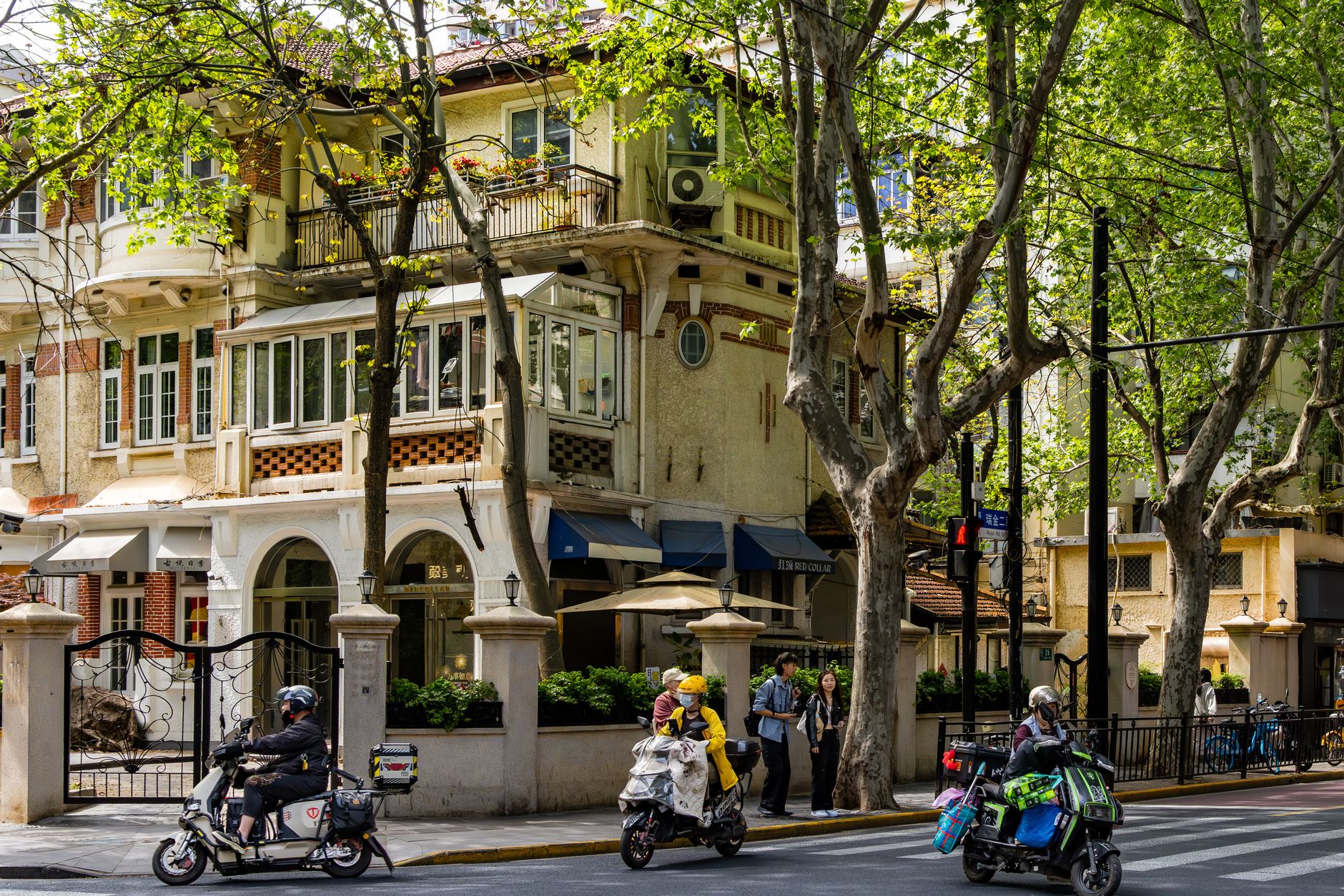
A cluster of smaller hotels offers good value below the marquee names. These are where most travellers actually land, and several are heritage conversions in their own right. Prices shift, so treat the figures as a guide.
Cachet Boutique Hotel. Modern boutique in the central FFC. Around RMB 800–1,500.
Massenet Mansion. Heritage boutique in a restored 1920s mansion. Around RMB 1,200–2,500.
Hotel Indigo Shanghai on the Bund. A five-star listed here for its easy access to the FFC, with the CHAR rooftop bar. Around RMB 1,800–3,500.
The Roosevelt House. A 1929 building converted into a smaller boutique hotel. Around RMB 1,200–2,200.
Smaller chains and guesthouses. Various Quint Hotels and Magnolia-style B&B options are scattered across the district from roughly RMB 600–1,500.
Bed and Breakfasts and Guesthouses
The FFC has the strongest small-hotel and B&B scene in Shanghai — often the most characterful way to stay in the district if you do not need full hotel services.
Magnolia Bed and Breakfast. A restored 1920s mansion, locally owned, with English-speaking staff. Around RMB 1,000–2,000.
The Yangtze Boutique Shanghai. A 1934 heritage building — small but full of period character. Around RMB 800–1,500.
French Cottage Hotel. A smaller heritage option. Around RMB 700–1,200.
One practical note for foreign guests: every hotel in China has to register your passport with the local police on arrival, and a few of the smallest unbranded guesthouses still run check-in software that cannot process a foreign passport. The properties above are set up for international travellers, but if you book somewhere very small and very cheap, confirm it accepts foreign guests first — the simplest filter is to book through a major platform such as Trip.com or Booking.com that flags it.
Serviced Apartments
For stays of five days or more, a serviced apartment is often the smarter choice in the FFC — more space, a kitchen, and laundry, usually at a better nightly rate than a hotel suite.
Lanson Place. Upscale serviced apartments with hotel-style service.
Ascott Huai Hai Road Shanghai. Long-stay focused, with kitchen facilities.
Citadines. Multiple locations in and around the FFC, reliable mid-range standard.
Individual rentals. Private apartments through Trip.com or, where available, other platforms.
Serviced apartments work especially well for families and for anyone who wants to cook some meals rather than eat out three times a day. Confirm foreign-guest registration is handled, exactly as with a hotel.
French Concession Hotels Shanghai on a Budget
The FFC is not a budget district, but you are not locked out of it either. There are two realistic ways to stay here cheaply.
The first is a well-placed hostel. A couple of stylish hostels sit in the central FFC near Wukang Road and in restored villas, with dorm beds and private doubles that put you on the doorstep of the cafe scene for a fraction of a hotel rate. They suit solo travellers and couples on a budget who want the neighbourhood without the price tag.
The second is to widen your search by a few hundred metres. The cheapest beds in Shanghai cluster just outside the FFC — in adjacent Jing’an, and around People’s Square — from where the FFC is a short walk or one metro stop away. You lose the “wake up in the Concession” feeling but keep almost all of the access.
For the full rundown of hostels, capsule hotels, budget chains, and how foreigners book them without a Chinese phone number, see our guide to budget hotels and hostels in Shanghai.
FFC vs. the Bund: Which to Choose
This is the most common Shanghai accommodation decision, and there is no single right answer — only a right answer for your trip.
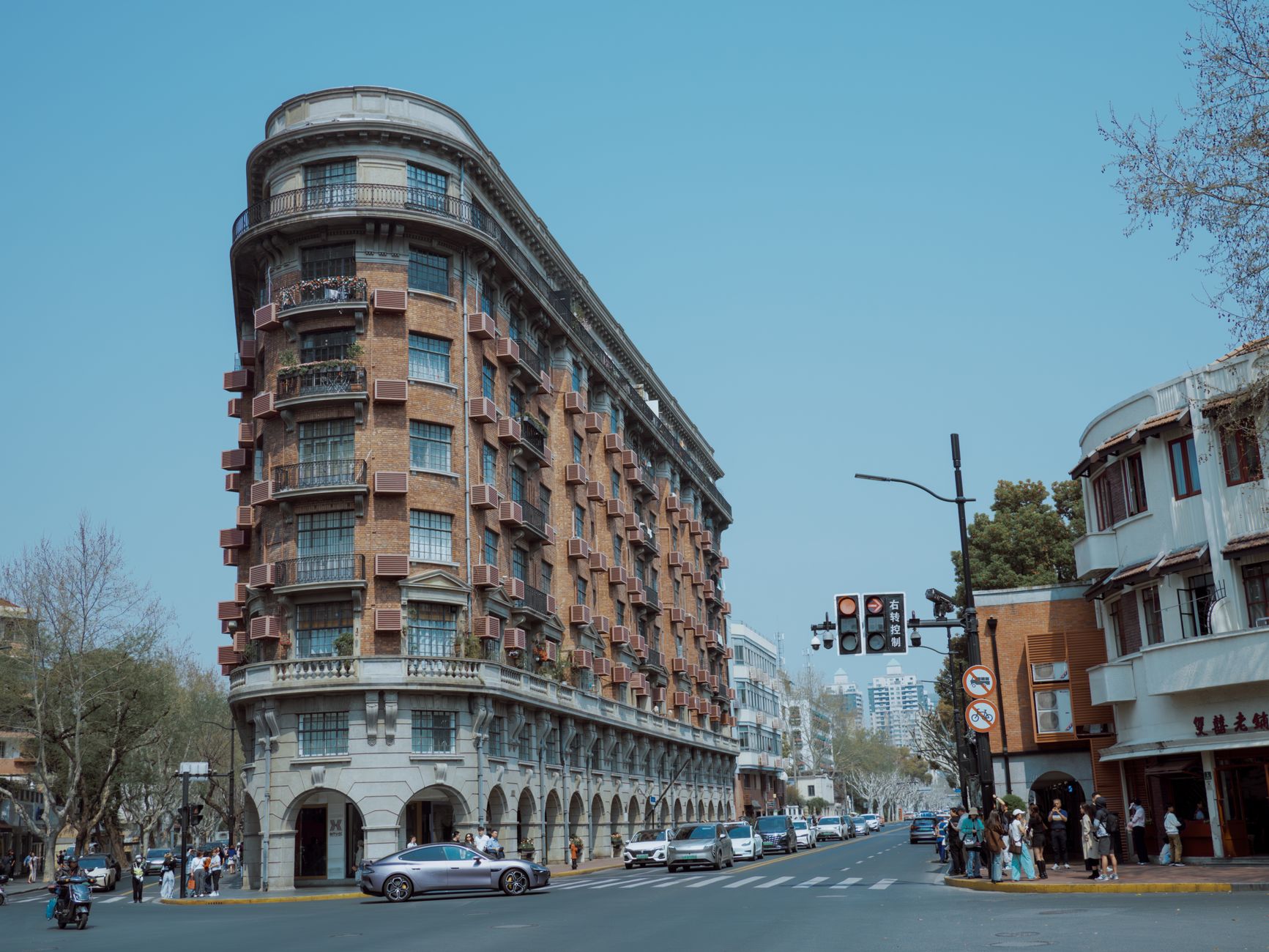
The Bund’s case: a landmark location, walking distance to the waterfront and across to Pudong, classic skyline views from many rooms, and a strong evening buzz. It is the easier base for a first trip built around the headline sights.
The Bund’s cost: tourist crowds at peak hours, higher prices for comparable rooms, and a less residential, less local feel.
The FFC’s case: atmosphere, cafe culture, independent dining, quiet evenings, the best boutique and design hotels, and a genuine neighbourhood feel.
The FFC’s cost: you need the metro for the icons (20–25 minutes to the Bund), fewer skyline-view rooms, and less postcard photography from your window.
The practical recommendation: on a first trip of five or six nights, split them — two or three nights near the Bund for the icons and the skyline, then two or three in the FFC for the neighbourhood. Repeat visitors can simply pick on preference, and most who have done both choose the FFC.
If you want to weigh the Bund option properly, see our guide to hotels near the Bund Shanghai, and for how the FFC stacks up against every other district, our best neighbourhoods in Shanghai for tourists comparison lays them side by side.
Booking Tips
A few habits save real money and the occasional headache when booking in the FFC.
Book the marquee names early. Capella, The Middle House, and URBN are small and often sell out three months or more ahead, especially in spring and autumn.
Compare on Trip.com or Booking.com. Both list Chinese hotels with English interfaces, take international cards, and accept a foreign email and phone number — you do not need a Chinese SIM to book.
Check the hotel’s own site for direct-booking perks. Breakfast and room upgrades are sometimes bundled into direct rates.
Avoid the two big holiday weeks. Rates spike hard around the May 1–5 Labour Day break and the October 1–7 National Day holiday, and the best rooms vanish. Shift your dates if you can.
Go midweek where possible. Sunday-to-Tuesday rates often run 20–30% below weekend prices at the same property.
Use your loyalty programme. Marriott Bonvoy, World of Hyatt (Andaz), IHG, and Accor all have properties in or near the FFC, so points and status can pay off.
Set up Alipay or WeChat Pay before you fly. Even at hotels, you will want one for everything beyond the front desk — cafes, cabs, and the metro. Since 2024 you can link an international Visa or Mastercard directly.
Read the most recent reviews, not the lifetime average. Small hotels and B&Bs change hands and standards swing; the last month of reviews tells you more than a years-old score.
Frequently Asked Questions
What is the best French Concession hotel?
It depends on what you want. Capella Shanghai is the pick for unique heritage, The Middle House for modern luxury, and URBN for design-led boutique. For value below those, look at the mid-range and B&B options in the central FFC.
Is the French Concession a good area to stay in Shanghai?
Yes — it is one of the best areas in the city, particularly for couples, solo travellers, and repeat visitors. The walkability, cafe culture, and quiet evenings are unmatched in central Shanghai. The main trade-off is a 20–25 minute metro ride to the Bund and Pudong.
Is the French Concession safe at night?
Yes. It is consistently rated one of the safest neighbourhoods in Shanghai to walk after dark — well-lit streets, plenty of taxis, and cafes and bars open late. Use ordinary city awareness in the quietest lanes, as anywhere.
How much do French Concession hotels cost?
Roughly RMB 600 (a simple B&B or guesthouse) up to RMB 9,500 (a Capella villa) per night for a double. Most boutique-luxury options sit around RMB 2,500–5,500, and well-located mid-range hotels run RMB 800–2,500. Prices move with season and holidays, so confirm live.
How far is the French Concession from the Bund?
About 20–25 minutes by metro and a similar time by taxi depending on traffic. Line 10 connects the central FFC to East Nanjing Road (for the Bund) without a change.
Which metro stops are best for French Concession hotels?
South Shaanxi Road (Lines 1/10/12) for the central FFC, Hengshan Road (Line 1) for the western pocket, Xintiandi (Lines 10/13) for the eastern cluster, and Jiaotong University or Shanghai Library (Lines 10/11) for the Wukang Road end.
Are French Concession hotels child-friendly?
The larger chain hotels and serviced apartments, yes — apartments in particular suit families thanks to space and kitchens. Smaller B&Bs and heritage conversions may have stair access and narrow layouts, so check before booking with young children.
Can I walk from French Concession hotels to the main attractions?
To FFC attractions — Wukang Mansion, Fuxing Park, Tianzifang, Xintiandi — yes, easily. For the Bund, Yu Garden, or Pudong, take the metro. The district is built for walking within itself rather than to the city’s headline sights.
Do French Concession hotels have English-speaking staff?
The major hotels and most B&Bs aimed at travellers, yes. Smaller guesthouses vary; booking through Trip.com or Booking.com lets you handle everything in English and confirms the property takes foreign guests.
What is the cheapest way to stay in the French Concession?
A well-placed hostel in the central FFC, or a small B&B or guesthouse from around RMB 600–1,200. To go cheaper still, stay in adjacent Jing’an or near People’s Square and walk or ride one stop in.
Do French Concession hotels have skyline views?
Generally no. The FFC is deliberately low-rise and residential, so skyline-view rooms are rare here — for those, book a Bund-area or Pudong hotel instead.
Which French Concession hotel is best for design enthusiasts?
The Middle House for modern design, Capella for shikumen heritage, URBN for sustainable boutique, and the Andaz or the Shanghai EDITION for lifestyle-led contemporary style.
Plan Your Stay
The guide above covers the full range of French Concession hotels Shanghai offers, from a one-of-a-kind shikumen villa to a characterful B&B on a quiet lane. Book Capella for the most uniquely Shanghai luxury, The Middle House for modern luxury with the best metro access, URBN for sustainable design, a mid-range conversion for value, or a B&B for atmosphere without the top-tier price.
For the wider hotel and neighbourhood picture, start with our pillar guide to where to stay in Shanghai. To compare the FFC directly against the Bund and every other district, see best neighbourhoods in Shanghai for tourists; for the Bund alternative, hotels near the Bund Shanghai; and to fall for the district on foot before you pick a room, our French Concession walking tour.
The FFC is the closest thing Shanghai has to a neighbourhood you book for one trip and keep coming back to. A lot of travellers stay here once and never go back to a Bund-area hotel again.
Further reading: Wikipedia’s overview of the Shanghai French Concession.