Yu Garden is the oldest surviving Ming dynasty classical garden in central Shanghai and the most accessible introduction to Chinese garden design any visitor will find within the city. Built between 1559 and 1577 as a private retreat for a Sichuan governor’s father, the garden has weathered four hundred years of dynasty changes, foreign invasions, and Cultural Revolution upheavals to survive intact today. This Yu Garden Shanghai guide covers everything you need: the garden’s history, what to see inside, the right way to walk it, the surrounding bazaar, dining, the Huxinting Teahouse, opening hours, ticket strategy, and how to integrate Yu Garden into your wider Shanghai itinerary.
The garden is a single attraction within a much larger experience. The walled garden itself takes 60–90 minutes to walk slowly. Surrounding it is Yuyuan Bazaar, a labyrinth of streets and shops descended from late imperial markets, plus the City God Temple, several centuries-old restaurants, and one of Shanghai’s most photographed public spaces (the Huxinting Teahouse and zigzag bridge). Together they form what most first-time visitors call the Old City.

Table of Contents
- What Is Yu Garden?
- A Brief History
- Garden Highlights
- Yuyuan Bazaar
- Tickets and Opening Hours
- Suggested Walking Route
- Huxinting Teahouse
- Where to Eat in the Old City
- Best Time to Visit
- How Long to Spend
- Getting There
- Tips and Common Mistakes
- What to Combine with Yu Garden
- Frequently Asked Questions
What Is Yu Garden?
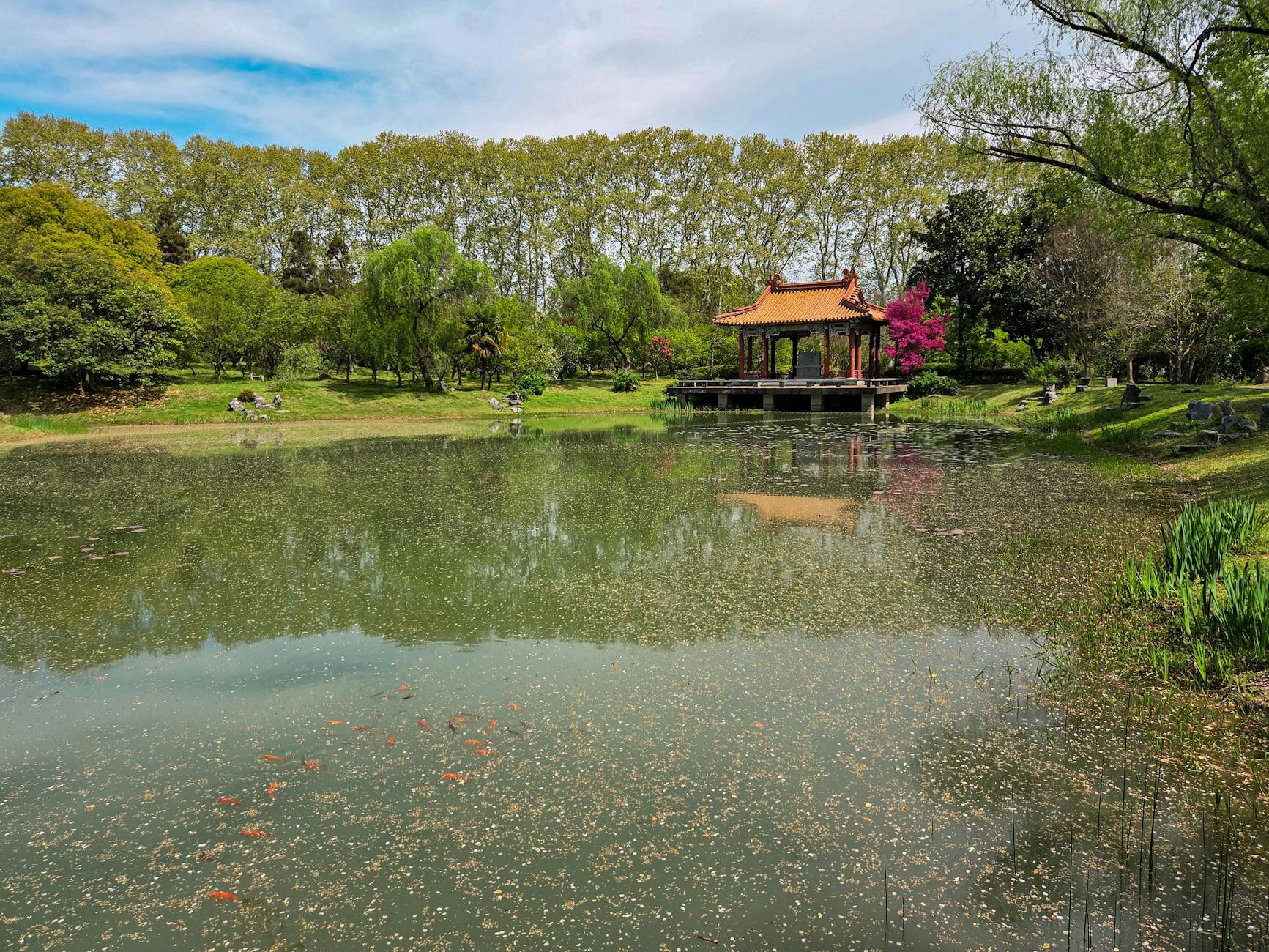
Yu Garden (玉园, Yùyuán in Mandarin, literally “Garden of Happiness”) is a 5-acre private classical Chinese garden in the heart of Shanghai’s Old City. Built during the Ming dynasty, it represents one of the great traditions of Chinese garden design, the “Jiangnan” or southern style — emphasis on water, rockeries, intimate pavilions, and the philosophical principle of borrowed scenery (creating views that incorporate elements outside the immediate garden).
The garden contains six main scenic areas: the Sansui Hall, the Wanhua Chamber, the Dianchun Hall, the Huijing Hall, the Yuhua Hall, and the Inner Garden. Each combines pavilions, ponds, rockeries, and carefully placed plants. The Great Rockery, completed in the 1570s, is the largest Ming-era rockery surviving in southern China.
Yu Garden is sometimes confused with Yuyuan Bazaar, the surrounding shopping district. They are physically connected but operationally separate: the garden charges admission and has fixed opening hours; the bazaar is freely accessible 24 hours.
A Brief History
Yu Garden was commissioned in 1559 by Pan Yunduan, an official from Sichuan Province, as a private retreat for his elderly father Pan En. Construction took nearly twenty years and was completed in 1577 (some sources say 1590). The Pan family used the garden privately until the family’s decline in the eighteenth century.
The garden became publicly accessible in the late Qing dynasty when it was acquired by the Sichuan Hall (a regional merchant guild). The City God Temple Bazaar gradually grew up around the garden, mixing commerce with the garden’s contemplative spaces.
The garden was severely damaged during the First Opium War (1840s) and the Taiping Rebellion (1850s–1860s) when foreign forces and rebel troops occupied the area. It was further damaged during the Republican era and the Cultural Revolution.
Major restoration work began in the 1950s and continued through the 1980s, returning the garden to something close to its original Ming appearance. It was designated a national monument in the 1980s and remains one of the most-visited tourist attractions in Shanghai today.
For broader context on Shanghai’s historical eras, see our history of Shanghai guide.
Garden Highlights
Six features deserve specific attention as you walk the garden.

1. Three Ears of Corn Hall (Sansui Hall). The garden’s main entrance hall, originally a venue for hosting guests. Notice the wooden carving above the doorways and the ornate furniture from the Ming period.
2. The Great Rockery. The architectural anchor of the garden. Constructed of thousands of tons of yellow stone, designed by Ming-era artist Zhang Nanyang. Climb the small paths to the top for a view across the garden’s rooflines.
3. Wanhua Chamber. Once a study and reading room. The carved windows are some of the finest surviving Ming period wood carving in Shanghai.
4. Dianchun Hall. The hall that hosted secret meetings of the anti-Qing Small Sword Society in 1853. A small museum on the second floor displays artifacts from the period.
5. Jade Exquisite Stone (Yulinglong). A 3.3-meter-tall vertical limestone formation, considered one of the three most famous Taihu stones in southern China (the others are at the Suzhou Humble Administrator’s Garden and at Hangzhou). Look for the holes that allow water to flow through; this is the test of a great Taihu stone.
6. Inner Garden (Neiyuan). A garden-within-a-garden built around 1709, smaller and more intimate than the main garden. Some of the most refined Qing dynasty architecture in central Shanghai.
Beyond these specific features, the garden’s overall design rewards slow walking. Look for the carefully placed sight lines, the way pavilions frame views of pond and rockery, and the calligraphic inscriptions on every doorway and pavilion.
Yuyuan Bazaar
Outside the garden walls, Yuyuan Bazaar is a labyrinth of stone-paved streets and traditional buildings descended from late imperial Shanghai’s markets. It is freely accessible, open 24 hours, and worth exploring on its own terms.
Highlights include the City God Temple (a separate paid attraction at the bazaar’s heart), the Huxinting Teahouse on its lake island, the Nine-Turn Bridge, and dozens of traditional Chinese shops selling silk, tea, calligraphy supplies, and souvenirs.
The bazaar is most atmospheric during Lunar New Year and the lantern festival in early February, when the entire complex is decorated with thousands of red and gold lanterns. Other peak times: weekend evenings when families come for dinner, and during major Chinese national holidays.
Be aware: the bazaar is a high-pickpocketing area. Use front pockets or zipped bags. The “tea house scam” approachers also work this area.
Tickets and Opening Hours
Opening hours: 9:00 AM – 4:30 PM, with last entry at 4:00 PM. Closed on Mondays.
Admission: RMB 40 (April–June, September–November); RMB 30 (other months). Children, seniors, and students receive discounted pricing. Children under 1.4 meters tall enter free.
Combined ticket: A combined Yu Garden + City God Temple ticket is sometimes available for RMB 60. Worth it if you plan both visits.
Tickets: Buy at the entrance ticket window or in advance through Trip.com / Klook for slightly faster entry. Advance reservation is not strictly required but helpful at peak weekends.
The bazaar around the garden is free to walk. The City God Temple charges separately (RMB 10). The Huxinting Teahouse charges per pot of tea, not per visitor.
Suggested Walking Route
A focused 75-minute walk that hits all the major features.
Start at Yu Garden’s main entrance (north side). Buy ticket. Walk through the Three Ears of Corn Hall.
Continue to the Great Rockery. Climb the paths to the top. The view back across the garden’s roofs is worth the small effort.
Wanhua Chamber. Pause to look at the carved windows.
Dianchun Hall. The Small Sword Society museum is upstairs.
Jade Exquisite Stone. Test the holes by looking for water flow at the top.
Inner Garden. Allow extra time; this is the most photogenic section.
Exit through the south gate. Emerge into Yuyuan Bazaar near the Huxinting Teahouse and the Nine-Turn Bridge.
Optional: Tea at the Huxinting. The most famous teahouse in central Shanghai. Allow 30–45 minutes.
Huxinting Teahouse
The Huxinting Teahouse is one of the oldest and most photographed teahouses in central Shanghai. Built in 1855 on a wooden island in the middle of a small lake, the teahouse is reached by a Nine-Turn Bridge — the zigzags are designed to confuse evil spirits, who can only walk in straight lines according to Chinese folk belief.
Inside, the teahouse offers traditional Chinese tea service: a pot of tea (RMB 60–200 depending on selection), small snacks, and an unhurried atmosphere. The ground floor is the casual section; the upper floor is more refined and quieter.
The teahouse remains popular with international leaders during state visits to Shanghai (Queen Elizabeth II visited in 1986, Bill Clinton in 1998). It’s worth a visit even if just for ten minutes of tea on the upper floor.
Where to Eat in the Old City
Yuyuan Bazaar has some of Shanghai’s most famous traditional restaurants.
Nanxiang Steamed Bun. Founded in 1900, the most famous xiaolongbao restaurant in Shanghai. Located beside the Yu Garden bridge. Multiple floors and price points: ground-floor takeaway is cheapest with the longest line; upper floors are sit-down service. Standard pork RMB 30, crab roe RMB 60.
Lubolang Restaurant. A classic benbang (Shanghai-style) restaurant facing Yu Garden. Founded in the early Qing dynasty. Known for traditional dishes including pork in brown sauce and lion’s-head meatballs. Higher-end pricing (RMB 200–400 per person).
Songyuelou Restaurant. Vegetarian restaurant founded in 1922, one of the oldest in Shanghai. Buddhist-inspired vegetarian cuisine that uses tofu, gluten, and mushrooms to mimic meat dishes. RMB 150–300 per person.
Old Shanghai Restaurant. Multi-cuisine traditional spot inside the bazaar. Combines Shanghainese with broader Chinese options.
Casual snacks. Throughout the bazaar: shengjianbao (pan-fried buns), candied hawthorn skewers, sticky rice cakes, sweet bean snacks. RMB 5–25 each.
For broader food guidance, see our Shanghai Food Guide.
Best Time to Visit
The garden is genuinely most pleasant at opening time (9:00 AM) on weekdays. By 11:00 AM the tour groups arrive and the narrow paths inside the garden become congested. Early-morning visits also catch the best photography light in spring and autumn.
Weekends and Chinese national holidays (May 1–5, October 1–7) bring massive crowds. Visit on weekdays if your itinerary allows.
The bazaar is most atmospheric during Lunar New Year (late January or February) when it’s decorated with thousands of lanterns. Worth timing a visit for if your trip aligns.
Late afternoon (3:30–4:30 PM) sees thinner crowds inside the garden. Last entry is 4:00 PM, so you have to move with intention.
The garden is closed on Mondays. The bazaar around the garden remains open seven days a week.
How Long to Spend
Most visitors spend 60–90 minutes inside Yu Garden itself. Add 60 minutes for the surrounding bazaar (more if you stop for a meal). A complete Yu Garden + Old City visit is typically half a day.
If your time is tight: 45 minutes inside the garden, 30 minutes in the bazaar, lunch at Nanxiang. Total 2 hours.
If your time is flexible: full half-day with lunch at Lubolang, tea at Huxinting, and unhurried walking through the bazaar.
Getting There
Yu Garden is in central Shanghai and easily reached by metro, taxi, or on foot from the Bund.
Metro: Yuyuan Garden Station (Line 10, Line 14). Exit 1 puts you at the eastern edge of the bazaar. Walk five minutes to the garden’s main entrance.
From the Bund: 15-minute walk south. Cross Yan’an East Road and enter the Old City through one of several pedestrian streets.
From People’s Square: Metro Line 10 one stop, or 25-minute walk southeast.
Taxi or Didi: Tell the driver “Yuyuan” or show “豫园.” Taxis stop at the bazaar’s main parking entrance.
Tips and Common Mistakes

Arrive at opening. 9 AM weekdays is the magic time.
Buy tickets in advance for weekends. Save line time.
Wear comfortable walking shoes. The bazaar’s pavers are uneven; the garden’s paths include some steps.
Watch for pickpockets. Crowded areas inside the bazaar are pickpocketing zones. Use front pockets or zipped bags.
Avoid the tea house and art student scams. Polite refusals to street approachers are sufficient.
Bring water. Especially in summer. The bazaar has shops but they charge premium prices.
Skip the Disney souvenir shops. They are overpriced and the merchandise is generic. Go to actual Disneyland for authentic items.
Try one traditional Shanghai snack. Sticky rice cake, candied hawthorn, or stinky tofu (yes, try it).
Tea at Huxinting is worth the cost. RMB 60–200 for a memorable atmosphere.
The garden’s Inner Garden is the photographic highlight. Save energy for it.
What to Combine with Yu Garden
Several adjacent visits pair well.
The Bund (15 minutes north). The natural Day 1 combination.
Nanjing Road (15 minutes northwest). The Old City connects via Henan Road to the East Nanjing Road pedestrian zone.
City God Temple (inside the bazaar). Small Taoist temple, separate ticket.
Shanghai Museum (25 minutes by metro). Day 2 rather than same-day pairing.
Xintiandi (15 minutes by metro south). Restored shikumen lanes for a different historical period.
For full day-by-day plans, see our Shanghai itinerary planner and 3 day Shanghai itinerary.
Frequently Asked Questions
Is Yu Garden worth visiting?
Yes, especially as part of any first-time Shanghai visit. It is the best surviving example of Ming-era classical garden design in central Shanghai and the most accessible introduction to Chinese garden tradition you will find within the city.
How much does Yu Garden cost?
RMB 30–40 depending on season. Children, seniors, and students get discounts.
How long do I need at Yu Garden?
60–90 minutes inside the garden itself. Add 60 minutes for the surrounding bazaar.
Is Yu Garden open every day?
Closed on Mondays. Open 9:00 AM – 4:30 PM other days, last entry 4:00 PM.
What is the difference between Yu Garden and Yuyuan Bazaar?
Yu Garden is the walled classical garden inside the bazaar complex. Yuyuan Bazaar is the surrounding labyrinth of streets, shops, and traditional restaurants. The garden charges admission; the bazaar is free.
Is Yu Garden child-friendly?
Yes. Children enjoy the rockeries, the Nine-Turn Bridge, and the carp ponds. Strollers can navigate the garden’s paths but require some lifting at occasional steps.
Can I take photos at Yu Garden?
Yes. Casual photography is welcome throughout the garden and bazaar. Tripod use during peak hours may be discouraged.
Should I pre-book Yu Garden tickets?
Helpful for weekends and holidays; not strictly required for weekdays. Book through Trip.com or Klook for foreign credit card payment.
What is the best time of day to visit Yu Garden?
9:00 AM at opening for fewer crowds. Late afternoon (3:30 PM) is the second-best window.
Is the food in Yuyuan Bazaar good?
Yes, especially at Nanxiang Steamed Bun (xiaolongbao) and Lubolang (traditional benbang). Quality varies among smaller stalls.
Plan Your Visit
The Yu Garden Shanghai guide above is built for a focused half-day visit. Arrive at 9 AM, walk the garden in 75 minutes, browse the bazaar, eat at Nanxiang, finish with tea at the Huxinting. Combined with a Bund walk in the late afternoon, this is the canonical Day 1 of any first-time Shanghai trip.
For broader sightseeing context, see our pillar guide on Things to Do in Shanghai. For day-by-day plans, see our Shanghai itinerary planner. For transit options, see our Getting Around Shanghai guide.
Yu Garden has been doing what it does for 450 years and counting. Slow down, walk it carefully, and the garden rewards the visitor who pays attention.
For more background, see Yu Garden on Wikipedia.