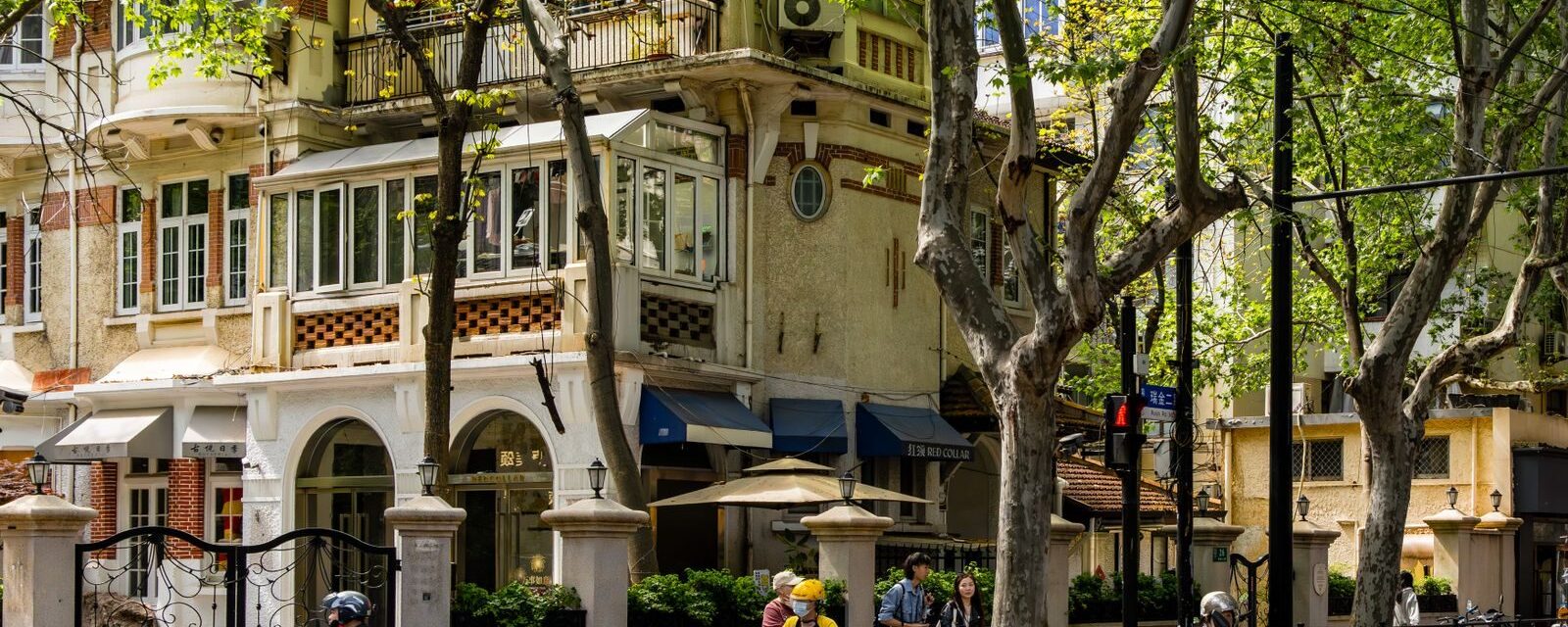
Most visitors to Shanghai’s former French Concession get taken to Xintiandi, spend forty minutes among the designer shops, and leave with the impression that restored shikumen means an expensive outdoor mall. Sinan Mansions, Shanghai‘s quietest restored villa block, is what the same idea looks like when it is done at a quarter of the volume: fifty-one garden villas from the 1920s and 1930s on a block off Middle Fuxing Road, restored over most of a decade, reopened in 2010, and — on a weekday afternoon — close to empty.
The point of coming here is not that there is a great deal to do. There is a bookshop, some restaurants, two hotels folded into the old houses, and a couple of house museums a few minutes’ walk away where Zhou Enlai and Sun Yat-sen actually lived. The point is that Sinan Road is one of the few places in central Shanghai where you can stand in the middle of the street, look at a row of pre-war villas behind their own garden walls, and hear nothing. Fuxing Park is directly across the road. It is free to walk in, and it makes a better slow afternoon than anywhere else in the concession.
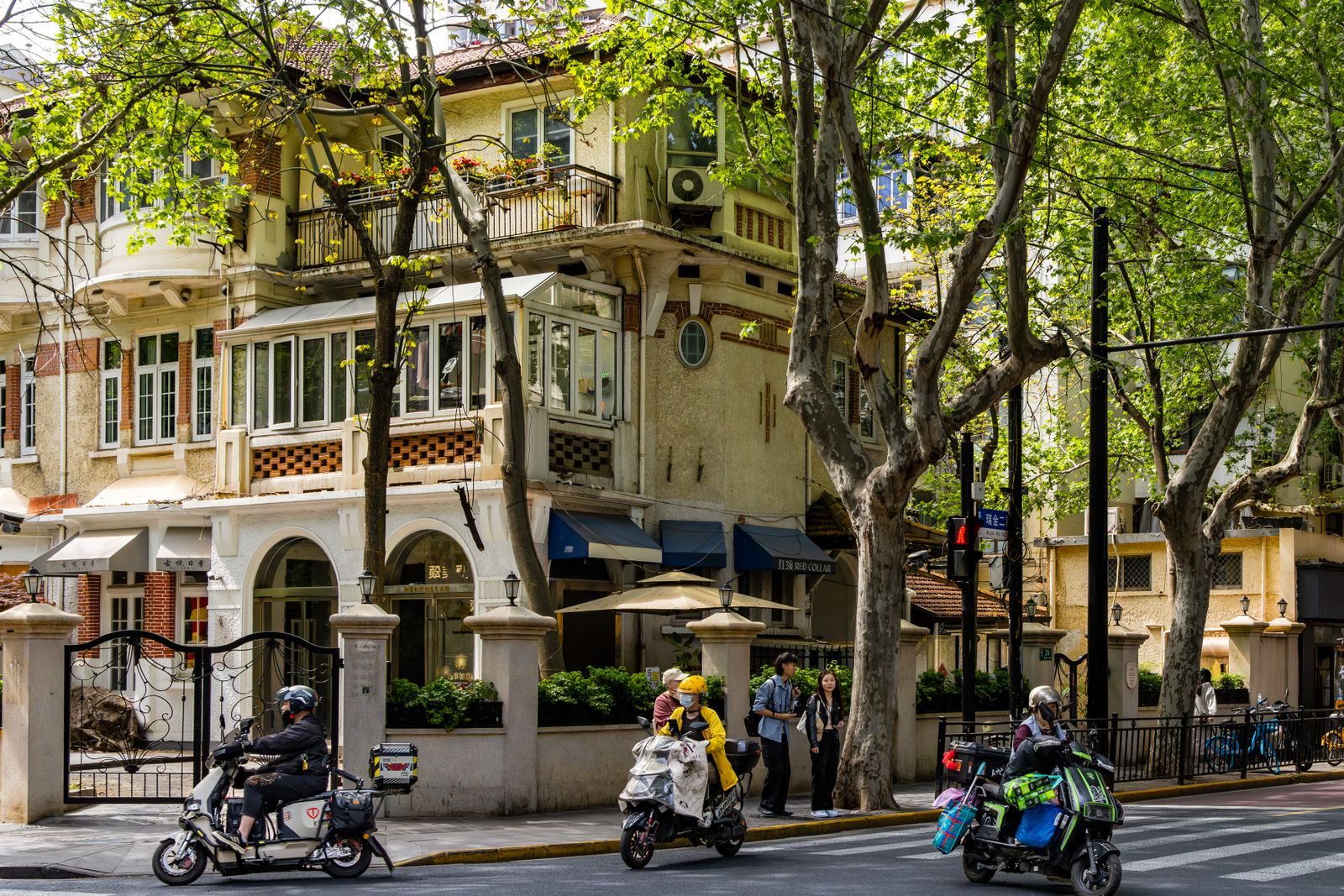
Table of Contents
- What Sinan Mansions actually is
- The history under the restoration
- How to find Sinan Mansions in Shanghai
- The house museums: Zhou Enlai and Sun Yat-sen
- Walking Sinan Road itself
- Eating and drinking
- Fuxing Park, across the road
- Is Sinan Mansions Shanghai’s best restored concession block?
- A slow afternoon, hour by hour
- When to go
- What people get wrong
- Frequently Asked Questions
What Sinan Mansions actually is
Fifty-one garden houses built in the 1920s and 1930s, occupying a block bounded by Middle Fuxing Road to the north and running down Sinan Road. There is no gate, no ticket and no opening time. It is a piece of street you walk into.
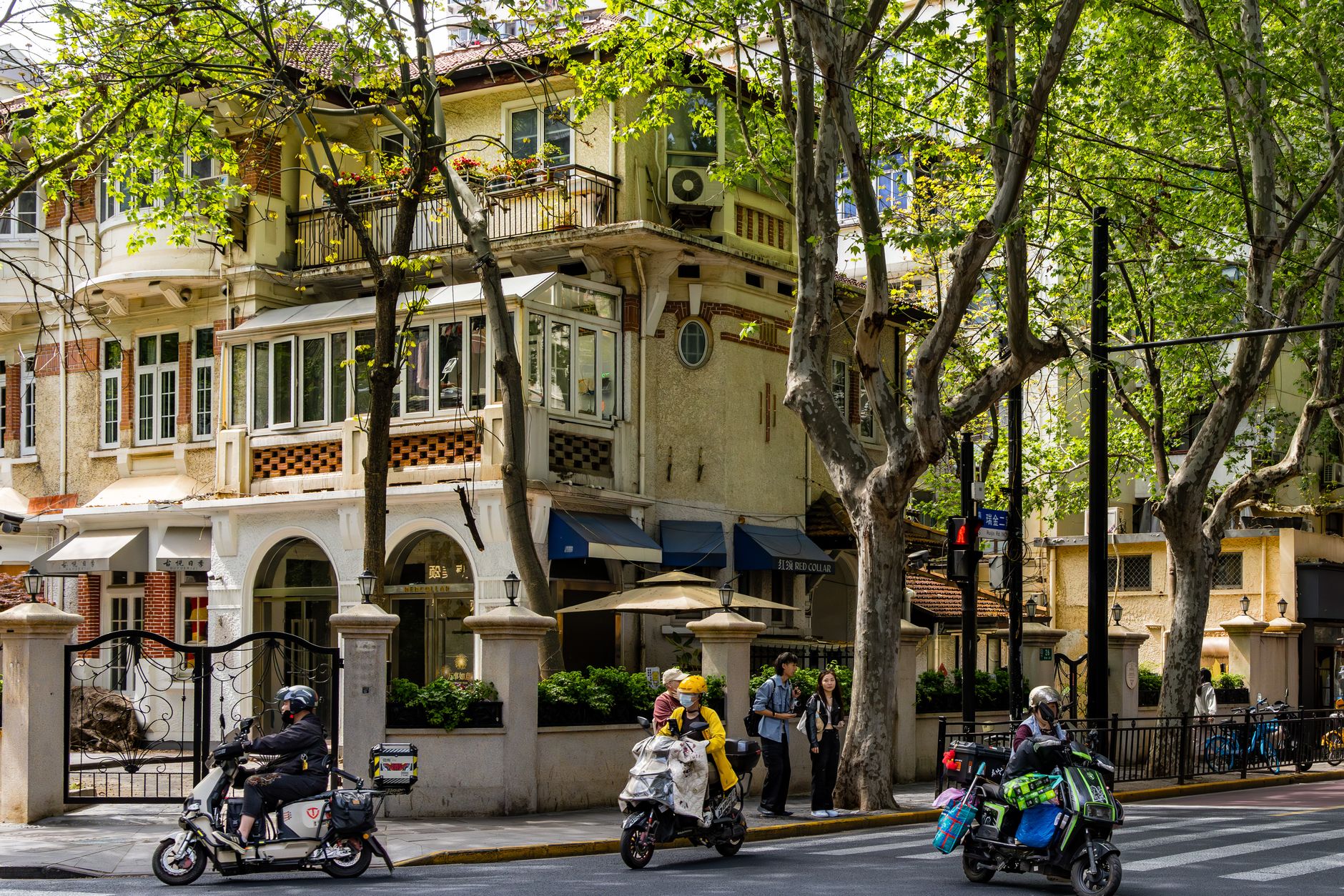
The architecture is the reason to come. Much of this is not lane housing. Shanghai’s more famous heritage quarters — Tianzifang, Xintiandi, Bugaoli — are all lilong, terraced shikumen packed shoulder to shoulder down narrow lanes. Sinan Mansions is the other half of concession-era Shanghai: independent garden houses with their own gardens, walls and gates, mixed in with arcade buildings, new-style lanes, garden lanes and modern apartments. Spanish tile, English half-timbering, French mansard roofs, a few restrained Art Deco fronts, all within a hundred metres of each other. If you have read about Shanghai’s Art Deco architecture and want to see the domestic version rather than the hotel lobbies, this is the block.
What it is not is a destination that fills a day. Allow ninety minutes for the block itself, two and a half hours if you add the house museums, half a day if you fold in Fuxing Park and a long lunch. Anyone telling you to set aside a full day here has not been.
The history under the restoration
The street was laid out in 1914 as Rue Massenet, named by the French Concession authorities after the composer Jules Massenet, who had died two years earlier. This was the concession expanding westwards, and the plots were sold for the garden villas that went up here in the 1920s.
By the 1930s and 1940s the street had accumulated a cast that Time Out Shanghai once summarised as revolutionaries, celebrities, politicians, spies and warlords, which is a fair description and not much of an exaggeration. Zhou Enlai used No. 73 as the Shanghai office of the Communist Party delegation in 1946, in the brief window between the end of the war against Japan and the resumption of the civil war. Mei Lanfang — the Peking opera performer who defined the female roles of his era and refused to perform under the Japanese occupation — lived on the street. One block over, on what is now Xiangshan Road, Sun Yat-sen and Soong Ching-ling lived from 1918 until he left for Beijing in 1924.
Then the usual Shanghai story: subdivision. Villas designed for one family were divided among many households after 1949, and what remained was worn but still standing — which is the combination that makes restoration possible and displacement inevitable. The rebuild ran for roughly a decade and the complex opened in 2010, with the original brickwork, stained glass and courtyard walls kept and the interiors comprehensively rebuilt.
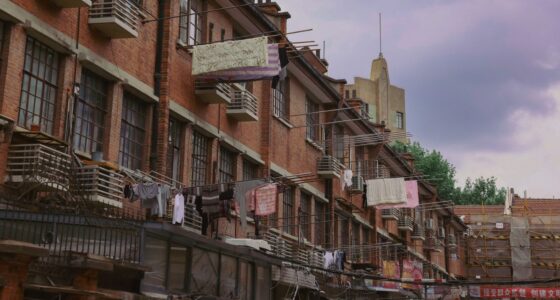
It is worth being clear-eyed about what that means. The residents are gone. This is a restored block, not a living one, in the same way Xintiandi is — and unlike Tianzifang, where about a third of the buildings are still lived in and you will get washing hung across your photograph. Which of those you prefer is a real question, and the answer is not obvious. Our history of Shanghai covers the concession decades that produced all three.
How to find Sinan Mansions in Shanghai
The address is 523 Middle Fuxing Road, Huangpu District, at the corner of Sinan Road.
The closest metro is Line 13 to Middle Huaihai Road station — you come up and it is a short walk east. That is the one to use. The alternatives all involve a longer walk and are only better if you are already coming from somewhere they serve:
- Line 10 or 13 to Xintiandi — a walk from Sinan Mansions, and the natural route if you are combining the two.
- Line 1 or 12 to South Shaanxi Road — fifteen minutes, through good streets.
- Line 9 to Dapuqiao — the Tianzifang station, about fifteen minutes north-west.
Buses serve the area, though in central Shanghai the metro is almost always faster. The nearest stations are Xintiandi and South Shaanxi Road; our Shanghai metro guide explains the fare bands and the exit numbering.
If you take a taxi from the Bund, the ride-hailing app’s live estimate will give you the fare and journey time for the hour you travel. Have the Chinese name — 思南公馆 — on your phone; “Sinan Mansions” said aloud will not land.
The house museums: Zhou Enlai and Sun Yat-sen
Two of Shanghai’s better small museums are within a few minutes of the block, and both are house museums rather than exhibition halls — rooms laid out as they were, rather than glass cases.
Former Residence of Zhou Enlai, 73 Sinan Road. Free, open 09:00–17:00 with last admission at 16:30, closed Mondays except public holidays. A Spanish-style villa that served as the Shanghai office of the CPC delegation in 1946. The interior is furnished to period — desks, iron bedsteads, the dormitory arrangements of a working political office rather than a home. It takes half an hour and it is genuinely interesting, partly because it is one of the few places you can see what the inside of one of these houses was like before the subdivisions.
Shanghai Museum of Sun Yat-sen’s Former Residence, 7 Xiangshan Road. Since the partial reopening on 30 June 2026 only the residence itself is open, with admission at half price; check the museum’s current notice before you go. Open Tuesday to Sunday 09:00–17:00, closed Mondays except public holidays. The house was bought for Sun by overseas Chinese in Canada in 1918, and he lived there with Soong Ching-ling until 1924, when he left for Beijing; he died the following year. The original furnishings are largely intact, because Soong Ching-ling kept the house as it was.
Both run China’s standard real-name museum entry, so carry your passport. This is not optional and it catches people out constantly. Our guide to Shanghai’s museums covers the booking systems in more detail.
A third stop, a taxi or metro ride away, is Soong Ching-ling’s own later residence at 1843 Middle Huaihai Road — a different house and a different museum. It is open Tuesday to Sunday 09:00–17:00 (last admission 16:30), closed Mondays, and tickets are booked on the museum’s WeChat mini-program. Do not confuse the two, which is easy to do.
Walking Sinan Road itself
The restored block is only part of the appeal. Sinan Road runs south from Middle Fuxing Road past a further stretch of garden houses that have not been restored, are still lived in, and are in some ways the more interesting half — walls with laundry poles over them, a bicycle propped against a 1930s gate pier, an air-conditioning unit bolted to a stained-glass bay.
Walk the full length. It takes twenty minutes and costs nothing. Look for the changes in style as you go: the Spanish tiled roofs and arched loggias cluster at the northern end, the half-timbered English-cottage idiom appears in the middle, and there are a few flat-fronted late-1930s houses that are Art Deco in everything but the ornament. Nobody will mind you looking. Do not go through gates.
From the southern end you are five minutes from Tianzifang and ten from Xintiandi, which is what makes this an unusually efficient walking district. Our French Concession walking tour strings the whole quarter together, and the Shanghai districts guide explains how Huangpu, Xuhui and Jing’an divide up the concession between them.

Eating and drinking
This is the weakest part of Sinan Mansions and you should know that going in. The restaurants inside the complex are pitched at expense accounts and hotel guests: competent, international, considerably more expensive than the same food two streets away. The setting is lovely and the value is poor.
What is worth it inside the block: the bookshop, which has a good English section and is a pleasant place to sit; an afternoon coffee in one of the courtyards, purely for the courtyard; and the hotel bars in the evening, when the lit villas are the best thing about the place and you are paying for the view rather than the drink.
What to do instead: walk ten minutes. Ruijin Road, Yongkang Road, Nanchang Road and the streets around Fuxing Park have the concession’s actual eating — noodle shops, small Shanghainese restaurants and a very high density of independent cafés. Cheap eats in Shanghai covers the neighbourhood options; our restaurant guide covers the ones worth booking.
Fuxing Park, across the road
Directly north across Middle Fuxing Road is Fuxing Park, laid out by the French in 1909 as the French Park, and it is the correct other half of this afternoon. Free, open early to late, and formally French in a way no other Shanghai park is — a central axis, clipped hedges, a rose garden, plane trees in rows.
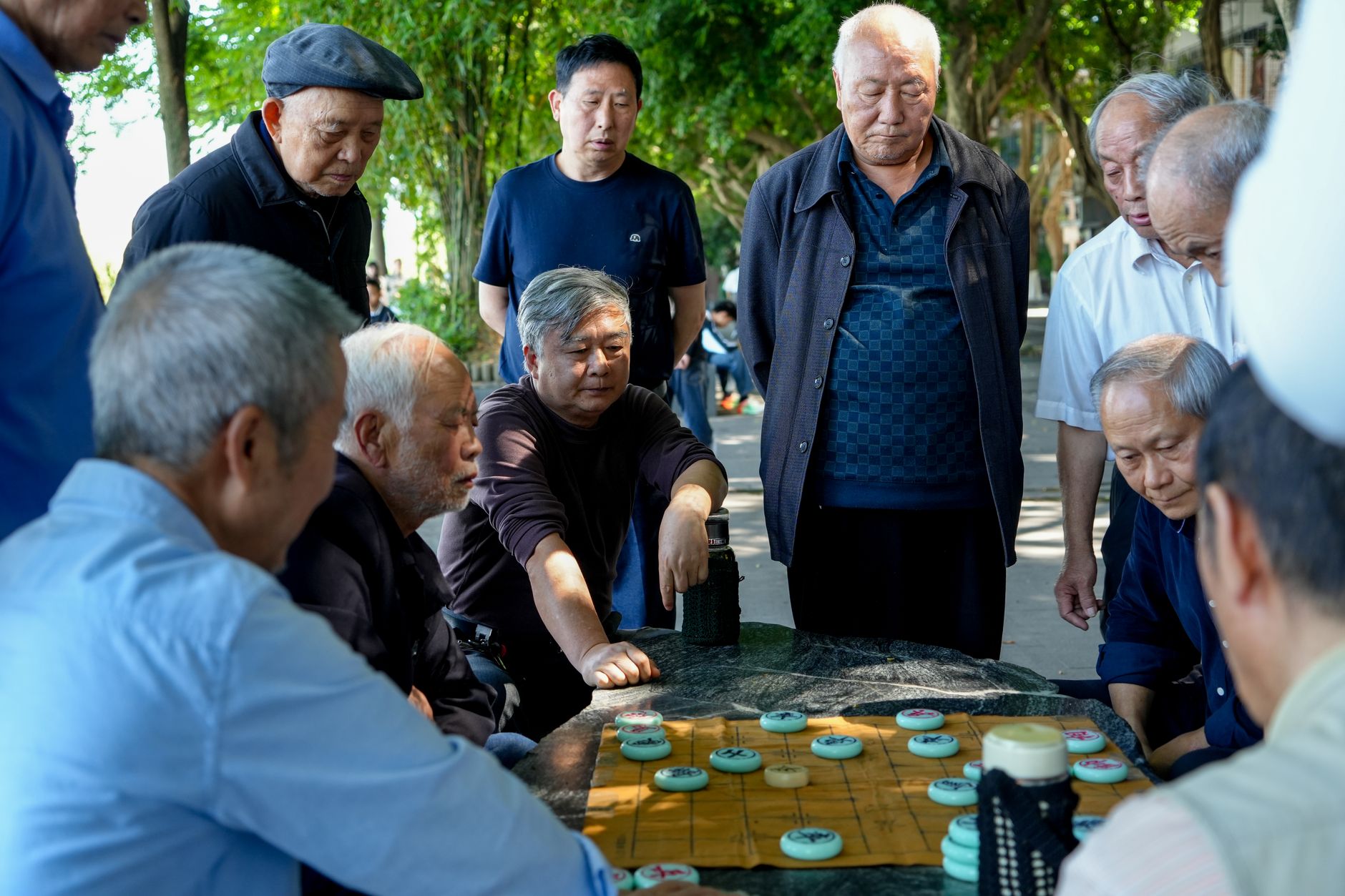
The reason to go is what happens in it. Early morning brings tai chi, sword forms, ballroom dancing on the paving and men playing xiangqi with an audience of a dozen. Late afternoon brings choirs — actual organised singing groups, several at once, in competition with each other. It is a very good place in central Shanghai to watch the city’s older generation use public space, and it sits across the road from restored villas that now house restaurants and bars, which is a contrast worth standing in.
Give it forty minutes. If you have children, there is a small fairground area at the eastern end.
Is Sinan Mansions Shanghai’s best restored concession block?
It depends entirely on what you want from one. Here is the honest comparison of the three restored quarters people actually choose between.
| Sinan Mansions | Xintiandi | Tianzifang | |
|---|---|---|---|
| Building type | Free-standing garden villas | Restored + rebuilt shikumen terraces | Original shikumen lanes |
| Opened as this | 2010 | 2001–02 | From 1998, organically |
| Still residential? | No | No | Yes — about a third |
| Crowds | Low, even at weekends | High | Very high; impassable on holidays |
| Price level | High | High | Low to moderate |
| Shopping | Minimal | Designer, a glass mall | Crafts, souvenirs, small design |
| Space to walk | Wide streets, gardens | Wide pedestrian lanes | Narrow, winding alleys |
| Prams and wheelchairs | Fine | Fine | Difficult |
| Best for | A quiet architectural hour | Dinner and a polished evening | Browsing, atmosphere, cheap snacks |
| Time needed | 1.5–2.5 hours | 1–2 hours | 1.5–3 hours |

The short version: Xintiandi is for an evening, Tianzifang is for a browse, Sinan Mansions is for a walk. If you only have time for one and you like buildings, come here. If you are shopping for gifts, go to Tianzifang. If you are booking a nice dinner, Xintiandi has more of them.
They are also all within twenty-five minutes’ walk of each other, so the choice is less binary than it sounds. Doing Sinan Mansions and Tianzifang on one afternoon is easy and gives you the polished and the messy versions of the same history back to back.
A slow afternoon, hour by hour
This is the version that works. Start after lunch, because the block is at its best in low sun and the park is at its best late.
14:00 — Middle Huaihai Road station, Exit 1. Walk east into the block. Do a loop of the restored villas without a plan, then come out onto Sinan Road proper.
14:45 — 73 Sinan Road. The Zhou Enlai residence, free, half an hour. Passport in your pocket.
15:30 — south down Sinan Road. The unrestored end. Twenty minutes, slowly.
16:00 — Sun Yat-sen’s former residence, 7 Xiangshan Road. The museum closes at 17:00, so do not leave this later. Not on a Monday.
16:45 — Fuxing Park. The choirs are usually going by now. Sit down.
17:30 — coffee or an early drink. Back in the block if you want the courtyards, or on Ruijin Road if you would rather pay half.
18:30 — dinner. Walk fifteen minutes to Xintiandi, or five to the small restaurants around Ruijin Road. Both work.
That is roughly four and a half hours, all of it within a kilometre. It is one of the better half-days in Shanghai and almost nobody plans it.
When to go
Weekday afternoons, between 14:00 and 18:00. The block is genuinely quiet, the low sun catches the western fronts, and the museums are open. Weekends are busier but never Tianzifang-busy — this is not somewhere that gets overwhelmed.
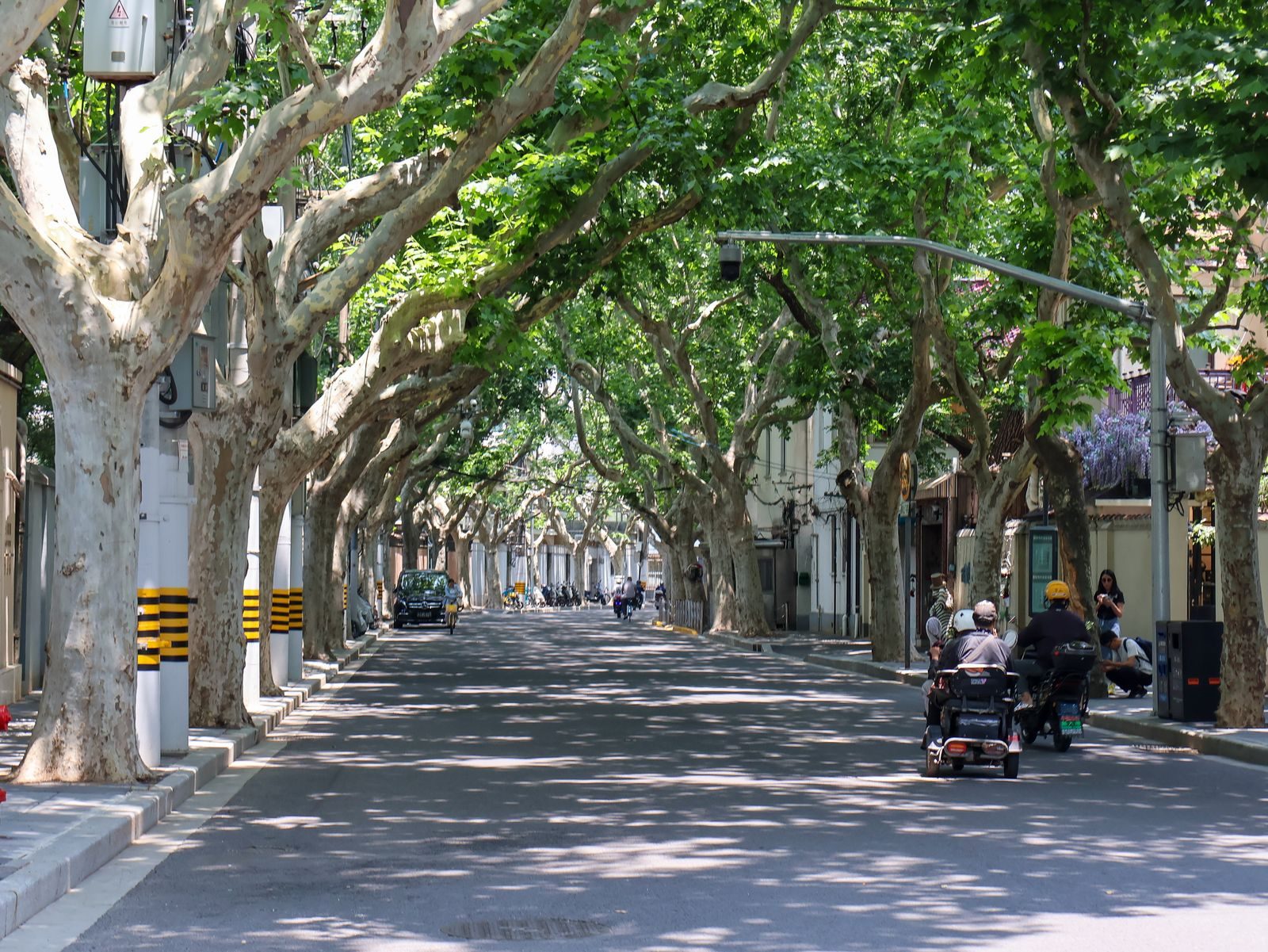
By season, autumn is best: October and November bring Shanghai’s clearest air and the plane trees turn. Spring, roughly late March to May, runs it close and adds blossom in Fuxing Park. Summer here is hot and very humid, which the plane-tree canopy helps with more than you would expect — this is one of the more bearable outdoor walks in August. Winter is cold and damp, but the bare branches show the buildings better than the leaves do, and photographers should note that.
Avoid the first week of October. National Day Golden Week fills every central district and doubles hotel prices; our best time to visit Shanghai guide covers the calendar in full.
Mondays are the one day to actively avoid, because both house museums close and the block on its own is a twenty-minute experience.
What people get wrong
Going on a Monday. Both former residences close. You get the architecture and nothing else.
Expecting shops. Sinan Mansions is not a shopping destination. There are a handful of boutiques and a bookshop. If you have come to buy things, you have come to the wrong one of the three.
Eating inside without checking the price. The restaurants in the block are priced for the setting. Nothing wrong with that, but two streets away the same money buys considerably better food.
Turning up without a passport. China’s state museums run real-name entry. No passport, no admission, and a photograph of it will not do.
Confusing the two Soong Ching-ling houses. The one on Xiangshan Road is where she lived with Sun Yat-sen until he left for Beijing in 1924, and she stayed on after his death. The one at 1843 Middle Huaihai Road is where she lived later, and it is a different museum a taxi or metro ride away.
Allowing a whole day. It is a ninety-minute block. Pair it with Fuxing Park, the museums, Tianzifang or Xintiandi, or you will finish it before you have started.
Going only for the photographs. The restored block photographs well and is not, on its own, remarkable. What makes the afternoon is the unrestored southern end of Sinan Road, the interiors of the two houses, and the park. Those are the parts people skip.
Frequently Asked Questions
Is there an entrance fee for Sinan Mansions?
No. Sinan Mansions is an open block of streets with no gate, no ticket and no closing time. The two nearby house museums differ: the Zhou Enlai residence is free, and Sun Yat-sen’s charges admission, at half price during its partial reopening, so check the museum’s current notice.
What is the nearest metro station?
Line 13 to Middle Huaihai Road station, then a short walk east. Xintiandi station on Lines 10 and 13 is a walk away and is the better choice if you are combining the two. South Shaanxi Road on Lines 1 and 12 is roughly fifteen minutes.
How long do I need at Sinan Mansions?
Ninety minutes for the restored block and Sinan Road itself. Two and a half hours if you add the Zhou Enlai residence. Four to five hours if you do both house museums and Fuxing Park, which is the version worth doing.
Is Sinan Mansions better than Xintiandi?
For architecture and quiet, yes — clearly. The block mixes independent garden houses, arcade buildings and garden lanes rather than Xintiandi’s rebuilt terraces, and it is far less crowded. For dinner, shopping or a night out, Xintiandi has more of everything. They are ten minutes apart, so the honest answer is to see both.
Can I go inside the villas?
Only where a building is open as a restaurant, hotel, shop or museum. The rest are offices and private apartments. The two house museums are where you get to see restored period interiors, which is a good reason to do them rather than just walking the block.
Is the Zhou Enlai residence worth visiting?
Yes, and it is free. Half an hour, open 09:00–17:00 with last admission at 16:30 and closed Mondays except public holidays, at 73 Sinan Road. It is furnished as the 1946 CPC delegation office, including Zhou Enlai’s combined office and bedroom, which makes it a more unusual interior than most house museums.
What is there to eat at Sinan Mansions?
Restaurants, cafés and hotel bars inside the block, all pitched high. The setting justifies one drink. For actual eating, walk five to ten minutes to Ruijin Road, Yongkang Road or the streets around Fuxing Park, where you will find noodle shops, small Shanghainese restaurants and independent cafés.
Is Sinan Mansions good for photography?
Yes, particularly on a weekday afternoon when the western fronts are lit and there are few people. Winter, with the plane trees bare, shows the buildings better than summer does. The unrestored southern stretch of Sinan Road is the more rewarding half — laundry poles, original gate piers, genuine wear. Our Shanghai photography guide covers the light and the etiquette.
Is it suitable for children or wheelchairs?
Yes to both, which is not true of Tianzifang. The streets are wide, flat and paved, and Fuxing Park across the road has open lawns and a small fairground area. The house museums have stairs to their upper floors.
What is the difference between Sinan Road and Sinan Mansions?
Sinan Road is the street, laid out in 1914 as Rue Massenet and running from Middle Huaihai Road in the north, across Middle Fuxing Road, to Middle Jianguo Road in the south. Sinan Mansions is the restored commercial complex of fifty-one villas occupying the northern block of it. The southern part of the road is unrestored, still lived in, and worth the walk.
Can I combine it with Tianzifang or Xintiandi?
Easily. Xintiandi is about ten minutes on foot, Tianzifang about fifteen to twenty. Doing Sinan Mansions and Tianzifang on one afternoon gives you the restored and the lived-in versions of concession Shanghai back to back, which is the more interesting pairing.
Is Fuxing Park worth the detour?
It is not a detour — it is directly across Middle Fuxing Road. Go late afternoon for the choirs and the ballroom dancing, or early morning for tai chi and xiangqi. It is free, it was laid out by the French in 1909, and it is the best free hour in this part of the city.
Come on a weekday, come after lunch, bring your passport, and give yourself the park as well as the block. If you want more of this quarter, the French Concession walking route continues west into Wukang Road and Anfu Road, and Shanghai’s quieter corners collects the places that get left off the standard three-day plan. The official listing is maintained on the Shanghai government’s English site, and the street’s history and former residents are set out by TravelChinaGuide.