Xintiandi Shanghai is two things at once, and most visitors only notice one of them. There is the polished pedestrian precinct of restored stone-gate houses full of expensive restaurants, which appears on every first-time itinerary and takes about ninety minutes. And there is the small grey house at 76 Xingye Road where thirteen men met in July 1921 and founded the Chinese Communist Party — free to enter, five minutes’ walk away, and the single most consequential building in modern Chinese history.
The two sit side by side because the developer who rebuilt the neighbourhood in 2001 had no choice: the congress site was already a protected monument, and everything around it had to be designed to sit beside it. The result is a district that is simultaneously a shopping development and a national shrine, which is a stranger and more interesting thing than the guidebook description of “restored lane houses with restaurants” suggests. This guide covers both, plus what shikumen architecture actually is, how Xintiandi differs from Tianzifang, where to eat, and a half-day route that gets you through all of it without wasting an afternoon.
Table of Contents
- What Xintiandi Shanghai actually is
- The Site of the First National Congress
- Shikumen and lilong: reading the buildings
- North Block and South Block
- Where to eat and drink
- Xintiandi versus Tianzifang
- A half day in Xintiandi Shanghai, hour by hour
- Getting there, hours and costs
- Staying near Xintiandi
- What people get wrong
- Frequently Asked Questions
What Xintiandi Shanghai actually is
Until the late 1990s this was an ordinary, run-down block of lilong lane housing in what is now Huangpu District, on the eastern fringe of the former French Concession. Several thousand people lived in it, mostly without private bathrooms. Between 1997 and 2001 the Hong Kong developer Shui On Land cleared the residents, kept the street pattern and a proportion of the brick shells, and rebuilt the interiors as restaurants and shops. The master plan came from the American architect Benjamin Wood, working with the Japanese practice Nikken Sekkei. It opened in stages from 2001, and the name means, more or less, “new heaven and earth”.
It was the first project of its kind in China and it has been copied in a dozen cities since. What makes it work architecturally is restraint: the lane widths, the roofline and the stone door surrounds were kept, so at eye level you are walking through a 1920s neighbourhood, even though almost nothing behind the façades is original and the residents are long gone.
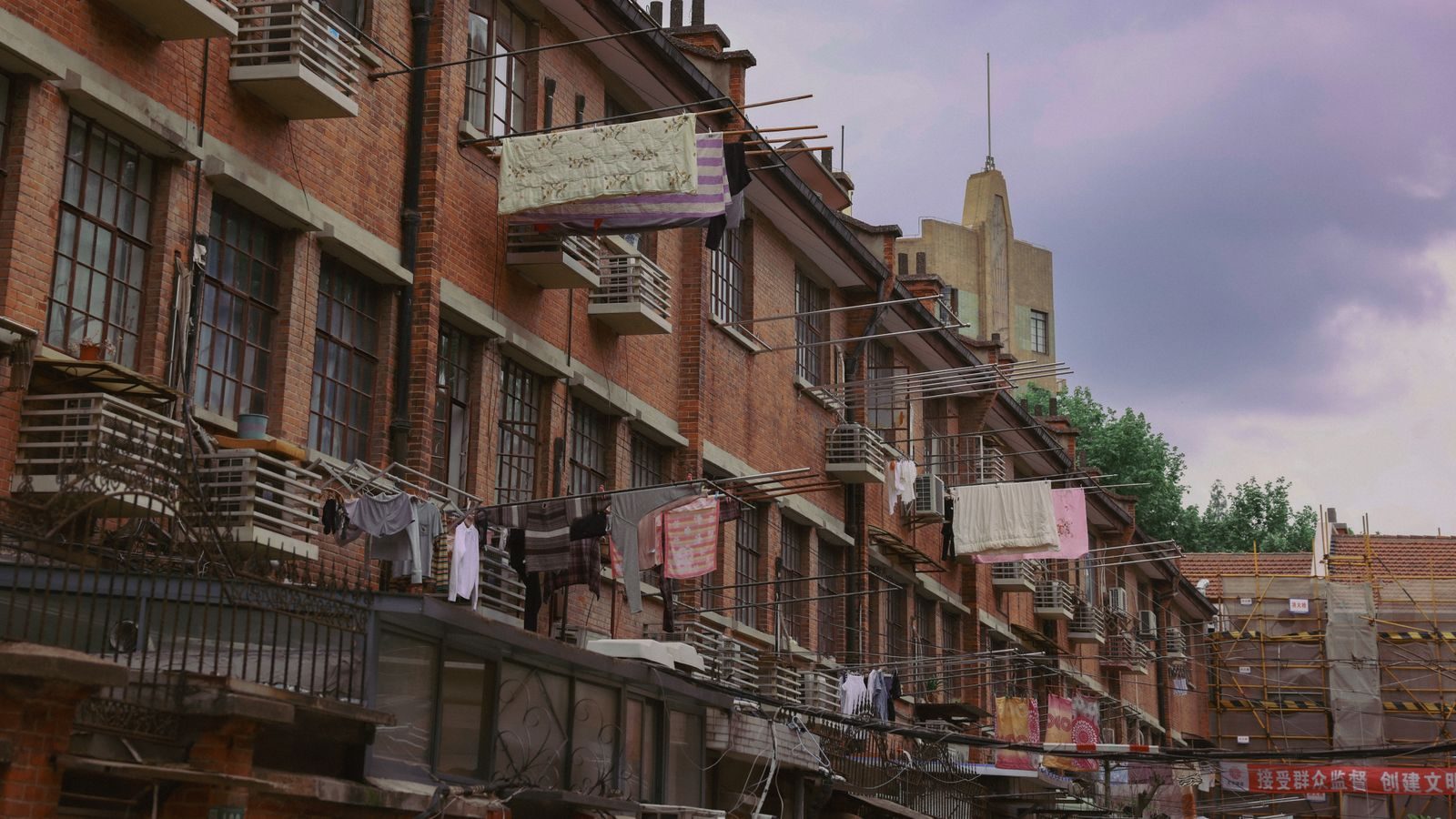
What makes people ambivalent about it is exactly the same fact. Xintiandi is a reconstruction with no one living in it. There is no laundry hanging across the lane, no one cooking in a doorway, no shouting. Whether that is a loss or simply a different kind of place is a matter of taste — but it is worth going in knowing that this is heritage as a retail environment, not a surviving neighbourhood. If you want the surviving version, the lanes north of Suzhou Creek in Hongkou and the streets around Wukang Road still have it, and our guide to Shanghai’s districts maps where to find it.
The Site of the First National Congress
At the boundary between the two halves of the development stands a dark brick shikumen house completed in 1920, at No. 76 Xingye Road. On 23 July 1921, thirteen delegates met in its ground-floor room and founded the Communist Party of China. Chen Duxiu and Li Dazhao, the party’s principal founders, were not present; Mao Zedong, then twenty-seven and one of two delegates from Hunan, was. The meeting was interrupted by a police informer and reconvened days later on a boat on South Lake at Jiaxing, about eighty kilometres away.
The building was restored in 1952 and has been a museum ever since. Entry is free. It opens 09:00 to 17:00, closed on Mondays except public holidays, with admission stopping between 16:00 and 16:30. Inside you get the restored meeting room laid out as it was — a long table, thirteen stools, teacups — with waxworks of the delegates, and then a substantial exhibition of more than a hundred documents, photographs and objects covering the party’s founding and early years. Published visitor listings give the same hours and the Line 1 approach. Since 2021 a much larger memorial hall next door at 374 South Huangpi Road has added roughly 3,700 square metres of exhibition space on the same free basis; the memorial hall’s own site lists current hours.
Two practical notes. Chinese state museums operate real-name entry, so take your passport — a photocopy will not do — and be prepared for a booking slot to be required, since that requirement has come and gone over the years. Your hotel concierge can arrange it in a minute if so. And the labelling is bilingual but the interpretation is emphatically the official one; volunteer guides run tours throughout the day, occasionally in English.
Go even if you have no particular interest in party history. It takes forty minutes, it is one of the few places in Shanghai where you can see a shikumen interior laid out as a home rather than a shop, and the contrast with the champagne bars fifty metres away is the most Shanghai thing in the city. Our history of Shanghai puts 1921 in the context of what the city was at the time.
Shikumen and lilong: reading the buildings
Shikumen means “stone gate”, and refers to the carved stone surround framing a heavy timber door. The form appeared in the 1860s, when refugees from the Taiping Rebellion poured into the foreign concessions and speculative builders needed to house them fast. What they produced was a hybrid nobody had built before: the plan of a British terraced house, built in dense rows, wrapped around Chinese courtyard logic — an enclosed forecourt behind the gate, then a formal reception hall, then stairs to the upper floors.
A lilong or longtang is the lane system these houses sit in: a main lane off the public street, branch lanes running off it, and the houses in terraces along them. At its peak this pattern housed the majority of Shanghai’s population. Most of it has been demolished since 1990.
Things worth looking at as you walk through:
- The stone gate surrounds themselves. Earlier examples are plain and heavy; the 1920s and 1930s brought art deco geometry to the lintels, window frames and balcony rails. Xintiandi has both.
- The lane hierarchy. Notice that the main lane is wide enough for a car and the branch lanes are not. That is not decorative — it is how the whole city worked before 1949.
- The brickwork. Grey and red brick laid in alternating bands is a Shanghai signature, and the restored blocks reproduce it faithfully.
- What is missing. No shared kitchens, no bicycles, no laundry poles. That absence is the entire difference between this and a living lane.
The Shikumen Open House Museum in the North Block reconstructs a 1920s lane house as a middle-class family would have lived in it, room by room, down to the kitchen and the tiny tingzijian back room above the stairs that generations of writers and students rented. Admission is nominal — in the region of ¥20 to ¥30 — and it takes twenty minutes. If the interior of these buildings interests you at all, it is the best twenty minutes in Xintiandi. Our guide to Shanghai’s art deco architecture covers the same decades from the other end of the social scale.
North Block and South Block
The development splits cleanly in two along Xingye Road, and they are not equivalent.
| North Block | South Block | |
|---|---|---|
| Address | Lane 181 Taicang Road | Lane 123 Xingye Road |
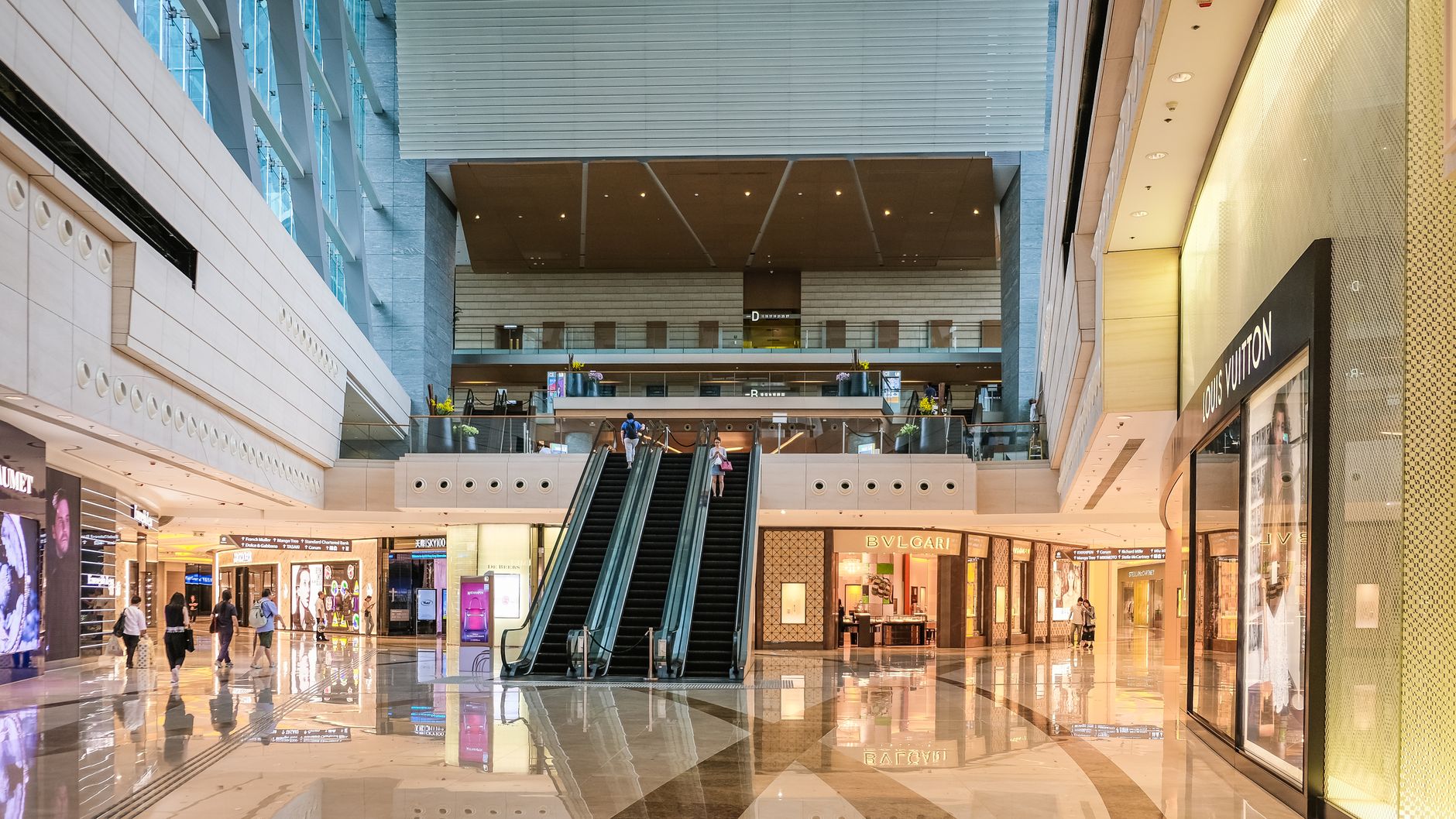
| Built | Restored and rebuilt shikumen, opened 2001 | Glass-and-steel mall, opened mid-2002, around 25,000 m² |
| Character | Open lanes, outdoor tables, brick and stone | Air-conditioned shopping centre with a cinema |
| What is there | Around 28 restaurants, bars and cafés; the Shikumen Open House Museum | Designer retail, Xintiandi Style, food on the upper floors |
| Go for | The walk, the architecture, dinner outside | Rain, air conditioning in August, a specific shop or restaurant |
If you have an hour, spend it in the North Block. The South Block is a competent shopping mall and Shanghai has thirty better ones — our guide to luxury shopping in Shanghai covers where the serious retail actually is. The exception is weather: in a July downpour or a 38°C afternoon, the South Block is a genuinely useful place to be.
Where to eat and drink
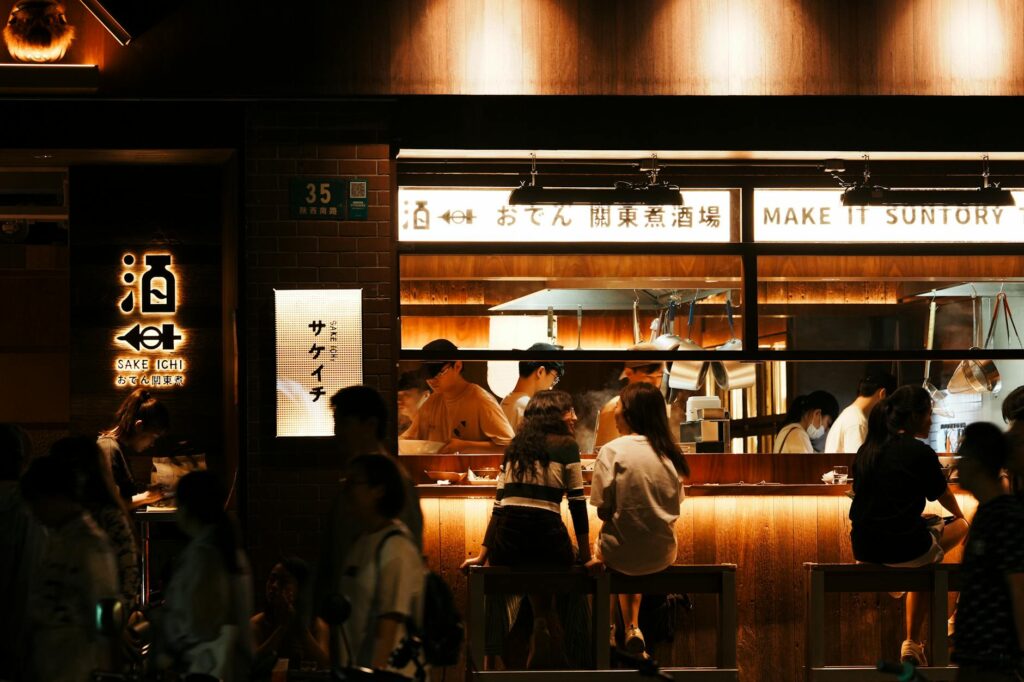
Xintiandi is expensive by Shanghai standards and the cooking is generally good rather than exceptional. You are paying for the setting, and on a warm evening the setting is worth something. Reckon on ¥150–350 a head for dinner in the North Block, ¥80–150 for a mall lunch in the South Block, and ¥40–70 for a coffee and a pastry.
The reliable choices:
- Din Tai Fung, on the second floor of the South Block. The Taiwanese soup dumpling chain, consistent to the point of monotony, with an open kitchen the children will watch for twenty minutes. Not the best xiaolongbao in Shanghai — our guide to the best xiaolongbao in Shanghai argues for other places — but the most reliably good, and the easiest to order in.
- Crystal Jade, also on the second floor of the South Block. Singaporean, Cantonese, strong dim sum, and a serviceable answer if you have people with different appetites.
- The North Block bars. TMSK, with its coloured glass interior, has been there since the beginning and is worth a drink for the room alone. Several terraces along the lanes serve until late.
- Coffee. Shanghai has more coffee shops than any city on earth and Xintiandi has a dense cluster of good ones, most with outdoor seating.
Two honest caveats. First, nothing here is a bargain and nothing here is what a Shanghai family eats on a Tuesday. Second, the queues at the famous names on a Saturday are real — go at 11:30 or 17:30 rather than 13:00 or 19:30. For a broader picture of where to eat well in the city, see our best restaurants in Shanghai, and for what to drink afterwards, the cocktail bars and speakeasies guide covers the more interesting rooms fifteen minutes’ walk west.
Xintiandi versus Tianzifang
These two get compared constantly, usually badly. They are both restored lane districts about two kilometres apart, and they are opposites.
| Xintiandi | Tianzifang | |
|---|---|---|
| Rebuilt | 1997–2002, residents relocated | Converted from 1998 onwards; around a third of buildings still lived in |
| Lanes | Wide, paved, planned | 2.5–3 m wide, uneven, stepped |
| Feel | Polished, corporate, spacious | Cramped, chaotic, more genuinely old |
| Shops | International brands, high-end restaurants | Craft studios, small galleries, curio shops, tiny bars |
| Prices | High | Moderate, some haggling in antique shops |
| Accessibility | Flat, prams and wheelchairs fine | Poor — steps, narrow lanes, crowds |
| Metro | Line 10/13 Xintiandi, Exit 6 | Line 9 Dapuqiao, Exit 1 |
If you only have time for one and you want atmosphere, go to Tianzifang on a weekday morning. If you want somewhere comfortable to sit outside with a drink, or you are travelling with anyone who finds crowds and steps difficult, go to Xintiandi. If you have half a day, do both — they are twenty minutes apart on foot through the eastern French Concession, and the walk between them is better than either of them.
A half day in Xintiandi Shanghai, hour by hour
This is the route that gets the most out of the area, starting late morning.
10:00 — the congress site. Arrive when it opens, before the tour groups. Forty minutes for the house at 76 Xingye Road, another thirty if you want the memorial hall next door. Passport in your pocket.
11:00 — the Shikumen Open House Museum. Twenty minutes, North Block. Having just seen one shikumen interior preserved as a political monument, seeing another preserved as a home is the point at which the architecture clicks.
11:30 — walk the North Block lanes. No plan required. Look at gate surrounds, note the brick banding, work out where the branch lanes used to run.
12:00 — lunch. Either the South Block for something quick and air-conditioned, or one of the North Block terraces if the weather is behaving.
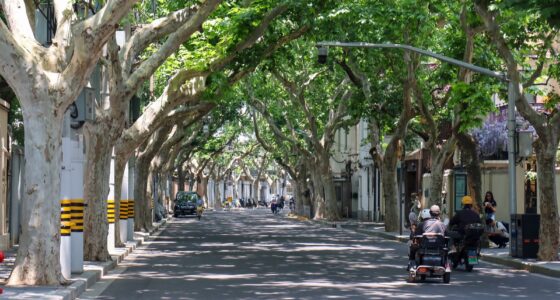
13:30 — walk west into the French Concession. This is the part most people skip and it is the best hour of the afternoon. Head out along Xingye Road and Fuxing Middle Road into the plane-tree streets, past Fuxing Park, and keep going as far as your legs allow. Our French Concession walking tour maps a route.
15:30 — Tianzifang, if you still have energy, or a café on Anfu Road if you do not.
That is a genuine half day. Xintiandi alone is ninety minutes, and anyone who tells you to allocate a full day to it has not been.
Getting there, hours and costs
- Metro: Line 10 or Line 13 to Xintiandi station, Exit 6, onto Madang Road, then walk north for three or four minutes. Alternatively Line 1 to South Huangpi Road, Exit 2 or 3, then south down Huangpi Road to Xingye Road — this exit is closer to the congress site.
- Entry: The district is public space. No ticket, no gate, no closing time. Individual museums and shops have their own hours.
- Hours in practice: shops from around 10:00, restaurants from 11:00, bars until 01:00 or later at weekends. Before 10:00 the lanes are empty and photograph beautifully.
- Cash: Everything takes Alipay and WeChat Pay. The larger restaurants take foreign cards; the cafés and small bars often do not.
- English: Widespread. This is one of the easiest places in Shanghai for a non-Chinese speaker.
- Accessibility: Flat, paved, lifts in the South Block. Good for prams and wheelchairs, which is unusual for a heritage district in this city.
- Best time: A weekday morning for the museums and photographs, a weekday evening for the atmosphere. Saturday afternoon is the worst of both.

Staying near Xintiandi
Xintiandi sits at the join of Huangpu and the eastern French Concession, which is arguably the best-positioned square kilometre in Shanghai for a short trip. You are ten minutes by metro from the Bund, fifteen from People’s Square, and inside walking distance of the concession streets that most people end up liking more than the sights.
The catch is price. This is one of the most expensive residential districts in the city and the hotels reflect it: expect ¥1,200–2,500 a night for the well-known international names on Madang Road and Huangpi Road, and ¥700–1,200 for the mid-range business hotels a few streets out. The value option is to stay ten to fifteen minutes’ walk west, around Shaanxi South Road or Jiashan Road, where boutique conversions and small chains run ¥450–800 and the walk home is through plane trees rather than past a mall.
Whichever you pick, check the metro station before the address — Shanghai distances flatter themselves on a map, and “near Xintiandi” in a listing can mean twenty-five minutes on foot. Our guide to where to stay in Shanghai breaks the city down neighbourhood by neighbourhood, and the French Concession hotels guide covers the streets immediately west of here.
What people get wrong
Skipping the congress site because it sounds like propaganda. It is a national shrine and the framing is official, but it is also free, forty minutes, and the only easy way to see a preserved 1920s shikumen interior. Going does not require agreeing with anything.
Turning up on a Monday. Both the congress site and the memorial hall close. The restaurants do not, so people arrive, eat, and leave without ever knowing the museum was there.
Not bringing a passport. State museums in China run real-name entry. No passport, no entry, and no amount of politeness changes it.
Allocating a whole day. Ninety minutes covers the district, three hours covers it with both museums. Use the rest of the day on the French Concession, which starts one street west.
Expecting a living neighbourhood. Nobody lives here. If that is what you came for, go to Tianzifang or walk the lanes off Shaanxi South Road instead.
Eating dinner at 19:30 on a Saturday. The waits are long and the lanes are shoulder to shoulder. The same meal at 17:45 is a different experience entirely.
Frequently Asked Questions
Is Xintiandi free to enter?
Yes. It is a pedestrianised public district with no gate and no ticket, open at all hours. The individual museums inside it are separately ticketed, though the two most significant — the Site of the First National Congress and its adjoining memorial hall — are also free.
How do I get to Xintiandi by metro?
Line 10 or Line 13 to Xintiandi station, Exit 6, then north along Madang Road for three or four minutes. Line 1 to South Huangpi Road, Exit 2 or 3, puts you closer to the congress site on Xingye Road. Both are under fifteen minutes from People’s Square.
How long do I need in Xintiandi?
Ninety minutes for the district itself, or about three hours if you visit the congress site and the Shikumen Open House Museum properly. It does not fill a day, and the surrounding French Concession is a better use of the afternoon.
Is the Site of the First National Congress worth visiting?
Yes, on two grounds: it is where the Chinese Communist Party was founded on 23 July 1921, and it is one of the few places you can see the inside of a 1920s shikumen house. It is free, takes forty minutes, and closes on Mondays. Bring your passport.
Do I need to book the museum in advance?
Sometimes. Chinese state museums operate real-name entry and the booking requirement has been applied and relaxed at different points. Take your passport regardless, and if you want certainty, ask your hotel to reserve a slot for you — it takes them a couple of minutes on WeChat.
Xintiandi or Tianzifang — which should I choose?
Tianzifang if you want narrow lanes, small shops and a district where people still live. Xintiandi if you want space, outdoor tables, wheelchair and pram access, and somewhere comfortable to eat. They are twenty minutes apart on foot and the walk between them through the French Concession is excellent.
Is Xintiandi expensive?
By Shanghai standards, yes. Dinner in the North Block runs ¥150–350 a head, a mall lunch ¥80–150, and coffee ¥40–70. You are paying for the setting. Ten minutes’ walk in almost any direction gets you the same food for half the price in a less photogenic room.
What is shikumen architecture?
Shikumen means “stone gate” and describes the carved stone surround around a heavy timber door. The style emerged in the 1860s as a hybrid of British terraced housing and Chinese courtyard planning, built in dense rows along lanes called lilong. It housed most of Shanghai’s population for a century, and most of it has been demolished since 1990.
Is Xintiandi good at night?
It is at its best in the evening, when the lanes are lit and the terraces fill up. It is not a late-night district in the sense that Found 158 or the bars around Yongkang Road are — the crowd is older, the drinks are more expensive, and things wind down by around one in the morning at weekends.
Can I visit Xintiandi with children?
Easily. It is flat and paved, prams are no problem, and the South Block has a cinema, air conditioning and straightforward food. The congress site holds most children for about fifteen minutes, which is fine — it is free, so nothing is wasted by leaving early.
What else is nearby?
Fuxing Park is five minutes west and full of people dancing and playing cards in the morning. The eastern French Concession begins immediately beyond it. Tianzifang is twenty minutes on foot to the south-west, and the Old City and Yu Garden are about twenty-five minutes east.
Xintiandi is worth an hour and a half of anyone’s trip, and worth three if you take the museums seriously — which more people should, because the juxtaposition of a founding political monument and a champagne terrace fifty metres apart tells you more about modern Shanghai than either does alone. When you have finished, walk west rather than taking the metro: the neighbourhoods worth walking start one street away, and our culture and history guide covers what else in the city dates from the same decades.