The 2027 Chinese Grand Prix in Shanghai runs from Friday 16 to Sunday 18 April 2027, the fifth round of the season, a week after Japan and a fortnight before Miami. It’s held at the Shanghai International Circuit in Jiading, about 30 km north-west of the city centre, and F1 has signed the race up to stay on the calendar until at least 2030. Since its return in 2024 after what F1 calls a five-year absence, it has drawn big crowds, including overseas fans.
For a visitor, it’s also one of the easier Grands Prix to do well. The circuit has its own metro station, Shanghai has plenty to do around the race, and April is a good month to be in Shanghai anyway. What makes it harder is the paperwork. Tickets are tied to your passport, payment apps matter, and the lines into Jiading get very full on race day. This guide covers the weekend schedule, how tickets work for foreigners, which grandstand to pick, getting to the circuit and back, where to stay, and what to do with the rest of your week.
Table of Contents
- Chinese Grand Prix 2027: dates and weekend schedule
- The Shanghai International Circuit
- Buying tickets as a foreigner
- Which grandstand? A, B, E, K and the grass banks
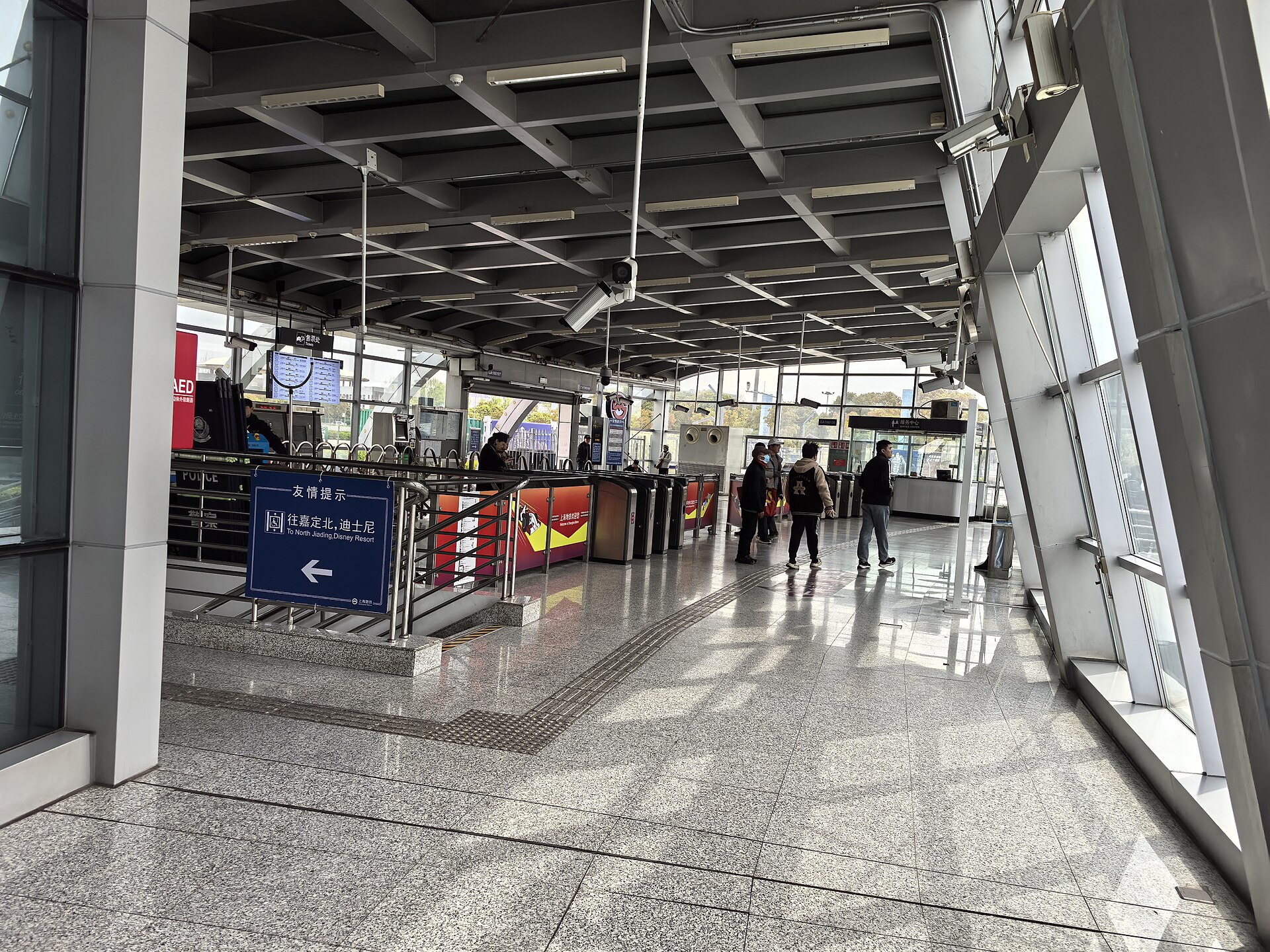
- Getting to the circuit on Line 11
- Getting away after the race
- Where to stay for the Chinese Grand Prix
- Visas, money, phones and weather
- A first-timer’s race week, day by day
- What else to do that week
- What people get wrong
- Frequently Asked Questions
Chinese Grand Prix 2027: dates and weekend schedule
F1’s official 2027 calendar puts the race on 16 to 18 April. It’s round five, after Japan (9 to 11 April) and before Miami (30 April to 2 May), which makes a Suzuka and Shanghai double a real possibility if you have the time and the budget.
It’s very likely to be a conventional weekend. F1 announced ten sprint events for 2027 in September 2026, and China isn’t among them, after three straight years of sprints in Shanghai from 2024 to 2026. F1’s own page for the event lists practice, qualifying and the race only. Session times are set closer to the date, so check F1’s Chinese Grand Prix page for the final timetable before you plan your days.
| Day | Date | On track | What it’s like for spectators |
|---|---|---|---|
| Friday | 16 April 2027 | Practice 1 and Practice 2 | The quietest day. Easiest travel, most room to walk the circuit and try different viewpoints. |
| Saturday | 17 April 2027 | Practice 3 and Qualifying | Busy from the afternoon. Qualifying draws a big crowd and the metro fills up. |
| Sunday | 18 April 2027 | The Grand Prix | The full crowd. Leave early, expect long waits to get home, and bring patience. |
For context, the 2026 race was held a month earlier, on 13 to 15 March, as a sprint weekend. Kimi Antonelli won the Grand Prix for Mercedes, ahead of George Russell and Lewis Hamilton, and Russell won the sprint. The organisers expected about 230,000 people over the 2026 weekend, with overseas fans making up around 14 percent, which gives you a sense of how busy it gets.
The Shanghai International Circuit
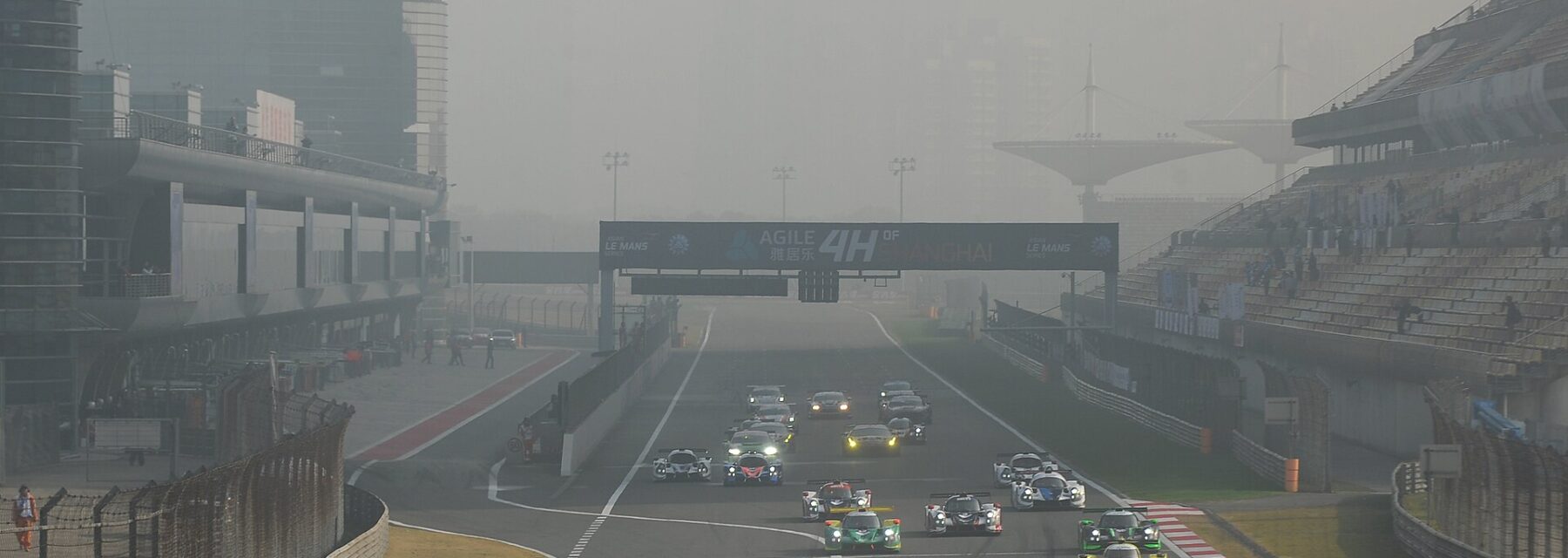
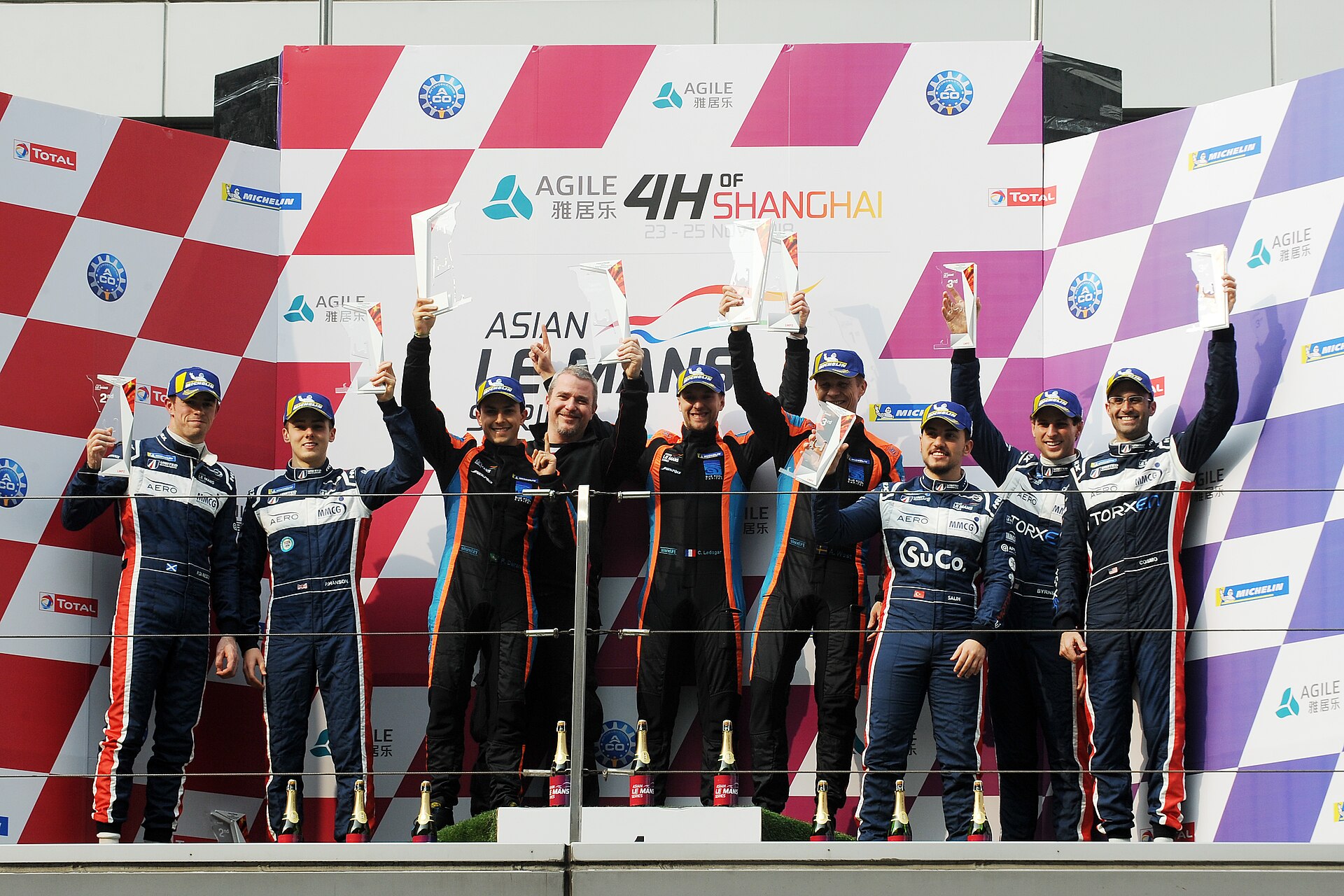
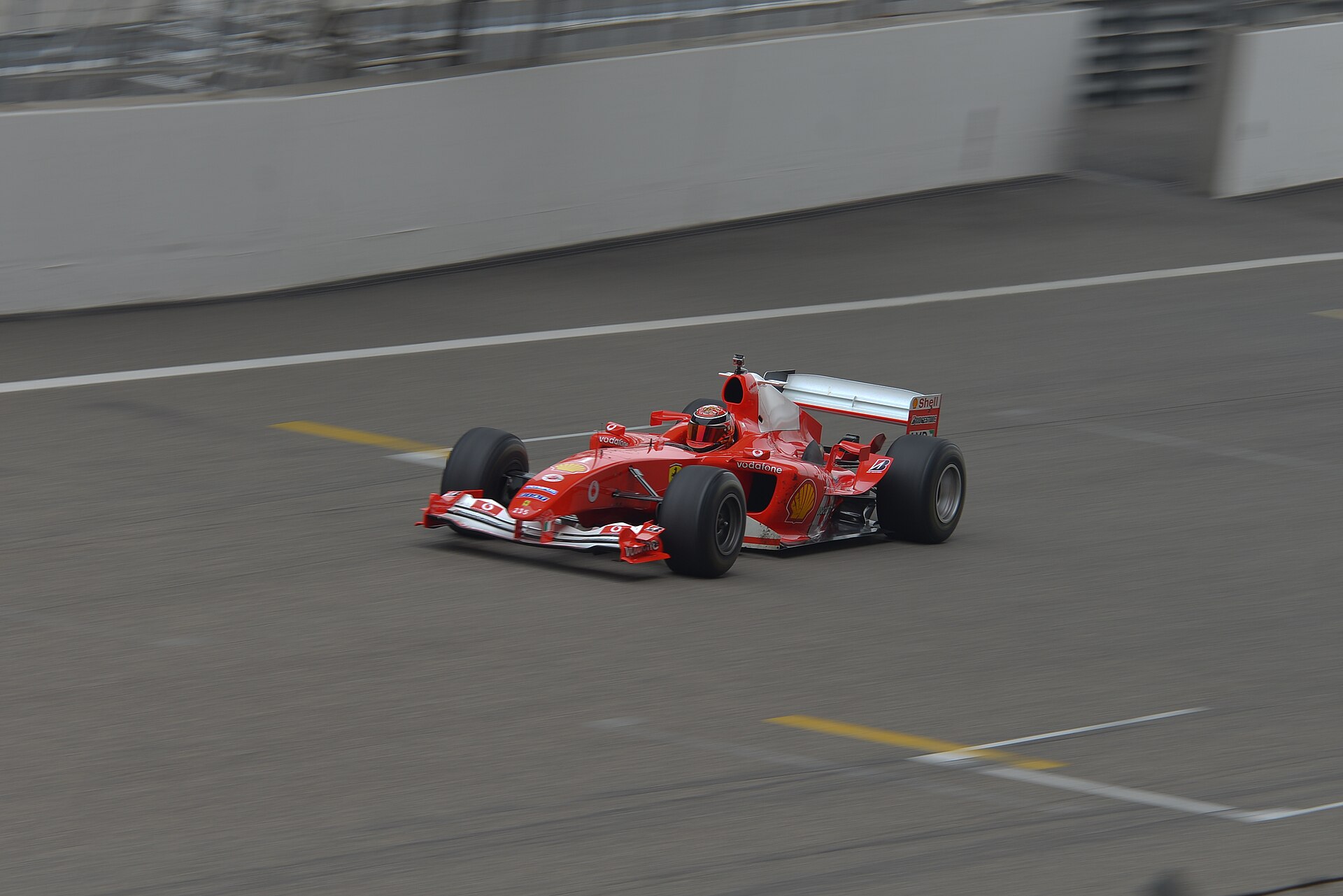
The circuit hosted its first Grand Prix in 2004, and it was built in a hurry: F1 says work began in April 2003 and took 18 months, at a cost of about $450 million. Its layout is meant to trace the Chinese character 上, shang, meaning “above” or “upwards”, which is also the first character of Shanghai. The lap is 5.451 km long, and Michael Schumacher’s 1:32.238 from that first year, 2004, is still the lap record.
Two features define the track. The first is the opening complex of Turns 1 and 2, a long, tightening right-hander that spirals round on itself and catches out drivers on the first lap and on worn tyres. The second is the back straight, about 1.2 km long according to F1, running between Turns 13 and 14 and leading into the tight hairpin. That’s one of the two main overtaking spots on the lap, with Turn 6 the other, and the reason the grandstands around the hairpin are so sought after.
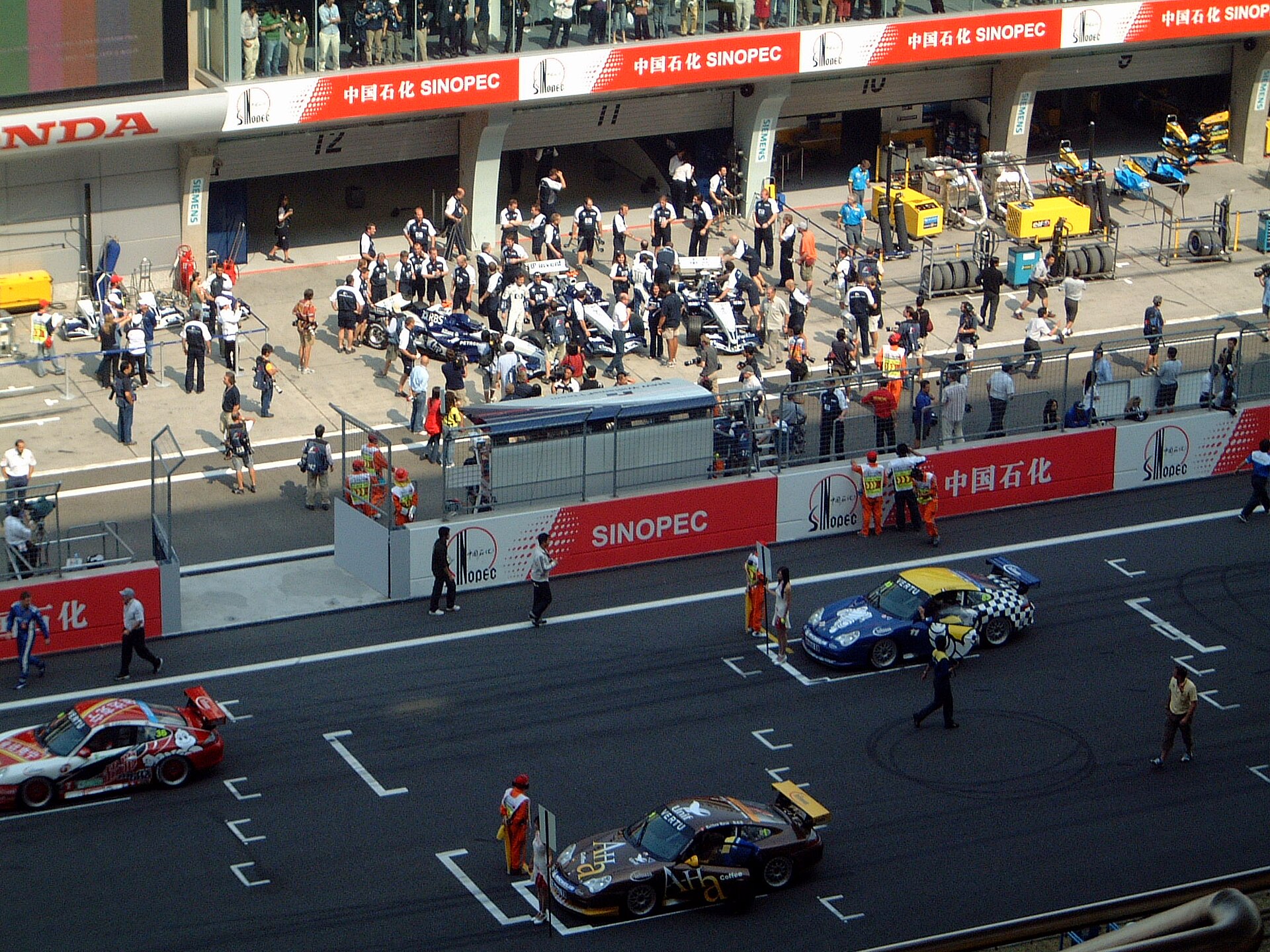
The circuit is big. F1 gives its capacity as 200,000, the main grandstand alone is vast, and the distances between viewing areas are long, so be ready to walk. Large screens help at a track this size: from most seats you’ll only see part of the lap with your own eyes.
Buying tickets as a foreigner
The official route is F1’s own ticket store, which sells the Chinese Grand Prix in English and takes international cards. At the end of October 2026 the store was offering a “join the waitlist” option for the 2027 race, which gives pre-sale access. Signing up costs nothing and is the best way to hear when sales open. For the 2026 race, tickets went on sale on 11 December 2025, three months before the race weekend, so watch the store for the on-sale date. The F1 ticket store’s China page is the one to bookmark.
Prices depend on the grandstand and whether you buy one day or three. Grass bank areas are the cheapest way in, and the covered seats in the main grandstand and around the hairpin cost the most. Ticket prices change each year, so compare categories on the official store when sales open rather than relying on last season’s figures you find online.
The passport rule. This is the part that trips people up. F1’s ticket pages say every ticket needs the holder’s full passport details, registered several weeks before the event. China runs a real-name system for big events, so the name on the ticket has to match the passport you carry on the day, and you should expect your passport to be checked at the gate. That means:
- Buy with each person’s passport to hand. You’ll need the details for everyone in your group, not just the buyer.
- Don’t plan on transferring tickets informally. A ticket in someone else’s name is a gamble at the gate.
- Be wary of resale. Unofficial resellers and “packages” sold through social media are the most common way to lose money on this race, and the passport rule makes them riskier still.
- Carry your passport every day of the weekend. A photo of it isn’t enough.
Local fans also buy through Chinese ticketing apps and the promoter’s own channels, which are built for mainland users. For most overseas visitors, F1’s own store is simpler and the safer choice.
Which grandstand? A, B, E, K and the grass banks
The right seat depends on what you want from the weekend: wheel-to-wheel action, the start, the pit lane, or the cheapest way in. Here’s how the main options compare, using what F1 and the organisers say about each.
| Area | Where it is | What you see | Best for |
|---|---|---|---|
| Main Grandstand | Start-finish straight | The grid, the start, pit stops and the podium | First-timers who want the atmosphere of the start |
| Grandstand A | Along the back straight (F1 gives about 30,000 seats) | Cars at top speed, braking for the hairpin | Big-stadium feel and DRS passes |
| Grandstand K | Turn 14 hairpin | Late braking and overtaking into the hairpin | Overtaking: F1’s own pick |
| Grandstand B | Turns 1 to 3, back in 2026 | The spiralling first corner and the pit exit | Lap-one drama |
| E Grandstand | Turns 11 to 13, upgraded for 2026 (holds 5,000) | The long right-handers before the back straight | A smaller, quieter stand with its own shuttle |
| Grass banks (C, F, J in 2026) | Around the infield and lap | Varies; usually a screen in view | The cheapest three-day option and room to move |
If you only care about racing, go for K or A. The back straight and the hairpin are where passes happen, and F1’s own advice names Grandstand K and the Turn 6 area as the best places to watch. If it’s your first Grand Prix and you want the full spectacle (the grid, the anthems, the start, the podium), the main grandstand is the one, though you pay for it and the start-line view comes at the expense of seeing much overtaking.
Grandstand B returned for the 2026 race, and it’s the one for the first lap: the first corner in Shanghai is long and tricky, and opening laps there are rarely tidy. The E Grandstand was newly configured for 2026, and the organisers ran a free shuttle bus between it and the P5 car park.
Grass bank tickets are the budget choice. In 2026 the C, F and J areas were sold with three-day pricing. Bring something to sit on, a hat and a rain layer, because there’s no roof and April can be showery. Spring weather can be warm in the sun and cool once the wind gets up, and you’ll be outside for hours.
Getting to the circuit on Line 11
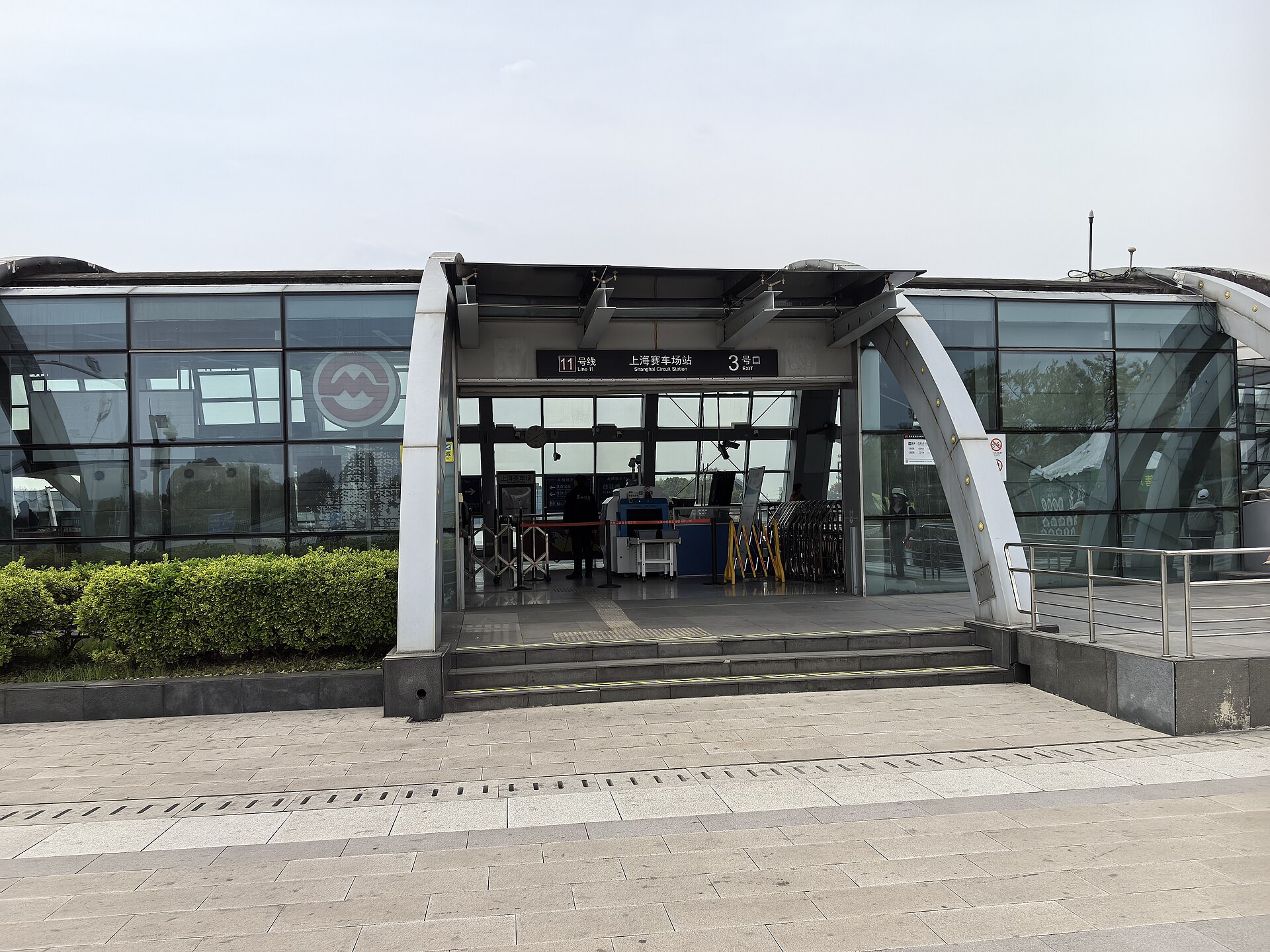
The circuit has its own metro station, Shanghai Circuit, on Line 11. It’s the best way there, by a long way. Taxis and ride-hailing are fine on Friday, but on Saturday and Sunday traffic around the circuit is heavy, and you can easily spend more time in a car than you would on the train.
The catch is that Line 11 splits in two. North of Jiading Xincheng, one branch runs to North Jiading and the other, which is the one you want, runs through Shanghai Circuit to Anting and Huaqiao. Board a train marked for Huaqiao. If you get on a North Jiading train by mistake, get off at Jiading Xincheng and wait for a Huaqiao train; Shanghai Circuit is the first stop on the branch.
| From | Scheduled time to Shanghai Circuit | Notes |
|---|---|---|
| Jiangsu Road (Line 11, change from Line 2) | about 40 min | Easiest from Jing’an and the West Nanjing Road hotels |
| Xujiahui (Line 11, change from Lines 1 and 9) | about 45 min | Good from the French Concession and Xuhui |
| Jiading Xincheng | about 4 min | Change here if you’re on a North Jiading train |
| Central Shanghai overall | 45 to 60 min, says F1 | Allow more on race day for queues at the gates and platforms |
The times above are scheduled running times from the line’s published station table. They don’t include getting to the platform, changing lines, or the queues at the circuit station, which on Saturday afternoon and Sunday are the slowest part of the trip. Leave the city at least two hours before the session you most want to see.
Check Shanghai Metro’s announcements in the week before the race for any extra trains or station arrangements. Pay with the metro QR code in Alipay or a Shanghai transport card, which saves queuing at ticket machines on the way home. Our Shanghai metro guide explains how both work.
If you do take a taxi or Didi, have the circuit’s Chinese name ready: 上海国际赛车场. Drop-off points move with road closures, so on race days accept that the driver may leave you a long walk from your gate. Our guide to using Didi in Shanghai covers setting it up with a foreign card.
Getting away after the race
Leaving is the hard part of any Grand Prix, and Shanghai is no exception. When the race ends, tens of thousands of people head for one metro station at once, and queues to get onto the platform can last a long time. A few ways to make it easier:
- Don’t rush. Stay for the podium, walk the track if it’s opened to fans, eat something, and let the first wave clear. Leaving an hour after the flag is often no slower than leaving with the crowd, and far less stressful.
- Or go early. If you have a flight that evening, leave during the last laps and watch the finish on your phone. It’s the only reliable way to be on a train before the crush.
- Charge your phone. You’ll need it for the metro code, for payment, and for finding your friends. Bring a power bank.
- Agree a meeting point. Mobile data gets slow in big crowds. Fix a place to meet away from the station entrance before you split up.
- Book your Sunday night. Don’t plan to catch a late flight or a train out of Shanghai on race night. Fly on Monday.
Where to stay for the Chinese Grand Prix
You have two real choices: stay near the circuit in Jiading, or stay in central Shanghai near Line 11. For almost everyone, central Shanghai is better.
Central Shanghai on Line 11 gives you a direct train to the circuit and the rest of the city in the evenings. The stations that work best are Jiangsu Road (for Jing’an and the western end of Nanjing Road, a Line 2 interchange), Xujiahui (Xuhui and the French Concession side, with Lines 1 and 9), and Jiao Tong University in between. Any hotel within a short walk of one of these puts the circuit 40 to 45 minutes away by scheduled train, and you’ll have restaurants, bars and the river on your doorstep. Our where to stay in Shanghai guide covers the neighbourhoods in more detail.
Jiading and Anting are closer to the circuit, which helps on Friday and Saturday mornings. But there’s much less to do in the evenings, the hotels are mostly business hotels, and on race day the roads near the circuit are no easier to use than the metro. It suits people who want to be first through the gates every morning and don’t mind early nights.
Book early. Hotel prices in Shanghai rise around big events, and the cheapest well-located rooms go first. Make sure your hotel accepts foreign guests and that you book in the name on your passport; our guide on booking hotels in Shanghai as a foreigner explains what to check.
Visas, money, phones and weather
Visas. Many nationalities can now enter China visa-free for short trips, and travellers passing through to a third country can use the 240-hour transit scheme. A Suzuka-to-Shanghai trip followed by a flight home may qualify. Rules depend on your passport and your onward ticket, so read our guides to the 240-hour visa-free transit and 30-day visa-free entry before you book flights.
Money. China runs on mobile payment. Set up Alipay or WeChat Pay with a foreign card before you travel, and test it. Food and drink stalls at the circuit, the metro and taxis all work best with a phone. Carry some cash as a backup, but don’t rely on it. Our guide to Alipay and WeChat Pay for tourists walks through the set-up.
Phones. Google, WhatsApp and most Western apps are blocked in mainland China. If you want to post from the grandstand or check the F1 app’s live timing, sort out an eSIM with roaming data or a VPN before you arrive; our guide to VPNs and internet in Shanghai explains the options.
Weather. April is a pleasant month in Shanghai, but a changeable one. The long-term April averages (1991-2020) at the Xujiahui weather station are a daily high of 20.9°C and a low of 12.6°C, with 84 mm of rain spread over about 11 days of the month. In practice that means a warm afternoon in the sun followed by a chilly evening, and a real chance of rain on at least one day of the weekend. Pack layers, a waterproof, sunscreen and a hat. Our Shanghai weather month by month guide has more.
A first-timer’s race week, day by day
Here’s how a well-paced trip to the Chinese Grand Prix tends to run, assuming you fly in midweek and stay in central Shanghai near Line 11.
Wednesday: arrive. Land at Pudong or Hongqiao, get to your hotel, and use the evening to check that your payment apps, metro code and data all work. If something is going to go wrong with Alipay, it’s better to find out now than at a circuit food stall. A walk along the Bund is a gentle first evening.
Thursday: the city. There’s nothing on track for spectators, so this is your day for Yu Garden, the Old Town or the French Concession. Some fans also make a scouting trip on Line 11 to see how long the journey really takes from their hotel, which is no bad idea if you’re nervous about race day.
Friday: practice. Go early and treat it as a day to explore. Friday crowds are the lightest of the weekend, so walk round to the hairpin, the back straight and the first corner, and work out where you’d most like to watch from. Be back in the city for dinner.
Saturday: qualifying. Head out by late morning. Qualifying in the afternoon is the moment the circuit starts to feel full, and the trains back are busy. Have a slower evening than you think you need.
Sunday: the race. Leave the hotel early, with your passport, a charged phone, a power bank, water and a rain layer. Find your seat well before the drivers’ parade. After the flag, either leave immediately or settle in and wait for the crowds to thin.
Monday: rest and fly. Keep the morning free, do one last sight if you have the energy, and fly out in the afternoon or evening.
What else to do that week
A Grand Prix weekend leaves you with evenings, and most people fly in on Wednesday or Thursday. Spring is one of the best times to be in Shanghai, so it’s worth staying a few extra days. Our guide to Shanghai in spring covers what’s on in April.
- The Bund after dark. Walk the riverfront in the evening when the old banks are floodlit and Pudong’s towers are lit up across the water. It’s free, and it’s the view everyone remembers.
- A night river cruise. An hour on the Huangpu is a relaxing way to spend a Friday or Saturday evening after a day in the grandstands.
- Yu Garden and the Old Town. Go on Thursday morning before the circuit opens, or on Monday before your flight.
- The French Concession. Plane trees, old villas, cafés and bars, and an easy evening base if you’re staying near Xujiahui.
- Jiading old town. If you want to see something near the circuit, Jiading’s old centre has canals, a Confucian temple and a pagoda. Check what’s open before you go.
Our things to do in Shanghai guide has the full list, and if you’re a sports fan coming back in the autumn, the Rolex Shanghai Masters guide covers the city’s other big international event, held in October.
What people get wrong
Buying from resellers. Tickets are tied to the holder’s passport. A ticket in someone else’s name, bought from a stranger online, is a real risk at the gate. Use F1’s official store.
Getting on the wrong branch of Line 11. Not every train heading north goes to the circuit. Look for Huaqiao on the destination board, or change at Jiading Xincheng.
Arriving at the last minute on Sunday. The queues to get into the station and through security are the slowest part of race morning. Aim to arrive well before the first session of the day, not just before the start.
Leaving payment until you land. Without Alipay or WeChat Pay working, buying food at the circuit and paying for the metro is a hassle. Set it up at home.
Booking a flight out on Sunday night. Between the post-race crowds and getting across the city to an airport, you will almost certainly miss it.
Assuming last year’s timing. The race was in March in 2026 and moves to April in 2027, with a different weekend format. Don’t plan from old reports; check F1’s 2027 timetable.
Underestimating the walking. The circuit is huge, the viewing areas are far apart, and you’ll do a lot of walking each day. Wear comfortable shoes.
Frequently Asked Questions
When is the Chinese Grand Prix 2027?
Friday 16 to Sunday 18 April 2027, at the Shanghai International Circuit. Practice is on Friday, final practice and qualifying on Saturday, and the race on Sunday. Check F1’s event page for session times.
Is the 2027 Chinese Grand Prix a sprint weekend?
It isn’t on F1’s list of ten sprint events for 2027, so expect a standard weekend with three practice sessions. Shanghai held sprints in 2024, 2025 and 2026.
How do I buy Chinese Grand Prix tickets?
Through F1’s official ticket store, which has a waitlist for the 2027 race. You’ll need full passport details for every ticket holder. For the 2026 race, tickets went on sale in December 2025.
How do I get to the Shanghai International Circuit?
Take Metro Line 11 to Shanghai Circuit station, on the Huaqiao branch. It’s about 40 minutes from Jiangsu Road or 45 from Xujiahui by scheduled train; allow much longer on race day.
Which is the best grandstand at Shanghai?
For overtaking, Grandstand K at the Turn 14 hairpin, which F1 itself recommends, or Grandstand A on the back straight. For the start and the podium, the main grandstand. For the cheapest ticket, the grass banks.
Do I need my passport at the circuit?
Yes. Tickets are registered to the holder’s passport, and you should expect to show it at entry. Carry the original, not a photo or copy.
How long is the Shanghai circuit?
5.451 km per lap. Its layout follows the Chinese character 上 (shang), and the 1.2 km back straight leading to the Turn 14-15 hairpin is one of the main overtaking spots.
How many people go to the Chinese Grand Prix?
F1 says 200,000 fans attended the 2024 race, its first in Shanghai for five years, and the organisers expected around 230,000 people over the 2026 weekend, about 14 percent of them from overseas.
What’s the weather like at the Chinese Grand Prix in April?
Mild and changeable. Long-term April averages in Shanghai are a high of about 21°C and a low of about 13°C, with rain on around 11 days of the month. Bring layers and a waterproof.
Can I do Japan and China back to back?
Yes. In 2027 Japan is on 9 to 11 April and China on 16 to 18 April, with a week in between. Check whether your passport qualifies for visa-free entry or the 240-hour transit before you book.
Once your tickets are sorted, plan the rest of the trip around them. Start with our guide to where to stay, read the Shanghai airport arrival guide before you fly, and use the Shanghai transport card guide to sort out getting around the city between sessions.
Photo credits.
Podium, Shanghai International Circuit: 4 Heures de Shanghai 2018 – Podium by United Autosports, CC BY-SA 2.0, via Wikimedia Commons.
Start-finish straight, Shanghai International Circuit: 4 Heures de Shanghai 2018 – Départ by United Autosports, CC BY-SA 2.0, via Wikimedia Commons.
Ferrari F2004: Ferrari f2004 by emperornie, CC BY-SA 2.0, via Wikimedia Commons.
Pit straight grid: F-1 Circuit Shanghai – panoramio by CyberCop, CC BY 3.0, via Wikimedia Commons.
Shanghai Circuit station, Exit 3: Exit No. 3 of Shanghai Circuit Sta. of Line 11 20250330 by 4084470 0.smil, CC BY 4.0, via Wikimedia Commons.
Shanghai Circuit station concourse: East Concourse of Shanghai Circuit Sta. of Line 11 20250330 by 4084470 0.smil, CC BY 4.0, via Wikimedia Commons.