For travelers from a growing list of countries, mainland China is now genuinely easy to visit. The 30-day unilateral visa-free entry policy, expanded multiple times since late 2023, lets eligible passport holders enter China for tourism, business, or family visits with no advance visa application — just a passport, an onward ticket, and a hotel reservation. This guide covers everything a tourist should know about China 30 day visa free entry in 2026, including the full eligible-country list, the entry process at Shanghai’s airports, the Digital Arrival Card system introduced in late 2025, and the differences between the 30-day policy and the 240-hour transit visa-free policy.
The headline: as of 2026, citizens of approximately 49 countries (or 79 across all unilateral and bilateral programs) can enter mainland China visa-free for stays up to 30 days. The policy is extended through December 31, 2026, and likely to be renewed. For most international tourists who used to need a Chinese tourist visa, the answer in 2026 is now simply “no, you don’t” — turn up at the airport, present your passport, and walk into the country.
Table of Contents
- What Is the 30-Day Visa-Free Policy?
- Eligible Countries (Full 2026 List)
- 30-Day Visa-Free vs. 240-Hour Transit Visa-Free
- Requirements at a Glance
- How the 30 Days Are Counted
- The Entry Process at Shanghai Airports
- The Digital Arrival Card
- Documents to Bring
- What You Can and Cannot Do
- Multiple Entries
- Can You Extend?
- Common Mistakes
- When to Get a Regular Tourist Visa Instead
- Frequently Asked Questions
What Is the 30-Day Visa-Free Policy?
The 30-day visa-free entry policy (formally the “unilateral visa-free entry policy”) allows ordinary passport holders from eligible countries to enter mainland China for stays up to 30 days without applying for a visa in advance. It was first introduced in November 2023 for a small group of European countries and has since been expanded multiple times. As of 2026, the policy covers approximately 49 countries unilaterally, plus several others under bilateral agreements.
The policy applies to entry at any standard international port of entry in mainland China, including Shanghai’s Pudong International Airport, Hongqiao International Airport, Shanghai Port International Cruise Terminal, and dozens of other airports and land borders.
The policy is intended to support Chinese tourism and business travel by reducing friction for visitors from key partner countries. It has been extended through at least December 31, 2026, with strong indications of further extension or expansion thereafter.
Eligible Countries (Full 2026 List)
As of 2026, the unilateral 30-day visa-free policy covers approximately 49 countries. Always verify the current list with the National Immigration Administration of China before traveling, as the list continues to evolve.
Europe (35 countries): Andorra, Austria, Belgium, Bulgaria, Croatia, Cyprus, Czech Republic (added late 2024), Denmark, Estonia, Finland, France, Germany, Greece, Hungary, Iceland, Ireland, Italy, Latvia, Liechtenstein, Lithuania, Luxembourg, Malta, Monaco, Montenegro, Netherlands, North Macedonia, Norway, Poland, Portugal, Romania, Slovakia, Slovenia, Spain, Sweden, Switzerland, United Kingdom.
Americas (5 countries): Argentina, Brazil, Canada, Chile, Peru, Uruguay.
Asia-Pacific (3 countries): Australia, Japan, New Zealand, South Korea.
Middle East (4 countries): Bahrain, Kuwait, Oman, Saudi Arabia.
Plus bilateral agreements: Russia (until September 14, 2026), Brunei (no expiration), and several others under separate visa-free arrangements.
Notable absences: The United States is not on the unilateral 30-day list. US passport holders qualify for the 240-hour transit visa-free policy under specific conditions but otherwise need a tourist visa. India is also not on the list. Always verify your specific nationality’s status before booking.
For the broader visa picture, see our pillar guide on Shanghai Visa & Entry Requirements.
30-Day Visa-Free vs. 240-Hour Transit Visa-Free
Two different visa-free programs apply to Shanghai visitors. The differences matter.
30-day visa-free entry. For citizens of the 49 eligible countries listed above. Allows entry for tourism, business, family visits, or transit, for stays up to 30 days. No onward third-country ticket required (though hotel and return-leg booking should be available). Allows travel anywhere in mainland China.
240-hour transit visa-free. For citizens of 55 countries (a slightly different list including the United States). Allows transit for up to 240 hours (10 days). Requires an onward ticket to a third country (i.e., not back to the country of origin). Allows travel only within designated regions including Shanghai, Jiangsu, Zhejiang, Anhui, and several other provinces.
Which to use: If you qualify for both, choose the 30-day policy; it’s longer and more flexible. The 240-hour policy is the right choice for citizens of countries on its list but not the 30-day list (the United States, for example).
For the 240-hour policy specifically, see our China 240-hour visa-free transit Shanghai guide.
Requirements at a Glance
To enter China under the 30-day visa-free policy, you must meet all of the following:
- Eligible ordinary passport. Your passport must be from one of the listed countries with at least six months of remaining validity (most authorities recommend six months; some accept three).
- Purpose of visit must qualify. Tourism, business, family/friend visits, exchanges, or transit. Work, formal study, journalism, and certain other activities require a different visa.
- Reasonable supporting documents. Hotel reservation or proof of accommodation, return ticket or onward travel evidence. These are sometimes asked for, sometimes not.
- Entry through an authorized port. Shanghai Pudong, Hongqiao, and most other standard international ports qualify.
- Compliance with health and customs rules. Standard customs regulations apply.
How the 30 Days Are Counted
The 30-day countdown starts at 00:00 on the day after your entry. So if you arrive at 9 AM on June 1, your “Day 1” begins at midnight on June 1 leading into June 2. Your last full day is therefore June 30 (the 30th day from June 2 = July 1). You must depart by midnight of July 1.
This rule means you effectively get up to 30 full days plus your arrival-day partial. Practical takeaway: a 30-day trip can extend to 30 calendar days plus the arrival evening, but you must depart on or before the 30th day from midnight of the day after entry.
Always check the stamp in your passport when you receive it; the entry officer’s hand-written or stamped end-date is the definitive answer.
The Entry Process at Shanghai Airports
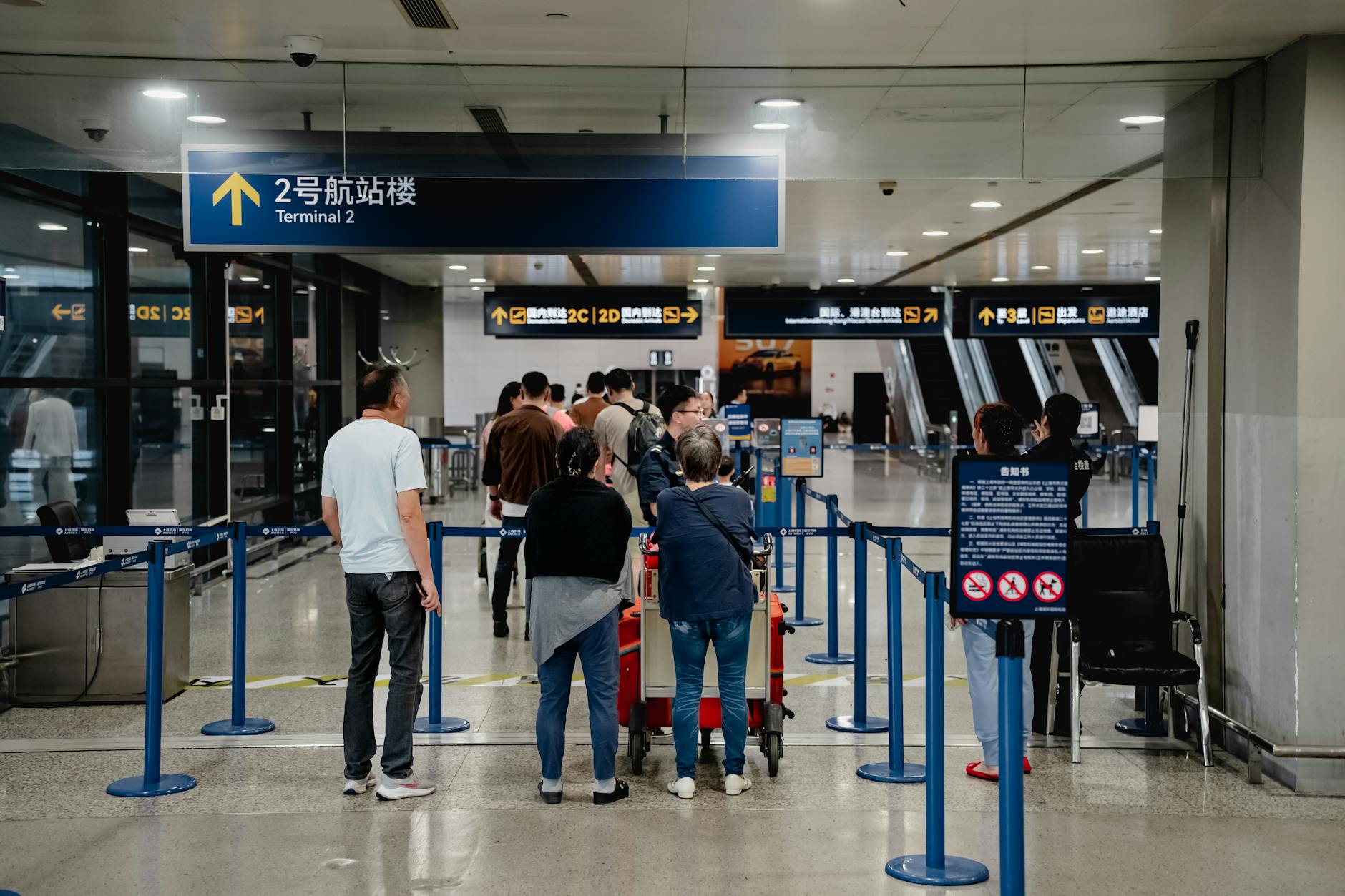
The process is simple but does require some preparation.
1. Check in for your inbound flight. The airline staff in your departure city will ask whether you have a Chinese visa. If you do not, tell them you are using the 30-day visa-free entry policy. Confirm your eligibility (most airlines have a checklist). They issue your boarding pass without further question.
2. Land in Shanghai. Follow the regular signs to immigration. There is no separate lane for visa-free entrants; you queue with other foreign visitors.
3. Complete the Digital Arrival Card. Either pre-completed before flying (recommended) or at airport kiosks. See the next section.
4. Approach the immigration officer. Hand over your passport. The officer asks one or two questions (typically about your hotel and length of stay), checks your documentation, and stamps your passport with the 30-day visa-free stamp.
5. Continue through customs. Standard customs check. Most travelers walk through without inspection.
Total time from gate to taxi: typically 30–45 minutes at peak times, less at off-peak.
The Digital Arrival Card
Since November 2025, China requires all foreign visitors to complete a Digital Arrival Card before passing through immigration. This replaces the older paper Arrival Card form.
What it asks: Personal details, passport information, flight number, address in China, length of stay, purpose of visit.
How to complete it: Three options. (1) Online via the official Chinese immigration portal up to several days before flying. (2) On the airline’s mobile app for some carriers. (3) At self-service kiosks at the arrival airport.
Recommended: Complete it before flying. The kiosks at the airport can have queues during peak arrival times.
The Digital Arrival Card replaces the older paper form for both visa-free and standard visa entries.
Documents to Bring
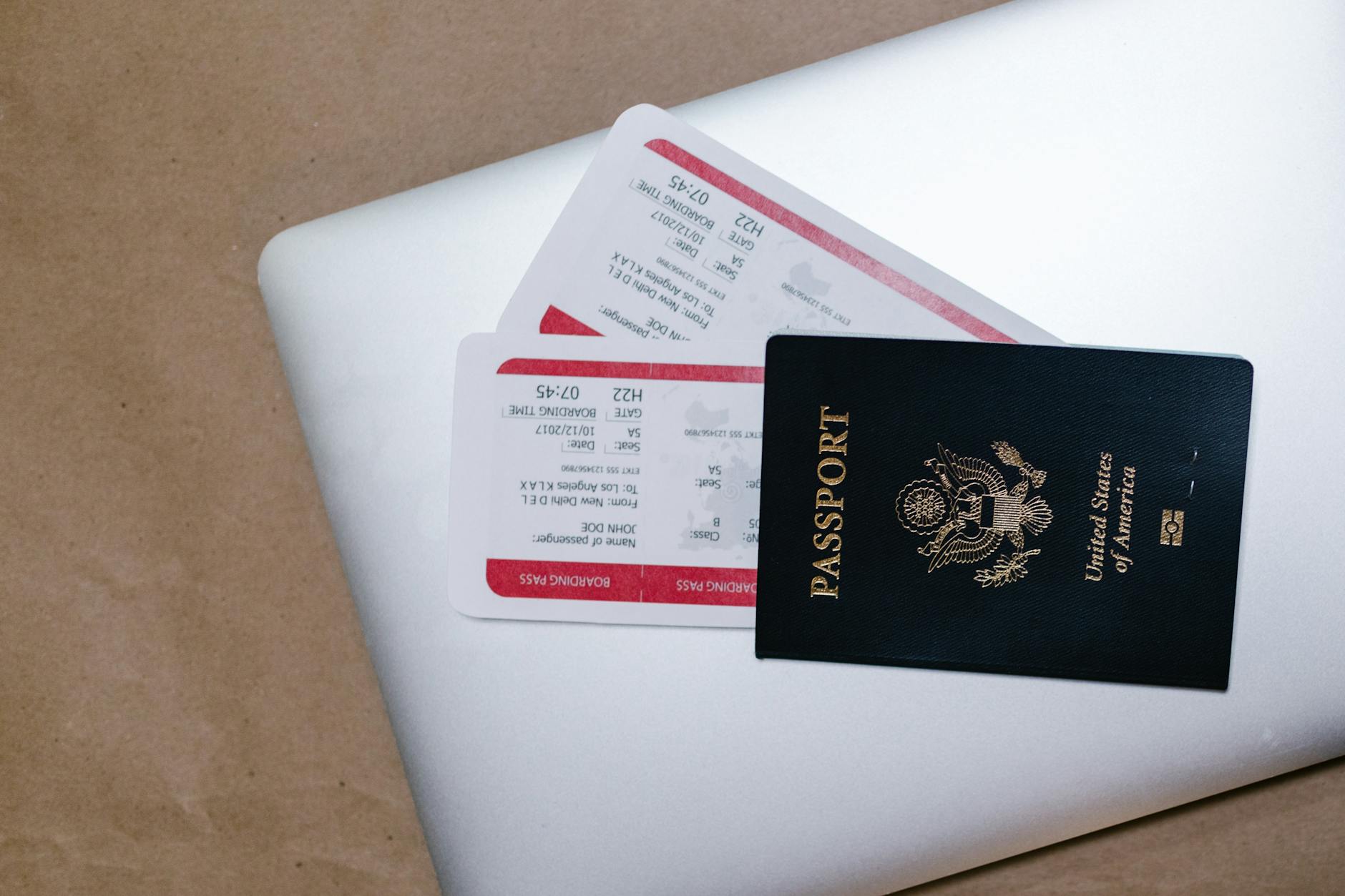
Have these ready when you reach the immigration officer.
- Passport. Eligible nationality, six months remaining validity recommended.
- Return or onward ticket. Printed confirmation. Officers occasionally ask for this.
- Hotel reservation. Printed confirmation showing your accommodation in China.
- Digital Arrival Card. Pre-completed or filled at airport kiosk.
- Address of stay if not in a hotel. If staying with a friend or in private accommodation, have the address written.
Officers do not consistently request these documents, but having them ready avoids issues. Carry printed copies; PDFs on phones are acceptable but slower.
What You Can and Cannot Do
The 30-day visa-free entry permits:
- Tourism (sightseeing, cultural experiences).
- Business meetings, conferences, and trade.
- Family or friend visits.
- Short-term exchanges.
- Transit through China to onward destinations.
It does NOT permit:
- Paid work or employment.
- Long-term study (degree programs, etc.).
- Journalism or news reporting.
- Other activities requiring prior approval.
You can travel freely throughout mainland China during your visa-free stay (different from the 240-hour policy, which is regionally restricted). Domestic flights, high-speed rail, and other transit accept your visa-free entry stamp as sufficient ID.
Multiple Entries
The 30-day visa-free entry permits a single entry. If you exit China during your stay (for example, taking a side trip to Hong Kong or Macau, which are technically separate from mainland China for immigration purposes), you must re-enter under a new 30-day window if you re-enter mainland China.
Most travelers entering through the policy do not exit during their stay. If you plan multiple entries within a short window, consider applying for a multiple-entry tourist visa.
Can You Extend?
The 30-day window cannot be extended on the ground. If your travel plans change and you need to stay longer, your options are:
- Apply for a tourist visa at a Chinese consulate (sometimes possible while in China at major consulates, though rules vary). Typical extension: 30 days.
- Exit and re-enter. Leaving to Hong Kong or another nearby region and re-entering restarts your 30-day window. This is technically permitted but not recommended as a routine strategy.
- Contact local public security bureau (PSB). In some cases the PSB can extend visa-free stays for special circumstances. Contact them well before your visa-free expiration.
If your plans extend, contact the local PSB immediately. Do not overstay — overstays result in fines, deportation, and potential future entry restrictions.
Common Mistakes
Several preventable mistakes routinely cause problems for visa-free entry users.
1. Wrong passport type. The policy applies to ordinary tourist passports. Diplomatic, official, or service passport holders may need a visa.
2. Insufficient passport validity. Six months remaining validity is the standard requirement. Don’t cut it close.
3. Trying to use it for work. The visa-free entry does not permit paid work. Bringing a laptop is fine; conducting paid services for a Chinese client is not.
4. Missing the Digital Arrival Card. Required since November 2025. Complete it before flying or at airport kiosks.
5. Overstay. Counts from midnight after arrival. Track carefully.
6. Wrong port of entry. Not all ports allow visa-free entry. Standard international airports (Shanghai Pudong, Beijing Capital, Guangzhou Baiyun, etc.) all qualify. Smaller airports may not.
7. Not registering with police. Foreign visitors must register at their accommodation within 24 hours. International hotels do this automatically; private rentals require self-registration at the local police station.
When to Get a Regular Tourist Visa Instead
The 30-day visa-free entry covers most short-term tourist needs. Get a regular tourist visa (L visa) instead if:
- You plan to stay longer than 30 days.
- You plan to make multiple separate entries.
- Your country is not on the eligible list.
- You will work, study formally, or report news.
The L visa typically gives 30, 60, or 90-day stays (depending on category) and can be multiple-entry. Application is at a Chinese embassy or consulate, processing typically takes 4–10 business days, fee is approximately $140 USD for US passport holders (varies by country).
For US passport holders specifically, the 240-hour transit visa-free policy may be more useful for short trips than a tourist visa. See our 240-hour transit guide.
Frequently Asked Questions
Is the 30-day visa-free entry free?
Yes. There is no fee for the entry stamp itself.
Do I need an onward ticket?
Officially yes; in practice officers sometimes ask, sometimes don’t. Bring a printed copy.
Can US citizens enter China visa-free for 30 days?
Not under the unilateral 30-day policy. US citizens can use the 240-hour transit visa-free policy if they have an onward ticket to a third country. Otherwise a tourist visa is required.
Can I extend the 30 days while in China?
Generally no. Contact the local public security bureau if you need to extend; extensions are difficult to obtain. Plan ahead.
Does the 30-day visa-free apply to children?
Yes. Each child needs an eligible passport and meets the same requirements.
What if my flight is delayed and I arrive close to midnight?
The 30 days counts from midnight after your arrival, so a late arrival doesn’t shorten your trip. If you actually overstay because of a late departure flight, contact the airline and immigration immediately.
Can I enter China multiple times under the 30-day visa-free policy?
It permits a single entry. Each new entry restarts the 30-day window. There is no formal restriction on how many times you can use the policy in a year, though immigration officers may ask questions if used very frequently.
Do I need to register with police?
Yes, within 24 hours of arrival. International hotels do this automatically; private rentals require self-registration at the local PSB.
What ports of entry support 30-day visa-free?
All standard international airports including Shanghai Pudong, Hongqiao, Beijing Capital, Beijing Daxing, Guangzhou Baiyun, Hong Kong-Shenzhen West Kowloon, and dozens of others. Land borders and cruise terminals also qualify in most cases.
Can I work remotely for a foreign employer during my 30-day stay?
The visa-free entry permits tourism, business meetings, and similar activities. Remote work for a foreign employer is generally tolerated for short stays but is technically a gray area. For longer stays or formal work arrangements, get a work visa.
Plan Your Visit
The China 30 day visa free entry policy in 2026 is one of the most generous tourism-facilitation programs from any major Asian country. For citizens of the 49 eligible countries, visiting Shanghai is now as easy logistically as visiting Tokyo or Seoul. Confirm your eligibility, prepare your documents, and book your flight.
For broader visa context, see our pillar Shanghai Visa & Entry Requirements guide. For the 240-hour transit alternative, see our China 240-hour visa-free transit guide. For practical advice once you arrive, see our Shanghai practical tips for tourists.
For authoritative source information on current eligibility and rules, refer to the National Immigration Administration of China website, which publishes the official list and updates.
The visa-free policy is the easiest entry mechanism most Shanghai-bound travelers will ever experience. Use it.