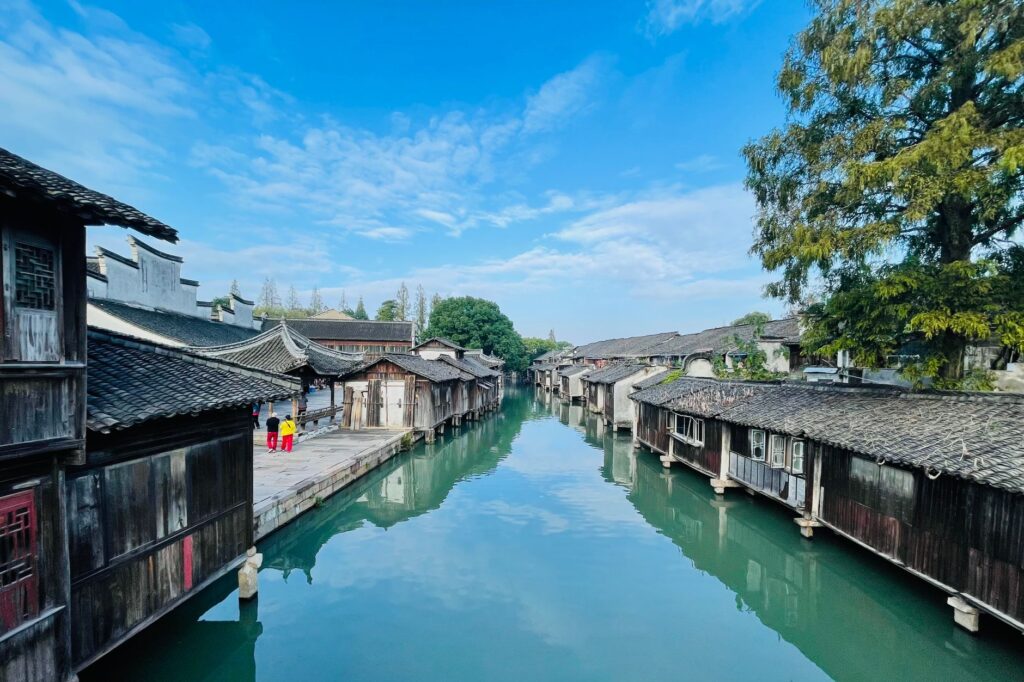
Every guide to Shanghai tells you that seeing a canal town means a day trip — an hour on the metro to Zhujiajiao, or a train into Zhejiang for Xitang or Wuzhen. Qibao Ancient Town is the exception. It sits inside the Shanghai municipality in Minhang District, a short walk from Exit 2 of Qibao station on Line 9. You can go after breakfast and be back for a late lunch.
What you get for that convenience is a smaller, denser, considerably more crowded old town than the famous ones, with a thousand years of history behind it and — this is the honest reason most people go — one of the best concentrated street-food strips anywhere in Shanghai. Qibao is not the most beautiful canal town near Shanghai and nobody serious claims it is. It is the one you can actually fit into a half day, and if you eat your way down South Street rather than trying to photograph your way down it, it is a very good half day indeed.
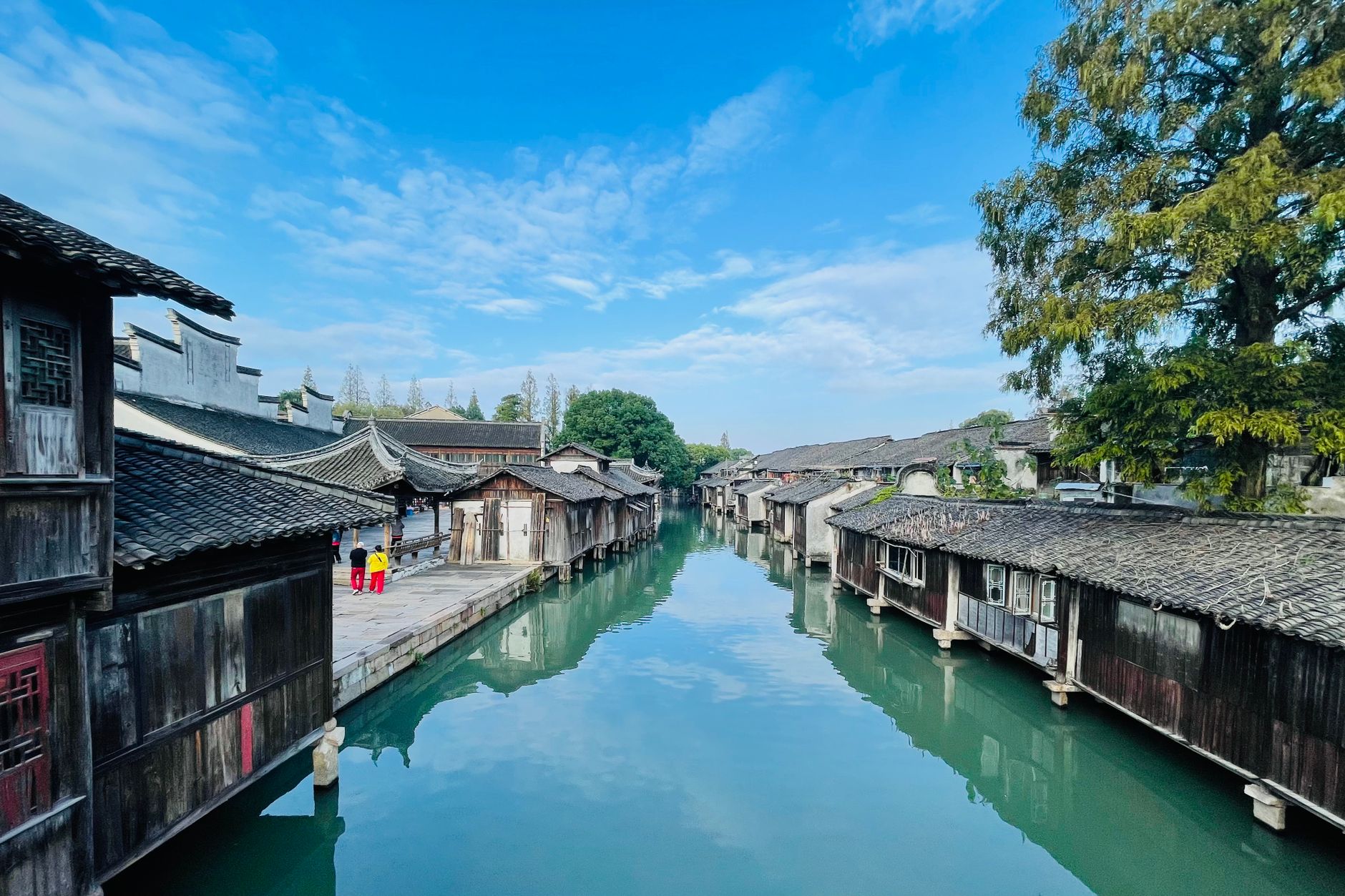
Table of Contents
- What Qibao Ancient Town actually is
- The seven treasures, and which ones were real
- Getting there on Line 9
- Tickets, hours and the combined pass
- South Street: the food
- North Street and the small museums
- A half-day plan
- Qibao ancient town vs Zhujiajiao: an honest comparison
- Going with children
- When to go, and when not to
- What people get wrong
- Frequently Asked Questions
What Qibao Ancient Town actually is
A market town founded in the Five Dynasties period, roughly between 907 and 979, around a temple called Qibao — the Temple of Seven Treasures. It grew through the Song dynasty and did well under the Ming and Qing, when this was a cotton and textile district and the canal was how goods moved. Shanghai then grew outwards and swallowed it, which is why a thousand-year-old town now has a metro station, a shopping mall and a ring road within a few hundred metres.
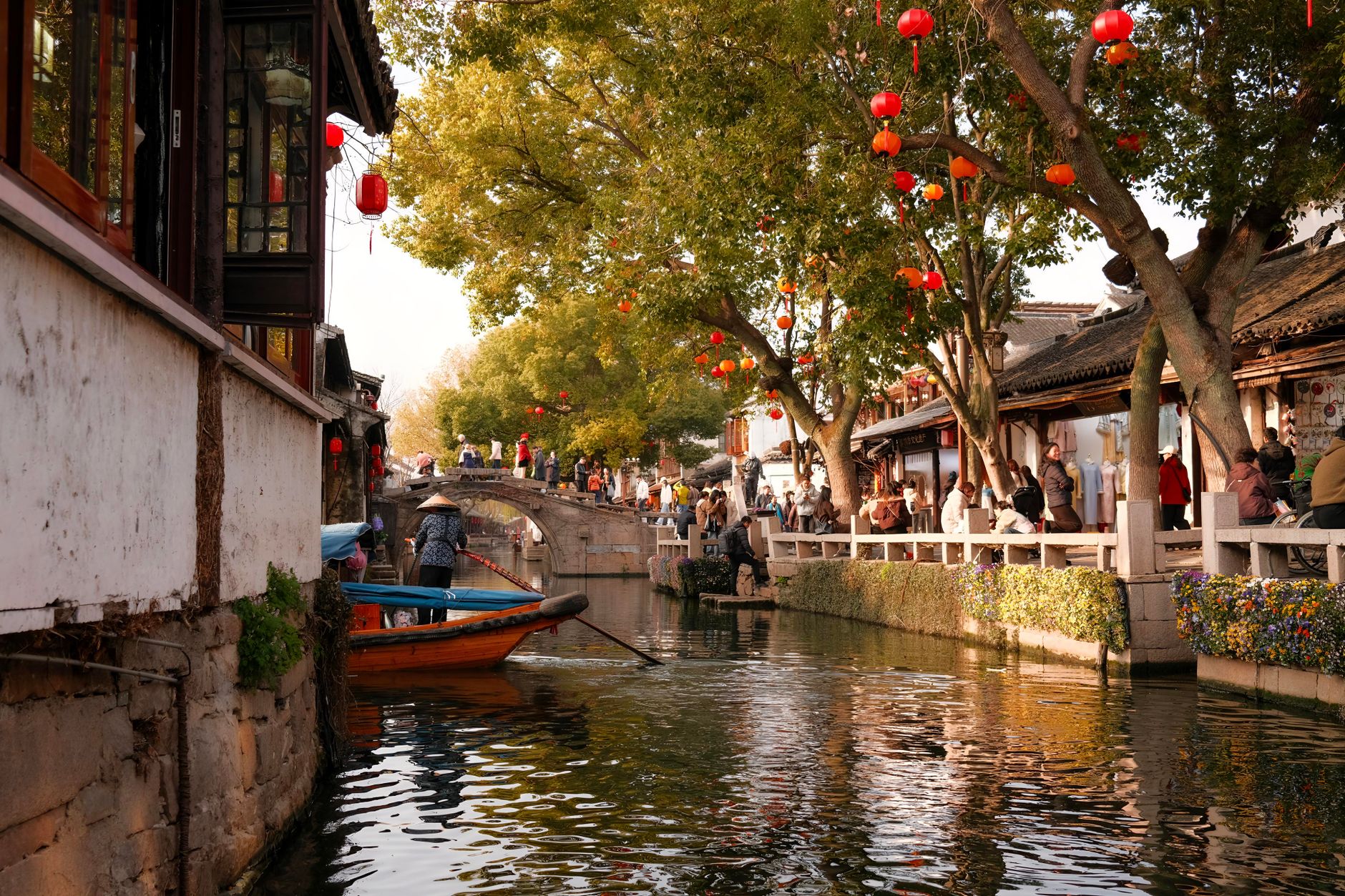
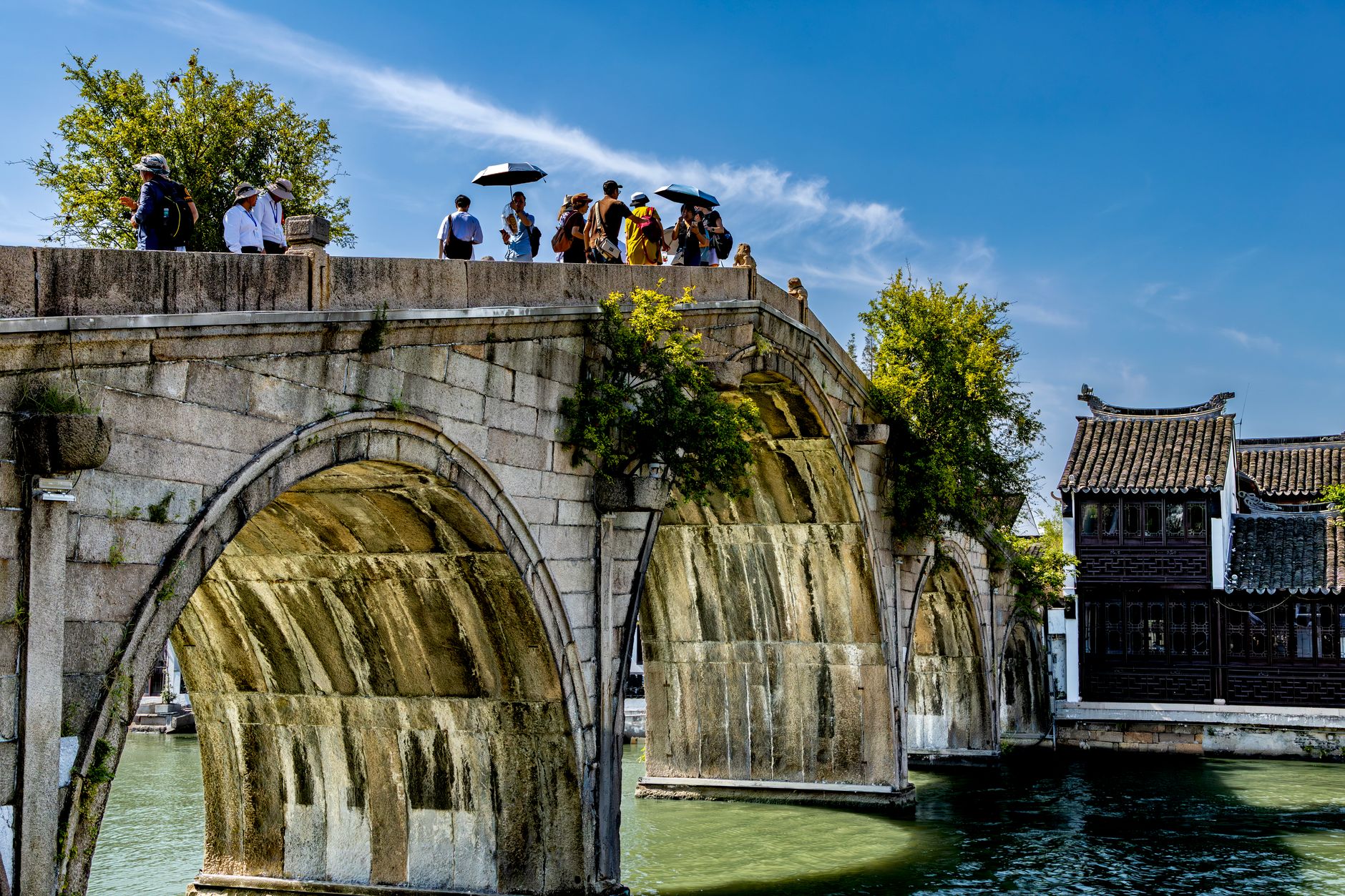
What survives is small: a canal, a few stone bridges, a bell tower, a Taoist temple, and two short streets of low tiled buildings running north and south from the water. The whole restored area is walkable in twenty minutes if you do not stop, which nobody does, because it is lined end to end with food.
Be clear about the scale before you go. Xitang covers a square kilometre with nine waterways and twenty-seven bridges. Zhujiajiao has thirty-six. Qibao is a few hundred metres of street either side of one canal. It is a snack and a look, not an expedition — and the people who come away disappointed are almost always the ones who expected Wuzhen.
It is also, unavoidably, commercial. There is very little pretence of a working village here. What there is instead is a genuinely Shanghainese crowd — this is a place local families go on a Sunday, not a place tour buses unload at — and that gives it a different texture from the towns that live entirely on visitors.
The seven treasures, and which ones were real
The name is worth knowing because it is the one piece of Qibao that is genuinely charming. Qibao (七宝) means “seven treasures”, taken from the temple the town grew around. The traditional list names an iron Buddha, a bronze bell, a gold-script Lotus Sutra, a catalpa tree, a jade axe, a gold cockerel and a pair of jade chopsticks. Older tellings give three of them nicknames that are better than the objects: the Flying Buddha, the Floating Bell, the Divine Tree.
Historians reckon only four ever existed — the sutra, the bell, the tree and the cockerel — and that only two survive: the gold-script Lotus Sutra and the bell. The jade axe and the jade chopsticks appear to have been added by later storytellers who could count.
This is a good thing to have in your head walking round, because the Bell Tower is one of the ticketed sites and knowing that the bell is one of two surviving treasures out of a legendary seven makes it considerably more interesting than a bell in a tower otherwise is.
Getting there on Line 9
This is the entire selling point, so it is worth doing right.
Metro Line 9 to Qibao station, then Exit 2. From the exit it is about three hundred metres south — a five to ten minute walk. Depending on which way you leave, you may find yourself walking out through a shopping mall first; keep going south and you will hit the old town, which is signposted in English.
From People’s Square it takes one interchange, and like every journey on the network the fare is charged by distance. Line 9 also serves Xujiahui, Middle Yishan Road and Century Avenue, so it is easy to reach from most of the centre. Our Shanghai metro guide covers fares, passes and how the exit numbering works.
A taxi from central Shanghai is poor value here, because the metro stops a short walk from the old town and the fare depends on where you start and how bad the traffic is. If you do take one, have 七宝古镇 written down.
There is no entry gate and no ticket barrier, so you simply walk in.
Tickets, hours and the combined pass
Walking around Qibao is free. The streets, the canal, the bridges and the whole food strip cost nothing, which puts it among the better free things to do in the city — see our free attractions in Shanghai guide for the rest.
The indoor sites are ticketed. A combined ticket covers several of them, or you can pay a few yuan at the door of any single one; the ticket office has the current price of the pass and the list of what it includes. If you plan to see most of the museums, price the pass against the single tickets; otherwise pay as you go, which most people should.
| Price | Hours | |
|---|---|---|
| The town, streets and canal | Free | Open all day |
| Combined ticket, several indoor sites | Check at the ticket office | Daytime |
| Single indoor site | A few yuan | Each keeps its own hours |
| Shadow puppet performance | Ask at the museum | Sundays 13:30–15:00 |
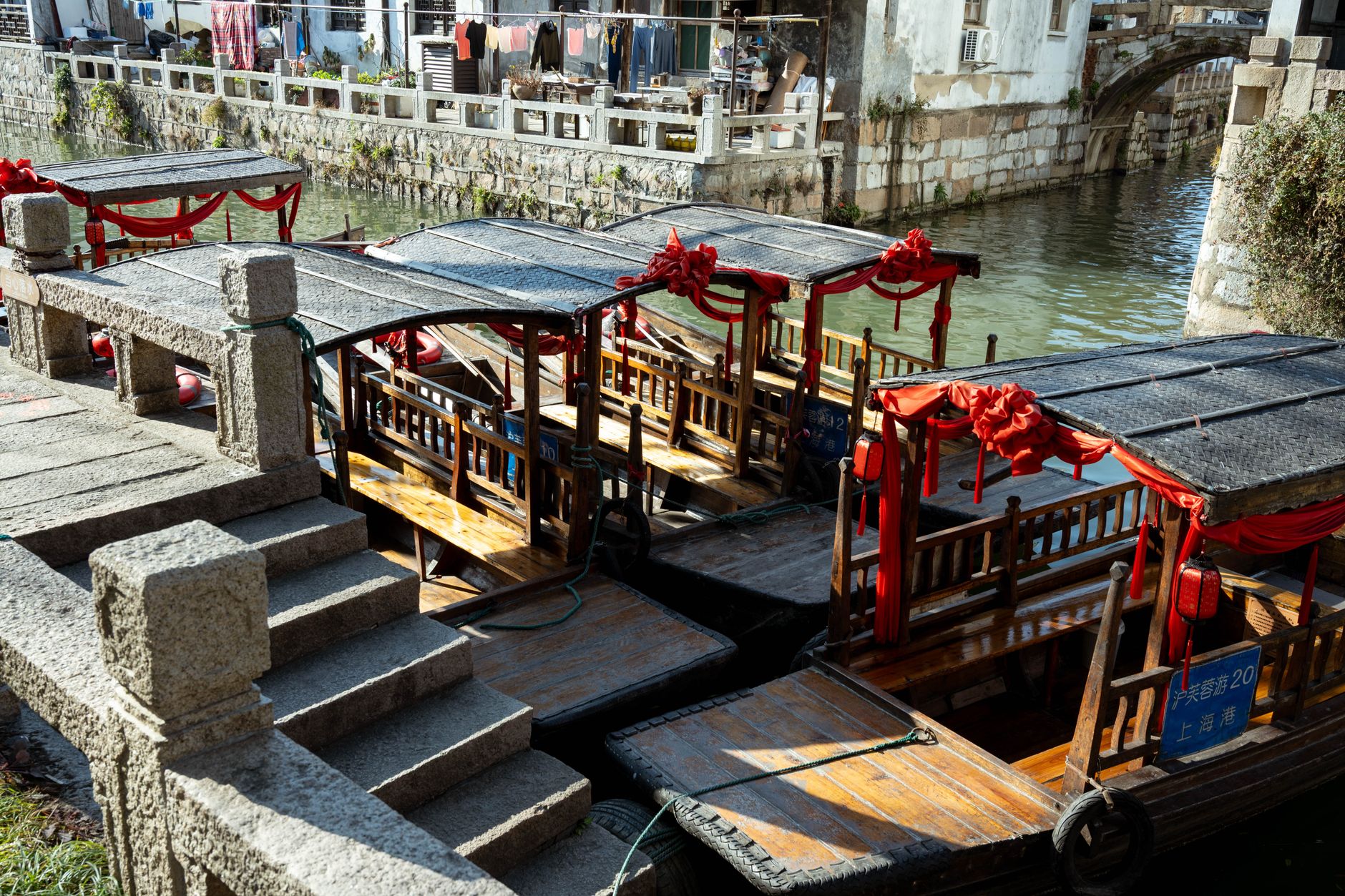
| Canal boat ride, where running | Price at the pier | Varies |
| Food stalls and shops | Priced per item | Most from mid-morning to evening |
Note the mismatch in the hours column, because it shapes the visit: the lanes are open all day, the museums and indoor sites close in the late afternoon or early evening, and the shops and stalls stay open later. An evening visit gets you lanterns and food but no museums. A morning visit gets you everything and the fewest people.
Alipay and WeChat Pay are the usual way to pay, though at the smallest stalls it is worth checking before you order. Cash is accepted more reluctantly than in central Shanghai and small vendors may not have change for a ¥100 note.
South Street: the food
Old Street splits in two at the canal. South Street is the food street, and it is the reason to come.
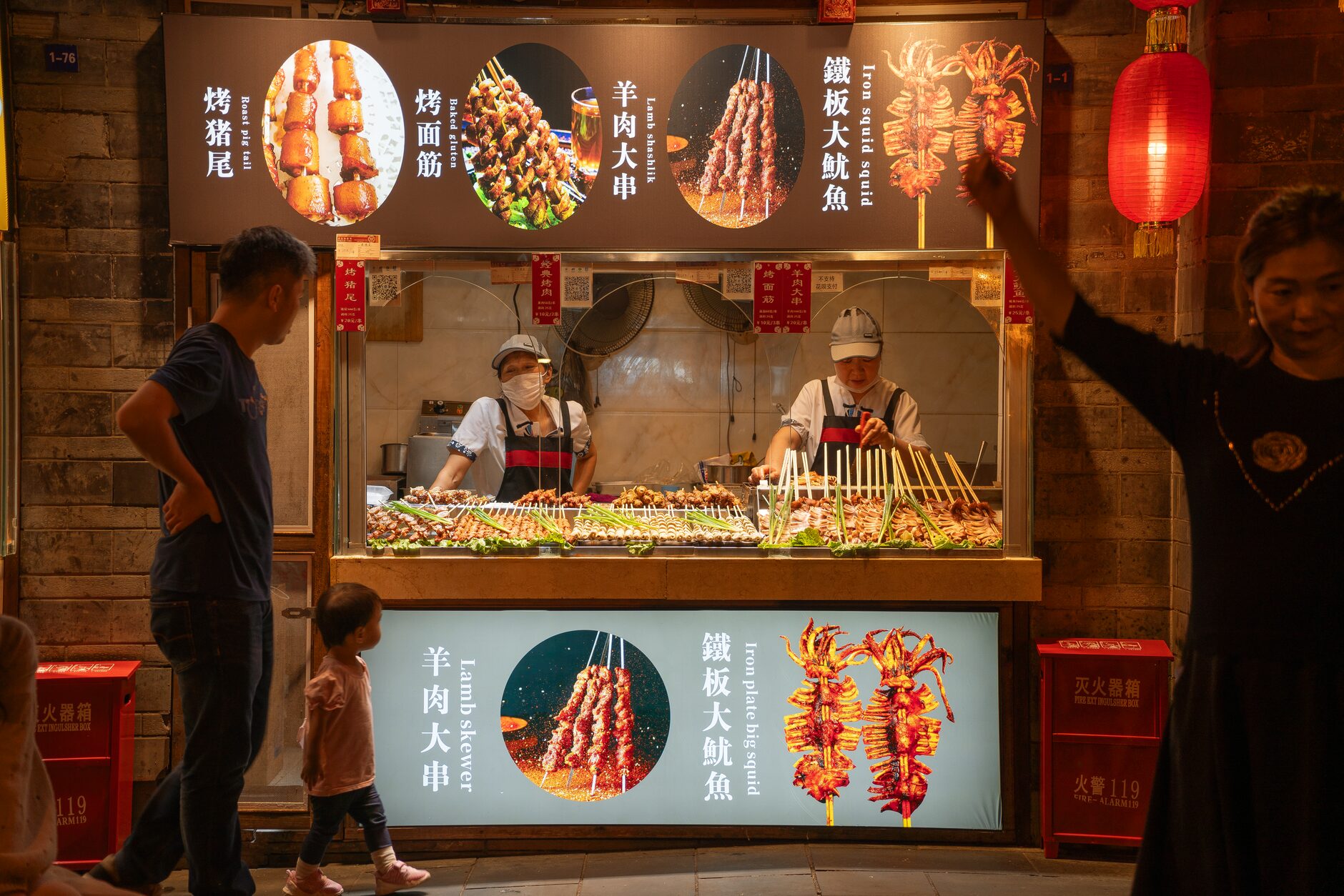
The format is a few hundred metres of stalls and hole-in-the-wall shops, most of them selling one thing well. Food is sold by the piece or the portion, which means you can eat properly by grazing from stall to stall. Do not sit down for a full meal; that is not what this street is for.
What to look for, roughly in order of how much they are worth queueing for:
Braised and marinated pork (卤肉 / 蹄髈). The town’s signature. Slow-cooked in soy, sugar and rice wine until it collapses, sold by weight, eaten standing up. Shanghainese braising is sweeter than you expect; that is correct and not a mistake.
Tangyuan (汤圆). Glutinous rice balls in a thin sweet soup, usually with black sesame or peanut filling. Qibao’s are locally famous and there is normally a queue outside the best-known shop, which is a reliable signal.
Mutton noodles (羊肉面). The winter dish here, and better in cold weather than any of the sweet things.
Qibao square cakes (方糕). Steamed glutinous rice cakes with a red bean or date paste centre, sold warm in stacked bamboo steamers. Cheap, filling, and the thing to buy if you only buy one thing.
Stinky tofu (臭豆腐). You will smell it before you see it. Deep-fried, served with chilli sauce, and considerably better than the smell suggests. If you have not tried it elsewhere in China, this is a fine place to.
Tanghulu (糖葫芦). Skewered haws in a hard sugar shell — the red ones on sticks that everyone photographs. Sweet, sour, and mostly a texture experience.
Sesame cakes, scallion pancakes and dry steamed dumplings round out the list.
Practical advice: bring tissues, because there are no napkins and few bins; buy small and share, because portions are larger than they look; and queue where the locals queue rather than where the English sign is. Our Shanghai street food guide covers the same dishes across the rest of the city, and the best food streets in Shanghai ranks Qibao against the central options.

North Street and the small museums

North Street is the quieter half: calligraphy, crafts, souvenirs, tea, and considerably fewer people. It takes fifteen minutes and is a useful pressure valve when South Street gets solid.
The ticketed sites are scattered across both halves. None takes long, and they vary a great deal in quality.
Worth the entry fee:
The Shadow Puppet Art Museum — the best of them. Shanghai has a real shadow-puppet tradition and the collection of translucent carved-leather figures is genuinely good. Performances run on Sundays from 13:30 to 15:00 and are worth catching, particularly with children: it is a traditional folk art and easy to follow by eye.
Zhou’s Miniature Carving Museum — micro-carving on rice grains, hair and ivory substitutes, viewed through magnifiers. Odd and quite absorbing.
The Cricket Cottage — a museum of cricket fighting, which was a serious gambling pastime in this part of China for centuries. Cages, pots, tickling sticks, the lot. Strange, specific and much more interesting than it sounds.
The Bell Tower — small, but this is where the surviving treasure lives.
Skip unless you have the pass: Zhang Chongren Memorial Hall (the sculptor and friend of Hergé, of Tintin fame — interesting if you know the connection, thin if you do not), the old Qibao Winery, the Taoist temple, and the cotton-textile and old-trades displays.
If you are the kind of traveller who likes small strange museums, buy the combined ticket and give the town three hours instead of two. If you are here for the food, pay the single entry at the shadow puppet museum and skip the rest with a clear conscience.
A half-day plan
09:00 — arrive. Line 9 to Qibao, Exit 2, walk south. The stalls are opening, the light is good and the crowd has not formed.
09:15 — walk the whole thing once without buying anything. Ten minutes down South Street, over the bridge, back up North Street. Now you know what is here.
09:45 — eat. Work back down South Street with a plan. Square cakes, braised pork, tangyuan, one thing you cannot identify.
10:45 — the Shadow Puppet Art Museum. The performances are on Sunday afternoons only, 13:30 to 15:00, so on a Sunday you can come back for one after lunch.
11:15 — the Bell Tower and the Cricket Cottage, or a boat on the canal if one is running.
12:00 — leave. You are back in central Shanghai by one.
That is the correct shape. If you would rather go in the evening, arrive as the lanterns come on, accept that the museums will have closed, and graze while the stalls are still serving.
Qibao ancient town vs Zhujiajiao: an honest comparison
These are the two canal towns inside Shanghai’s own boundaries, and people constantly ask which to do. They are not really competing for the same visit.
| Qibao | Zhujiajiao | Xitang | |
|---|---|---|---|
| Journey from centre | Line 9, short walk from Exit 2 | Line 17, then a walk from Zhujiajiao station | Train + bus |
| Time needed | 2–4 hours | 4–5 hours | Full day, or overnight |
| Size | A few hundred metres | Substantially larger | 1.04 km², 27 bridges |
| Entry | Free; combined ticket for the indoor sites | Town free; site tickets | Entry ticket; check current rates |
| Crowds | Heavy at weekends, small area | Heavy | Moderate; quiet at night |
| Best for | Food, a half day, children | Canals, boats, a full day | Atmosphere, staying over |
| Scenery | Modest | Good | The best of the three |
| Can you stay the night? | No reason to | Possible | Yes, and you should |
The short version: Qibao if you have half a day, Zhujiajiao if you have a full one, Xitang if you have a night. If you have already seen a Jiangnan canal town and are looking for a better one, Qibao is not it — go to Tongli or Wuzhen. If you have not seen one at all and have a spare morning, Qibao is a perfectly honest introduction that costs you nothing but a metro fare.
Our Zhujiajiao guide covers the closest full-day option, and day trips from Shanghai ranks everything within two hours of the city.
Going with children
Qibao is the best canal town near Shanghai for young children, for four reasons that have nothing to do with scenery.
It is short. Two to three hours is the whole thing, which matches a small child’s tolerance far better than a five-hour day at Zhujiajiao does. It is flat and paved, with no long stretches of uneven stone, so a pram works — which it emphatically does not in Tianzifang. Much of the food comes in snack portions, so a rejected one is no great loss. And if you are there on a Sunday afternoon, the shadow puppet performance is a traditional folk art children can follow by eye, whatever language they speak.
The canal has low or absent railings in places, which is worth knowing if you have a runner. The crowds at weekends are the real hazard: hold hands on South Street after eleven.
Our Shanghai with kids guide covers the rest of the city’s family options.
When to go, and when not to
Weekday mornings, 09:00 to 11:00. This is not a close call. Qibao is a small area that receives a large local crowd, and the difference between ten in the morning on a Tuesday and two in the afternoon on a Saturday is the difference between a pleasant wander and being carried down South Street by other people.
Weekends from about eleven are genuinely packed. Public holidays — and especially the first week of October — are worse than packed and should simply be avoided; see our best time to visit Shanghai guide for the calendar.
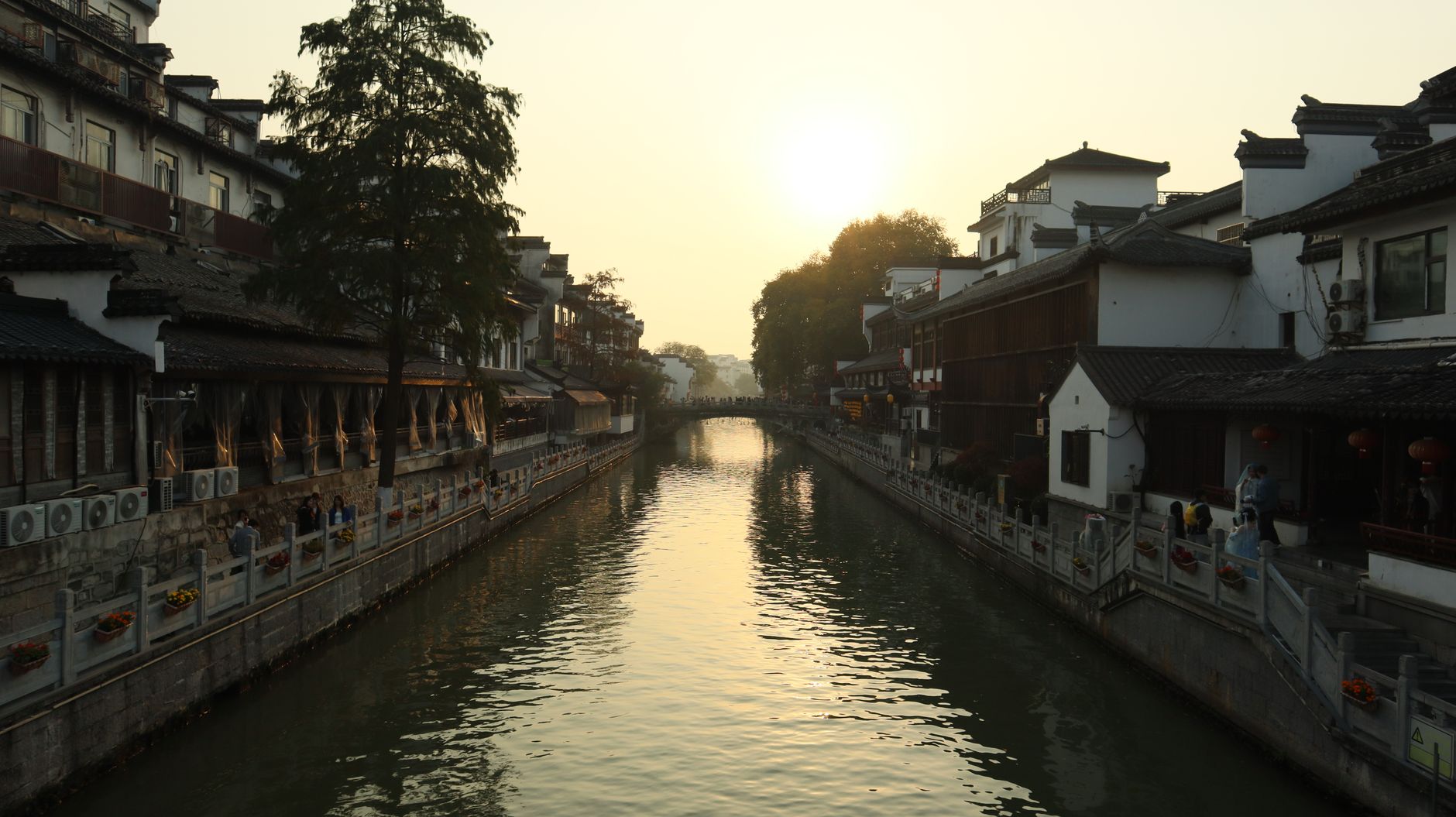
Evenings are the other good window. From about five the lanterns come on, the light on the canal is much better than at midday, and the crowd thins after seven. The trade-off is that the indoor sites will have closed by then.
By season: autumn and spring are best, as everywhere in Shanghai. Winter suits Qibao better than it suits the bigger towns, because everything here is a short walk from hot food and the mutton noodles are a genuine reason to come in January. Summer is hot, humid and short on shade — go early or go at night.
What people get wrong
Expecting Wuzhen. Qibao is a few hundred metres of restored street, not a preserved town. Come for the food and the convenience and it delivers; come for the scenery and you will be underwhelmed within twenty minutes.
Going at midday on a Saturday. The single biggest determinant of whether you enjoy this place. A small area plus a large Shanghainese weekend crowd equals a very slow shuffle.
Buying the combined pass without thinking. Single sites cost a few yuan each, so compare the pass price with the number of museums you will actually see; most people visit two.
Sitting down for a proper meal. The restaurants here are ordinary. The stalls are the point. Graze.
Allowing a full day. Two to four hours covers it comprehensively. Pair it with something else — Xujiahui is back up Line 9 and has the cathedral, the observatory and the malls.
Turning up in the evening expecting the museums. The indoor sites close in the late afternoon or early evening, so an evening visit is food and lanterns only. That is a perfectly good visit, but decide which one you are having.
Assuming the boat ride is a highlight. The canal is short, so any ride on it is too; if boats are running, ask at the pier what it costs. If you want a real boat, Zhujiajiao’s canals are considerably longer.
Frequently Asked Questions
How do I get to Qibao Ancient Town from central Shanghai?
Metro Line 9 to Qibao station, Exit 2, then a short walk to the old town. From People’s Square it is one interchange, and the fare depends on distance. Zhujiajiao is also on the metro, at Zhujiajiao station on Line 17, with a walk from there to the water town.
Is there an entrance fee for Qibao?
No. Walking the streets, the canal and the food strip is completely free, with no gate and no ticket. Only the small indoor museums charge, a few yuan each at the door, and a combined ticket covers several of them; the ticket office has the current price. Shadow puppet performances are on Sundays from 13:30 to 15:00.
How long should I spend at Qibao Ancient Town?
Two to four hours. Two if you are there for the food, three or four if you are doing several of the museums. It is a half day, not a day trip, and pairing it with something else on Line 9 is the sensible plan.
Is Qibao better than Zhujiajiao?
Not scenically — Zhujiajiao is larger, prettier and has proper canals with boats. Qibao is closer, quicker, free to walk and has much better food. Choose Qibao if you have half a day, Zhujiajiao if you have a full one.
What food is Qibao famous for?
Braised and marinated pork, tangyuan (glutinous rice balls), mutton noodles, Qibao square cakes, sesame cakes, stinky tofu and tanghulu. Nearly all of it comes in snack portions, which makes South Street a place to graze rather than sit down.
What are the seven treasures?
The name comes from the Qibao Temple the town grew around. The traditional list is an iron Buddha, a bronze bell, a gold-script Lotus Sutra, a catalpa tree, a jade axe, a gold cockerel and a pair of jade chopsticks. Historians think only four ever existed and only two survive — the sutra and the bell. The bell is in the Bell Tower, which is one of the ticketed sites.
What time does Qibao open and close?
The streets and canal are open all day with no gate. The indoor sites keep their own hours and close in the late afternoon or early evening. Most food stalls and shops open from mid-morning and stay open into the evening. So come in the daytime for the museums, and in the evening for the lanterns and the food.
Is Qibao worth visiting?
If you have a spare morning and want street food and a first look at a Jiangnan canal town without losing a day, yes. If you have already seen Xitang, Wuzhen or Tongli, or if you are looking for scenery rather than snacks, it will not add much.
Can I take a boat ride at Qibao?
Possibly, on the short stretch of canal: ask at the pier whether boats are running and what they cost. It is pleasant rather than essential — Zhujiajiao’s boat rides are considerably longer and more scenic.
Is Qibao good for children?
It suits young children well: short, flat, pram-friendly and full of snack food, and the Sunday afternoon shadow puppet shows are easy to follow without a word of Chinese. Watch the canal edges, which are not always railed, and hold hands on South Street at weekends.
When is Qibao least crowded?
Weekday mornings between 09:00 and 11:00, comfortably. After about eleven on a weekend the streets become a slow shuffle, and public holidays — the first week of October above all — are best avoided entirely. Evenings after seven are the other quiet window.
Can I use Alipay and WeChat Pay there?
Yes, at essentially every stall and shop, which is the normal state of affairs in Shanghai. Cash is accepted but less welcome, and small vendors often cannot change a ¥100 note. Set up a payment app before you go — see our guide to Alipay and WeChat Pay for visitors.
Go on a weekday morning, walk the whole street once before you buy anything, then eat your way back. If you want the fuller canal-town experience afterwards, Zhujiajiao is the next step up and Wuzhen is the polished one. The official listing sits on the Shanghai government’s English site, and the town’s history and the seven-treasures legend are set out by China Highlights.