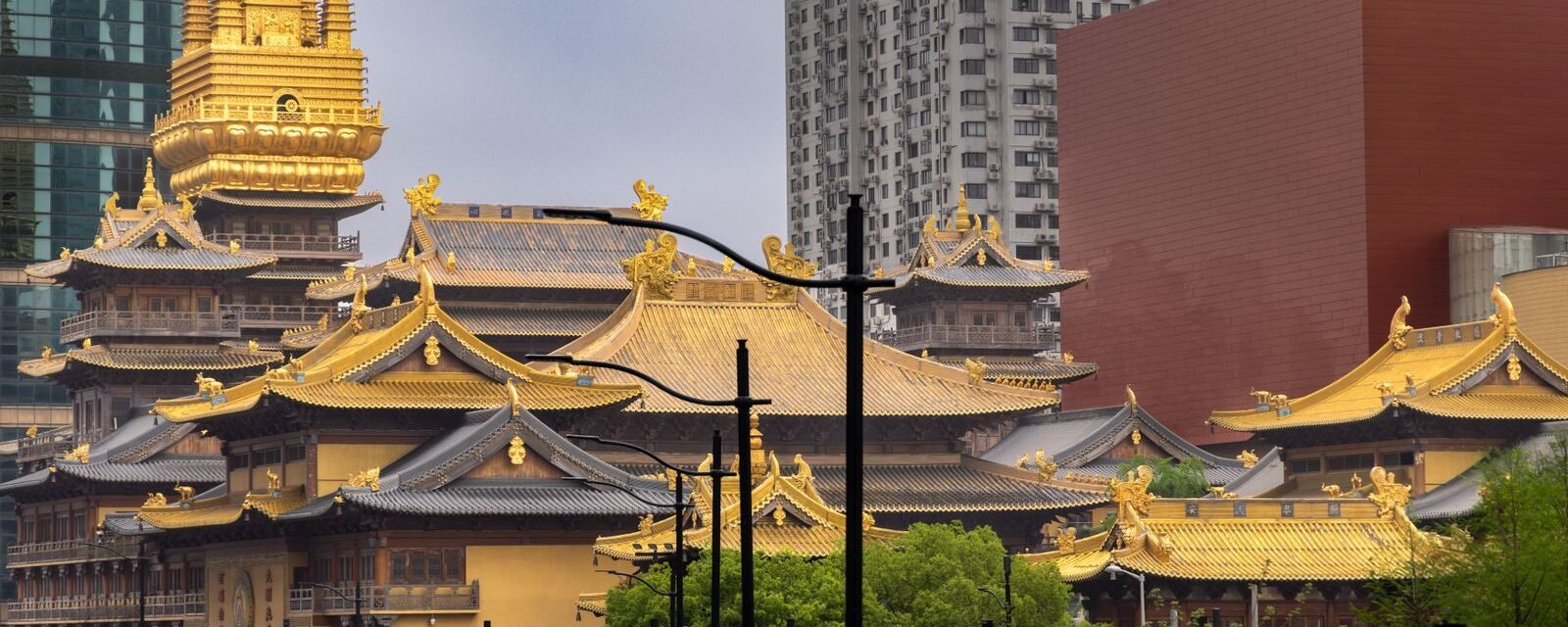
There is a photograph everyone takes on West Nanjing Road, and it is a good one: a set of golden roofs and a gilded pagoda, framed on every side by glass office towers, with a metro entrance in the foreground. That is Jing’an Temple Shanghai, a Buddhist foundation dating to 247 AD that now stands on West Nanjing Road in one of the city’s major luxury shopping areas, with Metro Lines 2, 7 and 14 stopping at Jing’an Temple station.
The juxtaposition is the point, and it is also why opinions divide. The temple was almost entirely rebuilt between the 1980s and the 2010s, so it is old in lineage and new in fabric. What it does have is remarkable contents — a 15-tonne silver Buddha, a seated white jade Buddha about 3.8 metres tall, and the 7.3-tonne Peace Bell — and a location so easy to reach by metro that it fits into almost any day. This guide covers the temple properly, then the rest of Jing’an District around it: the two parks, the malls, Wujiang Road, and where to stay.
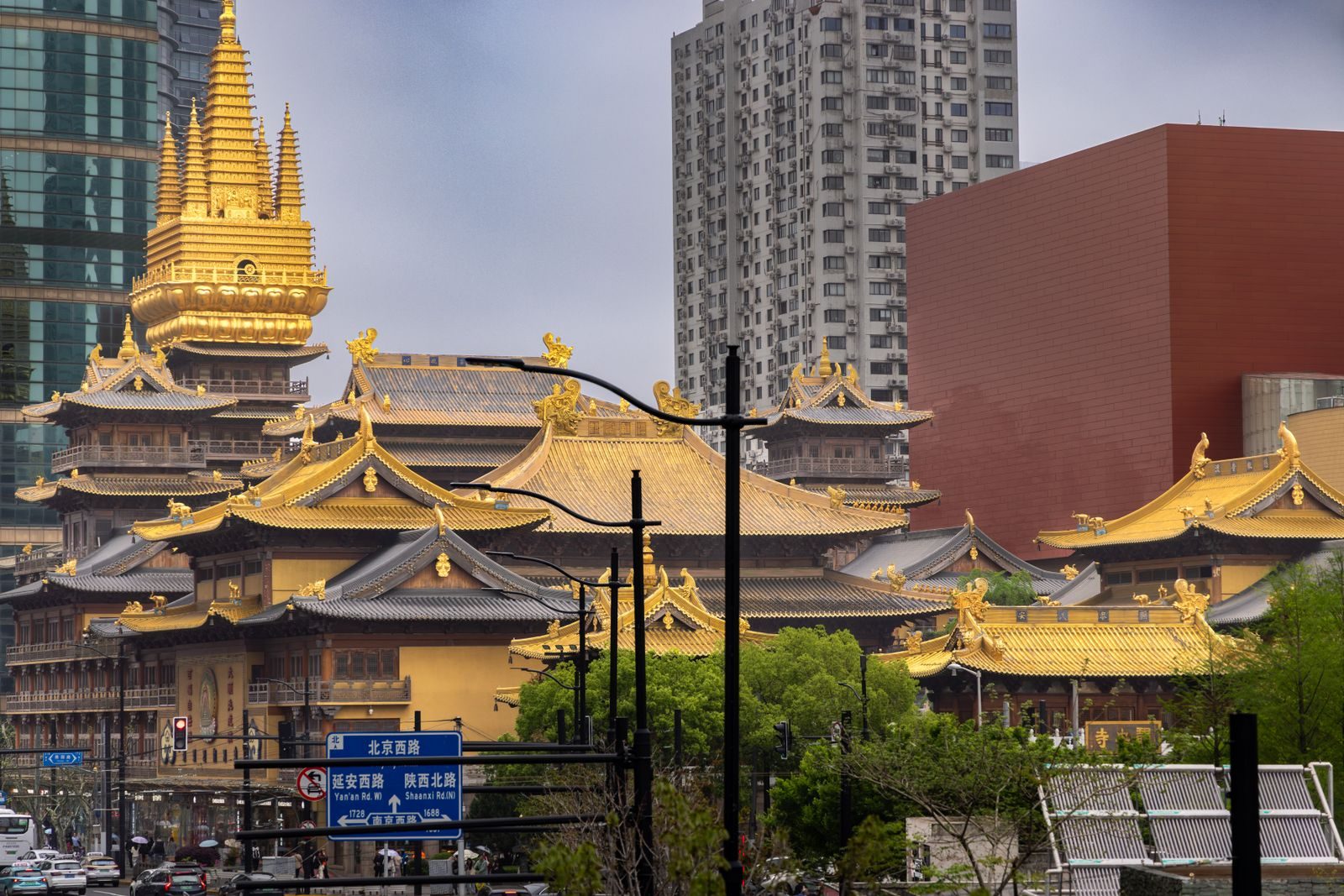
Table of Contents
- The essentials
- Seventeen hundred years, twice moved
- What is inside: the halls and the treasures
- Visiting Jing’an Temple: hours, tickets, etiquette
- The photograph, and when the light works
- Is it worth the ticket?
- Jing’an Park and the Sculpture Park
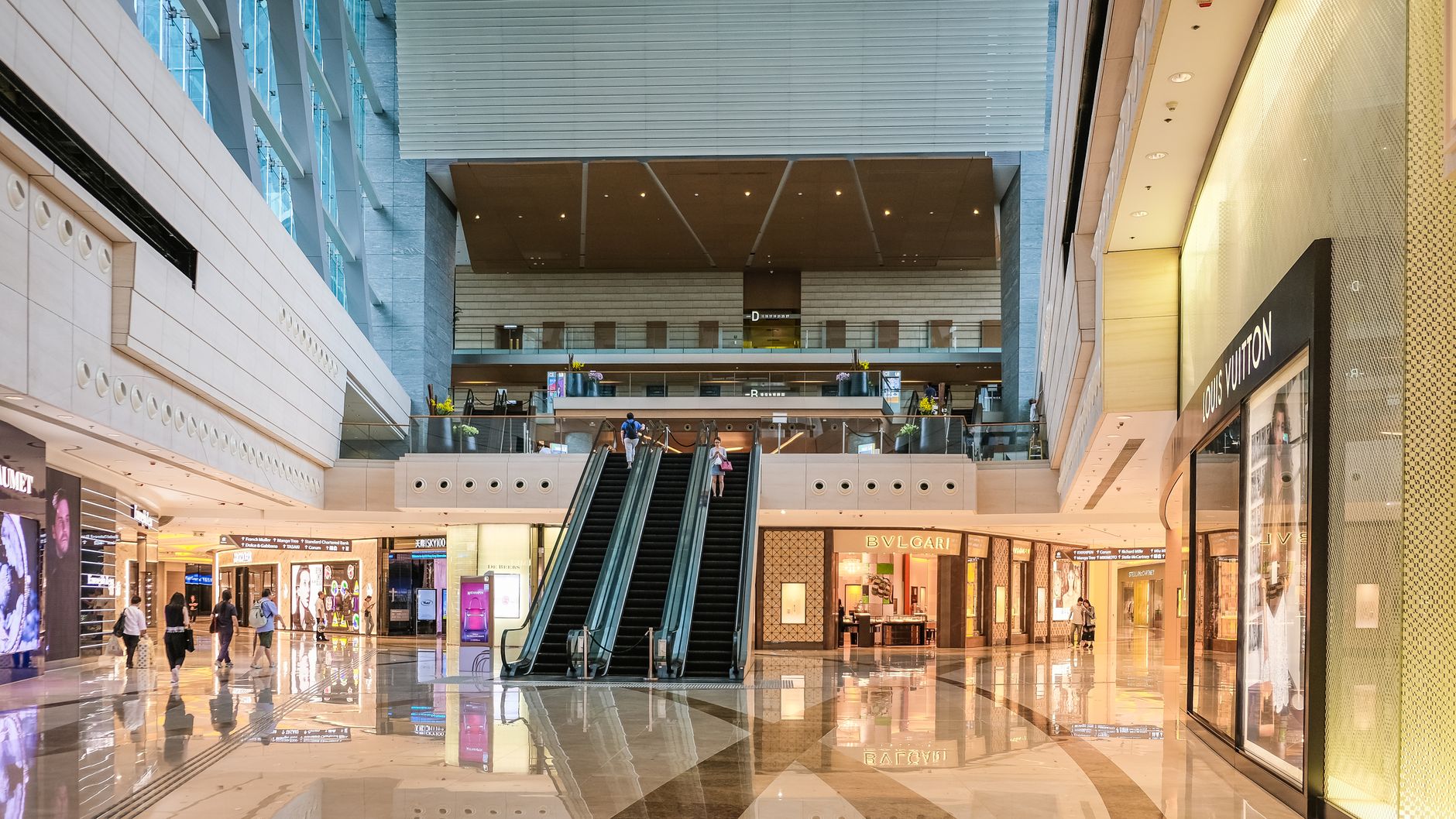
- The malls: Réel, Plaza 66, Kerry Centre, Sogo
- Wujiang Road and eating in Jing’an
- Staying in Jing’an
- Bubbling Well Road: what the district used to be
- A half day in the district
- What people get wrong
- Frequently Asked Questions
- Where to go next
The essentials
| Entrance | Paid; check the current price at the ticket window |
| Hours | Daytime only; closes long before the shops around it |
| Metro | Line 2, 7 or 14 to Jing’an Temple. The station exits emerge at the temple walls |
| Time needed | A short visit; the complex is compact |
| Founded | 247 AD, as Hudu Chongxuan Temple; renamed Jing’an in 1008; moved to this site in 1216 |
| Headline objects | 15-tonne silver Shakyamuni; seated white jade Shakyamuni about 3.8 m tall; 7.3-tonne Peace Bell |
| Payment | Alipay or WeChat Pay; cash accepted at the ticket window |
| Best light | Early morning, or the hour before sunset for gold against glass |
Seventeen hundred years, twice moved
The temple was founded in 247 AD, during the Sun Wu period of the Three Kingdoms, under the name Hudu Chongxuan Temple. That date makes it older than almost anything else in Shanghai by well over a thousand years — the city itself is essentially a nineteenth-century creation, and this predates it comprehensively.
It was renamed Jing’an — “peace and tranquillity” — in 1008, in the first year of the Song dynasty’s Xiangfu era. In 1216 it was moved from the banks of the Wusong River to its present site, which at the time was open country. Everything around it, including the road, the district and the city, arrived later. Jing’an District takes its name from the temple, not the other way round.
The modern history is more turbulent and explains the building you actually see. The temple was converted to a plastics factory during the Cultural Revolution and badly damaged by fire in 1972. Restoration began in the 1980s and continued in phases into the 2010s, producing the complex standing today, built to Song-era methods with traditional wooden joinery and copper roof tiles — a deliberate reconstruction in an older idiom rather than a surviving ancient building.
People who arrive expecting patina are disappointed, and they are measuring the wrong thing. This is a working monastery whose foundation goes back to 247 AD; worship stopped when it became a factory in the Cultural Revolution and resumed in 1983. The documented sequence of foundations and rebuilds is the interesting part; the timber is not.
What is inside: the halls and the treasures
The complex is compact — a walled courtyard block with halls on three sides and a gilded pagoda at the rear. Three things are worth crossing the courtyard for.
The Mahavira Hall stands 26 metres tall and holds a 15-tonne silver statue of Shakyamuni. It is impressive at close range, and the hall is dim enough that the silver does most of the work.
The Muni Hall holds the object most visitors do not know about: a seated Shakyamuni in white jade, about 3.8 metres tall and billed as the largest seated jade Buddha in China. It is larger than the celebrated jade Buddha at the Jade Buddha Temple across the city, which is the piece everyone travels to see. If jade Buddhas are your reason for visiting a Shanghai temple, this is the better one and almost nobody knows.
The Bell Tower, two storeys, houses the 7.3-tonne Peace Bell.
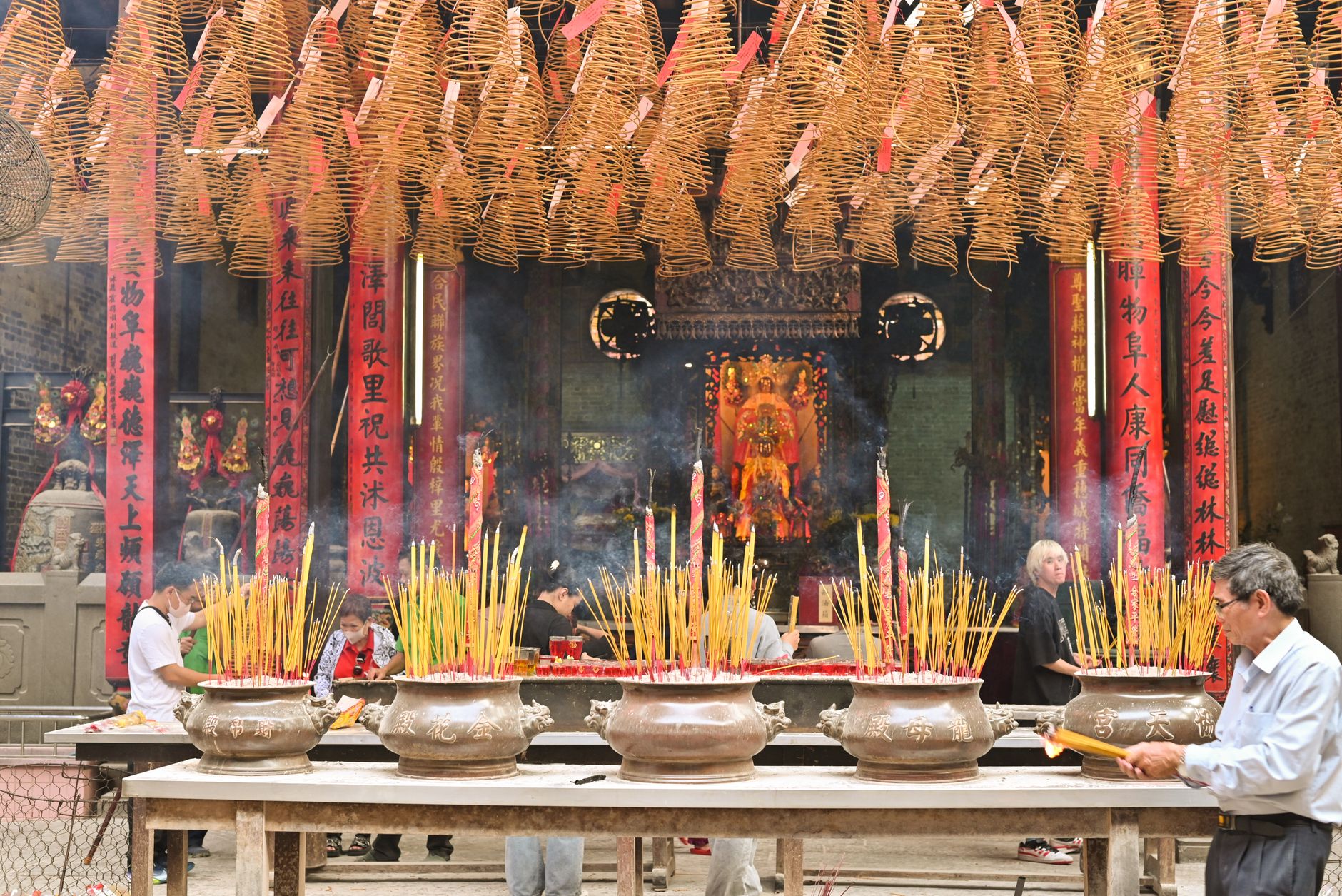
Beyond those, the courtyard has the large bronze incense burner that everyone photographs, a hall of Guanyin, and monks who are actually resident and actually practising. Morning is when the temple functions as a monastery rather than a monument, and it is a different and better place before nine.
Visiting Jing’an Temple: hours, tickets, etiquette
Tickets are sold on site, and the window shows the current price and how you can pay. There is no advance booking requirement and no timed entry. Major Buddhist festival days and Chinese New Year are another matter: the temple is very busy, especially for first incense, so expect queues.
Hours are daytime only, which means it closes much earlier than the shops and restaurants around it. Do not plan it as an after-work stop.
Etiquette. Dress modestly — shoulders and knees covered is the standard, and enforcement is light but the request is reasonable. Follow the posted signs about photography inside the halls, and leave people at prayer out of your pictures. Incense is sold on site; three sticks is the convention, lit from the burner and held at the forehead. Walk clockwise around the halls. Step over the raised thresholds rather than on them.
Accessibility. The courtyard is flat and paved, but the halls have raised timber thresholds and steps, which makes them difficult for wheelchairs. The metro station has lifts.
Combining it. Forty-five minutes to an hour is enough. It works best as the first or last stop in a Jing’an half-day rather than as a destination in its own right.
The photograph, and when the light works
The shot is the gold roofline against the glass towers behind it, and where you stand matters more than what you shoot with.
- From the pavement on the north side of West Nanjing Road, looking south — this gets the roofs, the pagoda and the office towers stacked behind in one frame. The classic.
- From the raised walkway and the mall entrances opposite, which gives a few metres of height and cleans up the foreground.
- From inside the courtyard, shooting up past the incense burner to the roof finials with a tower in the gap. Requires the ticket.
- From Jing’an Park, across the road, where trees frame the roofline from a distance.
Light. The hour before sunset puts warm light directly on the gold and leaves the glass behind in shadow, which is the strongest version. Early morning is softer and much quieter. At night the roofs are floodlit and photograph well from across the road, though the temple itself is closed. Overcast days flatten the gold badly — this is a building that needs sun.
Our photography guide covers the wider question of when Shanghai’s light is worth waiting for, which in this city usually means late October and November.
Is it worth the ticket?
An honest answer, because this is the question people actually have.
Yes if you are interested in the objects — the silver and jade Buddhas are exceptional and you will not see better in Shanghai — or if you want to see a working monastery, or if you are in Jing’an anyway and have an hour. It is also a genuinely good rainy-hour option, since it is thirty seconds from a metro exit.
No if you are looking for atmospheric antiquity. The fabric is modern, the setting is a shopping street, and there is nothing romantic about it. The Jade Buddha Temple in Putuo has more of that feeling and its own famous statue; Longhua Temple in Xuhui is Shanghai’s largest and has an actual Song-dynasty pagoda, more grounds and a quieter atmosphere. Our guide to temples in Shanghai compares all three properly.
The free version is real and worth stating: the exterior, which is the photograph everyone wants, costs nothing. Stand on the far pavement, take the shot, and walk on. A significant number of visitors do exactly that and lose very little.
Jing’an Park and the Sculpture Park
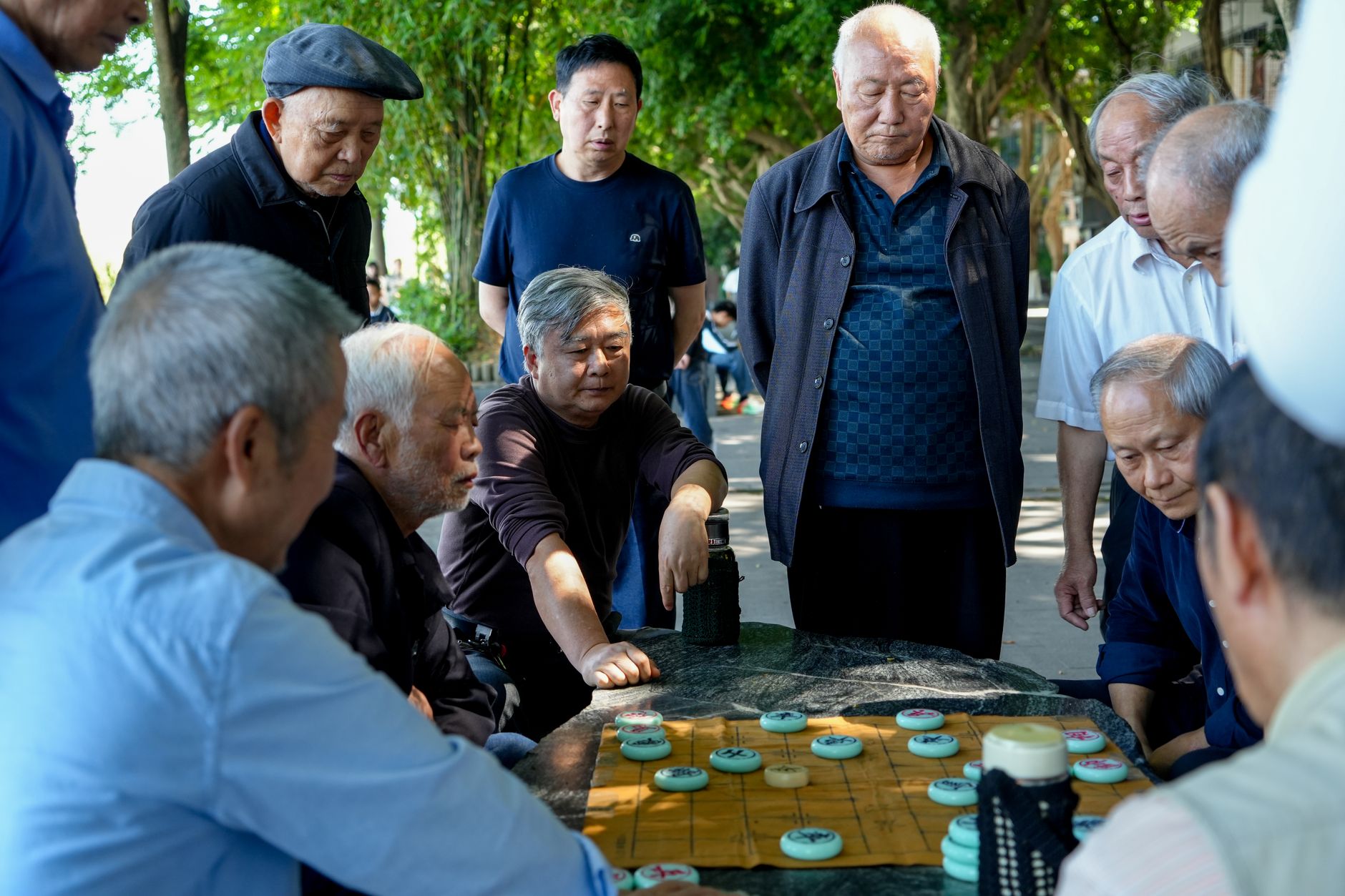
Jing’an Park is directly opposite the temple on West Nanjing Road, and it is free. It occupies the site of the former Bubbling Well Road Cemetery — the old foreign burial ground, cleared in the 1950s — which explains its unusually mature plane trees and its slightly formal European layout. It is small, it takes fifteen minutes, and it is where you go for the version of Shanghai that the shopping street hides: men playing xiangqi, groups doing tai chi at seven in the morning, ballroom dancing in the evening.
Pairing the two is the correct move. Photograph the temple, cross the road, sit in the park for twenty minutes and watch what a Shanghai public space is actually for.
Jing’an Sculpture Park is about fifteen minutes north-east, a larger and more modern green space with contemporary sculpture, a good lawn, and the Shanghai Natural History Museum built into one corner — a genuinely excellent museum, and a strong wet-weather option with children.
The malls: Réel, Plaza 66, Kerry Centre, Sogo
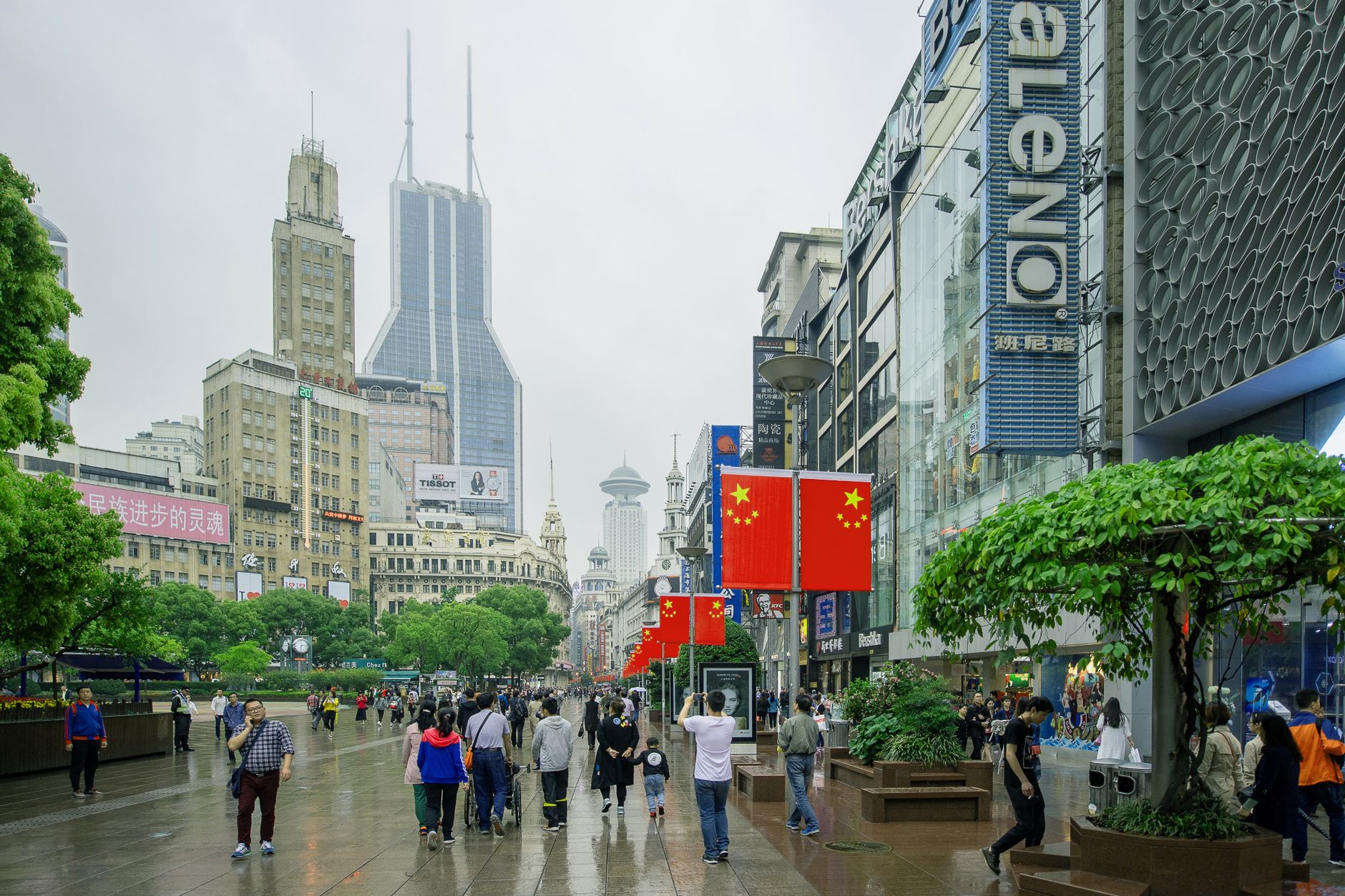
West Nanjing Road is the Puxi luxury spine and the temple sits at its western end. The four to know:
| Mall | Address | Hours | What it is for |
|---|---|---|---|
| Réel | 1601 West Nanjing Road | — | Luxury and lifestyle |
| Sogo | 1618 West Nanjing Road | Check the store’s WeChat account | Japanese imports, an excellent basement food hall |
| Plaza 66 (恒隆) | 1266 West Nanjing Road | Stores typically 10:00–22:00 | Five floors, 100+ luxury brands. The Puxi luxury anchor |
| Shanghai Kerry Centre | Nanjing West Road, Jing’an | — | Mixed-use — offices, hotel, restaurants, a good supermarket |
Sogo’s basement food hall is the practical recommendation in that list: cheap, fast, enormous variety, and it solves lunch for anyone who does not want to hunt. Plaza 66 is the one to see if you want to understand how the Chinese luxury market actually works — see luxury shopping in Shanghai for the tax-refund mechanics that go with it, and the Nanjing Road shopping guide for the very different eastern end of the same street.
Wujiang Road and eating in Jing’an
Wujiang Road (吴江路) runs east from West Nanjing Road station, one stop along, and is the district’s food street. It was a raucous open-air snack street for decades, was redeveloped, and is now a pedestrianised strip of small restaurants and chains — cleaner, tamer and considerably less atmospheric than it was, but reliable and cheap. Xiaolongbao, hot pot, Japanese, bubble tea, and a lot of teenagers.
Beyond it, Jing’an eats well across every price bracket. The mall restaurant floors are competent and expensive. The side streets north of West Nanjing Road hold better and cheaper independents. The area is also one of the strongest in the city for coffee — larger rooms, tables you can sit at for two hours, more sockets than the tiny former Concession shops offer.
Lanzhou beef noodle shops are the cheap fallback around here. See cheap eats in Shanghai for the rest.
Staying in Jing’an
Jing’an is arguably the best base in Shanghai for a first trip, and the temple’s metro interchange is why.
The case for it: Lines 2, 7 and 14 meet here, which puts both airports, both main railway stations, the Bund and Lujiazui within a single ride or one change. It is walking distance from the former French Concession to the south-west. It has the shopping, the restaurant density and the hotel supply, and it is quieter at night than the Bund or Xintiandi.
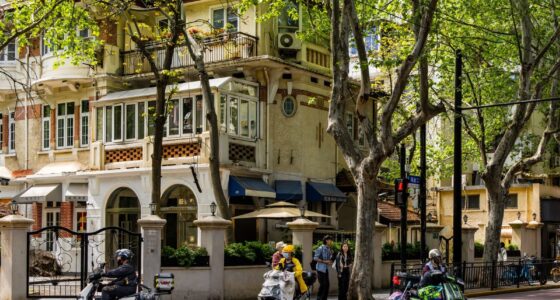
The case against: it is a business district first, so it is expensive, and it has less character than the Concession. If you want lanes and plane trees rather than towers and malls, stay two kilometres south-west.
Hotels here run the full range from international five-stars on West Nanjing Road down to well-run business hotels in the side streets. Our luxury hotels guide covers the top end, and the neighbourhood comparison weighs Jing’an against the alternatives properly.
Bubbling Well Road: what the district used to be
West Nanjing Road has a former name that explains more about Jing’an than anything on the current street signs. Until 1945 it was Bubbling Well Road, named after a natural spring in the area.
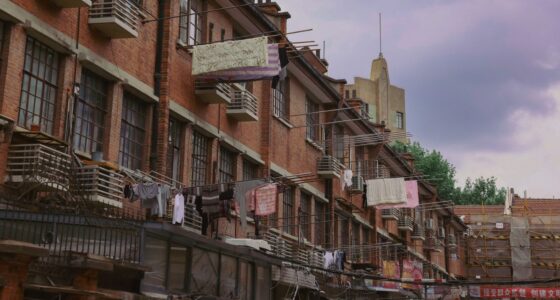
The road ran west out of the International Settlement into open country, and by the 1920s and 1930s it had become the address for foreign wealth in Shanghai: consulates, mansions, clubs, the racecourse at its eastern end where People’s Park now sits, and the cemetery that is now Jing’an Park. A few of the villas survive, among them the Green House and the restored former residence of Sir Robert Ho Tung. What replaced the rest, from the 1990s onwards, is the office and luxury-retail corridor you walk down today — which is why the temple looks so stranded. It is not that the city grew up around an ancient temple; it is that the city grew up, was demolished, and grew up again, twice, while the temple stayed put.
A few fragments remain if you look. The Paramount Ballroom, an Art Deco dance hall once hailed as the Premier Entertainment Palace of the Far East, still stands at 218 Yuyuan Road, a few minutes west — much altered, but there. And Jing’an Park’s mature plane trees are the cemetery’s, planted for a completely different purpose a century ago.
Knowing this changes the photograph. The gold roofs against the glass are not a temple that has survived modernity; they are the one fixed point in a district that has been heavily redeveloped, and the towers are simply the current version. Our guide to Shanghai’s Art Deco architecture covers what did survive from the middle layer.

A half day in the district
An efficient and genuinely enjoyable sequence, about four hours:
- 08:00 — Jing’an Park. Free, and at its best when the tai chi and dancing groups are out.
- 08:45 — Jing’an Temple. Before nine it is a monastery rather than an attraction.
- 10:00 — coffee in one of the larger Jing’an cafés, which is what the district does best.
- 11:00 — Plaza 66 and Réel, or straight to the Shanghai Natural History Museum at the Sculpture Park if you have children.
- 12:30 — lunch in the Sogo basement food hall or on Wujiang Road.
- 14:00 — walk south-west into the former French Concession, which begins within walking distance and is the natural continuation.
Alternatively, reverse it and end at the temple in the hour before it closes, with the low sun on the gold. Both work; the morning version is quieter and the evening version photographs better.
What people get wrong
Leaving it until the end of the day. The temple closes hours before the malls and restaurants around it, so do not save it for last.
Expecting an ancient building. The institution is from 247 AD; the fabric is a reconstruction from the 1980s onwards. Judge it accordingly.
Buying a ticket just for the photograph. The famous shot is taken from the pavement outside and costs nothing.
Missing the jade Buddha. The Muni Hall’s single-block Burmese jade Shakyamuni is larger than the one at the Jade Buddha Temple and gets a fraction of the attention.
Going at Chinese New Year without expecting it. The temple is very busy over the new year, and the queue for first incense is long.
Skipping Jing’an Park. It is free, it is directly opposite, and it is the more interesting of the two for people-watching.
Treating it as a destination. It is forty-five minutes. Build a district half-day around it or it will feel thin.
Frequently Asked Questions
How much is the Jing’an Temple entrance fee?
You pay at the temple’s ticket office on arrival; the current adult price and accepted payment methods are shown there. No advance booking is needed. Expect big crowds on major Buddhist festivals and at Chinese New Year.
What are Jing’an Temple’s opening hours?
The temple keeps daytime hours, so go in the morning or early afternoon. It closes considerably earlier than the shops and restaurants around it, which catches people out.
How do I get to Jing’an Temple?
Metro Line 2, 7 or 14 to Jing’an Temple station. The exits emerge directly at the temple walls — this is one of the most convenient historic sites in the city to reach.
How old is Jing’an Temple?
The foundation dates to 247 AD, during the Three Kingdoms period, originally as Hudu Chongxuan Temple. It was renamed Jing’an in 1008 and moved to its present site in 1216. The buildings you see are a reconstruction carried out from the 1980s onwards following Song-era building methods, after the temple was used as a factory and damaged by fire in 1972.
What is inside Jing’an Temple?
The 26-metre Mahavira Hall with a 15-tonne silver Shakyamuni; the Muni Hall with a seated white jade Shakyamuni about 3.8 metres tall; and a two-storey bell tower holding the 7.3-tonne Peace Bell.
Is Jing’an Temple worth visiting?
For the objects, yes — the silver and jade Buddhas are exceptional. For atmosphere, less so: it is a modern reconstruction on a luxury shopping street. If you want an older-feeling temple, Longhua in Xuhui has a genuine Song pagoda and much more space. The exterior photograph, which is what most people actually want, is free.
How long do you need at Jing’an Temple?
Forty-five minutes to an hour. It is compact. Build a Jing’an half-day around it — the park, the malls, Wujiang Road — rather than travelling across the city for the temple alone.
What is the dress code?
Shoulders and knees covered. Enforcement is light but the request is reasonable in a working monastery. Step over the raised thresholds rather than on them, walk clockwise around the halls, and do not photograph anyone praying.
Is Jing’an Park worth visiting?
Yes, and it is free. It sits directly opposite the temple on the site of the old Bubbling Well Road Cemetery, which gives it mature plane trees and a formal layout. Early morning brings tai chi and xiangqi; evenings bring ballroom dancing. Fifteen minutes well spent.
Is Jing’an a good area to stay in Shanghai?
One of the best for a first trip. Metro Lines 2, 7 and 14 meet at the temple, putting both airports, both main stations, the Bund and Lujiazui within a ride or one change, and the former French Concession is a fifteen-minute walk. It is expensive and it is a business district, so it has less character than the Concession.
What is Wujiang Road?
Jing’an’s pedestrianised food street, one metro stop east at West Nanjing Road. Formerly a raucous open-air snack street, now a redeveloped strip of small restaurants and chains — cheaper and more reliable than the malls, less atmospheric than it was.
Which is better, Jing’an Temple or the Jade Buddha Temple?
Jing’an is easier to reach and has the larger jade Buddha. The Jade Buddha Temple in Putuo has more of the atmosphere people are looking for, along with its own famous statue and a well-regarded vegetarian restaurant. If you are only doing one and want a temple experience, go to the Jade Buddha Temple; if you are in Jing’an anyway, go here.
Where to go next
Jing’an is the pivot point of central Shanghai and almost everything else is fifteen minutes away. The former French Concession begins a short walk south-west; the Bund and Lujiazui are one ride east on Line 2. Read the districts guide for how the sixteen districts fit together, and temples in Shanghai if this one has left you wanting the older, quieter version.
For the shopping half of the district, start with shopping in Shanghai. For the religious and cultural context — why a 247 AD foundation matters in a city that is otherwise almost entirely modern — traditional culture in Shanghai is the place to go. The district government’s own English site is also surprisingly good on local events and temple festival dates.