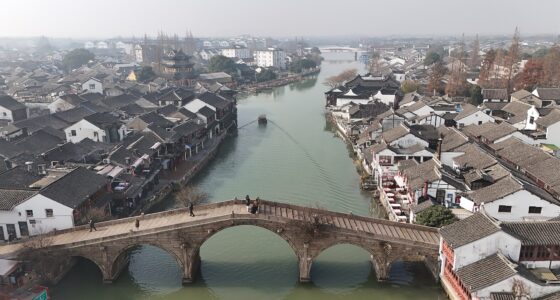
A Hangzhou day trip from Shanghai is one of the easiest and most rewarding escapes you can fit into a China itinerary. The bullet train makes it easy to leave a Shanghai hotel after breakfast, spend a full day beside West Lake, walk through a working tea village, and be back under the neon on the Bund by dinner. Hangzhou trades skyscrapers for willow-lined causeways, lake mist, and hillside temples, and that contrast is exactly why it tops most travellers’ shortlist of side trips. This guide walks through whether one day is enough, how to take the high-speed train from Hongqiao, a realistic hour-by-hour itinerary, the sights worth your limited time, what it all costs, and the practical details that make the difference between a smooth day and a frustrating one.

Table of Contents
- Is Hangzhou Worth a Day Trip from Shanghai?
- How to Get There: The High-Speed Train
- Booking Tickets and What It Costs
- Getting Around Hangzhou Once You Arrive
- A Realistic One-Day Itinerary
- West Lake: What to See and Skip
- Lingyin Temple and Feilai Feng
- Longjing Tea Village
- Hefang Street and the Old Town
- Where and What to Eat
- Self-Guided vs Organised Tour
- When to Go
- Practical Tips and Etiquette
- Frequently Asked Questions
Is Hangzhou Worth a Day Trip from Shanghai?
Short answer: yes, and a Hangzhou day trip from Shanghai is arguably the single best use of a spare day in your Shanghai plans. Hangzhou (杭州) is the capital of Zhejiang Province and one of China’s seven ancient capitals, a city that has been a byword for refined living since the Southern Song dynasty made it their seat in the 12th century. Marco Polo, who claimed to have visited, called it “beyond dispute the finest and noblest in the world.” UNESCO took a similar view in 2011 when it inscribed the West Lake Cultural Landscape on the World Heritage List, citing more than a thousand years of influence on Chinese garden design, landscape painting, and poetry.
What you get for your one day is a complete change of register from Shanghai. Where the bigger city is vertical, fast, and built around commerce, Hangzhou is horizontal and slow: weeping willows leaning over still water, arched stone bridges, lotus beds, pagodas perched on wooded hills, and tea terraces that climb the slopes just west of the lake. You will not see everything in a day. Locals will tell you Hangzhou is a place to linger, and they are right. But a well-planned single day gives you West Lake, one major temple, a tea village, and a proper Hangzhou meal, which is plenty to understand why the city has its reputation.
The honest caveat: one day comfortably covers one cluster of sights, not the whole region. You can pair West Lake with Lingyin Temple and the tea hills because they sit close together on the western side. What you cannot also squeeze in is the Grand Canal district, Xixi National Wetland Park, or the Qiantang River tidal bore, each of which really wants its own half-day. If those appeal, build in an overnight rather than trying to cram everything between two train rides. The same high-speed line carries on west to Huangshan, which our Shanghai to Huangshan travel guide covers as an overnight trip. For comparison with the region’s other great day trip, see our Suzhou day trip guide — Suzhou leans toward intimate classical gardens and canals, Hangzhou toward grand open landscape. If you can only fit in one, our Suzhou vs Hangzhou comparison weighs the two side by side.
How to Get There: The High-Speed Train
The fastest and simplest way to reach Hangzhou is the China Railway High-speed network (the G-series and D-series “bullet” trains). Departures leave throughout the day from Shanghai Hongqiao Railway Station (上海虹桥站), and G-trains run on to Hangzhou East Railway Station (杭州东站). Check the journey time and the day’s departures on the 12306 app when you book, since timetables and rolling stock change with each season.
A few trains use Shanghai Railway Station instead of Hongqiao, but Hongqiao has by far the densest service and is the one to default to. It is wired straight into the metro: Lines 2, 10, and 17 all stop at Hongqiao Railway Station, so wherever you are staying centrally, you can ride the subway to the platforms without a taxi. Check the metro journey from your hotel in your maps app, and give yourself a buffer: arrive at Hongqiao well before departure so you can clear the passport and security checks without a sprint. For the full picture on the city’s transit system, our pillar guide on getting around Shanghai and the dedicated Shanghai Metro guide cover tickets, apps, and line maps in detail.
One important quirk: Hongqiao Railway Station and Hongqiao Airport are part of the same enormous complex but are not the same building. If you are connecting from a flight, follow signs specifically for the railway station, and budget 15 minutes or more to walk or shuttle between the two.
Booking Tickets and What It Costs
Train fares are reasonable for the speed and comfort. Fares vary by train type and seat class and change over time, so confirm the price for your train at booking. For a journey under an hour, standard second class is perfectly comfortable, and first class is only a marginal upgrade in legroom and seat width. A round trip in second class lands near ¥146 per person, which is a small fraction of what an organised tour costs.
You can book through the official China Railway 12306 app, or through travel agents such as Trip.com and Travel China Guide, which add small service fees but offer English-language interfaces and easier payment for foreign cards. Tickets generally open about 15 days ahead. Book early, especially if your dates fall in one of the big national holidays. Foreign visitors can pass through the automatic or staffed ticket-check gates with the original passport they booked with, so there is no need to collect a paper ticket at a counter, but carry your passport at all times.
For a full day, a practical pattern is an outbound train around 7:30 to 8:30 and a return around 18:30 to 20:30. The later return is worth booking deliberately: it leaves room to see West Lake in the softer late-afternoon light, which is when the lake looks its best, before you head back to the station.
Getting Around Hangzhou Once You Arrive
Hangzhou East is a large, modern station on the eastern edge of the city, so your first task on arrival is to get across town to the lake. The cleanest option is the metro: follow signs to Metro Line 1 (direction Xianghu) and ride to Longxiangqiao (龙翔桥) for West Lake. The ride takes roughly 15 minutes and costs about ¥4. Buy a single-journey token from the machines, which have an English option, or tap in with a mobile-payment QR code if you have Alipay or WeChat Pay set up.
A taxi or Didi (China’s ride-hailing app) from Hangzhou East to the lake runs about ¥35 to ¥50 and takes 20 to 30 minutes depending on traffic, which can be heavy at peak times. Didi is the easier choice if you do not speak Mandarin, since you set the destination in the app and skip the conversation. Once you are at the lake, the area is walkable, and public bicycles are free for the first hour, then ¥1 for each additional hour, capped at ¥5 per rental per day — a pleasant way to cover the causeways if your legs tire. Sightseeing electric carts also loop the lakeside roads for a few yuan per hop if you want to save time between the southern and western sights.
A Realistic One-Day Itinerary
This is a tested sequence that hits the headline sights without making you rush from one to the next. Treat the times as a flexible scaffold rather than a strict schedule, and trim a stop if you would rather go deep than wide. All times are approximate.
- 07:30 — Depart Shanghai Hongqiao on a G-train.
- 08:25 — Arrive Hangzhou East; take Metro Line 1 to Longxiangqiao.
- 09:00 — Reach West Lake’s northeastern shore. Walk the Bai Causeway past Broken Bridge (Duanqiao) for your first long view across the water.
- 10:00 — Board a public passenger boat out to the islands, including Three Pools Mirroring the Moon (around ¥55).
- 11:30 — Disembark near the Su Causeway and walk south toward Leifeng Pagoda (around ¥40 to climb), which gives the best elevated view over the lake.
- 13:00 — Lunch at a classic Hangzhou restaurant near the lake.
- 14:30 — Taxi or Didi out to Lingyin Temple and the Feilai Feng grottoes (admission has been free since 1 December 2025; check the scenic area’s reservation instructions before you go).
- 16:30 — Continue to the Longjing tea hills for a tasting and a short walk among the terraces.
- 18:00 — Head back toward Hangzhou East.
- 19:30 — Board the bullet train to Shanghai and arrive back in the city around 20:25.
If temples and tea matter more to you than the lake, flip the order: do Lingyin and Longjing in the cooler morning hours when the grottoes are quieter, then spend the late afternoon and golden hour on the water. For ideas on weaving Hangzhou into a longer trip, our Shanghai itinerary planner includes multi-day plans that build in a Hangzhou day.
West Lake: What to See and Skip
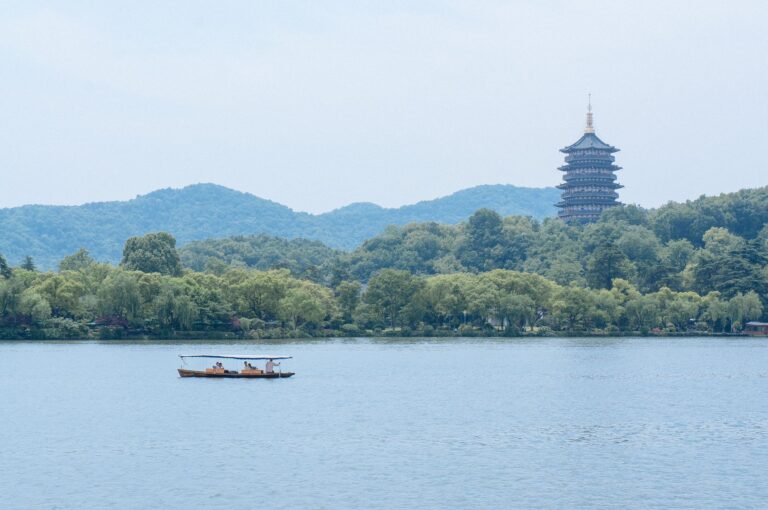
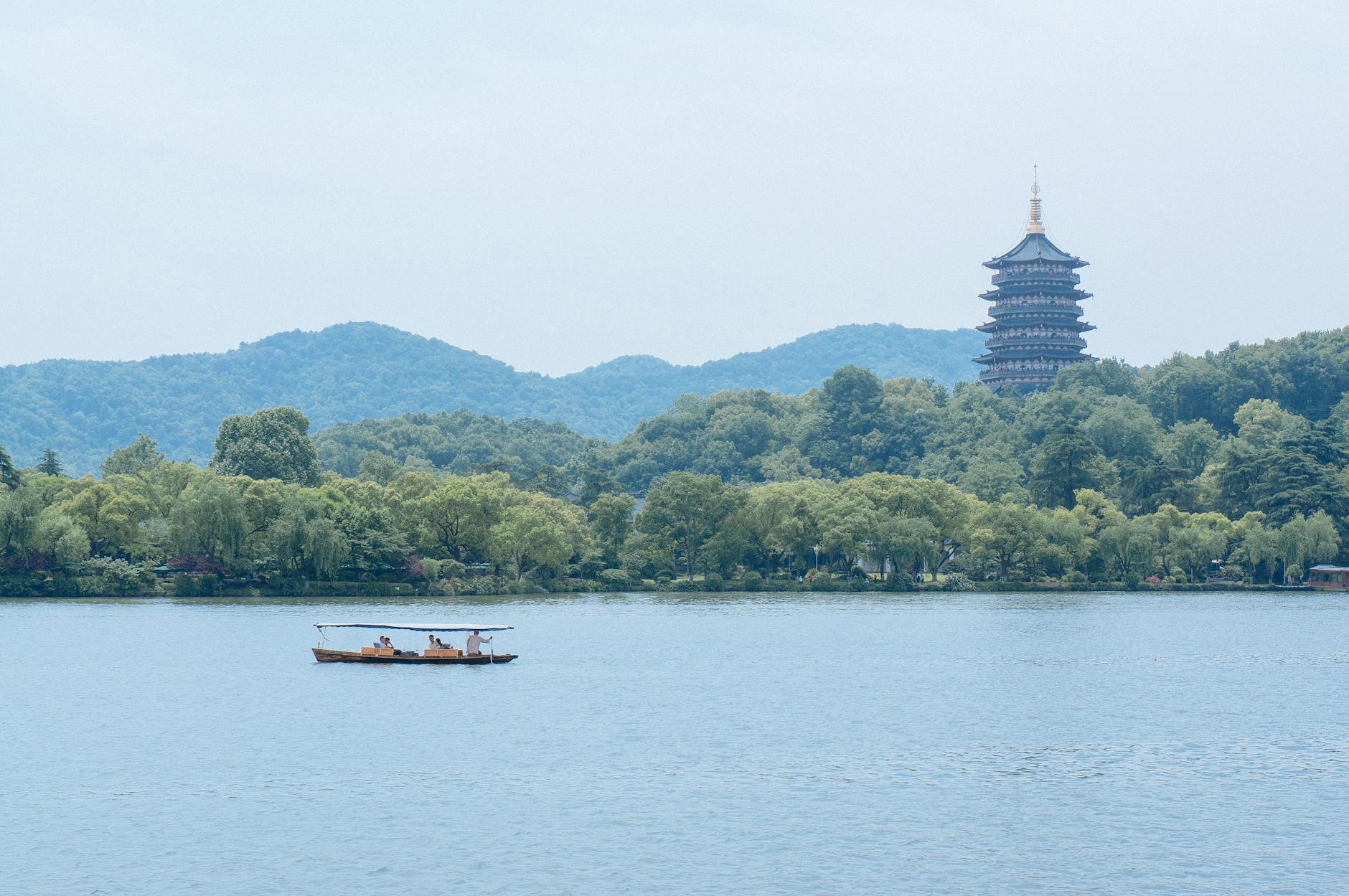
West Lake (西湖) is the reason most people come, and it is large enough that trying to “do” all of it in a day is a mistake. The lake is shaped by two famous causeways — the Bai Causeway across the north and the Su Causeway running north to south — both built from dredged silt centuries ago and both named after poet-governors (Bai Juyi and Su Dongpo) who shaped the city. A canon of viewpoints known as the “Ten Scenes of West Lake” was codified in the Southern Song dynasty, each with a four-character poetic name like “Lotus in the Breeze at Crooked Courtyard” or “Autumn Moon over the Calm Lake.” Do not chase all ten. Pick three or four and actually sit with them.
The most rewarding for a first visit are Three Pools Mirroring the Moon, the small island whose three stone pagodas appear on the back of the ¥1 banknote; Leifeng Pagoda at the southern shore, especially toward sunset; and a slow walk along the Su Causeway with its six arched bridges. Broken Bridge, at the eastern end of the Bai Causeway, is steeped in the legend of the White Snake and makes a natural starting point. Most paths, lawns, and viewpoints around the lake are free to enter; you pay for the boats, for climbing Leifeng Pagoda and for some gardens or museums, so check each one before you go. Even the China National Tea Museum and the Hangzhou Museum are free, which makes the lake an unusually good-value sight by Chinese standards.
The boats deserve a word. Large public sightseeing boats run set loops to the central islands and are the most economical way onto the water. Smaller hand-rowed sampans cost more and are negotiated directly with the boatmen near the shore; agree the price and the route before you step in. If the lake is crowded — and on weekends and holidays it will be — the far western and southwestern shores around the Su Causeway are noticeably calmer than the busy northeastern corner near Longxiangqiao.
Lingyin Temple and Feilai Feng
Lingyin Temple (灵隐寺), the “Temple of the Soul’s Retreat,” is a historic Chan Buddhist temple in Hangzhou, traditionally founded in AD 328 and rebuilt many times over its roughly 1,700-year history. It sits in a wooded gorge at the foot of Lingyin Mountain, in the hills west of West Lake. The grandest hall, the Mahavira Hall, houses a seated camphorwood Sakyamuni Buddha 9.1 metres tall; the temple gives the total height of the sculpture, including the surrounding assembly, as 24.8 metres. Even on a busy day the dense old trees, incense smoke, and the sound of chanting give the complex a genuine sense of retreat.
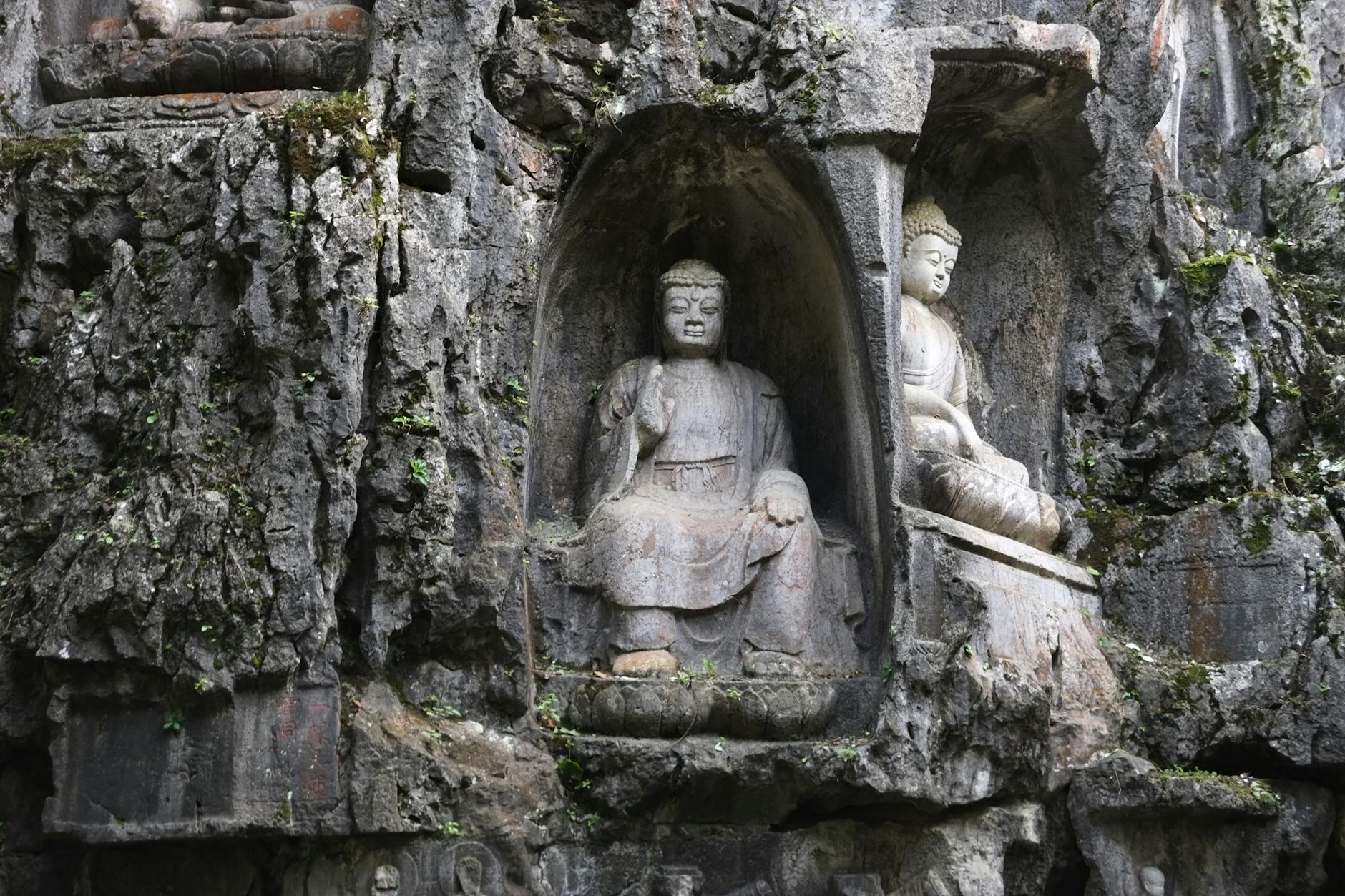
Directly opposite the temple is Feilai Feng, the “Peak Flying From Afar,” a limestone outcrop honeycombed with grottoes and carved with hundreds of Buddhist figures dating from the Five Dynasties to the Yuan dynasty; Hangzhou’s heritage inventory lists 345 cliff sculptures. Following the path among them, with a stream running below and statues emerging from the rock, is for many visitors the highlight of the whole site. Allow at least 90 minutes for the temple and Feilai Feng together; rushing them is a waste.
On logistics: admission to the Lingyin-Feilai Feng scenic area has been free since 1 December 2025, and reservation rules apply, so read the scenic area’s official booking instructions before you set out. During peak season the temple sometimes requires a free advance reservation through its official WeChat mini-program, so it is worth checking before you set out. Dress modestly inside the temple buildings — keep shoulders covered and avoid shorts above the knee — and remember that this is an active place of worship, not just a tourist site.
Longjing Tea Village
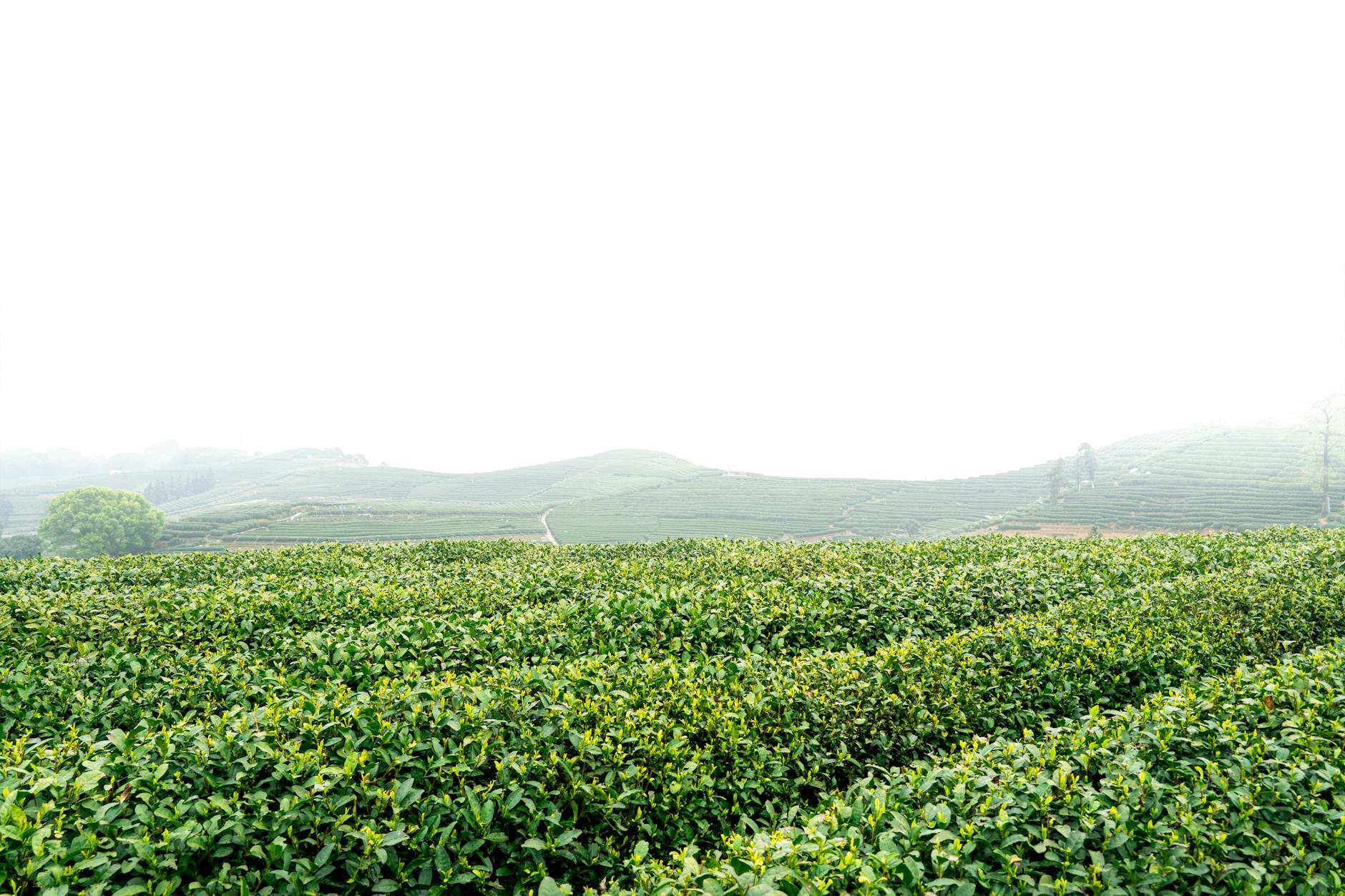
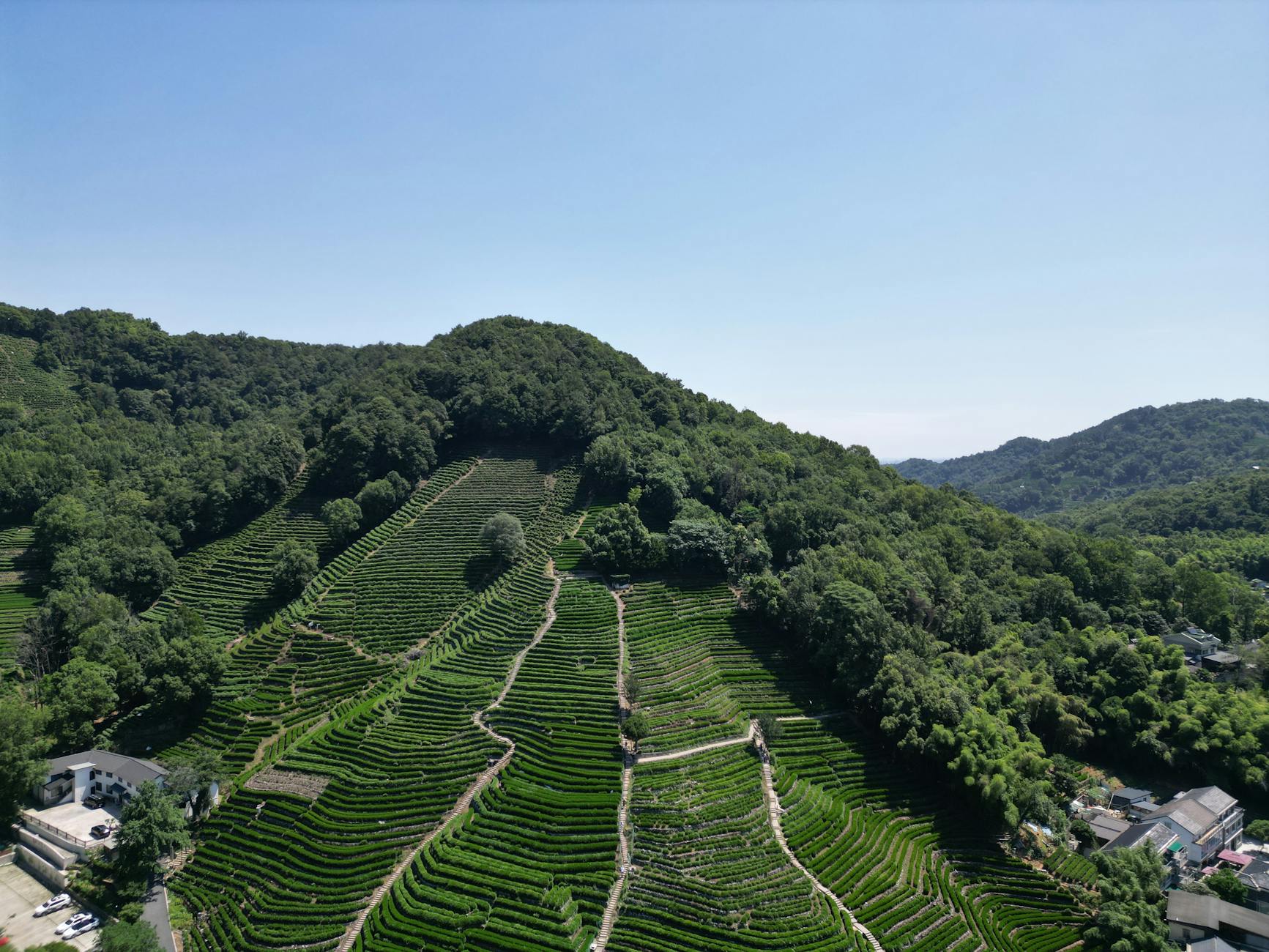
Longjing (龙井, “Dragon Well”) is the most celebrated green tea in China, and the hills just west of West Lake are where the most prized leaves are grown. The village that shares the tea’s name, along with the neighbouring Meijiawu tea village, is a string of farmers’ houses, family-run tea houses, and steep terraces of neat emerald rows carved into the slopes. Check a taxi or Didi route from wherever you start at the lake; the change of scene, from busy lakeside to quiet green hillside, is striking.
You can walk the public footpaths between the terraces for free, and in the picking season you will see farmers working the rows by hand. Tea houses such as the Longjing Imperial Tea Garden and the Meijiawu houses offer tastings across several grades, generally in the ¥80 to ¥200 per-person range, and most will sell you freshly roasted leaves to take home. Be aware that the best leaves command high prices and that aggressive sales pressure is not unknown, so taste before you commit and do not feel obliged to buy the top grade.
Timing shapes the experience. The prized first harvest, known as mingqian (picked before the Qingming festival in early April), commands a premium over later pickings, which is why connoisseurs time their visits for spring. Visit in autumn or early winter and you miss the harvest buzz but gain quiet paths and the same handsome terraced views, often with better weather for walking.
Hefang Street and the Old Town
If you have an hour to spare, or you would rather swap the tea hills for something more urban, Hefang Street (河坊街) is the obvious add-on. This pedestrian lane near the southeastern corner of the lake is a restored slice of old Hangzhou: traditional shopfronts, snack stalls, silk and tea sellers, traditional-medicine halls, and the historic Hu Qing Yu Tang pharmacy among them. It leans touristy, and you should expect souvenir kitsch alongside the genuine craft shops, but it is a lively place to graze on street snacks, watch craftspeople at work, and pick up tea, silk, or a folding fan. The nearby Wushan Hill and the Chenghuang (City God) Pavilion at its top give a quick bird’s-eye view over the rooftops and the lake beyond, with snack stalls serving dishes that trace back to the Southern Song court.
Choosing between Hefang Street and Longjing is really a choice of mood: the tea village for green hillsides and quiet, Hefang Street for bustle, snacks, and shopping. On a tight single day, most people pick one. If you find you have energy to spare, the southern stretch of the lake links the two areas within a short taxi ride.
Where and What to Eat
Hangzhou’s regional cooking is known as Zhe cuisine (浙菜), one of China’s eight great culinary traditions. It prizes freshness, a gentle touch of sweetness, and restraint with heavy sauces, which makes it a refreshing change from Shanghai’s richer, soy-darkened Benbang style. A few dishes are practically required eating on a day trip:
- Dongpo Pork (东坡肉) — cubes of red-cooked pork belly braised until they collapse, named after the Song-dynasty poet and governor Su Dongpo.
- West Lake Vinegar Fish (西湖醋鱼) — steamed grass carp under a bright sweet-and-sour glaze, the lake’s signature dish.
- Beggar’s Chicken (叫化鸡) — a whole chicken wrapped in lotus leaves and clay, then slow-roasted until the meat falls apart.
- Longjing Shrimp (龙井虾仁) — small river shrimp stir-fried with fresh Dragon Well tea leaves, delicate and faintly grassy.
For a day trip, one choice near the lake is Wai Po Jia (Grandma’s Kitchen), a local chain serving Hangzhou classics. Green Tea Restaurant (Lu Cha) is a stylish, modern take on Hangzhou cooking and also draws crowds, while pricier sit-down options handle more refined Zhejiang banquets. For lighter grazing, the snack stalls around Hefang Street and Wushan Hill let you sample small bites without committing to a full meal. If Hangzhou whets your appetite for the region’s food, our Shanghai food guide covers the contrasting Benbang dishes waiting back in the city.
Self-Guided vs Organised Tour
A Hangzhou day trip is very doable self-guided if you are comfortable using the metro, lean on a translation app, and have Alipay or WeChat Pay set up for payments. Done independently the trip is straightforward and far cheaper — roughly ¥250 to ¥400 per person all in, covering the round-trip train, local transport, a couple of paid sights, and lunch. You also get to set your own pace, which matters at a place like West Lake where the temptation is to slow down.
An organised day tour from Shanghai typically runs ¥600 to ¥900 per person and bundles round-trip transport, an English-speaking guide, lunch, and entry tickets. That premium makes sense if you do not speak any Mandarin, have not set up mobile payments, want a hands-off day, or are travelling with elderly parents or young children for whom the logistics would be a strain. Reputable booking platforms include Klook, Viator, GetYourGuide, and the China-specialist agencies. The trade-off is pace and flexibility: group tours move on a fixed schedule and often work in a shopping stop, so read the itinerary before you book.
When to Go
Hangzhou is a year-round destination, but the lake and hills are at their best in spring and autumn. Late March to mid-May brings mild weather, blossom around the causeways, lotus buds later in the season, and the prized first tea harvest in the hills — it is the prettiest time and also the busiest. Late September to early November delivers clear, comfortable autumn days, the “Autumn Moon over the Calm Lake” that the old poets celebrated, and thinner crowds than spring. Summers (June to August) are hot, humid, and prone to sudden downpours, though the lotus blooms are a genuine draw if you can handle the heat. Winters are damp and chilly rather than freezing, and a light dusting of snow over the lake is a rare, quietly beautiful sight if you happen to catch it.
Whatever the season, avoid the first three days of the major Chinese holidays — National Day week (October 1–7), Spring Festival, and the Labour Day break in early May — when West Lake fills with domestic tourists and the causeways become shoulder-to-shoulder. A weekday outside holiday periods is always more pleasant than a weekend. For broader timing advice across the region, our guide to the best time to visit Shanghai applies closely to Hangzhou too, since the two cities share a climate.
Practical Tips and Etiquette
- Carry your passport. You need it to board the train and to enter many scenic areas and to make any advance temple reservations.
- Set up mobile payments before you leave Shanghai. Alipay and WeChat Pay are how almost everything is paid for — taxis, snack stalls, temple tickets — and cash is increasingly awkward. Link a foreign card in advance rather than scrambling on the day.
- Download an offline map and translation app. Connectivity around the lake is patchy; an eSIM with a China-friendly plan is more reliable than relying on free public Wi-Fi.
- Wear proper walking shoes. A full day around the lake, temple, and tea hills means a lot of walking over uneven paths and pagoda stairs.
- Pack for the weather. Bring an umbrella in the rainier months (notably March, June, and September) and sun protection in summer; the lakeside offers little shade in places.
- Book the busy slots early. Morning outbound trains, weekend departures, and any travel during national holidays sell out well ahead.
- Be temple-appropriate. Dress modestly at Lingyin, keep your voice down, and follow signs about where photography is and is not allowed.
Frequently Asked Questions
Is a Hangzhou day trip from Shanghai worth it?
Yes. With high-speed trains making the journey quick and easy, Hangzhou is one of the most worthwhile day trips in China and the natural counterweight to Shanghai’s skyscrapers. One day is enough for West Lake plus one temple and the tea hills, though the wider region rewards an overnight stay.
How long is the train from Shanghai to Hangzhou?
The quickest option is a G-series bullet train from Shanghai Hongqiao Railway Station to Hangzhou East Railway Station. Exact journey times and departures change with the timetable, so check them on the day you travel.
How much does a day trip to Hangzhou cost?
Self-guided, budget roughly ¥250 to ¥400 per person, including the round-trip train (about ¥146 in second class), local metro or taxi, two paid sights, and lunch. An organised tour from Shanghai typically runs ¥600 to ¥900 per person with transport, guide, lunch, and tickets included. Prices are approximate and change over time.
What is the best time of year to visit Hangzhou?
Late March to mid-May for spring blossom and the first tea harvest, or late September to early November for clear autumn weather and thinner crowds. Summers are hot and humid but bring the lotus blooms; winters are damp and chilly. Avoid the first days of major Chinese holidays, when the lake is packed.
Can you visit Hangzhou without speaking Chinese?
Yes. English signage on the trains and metro, translation apps, and English menus at major restaurants make an independent trip very manageable. If you would rather remove all language friction, an organised tour with an English-speaking guide handles every detail for you.
Should I do a day trip to Hangzhou or Suzhou?
Hangzhou for grand open landscape, lake scenery, and tea culture; Suzhou for intimate classical gardens and canals. If you only have one day and it is your first visit to the region, Hangzhou is the stronger pick. With two days, do both — see our Suzhou day trip guide for the comparison.
Do I need to book West Lake or Lingyin Temple in advance?
Walking around West Lake is free and needs no booking. Lingyin Temple sometimes requires a free advance reservation through its official WeChat mini-program during peak season, so check before you go. Boat rides and the climb up Leifeng Pagoda are paid on the spot.
Can you stay overnight in Hangzhou instead?
Absolutely, and many travellers do. An overnight lets you see the lake at sunset and after dark, enjoy a proper Hangzhou dinner, perhaps catch an evening show, and add the Grand Canal district or Xixi National Wetland Park the next day — all of which are hard to fit into a single day trip. If you would rather spend that second night out of town entirely, the Moganshan mountain escape sits about 60 km north of Hangzhou.
Plan the Rest of Your Shanghai Trip
A Hangzhou day trip slots neatly into two or three days exploring central Shanghai. Use our pillar guides to round out the plan: start with the overview of the best day trips from Shanghai, browse things to do in Shanghai for the in-city highlights, and map your days with the Shanghai itinerary planner. For a gentler, closer excursion, the canal town of Zhujiajiao makes an easy half-day alternative when a full Hangzhou run feels like too much.