Every water town sells the same postcard: a humpbacked stone bridge, white walls and black tiles, a boat sculled slowly under a willow. What separates them is everything around the postcard. How long it takes to get there, what you pay at the gate, how many tour groups arrive at ten o’clock and what the place feels like at seven in the evening when the day trippers have gone. Choosing between the water towns near Shanghai is really a choice between those things.
Six are worth a first-timer’s attention. Zhujiajiao and Qibao sit inside the Shanghai municipality and you can reach both by metro. Zhouzhuang and Tongli are across the border in Jiangsu, out towards Suzhou. Xitang and Wuzhen are in Zhejiang, further south. This guide compares them on the journey, the ticket, the crowds and the evenings, says which suits which kind of trip, and adds Nanxun, which got its own high-speed railway station in December 2024.
Table of Contents
- Which Water Town Is Best? The Short Answer
- The Water Towns Near Shanghai Compared
- Zhujiajiao: the Easy One
- Qibao: Half a Day Without Leaving the City
- Zhouzhuang: the Famous One
- Tongli: Gardens and a Slower Pace
- Xitang: Best After Dark
- Wuzhen: the Polished Overnight
- Nanxun: the One Fewer Visitors Know
- Day Trip or Overnight?
- Combining Two Towns
- Getting to the Water Towns Near Shanghai
- When to Go
- Common Mistakes
- Frequently Asked Questions
Which Water Town Is Best? The Short Answer
There isn’t a single best one, but there is a best one for most trips:
- You have half a day and no appetite for train tickets: Qibao. It’s on Metro Line 9, a short walk from the station, and small enough to see in a morning.
- You want a proper water town without leaving Shanghai’s metro: Zhujiajiao. It’s bigger, older-feeling and on Line 17.
- You like gardens as much as canals: Tongli. Its Tuisi Garden is one of the gardens UNESCO lists as the Classical Gardens of Suzhou.
- You want the evening: Xitang or Wuzhen, with a night in the town. Both are at their best after the coaches have left.
- You want polish, good hotels and everything working: Wuzhen, and in particular its western half, Xizha.
- You want the name everyone recognises: Zhouzhuang. Go early or stay late, because it’s busy in the middle of the day.
If you only do one, our pick for a first visit is Zhujiajiao for a day trip and Wuzhen for an overnight. Tongli is the underrated one, and the best choice if you also want to see a classical garden.
The Water Towns Near Shanghai Compared
Prices are adult prices from each scenic area’s own site in November 2026; check before you go, because they change. “Free to walk” means the lanes and bridges have no gate, though individual sights inside charge.
| Town | Where | Getting there from Shanghai | Entry | Best for |
|---|---|---|---|---|
| Zhujiajiao | Qingpu, Shanghai | Metro Line 17 to Zhujiajiao, Exit 1, then walk or bus 1510 | Lanes open to walk; ¥60 joint ticket for three sights | An easy day with no train to book |
| Qibao | Minhang, Shanghai | Metro Line 9 to Qibao, Exit 2 | Free to walk | Half a day of snacks and old streets |
| Zhouzhuang | Kunshan, Jiangsu | About 45 minutes by car from Hongqiao Airport, or a coach from Suzhou railway station | Ticketed; check zhouzhuang.net | The famous postcard, early or late |
| Tongli | Suzhou, Jiangsu | Train to Suzhou, then Suzhou Metro Line 4 to Tongli and bus 725; about 80 minutes by car | ¥100 on the day, ¥80 booked a day ahead | Gardens and a quieter day |
| Xitang | Jiashan, Zhejiang | High-speed train to Jiashan South, then the tourist line or bus K222; or a coach from Shanghai South long-distance bus station | From ¥95 | Evenings by the canal |
| Wuzhen | Tongxiang, Zhejiang | Train and then bus or taxi; check the scenic area’s site | Xizha ¥150, Dongzha ¥110, both ¥190 | An overnight stay |
| Nanxun | Huzhou, Zhejiang | High-speed train to Huzhou Nanxun station | Check the scenic area’s own listing | Fewer crowds, mansions and canals |
The pattern is easy to see once it’s laid out. The two Shanghai towns cost little and take no planning. The Jiangsu and Zhejiang towns ask for a train ticket and a connection, and give you more in return: bigger old quarters, better evenings and, in Tongli’s case, a UNESCO-listed garden. If you have one free day, the real question is whether you want the metro or the train.
Zhujiajiao: the Easy One
Zhujiajiao is the water town most visitors to Shanghai end up in, and for good reason. It’s in Qingpu district, inside the city’s borders, and Metro Line 17 runs straight there. Leave Zhujiajiao station by Exit 1, and either walk to the old town or take the 1510 tourist bus to the visitor centre; the official site gives its first departure at about 06:02 and its last at about 21:02. There’s also an express bus from People’s Square, roughly hourly.
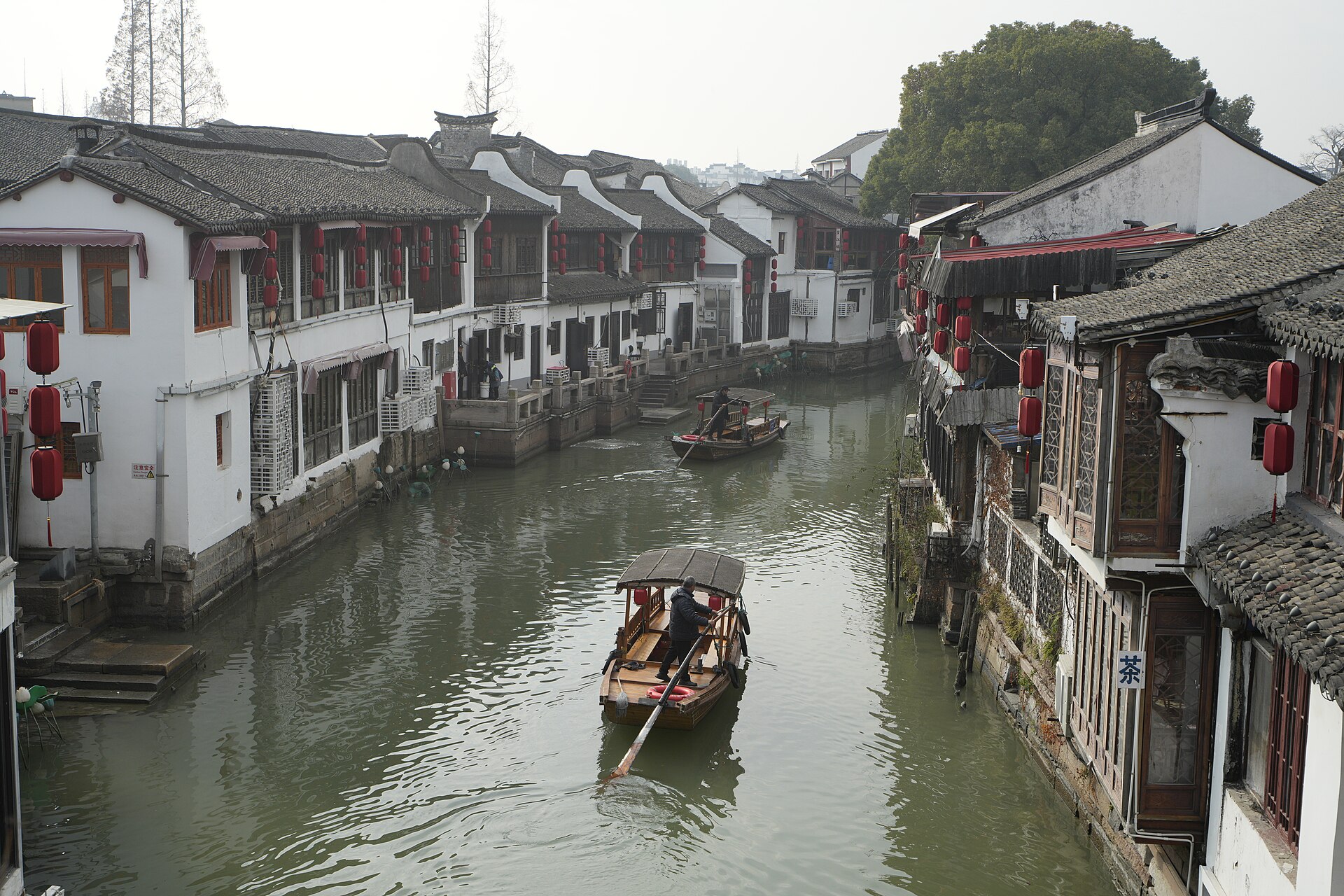
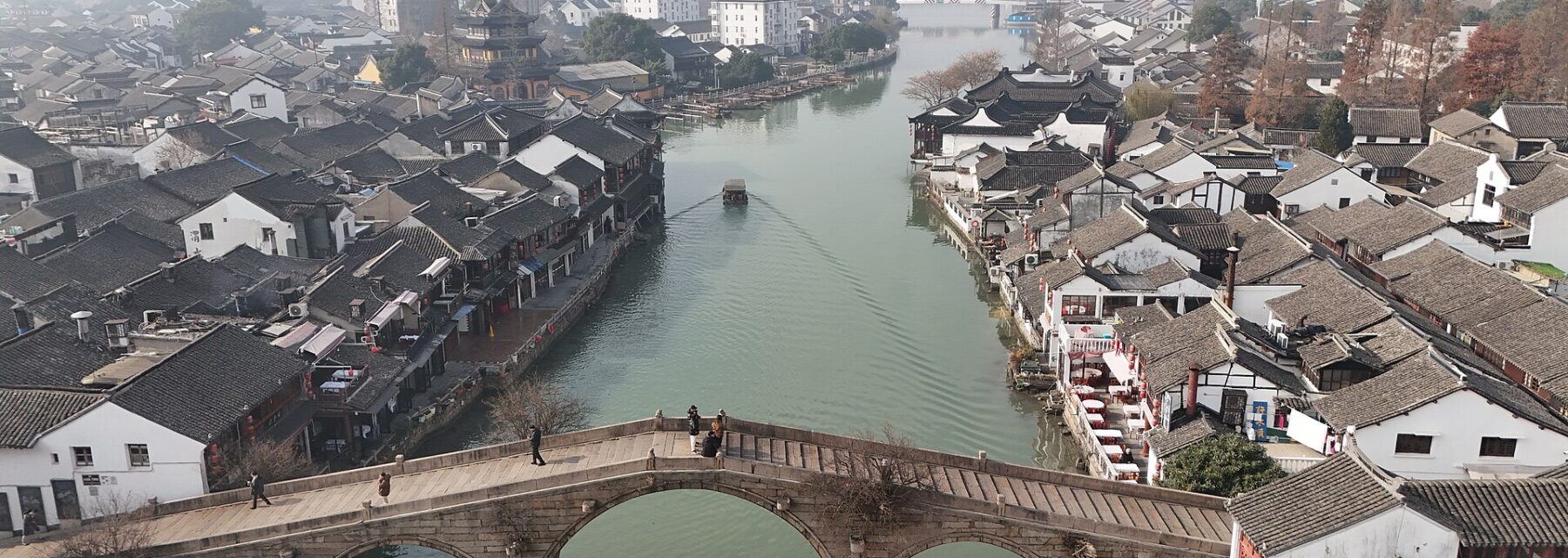
The town is bigger than people expect. The official site counts 36 old bridges and nine old streets across a scenic area of 3.08 square kilometres, and its best-known crossing, the five-arched Fangsheng Bridge, is 70.8 metres long. North Street, the main lane along the canal, is crammed with snack shops and souvenir stalls. The lanes behind it are where the town gets quiet.
You don’t need a ticket to walk around. The only ticket the official site sells is a ¥60 joint ticket for three sights, Kezhi Garden, The Garden of Harmonious Hearts and the Shanghai Helong Art Gallery. Kezhi Garden is the one that earns it. The boats are priced by the boat rather than the person: the official list gives ¥200 for the shorter A route and ¥300 for the B route, for up to six people, which makes them good value for a family and steep for one.
The catch: weekends and public holidays. Zhujiajiao is the default day out for Shanghai itself, so North Street fills by late morning on a Saturday. Go on a weekday and arrive before ten. Our Zhujiajiao water town guide has a walking route and the best places to eat.
Qibao: Half a Day Without Leaving the City
Qibao is the water town for people who aren’t sure they want a water town. It’s in Minhang district, on Metro Line 9, and Exit 2 of Qibao station is the one for the old town. The name means “seven treasures”, taken from Qibao Temple, and the settlement goes back more than a thousand years, though what you’ll walk through is a short, heavily restored strip of old streets either side of a canal.
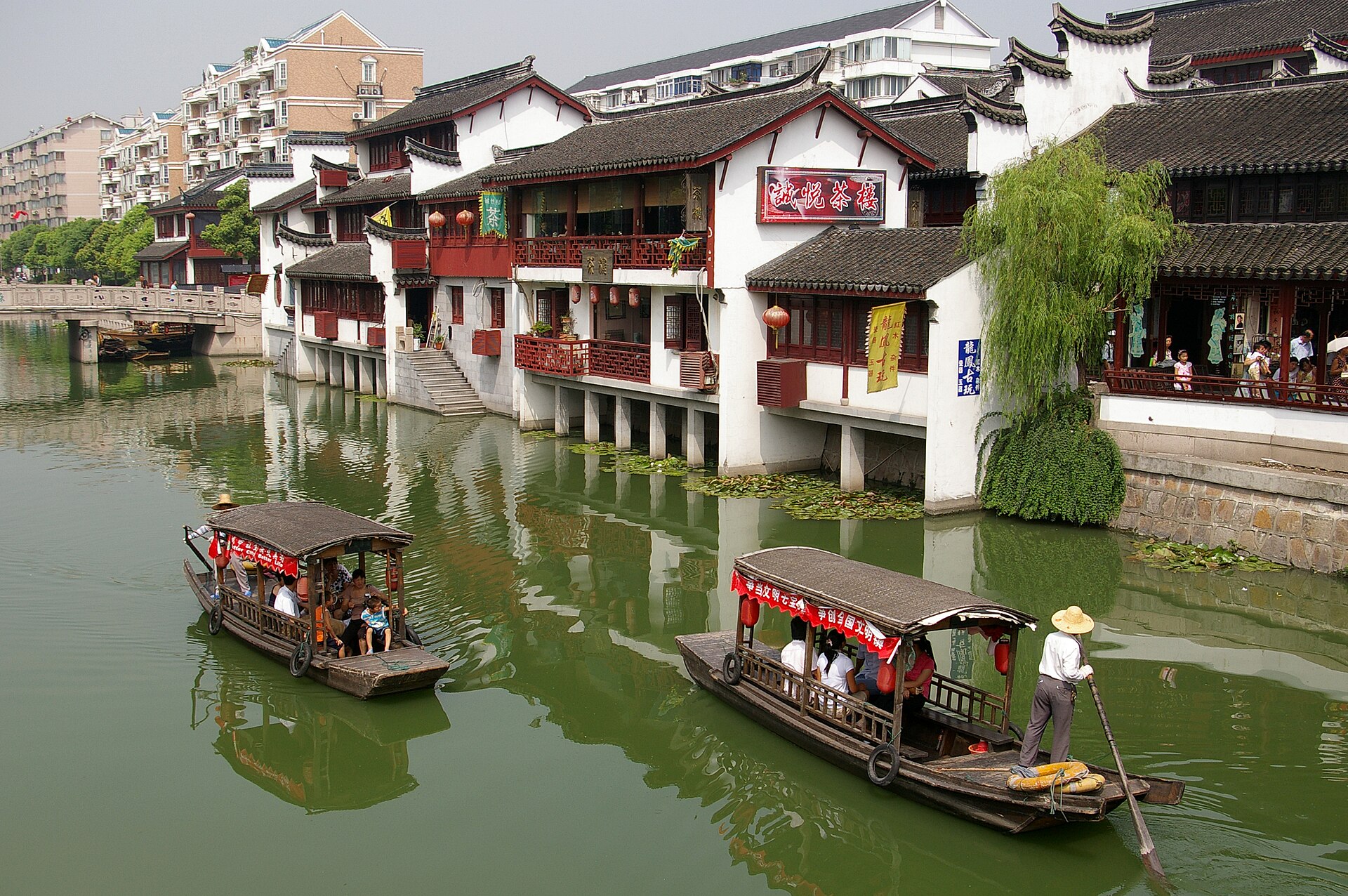
Come for the food rather than the architecture. The streets are lined with stalls selling square cakes, tangyuan and braised meats, and the best plan is to walk the whole thing once, then go back and eat. On Sunday afternoons there are shadow-puppet performances. It’s free to walk in, it takes two or three hours, and you can be back in central Shanghai for lunch.
It’s no substitute for Tongli or Wuzhen, and it gets crowded at weekends, but it’s an easy add-on. Line 9 carries on south-west to Sheshan, which makes a good afternoon with our guide to Sheshan and Songjiang. Our Qibao Ancient Town guide has a half-day plan.
Zhouzhuang: the Famous One
Zhouzhuang, in Kunshan just over the border in Jiangsu, is the water town with the biggest reputation, and you’ll feel it in the crowds. The old town itself is compact: the official site gives it as 0.47 square kilometres, with 14 old stone bridges from the Yuan, Ming and Qing dynasties and more than 800 households still living there.
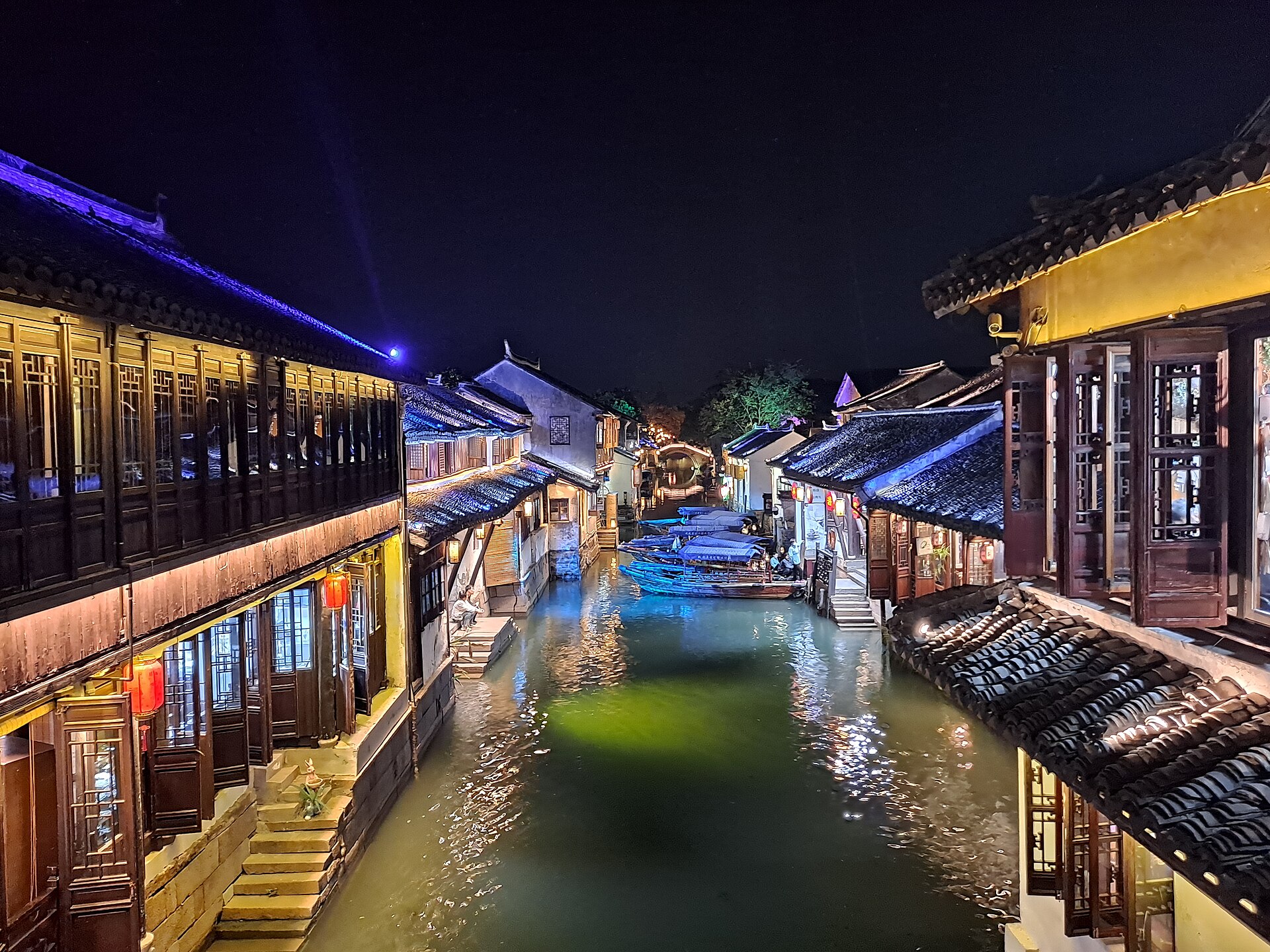
Getting there is less simple than the reputation suggests. The official site gives the drive from Hongqiao Airport as about 45 minutes, and lists a coach from the north square of Suzhou railway station. Check the ticket price on zhouzhuang.net or the town’s booking channel before you go, and check its notices too, because shows and boat services are sometimes suspended, so don’t plan the day around one.
Is it worth it? At ten in the morning on a Saturday, it’s a queue with bridges. Early in the morning or in the evening, it’s lovely. If you’re comparing it with Tongli, Tongli is quieter and has the better garden; Zhouzhuang has the better-known views. Our Zhouzhuang water town guide goes deeper.
Tongli: Gardens and a Slower Pace
Tongli sits south-east of Suzhou, and it’s the town that most often surprises people. The canals are wide and the pace is slower than in Zhouzhuang or Zhujiajiao. And it has Tuisi Garden, the Retreat and Reflection Garden, one of the gardens UNESCO inscribed as the Classical Gardens of Suzhou when it extended the listing in 2000 (UNESCO’s listing). It’s a compact garden laid out around its pond, and a quieter introduction to Suzhou’s gardens than the famous ones in the city, which fill with tour groups.
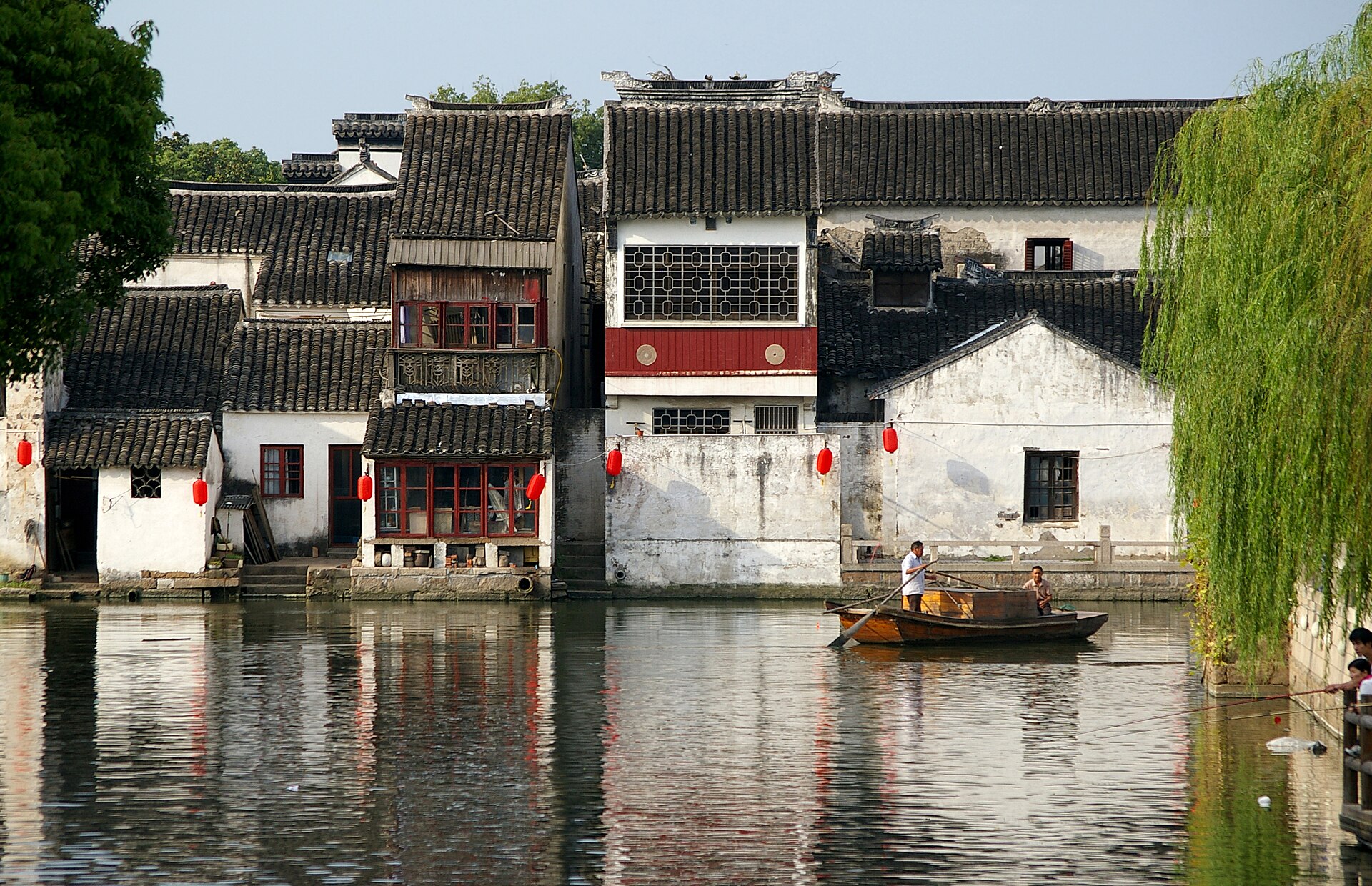
Tickets are clear and cheap by water-town standards. The official site charges ¥100 on the day, ¥80 if you book at least a day ahead (you enter with your ID), and ¥50 for students and seniors (Tongli’s ticket page). It also publishes its capacity: 60,000 people at a time and 90,000 a day, which tells you how many it’s built to handle on a holiday.
From Shanghai, take a high-speed train to Suzhou, then Suzhou Metro Line 4 to Tongli station, which runs from 06:00 to 22:25 according to the town’s transport page, and finish on bus 725 to the Shipailou stop. By car it’s about 80 minutes from Shanghai. Tongli pairs well with a night in Suzhou, and our Tongli water town guide covers the town’s other sights.
Xitang: Best After Dark
Xitang, in Jiashan county in Zhejiang, is the water town that comes alive at night. The canal-side walkways and bars light up with red lanterns, and the old town is at its prettiest from dusk, when the reflections double the lights and the day crowds have thinned. If you have a single evening to give a water town, give it to Xitang or Wuzhen.
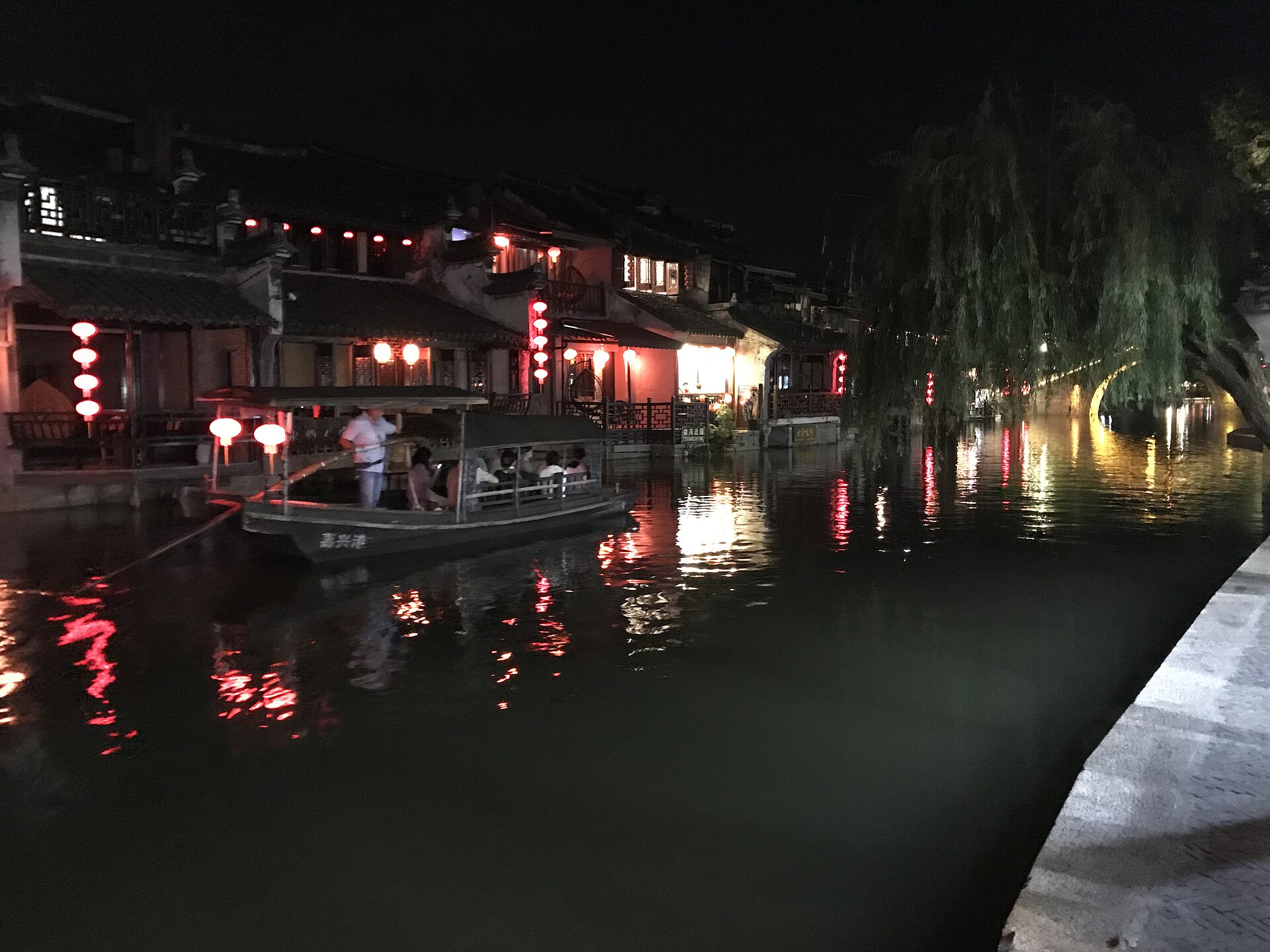
The official site lists admission from ¥95 and gives the town’s distance from Shanghai as about 90 kilometres. The quickest way is a high-speed train to Jiashan South, then the tourist direct line or bus K222 to the town’s car park and bus station. There’s also a coach from the Shanghai South long-distance bus station to Xitang (Xitang’s transport page). Check the latest train times on 12306 and plan your return before you settle into dinner, because the last connections back to Shanghai go earlier than you’d think.
The honest drawback is the daytime. At midday Xitang is a busy, commercial strip like the others, and the evening is the reason to come. It’s best done as an overnight, with a canal-side guesthouse. Our Xitang water town guide has the details.
Wuzhen: the Polished Overnight
Wuzhen, in Tongxiang in northern Zhejiang, is two towns under one name. Dongzha, the eastern half, is the older-style scenic area with workshops and small museums, best seen by day. Xizha, the western half, is a fully restored town where the hotels, guesthouses and restaurants are inside the gates, so you can stay the night and have the canals to yourself after dark. It’s also the slickest of the lot, with tidy lanes, a sightseeing car and boats that run to set hours.
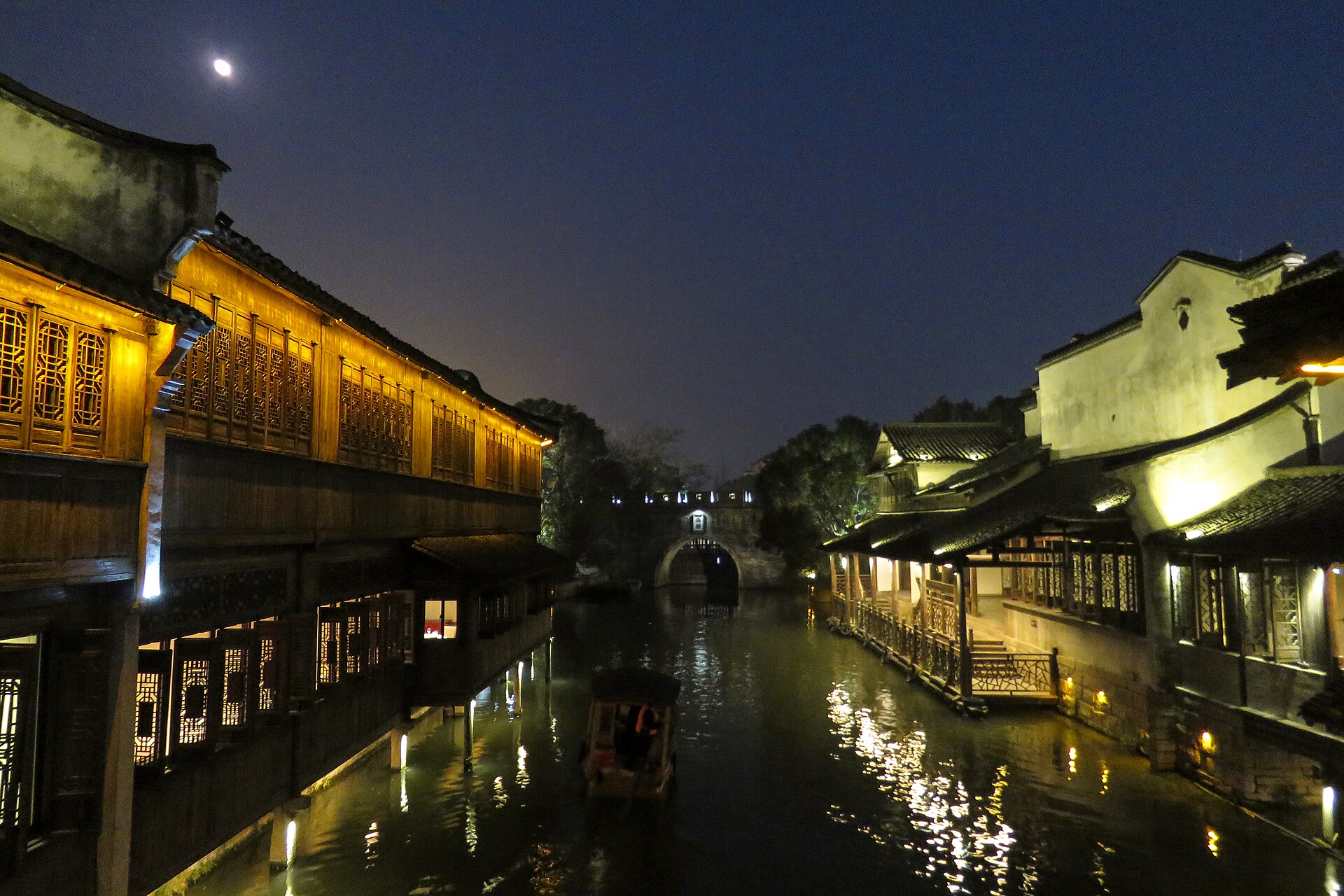
The official ticket page charges ¥150 for Xizha, ¥110 for Dongzha and ¥190 for both, with concession prices of ¥75, ¥55 and ¥130 respectively (Wuzhen’s visitor information). A ticket is valid for one day and can’t be refunded. Inside Xizha, the sightseeing car costs ¥10 a ride and is free for guests of the scenic-area hotels, and the boats from the Xizha docks run from 07:30 to 21:30. Opening hours change with the season, so check them on the same site.
Getting there is the one weak point. There’s no metro. Most people take a high-speed train to a nearby station and finish by bus or taxi, so check the options on 12306 and the scenic area’s site when you plan. The town is also home to the Wuzhen Theatre Festival and the Mu Xin Art Museum, both worth looking up for your dates. Our Wuzhen water town guide covers both halves.
Nanxun: the One Fewer Visitors Know
Nanxun, in Huzhou in Zhejiang, is a water town that grew rich on the silk trade, with merchants’ mansions along its canals, and it’s far less known to foreign visitors than Wuzhen or Zhouzhuang. What has changed is the access. The Shanghai–Suzhou–Huzhou high-speed railway opened on 26 December 2024, linking Shanghai Hongqiao with Suzhou and Huzhou, and Huzhou Nanxun station is on the line (the government report on the opening).
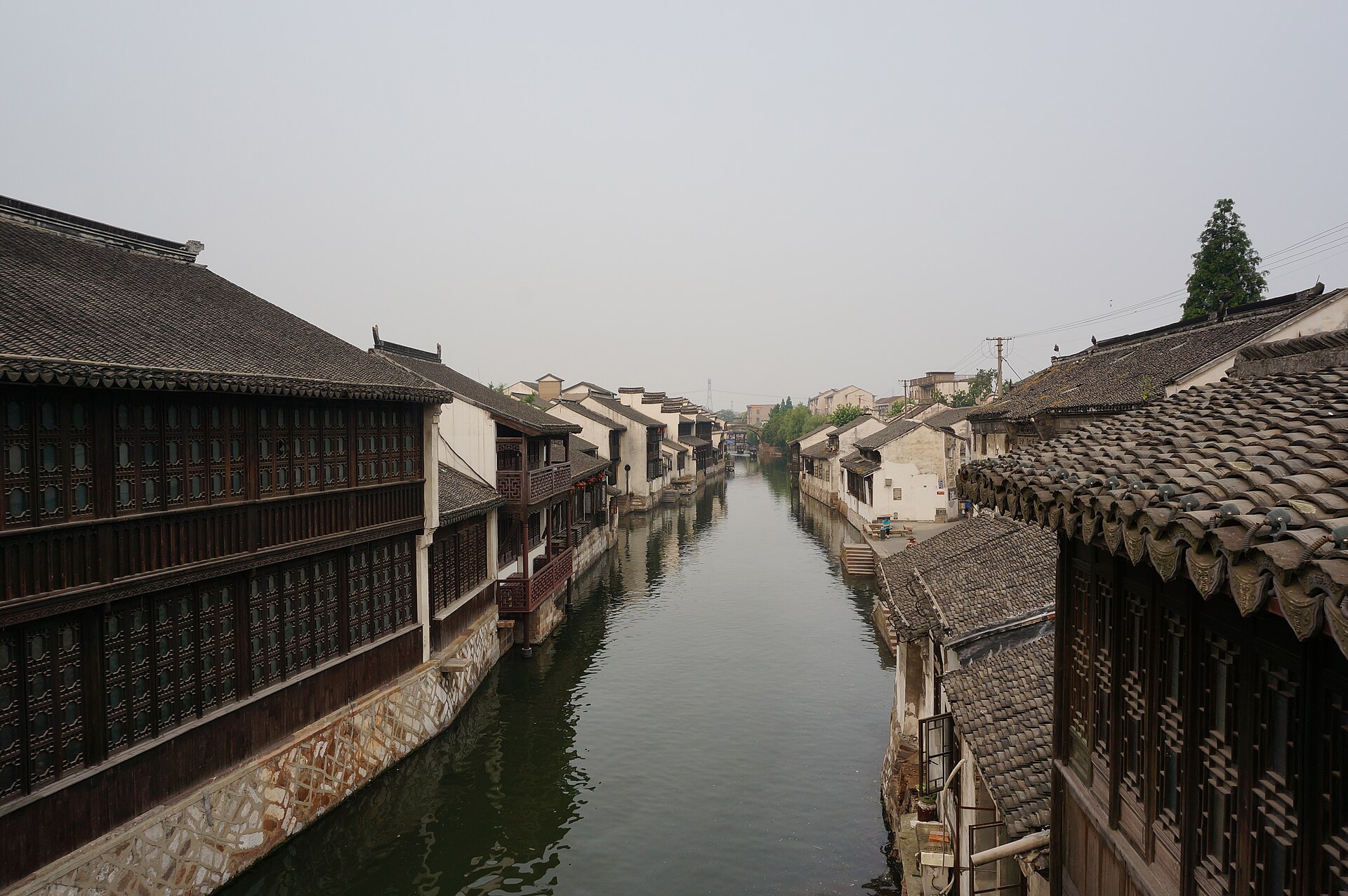
Check 12306 for direct trains from Hongqiao and the journey time on your date. The scenic area sets its own prices, so check its listing before you go. If you’ve already done one of the big names and want a second water town without the crowds, Nanxun is the one to try.
Day Trip or Overnight?
The two Shanghai towns are day trips, and there’s no point staying. For the rest, it depends on what you’re after.
Day trip if you’re short of time, you’re happy with daylight and you pick a town with a quick connection. Zhujiajiao, Qibao and Tongli all work comfortably as day trips from Shanghai.
Stay the night if you want the water towns at their best, which means early morning and evening. Wuzhen’s Xizha and Xitang are the two built for it. In both, the coaches have gone by dusk, the lanterns come on and you get the canals almost to yourself. In the morning, before the gates open to day visitors, you can walk the lanes in near silence. A night costs more than a train fare, but it’s the difference between seeing a water town and seeing a queue.
A good middle course is to combine a town with a city: Tongli with a night in Suzhou, or Wuzhen on the way to Hangzhou. Our Suzhou day trip guide covers the first half of that plan, and the Hangzhou day trip guide the second.
Combining Two Towns
Two water towns in one day is possible, but only when they sit on the same route. These pairings work:
- Qibao and Sheshan, by metro. Both are on Line 9. Do Qibao in the morning, then ride further out on the line to Sheshan for the wooded hills and the basilica. It’s the easiest day out of the city, with nothing to book.
- Tongli and Suzhou. Suzhou Metro Line 4 runs to Tongli, so you can spend the morning in Suzhou’s gardens and the afternoon in Tongli, or sleep in Suzhou and reach Tongli the next morning before the crowds.
- Zhouzhuang and Tongli, with a driver. Both are on the Suzhou side of Shanghai, and a car turns them into an easy pair. By public transport, pick one.
- Xitang and Wuzhen, with a night in one of them. Both are in northern Zhejiang. Spend the evening in one and the next morning in the other, and ask your hotel to arrange the transfer between them.
Whatever the pairing, give the second town the evening rather than the middle of the day. You’ll see it at its best, and you’ll miss the hours when the tour groups are there.
Getting to the Water Towns Near Shanghai
The towns fall into three groups by how you reach them:
- By metro: Zhujiajiao (Line 17) and Qibao (Line 9). Use your transport card or a payment app, and you can set off whenever you like.
- By high-speed train, then a local connection: Tongli (via Suzhou), Xitang (via Jiashan South), Nanxun (Huzhou Nanxun station) and Wuzhen. China Railway sells tickets on 12306 from 15 days ahead, counting the day you buy, and the popular morning trains go first at weekends.
- By coach or car: Zhouzhuang and Xitang both have coach links, and a driver is the simplest way to combine two towns in one day.
If you’re booking trains for the first time, our guide to booking China train tickets explains passport registration and payment.
When to Go
Spring and autumn are the water-town seasons. On the 1991 to 2020 records for Xujiahui, in central Shanghai, April averages a high of 20.9°C and October 23.5°C, and October has only about 7.5 days with rain. Summer is hot and sticky, with July highs averaging 33.2°C, and June brings the plum rains, averaging 224.9 mm over 14.3 rainy days. Winter is grey and cold but quiet, and a misty morning on an empty canal has its own appeal.
The calendar matters more than the weather. Weekends bring Shanghai’s own day trippers, and the big public holidays, especially May Day and the National Day week in October, fill every town at once. A weekday in late October or early November is close to ideal, and our Golden Week guide explains what the October holiday does to the region.
Common Mistakes
- Arriving at eleven on a Saturday. Every water town is busiest from late morning to mid-afternoon at weekends. Arrive early, or stay late.
- Choosing by fame. Zhouzhuang is the best-known name, but Tongli and Wuzhen often make the happier day.
- Trying to do three in a day. Two is the maximum, and only with a driver or a well-timed train. One done properly is better than three seen from a minibus.
- Treating Qibao as the full experience. It’s a pleasant half-day, but it’s a restored street in a suburb. If you want canals and lanes to get lost in, go further.
- Paying per person for a boat. At Zhujiajiao the official boat prices are per boat for up to six, so share if you’re a small group.
- Missing the evening. If you go to Xitang or Wuzhen and leave at five, you’ve seen the busy half of the day and missed the good half.
- Forgetting the return train. Book the way back when you book the way out, especially on Sundays.
Frequently Asked Questions
What is the best water town near Shanghai?
For a first day trip, Zhujiajiao: it’s on Metro Line 17, free to walk around and big enough to feel like a proper water town. For an overnight stay, Wuzhen’s Xizha. For gardens and fewer crowds, Tongli.
Which water town is closest to Shanghai?
Qibao and Zhujiajiao are both inside the Shanghai municipality and on the metro. Qibao is on Line 9 and Zhujiajiao on Line 17.
Is Zhujiajiao free?
The lanes and bridges are open to walk. The official site sells a ¥60 joint ticket for three sights, including Kezhi Garden, and boat rides cost ¥200 or ¥300 per boat on its list.
Zhujiajiao or Wuzhen?
Zhujiajiao for an easy day on the metro; Wuzhen for a night away. Wuzhen is far more polished and better in the evening, but it takes a train and a connection to reach.
Xitang or Wuzhen?
Both are best at night. Wuzhen’s Xizha is more polished and more expensive, with hotels inside the gates. Xitang is livelier and cheaper, with admission from ¥95.
Zhouzhuang or Tongli?
Tongli, for most people: it’s quieter, the ticket is clear at ¥100 on the day or ¥80 booked ahead, and it has a UNESCO-listed garden. Zhouzhuang has the more famous views and the bigger crowds.
Can you visit a water town without a tour?
Yes. Zhujiajiao and Qibao are on the metro, and Tongli, Xitang and Nanxun are a high-speed train plus a local bus or metro ride away. A tour or a driver mostly saves effort if you want two towns in a day.
How long do you need in a water town?
Half a day for Qibao, most of a day for Zhujiajiao or Tongli, and ideally a night for Wuzhen or Xitang, because they’re at their best in the evening.
Do I need to book water town tickets in advance?
Not for most. Qibao has no gate, and Zhujiajiao’s lanes are free to walk. Tongli rewards booking, because the ticket is ¥80 if you buy it at least a day ahead against ¥100 on the day. Wuzhen’s tickets are valid for one day only and can’t be refunded, so buy them once your dates are certain.
Can you stay overnight in a water town?
Yes, and in Wuzhen and Xitang it’s the best way to see them. Wuzhen’s Xizha has hotels inside the scenic area, whose guests ride the sightseeing car free, and Xitang has guesthouses along its canals.
When is the best time to visit the water towns?
Weekday mornings and evenings, in spring or autumn, outside public holidays. Weekends from late morning and the May Day and National Day holidays are the busiest times.
For the bigger picture, our day trips from Shanghai guide puts the water towns alongside the cities. Torn between the two big cities? Our Suzhou vs Hangzhou comparison weighs them up.
Photo credits.
Zhujiajiao from the air: 1 zhujiajiao 2023 aerial by Chensiyuan, CC BY-SA 4.0, via Wikimedia Commons.
Zhujiajiao side canal: 1 zhujiajiao ancient water town 2023 by Chensiyuan, CC BY-SA 4.0, via Wikimedia Commons.
Qibao canal: 20090726 Shanghai Qibao 0542 1988 by Jakub Hałun, CC BY-SA 4.0, via Wikimedia Commons.
Zhouzhuang at night: Zhouzhuang at night 11 by EditQ, CC BY-SA 4.0, via Wikimedia Commons.
Tongli: 20090920 Tongli Town 5790 by Jakub Hałun, CC BY-SA 4.0, via Wikimedia Commons.
Xitang at night: Boat on canal in Xitang Town at night 2 by そらみみ, CC BY-SA 4.0, via Wikimedia Commons.
Wuzhen Xizha at night: Night in Wuzhen Xizha (20171231174337) by N509FZ, CC BY-SA 4.0, via Wikimedia Commons.
Nanxun canal: Ditang View from Tongjin Bridge 01 2014-06 by 猫猫的日记本, CC BY-SA 3.0, via Wikimedia Commons.