Shanghai is about as flat as a city gets, which is why a pair of wooded hills an hour out on Metro Line 9 pulls in so many people at weekends. Sheshan, in Shanghai’s Songjiang district, is where the city goes for trees, a bit of a climb and a view that isn’t from a skyscraper. On top of West Sheshan sits a red-brick basilica that would look at home in provincial France, and beside it an observatory the Jesuits founded in 1900. Down the road, Songjiang’s old town keeps a Song-dynasty pagoda, a classical garden and a mosque founded under the Yuan.
None of it is as famous as the Bund or the water towns, and that’s the point. A Sheshan and Songjiang day is cheap, it runs entirely on the metro and a couple of short taxi rides, and it shows you a side of Shanghai that has nothing to do with shopping malls. This guide covers how to get there, what each stop is actually like, what the tickets cost, a route that fits it all into one day, and the mistakes that leave people standing at the wrong station wondering where the hills went.
Table of Contents
- Is Sheshan worth the trip?
- How to get to Sheshan from central Shanghai
- Sheshan National Forest Park: the two hills
- Sheshan Basilica
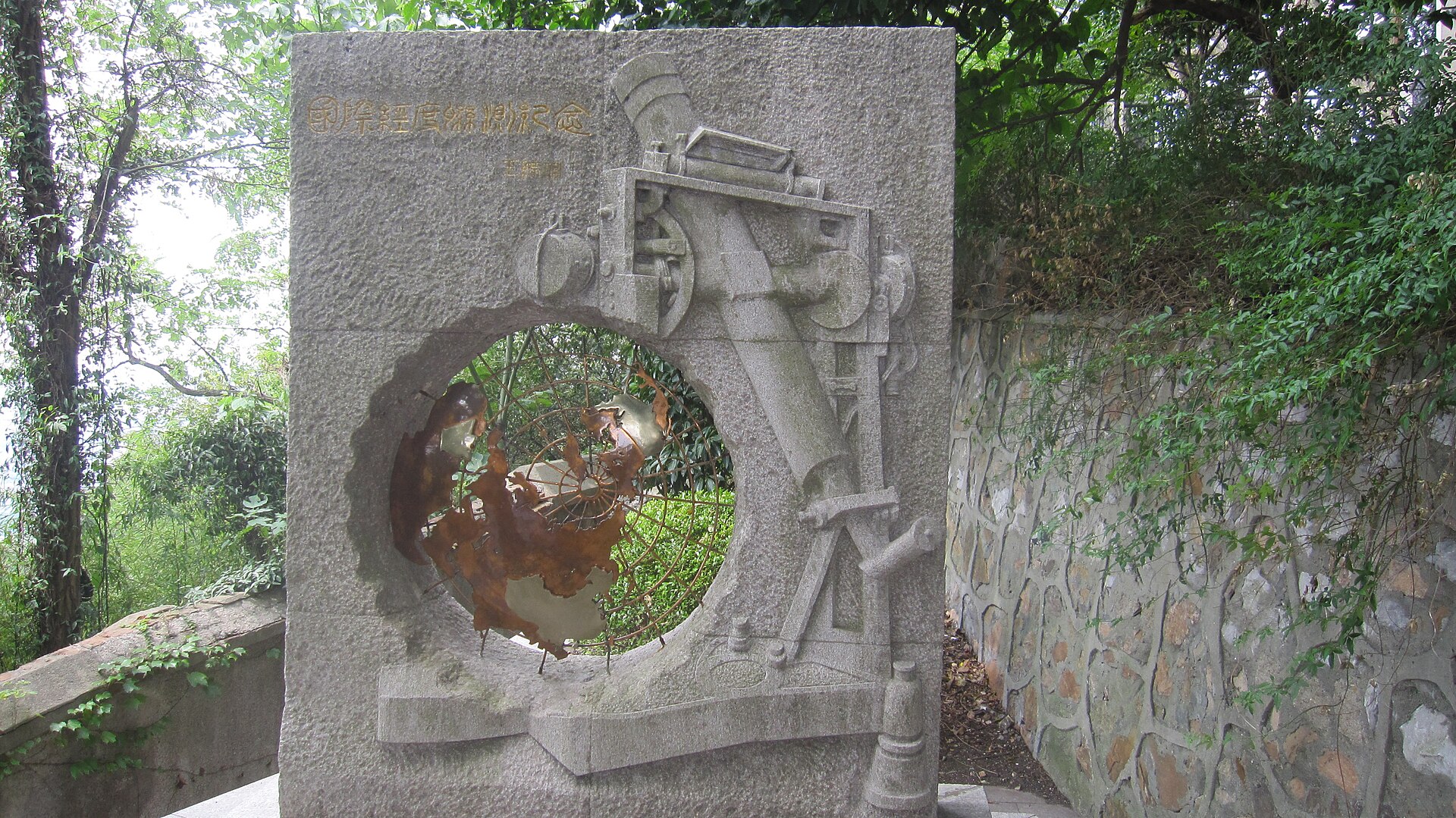
- The Sheshan Observatory
- Tianmashan and the leaning pagoda
- Songjiang old town
- Guangfulin and the deep past
- Happy Valley, Chenshan and other family options
- A Sheshan and Songjiang day, step by step
- When to go
- What people get wrong
- Frequently Asked Questions
Is Sheshan worth the trip?
It depends on what you’ve come to Shanghai for. If this is your first visit and you have three days, Sheshan won’t make the cut, and it shouldn’t. The Bund, the Old Town, the French Concession and a water town will fill that time better. But on a fourth or fifth day, or on a second trip, Sheshan is one of the more rewarding half-days the city has, and it suits a few kinds of traveller especially well.
The first is anyone who has had enough of crowds and concrete. The hills are covered in bamboo and broadleaf woodland, the paths are shaded, and on a weekday you can walk for stretches without meeting anyone. The second is anyone interested in the odder corners of Shanghai’s history. The basilica and the observatory are what remains of the Jesuit mission that settled on this hill from the 1860s, and they sit side by side on the same summit. The third is families who want something outdoors that isn’t a theme park, though there is a theme park nearby if that’s the real goal.
Who it doesn’t suit: people expecting mountains. These are small hills, and the walk to the top of West Sheshan is a gentle climb, not a hike. If you want proper hill walking from Shanghai, you need to go further, to Moganshan or Huangshan.
Songjiang’s old town is a different proposition. It’s not a preserved water town like Zhujiajiao, and nobody would mistake its main streets for a historic quarter. What it has are individual sites of real age, scattered across an ordinary modern district: the Song-dynasty Square Pagoda, Zuibaichi garden, and the mosque. You visit them as you’d visit monuments, one after another, rather than wandering a picturesque old centre.
How to get to Sheshan from central Shanghai
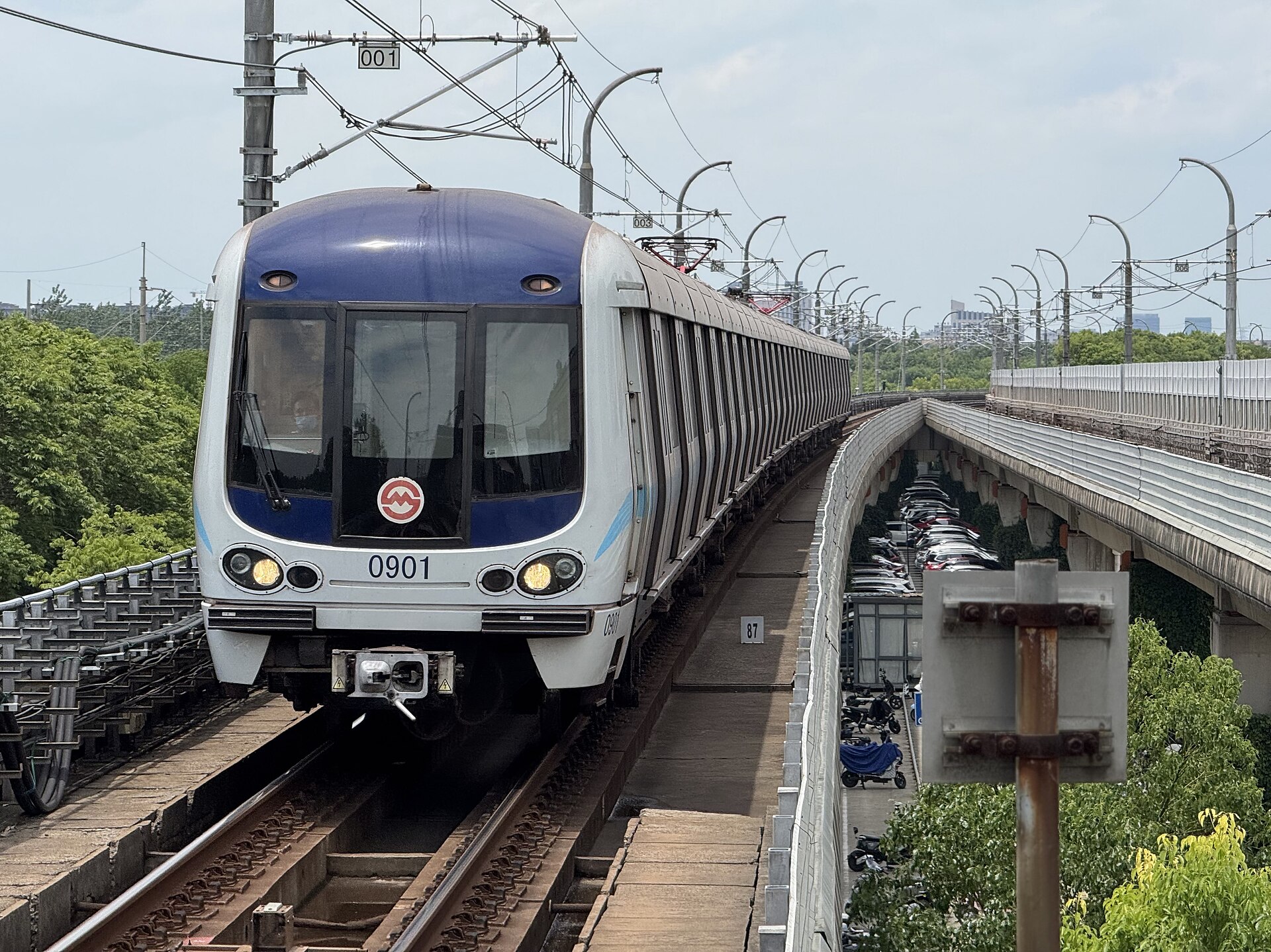
Metro Line 9 does almost all the work. It runs south-west from the city centre through Xujiahui and Qibao, rises above ground, and crosses open country into Songjiang. Sheshan station comes first, then the university town, then the new town and finally the old town around Zuibaichi. The line is the whole reason this day trip is easy.
The table below gives scheduled running times between stations, taken from the line’s published station table. Add time for walking to the platform, changing lines and waiting, which in practice means allowing an hour door to door from most central hotels.
| From (Line 9) | To Sheshan | To Zuibaichi Park | Good for |
|---|---|---|---|
| Dapuqiao | about 40 min | about 57 min | Tianzifang and the French Concession |
| Xujiahui | about 33 min | about 50 min | Interchange with Lines 1 and 11 |
| Qibao | about 17 min | about 34 min | Combining with Qibao Ancient Town |
| Sheshan | – | about 17 min | Moving on from the hills to the old town |
Two things catch people out on Line 9. Some trains in the morning peak and some short-working services terminate at Sheshan rather than running through to Songjiang, so if you’re heading for the old town, check the destination on the platform display. And the line is busy at weekends in both directions, because Songjiang has a large university town and a lot of commuters, so a seat isn’t guaranteed even on the way out.
Sheshan station is not at the foot of the hills. The station serves Sheshan town, and the forest park gates are a short drive north. Most visitors take a Didi or a taxi from the station forecourt for the last stretch, which is quick and cheap. Local buses also run from the station area towards the hills; a map app will show the current routes, but the taxi is simpler if you’re not confident reading Chinese bus displays. Our guide to using Didi in Shanghai covers setting it up in English before you go.
Our Shanghai metro guide explains tickets, QR codes and how to read the station signs.
Sheshan National Forest Park: the two hills
Sheshan is really two hills, East and West Sheshan, with a small valley between them, and the woods around them form the Sheshan National Forest Park. The wider park also takes in several other small hills in the area, of which Tianmashan, with its leaning pagoda, and Xiaokunshan are the ones visitors are most likely to meet. Each part has its own gate and its own ticket, which is the single most confusing thing about the place.
West Sheshan is the one you’ve come for. The basilica and the observatory are on its summit, and the paths up from the gate climb through bamboo and mixed woodland. There are steps most of the way, with benches, and the shade makes it a pleasant walk even on a warm day. At the top, the views spread out over flat farmland, villages and the new towns of Songjiang. On a clear day you can see a long way; on a typical hazy Shanghai day you’ll see the nearer hills and not much else.
East Sheshan is quieter and greener, with more of a park feel: walking paths, a lake, and gardens laid out for strolling rather than pilgrimage. If you have only a couple of hours, skip it. If you have the whole day and want a proper walk in the woods, it’s the better half of the forest for that.
Tickets for each section are sold at its own gate. The city’s published list for 2025 gave original adult prices of 10 yuan for the Tianmashan section and 6 yuan for Xiaokunshan. The main West Sheshan entry wasn’t on that list, so check the current price at the gate or with the forest park’s visitor hotline (021-5765-7231). These are cheap places to visit by any standard. Bring your passport, as you would for any ticketed site in China, and have Alipay or WeChat Pay working, because cash is accepted in fewer places every year.
The forest park closes in severe weather. On 9 August 2026, for example, the whole Sheshan area, along with the other Songjiang scenic sites, shut for the day during a typhoon. If a storm is forecast, check before you set off.
Sheshan Basilica
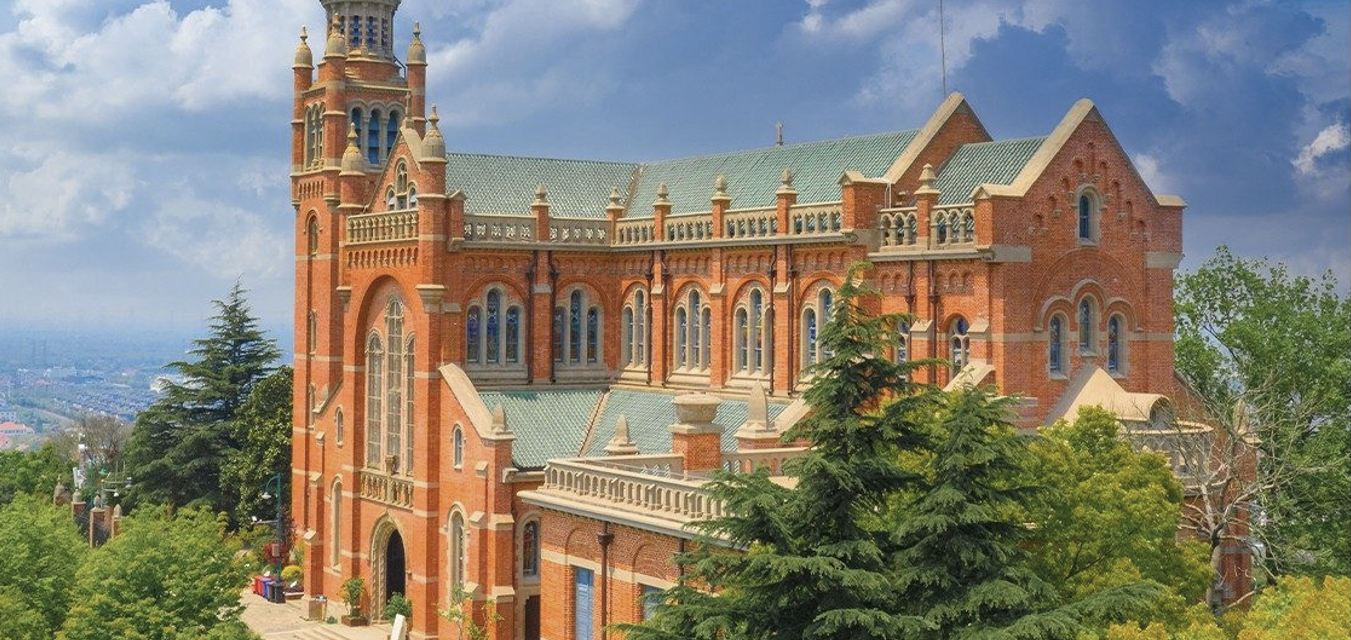
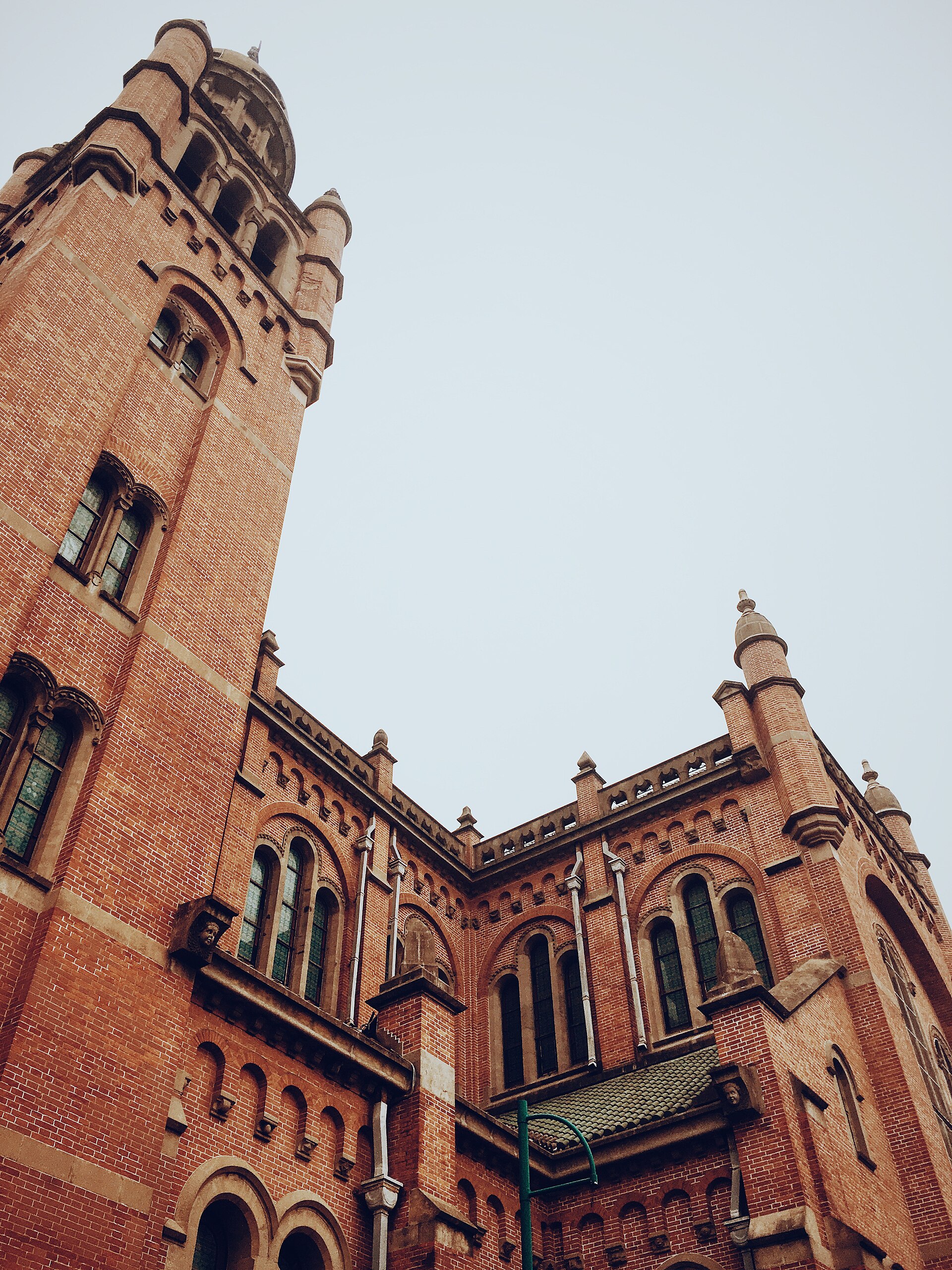
The basilica of Our Lady of Sheshan is the reason most people make the trip, and it’s a genuinely surprising building to find on a hill outside Shanghai. It’s a large brick church with a tall bell tower topped by a statue of the Virgin and Child, and coming up through the trees it looks as if it was lifted out of a French market town.
The history goes back to the Jesuits, who began buying land on the hill in the early 1860s. They built a small church and a shrine to Mary, and a first church went up on the summit in the early 1870s; Wikipedia gives its consecration as 15 April 1873. The church you see now replaced it: work began in the 1920s and the building was finished in the mid-1930s (the city’s own page gives 1935). It’s an active Catholic shrine and pilgrimage church, not a museum.
The approach is part of the experience. The path from the lower slopes up to the basilica follows the Stations of the Cross, and halfway up there’s a smaller church and a shrine.
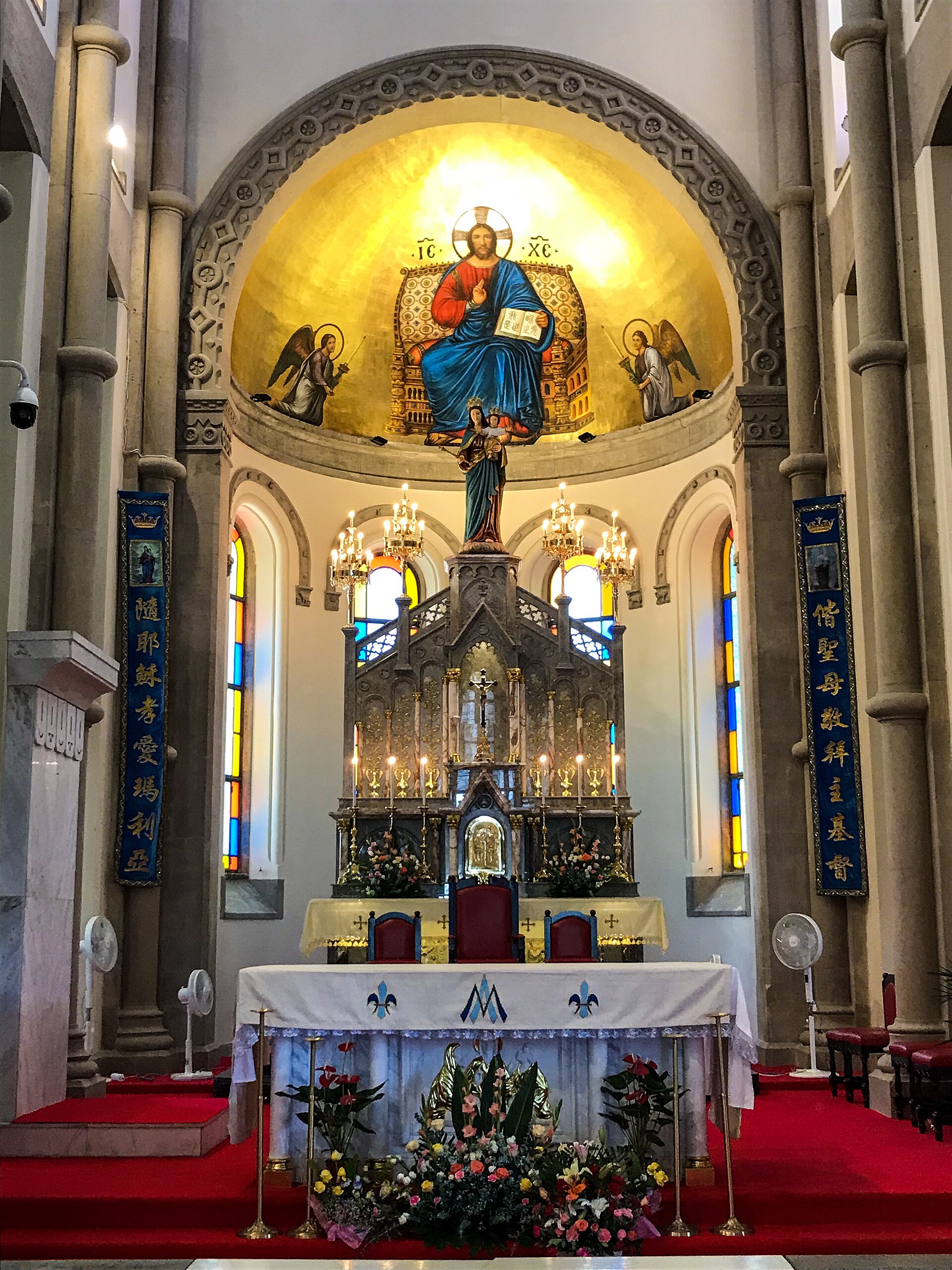
Inside, the church is plain and lofty, with stained glass and a high nave. Be respectful: it’s a place of worship, and services take place here. Dress modestly, keep your voice down, and don’t photograph people at prayer. Access can change during services and church festivals, so if seeing the interior matters to you, ring the forest park’s visitor hotline (021-5765-7231) before you travel and go in the middle of the day.
May at Sheshan. May is the month of Mary in the Catholic calendar, and Sheshan has drawn pilgrims in May for well over a century. The focus is 24 May, the feast of Mary Help of Christians, which Pope Benedict XVI chose in 2007 as a world day of prayer for the Church in China because of its link with Sheshan. Pilgrims come for it; sightseers should avoid May weekends, when the hill fills up and access to the basilica may be managed.
The Sheshan Observatory
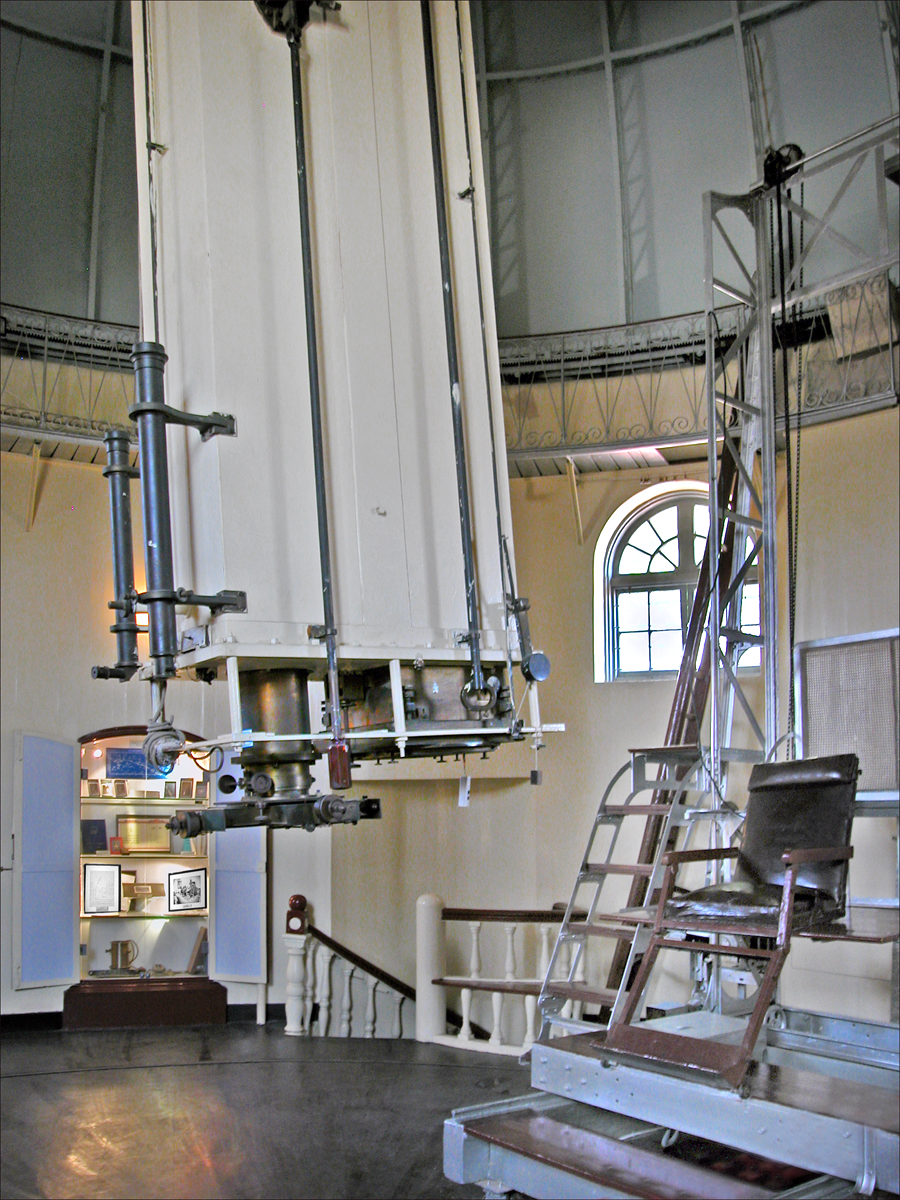
Right next to the basilica is the Sheshan Observatory, founded by the Jesuits in 1900. Its treasure is a 40 cm double-barrelled refractor telescope built in 1900 and 1901, which the city’s own listing describes as Asia’s largest. Astronomers here photographed Halley’s Comet on both its 1910 and 1986 passes, and the telescope was used until 2005. Today the old buildings house a museum of astronomy, with the great telescope under its dome as the star exhibit, along with displays on the history of the observatory and a replica of Zhang Heng’s ancient seismoscope, the famous jar ringed with dragons.
The observatory has had its share of closures. It shut for a long renovation from 2021 and reopened in April 2023, when visits needed a reservation through its WeChat account. A city page in February 2025 listed the ticket at 12 yuan. Its current opening days and booking rules are worth checking before you go, through its official WeChat account, because it isn’t a place you can simply walk into and it would be a shame to climb the hill and find the doors closed.
One warning about names. The observatory museum is branded the Shanghai Astronomy Museum in some city listings, which is confusing, because that’s also the English name of the huge planetarium in Lingang, at the far south-eastern end of Line 16. They are completely different places at opposite ends of the city. If you want the big modern museum, read our Shanghai Astronomy Museum guide; if you want the historic telescope, it’s here on Sheshan.
Tianmashan and the leaning pagoda
A few kilometres west of Sheshan, on Tianmashan, stands one of Shanghai’s oddest monuments: the Huzhu Pagoda, known locally as the leaning pagoda. It’s a seven-storey brick tower about 20 metres tall, built in 1079 under the Northern Song. A series of fires destroyed the temple buildings around it, leaving just the pagoda, and it has been tilting ever since because one side stands on bedrock and the other on loose stone. It leaned 6.51 degrees in 1982 and has since reached 7.10 degrees, which is more than the Leaning Tower of Pisa.
Be honest with yourself about this one. It’s a small, slightly battered brick tower in a quiet patch of woodland, not a grand monument, and visitors who expect Pisa tend to come away underwhelmed. But the lean is real and disconcerting when you stand beneath it, and the Tianmashan section of the forest park is pleasant walking. It’s worth the detour if you have a car or a taxi for the day; it’s not worth a long bus journey on its own. The 2025 list price was 10 yuan.
Songjiang old town
Songjiang was the seat of local government in this corner of the delta long before Shanghai grew into a city, and the old centre around Zhongshan Road still holds the evidence. Most of what surrounds it is modern, so think of the old town as a cluster of historic sites rather than a historic district. Take Line 9 on to Zuibaichi Park station, the second-last stop, about 17 minutes beyond Sheshan.
Fangta Park and the Square Pagoda
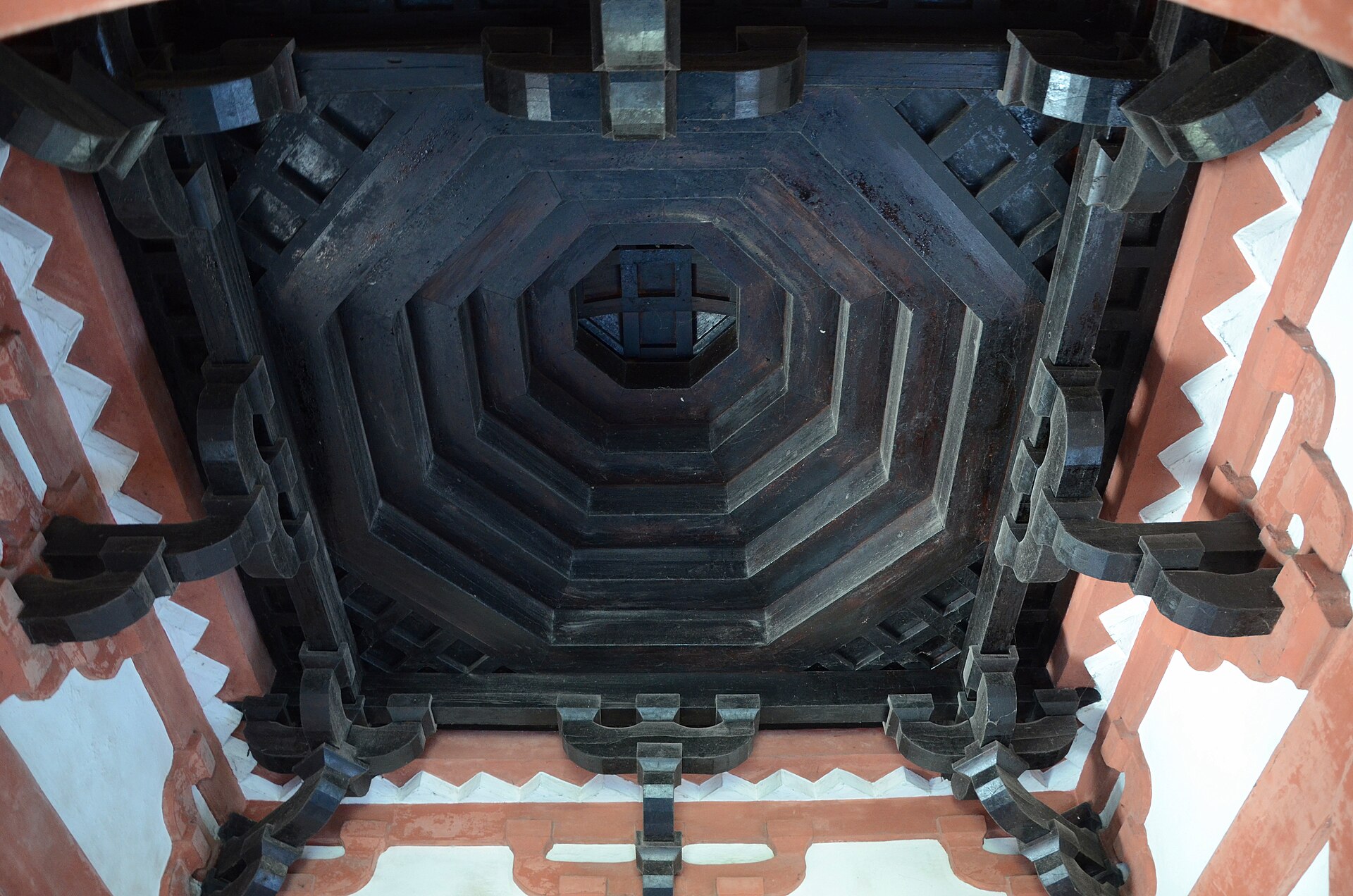
Fangta Park, at 235 East Zhongshan Road, is the best thing in Songjiang. Its centrepiece is the Square Pagoda, a nine-storey Song-dynasty tower. The name is literal: unlike the octagonal pagodas you see elsewhere in the delta, this one is square in plan. Near it stands a carved Ming-dynasty brick screen, and the park also has the He Lou Xuan teahouse.
The park is an unhurried place with water and old trees. The 2025 list price was 12 yuan for adults. Give it an hour.
Zuibaichi
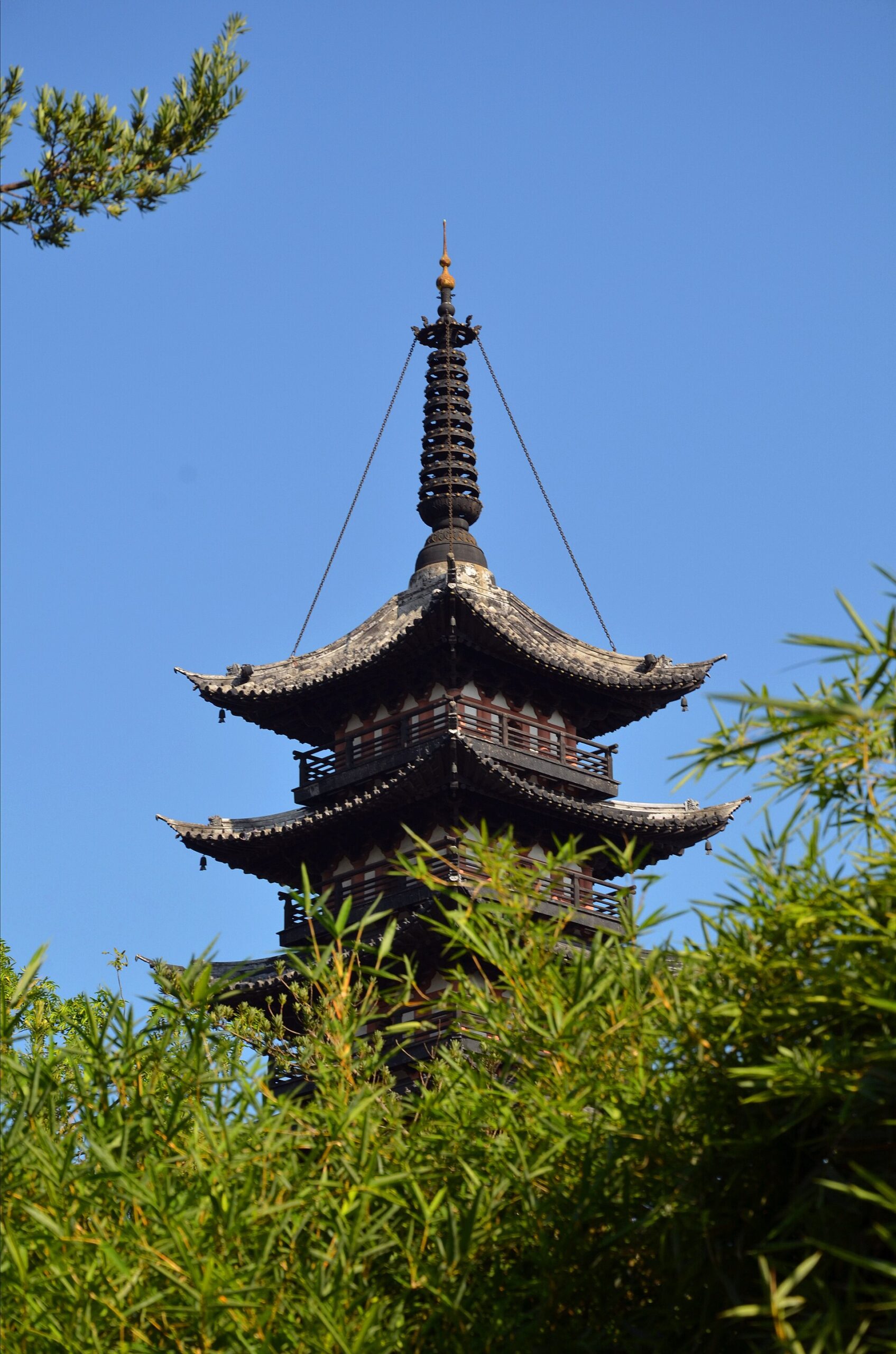
Zuibaichi, the Drunken Bai Pond, at 64 South Renmin Road, is a classical garden built around a pond and named after the Tang poet Bai Juyi. It’s far quieter than Yu Garden in the city centre. Expect pavilions, covered walkways, rockeries and ponds, and an hour of calm. The metro station named after it is close by. City listings have given its adult ticket as 12 yuan (2025) and 16 yuan (2024), so have a little more than that ready at the gate.
Songjiang Mosque
The Songjiang Mosque, in the old town, was founded in the Yuan dynasty, in the reign of Toghon Temür (1333-1368), rebuilt in 1391 and enlarged several times under the Ming. What makes it worth seeing is the architecture: it looks like a Chinese temple, with tiled roofs and courtyards, rather than anything you’d associate with a mosque. It’s an active place of worship, so visit outside prayer times and dress modestly. Our halal food guide covers the city’s other mosques and where to eat nearby.
Guangfulin and the deep past
Between Sheshan and the old town, near the university town, is the Guangfulin Cultural Relic Park, at Alley 3260 Guangfulin Road. It’s built on an archaeological site that the city describes as the largest in Shanghai, with finds going back thousands of years to the Neolithic cultures of the Yangtze delta. The park presents the site through reconstructed buildings, landscaping and a museum, set among water and reed beds.
It’s a specialist stop. If you’re interested in archaeology or want to understand how old human settlement here really is, it’s fascinating and almost empty. If not, the hills and the old town will use your time better. Check the current opening hours and ticket price by phone (021-5780-0000) before you go. For the bigger picture of how a delta of rice farms and market towns became a world city, read our history of Shanghai.
Happy Valley, Chenshan and other family options
Sheshan is a good family day if your children like walking and climbing, and a hard one if they don’t. The hills are small, but the steps up West Sheshan are steady, and small children will want carrying for part of the way. A pushchair is more trouble than it’s worth on the basilica path. The observatory, with its giant telescope, is the part most likely to hold children’s attention, so check it’s open before you promise it.
Shanghai Happy Valley is the big family draw in the area, a large theme park near Sheshan that opened in 2009, with roller coasters, water rides and areas for younger children. The city’s 2025 list price was 260 yuan for an adult ticket, but prices vary by date, so check the official Happy Valley site for the day you plan to go. It’s a whole-day commitment on its own, and it doesn’t combine well with the basilica. If theme parks are the main event of your trip, our Shanghai with kids guide compares it with Disneyland and Legoland.
Chenshan Botanical Garden, at 3888 Chenhua Highway, is the gentler choice and, for many families, the better one. It covers 207 hectares, including a dramatic garden built inside an old quarry, a children’s garden and a hill of its own, and it was named a national-level botanical garden in 2026. The adult ticket is 60 yuan. In spring it’s one of the city’s best places for blossom, which our cherry blossom guide covers in more detail.
Our guide to the best parks in Shanghai covers the city’s other green spaces if you’d rather stay closer to the centre.
A Sheshan and Songjiang day, step by step
Here is a route that covers the highlights in one unhurried day, using the metro and two or three short taxi rides. It assumes you start near Xujiahui; add 10 minutes or so from further east.
| Time | Stop | Getting there | Time to allow | Adult ticket |
|---|---|---|---|---|
| 08:30 | Leave central Shanghai | Line 9 to Sheshan, about 33 min from Xujiahui | – | Metro fare |
| 09:30 | West Sheshan, basilica and observatory | Didi or taxi from Sheshan station to the gate | 2.5-3 hours | Check at the gate; observatory 12 yuan (2025 listing) |
| 12:30 | Lunch | Around Sheshan town or on the way to Songjiang | 1 hour | – |
| 13:45 | Fangta Park and the Square Pagoda | Line 9 to Zuibaichi Park, then a short taxi ride | 1 hour | 12 yuan (2025 list) |
| 15:00 | Songjiang Mosque | Walk or short taxi ride in the old town | 30 min | Check on site |
| 15:45 | Zuibaichi garden | Short taxi ride | 1 hour | 12-16 yuan (city listings) |
| 17:00 | Head back | Line 9 from Zuibaichi Park, about 50 min to Xujiahui | – | Metro fare |
If you’d rather spend more time outdoors, swap the afternoon’s old town for East Sheshan and Tianmashan, and keep Songjiang for another trip. If the basilica is your only real interest, you can be up and down West Sheshan in half a day and back in the city for a late lunch, or carry on along Line 9 to Qibao Ancient Town, which is on the way home.
Food. There’s nothing on the hills that we’d go out of our way for, so plan to eat in Sheshan town near the station or in Songjiang. Both have the ordinary run of noodle shops, dumpling places and chain restaurants you’d find anywhere in suburban Shanghai, and they’re cheaper than the city centre. Carry water and a snack for the climb, because the kiosks in the forest park keep irregular hours.
When to go
Spring and autumn are best. From late March to May the woods are fresh and green, and Chenshan’s cherry avenue starts flowering from late February. October and November bring clear, dry days and the best chance of a view from the top. Our guides to Shanghai in spring and Shanghai in autumn cover what else is on in those seasons.
Summer is hot, humid and buggy on the hills, and the climb up West Sheshan in July is sweaty work; go early in the day. Typhoons can close everything at short notice, as they did in August 2026. Winter is cold and grey but quiet, and the woods are still pleasant on a dry day.
Weekdays are much better than weekends, when the metro, the paths and the basilica fill with families from the city. Avoid the national holidays, especially the first week of October, and remember that May brings pilgrims to Sheshan, particularly around 24 May.
What people get wrong
Walking from Sheshan station. The station is in the town, not at the hills. Unless you enjoy suburban roadside walking, take a taxi or Didi from the station to the forest park gate.
Confusing the two astronomy museums. The historic observatory on Sheshan and the giant planetarium in Lingang share an English name in some listings. They’re at opposite ends of the city. Check which one your ticket or booking is for.
Assuming everything is on one ticket. The forest park sections each have their own gate and ticket, and the observatory has its own entry on top of that. None are expensive, but carry a phone with payment set up and your passport.
Trying to see it all. The hills, Tianmashan, Happy Valley, Chenshan, Guangfulin and the old town will not fit into one day. Pick the hills and the old town, or the hills and a family attraction, and leave the rest.
Turning up in May without knowing about the pilgrimage. If you want a quiet look round the basilica, May weekends, and 24 May above all, are the worst time to come.
Expecting a water town. Songjiang’s old town is a set of monuments in a modern district. If canals and old lanes are what you’re after, go to Zhujiajiao instead, which is also in the western suburbs.
Frequently Asked Questions
How do I get to Sheshan from Shanghai?
Take Metro Line 9 to Sheshan station, about 33 minutes from Xujiahui or 40 from Dapuqiao, then a short Didi or taxi ride to the forest park gate. Allow about an hour door to door from central Shanghai.
Is Sheshan Basilica open to visitors?
It’s an active Catholic church and shrine, and visitors are welcome outside services, but access can change during Mass and church festivals, and in May. If seeing the interior is important to you, ring the forest park’s visitor hotline (021-5765-7231) before you go, and visit in the middle of the day.
How much does Sheshan cost?
Very little. Each section of the forest park has its own gate fee; the city’s 2025 list gave 10 yuan for Tianmashan and 6 yuan for Xiaokunshan, and the observatory was listed at 12 yuan in 2025. Check the West Sheshan gate price on arrival.
How long do I need at Sheshan?
Two and a half to three hours covers the climb, the basilica and the observatory on West Sheshan. Add two or three hours for East Sheshan or Tianmashan, or for the old town in Songjiang.
Is the Sheshan Observatory the same as the Shanghai Astronomy Museum?
Not the one most people mean. The historic Jesuit observatory on Sheshan is branded as an astronomy museum in some listings, but the big modern Shanghai Astronomy Museum is a separate planetarium in Lingang, at the end of Line 16.
Can I combine Sheshan with a water town?
Yes, but not easily on public transport. Zhujiajiao is not on Line 9, so you’d need a taxi between them. Qibao Ancient Town, which is on Line 9, is the easier pairing.
Is Sheshan good for kids?
For children who like a walk, yes: the woods, the climb and the old telescope go down well. For younger children, Chenshan Botanical Garden or Happy Valley nearby may be a better day. The basilica path isn’t suitable for pushchairs.
What is the leaning pagoda near Sheshan?
The Huzhu Pagoda on Tianmashan, built in 1079. It leans about 7 degrees, more than the Leaning Tower of Pisa, because it stands half on bedrock and half on loose stone. It’s small and best seen as part of a walk on Tianmashan.
What is there to see in Songjiang old town?
The Square Pagoda in Fangta Park, a Song-dynasty tower, with its Ming carved brick screen; Zuibaichi, a classical garden; and the Songjiang Mosque, which dates from the Yuan dynasty. Take Line 9 to Zuibaichi Park.
Sheshan and Songjiang pair well with the city’s other temples and old places. Our guide to temples in Shanghai covers the Buddhist and Taoist side, and the day trips from Shanghai hub has the water towns, Suzhou and Hangzhou when you’re ready to go further. For the official listings of the Songjiang sites, see the city’s Songjiang city tour page and its tourism festival ticket list.
Photo credits.
Sheshan Basilica: Basilique Notre-Dame de SheShan by ShanghaiDream, CC0, via Wikimedia Commons.
Line 9 train at Sheshan: 09A01 train set 0901 approaching Sheshan Station 20250621123549 by XiaYZ2023, CC BY-SA 4.0, via Wikimedia Commons.
Longitude monument, Sheshan: Monuments of International Longitude Determination by Mountain, CC BY-SA 4.0, via Wikimedia Commons.
Altar of Sheshan Basilica: Altar of the Zo-sè Basilica by Fayhoo, CC BY-SA 3.0, via Wikimedia Commons.
Telescope at Sheshan Observatory: Le télescope de l’Observatoire astronomique historique de Sheshan (Chine) (40124934992) by Jean-Pierre Dalbéra, CC BY 2.0, via Wikimedia Commons.
Square Pagoda, Fangta Park: Fangta Park Songjiang by Heights, CC BY-SA 3.0, via Wikimedia Commons.
Doorway at Zuibaichi: A picture from China every day 146 by Carsten Ullrich, CC BY-SA 2.0, via Wikimedia Commons.
Sheshan Basilica bell tower: Christopher 2015-11-26 (Unsplash) by Christopher kismet, CC0, via Wikimedia Commons.