China runs the largest high-speed rail network on earth and sells almost all of it through a single state website that, until fairly recently, was hostile to anyone without a Chinese ID card. That has changed. Working out how to book train tickets in China as a foreigner now comes down to one decision — the official 12306 app or a reseller like Trip.com. Both take a foreign passport and an international card such as Visa or Mastercard, and 12306 asks you to complete identity verification before you can buy.
The mechanics are worth getting right, because Chinese rail does not behave like European rail. Tickets go on sale 14 days ahead and not a day earlier. There is no advance-purchase discount, so waiting costs you nothing but availability. There is no paper ticket at all any more: your passport is the ticket, and you tap it at the gate. And ticket checking stops before departure, at a cutoff each station announces. This guide covers both booking routes step by step, the refund and change rules that actually apply, and what happens at the station. Our guide to Shanghai’s three main railway stations covers the station end in more depth.
Table of Contents
- The rules that shape everything
- 12306 or Trip.com: how to book train tickets in China
- Booking on 12306, step by step
- Booking on Trip.com, step by step
- Which class to buy
- Refunds, changes and the fee bands
- Getting on the train with a passport
- Which Shanghai station you leave from
- When something goes wrong
- What people get wrong
- Frequently Asked Questions
- Planning the rest of the trip
The rules that shape everything
Six facts do most of the work. Learn these and the rest is procedure.
Tickets go on sale 14 days before departure, a 15-day window counting the day you buy. The release time varies by departure station, and 12306 shows it for yours. For ordinary bookings, buy inside that window. If your trip is two months away, check the timetable and diarise the on-sale date. For where to go once you can book, see our guide to travel beyond Shanghai.
Fares are fixed. Chinese rail has no dynamic pricing worth speaking of and no advance-purchase discount. A Shanghai–Beijing second-class seat costs the same on the day it opens and the day before travel. Our Shanghai to Beijing train guide covers that route in detail. What changes is availability, not price, which means there is no penalty for deciding late — only a risk of sitting in the wrong carriage or not travelling at all.
Everything is tied to your passport. Real-name ticketing means the ticket belongs to a document, not a person’s name in the abstract. Whatever passport you book with is the passport you must carry, present and tap. A renewed passport between booking and travelling is a genuine problem.
There is no paper ticket. The e-ticket system replaced collection windows nationwide. You do not need to visit a ticket office, print anything, or collect a card. You walk to the gate and put your passport on the reader.
Sell-outs cluster predictably. Friday evenings out of the big cities, Sunday afternoons back into them, and the whole of Golden Week, Chinese New Year and the May holiday. Ordinary Tuesday mornings in March rarely sell out at all.
The sales system sleeps. Ticket sales and changes on 12306 run from 05:00 to 01:00 the next day, Beijing time, except on Tuesdays, when they stop at 23:30. Refunds are available around the clock. Trying to book at three in the morning Beijing time will not work.
12306 or Trip.com: how to book train tickets in China
Both sell the same seats from the same inventory. The difference is who handles the payment and who handles you when something breaks.
| 12306 (official) | Trip.com (reseller) | |
|---|---|---|
| Fare | Face value | Face value plus a service fee, roughly ¥30–100 per booking |
| Booking fee | None | Yes, and it is non-refundable |
| Cards accepted | Visa, Mastercard, JCB, Diners Club, UnionPay, linked Alipay/WeChat Pay. Not American Express | Most international cards, and it fails less often |
| Registration | Passport number, then identity verification: automatic, or by uploading a photo of your passport page for a manual check | Ordinary account, no verification step |
| English | Good, with occasional untranslated screens | Better throughout |
| Inventory | Everything, the moment it opens | The same, occasionally a few minutes behind on release day |
| Refunds and changes | Self-service in the app | Through the agency; a handling charge applies if a manual assistant issued the ticket (see the booking terms) |
| If it goes wrong | You are dealing with China Railway | English customer service |
Use 12306 if you are travelling several times, you want to avoid the fees, you have a Visa, Mastercard, JCB or Diners card, and you are willing to set up and verify an account before your trip. Over four or five journeys the saving is real.
Use Trip.com if you are booking one or two legs, you want the whole thing done in five minutes, you are nervous about a foreign card being declined at the critical moment on release day, or you want somebody to phone in English when your train is cancelled. The fee buys convenience and it is fairly priced for what it is.
A sensible hybrid: register on 12306 well before you travel so the account is verified and ready, then use whichever is less painful in the moment. Registering is free and takes nothing away.
Booking on 12306, step by step
Do the registration weeks ahead. Identity verification can be automatic, but if it is not, you will need to upload a photo of your passport page for a manual check or take the passport to a station ticket office, and you do not want to discover that on release day.
- Download the official app — Railway 12306. There are imitations, so take the download from the official 12306 English site rather than searching an app store. The English interface is selected at first launch or in settings.
- Register. Email address, a password, and your phone number — a foreign mobile number is accepted, no Chinese SIM required.
- Add your identity document. Choose “Foreign Passport” as the ID type, then enter the passport number, full name exactly as printed in the machine-readable zone, nationality and date of birth. Getting the name format wrong is the commonest cause of a rejected verification: match the passport, including hyphens and middle names.
- Complete the three verifications — passport, phone, email. This is largely automated now and usually clears in minutes.
- Search your route. Enter the cities rather than specific stations at first; the app shows every departure and every station. Note that Shanghai has three stations in use and Beijing has several.
- Pick a train and a class. The seat map shows what is left. Second class is the default and is fine.
- Pay. Card, or a linked Alipay or WeChat Pay account. Payments must complete inside a countdown window of a few minutes or the seat is released.
- Done. The e-ticket sits in the app under “My Orders”. Screenshot it — you will want the train number, carriage and seat when your phone signal is poor inside a station.
If a foreign card fails, and it sometimes does, linking Alipay to the same card and paying through Alipay very often succeeds where the direct attempt did not. Setting Alipay up first is worth an hour of your time for other reasons too — see our guide to Alipay and WeChat Pay for visitors.

Booking on Trip.com, step by step
Considerably shorter, which is the point.
- Search the route and date in the Trains section. Prices shown include the service fee.
- Choose the train and class.
- Enter passenger details from the passport — name exactly as printed, passport number, nationality, expiry.
- Pay with an international card, which Trip.com accepts.
- Wait for the confirmation. Trip.com books into the same inventory, but treat the booking as confirmed only once the ticket is issued. You get an email and an app notification when it is.
- Travel on the passport, exactly as with 12306. The reseller does not change how boarding works.
Two things to know. The booking fee is not refunded if you cancel the ticket. And if your ticket was issued by a manual assistant, Trip.com adds its own handling charge to a refund or change, on top of whatever China Railway charges; the booking terms give the amount.
Which class to buy
| Class | Layout | Price vs 2nd | Worth it? |
|---|---|---|---|
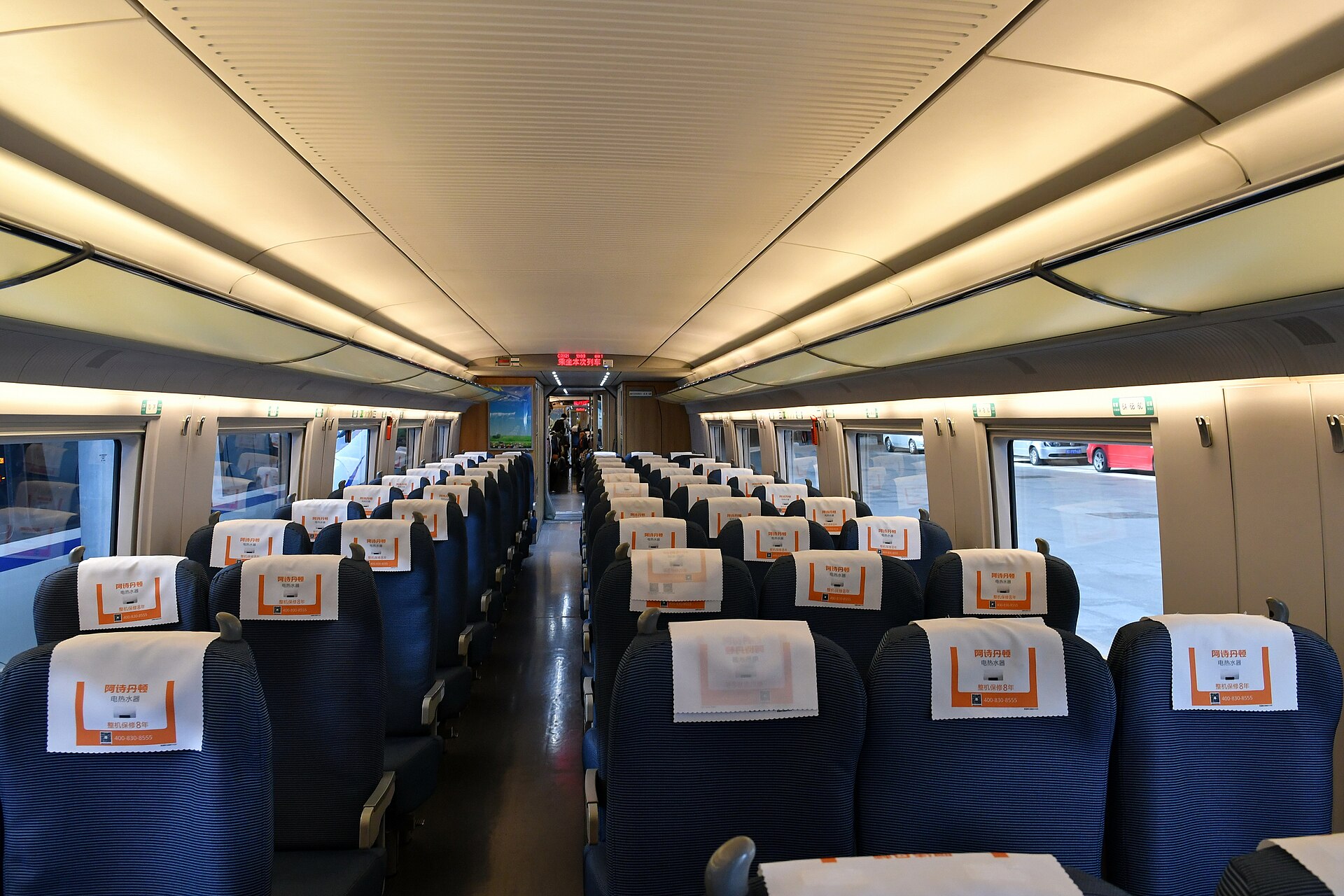
| Second class (二等座) | Typically 3+2, reclining, tray table; charging varies by train | Baseline | The default. Fine for anything up to six hours |
| First class (一等座) | Typically 2+2, wider, more legroom | ~1.7× | Worth it on journeys over four hours, or if you are tall |
| Business class (商务座) | The most spacious seats; meals and lounge access depend on the train and station | 3–4× | A genuine luxury; hard to justify unless the fare is a rounding error to you |
| Soft sleeper (软卧) | Usually a lockable 4-berth compartment | Varies | Good value on Beijing overnight runs; saves a hotel night |
| Hard sleeper (硬卧) | Open compartments without doors | Cheaper | Fine if you have done it before; noisy and lit all night |
Seat lettering is a small trap. Chinese high-speed carriages are lettered A B C D F — there is no E. A and F are the window seats in second class; in first class, A and F are still the windows and C and D are the aisle pair. If you want a window on the river side heading south, ask, or accept the lottery.
For context on what the fares actually are, Shanghai to Beijing tops out around ¥669 in second class, with ¥967–1,111 in first and ¥1,870–2,463 in business. The ceiling on published fares rose 20% (to about ¥803 in second class) from 26 May 2026, so check the price on 12306 when you book. Shanghai to Suzhou is ¥40–60; Hangzhou ¥73–100; Nanjing ¥135–180. The rule of thumb the site uses: under five hours take the train, over eight hours fly, and think about it in between.
Refunds, changes and the fee bands
China Railway’s rules are strict but predictable, and they are the same whichever channel you booked through — the reseller’s own fee sits on top.
Refunds, by how far ahead of departure you cancel:
| When you cancel | Fee |
|---|---|
| 8 or more days before departure | No fee |
| 48 hours to 7 days before | 5% of the fare |
| 24 to 48 hours before | 10% of the fare |
| Less than 24 hours before | 20% of the fare |
| After departure — a no-show | No ordinary refund; ask the station about a change |
Changes. A ticket can be changed once, and once only. You can change the date, the train number, the seat class and — with at least 48 hours’ notice — the arrival station. You cannot change the departure station, the passenger name, or the identity document. Changes made 48 hours or more before departure are free. Inside that, moving to an earlier train or another train the same day still costs nothing, while moving to a later date costs 5% of the fare between 24 and 48 hours out and 15% within 24 hours. After departure, a same-day change remains free, but a later-date change costs 40%. Pay the difference if the new fare is higher; receive it back, less any applicable fee, if it is lower. Changes on 12306 run 05:00 to 01:00 Beijing time, ending at 23:30 on Tuesdays.
Two practical consequences. First, if your plans are genuinely uncertain, book the leg anyway — an eight-day-out cancellation costs nothing, and the seat is worth more than the option. Second, the single change allowance means that if you are going to move a train, move it once and move it decisively.
Trip.com’s booking fee is not refundable at any point, and its manual handling charge applies to tickets that were issued by a manual assistant; the booking terms give the current amount. The full China Railway ticket policy is worth a skim before a complicated itinerary.
Getting on the train with a passport
The sequence is the same at every station in the country.
- Arrive early. Forty minutes at Shanghai Hongqiao, twenty-five at a smaller station. Hongqiao is enormous and the walk from the metro to a far gate is genuinely ten minutes.
- Security at the entrance. Bags through a scanner, a body wand, and a passport check into the departure hall. Power banks over 100 Wh are refused here.
- Find your gate on the departure board. Boards show the train number, destination, departure time and a gate number — usually a letter and a number, sometimes labelled in English.
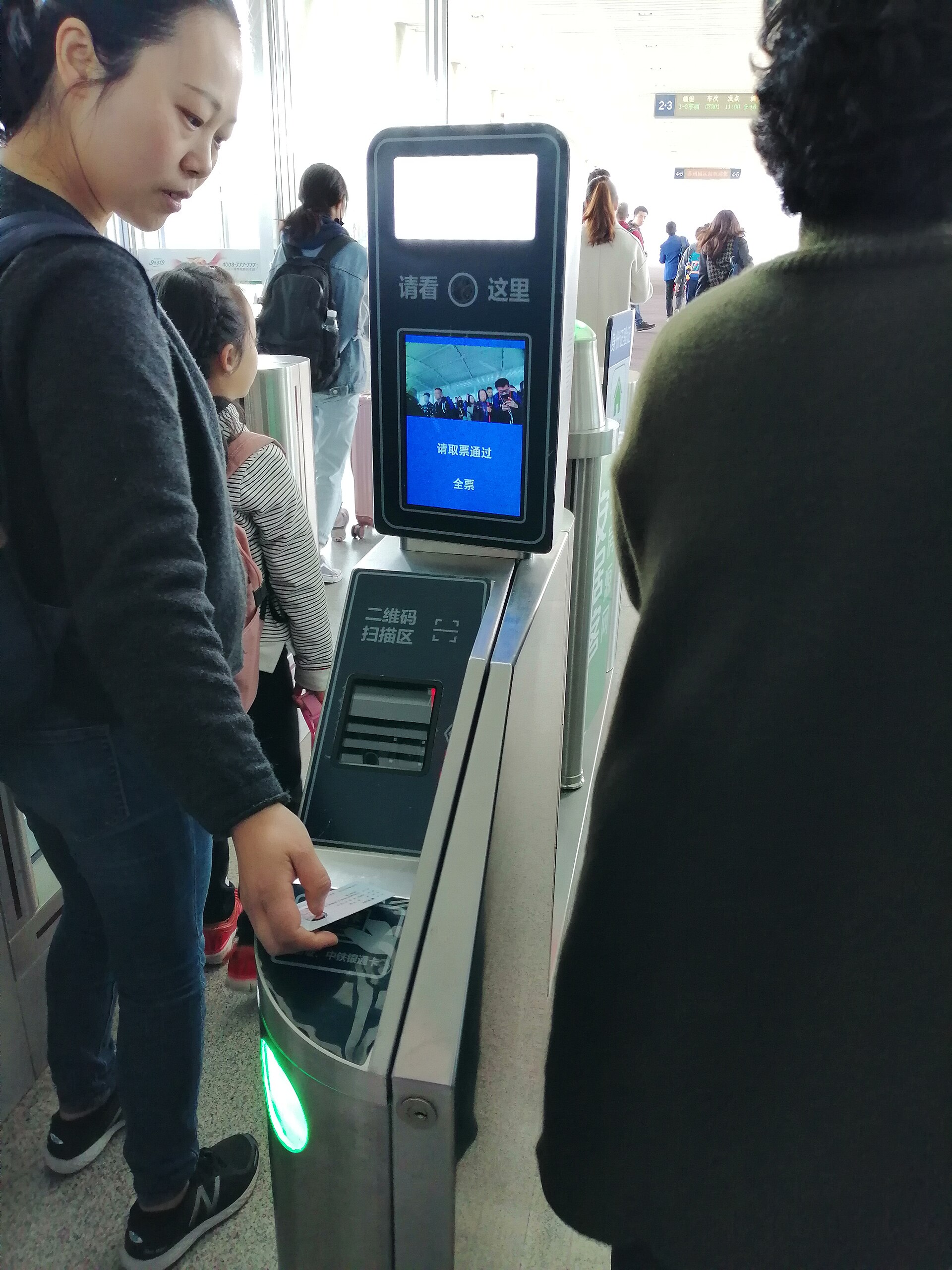
- Tap your passport at the orange gate. Boarding opens around thirty minutes before departure, the gate itself about fifteen. Place the photo page face down on the reader. If it fails, there is a staffed lane beside every gate bank — go there immediately rather than retrying.
- Find your carriage. Carriage numbers are marked on the platform floor. Stand at yours; the train is long and the stop may be two minutes.
- Tap the passport again on exit at your destination.
Ticket checking stops before departure, at a cutoff each station announces: find it on the departure board and be at the gate before it. Do not count on a sympathetic supervisor. This is the single rule that catches foreign travellers most often, because European and Indian rail habits do not prepare you for it. If you know you will be late, cancel before the train leaves: inside 24 hours the fee is 20% of the fare, so you get 80% back. Once it has gone, an ordinary refund is no longer available, so ask at the station about changing the ticket.
Luggage goes in the overhead racks or the large racks at the ends of each carriage. The free allowance is 20 kg for an adult, and each item can measure up to 130 cm in total on high-speed (EMU) trains or 160 cm on conventional ones, with a 20 kg limit per item. There is no check-in, but follow staff instructions at security.
Which Shanghai station you leave from
Getting this wrong is a very expensive mistake, because the stations are forty minutes apart and you cannot change the departure station on a ticket.
Shanghai Hongqiao Railway Station is a major high-speed hub, and 12306 shows which station your own train leaves from. If you are linking Beijing and Xi’an into one trip, our Beijing, Xi’an and Shanghai route puts the trains in order. Metro Lines 2, 10 and 17, and it is physically attached to Hongqiao Airport Terminal 2. Line 2 runs direct from East Nanjing Road near the Bund and Line 10 from the former French Concession; check the time from your nearest station in a journey planner, and leave time to cross the building.
Shanghai Railway Station is on Lines 1, 3 and 4, a short ride from People’s Square, and mixes high-speed with conventional services; check 12306 for overnight trains to Beijing on your date. Much smaller and much quicker to move through.
Shanghai South Railway Station (Lines 1, 3, 15) is the one few visitors need. If your ticket says 上海南, check the train type and journey time on 12306.
You may also see Shanghai East Railway Station referenced online. It is under construction at Zhuqiao in Pudong and is due to open in 2027. It is not in service, and no ticket you buy today departs from it.
From Pudong Airport, Hongqiao Railway Station is an hour or more on Line 2, or take the Maglev to Longyang Road and change. If you are connecting from a flight, read our guide to getting around Shanghai before you build the timing, and treat any transfer under two hours as optimistic.
When something goes wrong
Your card is declined. It can happen on 12306 with foreign cards. Link the card to Alipay and try paying through Alipay instead. Failing that, book the same seat on Trip.com and accept the fee.
Verification has not cleared. Passport verification is usually automatic but can take up to a day to sync. If you are inside the fifteen-day window and unverified, book through Trip.com for that leg and let the verification finish in the background.
Your passport will not scan at the gate. Damaged or heavily stamped pages, or a chip that does not read. Go straight to the staffed lane beside the gates — an officer checks it manually in under a minute. Do not join the back of the automated queue again.
You renewed your passport after booking. The ticket is tied to the old document number. Take both passports to a station ticket counter and have it amended, or cancel and rebook. Do not turn up hoping.
The train is sold out. Check the next departure — on the Shanghai–Beijing corridor there are around forty each way per day, and on Shanghai–Suzhou or Shanghai–Hangzhou there is one every few minutes. Also check standing tickets (无座), which are sold on some services at the seated fare and are exactly what they sound like. On a 25-minute run to Suzhou, standing is a non-issue; on a five-hour run it is a bad day.
Your train is cancelled or badly delayed. Full refunds apply and staff will rebook you. This is the scenario where Trip.com’s English-language support earns its fee.
What people get wrong
Trying to book two months ahead. The window is fifteen days. Diarise it.
Waiting for a cheaper fare. There isn’t one. Fares are fixed; only availability moves.
Assuming there is a ticket office step. There is not, anywhere in the country, for e-tickets. Your passport is the ticket.
Arriving fifteen minutes before departure. Security, the passport check and the walk to a distant gate at Hongqiao will eat that entirely, and the gate shuts before the train does.
Bringing the wrong card for 12306. The published international-card options include Visa, Mastercard, JCB and Diners Club, so bring one of those, or use Alipay.
Mistyping the passport name. It must match the document exactly. A mismatch fails verification, and at the gate it is a problem you solve at a counter rather than on the platform.
Booking Hongqiao when you meant Shanghai Railway Station, or vice versa. Departure stations cannot be changed. Read the confirmation.
Overpacking. Nobody weighs anything, but you carry it up stairs, through scanners and along platforms yourself. There are no porters.
Frequently Asked Questions
Can foreigners book China train tickets on 12306?
Yes. 12306 accepts foreign passports once you have completed identity verification, and its payment options include Visa, Mastercard, JCB and Diners Club as well as Alipay and WeChat Pay. Register a few weeks before you travel so verification has cleared.
How far in advance can I book Chinese train tickets?
Fourteen days before departure: the window runs 15 days counting the day you buy, and the release time depends on the departure station, which 12306 shows. There is no earlier release and no advance-purchase discount, so booking early buys availability rather than a lower price.
Is Trip.com more expensive than 12306?
Yes, by a service fee of roughly ¥30–100 per booking that 12306 does not charge. The fare itself is identical. What you buy with the fee is a checkout that handles foreign cards more reliably and English-language support if something goes wrong.
Do I need to collect a paper ticket at the station?
No. China Railway moved to e-tickets nationwide. You board by tapping the passport you booked with at the gate, and tap it again on exit.
What if my passport will not scan at the gate?
Use the staffed lane beside the automatic gates — an officer checks it by hand, usually in well under a minute. Heavily stamped or damaged pages are the usual cause. Do not rejoin the automated queue.
Can I change my China train ticket?
Once. You can change the date, train number and seat class, and the arrival station if you do it at least 48 hours ahead. You cannot change the departure station, the passenger name or the ID document. Free 48 hours or more before departure. After that, a later-date change costs 5% (48 to 24 hours out) or 15% (under 24 hours), and an earlier or same-day train nothing; once the train has left, only a later-date change is charged, at 40%.
How much is the refund fee on a Chinese train ticket?
Nothing if you cancel eight or more days ahead; 5% between 48 hours and seven days; 10% between 24 and 48 hours; 20% inside 24 hours. Nothing at all after the train has left. Any reseller’s booking fee is separate and non-refundable.
What happens if I miss my train?
Ticket checking stops at a cutoff the departure station announces, so check it on the board. Ordinary refunds have to be requested before departure. Once you have missed the train, ask at the station about changing the ticket; in exceptional cases the station can approve a refund within two hours of departure. Arriving well before the cutoff keeps this from coming up.
Should I buy first class or second class?
Second class for anything up to about six hours: typically 3+2 seating, perfectly comfortable, with charging that varies by train. First class at roughly 1.7 times the fare is worth it on longer runs or if you are tall and want 2+2. Business class, the most spacious, runs at three to four times second class.
Do I need a Chinese phone number or bank account to book?
You don’t need a Chinese bank account: both 12306 and Trip.com take international cards. On 12306 you also complete identity verification with your passport before you can buy. Alipay, linked to a foreign card, is a useful backup when a direct card payment is declined.
Can I buy a ticket at the station on the day?
Yes, at a ticket counter with your passport, subject to availability. On busy corridors like Shanghai–Suzhou and Shanghai–Hangzhou there are departures every few minutes and this is entirely practical. On a Friday evening to Beijing it is not.
Are standing tickets worth buying?
On short hops, yes — a 25-minute run to Suzhou standing is nothing. On anything over a couple of hours it is genuinely uncomfortable, and they are sold at the same price as a seat.
Planning the rest of the trip
Once the booking mechanics stop being intimidating, the rail network reshapes what a Shanghai trip can be. Suzhou is twenty-five minutes away, Hangzhou forty-five, Nanjing an hour and ten. Start with the day trips from Shanghai if you want to test the system on something short, or go straight for Suzhou and Hangzhou, which are the two everyone does first.
For something longer, the ten-day Shanghai, Suzhou and Hangzhou route is built entirely around short rail legs. If Beijing is on the list, how the two cities compare is worth reading before you commit four and a half hours each way. And check your entry status first — the 240-hour visa-free transit rules limit which provinces you may travel to, which matters a great deal once you start buying long-distance tickets.
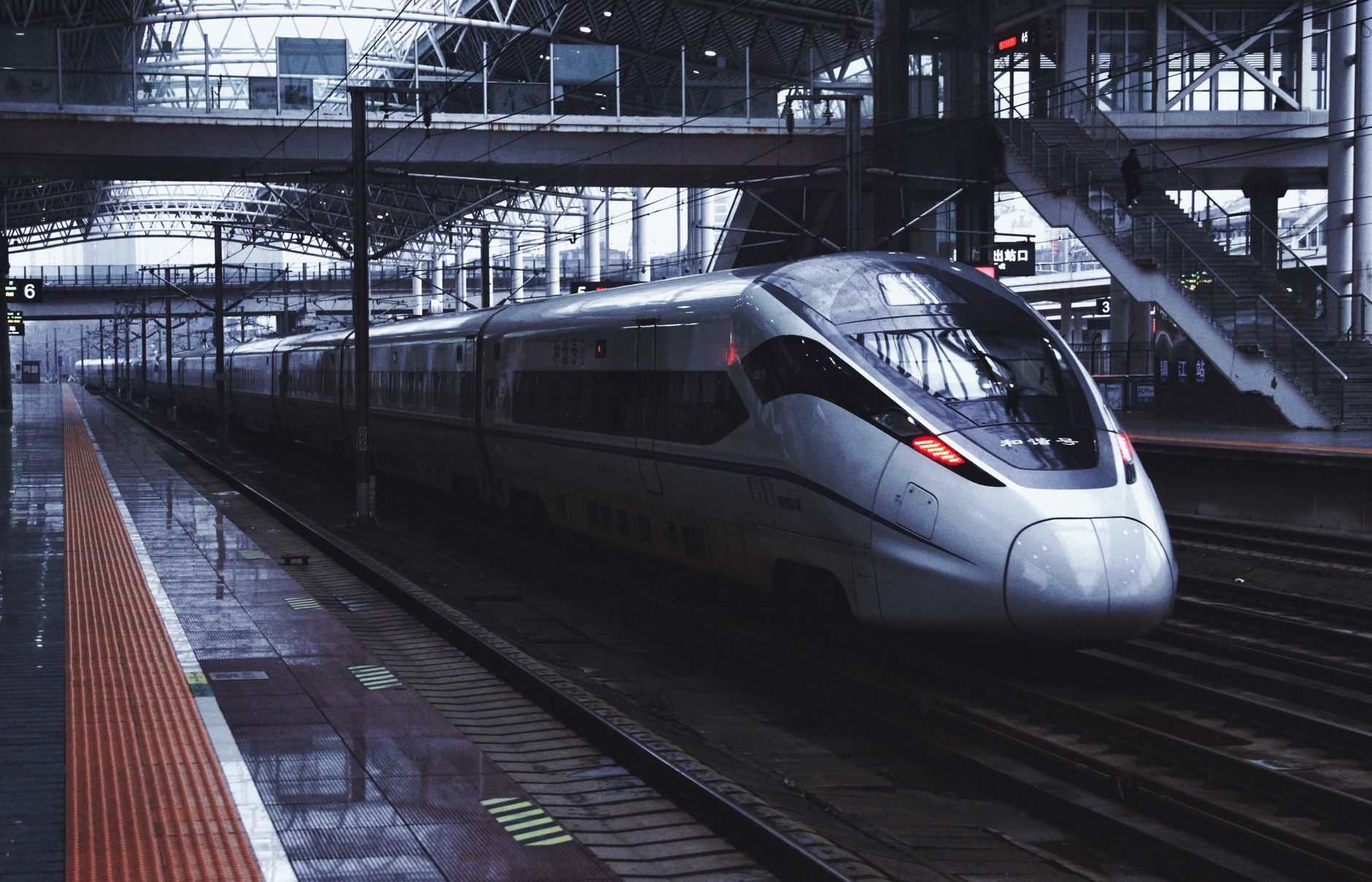
Photo credits.
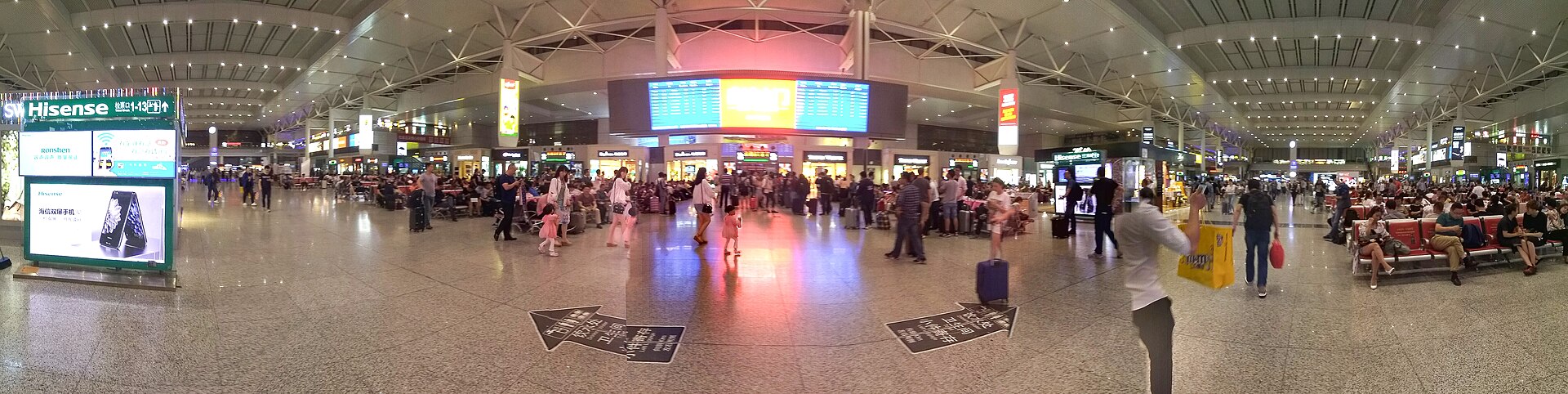
Hongqiao concourse: 201705 Panorama of Waiting Room of Shanghai Hongqiao Station by MNXANL, CC BY-SA 4.0, via Wikimedia Commons.
ID reader at Suzhou Industrial Park station: A passenger swipe the ID card on the new gate in Suzhou Industrial Park Railway Station by Shwangtianyuan, CC BY-SA 4.0, via Wikimedia Commons.
Blue second-class seats on a CRH3C train: China Railways CRH3C Second Class Coach 20171003 by Tyg728, CC BY-SA 4.0, via Wikimedia Commons.