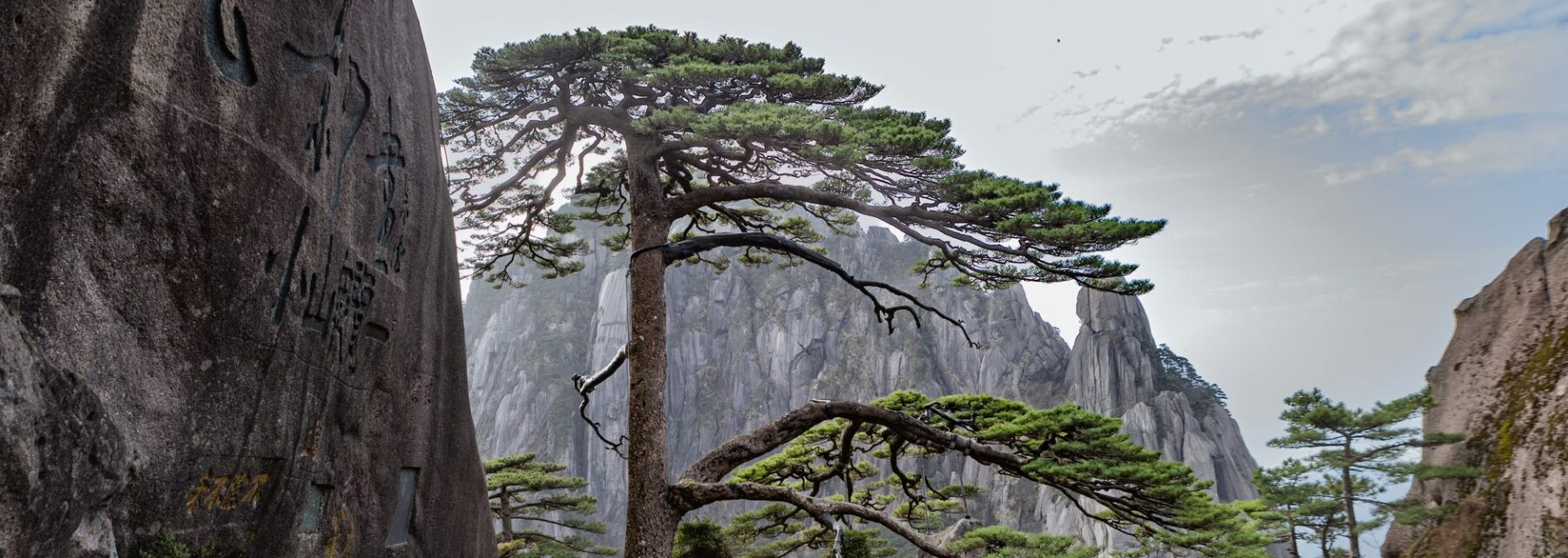
The bullet train from Shanghai to Huangshan takes about three hours, which makes the Yellow Mountains look like a day trip. They are not. A day trip means most of the day spent travelling, two cable cars, a few rushed hours on the mountain, and leaving before the only thing everyone comes for — the light at either end of the day, when the granite peaks stand out of a sea of cloud and the whole place stops resembling a photograph and starts resembling the paintings it inspired.
Do it in two days instead. One night in a hotel on the summit, which is expensive and basic and entirely worth it, and you get sunset, sunrise, an empty mountain before the first cable car comes up at around half past six, and a walk down the West Sea Grand Canyon that most day-trippers never reach. This guide covers the train, the transfer nobody warns you about, what everything costs in 2026, which cable cars to take in which direction, whether to stay on top or in Tunxi, and how to bolt on Hongcun if you have a third day.
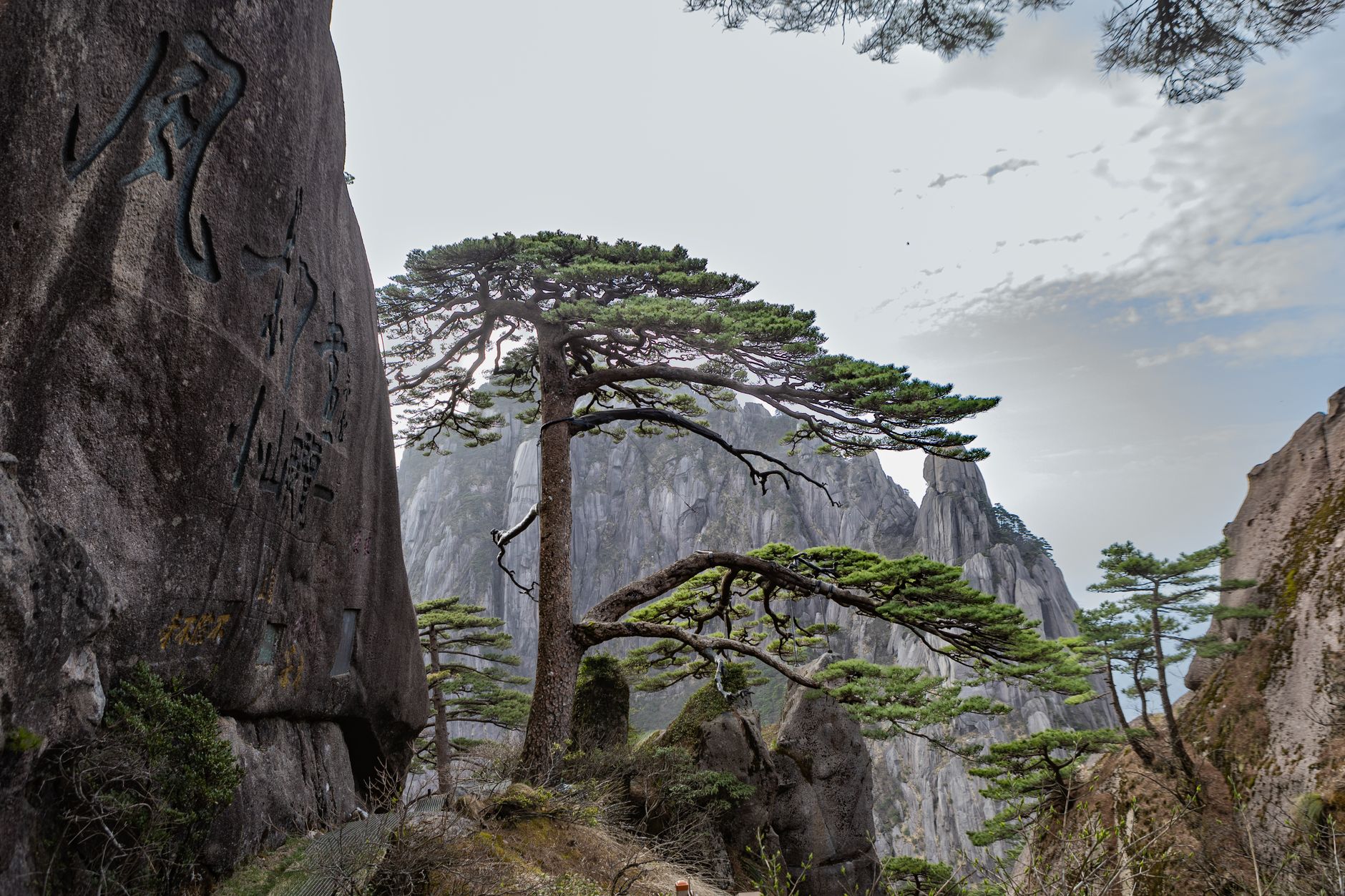
Table of Contents
- Why Shanghai to Huangshan is a two-day trip
- The train, and which station
- The transfer everyone underestimates
- What it all costs
- Cable cars: which one, which direction
- Summit hotel or Tunxi?
- The two-day plan, hour by hour
- The West Sea Grand Canyon
- Adding Hongcun and Xidi
- When to go
- What to take up the mountain
- What people get wrong
- Frequently Asked Questions
Why Shanghai to Huangshan is a two-day trip
Run the arithmetic on the day-trip version and it collapses.
The fastest trains take about three hours each way. Add an hour on a bus from Huangshan North station to Tangkou at the mountain’s southern gate, then the mandatory shuttle to the trailhead, then a cable car. Realistically it is well into the day before you are stepping onto the summit path, and you need to start back in time for the last train home. That leaves only a few hours of walking on a mountain where the main ridge alone is a three-hour traverse.
Worse, you spend those few hours in the middle of the day, which is the only part of the day when Huangshan is ordinary. The sea of clouds forms overnight and burns off through the morning. The light that makes the granite worth photographing is in the first hour after dawn and the last before dusk. Midday on Huangshan is hazy, crowded and flat.
The two-day version costs you one hotel night and one extra day and transforms the trip. Go up on day one in the early afternoon, watch sunset, sleep on the mountain, get up for sunrise, walk the canyon in the cool of the morning, and come down mid-afternoon. That is what people mean when they say Huangshan is one of the great mountains of China.
If two days genuinely will not fit, do something else. Moganshan is much closer and works as an overnight; Hangzhou is a short high-speed train ride and works as a day. Our day trips from Shanghai guide ranks what actually fits in a day.
The train, and which station
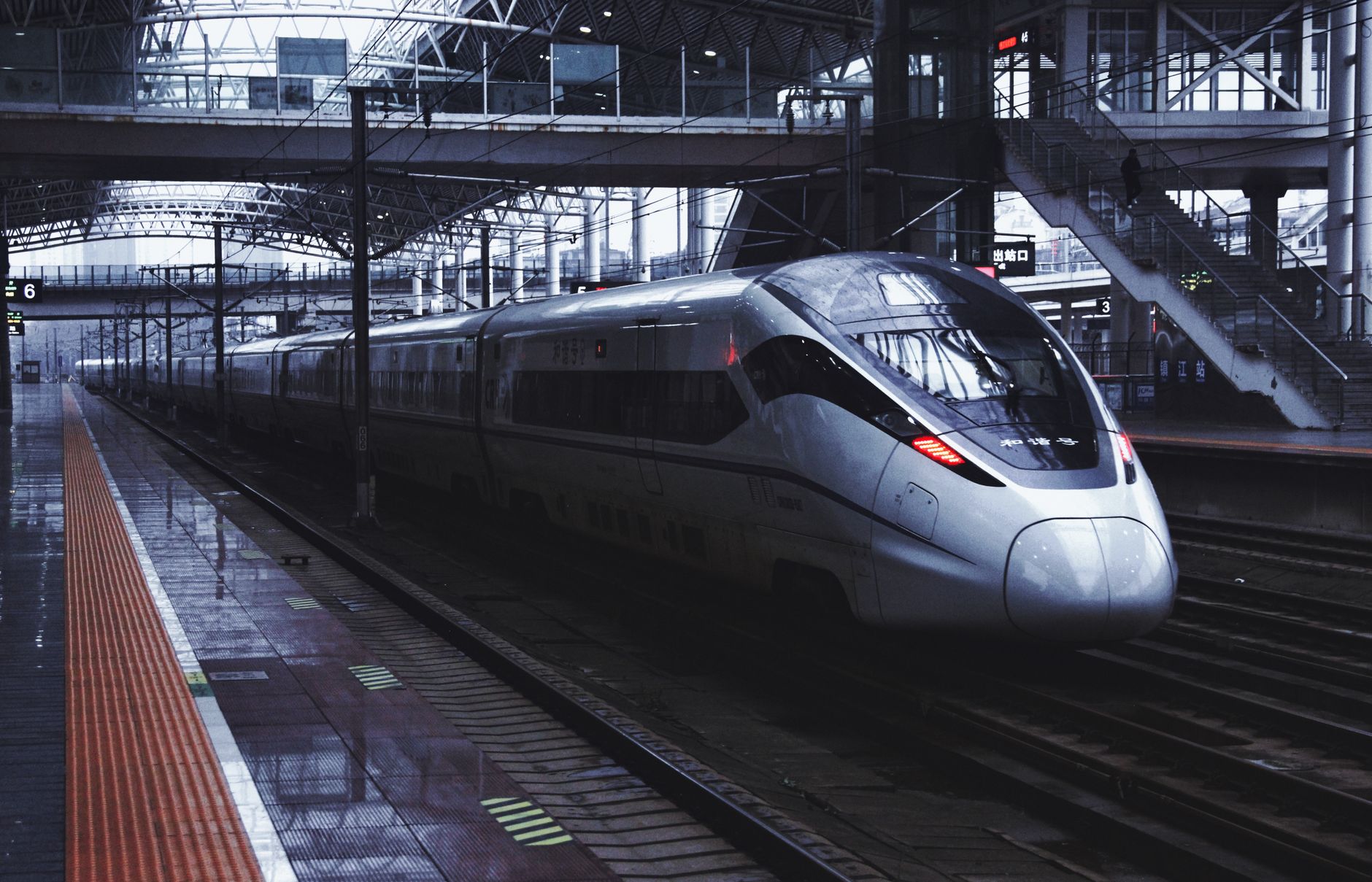
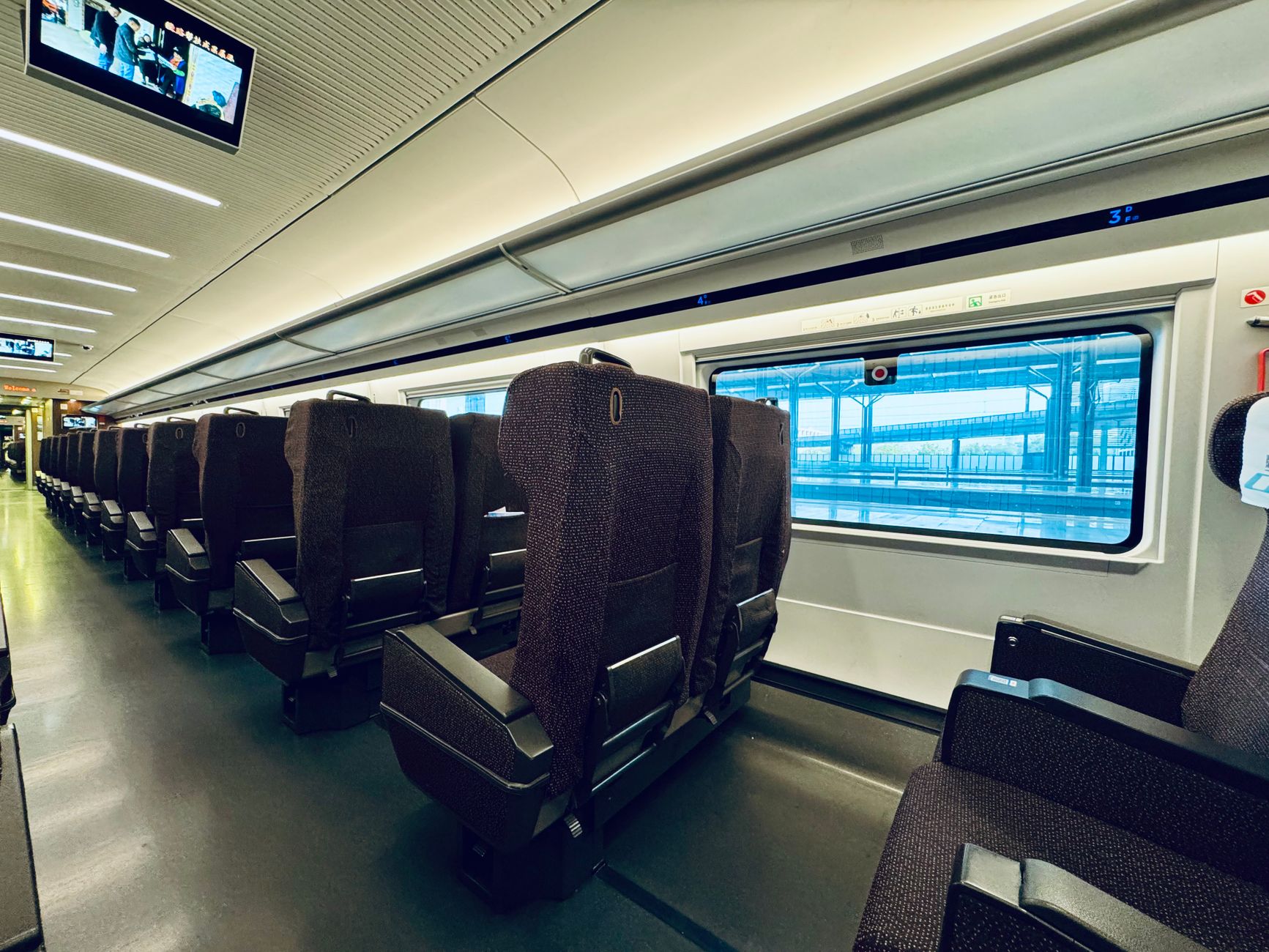
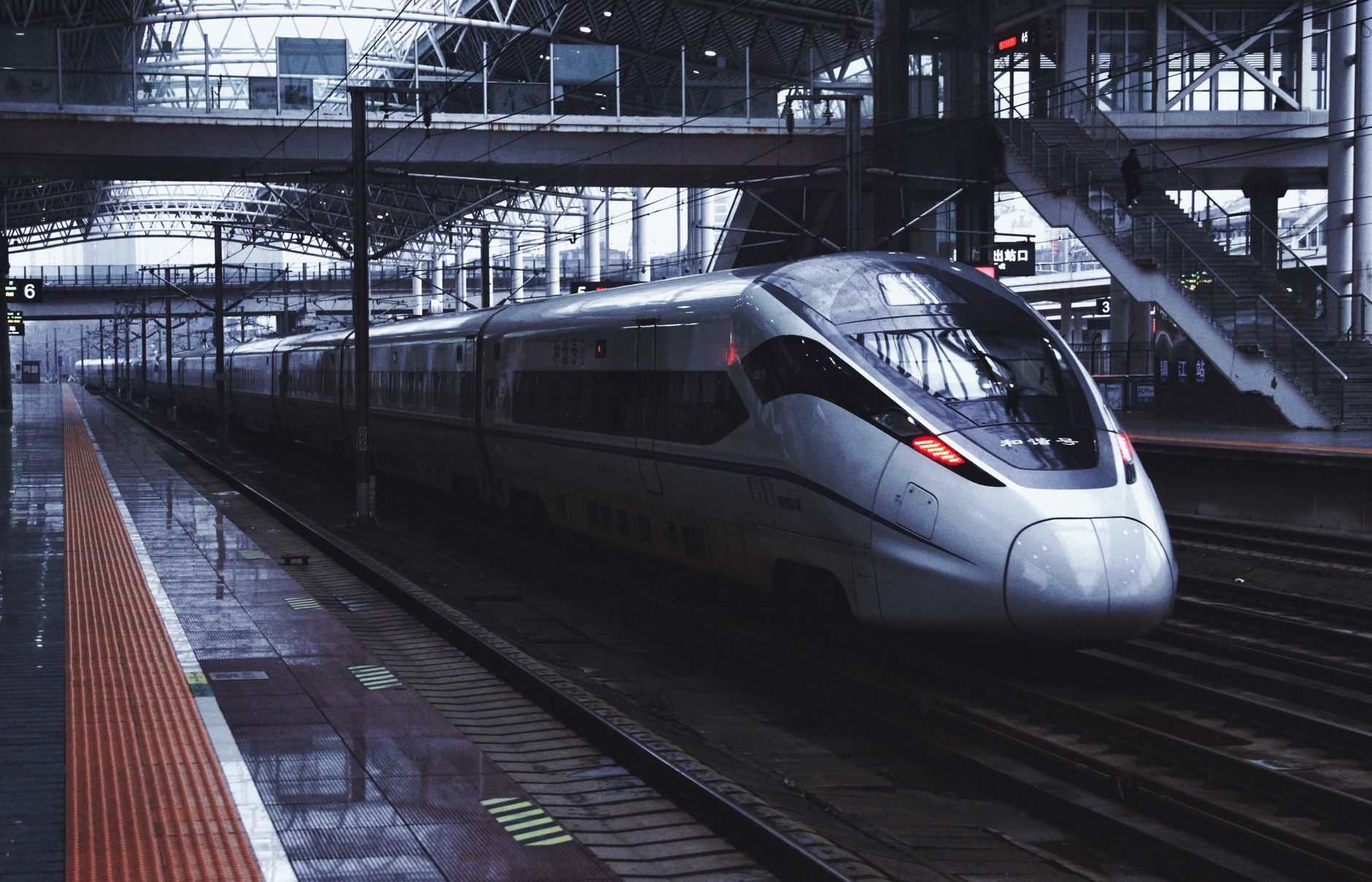
Trains run from Shanghai Hongqiao Railway Station to Huangshan North (黄山北站). The fastest G services take about three hours, and the slower trains take longer. Fares depend on the train, so check the second-class price on 12306 when you book; first class costs noticeably more.
Two things about booking. Chinese rail tickets go on sale 14 days before departure, a 15-day window that counts the day you buy — there is no earlier window and no advance discount, so the price you see is the price. And book through 12306 with your passport number, or through Trip.com for a small service fee and a more reliable foreign-card checkout. Tickets are electronic and tied to the passport; you tap the physical passport at the station gate.
Note the station name carefully. Huangshan North is the high-speed station and the one you want. It sits in Tunxi, which is the centre of Huangshan City — a place about seventy kilometres from the mountain itself, confusingly named after it. There is also an older Huangshan Railway Station on the conventional line, which is slower and less useful. Neither is at the mountain.
Give yourself plenty of time at Hongqiao. It is an enormous station with a bag scan at the entrance and a passport check into the departure hall, and the gate closes three to five minutes before the train leaves, without exception.
The transfer everyone underestimates
This is the part that catches people out, because the map makes Huangshan North look like it is at the mountain and it is not.
From Huangshan North station you need a bus to Tangkou, the base town at the southern gate. Buses run through the day; check the fare and the next departure at the ticket window. Signs are not always in English, so the characters to look for are 汤口 (Tangkou) or 黄山风景区 (Huangshan Scenic Area).
From Tangkou there is a second, mandatory shuttle bus from the transport hub to the trailheads. You cannot drive or walk this section; everyone takes the shuttle. The first buses leave early, so check the day’s timetable and the fare at the hub.
Then the cable car. So the full sequence from Shanghai is: train → bus → shuttle → cable car, plus waiting between each. Leave Shanghai early and you will not be disappointed.
A taxi or DiDi from Huangshan North to Tangkou is quicker than the bus but costs more; the app shows the fare before you commit. Worth it if you are three or four people, not worth it alone.
What it all costs
Huangshan is one of the more expensive mountains in China and the cost is not in one line — it is in six of them stacked on top of each other. Here is the whole thing for one person, peak season.
| Item | Full price (21 Jan–19 Dec) | Winter (20 Dec–20 Jan) |
|---|---|---|
| Train, Shanghai Hongqiao → Huangshan North, 2nd class | Varies by train; see 12306 | Same |
| Bus, Huangshan North → Tangkou | Small fare, paid at the window | Same |
| Shuttle bus, Tangkou hub → trailhead (mandatory) | Pay at the hub | Same |
| Scenic area entry | ¥190 | ¥150 |
| Yungu cable car (back mountain), one way | ¥80 | ¥65 |
| Yuping cable car (front mountain), one way | ¥90 | ¥75 |
| Taiping cable car (north gate), one way | ¥80 | ¥65 |
| Xihai Monorail, one way | ¥100 | ¥80 |
| Summit hotel, per night | Splurge; check rates when booking | Check rates when booking |
The biggest choice in the budget is where you sleep: a night on the summit costs far more than sleeping in Tunxi and doing the mountain in one long day. Food on the summit is expensive and mediocre, because supplies come up by porter or cable car, so carry your own snacks.
Book the entry ticket in advance. Huangshan now runs a fully digital real-name reservation system: you book online against your passport, and turning up expecting to buy at the gate is a good way to be turned away in peak season. Trip.com and the official WeChat mini-programme both work.
Cable cars: which one, which direction
There are three main ropeways and the choice determines your whole route.
Yungu (云谷) cable car — the back mountain, ¥80. Rises from the eastern side to near the Beihai and Xihai hotel area. The standard way up.
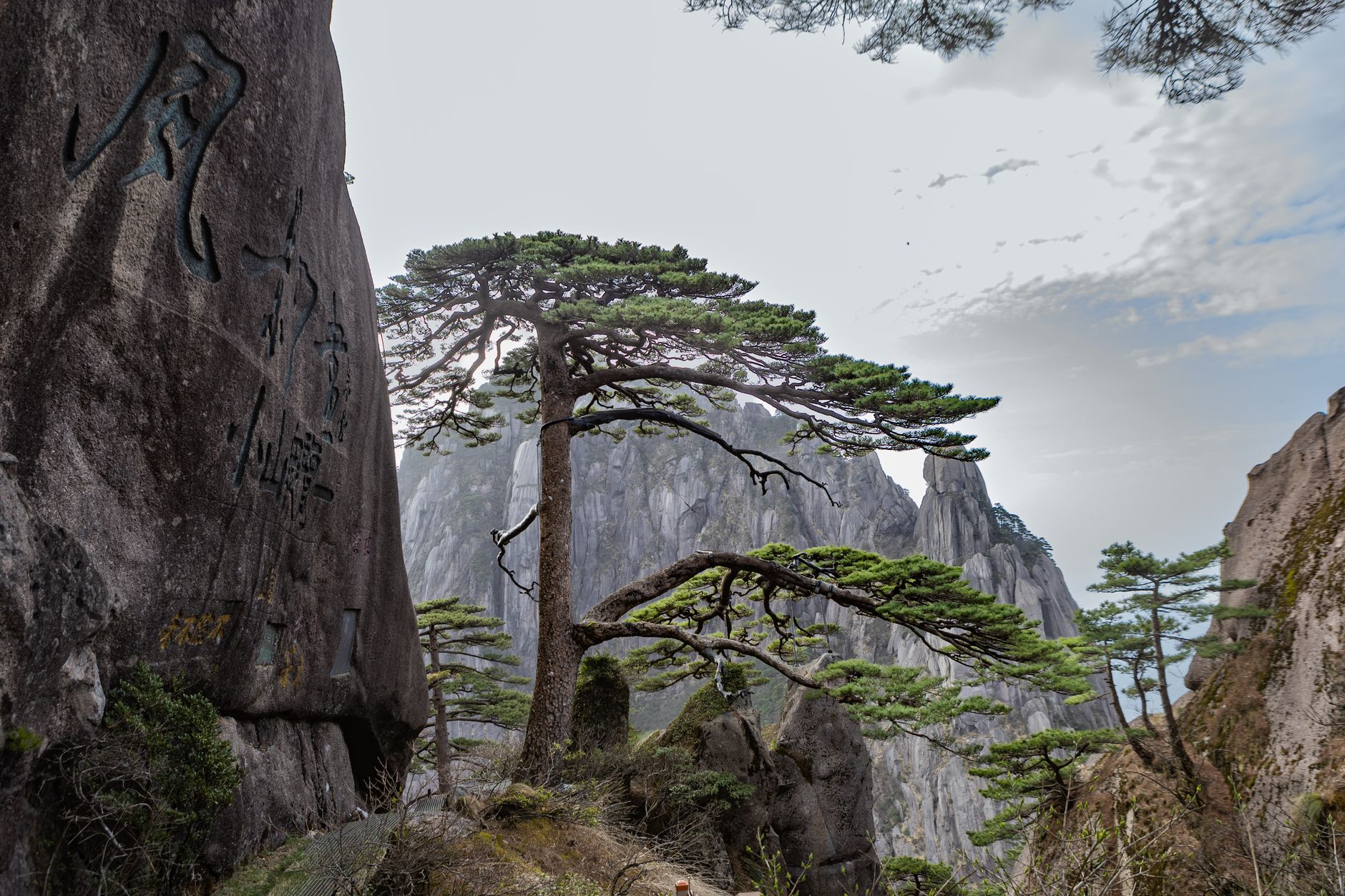
Yuping (玉屏) cable car — the front mountain, ¥90. Rises to Yuping Tower near Celestial Capital Peak and the Welcoming Guest Pine. Steeper scenery, and the standard way down.
Taiping (太平) cable car — the north gate, ¥80. Only relevant if you are approaching from the north, which almost nobody coming from Shanghai does.
The route to take is up from Yungu and down from Yuping. This has been the standard advice for decades and it is right: it puts the hotels and the sea-of-clouds viewpoints at the start of your time on top, gives you the ridge traverse in the middle, and delivers the dramatic front-mountain scenery on the way down when your legs are tired and you would rather be looking than climbing.
Doing it in reverse is not wrong, but it means the hardest walking comes last and you finish at the far end of the ridge from the hotels.
Can you walk instead? Yes. The stone staircases are complete and well maintained, and walking up from Yungu takes two and a half to three and a half hours. It is a serious staircase — several thousand steps — and it is what many Chinese visitors do. If you are fit and have the time it is genuinely rewarding. If you are doing the two-day plan, take the cable car up and save the legs for the ridge and the canyon.
Cable cars queue badly at weekends and on public holidays — an hour is normal, two is possible in Golden Week. They also stop in high wind, which happens, and there is no appeal.
Summit hotel or Tunxi?
This is the real decision, and it is a straight trade of money against experience.
Summit hotels — Beihai, Xihai, Baiyun and Shilin — sit on the ridge near the main viewpoints. They are expensive, and dearer still at busy times, and the money buys a small, plain, slightly damp room in a building where everything including your bedsheets came up by cable car or on a porter’s back. Some have dormitory beds at a lower rate. Book weeks ahead; they sell out.
What you are buying is not the room. It is being on the mountain between four in the afternoon and eight in the morning, which is the only time Huangshan is quiet and the only time the light is any good. Sunrise from Bright Summit or the Cloud-Dispelling Pavilion, with the peaks standing out of cloud and nobody else on the path, is the thing.
Tunxi — the centre of Huangshan City, by the railway station — has ordinary hotels at a fraction of summit prices and a pleasant restored old street. Staying there costs you the sunrise and adds a long transfer each way, but it saves a lot of money and puts you near the buses for Hongcun.
Tangkou, the base town at the southern gate, has cheap guesthouses. This is the compromise: you are at the foot of the mountain and can be on one of the first shuttles of the day, which gets you up before the day crowds even if it does not get you sunrise from the top.
The honest recommendation: stay on the summit once. It is expensive, the room will disappoint you, and it is still the right call.
The two-day plan, hour by hour
Day one
07:00 — Shanghai Hongqiao. An early G train; its arrival time at Huangshan North is on the 12306 timetable.
10:00 — bus to Tangkou. Leave your main luggage at your Tangkou guesthouse or in the station left-luggage; take only a day pack up.
11:30 — shuttle to Yungu.
12:00 — Yungu cable car up, ¥80. Ten minutes and a considerable view.
12:30 — check in at Beihai or Xihai, drop the bag, eat something you brought with you.
13:30 — the Beihai and Xihai viewpoints. Begin to Believe Peak, the Flying-over Rock, Lion Peak. Spend the rest of the afternoon walking between them on paved paths.
Sunset. Cloud-Dispelling Pavilion is the classic spot. Check the time when you check in, get there half an hour early and take a layer, because it drops cold fast.
19:00 — dinner at the hotel, then early to bed, because you are getting up in the dark.
Day two
Before dawn — sunrise. Times shift by season, so ask at reception the night before; they will tell you and they will be right. Bright Summit and Lion Peak are the usual spots. Take a torch, take everything warm you have, and go earlier than you think.
07:00 — breakfast, check out.
08:00 — the West Sea Grand Canyon. Three to four hours, and the best walking on the mountain. See below.
12:00 — the ridge west to Bright Summit (1,860 m), then down past Lotus Peak — at 1,864 m the highest on the mountain — towards Yuping.
14:00 — the Welcoming Guest Pine and Yuping Tower. The most photographed tree in China. There will be a queue for the photograph.
14:30 — Yuping cable car down, ¥90, then the shuttle to Tangkou.
16:00 — bus to Huangshan North, and an evening train back to Shanghai Hongqiao.
That is a full but not punishing two days, with roughly six hours of walking on day two. If you would rather it were gentler, cut the canyon and go straight along the ridge.
The West Sea Grand Canyon
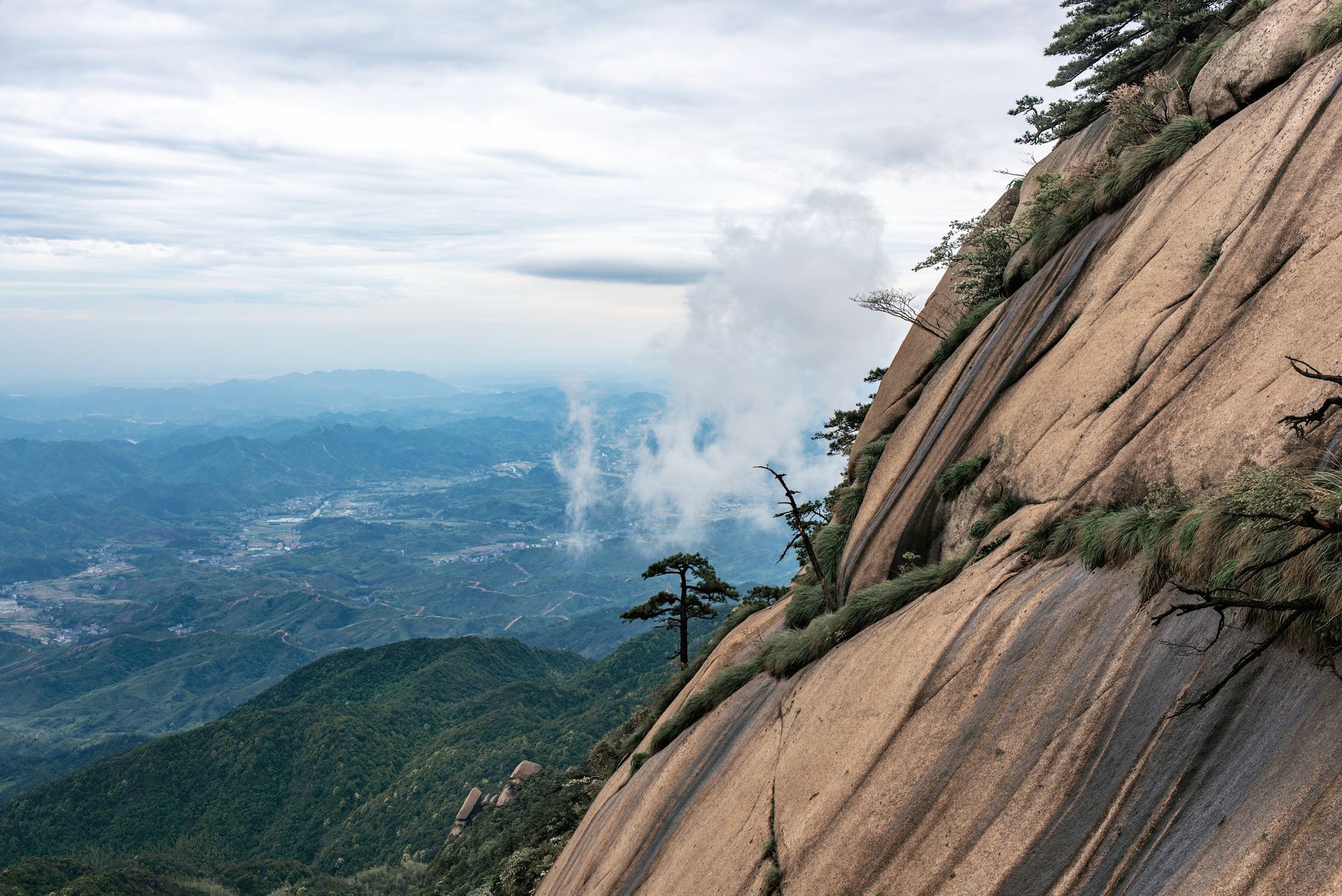
The Xihai Grand Canyon is the part of Huangshan that most visitors miss and the part that most repays the effort. A path cut and bolted into the cliff faces drops into a deep valley below the main ridge, with sections of stair hanging over a considerable drop and views back up at the peaks rather than out from them.
The full loop takes three to four hours and involves a serious amount of descending and then re-ascending. There is a monorail at the bottom, ¥100 one way, which hauls you back up to the ridge and turns the loop into a much more manageable one-way walk down. Take it. Everyone sensible does.
Two warnings. The canyon closes in winter and after heavy rain or snow, roughly December to March, and there is no advance notice — check at your hotel the night before. And the exposure is real: if heights are genuinely a problem for you, this is not the section to test that on.
Go early. Between eight and eleven in the morning it is quiet, cool and often still full of cloud, which is exactly what you want.
Adding Hongcun and Xidi
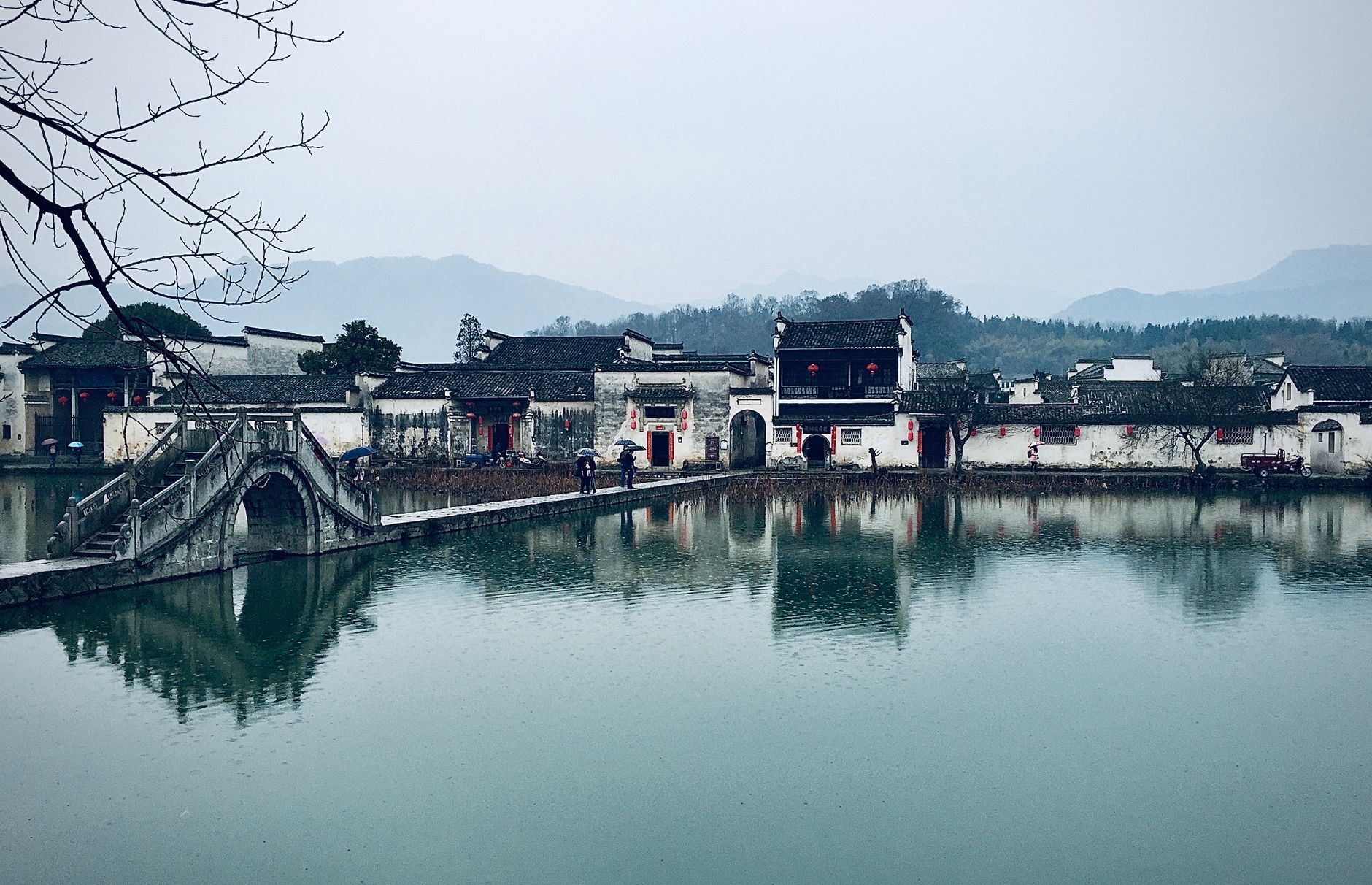
If you can make it three days, add the Huizhou villages. Hongcun and Xidi are both UNESCO-listed, both in Yi County to the west of the mountain, and both are the whitewashed-wall, black-tile, carved-timber architecture that this corner of Anhui is known for. Hongcun is the more photogenic of the two — the South Lake and the crescent Moon Pond are the images everyone has seen, and it was a location in Crouching Tiger, Hidden Dragon. Xidi is quieter and has the better-preserved ancestral halls.
Both are reachable by bus from Tunxi or from Tangkou; check the journey time and the last bus back before you set out. Village ticket prices move, so check the current entry fee for each before you travel.
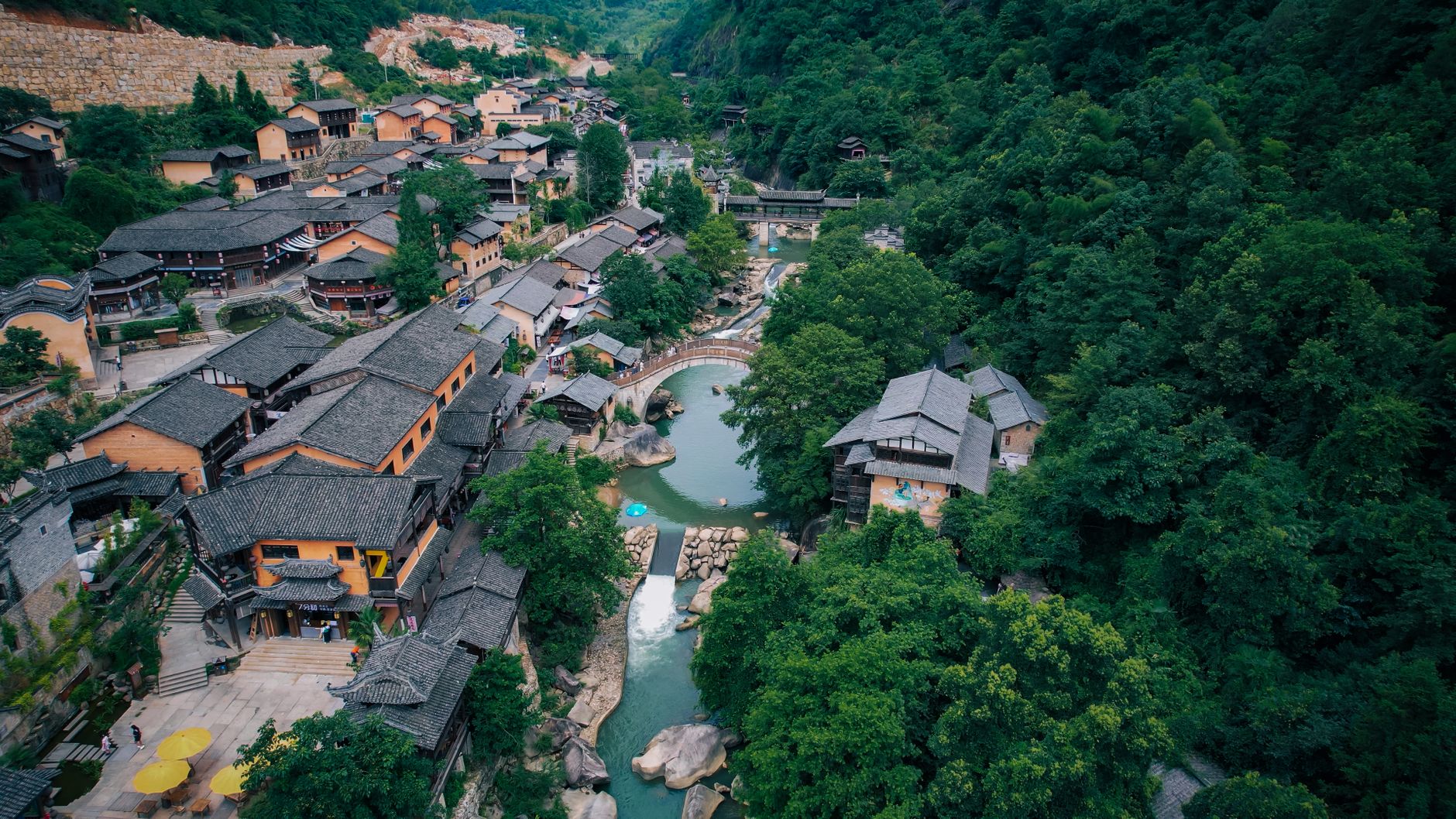
The natural three-day shape is: day one and two on the mountain as above, then down to Tunxi for the second night, Hongcun on day three, and a late train home. It makes for a much rounder trip than the mountain alone, and the villages are at their best in the early morning and late afternoon when the coach parties have gone.
When to go
Late September to mid-November is the best window — clear air, comfortable walking temperatures, autumn colour in the lower valleys and the highest chance of a sea of clouds without the summer haze.
April to early June is the other good period: green, often misty, and the mist is not a problem here — Huangshan in cloud is not a wasted day, it is the postcard.
July and August are hot, humid, thundery and extremely busy with Chinese school holidays. The mountain is cooler than Shanghai, which is genuinely a reason to come, but the crowds are heavy.
December to February is the contrarian pick and a good one. From 20 December to 20 January entry drops to ¥150 and cable cars to ¥65–75, and hotels are much cheaper, and snow on the granite and the pines is spectacular. The costs: the West Sea Grand Canyon closes, some hotels shut, cable cars stop more often in wind, and it is properly cold on the summits.
Dates to avoid outright: 1–7 October, National Day Golden Week, when much of China is on holiday and the mountain is at its busiest; the first week of May; and Chinese New Year. Our best time to visit Shanghai guide has the full holiday calendar.
What to take up the mountain
You are carrying everything yourself, so pack once and pack properly.
Warm layers, more than you think. Lotus Peak, the highest summit, is 1,864 metres above sea level, and the top is much colder than Tunxi, with wind. Sunrise in October is genuinely cold. A fleece and a windproof shell, plus gloves and a hat outside summer.
Rain gear. Huangshan is wet — that is where the cloud comes from. A packable waterproof beats the plastic ponchos sold at the gate, though those work.
Proper shoes. Thousands of stone steps, often damp, sometimes iced. Trainers with grip at minimum.
Water and food. Everything on the summit costs more than at the bottom, water included. Carry two litres and enough snacks for a day.
A torch or headtorch for the pre-dawn walk to the sunrise viewpoint.
A power bank — but check the railway’s current battery rules before you pack it.
Cash, a little. Alipay and WeChat Pay work almost everywhere on the mountain, but signal is patchy on parts of the ridge. See our guide to Alipay and WeChat Pay for setting them up before you leave Shanghai.
Leave your main suitcase in Tunxi or Tangkou; ask your guesthouse or the station about left luggage.
What people get wrong
Trying to do it in a day. The single biggest error. Hours of travel for a few midday hours on the mountain, and you miss both of the reasons to come.
Assuming Huangshan North station is at the mountain. It is in Tunxi, about seventy kilometres away, and you need another hour on a bus. Plenty of itineraries are built on this misunderstanding.
Not booking the entry ticket in advance. The reservation system is fully digital and real-name. No booking, no entry, particularly in peak season.
Underestimating the total cost. Entry, two cable cars, two shuttles, the monorail and a summit hotel stack up to considerably more than the train fare that got you there.
Booking the summit hotel late. There are only four of them and they sell out. Weeks ahead, not days.
Packing for the weather in Shanghai. It will be much colder and windier up on the ridge, so bring every layer with you rather than counting on buying one up there.
Writing off a cloudy forecast. Huangshan in cloud is the thing Huangshan is famous for. Rain is a problem; mist is the point.
Skipping the West Sea Grand Canyon. It is the best walking on the mountain and most day visitors never see it because they do not have the hours.
Frequently Asked Questions
How long does the train from Shanghai to Huangshan take?
About three hours on the fastest trains from Shanghai Hongqiao to Huangshan North. Second-class fares vary by train. Tickets go on sale 14 days ahead (the window is 15 days counting the day of purchase), with no earlier window and no advance discount.
Can I do Huangshan as a day trip from Shanghai?
Technically yes, and you should not. Hours of travel plus the bus and shuttle transfers leave you only a few midday hours on the mountain — the flattest light and the biggest crowds — and you miss sunrise, sunset and the West Sea Grand Canyon entirely. Two days is the minimum that makes the fares worth paying.
How much does Huangshan cost in 2026?
Entry is ¥190 from 21 January to 19 December, and the ¥150 winter price runs from 20 December to 20 January. Cable cars are ¥80–90 one way in peak season and ¥65–75 off-peak, the Tangkou shuttle is ¥19 each way, and the Xihai monorail is ¥100 (¥80 in the winter window). The summit hotel is the big variable, so price it when you book.
Do I need to book Huangshan tickets in advance?
Yes. The scenic area operates a fully digital real-name reservation system, so you book online against your passport before you arrive. Trip.com or the official WeChat mini-programme both work. In peak season, turning up without a booking is likely to mean not getting in.
Which cable car should I take?
Up from Yungu on the back mountain (¥80), down from Yuping on the front (¥90). That order puts the hotels and the sea-of-clouds viewpoints at the start, the ridge walk in the middle, and the most dramatic scenery on the descent when your legs have gone. Taiping serves the north gate and is not relevant coming from Shanghai.
Is it worth staying in a hotel on the summit?
Yes, once, despite the price. The rooms are small, plain and often damp for the money, but you are paying for the mountain between four in the afternoon and eight in the morning — sunset, sunrise, and empty paths before the first cable car comes up. Book weeks ahead; there are only four hotels and they sell out.
What is the West Sea Grand Canyon and is it open?
A path cut into the cliffs of a deep valley below the main ridge — the best walking on Huangshan, allow several hours for the loop, and ask at the gate about the ride back up. It closes in winter and after heavy rain or snow, roughly December to March, so check with your hotel the night before rather than relying on a website.
When is the best time to visit Huangshan?
Late September to mid-November for clear air and the best chance of a sea of clouds, or April to early June for green and mist. Winter is cheaper and spectacular in snow but the canyon closes. Avoid 1–7 October, the first week of May and Chinese New Year, the main holiday periods.
How do I get from Huangshan North station to the mountain?
A bus from the station to Tangkou at the southern gate. Then the mandatory shuttle from the Tangkou transport hub to the trailhead, which starts early, so check the day’s timetable. Then a cable car. Start early from Shanghai.
Is Huangshan suitable for children or older visitors?
The main ridge paths are paved, stepped and railed, and with cable cars in both directions a gentle version of the trip is very doable. The West Sea Grand Canyon is not — it is exposed, steep and long. Note that everything is stairs rather than slopes, so it is hard on knees in both directions, and there is no wheelchair access on the mountain.
Can I add Hongcun and Xidi?
Yes, on a third day. Both are UNESCO-listed Huizhou villages in Yi County, reachable by bus from Tunxi or Tangkou, with an entry fee for each that is worth checking before you go. Hongcun is the photogenic one with the South Lake and Moon Pond; Xidi is quieter with better ancestral halls. Go early or late, when the coaches have gone.
What happens if the weather is bad?
Mist and cloud are not bad weather on Huangshan — they are the reason the mountain is famous, and a cloudy forecast is often a better one. Sustained heavy rain is genuinely unpleasant, and high wind stops the cable cars with no appeal or refund. Build a buffer into the trip if you can, and check the forecast the evening before rather than a week ahead.
Book the train fifteen days out, book the summit hotel before that, book the entry ticket online, and give it two days. If Huangshan will not fit, Moganshan is the nearer mountain and our weekend getaway guide covers what else works as an overnight from Shanghai. Current ticket and cable car prices are published by the Huangshan scenic area authority, and the ropeway detail by China Discovery.