Shanghai is not an obviously Muslim-friendly city. Pork is in everything — it is in the soup dumplings, the wontons, the breakfast buns, the stock under half the noodle dishes — and a visitor who assumes they can simply order around it will have a difficult week. But halal food Shanghai is genuinely easy once you know two things: the two Chinese characters that certify it, and the fact that there is a Lanzhou beef noodle shop roughly every four hundred metres in this city, all of them halal, all of them open late, all of them costing under twenty-five yuan.
China has a Muslim population in the tens of millions, concentrated in the north-west but present in every city through internal migration, and the food that came with them — Hui beef noodles, Uyghur lamb and hand-pulled noodles from Xinjiang — is now mainstream Chinese street food that happens to be halal by construction. That is the practical answer for most travellers. This guide covers the certification, the chains, the sit-down Xinjiang restaurants, the mosques, and the specific dishes to avoid.
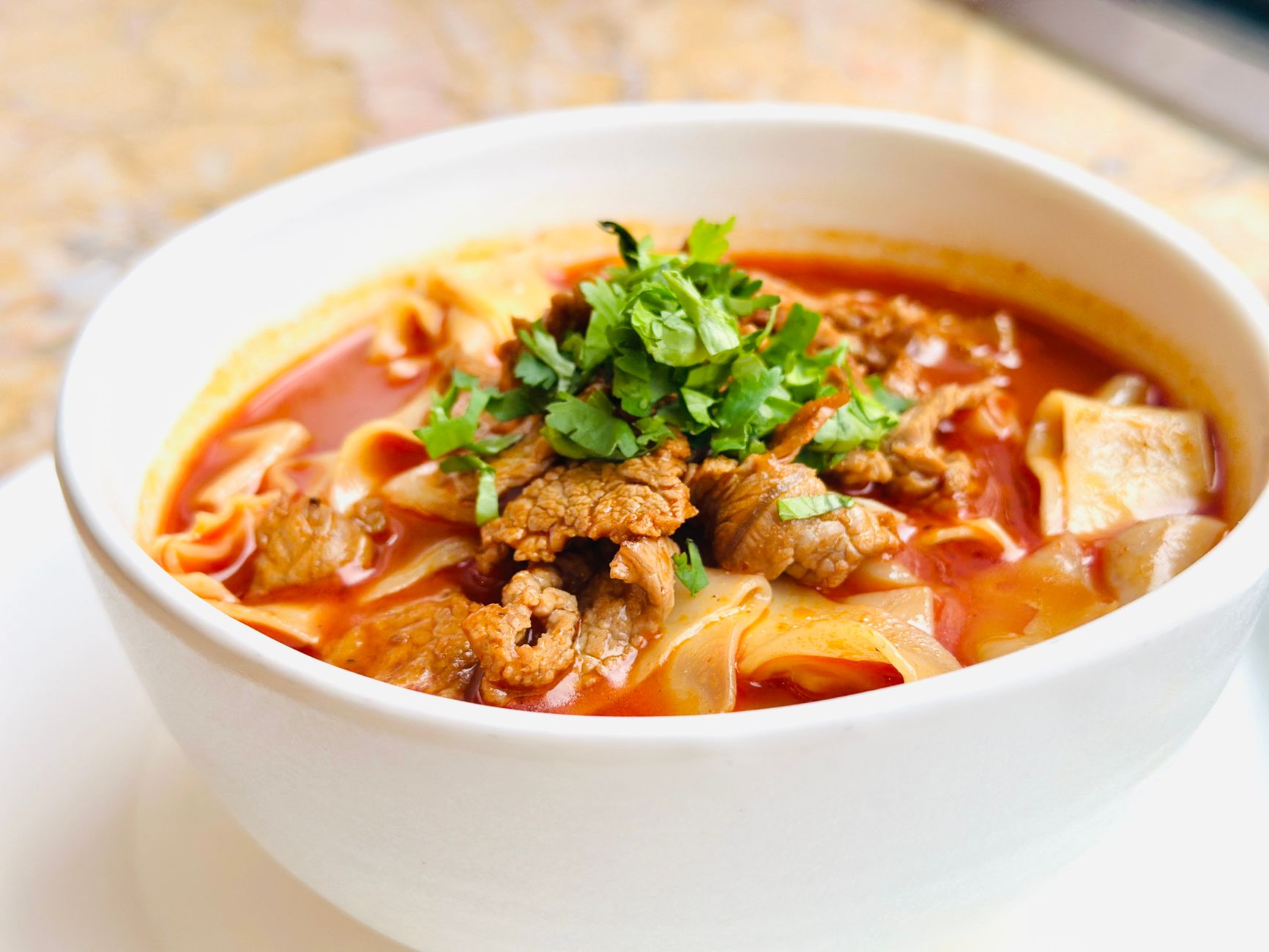
Table of Contents
- The two characters that solve most of this
- Lanzhou beef noodles: the default answer
- Xinjiang restaurants and what to order
- How halal certification actually works in China
- Mosques in Shanghai
- What to avoid, dish by dish
- Halal hot pot and the sit-down options
- Breakfast, snacks and the convenience-store problem
- Where halal food in Shanghai clusters
- Ramadan, Eid and travelling in Shanghai
- Ordering and asking the right question
- What people get wrong
- Frequently Asked Questions
- Where to go next
The two characters that solve most of this
清真 (qīngzhēn) is the word. It translates roughly as “pure and true” and it is the standard Chinese designation for halal. You will see it on shopfronts, on menus, on packaging, and on the green signage that halal restaurants use almost universally.
What to look for, in order of reliability:
- 清真 in green on the shopfront or the sign, very often alongside Arabic script. Green is the convention and it is followed consistently.
- 清真 with an Arabic حلال underneath. Common on restaurants run by Hui or Uyghur families.
- A certificate on the wall, usually issued by the local Islamic association. Worth a glance in a sit-down restaurant.
- The absence of any pork on the menu at all, which in a Chinese restaurant is itself a strong signal.
Photograph the characters 清真 on your phone now. Showing them to someone and raising an eyebrow is a complete conversation in any noodle shop in China, and it works when no English does. Add 猪肉 (zhūròu, pork) to the same screenshot — being able to point at it and shake your head covers the other half.
Lanzhou beef noodles: the default answer
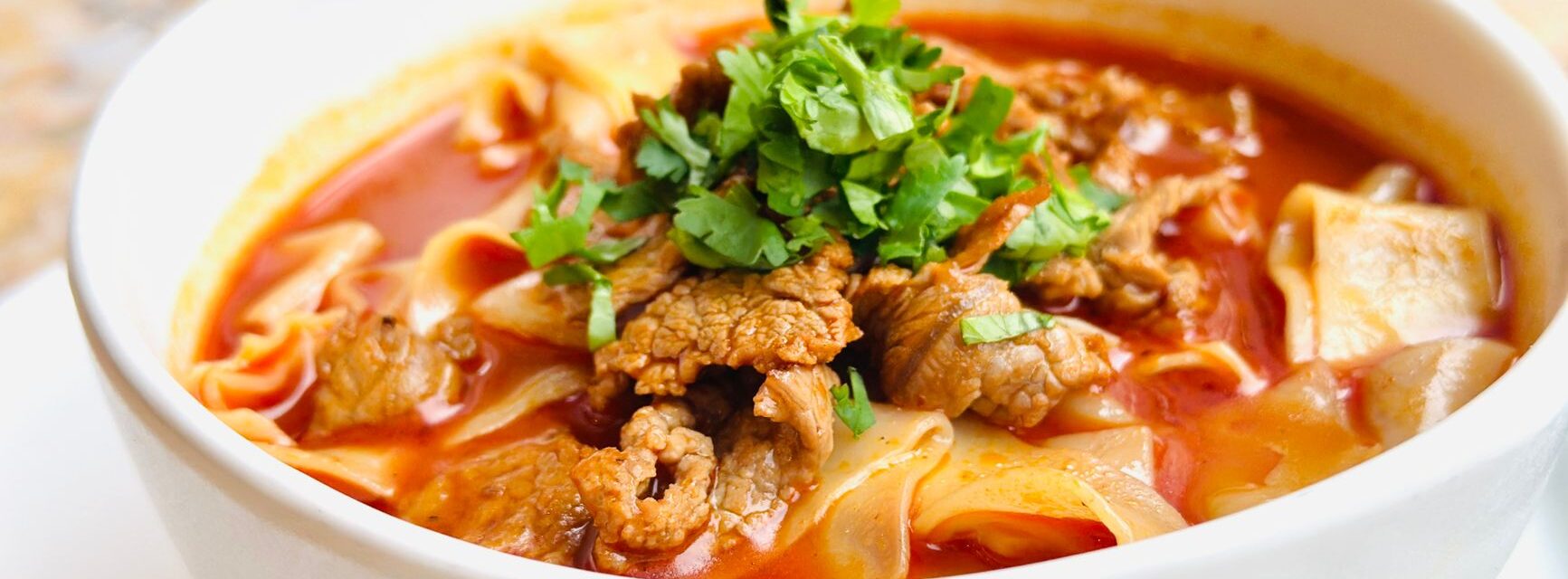
If you take one thing from this guide: Lanzhou beef noodle shops (兰州拉面) are halal, and they are everywhere.
These are the small, brightly lit, slightly utilitarian noodle shops with green signage that you have already walked past a dozen times without registering. They are run overwhelmingly by Hui Muslims from Gansu and Qinghai, they serve beef and lamb only, and pork does not enter the kitchen. There are thousands of them across Shanghai — in every district, near every metro station, open from breakfast until late.
The order is simple. A bowl of 牛肉面 (niúròu miàn), beef noodle soup: hand-pulled wheat noodles in a clear beef broth with thin slices of beef, white radish, chilli oil and coriander. You choose the noodle thickness, from wide belt noodles down to something like angel hair; if you cannot manage the vocabulary, hold your fingers apart to indicate width and the cook will understand. Around ¥15–25 a bowl.
Beyond the house noodle, the standard menu runs to cold beef slices, cold dishes with cucumber and wood-ear fungus, lamb skewers, beef dumplings and flatbreads. A full meal for two is rarely more than ¥60.
They are not glamorous and they are not a destination. What they are is a guarantee — anywhere in Shanghai, at almost any hour, a halal meal is a short walk away, and it is one of the better cheap bowls of food in the country. Our guide to cheap eats in Shanghai puts them in context alongside the non-halal options.
Xinjiang restaurants and what to order
Where Lanzhou shops are the everyday, Xinjiang restaurants are the meal out. Uyghur food is Central Asian rather than Chinese — cumin, lamb, flatbread, hand-torn noodles, raisins and nuts — and Shanghai has a good number of proper Xinjiang restaurants with live music, big tables and long menus.
What to order:
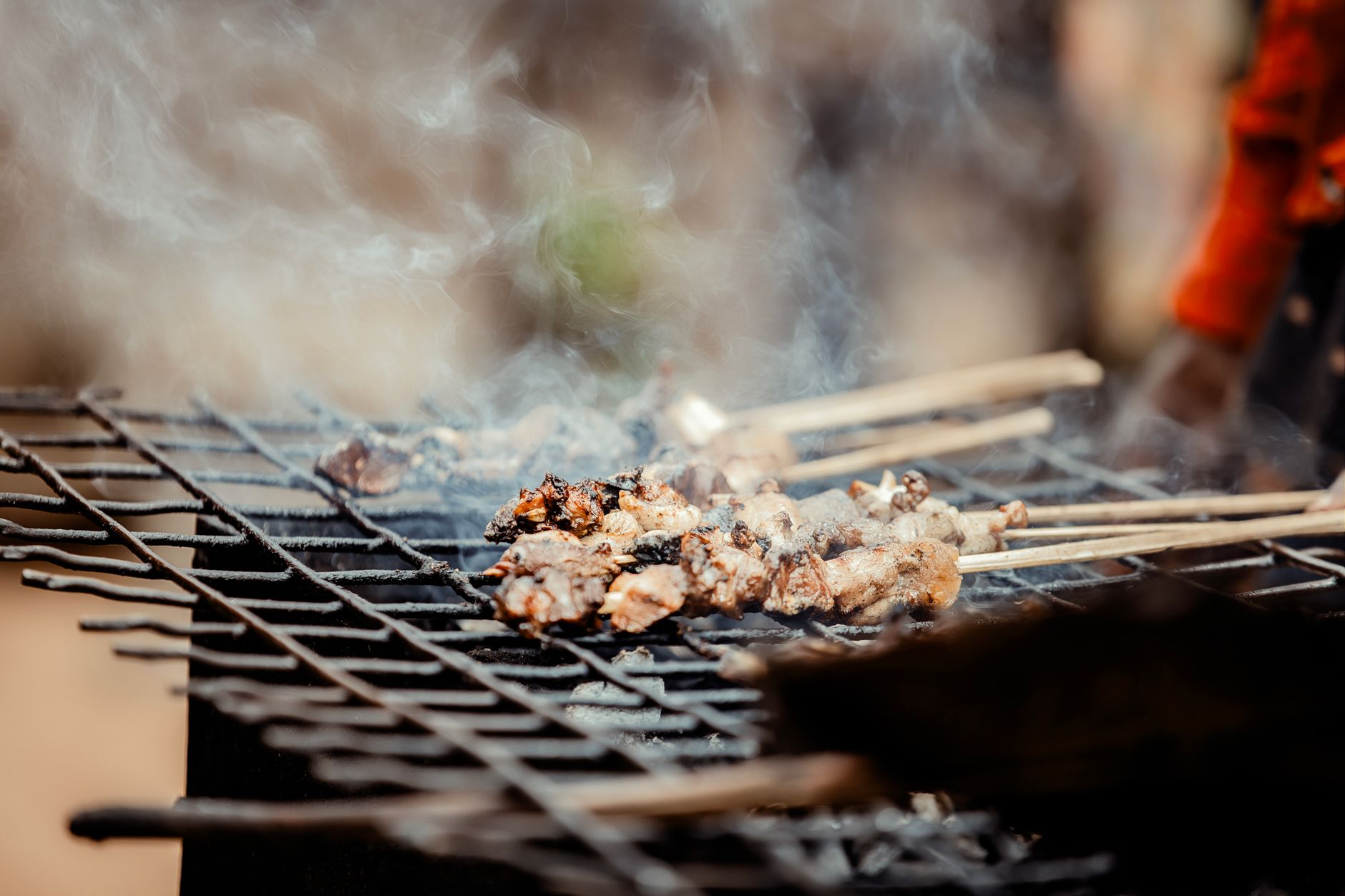
- 羊肉串 (yángròu chuàn) — lamb skewers, heavily cumined and chillied, grilled over charcoal. Order more than you think. The single most addictive thing in the cuisine.
- 大盘鸡 (dàpán jī) — “big plate chicken”, a vast dish of chicken, potato and pepper in a spiced sauce, with wide belt noodles added into the remaining sauce at the end. Feeds three or four. Order it.
- 拉条子 (lātiáozi) — hand-pulled noodles served dry with a lamb-and-vegetable topping stirred in.
- 馕 (náng) — the round flatbread, baked on the wall of a clay oven. Comes to the table free or nearly free.
- 手抓饭 (shǒuzhuā fàn) — pilaf with lamb, carrot and raisin.
- 烤包子 (kǎo bāozi) — baked lamb pastries, crisp outside, very hot inside. Wait a minute.
Expect ¥80–150 a head for a full table, less if you stick to skewers and noodles. Many Xinjiang restaurants do not serve alcohol; some do, for non-Muslim customers, which is worth knowing if that matters to you.
How halal certification actually works in China
Worth understanding, because it differs from the Gulf or Malaysian systems and the difference matters if you are strict.
China has no single national halal certification authority. What exists is a system of local certification through provincial and municipal Islamic associations and ethnic affairs bureaux, which issue the 清真 designation to restaurants and food producers. Standards are real and enforcement in Shanghai is reasonable, but it is administratively local rather than religiously centralised, and the certification speaks primarily to the absence of pork and to slaughter practice.
What this means in practice for a traveller:
- A 清真 restaurant run by a Hui or Uyghur family is about as reliable as it gets — the family eats there, the community eats there, and reputation enforces itself.
- Chain restaurants advertising halal options should be treated more cautiously, particularly around shared fryers, shared grills and stock bases.
- Alcohol in cooking is common in Chinese cuisine generally — Shaoxing wine goes into a great many braises and marinades — and is not always considered by a certification focused on pork. In a 清真 kitchen it will not be used; in a mixed kitchen it very likely will.
- Ask about the oil. Lard is used in some Shanghainese cooking, and shared fryers are the most common invisible problem in a non-halal kitchen.
If you are strict, stay within 清真 establishments rather than trying to order carefully in a general restaurant. Given how many of them there are in Shanghai, that is not a real limitation.
Mosques in Shanghai
Shanghai has a long-established Muslim community and seven mosques of significance, several of them centuries old and architecturally Chinese rather than Middle Eastern — courtyards, tiled roofs and timber halls rather than domes.
| Mosque | Address | Hours | Notes |
|---|---|---|---|
| Xiaotaoyuan Mosque (小桃园清真寺) | 52 Xiaotaoyuan Street, Huangpu | 04:00–18:00 | The largest in Shanghai and the most central. Tel +86 21 6377 5442 |
| Huxi Mosque (沪西清真寺) | No. 4, Lane 1328 Changde Road | — | Halal restaurants, a bookshop and classes on site. Tel +86 21 6299 5374 |
| Songjiang Mosque (松江清真寺) | 75 Gangpeng Lane, Huating Old Street, Zhongshan Central Road, Songjiang | 09:00–16:00 | The oldest, founded in the mid-14th century, built in Chinese palace style. Tel +86 21 5782 3684 |
| Pudong Mosque | Pudong New Area | — | The main option east of the river |
| Fuyou Road, Jiangwan and Caoxiewan Mosques | various | — | The other three of the seven principal mosques |
Xiaotaoyuan is the one to know. Metro Line 8 or Line 10 to Laoximen, Exit 7, then walk east along East Fuxing Road to the end. It is in the old city, ten minutes from Yu Garden, and there are halal restaurants and food stalls in the surrounding streets — which makes it the most practical single answer for lunch and prayer on the same trip.
Songjiang Mosque is the one to see. It is a genuine Yuan-dynasty foundation in a far-western suburb, and it is a Chinese courtyard building — a timber prayer hall, a stone gateway, a minaret that reads as a pagoda. Whether or not you are Muslim, it is one of the more interesting historic buildings in the municipality, and it is about an hour out on Metro Line 9. It sits alongside the other religious architecture covered in our guide to temples in Shanghai.
Friday prayer is the busiest time at all of them, particularly Xiaotaoyuan and Huxi, where the surrounding streets fill with food stalls. If you want to see the community rather than the building, Friday around midday is when to go. Dress modestly, remove shoes before entering the prayer hall, and ask before photographing anyone. Non-Muslim visitors are generally welcome outside prayer times.
What to avoid, dish by dish
Shanghai’s own cuisine is heavily pork-based, and several dishes are not obviously so. The ones that catch people:
| Dish | Why it is a problem |
|---|---|
| Xiaolongbao (小笼包) | Soup dumplings. Pork filling and pork-skin aspic. The definitive Shanghai dish and entirely off-limits |
| Shengjianbao (生煎包) | Pan-fried buns. Pork |
| Wontons (馄饨) | Pork filling, and usually a pork-bone broth even when the filling is not |
| Noodle soup, generally | The broth is very often pork-bone based even where the topping is not |
| Hongshao rou (红烧肉) | Red-braised pork belly. The signature Shanghainese home dish |
| Fried rice and stir-fries | Frequently contain lard, ham or pork stock powder |
| “Vegetable” dishes | Regularly finished with lard or a meat stock. Vegetarian is not a safe proxy |
| Gelatine in desserts and sweets | Usually porcine unless stated |
Being vegetarian is not a workaround. Chinese vegetable cooking uses lard and meat stock routinely, and a dish described as 素 (sù, vegetarian) in a general restaurant may still have been cooked in a shared wok. Genuinely vegetarian Buddhist restaurants are a different matter and are a reliable fallback — see our guide to vegetarian and vegan eating in Shanghai.
Halal hot pot and the sit-down options
Hot pot is one of the great Shanghai evenings and there is a properly halal way to do it.
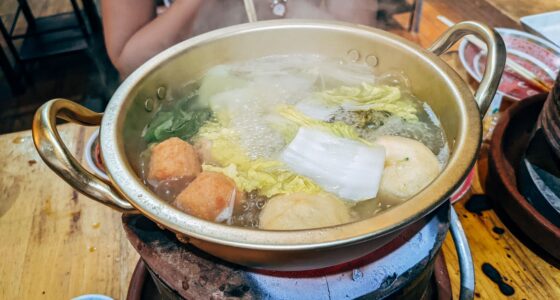
Hong Chang Xing (洪长兴) is a halal mutton hot pot house founded in 1891, serving the Beijing-style copper-pot format: a plain or lightly aromatic broth, paper-thin sliced mutton, and sesame-paste dipping sauce doing the flavouring. Average spend around ¥120 a head. Branches include 10F, 288 North Guangxi Road; 1 South Yunnan Road; and 6F Meiluocheng, 1111 Zhaojiabang Road.
It is a genuinely good restaurant on its own terms rather than a compromise — the mutton is the point, the broth is deliberately restrained, and the dipping sauce is where the flavour lives. If you want one memorable sit-down halal meal in Shanghai, this is a strong candidate and it comes with 130-odd years of history attached.
Beyond it, the sit-down halal options are mainly Xinjiang restaurants and the larger Lanzhou noodle houses. Shanghai does not have a broad halal fine-dining scene; what it has is depth at the everyday and mid-range level, which for most travellers is the more useful thing. For the wider restaurant picture, see the best restaurants in Shanghai.
Breakfast, snacks and the convenience-store problem
Breakfast is the hardest meal. The Shanghai default — youtiao and soy milk, shengjianbao, wontons — is either pork or cooked alongside it.
What works:
- Lanzhou noodle shops open early and beef noodle soup is a perfectly good breakfast, which is exactly how it is eaten in Gansu.
- Naan and flatbread from Xinjiang bakeries, sold from street ovens.
- Plain steamed bread (馒头, mántou), soy milk (豆浆) and fresh fruit are widely available and unproblematic.
- Hotel breakfast buffets at international chains almost always have a fruit, bread, egg and cereal section; the eggs are cooked on a shared surface, so judge by your own standard.
- Cafés. Shanghai has more than ten thousand of them and a coffee and a pastry is a straightforward breakfast, though the pastry may contain non-halal gelatine or lard.
Convenience stores are more of a problem than they look. Family Mart, Lawson and 7-Eleven are on every corner and their hot counters are almost entirely pork. Packaged snacks frequently contain pork gelatine or pork-derived flavouring, and Chinese ingredient labels are not always translated. Stick to fruit, nuts, plain biscuits, bottled drinks and sealed items whose ingredients you can read.
Where halal food in Shanghai clusters
Lanzhou noodle shops are genuinely everywhere and need no geography. The clusters that are worth travelling to:
Around Xiaotaoyuan Mosque, Huangpu. The old city streets near the mosque hold the densest concentration of halal restaurants and stalls in central Shanghai, and it is walkable from Yu Garden and the Bund. This is the best single area.
Around Huxi Mosque, Changde Road. Halal restaurants operate within the mosque complex itself, and the surrounding blocks have more. Convenient from Jing’an.
Around the universities. Areas with large populations of students from Xinjiang, Gansu and Ningxia support Xinjiang restaurants and noodle shops, and they are cheap.
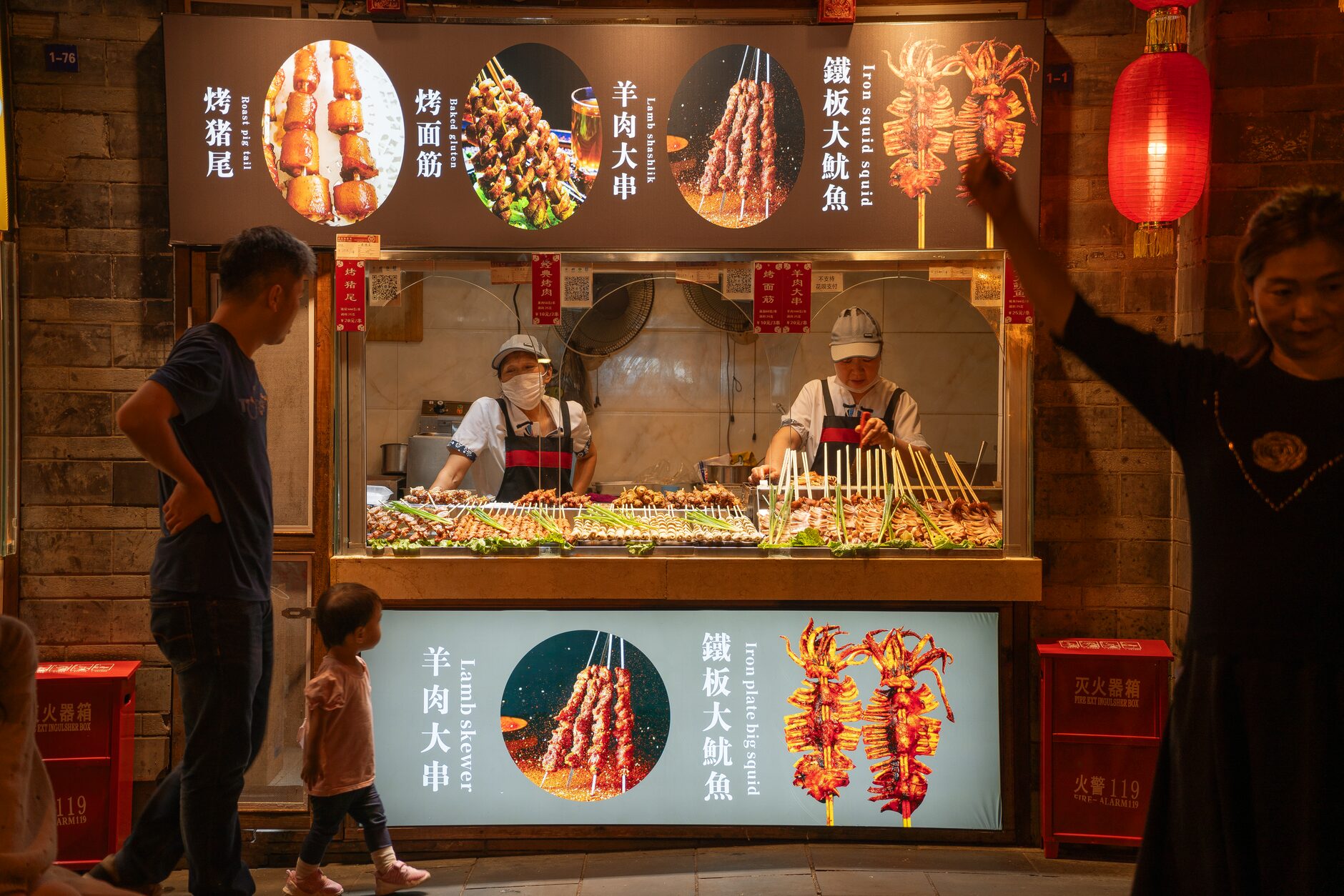
The night markets. Lamb skewer stalls at Shanghai’s night markets are frequently run by Uyghur or Hui vendors and are usually marked 清真. Look for the green sign and the cumin.
Ramadan, Eid and travelling in Shanghai
Travelling in a non-Muslim country during Ramadan is its own set of problems, and Shanghai handles them better than you might expect — partly because the city runs late, and partly because the Muslim community here is well organised.
Suhoor is the easier meal. Shanghai is a 24-hour city in the sense that convenience stores never close and a good number of Lanzhou noodle shops open at five or six in the morning. Many are willing to open earlier during Ramadan in areas with a Muslim community; ask the day before. A hotel with a kettle and a fridge solves it entirely.
Iftar is straightforward because sunset in Shanghai is comparatively early — between about 17:00 in midwinter and 19:00 at the height of summer — so breaking the fast falls comfortably inside normal restaurant hours rather than at eleven at night. The mosques, particularly Xiaotaoyuan and Huxi, organise communal iftar during Ramadan, and the streets around them fill with stalls. If you want to be with other people rather than alone in a hotel room, that is where to go.
Eid prayers are held at all seven principal mosques and are extremely busy. Arrive early; Xiaotaoyuan in particular fills well beyond capacity, with worshippers in the courtyard and the street outside.
Fasting through a Shanghai summer deserves a warning. July and August run 33–36°C with humidity in the eighties, and a day of sightseeing on foot without water is genuinely dangerous rather than merely uncomfortable. If your trip falls in that window, plan indoor mornings — museums, malls, the metro — and do the walking after sunset, when the city is at its best anyway.
Dates, prayer times and the exact iftar schedule vary; the mosques post them, and the community WeChat groups circulate them. Asking at Xiaotaoyuan is the reliable route.
Ordering and asking the right question
The useful phrases, worth screenshotting:
- 清真吗? (qīngzhēn ma?) — “Is this halal?”
- 我不吃猪肉 (wǒ bù chī zhūròu) — “I don’t eat pork.”
- 有猪肉吗? (yǒu zhūròu ma?) — “Does this contain pork?”
- 没有猪油 (méiyǒu zhūyóu) — “No lard.”
- 牛肉面 (niúròu miàn) — beef noodle soup.
- 羊肉 (yángròu) — lamb or mutton.
Two practical notes. Asking “is there pork in this?” in a general Chinese restaurant will sometimes get you a well-meaning “no” that refers only to visible pieces of meat, not to the stock or the oil — which is why the question to ask is whether the restaurant is 清真, not whether the dish contains pork. And a translation app with camera OCR pointed at a menu will identify 猪 (pig) instantly, which is a fast way to scan a board you cannot read.
On etiquette more generally, Shanghai is a straightforward city to eat in — see our etiquette guide for the table conventions that apply everywhere.
What people get wrong
Assuming there is no halal food in Shanghai. There are thousands of halal noodle shops. It is one of the easier large Chinese cities for this.
Treating vegetarian as a safe substitute. Lard and meat stock are standard in Chinese vegetable cooking.
Asking whether a dish has pork rather than whether the kitchen is halal. The answer to the first question routinely misses the stock and the oil.
Ordering xiaolongbao “without the pork”. There is no version. The filling and the aspic are both pork.
Trusting convenience-store hot counters. Almost entirely pork, and the packaged snacks often carry pork gelatine.
Missing Songjiang Mosque because it is far out. It is a fourteenth-century Chinese courtyard mosque and worth the hour on Line 9.
Only eating Lanzhou noodles. They are the reliable default; Xinjiang restaurants are the actual meal out, and the halal hot pot is genuinely excellent.
Frequently Asked Questions
Is it easy to find halal food in Shanghai?
Yes, more easily than most visitors expect. Lanzhou beef noodle shops (兰州拉面) are halal, run by Hui Muslim families, and there are thousands of them across the city — near every metro station, open from breakfast until late, ¥15–25 a bowl.
What does 清真 mean?
清真 (qīngzhēn) is the Chinese designation for halal, usually displayed in green and often alongside Arabic script. It is the single most useful thing to recognise. Photograph the characters and show them to staff — it works when no English does.
Are Lanzhou noodle restaurants halal?
Yes. They are overwhelmingly run by Hui Muslims from Gansu and Qinghai, serve only beef and lamb, and do not have pork in the kitchen. They are the most reliable everyday halal option in China.
Where is the main mosque in Shanghai?
Xiaotaoyuan Mosque at 52 Xiaotaoyuan Street in Huangpu is the largest and most central, open 04:00 to 18:00. Metro Line 8 or 10 to Laoximen, Exit 7, then east along East Fuxing Road. Halal restaurants and stalls fill the surrounding streets.
Which is the oldest mosque in Shanghai?
Songjiang Mosque, founded in the mid-fourteenth century and built in Chinese palace style — a timber prayer hall around courtyards rather than a domed building. It is at 75 Gangpeng Lane in Songjiang District, open 09:00 to 16:00, about an hour out on Metro Line 9.
Can I visit a Shanghai mosque as a non-Muslim?
Generally yes, outside prayer times. Dress modestly, remove your shoes before entering the prayer hall, and ask before photographing anyone. Friday around midday is the busiest and most interesting time to see the community, and the least appropriate time to sightsee.
Is halal certification in China reliable?
There is no single national authority; certification is issued locally through Islamic associations and ethnic affairs bureaux, and it focuses on the absence of pork and on slaughter practice. A 清真 restaurant run by a Hui or Uyghur family is the most reliable option. Chains advertising halal items deserve more caution over shared fryers and stock bases.
What should I order at a Xinjiang restaurant?
Lamb skewers (羊肉串), big plate chicken (大盘鸡) with the belt noodles added at the end, hand-pulled noodles (拉条子), naan bread and baked lamb pastries (烤包子). Expect ¥80–150 a head for a full table.
Is there halal hot pot in Shanghai?
Yes. Hong Chang Xing, founded in 1891, serves halal mutton hot pot in the Beijing copper-pot style at around ¥120 a head, with branches including 10F, 288 North Guangxi Road and 1 South Yunnan Road. It is a good restaurant rather than a compromise.
What Shanghai dishes should Muslims avoid?
Xiaolongbao and shengjianbao (both pork), wontons, most noodle soup broths, red-braised pork belly, and a great many stir-fries and “vegetable” dishes that use lard or meat stock. Dessert gelatine is usually porcine.
Can I eat at convenience stores?
The hot counters at Family Mart, Lawson and 7-Eleven are almost entirely pork. Packaged snacks often contain pork gelatine or flavouring, and the labels are rarely translated. Stick to fruit, nuts, bottled drinks and sealed items you can read.
What about breakfast?
The Shanghai default is pork or cooked beside it. Lanzhou noodle shops open early and beef noodle soup is a normal breakfast in north-west China. Naan from Xinjiang bakeries, plain steamed mantou, soy milk and fruit all work, as does a café.
Where to go next
Once the halal question is settled, Shanghai’s food becomes one of the best reasons to be here. Start with the food guide for the whole picture, then street food and the best food streets, reading both with the 清真 filter in mind — a good number of the skewer and noodle stalls on those streets are halal.
For context on what Shanghai’s own cooking actually is, and therefore what you are choosing around, the Shanghainese cuisine guide is the honest account. And if you are travelling with children who need reliable, unfussy meals, family restaurants in Shanghai covers the ground — a Lanzhou noodle shop is, as it happens, one of the best answers there too.