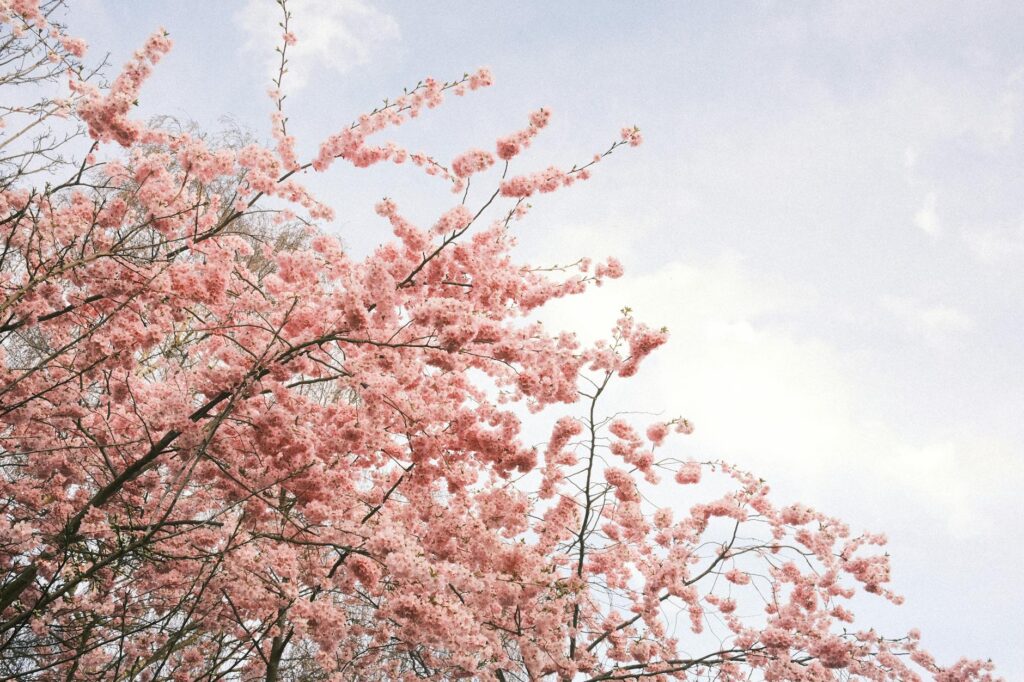
Shanghai does cherry blossom on a scale that surprises people who associate it entirely with Japan. One park in Baoshan holds sixteen thousand trees across a hundred and twenty varieties, opens until half past nine at night with the trees lit, and caps its most popular island at twenty thousand visitors a day because otherwise nobody could move. Getting the cherry blossom Shanghai timing right is the whole game: peak bloom lasts seven to ten days, and a single wet, windy front can end it in an afternoon.
The season is longer than that peak, though, because it is really a sequence. Plum blossom opens in February when it is still cold. Magnolia — Shanghai’s official city flower — follows in early March. The early cherry varieties overlap with it, the main Somei Yoshino wave arrives around the twentieth of March, and peach and peony come after. Plan around the sequence rather than a single date and you cannot really miss, which is useful, because the exact dates are not announced until February. This guide covers when to come, where to go, how to avoid the twenty thousand other people, and what else is flowering while you wait.
Table of Contents
- Cherry blossom Shanghai: the season week by week
- Gucun Park, the main event
- Cherry blossom Shanghai spots beyond Gucun
- Beating the crowds
- Plum, magnolia and the rest of spring
- Photographing it
- Practicalities
- Making a day of it in Baoshan
- Why the Chinese calendar puts plum first
- What people get wrong
- Frequently Asked Questions
Cherry blossom Shanghai: the season week by week
| When | What is out | Where |
|---|---|---|
| Early–mid February | Plum blossom (梅花) | Shanghai Botanical Garden, Guyi Garden |
| Late February | Winter cherry and Kawazu cherry — the early varieties | Chenshan Botanical Garden |
| Early–mid March | Magnolia, the city flower | Everywhere; Chenshan runs a festival |
| ~9 March onwards | Festival opens, early cherry | Gucun Park |
| ~20 March – 10 April | Somei Yoshino — the main wave | Gucun, Tongji, Century Park, Chenshan |
| Late March – early April | Peak bloom, 7–10 days | All of the above |
| Mid-April onwards | Late cherry, peach, then peony | Century Park, the botanical gardens |
The dates move by about a week either way from year to year, driven by February and March temperatures. The 2026 Shanghai Cherry Blossom Festival ran 9 March to 9 April, which is representative. Next year’s exact dates are published by the city around February, and the municipal government’s festival announcements are the authoritative source — treat anything published earlier as an estimate.
If you are booking flights and can only pick one week, take the last week of March. It catches Somei Yoshino at or near peak in most years, it overlaps with the tail of the magnolia, and the weather is generally mild and dry — daytime highs of 14–18°C. Our guide to Shanghai’s weather month by month has the detail.
Gucun Park, the main event
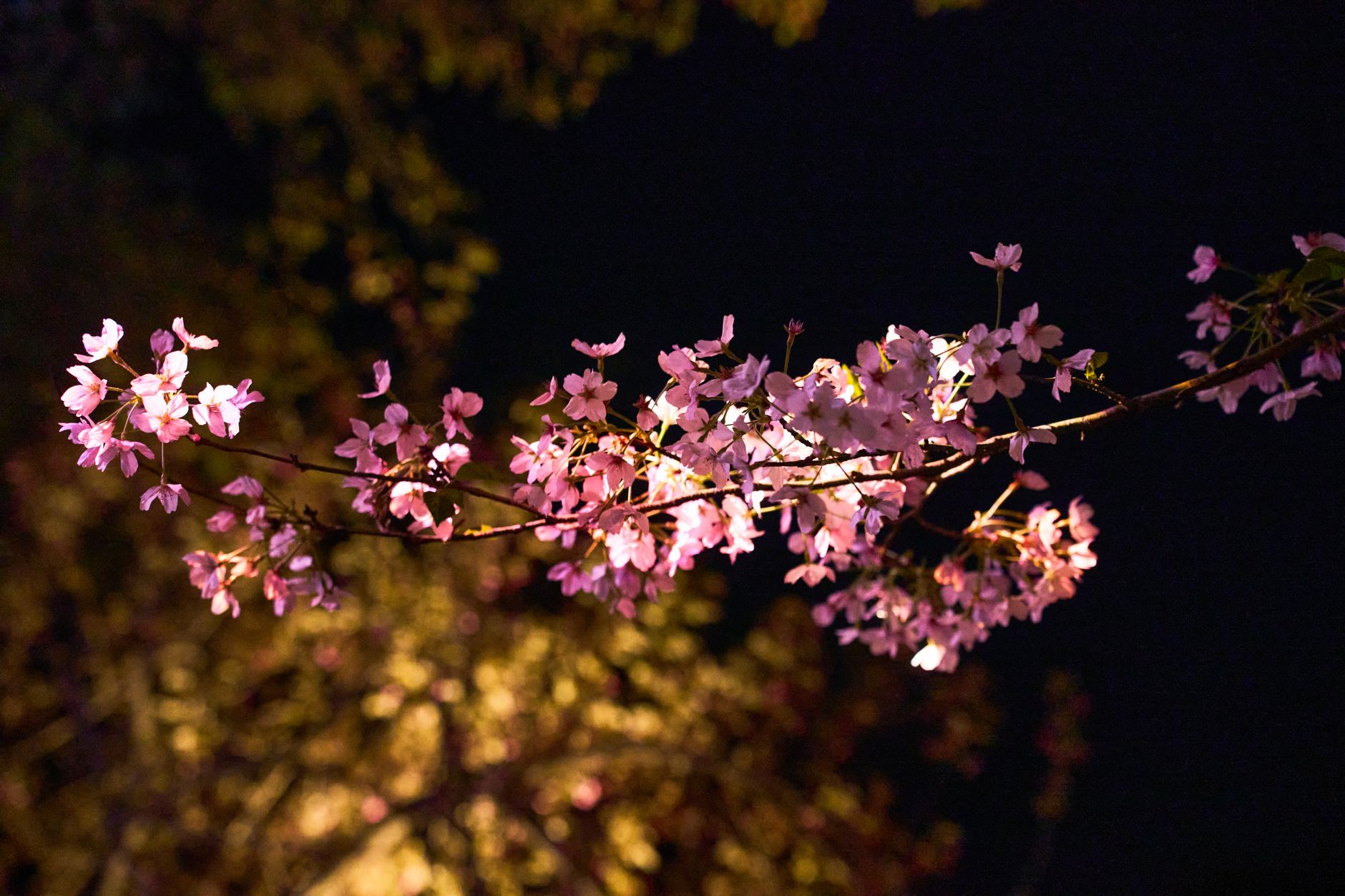
Gucun Park (顾村公园) in Baoshan District is where the Shanghai Cherry Blossom Festival happens, and the numbers are the reason. The park runs to about 106 hectares, holds more than 16,000 cherry trees across 120 varieties, and is the largest cherry forest in the city by a very wide margin. The densest planting is on Cherry Blossom Island, which is where the crowds and the famous shrine tree are.
Getting there: Metro Line 7 or Line 15 to Gucun Park station, which comes out beside park entrance 2. It is a long ride from central Shanghai — 50 to 70 minutes from People’s Square with a change — so treat it as a half-day expedition rather than something to slot into an afternoon.
How the festival works. The pattern in 2026 was two phases. During the early-bloom stage (9–21 March) the area near Gate 3 stayed open into the evening, to 21:30. From 21 March to 9 April, as the main varieties came out, the core area near Gate 2 carried the light installations, the cultural market and the food stalls. The night viewing is genuinely the distinctive thing here: illuminated cherry blossom at scale is uncommon outside Japan and it is worth building the trip around.
Tickets. The arrangements vary year to year and are worth checking before you go, but the 2025 pattern gives you the shape: the park open 06:00–21:30; free entry 06:00–15:00 through the main festival period; a paid evening session 17:00–21:00 at ¥50 adult, ¥30 student, ¥36 for seniors aged 60–64, free for children under 1.3 metres and anyone 65 or over. The city’s own visitor guide to Gucun Park sets these out. Critically, Cherry Blossom Island is capped at 20,000 visitors a day with 4,000 of those at night, and tickets are sold online only — there is no gate sale. Turning up without a reservation on a Saturday in late March means not getting in.
Book through the park’s WeChat channel or a ticketing platform as soon as the window opens. If you are travelling without a Chinese phone number, ask your hotel concierge — this is exactly the sort of thing they do routinely and in two minutes.
Cherry blossom Shanghai spots beyond Gucun
Gucun is the biggest and the busiest. These four are better in different ways.
Tongji University (同济大学), Yangpu. The connoisseur’s choice: more than 200 Somei Yoshino along a classic campus avenue, planted decades ago and now forming a proper tunnel. Free. The catch is access — outside visitors must reserve, through the university’s own channel, and only during a defined window (in 2026 that was 27 March to 10 April, with best viewing 22 March to 13 April). It is worth the small administrative effort: this is the most photogenic single avenue of blossom in the city and the atmosphere on a campus is entirely different from a festival park.
Chenshan Botanical Garden (辰山植物园), Songjiang. The earliest and the most botanically interesting, with winter cherry, Kawazu and Somei Yoshino planted so that something is in flower from late February. In 2026 it ran night viewing until 20:00 up to 6 April, with a ¥30 evening ticket sold from Ticket Centre Gate 1 after 16:30 giving access to the cherry forest and the magnolia garden. If you are in Shanghai in late February or early March and think you have missed it, this is where to go — you have not.
Century Park (世纪公园), Pudong. The convenient one. Metro Line 2 straight there, no changes, twenty minutes from Lujiazui. Cherry from mid-March to early April as part of a long spring flower programme that runs through to May with successive species. It is not the best blossom in the city but it is the easiest to reach and the easiest to combine with a normal sightseeing day.
Shanghai Botanical Garden, Xuhui. Best for the wider sequence rather than cherry specifically — plum in February, magnolia in March, peach and peony after. If you want to understand what is flowering and when, this is the place that labels it.
All of these except Tongji charge a modest entry fee or none at all, which makes blossom season one of the better-value things to do in the city — see our guide to free things to do in Shanghai for what else costs nothing.
Beating the crowds
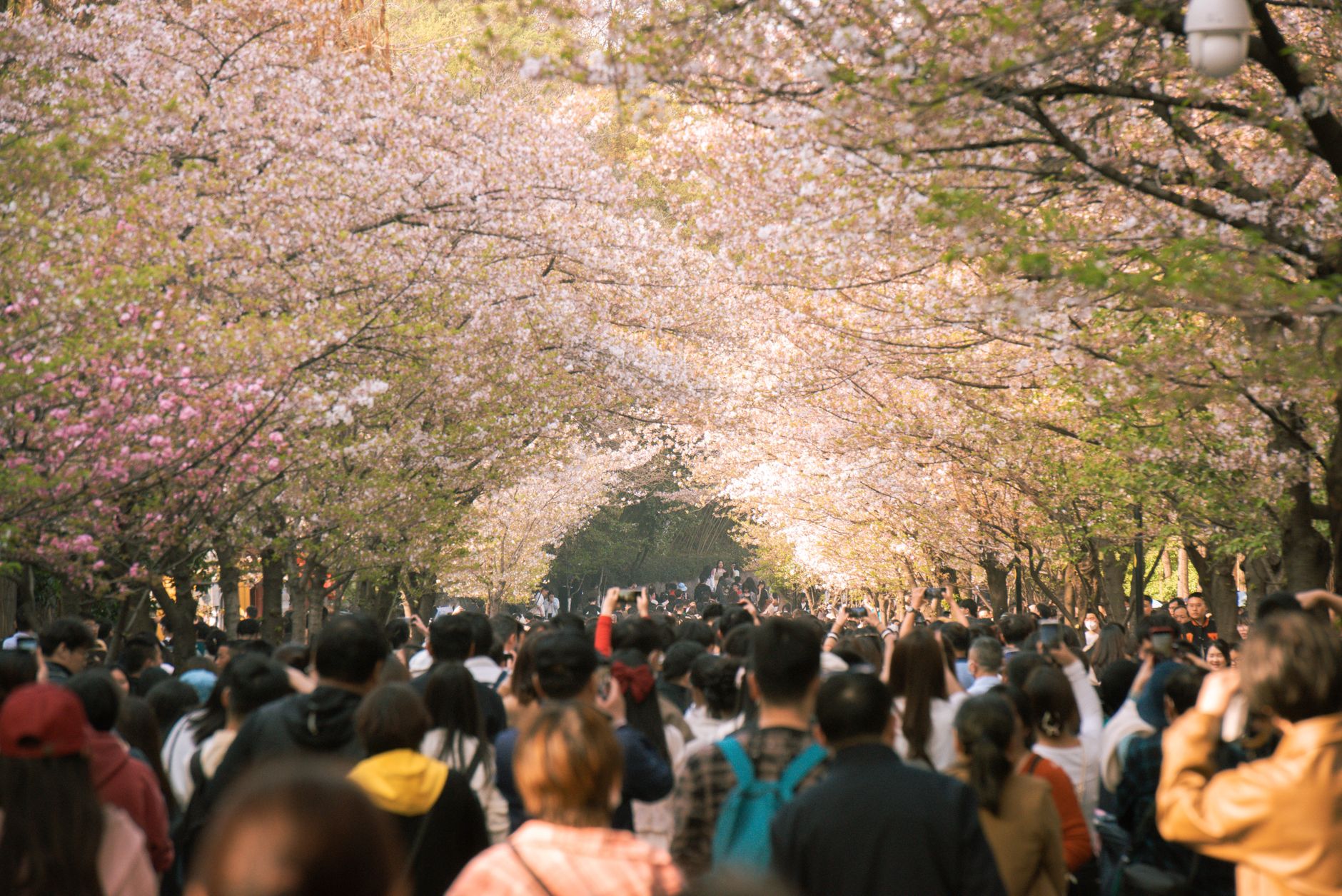
Blossom season is a domestic tourism event, not an international one, and the crowds are correspondingly enormous. Chinese visitors travel across the country for this. Five things that work:
- Go on a weekday. The difference between a Tuesday and a Saturday at Gucun is not marginal — it is the difference between walking and shuffling.
- Be there for opening. Gucun opens at 06:00. Between 06:00 and 09:00 you have the place more or less to yourself and the light is the best of the day. This single piece of advice is worth more than everything else on this list.
- Take the evening session instead. Capped at 4,000, ticketed, and the lighting makes it a completely different experience.
- Go slightly early or slightly late in the season. The week before peak has 80% of the blossom and 30% of the people. The week after has fallen petals, which photograph beautifully and which almost nobody turns up for.
- Choose a smaller site. Tongji’s avenue, Chenshan’s cherry forest and the ordinary neighbourhood parks all carry a fraction of Gucun’s load.
One more, which is under-used: Shanghai’s streets have blossom too. The former French Concession, the campuses, and dozens of small district parks all have cherry trees, and nobody queues for them. A morning walking Wukang Road and Anfu Road in late March gets you blossom, coffee and no crowds at all.
Plum, magnolia and the rest of spring
If your dates are fixed and they fall outside the cherry window, you are not out of luck — you are simply in a different part of the sequence.
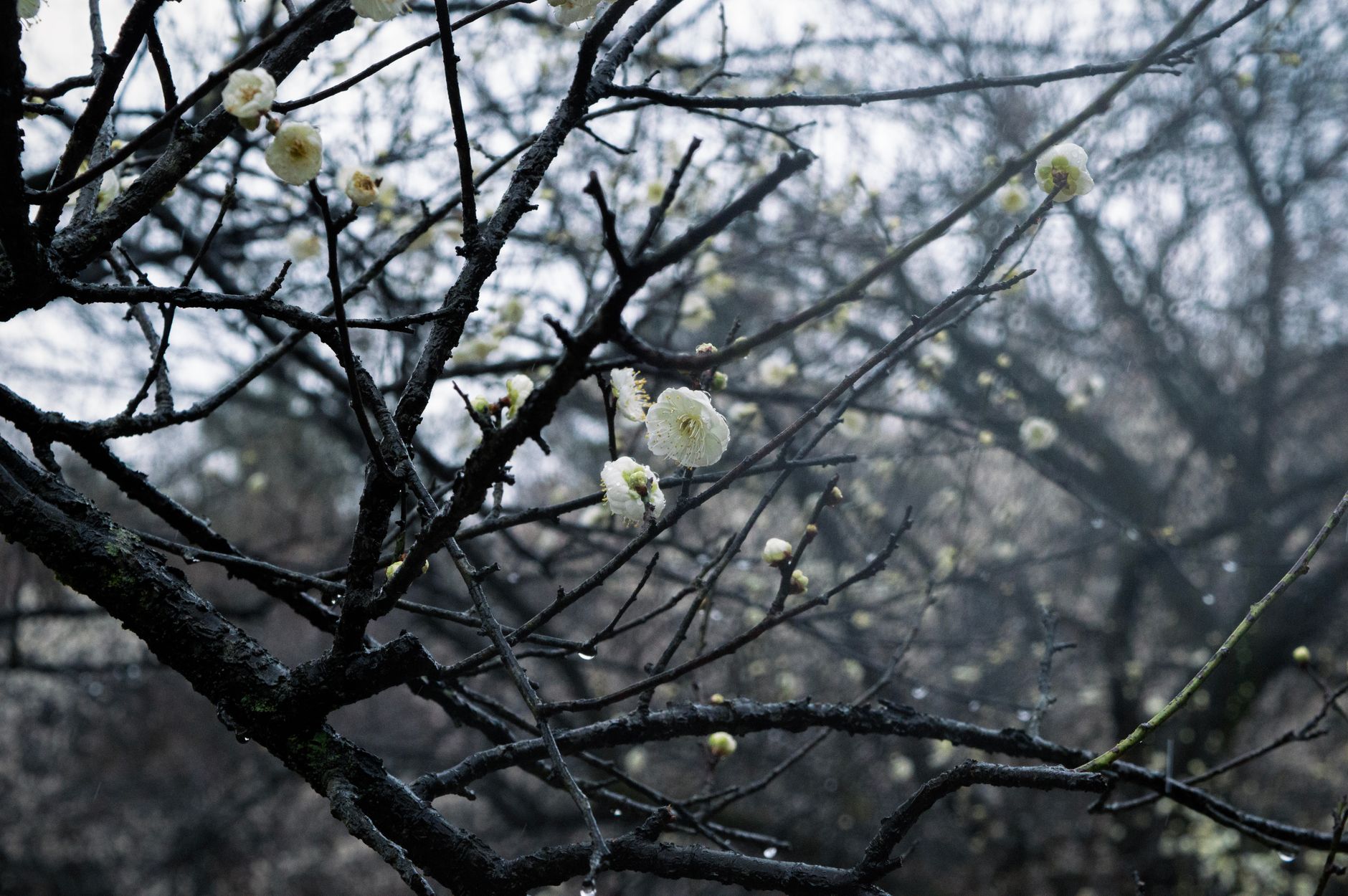
Plum blossom (梅花), February. The winter flower: small, white or deep pink, on bare black branches, often in mist or rain. It is the more literary flower in Chinese culture — a symbol of resilience because it blooms in the cold — and it is quieter and more atmospheric than cherry. The Shanghai Botanical Garden and Guyi Garden in Jiading are the places to see it. Crowds are a fraction of cherry season.
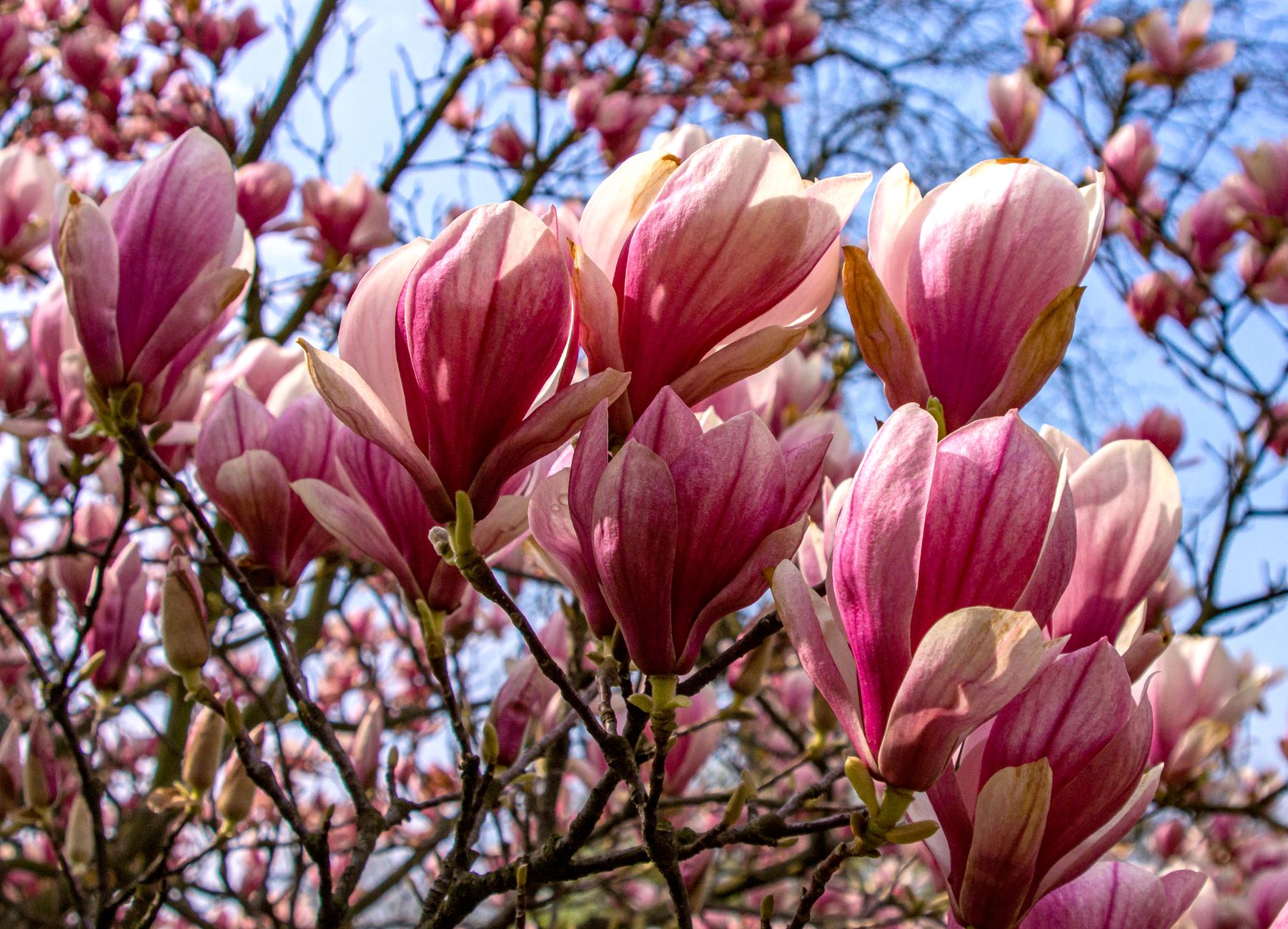
Magnolia (白玉兰), early to mid-March. Yulan magnolia is Shanghai’s official city flower, and it is everywhere: parks, street plantings, temple courtyards, the grounds of old villas. Large, waxy, white-and-pink flowers on leafless branches, and unlike cherry it does not need a special trip — you will walk past it. Chenshan runs a magnolia festival alongside the cherry.
Peach and peony, mid-April onwards. After the cherry drops. Century Park’s spring programme in 2026 ran through to 10 May precisely because there is a continuous succession.
Our guide to Shanghai in spring covers the season as a whole, including what to wear, and the festivals and events calendar lists what else is on at the same time.
Photographing it
A few things that make a real difference, none of which need expensive equipment:
- Shoot early. First light through blossom is soft and directional, and at 07:00 there is nobody in the frame. By 10:00 the light is flat and the paths are full.
- Shoot up. Blossom against sky separates cleanly; blossom against other trees turns to mush. A blue-sky morning is worth waiting for.
- Use the buildings. The shot that says Shanghai rather than anywhere-in-Asia is blossom with a tower or a shikumen roofline behind it. Century Park with the Pudong skyline, or a French Concession street with a villa, beats a perfect close-up of a branch.
- Go back after the peak. Petals on water, on paths and on parked cars are the most evocative images of the whole season and everyone else has gone home.
- Rain is not a write-off. Wet branches and grey sky suit plum blossom especially, and the crowds vanish.
Our guide to photography in Shanghai covers the wider city, including the rules about what not to point a camera at.
Practicalities
- Getting to Gucun: Metro Line 7 or 15 to Gucun Park station, by entrance 2. Allow 50–70 minutes each way from the centre. Fare ¥5–7.
- Booking: Cherry Blossom Island is online-only with a daily cap. Book the moment the window opens; ask a hotel concierge if you lack a Chinese phone number.
- What to wear: Late March in Shanghai runs 8–18°C and is changeable. Layers, and something waterproof — the spring rain arrives without much notice. See our packing guide.
- Food: The festival has food stalls; the parks otherwise do not have much. Take a picnic, which is what everyone else does.
- With children: Gucun has open lawns and space to run, which makes it better than most Shanghai attractions for small children — see Shanghai with kids.
- Cost: Free to ¥50 depending on site and time of day. Blossom season is one of the cheapest good things Shanghai offers.
And one piece of expectation-setting: this is not Kyoto. The setting is a large modern municipal park in an outer district, reached by metro, with light installations and food stalls and a great many people enjoying themselves loudly. It is a very good day out and a slightly different thing from what the phrase “cherry blossom” may conjure.
Making a day of it in Baoshan
Gucun Park is an hour from the centre and there is no sense in doing two hours of travel for ninety minutes of blossom. The park itself absorbs a morning comfortably — it is 106 hectares and only a fraction of it is cherry forest, with lakes, lawns, a children’s play area and enough space that even on a busy day the outer sections are calm.
What to do with the rest of the day depends on your appetite for outer Shanghai. Baoshan is a working northern district, not a sightseeing one, and that is rather the point: it is where the city’s heavy industry sat, it runs down to the mouth of the Yangtze at Wusongkou, and it looks nothing like the Bund. If you have never seen the non-tourist Shanghai, an afternoon here is more instructive than another temple.
The efficient alternative is to treat Line 7 as the day’s spine and stop on the way back. It runs south through Jing’an Temple, which puts a golden-roofed temple surrounded by office towers thirty minutes from a cherry forest, and continues to Changshu Road for the French Concession — where there is more blossom on the streets, and coffee. That is a good day: blossom at dawn, temple at noon, plane trees and a café in the afternoon.
If you would rather not travel that far at all, Century Park on Line 2 is twenty minutes from Lujiazui and can be slotted into an ordinary Pudong day without any special planning. It has less blossom and no festival, and for many visitors that trade is the right one.

Why the Chinese calendar puts plum first
It is worth knowing that the flower Chinese culture cares most about is not the cherry. The méi, plum, is one of the “Three Friends of Winter” alongside pine and bamboo, and it carries a specific meaning: it flowers on bare branches in the cold, before anything else, and so stands for endurance and integrity in adversity. It has been painted and written about for well over a thousand years.
Cherry blossom in China occupies a different and more recent position — it is a spectacle and a photograph rather than a symbol, and a good deal of its current popularity is a modern phenomenon driven by domestic tourism and social media. That is not a criticism; the festivals are genuinely enjoyable and the trees are magnificent. But it explains why a February plum garden in the rain is full of older Shanghainese with cameras and almost no tourists, while Gucun in late March is the opposite.
The magnolia sits somewhere between the two. It was adopted as Shanghai’s official city flower because it opens early, faces upward and is associated with a forward-looking, striving character — a self-image the city is comfortable with. Once you know to look for it, you will see the stylised magnolia on municipal signage, awards and civic branding all over Shanghai. Our guide to traditional culture in Shanghai covers more of this symbolism.
What people get wrong
Booking flights around a guessed date. Peak moves by a week either way and is not confirmed until February. The last week of March is the best single bet; three weeks either side of it guarantees you something.
Turning up at Gucun without a ticket. Cherry Blossom Island is capped at 20,000 a day and sells online only. There is no gate sale on a busy weekend.
Going at 13:00 on a Saturday. The worst possible combination. Go at 06:30 on a Wednesday.
Writing off the week after peak. Fallen petals are the best photography of the season and the crowds have gone.
Assuming Tongji is just a walk-in. Outside visitors need a reservation through the university’s own channel, within a defined window.
Only looking for cherry. Magnolia is the city flower and it is on every street in early March. Plum in February is quieter and arguably lovelier.
Treating Gucun as an afternoon. It is 50–70 minutes each way. Give it a morning.
Frequently Asked Questions
When is cherry blossom season in Shanghai?
Late February to mid-April overall, with the main Somei Yoshino wave from roughly 20 March to 10 April and peak bloom lasting only seven to ten days within that. The 2026 Shanghai Cherry Blossom Festival ran 9 March to 9 April, which is representative. Exact dates shift about a week either way and are announced around February.
Where is the best place to see cherry blossom in Shanghai?
Gucun Park in Baoshan, with more than 16,000 trees across 120 varieties and the city’s cherry blossom festival, reached on Metro Line 7 or 15. For a quieter and arguably prettier experience, the Somei Yoshino avenue at Tongji University, or the cherry forest at Chenshan Botanical Garden, which flowers earliest.
Do I need tickets for Gucun Park?
Yes for Cherry Blossom Island during the festival. It is capped at 20,000 visitors a day with 4,000 of those in the evening session, and tickets are sold online only — there is no gate sale. Daytime entry has often been free until 15:00, with a paid evening session around ¥50, but the arrangements change each year, so check before you go.
How do I get to Gucun Park?
Metro Line 7 or Line 15 to Gucun Park station, which surfaces beside park entrance 2. It is 50 to 70 minutes from central Shanghai with a change, and ¥5–7. Treat it as a half-day trip rather than an afternoon add-on.
Can I see cherry blossom at night in Shanghai?
Yes, and it is the distinctive thing about Shanghai’s festival. Gucun stays open until 21:30 during the festival with lit trees and light installations, and Chenshan Botanical Garden has run evening viewing until 20:00 with a ¥30 ticket sold after 16:30. Both cap numbers, so book.
Is Tongji University open to visitors during blossom season?
Yes, but by reservation. Outside visitors must book through the university’s own channel during a defined window — in 2026, 27 March to 10 April, with best viewing 22 March to 13 April. Entry is free. The 200-plus Somei Yoshino avenue is the finest single stretch of blossom in the city.
How crowded does it get?
Very. This is a major domestic tourism event and Chinese visitors travel across the country for it. A Saturday afternoon at Gucun in late March is shoulder-to-shoulder. A weekday at 06:30, the evening session, or a week either side of peak are all dramatically better.
What if I miss the cherry blossom?
You are simply in a different part of the sequence. Plum blossom flowers in February at the Shanghai Botanical Garden and Guyi Garden. Magnolia, Shanghai’s city flower, is out on every street in early March. Peach and peony follow the cherry through April and into May.
Is it worth planning a trip around?
Only if you are flexible. Peak lasts seven to ten days and cannot be predicted more than a few weeks out, so building a whole trip around it is a gamble. Late March is a lovely time to be in Shanghai regardless — mild, dry, and one of the two best windows of the year — so come then and treat the blossom as a bonus.
How much does it cost?
Between nothing and ¥50, depending on the site and the time of day. Tongji is free, Gucun has often been free before 15:00, and the evening sessions are around ¥30–50. It is among the best-value things to do in Shanghai.
What is the weather like in blossom season?
Late March runs roughly 8–18°C and is changeable, with rain arriving without much warning. Take layers and something waterproof. A blue-sky morning is what you want for photography, and there are plenty of them, but do not count on any specific day.
Is Shanghai’s cherry blossom as good as Japan’s?
Different rather than lesser. Shanghai’s is bigger in raw numbers at a single site than almost anywhere in Japan, and the illuminated night viewing at scale is unusual. What it lacks is the setting — you are in a modern municipal park in an outer district, not a temple garden. Judge it on its own terms and it is excellent.
Come in the last week of March if you can choose, go at six in the morning on a weekday, book the island ticket the moment the window opens, and go back a week after peak for the fallen petals. If you are still deciding when to visit, our guide to the best time to visit Shanghai weighs spring against autumn, and Shanghai in autumn makes the case for the other end of the year.