Nobody plans for this part of the trip. But the single most useful thing you can do before you fly is spend ninety seconds putting four three-digit numbers into your phone, because the Shanghai emergency numbers are not the ones you are used to. There is no 911 here, and no 999. Dialling either gets you nothing. What you want is 110, 119, 120 and 122, and knowing which is which matters more than you would think — the fire service, not the ambulance service, is the one that comes to a road accident.
The good news is that Shanghai is one of the easiest cities in the world to have a problem in. The police answer 110 in eight languages. Ambulances are dispatched from a citywide system with English-speaking operators. There are hospitals with round-the-clock emergency departments staffed by doctors trained in the United States, Britain and Australia, and there is a municipal government hotline you can ring for the enormous grey category of things that are not emergencies but have still ruined your afternoon. This guide covers all of it: who to call, what to say, what it costs, what your consulate will and will not do for you, and the specific bureaucratic sequence for the two disasters travellers actually experience — a lost passport and a stolen phone.
Table of Contents
- Shanghai emergency numbers: the four that matter
- What actually happens when you call
- 12345: the number for everything that is not an emergency
- Medical emergencies: ambulances, hospitals and costs
- Minor illness, pharmacies and the 3am problem
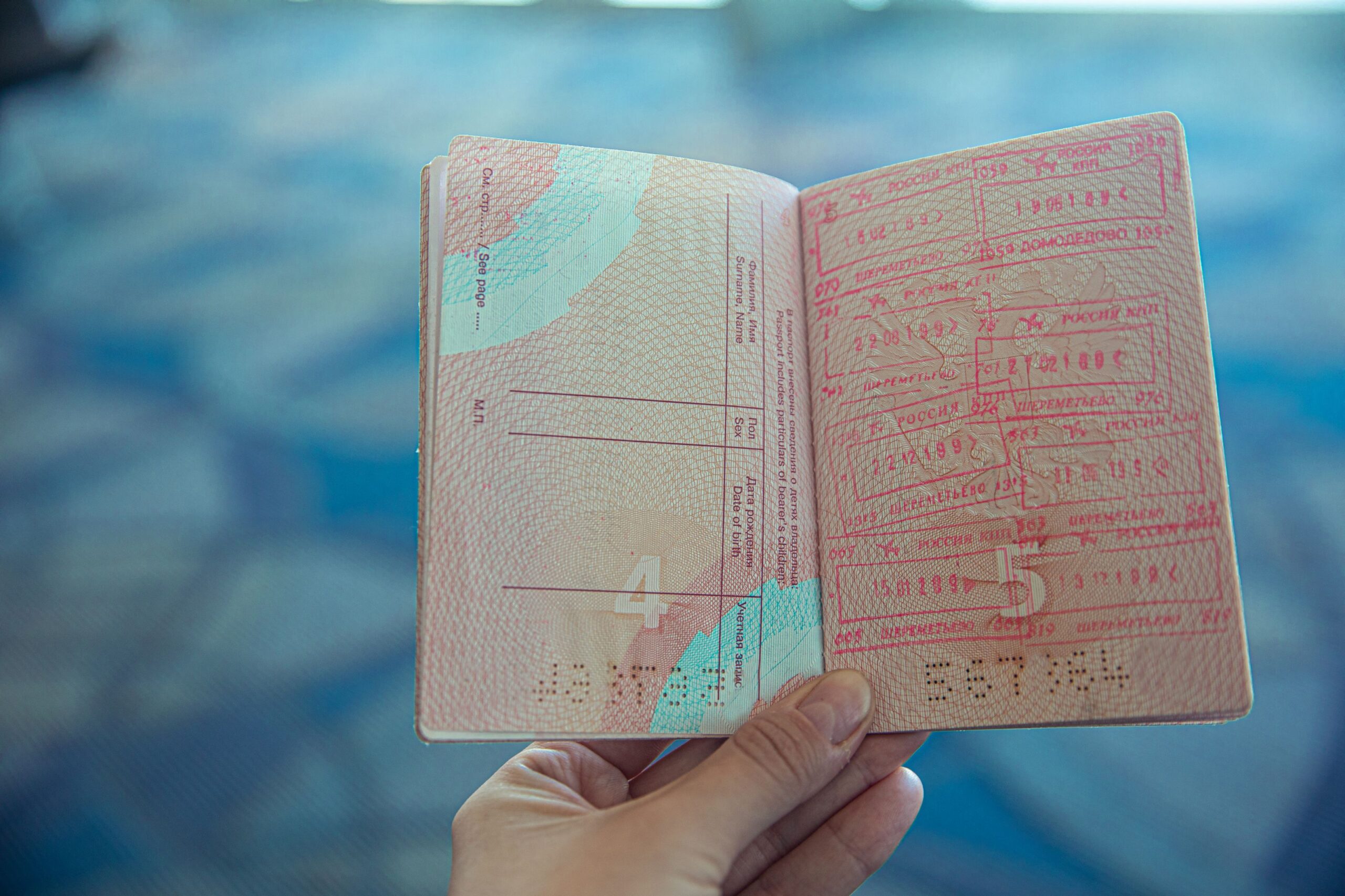
- Losing your passport: the exact sequence
- Losing your phone, your cards or your money
- Theft, scams and dealing with the police
- Your consulate: what it can and cannot do
- Insurance, payment and getting reimbursed
- What people get wrong
- Shanghai emergency numbers to save before you fly
- Frequently Asked Questions
Shanghai emergency numbers: the four that matter
China runs separate lines for separate services rather than a single switchboard. All four are free, from any phone, including a handset with no SIM card and no credit. You do not need a Chinese number to reach them.
| Number | Service | Use it for | English? |
|---|---|---|---|
| 110 | Police | Theft, robbery, assault, missing person, anything criminal, and any urgent situation where you do not know who else to call | Yes — plus seven other languages |
| 120 | Ambulance | Medical emergency, dispatch of a paramedic crew | Yes |
| 119 | Fire and rescue | Fire, but also road accidents, building collapse, people trapped, natural disaster | Yes |
| 122 | Traffic police | Road traffic accidents and disputes with no serious injury | Limited |
| 12345 | Municipal hotline | Non-emergencies: complaints, lost property, taxi disputes, “who do I even call about this” | Yes, multilingual |
The line that surprises people is 119. In most countries you ring for an ambulance after a car crash. In China the rescue service — the people with cutting equipment — sits with the fire brigade, and the Shanghai municipal government explicitly lists road accidents, building collapse, air crashes and natural disasters under 119 alongside fires. If somebody is trapped, ring 119. If somebody is injured but free, ring 120. If it is a scrape between two cars and everyone is standing up and arguing, ring 122.
If you cannot work out which, ring 110. It is the best-resourced of the four for foreign languages and will transfer or dispatch on your behalf. Nobody minds you calling the wrong one.
What actually happens when you call
The Shanghai government states that 110 is answered in English, Japanese, Russian, German, French, Spanish, Arabic and Korean, and that 119 and 120 also handle English. That is a real capability, not a stated aspiration — but it is not instant. The call is usually picked up in Mandarin. Your first words should be the language you need, said slowly and clearly: “English, please.” There may be a pause of thirty to sixty seconds while an interpreter or an English-capable operator joins the line. Do not hang up during that pause. Hanging up and redialling puts you at the back of the queue.
Have three things ready before you dial:
- Where you are. This is the hard part, not the language. A street name is not enough in a city of 24.8 million people where roads run for fifteen kilometres. Open your maps app and read out the full address, or better, screenshot it and read the Chinese characters aloud phonetically — even a mangled attempt at the characters places you faster than a perfect English description. The nearest metro station and exit number is an excellent fallback. So is a large building name.
- What has happened, in one sentence, first. Not the backstory. “A man has collapsed and is not breathing.” “My bag was stolen twenty minutes ago.” “There is a fire on the fourth floor.”
- Your phone number, so they can ring back. They frequently do.
If you are somewhere with staff — a hotel, a restaurant, a mall, a metro station — the fastest route is often to make the call yourself and then hand the phone to a member of staff, or to grab staff first and have them call. Hotel front desks in particular deal with this regularly and know the local station and the nearest hospital. This is one of the few situations where the language barrier in Shanghai genuinely bites, and a bilingual local standing next to you removes it entirely.

12345: the number for everything that is not an emergency
Most travel problems are not emergencies. A taxi driver has taken a scenic route and you want it looked at. You left a bag on the metro. A shop has refused a refund. You cannot work out which government office handles the thing you need. The number for all of that is 12345, the Shanghai municipal citizen service hotline, and it has multilingual support.
It is not a tourist information line. It is a complaints-and-referrals switchboard for city services, and it is unusually effective — Shanghai treats 12345 case resolution as a performance metric for its districts, so logged complaints get chased. Against a licensed operator — a taxi, a hotel, a stall in a managed market — a 12345 case number carries weight that an argument on the pavement does not.
For lost property specifically, the sequence is: ring the operator of the place you lost it (metro stations have a lost property desk, and taxi companies keep records against the receipt number), then 12345 if you get nowhere. Always take the paper receipt from a taxi. It carries the vehicle number and the company, and without it a lost phone is effectively gone. Our guide to taking taxis in Shanghai covers why that scrap of paper matters more than it looks.
Medical emergencies: ambulances, hospitals and costs
Dial 120. Ambulances in Shanghai are properly equipped and the crews are competent, but the system has two features worth knowing in advance.
First, the ambulance takes you to the nearest appropriate public hospital, not to the private international hospital your insurer has on file. You can ask, and in a non-critical case they may accommodate you, but in a genuine emergency you go where the trauma or cardiac capacity is. That is the right outcome medically. Sort the insurance out afterwards.
Second, an ambulance in China is chargeable and is generally not free at the point of use. Expect a call-out and distance-based fee — a few hundred renminbi in most city cases. It is not a reason to hesitate.
| Where | Type | 24h emergency? | English | Rough cost of a consultation |
|---|---|---|---|---|
| Public hospital, ordinary outpatients | Chinese public | Yes | Unlikely at the desk | ¥20–100 registration, then per test |
| Huashan Hospital Worldwide Medical Center (Wulumuqi Middle Road, Jing’an) | International wing of a leading public hospital | Yes | Yes | ¥500–1,200 |
| Shanghai United Family Hospital | Private international | Yes | Yes | ¥1,200–2,000 |
| Jiahui International Hospital (near Hongqiao) | Private international, JCI-accredited | Yes | Yes | ¥1,200–2,000 |
| ParkwayHealth clinics | Private outpatient network | No — clinic hours | Yes | ¥1,000–1,800 |
The distinction that matters at 3am is that only some private facilities run a genuine twenty-four-hour emergency department. United Family and Jiahui do. ParkwayHealth is a clinic network with excellent English and convenient locations, but it is not where you go with a suspected fracture at midnight. For anything time-critical, the international wing of a big public hospital — Huashan is the classic choice — combines serious clinical capacity with a desk that speaks English.
A Chinese public hospital runs on a sequence that catches every first-timer: you register at a machine or window (挂号), pay, then see a doctor, then pay again for any test or prescription, then return to the doctor with the results. Payment is by Alipay, WeChat Pay or card at the machines. Nothing is billed later. Bring your passport — registration is against it. Our fuller guide to medical care in Shanghai walks through the process ward by ward.
Minor illness, pharmacies and the 3am problem
Most travel medicine is not an emergency. It is a stomach that has objected to something, a chest infection picked up on the plane, an allergic flare, or a cut that needs proper cleaning. For these, Shanghai’s pharmacies are the fast answer.
Chinese pharmacies (药店, yàodiàn) are everywhere, often two on the same block, and a good number in central districts stay open twenty-four hours — look for the green cross and the characters. Behind the counter you will find a mix of Western pharmaceuticals under Chinese brand names and traditional Chinese medicine, usually on separate shelves. Staff rarely speak much English but respond well to a translation app with camera OCR pointed at a box, and to the generic drug name written down. Write down the generic name of anything you take regularly — paracetamol, ibuprofen, loratadine, omeprazole — because brand names do not travel.
Two things a pharmacy will not solve. Antibiotics are prescription-only and properly enforced; you will be sent to a hospital. And anything containing pseudoephedrine or codeine is tightly controlled. If you take regular medication, bring enough for the whole trip in its original labelled packaging, with a copy of the prescription — do not plan to buy it here.

Losing your passport: the exact sequence
This is the one that frightens people most and it is entirely recoverable, provided you do the steps in the right order. Doing them out of order is what turns two days into two weeks.
- Report it to the police. Go to the nearest police station (派出所) and get a written Receipt of Report. Do this the same day. Your hotel can tell you which station covers the address and will often send someone with you.
- Get the loss confirmation from the Exit-Entry Administration. Take the police receipt, a copy of the lost passport if you have one (this is why you photograph it), and two passport photographs to the Exit-Entry Administration of the Shanghai Public Security Bureau at 1500 Minsheng Road, Pudong. They issue a Confirmation of Reporting the Loss of Passport, usually within two working days.
- Go to your consulate with the confirmation and apply for a replacement passport or an emergency travel document. Timings vary by country from same-day to about a week.
- Return to the Exit-Entry Administration with the new document to have your visa or entry permission reissued. You cannot leave China without it — the new passport has no Chinese entry record in it.
The critical detail: the loss confirmation is valid for thirty days and the residence and visa formalities must be completed inside that window. The Shanghai government’s own guidance for foreigners who lose a passport sets out the same sequence. Budget three to five working days end to end and assume you are moving your flight. If you are in Shanghai on the 240-hour transit arrangement rather than a visa, tell the Exit-Entry officers at the first opportunity — the clock on your permitted stay is a separate problem that they can help manage, and it is far better raised early. Our guide to China’s 240-hour visa-free transit explains the conditions you are working under.
The prevention is trivial and almost nobody does it: photograph the photo page and your Chinese visa or entry stamp, email the images to yourself, and keep a paper photocopy somewhere separate from the passport. Carry the photocopy day to day and leave the passport in the room safe unless you need it for a train, a hotel check-in or a tax refund.
Losing your phone, your cards or your money
In Shanghai your phone is not a convenience, it is your wallet, your ticket, your translator and your map. Losing it is functionally worse than losing your cash, because almost everything is paid through Alipay and WeChat Pay rather than a card terminal.
Do this, in order:
- Freeze the payment apps first, then the cards. Both Alipay and WeChat can be locked from a browser on any other device. The linked foreign card is the thing at risk.
- Use the device’s own find-and-erase from a borrowed laptop or a hotel computer.
- Report to the police for the insurance claim. You want a written report with a stamp. No report, no payout — this is the single most common reason a travel insurance claim fails.
- Ring your bank’s international line, which is on the back of the card you no longer have. Save those numbers separately before you travel.
Carry a genuine backup: a second physical card kept somewhere other than your wallet, and ¥300–500 in cash. Cash acceptance in Shanghai has recovered — shops are legally required to take it — but you will get blank looks and a hunt for change. It is enough to get you across the city and back to your hotel, which is all it needs to do. Our guide to money and currency exchange in Shanghai covers where to get that cash sensibly.
If you also lose your Chinese SIM or eSIM, buying a replacement requires a passport and takes about twenty minutes at a China Mobile or China Unicom shop. Public wi-fi in Shanghai frequently demands a Chinese mobile number for the SMS code, which is precisely when it stops being useful; hotel wi-fi generally does not. See SIM cards and internet in Shanghai for the practical detail.
Theft, scams and dealing with the police
Violent crime against visitors in Shanghai is genuinely rare, and the city is among the safest large cities anywhere for walking around after dark — our assessment of whether Shanghai is safe goes through the evidence. What does happen is opportunistic: phones lifted on a crowded metro carriage, bags taken from the back of a chair at a café on Nanjing Road, and a small number of persistent confidence tricks aimed squarely at tourists.
The classic is the tea ceremony or art-student approach: a friendly, English-speaking pair strike up a conversation near the Bund, People’s Square or East Nanjing Road, suggest a traditional teahouse, and you leave with a bill for thousands. There is also the bar variant with a much larger bill and an uncomfortable exit. The pattern to recognise is not the venue, it is the approach — strangers who begin a long, warm conversation in English in a tourist area and then propose a specific destination. Our list of Shanghai scams to avoid covers the current variants in detail.
If you are stung, ring 110 while you are still there. Shanghai police take tourist-facing fraud seriously and outcomes are meaningfully better if the officers arrive before you have left the premises. If you have already left, go to a police station with the receipt and the location, and get a written report regardless of whether you expect to recover the money — you will need it for insurance.
On the officers themselves: uniformed police in Shanghai are courteous and process-driven with foreigners. Be calm, be polite, produce your passport or its copy, and let them lead. Nothing about the interaction is adversarial. Do not photograph or film police operations, government buildings or military sites — that is the one behaviour that turns a routine encounter into a serious one.
Your consulate: what it can and cannot do
Consulates are the most misunderstood resource on this list. They are not a rescue service, they do not pay your bills, and they cannot get you out of a Chinese legal process. What they can do is narrow and genuinely valuable.
| A consulate will | A consulate will not |
|---|---|
| Issue an emergency travel document or replacement passport | Pay medical, legal or hotel bills |
| Contact your family, and help arrange a transfer of funds from them | Lend you money |
| Provide a list of English-speaking lawyers, doctors and translators | Give legal advice or intervene in a court case |
| Visit you if you are detained, and press for fair treatment | Get you released, or secure better treatment than a local would receive |
| Notify next of kin in the event of death or serious injury | Repatriate you — that is your insurer’s job |
The main Shanghai consulates sit in a tight cluster in Jing’an and Xuhui. The United States consulate is at 1469 Huaihai Middle Road, Xuhui. The British consulate is at 17F Garden Square, 968 West Beijing Road, Jing’an, on +86 21 3279 2000, which also serves out of hours. Australia is on Level 22 of CITIC Square, 1168 Nanjing Road West, on +86 21 2215 5200, the switchboard routing after-hours calls to the 24-hour Consular Emergency Centre in Canberra. Canada is at 8F ECO City, 1788 Nanjing West Road, on +86 21 3279 2800. Find yours on your own foreign ministry’s website before you fly and save the after-hours number — it is not always the switchboard.
Insurance, payment and getting reimbursed
Chinese hospitals do not bill foreign insurers on trust. In practice you are in one of two positions. At a private international hospital, direct billing exists if your policy is one they have an arrangement with — check the specific hospital name against your policy before you travel, not the insurer’s general claim about China. Everywhere else, you pay up front and claim back.
That has a practical consequence: your card needs a credit limit that can absorb a hospital bill. A serious admission at an international hospital in Shanghai runs into five figures in renminbi quickly, and a medical evacuation is an order of magnitude beyond that. This is the argument for proper cover rather than the free policy attached to a credit card, and we go through the specifics in our guide to travel insurance for China.
Keep everything. Chinese hospitals issue printed receipts (发票, fāpiào) that are the official tax invoice and the document your insurer needs. Ask for an English-language summary of diagnosis and treatment before you are discharged — obtaining it later, from abroad, is close to impossible. Photograph every receipt as you go, because thermal paper fades.
What people get wrong
Assuming 911 or 999 does something. They do not connect in mainland China. Neither does 112 reliably, despite what a GSM handset may suggest. Learn 110.
Hanging up during the language pause. The interpreter takes half a minute to join. People assume the call has failed, hang up, redial, and start again from zero.
Not being able to say where they are. Overwhelmingly the biggest cause of delay. Before you set out each day, know how to bring up your own location in Chinese on your phone. Screenshot your hotel’s address in Chinese characters and set it as your lock screen for the first day.
Going to the consulate first after losing a passport. They will send you to the police. The Chinese police report comes first, always.
No police report for a theft. The insurance claim will simply be refused.
Relying entirely on one phone. Every payment, ticket, map and translation on one device with one battery. Carry a power bank — though anything above 100 Wh is refused at railway station security.
Shanghai emergency numbers to save before you fly
Ten minutes at home, and none of this is ever a problem. A short list, in the order of how much grief each item saves:
- 110, 119, 120, 122 and 12345 saved as contacts, not memorised.
- Your consulate’s after-hours emergency number, from your own government’s website.
- Your insurer’s 24-hour assistance line and your policy number, saved offline as well as in email.
- Your bank’s international collect-call number, which is on the back of the card.
- Photographs of your passport photo page and Chinese visa or entry stamp, emailed to yourself.
- Your hotel’s name and address in Chinese characters, as an image in your camera roll.
- A translation app with offline Chinese and camera OCR downloaded before you land — the apps worth installing for Shanghai are worth setting up at home, not in the arrivals hall.
- A second payment card and some cash, kept separately from your wallet.
Add one habit while you are there: tell somebody roughly what you are doing each day. Solo travellers in particular should leave a rough plan with someone at home, which costs nothing and matters enormously in the rare case where it matters at all.
Frequently Asked Questions
What is the emergency number in Shanghai?
There are four: 110 for police, 120 for an ambulance, 119 for fire and rescue including road accidents where someone is trapped, and 122 for traffic accidents without serious injury. There is no single combined number. If you are unsure, ring 110 — it has the strongest foreign-language support and will dispatch or transfer for you.
Does 911 work in China?
No. Neither 911 nor 999 connects to anything in mainland China, and 112 is unreliable. This catches out a lot of visitors, which is exactly why the four Shanghai emergency numbers are worth putting in your phone before you land.
Do the emergency operators speak English?
Yes. The Shanghai government confirms 110 is answered in eight foreign languages including English, and that 119 and 120 also offer English. Say “English, please” as your first words and wait — an interpreter may take thirty to sixty seconds to join the line. Do not hang up.
Is there a tourist police service in Shanghai?
Not as a separate force. Shanghai deploys police at major tourist sites — the Bund, People’s Square, Nanjing Road East, Yu Garden — and those officers deal with visitor incidents constantly, but they are ordinary municipal police, reached on 110. For non-criminal tourist complaints, 12345 is the right line.
How much does an ambulance cost in Shanghai?
Ambulances are chargeable, typically a call-out fee plus distance, commonly a few hundred renminbi within the city. It is not free at the point of use, but the cost should never make you hesitate in a genuine emergency. Keep the receipt for your insurer.
What should I do first if I lose my passport in Shanghai?
Go to the police, not your consulate. You need a police Receipt of Report, then a Confirmation of Reporting the Loss of Passport from the Exit-Entry Administration at 1500 Minsheng Road in Pudong, which takes about two working days. Only then does your consulate issue a replacement, and you then return to Exit-Entry for a new visa or exit permission. Allow three to five working days in total.
Which hospital should I go to in an emergency?
If you call 120 you will be taken to the nearest appropriate public hospital, which is the right clinical answer. If you are choosing for yourself and want English, Shanghai United Family and Jiahui International both run twenty-four-hour emergency departments, and Huashan Hospital’s Worldwide Medical Center pairs English-speaking staff with the resources of a major public hospital.
Will my travel insurance be accepted directly?
Sometimes, at private international hospitals with a direct-billing arrangement — check the specific hospital name against your policy before you travel. Everywhere else you pay first and claim later, so your card needs headroom. Always ask for an English-language treatment summary before discharge.
Can I call the emergency numbers without a Chinese SIM card?
Yes. All four are free and reachable from any handset, including one with no SIM and no credit. That said, a working data connection makes everything else easier, so get a local SIM or eSIM sorted on arrival.
Is Shanghai dangerous for tourists?
No. Violent crime against visitors is rare and walking at night in central districts is normal for locals of all ages. The realistic risks are pickpocketing on crowded metro carriages, bag theft in cafés, and a handful of well-established tourist confidence tricks around the Bund and Nanjing Road.
What if I am in a road accident?
If anybody is trapped or seriously hurt, ring 119 for rescue and 120 for an ambulance. If it is a collision with no serious injury, ring 122 for the traffic police, and do not move the vehicles until they arrive — the police report determines liability and your insurance depends on it. As a pedestrian or passenger, photograph the scene, the vehicle plate and the driver’s licence if you can.
None of this is likely to happen to you. Shanghai is a calm, well-run city and most visits pass without anything more dramatic than a missed metro connection. But the preparation is asymmetric: it costs nothing and removes the worst version of a bad day. Once it is done, read up on the practical things worth knowing before you arrive, sort out internet access and a VPN while you are still at home, and then forget about all of it and go and enjoy the city.